



Abstract
In Iranian traditional medicine, asafoetida is introduced as a valuable remedy for nervous disorders. Dementia was induced by injection of
Introduction
Alzheimer’s disease (AD) is an age-related, progressive and irreversible neurodegenerative disease, characterized by a gradual and permanent loss of memory and learning abilities
1
associated with the loss of neurons.
2
Although several hypotheses have been put forward, the exact molecular etiology of this devastating disorder remains unknown. Oxidative stress, as one of these hypotheses, is a consequence of an imbalance between pro-oxidant and antioxidant defenses, causing accumulation of reactive oxygen species (ROS) and has important role in impairing cellular function and cellular senescence.
3
Therefore, protection against oxidative stress is critical for delaying brain aging and preventing neurodegenerative disorders, such as AD.
Materials and Methods
Animals
Mice were divided randomly and equally into 4 groups (normal control [NC], dementia control [DC], dementia prophylaxis [DP], and dementia treated [DT]) for each test. Dementia was induced by intraperitoneal injection of 120 mg/kg
Treatments
Animals allocated for DP survey received 100 mg/kg/d asafoetida (intraperitonelly [IP]) along with the dementia induction protocol. The DT group received the same amount of asafoetida extract (IP) for 15 consecutive days after induction of dementia. Animals in the NC and DC groups received equivalent volume (10 mL/kg, IP) of distilled water.
Preparation of Asafoetida
Asafoetida was collected from Tabas region (Yazd province, Iran) during the summer, and the plant species were botanically identified by the botanist in Yazd Agricultural Research Center. The dried powder of asafoetida was soaked in distilled water overnight at room temperature, and the yielded suspension was used IP. Concentrations and dosages of the extract were expressed as crude amount of the dried oleo gum resin used in preparation of the stock solution.
Apparatus
The learning and memory functions in mice were examined by the “one-way active & passive avoidance learning and memory” tests in a Shuttle box apparatus. 17,18 The apparatus is a rectangular box with 2 distinct compartments measuring 22 × 21 × 22 cm and separated by a sliding door. The walls and lid of safe compartment were made of white-colored acrylic plates while the shock compartment with the dark ones. Two stainless steel plates (22 × 20 cm) were obliquely embedded in the side walls of each compartment, apart from each other by 20 cm at the top and 1 cm at the bottom. A 10-W red light bulb and a buzzer (70 dB, 760 Hz) were located in the top of front wall of the safe room. The stainless steel plates in the dark compartment were connected to a square-pulse stimulator (Grass model no. S-48, Narko) in series with a constant current unit (Grass model no. CCU-1A, Narko) by which a reproducible, aversive electric foot shock of 1 mA and 1-second duration could be delivered when the mice are in contact with both the plates.
Active Avoidance Test
One-way active avoidance test was performed basically as described by Galindo et al. 17 In training or learning session, each animal was placed in the dark room with its head toward the wall opposite to the sliding door and the lid was closed. Immediately, the door between the compartments was opened and 2 initial conditioned stimuli sound and light flash were applied simultaneously. If the animal crossed the white room during 10 seconds, a “shock-free” trial was scored (avoidance). If the animal failed to cross to the white room within 10 seconds, an electric foot shock (0.4 mA), as an unconditioned stimulus, was continually applied until leaving the dark room and a “shock” trial was assigned (escape). Following the entrance of animal into the safe room, the sliding door was closed, and after 30 seconds rest in this room, the next trial was started. Maximum duration for electric shock delivery was 10 seconds, so if the animal avoids leaving the shock compartment during this period, stimulation was stopped and the animal was manually conducted to the white room to follow a new trial. In this experiment, 90 trials per animal were performed in 3 successive days (3 sessions and 10 trials in each session per day), and the mean number of “shock-free” trials was considered as an index for learning. In the fourth day, all animals were trained to acquire at least 70% of full learning (ie, for each 10 trials at least in 7 trials the animal would leave the dark side without receiving any foot shock). From this point, evaluation of memory retention followed for 3 successive days, by the same procedure used in the training session without any foot shock, after 1 and 3 weeks. In these sessions also the mean number of “avoidance” trials was considered as the index of memory consolidation.
Passive Avoidance Test
One-way passive avoidance test was essentially carried out according to Saxena et al. 19 The test was initiated by acclimatization to the shuttle box by placing each animal to the light room with its head toward the wall opposite to the interconnected door. When the animal turned toward the dark room, the door was opened in coincidence with sound and light flash display. Upon complete entrance to the dark room, the door was closed, and after 30 seconds the animal was returned to its home cage. Adaptation trial was repeated 3 times with 30 minutes intertrial interval. Thirty minutes after the last adaptation trial, the training trial was run similar to the previous except that a mild foot shock (0.5 mA; for 10 seconds) was delivered immediately after the animal arrived to the dark room with closed door. After applying the aversive stimulus, the door was opened so that the harassed animal could escape the electrified compartment and brought to its home cage. Two minutes after the training, trial learning test was carried out by introducing each animal to light room, and the initial time spent to completely enter the dark room (step through latency [STL]) within 2 minutes was recorded. Following this session, another training session was repeated, while the animals remained in the apparatus and received a foot shock upon re-entrance to the dark room. Full training trial was terminated when the mouse achieved full acquisition (ie, when the mouse stayed in the light room for 2 consecutive minutes). The retention assay was performed 24 hours, 1 week, and 1 month after the full training session similar to the learning session. In these sessions, the initial time spent by each animal to completely enter the dark room (retention time [RT]), number of relocating, and total time spent in light (LS) rooms within 5 minutes were recorded. All behavioral tests were performed by blinded experimenters about the animal treatments.
Acute Toxicity
At the end of the experiments, the rats under study were observed for symptoms of short- and long-term toxicity and finally mortality recorded. Then, animals were kept under observation for up to 10 days to rollout the behavioral changes (tremor and paralysis), weight loss, and mortality. 12
Statistical Analysis
In this study, shock-free/avoidance responses in active avoidance test were expressed as mean ± standard error of the mean (SEM). These data were analyzed by 2-way analysis of variance (ANOVA) followed by Bonferroni posttest, repeated measures ANOVA followed by Tukey’s multiple comparisons tests’, and Kruskal-Wallis followed by Dunn’s multiple comparison test. In passive avoidance test, all data are presented as mean ± SEM and were statistically analyzed by Kruskal-Wallis followed by Dunn’s multiple comparison tests. All statistical tests were 2 tailed and P < .05 was considered as the statistically significant level.
Results
Active Avoidance Test
In active avoidance test, the avoidance index in all groups was progressively increased during 3 successive days of training session, except for the DC group, and this factor was significantly increased in NC, DT, and DP groups compared to the DC group (Table 1). In training session, the avoidance response in the DC group significantly diminished when compared to the NC group (12 ± 3 vs 25.1 ± 3.9, P < .001; Figure 1), while in DT and DP groups, training was improved so that there was a significant difference between them and the DC group (22.4 ± 4 and 23.7 ± 5 vs 12 ± 3). There was no difference in avoidance response between DT, DP, and NC groups when compared to each other. One and three weeks after the training session, the memory retention in DC groups was significantly less than the other groups (P < .05, Figures 2 and 3).
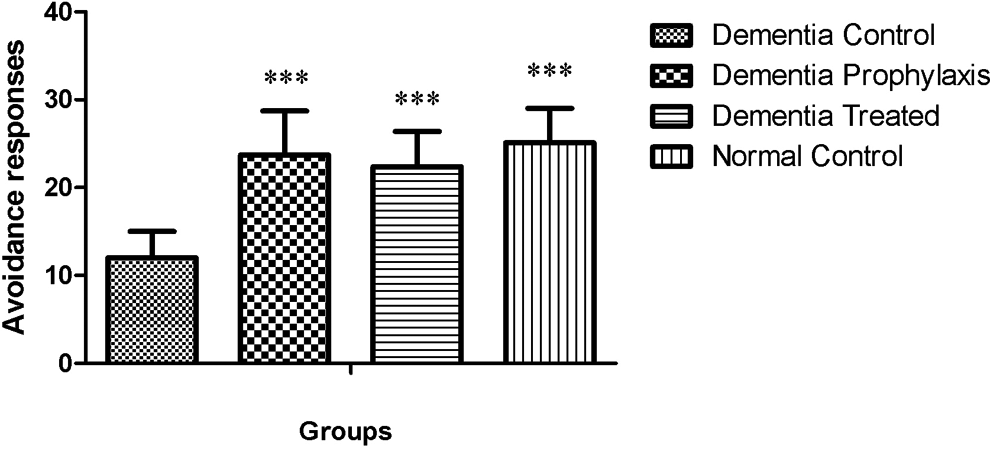
Avoidance responses of different groups in active avoidance training session (n = 7). ** indicates the significant differences in avoidance trials when compared to the DC group, respectively, using repeated measures analysis of variance (ANOVA) followed by Tukey’s multiple comparisons tests.
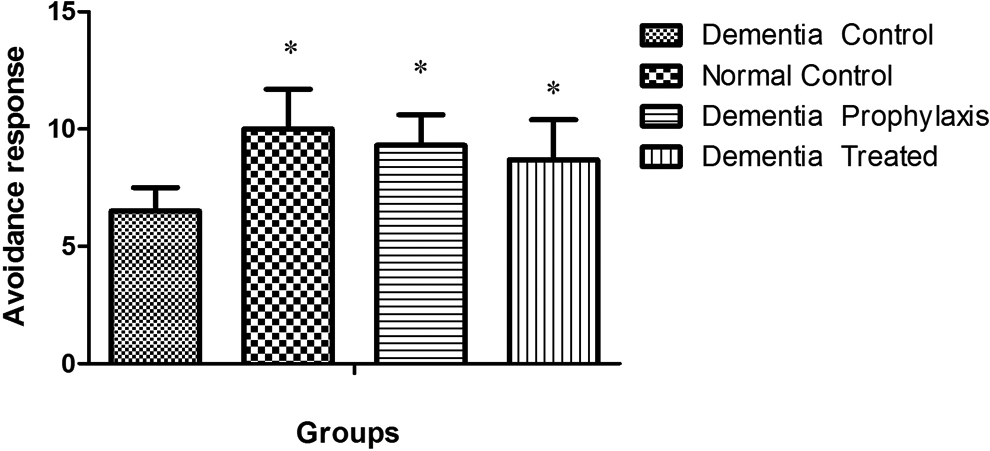
Effect of asafoetida on avoidance response at 1 week after training session. Data indicated mean ± standard error of the mean (SEM). *P < .05 showed significant difference between the normal control (NC), dementia prophylactic (DP), and dementia treated (DT) compared to dementia control (DC).
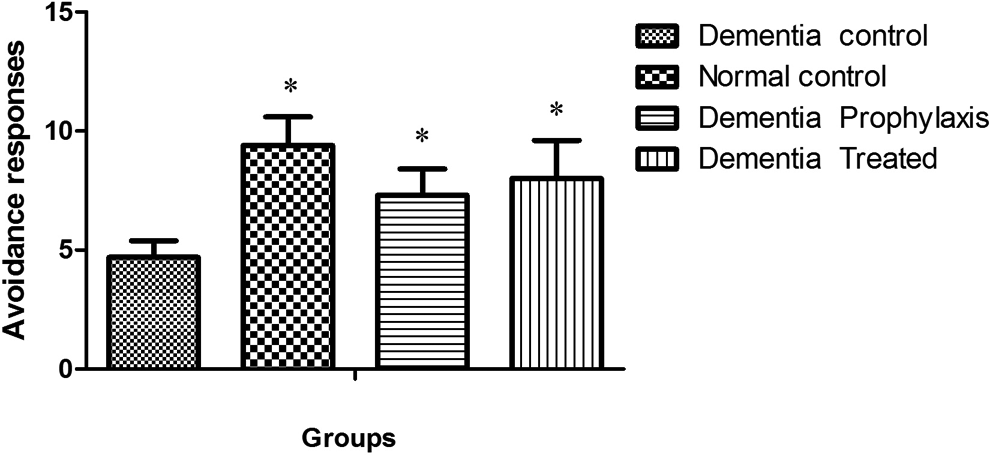
A comparison between the active avoidance responses in different groups 1 month after training session (n = 7). *Indicative of significant difference by P < .05, respectively, as compared with the dementia control (DC) group according to Kruskal-Wallis and Dunn’s multiple comparison tests.
The Avoidance Index (Mean ± SEM) in Different Groups During 3 Successive Days of Active Avoidance Training Session.a
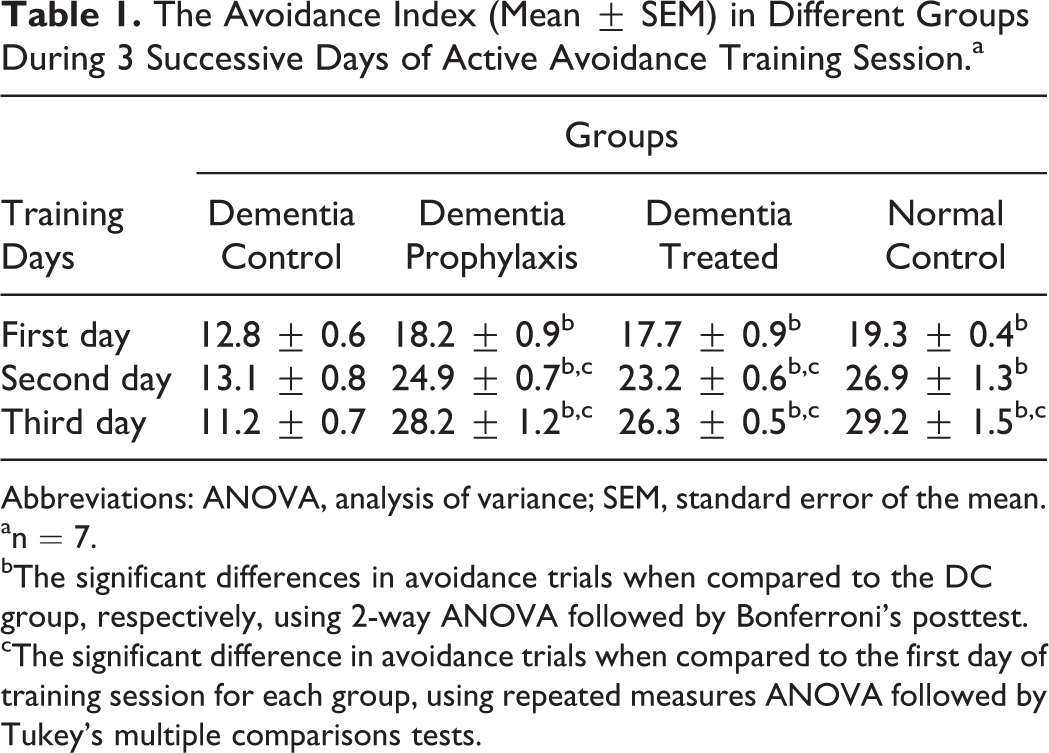
Abbreviations: ANOVA, analysis of variance; SEM, standard error of the mean.
a n = 7.
b The significant differences in avoidance trials when compared to the DC group, respectively, using 2-way ANOVA followed by Bonferroni’s posttest.
c The significant difference in avoidance trials when compared to the first day of training session for each group, using repeated measures ANOVA followed by Tukey’s multiple comparisons tests.
Passive Avoidance Test
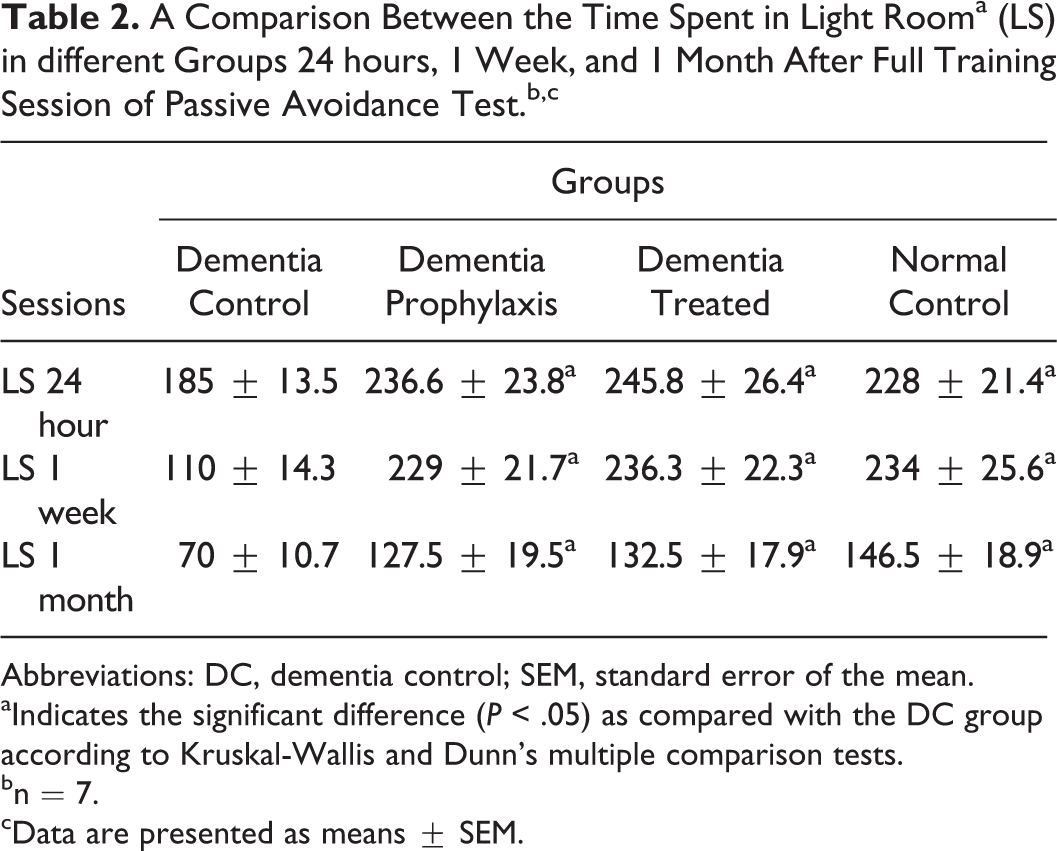
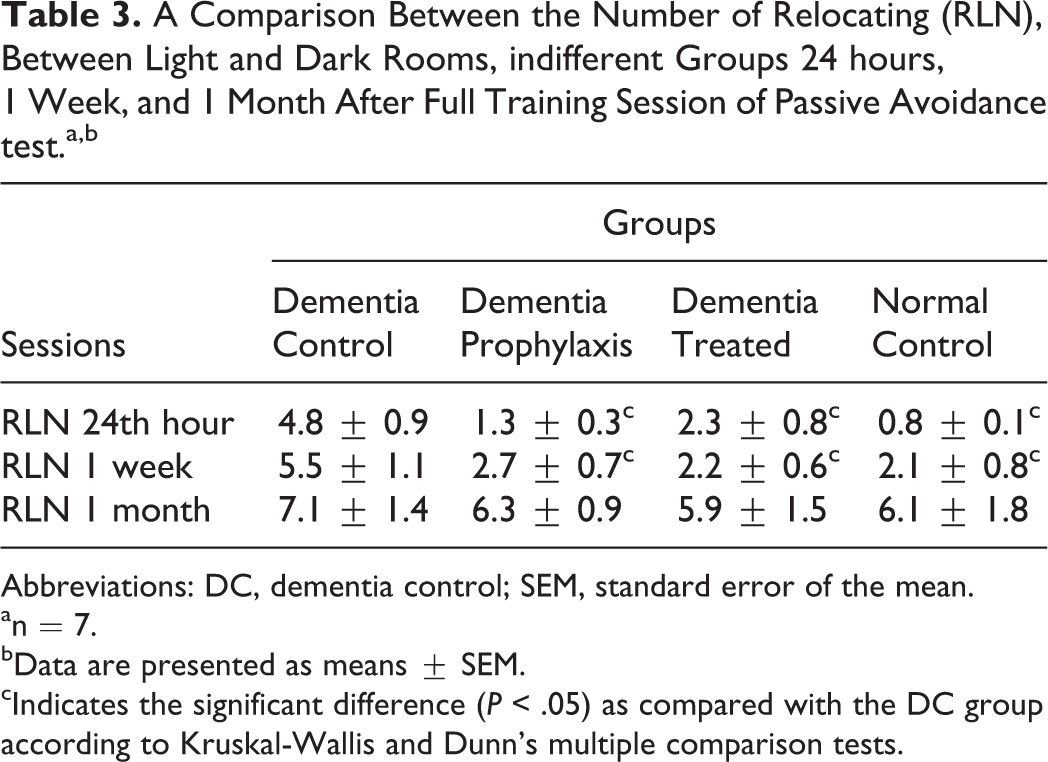
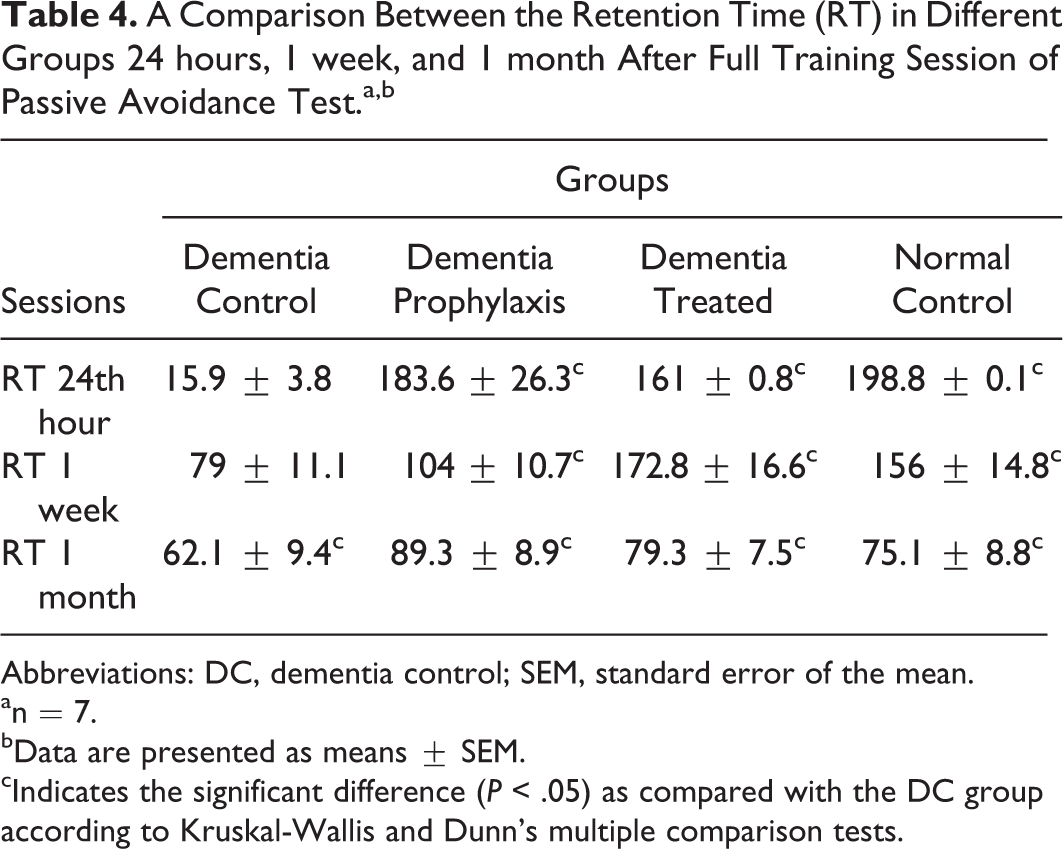
In passive avoidance test, animal’s STL, as an index for learning, in all groups was significantly greater than the DC group (P < .05, Figure 4).Total time spent in light room (LS) in the DC group was significantly less than NC, DT, and DP groups at 24 hours, 1 week, and 3 weeks after full training (P < .05), while there was not any significant difference between this index in DP and DT groups as compared with the NC group (Table 2, P < .05). Another index that was evaluated in passive avoidance test was the RLN between light and dark rooms, which in DC group was significantly greater than the DP, DT, and NC groups 24 hours and 1 week after the full training session (Table 3, P < .05). The retention time (RT) as the major index for memory consolidation at 24 hours, 1 week, and 1 month after full training session for different groups is shown in Table 4. There was a significant difference in RT among different groups at 24 hours, 1 week, and 1 month compared to the DC group (P < .05).
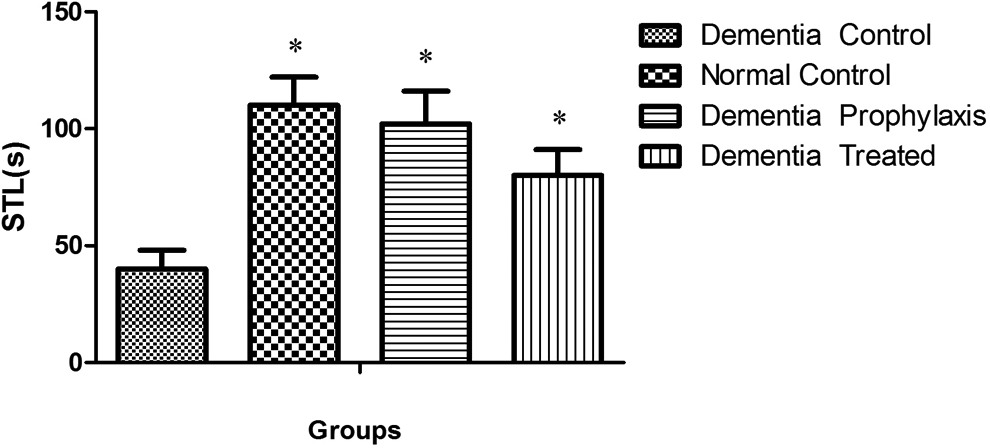
Step through latency (STL) in different groups during passive avoidance learning session (n = 7). *indicates the significant difference (P < .05) as compared with the dementia control (DC) group according to Kruskal-Wallis and Dunn’s multiple comparison tests.
A Comparison Between the Time Spent in Light Rooma (LS) in different Groups 24 hours, 1 Week, and 1 Month After Full Training Session of Passive Avoidance Test.b,c
Abbreviations: DC, dementia control; SEM, standard error of the mean.
a Indicates the significant difference (P < .05) as compared with the DC group according to Kruskal-Wallis and Dunn’s multiple comparison tests.
b n = 7.
c Data are presented as means ± SEM.
A Comparison Between the Number of Relocating (RLN), Between Light and Dark Rooms, indifferent Groups 24 hours, 1 Week, and 1 Month After Full Training Session of Passive Avoidance test.a,b
Abbreviations: DC, dementia control; SEM, standard error of the mean.
a n = 7.
b Data are presented as means ± SEM.
c Indicates the significant difference (P < .05) as compared with the DC group according to Kruskal-Wallis and Dunn’s multiple comparison tests.
A Comparison Between the Retention Time (RT) in Different Groups 24 hours, 1 week, and 1 month After Full Training Session of Passive Avoidance Test.a,b
Abbreviations: DC, dementia control; SEM, standard error of the mean.
a n = 7.
b Data are presented as means ± SEM.
c Indicates the significant difference (P < .05) as compared with the DC group according to Kruskal-Wallis and Dunn’s multiple comparison tests.
Acute Toxicity Study
Asafoetida in concentrations used did not show any short- or long-term toxic effect. This was evidenced by the absence of tremor, paralysis, weight loss, and autonomic behavioral changes when compared to the control group. Also, there was no mortality in treated animals during 6 weeks of observation.
Discussion
Alzheimer’s disease is a neurodegenerative disorder characterized by the deposition of amyloid beta peptide (Aβ) and inducing oxidative stress in the brain.
20
In this study, our findings indicated that chronic administration of asafoetida in both active and passive avoidance tests could prevent and treat the learning impairment and memory deficit induced by
Footnotes
Declaration of Conflicting Interests
The authors declared no potential conflicts of interest with respect to the research, authorship, and/or publication of this article.
Funding
The authors disclosed receipt of the following financial support for the research, authorship, and/or publication of this article: This research was supported by a grant from Shahid Sadoghi University of Medical Sciences Research Council. This research was supported by the Foundation of Shahid Sadoughi University of medical sciences and health services, Yazd, Iran.