



Abstract
Barring few exceptions, allied health professionals, engineers, manufacturers of assistive technologies (ATs), and consumer product manufacturers have developed few technologies for individuals with cognitive impairments (CIs). In 2004, the National Institute on Disability Rehabilitation Research (NIDRR) recognized the need to support research in this emergent field. They funded the first Rehabilitation Engineering Research Center for the Advancement of Cognitive Technologies (RERC-ACT). The RERC-ACT has since designed and evaluated existing and emerging technologies through rigorous research, improving upon existing AT devices, and creating new technologies for individuals with CIs. The RERC-ACT has contributed to the development and testing of AT products that assist persons with CIs to actively engage in tasks of daily living at home, school, work, and in the community. This article highlights the RERC-ACT’s engineering development and research projects and discusses how current research may impact the quality of life for an aging population.
Introduction
In the Technology Related Assistance for Individuals with Disabilities Act of 1988 (P.L. 100-407), the United States Department of Education (DOE) was the first to define the term assistive technology (AT) in federal legislation. 1 Assistive technology is any device that allows an individual with a disability to perform a task that would otherwise be difficult or impossible to do. 2 Disability is defined as a substantial limitation in one or more major activities of life 3 ; thus, AT can be useful for individuals with disabilities by helping them achieve and maintain a level of self-sufficiency in personal, academic, economic, and social domains of life. 4 Although many people think AT comes in the form of complexly engineered devices, AT ranges from low-tech devices such as canes and walkers to high-tech devices including virtual reality software and robotics. 5 Individuals with physical disabilities have benefited from AT for many years, yet there has been little evidence supporting how individuals with cognitive and intellectual disabilities benefit from AT. 6
Today the DOE provides funding for the development and research of technologies promoting independent living and community integration for individuals with disabilities through the National Institute on Disability Rehabilitation Research (NIDRR). The NIDRR funds technological research and development with the explicit intent of generating new knowledge and promoting its effective uses to improve the abilities of individuals with disabilities. 7 This includes funding for 22 Rehabilitation Engineering Research Centers (RERCs) across the nation dedicated to the research and development of AT for individuals with physical, cognitive, and intellectual disabilities. The fundamental mission of the NIDRR-funded RERC program is to understand how AT contributes to the quality of life for disparate populations based on their unique needs. 8
The Rehabilitation Engineering Research Center for the Advancement of Cognitive Technologies (RERC-ACT) is focused on serving the AT needs of individuals with cognitive impairment (CI). This article has the aim to describe the broader implication that the RERC-ACT has on the development and research of AT for those affected by CI. Such research is timely and relevant to an aging demographic since many older adults are at risk of CI and could benefit from technologies aimed to assist those with difficulties in the areas of attention, memory, self-regulation, planning, and/or sequencing. In addition, the rise of overall life expectancy suggests an increase in the number of individuals affected by dementia and related neurodegenerative disorders, 9,10 spurring a growing interest in designing and adapting technology to meet the needs of this population. It is predicted that in 2050 the number of individuals older than 60 years of age will be 1 in 5 as compared to 1 in 10 in 2000. 10 Although not all older individuals will acquire dementia, there is a direct correlation with aging and dementia-related illness. 11 It is estimated that 80% of seniors will be affected by some form of CI. 10 Since the goal of AT is to improve functional capabilities allowing individuals to optimally participate in the public domain and maintain personal autonomy, 5 the aging population stands to be a core beneficiary of AT designed for individuals with CI.
The Rehabilitation Engineering Research Center for the Advancement of Cognitive Technologies
The RERC-ACT is the nation’s first center to exclusively conduct research and development on ATs for people with CI. Funded by NIDRR since 2004, under the direction of principal investigator Cathy Bodine, PhD, and coprincipal investigator Michael Lightner, PhD, the RERC-ACT investigates AT to help match and serve the needs of individuals with CI. The RERC-ACT is a recognized leader on issues and solutions related to the accessibility and usability of AT devices and services by people with CIs. Although primarily based at the University of Colorado’s Anschutz Medical Campus, the RERC-ACT extends across North America to several participating universities and private companies. Many national and international experts have contributed to the efforts of the RERC-ACT, including Dr Scherer an expert in the area of matching persons and technology. 12,13
Like other RERCs, the RERC-ACT’s work is based on the collaborative efforts of dedicated engineers, researchers, educators, consumers, their families, and clinicians committed to the development and research of AT to improving the lives of individuals with disabilities. Each center focuses on supporting the needs of a particular population or technology genre based on NIDRR-identified priorities. Collaborative efforts are encouraged in all aspects of research and development to ensure that each project has a significant public health impact with implications for the advancement of future studies and current knowledge. Outcomes are then disseminated as broadly as possible to professionals, caregivers, and patients in a format that is readily accessible for improving the quality of life for those with specific needs.
The RERC-ACT is the only RERC dedicated to the AT needs of individuals with CI. Therefore, research and development projects are designed to address the technology needs of this population. These projects are aimed at individuals with a wide range of cognitive capacities and ages. Promoting quality of life means allowing individuals to live productively and in accordance with one’s own beliefs and values across their lifetime. When properly matched, 12,13 AT can improve an individual’s productivity, sociability, autonomy, and communication skills in ways that allow them to work, learn, and participate in the world through environmental adaptations that are appropriate to an individual’s needs and desires. 14 For the older adult with CI, AT can help these individuals maintain and maximize cognitive function, sensory, and mobility capabilities. Additionally, AT can help reduce the impact of chronic disability and functional impairment that may occur as a result of diseases related to aging. 7
The NIDRR and other local, state, and federal agencies and organizations have recognized the need to support research aimed at improving the quality of life of individuals with CI, including provisions for funding in the research and development of AT. In accordance with NIDRR objectives, the mission of the RERC-ACT is to research, evaluate, and develop innovative ATs and products that meet the needs of individuals with CI. This includes improving the quality of life and increasing community participation for this population. The main goals that drive the RERC-ACT’s mission are:
to improve the quality of life for individuals with CI through research and development of new cognitive technologies and
to disseminate accurate information to people with CI, their family, caregivers, students, health professionals, researchers, AT manufacturers, and commercial technology manufacturers.
The RERC-ACT Research Projects 2005 to 2014
Research (R) and development (D) projects form the core of the RERC-ACT center. Research projects subject existing theories and technologies to rigorous analysis to determine the accuracy, validity, and reliability of technologies as they relate to individuals with an array of CIs. Development projects create new technologies based on existing evidence. In this way, research and development projects are closely linked. Table 1 highlights the development and research projects from the RERC-ACT from 2005 to 2009.
First Funding Phase: 2005-2009.
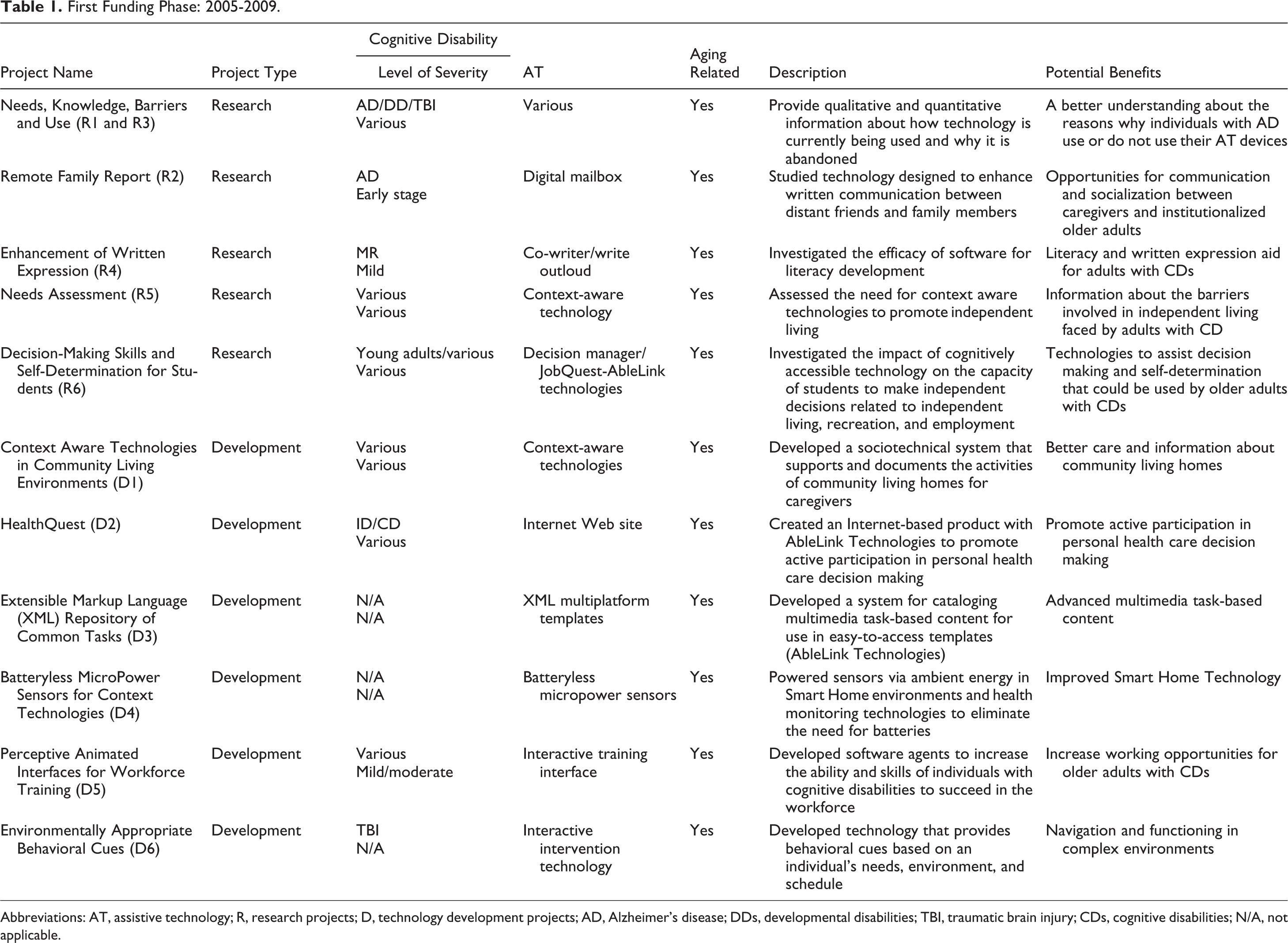
Abbreviations: AT, assistive technology; R, research projects; D, technology development projects; AD, Alzheimer’s disease; DDs, developmental disabilities; TBI, traumatic brain injury; CDs, cognitive disabilities; N/A, not applicable.
In Table 1, Needs Assessment (R5) and Context Aware Technologies (D1) are two closely related projects. They evaluated the need for context-aware technologies through research studies leading to the creation of a new context-aware nonlinear prompting system that could be implemented in community living homes. 15 Context-aware technologies use environmental and sensory cues such as calendar schedules, location, and movement patterns to assist and document an individual’s actions. 15,16 Research project results support that context-aware technologies have the potential to promote independent living by guiding an individual through complex tasks and by contacting caregivers when or if help is needed.
Needs, Knowledge, Barriers, and Use research projects (R1 and R3) evaluated why certain technologies are abandoned and which ones continue to be used. This knowledge is important for the development of future technologies by assessing what aspects of technology are too complex, confusing, or inconvenient for individuals with CI. This study showed that individuals with CI were hopeful about the future of technologies; however, older adults were not as enthusiastic about technology as younger individuals. Through surveys and focus group feedback, features that were useful for this population began to be identified. For example, the majority of individuals with CI who tested these products expressed their satisfaction for product designs with fewer buttons and larger displays. 17
Remote Family Report (R2) project assisted with the development of a digital mailbox prototype marketed by Caring Family. Designed for seniors with early-onset dementia, the digital mailbox functions similar to a fax machine by sending photographs and messages between the family and the person in an institutionalized setting. 18,19 The difference is that it requires only one button to be activated by the user. Caregivers and family members access a Web-based service that provides an easy-to-use format for sending communications to individuals with little to no computer experience. Once a day, at the same time, messages from family and friends print automatically. Seniors can respond by pressing one button that scans a paper-and-pencil response. 18,19 Adults receiving these communications were not required to have any computer knowledge and in fact, many in the study did not realize their messages were generated on the Web by their loved ones. This study demonstrated that older adults can and will use such a system to keep in touch with family members and friends living at a distance (Figure 1). 19
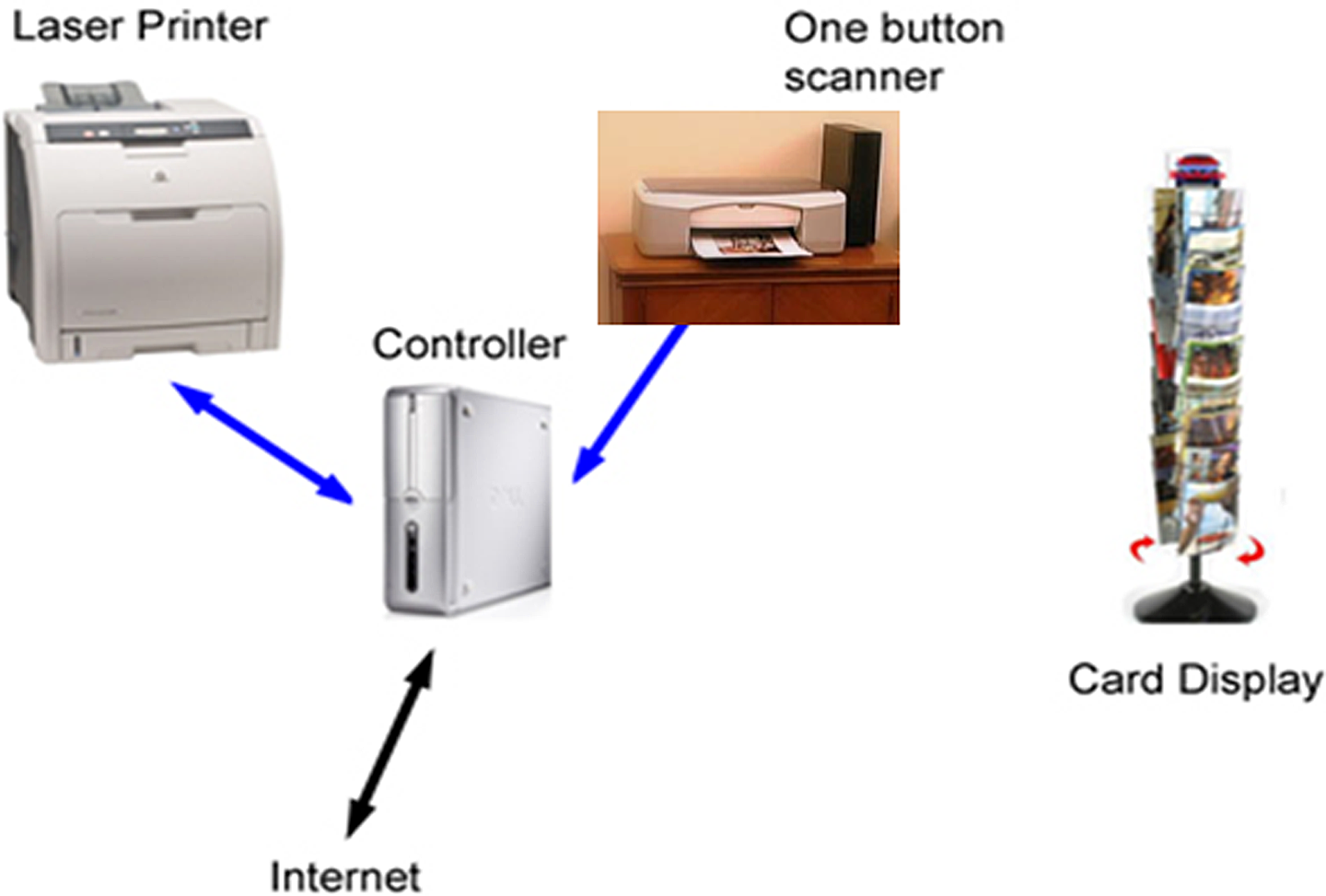
Digital mailbox by CaringFamily™.
Current research and development projects continue to explore the possibilities of nonlinear context-aware technologies and to refine our understanding of product usability for individuals with CI. In addition, new research and development activities such as the Social Assistive Robotics (SARS; R6 and D5 in Table 2) projects have been added as new and potentially effective technologies emerging in the marketplace. Table 2 highlights current development and research projects.
Second Funding Phase: 2009-2014.
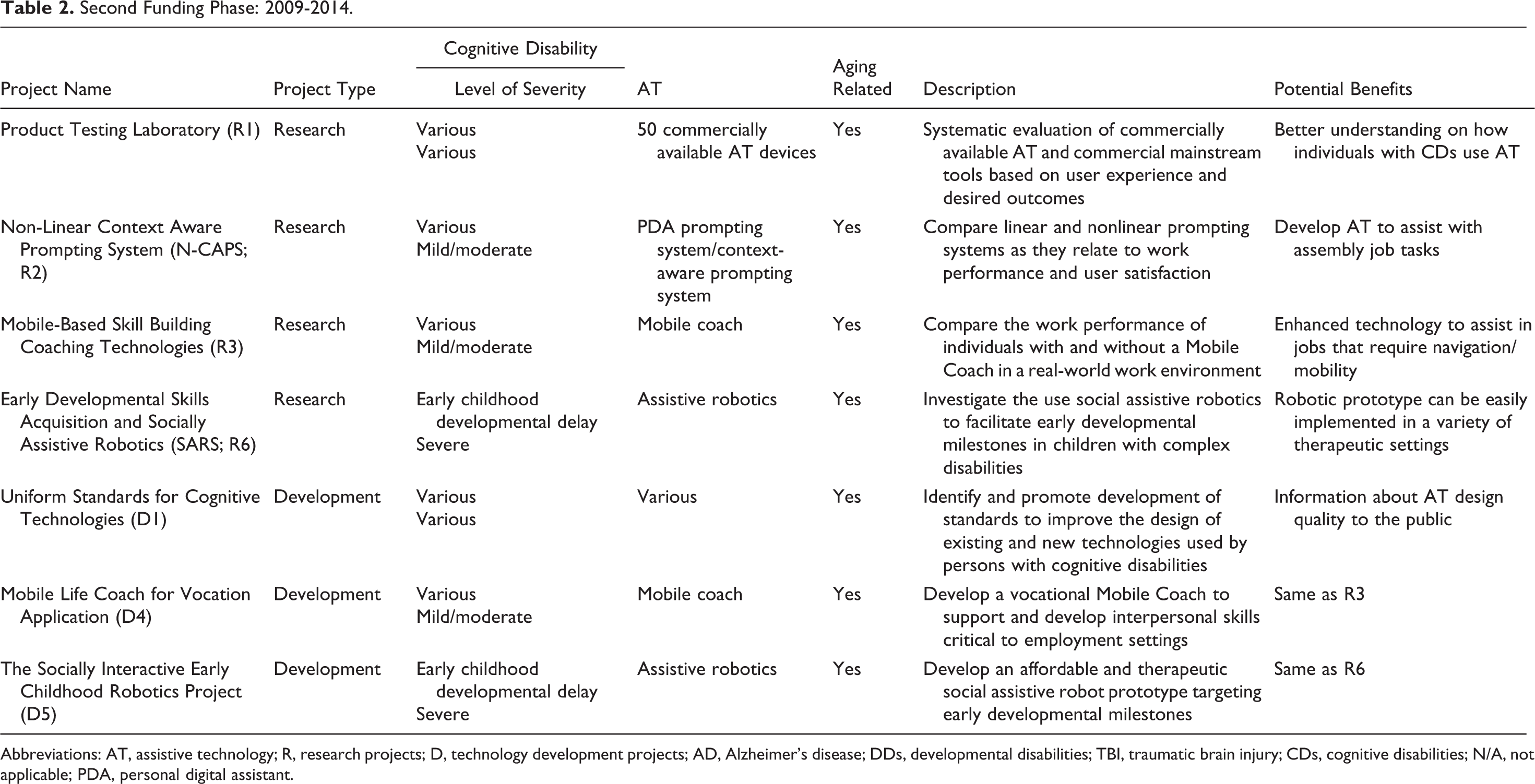
Abbreviations: AT, assistive technology; R, research projects; D, technology development projects; AD, Alzheimer’s disease; DDs, developmental disabilities; TBI, traumatic brain injury; CDs, cognitive disabilities; N/A, not applicable; PDA, personal digital assistant.
The Nonlinear Context Aware Prompting System (NCAPS; R2) takes advantage of context-aware sensors and image processing to create an effective adjunct to traditional human-based job coaches in the workplace. A traditional linear prompting system provides step-by-step instructions for completing a task, whereas a nonlinear prompting system uses sensors to determine when a worker needs help or perhaps a reminder to complete a task, see Figure 2.
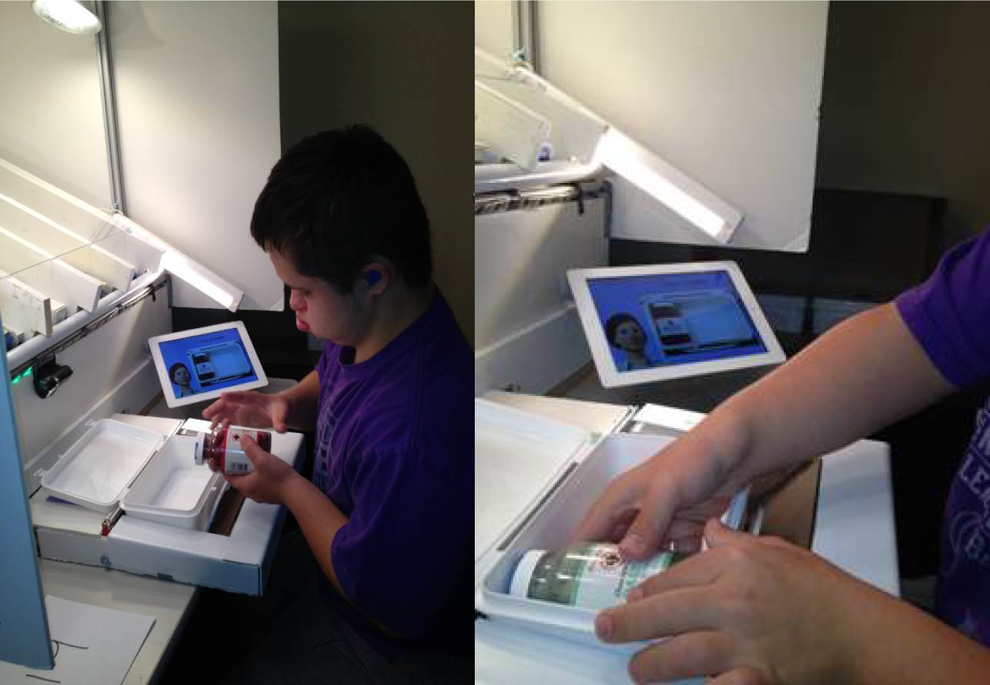
Nonlinear context aware prompting system (NCAPS).
The NCAPS begins with a short verbal prompt when an individual appears to need assistance. If there is no response from the worker, a picture prompt is displayed, then a video prompt, which will repeat itself three times before automatically, notifying a supervisor. Results of this initial study demonstrated the nonlinear prompting system was superior to the linear system. A third arm to this trial has been added and is currently underway at the Assistive Technology Partners Laboratories in a controlled environment.
The next step for the NCAPS is the Mobile Coach (D4), which will be tested in an authentic work environment. For this step, we are collaborating with Goodwill Industries of Denver to test this product at their facilities and to evaluate the technology in an ecological research design. The results of the Mobile Coach study will assist in the development of future vocational training technologies to better fit the needs of adults with CI including the older worker.
The Product Testing Laboratory (PTL; R1) is a project that examines how individuals with CI use and understand AT. Over a 5-year period, the PTL aims to improve the quality and design of AT products to better fit their users through the testing of 50 devices including mainstream technology as well as AT devices. Through surveys, interviews, and video capture software, there is a significant amount of information that we have collected on how individuals with CI use AT products. The goal is to identify how successful they are with their understanding and usage of AT products with and without assistance. The PTL has tested more than 40 products ranging from pillbox alarms to alternative keyboards and communication devices. The information collected from the PTL will be translated and disseminated in an easy-to-read standard format for manufacturers and consumers. The final goal of this project is to utilize the information to improve upon product design based on laboratory testing. The RERC-ACT is the only center dedicated to the task of collecting data on product usability to support evidence-based practices to better serve the needs of persons with CI. The results of the AT PTL will help to generate evidence-based information on how individuals with CI use, understand, and depend upon AT devices. 20 Over 50% of the testing participants to date for this project are 40 years of age or older.
Conclusions
Today, computers, smartphones, iPads, and GPS navigation systems dominate the market, making the possibilities of AT for persons with CI seem endless. Further developments and anticipated applications of the RERC-ACT projects include furthering the quality and quantity of time that older adults with CIs can remain connected and engaged with society. The same mobile device that is being tested to help adults with CIs remain in the workforce can be adapted for use in personal settings (ie, activities of daily living) by means of an easy-to-use app. Individuals wishing to participate actively in their community could potentially use the prompting system for multiple activities (ie, groceries shopping, personal finance and management). The AT has the potential to help older individuals with CI delay the deleterious effects of neurodegeneration, by staying actively engaged in their preferred lifestyle.
Although there has been a growing number of investigations related to aging, cognition, and AT, 1,5 more research is needed to determine what makes technology effective and practical for individuals of all ages with CI. 21 When technology is appropriately suited to an individual’s needs, this may increase the amount of time he or she can remain healthy, independent, and connected to the community and loved ones. 4 The RERC-ACT is committed to research that both enhances and expands technology developments in a way that is nonstigmatizing and inclusive. This is not an easy task when the speed of technology moves faster than the policies that allow for such research to continue. AT is vital to improving the quality of life for individuals with CI. 22 When quality of life remains high for those of advanced age, the overall cost of health care can be minimized. 23 It is the goal of the RERC-ACT to assist AT users and their families in choosing the most appropriate technologies for their needs since there are currently no standards, guidelines, or oversights for consumer products aimed at individuals with CI. The RERC-ACT plans to continue its research and development activities on existing, emerging, and new technologies that will significantly improve the quality of life for individuals with CI.
Footnotes
Declaration of Conflicting Interests
The authors declared no potential conflicts of interest with respect to the research, authorship, and/or publication of this article.
Funding
The authors disclosed receipt of the following financial support for the research, authorship, and/or publication of this article: The Rehabilitation Engineering Research Center on Advancing Cognitive Technologies (RERC-ACT) is funded by the National Institute on Disability and Rehabilitation Research (NIDRR) of the US Department of Education under grants no. H133E09000 and H133E040019, and the Coleman Institute for Cognitive Disabilities..