



Abstract
Football fan cultures encompass expressions of love and joy, yet they can also be deeply hateful. In this paper, we argue that an arts-based method – specifically theatre-based research techniques - was useful in exploring hate crime with fans of the game. As both victims and perpetrators, we suggest workshop participants found the novelty of the approach conducive to sharing experiential knowledge relevant to tackling hate in the game. As well as providing a reflexive analysis of the ethics and approach that underpinned the research, we share artistic representations to capture how hate manifested amongst differently positioned fans of the game.
Introduction
Good critical arts-based research grasps our imaginations, grabs ahold of our souls, and unabashedly strives to affect our very ways of living, being, and co-being, as researchers, as social scientists, as people. It…moves us to ethical, political action necessary to initiate positive change in our social interactions. (Finley, 2014: 531)
Engaging in an arts-based approach for us as football 1 fans and researchers was new. This is not to say football and art do not mix or that elite cultural tastes for art, fashion, and music, have not shaped football cultures, as they have had significant impacts on the development of the modern game (Redhead, 1997). Some may even suggest football is an art form in the way that it is played, and the artistic musings it evokes in both players and fans of the game (Hughson, 2019). But using artistic and creative tools as part of the research process in relation to studies of football, more specifically, was relatively new. The methodological and arts-based approach that we adopted for this research – specifically theatre-based techniques – because of this novelty, was valuable because it enabled us to practice the art of listening (Back, 2007). This is not to argue that theatre-based techniques would not be relevant to exploring other social and cultural contexts (see Burch, 2022; Gatehouse & Pickles, 2021; Jääskeläinen, 2019; Sinha & D’Souza, 2022), but due to the highly masculine, heterosexual, and non-disabled culture of football fandom, the theatre-based workshop sessions were particularly disorientating for those of us (as researchers) who were accustomed to more traditional forms of football fan culture. Except for Ingrid Marvin, whose occupational and scholarly background was in arts and the theatre, and who led the theatre-based workshops, it was unfamiliar and unsettling for the rest of us. For many of our participants too, we came to realise that being creative was novel to them. The theatre-based research activities arguably stimulated and re-set how they interacted with us and with one another. Significantly, it invited us and the research participants to actively listen to one another, and to analyse our similar and different stories, co-constructing shared meanings from one activity to the next. That is, it created conditions conducive to hearing the voices of participants as well as facilitating deep introspections about our own lives, and football fan choices. We argue that such theatre-based approaches, moreover, responding to Finley’s (2014) call for arts-based research (see above), urges us as scholars in and beyond the study of football, to think critically and ethically about how we do research to effect social change, recognising that hearing completes the act of listening.
As part of a AHRC funded project entitled “For the Love of the Game: Hate Crime and Football”, we wanted to engage in critical methods which were ethical, equitable and inclusive. For this paper, we do not wish to review project findings but, rather, to reflect on the epistemological and ontological approach underpinning the project. Specifically, focusing on the utility of a theatre-based methodological technique. We begin with the caveat that we do not provide a ‘how-to guide’ of how to use theatre-based research techniques with football fans, as the process was not smooth or linear (Gallant & Yuen, 2021 cited in Schmidt & Schultz, 2023) but, moreover, to explicate the critical insights we gained about our approach whilst “in the thick of it”. The project covered three workshops with fans (Leeds, Glasgow, Liverpool), one event with practitioners in Berlin, and a final public sharing event at the National Football Museum in Manchester. By the time of the project completion (March 2024), 50 people, who identify as fans of the game, had attended the three main workshops, with a further 25 people engaging with the project through the Berlin event and the final dissemination event in Manchester. The workshops were structured in two parts: (1) a panel debate amongst invited speakers, who as grassroots activists/those working for various football organisations, and as representatives of hate crime victims, have been involved in tackling hate in the game ‘from the ground up’; and (2) a workshop session which included both panellist and panel audiences, in our theatre-based activities, to discuss further their lived experiences of hate crime. In this paper, we develop an argument for the value of using theatre-based methods in studies of football, through three key sections: (1) to provide a critical review of past approaches to exploring hate crime in football, particularly considering the role and significance of centring the voices of hate crime victims and perpetrators; (2) to provide more specific detail about the premise of our hate crime and football project; and (3) to review our approach by debating three interconnected aspects of the theatre-based technique adopted which, we argue, was crucial to moving from doing the research to actioning social change. That is: (i) negotiating the research space between us, as the researchers, with the participants, to enable a mutuality of thinking and analysis; (ii) to explain how we mobilised theatre-based workshop techniques to create distance and time for reflective thinking; and (iii) how we extended the artistic element of the project to use graphic representations which, importantly, signified how hate in the game could be tackled “in the round”.
Researching Football and Hate Crime
Research about hate crime, football and discrimination is not a new area of study, and a plethora of literature exists which focus on various national and international contexts (e.g., see Merkel, 2025). From within the British context of football we note that whilst statistical analyses are important to examine the nature and extent of hate crime in football, and to acknowledge emerging and interesting trends, we argue that it is less informative about why hate crime occurs amongst football fans (Garland, 2015). We are also aware that many earlier studies about football and hate crime in the U.K., particularly in relation to football hooliganism, missed hearing the voices of those involved as either perpetrators or recipients of violent altercations before, during, and after games (see Bairner, 2006, for further debate). Such studies were predominantly read through newspaper coverage and spectacular re/presentations, which often villainised working-class young men, unfairly homogenising “them” as a collective. As with other moral panics evident in the 1980s, overly authoritarian government responses to the problem of football hooliganism led to the rise of legislative and punitive measures of control (Gardiner, 2015). In this sense, football is unique: it is the only sport or form of popular culture to have legislation in place to curb the enthusiasm of participating individuals. Obscuring, in the process, the pleasures of ordinary fans within the confines of the law. This remains a pertinent issue in much of the sporting literature, whereby a focus on deviant behaviour limits an understanding of how football passions can be both pleasurable and hateful (Petersen-Wagner, 2017; Pringle et al., 2015; see also Gibson & Atkinson, 2018).
Methodologies with football fans has drawn on a limited range of methods, notably participant observation, interviews, and surveys. Participant observation is frequently used, often by white male researchers within white male fan groups (Doidge & Lieser, 2018). Other scholars, influenced by the Birmingham Centre for Cultural Studies (see Andrews & Giardina, 2008), have explored the highly masculine, heterosexual, white, and non-disabled histories of sport, including that of professional football, through cultural critique and analyses (e.g., Carrington, 1998). Utilising an array of qualitative methods including participant observations and interviews, greater consideration also has been given to the voices of previously excluded groups, to challenge discrimination, and to advocate for equity and inclusion. We recognise, though, in terms of fandom more specifically, research rarely transcends an engagement with the voices of white, heterosexual, non-disabled men (Kuppan, 2022; Magrath, 2021; Ratna, 2014; Schallhorn et al., 2024). Limiting, therefore, the premises for achieving effective change for all fans of the game. As noted by Mason-Bish (2015), studies about hate crime frequently fail to explore the complex and contradictory ways hate is experienced by people, which acknowledges multiple and intersecting identity perspectives (see also Caudwell et al., 2023). For the purposes of definitional clarity, we have come to increasingly value Chakraborty’s (2018) notion of using an “elastic” understanding of hate crime, to incorporate understandings of hate crime as harmful, discriminatory, and illegal, knowing it can be an elusive and slippery term. We explore hate knowing what makes it a crime is based on individual perception and, is contextualised by actors in and beyond football in terms of their own choosing (for further debate, see Iganski & Lagou, 2015; Mason, 2013; Schweppe, 2012).
We recognise too that in these increasingly global and mediated social times, cultural representations, and public discourses, across various online settings, construct ideas about identity and difference (see also Grossberg et al., 1996). Football provides, therefore, a highly visible domain for the expression of hate in the game (Manoli et al., 2024). Through such discursive repertoires as well as policies, organisational remits, and the social habits of football fans, the historical and cultural standards of the sport are set, shaping concomitantly notions of who belongs in this space, and who does not. Football fandom is highly performative where the rituals and performances of football fandom help create, coalesce, and sustain fan groups (Doidge et al., 2020). Significantly for an article on the methodology of theatrics, “fandom is not a passive observation of other people playing sport, but an active involvement in creating the spectacle” (Doidge et al., 2020, p. 37). Consequently, hate crime is not some passive performative act, but the manifestation of individual or collective beliefs. Whilst we are cognisant of controversial debates about the right to free speech, in and across various online and offline settings, when this freedom encompasses and fuels hate (Jääskeläinen, 2019), we need to understand how the power of words can metaphorically “put people into their place”. Without diminishing the motivations of those who plead their commitment to anti-discrimination, we know that this also does not mean they are innocent actors either (McEvoy & McConnachie, 2013). They may be unintentionally complicit to the manifestation of hate crime without any awareness of the effect of their own words and in/actions. We, therefore, must reflect (individually and together) on what hate crime “does”. That is, to understand hate through lived material expressions and not just spectacular and obvious manifestations of hate. In other words, to move beyond a focus on the theatrics of hate in football, to explore how it is articulated by those who have felt the mundane and exclusionary affects (read: embodied emotional intensities) of different and overlapping forms of hate in the game.
Voice and Researching With/For “Victims”
Like many scholars engaged in critical social science research about sports and/or hate crime, we want to give voice to those who had experiential knowledge of the subject under investigation (McEvoy & McConnachie, 2013). We particularly understand that subaltern subjects as minority groups, who are often the target of various hate crimes, can speak about their own lived realities. We see it as our role as researchers to listen to what they have to say whether it is similar and/or different to our own social realities (Ratna, 2018). Yet whilst we contend that engaging with the voices of fans is important, we cannot claim that this process will automatically lead to transformative social justice (Garland, 2015; McEvoy & McConnachie, 2013). We are mindful of the pitfalls of research which, whilst claiming to serve victims, nevertheless, gives primacy to researchers’ interpretations and viewpoints. We also wanted to avoid being a ‘parasitic researcher’ (Fitzgerald et al., 2021), “mining” data from already vulnerable groups (Webster, 2018). The choice of methods we adopted (see below) aimed to achieve an ethical balance between the material we were interested in gleaning from the project, and the social well-being of those who had agreed to participate. Our ambition was to adopt an approach that spoke with and not for participating subjects (Alcoff, 1991). We felt, in reflection, watching ourselves as actors involved in the project, helped us as researchers (and fans too), to not fill the workshop space with more “hot air” (McEvoy & McConnachie, 2013) but to become better attuned to what others in the research space were saying and signalling through their tone and body language.
We note, before moving on to provide further detail about our project, that the language of “victim” is problematic because it often focuses on individual choices and behaviours, rather than attending to the socio-cultural conditions and histories in which hate crime manifests (McEvoy & McConnachie, 2013). Using Thompson’s (1998) Personal, Cultural and Structural (PCS) model of analysis, we sought to provide a holistic approach which married a focus on the individual as well as social context. Sin (2014), in his recent work about hate crime amongst people with disabilities, suggest this “layers of influence” approach supports the translation of findings into tangible outcomes, as targeted resolutive remedies (that is, at each layer of the PCS model) to stimulate change “in the round” (McEvoy & McConnachie, 2013). Thus, prior to the commencement of the project, we were interested in how change could be achieved in/through the research process at various and overlapping layers (Finley, 2014).
The Project: For the Love of the Game?
The ambition of this project was to explore hate crime by centring the voices of fans of football, knowing sometimes victims can also be perpetrators in complex and contradictory ways. Through the auspices and connections of various pre-identified project partners, we endeavoured to access and recruit different fans of the game across the interstices of class, gender, age, disabilities, sexualities, and gender, to participate in the project workshops. As noted above, we did not want to be ‘parasitic researchers’ (Fitzgerald et al., 2021) just extracting data from the participants without giving anything back. From eliciting feedback from our project partners, this augmented our decision to organise the workshops in two parts. The first part was to introduce experts to speak on a particular topic, for example, racism and disability discrimination in Leeds; sectarianism and gender-based violence in Glasgow; and disability and homophobia in Liverpool. In this way, the audience received something for their time. The participants were often interested in the issues that we were researching, so wanted to learn about those issues. The second part of the workshop was the participatory session. We recognise that the contents of the first part of the workshop may have impacted the outcomes of the participatory sessions. For example, the contents of the discussion in Glasgow were primarily focused on sectarianism. So, gender-based violence was not really addressed, but the other topic was. This was also something that had relevance to the participants. In particular, the dominance of Rangers and Celtic accounted for this. In contrast, the panel in Leeds focused on LGBT groups, disability, and stewarding.
Like many other participatory and performative approaches to studies of sport and physical activity (e.g., Douglas & Carless, 2018; Forde, 2025; Sharpe et al., 2022) we wished to embody a reflexive approach to pay closer attention to what we were hearing from the participants and, also, to turn our researcher gaze onto ourselves as academics and fans of the game. Before we unpick further how we achieved space and time for creating a hearing, and not just listening culture, we outline the theatrical techniques we adopted as part of the interactive aspects of the workshops: (1) Opening (framing the workshop space and reiterating our ethical approach). (2) First activity (in pairs, sharing first experience of witnessing hate crime). (3) Manifesto writing (in groups, discussing the manifestation of hate crime and agreeing actions to tackle hate “in the round”). (4) Thought box (final opportunity for participants to share thoughts not previously disclosed and/or to reflect on key learnings from the workshop session). (5) Closing (thanking participants and alerting them to final event in Manchester where the project findings would be shared).
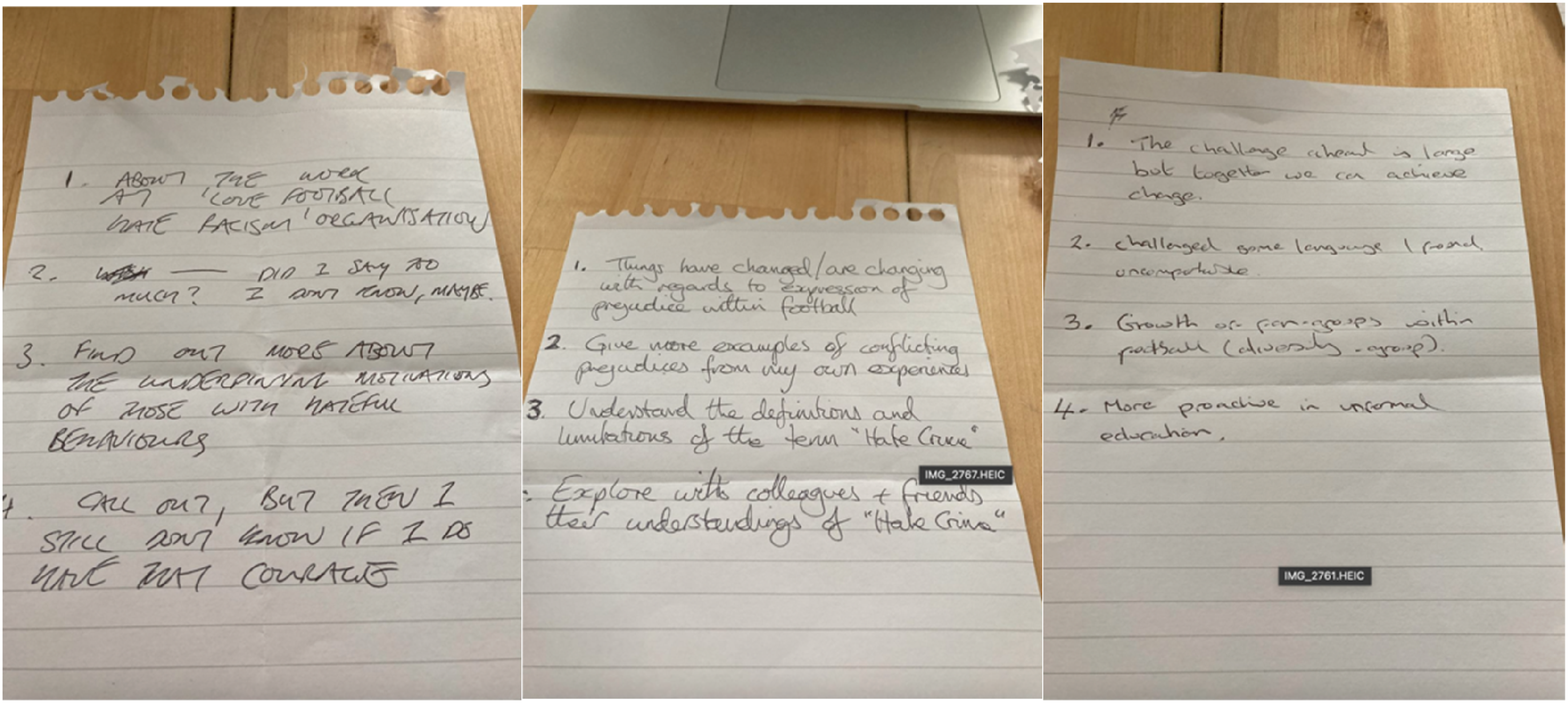
As researchers, after gaining ethical clearance, we each – Aarti Ratna, Mark Doidge, Fiona Skillen and Pete Millward (as project team members) - kept participant observation notes which summarised what key messages we took from both the panel presentations, and discussions emerging between panellists and audience members, and from the theatre-based activities. For the theatre-based activities, more specifically, we collected two other types of research materials. That is (1) flip-chart paper which groups used to identify and explore how hate crime manifested in the game, and to suggest remedial solutions. See Figure 1 as a selected examples of how groups re/presented their manifesto discussions; and (2) participants wrote individually on note paper or post-it notes to reflect on their learning; anything they did not say but wanted to express; address residual issues; and signal key challenges to preventing hate in football (see Figure 2 for selected example). The notes were put into a box which we took away from the workshop and read together, as a research team, the following day. Example Manifesto Materials Examples of Thought-Box Entries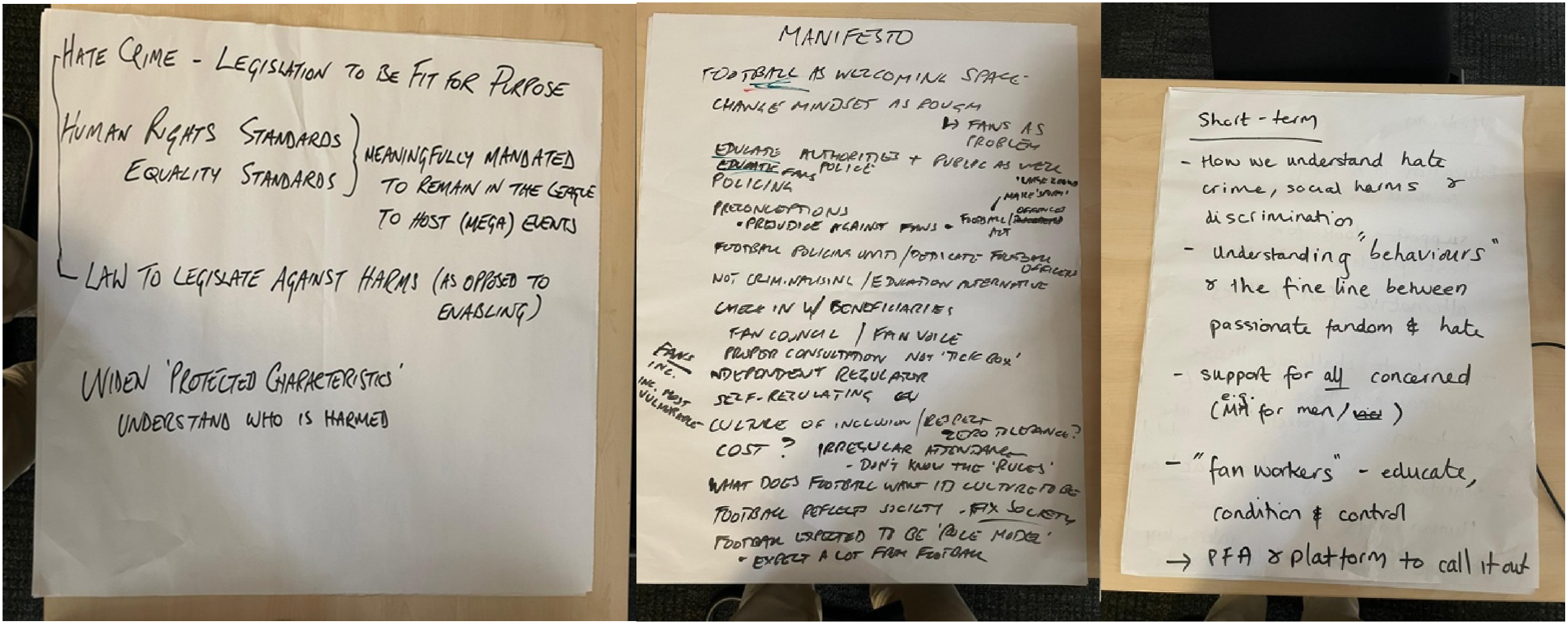
The analytical process involved three key stages which not only prioritised the decision-making skills of workshop participants but, also, ensured we heard their analysis of key issues. The first step, during the workshops, by inviting participants to make sense of their different and similar perceptions, involved the dual process of garnering research materials and incorporating participants’ analysis. Second, as researchers, we met the day after the workshop, to reflect on emerging themes and issues as noted in our respective participant observation notes. By sharing our opinions at this point, we were also able to reflect on our different and similar concerns and, also, to agree on key themes. Mark, as the project P-I, took notes on this reflective and analytical exercise. As different members of the team were not present at every workshop, those who were had to demonstrate their effective hearing skills by relaying events of the previous day to those who had been absent. This process also enabled us to individually, and together, check we had effectively heard, and understood, what participants had communicated to us the day before. These reflective conversations triggered other memories which sharpened those recollections, which in turn were fleshed out collectively as we focused on the key findings.
Third, Aarti as the Co-I, revisited the collected materials and scrutinised our individual and collective notes, manifesto materials, and comments received through the thought-box. A table was used to record “stories” (or themes) that emerged from this review of materials. Much of the themes identified also reflected Mark's notes but offered an opportunity for adding detail (e.g., words, particular phrases and emotional content) that had been missed through our initial discussions/Mark's notes. Each member reviewed the table further adding comments to verify the analysis. To further support an artistic representation of the findings, we returned to the longer history of football fan cultural production techniques including fanzines, graphic novels, and comics (McGowan, 2015) knowing this as a popular context for communicating messages about football beyond an academic audience (see below for further debate). Specifically, working with two graphic illustrators, Candice Boateng and Mehzeb Chowdhury (who is also an academic co-author on this paper), and a poet, Julie McNeill. These phases arguably involved a constant interplay between analysis and representation, enabling an erudite analysis and effective re/presentation of key meanings. It is to the utility of our research project that we turn to next, thinking through the key tenets of what we did that perpetuated a hearing culture and, also, responding to Finley’s (2014) call to translate findings to meaningful actions.
Using Theatrical Research Space With Football Fans
At the starting point of the project, we valued Giroux’s (2001) insights which proclaim popular culture as a powerful medium through which to unpick the complexities of the social world. Arts-based approaches also often provide auxiliary avenues to explore qualitative trends and social issues which are co-participatory in design and analysis as well as an effective medium to capture the “feelings” of different structuring social forces (Nunn, 2022). In other words, give voice and power to the people the research concerns. Taking a cue, therefore, from performance-based and dramaturgical qualitative inquiries, we decided to use a “theatrical” approach to engage in the materiality of hate crime. That is, to see, feel, and evoke “feelings” about how hate crime manifests in the game. We know that theatre-based approaches such as autobiographical, playback and forum theatre-based methods and techniques, have been important to examining lived experience, encouraging interpretation, dramatic re/presentations, and, also, solution-based action-planning (for further detail see Fox & Leeder, 2018). Our work though, more specifically, connected to Augusto Boal’s Theatre of the Oppressed (TO) – which borrows from Paulo Freire’s Pedagogy of the Oppressed – to view cultural spaces like that of football as battlefields for the reproduction and resistance of hegemonic ideologies. That is: Theater is a weapon…For this reason, the ruling classes strive to take permanent hold of the theater and utilize it as a tool for domination…but theater can also be a weapon for liberation. For that, it is necessary to create appropriate theatrical forms. (Boal, 1985 cited in Fox & Leeder, 2018, p. 101)
The theatrical forms we prioritised resonated with Picher (2006) overview of TO that (1) as “spect-actors” we are involved in a state of constant reflection, watching ourselves, to think more deeply about how to achieve change in our own behaviours as well as in relation to tackling hate crime in football; and (2) a range of methods can be used to stimulate reflections and deeper cognitions e.g., exercises (with oneself); games (interactions with others); and techniques (more complex exercises based on a theme or a problem). We adopted TO “light” methods, mostly interactive activities and techniques, rather than acting skills or theatrical performances per se, to create the “liminal” conditions necessary (Dennis, 2009) to practise the art of listening (see below for further debate). We noted that participants did not necessarily have a background in art and/or the cultural industries to feel at ease in a TO workshop space (van Bendegom et al., 2021). We, therefore, did not want to alienate participants by asking them to do performances, improvisations, or role plays. Our TO-light approach, as we detailed above, was pitched at a level appropriate for most of our participants, and ourselves, to enable engagement in the workshop activities and for meaningful dialogues to emerge.
Bleuer et al.’s (2018) idea of “aesthetic distance” was also relevant to our approach. That is, using theatre-based interaction strategies to balance workshop participants’ over-heightening of emotional reactions (to personal experiences of hate) and under-stimulating cognitive responses (why hate was occurring). Activities that achieve this blend create an aesthetic distance to marry both emotional insights with critical interrogation. For many football fans, including those who took part in the workshops, they sometimes felt unfairly castigated as inherently deviant (read: hooligan-types). We wanted to create a workshop atmosphere that did not trigger a defensive reaction, but allowed space for group thinking, which might include self-reflection about how we as fans might un/intentionally reproduce hate whilst also trying to challenge it. The activities we used as part of each workshop created an aesthetic distance enabling participants to become empathetic listeners as well as become analytical agents, by talking to one another about similar and divergent viewpoints. Very early on in our first workshop, we became attuned to how gender-based violence not necessarily within a football ground but, what might occur outside of the stadia in response to a game, required addressing a relatively invisible issue: domestic violence. Fiona, reflected during the Leeds workshop, how rises in incidents of domestic violence constitute a crime and we needed to further explore this in a subsequent workshop. Thus, at Glasgow, we invited a speaker to explore domestic violence before, during and after games. Whilst the presentation of this was thought-provoking, it was a creative artists’ re-representation of our notes from both workshops (in Leeds and Glasgow), which emotively captured the relationship between football and domestic violence (Figure 3). The medium of poetry enabled us as participants of the workshops and audience members listening to this poem at the final event (in Manchester) to hear what was being said through this representational choice, making the subject more visceral for us to comprehend, demanding us to think about how social change and policies must address issues inside and outside of the football stadia space
2
. Source (Reproduced With Permission From Julie McNeill)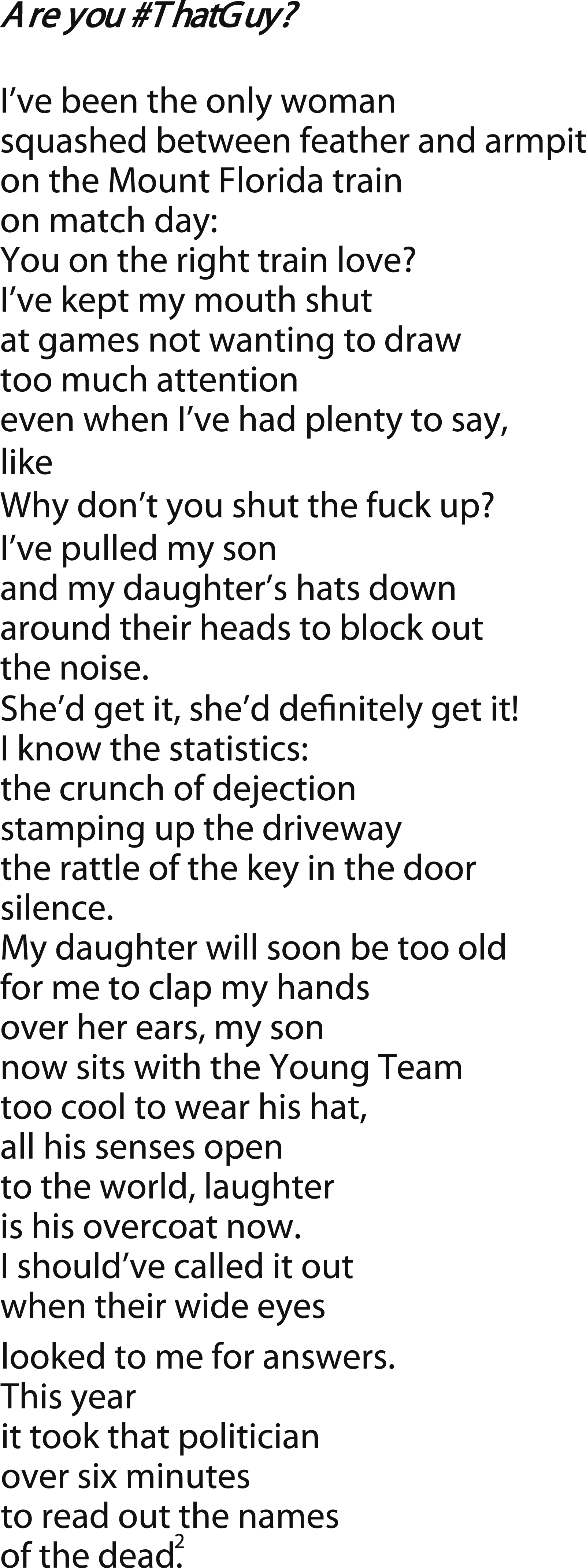
Reflecting together as researchers after the first event, Pete also talked about preventing our research space from becoming hijacked, unintentionally, as another venue for traditional forms of football fan cultural norms and behaviours to predominant. We felt that using a TO light approach enabled us to re-set the space to prioritise a listening rather than performative culture. Aarti, for example, has often felt, that as a woman in predominantly a man’s space, to prove yourself as an “authentic fan” of football you must often engage in performative rituals to be taken seriously, by other men fans (and sometimes women fans too), to pass what she calls the “football fandom legitimacy test”. Aarti welcomed the theatre-based activities as she did not want to (re)prove herself as a fan of the game. More than this, engaging in theatre-based techniques was uncomfortable for us all, except for Ingrid, as this was not a familiar setting for most of us. Our anxiety about how the methods would be received, or if they would ‘work’, contributed to us feeling uncomfortable which we felt afterwards helped to balance out the power inequality between us as the researchers, and our participants (see below for further debate).
Altering the research space by using a TO-light approach arguably created a “sphere of belonging” (see Nunn, 2022) which valued listening to one another, irrespective of fandom choices and levels of engagement. By being in the “present”, attuning ourselves to the workshop environment, and not how we may have been before (as an audience member of the panel debate or as a football fan) (Rossiter and Godderis, 2012), a space of liminality was created which encouraged a dialogical sharing of space, and time, to hear with intent each other’s lived stories and reflections (see also Dennis, 2009). The first workshop activity, for instance, involved talking to a partner about their fandom, forcing us to listen because we would then be introducing that person to the group. Aarti recalls vividly the visceral reaction her partner had when describing listening to another fan in his immediate space at a football match refer to a player’s pass as “the touch of a rapist”. She remembers thinking, he felt ashamed he had not spoken out and/or told this fan to “shut up”. He reflected, in that moment, how his mother, girlfriend, or sister might have felt if they were with him too (see Figure 4, for graphic illustration capturing this story). In introducing him to others in the room, Aarti explained to the group that he was attending the workshop because he wanted to learn more about what he could do to challenge sexism and misogyny, and thinking about the responses of his family members had made him more attuned to what was happening around him at football matches. When Aarti was reporting what he had told her to others in the room, he smiled back, making her feel assured he thought she had heard him and been empathetic to the difficulties of speaking back to people we know or may not know. Others in the room also nodded, and in their comments back, also claimed that they too had heard similar comments but had often stayed quiet than to speak-up at those making such comments, fearful that nothing may change as a result or that a culture of “grassing” was frowned upon in many football fan contexts. “The Touch” (Source: Reproduced With Permission From Mehzeb Chowdhury)
Arguably, creating a cultural distance from how football fandom is usually performed, changed the space we were in, to listen to one another, whilst providing time for self-reflection; how we too (as fans) might be “part of the problem” and not just the solution. It made us become less certain about the “innocence” of our own fandom. Individual consciousness-raising, we argue is a step towards emancipatory goals (see also Opfermann, 2019) and being in the workshops made us re-assess how we may too in the future occupy football fan spaces to disrupt the status quo rather than to reproduce it.
Negotiating Power, Space and Time
To make workshop spaces welcoming and inclusive, we spent much time prior to the commencement of the workshop to anticipate issues. For example, Ingrid and Mark spent much time planning how the space was disabled-friendly, and signposted support networks for those who may find the workshop debates triggering. Following University ethical approval systems, we ensured participants understood the nature and purpose of the event, and that attendance was voluntary. We hoped those who attended wanted to share their stories, aware these were their stories to disclose or not to disclose. At the start of the workshop, Ingrid further emphasized participants could withdraw from the workshop at any point without explanation and had the freedom to share what they felt comfortable disclosing. To facilitate dialogue and discussion, across both parts of the workshop, we made it clear we would not be recording names nor use video or audio recordings, to encourage the sharing of personal and sensitive information. We also ensured names were not shared as part of the manifesto activity and/or on the thought-box entries. Thus, there was no way of being able to connect comments to an individual and, because activities invited collective thinking, participants began to analyse and detail their shared and divergent viewpoints through collective analysis. This ultimately shaped our pragmatic approach to the reporting of our key findings, to focus on stories, and not to name individuals or groups of people.
Our approach also resonated with the work of Opfermann (2019) who used TO methods to understand the everyday realities of undocumented migrants living in South Africa. Opfermann (2019) reflects that things did not go as he planned. Arguably, using a fun and creative technique did not guarantee engagement or coerce his participants to share deeply personal details. Afterall, to keep silent is a strategy of survival in and of itself (Hill Collins, 2000). Thus, Ingrid, Mark and Aarti prior to the commencement of the workshops considered how we used TO without causing harm to those who agreed to share the research space with us. Providing a safe and comfortable space for participants was not without issues. For example, interactive activities that require standing in a circle, are not automatically inclusive for those who find it difficult to stand for periods of time, or who are in a wheelchair. Similarly, listening exercises are not automatically accessible for those who are hard of hearing. As we explain above, we wanted to invite some discomfort into the workshop sessions to create an important divide between football cultural norms and values, and the workshop space, to facilitate the act of hearing. Powers and Duffy (2015) query that discomfort may be experienced in different ways by different social actors and this process is complicated by understanding who is present, privileged and/or subordinate in any given social environment. Aware we wanted to explore hate crime through an intersectional lens, we struggled with creating a representative space inclusive of different social groups of people. We simply could not pay for people to take time off from work and/or to entice them to spend what little leisure time they may have had with us, so we could learn from them. Thus, there is a likelihood that the workshop space may have reinforced ideas about who is the visible “norm” (white, middle-class, heterosexual men) and who is not (women, people with disabilities, ethnic minorities, gay, lesbian, bisexual, and transgender fans) (see Powers & Duffy, 2015). Knowing too that this is an approach that can be shaped by the voices of key individuals and not reflective of everyone’s shared understanding. For example, prior to the Glasgow event, we were concerned about the workshop space becoming another avenue for the expression of football fan rivalries between Protestant and Catholic participants, and that we could not necessarily control who attended to achieve a balance between both supporter groups. We, perhaps, worried unnecessarily as the participants who did attend (irrespective of club affiliation) were open to frank discussions about the everyday realities of Sectarianism. In relaying events at the Glasgow workshop to Aarti, whose journey to the venue had been halted by a train emergency, Fiona, Mark and Pete recalled a story told to the audience by one of the panellist about how colour in Scotland signifies Sectarian allegiances and from a very young age, toddlers are given toys to play which reflect their parents’ “team” and religious affinities (see Figure 5). Many of the attending audience members agreed, and relived their own experiences of growing-up, suggesting interventions with young people need to address this deep-rooted socialisation to see commonalities between them as fans of the game and not just religious differences. Child’s Play (Source: Reproduced With Permission From Mehzeb Chowdhury)
As facilitators and participants, we navigated small-group debates to allow and encourage dialogue amongst all the participants, also to avoid the groups’ collective voice to be monopolised by individual characters. For example, Pete, further reflected that initially he had worried that one of the white male participants in his group – as a “traditional”, white, male, heterosexual, and able-bodied football-type - might dominate the space. But, as it happened, the nature of the activity, and agreeing priorities and actions as part of the manifesto writing, encouraged mutuality, and checking each other’s points of views, to arrive at a shared vision of social change. To us, in reflection, any concerns we may have harboured were relatively absent from what we were involved in/had observed. We tried, at least, to create a representative sample reflective of the local community in which we hosted the workshops (see above), hoping to include various social groups at least across if not in each of the workshops.
Initially, we had imagined our roles in the workshop space would be that of facilitators and observers. However, as it transpired, to address the low numbers who agreed to take part in the participatory element of the workshop (and not just those who attended to listen to the panel debates), we felt that we needed to join the theatre-based session for it to work effectively. We ended up “coming to the table” as fans and not just as researchers (see also Sinha & D’Souza, 2022). In many ways, “levelling” of power was important, so we were not just seen as outsiders looking “over” and possibly judging what others were saying/doing during this part of the workshop space. Indeed, we made ourselves vulnerable about what we knew and did not know about hate in football, and how we were concerned about our own in/actions (see above). We hoped in this way, rather than to declare our innocence as anti-discriminatory scholars, we “humanised” ourselves as fans and not just researchers.
Reflexive Analysis and Re/Presentational Choices to Affect Change
As the project developed, we used an iterative process to use post-workshop reflections to not only develop our initial analysis of emerging findings but, also, to shape how we approached the next workshop, addressing various issues and absences. Thus, we felt in our final knowledge sharing event, we wanted to create a panel debate which included previously marginalised voices including South Asian fans of the game, of Hindu, Sikh, and Muslim faiths. Even still, this was not fully representative, and we know that many fan groups (e.g., Black fans, and Jewish fans) perhaps were not as visible as we had hoped they would be. During the first part of the workshop, we also created time and space for collecting thinking, which paved the way for the co-production of shared interpretations. For example, Aarti had written about the “browning-out” of sporting spaces to give confidence to fans of football to attend matches together rather than alone (see Ratna, 2014). However, during a debate between panel members and the audience, one participant disputed this viewpoint. They then went on to share a powerful story which described how being together as a collective body of brown people, made him and his brown co-fans easily targetable (see Figure 6). He recalled an incident at a match where White male fans of the same team sitting on a tier above threw objects down at them. That is, being with other brown fans heightened the risk of becoming a victim of race-based hate crimes rather than preventing it. It was hard to speak back to this story with academic verbose or theoretical analysis as no matter what Aarti would have responded with, this lived reality drew an audible gasp from others in the workshop space because it was “real” (read: lived insight). Thus, it became part of the findings which we shared at the final event with stakeholders from across the game; that visibility does not equate inclusion or evidence of anti-discrimination. Hate may still manifest. In panel conversations, at both the Leeds and Liverpool events, we noted for LGBTQI groups, even if not for the South Asian fans, claiming space was symbolic, knowing the history of exclusion and vilification many LGBTQI individuals have felt in both football and society. For them, it induced collective joy and pride rather than fear. The Problem of “Browing Out” (Source: Reproduced With the Permission of Mehzeb Chowdhury)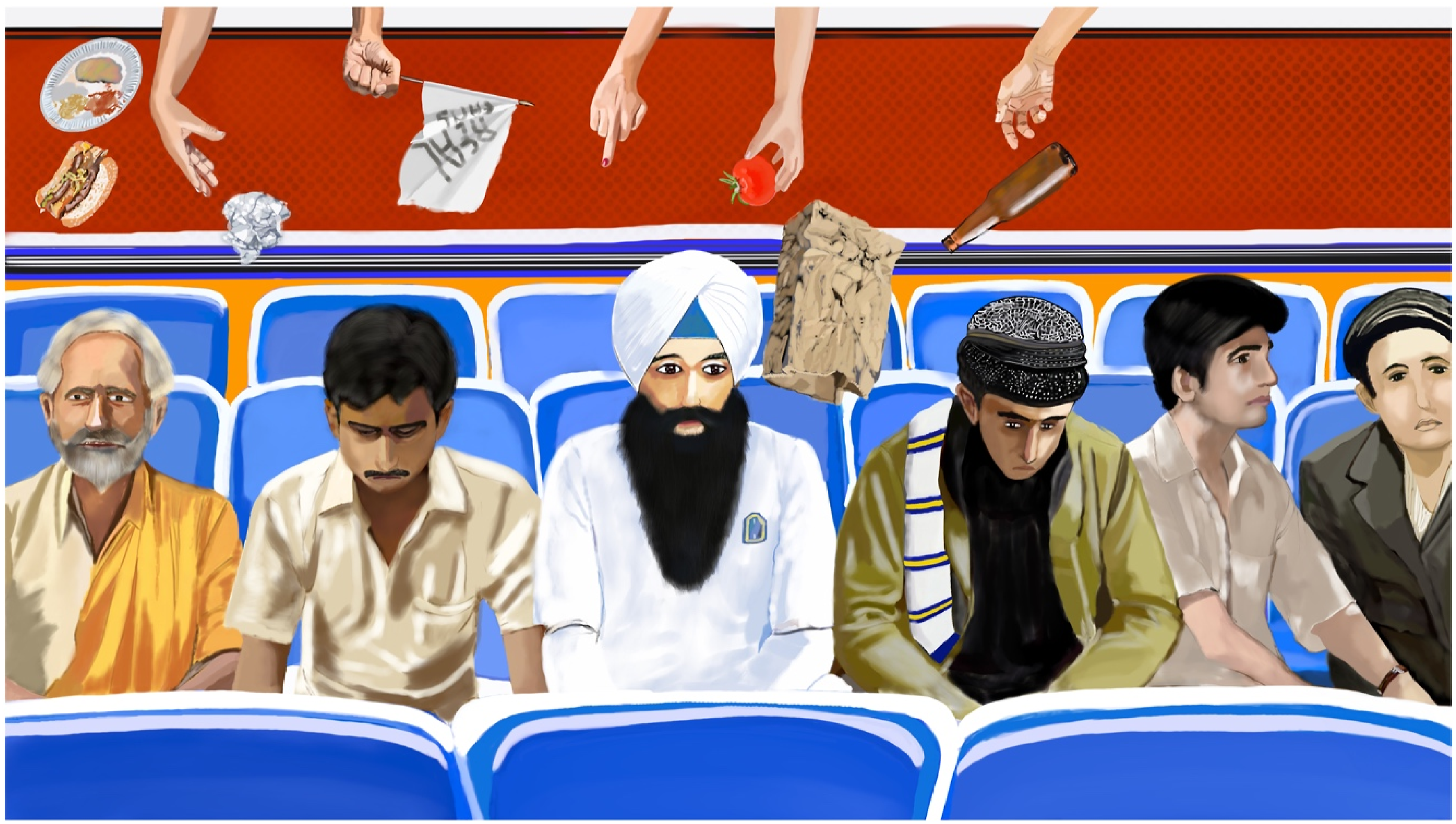
After the second event, Aarti started using the “in-between” time between workshops to further read the materials collected and tell stories about how hate crime manifested in the game. Thus, not waiting until we had delivered all the workshops was important, so we could check if the project approach, and materials being garnered, indeed, were enabling us to marry research with action. The manifestos, particularly, were useful in identifying methods to tackle hate crimes. In other words, to support effective policymaking, “in the round”, we began to draft an executive report to make it clear what needed to happen, where, and by whom (see Doidge et al., 2024). This gave us confidence that what was emerging from the first two workshops was producing material relevant to actioning change in the game. Interestingly, although we had attempted to adopt an approach “in the round”, the most common and vociferously articulated critique from those attending the final knowledge-sharing event was the individualised nature of our action-planning. That is, to put responsibility on to individual fans to address deeper and historical structures of exclusion and hate crime. Whilst this was not our intention, it provided an important learning moment for us to reflect on stakeholder responses, and to re-affirm how we viewed individual action as connected to structural and cultural contexts (see Doidge et al., 2024).
In addition to this, we wanted to communicate the issues that emerged from the workshops through artistic re/presentation, and a medium which would “speak to” project partners, fans of the game, and those who took part in the project activities. Visual sociology, cultural studies, and creative research methods question the primacy of text alone (Rose, 2022). In post-apartheid South Africa, for example, art became a platform for confronting shared trauma through colour, texture, and sound (Coombs, 2003). In Burch (2022), disabled participants used mood-boards to express experiences of hate crime in ways that written interviews could not access, with the process of selecting images, cutting, arranging, and discussing, opening new space for story, emotion, and resistance. Visual art also often captures the essence of football culture, often from below rather than above, e.g., MurWalls, stadium graffiti, and independent fan art promoting social change (Brassell, 2022).
For this reason, we chose to represent the stories we had identified through graphic illustrations akin to the sketches many fans are familiar with in popular magazines and football fanzines (McGowan, 2015). Through personal connections and academic links, we connected with Candice, Julie and Mehzeb (who later joined the project team) so they could translate the stories which emerged into creative outputs (see above) which were showcased as part of a knowledge sharing event with attending fans, workshop participants, and stakeholders, at the UK Manchester Football Museum. Specifically, we gave these different artists the freedom to construct creative outputs in a way that emotionally “spoke” to them, conveying the emotion behind the “hate” they depicted. These re/presentations provided a commentary on power (DeTurk, 2015; Evans, 2025), and how different fans groups staked a claim (or not) to footballing space. In Julie's poetry, Mehzeb's and Candice's artistic representations, we were told my many who attended the final knowledge sharing event, that it made them continue to care for a better football fan culture, to confront the pain of hate captured in the re/presentations, and to focus more on the joy and pleasures of the game.
Conclusion
In this article we started with the proposition that to study hate crime in arenas which are highly celebrated as a form of popular culture, we must look beyond the spectacle or what we have termed the “theatrics of hate”. That is, overt chants, gestures, or name-calling, to explore hate as it manifests and is perceived by those who experience it. Beyond past approaches to the study of hate and discrimination in football, for example, including ethnography, newspaper reportage, and statistical analysis, we wanted to explore hate through affective and emotional registers of lived experience (Doidge, Ratna and Skillen, forthcoming). Thus, we adopted a qualitative approach that by-passed the traditional modes of research enquiry, to get a little uncomfortable, and to embrace “theatrics” in a different way. That is, to employ a theatre of the oppressed approach, and TO-light techniques, to engage a range of research participants as fans of the game and stakeholders, including us too, to read “hate” beyond the spectacle of hate.
From the start of this project, we wanted to prioritise the voices and experiential insights of fans of the game, recognising them as not simply mindless deviants (read: football hooligans) but, as an intellectual community of passionate supporters, with knowledge about how the game could be more inclusive and anti-discriminatory. We did not necessarily set out with a clear-cut sense of how the project would evolve but we were excited about using a novel and creative approach, which might amplify the voices of supporters, some of whom also identified as victims of hate in the game. As we engaged in the research, we developed new-found confidence in adopting an interactive and flexible approach that developed, as the project developed, to meet the project ambitions and changing priority areas.
Whilst we develop the findings of the project in a separate paper (see Doidge, Ratna and Skillen, forthcoming), a couple of key reflections on the research process, as explored in this paper, are worth emphasizing. First, creating an “aesthetic distance” between football fan practices and the norms that underpinned the research space, was crucial in creating a liminal and listening environment. It was conducive to hearing hate beyond the spectaculars of the game focusing, instead, on the ordinary, subtle and, embodied, and deeply problematic registers of how hate was experienced by different fan groups. Second, we facilitated time through the research encounter to interweave opportunities for collaborative analysis. Before, during, and after the research, this also cemented a reflexive approach where “we”, as the researchers, learned to step back from the research process and point our analytical gazes back on our own positions, opinions, and experiences. We argue that this tempered the exploitative power dynamic that often occurs when academics research with/for “victims”. We became mindful social actors, knowing we are also complicit to the manifestation of hate, to various extents, through the spaces we occupy as researchers and as football fans. Thus, creating space and time through the research process, effectively enabled us to grapple with the complexities of the social world, hate, and to critically consider how we can challenge discrimination in the myriad ways that it manifests “in the round”.
Arguably, moving from understanding to action is not necessarily a straightforward task. We specifically came to value how we translated project findings to “speak to” football audiences through a medium that many fans understood i.e. graphic illustrations and poetry. We felt our TO light technique, moreover, was crucial to moving from “hot air” to developing actionable outcomes (see Doidge et al., 2024).
In collectivising stories from the project, we risk excluding individual voice and experience, However, the sharing of stories, experiences, and insights, we believed outweighed that costs by pointing to mutual action-planning. We cannot say though this collectivised response is nonetheless representative; it is not. Many fan experiences are missing, and that reflects our inabilities to engage with a representative sample. Yet the sharing and crossing-checking of actions at the end-of-project event, provided us with some hope that “in the round”, our hearing culture has produced actions, from the ground-up, that addressed similar and different experiences of hate crime in the game.
Footnotes
Acknowledgements
We would like to express thanks to all workshop participants, Ingrid Marvin (theatre artist and workshop facilitator), Candice Boateng (graphic illustrator), Julie McNeill (poet), and Pete Millward (academic team member).

Ethical Considerations
The study was approved via the principal investigators host institutional ethical review committee (University of Brighton). People who attended the workshops, by virtue of attendance, agreed to be involved in the research, and were verbally reminded of the ethical protocols at the start of each workshop session.
Funding
The authors disclose receipt of the following financial support for the research, authorship, and/or publication of this paper: This work was supported by AHRC (grant number AH/V010107/1).
Declaration of Conflicting Interests
The authors declare no potential conflicts of interest with respect to the research, authorship, and/or publication of this article.