




Abstract
Direct[Message], a community-based research (CBR) project developing a digital platform supporting older adults engagement with the arts through digital technologies, faced the challenge of redesigning the research protocol after the COVID-19 pandemic was declared in March 2020. The redesign, which brought challenges and opportunities, allowed the research team to embed the project with process goals considering older adults’ experiences of social isolation, and exploring how these experiences might be mitigated by greater access to the arts through technology. This article explores the redesign process undertaken by the Direct[Message] team and presents preliminary findings from this multiyear study.
Keywords
Introduction
Direct[Message]: Digital Access to Artistic Engagement is a collaborative, community-based, arts-informed research project based in Southwestern Ontario (Canada). The overarching goal of the project is to make the arts more interactive and accessible for older adults through the development of innovative digital technologies. A community-based research model (CBR) is used to develop and evaluate devices and applications that enhance older adults’ access to and participation in a wide variety of artistic activities, programs, and events (Doyle & Timonen, 2010; Janes, 2016).
The project began in Fall 2019, and faced many challenges when the COVID-19 pandemic was declared in March 2020. Based on World Health Organization (WHO) recommendations, the implementation of public health measures made the original in-person design of this research no longer feasible. Restrictions on in-person data collection and requirements for social distancing meant the research team needed to rethink protocols. As a result, novel research approaches focused on arts-informed understandings emerged through the insights of older adults working on the project. This article provides an overview and analysis of the redesign process, the challenges and opportunities these changes presented, and preliminary findings from the first initial phases of the project. We begin by providing a brief project summary (goals, research questions) along with supporting literature, and we contrast the original research methodology against our revised approach. Preliminary findings developed through the first phases of the project are presented and their significance in supporting subsequent project phases is considered. Finally, we reflect lessons learned, potential uses of research tools and methods developed through the Direct[Message] COVID-19 redesign in the context of future research.
Project Overview
Direct[Message] is led by the community-based arts organization Centre[3] for Artistic and Social Practice (Centre[3]) located in Hamilton, Ontario (Canada) in partnership with a number of other institutional, community, and business organizations including its academic partners, the Re•Vision Centre for Art and Social Justice at the University of Guelph and the School of the Arts and School of Social Work at McMaster University. Funded by the Canada Council for the Arts’ Digital Strategy Fund, the project works collaboratively with older adults from underrepresented communities in the Southern Ontario cities of Hamilton, Guelph, and London. Through its ongoing community engagement, Centre[3] became aware of the need for additional resources to cultivate older adults’ involvement in the arts. Through consultation with stakeholders, we identified older adults who are members of Black, Indigenous, Two Spirit, Lesbian, Gay, Bisexual, Transgender and Queer (2SLGBTQ+), and refugee/newcomer communities, individuals living with disabilities, and people who might experience social isolation as having acute and urgent needs for better access and supports.
With these populations in mind, the project embraced CBR as the preferred method for researching and creating resources to meet the needs of marginalized older adults. To enact this approach, Direct[Message] put together a research team that (in addition to the academics and their home institutions) comprised older adult community members, artists, researchers, and staff from not-for-profit community-based organizations such as Museum London. Technology sector partners VibraFusionLab (arts-based public studio that investigates multi-sensory artistic modalities in the creation and presentation), and Cinematronics (works with artists and cultural institutions to create kinetic interactive environments) provided technological and design support for the Direct[Message] online platform.
From the onset, these partners took up the challenge to develop new digital models and digital prototypes guided by older adults serving as members of the project’s Community Consultation Group (CCG), and in consultation with seniors’ organizations in the three local areas. The resulting co-developed Direct[Message] platform includes hardware, software, and content, all produced using evidence-based research and data to create, iteratively test, and evaluate technological prototypes. The platform allows aging individuals with diverse physical abilities, cognitive needs, and social contexts to easily access interactive digital art content and to participate virtually in art events and communities.
This inquiry serves as the broader project’s preliminary “needs and wants” assessment, informing the digital prototype development and subsequent phases of the project. The study engages in inquiry focused on two higher-order research questions to support knowledge mobilization from within the older adult population, and asks: What are the needs, desires, and barriers of the aging population regarding the creation, appreciation, and engagement with the arts and creative mediums? And, how can digital technology, including live video streaming, instructional videos, and asynchronous community spaces be used to facilitate the aging population’s access to and engagement with the arts and creative mediums?
Project Background
The CBR approach mobilized by Direct[Message] honors the complexity and diversity of older adult populations. Building on literature supporting knowledge mobilization emphasizing the significance of heterogeneity in understanding and reaching these populations (Jones et al., 2021; Vrkljan et al., 2021), we formulated Direct[Message] around a community-based approach reflective of a social-constructivist grounded theory methodology (Chun Tie et al., 2019; Sebastian, 2019). Our initial design sought to support knowledge and technology development by involving people who are directly and adversely affected by cultural disengagement and social isolation; we aimed to bring the co-created knowledge and technologies to the researched communities, for their use and benefit (Doyle & Timonen, 2010; Janes, 2016). Our team has also committed to ensuring the new knowledge and practices developed through this research will be offered to other communities similarly affected but uniquely situated.
Population Trends
The project addresses several contemporary social issues in its efforts to support older adults in accessing the arts through technology. For example, Canada, like most industrialized countries, has experienced a surge in the number of older adults who make up the population. The percentage of people above the age of 65 is rapidly increasing, representing 18% of the population as of July 2020 (Stats Canada, 2020). Increased longevity may be a positive social outcome, but for older adults this means also facing risks resulting from the challenges of aging, especially negative social attitudes toward older populations. Research shows that around 30% of older Canadians are at risk of becoming socially isolated (Harasemiw et al., 2018; Menec et al., 2019; Salma & Salami, 2020). Sociomaterial forces heightening risks for isolation include ageism related to age/stage (older vs. younger seniors), racialization, geographic location, disablism and ableism, minoritization of sexuality and gender identity, health status, knowledge and awareness, life transitions, strength of social relationships, and poverty and resource access (National Seniors Council, 2017) including access to technology (Jones et al., 2021).
At the local level, approximately 12,000 isolated seniors out of a population of about 700,000 call the Greater Hamilton Area home (Mayo, 2017); older adults are the fastest growing population segment in Guelph, now comprising approximately 25% of the city’s 130,000 residents (Anderson et al., 2015); and London, Ontario reflects an aging population that is just slightly above the national average (16.4%) at 17.1% (Daniszewski, 2017). In considering structural and relational affordances that may reduce risks that older adults face, several studies demonstrate the importance of creativity and arts engagement in improving health and well-being, decreasing isolation and social exclusion, building social relations and community, encouraging lifelong learning, and enhancing quality of life (Gutheil & Heyman, 2016; Hanna, 2013; Todd et al., 2017).
Recent studies show that Canadians living with disability, seniors, and so-called “visible minority” (a Canadian government statistical category) populations have lower arts attendance/participation rates than other populations in Canada; these studies consider attendance at art galleries and festivals, heritage, music, theater, or comedy performances, and personally creating or performing art as forms of engagement (Hill, 2014, 2019). Notably, some organizations now experiment with digital technologies as means of providing older populations with access to art and creative activities designed to reduce barriers, such as geographical isolation, low energy levels due to ill-health, and/or physical/mobility/sensory barriers (Gardner et al., 2018; Hunt et al., 2019; Woolhous et al., 2015, 2016). Over the past decade, museums and arts organizations have used live video streaming to engage audiences digitally by providing real-time viewing of exhibitions and performances, guided tours, and opportunities to participate in special events (King et al., 2019; Stucchi, 2017).
Currently, few examples of digital initiatives targeting heterogeneous older populations exist, and even less scholarship evidences the impact of these programs. While some digital arts engagement platforms might exist, empirical support for their capacity to address multiple, overlapping, and interlocking barriers to accessing and participating in the arts is scarce. In response to the risks associated with access barriers and the protective benefits of arts engagement, we co-developed Direct[Message] to explore new digital models that may transform older adults’ access to and engagement with the arts.
Research Methodologies and COVID-19 Redesign
Original Project Plan
Originally, we designed our community-based, constructivist grounded theory methodology with three research phases in mind: Phase 1, consisting of community engagement with key informants; Phase 2, comprising engagement with older adult communities; and Phase 3, involving interactive testing and evaluation of prototypes. In Phase 1, we formed a CCG with members (called consultants), who aided in informing and shaping the research process, recruiting community members as research participants, co-analyzing research findings, and engaging in knowledge mobilization. In this phase, we originally planned to include interviews with project consultants and other key informants from community-based agencies serving older adults to gain perspectives on older adults’ needs and wants, and provide an overview of available services and resources in each community. Honoring the CBR approach, the consultants would conduct and co-analyze these interviews. In the second phase, we hoped to co-design, undertake, and evaluate community workshops emphasizing hands-on experiences with art-making activities and digital technologies. In Phase 3, we wanted to support platform development and experimentation (hardware, software, content) and engage in iterative testing with older adult consultants, key informants, and research participants. Unfortunately, the pandemic lockdown brought an abrupt end to our planned activities and required a research redesign.
Recruitment
Centre[3] has a long-standing commitment to community-based social practice. This orientation meant Direct[Message] could draw on established networks of community connections for recruitment. With this support, we invited two community members from each city (Hamilton, Guelph, London) between ages 60 and 75 with an interest/involvement in the arts (broadly defined) to join our research team. In recruiting consultants, we sought to prioritize individuals from marginalized and/or underrepresented communities, including people with disabilities, individuals with low-incomes, Black and Indigenous People and People of Colour (BIPOC), 2SLGBTQ+ people, members of newcomer, refugee, and immigrant communities, and older adults living in rural areas. We conveyed that CCG members would hold important roles on the research team, which would draw on their expertise and connections to (a) reflect on their experiences of engaging in community arts activities as older adults; (b) support and assist with recruitment; (c) collaborate on project design and priority setting; (d) collaborate on analysis of research data and reflect on materials gathered; (e) collaborate on the design of technological prototype(s) drawing on the analysis of findings; (f) contribute to producing scholarly and popular research outputs; and (g) return knowledge developed to the communities they represent and engage in knowledge mobilization more generally.
In recruiting the six community consultants we experienced challenges. The greatest initial success with recruitment occurred in Hamilton and London, where strong connections existed. However, in Guelph, we had to engage in a second round of recruitment for CCG members. The death of one consultant and the ensuing grief experienced by another (who opted to leave the project as an act of self-care) necessitated that we conduct a second round of recruitment in Hamilton. In the end, a single consultant replaced the two original Hamilton representatives. A third consultant from Guelph elected to remain involved but became less of an active member due to health concerns. Overall, four consultants remained active and engaged throughout the project.
Originally in Phase 2, we had planned to develop a series of creative workshops and focus groups, following our CBR process. We designed these activities to investigate the creative practices of older adults and possibilities of mediating these practices through digital technologies. We thought that focus groups and workshops would allow for discussion of older adults’ needs and wants, and opportunities to learn through experimentation with medium and media. We hoped that approximately 45 community members (15/community) would participate in Phase 2. For Phase 3, we planned to use knowledge developed in the prior two phases to develop hardware and software for accessing an online platform, design of the platform itself, and creation and curation of relevant content for the platform. We had hoped those older adults participating in the previous phases would also evaluate the platform components (hardware, software, content). Following the developers’ aims, we agreed to conduct user research to support iterative testing of the technologies. Feedback from Phase 3 would support the prototype’s adaptation and adjustment before a final version was made available.
COVID-19 Revised Research Approach
When the WHO declared COVID-19 a pandemic in March 2020 safety protocols resulted in significant restrictions on research activities undertaken by the two universities (Guelph, McMaster). Overnight, our in-person research activities were suspended. We gave serious consideration to halting the project until after the pandemic. Following extended discussion with the partner organizations and CCG members, we determined the project should continue because of the need to support older adults (who were one of the most “at risk” groups for COVID-19) in accessing creative outlets and social connections had only intensified under the unprecedented circumstances that our communities confronted. We came to this decision after working through conflicting perspectives among team members; while some felt that we had an ethical responsibility to continue with this research and especially during the pandemic, others felt that it was better to take a “wait-and-see” approach while waiting for restrictions to be resolved at any point.
In the wake of transitioning the research process to a remote/virtual approach, the original research lead left the project, which resulted in the PI (first author) taking a more direct, hands-on approach and working with the remaining team members to restructure the research. Similarly, several researchers have written articles about their pandemic research experiences that support our rationale for this decision; similar to us, these scholars suggest reorienting research practices under extraordinary circumstances is both ethically and pragmatically necessary (see Rahman et al., 2021; Roberts et al., 2021; Tremblay et al., 2021; Vrkljan et al., 2021).
Direct[Message] team members worked together to determine the best course of action: the consultants provided suggestions for how to revise the method in light of pandemic protocols, and the researchers brought forward various scenarios for pivoting the research with analysis of potential benefits and challenges of each. After consultation and reflection, we reimagined Phase 1 in-person interviews and focus groups as a series of virtual individual and group discussions with consultants and key informants. Based on the insights gained from CCG members and service providers, we reconceived of Phase 2 workshop/group process as a three-part interactive online survey (see Figure 1) which incorporated questions and arts activities akin to an online course. In delivering the survey, CCG facilitators would partner with respondents to work through questions and activities and reflect on experiences. To ensure the process was manageable, we reduced 15 to 10 participants per community for a total of 30—a number consistent with minimal expectations in qualitative grounded theory studies (Janes, 2016; Sebastian, 2019). The 30 older adults would be recruited by the CCG members, and where necessary, research staff and key informants would also undertake recruitment.
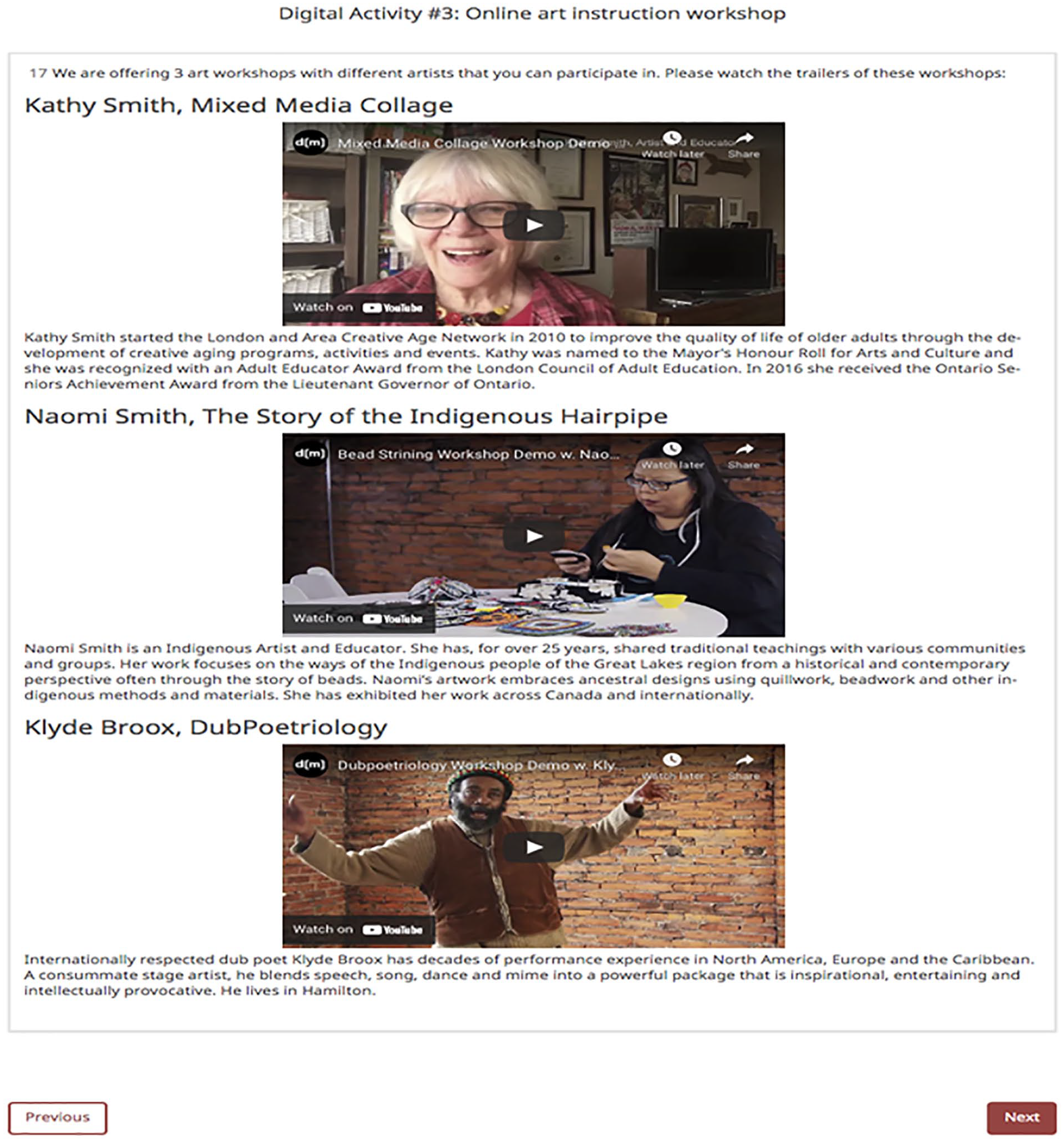
Direct [Message] Interactive Survey Part 3: Art Workshop Trailers.
Digital literacy
Digital literacy was identified as a potential barrier to participation in the revised process. In reflecting on resources needed for continuing research with older adults during the pandemic, Vrkljan et al. (2021) suggest it is important for older adult participants to
. . . feel comfortable with the technology employed and be offered skilled levels of participation that are congruent with their diverse needs, as well . . . there should be consideration for caregivers who often assist care recipients with remote engagement in research . . . (p. 2)
This insight is echoed in other user research investigating disabled and older adults’ experiences of accessing the digital realm (Jones et al., 2021). To respond to these needs, Centre[3] sought additional community-based funding and developed a series of interactive tutorials designed to support older adults’ use of technology for online engagement (to view these tutorials, go to www.directmessage.ca/TV). Questions related to caregivers and caregiving supports were included in the survey to ensure the analysis attended to these concerns. As a “work around” to older adults’ possible limited access to technology, the project secured seven cellular WIFI-enabled tablets which could be loaned to participants who lacked equipment or who did not have at-home WIFI access. The tablets were pre-programmed with Direct[Message] materials and survey links to aid in participants’ ease-of-use and with plans to deliver them to participants’ homes using contactless delivery and return protocols.
Analysis
Analysis of the totality of survey results is pending. However, in alignment with constructivist grounded theory methods, we undertook coding and analysis on an ongoing basis, using comparisons between/among participants’ responses to support reflexive thematic coding (Braun et al., 2018). This process allowed patterns and significant factors to present themselves in an ongoing way. Purposive sampling allowed for recruitment of participants reflecting a variety of identities, lived experiences, and engagement in a range of different art practices. Where we found voices missing, we undertook a purposeful approach to recruitment to ensure a more enriched representations of each community’s membership.
To maximize our community-based approach, we hired the CCG members to administer surveys to participants and to support participant recruitment in their own local communities. Four of the six consultants served as facilitators, with the other two consultants opting not participate due to health issues and/or other commitments. To support consultant facilitation of the online surveys, we initiated a step-by-step training process. Through this training, the research team identified that consultants’ digital literacy capacities varied greatly. As a result, we offered additional training in specific skills (such as use of advanced Zoom features). In one instance, a CCG member indicated they felt unable to balance the need for engagement in the interview process with the labor of technical support and logistics. The literature suggests online quantitative research using technologies like Zoom results in significant increases in technical work (Roberts et al., 2021). To address this consultant’s concerns, we partnered them with a technically skilled research assistant who provided technical support during the research sessions, freeing the consultant to focus on interviewing rather than managing technology. The working relationship between the two team members enhanced the quality of the research. With only four consultants completing participant outreach and facilitating survey completion, it became necessary to hire additional facilitators. The three students (one of whom was a project intern) we hired as research assistants participated in training and preparation alongside CCG members, and a strong sense of inter-generational teamwork resulted from this process.
The survey was administered in three parts to ensure the number of questions and the time required to complete each section was manageable for facilitators and participants alike. This is consistent with the “practice excellence” literature on research with older adults (Roberts et al., 2021; Vrkljan et al., 2021), which recommends that researchers design manageable, flexible, and slow research methods that meet this group’s access requirements. Our survey included closed questions focused on demographic assessments and information about technology use, and open narrative questions with opportunities for participants to share stories and to upload photos or digital samples of their creative works. Participants were asked to evaluate various approaches to a variety of arts activities including gallery visits, artists’ talks, and instructional videos.
The interactive survey research is now complete, with 31 older adults completing all three surveys, another two completing the first survey, and a third participant completing two of three surveys. In addition to the survey, we invited participants to complete an online workshop and evaluation to determine the type of workshops that might be popular among older adults. From this point forward, the project’s design team will develop a prototype of the digital platform informed by our research data. When we have developed the technologies and content, we will invite research participants to test and evaluate these prototypes collaboratively until an inexpensive, user-friendly, accessible resource is finetuned for dissemination among broader aging publics.
Findings
CBR Challenges During COVID-19
In reflecting on Direct[Message]’s research process and aspirational goals before and during the pandemic, COVID-19 restrictions presented substantive challenges to implementing CBR. To begin, our entire approach centered on older adult engagement and leadership, and emphasized in-person activities, both of which required considerable modification due to emergency research restrictions implemented by the two university partners. The goals of in-person activities focused on engaging individuals who may experience marginalization and isolation and building meaningful relationships to gain greater insight into experiences of technologically mediated artistic practice. In redesigning this project, it remained important to present opportunities for connections between and among participants across the multiple phases of the study. Redesigning the research in remote form via the interactive administered survey was the best option for meeting the needs of participants and researchers, and the requirements of our respective research ethics boards. Importantly, in addition to poising ethical, resource, and recruitment challenges, the online pivot shifted some of the goals of the research and brought greater attention to questions of accessibility as a necessary first step in promoting engagement in the arts.
Ethical Considerations
As previously noted, the research team wrestled with the ethics of continuing research with vulnerable populations during a pandemic. Our need to balance the diverse agendas of multiple project partners, funders, community consultants, and community members/organizations added to the ethical quandary. Interdisciplinary university–community partnerships bring many opportunities and possibilities, but they also require careful attention to ensure that we surface and resolve, or at the very least, interrogate conflicts to land on the best outcome in the situation at hand (Roberts et al., 2021). There were many times when contradictions between/among the needs of the design team, the needs of Centre[3], and the funder’s deadlines were difficult to reconcile. For example, to develop prototype materials, the design team required information from the research team. To facilitate research activities remotely, the researchers and consultants needed Centre[3] to distribute equipment and supplies. However, in organizing staff to carry out this task, Centre[3] had to navigate public health guidelines, provincial lockdown mandates, and university research protocols while considering the broader ethics of researching during a pandemic.
The project’s inherent interdisciplinarity meant that at times, the processes and instrumental goals of the different disciplines with a stake in the research were not well aligned; compromises were needed. In these circumstances, we centered community well-being and partner collaboration/relationship as our guiding principles for resolving tensions. Through discussions that included CCG members, agency representatives, and research team members, we decided that ethical challenges were a reality whether we continued, canceled, or deferred the project. For some team members, ending the research prematurely left now engaged older adults without ongoing support, which clearly was unethical. Engaging with older adults to gain understanding of their experience of digital technology and the arts in the context of COVID-19 also seemed like a uniquely valuable opportunity. If the challenges posed by COVID-19 would not be resolved or improved by project termination, we deemed that online research was the best path forward.
The stringent restrictions imposed in response to COVID-19 warranted additional inquiry into the effects of the pandemic on participants. Roberts et al. (2021) have suggested that acknowledging the reality of the pandemic by integrating additional questions about it into the research design may enhance research ethics. These authors suggest discussions about pandemic conditions will almost certainly occur when collecting narrative data as narrative discussions are always, at least partially, rooted in day-to-day life. Ignoring broader conditions produces research that lacks temporal and spatial context and that fails to grapple with major events in participants’ present-time real-life experiences.
Research Resources
The layers added to the research to address context supporting our analysis required additional resources. Government-issued COVID-19 research supplements with a pandemic focus emerged as vital to continuing Direct[Message]. With the help of these funds, we hired a research intern to provide overall support, and two additional research assistants to support survey facilitation. Moving the research from in-person to remote spaces also required technical expertise; so, we engaged an information systems consultant with expertise in survey software to build an online survey with interactive features and video-based materials. The digital space they created had to facilitate arts engagement and data collection, and this, in turn, necessitated consultants and participants receive additional training on its use. These cascading changes necessitated that we extend the project by about 6 months, and to seek out the funder’s permission to work within a revised timeframe.
Participant Recruitment
One of the greatest challenges Direct[Message] has confronted in the wake of COVID-19 is recruitment. As noted, the challenges of recruiting in Guelph, where research team members lacked strong networks or links to grassroots communities, proved difficult before COVID-19’s arrival. The pandemic resulted in extended closure and remote work in many organizations, which made connecting with folks in the community even more challenging. Finding consultants in Guelph required us to invest additional time and energy in relationship development with organizational gatekeepers who could identify those individuals who met the criteria established in our research protocol. Recruiting participants meeting all criteria also proved challenging; research assistants contacted more than 60 local senior-serving agencies to recruit just 10 participants. In the end, CCG representatives recruited most of the study participants using their networks to locate the best candidates. This resulted in recruitment taking a month longer than originally estimated, leading to further delays.
Preliminary Findings
A constructivist grounded theory approach orients analysis as an ongoing, beginning as soon as the research starts (cite). While analysis of our data is far from complete, we present some preliminary findings highlighting significant themes that will continue to evolve over the life of the project. These themes include technology use and technology use/digital engagement; access barriers and discrimination; and engagement in the arts.
Technology Use/Digital Engagement
Many seniors’ lack of familiarity with digital technology or what some describe as the “digital divide” presented itself in the Direct[Message] project. Seniors reflected their limited familiarity with various digital technologies in their survey responses and embodied this in their need for additional resources and supports to participate in the study (Flicker & Nixon, 2015). For many older adults, completing the Direct[Message] survey was the first time they had used Zoom. Few reported having a desktop or laptop computer, yet many had tablets or cellphones which required agility in facilitation to adjust to the limitations of smaller devices. Many seniors reported a desire to learn more or enhance their skills; to do this many relied on family and friends or community hubs, with fewer older adults relying on online resources like YouTube. In many ways, the necessity of moving our entire research apparatus onto the digital realm brought access questions to the fore, teaching us that access to must precede engagement in the arts.
Access Barriers and Discrimination
Many participants identified access barriers as limiting their use of technology. Although participants tended to situate the problem of access as a problem of their aging bodies (mentioning both age-related and non-age-related cognitive challenges, mental illness/psychiatric diagnoses/mental difference, physical disabilities), disability studies and critical access perspectives teach us that disability emerges from the fitting or misfitting of bodies with environments, rather than bodies alone (Changfoot et al., 2021; Changfoot & Rice, 2020; Jones et al., 2022; Rice, Bailey, & Cook, 2021; Rice, Riley, et al., 2021). This misfitting limited older adults’ capacity to engage with the arts through digital technology but heightened their desire for engagement. One of the common examples shared was the problem of accessing a website when multiple windows and layers of materials needed to be opened to reach the desired webpage. For some individuals with cognitive impairments and mental difference/illness, the level and layers of links, webpages, and windows could be confusing and at times, disorienting. Participants reported difficulty navigating these layers to locate the desired application or webpage, and the tactile work required to access specific applications or websites that required movement or use of a mouse or track pad was oftentimes difficult for those with mobility disabilities.
In addition to or interacting with ableism, other forms of discrimination such as ageism, racism, and homophobia also showed up in participants’ stories. In some cases, internalized ageism caused participants to doubt their digital literacy skills and their capacity to improve their skills. Several participants raised issues of stereotypes about older adults as shaping their experience of help-seeking when they had trouble navigating technology or wanted to learn new digital literacy skills. Some participants with cognitive disabilities or mental differences/psychiatric labels noted how existing technologies generally did not anticipate or adapt to their needs. A handful suggested that too much screen time resulted in overstimulation, limiting their capacity to engage with technology to complete art projects or to enjoy viewing online galleries.
In other instances, financial issues/lack of adequate income negatively affected people’s capacity to purchase a device, software license, and/or internet service. Some participants lacked access to high-speed internet or the means to purchase expensive packages and services in a country where consumers pay some of the highest prices for digital services in the western world (Wall Communications, 2018, pp. i–vii), which obviously forecloses durable at-home access for those on a fixed income. Several participants indicated they lacked support and assistance to purchase equipment and services—for example, not knowing what to ask meant that participants avoided making decisions about what equipment might meet their needs. In some rural locations, companies do not offer high-speed internet, which limited residents’ access to online engagement.
Access thus emerged as a critical theme in our research. For example, access to digital literacy skill development presented itself in our discussions of older adults’ engagement in the arts through digital media. Several participants described the effects of lack of access to digital literacy as leaving seniors with limited capacity/confidence to use technology. This was amplified by participants discomfort with technology, which increased their hesitancy to engage and experiment and prevented them from participating in on-line arts programming. Participants also identified low energy, lack of time, and lack of accessible spaces as limiting their capacity to engage in the arts using technology. Low energy was linked to lower levels of attention and/or less capacity to focus than participants had experienced when they were younger, which, in turn, we might link to the design of the online arts programming on offer, which currently may be developed only with the energy levels of younger, non-disabled audiences in mind.
Access to Arts Engagement
We originally designed the Direct Message study to examine how we might use technology to increase older adults’ arts engagement. However, pandemic conditions made answering this question far more complex as we worked to pivot the research apparatus into the online space. This required us to make a double move: to design an easy-to-use technology prototype that could increase older adults’ arts engagement, and simultaneously, to design an easy-to-use online research apparatus that would increase the population’s willingness/capacity to participate in the shaping of a technology specifically designed for their cohort. In bringing access questions to the fore, this double move and especially the online pivot, brought home that questions of arts access preceded those of arts engagement—meaning that seniors could not engage in the arts unless/until they had clear pathways to do so.
Several access issues presented themselves in participants’ commentaries on arts engagement. For example, lack of adequate income support meant that obtaining or maintaining arts access digitally was at times limited. Some participants with low incomes lacked appropriate computer equipment. Other participants indicated that they did not always have access to the right space for the activity they wished to undertake; for example, participants who lacked conducive space, appropriate computer equipment, and art-making software had limited capacity to engage in DIY activities. Some participants indicated that they were unaware or unfamiliar with arts-based resources available online and in the community, and/or were uncertain where or how to find out more about these. When older adults accessed online programs, they indicated that they felt that there was a lack of personal connection within the online platform. Most viewed familiar faces and an identifiable person as the leader as more desirable than un-hosted, asynchronous approaches.
For some participants, cultural alienation limited their engagement in online arts activities. They described how the platforms used (e.g., Zoom, WhatsApp) combined with the identities of instructors and the teaching of artful practices that did not reflect their cultural contexts or ethnic/racial identifications often lead to their disengagement. Similarly, discriminatory assumptions about the identities, capacities, and capabilities of participants may have led them to disengage from online activities. In other cases, particular designs of online arts programming worked best for certain groups of people. For example, one participant with significant hearing loss commented that asynchronous “discussion board” style arts groups worked well for her, as she was able work at her own pace and could refer to written materials without trying to read lips or read and follow instructions while she was trying to engage creatively. Other participants could not recreate the art practice they wished to pursue at home. In these cases, individuals required space or equipment that was beyond the means or space available to them—so transferring their craft to the digital environment felt impossible.
Discussion
The redevelopment of the Direct[Message] project offers insight into the challenges and opportunities of online research with older adults. The project developed and will likely continue to develop new understandings about the wants, needs, and experiences of older adults engaging in arts through digital technology. Redesign of the research approach due to the COVID-19 pandemic has revealed several significant issues enhancing the meaning and significance of findings related to older adults’ arts engagement and to understandings about the process of practically engaging in qualitative research with older adults in an online/digital context.
Qualitative research involving older adults benefits from a respect for the heterogeneity of these communities and from genuine efforts to incorporate diversity and interdisciplinarity into the research process (Roberts et al., 2021; Vrkljan et al., 2021). Direct[Message] has integrated significant interdisciplinarity through the make-up of the research and development teams by bringing individuals from the arts, education, social work, engineering, humanities, gender and feminist studies, and communications together for the benefit of the project. Involvement of community members representing three local communities (Hamilton, Guelph, London) also reflects a diversity of identities and lived experiences as important to the knowledge mobilization undertaken in this research.
The need to develop online research approaches and practices as a result of COVID-19 social distancing and research ethics protocols ironically has done much to advance the scholarship of online qualitative research (Tremblay et al., 2021). Yet assumptions about the apparent ease with which researchers might move a study protocol from an in-person to an online/digital approach with a bit of paperwork submitted to research ethics (Vrkljan et al., 2021) were challenged by the reality of attempting to make these moves under the constraints of the pandemic and without proven experience. Vrkljan et al. (2021) suggest that pandemic protocols resulting in changes to research projects have explicated limitations to traditional approaches to research with older adults. Online/digital research projects “address[ing] structural inequalities” illustrate that research in the digital space is complex; projects that move online in the effort to respond to/account for certain inequalities reveal the complexities of marginalization as each change potentially results in the need for more resources and yet more changes (Roberts et al., 2021, p. 2). For example, moving our research online revealed the need for digital literacy training aimed at older adults. Incorporating training into the research meant seeking out additional funding and designing new training resources. The development of new research resources such as the online administered survey also resulted in the need to examine the labor of online research practices, which, in turn, produced a need for additional planning, training, and staffing.
Some of the approaches and resources developed to support our project, such as the online digital literacy tutorials and the online administered survey, could be reused in other projects and for other purposes. Engaging in critical reflection on the ethics of online research with marginalized older adult populations revealed several contradictory tensions and called for a variety of resources and flexibly in their use. Adopting dialogic and relational approaches enabled us to identify and respond to community-based facilitators and participants. As Roberts et al. (2021) argue, researchers must carefully consider what constitutes rigor, practicality, ethics, and equity in the context of virtual qualitative research and of the communities engaged in this study. The authors conclude, and we agree, that “online/digital research requires an examination of the entire research cycle—from the initial design of the work through dissemination of findings” (p. 2).
In considering the ethics of redesigning Direct[Message], the principle of community participation/engagement remained central in assessing the challenges and opportunities that surfaced as we moved our project into the online space. While the research questions focused on understanding the wants and needs of older adults, the research process focused on developing that understanding in partnership with older adult representatives in three geographically distinct communities. In undertaking this shift, we developed a deeper understanding of the power relations that surround, enable, and constrain access to the digital domain and to the knowledge production process itself. As Vrkljan et al. (2021) assert, “equity is not enhanced in the provision or distribution of technology (and/or Internet access), rather it is by disrupting traditional ways of doing research that [we]shift the power dynamic between researchers and participants . . .” (p. 61). Involving older adults and service providers in all aspects of the redesign and redevelopment of the research platform allowed us to embed community perspectives and experiential knowledge more deeply into our project and to better identify access practices that can enhance the capacity of older adults to participate actively in research processes (Roberts et al., 2021) and we would add arts activities.
As many critical access scholars have noted, the stresses and challenges of individually navigating a world designed for non-disabled people and of trying to carve out accessible pathways through it wears down/wears out those users who embody difference before they even arrive in a space (Ahmed, 2019; Chandler et al., 2021; Jones et al., 2022; Rice, Riley, et al., 2021). Disabled people commonly confront this scenario in neoliberal ableist jurisdictions such as Canada, where legislation and policy tend to download responsibility for access onto individuals who require it (Rice, Chandler, et al., 2021; Rice et al., 2016). In this context, people who experience a misfitting with the ableist world must plan for and problem solve how to meet their own access needs rather than relying (as non-disabled people do) on the distribution of that responsibility and the labor involved to achieve it across the broader collective. In a de-individualized, more distributed understanding of access, users’ various access needs/requirements would be anticipated from the onset and built into the very design and delivery of tools, programs, and environments (Rice, Bailey, & Cook, 2021). While our research originally aimed to increase older adults’ engagement with the arts, in part, through developing easy-to-use technologies designed by, for, and with aging communities, we could not have anticipated pandemic conditions that required us to find pathways around the multiple layers of inaccessibility already hard-wired into our broader technological infrastructure.
The move to online research has shifted the allocation of resources throughout the Direct[Message] project. For example, conducting an online survey rather than in-person interviews meant reallocating budget lines from travel and location costs to the costs of technical expertise. This required us to find additional funds for technology-oriented staff to build the interactive survey, for extra work hours required of community facilitators to learn the online system, and for research assistants to train consultants and develop materials (e.g., manuals) to support the survey use.
The remote nature of this research also clarified the significance of social networks and relationships in the recruitment process, networks that connected both organizations and their constituents. Roberts et al. (2021) suggest there is a lack of emphasis on “critically addressing recruitment and establishing rapport with participants . . . particularly with vulnerable populations” (p. 1) in the literature on digital research. For Direct[Message], recruitment proved to be one of the greatest challenges of the project. Recruitment was most successful when it was undertaken, even loosely, through one of the local community organizations that knew of potential participants. The use of multiple contact points including pre-research screening, surveys, the creative workshop, and workshop evaluation enabled participants and facilitators to get to know one another and build their relationships over several weeks.
Conclusion
The process of pivoting Direct[Message] from an in-person to an online project was labor- and resource-intensive. Trambley et al. (2021) suggest, protocols and practices to manage COVID-19 may remain a part of research activities for the foreseeable future. If this prediction is true, lessons learned and tools developed through Direct[Message] will prove useful in future research. The online, interactive administered survey format replacing in-person research may hold benefit for researchers conducting similar studies, as well as those working with other marginalized and vulnerable populations.
Our research team will carry the knowledge and experience gleaned from our collaborative process into the future; however, our capacity mobilize the resources developed through the Direct[Message] redesign in future research remains dependent on broader shifts in hegemonic knowledge systems. As Vrkljan et al. (2021) suggest, interdisciplinary research approaches that “transcend traditional academic boundaries” remain “unfashionable and poorly rewarded” (p. 4). This type of research can be difficult to categorize and at times difficult to publish. However, the “benefits and quality of the outcome . . . is its own kind of reward, making the formal knowledge mobilization of this type of work worth the energy of persistence” (Vrkljan et al., 2021, p. 4). It is possible that the COVID-19 pivot may add up to more than a temporary shift in the ways and means of research, and that this shift may lead to greater acceptance for a wider range of research approaches and processes.
Footnotes
Declaration of Conflicting Interests
The author(s) declared no potential conflicts of interest with respect to the research, authorship, and/or publication of this article.
Funding
The author(s) disclosed receipt of the following financial support for the research, authorship, and/or publication of this article: Canada Council for the Arts, Digital Strategy Fund: Public Access to the Arts and Citizen Engagement, Multi-phased Initiatives (Access 2: Engagement for the Aging Community)
