




Abstract
As essential professional protective equipment, protective clothing plays a critical role across medical, industrial, chemical, environmental protection and other fields with its manufacturing and development attracting sustained attention. This study presents a comprehensive bibliometric analysis of protective clothing research spanning 2015 to 2024, utilizing 2918 publications from the Web of Science Core Collection. Employing CiteSpace for co-citation, co-occurrence, and burst detection analyses, we delineate key research trajectories, identify influential contributors, and pinpoint emerging frontiers. Findings indicate sustained growth within the field, with Donghua University and the United States as the leading institutional and national contributors, respectively. Research evolution is characterized by three distinct phases: foundational studies (2015–2016), material innovation (2017–2020), and pandemic-driven medical applications (2021–2024). Central research themes encompass thermal performance optimization for flame-retardant clothing, barrier mechanism advancements in chemical protective apparel, ergonomic design for occupational wear, and antiviral functionality in medical protective suits, reflecting a shift from single-function solutions toward integrated, intelligent protective systems. Central themes include thermal performance, ergonomic design, and multifunctional material systems. The COVID-19 pandemic significantly influenced recent research directions, particularly in enhancing comfort and viral protection for medical use, while progress in nanofiber technologies and sustainable materials benefits multiple protective clothing categories. Future research priorities should emphasize wearability across diverse hazardous environments, pandemic-responsive designs, and cross-application sustainable material systems. This analysis provides a systematic framework for understanding the field’s evolution and offers valuable insights to guide researchers, policymakers, and industry stakeholders in advancing protective clothing technology.
Introduction
Personal protective equipment (PPE) is a critical requirement in many occupations from industrial manufacturing to healthcare to mitigate harmful exposures to physical and chemical hazards, ensuring worker safety in industrial environments,
1
encompassing all devices or garments, including items like respirators, safety glasses, hearing protection, gloves, and harnesses, designed to minimize exposure to hazards that may cause workplace injury or illness. Within the PPE spectrum, protective clothing, constitutes a specialized subset of PPE focused specifically on barrier garments that shield the wearer’s torso, limbs, and skin, represents a specialized category of functional apparel engineered to deliver targeted performance attributes within hazardous environments,1,2 includes coveralls, gowns, aprons, hoods, and full-body suits. Its efficacy hinges critically on achieving a balance between robust protection and ergonomic compatibility——physiological strain, discomfort, or compromised mobility can significantly undermine user adherence and, consequently, the intended protective function. For instance, in high-temperature industrial environments such as foundries or steel mills, workers require thermal protective clothing that can effectively shield them from radiant heat while allowing for adequate heat dissipation to prevent heat-related illnesses.
3
Similarly, in healthcare settings, especially during the COVID - 19 pandemic, protective clothing was essential for healthcare workers to minimize the risk of viral transmission, underscoring its significance in both emergency and routine medical operations.
4
Beyond such emergency scenarios, it remains indispensable in industrial, construction, and hazardous material handling contexts, highlighting its cross-sectoral importance. Protective clothing can be broadly classified into two categories: general protective clothing and specialized protective clothing. The latter is designed to shield against various external factors, including physical, chemical, and biological hazards (as shown in Figure 1). This category encompasses a wide range of applications, such as flame-retardant and thermal protective clothing, anti-static garments, oil-resistant and water-resistant workwear, waterproof clothing, cold-resistant and heat-resistant attire, radiation-protective clothing, and chemical-protective apparel. The design and development of protective clothing are complex undertakings, involving multiple disciplines such as materials science, textile engineering, and ergonomics. As industries continue to evolve and new hazards emerge, the demand for advanced protective clothing with enhanced performance characteristics has become increasingly urgent.5–7 Sunburst chart of specialized protective clothing.
Over the past few decades, significant progress has been made in the field of protective clothing research. A vast body of literature has explored various aspects, including the development of novel materials,8–15 performance characteristics,16–19 advanced welding protective clothing system, 20 mechanisms analysis,21,22 the optimization of fabric structures for improved protection and comfort, 23 and the establishment of performance testing standards.24,25 However, despite these efforts, several critical challenges persist. One of the primary challenges lies in reconciling enhanced protection levels with wearer comfort and ergonomics. For example, while some materials offer excellent resistance to chemical or physical hazards, they may be heavy, stiff, or have poor breathability, leading to discomfort and restricted movement.26,27 This trade-off between protection and comfort has been a long - standing issue in the development of protective clothing, as noted by Karim et al. 28 in their review of sustainable personal protective clothing for healthcare applications. They emphasized the need for coordinated efforts among different stakeholders to develop protective clothing that meets both safety and comfort requirements.
Despite its established significance, protective clothing technology faces three core challenges that hinder its advancement: (1) reconciling enhanced protection levels with wearer comfort and ergonomics, (2) addressing sustainability gaps in materials and production processes, and (3) bridging performance inconsistencies across diverse hazardous environments. For instance, Natarajan et al. 16 emphasized the necessity of improving the impact resistance, abrasion resistance, thermal comfort, and ergonomic performance of motorcycle protective clothing. These gaps reflect a fragmented landscape where individual studies advance specific aspects but fail to provide a holistic view of the field’s evolution, hotspots, and future directions.
To address this fragmentation, systematic synthesis of existing research is imperative.
To address these gaps and challenges, bibliometric analysis provides a powerful tool for systematically synthesizing existing research and identifying trends in the field of protective clothing. As a quantitative and visual methodology, bibliometric analysis can help researchers map the intellectual structure of a discipline, identify key research areas, and predict future research directions. 29 In this context, scientometric analysis has emerged as a powerful methodology, providing valuable insights into the complex framework of scientific communication through the systematic analysis of publications and their embedded information. This approach plays a pivotal role in contemporary academia and research management, facilitating the identification of emerging trends, collaboration patterns, and research impact. The term “bibliometrics” was first introduced by Pritchard 30 in 1969, as the application of quantitative methods to analyze publication dynamics within scholarly communities. 31 Advances in computational tools have since expanded the scope of bibliometric analysis, with software such as VOSviewer, CoPalRed, Bibexcel, SciMAT, VantagePoint, and CiteSpace enabling sophisticated techniques like co-citation analysis, keyword co-occurrence mapping, and network visualization.32–34 Among bibliometric tools, CiteSpace, developed by Chen Chaomei (Drexel University), stands out as a multidimensional, time-based visualization tool for detecting emerging trends and pivotal studies within large corpora of literature,35,36 which is the most popular and valuable tool for the bibliometric and visual analysis of knowledge networks that allows readers to better participate in and understand the overall situation in specific research areas and highlights critical documents. CiteSpace predominantly relies on co-citation analysis theory and path-finding network algorithms to assess documents and collections within specific fields. 35 With the rapid growth of contemporary scientific research and published literature, CiteSpace has provided researchers with powerful support for extracting new knowledge from existing data by replacing or enhancing repetitive mental work and further promoting scientific development. 37 While prior bibliometric studies have touched on specific subfields (e.g., protective clothing research from 1999 to 2018, 38 firefighter protective clothing 20 ), a comprehensive analysis of the entire protective clothing domain, encompassing general and specialized applications, remains lacking.28,39–41
This study aims to fill this gap through a CiteSpace-based bibliometric analysis of protective clothing research, with three core objectives: (I) delineate the historical growth trajectory and current research landscape, including key countries, institutions, and authors; (II) identify dominant thematic clusters and research hotspots (e.g., material innovation, comfort-performance tradeoffs, sustainability); and (III) project future directions to guide innovation in design, technology, and policy.
The remainder of this paper is structured as follows: Section 2 outlines the methodology, including data retrieval criteria and CiteSpace analysis procedures. Section 3 presents the results of network analyses (e.g., co-authorship, keyword co-occurrence) and thematic clustering. Sections 4 and 5 discuss the implications of these findings and conclude with recommendations for stakeholders, respectively.
Research methods
Data source and search strategy
Web of Science Core Collection (WosCC) was selected as the primary data source for this bibliometric analysis due to its comprehensive, multidisciplinary coverage of peer-reviewed literature and robust citation tracking capabilities. As the most established citation database, WoSCC offers several advantages for scientometric research 42 : (I) it provides authoritative journal classification systems, (II) enables precise citation analysis, and (III) facilitates efficient data export for computational analysis. 34 These features make it particularly suitable for large-scale bibliometric investigations. The search strategy was implemented using the following parameters: (I) Topic = “protective clothing OR protective suits OR protective garments”; (II) Document type = article OR review article; (III) Language = English; and (IV) Time span = 2015–2024.
This search initially yielded 3006 publications. After applying inclusion criteria (detailed in Section 2.2), the final dataset comprised 2918 documents (2633 research articles and 285 reviews), all exported in plain text format for analysis. The temporal distribution of these publications spans from January 2015 to December 2024, providing a comprehensive and decade-long perspective on research evolution in this field. Bibliometric analysis of these records, including article metadata, abstracts, keywords, and citation networks, enables systematic examination of several key dimensions, including contribution patterns across countries and institutions, collaborative networks among researchers, journal distribution and impact, knowledge structure through co-citation analysis, research trends via keyword co-occurrence and burst detection.29,34 In the meanwhile, the keyword co-occurrence and burst analyses also respond to research hotspots and trends.
43
The research process is outlined in Figure 2. The subsequent sections detail the data screening criteria and analytical methods employed in this study. Flowchart of the literature screening process.
Criteria for data inclusion and exclusion
To ensure the quality and reliability of the bibliometric analysis, rigorous screening criteria were implemented, adhering to established methodological practices in scientometrics. 35 Inclusion criteria were limited to peer-reviewed journal articles and review papers, as these represent the most rigorously vetted and impactful contributions to the field. Additionally, only English-language publications were included to ensure linguistic consistency and reflect the prevailing language of international scientific discourse. The exclusion criteria were as follows: (i) non-peer-reviewed materials (e.g., proceedings papers, meeting abstracts), editorial content (e.g., letters, commentaries, corrections); (ii) non-research publications (e.g., book chapters, news items); (iii) retracted publications, and documents unrelated to protective clothing research. This selective approach aligns with best practices in bibliometric research, ensuring the analysis is grounded in in a corpus of high-quality, representative scholarly output. 36
While this study provides valuable insights through clustering analysis and topic labeling, several limitations should be acknowledged. First, potential biases inherent in database indexing may compromise dataset comprehensiveness, as relevant literature could be underrepresented or misclassified. Second, the reliance on citation-based metrics is subject to inherent time lags. This limitation may result in the underrepresentation of recent publications that are potentially influential but have not yet accrued significant citations. Third, Automated clustering and labeling methods, despite their efficiency, may oversimplify complex thematic structures or overlook nuanced interdisciplinary connections.
To address these concerns, future research could incorporate data from multiple databases to mitigate indexing biases and enhance coverage, employ time-normalized citation metrics to more accurately assess the impact of recent publications and involve domain experts in the validation process to enhance reliability and depth.
Analysis method
After completing the data collection, all the records were exported and then the records and references were transformed into a plain text format for analyzing the original data set by using ‘CiteSpace 6.3.R1’ to analyze protective clothing studies between 2015 and 2024, so as to sort out the research hotspots and trends. And the time slice was set to ‘1’ (i.e., the retrieved literature was divided into 1-year units). The variations in node color in the plot reflect the changes over time; node size is positively correlated with the frequency; and the connecting lines indicate the cooperation, co-occurrence, and citation among nodes; node type is determined according to the type of the analysis; and the nodes with a centrality greater than 0.1 are marked by a purple circle on the outside. 44 The network node types were selected as ‘Country’, ‘Institution’, ‘Keyword’ and ‘Author’, and appropriate thresholds(k) were set. And the cropping algorithms are ‘pathfinder’ and ‘Pruning the merged network’. By analyzing the clusters of references and keywords and the citation bursts of references and keywords that vary with time, current research topics and future research directions are elucidated.
A key limitation of this study lies in the depth of the analytical methods employed. The research primarily relies on descriptive statistics and conventional bibliometric techniques, such as publication counts, citation analysis, and keyword clustering. While these methods are effective for mapping general trends and providing a structural overview of the field, they may not fully capture the nuanced evolution or interconnectivity of research themes. More innovative or inferential approaches were not incorporated. Therefore, this study may have shortcomings in revealing deeper academic development directions or predicting future research directions. Future research should consider integrating these advanced methods to enhance the analytical depth and conceptual contributions of bibliometric research.
Results
Bibliometric analysis of publication years
Quantitative analysis of scholarly publications serves as a robust indicator of research field development, with publication volume trends reflecting both disciplinary growth and emerging research directions.45,46 Our analysis incorporated 2918 publications in the protective clothing domain, with annual publication counts serving as a metric for research activity intensity and scholarly interest.
47
Figure 3 presents the annual publication output for protective clothing research from 2015 to 2024. The data reveal distinct developmental phases. In the initial phase (2015–2017), publications numbered 183 in 2015, peaked at 210 in 2016, then experienced a marginal decline to 206 in 2017. In the growth phase (2018–2021), a pronounced upward trajectory emerged, with consistent annual increases reflecting heightened research activity and exploration of fundamental aspects of protective clothing technology. Since 2021, the number of published studies on protective clothing has remained high and stable. In 2021, the number of publications peaked at 384, possibly related to the high level of interest in PPE during the COVID-19 pandemic outbreak. In the maturation phase (2022–2024), while exhibiting minor interannual fluctuations, publication volumes maintained robust levels, indicating sustained scholarly interest and a transition toward more specialized, in-depth investigations. No significant downward trend has occurred during this period, indicating that researchers still have a greater interest in protective clothing, and the research tends to be deepened. By fitting a trend line to the cumulative number of the publication, the trend line in the chart provides a visual representation of this growth, showing an overall positive slope despite periodic fluctuations. This steady increase underscores the expanding research interest related to protective clothing over the past decade. The number of publications on protective clothing in WoSCC from 2015 to 2024.
Bibliometric analysis of countries and institutions
Analysis of cooperation among countries
The country collaboration network (Figure 4) comprises 92 nodes and 485 connecting links, where node size corresponds to national publication output in protective clothing research. The node threshold was set to be g-index k = 25. As shown in Table 1, the top 10 countries with the highest published output are, in order, People’s Republic of China (PRC),United States of America, India, Australia, Poland, England, Canada, South Korea, Germany and France, collectively contributing 1657 articles (56.8% of total publications). The linkages between the nodes of different countries/regions also indicated closer collaboration among countries in the research of protective clothing. Network centrality analysis reveals critical intermediaries in global knowledge exchange: the United States and England exhibit centrality values >0.1 (Table 1), indicating their pivotal roles as hubs for international collaboration.
34
Countries with high-level research centres not only demonstrate their abundant research results, but also promote knowledge exchange between different countries in the same field. Visualisation of country collaboration network. Top 10 countries with the highest number of publications on protective clothing.

Analysis of institutional cooperation
Top 10 institutions with the highest number of papers published on protective clothing.
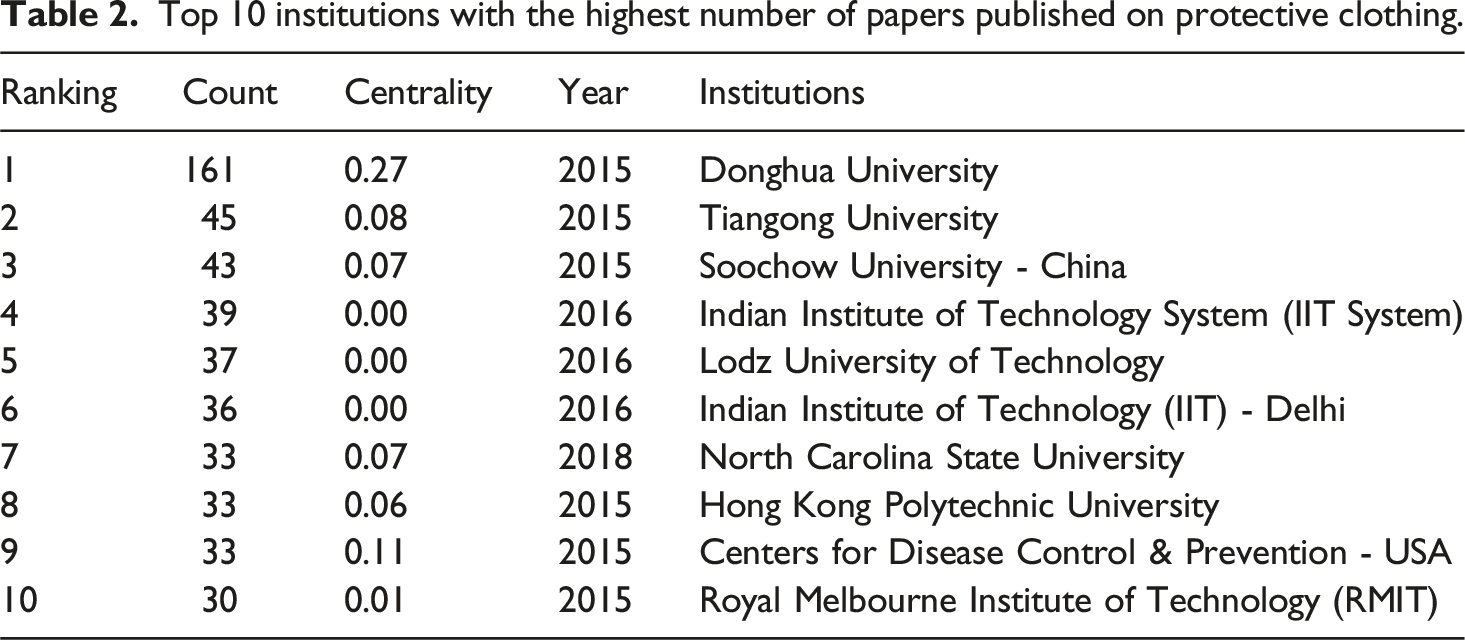

Visualisation of institution collaboration network.
Bibliometric analysis of authors
Analysis of author collaboration
Author collaboration analysis is pivotal in identifying key contributors and mapping knowledge exchange patterns within scholarly communities.44,45,48 The network in Figure 6 comprises 284 authors active in protective clothing research (2015–2024), with a low linkage density of 0.0104, indicating fragmented collaboration—a common feature in emerging interdisciplinary fields.
49
The node threshold was set to be g-index k = 14. The top 10 prolific authors (Table 3) with the highest number of publications in this field are Li Jun, Su Yun, Das Apurba, Yu Jianyong, Ding Bin, Tian Miao, Song Guowen, He Jiazhen, Wang Yunyi, Alagirysamy Ramasamy, who published a total of 277 articles (9.5% of total output). While most nodes exhibit multiple connections (suggesting localized teamwork), the absence of centrality values ≥0.1 among these authors (eight with zero centrality) reveals limited cross-group collaboration. This structural pattern aligns with Price’s law of scientific productivity, where a small cohort drives the output without forming cohesive networks. This highlights weak collaboration among most of these highly productive authors, with many conducting their research independently. Strengthening cooperative efforts within this academic community could foster greater innovation and enhance the field’s overall progress. Visualisation of author collaboration network. Top 10 authors with the highest number of publications on protective clothing.

Analysis of author co-citation
Author co-citation referred to the simultaneous citation of two (or more) authors in one or more successive articles for acquisition of a networked graphical of author co-citations that helped reveal the academic community in a research field.
44
The co-citation network (Figure 7) displays 275 nodes and 1314 links (density: 0.0349), with SONG GW emerging as the most cited author (154 citations, Table 4). The node threshold was set to be g-index k = 9. Most publication years are from 2015, with only one exception wherein SU Y’s appeared in 2018. In determining the centrality in the role of mediator, the author reflects the degree of importance that the said author has within the network. LI Y bears a centrality of 0.09, indicating a relatively central position, acting as a knowledge broker, connecting disparate research clusters----a role critical for interdisciplinary integration. Centrality values in network analysis highlight the diversified roles that respective authors assume. High-centrality authors are important actors in spreading knowledge and connecting dispersed topics and facilitate knowledge diffusion across subdomains, while peripheral contributors (low centrality) tend to be more independent and often specialize in niche application.
50
Visualisation of author co-citation network. Top 10 most co-cited authors of published papers on protective clothing.

Bibliometric analysis of journals
Bibliometric analysis of journal co-citations provides critical insights into the knowledge dissemination pathways within protective clothing research. The node threshold was set to be g-index k = 9. Figure 8 presents the top 10 most co-cited journals, ranked by citation frequency: Textile Research Journal (TEXT RES J), Journal of Industrial Textiles (J IND TEXT), Journal of The Textile Institute (J TEXT I), Journal of Applied Polymer Science (J APPL POLYM SCI), ACS Applied Materials & Interfaces (ACS APPL MATER INTE), Fibers and Polymers (FIBER POLYM), Ergonomics, Fibres and Textiles in Eastern Europe (FIBRES TEXT EAST EUR), Advanced Materials (ADV MATER) and Fire Technology (FIRE TECHNOL), all of which are important reference journals in the research of protective clothing. The dominance of TEXT RES J in citation counts (697 citations) underscores its pivotal role as the primary knowledge repository in this field. Citation counts reflect the prominence of these journals in protective clothing research. Notably, seven journals among the top ten, marked with purple circles in the network, exhibit centrality values greater than 0.1. These high-centrality journals serve as critical hubs, connecting research directions and fostering scholarly communication in the field
51
(Table 5). Visualisation of journals co-citation network. Top 10 journals with the highest number of co-cited published papers on protective clothing.

Bibliometric analysis of references
Analysis of the most frequently co-cited references identifies foundational works shaping protective clothing research (Figure 9, Table 6). The node threshold was set to be g-index k = 9. In the field of protective clothing, the top 20 most frequently co-cited were published by Bhuiyan MAR,
28
Karim N,
7
Lu YH,
52
Su Y,
53
He HL,
54
Peng YC,
55
Talukdar P,
56
Zhao J,
57
Fu M,
58
Song GW,
59
Bhuiyan MAR,
60
Song GW,
61
Bhuiyan MAR,
62
Mandal S,
63
Fu M,
64
He HL,
65
Udayraj,
39
Fonseca A,
66
Su Y,
67
Dolez PI.
68
Notably, three of these papers were published in the TEXT RES J, reflecting the journal’s significant influence in this domain. Besides, 55% (n = 11) of these core publications demonstrate centrality values >0.1, occupying structurally significant positions in the citation network. Literature with high centrality occupies a central position in the academic network of the field, establishing fundamental principles for protective clothing design, introducing advanced functional textiles, and developing standardized testing protocols. Visualisation of journals references network. The top 20 references with the highest number of published papers that were co-cited in the field of protective clothing.

Discussion
This section presents a interpretation of the findings from three key perspectives: technical content, authorship patterns, and bibliometric structure.
Technically, there has been a clear evolution in material trends, shifting from conventional textiles (e.g., cotton, aramid, and polyester blends) toward innovative materials such as nanofibers, electrospun membranes, graphene-enhanced fabrics, and phase change materials, all aimed at improving thermal regulation, filtration efficiency, and wearer comfort.
In terms of application areas, firefighting equipment, medical protective clothing, and chemical protective clothing are the most commonly studied types, reflecting public health priorities and the need for occupational hazard protection. Research topics include the integration of smart sensors, antimicrobial surface treatments, and the application of sustainable bio-based materials, indicating that future protective clothing designs will move toward multifunctionality and environmental sustainability.
From a bibliometric standpoint, the analysis identified the main actors in the field, namely, high-output authors, influential institutions, and leading countries such as China, the United States, and South Korea, which play central roles in advancing protective clothing research.
Research hotspots
Keyword co-occurrence analysis
Keyword co-occurrence analysis serves as a powerful bibliometric tool for mapping the intellectual structure of research domains by examining patterns in terminology usage across scientific publications.36,50 This method extracts and analyzes keywords from article metadata to identify conceptual relationships and research trends.46,69,70 In Figure 10, 292 unique keywords connected by 1844 co-occurrence link and each node represents a keyword, with the other colors indicating the distribution of co-occurring years. The node threshold was set to be g-index k = 15. The font size of the words is proportional to the co-occurrence frequency of the words.
71
“Protective clothing” (233 occurrences) emerges as the dominant keyword, confirming its status as the central research object. High-frequency terms like “performance”
69
and “fabrics”
71
reflect the field’s emphasis on material properties and functional optimization. Visualisation of keyword co-occurrence network.
The top 10 most frequently occurring keywords in published papers on protective clothing.
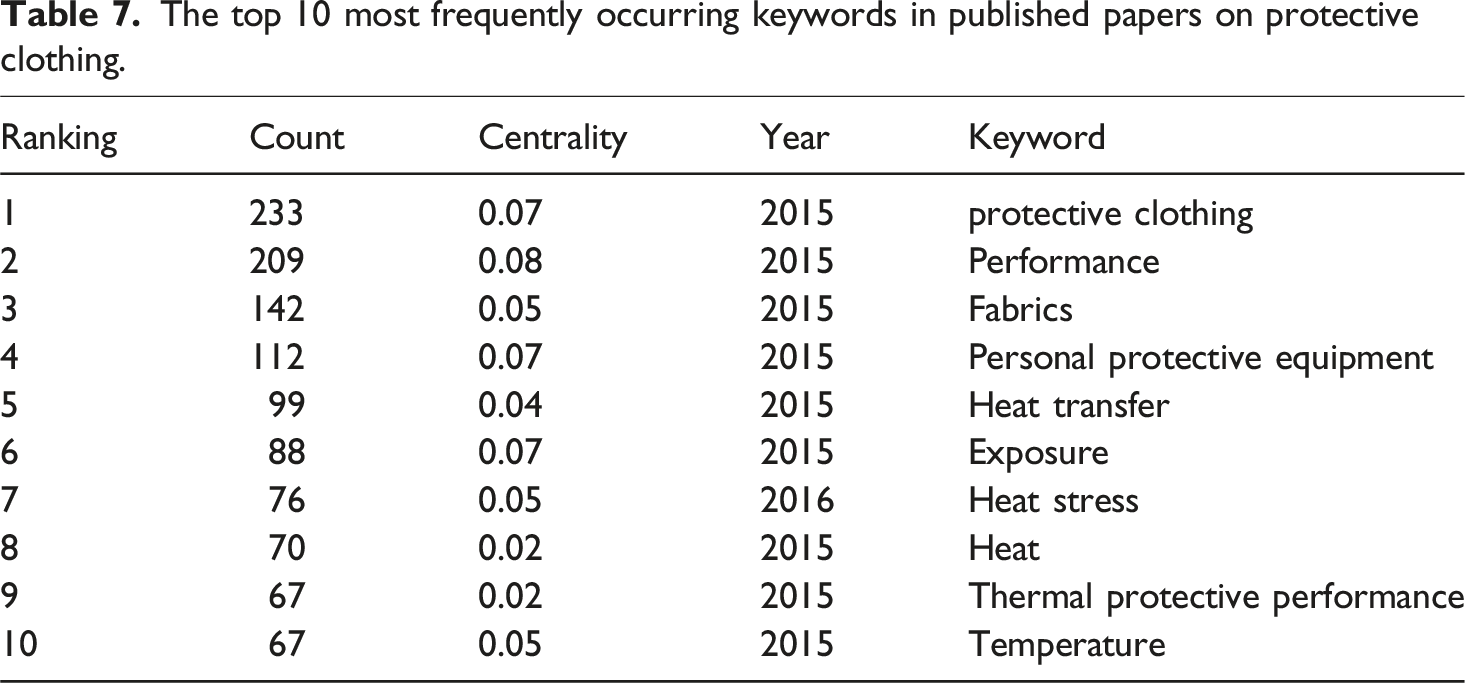
The co-occurrence network reveals several core thematic clusters:
Thermal Protection and Heat Stress: Keywords such as thermal protective performance, heat transfer, and heat stress are highly interconnected, representing a major research stream concerned with thermal regulation. For example, Mandal and Song 64 examined the empirical relationship between fabric parameters and thermal protective performance, while Talukdar 21 provided a comprehensive review of heat and mass transfer in thermal protective clothing.
Advanced Materials: The rise of nanofibers and electrospinning indicates growing interest in fabric innovation. Zhao et al. 48 developed fluorine-free nanofibrous protective textiles with multifunctional characteristics including breathability and waterproofing, aligning with this trend.
Integrated PPE Systems: The term personal protective equipment (PPE) frequently co-occurs with protective clothing, suggesting an integrated systems approach. Jahangiri et al. 65 investigated how full-body hospital PPE influences physiological and cognitive responses, demonstrating the need for comfort and performance balance.
Application-Specific Performance: The co-occurrence of firefighter clothing, medical protective clothing, and exposure points to context-driven research. He et al. 45 created an ultralight fire alarm e-textile tailored to extreme heat environments, underscoring application specificity.
Keyword clustering analysis
We employed the CiteSpace clustering method to identify research hotspots by automatically extracting keywords or noun phrases from cited literature. This approach generates cluster identifiers based on co-citation relationships, with each cluster representing a relatively coherent and independent research area.76,77 Keyword clustering analysis is instrumental in revealing research hotspots and emerging trends within specific fields (Table 8). The clusters in Figure 11 are labelled with rankings such as #0, #1, #2, etc., reflecting key research themes. These labels indicate several major research themes of protective clothing research, including advanced manufacturing techniques (#0 Electrospinning), performance metrics (#1 Thermal protective performance), physiological impacts (#2 Heat stress), health applications (#3 Skin cancer, #5 Phage phi6), and system design (#4 Personal protective equipment). The identified research clusters demonstrate significant translational potential. In the medical field, these findings can inform the design of advanced protective clothing for healthcare workers, ensuring both effective protection against infectious diseases and enhanced comfort during prolonged use. In the industrial sector, improved protective clothing designs can bolster worker safety in hazardous environments, contributing to better health outcomes and productivity. In the emerging technologies, phase-change materials for thermal regulation can make the protective clothing be more comfortable. This analysis reveals an evolving research landscape where material innovation intersects with human factors engineering, driven by both technological advancements and pressing societal needs. The identified clusters provide a roadmap for future interdisciplinary collaboration and targeted research investment. Visualisation of keyword clustering network.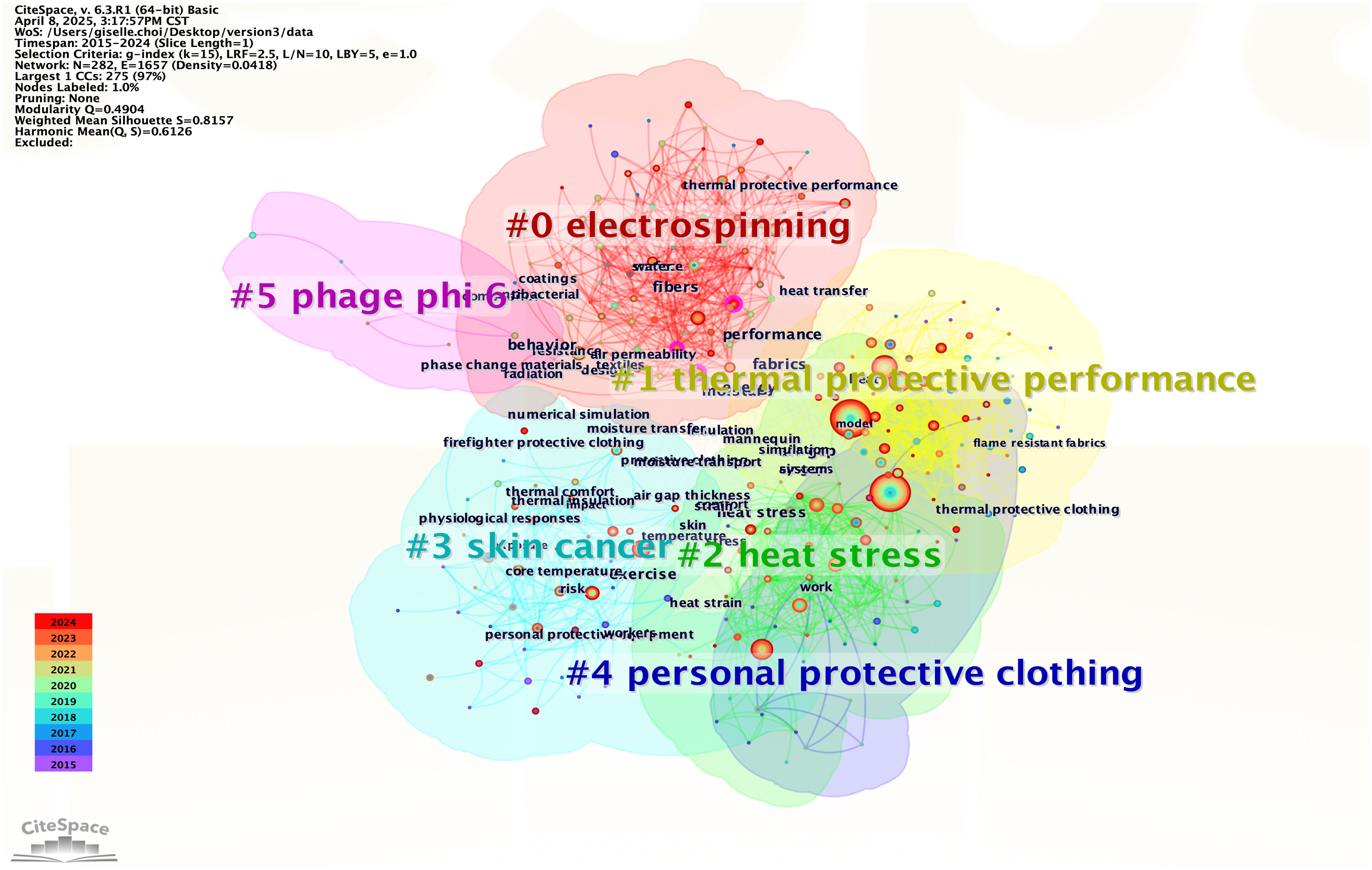
Keyword clustering tag table.

The silhouette coefficient is a robust metric for evaluating cluster cohesion and separation, with values approaching 1 indicating optimal performance (Table 9). Three algorithmic approaches were used for cluster labeling: Latent Semantic Indexing (LSI) identifies tags based on word co-occurrence patterns in large text corpora, uncovering latent semantic relationships. For instance, in the context of protective clothing, LSI identified Cluster 0 as involving heat transfer, nanofiber membranes, antimicrobial activity, and polyethylene terephthalate fabrics. This grouping indicates the cluster’s thematic scope, encompassing topics from material properties and fabrication techniques to performance evaluation.
Log-Likelihood Ratio (LLR) identifies statistically significant word associations by comparing the observed frequency of terms within a specific cluster against their expected frequency in the entire corpus. Analysis of Cluster 0 using LLR highlighted significant associations between electrospinning technology (used in protective clothing production) and factors including thermal stress, nanofibres, and laser cladding. This statistical association aligns with empirical applications. For example, in the production of medical protective clothing, a layer of electrospun film is added on top of the nonwoven fabric demonstrably enhances barrier efficacy against viral droplets.
List of keyword clustering information.

Keyword timeline mapping analysis
The keyword timeline visualization (Figure 12) employs two-dimensional temporal mapping to track conceptual development from 2015 to 2024. The time-zone map primarily visualises the evolution of document keywords and their interrelationships over time and space, clearly displaying them in two-dimensional coordinates with time as the horizontal axis.
73
The keyword evolution map was arranged from left to right in chronological order, with the size of the square nodes proportional to the frequency of corresponding keyword occurrences.
78
The connection between nodes indicates that different keywords appear in an article simultaneously, indicating the time between different periods.
79
CiteSpace uses two metrics to assess the effectiveness of clustering, namely modularity (Q) and profile coefficient (S). Q is an assessment of the modularity of a network, with higher values of Q indicating better network clustering. Q takes values between [0, 1], and when Q > 0.3 it indicates significant network structure. S is a metric used to measure the homogeneity of a network, and the closer the value of Q is to 1, the more homogeneous the network is. S is a metric used to measure the homogeneity of a network. When S is greater than 0.7, the clustering result has a high reliability; if S is higher than 0.5, the clustering result can be considered as reasonable.
79
Visualisation of keyword timeline network.
The results of CiteSpace-based cluster visualisation analysis show that the research field of protective clothing has shown an obvious diversified development in the past decade. Among them, #0 electrospinning related research has been rising rapidly in recent years and has become one of the most active frontier directions, mainly focusing on the preparation of nanofibre materials and their applications in flame retardant, antibacterial, waterproof and other functional protective fabrics. The clustering of #1 thermal protective performance and #2 heat stress reveals the correlation between human thermal load and garment protective performance in extreme operating environments (e.g., high temperature, fire, etc.). The #3 skin cancer and #4 personal protective clothing clusters, on the other hand, focus on public health and occupational exposure assessment, reflecting the interest in UV protection and exposure risk management. Of particular note are studies related to the #5 phi 6 phage, where, in the context of the New Crown outbreak, the design of protective clothing is not only concerned with physical barrier to viruses, but may also include resistance to different types of viruses. This evolutionary pattern demonstrates the field’s transition from single-function solutions to integrated, intelligent protection systems addressing complex occupational hazard. The methodological rigor of our analysis is supported by robust clustering metrics (Q = 0.82, S = 0.73), confirming the validity of the identified research trajectories.
Research trends
Keyword burst analysis, a robust scientometric technique, identifies significant surges in term frequency to reveal emerging research frontiers.
80
This method effectively comprehends the evolution of research hotspots within a specific domain.
81
Utilizing Kleinberg’s burst detection algorithm,
82
we analyzed temporal patterns in keyword prominence (Figure 13), revealing three distinct developmental phases. Articles with citation bursts can trace the frontiers of research in the field of protective clothing by detecting the changing trend of keywords and references over a certain period, and not just the frequency of keywords. Figure 13 displays the top 25 keywords ranked by burst intensity and their corresponding time spans. Analysis of the study data indicates a significant concentration in the initiation of keyword citation bursts occurring between 2015 and 2016. The intensity of citation bursts is an important indicator of the growth of keywords in interest over a given time period, with the keyword ‘protection’ taking the top spot with an intensity value of 6. Visualisation of burst node analysis network.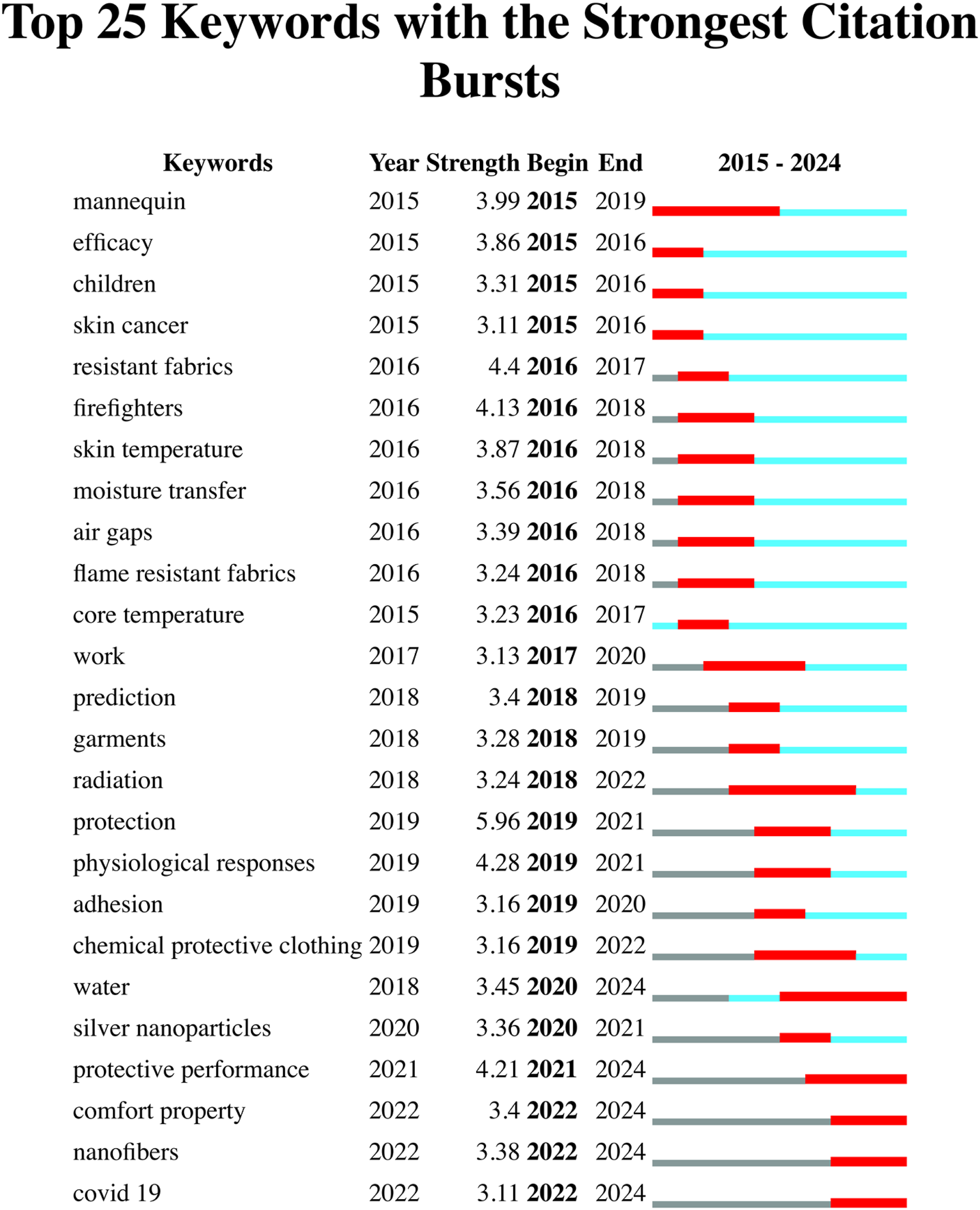
Early research focus (2015–2016): Keywords such as ‘mannequin’ (reflecting testing methodologies), ‘efficacy’ (pertaining to performance validation) and ‘children’ (indicating focus on specialized populations) demonstrated high citation bursts. Research during this phase concentrated on fundamental concepts of protection, application scenarios, and target user groups.3,83 During this time, the American Society for Testing and Materials (ASTM) published ASTM F2370-16 (2016), Standard Test Method for Measuring the Evaporative Resistance of Clothing Using a Sweating Human Model. 84 This test method covers the determination of the overall evaporative resistance of clothing, describing the measurement of evaporative heat transfer resistance from a heated sweating human model to a relatively calm environment. It provides technical support and regulatory guidelines for studying the effectiveness of protective clothing.
Mid-term research evolution (2017–2020): A shift in focus became evident, with rising citation bursts for keywords like ‘protective fabrics’ (highlighting material science advancements) and ‘firefighter protective clothing’ (emphasizing occupational applications). Material research sought to enhance protective clothing performance, while firefighting research explored ergonomic improvements for first responders. For instance, Professor Wang Jinfeng’s team developed an ultra-lightweight, wearable fire warning device integrated into firefighting uniforms, utilizing ‘burn-resistant electronic fabric’ for rapid temperature alerts. 54 Beyond firefighting scenarios, advancements in intelligent sensing and flexible materials significantly influenced protective clothing innovation. Researchers by Jianning Hu et al. 85 proposed a protective clothing system based on an accelerometer array, which uses piezoelectric sensors to achieve precise localisation of injury sites caused by impact fragments. Concurrently, studies by Li-sha Zhang et al. 86 on flexible stimulus-responsive material (e.g., sensors, actuators, and self-healing materials) drove the evolution of protective clothing from passive protection to active response. For example, smart gloves integrated with pressure and temperature sensors enable environmental monitoring, while exoskeleton systems assist human movement to avoid hazards.
Recent Research Directions (2021–2024): The COVID-19 pandemic profoundly impacted protective clothing research, signaled by a surge in studies related to ‘medical protective clothing’ (focused on infection control). Increased attention to ‘comfort’ (wearability)87,88 and ‘nanofibers’ (advanced materials)89,90 indicates a phase prioritizing the microscopic characteristics of medical products and user experience. The keyword ‘protection’ exhibits the strongest burst intensity (value = 6), confirming its continued central role in discourse within this field. Notable advancements in this period witnessed diversified technological progress. De Maio et al. 91 developed a graphene-curcumin coating that exhibits significant inhibitory effects against SARS-CoV-2 and mycobacteria, expanding the antimicrobial and antiviral functions of protective clothing and providing a new direction for medical protection. In terms of head protection, Li et al. 92 constructed a helmet impact test system based on a PVDF piezoelectric sensor array, directly measuring the stress distribution on the head contact surface, providing precise data for the optimized design of head protection equipment. Furthermore, Du et al. 93 developed a graphene oxide composite selective permeable membrane that effectively blocks chemical warfare agent simulants while maintaining water vapour permeability, addressing the poor breathability issue of traditional chemical protective clothing.
Conclusion
This study presents a comprehensive scientometric analysis of 2918 core publications on protective clothing from 2015 to 2024, offering a detailed overview of the field’s intellectual structure and development trajectory. The analysis revealed a steady and substantial increase in research output, particularly driven by growing interest in advanced materials, ergonomic performance, and pandemic-related applications.
Our findings confirm that Donghua University and the United States are central contributors to this domain, with the former leading in institutional output and the latter acting as a critical node in global collaboration and knowledge dissemination.
Key research themes include innovations in fabric technologies (e.g., nanofibers, electrospinning), performance optimization (e.g., thermal protection, heat stress management), and system integration (e.g., personal protective equipment and smart sensing). The transition from single-function apparel to multifunctional and intelligent protective clothing systems reflects a notable evolution in design philosophy, emphasizing human-centered and environmentally sustainable approaches.
Furthermore, bibliometric mapping uncovered dynamic thematic clusters, such as thermal protective performance, electrospinning, and heat stress, and illustrated their progression across distinct time phases. Keyword burst analysis identified early emphases on testing and population-specific needs, mid-term focus on occupational safety (e.g., firefighting), and recent attention to medical protection and comfort. This research contributes a robust analytical framework for understanding the development of protective clothing scholarship and provides valuable insights to guide future investigations. Moving forward, research should prioritize wearability, sustainable material development, and responsive designs and intelligent and multifunctional protective Systems. These directions are essential to advancing both functional efficacy and user well-being in next-generation protective clothing.
Footnotes

Author contributions
Funding
The authors disclosed receipt of the following financial support for the research, authorship, and/or publication of this article: This work was funded by the National Social Science Foundation General Project in Art (No. 23BG127), The Philosophy and Social Science Planning Project of Guangdong Province (No. GD23XYS037), Ordinary University Youth Innovative Talent Project of Guangdong Province (No. 2023WQNCX056), and National Local Joint Laboratory for Advanced Textile Processing and Clean Production, Wuhan Textile University (No. FX20240008).
Declaration of conflicting interests
The authors declared no potential conflicts of interest with respect to the research, authorship, and/or publication of this article.
Data Availability Statement
Data included in article/supplementary material/referenced in article.