




Abstract
Textile-based triboelectric nanogenerators (TENGs) hold considerable promise as sustainable power sources for wearable electronics, yet their seamless integration into everyday clothing remains a challenge. This paper introduces a scalable woven TENG structure that utilizes core−shell yarns composed of commercially available wool and polyester with an inner copper electrode. The device achieves notable performance with an output voltage of 18.5 V, a current of 3.7 µA, and a power density of 51 mW/m2. The novel multilayer design combines hybrid single-electrode and contact-separation approaches, significantly enhancing triboelectric performance and the device’s durability. The multilayer functionality amplifies energy conversion efficiency by increasing the contact area and optimizing charge accumulation through multiple interacting layers. This advanced textile TENG is comfortable, flexible, and aesthetically pleasing while being compatible with large-scale textile manufacturing processes. It demonstrates excellent washability, durability under diverse weather conditions, and resilience to repeated mechanical loading. Highly responsive to a broad range of forces, from gentle taps to strong impacts, this TENG is versatile for body motion monitoring and wearable applications. It represents a significant advancement in creating practical, efficient, and durable energy-harvesting textiles, with promising applications in garment production for precise motion detection, such as for professional athletes and individuals requiring specialized monitoring.
Introduction
Triboelectric nanogenerators (TENGs) have emerged as a pioneering technology for converting mechanical energy into electrical energy, offering a versatile solution for powering wearable devices, 1 sensing applications, 2 and human motion monitoring 3 by utilizing the principles of contact electrification and electrostatic induction. 4 With the growing demand for flexible, lightweight, and wearable electronics,5,6 the integration of TENGs into textiles has garnered significant attention. 7 Textiles, with their inherent flexibility, comfort, and adaptability, provide an ideal platform for wearable TENGs, enabling energy harvesting from human motion, 8 environmental stimuli, and real-time sensing.9–11 However, the design of these textile-based devices with sensitive ability, simple fabrication, and low cost is still challenging.
Textile materials play a crucial role in the performance and functionality of triboelectric nanogenerators (TENGs), with woven fabrics standing out as particularly advantageous among the various textile structures. Woven fabrics offer a superior combination of breathability, durability, and mechanical stability compared to knitted, nonwoven, and embroidery 12 fabrics, making them especially suitable for human motion monitoring and other wearable applications.13,14 The interlacing of yarns in woven textiles creates a dense and uniform structure, which effectively distributes electrical charges across the surface, thereby minimizing internal resistance and enhancing the overall electrical output of TENGs. In contrast, knitted fabrics, while highly flexible and elastic, can suffer from variability in electrical properties due to their looped formation, leading to uneven charge distribution and increased internal resistance. Nonwoven fabrics, though versatile, often lack the durability and breathability required for consistent TENG performance. 15 Moreover, the parallel electrode configuration in a woven structure, compared to the series configuration in a knitted structure, reduces the internal resistance of textile-based triboelectric nanogenerators, significantly enhancing their energy output and efficiency. 16 Additionally, the rigid grid-like structure of woven fabrics provides consistent support for composite yarns that incorporate advanced functionalities such as UV protection, radiative cooling, and antibacterial properties, ensuring these features are effectively distributed and maintained over time. 17 This structural stability also facilitates more precise and scalable production, making woven fabrics more effective for large-scale fabrication and performance in energy harvesting, pressure sensing, and other advanced textile applications.18–20
Woven structures for TENGs can be engineered using various fabrication techniques that enhance their triboelectric properties and tailor the fabric’s functionality for specific applications. Methods such as layered fabric striping,21–23 coating,24,25 wrapping, 26 doping, 27 3D printing, 28 composite, 29 and embedding30,31 materials into the yarns or fabric are commonly employed. For instance, conductive coatings like silver nanowires, carbon nanotubes, or graphene can be applied to the woven fabric surface to boost electrical conductivity and triboelectric performance. Wrapping individual yarns with conductive metals like copper or silver creates a core-shell structure that maintains fabric flexibility while enhancing electrical output. 32 Techniques like layer-by-layer assembly and integrating nanofibers into the woven structure,33,34 further improve mechanical robustness and triboelectric efficiency. However, these advanced fabrication methods introduce challenges, such as compromising the fabric’s breathability and washability. Incorporating TENGs into garments while retaining the qualities of common apparel remains difficult, and rational design of yarn building blocks and TENG textiles is needed. Additionally, materials like double-sided adhesive and aluminum tape used to construct composite structures can adversely affect air permeability, leading to reduced breathability. Moreover, maintaining mechanical stability during repeated friction and exposure to high temperatures is a concern, as the structural integrity of the fabric may deteriorate under such conditions.
The choice of materials is pivotal in determining the overall performance and wearability of woven TENGs. 35 Natural fibers like cotton, 36 wool, 37 and silk 38 are often favored for their comfort, softness, and biodegradability, making them suitable for wearable applications. However, these materials typically exhibit lower triboelectric output, which necessitates the integration of conductive elements to enhance their performance. Synthetic commercial fibers such as polyester,39,40 nylon, 41 and polypropylene 42 are more durable and compatible with various conductive coatings, making them popular choices for high-performance TENGs. These synthetic fibers can be combined with metals like nickel, 43 copper, 44 silver, or aluminum through methods such as coating, 45 wrapping, 46 and blending 47 to create conductive pathways within the fabric. Advanced materials, including graphene, 48 carbon nanotubes,49,50 and conductive polymers like PEDOT, 51 are also being explored for their superior conductivity and ability to produce flexible, efficient TENGs. High-performance polymer fibers like PTFE 52 and PVDF53,54 are also used. However, while these materials significantly enhance triboelectric properties, the addition of conductive layers or metallic components can sometimes compromise washability and durability. Solutions like silicon rubber55,56 or PDMS57,58 layers can make TENGs waterproof, 59 but these layers may reduce breathability and air permeability, posing challenges for long-term wearability. Moreover, woven-based TENGs face challenges related to energy harvesting and sensor applications, especially in achieving comfortable, wearable devices due to the complex, multi-layered fabric structures.
To address the limitations of current woven-based TENGs (W-TENGs), recent research has focused on optimizing both performance and wearability. In this study, we introduce a novel, scalable, wearable TENG human motion sensor that utilizes a woven fabric structure. By incorporating commercially available wool and polyester yarns with a copper core-shell configuration, we developed a conductive, breathable, and washable textile sensor. Fabricated using cost-effective and scalable wrapping and weaving techniques, this TENG sensor effectively detects a wide range of forces, from subtle body movements to significant pressures, while maintaining stability across various temperatures and humidity levels. Our approach utilizes core-shell yarns, where conductive fibers serve as the core and traditional textile fibers as the shell, with the outer fibers functioning as electrification layers and the core fibers as electrodes. This strategy overcomes challenges associated with exposed metal wires or coatings while integrating the qualities of traditional textiles with energy-harvesting capabilities. The resulting W-TENG is lightweight, flexible, durable, and scalable for industrial production, offering a practical solution for long-term wearable applications.
Materials and methods
Materials
Wool and multifilament polyester yarn were selected as the positive and negative triboelectric layers, respectively. The wool used had a yarn count of 60 Tex, while the polyester, specifically Fully Drawn Yarn (FDY), had a yarn count of 47 Tex and consisted of 61 filaments (illustrated in Figure 1(a)). Despite not exhibiting a significant polarity difference in the triboelectric series, wool, and polyester were chosen for their complementary characteristics, which improve the performance of triboelectric textiles. Their widespread use in the textile industry and compatibility with conventional manufacturing machinery make them ideal for integration into wearable electronic devices. Wool, a natural fiber, offers softness, breathability, and moisture-wicking properties, ensuring comfort in wearable applications. Polyester, a synthetic fiber, contributes durability, shape retention, and resistance to environmental factors such as humidity. The combination of these fibers results in a textile that balances comfort, sustainability, and high triboelectric performance, making it suitable for a wide range of wearable and multifunctional applications. Fabrication of wool/polyester woven triboelectric nanogenerators, (a) schematic of wrapping process to make the core-shell yarns, (b) image of Handloom machine, (c) microscopic images of wool and polyester yarns, (d) schematics of wool/polyester woven triboelectric nanogenerators with different structures.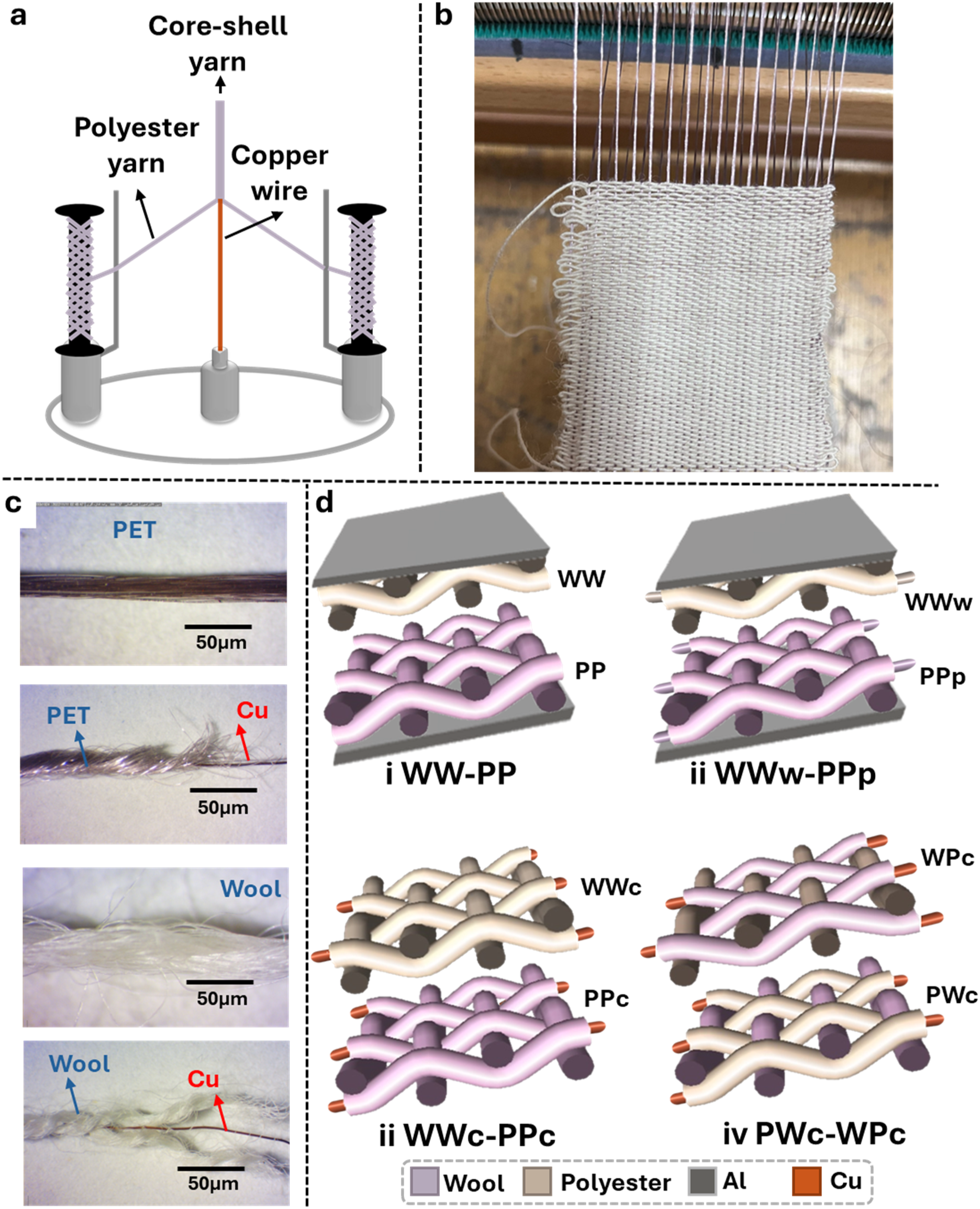
Fabrication
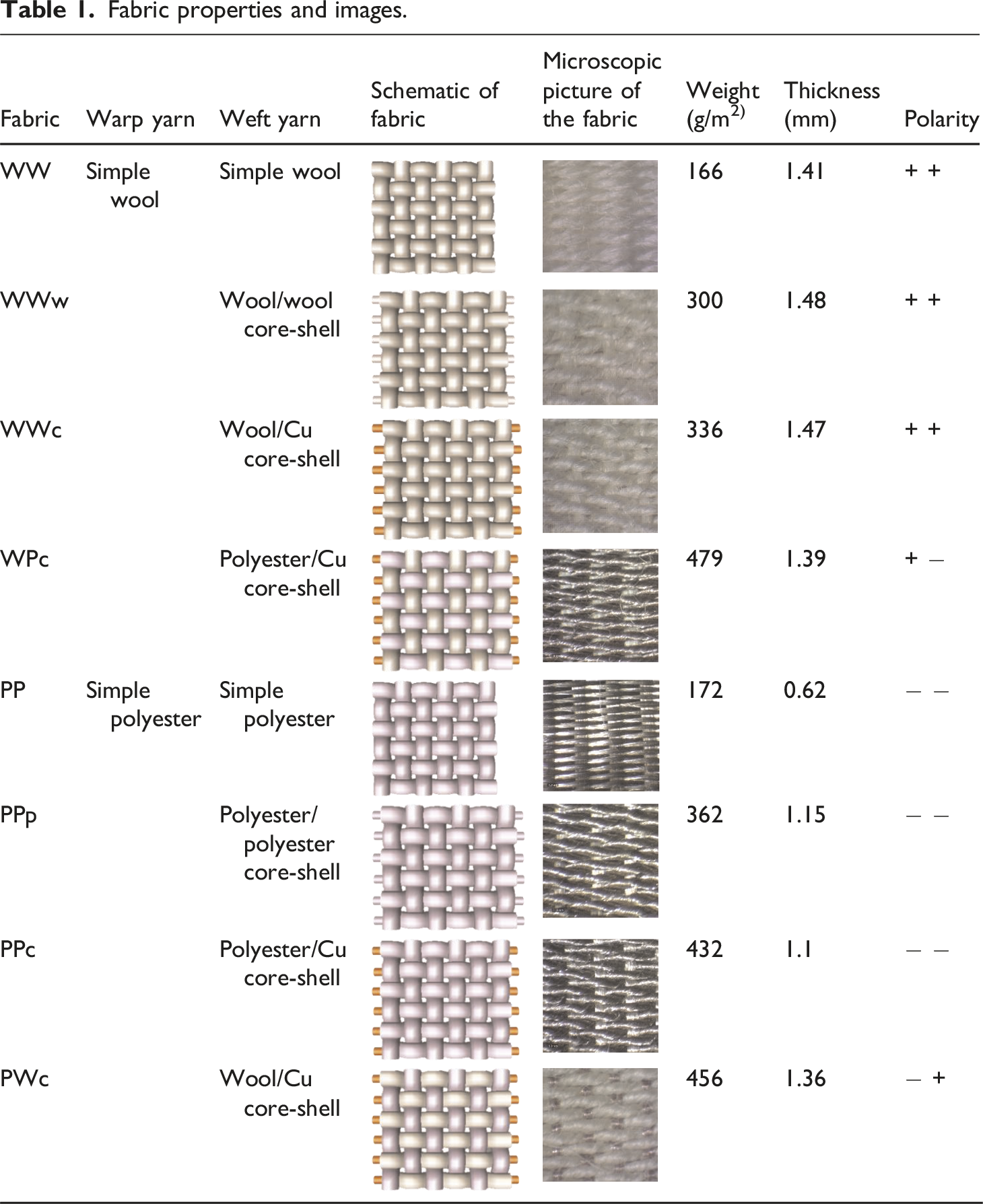
To fabricate W-TENG samples, three types of yarns are needed: simple yarns (unmodified), simple core-shell yarns (core-shell yarns with the same material in both core and shell), and copper core-shell yarns (core-shell yarns with a copper core). Initially, the core-shell yarns were produced using a co-wrapping machine, 60 as shown in Figure 1(b). Two types of core-shell yarns were created using wool and polyester. For the simple core-shell yarns, a polyester yarn was placed straight in the center, with two polyester yarns wrapping around it. For the copper core-shell yarns, a copper core wire was placed in the center and wrapped with polyester yarns to create the core-shell structure. Wool core-shell yarns were made in the same manner. The copper core yarn must be completely wrapped in wool or polyester yarn to prevent any electrical leakage. The core yarn was entirely encased by the two shell yarns, ensuring that the electrode components remained safe and stable inside the wrapped yarns (see Figure 1(a)).
Fabric properties and images.
Performance measurement
All W-TENG samples were constructed with dimensions of 50 mm × 50 mm to maintain consistency across experiments. To simulate vertical contact-separation motions, a step simulation was employed, providing continuous sinusoidal movement. This setup applied pneumatic force to a dynamic top jaw, allowing for adjustable force, frequency, and jaw distance settings. 61 The maximum separation distance between the triboelectric layers was set at 10 mm, with a frequency of 2 Hz and a force of 2 kN, simulating flapping hand motions. These conditions enabled the comparison of output performance across different W-TENG structures.
Subsequently, to assess the performance of the proposed W-TENG, which exhibited superior performance compared to other designs, tests were conducted at five different frequencies (0.5, 1, 2, 4, and 8 Hz) and four different forces (1, 2, 3, and 4 kN). For human motion monitoring, the W-TENG samples were attached to various positions on the body, including the underfoot, inner elbow, and hand, to detect voltage signals generated by bending, walking, running, and clapping motions. To evaluate the durability of the W-TENG sensor, voltage signals were measured under varying temperature conditions (0°C, 10°C, 20°C, and 40°C) and humidity levels (30%, 50%, 70%, and 90%). Additionally, tests were conducted to assess the washability, air permeability, and overall durability of the W-TENG samples. For measuring the electrical performance of the W-TENG samples, each structure was tested five times, and during each test, each sample underwent contact separation for 1 min. The short circuit current (current), short circuit charge transferred (charge) and open-circuit voltage (voltage) were measured using a Keithley 610C electrometer and an Owon VDS1022I USB PC Storage Digital Oscilloscope.
Results and discussion
Electrical performance of W-TENGs
The electrical output results for open-circuit voltage, short-circuit current, and transferred charge are shown in Figure 2. Among the different configurations, the PWc-WPc TENG exhibited the highest performance, with an output voltage of 18.5 V, a current of 3.7 µA, and a transferred charge of 0.86 µC. Figure 2(a) illustrates W-TENGs with different structural designs. TENGs with an external aluminum film electrode produced significantly lower electrical output compared to those with an embedded copper electrode, due to the superior charge transfer efficiency of the internal copper electrode. The W-TENGs with external aluminum film electrodes have more dielectric thickness compare to compared to those with embedded copper electrodes. Where voltage is inversely proportional to the distance between the dielectric layer and the conductive electrode. The distance between the effective dielectric layer and the conductive layer increases with an increase in the thickness of the dielectric layers.
62
Additionally, the attached electrode layer negatively impacted both durability and air permeability, reducing the flexibility and breathability of the textile, which is crucial for wearable applications. Furthermore, the adhesive layer used for external electrodes compromised the device’s mechanical stability, especially under large deformations or elevated temperatures, and led to degradation over time during repeated friction. In contrast, the internal copper electrode, integrated within the yarn, provided enhanced durability and stability, minimizing the risk of electrical leakage and maintaining structural integrity throughout extended use. This highlights the advantages of internal electrode designs for reliable, long-term performance in wearable TENGs. Electrical outputs of the W-TENGs with different structures, (a) output voltage, current, and charge of the W-TENGs with different structures, (b) output voltage, current, and charge of each layer of the W-TENG with superior outputs.
The WPc-PWc TENG structure can be regarded as a multilayer triboelectric nanogenerator, with each layer functioning as an independent single-electrode TENG. Figure 2(b) compares the electrical outputs of the WPc-PWc TENG with those of its layers, WPc TENG and PWc TENG. The results show that the WPc-PWc TENG produces a significantly higher voltage, and a slightly enhanced charge and current output compared to its layers. This indicates that the multilayer structure provides a simple and effective method to increase the performance of TENGs without requiring a larger device area or complicating the fabrication process. In triboelectric nanogenerators, both voltage and current outputs increase with the number of layers, making the device more efficient at converting mechanical energy into electrical energy.63–66 The multilayered configuration increases the contact area and the relative displacement between the triboelectric materials, which enhances overall energy output. The improved performance is primarily due to the amplified interaction between the triboelectric layers, which increases the triboelectric effect. The addition of multiple layers also has a positive impact on current output. More layers introduce additional active sites for charge generation, resulting in a higher flow of current. This multilayer structure significantly enhances charge accumulation, as the increased surface area and repeated contact between layers lead to greater total charge output. Each layer in the structure not only contributes to the generation of charges but also interacts synergistically with other layers, further improving performance. Furthermore, with more layers, the TENG achieves a higher accumulation of charges per unit area, leading to increased charge density. This directly correlates with higher voltage and current outputs, as the greater the number of charges generated and separated, the greater the overall electrical output. The cumulative effect of the multilayer structure ensures that mechanical energy is fully utilized, with each layer capturing and converting a portion of this energy into electrical energy. Overall, the WPc-PWc TENG demonstrates a notable improvement in electrical output due to the synergistic effect of its multiple layers, which not only enhance the triboelectric interactions but also maximize charge generation and energy conversion efficiency.
Working principles of WPc-PWc TENG under the contact separation motion
The WPc-PWc TENG is composed of three layers, integrating two single-electrode TENGs and one contact-separation TENG. The first TENG consists of a copper electrode paired with wool on one side and polyester on the other, while the second TENG has a layer of copper and wool on one side and copper and polyester on the other. The third TENG comprises a copper electrode with polyester on one side and wool on the opposite side. In this configuration, TENGs 1 and 3 function as single-electrode TENGs, while TENG 2 operates in contact-separation mode. As illustrated in Figure 3(b), TENG 1 resembles the PWc TENG, TENG 2 mirrors the PPc-WWc TENG, and TENG 3 behaves like the WPc TENG. This innovative design combines three TENGs into a single, lightweight, scalable, and high-performance W-TENG. To better understand the working principle of the WPc-PWc TENG, it is essential to consider the interactions among its three layers. As shown in Figure 3(c), when the fabric surfaces come into contact due to tapping movements generated by the step simulation device, they acquire opposite electric charges, wool becomes positively charged, while polyester becomes negatively charged. These charges are transferred to the copper electrodes. TENG 2 functions in the contact-separation mode. In TENG 2, the wool and polyester yarns come into contact, acquiring opposite electric charges. As the yarns separate, electrostatic induction generates opposite charges on the copper electrodes, creating a potential difference between the top and bottom current collectors. This potential difference drives electrons through the external circuit, producing an immediate current flow. When the separation reaches its maximum, the potential difference stabilizes, and the current ceases. As the layers approach each other again, the potential difference diminishes, causing electrons to flow back toward the positively charged collector. This process generates another current flow, this time in the opposite direction, completing the cycle and efficiently converting mechanical energy from contact and separation into electrical energy. Schematics of working principle and structure of WPc-PWc TENG, (a) working mechanism and elements of WPc-PWc TENG under tapping motion, (b) structure of the W-TENGs which are constituent of WPc-PWc TENG, (c) working principle of WPc-PWc TENG under contact-separation motion.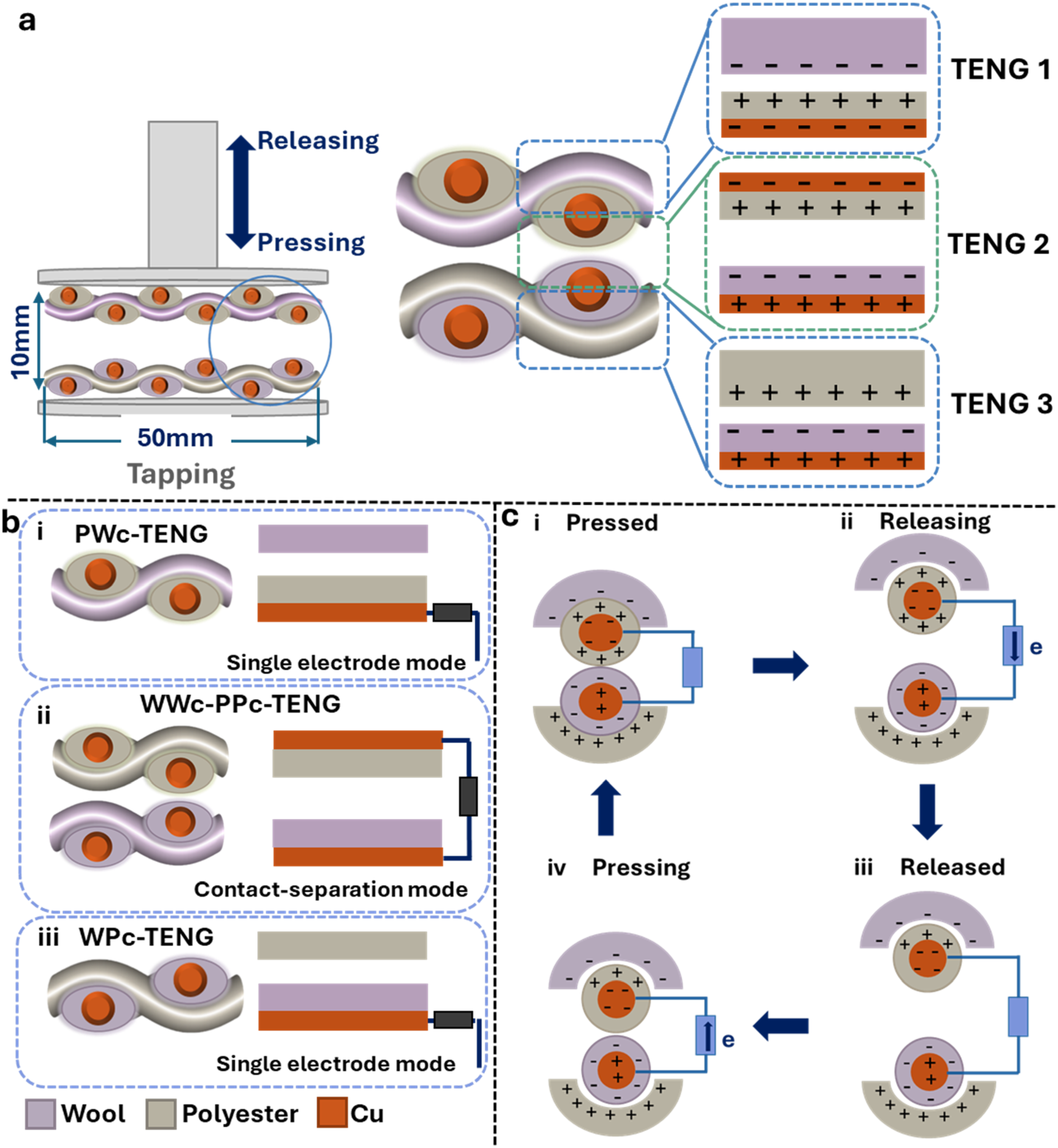
Meanwhile, TENGs 1 and 3 operate in single-electrode mode. In these layers, the triboelectric effect between the wool and polyester fabrics creates a similar charge-transfer process, but with a single electrode collecting the charges. This setup enables the WPc-PWc TENG to maximize energy conversion through the complementary working modes of its three layers, offering a powerful and scalable solution for harvesting mechanical energy.
Effects of contact force and frequency on electrical outputs of PWc-WPc TENG
The electrical performance of the WPc-PWc TENG shows a significant enhancement with increasing tapping frequencies and contact forces. As illustrated in Figure 4(a), the open-circuit voltage rises consistently as the tapping frequency increases from 0.5 Hz to 8 Hz, and as the applied compression force escalates from 1 kN to 4 kN. This can be attributed to the direct correlation between applied load and surface contact area. A greater applied force leads to an expanded surface contact area between the wool and polyester dielectric layers, facilitating enhanced charge transfer during the contact-separation process. The increase in contact area promotes a higher surface charge density, which is critical in determining the triboelectric output. In triboelectric nanogenerators, the efficiency of charge transfer is significantly influenced by the extent of physical contact between the dielectric surfaces, and higher forces induce greater deformation of these surfaces, leading to a more efficient generation of triboelectric charges. Electrical outputs of the WPc-PWc TENG, (a) electrical voltage of WPc-PWc at various tapping forces (1-4N) and (b) motion frequencies (0.5–8 Hz). (c) Voltage, current, and (d) power density of the WPc-PWc at different external load resistances varied from 104 (Ω) to 1010 (Ω) with a tapping frequency of 2 Hz. (e) Electrical voltage of the WPc-PWc TENG after 2000 cycles with a tapping frequency of 2 Hz and tapping force of 2 kN.
The effect of tapping frequency is equally important. As the frequency of tapping increases, the rate of contact-separation cycles between the dielectric layers also accelerates, leading to more frequent charge generation events. This rapid cycling allows for a continuous build-up of charges on the copper electrodes, resulting in higher voltage output. At higher frequencies, the shorter time between each cycle reduces the chance of charge loss, allowing the system to retain more of the generated charge. As a result, both the increased tapping force and frequency work together to enhance the voltage output, improving the energy conversion efficiency of the TENG.
Moreover, the power density of the WPc-PWc TENG was evaluated by connecting it to external variable resistances at a constant frequency of 2 Hz. The results show that as the load resistance increased from 10⁴ Ω to 10⁸ Ω, the output voltage climbed sharply, but then decreased slightly. The current exhibited an inverse relationship with the voltage, starting high and then gradually decreasing, as depicted in Figure 4(c). The peak power density of the WPc-PWc TENG reached 51 mW/m2 under an optimized load resistance of 10⁸ Ω. Durability testing revealed that the device maintained stable performance with no significant degradation after 2000 tapping cycles, as shown in Figure 4(e), demonstrating the long-term reliability and practicality of the WPc-PWc TENG for energy harvesting and sensing in wearable applications.
Applications of the WPc-PWc TENG
To demonstrate the potential of the WPc-PWc TENG for biomechanical energy harvesting and motion monitoring, the device was integrated into various parts of the human body. As shown in Figure 5, the WPc-PWc TENG was worn on the hand (Figure 5(a)), the elbow joint (Figure 5(b)), and under the foot (Figure 5(c)), showcasing its versatility in detecting different body movements. The TENG, integrated into clothing, is capable of sensing subtle human body motions, such as elbow bending, and can also harvest energy from more forceful actions like footsteps. The results indicate that the WPc-PWc TENG displays high sensitivity, effectively capturing low-amplitude signals from small motions while maintaining a broad detection range for external pressure. One of the key advantages of the WPc-PWc TENG is its ability to achieve balanced performance between high sensitivity and a wide pressure detection range, making it suitable for a wide variety of wearable applications. When integrated into textiles and worn on different parts of the body, such as the hands and feet, the TENG proves to be multifunctional, able to sense dynamic body movements with precision. It can detect movements at joints like the hand, elbow, knee, and underarm, providing a comprehensive solution for wearable motion sensing.
As illustrated in Figure 5, the fabricated sensing textile quantifies motion gestures and body positions across different speeds during everyday activities. The changes in output voltage generated by the TENG during movements can be continuously monitored, enabling real-time evaluation of a person’s health status and the detection of physiological issues. The practicality of the WPc-PWc TENG lies in its flexibility, durability, and ability to integrate seamlessly into wearable devices, offering an innovative solution for monitoring physical activity, detecting abnormal movement patterns, and even contributing to energy harvesting for self-powered systems in smart textiles. This makes the WPc-PWc TENG an ideal candidate for next-generation wearable electronics in healthcare, fitness tracking, and energy-efficient wearable technologies. Photographic images and open-circuit voltage of WPc-PWc TENG fixed at different positions of the human body (a) at the hand, (b) at the elbow joint, and (c) under the foot in slow and fast motion speeds.
Wearability and durability properties of WPc-PWc TENG
The impact of temperature and humidity on the performance of textile-based triboelectric nanogenerators (TENGs) was systematically evaluated using standardized environmental testing protocols. For temperature testing, samples were subjected to conditions ranging from 0°C to 40°C according to the IEC 60068-2-2 standard, with each temperature maintained for 2 h to ensure stabilization. The open-circuit voltage was measured after exposure, revealing a clear inverse relationship between temperature and voltage output, as shown in Figure 6(a). At 0°C, the TENG output was approximately 40 V, but as the temperature increased to 40°C, the output decreased to around 10 V. This decline is likely due to increased molecular motion and thermal agitation at higher temperatures, which reduce charge retention in the dielectric layers (wool and polyester). Moreover, elevated temperatures lead to higher surface conductivity, resulting in faster reduction of generated charges, thereby decreasing the overall voltage output. This temperature-sensitive behavior suggests that lower temperatures are more favorable for maintaining high triboelectric efficiency, as cooler conditions reduce thermal effects that interfere with charge retention. Wearability and durability properties of WPc-PWc TENG, (a) open-circuit voltage at varied temperatures, (b) open-circuit voltage at different humidity, (c) photographic images and open-circuit voltage of the TENG after 20 cycles washing, d) air permeability of four types of fabrics used as the substrates of WW-PP TENG and WPc-PWc TENG.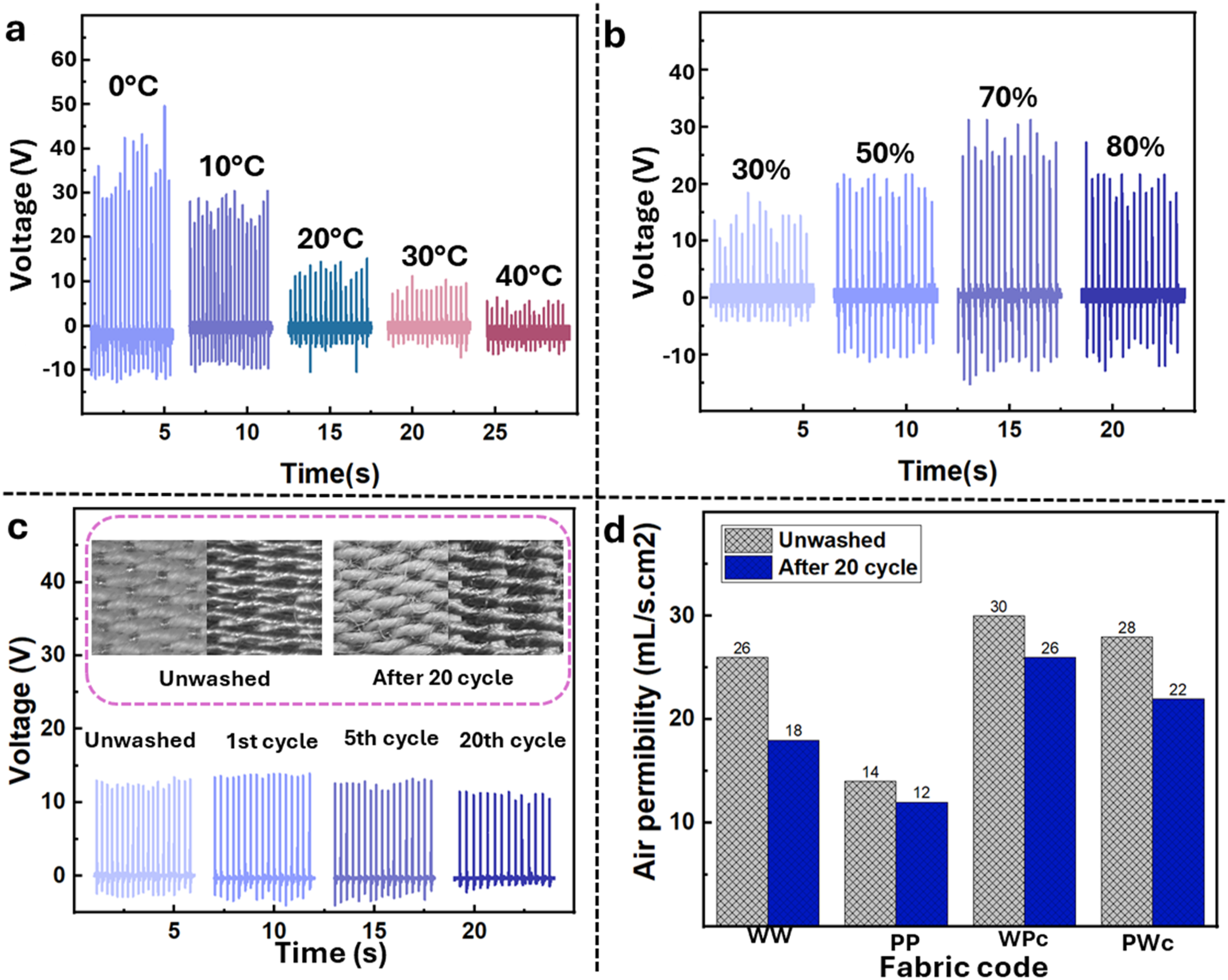
Humidity testing was conducted by the IEC 60068-2-78 standard, with relative humidity levels varying between 30% and 90%. Samples were exposed to high humidity for 12 h at a constant temperature of 25°C to simulate real-world conditions. As shown in Figure 6(b), the output voltage of the WPc-PWc TENG increased as the relative humidity increased from 40% to 90%. This increase in voltage is primarily due to wool’s hygroscopic nature, which allows it to absorb moisture and polarize water molecules within the fibers, enhancing charge separation during the contact-separation process. Additionally, higher humidity increases the flexibility of the wool, improving the mechanical contact between the wool and polyester layers, and leading to greater charge generation. Polyester’s hydrophobicity ensures that it remains unaffected by moisture, maintaining its triboelectric properties, while the copper inner electrode facilitates efficient charge transfer between the layers. Together, these factors lead to a significant improvement in voltage output as humidity increases, highlighting the complex interplay between the materials and environmental conditions in textile-based TENGs.
For wearable applications, durability and breathability are critical factors for long-term performance. To assess the washability of the WPc-PWc TENG, standardized laundering tests were conducted following ISO 6330 procedures. The textiles were subjected to 20 washing cycles at 40°C using a standard detergent, with each cycle lasting 45 min. After each cycle, the open-circuit voltage was measured to evaluate the device’s performance. As illustrated in Figure 6(c), the voltage output remained constant for the first 19 cycles, with only a slight reduction observed after the 20th cycle. Visual inspections and microscopic imaging revealed minimal structural degradation, with the fibers largely maintaining their integrity. The mechanical durability of the wool and polyester fibers, combined with the tightly woven fabric structure, contributed to the TENG’s robust performance. Wool’s natural crimp and polyester’s resistance to wear helped preserve the triboelectric properties, while the copper electrode, protected by the textile layers, remained effective at charge collection. The slight decrease in output after the 20th wash cycle likely results from minor surface wear or fiber fatigue, but overall, the WPc-PWc TENG demonstrated excellent washability and durability, making it suitable for long-term use in wearable applications.
Breathability is another essential requirement for wearable nanogenerators, as it significantly affects user comfort, especially in applications involving prolonged wear. Many existing woven-based TENGs, although durable, suffer from reduced breathability due to additional attached or coated layers. 67 In contrast, the WPc-PWc TENG was designed with high air permeability, making it well-suited for both sportswear and medical textiles, where breathability is crucial for comfort. As shown in Figure 6(d), the air permeability of the WPc-PWc TENG before and after washing is superior to fabrics made from conventional commercial yarns, ensuring that the device remains comfortable during wear while maintaining its functionality. After washing, the WW fabric experienced a significant decrease in air permeability, primarily due to fiber shrinkage and felting, which occurs when the wool fibers interlock and reduce the spaces between them. The PP fabric exhibited a smaller decrease, reflecting the inherent stability of polyester fibers, which resist significant changes in dimension during washing. The WPc showed a slight reduction in air permeability, behaving similarly to polyester due to the dominant influence of the polyester weft. In contrast, the PWc experienced a more pronounced decrease, resembling wool fabrics because the wool weft is more susceptible to shrinkage and felting. This combination of durability, washability, and breathability makes the WPc-PWc TENG an ideal candidate for use in wearable electronic devices, where comfort, performance, and long-term reliability are key factors.
Comparative analysis of the performance of the TENG system in this study with previous literature.

Conclusion
In conclusion, the scalable all-textile embedded electrode triboelectric nanogenerator (WPc-PWc TENG) presented in this study offers a transformative solution for wearable motion sensing and energy harvesting. With its innovative multilayer design, combining hybrid single-electrode and contact-separation mechanisms, the WPc-PWc TENG achieves exceptional performance, delivering high voltage, current, and power density outputs. By integrating commercially available wool and polyester with an embedded copper electrode, this TENG not only enhances the triboelectric effect but also ensures durability, flexibility, and comfort, making it suitable for daily wear.
The WPc-PWc TENG’s ability to maintain performance across various environmental conditions, including different temperatures, and humidity levels, and after repeated washing, underscores its robustness and practical utility in real-world applications. Furthermore, its compatibility with large-scale textile manufacturing processes demonstrates its scalability for widespread use in smart garments. From fitness tracking and athlete monitoring to healthcare applications requiring precise motion detection, this technology opens new possibilities for the next generation of wearable electronics.
Footnotes
Declaration of conflicting interests
The author(s) declared no potential conflicts of interest with respect to the research, authorship, and/or publication of this article.
Funding
The author(s) disclosed receipt of the following financial support for the research, authorship, and/or publication of this article: This work was supported by Iran National Science Foundation (grant number 4020210) and Iran National Science Foundation and Iran Nanotechnology Innovation Council (4023636).
