




Abstract
The main goal of the study is to be obtained water repellant properties of woven fabric coated by Bi-Component Room Temperature Vulcanizing Silicone (RTV-2 silicone) and investigate the physical and thermal properties of these fabrics. In addition, the interaction between calendaring, sanforizing processes, which were known as mechanical finishing treatments, and RTV-2 coating application was investigated in terms of fabric physical performance. According to these experimental results, the possibility of the RTV-2 type silicone as alternative to C6 and C8 based fluorocarbon can be discussed. In this experiment, the woven fabric was coated by RTV-2 silicone with two different coating thickness (0.6 mm and 0.8 mm). The effect of the RTV-2 silicone onto woven fabric were examined and enlightened by physical performance and water repellence tests such as contact angle degree and spray rating tests. The results from contact angle degree and spray rating test pointed out that RTV-2 silicone coated fabric had up to 153.27° contact angle degree and ISO 3 (80) spray rating value whereas untreated fabric had 85.81° contact angle degree and 0 spray rating value. Thermal comfort test (ALAMBETA) showed that, thermal capacity value of the fabric decreased from 0.064 mm2/s to 0.040 mm2/s after RTV-2 silicone coating. On the other hand, thermal absorptivity value of the fabric increased from 117.25 to 234.95 W.%s/m2.K which leaded to increase the cold feeling of the fabric after coating RTV-2 silicone regardless of coating thickness and mechanical finishing processes. Photos from the textile surfaces were taken via Field Emission Scanning Electron Microscope (FE-SEM). It was obviously seen surface morphology after coating and mechanical finishing processes. At the end of the study, it was determined that it is possible to say that RTV-2 silicone usage can positively affect water repellant properties of the fabric while thermal comfort and tactile comfort properties is negatively affected. Fabric performance test such as pilling, abrasion resistance and color fastness to washing did not showed any change after RTV-2 silicone coating and mechanical finishing processes. As for the mechanical finishing processes interaction between RTV-2 silicone, it was seen that the RTV-2 silicone was affected by finishing processes.
Introduction
The water-repellent chemicals have been used for sportswear, personal protective equipment, firefighters’ clothing, outdoor work wear, car covers, and medical bedding. One of the lowering the surface tension of fabric is to use a fluorine-rich or fluorinated coating. 1 On examining the fluorocarbon-based water repellant chemicals, the C8-based fluorocarbons are obtained highest and most durable water and oil repellence properties to the textile products. However, considering on environmental issues, because of the releasing the bio-persistent and toxic component perfluoro octane sulfonate (PFOS) and perfluorooctanoic acid (PFOA), the C8-based fluorocarbons usage will be prohibited on 30 June 2020 by The European Union.2–5
The C6 based fluorocarbons were introduced to minimize the release of toxic chemicals. However, the C6 based fluorocarbons showed less water repellency properties than C8 based fluorocarbons ones. It is said that the C6 Chemistry -PFHA (perfluorohexanoic acid) with backbone of 6 carbon atoms shows 40 times less bio-accumulative than PFOA (C8 based counterpart). But it is also less effective than the C8 based ones and to achieve the same water repellant properties, a big amount of chemical must be used. Currently, the C6 technology is most prevalent in the textile industry even though ascending number of sustainability-conscious brands are phasing out the use of such chemicals in their products. 6
Due to the prohibition, the alternative chemicals to C8-based fluorocarbons have been enhanced such as shorter FC chains (C6-based), paraffin, waxes, fatty acids, dendrimers, hydrophobic polymers, F-free systems, silicones, fluorosilicones, alkoxysilanes etc. Nevertheless, these products have been showed lower efficiency and durability than the C8-based fluorocarbons their natural structures. 7 In addition, Recently, many techniques to gain superhydrophobic properties of the cotton fabrics have been utilized such as chemical vapor deposition, layer-by-layer assembly8,9 sol–gel proces, 10 spraying, 11 plasma treatment, 12 and so on. 13 Nevertheless, most of these techniques have certain disadvantages due to laborious and time-consuming treatment processes and expensive special instruments. 14 Moreover, after these treatments, the mechanical properties of cotton fabrics are got worsed. 4
On the other hand, the softness on the fabric is one of the most important comfort properties for the customers. For this reason, it could be said that the softening process is the most important finishing process in the textile mills.7,15 When the softeners examined in terms of the use in textile industry, they have widespread applications in the textile industry that enhance desired mechanical properties of the fabrics such as softness, hand feel, and drapeability. Besides, they could improve the resistance against crease formation.15–17 However, some the softeners showed hydrophobic behaviors depending on their structure (such as amino functional groups) while some parts of the softeners do not show effective water repellant properties. 18
The use of the RTV-2 silicone was supposed that it is gained both water repellence properties and softness to the fabric. The RTV-2 silicone rubber formulations are two-part pourable, spreadable or kneadable compositions that vulcanize after mixing. They usually cure at room temperature (RTV = room-temperature vulcanizing) and form a highly elastic material. The RTV-2 silicone rubber compounds are made up of two components, one of them contains polymer and crosslinker while the other contains polymer and a platinum catalyst. Once, these two components are mixed, curing is induced to form elastomer product.19,20 RTV silicones have many properties that want to customers which are excellent thermal resistance, outstanding long-term thermal stability from −50°C to +180°C, very good adhesion to a variety of substrates, superior weathering, UV and radiation resistance, low young’s modulus, long, lasting flexibility, water-repellent surface and low moisture uptake, very good chemical resistance, chemical inertness, excellent environmental compatibility and no harmful effects, excellent physiological tolerance, flame resistance and etc.21–32 The range of ready-to-use products focuses on numerous applications. The usage of the automotive industry, health care, electronics, medical applications, food industry, molding and molding making, energy sector, mining are the important applications of RTV silicone rubbers.19,33–36 Examining on the study on RTV silicone rubber as a coating material in the textile, it was seen that these studies are associated with the gaining water repellant and thermal resistant of the fabric.37,38 For instance, study on the RTV silicone and the usage of the textile material was to both improve thermal stability of the cotton fabric and the water repellant properties. 39 In addition to providing water repellant properties, it was aimed to provide antibacterial properties. RTV silicone and antibacterial material were used together to gain multifunctional properties of the fabric showing water repellant and antibacterial activity.38,40 Moreover, it is known that RTV-2 silicones are used in textile industry for gaining anti-slippage property to the carpet back face and under the baby socks.
At the beginning of this experimental study, the RTV-2 silicone firstly applied to the knife coating method, then mechanical sanforizing and calendaring processes were made on to these coated fabrics. After applications, a set of performance tests (stiffness, air permeability, shrinkage %, tensile strength, tear strength, seam slippage, elasticity %, fabric growth %, abrasion resistance, pilling), colour fastness test, comfort tests and water repellence tests such as contact angle degree and Spray Rating test were employed both reference and RTV-2 coated fabrics to test the effect of the RTV-2 silicone onto woven fabric. To evaluate of the surface morphology and the changes after coating and mechanical finishing process, FE-SEM photos were taken. The whole test results were evaluated according to the reference.
The main novelty of this study is to obtain the tactile comfort (handle properties) and water repellent properties of the fabric without worsening the mechanical performance and without using fluorocarbon-based chemicals. In the present study, the handle and water repellent properties can be gained to the fabrics with separate application steps and two different chemical recipes including different kinds of softeners and repellent finish material. However, in this present research, these performances were tried to be added to the woven samples by RTV-2 silicones in single step and coating application method, and this approach could be defined the original and novel for this study.
Material and method
Material
The fabric properties in the study.

The RTV-2 silicone (bicomponent room temperature vulcanizing silicone, made up of RTV 1020A and RTV 1020B) were supported by LATRO KİMYA, İstanbul/Turkey. The silicone rubber is a silicone-based material and elastomer which is composed of silicone, carbon, hydrogen, and oxygen. It’s basic structure of silicone rubber is shown as R2SiO (Figure 1).
41
Basic silicone rubber structure.
41

RTV-2 silicone rubber has low energy surface so offers good water repellency properties. Besides it helps prevent continuous water filming on the surface. 42
The used silicone softener mixture was consisted of three silicone softener that was given below. • Nanosil Mac 70 (amino functional macro silicone emulsion) • Tubingal Mic 70 (amino functional micro silicone emulsion) • Rudolf Product NY 70 (non-ionic based softener)
Method
In the study, the reference fabric was prepared with the conventional amino functional silicone based softening finishing chemical which were transferred onto the fabric by using impregnation method at stenter (Brückner, Germany). The mixture of the 30g/L Nanosil Mac 70, 10g/L Tubingal Mic 70 and 5g/L Rudolf Product NY 70 were used as application recipe. After chemical finishing, the sanforizing process were applied on the reference.
The operating conditions of stenter.

Being solvent free and fluid, RTV 1020 A (made up of vinyl terminated PDMS, filler and catalyst) were mixed by RTV 1020 B (made up of vinyl terminated PDMS, filler and crosslinker) at a mix ratio of 1:1 by weight. The mix of the RTV 1020 A and RTV 1020 B were stirred for several minutes until the material was became homogeneous. Before deciding on the coating thickness, a preliminary study was carried out. When the data obtained are examined, it was seen that the coatings made at 1 mm and above are very thick and the consumer feels as if there is a plastic substance on the fabric surface. Because of that the RTV-2 silicone was transferred onto the fabric by roll on knife method using two different coating thicknesses (0.6 mm and 0.8 mm). The coating angle and condensation temperature were determined as 90° and 165°C respectively. Thus, the interaction between RTV-2 silicone and cotton is realized by crosslinking RTV-2 silicone to cotton fabric by coating. After condensation of the RTV-2 silicone rubber on the fabric via the coating processes, the mechanical finishing processes were separately applied onto RTV-2 silicone coated fabrics as calendaring, sanforizing and calendaring +sanforizing.
The calendaring is known as mechanical finishing process where a fabric passes between two or more rollers under proper temperature and pressure to obtain its properties such handle, surface texture, appearance, and thickness as. The calendared fabric shows less thickness and air permeability tendency, on the other hand shows more the opacity and smoothness. 43
The operating condition of the calendaring machine.

The operating condition of the sanforizing machine.

It is known that the calendaring process, which is one of the mechanical finishing processes, affect the fabric structure, fabric surface, tensile strength, tear strength and comfort properties such as thermal comfort, air permeability.45–47
The detail of experimental plan.

Tests and used standards in the study
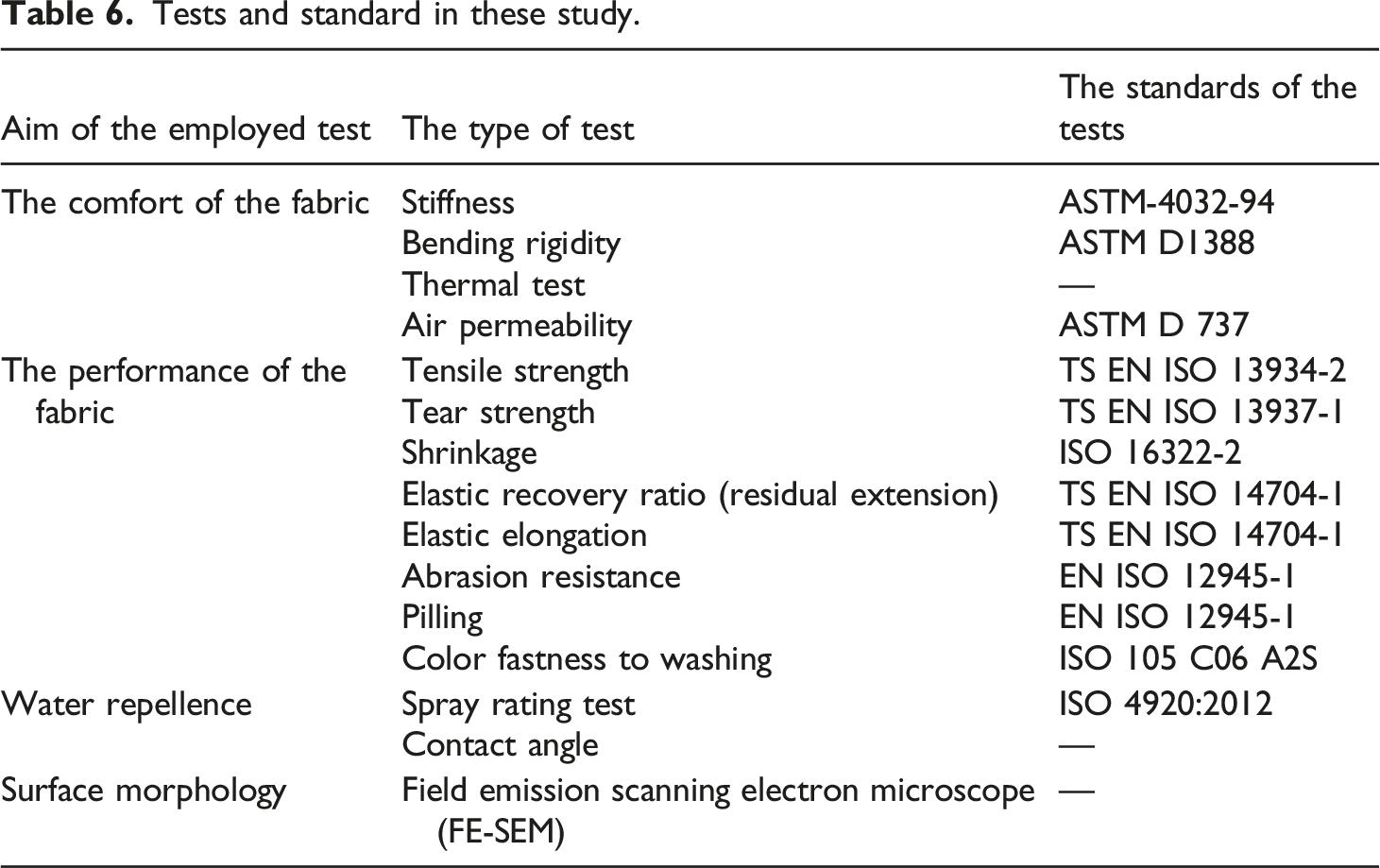
Tests and standard in these study.
Stiffness
A circular bending rigidity tester was used to determine the stiffness of the fabrics according to ASTM 4032-94. Thus, the changes of the fabric stiffness application investigated after RTV-2 silicone coating.
Bending rigidity
In the scope of this study, the bending rigidity was measured according to the ASTM D1388 to observe the changes of the bending behaviors of the fabric after RTV-2 silicone coating and mechanical finishing processes.
Thermal test
In the study, the effect of the RTV-2 silicone coating and the mechanical finishing processes onto thermal comfort properties of the fabric investigated via ALAMBETA tester.
Air permeability
The air permeability values of the fabric after RTV-2 silicone coating and the mechanical finishing processes were investigated according to the ASTM D 737. So, the effects of the RTV-2 silicone coating and the mechanical finishing processes onto air permeability of the fabric was examined.
Tensile strength
The strength of fabrics is significantly influenced by the strength of their yarns. Moreover, the yarn’s strength shows changes due to the weaving and coating process, and also because of the yarn deformation. In the study, the changes of tensile strength of the fabric before and after RTV-2 silicone coating and mechanical finishing processes was investigated. Tensile strength test was employed according to the TS EN ISO 13934-2.
Tear strength
In the scope of this study tear strength test was employed to the fabric according to the TS EN ISO 13937-1. Tear strength is important factor for the textile material because many diverse mechanical strength properties is expected depending on their given destination. Within the scope of the study, it was investigated whether there was a positive or negative change in the mechanical performance properties of the fabric after RTV-2 silicone coating and mechanical finishing processes.
Shrinkage
Shrinkage is one of the mechanical properties for the manufacturer and the consumers. Shrinkage in a negative or positive direction is undesirable. It is therefore important that there is as little or no shrinkage as possible. Within the scope of the study, it was investigated whether the RTV-2 silicone coating has a positive or negative effect on the tensile performance of the fabrics. Shrinkage of the fabric was measured by using ISO 16322-2 test method.
Elastic elongation and elastic recovery ratio
Elastic elongation and elastic recovery ratio are individual attributes of textiles. Elastic elongation is stretching or lengthening of textiles under a tensile force. Elastic recovery ratio is the capability of a stretched or deformed textile to return to its original shape after removing the applied force. High elastic elongation and high elastic recovery ratio are among the important properties desired from textile material. It has been investigated whether these properties will be affected positively or negatively after the RTV-2 silicone coating process. The elastic elongation and elastic recovery ratio test was employed according to the TS EN ISO 14704-1 test method.
Abrasion resistance
One of the important mechanical properties is the abrasion resistance. Because of that, the changes of the abrasion resistance of the fabric were investigated. It is expected that the coating prevents the losses fabric weight, and the coated fabric shows great increments in terms of abrasion resistance. In the study, the abrasion resistance was employed to the EN ISO 12945-1 test method. The effects of the RTV-2 silicone coating onto abrasion resistance of the fabric observed.
Pilling
Pilling is an important problem both textile manufacturers and consumers. The formation of the pilling results in a significant decrease in fabric quality and a negative influence on the user’s comfort. The pilling test was employed to the EN ISO 12945-1 test method. Therefore, in this study, it was investigated whether RTV-2 silicone coating has any effect on pilling rating.
Color fastness to washing
Color fastness is one of the most important parameters that the consumer pays attention to in textile materials. For this reason, it was wanted to examine whether there was any change in the color fastness of the washed fabrics after the RTV-2 silicone coating process. The color fastness to washing test was used according to ISO 105 C06 A2S test method in the study.
Spray rating test
The spray rating test was employed to the fabric according to the ISO 4920:2012 test method. The water repellence properties of the fabric before and after RTV-2 silicone coating application was investigated. Thus, it was evaluated that the effects of RTV-2 silicone coating onto water repellence performance of the fabric.
Contact angle
Contact angle measurement was performed. Distilled water was deposited on the sample surface and the drop shape was recorded for 10 s by means of a video camera. The results shown for each sample are average of three measurements. Therefore, water repellence behavior of the fabric was investigated before and after RTV-2 silicone coating and mechanical finishing.
Field emission scanning electron microscope (FE-SEM)
After RTV-2 silicone coating and mechanical finishing processes, it was aimed to observe the morphologic changes on the fabric surface. Because field emission scanning electron microscope was used to take photos from fabric surfaces. On the other hand, standard error bars of the tests obtained are shared. In addition, all tests performed within the scope of the study were performed with at least three repetitions and averages were taken accordingly.
Results and discussions
The stiffness properties of the Fabric
The principle of the test is to determine the amount of force that is required to push a fabric sample through a round hole. A stiffer fabric requires more force to be pushed through the hole, while a more flexible fabric requires less force. 48
The stiffness test in the study done in three repetitions for all samples. The stiffness value of the samples on both warp and weft yarn direction (Figures 2 and 3) showed that the coating of RTV-2 increased the stiffness value of the samples in comparison with the reference fabric. Because the resistance of the fabric against to exposing force increased thus the RTV-2 silicone application caused increment on the stiffness and thickness of the fabric. In terms of thickness of the coating, the stiffness was affected on the weft direction more seriously than the warp direction of the fabric. Because weft yarn of the fabric is consisted of the elastane and cotton yarns. In the presence of the elastane yarn on the weft direction with the interaction the increase of the coating thickness affected the stiffness positively after application in comparison with the warp direction. On the other hand, after mechanical finishing processes (calendaring and sanforizing) it was seen that the stiffness value was decreased up to 1.217 kgf on the warp direction and 1.037 kgf weft direction. Because the fabric thickness was reduced by the pressure of the calendaring process. In addition, as it is known, the mechanical processes applied under high pressure and high temperature condition thus increase handle properties woven fabrics thanks to gaining smoothness of the surfaces.49,50 According to the results, as the effect of the mechanical process applied with the high pressure and temperature got higher, it was seen that the stiffness value of the fabric decreased. This situation can be explained by the effect of the temperature and pressure on the fabric and coating material. Stiffness values of the samples on the warp direction. Stiffness values of the samples on the weft direction.

The bending rigidity properties of the fabric
The bending rigidity results of the fabric support to evaluate handle and drapability properties. Namely, the stiffer the fabric, the greater is the length necessary to ensure sufficient bending. 51
The bending rigidity test of the samples showed that reference fabric softened by silicone had better drapability (364.07 mg.cm) than the RTV-2 coated fabric (Figure 4). Along with the gaining weight of the fabric and coating their surfaces by RTV-2 silicone, the samples became more rigid structure. In addition, fibre and the yarns in the fabric attached one another strongly. Thus, the bending rigidity of the fabric showed higher value (up to 1,658.03 mg.cm). As for the interaction between mechanical finishing process and RTV-2 silicone, it was observed that the mechanical finishing processes was effective on the bending rigidity of the RTV-2 coated fabric Depending on the mechanical finishing, the bending rigidity values showed variability from 535.33 mg.cm to 1,658.03 mg.cm. The drapeability of the fabric got better after calendaring, sanforizing and calendaring + sanforizing processes depending on the pressure and high temperature during the mechanical finishing process. In addition, the test results and performance changes obtained from stiffness and bending rigidity test showed parallel tendency and showed similar behavior. Bending Rigidity values of the samples.
The air permeability properties of the fabric
The air permeability results (Figure 5) showed that reference fabric had 3.50 m3/m2/min air permeability while RTV-2 silicone coated fabric had air permeability value up to 4.81 m3/m2/min. It was seen that the usage of the RTV-2 silicone was increased air permeability. However, other experimental study, which was used different RTV-2 silicone component, showed that the usage of the RTV-2 silicone was decreased the air permeability of the fabric. The difference between these studies could be explained with modifying of the RTV-2 silicone components used in the study. Air permeability of the samples.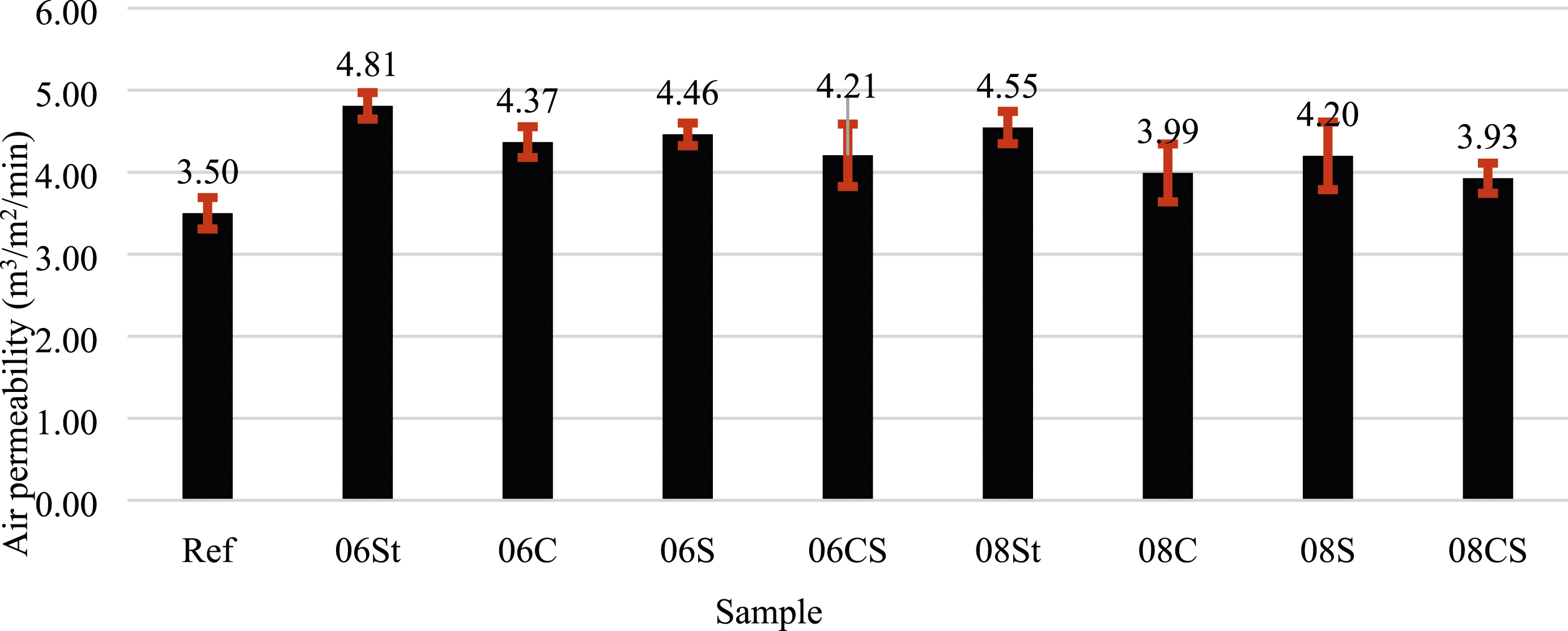
On the other hand, it was seen that the mechanical finishing processes negatively affected air permeability. Air permeability value of the sample 08st was 4.55 m3/m2/min. While the sample 08CS was 3.93 m3/m2/min. The yarn under pressure during calendaring process is become even and flattened thus fabric porosity is decreased after calendaring process. Because of that reason the air permeability is decreased after calendaring. 52 As for the sanforizing process, it is known that fabric shrinkage on the warp direction and GSM (grams per square meter of fabric weight) is adjusted via this process. During sanforizing, yarns in the fabric come closer one another so that fabric length is lessened and the gap among to yarns is closed thus air permeability of the fabric decrease after sanforizing. 44
The water repellant properties of the fabric
The wettability can be measured by the contact angle. The water contact angle determines hydrophilic and hydrophobic characteristics of any solid surface at the liquid/solid interface. 53 It can be said that when the contact angle is smaller than 90°, the wettability is recognized to be good (hydrophilic). On the other hand, the contact angle is larger than 90°, the wettability becomes bad (hydrophobic). 54 Besides, the surface with static water contact angle θCA >150° and sliding angle θSA <10° is defined as superhydrophobic.47,55
In the Figure 6, the average contact angle degree of the samples, wetting time and spray rating test were given. According to the Figure 4, the result of contact angle and spray rating test of the reference fabric was 85.81° and 0 respectively. In the light of these data, it was seen that reference fabric had hydrophilic structure. However, after the coating application of RTV-2, the fabric got hydrophobic structure owing to the fact that RTV-2 silicone contains hydrophobic chemical groups such as trimethylsilyl, dimethylsilyl and monomethylsilyl (Scholz et al. 2010). Regardless of the coating thickness of the fabric and the mechanical finishing processes, all RTV-2 silicone coated fabric showed water repellence properties. On examining the average contact angle degree, it was seen that the reference samples surface showed the hydrophilic character having the <90° contact angle on the other hand the RTV-2 silicone coated samples have excellent average contact angle degree (from ≈130° to 153.27°) and their surfaces showed the hydrophobic character. In literature the contact angle degrees of the fabric containing C6 and C8 fluorocarbon-based water repellant chemicals application showed familiar values with the RTV-2 silicone coated fabric.
56
Contact angle captures and values of the samples.
The spray rating test result pointed out that the usage of the RTV-2 silicone increased water repellant properties of the fabric, which had the ISO 3 (80) value while the reference samples had 0 value. It means that the reference samples show complete wetting of whole upper and lower surfaces while RTV-2 silicone coated fabric shows wetting of upper surface at spray points. It was emphasized that the contact angle of the fabric and the spray test results were similar.
The thermal comfort properties of the fabric
Thermal insulation properties of the fabrics are specified both the physical parameters and structural parameters such as weave, drape, and thickness. 57 Thermal diffusivity is determined how fast heat diffuses through a material. 58 Thermal absorption is determined as a measure of the ‘warm-cool feeling’’ of textiles. Thermal absorption identifies the contact temperature of two bodies. Its advantage is not depended on the conditions of the experiment and is directly related to other thermal properties such as thermal conductivity and diffusion. 59 Thermal resistance is one of the most important parameters for the thermal insulation of the fabric and is proportional to the fabric structure. Namely, the more increased the fabric thickness, the more increased fabric thermal insulation. 60
ALAMBETA test results (Figures 7 and 8) showed that thermal diffusivity of the fabric decreased after RTV-2 silicone coating while the thermal absorptivity values of the fabric increased. Increasing of the thermal absorptivity resulted in increasing the cold feeling of the fabric after coating RTV-2 silicone regardless of coating thickness and mechanical finishing processes. However, it is not a situation desired by consumers. As for the mechanical processes effect on the thermal behavior of the fabric, it was seen that thermal absorptivity increased due to gaining smoother surface on the fabric after mechanical processes. Besides, it was seen that the thermal diffusion values of the fabrics were reduced due to decreasing of the air amount inside the fabric structure after mechanical processes. These decreasing can be explained as follows: thermal diffusion mainly related to the heat flow through the air in the fabric structure and the mechanical processes hindered amount of the air inside the fabric structure. Thus, thermal diffusion of the fabric reduced by mechanical processes. Thermal capacity of the samples. Thermal absorptivity of the samples.

The Shrinkage properties of the fabric
The changes on the shrinkage of fabrics after coating processes and mechanical finishing processes can be shown in Figure 9. Shrikage % of the samples.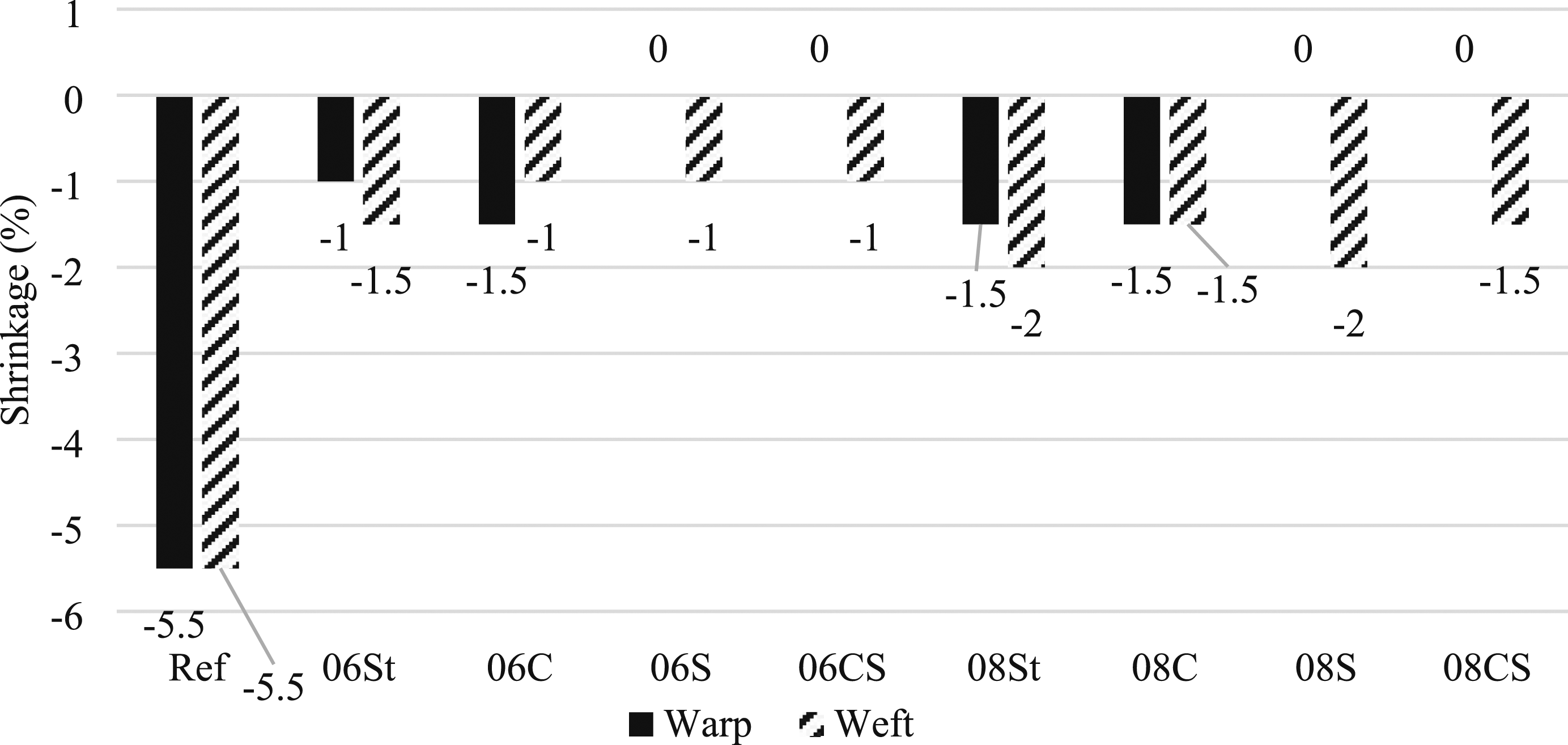
According to Figure 7, the reference fabric had %5.5 shrinkage both weft and warp direction while RTV-2 silicone coated fabrics had the range from %2 to %0 shrinkage. It was seen that the usage of the RTV-2 silicone coating provided better % shrinkage value on both directions. This situation can be explained as follows; the fabric became more stable structure, swelling capability of the fabric were reduced because of the RTV-2 silicone filled in the blanks between the yarn in the fabric structure and the movement of the yarns in the fabric structure were limited after the coating of the RTV- 2 silicone.
The tensile and tear strength properties of the fabric
Upon seeing the tensile and tear strength of the fabrics (Figures 10 and 11) showed that the tensile strength on the weft direction were not remarkable changes. On the other hand, the tensile strength on the warp direction decreased. The tear strength of the RTV-2 coated samples showed higher value (from 4,785.7 gf to 5,349.7 gf on the warp direction, from 2,047.7 gf to 2,551.7 gf on the weft direction) that of the reference fabric on both weft (1,528.7 gf) and warp (2,857.3 gf) direction. It could be explained by decreasing the fibre- fibre interaction in the fabric structure. Along with the decreasing interaction between fibres, the load, which employed the fabric, can’t be transferred one another so that the tear shows irregular movement instead of axial movement. Thus, the tear strength of the fabric was increased. Furthermore, the mechanical finishing effect were not seen on the tensile strength while its effect on the tear strength was seen. The fabrics, which exposed to both calendaring and sanforizing, had higher tear strength due to decreasing the relaxation stress on the fabric after these mechanical processes. Tensile strength values of the fabrics. Tear strength value of the fabrics.

The elastic elongation and elastic recovery ratio properties of the fabric
Elastic elongation is determined that the extension at a given load (sometimes known as modulus) which is a measure of how easily the fabric stretches.
61
On the other hand, the elastic recovery ratio (residual extension) is determined as how well the fabric recovers from stretching to this load.
62
Elastic elongation and elastic recovery ratio values of the fabrics (Figures 12 and 13) showed that the usage of RTV-2 silicone affected elastic elongation on both directions. In comparison with the reference fabric, RTV-2 silicone coated fabric had less elastic elongation and elastic recovery ratio values regardless of coating thickness and mechanical finishing processes. It could be explained that the stiffness and the drapability of the fabrics after coating process and mechanical finishing process got worse, so it resulted in reduce elastic elongation of the fabric. Moreover, the used finishing material in the reference fabric is consisted of silicone based elastomeric finishing material. Because of that, the reference fabric showed more elastic behavior than the RTV-2 coated fabric. Along with the reducing elastic elongation of the RTV-2 coating, the elastic recovery ratio of the fabric was reduced. On examining the interaction between mechanical finishing process and RTV-2 silicone, it was seen that the mechanical finishing process positively affected elastic elongation and elastic recovery ratio of the RTV-2 silicone coated fabric. Elastic elongation of the fabrics. Elastic recovery ratio of the fabrics.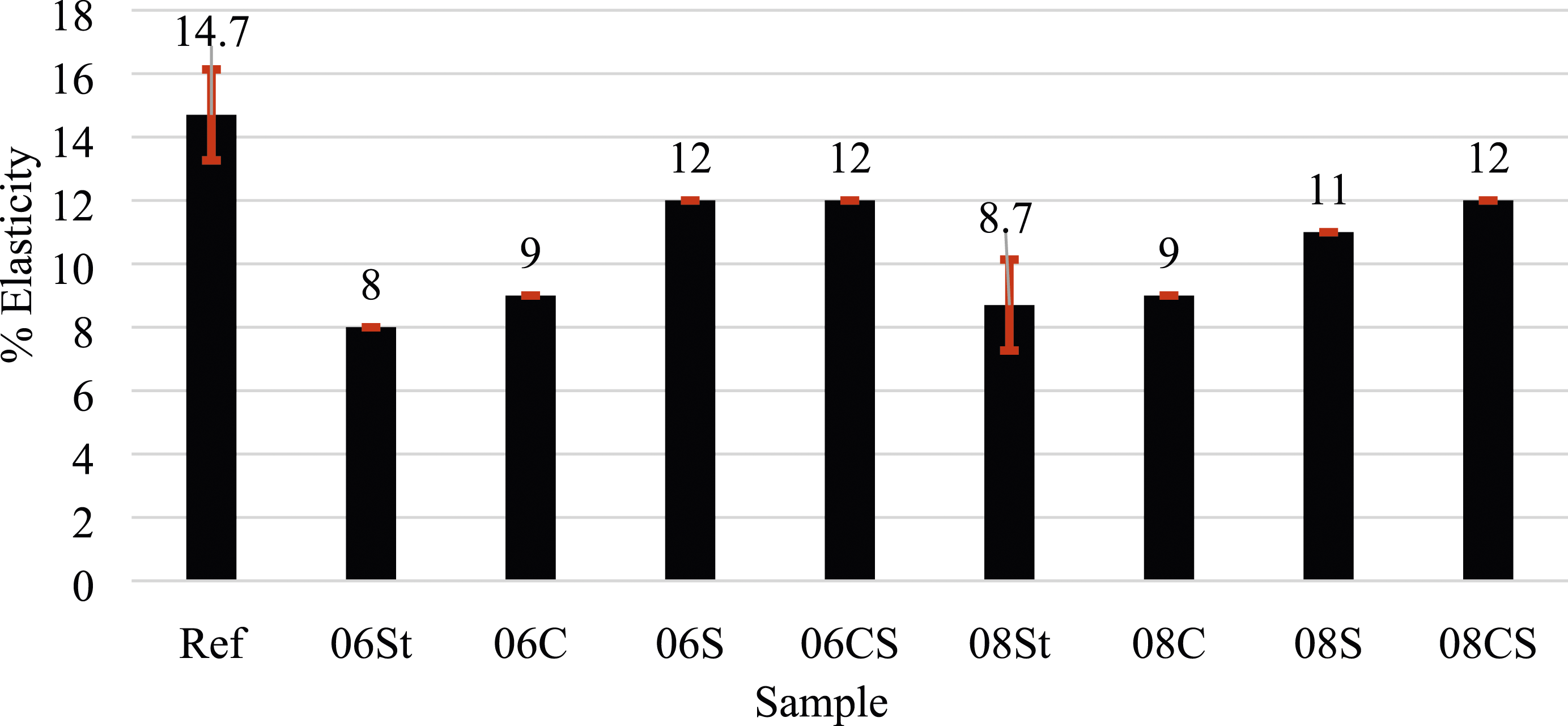
The pilling and abrasion resistance properties of the fabric
Abrasion resistance of the fabric.

The color fastness properties of the fabric
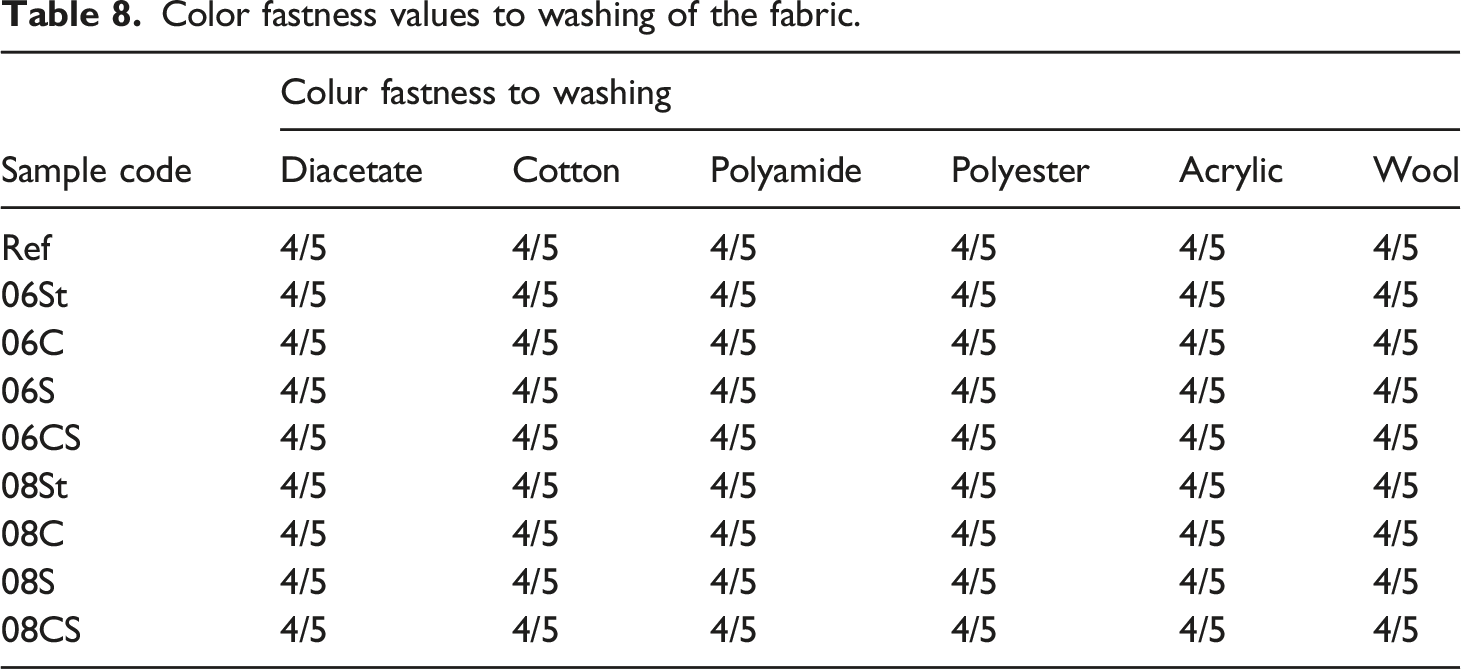
Color fastness values to washing of the fabric.
The morphologic properties of the fabric via field emission scanning electron microscope (FE-SEM)
Within the scope of the study, the surface images were taken by field emission scanning electron microscopy (Zeiss, Gemini SEM 300) to observe the changes caused by both chemical and mechanical finishing processes on the fabric surface. In particular, in order to examine the morphology of the yarn bundles in the fabric after the mechanical finishing process (calendaring, sanforizing), the cross-sectional images of the fabric were also examined via FE-SEM analysis in addition to the surface image. The samples were coated with gold to provide conductivity and then placed onto the specimen stubs for surface observation. While surface images were taken at 100×, 300× and 1,000× magnification, cross-sectional images were taken at 2,500× magnification. The FE-SEM images obtained are shown in Figure 14. The FE-SEM images of the fabric.
When the FE-SEM images obtained were examined, it was seen from both surface images and cross-sectional images that RTV-2 silicones were successfully transferred to the fabric surface and between the yarns. When the RTV-2 silicone coated samples were compared with the reference sample in terms of cross-sectional images, it was observed that the yarn arrangement in the reference sample had a looser structure, while the yarn bundles were both tighter and flatter in the RTV-2 silicone coated samples due to the RTV-2 silicone coating and mechanical finishing processes (especially the calendaring process).
Conclusion
In the scope of this study, the main purpose of the study is to be gained water repellant properties of woven fabric coated by RTV-2 silicone and analyze the physical and thermal properties of these fabrics. In addition, the interaction between mechanical finishing treatments and RTV-2 coating application was investigated in terms of fabric physical performance. In this experiment, the woven fabric was coated by RTV-2 silicone with two different coating thickness. The effect of the RTV-2 silicone onto woven fabric were examined and evaluated by physical performance and water repellence tests.
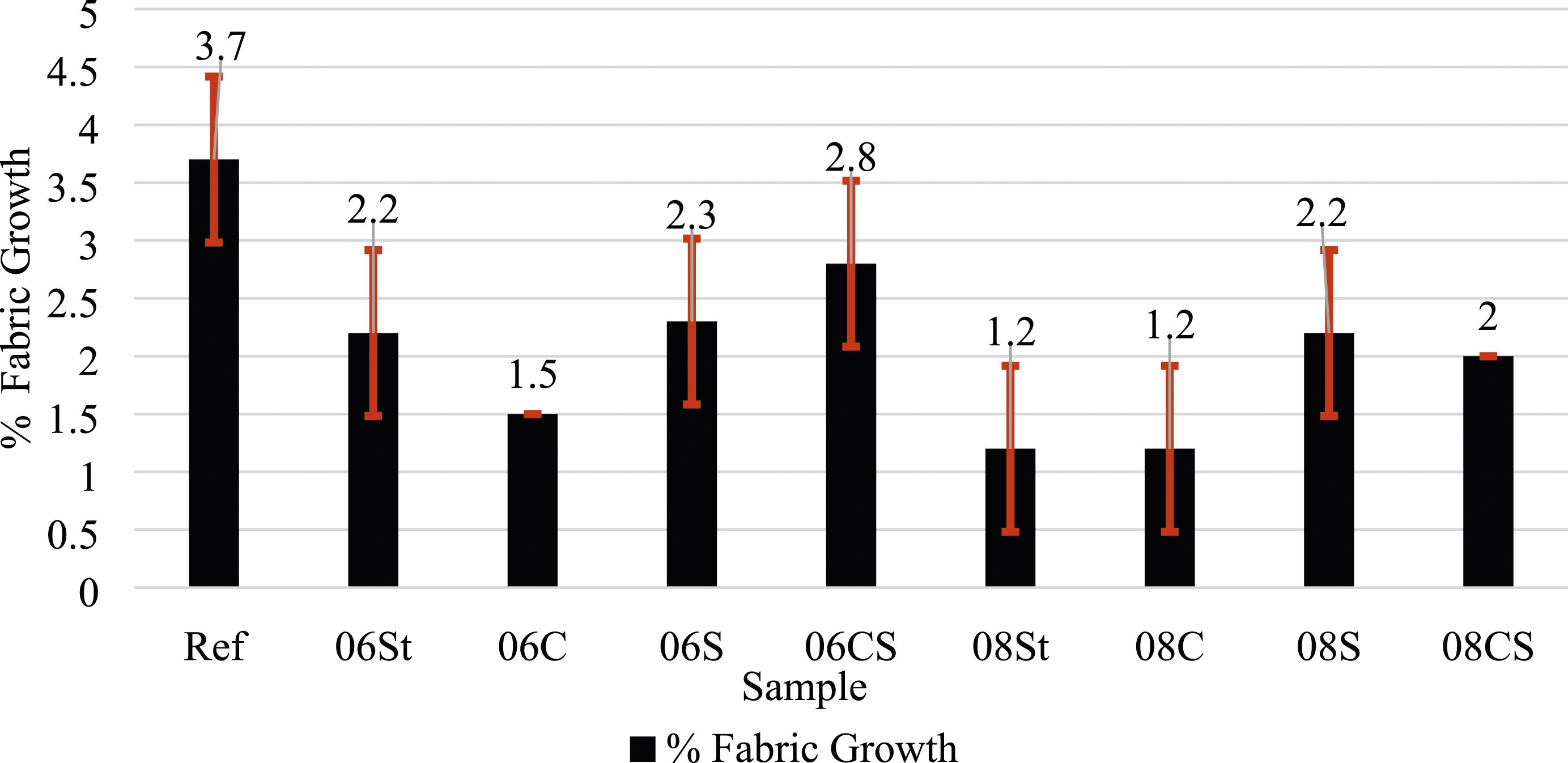
In the light of the taken data, it was determined that RTV-2 silicone coated fabric showed good water repellant properties according to Spray test and contact angle. In additional, the air permeability and the tear strength of the fabric increased by usage of the RTV-2 coating and % shrinkage, % elasticity, % growth value were got better. On the other side, it was not seen any changes of the pilling and abrasion resistance performance and the color fastness value of the RTV-2 coated fabric in comparison with the reference. On the other hand, the usage of the RTV-2 silicone on the fabric negatively affected the softness of the fabric, tensile strength on the weft direction and thermal comfort properties. FE-SEM photos showed that RTV-2 silicone coating was employed successfully and after that surface morphology changed. In addition, it was seen that the mechanical finishing affected the fabric surface.
As a result, it is possible to say that the usage of RTV-2 silicone could positively affect water repellant properties and could be used an alternative to C8 and C6 based fluorocarbon water repellant chemicals. 56 Because of the perfluoro octane sulfonate (PFOS) and perfluorooctanoic acid (PFOA) are tented to releasing the bio-persistent and toxic component, the European Union agreed to prohibit the usage of C8-based fluorocarbons on 4 July 2020. However, RTV-2 silicone used in this experiment is vulnerable to water droplets long period of time. On the other hand, the water repellant properties of the RTV-2 silicone could be increased by modification of the components. It is thought that RTV-2 coating application could be used for ticking, winter cloths and technic textiles. In addition, further studies, it is considered that the oil repellence properties of the RTV-2 silicone can be examined.
Footnotes
Authors’ contributions
Koray PEKTAŞ set the experimental design. He played an important role during the application of finishing processes. Besides, he helped the interpreting of the obtained data. Onur BALCI helped the setting of experimental design and also played an important role of interpreting of the obtained data. Ayrin İBİŞ determined the most appropriate finishing chemicals for this experiment.
Funding
The author(s) received no financial support for the research, authorship, and/or publication of this article.
