




Abstract
The proposed study aims in first part to discuss the structure and behavior of short-stretch cotton woven compression bandage (WCB), and in second part the production and properties of multifunctional WCB. The bandage includes an integrated tension sensor, which causes a change in the spacing of colored threads during its deformation. The motivation of this research was to investigate the optimum techniques for compression therapy using a modified construction of cotton WCB as a tensiometer. The aim of second part is focused on an industrial product which has the easy adjustable compression and antibacterial properties. Multifunctional WCB can be produced by two methods, the first was using highly twisted warp yarns (ply twist 1800 to 2200 twist/m) and the weft yarns will be treated with silver Nano-particles (NPs). The second method was post-treatment of the WCB with three concentrations of zinc oxide NPs 1–3 % in powder form with 15 g/L acrylic binder. Silver NPs coated yarns showed a comparable antibacterial activity on both tested bacterial strains (Escherichia coli and Staphylococcus aureus) using quantitative and qualitative test methods. The WCB tested samples achieved 95–99% bacteria reduction, the nanoparticles size and its distribution were confirmed by the Zetasizer Nano, the scanning electron microscopy (SEM), and the energy dispersive X-ray spectroscopy (EDXS). The practical bandage pressure by PicoPress showed significant deviations compared with theoretical pressure calculated by Laplace’s equation ranges ±0.68 to ±15.64% especially at the highest extension levels.
Keywords
Introduction
Compression bandage (CB): it is possible generally to divide it into two main categories of these medical components; namely, knitted and woven compression bandages (WCBs). The knitted CB is usually in tubular form, but it is practically different than the compression socks (hosiery), 1 whereas the WCBs have vast variety of types and techniques.
Medical CBs are designed to meet both the safety and the comfort of patients or athletics. In hot environments or at high activity levels, evaporation of sweat becomes an important avenue of body heat loss and fabrics must allow water vapor to escape on time to maintain the relative humidity between the skin and the first layer of clothing about 50%.2,3 There are two classes of bandages in the market (normal and smart bandages): The simple or normal bandages, their price is cheap, their structure is simple and based on the plain weave.
4
The second class is smart CBs which have sensors to give the user direct reading of the exerted pressure on the part of the body during any activity, but it is so much costly compared to the first category, see Figure 1.
5
Smart CBs with sensor.
5

Venous ulceration is the most common type of leg ulcers and a significant clinical problem. Chronic leg ulcers affect approximately 1% of the population and 3% of people over 65 years of age in the developed countries. The majority of leg ulcers are due to venous diseases.6–8 Compression therapy by medical compression structures can be achieved using short- or medium- or long-stretch techniques at optimum stretch ranges (<70%) or (70–140%) or (>140%) respectively, which represents the extensibility level according to the standard focused on medical compression hosiery ENV 12718:2001. 9 As for the WCB, the practical stretch of a bandage on the human leg to achieve a sub-bandage pressure of 40 mmHg in the Gaiter area at circumference of 23 cm could be classified to short-stretch at 20–50% extension or long-stretch at 50–120%.10,11
Short-stretch CB such as 100% cotton and two-component compression system are mainly used for venous leg ulcers and edema. With a short-stretch CB, the muscle contraction causes an intermittent narrowing of the veins, a reduction of venous reflux, and thus an improvement in the venous pump function when the patient is walking. Long-stretch CB is suitable for uncomplicated varicose veins or athletic performance, such cases require medium pressure (30–40 mmHg). 12 In order to design effective compression bandages, researchers have attempted to describe the interface pressure applied by these bandages using mathematical models.13–15 Few studies have been focused on the optimization and best combinations of CBs for venous leg ulcers, edema healing, and prevention of recurrence. Most of patients depend on specialist practitioners or traditional experience. Compression therapy limits the flow of diseased surface veins, increases the flow through deeper veins, and reduces swelling. Patients who are compliant with compression therapy have significantly improved ulcer healing rate and decreased rate of recurrence. Compression is thought to either correct or improve venous hypertension, mainly owing to an improvement of the venous pump and lymphatic drainage. Compression also improves the blood flow velocity through deep and superficial veins. 16 There are three methods for producing compression bandages to achieve the optimum stretch and elasticity. First method is using highly twisted warp yarns (such as 100% cotton), the optimum elastic recovery of this CB can be achieved by adjusting the hot water treatment without tension.4,17 The second method is using elastomeric filament (elastane or rubber) with cotton or viscose or polyamide to produce long-stretch CB. The third method is using two polymeric yarns which have different melting point by steaming and heat setting.
In clinical practice, bandages are applied in the form of overlapping layers which results in multiple layers of fabric that overlay a particular point of the surface of the limb.
18
For example, CB applied with spiral 50% overlap technique will overlay the leg with two layers of bandage, CB applied with 66% overlap will result in three layers of bandage and CB applied with the figure-of-eight technique with 50% overlap will result in four layers of bandage, see Figure 2.19–21 Compression bandaging remains a key interference in the management of venous and lymphatic diseases. This apparently simple intervention depends on the optimum selection and practical application of four complex central properties of compression bandages, namely, applied pressure, number of layers, components, and elastic properties.
10
Three major techniques of woven compression bandages.
21

Metal nanoparticles (MNPs), such as silver,22,23 gold and copper have achieved special attraction because of their catalytic, 24 electronic 25 and unique optical properties26,27 making them very attractive in the fields of particularly sensing, bio-conjugation, and surface enhancement Raman spectroscopy. 28 One of the widespread approaches to the synthesis of MNPs involves the reduction reaction of metal ions in a polymeric solution.29,30
The proposed study was focused on the definition of structure, then modification of construction and analysis of properties, and behavior of WCBs. The research proposed a modification of the construction of WCB made of 100% cotton yarns, where the bandage included an integrated visual tension indication that caused a color change of the bandage during its deformation. The solution was visual tensiometer in the bandage in the form of weft threads with different color from the other structure of the bandage, which became visible due to extension/stress in the bandage. For the cost saving, implementation was possible as well by applying these different weft threads through the weft insertion during weaving instead of printing or adding the colored marks after bandage production. 17
Experimental work
Materials and samples for compression bandages
The methodology plan passed through three steps, the first was to evaluate the mechanical properties of the plied warp yarns which were used for producing 100% cotton WCB available in market. The second was to produce and analyze warp yarns at a wider range of ply twist to achieve the required elasticity of the bandage. The third was to evaluate the mechanical and antibacterial properties of the WCB, see Figure 3.
21
For the first step, plied yarns from market of 20x2 and 30x2 Tex were selected at ply twist ranges from 1850 to 2300 twist/m, as illustrated in Table 4. After evaluation of the market yarns tensile properties, the plied yarn of 20x2 Tex was selected as the optimum to give the required high extensibility and elasticity of the WCB, as demonstrated in Table 1. Therefore a new produced single yarn of 20 Tex was plied at a wider range of ply twist (600–2300 twist/m) to be used as warp yarns. The weft yarns linear density was 60 Tex for the new WCB samples, its specifications are listed in Table 2. Overall plan of experimental work. Newly produced plied yarn properties, 20x2 Tex. The specifications of the woven bandage samples.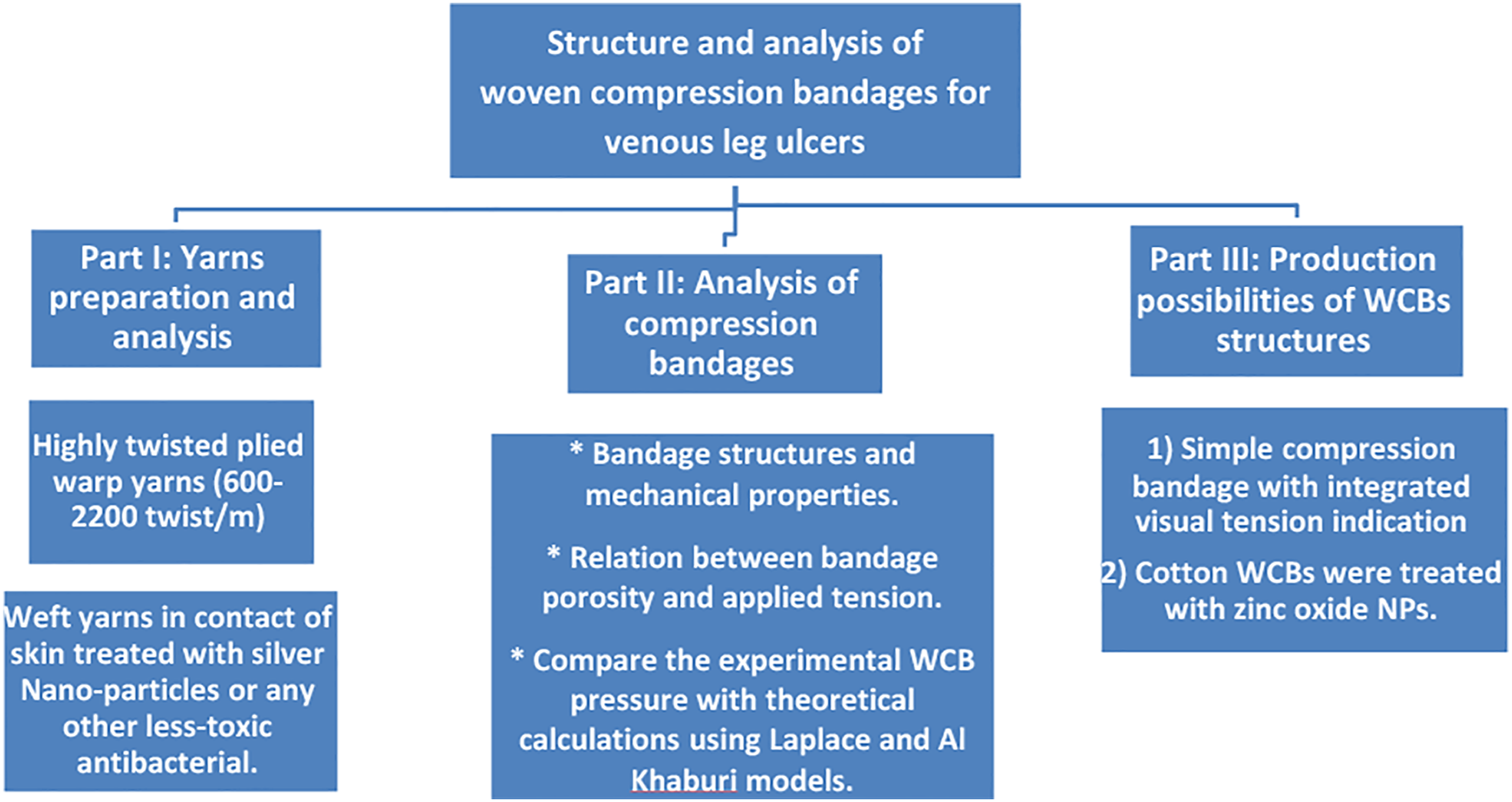


Samples’ codes for treated cotton WCB with zinc oxide nanoparticles.

Analysis of the mechanical properties of the warp yarns and WCB
The load-elongation curve of the warp yarns was measured according to the ISO 2062:2009(E). 31 Instron 4411 tensile testing machine was used to measure the tension developed in the yarn using a gauge speed of 180 mm/min, and the device gauge length was set to 500 mm. The yarn twist per meter was measured on the TWIST LAB-2531C twist testing machine according to standard procedure CSN 80 0701. The yarn linear density was measured from a lea of one hundred meters according to CSN 80 0050. The WCB pressure was measured using the Microlab PicoPress M-700 at the ankle and mid-calf positions. 32
The compression of living tissue using textile bandages is only estimated based on the personal experience of the bandage applicator. Based on the evaluation of deformation during the bandage application, it is possible to give the patient, nurse, or any other user accurate remarks to adjust the applied compression to the body part through the innovated colored WCB, see Figure 4. The simple bandage could be converted to a smart WCB by modifying the bandage structure such as adding the blue marks (rectangles of 2 cm x 1 cm to be squares of 2 x 2 cm2 at 100% extension or adjusted according to the required bandage tension such as 2 x 1.5 cm2 at 50% extension, as illustrated in Figure 5). This modification could control the bandage tension as a function of the applied extension that ranges from 50 to 100% depending on the bandage construction and the number of layers. There are three levels of bandage tension (low: 50% extension and 50% overlap, medium: 100% extension and 50% overlap, and high: 100% extension and 66% overlap).
12
The innovated modification for 100% cotton WCB and its structure. A colored weft repeated every 1 cm during the bandage weaving.

Bandage porosity is calculated by measuring the binary area fraction using high resolution camera. While subjecting the bandage samples to a constant extension, the resultant images were recorded using high resolution camera. 4
Cotton WCBs were worn one by one on real leg to test the real compression pressure at ankle and mid-calf positions in both static and walking conditions at different extension levels. Ankle and calf positions were adjusted at leg circumference of 25.6 and 38.9 cm respectively. Deviation percent was calculated according to equation (3), as the difference between measured compression using PicoPress and calculated pressure by Laplace’s equations (1 & 2),14,33 as illustrated in Figure 8. The level of pressure exerted on a medical device matches with the Laplace’s equation stating that the pressure (P expressed in Pa) of a compression applied to the skin surface is directly proportional to the tension (T in N) of the compression material and number of layers, and inversely proportional to the radius of curvature (R in m) of limb surface to which it is applied and the bandage width (W in m).
34



Antibacterial treatment and activity of the weft yarns and WCB
Preparing cotton weft yarns treated with Silver NPs
Uniform silver nanoparticles (Ag-NPs) were obtained by reduction of Silver nitrate at 70°C under atmospheric pressure. Glucose Ag-NPs were synthesized by dissolving AgNO3 (157 mg) and PVP (5 g) in 100 mL of 40% (w/w) of glucose syrup. 5 mL of sodium chloride were added to the samples for complete reaction and to convert all the ionic Silver to NPs. 35 Ten samples, 200–300 m of bleached cotton yarns were winded on perforated Polypropylene bobbins, their thickness ranges from 5 to 10 mm. Five samples were immersed in glucose Ag-NPs solution for 1 min (D1) and the other samples for 60 min (D2). The treated samples were dried at 90°C, and then cured for 4 min at 130°C.
Silver NPs activity of treated yarns
For the tests, pathogenic bacterial strains were used for the qualitative test method (AATCC 147) and quantitative test method (AATCC 100).

Coating of cotton WCBs with ZnO nanoparticles
ZnO nanoparticles at 1–3 wt% concentration in powder form and 15 g/L binder were added into distilled water and the dispersion was sonicated for 10 min using ultrasonic system (Bandelin Sonopuls HD 3200, 20 kHz, 200 W, 50% efficiency). Then, the ZnO nanoparticles dispersion was applied on the cotton WCB through a dip-pad-dry-cure method. The cotton WCB was immersed into the dispersion for 1 min, subsequently passed through a padder, dried at 100°C in a drying oven and finally cured at 150°C for 5 min to ensure that the ZnO nanoparticles adhere to the cotton WCB surface. 41
The antibacterial tests were performed according to the following standards; AATCC 147 Test Method: 147–2012 - Assessment of Antibacterial Activity of Textile materials: Parallel Streak Method, and AATCC 100 Test Method: 100–2019 - Assessment of Antibacterial Finishes on Textile Materials.
Results and discussion
Evaluation of load-elongation curves of plied warp yarns
Commercial plied warp yarns’ properties.


Effect of plying twist on yarn tenacity for new produced and market yarns.

Effect of plied yarn twist on its extension for produced and market yarns.
The obtained results in Figure 8 confirm that there are significant deviations when applying Laplace’s equation for two and three layers bandaging ranging ±0.68 to ±15.64%. The highest deviation values were clearly significant at high extension levels 60–80%, this might be due to the compactness and high compression especially at ankle position. Moreover Jawad Al Khaburi developed this equation (5) to include the increase in limb circumference due to multilayer bandaging; this equation has decreased the deviation range to be ±0.07: ±12.55% as illustrated in the following equations18,42: Measured bandage pressure by PicoPress versus calculated by Laplace’s and Al-khaburi’s equations at ankle position using two and three layers of cotton bandage.


As for the application of 100% cotton bandage on real leg, the bandage horizontal porosity has been analyzed as a function of the bandage extension level and the angle between warp and weft threads, as displayed in Figure 9.
32
Evaluation of the angle between warp and weft as well as the bandage porosity were performed on the basis of image analysis according to an internal standard IS 23–107-01/01.
43
The methodology of scanning and evaluation of the porosity of woven fabric consists in determination of the covered threshold area (displayed by red color) of woven fabric microscopic specimen in transmitted light. Moreover the average value of angles and the bandage porosity are presented in Figure 9. Effect of extension level on the horizontal porosity of cotton bandage during application on real leg.
Silver NPs activity of treated cotton yarns
Silver nanoparticles possess a broad spectrum of antibacterial, antifungal, and antiviral properties. Silver nanoparticles have the ability to penetrate bacterial cell walls, changing the structure of cell membranes and even resulting in cell death. Their efficacy is due not only to their nanoscale size but also to their large ratio of surface area to volume. They can increase the permeability of cell membranes, produce reactive oxygen species, and interrupt the replication of deoxyribonucleic acid by releasing silver ions.
The antibacterial actions of silver nanoparticles: 1) Disruption of the cell wall and cytoplasmic membrane: silver ions (Ag+) released by silver nanoparticles adhere to or pass through the cell wall and cytoplasmic membrane. 2) Denaturation of ribosomes: silver ions denature ribosomes and inhibit protein synthesis. 3) Interruption of adenosine triphosphate (ATP) production: ATP production is terminated because silver ions deactivate respiratory enzyme on cytoplasmic membrane. 4) Membrane disruption by reactive oxygen species: reactive oxygen species produced by the broken electron transport chain can cause membrane disruption. 5) Interference of deoxyribonucleic acid (DNA) replication: silver and reactive oxygen species bind to deoxyribonucleic acid and prevent its replication and cell multiplication. 6) Denaturation of membrane: silver nanoparticles accumulate in the pits of cell wall and cause membrane denaturation. 7) Perforation of membrane: silver nanoparticles directly move across cytoplasmic membrane, which can release organelles from cell.
Method AATCC 147
Inhibition zone of treated yarns according to AATCC 147.
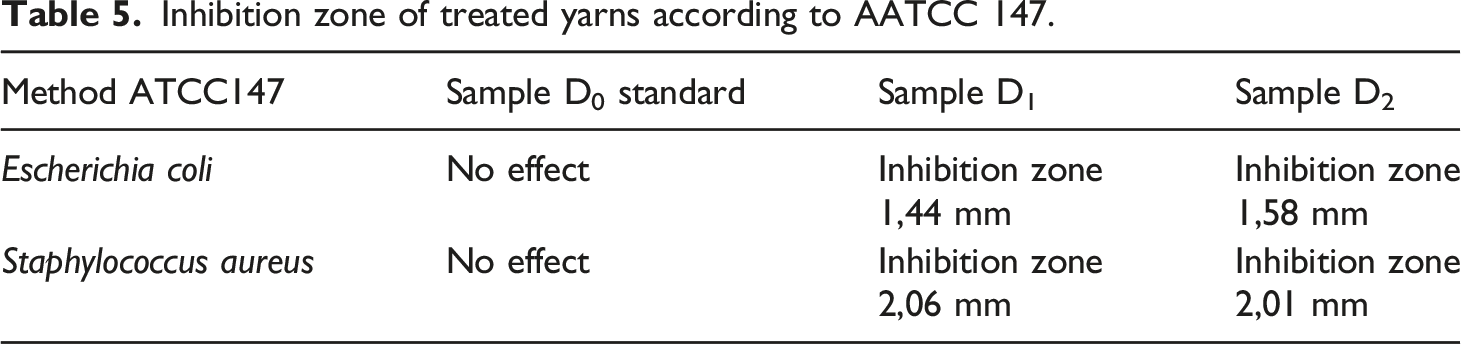

Inhibition zone of treated yarns against.
Method AATCC 100
Antibacterial assessment by quantitative test according to AATCC 100.


Surviving bacterial colonies.
Scanning electron microscopy and energy dispersive X-ray of the yarns
The scanning electron microscopy of the treated and un-treated single and plied cotton yarn samples are illustrated in Figure 12 respectively. The silver NPs size and its distribution are demonstrated for the treated yarn samples. Moreover the energy dispersive X-ray mapping for the yarn samples confirmed the NPs percent in the total composition of yarn EDXS mapping, see Figure 13. It can be obviously noticed that the silver nanoparticles have been successfully synthesized in Nano-scale. Moreover, silver nanoparticle have been successfully attached to the yarn surface with sufficient homogenous distribution. Energy dispersive X-ray mapping, EDXS, are confirming the existence of silver Ag+ all over the treated yarn surfaces. Scanning electron microscopy of the un-treated and treated plied yarns. Energy dispersive X-ray mapping of the un-treated and treated plied yarns.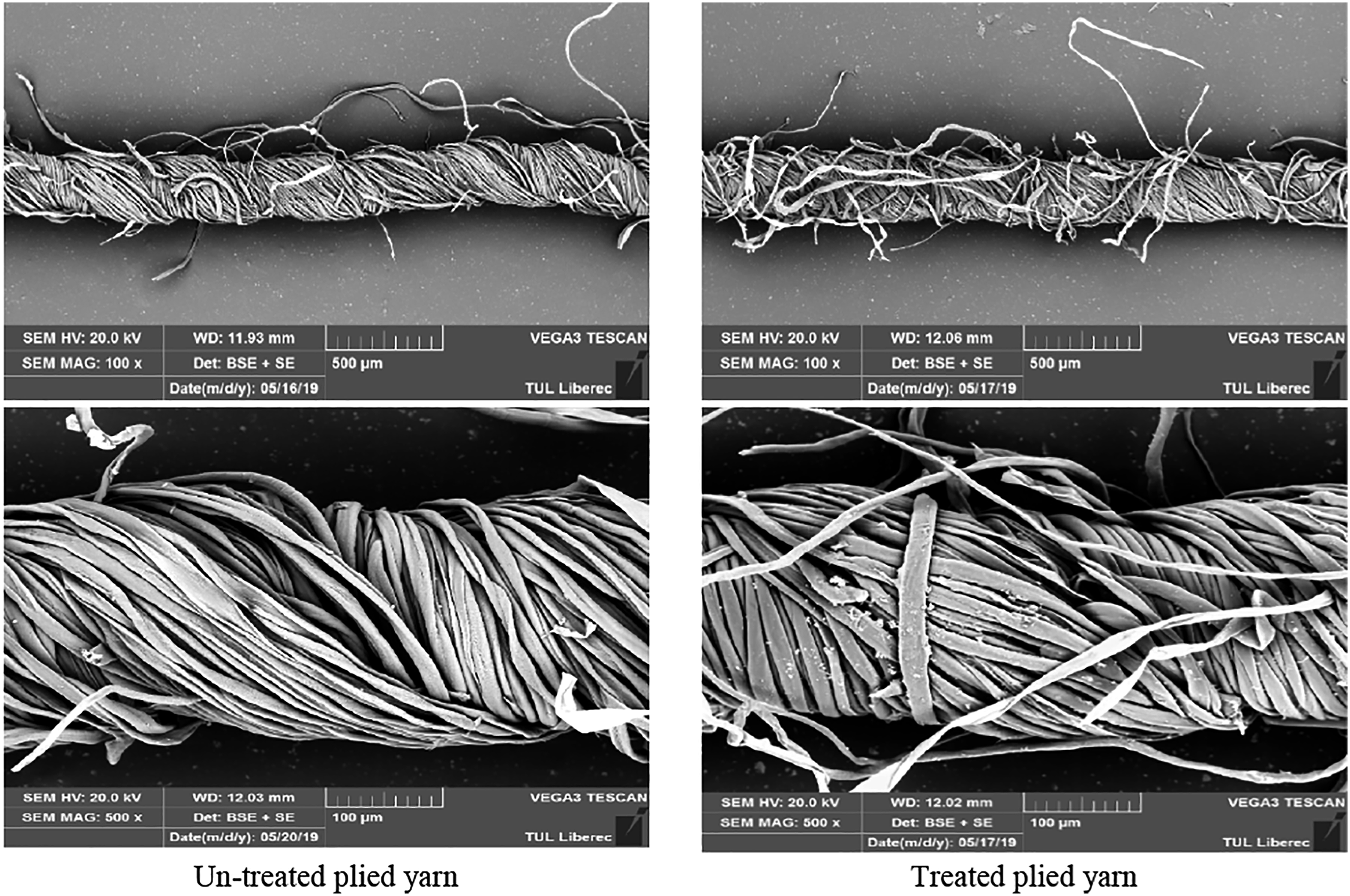

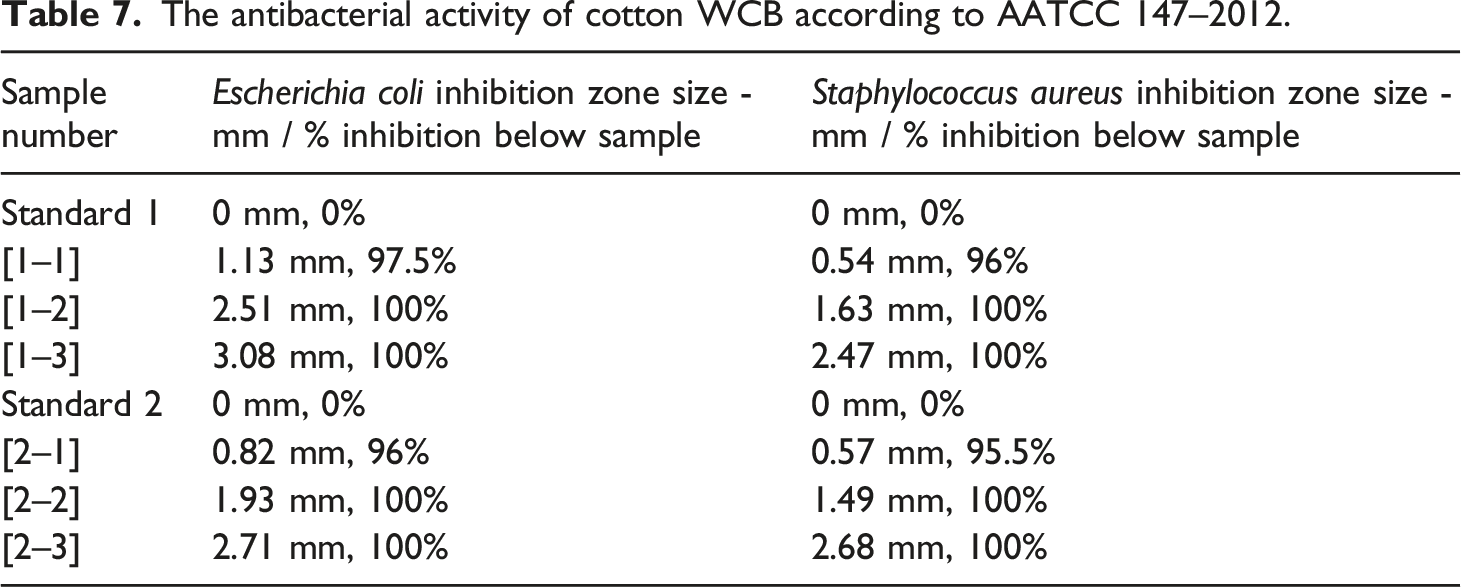
Verification of antibacterial activity of cotton WCB treated with Zinc Oxide NPs
The antibacterial activity of cotton WCB according to AATCC 147–2012.
The antibacterial activity of cotton WCB according to AATCC 100–2019.
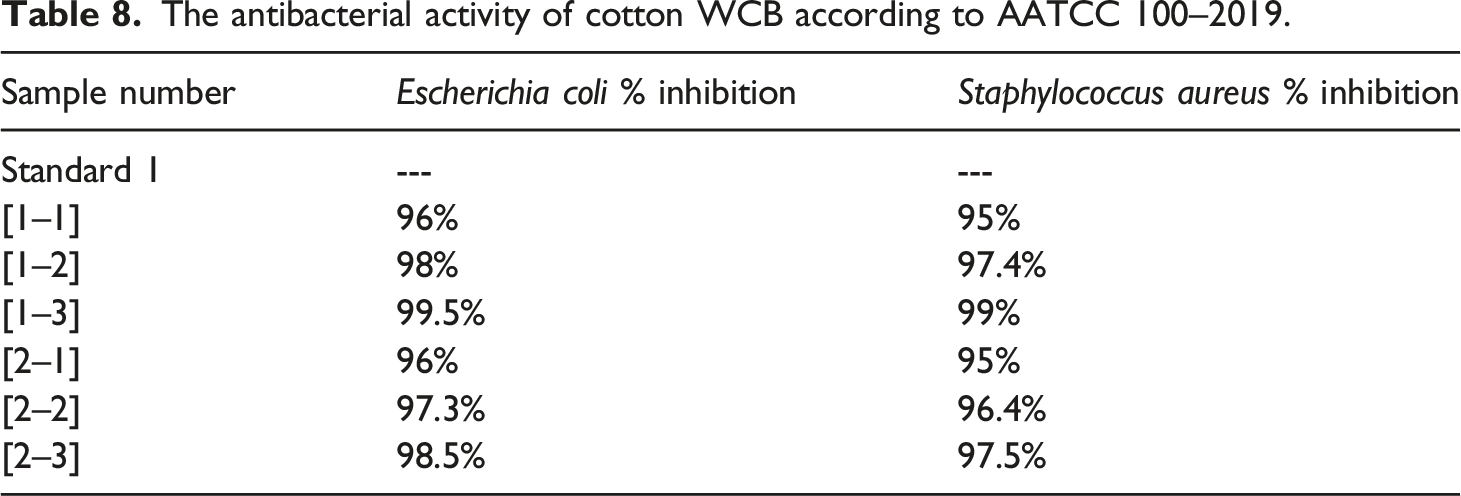
The quantitative method showed 95–99% inhibition in all treated WCB samples on both tested bacterial strains compared to the standard samples. Moreover the higher concentrations of ZnO Nanoparticles were associated with comparable improvement of the antibacterial activity of treated samples.
The antibacterial mechanism of ZnO is mainly due to generation of reactive oxygen species such as O2− and OH. These species are produced due to generation of electron (e−), and electric hole (h+) pairs on the surface of the photocatalyst. The negative electrons (e−) and oxygen (O2) combine into superoxide radical (·O2−), while the positive holes (h+) and water (H2O) produce hydroxyl radicals (·OH). Finally, the generated hydroxyl radicals (·OH), and superoxide radical (·O2−) are responsible for the antibacterial action. Due to very high oxidative nature of reactive oxygen species, the membrane of bacteria get oxidized which cause their death. Being photocatalyst, Moreover, it has been reported in previous studies that the release of Zn++ also plays a significant role in inhibiting the growth of bacteria. 44
Scanning electron microscopy and energy dispersive X-ray of the bandage samples
The SEM of the un-treated and treated cotton WCB samples (Standard 1, [1–1], [1–2], [1–3]) are displayed in Figures 14 to 17 respectively. The zinc oxide nanoparticles’ characteristics are listed in Table 9, which were then confirmed with the Zetasizer Nano.
45
Moreover the ZnO-NPs distributions are investigated for the treated bandage samples and the EDXS mapping confirmed the percent of ZnO nanoparticles’ in the total composition of bandage samples, as illustrated in Figures 18 to 21 for the treated bandage samples. The optimum treating concentration of the ZnO NPs was 2% with higher antibacterial activity and lower agglomeration than 3%. SEM of the un-treated cotton woven bandage, Standard 1. SEM of the treated cotton WCB with 1% zinc oxide nanoparticles, [1–1]. SEM of the treated cotton WCB with 2% zinc oxide nanoparticles, [1–2]. SEM of the treated cotton WCB with 3% zinc oxide nanoparticles, [1–3]. Technical specification of ZnO-NPs (Bochemie, BOCH-01). Energy dispersive X-ray map of the un-treated cotton WCB, Standard 1. EDXS map of the treated cotton WCB with 1% zinc oxide nanoparticles, [1-1]. EDXS map of the treated cotton WCB with 2% zinc oxide nanoparticles, [1–2]. EDXS map of the treated cotton WCB with 3% zinc oxide nanoparticles, [1–3].


Conclusion and recommendation
The research aims were focused on the definition of structure, then modification of construction and analysis of mechanical and antibacterial properties of WCBs. Based on the WCB evaluation, it could be possible to create a better condition during the bandage application by a patient, nurse, or athletic user, and find a connection between the structure and applied bandage tension during static and dynamic applications. The proposed study achieved a modification of the structure and construction of 100% cotton WCB, designed an integrated tension sensor, which caused a change in the spacing of colored threads during its extension, such as rectangles of 2 cm x 1 cm could be converted to squares of 2x2 cm2 at 100% extension. The warp yarn tenacity should be greater than 15.5 cN/Tex, and its extension should be at least 12% to produce the highly stretched 100% cotton WCB, and the optimum twist of warp yarns was ranged between 1800–2200 twist/m for producing high extension cotton WCBs. Moreover, the horizontal bandage porosity was measured as a function of applied extension and angle between warp and weft yarns.
Silver NPs coated yarn samples D1 and D2 showed a comparable antibacterial activity (approximately 99–99.5%) on both tested bacteria strains (E. coli and S. aureus) using both quantitative and qualitative test methods. Moreover the new produced WCB structure were treated with ZnO-NPs and had positive results of antibacterial activity (approximately 95–99%) for both Gram-positive and Gram-negative bacteria strains according to AATCC 147–2012 and AATCC 100–2019.
The coating of weft yarns with non-toxic NPs is recommended to reduce the total cost of WCB and enhance its antibacterial activity and sustainability.
Footnotes
Author's Note
Ahmed H. Hassanin is also affiliated to Department of Textile Engineering, Faculty of Engineering, Alexandria University, Alexandria, Egypt.
Declaration of conflicting interests
The author(s) declared no potential conflicts of interest with respect to the research, authorship, and/or publication of this article.
Funding
The author(s) disclosed receipt of the following financial support for the research, authorship, and/or publication of this article: This work was supported by the Ministry of Education, Youth and Sports of the Czech Republic and the European Union— European Structural and Investment Funds in the Frames of Operational Programme Research, Development and Education— The project Hybrid Materials for Hierarchical Structures [HyHi, Reg. No. CZ.02.1.01/0.0/0.0/16_019/0000843] and the project “Textile structures combining virus protection and comfort” (Viratex, Reg. no. CZ.01.1.02/0.0/0.0/20_321/0024467).
