




Abstract
Bacterial cellulose is the three-dimensional network structure of nanofibers. The bacterial cellulose materials have outstanding characteristics of high surface area and high crystallinity (84%–89%). It has greater compatibility with the degree of polymerization and has excellent mechanical properties. The water-holding capacity of bacterial cellulose (over 100 ti) makes it stand out from other cellulose materials. This is because bacterial cellulose has high purity due to a lack of lignin and hemicellulose. Bacterial cellulose is considered as a non-cytotoxic, non-genotoxic, and highly biocompatible material, which has broad appeal in the medical field and has attracted widespread attention. The proposed review summarizes the microbial effects of enlisting bacterial strains with carbon sources, and culture media on bacterial cellulose production. In addition, it provides a variety of physical and chemical methods that can be used to modify bacterial cellulose with metal and metal oxide nanoparticles; like the common structure of zinc oxide/bacterial cellulose represent antibacterial characteristics against C.freundii, S.aureus, E.coli, and P.aeruginosa with 90.9%, 94.3%, 90.0%, and 87.4% strength respectively. The wound healing properties of such metallic oxide structure with bacterial cellulose presents the characteristics, which confirms its application in 66% of strength, especially for bionic designs for medical applications, including wound healing and artificial skin, vascular and neurosurgical covering materials, dural prosthesis, arterial stent coating, cartilage, bone repair grafts, and biomedicines. Because of the further exposure of value-added medical material application, our review ends with challenges and perspectives in the production of bacterial cellulose nanocomposite.
Keywords
Introduction
In the recent age of development and progress, there are different types of industries and public health sectors, demanding materials, that are eco-friendly and easily biodegradable. It’s all because of attention toward control and a clean environment in the modern era. The bacterial cellulose is a recently developed material for such applications, whereas, since long time cotton, hemp, and other woody materials are being used for specific purposes [1–3]. According to the different studies, there is a great deal of difference between natural cellulose and bacterial cellulose. The natural cellulose (40 to 70%) is obtained from plants that mainly consist of lignin, hemicelluloses, and pectin beside cellulose. While bacterial cellulose has found abundantly in the form of pure cellulosic nanofibers with less requirement of treatment and processing, that makes it easy to get it in the white form [4]. In addition, due to its excellent properties and purity, over the last two decades, it has been extensively studied by large numbers of scientists and scholars [5–8]. The most common bacteria that are used for the preparation of bacterial cellulose known as gluconacetobacter, acetobacter G-xylinus, and azotobacter [6, 7].
Bacterial cellulose is a three-dimensional structure of nanofibers that have various promising properties like; hydrophobicity, degree of crystallinity, biodegradability, biocompatible, and non-toxicity [9, 10]. The web of this three-dimensional nanofibers structure is known as a pellicle, which illustrates the interaction of van-der Waals forces and intermolecular hydrogen-bonding [11]. Besides, the presence of hydroxyl groups shows its hydrophilic properties [12]. Bacterial cellulose nanofibers have a range of diameters 20 nm to 100 nm, having an excellent surface area than natural cellulosic material [13]. The modifiability, flexibility, physical and chemical properties demonstrate bacterial cellulose as superb material for utilizing it in various applications, which are extensively demanded in the biomedical field. A variety of characteristics can easily be obtained by modifying bacterial cellulose in the form of composite or nanocomposite. The everlasting field of nanotechnology, which deals with the materials at nanoscale in terms of molecular, supermolecular, and atomic nanoparticles to design such nanocomposites. Normally, these type of nanocomposites are prepared in the form of coatings, sheets, nano-films, nanofibers, and nanotubes as well as nanoparticles three-dimensional structures [14–17].
Generally, these materials represent the metallic and metallic oxide structures in which nanoparticles of Fe, Au, Ag, AgO, Cu, CuO, Zn, ZnO, Al, and Al2O3 has been studied recently [18–23]. Surface modification by nanoparticles with an appropriate method reduces the toxic reagents and enhance the eco-friendly conditions to develop the nanocomposite functions. In addition, the metallic nanoparticle's composites can be used in a wide range of applications such as medical sensing devices, wound dressing, manufacturing of eco-friendly and electrically conductive sheets, health, and foodstuff packaging materials [24–26]. While encompassing the application of nanoparticles, the main concern is about colloidal suspension stability with uneven impulsive development, that destroys their distinctive characteristics together with its use in multiple application areas [27, 28].
The formation of bio-nano composite materials by in situ method for health and environmental purposes is a novel approach with an excellent disposition of nanoparticles [29, 30]. By in situ method the reducing agents Ocimum sanctum, Terminalia cattappa, and bio flocculant has been used for cellulose nanocomposite materials with Ag and Cu nanoparticles for antimicrobial characteristics [31, 32]. Copper nanoparticles are considered cost-effective rather than other metallic nanoparticles in the recent study because it shows excellent electrical and thermal characteristics and has wider use on an industrial scale [33].
The modern study and research methods for nanoparticles preparation are replacing traditional techniques, these new methods are based on organic procedures like fungi, and bacteria are considered an elemental candidate in the preparation of metallic nanoparticles [34]. In the recent study of nanoparticle formation, direct current (DC) sputter coating and radio frequency (RF) sputter coating methods are well-known methods for the preparation of silver nanoparticles and gold nanoparticles with cellulosic material to form a nanocomposite [28, 35]. Similarly, a crosslinking method was adopted for surface modification of bacterial cellulose by procyanidins, in which ε-polylysine peptide was used to improve the antimicrobial property of packaging material for food. The bacterial cellulose is selected for preparing such nanocomposite, because of its passive nature that helps to retain the healthy nutrients in the packaged food [36].
Bacteria cellulose itself does not possess any type of conductive behaviour, so it is developed as a conductive nanocomposite by metallic and oxide materials like graphene, carbon nanotubes, and conductive materials. These materials are applied to bacterial cellulose surface as nanoparticles with the help of in situ, mixing, and printing as well as doping and coating methods. In repeating the preparation of bacterial cellulose nanocomposite, some other conductive materials have also been developed to get the final targeted material. These materials are polyaniline, polyacetylene, and polypyrrole, which deliver excellent conductive and optical characteristics. The nanocomposites formation of bacterial cellulose with PANI and polypyrrole have been studied extensively by different scientists in the application of biosensors, variable conductors, variable demonstrations as well as in many electronic medical gadgets and appliances [37].
In the modern age, metal-semiconductor nanocomposites have drawn significant research interest due to their good prospects in several fields of daily life [38–42]. The physical and chemical characteristics of metallic semiconductor nanocomposites can be improved by selective metallic materials, which can perform a variety of functions such as chemical sensing devices, optical devices, drug delivery, as well as in medical applications [43–46].
The nanocomposites with silver and zinc oxide are the distinctive material for extensive use in several fields, due to the natural behaviour of silver with outstanding chemical, electrical, optical, and antimicrobial characteristics. While, Zn and ZnO nanoparticles have good chemical stability, binding & thermal energy with cost-effective, harmless, and eco-friendly characteristics [47–50]. Besides, there are some other techniques to make metallic nanoparticles based films, in which most common methods known as chemical vapour deposition, solo gel, screen printing, spray pyrolysis, successive ionic layer absorption and reaction, thermal evaporation, pulsed laser deposition, and laser chemical vapour deposition [51].
The base materials especially cellulose can be a good choice in both laboratory and commercial scale because to make a nanocomposite material some essential requirements are also considered for the selection of material. The characteristics primarily considered for the base material are; renewable and sustainable, biodegradable, and should be cost-effective. In this review, bacterial cellulose nanocomposite with the formation of nanoparticles by different methods and techniques describe several advantages as well as its characteristics. Besides this, our main focus is metallic and metallic oxide nanoparticles with bacterial cellulose synthesis and stabilization, as an advanced nanocomposite material with excellent functions in health and biomedical applications.
Types of bacteria and its strength
The bacterial cellulose is developed by the static growth of bacteria, which mainly grow by shaking and mixing in a medium. The carbon sources are valuable things for the production of bacterial cellulose as well as for stability in terms of efficiency to culture the medium. During the production of cellulose, the substrate provides energy to the metabolic rate of bacteria. The source carbon which is used for the metabolic process in terms of glucose can castoff cellulose [52, 53].
The most common bacteria Acetobacter xylinum (Figure 1) is known from many decades for the production of bacterial cellulose. But it has been later replaced with the name Gluconacetobacter xylinus, which is nowadays known as Komagataeibacter xylinus in new classification and has a good potential for the development of bacterial cellulose. The other types of bacteria within the same species like Komagataeibacter hansenii, Komagataeibacter medellinensis, Komagataeibacter nataicola, Komagataeibacter oboediens, Komagataeibacter rhaeticus, Komagataeibacter saccharivorans, and Komagataeibacter pomaceti also have great potential for the production of bacterial cellulose [55–57]. Bacterial cellulose formation begins when bacteria polymerize glucose residues into linear β-1, 4-glucan chains, and form an extracellular secretion of developed chains. Species of these types of bacteria are well known as acetic acid bacteria (AAB) and generally recognized as safe for use.

Represent the strength of Acetobacter xylinum bacteria to the synthesis of bacterial cellulose [54].
The nucleotide-activated glucose is known as a source in which bacterial membrane produce bacterial cellulose [58]. Then membrane which composed of D-glucose units is connected with β-1,4-glycosidic bonds, which are originated through fibrils of bacterial cellulose. So the bonding chain is linear and derived from the unit cell. The presence of hydroxyl group confirms the unidirectional chain and interchain hydrogen bonding. Moreover, these chains are mixed up with fibrils, that confirms the 2000 to 18,000 glucose residues, with 1–9 µm in length and 25 nm in width [59]. The collective form of fibrils further represents a unique ribbon shape of bacterial cellulose, which is always enriched with outstanding properties of crystallinity, mouldability, hydrophilicity, and high water holding capacity.
Synthesis of bacterial cellulose with carbon sources
The formation of bacterial cellulose depends mainly on the source of a synthetic medium, by which bacterial cellulose is obtained, that’s why synthesis of bacterial cellulose can be a costly process. The Hestrin Schramm is a synthetic medium, which abundantly used for the formation of bacterial cellulose. This medium covered 0.5% yeast extract, 0.5% soya peptone, 0.27% disodium phosphate, 1.15 g/L C6H8O7 and 2% glucose [60]. The formation of bacterial cellulose can be affected by some other by-products known as gluconic acid [61]. The medium Hestrin Schramm efficiency can be increased by different carbon sources such as cellobiose, mannitol, xylose, sucrose, and maltose. So, these carbon sources can be used in the capacity of glucose. Mostly the glucose is a good source of energy for bacteria, while it can be directly used for cellulosic material production. It has been investigated recently that fructose had good potential to produce cellulose as compare to other sources of carbon. Besides, some new findings have also been reported that buffers into the medium with the required pH value for the cultivation of bacteria, can enhance the production of bacterial cellulose [56].
The carbon sources can also be obtained from the waste of different beverages and sugar industries, which can reduce the cost of bacterial cellulose production. The combination of additives with culture medium also enhances the production of bacterial cellulose. The most common additives carboxymethyl cellulose, agar, xanthan, sodium alginate, ethanol, and glycerol have a high potential for the synthesis of bacterial cellulose. It has been reported that the lactate and methionine also have great potential with fructose medium, which can enhance cellulosic outcome with K. xylinus subgroups. Meanwhile, corn steep liquor has 90% potential for the production of bacterial cellulose [62].
The synthetic medium is considered somehow costly, for which nowadays researchers are finding some other good resources for Bacterial cellulose production, such as tobacco waste extract, corn waste, wine industry waste, distillery effluents, and different fruits waste, etc. [63–68]. To minimize the waste in the wine industry as an environmental aspect, grapes are good sources of carbon for the production of bacterial cellulose, because Its residue contains acids, salts, phenolic compounds, soluble carbohydrates, and fibers that are mainly considered for bacterial cellulose production [69]. A recent study shows that characteristics of bacterial cellulose mainly depend on the source of carbon, so during the production of bacterial cellulose at a large scale, the source of carbon should be taken into the account [53, 70]. The production of bacterial cellulose can be acquired in a vessel, as well as in an open or closed environment with a supportive temperature and supply of oxygen. Table 1, illustrating specific properties of bacterial cellulose with different production methodologies, while Figure 2, clearly demonstrating the 6 days production mechanism of bacterial cellulose.
Bacterial cellulose production methodologies and their characteristics.


The schematic representation of bacterial cellulose preparation over 6 days followed process.
Synthesis of metallic and metallic oxide nanocomposites
The bacterial cellulose is three dimensional, a gel formed, nano-fibrous structure, which is produced in over 6 days of the incubation process. Bacterial cellulose enriches with excellent mechanical properties, in which stress-strain, elasticity, highly hydrophobic, crystallinity, and tissue resembling are well-known characteristics as compare to plant cellulosic materials [7, 77]. In addition, bacterial cellulose is considered a non-toxic and biocompatible structure, whereas it is found in pure form in contrast to other cellulosic materials. Meanwhile, due to long term stability against degradation and to make it functional with high control porosity is very challenging. However, such types of problems are controlled by modification techniques and methods, which lead to the formation of bacterial cellulose nanocomposites with metallic and metallic oxide (like; Fe, Au, Ag, AgO, Cu, CuO, Zn, ZnO, Al, and Al2O3) materials. Metallic and metallic oxide nanoparticles have a greater potential to develop specific material applications and gained special attention in the biomedical field to diagnose and sense several diseases [78–81], as Table 2 illustrates.
Different metals that are used for biomedical applications.

The development techniques or methods for nanocomposites can be chemically (In situ) or physically (included; chemical Ex-situ) modified, which are mostly known as in situ [89], facile, impregnating, and sputter coating methods. The chemical modification is done by application of versatile culture media with carbon sources and metallic or metallic oxide materials for required characteristics. Additionally, the physical modification is done by surface treatment of bacterial cellulose with required characteristics materials.
The chemical modification of bacterial cellulose depends upon the reactivity of chemical, in which -OH groups allow the reaction in both heterogeneous and homogeneous form for chemical solutions. The concentration reaction of bacterial cellulose for carboxymethylation and cyanoethylation is very high in contrast to vegetal cellulosic material, it's due to the bacterial cellulose chemical bonding and structure, which is more suitable in in-situ modification during the development of bacterial cellulose nanocomposite, while vegetal cellulose is found in the natural form with less ability of fast reaction, so due to this bacterial cellulose is consider as a suitable candidate for carboxymethylation and cyanoethylation [90]. While, in terms of homogeneous form, the reaction of bacterial cellulose toward dissolve represents its high reactivity, which may affect the structure of the fibrils of bacterial cellulose in such type of modification. The electrochemical and viscoelastic characteristics of bacterial cellulose are mostly affected by the alteration of water contents inside the bacterial cellulose. So increase in resistance for electron migration in bacterial cellulose makes it brittle about 50% to 80% of moist [91]. The behaviour toward water holding capacity shows its characteristics for wound dressing application in the medical field. Additionally, some recent approaches to develop the bacterial cellulose as a metallic and metallic oxide nanocomposites for biomedical applications are described in Table 3.
Methods comparison of synthesized nanocomposites encompasses biomedical characteristics.

Physical modification of bacterial cellulose
The physical modification of bacterial cellulose is known as ex-situ modification. Such type of modification can be done by chemical with their crosslinking reactions or directly dipping of bacterial cellulose with additive solutions to absorption and dissolving [98, 99]. In addition, the other way is to apply the coating of physical layer suspension or materials. The combination of bacterial cellulose with bioactive metallic or metallic oxide nanomaterials leads to a nanocomposite, which is used for the application of tumour growth identification in the body and also poses a good potential for wound healing [100].
The introduction of bacterial cellulose as an antibacterial against Escherichia coli and Staphylococcus aureus to maintain human kidney embryonic cells, are mixed with C10H9AgN4O2S and later cross-linked with calcium chloride [101]. Several types of nanoparticles were developed over the surface of bacterial cellulose to enrich it as an antimicrobial material, in which zinc oxide and sliver were abundantly used, while bacterial cellulose soaked with Zn(CH3CO2)2 and AgNO3 respectively has been used to prepare the nanocomposites [102–104]. Bacterial cellulose demonstrates the porous surface that can be avail to incorporate nanoparticle, which creates a smooth nanocomposite. The development of bacterial cellulose for UV-resistance as well as an antimicrobial against E. coli and S. aureus has been done recently by physical sputter coating process of copper and zinc oxide nanoparticles, that can be used as a wound dressing in the medical field [95].
Sputter coating method
Sputter coating as shown in Figure 3, is a physical deposition of nanoparticles technique, in which coating time and thickness may influence the performance of the coating machine. It has been investigated extensively that thickness plays a major role in machine performance, specifically on the region or focused substrate where nanoparticle coating is required. A recent study of bacterial cellulose modification with copper, zinc, and zinc oxide investigated that if the sputter coating time is increased for sputtering of nanoparticles then the performance of bacterial cellulose nanocomposite for the required characteristics are enhanced and it attains a smooth disposition [105].

The schematic representation of sputter coating (DC/RF) method to synthesize the bacterial cellulose nanocomposite.
Generally, it works in two modes that are known as direct current magnetron sputter coating in which only Ar (gas; sccm) is supplied to make metallic nanoparticle sputtering on the substrate (bacterial cellulose), while to make metallic oxide nanoparticles, radio frequency reactive sputter coating technique is used, in which oxygen is also supplied with required pressure (Pa). The required metal is mounted on the cathode and the pure bacterial cellulose aerogel is placed on the anode, facing the cathode mounted with the metal to obtain the nanocomposite by direct current magnetron sputtering or radio frequency reactive sputtering. To get the uniform deposition, the rotating speed of bacterial cellulose is kept around 90 rpm. Moreover, the vessel evacuated with a pressure of 6.5 × 10⁻⁴ Pa before starting the sputter coating. The power supply is also maintained in watts (W) according to the required sputter coating time of nanoparticles. In order to take the preventive measurement, H2O is also supplied to adjust the temperature that can avoid the deformation of bacterial cellulose.
In the recent decade, BC/Cu, BC/Cu/Al2O3, BC/Cu/Zn, BC/Cu/ZnO nanocomposites have been developed by a sputter coating method, the surface structure of nanocomposite can be seen (Figure 4) in SEM images [19, 20, 95, 105], which poses excellent characteristics as an antimicrobial, anti-ultraviolet, wound healing as well as many other biomedical properties.

The SEM images of surface-modified (b-e) bacterial cellulose nanocomposites by sputter coating method; (a) Unmodified Pure BC, (b) BC/Cu, (c) BC/Cu/Zn, (d) BC/Cu/ZnO, (e) BC/Cu/Al2O3.
Spray coating method
This most convenient, easy, rapid, compatible, cost-effective, and measurable technique is known as spray coating to develop a nanocomposite, in which nanoparticles directly deposited on the surface of a substrate (bacterial cellulose) with the help of a spray gun as shown in the Figure 5.

The schematic representation of a spray coating method to synthesize the bacterial cellulose nanocomposite.
This method is based on the air pressure provided to the gun to shower the nanoparticles on the surface of the substrate. Besides, the thickness of deposition and uniformity is also corresponding to the provided pressure, which can be regulated according to requirement. The spray coating can easily operate at room temperature and developed (bacterial cellulose) substrate can be dried by providing heat to the surface. In the recent development of bacterial cellulose, the spray coating method was adopted to make the nanocomposite for a drug delivery system in biomedical applications [106, 107].
Vacuum filtration (wafer/transfer printing) method
A recent approach to produce a metallic nanocomposite is known as a vacuum filtration technique as shown in Figure 6. This method is also known as a wafer or transfer printing method. In this method, a film of the target material is developed over the filter membrane that later transfers the material on the required area of the substrate. This method is mostly adopted for thin film deposition of metallic nanoparticles. The disposition thickness is directly corresponding to the concentration of a solution as well as the volume of the deposited material. A homogeneous film structure of nanoparticles can be obtained by this method on the surface of the substrate. As bacterial cellulose nanocomposite is used in electronics gadgets for the medical field, a recent approach has been reported, that a liquid crystal screen (LCD) can be run by BTO/BC nanocomposite, which was developed by scalable vacuum filtration method [108]. Similarly, another combination of bacterial cellulose and gold nanoparticles has been developed as nanocomposite with the same technique for super soft neural interfacing in medical applications, which treat neurological disorders and enhance the mental and physical ability of human beings. The Au-BC for neural interfacing uses exabit special characteristics for brain electric activity during Vivo recordings [109].

Schematic representation of the vacuum filtration method for bacterial cellulose nanocomposite preparation.
Dip coating method
The bacterial cellulose can also be functionalized by another method known as a dip-coating method as shown in Figure 7. This method is used mostly to make bacterial cellulose as conductive for a high biomedical approach. The functionalization of bacterial cellulose can be enhanced by pretreatment of the surface. In this method, bacterial cellulose is dipped in a vessel filled with a solution of required characteristics, While, after dipping for a specific time the bacterial cellulose is removed from the vessel, and thickness is measured. The deposition thickness of the coating is regulated according to time and solution characteristics requirement. In order to use such nanocomposite as a biomaterial, recently bacterial cellulose was functionalized by dip-coating method, in which it was dipped in SiO2/TiO2 solution. This bacterial cellulose nanocomposite is enriched with self-cleaning characteristics. The development of such bacterial cellulose by dip-coating method shows photocatalytic activity, which enhances its self-cleaning properties. The approach, titanium- dioxide-based treatment via a dip-coating method for bacterial cellulose makes its surface disinfectant, which works as antibacterial, can be used in daily life, and various medical applications [110, 111].

Schematic representation of the dip-coating method for the development of bacterial cellulose nanocomposite.
Chemical ex-situ (impregnating/facial/spin coating) method
The chemical ex-situ method is mostly known as impregnation/facial/spin coating method, in which the surface of bacterial cellulose is easily functionalized. As Figure 8 illustrates that, in this method, the solution of the required characteristic is deposited over the surface of bacterial cellulose with the help of centrifugal force. The excess amount of deposited material goes away from the surface of bacterial cellulose. Additionally, the thickness of material directly proportional to the viscosity of the solution, moving speed, and time. A recent approach by this method is the impregnation of ZnO with bacterial cellulose for its use as an antimicrobial and wound dressing in the medical field. This recent structure was examined for burn wounds and pathogens to confirm its wound healing, tissue regenerating, and antibacterial properties. Besides, its antimicrobial properties represent its strength against Escherichia coli (90%) and Staphylococcus aureus (90.9%). While this nanocomposite was also tested against wound dressing of animals, which shows (66%) appropriate results to heal wounds [112]. So, it can be comfortably said that chemical ex-situ (impregnation/facial/spin coating) method can also be a promising technique to develop the bacterial cellulose nanocomposites for biomedical applications [96].

The schematic representation of the chemical ex-situ method to develop a bacterial cellulose nanocomposite.
Chemical (in-situ) modification of bacterial cellulose
The most common, rapid, cost-effective, and widely used method is the chemical in-situ method. In this method additive materials (metallic/metallic oxide powder etc.) are added at a beginning stage with culture solution of bacterial cellulose and after incubation culture process nanocomposite is obtained, as shown in Figure 9, while sometimes bacterial cellulose is precultured in the form of powder and then it is added to additive material. The main feature of this method is to engage additive material, which is used as a purpose to obtain the required characteristics. So it becomes part of fibrils and shows excellent characteristics in terms of the bacterial cellulosic nanocomposite. A recent approach of the in-situ method is ZnO nanoparticles in regenerated bacterial cellulose to form the RBC-ZnO nanocomposite for biomedical applications [113].

The schematic representation of the chemical In-situ method to prepare a bacterial cellulose nanocomposite.
The powder form bacterial cellulose was first dissolved in N-methyl morpholine-N-oxide, then Zinc oxide nanoparticles were added into the bacterial cellulose solution with 1% and 2% concentration to prepare RBC-ZnO nanocomposite. This newly formatted RBC-ZnO nanocomposite has great potential as a nontoxic, antibacterial candidate with capabilities of cell adhesion for biomedical application as well as in bio electroanalysis.
Besides this, a lot of researchers have studied the chemical in-situ method, but the critical limitations are also considered before to apply this technique. The in-situ method can face different challenges. For example, if additive material during mixing represents an antimicrobial property then it is better to use bacterial cellulose powder in such types of processes. Similarly, at the early stage, sometimes materials are not properly soluble in the culture medium. The other possible reasons could be a high surface tension towards hydrophobic materials, the nanoparticles lacking suspension stability within bacterial cellulose culture media, and a lack of structure control of bacterial cellulose nanofibers.
Biomedical applications
The cellulosic materials have great attention toward the development of metallic and metallic oxide nanocomposites for biomedical applications in terms of tissue engineering, cell structure development, drug delivery as well as in the diagnosis of different diseases, which are mainly corresponding to their nano characteristics and properties [114–121]. The bacterial cellulose describes a three-dimensional web structure that can be used in wound dressing with bio-mimetic characteristics. This structure encourages versatile applications, for example, counterfeit skin, wound healing (Figure 10), proteins, and hormones, vascular grafts, tissue building, dental insertion, clinical, artificial bone development & ligament, and drugs delivery [122]. The lack of adequate materials, further extend the scope of bacterial cellulose application to drug delivery system, specifically in handling and optimizing the drug concentration and drug release kinetics [123, 124].
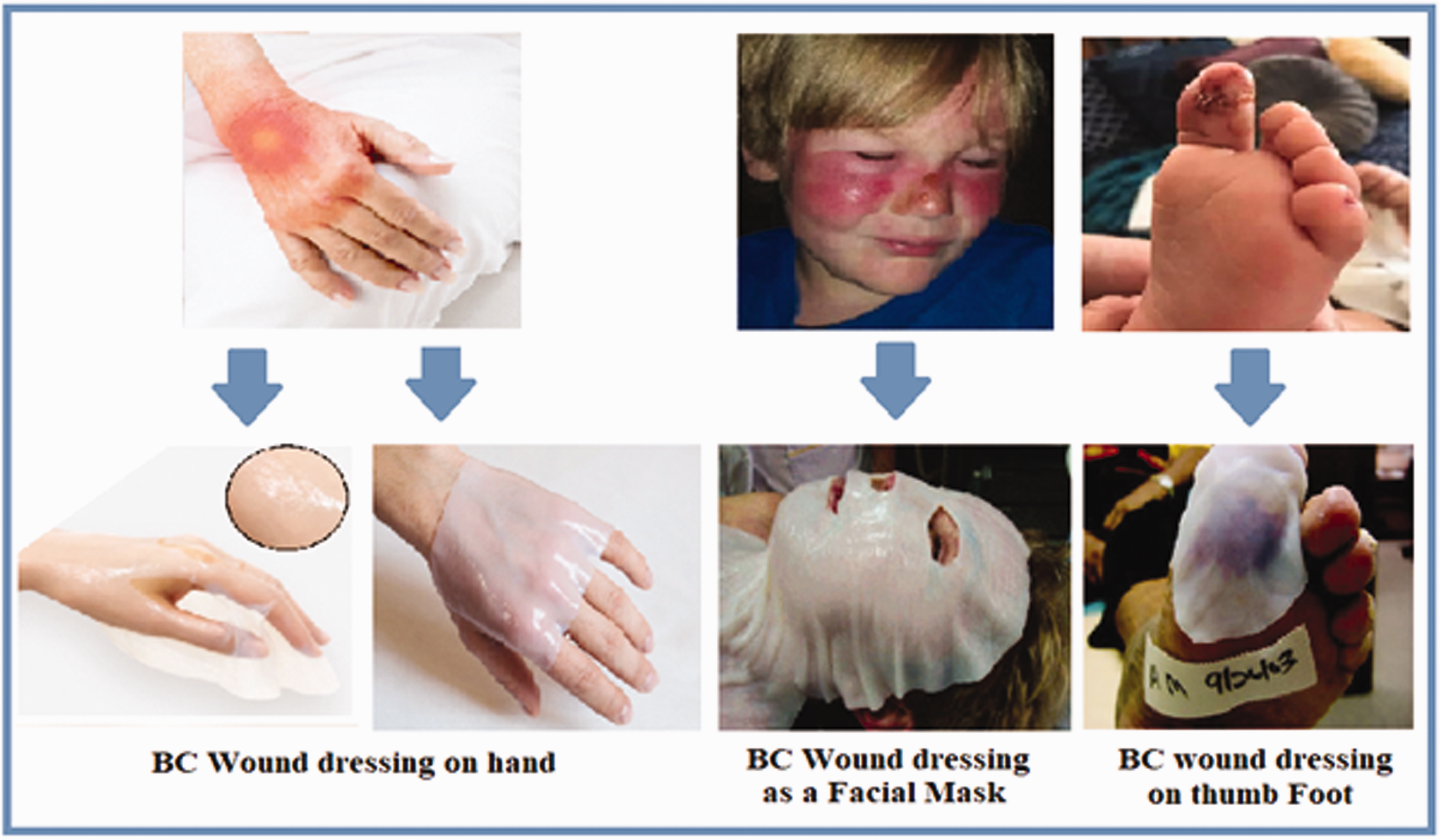
Bacterial cellulose nanocomposite application for wound healing/dressing [54].
The therapeutic effect of chloroaluminum phthalocyanine and photosensitizer with photodynamic therapy of bacterial cellulose membrane on skin cancer was studied recently for biomedical applications [125]. There are a few commercially accessible items available that can be utilized for skin transplantation, treatment of auxiliary and tertiary ulcers, bedsores, dura mater replacement, periodontal tissue recuperation. The biocompatibility of bacterial cellulose was evaluated through the treatment of chronic inflammation, outer body reaction, cell ingrowth, and angiogenesis. The results showed that there were no visible signs of inflammation around the implant, and there were no fibrotic capsules or giant cells, fibroblast infiltration, and chronic inflammation [126]. The efficiency of bacterial cellulose wound healing usually depends on the effective cohesion with the wound area, maintaining a humid environment (very important for re-epithelialization) and the retention capacity of exudate, high mechanical strength in wet state, excellent permeability, transparency, ultra-high purity with low irritation, and easy wound checkup [127–129]. Moreover, the chronic wound healing with bacterial cellulose nanocomposite wound dressings reduced the activity of proteolytic enzymes, production of cytokines, and reactive oxygen species. Although bacterial cellulose has numerous features that attract its uses for wound healing, while its commercial applications have not been exhaustively utilized [128].
The bio-fill is a well known first developed item depend on bacterial cellulose. This structure is composed of an ultrafine cellulose-based film with 8.5% moisture content. The material is utilized as a skin substitute and wound dressing for basal cell carcinoma, skin scraped areas, serious injuries, and skin cell development. Besides this, it deals with discomfort near the injury bed, common stripping after re-epithelialization, cost-effective, and have less treatment time. However, when utilized in a progressively dynamic boundary, the flexibility is constrained, which is identified with the material [130]. Similarly, other bacterial cellulose-based auxiliaries for temporary skin treatments are known as Membran-cell, Bio-next, X-cell, which exhibits excellent properties against burns wounds, facilitate in term of chronical relief, which decrease the infection rate and have a rapid recovery rate of injuries [131]. Additionally, for the treatment of chronic wounds, there is a well known bacterial cellulose-based product called Nano-derm. It prevents infections with moist vanishing and provides pain relief. Moreover, it can be used as a scaffold for tissue regeneration, affecting the function of fibroblasts, endothelial cells, and keratinocytes to raise granulation tissue development and epithelial formation [132]. Another method is to use bacterial nanocellulose (BNC) to heal other body surfaces, such as the cornea or dura mater, which has not yet been developed. Therefore, based on BNC's outstanding performance in skin wound healing, we assume that this structure also has the potential characteristics as an ocular surface bandage [133]. Similarly, the recently developed material is used to recover tissue and bone regeneration is Gengiflex, which is a double formation film composed of natural and alkali-modified bacterial cellulose, used to treat the loss of bone around TiAl6V4 (IMZ) while repairing the beauty and function of the teeth. This product can support the recovery of periodontal tissues by reducing inflammation, thereby reducing surgical steps and processes [134]. In the last decade, a cellulose-based structure was developed, which was introduced for animals to cover a large area of wound healing known as Cell-umed [135].
Similarly, the inorganic materials copper oxide, zinc oxide, silver, and titanium oxide nanoparticles represent antibacterial characteristics with bacterial cellulose as a nanocomposite against S.aureus and E.coli bacteria [136–138]. The combination of bacterial cellulose with titanium oxide has been reported recently which has great potential in terms of wound dressing. Meanwhile, as a skincare agent (TiO2) with bacterial cellulose poses excellent photocatalytic and hydrophilic characteristics. Moreover, due to chemical stability and biocompatibility its widely used in cosmetics manufacturing [139, 140]. Due to more concern in biomedical application, its (BC/TiO2) composite is widely considered for tissue development in bone recovery, biosensors, and vascular diseases. While, in term of drug delivery, burn wound healing, the BC/TiO2 represent its excellent strength against E.coli and S.aureus which confirm its antimicrobial characteristics [140].
Moreover, several characterizations have been used to examine and confirm the impregnation of zinc oxide with bacterial cellulose films to determine their application in biomedicine. The antibacterial properties of bacterial cellulose zinc oxide nanocomposites against common burn pathogens were tested, which confirm the excellent wound healing properties against burn wounds [112]. The common structure of zinc oxide/bacterial cellulose represent its antibacterial characteristics against C.freundii, S.aureus, E.coli, and P.aeruginosa with 90.9%, 94.3%, 90.0%, and 87.4% strength respectively. The wound healing properties of zinc oxide/bacterial cellulose were also examined for the animal wound dressing, which confirm its application with 66% strength against bacteria. By regenerated bacterial cellulose (RGBC) and zinc oxide nanoparticles, new technology has been developed with characteristics of a biocompatible and non-toxic nanocomposite membrane, which confirms that animal cells are effectively promoted by the application of synthetic composites. It represents a good development in the field of biomedicine, while this composite also has significant superiority in terms of thermal, mechanical, and chemical aspects with the presence of antibacterial characteristics [113].
The treatment of diabetic diseases can also be handle with a recent approach of zinc oxide with bacterial cellulose to form a nanocomposite by facial method, which is an eco-friendly method to form such nanocomposite [141]. The newly developed membranes of cellulose nanofiber and zinc oxide nanoparticles have shown excellent antibacterial capability against G.s aureus bacteria. It is recommended that cellulose nanofiber and zinc oxide nanoparticles membranes can be used in biomedical applications as per requirement. Moreover, the thermogravimetric analysis of cellulose nanofiber and zinc oxide membrane shows that the impregnation of zinc oxide has no significant effects on the thermal degradation performance of prepared material [142].
The biodegradable property of newly developed nanocomposite of zinc oxide nanoparticles and cellulosic nanofibers confirms that it can also be a good candidate for blood absorption in terms of inhibiting bleeding from injures. Meanwhile, the highly swelling ability with a decrease in bleeding facility represents the cellulosic-nanofibers/zinc-oxide nanocomposite as a promising candidate for biomedical application, because of the antimicrobial nature of zinc oxide in this nanocomposite [143]. Bacterial cellulose is an ideal alternative approach for vascular replacement applications due to its moldability, porous structure, flexibility, blood compatibility, and good physical characteristics. So nowadays, especially it is considered as a substitute for small blood vessels as synthetic materials for biomedical applications [144, 145]. Another approach of dressing of bacterial cellulose nanocomposite for abdominal hernia curing, which has highly hydrophobic properties in natural tissues according to reports, while the risk of mesh-related infections, shocks, and hypersensitivity at the implant site is lower [146].
There are a lot of cellulosic fibrous structures and materials that enrich with properties for diagnostic analysis as antibody-bound anchor substrates, while bacterial cellulose and its metallic and metallic oxide nanocomposites pose its suitability toward biomedical applications. In order to increase the number of antibodies to be further anchored, the main work in this field is needed for further processes on homogeneous three-dimensional metallic structures and nanocomposites.
Concluding remarks
The production of organic nanocomposite particularly comprises of the determination of natural materials, structure, assembling procedures, and a thin layer film deposition by metallic or metallic oxide nanoparticles. Bacterial cellulose provides an inestimable platform for the development of such metallic or metallic oxide nanocomposites in the biomedical field, especially for the development of high-tech products, nursing, and diagnosis of diseases, and treatment of highly required tissue engineering products. Meanwhile, the surface properties of bacterial cellulosic nanocomposite mainly depend upon the type of required material characteristics to its end use, which elicits good biological behaviour. Surface modification of bacterial cellulose with metals; in the long run, and metal oxide materials have the potential to enhance the host reaction, while the modifications methods of bacterial cellulose provide suitability to end-use and formation of the nanocomposites for the biomedical applications These nanocomposites play a key role in minimizing bacterial adhesion, further inhibiting the biofilm formation and protecting implanted biomaterials from microbial attacks. They also play a vital role in initiating appropriate cellular responses, such as contact guidance for nanomaterial pattern deposition, cell differentiation, and expression of genes by regulating surface hardness/hydrophobicity, triggering immunogenicity, and degradation, thus causing cell migration, hence plays a vital role. Advanced bacterial cellulose nanocomposites can also be used as drug storage to take advantage of biomedical applications. Therefore, coated nanoparticles have the potential to change the use of various cellulosic materials in biomedical applications. However, care must be taken during the preparation of nanoparticles and the deposition process on the surface of bacterial cellulose, such as controlling the size distribution of nanoparticles, the binding of nanoparticles with the surface of bacterial cellulose, and the diameter of nanoparticles. The deposited nanoparticles, and ultimately the scalability in the formation of nanocomposites are the facts which open up the space for other basic research investments in this field. If we talk about the substrate material (bacterial cellulose), more work is required to understand the initial production steps, as the productivity of bacterial cellulose nanocomposite varies greatly between different source material as well as in between biomaterials. There are plenty of traditional carbon sources for bacterial cellulose production. These sources are mostly known as glucose, fructose, and glycerin, which significantly increases expenditures and accounts for approximately 30% of the total production cost of bacterial cellulose. Recently, bacterial cellulose production by industrial waste or by-products has been proposed as a cheap source of production. These sources for bacterial cellulose production can be considered as alternatives including waste from dairy industry, biodiesel industry, waste from cotton textiles, and rotten fruits. These sources can expand the production rate of bacterial cellulose and reduce its costs, which can be helpful to form the bacterial cellulose-based nanocomposites with suitable metallic or metallic oxide material inexpensively. Because of the production cost, the applications of bacterial cellulose nanocomposite in biomedical products have not reached the expected stage and still considered at the stage of semi-finished biomedical products. Consequently, this will pursue a more convenient, cost-effective, and applicable modification in addition to the standard development of bacterial cellulose nanocomposites as a biomaterial for medical applications.
Footnotes
Acknowledgments
This review work will grateful to the nanocomposite materials with the training of young academic scholars, whereas work support of Key Laboratory of Eco Textiles, Jiangnan University, Wuxi, Jiangsu, China.
Declaration of Conflicting Interests
The author(s) declared no potential conflicts of interest with respect to the research, authorship, and/or publication of this article.
Funding
The author(s) disclosed receipt of the following financial support for the research, authorship, and/or publication of this article: This review work was funded by the National first-class discipline program of Light Industry Technology and Engineering: LITE2018-21, Jiangsu, China.
