




Abstract
Green sustainable life and biofibers play a vital role in achieving eco-friendly environment and great opportunities for fabricating the products. This work focused on the effect of the hybrid mat as reinforcement in vetiver/banana fiber mat reinforced vinyl ester composites. Composites plates were fabricated at 45° and 90° directions in ten different combinations by the compression molding machine. The mechanical properties of composites plates were tested as per ASTM standard. The morphological behaviour of tested specimens were evaluated by SEM. The hybrid double-layer fiber mat composites in longitudinal direction exhibit optimum results in tensile and flexural properties. However, it is found that vetiver double-layer fiber mat composites at 90° direction, indicating better impact strength than a banana and hybrid fiber mat composites. SEM images provided that composite properties are dependent on interface bonding between the fibers and matrix.
Introduction
Nowadays, most scientists are focusing on the green environment on the innovation of new green raw material having less weight, low cost, and with acceptable mechanical properties. They are also high stiffness and create a safe handling working atmosphere in industries. Hence in this context, utilization of natural fibers has attracted the researchers as reinforcement in a polymer matrix, causing impacts on lightweight, renewable, and lack of health hazards. Many of the natural fiber properties are mainly related to the topography, weather, processing conditions, and challenging to predict the performance of the resulting composites [1–3]. Natural fibers are used in various forms, such as continuous, randomly oriented, and woven fabric mat composites [4]. Woven fabrics are found to be more attractive reinforcements such as spinning natural fibers in different textile forms and weaving patterns like knitting and braiding for advanced structural applications with superior mechanical properties [5]. Athijayamani et al. [6] investigated the hybrid fiber reinforced polyester composites to evaluate the mechanical properties by varying weight % and length of fibers. The tensile and flexural strength increases with 15 cm fibers length and 30% fiber weight, but impact strength decreases by increasing fiber length and fiber content. Ramanaiah et al. [7] studied the mechanical properties of fishtail palm tree fiber- reinforced polyester composites by different fiber volume fractions from 0.1 to 0.4. The mechanical properties were improved for the maximum volume fraction of fibers, and the thermal properties of all specimens also increase with the increase of temperature.
Ratna Prasad et al. [8] investigated the mechanical properties of golden cane grass fiber reinforced polyester composites, these composites were varied up to maximum volume fraction of 0.43, and exhibit mean tensile strength of 2.13 times and mean flexural strength of 1.94 times than those of polyester resin. Winowlin Jappes et al. [9] analyzed the fractography of woven coconut sheath reinforced polyester composites. The coconut sheath/polyester composites exhibit better flexural and impact strength when compared to the glass fiber/polyester composites.
Dabade et al. [10] studied the tensile strength of sun hemp/palmyra fiber polyester composites. The fiber length 30 mm play an optimum vital role in tensile strength in palmyra/sun hemp fibers. Jothibasu et al. [11] studied the areca sheath/jute/glass fiber-hybrid composites were fabricated by the hand layup method to evaluate the mechanical properties. The hybrid glass-jute-areca sheath-jute fiber composites show better tensile, flexural, compression, and shear properties when compared to other composites were observed. Ratna Prasad et al. [12] investigated the waste grass broom fiber reinforced polyester composites to evaluate the mechanical and thermal properties and exhibit a better tensile strength and thermal conductivity of the composite. Ramesh et al. [13] studied tensile, flexural, and impact strength of sisal–jute–glass fiber polymer composites. The jute fiber composite shows the ultimate tensile strength up to 229.54 MPa. The jute and sisal composite exhibits maximum flexural load up to 3.00 KN, and the ultimate impact strength was noticed for the sisal fiber composite. Alavudeen et al. [14] reported the banana/kenaf hybrid polyester composites to evaluate the mechanical properties. The result shows the increment in mechanical properties of the plain-woven hybrid composites higher than in randomly oriented composites. Palanikumar et al. [15] studied the hybrid fiber-reinforced polymer composites, it shows the significant improvement in the mechanical properties and also reduces the environmental effects. Vijay Chaudhary et al. [16] investigated the hybrid (jute/hemp/flax) reinforced polymer composites. The hybrid composite exhibits the ultimate tensile strength and impact strength. Biswas et al. [17] studied the effect of ZrO2 incorporation on sisal fiber reinforced polyester composites were fabricated by compression molding technique to evaluate the mechanical properties through micro hardness tester, tensile, flexural, and Izod impact test. The excellent mechanical properties were obtained at 35 wt% of filler incorporation within the unsaturated polyester matrix. Sudha et al. [18] investigated the alkali-treated jute fabric fiber reinforced hybrid composites were fabricated by compression molding technique to analyze the mechanical, thermal properties, and electrical behavior. The results showed the improvement in mechanical and thermal properties of the composite due to the chemical treatment with pineapple jute fabric fiber. Naga Kumar et al. [19] fabricated the hybrid reinforcement of flax/glass vinyl ester composites. The results showed that the tensile strength of the pure woven glass fibers is lower than that of the hybrid composites. The results indicated that the flexural strength holds up to 305.46 MPa, and high impact strength was found to be 0.145 J/mm2. Sanjay et al. [20] investigated the jute/kenaf/E-glass fiber reinforced epoxy composites were fabricated by vacuum bag method with nine different combinations to evaluate the mechanical properties. It was observed that kenaf- E-glass fiber hybrid composite exhibits better tensile flexural, hardness, and impact strength than the other laminates. Karthikeyan et al. [21] studied the banana ribbon-reinforced polyester composites. The woven composites exhibit better mechanical properties and thermal properties when compared to other natural fiber composites. Vignesh et al. [22] studied the Indian mallow fiber yarn mat//wood sawdust filler reinforced polyester composites. They fabricated a different combination of the composite plate by using a compression molding machine. The double layer Indian mallow fiber composite specimen along the warp direction showed excellent mechanical properties.
Athith et al. [23] fabricated the Jute/sisal/E-glass fiber reinforced epoxy composites. The tensile strength and flexural strength were improved by using different natural fiber and filler with epoxy composites. Judawisastra et al. [24] fabricated the petung bamboo fiber-reinforced polymeric composites to evaluate the water absorption and tensile strength. Water absorption of unidirectional petung bamboo fiber/polyester composites is higher than that of random composites. Sivakumar et al. [25] investigated the static and dynamic properties of kenaf/glass fiber reinforced composites. The results showed that the hybrid composites with glass fibers at the outermost layers exhibited comparable tensile strength to the non-hybrid glass fiber reinforced composites. Kumaran et al. [26] studied the Portunus sanguinolentus shell waste reinforced polymer composites at different combinations. Mechanical properties of advanced composites were obtained at chemical treated 10%wt of Portunus sanguinolentus shell waste exhibits the ultimate mechanical properties among the developed composites. Based on the above literature review research work, there is still having a lack of hybridization in research work. In this point of view, a new hybrid combination fiber as vetiver and banana fiber was extracted from the root and stem of the plant and converted into the woven fiber, which is used as reinforcement in vinyl ester composites at the first time in this work. The mechanical properties of hybrid mat reinforced vinyl ester composites were studied and surface morphology of fractured specimen composites were analyzed by scanning electron microscope (SEM).
Experimental details
Materials
Vetiver fiber were extracted from the root of the Vetiver grasss which is the waste product of the Vetiver grass plant is shown in Figure 1 and usually grow in all over Asian countries like India, China, Bangladesh, Srilanka and Nepal. Banana fiber fibers were extracted from the bark of the banana tree stem which is the waste product of the Banana tree is shown in Figure 2 and is abundantly available in all india. Vetiver and banana fiber mat were collected at Erode, Tamilnadu, India. Tables 1 and 2 shows the chemical composition content of vetiver and banana fiber and mechanical properties of vetiver and banana fiber. The vinyl ester resin was used as the matrix, Cobalt Naphthanate and Methyl Ethyl Ketone Peroxide (MEKP) were used as accelerator and catalyst respectively were purchased from Prasanna Resins Ltd. (Madurai, India).
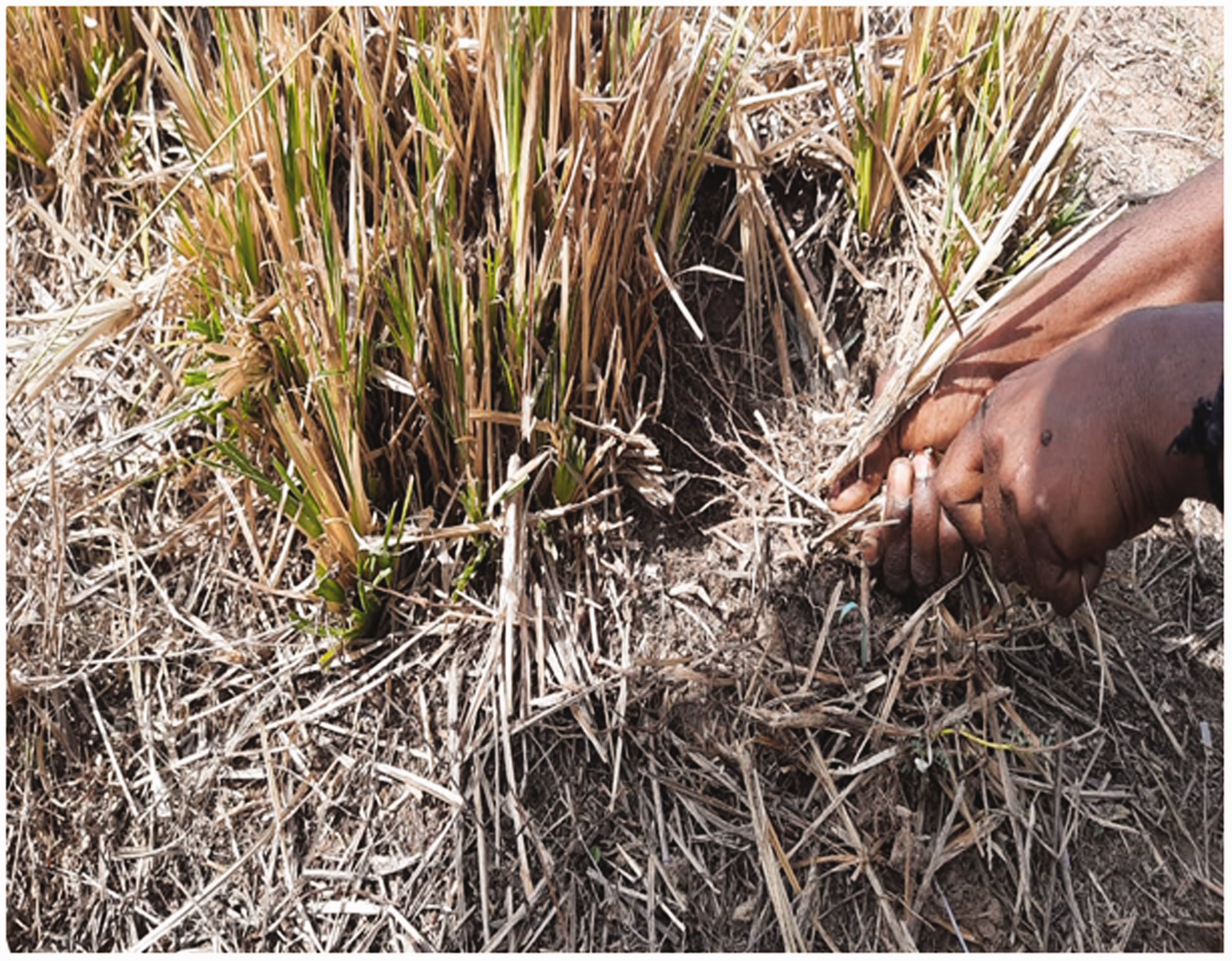
Vetiver grass.
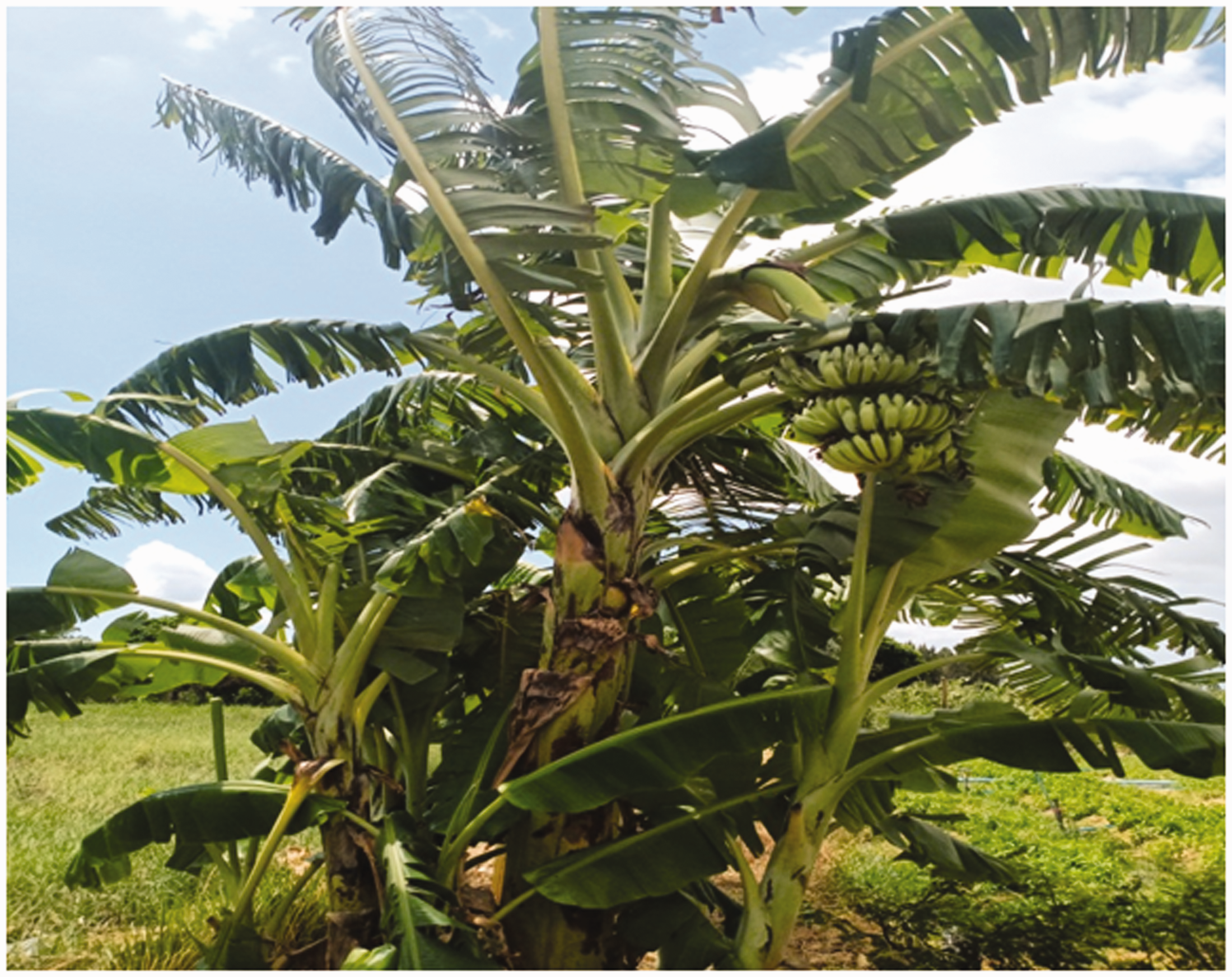
Banana plant.
Chemical composition of vetiver and banana fiber with other natural fiber.

Mechanical properties of vetiver, banana fiber and Vinyl ester resin.

Composites fabrication
In this study, Figure 3 shows the vetiver and banana fiber mat. The compression molding technique was adopted for the manufacture of woven composites is shown in Figure 4. Vetiver, banana, and hybrid fiber mats were kept in 45° and 90° direction in mold dimensions of 200 × 200 × 3 mm3. Figure 5 shows the ten different combinations of vetiver and banana fiber mat fabricated composites plates. Table 3 shows the abbreviation of the ten different combinations of vetiver and banana fiber mat reinforced vinyl ester composites.

(a) and (b) Vetiver mat and Banana mat.
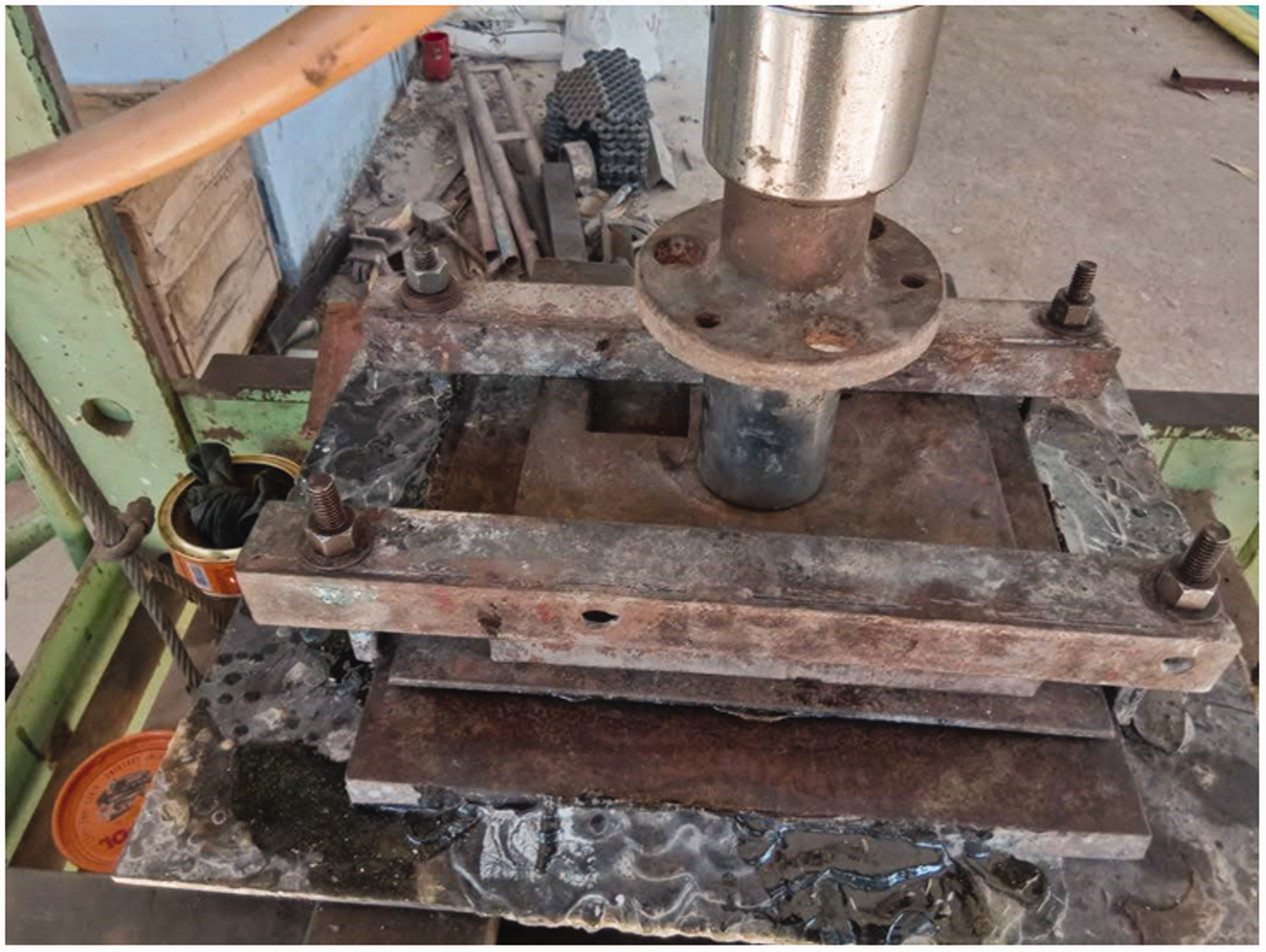
Compression moulding machine.

Fabricated composite plates.
Abbreviation used for representing the different combination of vetiver and banana fiber reinforced vinyl ester composites.

Chemical composition analysis
The cellulose, hemicellulose and lignin contents of vetiver and banana fiber were determined by the standard analytical test methods . The moisture content of the of vetiver and banana fiber was identified by Sartorius MA45 moisture analyzer and wax content was determined by the Conrad method [27–33].
Mechanical tests
The single fiber tensile test for vetiver and banana fiber was carried out the at a room temperature by using, zwick roell- zwickiline material testing machine – Z5.0 TS at a preload 0.05 N, with a gauge length of 50 mm, cross head speed 5 mm/min. Twenty-five samples fibers were taken and tested in each sample and the results were averaged. Tensile test for composites plates was conducted by using a digital universal testing machine of capacity 50KN. The fabricated specimens were cut by zig-zag cutting machine as per the ASTM D638-10 standard 165 × 10 × 3 mm3 [22,30]. The 3- point flexural test was conducted by using a digital universal testing machine of capacity 50 KN as per the ASTM D790-10 standard 127 × 13 × 3 mm3 [22,30]. The impact test of the samples was measured using Tinius Olsen (Model: 104) Izod impact testing machine as per ASTM D256-10 standard (65 x13 x 3 mm3) [27,31]. The barcol hardness test was conducted by using barcol hardness tester (Model: VBH2) as per ASTM 2583 standard [21,31].
Results and discussion
Tensile properties
The tensile composite specimens of vetiver and banana fiber mat composites before the tensile test is shown in Figure 6. In single-layer fiber mat reinforcement, the tensile strength of the VFMSL and BFMSL reinforced vinyl ester composites at 90° direction were measured as 22 and 31 MPa. The BFMSL composite specimen shows a higher tensile strength than VFMSL composite due to the high stiffness of banana fiber composites. The tensile properties often various combinations of vinyl ester composites at 45° and 90°direction is shown in Figure 7 and Tables 4 and 5. In double layer fiber mat, the tensile strength of VFMDL, BFMDL, and HVBMDL composite exhibits 38, 41, and 47 MPa. The tensile strength of the HVBMDL composite at 90°direction exhibits ultimate strength when compared with other composites due to the exchange of two natural fibers properties (Vetiver and banana fiber), which exhibits effective load transfer between the hybrid fiber and matrix. It is observed that the BFMDL composite showed a slight improvement than the VFMDL composites. The tensile modulus of vinyl ester composites at 90°direction varied from 0.75 to 1.31 GPa. The ultimate tensile modulus is obtained at BFMDL composites. The elongation at break of vinyl ester composites is varied from 2.79 to 5.5%.
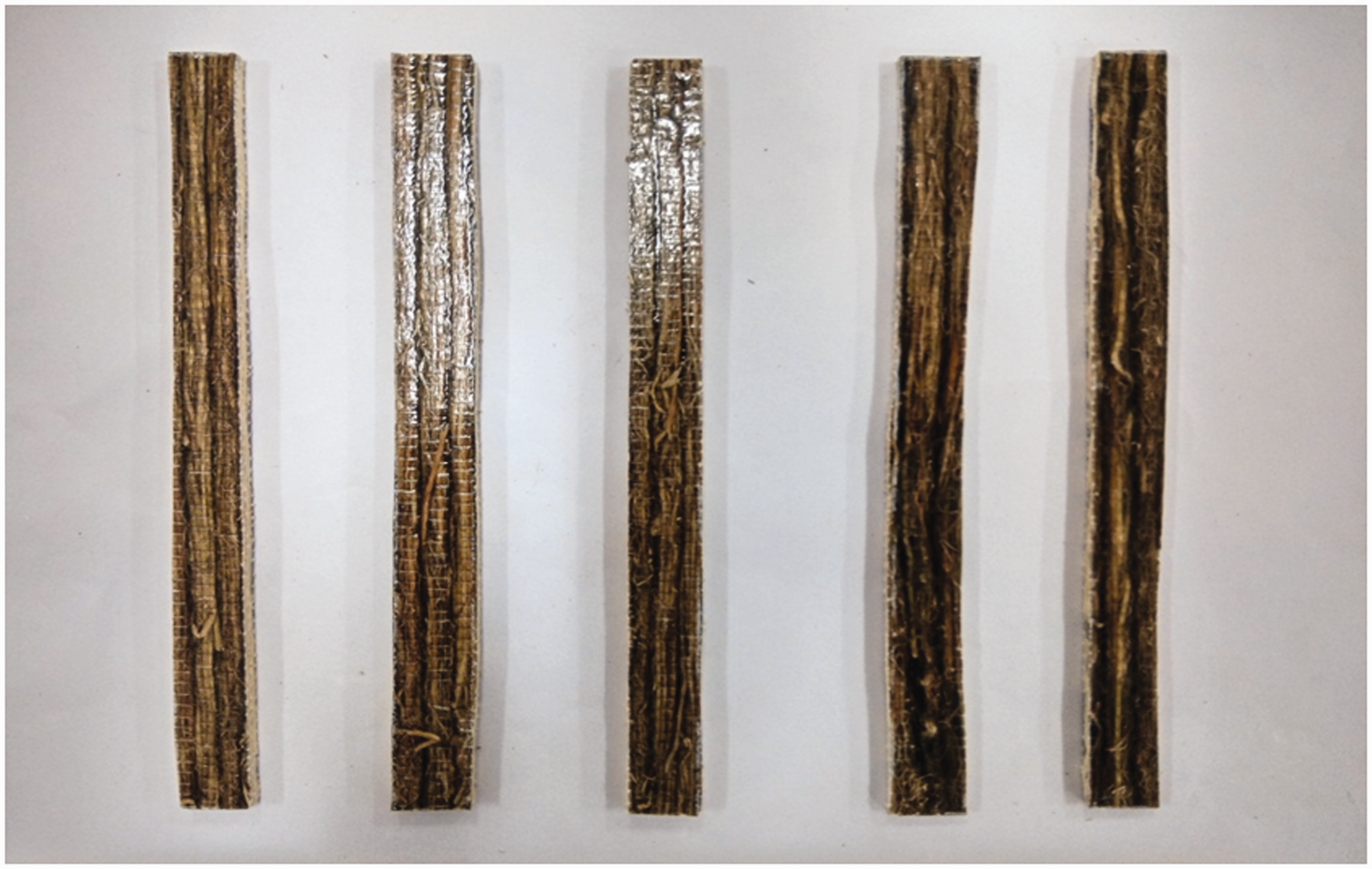
Tensile specimen of vetiver and banana fiber mat reinforced vinyl ester composites.

Tensile strength of vetiver and banana fiber mat reinforced vinyl ester composites.
Tensile properties of different layer of composites tested at 90° direction.
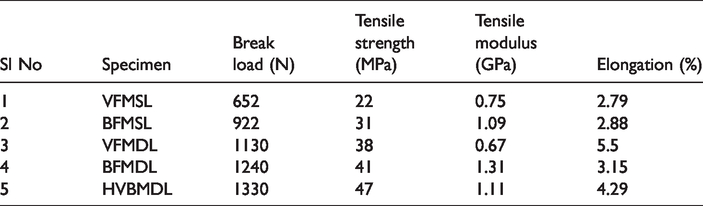
Tensile properties of different layer of composites tested at 45° direction.

The tensile strength of the VFMSL, BFMSL, VFMDL, BFMSL, and HVBMDL composite at 45° direction varied from 13 to 25 MPa. On the above two directions of composites, the direction at 90° exhibits higher tensile properties than the direction at 45°. The reason could be assigned to less transfer of load between the fiber and matrix at 45° direction, which in turn decreases the tensile properties of the composites. Moreover, the HVBMDL composite at 90° direction shows a result of a significant difference in tensile strength over the other composites at 45° and 90° directions.
Flexural properties
The flexural specimens of vetiver and banana fiber mat composites before a flexural test is shown in Figure 8. For single-layer mat reinforcements, the flexural strength of VFMSL and BFMSL reinforced vinyl ester composites at 90ºdirection, which varies strength from 29 MPa to 40 MPa. It is found that the strain rate between the composites varies from 1.71 to 1.85%. The percentage of variation between the BFMSL and VFMSL composites at 90° direction is 27.5%. The flexural properties of ten different combinations of vinyl ester composites at 45° and 90° directions are shown in Figure 9 and Tables 6 and 7. Among the double layer mat reinforcement, The HVBMDL composite exhibits the highest flexural strength (86 MPa) when compared to other composites. The HVBMDL composite is about 1.40 and 1.34 times higher than that of VFMDL and BFMDL composites. The flexural strength increases in the HVBMDL composites at 90° direction is could be due to low wax content in both fiber and better interfacial bonding between the fiber and the matrix. The strain of VFMDL, BFMSL, and HVBMDL composite was found to be 4.03, 2.7, and 3.54%.

Flexural specimens of vetiver and banana fiber mat reinforced vinyl ester composites.
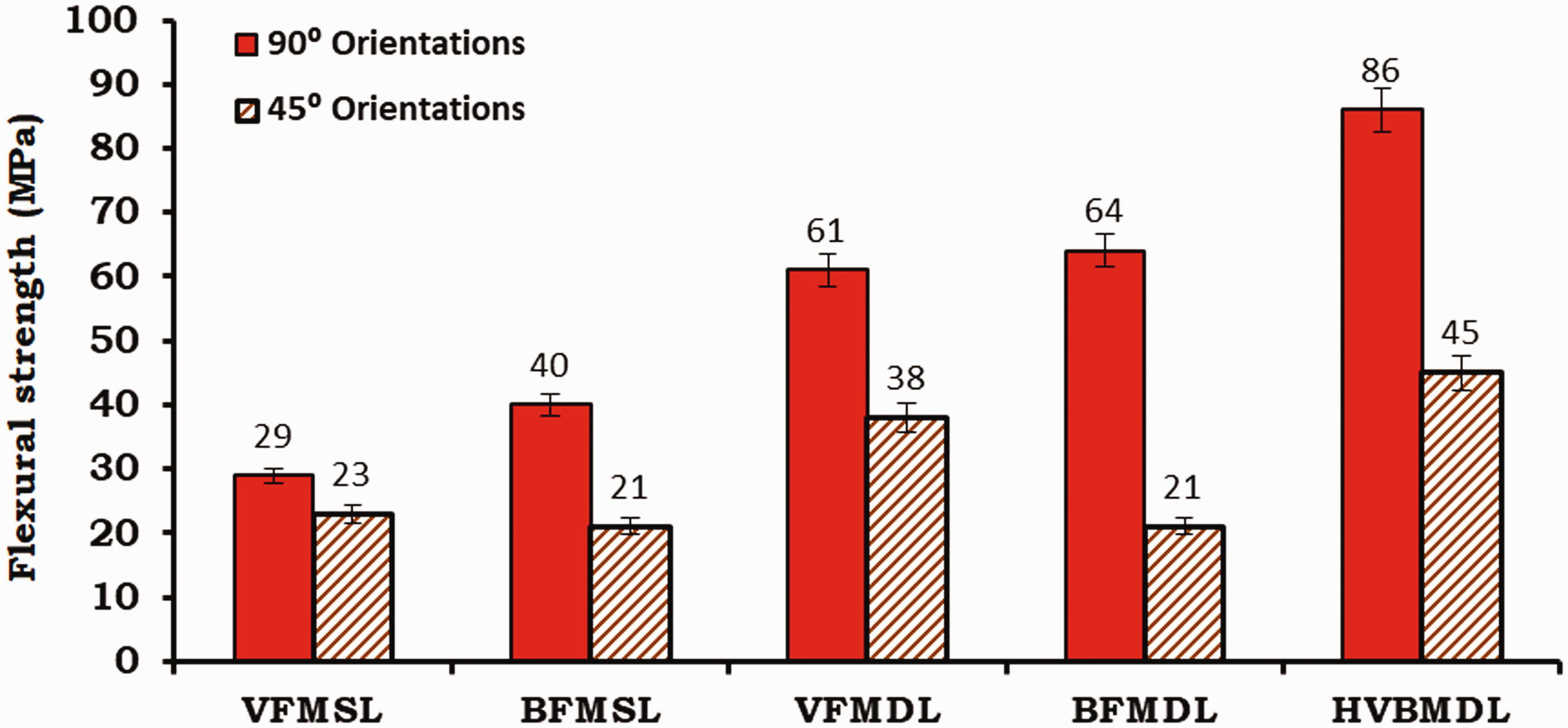
Flexural strength of vetiver and banana fiber mat reinforced vinyl ester composites.
Flexural properties of different layer of composites tested at 90° directions.

Flexural properties of different layer of composites tested at 45° directions.

The maximum flexural strength of 45 MPa is observed for HVBMDL composite at 45° direction, which is about 1.95, 2.14, 1.18, and 2.14 times higher than that of VFMSL, BFMSL, VFMDL, and BFMDL composites at 45° direction. For composites decreasing trend in the flexural strength might be due to the fabrication of fiber mat at 45° direction is the major affecting factor in the composites. The strain rate of VFMSL, BFMSL, VFMDL, BFMSL, and HVBMDL composite at 45° direction varies from 1.20 to 1.9%. The strain Fin flexural specimens at 90° direction is also higher than the 45° direction of composites.
Impact strength
The composite’s specimens are absorbed the impact energy with the help of the charpy impact test machine. Figure 10 shows the impact specimens of vetiver and banana fiber mat composites before impact test. From Figure 11, the impact strength of composite samples at 90° direction was improved significantly when the vetiver fiber mat was incorporated in single layer reinforcements. The impact strength comparison of the different composite plates at 45° and 90° directions is shown in Figure 10. It is asserted that the impact strength of VFMSL composites is 35% higher than the BFMSL composites because vetiver fiber has a higher absorption capacity than the banana fiber. The results indicated that non-hybrid VFMDL composite specimens exhibited the ultimate impact strength of 160 KJ/m2, followed by BFMDL (72 KJ/m2) and HVBMDL (100 KJ/m2) composite, respectively. The VFMDL composites resulted in a positive effect, while the number of vetiver fiber mat layers increased, the impact strength of composite specimens were further improved. This could be due to which confirms the high energy absorption capacity in the vetiver fiber [22]. The non - hybrid BFMDL composites exhibited a low impact strength of 41 MPa due to banana fiber absorbs less energy during the impact test. The impact strength of VFMSL, BFMSL, VFMDL, BFMDL, and HVBMDL composite at 45° direction varies from 23 to 53 KJ/m2.
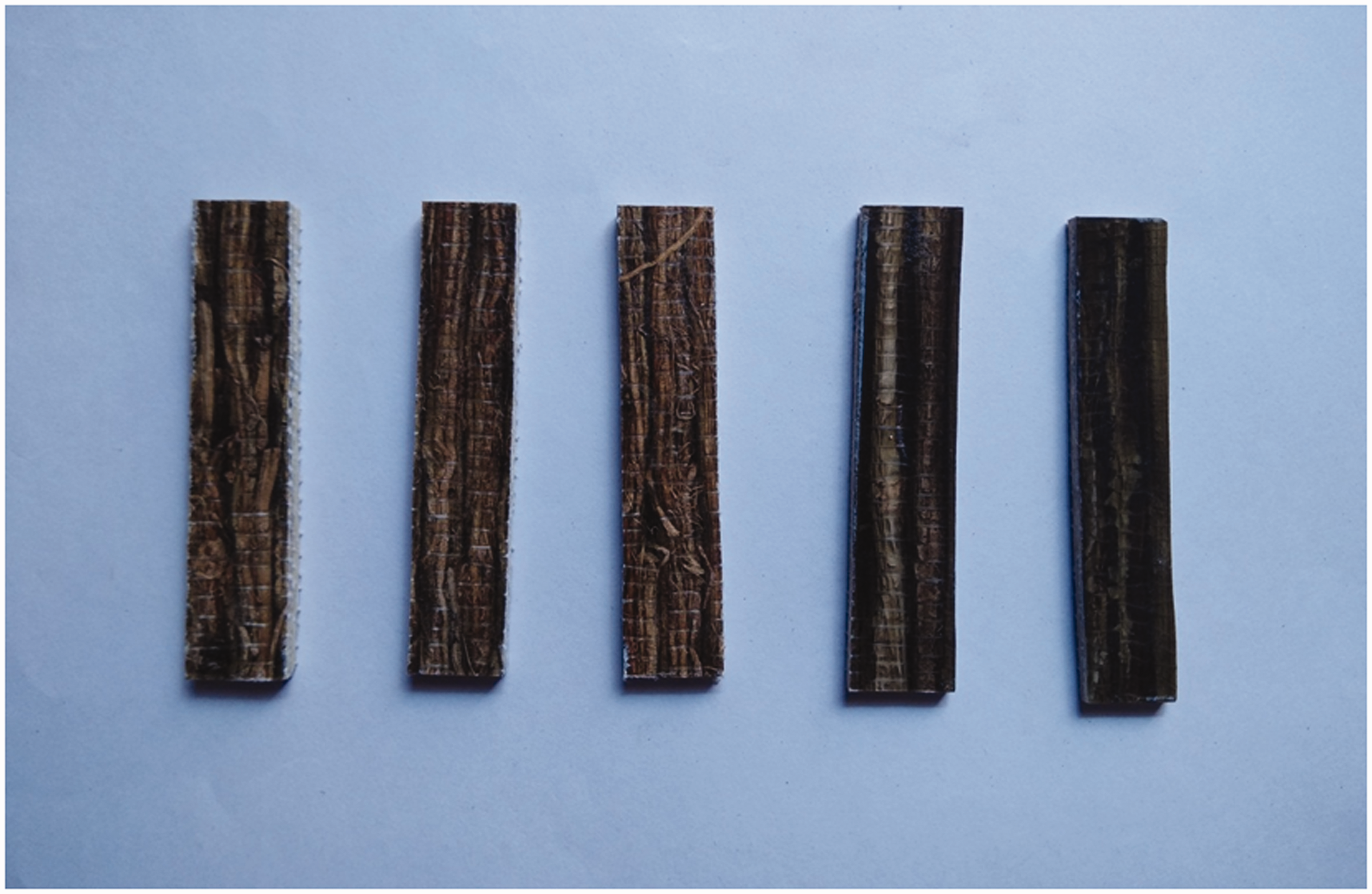
Impact specimens of vetiver and banana fiber mat reinforced vinyl ester composites.
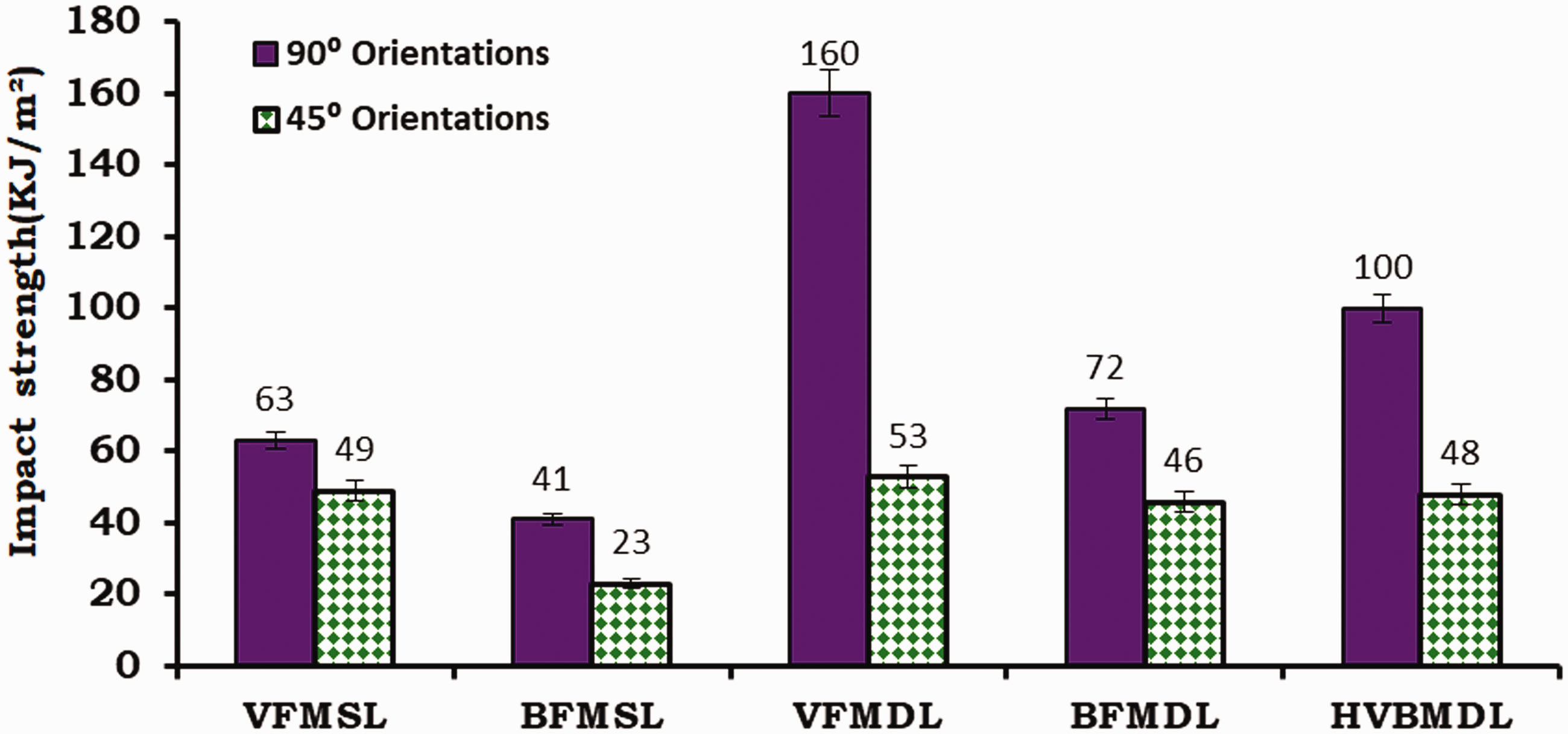
Impact strength of vetiver and banana fiber mat reinforced vinyl ester composites.
Hardness
The hardness properties of ten different combinations of vinyl ester composites at 45° and 90° directions are shown in Figure 12. The hardness result of VFMSL, BFMSL, VFMDL, BFMDL, and HVBMDL composite at 90º direction was measured as 30, 26, 56, 48, and 60, respectively. For Single layer fiber mat reinforcements at 90° direction, the barcol hardness of VFMSL composites show 1.15 times greater than the BFMSL composites. For double layer mat fiber reinforcement at 90° direction. The hardness of the HVBMDL composite observed highest hardness when compared with other composites. This could be due to lignin acts as a good bonding cellulose which provides the stiffness to a fiber and enhanced interfacial bonding in the hybridation of fiber reinforced composites [34,35]. It was about 2 times more than that of VFMSL composites, 2.30 times more than that of BFMSL composites, 1.07 times more than that of VFMDL composites, and 1.25 times more than that of BFMDL composites. The hardness result of VFMSL, BFMSL, VFMDL, BFMSL, and HVBMDL composite at 45° direction varies from 18 to 42 respectively. For Single layer fiber mat reinforcements at 90° direction, BFMSL composites is 1.2times greater than that of VFMSL composites. In double layer reinforcements, The barcol hardness of the HVBMDL composite was found to be 42. It was about 1.4 times greater than the BFMDL composites and 1.20 times greater than the VFMDL composites.

Hardness of vetiver and banana fiber mat reinforced vinyl ester composites.
SEM morphological analysis
The tensile, flexural, and impact fractures of composites with different magnifications are shown in Figure 13(a) to (c). From Figure 12(a), it can be observed that the fiber voids were found inside the surface of the composite specimen. Fiber bending and less fiber pullout are seen in the fractured surfaces are shown in Figure 13(b). It shows wavy look on the tensile fractured surface. This wavy look is formed by the distributed fiber which discontinues resistance and forms crests and troughs in the image. The fiber is intermittent on the matrix and fiber holding the matrix is good. This is due to the effective distribution of woven fiber in matrix and fiber lead to strong adhesion between the reinforcement and matrix. Fiber voids, fiber cracks, and fiber breakage are also clearly visible in the SEM images, which reduces the tensile properties of the composites are shown in Figure 13(c). The presence of enriched resin surrounding the fibers and the occurrence of voids in matrix fiber is less at fractured specimen which leads to high strength. The fiber stops the fast propagation of the cracks. So the fiber material is pulled out heavily on the surfaces. The cross section of porous, fiber fracture and fiber bending are clearly noticed on SEM analysis shown in Figure 13(d).

(a)–(d) SEM images of vetiver and banana fiber mat reinforced vinyl ester composites.
Conclusions
In this current research work, the mechanical properties of the different layers (single/double) at the direction (45°/90°) of hybrid fiber (Vetiver/banana fiber) mat reinforced vinyl ester composites were analyzed. According to the direction, the composite specimen performs better strength at 90° direction than at 45° direction. According to the different layers of natural fiber mat, The highest tensile and flexural strength is achieved for HVBMDL composite at 90° direction, which exhibits 47 and 86 MPa. It could be due to the hybridization of vetiver and banana fiber. The impact tests were estimated to be around 160 KJ/m2 in VFMDL composites at 90° direction. From the results, it is concluded that these hybrids natural (vetiver/banana) fiber reinforced vinyl ester composites suggested as best alternative eco-friendly material instead of pure synthetic fiber-reinforced composites for various industrial applications. Study of fractured surfaces of composited by SEM indicates the reasons for reduction of results of composites. Future studies of this project is to do dynamic mechanical analysis, vibrational analysis and wear analysis of fabricated hybrid composites.
Footnotes
Declaration of conflicting interests
The author(s) declared no potential conflicts of interest with respect to the research, authorship, and/or publication of this article.
Funding
The author(s) received no financial support for the research, authorship, and/or publication of this article.
