




Abstract
Epoxy matrix composites owing to their outstanding properties such as high strength, low weight, high thermal stability and good stiffness are broadly utilized in various industries. Also, the basalt fibers as a green industrial material show various extraordinary properties such as high mechanical strength, desired stability, suitable chemical resistance, and high temperature resistance. In this study, the effect of silane-modified nanozirconia on the tensile and flexural properties of basalt fibers/epoxy composites is investigated. As a first step, the surface of nanozirconia was modified with a silane coupling agent namely 3-methoxysilyl propyl amine. Fourier transform infrared (FT-IR) spectroscopy has been used to demonstrate the chemical nature of the silanized ZrO2 nanoparticles prepared. 3-methoxy silyl propyl amine/nanozirconia with various loadings (0, 1, 3 and 5 wt.%) were added to the epoxy resin via mechanical and ultrasonication routes. The resultant mixtures were then utilized to fabricate ZrO2/satin texture basalt fibers/epoxy nanocomposites using hand-layup technique. This symptomatic behavior exposes the successful modified ZrO2 nanoparticles to enhance the interfacial bonding. Also, a scanning electron microscope (SEM) was used to study the distribution level of silanized ZrO2 nanoparticles in the matrix as well as the fracture surfaces of the specimens. Experimental results from three-point bending and tensile tests showed that with the dispersion of 3 wt.% nanozirconia, flexural strength, flexural modulus, flexural failure strain, tensile strength, tensile modulus and tensile failure strain enhanced by 90, 74, 84, 76, 85 and 14%, respectively, compared with specimens without nanozirconia. The SEM observations of the fracture surfaces of the nanocomposites clearly indicated that the enhancement in the flexural and tensile properties was due to the improvement in the interfacial adhesion between the basalt fibers and modified ZrO2 nanoparticles-enhanced epoxy matrix.
Keywords
Introduction
Epoxy resins are well established thermoset matrix of advanced composites, having amazing characteristics like suitable stiffness and specific strength, dimensional stability, chemical resistance, ease of processing and also strong adhesion to the embedded reinforcements [1]. Epoxy resin is widely used as a matrix for fabricating fiber-reinforced polymer composites with higher strength-to-weight ratio than steel as well as can be reinforced with inorganic fillers including fibers and nano particles [2]. The use of particulate fillers has been proven to improve the material properties of epoxy resins. Building on the fact that the micro-scaled fillers have successfully combined with epoxy resin, the nano-scaled fillers are now being considered to produce high performance composite structures with further enhanced properties. Nano filler-reinforced epoxy matrix can also provide superior host matrix for fiber-reinforced polymers composites. Improvements in mechanical, electrical, and chemical properties have resulted in major interest in nanocomposite materials in numerous automotive, electronics and biotechnology applications [3].
It was found that the basalt fibers caused no risk to human beings and therefore can be used instead of asbestos fibers. Basalt fibers are quite cheap fibers with excellent properties such as better and easier adhesion properties with polymer matrix compared with the other fibers such as carbon fibers [4,5]. Thus, concentrated research works have been conducted on the usage of these fibers as reinforcement in polymers [6]. Several properties, like tensile and compressive properties of basalt fibers are better than the E-glass fibers and also they are far cheaper than their carbon counterparts [7–9]. Hence, basalt fibers have received increasing attention as a novel type of reinforcement material for the fabrication of hybrid composites/laminates [10]. On the other hand, the mechanical, physical and physico-chemical properties of the fiber-reinforced polymer were further improved by the introduction of foreign fillers like nanoparticles [11–13], fiber fillers [14,15], and by surface modification [16] of the fibers. Utilization of nano fillers into the epoxy matrix can also provide superior matrix for fiber-reinforced polymers composites. Nanometric reinforcements such as nanoparticles, due to having very small dimensions and higher surface compared to conventional reinforcements, improve the mechanical properties of polymer composites even in small loadings. Among the nanoparticles used for reinforcing composites, zirconia nanoparticles because of having high strength, high stiffness, high hardness, outstanding wear resistance are suitable choice for improvements of mechanical features of polymer composites [17–19]. Eslami-Farsani et al. [17], fabricated a composite by adding chopped basalt fibers into the polypropylene–nanoclay mixture. This approach not only improved the yield strength but also the elastic modulus of the composite dramatically. Researchers have also shown that by coating the surface of basalt fibers with coupling agents like silanes, the bonding between the matrix and the basalt fibers increases, which leads to the exceptional improvement of the mechanical properties [18,19].
Nano inorganic particles such as SiO2, TiO2 and ZrO2 in thermoset resins have improved the scratch and abrasion resistance of the coatings significantly [20,21], without any important side effect on the transparency [22]. In recent studies, inorganic filler materials like graphene oxide or nano diamonds exhibit superior mechanical properties due to strong interfacial interactions in the composite [23]. As previously mentioned, Zirconia nanoparticles (ZNs) have been extensively used as nanoscale reinforcement agents for the fabrication of polymer nanocomposites due to improved strength, high stiffness [24]. However, uniform dispersion of ZNs into polymer resins remained a technological challenge, because of the high aggregation tendency of ZNs resulting in structural defects in corresponding nanocomposites. This disadvantage restricts the improvement of mechanical properties of nanocomposites [25]. Hence, surface functionalization of ZNs is essential to overcome the difficulties of aggregation when entrenched in viscous polymers. According to previous works, it is expected that modification of fibrous composites by adding the nano-fillers will cause positive effects on their mechanical properties [26].
The enhancement in surface wettability of ZNs due to organic modification is found substantial, and thus reduces the aggregation effect of high density ZNs in polymers [27]. The organic modification results in formation of functional group elements onto pristine ZNs, which can improve the interfacial bonding strength between the fillers and the polymer resin. Kumar et al. [28] investigated the effect of ZrO2 nanoparticles as a nanofiller to prepare nanocomposites with using various polymeric matrixes. The results showed incorporation of ZrO2 nanoparticles at the loading 0.5, 1, 1.5 and 2 phr in the developed linear low-density polyethylene/low-density polyethylene/polylactic acid/polyethylene-grafted maleic anhydride blend leads to improve the mechanical strength of the matrix. Lots of research papers can be found on modifying the properties of polymer materials by adding micro and nanosize particles to the matrix such as calcite micro- and nano-particles, alumina, zirconia, calcium carbonate and so on. Asopa et al. [29] investigated reinforcement induced by adding 5–15 wt.% of ZrO2 to high-impact resin, and they concluded that zirconium powder increases transverse strength of the matrix significantly.
Brochier et al. [33] studied the effect of ZrO2 nanoparticles on the mechanical properties of single lap aluminum bonded joints and their investigations indicated that with the dispersion of 1 vol.% zirconia nanoparticles into the epoxy resin, shear strength of joints increased by 60% and significant improvement was observed in the fracture toughness of joints. khosravi et al. [34] reported that the incorporation of ZrO2 nanoparticles into the epoxy matrix had significant impact on the mechanical properties of epoxy/glass fiber composites because of which the tensile strength, stiffness and fracture toughness changed by 27%, 62% and 110%, respectively.
According to literature, no research work has been carried out in regard to the reinforcing of basalt fibers-reinforced polymer matrix composites with zirconia nanoparticles. As previously mentioned, the performance of nanoparticles depends on their distribution into the matrix. Therefore, the purpose of the present study was to show the role of silane-modified nanozirconia on the mechanical properties of basalt fibers/epoxy composites under tensile and three-point bending loadings.
Experiment
Materials
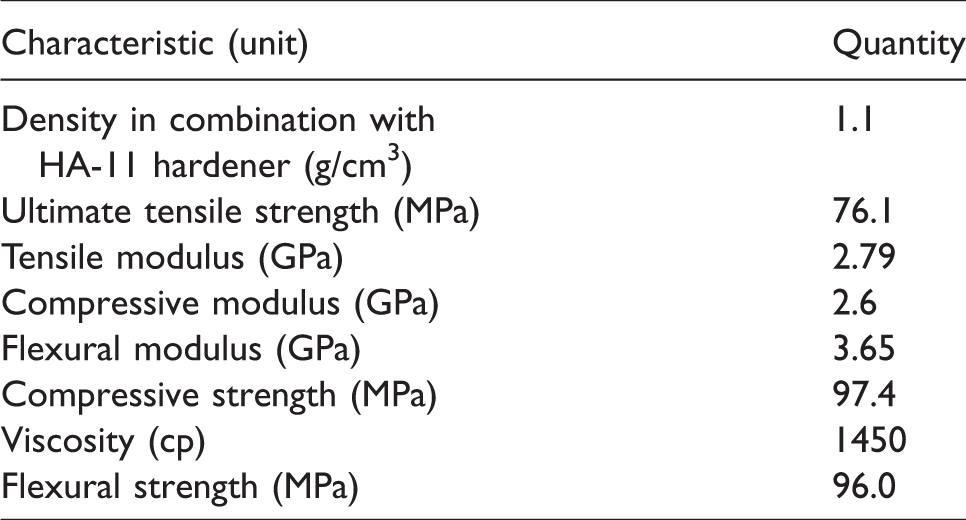
The epoxy resin was ML-506 with the hardener HA-11 (Mokarrar Engineering Materials Co., Iran). Some properties of the resin are given in Table 1. The resin-hardener ratio was 100:15 by weight, as recommended by the manufacturer. This resin system was selected due to its low viscosity and long gel time (60 min).
Some properties of ML-506 epoxy resin used in this study [31].
Unidirectional basalt fibers (Basaltex Co., Belgium) with the surface density of 300 g/m2, thickness of 0.17 mm, tensile strength of 3000 MPa and tensile modulus of 78 GPa is provided. Monoclinic zirconia nanoparticles with an average diameter of 50 nm (near spherical shape) and 99.9% purity (nanoShell, UK) were used as a nanofiller for the fabrication of nanocomposite. Figure 1 shows the chemical structure of 3-methoxy silyl propyl amine (Merk Co., Germany) which was used as silane-coupling agent [30].
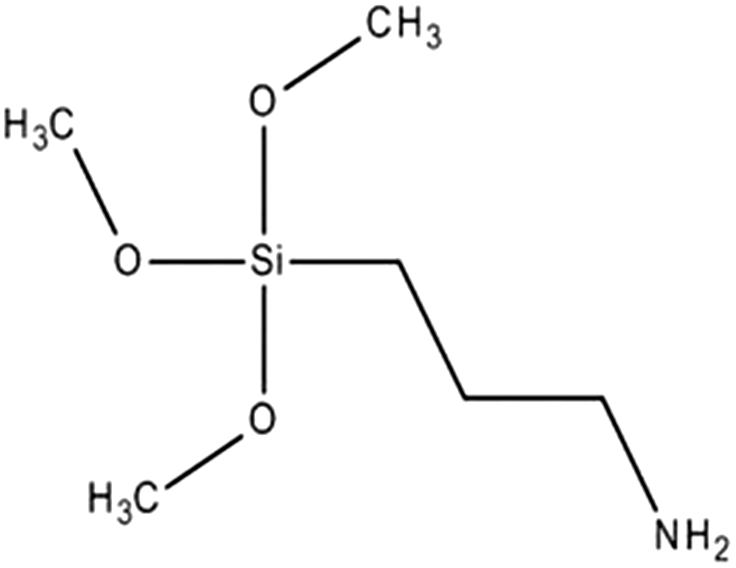
Chemical structure of 3-methoxy silyl propyl amine silane [35].
Silanization of ZrO2 nanoparticles
In the present work, in order to increase the chemical affinity of nanozirconia to epoxy matrix, surface modification of nanoparticles is necessary. The surface-functionalize can also potentially serve as cross-linkers to be integrated into the thermoset network [32]. In the first stage, 1 g of nano-ZrO2 were mixed in 100 ml solution including 95% ethanol and 5% water. In the second step, 1 g of 3-methoxy silyl propyl amine was gradually added to the dispersion and sonicated for 10 min. Then reflux treatment was conducted for 8 h [33]. The pH of the system was adjusted to be ∼4.5 using HCl acid (37%) [34]. Finally, it was centrifuged (4000 r/min) for 30 min and the residue was washed with absolute ethanol for three times to remove excess 3-methoxy silyl propyl amine and then placed in oven at 80
Specimen fabrication and preparation
To investigate the influence of ZrO2 nanoparticles and basalt fibers on the mechanical properties of epoxy nanocomposite, the samples containing various particle loadings have to be prepared in the beginning. For basalt fibers-reinforced epoxy specimens, the laminates with dimensions 30 × 30 cm2 are fabricated by sequencing the layers through hand lay-up technique. A specimen of basalt fibers composite is fabricated without ZrO2 nanoparticles and the other specimens of basalt fibers composite are fabricated with various contents of ZrO2 nanoparticles (1, 3 and 5 wt.%). Initially, the epoxy/ZrO2 mixture was stirred using a high speed shear mixing (SDS-11D, Finetech Co., South Korea) at rotational speed of 2000 r/min for 20 min. Then, the ultrasound waves were exerted into the obtained mixture using a probe sonicator (ultrasonic homogenizer 400 W, 24 kHz, FAPAN Co., Iran) with the frequency of 24 kHz and power of 120 W for 60 min [36]. During the mixing process, a water cooling system was employed to keep the temperature of the mixture at a constant temperature. The mixture was degassed under vacuum until all air bubbles were completely removed from the mixture. After dispersing the ZrO2 in the epoxy resin, a stoichiometric amount of curing agent (100:15) was manually incorporated with the resultant mixture for 5 min. The resultant mixture was used as matrix for fabricating composites. Volume fraction of the basalt fibers for all the specimen was equal to around 50% and the composites were prepared in six layers of basalt fibers [26].
Mechanical tests
To study the effect of adding modified nanozirconia on mechanical properties of the basalt fibers/epoxy composites, two mechanical tests (tensile and three-point bending) were carried out at room temperature.
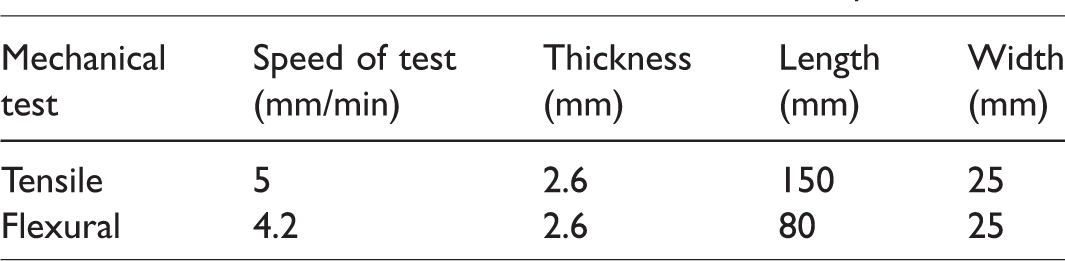
Flexural test was performed in accordance with ASTM D790 by using the universal testing machine, Hounsfield, H25K. All the reported values were calculated as averages over three specimens for each composition. The cross-head speed was 4.2 mm/min during loading condition with the span length of 80 mm. The average values and standard deviations were reported.
Tensile properties were obtained based on ASTM D3039 method. Young’s modulus and tensile strength at break of each sample were obtained based on at least five specimens for each composition. The average values and standard deviations were reported. Some details about the specimen size are given in Table 2.
Some details of the tensile and flexural test specimens.
FT-IR and SEM analyses
The Fourier transform infrared (FT-IR) spectra of as-received and silane-modified ZrO2 were recorded using a FT-IR spectrometer (FT-IR-460 plus, Jasco) to observe the surface functional groups on to the powders. The specimens were studied at wavelength range of 400–4000 cm−1 in potassium bromide (KBr) pellets, with a sensitivity of 4 cm−1. Selected specimens after mechanical tests are studied by SEM (TESCAN, 25 kV) in order to examine the fracture phenomenology with the presence of ZrO2 in the vicinity of the fracture area.
Results and discussion
Silane surface treatment of ZrO2 nanoparticles
FT-IR analysis was conducted to characterize the chemical changes on the surface of ZrO2 due to surface modification by the silane coupling agent 3-methoxy silyl propyl amine. Figure 2 shows the FT-IR spectra of untreated and treated ZrO2. By analyzing the spectra, it should be noticed that the surface treatment of the nanoparticles resulted in the appearance of several new bands which originally is not present in the native particles. For example, the band depicted at 1122 cm−1 and 1224 cm−1 is assigned to the stretching vibration of (Si–O–Zr). The bands appearing at 2926 and 2869 cm−1 are attributed to the asymmetric and symmetric (H-C-H) stretching vibrations, respectively [37]. The band at 1608 cm−1 is attributed to the symmetric stretching vibrations of the (N–H) bond [38,39]. The observed peak at 2300 cm−1 was related to the ZrOH band. These results revealed that the zirconia nanoparticles were effectively treated with the silane coupling agent.

FT-IR spectra of (a) untreated ZrO2, (b) treated ZrO2.
Mechanical test
The results of tensile and three-point bending tests for multiscale basalt fibers/epoxy composites containing different weight percentages of ZrO2 nanoparticles are shown in Table 3 and Figures 3 to 5.
Results of the bending and tensile tests of basalt fibers-ZrO2 nanoparticles/epoxy composites.

Figure 3 represents the results of tensile and flexural modulus of nanozirconia/basalt fibers/epoxy composites at different nanozirconia loadings. As can be inferred from the graph, the observed trend for both the tensile and flexural modulus with increasing nanozirconia loading increases at the first step and then decreases. The maximum moduli is related to the nanocomposites containing 3 wt.% of nanozirconia, where the tensile and flexural moduli are enhanced by 85% and 74%, respectively, as compared to the neat composite without ZrO2 addition. The surface modification of zirconia nanoparticles with 3-methoxy silyl propyl amine can enhance their interfacial interactions with the epoxy matrix. On the other hand, the presence of a silane on the surface of nanoparticles is a valuable contribution to the optimal distribution of nanoparticles, which results in the improvement of the flexural modulus [34]. However, at higher nanozirconia contents, the compatibility between the polymer matrix and metal oxide became poor and the flexural modulus was found to decrease.

Effect of nanozirconia loading on the flexural and tensile modulus of nanozirconia/basalt fibers/epoxy composite specimens.
Figure 4 represents the results of tensile and flexural strength of nanozirconia/basalt fibers/epoxy composites at different nanozirconia loadings. Based on the results, there is an increasing trend in the mechanical strength with increasing nanozirconia loading until 3 wt.% and then decreases. According to this, it can be noted that the tensile and flexural strength of composite sample with 3 wt.% of nanozirconia was increased to about 76% and 90%, respectively, when compared with the neat composite. Increasing the tensile and flexural strength of the composite as a result of adding nanozirconia was due to two factors. The first factor of the increase of tensile strength is due to the improvement of interfacial characteristics between the basalt fibers and matrix, and also the role of the nano-amplifier, which results in the transfer of the stress well from the matrix to the fiber reinforcement, which resulted in improved composite tensile strength [38,39]. Interfacial adhesion between nanozirconia and the epoxy molecules might be weaker than the intermolecular forces of epoxy, and the micro-porosities of nanozirconia/epoxy composites tend to increase with the increasing nanozirconia content, and thus the flexural and tensile strength of composites was decreased at higher nanozirconia content. When the nanocomposite matrix is used in epoxy/basalt fibers composite, the frictional slip between the matrix and the fibers is restricted, which means that the stress transfer from the matrix to the fibers is performed well and the mechanical properties of the composite were increased [29]. The second reason is about the nanozirconia reinforcement specification. In fiber-reinforced composite materials, fibers are considered to be the main load-bearing component, and the bulk of the load is concentrated on the fibers. The surface modification of zirconia nanoparticles with 3-methoxy silyl propyl amine can enhance their interfacial interactions with the epoxy matrix. This can lead to restricting the mobility of polymer chains under loading, resulting in improved modulus [38]. By adding nanozirconia to the epoxy resin, the viscosity of the resin increases. It also decreases the wettability of the resin by increasing the viscosity of the resin, which results in the formation of a weak interfacial. When zirconia nanoparticles are added to the matrix, the epoxide groups of silane and matrix react with each other in the presence of a poly amino agent, forming a covalent bond, which improves the interface between nanoparticles and the polymer matrix. In other words, the distribution of nanoparticles in the matrix improves, which helps to modify mechanical properties.

Effect of nanozirconia loading on the flexural and tensile strength of nanozirconia/basalt fibers/epoxy composite specimens.
The aggravation of bending strength for the composite with 5 wt.% of nanozirconia can be explained by the fact that the surface of the samples was relatively rough and nanoparticles were dispersed within matrix with obvious agglomeration. Polymer matrix plays a more effective role in the flexural testing in comparison of tensile testing [40]. This can be explained by the fact that the tensile strength of nanocomposites contains fibers, where the properties of fibers are proficient, but in the flexural strength the properties of matrix are dominant.
According to Figure 5, the failure strains (tensile and flexural) of basalt fibers/epoxy composites variation with metal oxide loading increased up to 3 wt.% and then declined. At 3 wt.% of ZrO2, the tensile and flexural failure strains enhanced by 14 and 84%, respectively. In this regard, nanoparticles with desirable dispersion in matrix serve as barriers to crack growth. Due to this effect, crack alters the growth direction which causes the prevention of brittle failure leading to increasing failure strain. Decrease in failure strain on 5 wt.% in comparison of 3 wt.% was observed due to the unfavorable dispersion of nanozirconia which can act as stress concentration regions.

Effect of nanozirconia loading on the flexural and tensile failure strain of nanozirconia/basalt fibers/epoxy composite specimens.
SEM studies
SEM analyses of the fracture surfaces of composites containing 0, 1, 3 and 5 wt.% of nanofillers were carried out in order to qualitatively evaluate the particle–matrix interface and evidence the eventual presence of filler particles aggregations. In all cases, a good adhesion between nanozirconia particles and epoxy matrix was shown as evidenced by the absence of voids around the particles. A remarkable difference between the fracture surfaces of the specimens can be observed.
Figure 6 shows the SEM micrographs taken from the fracture surface of the basalt fibers/epoxy composite with and without nanozirconia addition. Different microstructural features are observable on the fracture surfaces of these specimens. The micrograph for unfilled basalt fibers/epoxy composite (Figure 6(a)) demonstrates basalt fibers with a clean and smooth surface, indicating fiber-matrix debonding and also an improper adhesion between epoxy matrix and basalt fiber [23]. Apparently, the matrix is detached from the basalt fibers due to the weak interfacial adhesion. With reference to Figure 6(b), which is related to the fracture surface of the 3 wt.% nanozirconia-reinforced basalt fibers/epoxy composite, it is observed that the basalt fibers are covered by the matrix resin, indicative of increasing fiber–matrix interfacial bonding strength.

SEM image from fracture surface of the epoxy matrix composite containing, (a) basalt fibers, (b) basalt fibers and 3 wt.% nanozirconia.
Figure 7 illustrates the SEM images from the fracture surface of the neat matrix resin (epoxy) and nanozirconia-reinforced epoxy. The SEM image of neat epoxy is shown in Figure 7(a), and the cleavage surface is smooth and thin cracks are hardly observable. This is a typical characteristic of brittle failure and propagation of crack in direct path. The SEM image from the fracture surface of the specimen with a nanocomposite matrix, Figure 7(b) for 3 wt.% and Figure 7(c) related to 5 wt.%, shows irregular cleavage resulting from the presence of nanozirconia in the matrix. This phenomenon is due to the crack deflection mechanism and can be explained as; when a crack is propagated in the matrix and encountered a nanozirconia particle, crack deflection occurs, resulting in an increase in the stress intensity factor at the crack tip. It means that ZrO2 nanoparticles act as tough barriers against the crack propagation. For this reason, it can be concluded that the energy absorption capability of a 3 wt.% nanozirconia/epoxy composite is higher than that of the neat epoxy.

SEM micrograph of matrix fracture surface for (a) neat epoxy, (b) epoxy containing 3 wt.% nanozirconia, (c) epoxy containing 5 wt.% nanozirconia.
Figure 8 shows the presence of some nanozirconia agglomerates in the matrix creating regions of stress concentration that declines the required stress for specimen failure and degrades the mechanical properties of the composite. This implies that the surface modification of ZrO2 nanoparticles alone could not prohibit the agglomeration of ZrO2 nanoparticles at higher loadings and other methods should be employed.

SEM image of the fracture surface of basalt fibers/epoxy composite containing 5 wt.% nanozirconia (agglomerates act as stress concentration regions).
Conclusions
In this research, the effect of adding various amounts of 3-methoxy silyl propyl amine-modified nanozirconia particles (0, 1, 3 and 5 wt.% with respect to the matrix) on flexural and tensile properties of basalt fibers/epoxy composites are studied. The FT-IR spectra results verified the successful grafting of 3-methoxy silyl propyl amine coupling agent onto the surface of nanozirconia after the modification stage. A significant increment has been shown in mechanical behavior when the proper amounts of modified nanozirconia fillers are being added.
The best results of tensile and flexural strength and tensile and flexural modulus were obtained for the specimens with 3 wt.% of nanozirconia by 76, 90, 85 and 74%, respectively, in comparison of specimens without nanozirconia. Thus, nanozirconia can be an effective strengtheners and stiffeners for basalt fibers/epoxy composites. Also, SEM studies manifested that improvement of interfacial adhesion between epoxy matrix and basalt fibers via introduction of nanozirconia particles inside the matrix had a considerable role in improving the mechanical properties of composite specimens.
Footnotes
Declaration of conflicting interests
The author(s) declared no potential conflicts of interest with respect to the research, authorship, and/or publication of this article.
Funding
The author(s) received no financial support for the research, authorship, and/or publication of this article.