




Abstract
Air particulate matter pollution has become a severe environment concern calling for filtration materials with great filtration performance. As the development of seamless forming technology, knitted filtration materials gradually show great potential. This study aimed to develop a novel kind of knitted seamless structure for filtration materials of filter bags with high production efficiency and excellent filtration performance. A new type of the circular weft-knitted seamless weft-insertion fabric (CKSW) filtration materials were developed on the modified circular knitting machine. This CKSW filtration materials consisting of the ground yarns, connection yarns and weft-insertion yarns, polyester full drawn yarns, and polyester draw texturing yarns with different yarn configurations were employed to realize series of CKSW samples. The polytetrafluoroethylene filaments with tourmaline particles were used to verify whether the static electric material produced an adsorption filtration effect on the CKSW filtration materials or not. After pretreatment, the filtration performance of the CKSW filtration materials was evaluated by analyzing its pore size, porosity, and filtration efficiency. Ultimately, the CKSW filtration materials with ground yarns and weft insertion yarns of draw texturing yarn and the connection yarns of full drawn yarn exhibited the most excellent filtration performance. The CKSW filtration materials show a high porosity of 87.14%, the pore size of 67.55 µm, and good filtration efficiency of 91.57% with the particles size of ≥ 5.0 µm. The successful fabrication of such knitted filtration materials may provide ideas for the development of filtration materials with new architecture mainly used as filter bags for baghouse.
Keywords
Introduction
With the gradual development of the industry, it is worth noting that 90% of air pollution in the environment comes from industrial pollution. The pollution of industrial waste gas threatens human health all the time. Studies have shown that air pollution, mostly by particulate matter (PM) 2.5, leads to 3.3 million premature deaths per year worldwide, and the air pollution is receiving more attention from the whole world [1–3]. Therefore, the industrial waste gas pollution has become an urgent problem to be solved currently. The baghouse is usually installed to control the emission of air pollutants in industry. The filter bag has the advantages of a wide range of filtration particle size and high filtration efficiency [4]. Furthermore, on the equipment for metal production, baghouse is also used to filter dust emissions containing metal particles, so the baghouse is the most widely used dust collector to filter the particulate pollutant [5,6]. With the increasing requirements of environmental protection, the filtration materials of baghouse have to feed the needs of higher filtration efficiency and longer service life, which depend on the fiber material, structure, and fabrication method [7].
The conventional filter bag is fabricated with non-woven, woven or composite structures by stitching or hot-melting process to form a cylindrical shape. Filter bags of various materials and different processes are applied in different working environments. The area of sewing thread with the width of 10–20 mm on the side and bottom of filter bags always exist. The filter bag using the hot-melting process will be stitched as well in the post finishing for its strength and fastness. However, the needle pores of the suture are much larger than the pores of the filtration materials. Thus, there is a filtration blind zone in the suture area. In addition, the dust attaching onto the outer wall of the filter bag will be cleaned by vibration, backflush or pulse blowing during the process of usage. For example, the dust will be cleaned under a frequency of every 120 s–180 s and a pressure of 2 MPa – 2.5 MPa by pulse blowing [8]. Thus, placing higher demands on the strength and stiffness of the filter bag are necessary for the practical production. Since still a large improvement potential existing in the performance of filter bag and the new type of filter materials with novel architecture and property is required, filter bag constituted by the circular weft-knitted seamless weft-insertion fabric (CKSW) is significant to be developed and investigated. Compared with woven fabric, CKSW filtration materials have a large number of circuitous pore channels that can block small particles. Moreover, coupled with the unique advantages of weft-knitted seamless technology, knitted structural materials have great potential in the usage and application of filtration materials.
The CKSW filtration materials with a novel structure will be developed, and the performance of these materials has been researched in the present study. The weft-insertion yarns involved do not participate in knitting, which improve the instability and strength of the filtration materials [9–11]. The pore size, porosity, and filtration efficiency of the CKSW filtration materials under the different yarn configurations were thoroughly investigated. These seamless knitted filtration materials with a weft-enhancing structure have a good filtering effect and eliminate dust leakage caused by the suture hole of the filter bag. Moreover, the CKSW filtration materials can greatly reduce the processing procedure and provide a new idea for the development and application of the filtration materials.
Experimental
Materials
The materials used for the CKSW should have certain knitting feasibility. The polyester full drawn yarns (FDYs) in the specifications of 150 D/44F and 500 D/155F, 150 D/44F and 500 D/155F polyester draw texturing yarns (DTYs; density = 1.38 g/cm3), and 150 D polytetrafluoroethylene (PTFE) filaments containing 5 wt% tourmaline particles (density = 2.24 g/cm3, Suzhou Net New Material Technology Co., Ltd., China) were utilized in this research. PTFE and tourmaline are both the typical static electric materials which are widely used in the field of filtration [12–14]. Filter bag was obtained from Jiangsu Hengsheng Environmental Protection Technology Co., Ltd. China.
Preparation of the CKSW filtration materials
Fabric structure
In this paper, it is highlighted that the circular weft-knitted weft-insertion stitch was used as the structure for researching and developing the CKSW filtration materials. This weft insertion stitch has three system yarns, namely ground yarns, connection yarns and weft insertion yarns. As shown in Figure 1(a), in the stitch, a course is formed by four yarns from four feeders separately. It can be seen from Figure 1(a) and (b) that the ground yarns form the front and back layers of the yarns of the fabric after looped on the cylinder and the dial needle beds, respectively, and the connection between the front and back layers is realized by the connection yarns through the knitting method of tuck. The weft insertion yarns feed after the connection yarns in the third feeder, as illustrated in Figure 1(c) and (d), the weft insertion yarns can be non-crimped between the front and back two yarn layers and are tied together by the ground yarns and the connection yarns.
The weft-insertion stitch: (a) weft knitting notation, (b) cam arrangement notation, (c) weft loop pattern draft, and (d) 3D simulation sketch.
Knitting equipment
The weft-insertion stitch was knitted by modified double-sided seamless circular knitting machine, and the circular knitting machine before modification is shown in Figure 2(a). The equipment adopts rib arrangement, total of 12 feeders, four of which forms a course. Each course is inserted with a weft insertion yarn, so a weft insertion feeder is added to every four feeder yarns on the equipment. Corresponding to Figure 1(a) the weft knitting notation, the weft insertion feeder is installed next to the connection yarns in the third feeder, the weft insertion feeding device is shown in Figure 2(b). Table 1 shows the parameters of this type seamless circular knitting machine.
Images of the circular knitting machine: (a) Before modification. (b) The feeding device of weft insertion after modification. Machine specification parameters.

Sample preparation
The CKSW filtration materials were made from polyester yarns of both FDY and DTY yarns. The single-variable comparison tests towards the ground yarns, connection yarns and weft insertion yarns of the fabric were carried out to obtain the specimen with the best filtration performance. At the same time, to investigate the effect of tourmaline and PTFE on the filtration efficiency of the CKSW filtration materials, the PTFE yarns containing tourmaline were employed to participate in the knitting as the ground yarns. The fabric specification parameters are shown in Table 2. Among them, the F/F sample is the blank sample without yarn insertion, and filter sample is the contrast sample. Furthermore, the morphological characteristics of all samples are presented in Figure 3.
Figure of samples and its corresponding cross-sectional images: (a) Sample No. 1 (F/F), (b) Sample No. 2 (F/F/F), (c) Sample No. 3 (F/F/D), (d) Sample No. 4 (D/F/D), (e) Sample No. 5 (PTFE/F/D) and (f) Sample No. 6 (Filter sample). Fabric specification parameters. FDY: full drawn yarn; DTY: draw texturing yarn.

Test Methods
Morphological properties
The appearance and cross-sectional images of the CKSW filtration materials were obtained by electron microscope (SK2700U, SAIKEDIGITAL), and the mesoscopic morphology of the intercepting particles was measured by scanning electron microscope (SU1510, Hitachi) at 1000× magnifications.
Pretreatment
Due to its good elasticity, knitted fabrics are prone to deformation during usage. In order to eliminate the inner-stress in the yarn and the stretching of the fabric during the knitting process, the knitted fabric was pretreated with a heat setting process to obtain the stable knitted structure [15]. Therefore, the grey fabric directly from the seamless circular knitting machine needed preshrink finish, and the samples were processed in oven under 130℃ for 60 s by the dry heat shrinkage setting method commonly used in the actual production process in the factory.
Thickness
In the calculation of the porosity of the CKSW filtration materials, thickness is one of the factors affecting the porosity and filtration pressure drop, so the thickness of the samples are tested in this paper. The thickness of the CKSW filtration materials was measured using fabric thickness meter (YG141D, Wenzhou) according to the standard of GB/T 3820-1997. In this test, the presser foot area was 100 mm2. The pressure weight was 50 CN, and the pressure time was 10 s. Each sample was randomly selected 10 positions for tests, and the results were average.
Air permeability
Industrial filtration materials have specific ventilation requirements, and the air permeability is usually proportional to the filtration efficiency of the material. The air permeability test of the CKSW filtration materials was conducted using air permeability tester (YG461E-III, Wenzhou) according to the standard of GB/T 5453-1997. The sample was cut into 20 × 20 cm2 and fixed into the automatic air permeability tester by using 200 Pa air pressure through the knitted fabric filtration materials, and then the rate of air flow was used to determine the air permeability of the tested sample (five samples per specification and averaged).
Pore size
The pore size of the filtration material reflects the ability to prevent passage of filtered particles. The pore size and pore size distribution of the CKSW filtration materials were characterized by Capillary Flow Porometer (CFP-1100A, Porous Materials Inc). The average value was obtained after five determinations.
Porosity
Porosity is the ratio of the pore volume of a material to its total volume, and it is an indicator of the pore volume. At present, the porosity of fabrics and fiber materials can be theoretically calculated by the formula, but has certain limitations. Therefore, image method has been utilized to assist in the measurement and analysis of the porosity of the CKSW filtration materials [16].
Formula calculation method
At present, the porosity of fabrics and fiber materials can be obtained by the formula calculation method. The porosity of the filtration materials is calculated according to the following formula (1) [17].

Image method
With the advancement of information technology, computer image processing technology can digitally convert intuitive image signals, and it is widely used in various industries [18,19]. In textiles, this technology is mainly used in textile testing, covering the characterization test of raw materials, semi-products and finished products, such as fiber fineness, wool curl [20,21], fabric density, porosity, and mechanics performance [22]. Computer image processing technology can reduce the influence of human subjective factors, objectively and accurately assess the appearance and internal quality of textiles, and provide intelligent real-time monitoring such as online detection. A large number of studies have used computer image processing technology to analyze the pore structure, size and distribution of fabrics. Turan and Okur [23], Abou-Ana et al. [24], and Aydilek et al. [25], used image method to obtain the porosity of the woven fabrics, knitted fabrics and non-woven fabric.
In the present paper, based on image processing technology, the CKSW filtration materials were processed by image preprocessing, threshold segmentation, removal of impurities and binarization. Firstly, the samples imaged using a metallographic microscope (SK2700D, SAIKEDIGITAL). The metallographic microscope is an optical microscope, which combined with the photoelectric conversion technology and computer image processing technology, and the metallographic image can be conveniently observed on a computer to analyze the metallographic image. The obtained image is a 24-bit color image. Since the image acquisition process of the samples is affected by various factors such as illumination, the collected image may have noise and signal distortion. So the image must be image-enhanced, corrected for distortion, and noise-eliminated before analysis, while retaining useful information about the target to be tested. The preprocessed image is subjected to threshold segmentation binarization processing by Adobe Photoshop CS according to the Otsu method proposed and named by Japanese Otsu. According to the gray information of the image, the image f(x, y) is composed of the object and the background two parts, and the different gray values of the image are divided into two types of regions with the threshold (S) as a boundary, and the image can be converted into a binary image according to the formula (2) [26].

The binary image is divided into two parts: black and white. The image processing software recognizes the pixels of the target (black part - pore) and obtains the porosity of the sample according to the percentage of the pixel area of the pore part to the whole pixel area of the image.
Filtration performance
The filtration performance of the CKSW filtration materials evaluated by measuring the filtration efficiency for different sizes of particles according to the standard of GB/T 6719-2009, and the test was operated in the multi-purpose test machine for filtration materials (LZC-H, Suzhou).The test bench was evaluated for filtration efficiency by NaCl aerosol generator. The particle size distribution of the system test was between 0.3 and 10 µm, and each sample was tested five times and averaged. The filtration efficiency was tested by counting method, the number of dust particles contained before and after filtration is recorded, and the filtration efficiency is calculated by a formula. The percentage of the captured particles and the number of particles originally contained is the filtration efficiency, as shown in the following formula (3) [27].

Results and discussion
Treatment and dimensional stability of the CKSW filtration materials
Parameter list of the filtration materials.

The mass per unit area of the PTFE/F/D sample knitted with the PEFT yarn containing 5 wt% tourmaline particles was increased because of the addition of tourmaline. In addition, the remaining developed CKSW filtration materials samples all have a lower weight than the contrast sample, which is of great significance for the development of lightweight filter bags.
After the dry heat shrinkage setting pretreatment, the dimensional change of the CKSW filtration materials is shown in Figure 4. It can be seen from that after the pre-treatment, compared to F/F sample without weft insertion yarn, the mass per unit area of the CKSW filtration materials samples are almost unchanged from 0.61% to 0.86%. This is because the weft insertion yarns in the inter-layer of the CKSW stitch is under the state of no elasticity and plays a role of reinforcement. Thus, the structure shows tiny shrinkage. Obviously, the change rate of the density of the CKSW filtration materials is largest which is up to 15.38%, and the change rate of course per unit length is larger than that of wale per unit length. It is notably that dimensional change rate of D/F/D sample is generally greater than that of other the CKSW filtration materials samples, this is because the D/F/D sample incorporates polyester low-elastic yarn DTY in the ground yarns, and the polyester low-elastic filament has the better heat-setting performance. From the above analysis, the CKSW filtration materials researched and developed in this paper has stable heat setting properties, and it will have a flat appearance and good morphological stability during usage. The appropriate dimensional stability of the filtration materials would play a very important role in the life of the filter bag, which is one of the strong advantages of knitted materials.
Dimensional change rate of the samples.
The pore structure of the CKSW filtration materials
Pore size test results of different samples.

Among the CKSW filtration materials samples, the sample of F/F with no weft insertion had the largest pore size was about 318.58 µm. The pore size of the F/F/F, F/F/D, and D/F/D sample was gradually decreased, and the main impact factor was yarns configuration. Compared with F/F/F sample, the F/F/D sample whose weft insertion yarns were replaced with fluffier polyester low-elastic DTY exhibited smaller pore sizes. Furthermore, the weft insertion yarns and the ground yarns of the D/F/D sample were both replaced with polyester DTY yarns that led to tinier pore size. The pore sizes of F/F/F, F/F/D, and D/F/D samples are sequentially 264.73 µm, 108.11 µm, and 67.55 µm. The fluffiness of polyester DTY of weft insertion yarns built a fiber layer between two layers of ground stitches. Thus, the pore size of CKSW materials is smaller than that of the ordinary fabric. It can greatly reduce the pore size of the filtration materials. Therefore, the polyester DTY yarn is the ideal choice for the CKSW filtration materials.
From the comparison of the porosity parameters in Figure 5, it can be seen that the F/F sample has a minimum value of approximately 65.75%, and the porosity of the CKSW samples is increased by around 20% due to the insertion of weft insertion yarns, and which is close to the porosity of the filter standard sample. This indicates that the insertion of the weft insertion yarns can greatly increase the porosity of the CKSW filtration materials.
The porosity of samples based on formula calculation method.
The porosity of samples based on image method.

When the samples were tested in the multi-purpose test machine for the filtration efficiency, the aerogel passed through the fabric, and the tested fabric was placed under the scanning electron microscope to observe the filtered state. Figure 6 shows the appearance of the D/F/D sample's different parts. It can be seen from Figure 6 that there are fine particles with a diameter of 0.3–10 µm distributed on the fabric. Although the surface of the yarn will have certain impurities under normal conditions, it will not be so much and evenly distributed. Therefore, it can be determined that CKSW filtration materials can intercept small particles in the air to achieve the purpose of filtration. This cylindrical seamless structure enables it to be widely used in filtration materials for filter bags.
SEM images of D/F/D sample for different parts.
Filtration performance of the CKSW filtration materials
Figure 7 shows the filtration performance comparison of the samples. It can be seen from Figure 7(a) that the F/F sample has the lowest filtration efficiency, and the filtration efficiency of the CKSW samples were gradually increased with the addition of low-elastic yarn; on the contrary, the air permeability gradually decreased in Figure 7(b). The filtration efficiency with the particle size ≥ 5.0 µm of F/F/F, F/F/D, and D/F/D sample reached 70.33%, 85.07%, and 91.57%, while the filtration efficiency of the filter sample with the particle size ≥ 5.0 µm was 94.09%.
Filtration performance of the samples as (a) filtration efficiency and (b) air permeability.
While the D/F/D sample of the CKSW filtration materials researched and developed in this paper has the best filtration efficiency, under the same particle size, the filtration efficiency of D/F/D is 3% lower than the one of contrast filter sample. The filtration efficiency was carried out on the static filtration performance test bench, and the test method was based on two-dimensional (The three-dimensional filtration performance test method based on the cylindrical filter bag has not been issued yet). As shown in Figure 8(a), the traditional filter bag is a three-dimensional cylindrical shape. However, there are 10–20 mm width area of sewing thread at the bottom and the side of the filter bag in order to ensure the strength and fastness of the filter bag. Figure 8(b) is the microscope image of the hole of sewing thread. It is obvious that the hole of sewing thread is much bigger than the pore of filter bag. Therefore, the filtration blind zone at the suture on the conventional filter bag did no contribution to the filtration test data. The CKSW filtration materials developed in this research has the advantage of seamless technology. Thus, the effective filtration area is average distribution on the filtration materials and the filtration performance was enhanced effectively.
The sewing characteristic of the traditional filter bag: (a) The area of sewing thread in the filter bag, and (b) the microscope image of the hole of sewing thread.
Effect of the tourmaline and PTFE for the CKSW filtration materials
PTFE and tourmaline are both the novel materials widely used in the field of filtration, which have the electrostatic field effect. Tourmaline has the characteristics of self-polarization, which can use electrostatic adsorption to purify the gas and achieve the function of improving the filtration efficiency, while the PTFE filament has an electrostatic charge on the surface [28,29]. A previous study has shown that as the tourmaline particles contents in the PTFE base material increases, the electrostatic effect also increased correspondingly [12]. On this basis, the PTFE filaments containing tourmaline particles were employed in the CKSW filtration materials, which aimed to explore the effect of tourmaline and PTFE as the yarns knitting into CKSW filtration materials on the filtration performance. Figure 9 is the microscope image of PTFE filaments containing tourmaline particles and PTFE yarns containing the tourmaline knitting in the CKSW filtration materials.
The microscope image of PTFE containing the tourmaline particles: (a) the PTFE filaments containing tourmaline particles. (b) PTFE yarns containing the tourmaline knitting into the CKSW filtration materials.
It can be seen in Figure 10(a) that the filtration efficiency to the particle size ≥5.0 µm of the PTFE/F/D sample added with PTFE yarn containing tourmaline is the highest, up to 93.25%. This is because the tourmaline and PTFE has the performance and ability to capture the static electricity, and these characteristics indicate that it can adsorb suspended particles and improve the filtration effect of filtration materials. Furthermore, it is interesting to note that in Figure 10(b) the pore size of the PTFE/F/D sample added with tourmaline modified PTFE yarn is increased to 78.16 µm compared to the 67.55 µm of the D/F/D sample. Because the tourmaline adheres to the surface of the PTFE yarn, increasing the viscosity of the yarn surface, the rheological behavior is better. It can be seen from Figure 10(c) that the porosity of the sample is also reduced after the ground yarns are replaced by the PTFE yarn. This is because that the PTFE yarn containing the tourmaline is a monofilament and the yarn structure is not so fluffy. Therefore, the porosity of the fabric is also smaller than that of the D/F/D sample. In the case of ensuring the filtration effect, the higher the porosity of the filter material, the more particles are filtered by the interception or inertial collision. In general, the PTFE yarn containing tourmaline knitting into the CKSW filtration materials can increase the filtration efficiency slightly, but at the same time, it will reduce the porosity to a certain extent thus increase the pressure drop.
The performances of the samples: (a) filtration efficiency, (b) pore size, and (c) porosity.
Comprehensive evaluation of filtration performance of the CKSW filtration materials
The so-called fuzzy comprehensive evaluation is employed to make a general evaluation of the things or phenomena affected by various factors. The fuzzy comprehensive evaluation in first-level comprehensive evaluation is a single-level evaluation method for multiple factors. The general steps of fuzzy comprehensive evaluation are as follows: Firstly, the fuzzy comprehensive evaluation index is constructed, and the weight vector is constructed by expert experience method or AHP level analysis method. Then the appropriate membership function is established to construct the evaluation matrix. Finally, the matrix is synthesized by the appropriate synthesis factor, and the result vector is explained.
The test results of the various indicators of the samples.

The number of samples is 5 as the evaluation set
According to the sample condition, the following model is used to calculate the membership degree [30].


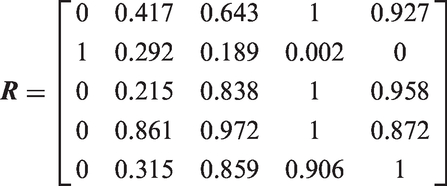
Weight coefficient is the degree to which each factor affects the performance of the product's filtration performance. In this work, the subjective method is selected, and according to the role of each factor in the product filtration performance and its status, the weight coefficient of each indicator is determined through investigation and review by multiple experts and related technicians. After the results are summarized and the weights of the five factors are assigned as,

The comprehensive evaluation result vector is calculated as follows

Normalize the results and the comprehensive evaluation result vector is given as follows

According to the above comprehensive evaluation results, the filtration effect of sample D/F/D is the best, followed by PTFE/F/D, F/F/D, F/F/F, and F/F samples. Through the analysis and collation of experimental data, it can be basically determined that the CKSW samples had the polyester DTY ground yarn the polyester DTY weft insertion yarn, and the polyester FDY connection yarn involved has the best filtration performance.
Conclusion
The CKSW filtration materials developed on the modified circular seamless machine were researched, which had the characteristics of high production efficiency and good filtration performance. Polyester FDY, low-elastic yarns DTY, and PTFE filaments with tourmaline particles were used as yarns materials. The yarn configuration of the CKSW was multifarious. Through fuzzy comprehensive evaluation analysis, it could be found that the CKSW samples had the polyester DTY ground yarn the polyester DTY weft insertion yarn, and the polyester FDY connection yarn involved exhibited the smallest pore diameter and the highest porosity, named D/F/D sample. It had the 84.46% filtration efficiency towards the particles on size of ≥2.0 µm, and up to 91.57% of the filtration efficiency towards the particle on size of ≥ 5.0 µm. More importantly, it was also verified that the novel static electric materials such as PTFE modified by tourmaline had the effect of improving the filtration efficiency of CKSW filtration materials. The experimental results would provide a reference for the development of filtration materials, and at the same time develop and expand the industrial application of weft-knitted weft-insertion structure products.
Footnotes
Declaration of conflicting interests
The author(s) declared no potential conflicts of interest with respect to the research, authorship, and/or publication of this article.
Funding
The author(s) disclosed receipt of the following financial support for the research, authorship, and/or publication of this article: The authors would like to give the acknowledgement to the following financial support for the research: Provincial and Ministry Joint Open Project (M2-201805) National First-class Discipline Program of Light Industry Technology and Engineering (2018-28) and Fundamental Research Funds for the Central Universities (JUSRP11807).