




Abstract
The current study focuses on the development of silanized graphene oxide reinforced basalt fiber/epoxy composites for enhanced tribological and viscoelastic properties. The modified-graphene oxide nanoplatelets were characterized using energy-dispersive X-ray spectroscopy, and Raman analyses. Pin-on-disk wear test and dynamic mechanical thermal analysis were conducted to determine the tribological and viscoelastic properties of the fabricated specimens with different silanized-graphene oxide loadings in the matrix (0–0.5 wt.% at a step of 0.1). The multiscale specimens were fabricated using the hand lay-up technique. The best silanized-graphene oxide loading for effectively enhancing the tribological properties was found to be 0.4 wt.%, whose wear rate and friction coefficient were 62% and 44%, respectively lower than those of the neat basalt/epoxy composite. The examination of the worn surfaces showed the enhanced basalt fiber/epoxy bonding in graphene oxide-reinforced specimen. From the results of dynamic mechanical thermal analysis, the specimen filled with 0.4 wt.% silanized-graphene oxide demonstrated the highest increase of 130% and 13.6℃ in the storage modulus and glass transition temperature as compared to the neat composite. This study indicated that the addition of silanized-graphene oxide considerably enhanced the tribological and viscoelastic properties of the fibrous composites.
Introduction
Fiber-reinforced polymers (FRPs) have found vast applications in aerospace, automobile, marine, and defense industries due to their excellent combinations of high strength-to-weight and modulus-to-weight ratios, superior corrosion resistance, high chemical resistance, and easiness of fabrication [1,2]. Recently, basalt fiber as an environmentally friendly material has emerged as a favorable candidate for use as a reinforcing material in FRPs. It has a high strength-to-weight ratio, high thermal resistance, excellent chemical stability, and good corrosion resistance. Additionally, basalt fiber is non-toxic. For these reasons, many attempts have been made to investigate the various properties of basalt fiber-reinforced composites [3–5].
Mechanical behaviors of graphene oxide- (GO) reinforced FRPs have been investigated by several investigators, and they reported that the addition of GO enhances the mechanical properties [6,7]. GO consists of oxidized one-atom-thick graphene sheets, and its surface is decorated with oxygen-containing groups such as hydroxyl, epoxy and carbonyl groups, making it an excellent choice for high-performance polymer nanocomposites [8–10]. The properties of graphene-based nanocomposites depend deeply on the homogeneous dispersion of the graphene within the polymeric matrix as well as the strong interfacial interaction between the graphene and matrix [11]. The GO nanosheets tend to agglomerate due to van der Waals interactions. In this regard, surface modification is a good strategy to overcome this problem. Among the various routes for the surface modification of nanofillers, silanization is a very effective method [12,13]. Silane coupling agents with a typical general structure of (RO)3SiCH2CH2CH2-X have two types of reactive groups in their both sides, where RO is a hydrolysable alkoxy group, such as acetoxy, methoxy, or ethoxy, and X is an organofunctional group, such as amino, epoxy, etc. A silane coupling agent with two reactive groups in both sides possesses the ability to couple two dissimilar materials [14].
In past years, multiscale composites containing both micron and nano-sized reinforcements have gained wide acceptance for tribological applications [15–19]. It has been reported that multiscale composites generally exhibit higher wear resistance compared to the neat FRPs. In the work of Österle et al. [15], enhanced wear properties of an epoxy matrix composite were obtained by a combination of carbon fibers and silica nanoparticles. Ren et al. [16] studied the effect of graphene addition on the tribological response of Nomex fabric/phenolic composite and found that 2 wt.% graphene-filled specimen showed the best wear resistance. In the work of Guo et al. [17] who investigated the wear behavior of nano-SiO2/short carbon fiber/epoxy composites, the best tribological properties were related to the specimen with 4 wt.% SiO2 and 6 wt.% carbon fiber. Kim et al. [18] found that the wear resistance of carbon fiber/epoxy specimen was enhanced by the incorporation of carbon nanotubes. Bobbili and Madhu [19] reported that wear rate (WR) and friction coefficient of E-glass-epoxy composite were decreased by the addition of multiwalled carbon nanotubes.
The introduction of nanofillers in the structure of FRPs can affect their viscoelastic properties [20–23]. For example, Menbari et al. [20] observed a remarkable improvement in the storage modulus and Tg of the epoxy/glass fiber/GO composite compared to the neat one. Hossain et al. [21] found that storage modulus and Tg of E-glass/polyester composites were increased by 49.5% and 3℃, respectively, due to the addition of 0.2 wt.% carbon nanofiber in the matrix. The results of Zainuddin et al. [22] work showed that storage modulus and Tg of 0.3 wt.% CNTs-NH2-filled E-glass/polyester composite were improved by 72% and 24℃ compared to the neat E-glass/polyester specimen. The viscoelastic behavior of modified CNT-reinforced basalt/epoxy specimens was investigated by Lee et al. [23] They found that silanized composites have greater storage modulus and Tg compared to the unmodified and oxidized ones.
To the best of our knowledge, no research work has been reported in the literature on the tribological and viscoelastic properties of multiscale silanized-GO/basalt fiber/epoxy composites, demonstrating the significance of the present study. Herein, basalt fiber reinforced epoxy composites with various silanized-GO loadings were fabricated and characterized by DMTA and pin-on-disc wear tests.
Experimental
Materials
KER 828 as a medium viscosity liquid epoxy resin (viscosity at 25℃: 12–14 Pa.s) was provided by Kumho P&B Chemicals, Inc., Korea, and employed in 100:10 weight ratio concerning the amine hardener. Basalt satin weave fabric (300 g/m2) was supplied by Basaltex Co., Belgium. GO nanoplatelets (6–10 layers, thickness: 3.4–7 nm, diameter: 10–50 µm) were purchased from US Research Nanomaterials Inc. The SEM image of as-received GO is shown in Figure 1.
SEM image of GO nanoplatelets. GO: graphene oxide.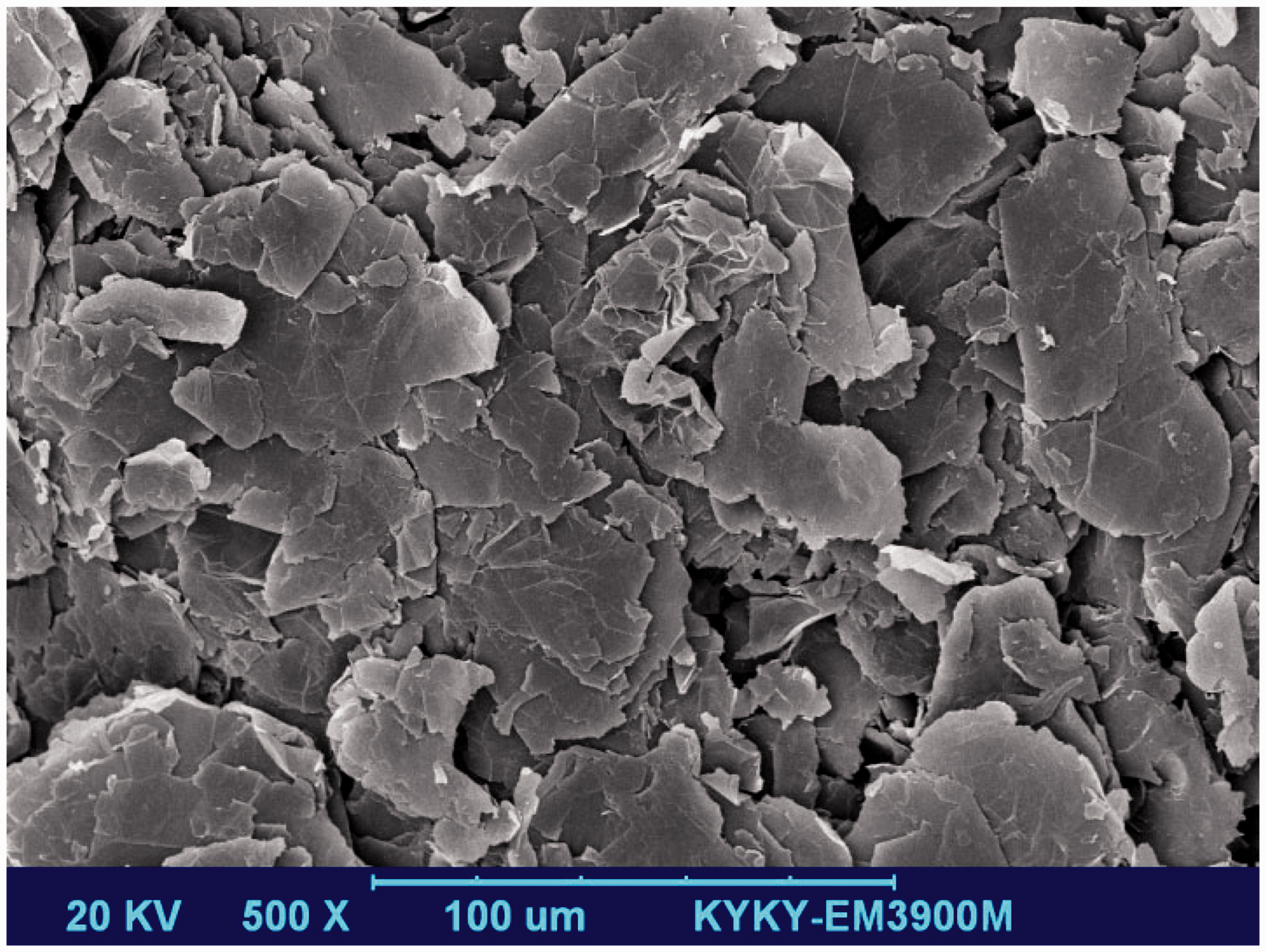
In order to surface modification of GO, a silane coupling agent namely 3-glycidoxypropyltrimetoxysilane (3-GPTMS) was purchased from Merck Chemical Co., Germany.
Employed approach for GO modification
For preparation of silanized-GO, 500 mg GO was incorporated in a 160 ml solution of ethanol/water (95:5, v/v) followed by sonication for 10 min. Then, 5 ml 3-GPTMS was added, and the resultant mixture was refluxed at 80℃ for 12 h. The pH was adjusted to around 4 by HCl-37%. The acidic media not only decrease the self-condensation reactions between the hydrolyzed SiOH groups in silane chains, but also increase the amount of SiOH formation. The dark suspension was centrifuged, and the obtained powder was washed with ethanol to remove any unreacted coupling agent. Finally, the silanized-GO was dried at 80℃ for 8 h [24,25].
Composite fabrication
Epoxy resin and a certain amount of silanized-GO (0.1–0.5 wt.% at a step of 0.1) were initially mixed using an overhead high-shear mechanical stirrer running at 2000 r/min for 20 min. Subsequently, the resultant viscous mixture was sonicated for 30 min (Ultrasonic Homogenizer 400 W, 24 kHz, TOPSONICS Co.) to obtain a homogeneous dispersion. During the sonication, the mixtures were kept within a water-ice bath to hold the mixture temperature around 30–40℃. After degassing, the hardener was added and mixed for 5 min. The hand lay-up technique followed by cold pressing was employed for manufacturing the final multiscale silanized-GO/basalt fiber/epoxy composites. The specimens were cured at room temperature. To approve the positive effect of silane modification, the trend mentioned above was also employed for fabricating a multiscale specimen containing 0.4 wt.% as-received GO. It should be noted that the volume fraction of basalt fiber in the specimens was 0.48.
DMTA and wear tests
To study the viscoelastic behavior of the specimens, DMTA was performed on a Perkin Elmer Diamond DMA according to the ASTM D4065 standard. The specimens (50 × 10 × 1.25 mm) were tested from 25℃ to 150℃ (heating rate: 3℃/min) at a frequency of 1 Hz and amplitude of 5 µm. The parameters of storage modulus and glass transition temperature were extracted to study the viscoelastic response of fabricated specimens.
To evaluate the tribological properties of the specimens, a pin-on-disk test (ASTM G99) as the most frequently configuration was conducted under dry sliding condition. The dimension of the wear test specimens was 30 × 30 × 5 mm. A commercially 52,100 steel pin (1.5Cr, 1C, 0.35Mn, 0.25Si, HRC 64) with diameter of 5 mm and height of 20 mm was served as a counter component. The wear test was carried out at a normal load of 20 N, the linear velocity of 0.5 m/s, and total sliding distance of 1000 m. Specific WR (calculated from equation (1)) [26] and friction coefficient (FC) for each specimen were reported.

In equation (1), Δm, ρ, F, and L are specimen mass loss, specimen density, normal load, and total sliding distance, respectively.
Characterization methods
To characterize the silanized-GO, Raman, and EDX analyses were performed. An EDX analyzer (MIRA3TESCAN-XMU) was used to evaluate the elemental analysis of silanized-GO. A Teksan (model: Tekram) Raman spectrometer with laser excitation of 532 nm was also used to characterize the powders.
The worn surfaces of the specimens were evaluated by a scanning electron microscopy (SEM-KYKY 3900 EM), with the aim of obtaining some information about the dominant wear mechanisms.
Results and discussion
Characterization of GO and silanized-GO
Raman spectroscopy is known as a powerful technique for characterizing the graphene nanoplatelets. The Raman spectra of GO and silanized-GO are presented in Figure 2. Both GO and silanized-GO represents two typical broad bands: D-band (∼1350 cm−1) and G-band (∼1600 cm−1). The ID/IG is used as a measure of disordering density in the GO structure [9]. The ID/IG ratio for GO is 0.879 and after silanization, this value has increased to 0.912. These results prove the absence of a significant increase in the number of defects in the GO structure after silanization with 3-GPTMS.
Raman spectra of (a) GO, and (b) silanized-GO. GO: graphene oxide.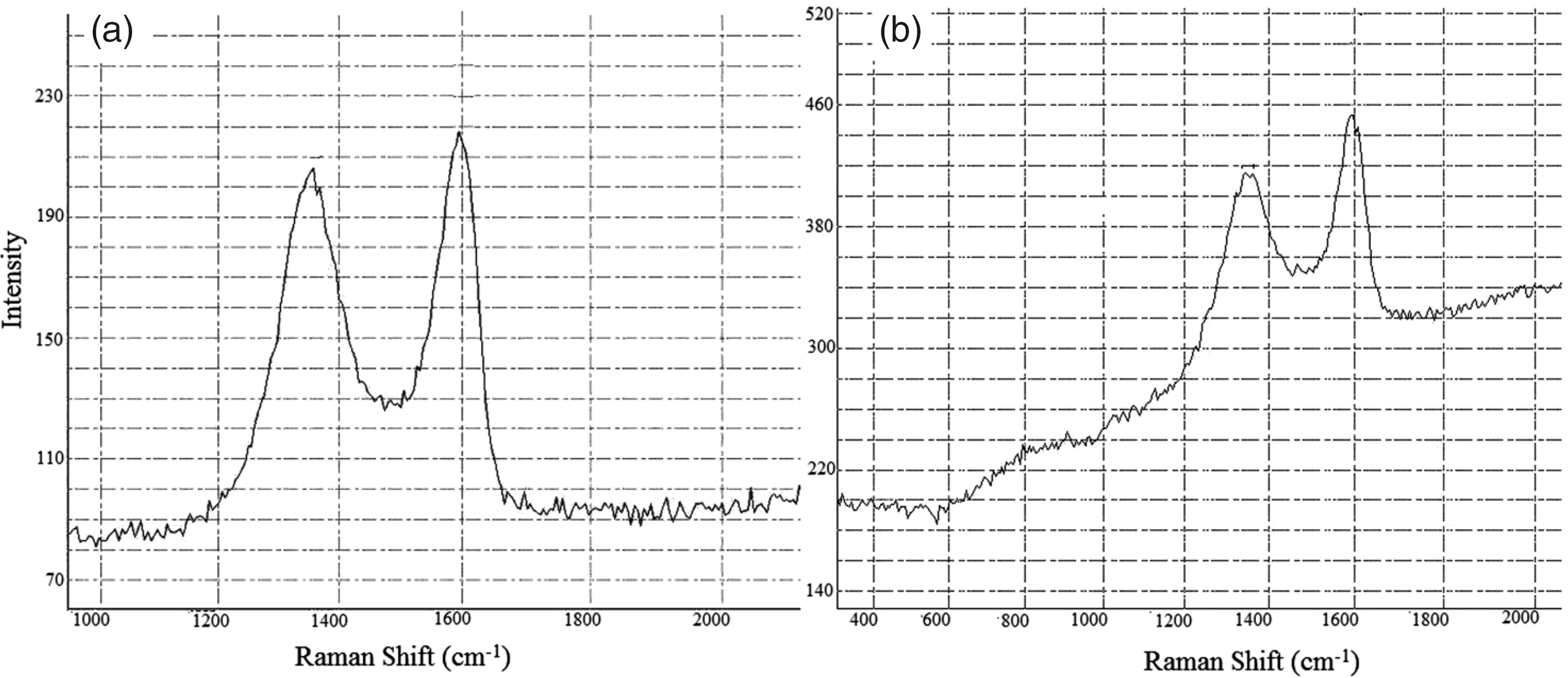
EDX spectrum of silanized-GO is illustrated in Figure 3. The existence of silicon atom originating from the silane compound in the EDX spectrum of silanized-GO confirmed that the 3-GPTMS molecules are present on the surface of GO.
EDX analysis of silanized-GO. GO: graphene oxide. EDX: energy-dispersive X-ray.
DMTA results
The DMTA test was used to evaluate the effect of silanized-GO at various loadings on the viscoelastic properties of basalt fiber/epoxy composites. Figures 4 to 6 show the variations of storage modulus (E’), loss modulus (E”), and loss factor (tan δ) with temperature for various multiscale specimens. From Figure 4, the storage modulus proportionally increases from 0 to 0.4 wt.% silanized-GO loading (130% increase at 25℃). This behavior can be explained regarding effective interaction between the silanized-GO and epoxy matrix resulted from their enormous surface areas and chemical interactions [12,13]. The improved interfacial interaction decreases the mobility of the epoxy matrix around the GO and increases the specimen stiffness. On the other hand, the storage modulus decreases when the silanized-GO loading increases from 0.4 wt.% to 0.5 wt.% (39% decrease). It seems that an increase in density and size of GO agglomerates facilities the molecular motion and movement of chains, resulting in decreased storage modulus. Besides, due to the higher molecular motion in the rubbery region, a slight influence on this region is observed after the incorporation of silanized-GO.
The storage modulus versus temperature for the multiscale composites with various silanized-GO loadings. GO: graphene oxide.
Loss modulus describes the viscosity and relates to the energy used to deform the material. As can be seen in Figure 5, the peak height of loss modulus for the multiscale specimens shows an increase in comparison to the neat one. The dispersed GO dissipates energy due to its resistance against viscoelastic deformation of the surrounding matrix. The peak height at 0.5 wt.% silanized-GO shows a significant decrease. The decreased loss modulus at higher nanofiller contents can be interpreted by increased susceptibility of agglomeration, leading to less energy dissipating in the system under viscoelastic deformation.
The loss modulus versus temperature for the multiscale composites with various silanized-GO loadings. GO: graphene oxide. The tan δ versus temperature for the multiscale composites with various silanized-GO loadings. GO: graphene oxide.
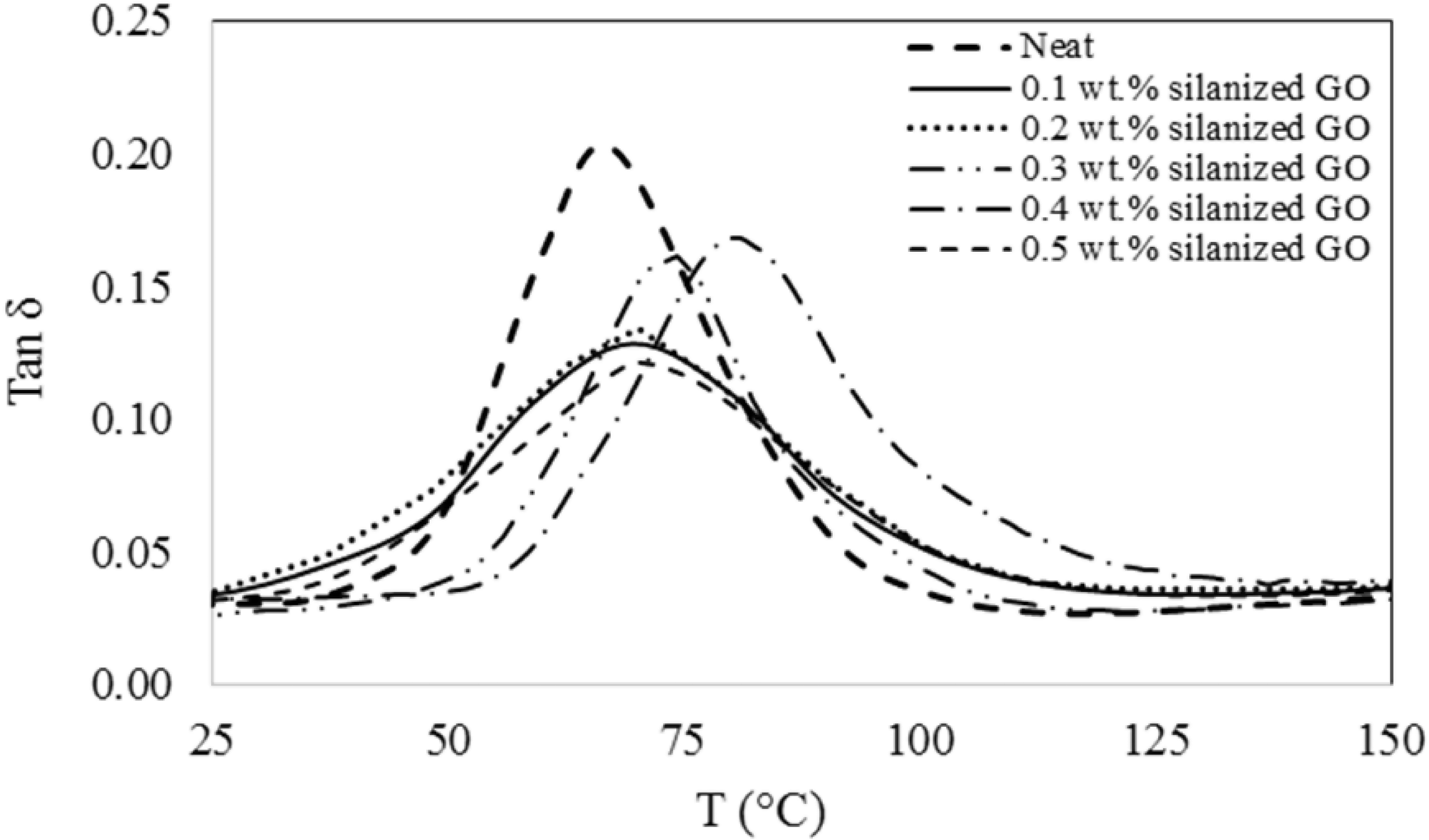
The glass transition temperature (Tg) is determined by the peak position of loss factor (tan δ) [20,22]. From Figure 6, it can be seen that the loss factor increases with an increase in the temperature in the transition region; it maximizes in Tg following by a continuous decrease in the rubbery region. Multiscale specimens show higher Tg values compared to the neat specimen. Tg shifts from 67.5℃ for the neat specimen to 80.9℃ for the 0.4 wt.% GO-filled specimen (i.e. 13.4℃ increase). This behavior can be interpreted by this fact that the silanized-GO tends to limit the mobility of the matrix chains through interfacial interactions. At 0.5 wt.% silanized-GO, the formation of micro-agglomerates creates stress concentration regions and reduces the value of Tg (see Figure 11). The height of tan δ peak decreases by the incorporation of silanized-GO due to this reason that the presence of nanofiller in the matrix prevents the molecular movement. This demonstrates that the mechanical loss to overcome the friction between the molecular chains reduces after the GO incorporation.
Wear test results
Figure 9 displays the variations in the friction coefficient (FC) with the sliding distance for the specimens containing various amounts of silanized-GO. For comparison, the values of mean FC for different specimens were extracted from Figure 7. Figure 8 shows the variation of the mean FC with weight percentages of the silanized-GO loading. According to the results, the greatest decrease in the FC is 44% which occurs at 0.4 wt.% silanized-GO. During the wear test, frictional heat focuses around the contact region and as a result, the specimen can easily deform. The addition of silanized-GO, due to its high thermal conductivity, most effectively dissipates the heat, resulting in a decreased FC. Moreover, for the specimens with silanized-GO addition, due to the formation of a continuous transfer film on the surface of steel pin, the values of mean FC decrease (see Figure 11).
Variation in the FC with the sliding distance for the specimens containing various amounts of silanized-GO. GO: graphene oxide; FC: friction coefficient. Variation in the mean FC with the silanized-GO loading. GO: graphene oxide; FC: friction coefficient. Variation in the WR with the silanized-GO loading. GO: graphene oxide; WR: wear rate.


Figure 9 shows the variation of the WR as a function of silanized-GO loading. Similar to the FC, the WR also decreased with increasing the silanized-GO loading up to 0.4 wt.%, and then the WR increased for the 0.5 wt.%. Based on the results, the specimen containing 0.4 wt.% silanized-GO gives the best wear resistance among the fabricated specimens. At 0.4 wt.% silanized-GO, over 62% reduction of WR is observed. This behavior is in agreement with the results of Ren et al. [16] who reported that the addition of functional graphene as a filler into Nomex fabric/phenolic composite enhanced the tribological properties of the final composite. The reduction in the WR with the addition of silanized-GO is probably due to the superior fiber-matrix interfacial bonding. This can be explained by the following mechanisms: (i) the GO nano-sheet acts as an interlocking component between the fibers and polymeric matrix; (ii) the mismatch of coefficient of thermal expansion (CTE) between the fiber and polymeric matrix creates high residual stresses during the curing stage, resulting in stress concentrations at interface [27]. With the addition of silanized-GO, the difference in the CTE of the matrix and fiber reduces. Consequently, the fiber-matrix interfacial bonding enhances [28]. As mentioned before, the addition of silanized-GO can effectively dissipate the concentrated frictional heat around the contact region, and as a result, the WR decreases.
As observed in Figures 8 and 9, there is a considerable enhancement in the FC and WR for the specimen filled with 0.5 wt.% silanized-GO compared with the specimen filled with 0.4 wt.% silanized-GO. This may be ascribed to the fact that at higher nanofiller loading, agglomeration of silanized-GO will occur. During the wear condition, these aggregates act as stress-concentration zones and reduce the wear resistance of the specimen.
Figure 10 shows the SEM micrographs from the worn surface of the specimens after being slid against the 52,100 pin. For the neat specimen (Figure 10(a)), the matrix and fibers are damaged more severely compared to the multiscale specimens. Also, poor adhesion of the matrix to the fibers is observable on the worn surface of the neat specimen. On the contrary, the multiscale specimens demonstrate an enhanced fiber-matrix bonding. Silanized-GO loading up to 0.4 wt.% caused enhancement in the interfacial bonding (Figure 10(b) to (e)). However, for the 0.5 wt.% GO-loaded specimen, fiber/matrix debonding, matrix cracking and fiber breakage on the worn surface can be observed due to the agglomeration of nano-sheets (Figure 11).
SEM micrographs from the worn surface of the specimens with various silanized-GO loadings: (a) 0 wt.%, (b) 0.1 wt.%, (c) 0.2 wt.%, (d) 0.3 wt.%, (e) 0.4 wt.%, and (f) 0.5 wt.%; after being slid against the 52,100 pin. GO: graphene oxide.
SEM micrographs of the worn 52,100 steel pin against the neat, and 0.4 wt.% GO-loaded specimens are shown in Figure 12. As seen in Figure 12(a), for the neat specimen, a non-continuous transfer film is formed on the surface of steel pin, while a continuous transfer film is observable for the 0.4 wt.% GO-loaded specimen (Figure 12(b)). The presence of a continuous transfer film can help to diminish the friction by reducing the direct contact between the steel pin and specimen.
Formation of silanized-GO agglomerates on the surface of 0.5 wt.% GO-loaded specimen. GO: graphene oxide. SEM micrographs of the worn 52,100 steel pin against the (a) neat specimen, and (b) 0.4 wt.% GO-loaded specimen. GO: graphene oxide.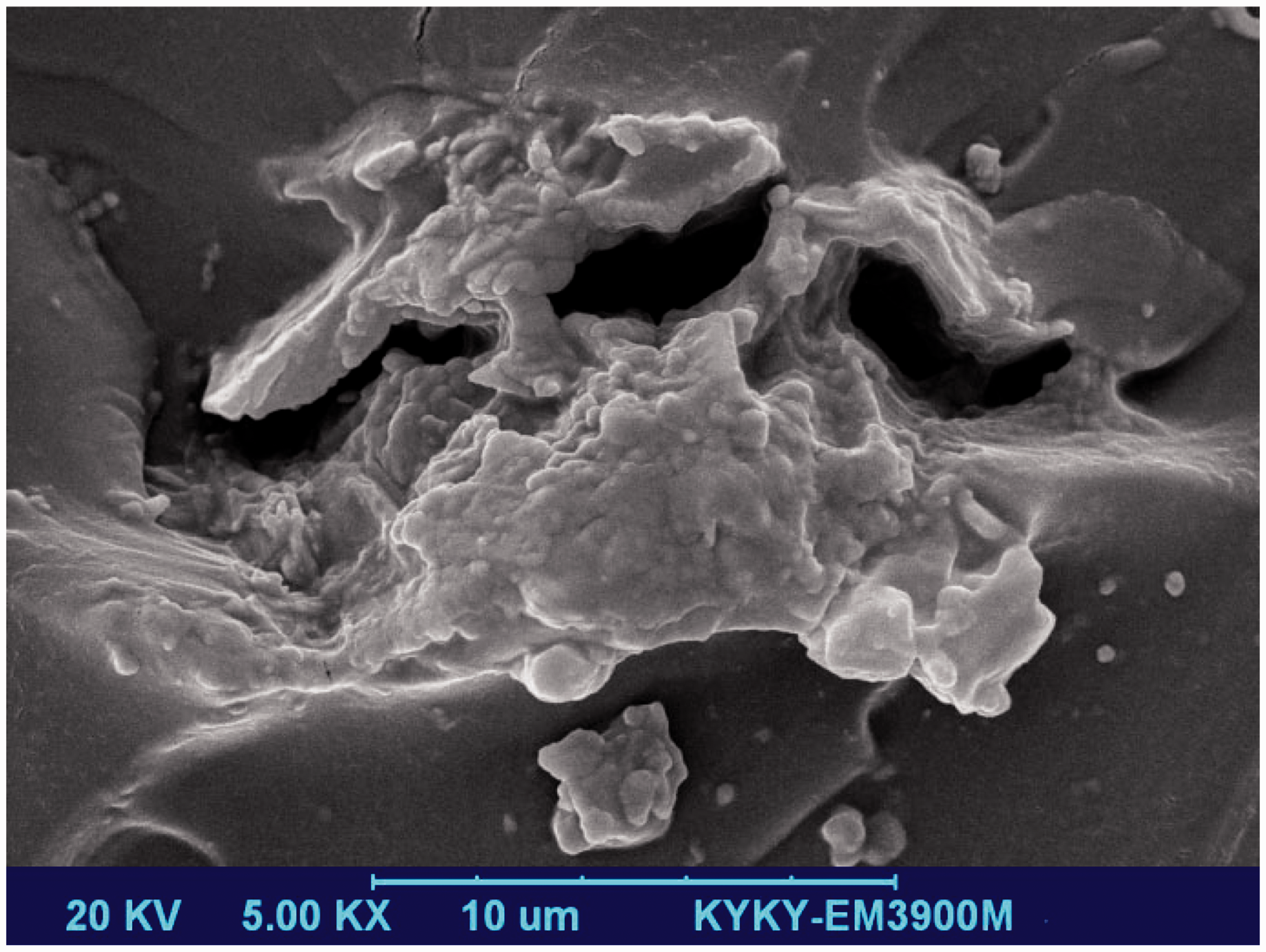

Conclusions
In the present study, GO nanoplatelets were surface-modified with 3-glycidoxypropyltrimetoxysilane (3-GPTMS). Then, the effect of silanized-GO at various loadings on the viscoelastic and dry-sliding wear properties of basalt fiber/epoxy composite was investigated. Based on the experimental results, the following conclusions were obtained:
Results obtained from Raman, and EDX measurements clearly showed that the silane compound grafted on the GO nanoplatelets successfully. Adding 0.4 wt.% of silanized-GO increased the storage modulus and glass transition temperature by 130% and 13.6℃ as compared with the neat basalt fiber/epoxy composite. When filled with 0.4 wt.% silanized-GO, the WR and friction coefficient (FC) of the multiscale composite are significantly enhanced by 62%, and 44%, respectively, compared to the neat basalt fiber/epoxy one. SEM observations from the worn surfaces demonstrated the improvement in the basalt fiber/epoxy interfacial bonding in the case of the silanized-GO-loaded specimens.
Footnotes
Acknowledgements
We would like to thank Mrs. Amirabadi, and Dr. Monshi for their cooperation in this work.
Declaration of conflicting interests
The author(s) declared no potential conflicts of interest with respect to the research, authorship, and/or publication of this article.
Funding
The author(s) received no financial support for the research, authorship, and/or publication of this article.