




Abstract
Fiber reinforced polymer composites have great potential for engineering applications. In this work, we have provided a comprehensive review on the damping properties of fiber reinforced polymer composites. This paper has focused on the mechanism and analytical method of damping properties. This work also presents a broad review on several factors which determined the damping, such as matrix, fiber types, fiber architecture, fiber surface modification, and incorporated fillers. We further discussed the role of interfacial region on the improvement of damping, where high shear strain energy is stored at this region. Nanofillers, fiber coating, and interpenetrating polymer networks have high potential for damping treatment. We have concluded this review with some helpful suggestions for the future development of fiber reinforced composites with desired damping properties.
Introduction
The use of fiber reinforced composite is gradually increased by the last decades. It has the advantages including high specific modulus, high specific strength, good formability, and easy tailorability. Especially, fiber reinforced composite is a powerful and lightweight alternative to traditional metal and concrete materials [1–3]. It has been extensively used for a range of engineering fields, such as aeronautical structures, sports equipment, construction materials, and wind turbines [4–6]. The development of high performance industrial products made from fiber reinforced composite is also increasing worldwide day by day. On the other hand, the growing importance of fiber reinforced composite can be seen from the increasing number of publications [7–13]. According to reported studies, the principle of damping is classified as active and passive approach. Active damping control requires sensors and actuators, power of source, and high efficient compensator in the damping control system [14]. Passive damping control typically requires high efficiency of energy conversion and dissipation [15–17]. The process can be achieved by the inherent characteristics of the materials to dissipate mechanical energy. In practice, passive damping control has the advantage of easy implementation than active damping control. In this review, we mainly focused on the passive damping mechanism of fiber reinforced composites.
Currently, many studies have focused on the mechanical properties of fiber reinforced composites, such as tensile strength, stiffness, thermal insulation, and impact properties. However, fiber reinforced composite materials used in engineering applications often suffer from dynamic loading effects. The vibration would cause undesirable noise, which shortens the lifespan of integral structure [2,18]. Therefore, it is an appealing challenge to enhance vibration control capacity of the composites [19–21]. The damping behavior has gradually grown up to be a hot topic recently. Fiber reinforced composite with robust damping behavior is economical to increase energy attenuation in the application of engineering system.
The schematic illustration of damping behavior is shown in Figure 1(a). The dissipated energy during the bounce process of a ball could be attributed to the internal motion. Tan δ is the damping coefficient which is defined as the ratio of loss to storage modulus, as shown in Figure 1(b). However, vibration attenuation characteristics are hard to evaluate in the theoretical analysis of fiber reinforced composites [22]. For fiber reinforced composites, the damping behavior could be tailored by changing the parameters of fiber, matrix, and interface, etc. It is necessary to fundamentally investigate the damping behavior of fiber reinforced composites. To the best knowledge of authors, several reviews have been published on the limited scope in the last 20 years [23–25]. This review aims at gathering all the up-to-date advances concerning the damping of fiber reinforced composites. The reported studies are classified and summarized according to the different approaches to improve damping, which mainly include the effects of polymer matrix, reinforcement fiber, fiber architecture, interfacial region, and incorporated fillers. It is hoped that this work could provide useful guidance for the future development of damping composites.
Schematic illustration of damping effects [22]. Source: Copyright 2016, Elsevier.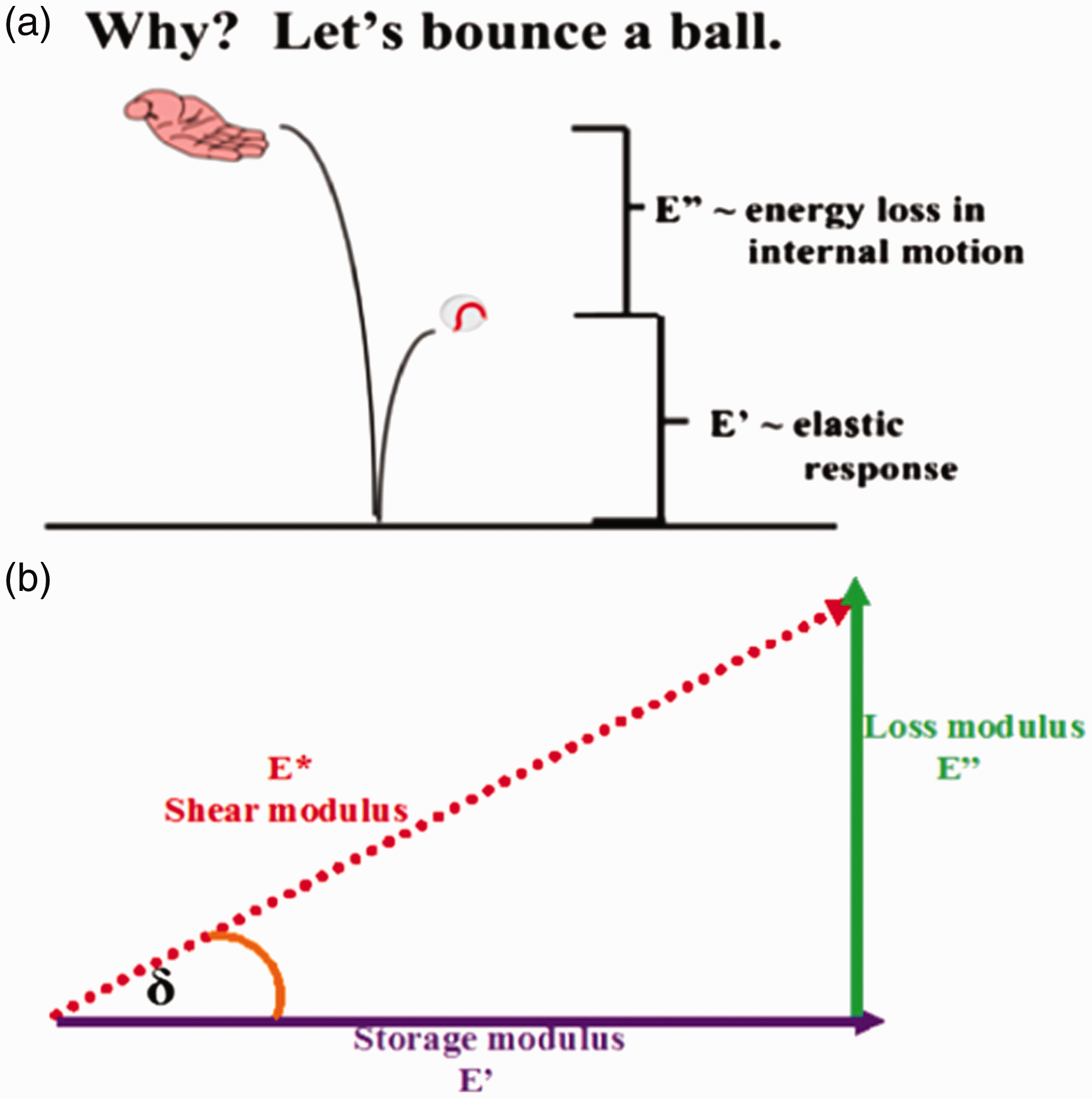
Mechanism and analysis methods
The damping mechanism of fiber reinforced composites is different from common metals. The approaches of energy dissipation in fiber reinforced composites mainly include the viscoelastic characteristics of matrix and fiber, the damping due to interface region and matrix cracks, and the viscoplastic damping [23,26]. Among various sources, the major contribution to damping is the viscoelasticity of matrix. The significant interfacial relative displacement may also cause debonding and friction in interface region, which can be specified as the fundamental energy dissipation mode during vibration. The stress is generated from the laminated interface near free edges in composites, which would benefit the energy dissipation process. Vibration coupling effects in the composite are significantly influenced by fiber orientation and stacking sequence, which are prone to increase the damping. Some of the micromechanical parameters including fiber aspect ratio and fiber spacing can also affect the damping of the composites system. In addition, the improvement of damping due to slip in unbound regions has also been reported. Debonding at the intersections of microcracks in matrix and fiber due to the crack opening under tensile strain also consumes energy, thus producing extra damping in composites. For fiber reinforced thermoplastic composites, which exhibited evident nonlinear viscoplastic damping due to high stress and strain concentration in local regions between fibers.
Currently, elastic–viscoelastic correspondence principle and strain energy method have been widely used for the analysis of damping. The correspondence principle is used to extend the obtained elastic solutions to a corresponding viscoelastic solution. In details, the static linear elasticity analysis is converted into dynamic linear viscoelastic analysis by replacing static strains with corresponding dynamic strains. It is a useful tool in viscoelasticity because the Laplace transform of the viscoelastic solution can be directly obtained from the existing elastic solution [27]. Laplace transform has been used to apply the correspondence principle to composites with linear viscoelastic interfaces. A viscoelastic interface model is also proposed to investigate the effective mechanical responses of nanocomposites filled with carbon nanotubes through correspondence principle [28]. Correspondence principle was successfully applied for the prediction of complex moduli in anisotropic fiber reinforced composites. Chandra et al. [29] have studied the effects of various fiber cross-section and volume fraction on damping coefficients based on viscoelastic correspondence principle. Recently, Lurie et al. [30] have investigated the damping behavior of fiber reinforced laminated composites by generalized self-consistent Eshelby method with correspondence principle. The results indicated that ultrathin coating layer is beneficial to increase effective loss moduli, and this phenomenon can be attributed to the high shearing dissipation mechanism in ultrathin viscoelastic coating layer.
Strain energy method states that the loss factor can be expressed as the ratio of the strain energy stored in each element to the total strain energy [23]. This approach successfully relates the total damping in the composites to the damping of each element and the fraction of the total strain energy stored in that element. In the simulation process, strain energy method can be used to calculate the damping under particular stress and build the two-phase damping model of unidirectional and off-axis fiber composites [31,32]. It has been reported that the viscoelastic moduli and flexural damping of anisotropic composites can be predicted from fiber orientation by strain energy method [33,34]. Strain energy approach for the investigation of synergistic effects of interface region on the damping and stiffness properties has also been presented. In the micromechanical analysis of damping behavior, the elements mainly include fibers, matrix and their interaction, void content and interface [35]. It has been verified that the dissipative energy can be decomposed and associated with the principal stress components. Furthermore, numerical techniques such as finite element methods are being applied either for the analysis and optimization of the damping in composites. In summary, both correspondence principle and strain energy method can provide helpful guidance for analyzing the damping mechanism of composites and obtaining required damping properties for practical applications.
Polymer matrix
The primary contributor of damping in fiber reinforced composite is the inherent viscoelastic damping of matrix. It has been shown that matrix carries both the extensional and shearing stresses under dynamic loading. Especially, damping behavior associated with stress distribution in a direction perpendicular to the reinforced fiber axis, also in-plane shear stress, is nearly exclusively determined by the matrix damping [35]. In this section, the volume fraction of matrix in the composites, various types of matrix, and interpenetrating polymer networks on the damping behavior of fiber reinforced composites are commented.
The energy in fiber reinforced composites might be dissipated in different approaches [23,36–38]. The major contribution to the energy dissipation of fiber reinforced composites is drawn from the viscoelastic properties of polymer matrix. The viscoelastic damping arises from relaxation and recovery of macromolecular chain network after its deformation [39]. It has been demonstrated that strong correlations could be observed between frequency and molecular motions. The energy dissipation is achieved by the inelastic damping behavior of the polymeric matrix. As shown in Figure 2, a low content of polyhedral oligomeric silsesquioxane can increase the restriction of epoxy chain segments. Each of the polymer cages can interact within the epoxy chain segments that are connected with each other. Therefore, the storage modulus in the rubbery region and loss factor were decreased due to the variation of average cross-link density in the epoxy composites [40].
Microstructural representation of epoxy matrix nanocomposite [40]. CRR: cooperatively rearranging regions. Source: Copyright 2012, Elsevier.
It has been reported that damping could be improved by increasing the matrix volume fraction at the expenses of stiffness and strength. Ni and Adams [41] established a model to predict the damping behavior based on the fiber volume fraction. Haddad and Feng [42] further confirmed this tendency. Furthermore, the volume fraction of matrix for damping has been investigated and the results revealed that the damping ratio of three-layer-connected biaxial weft-knitted fabric reinforced composites increased with the increasing of matrix volume fraction [43]. The reason can be attributed to the higher stresses in the matrix due to closer spacing which resulted in higher energy dissipation capacity during the dynamic loading. Furthermore, free vibration characteristics of sisal fiber, banana fiber, and jute fiber reinforced composites have also been investigated [44–46]. In the opinion of authors, the difference of damping capacity between reinforced fiber and polymeric matrix should be examined; also, the processing technique plays an important role.
Currently, there is no special polymeric matrix for damping composites. A series of works have been done to investigate the damping behavior of various matrixes. It has been reported that the postcuring process can decrease the damping capacity of phenolics, while simultaneously increase the stiffness and dimensional tolerance. The cross-linking degree and hydrothermal treatment of matrix play an essential role in the enhancement of fiber reinforced composites damping [47–49]. In addition, composites consisting of glass fiber and scrap rubber by mixture were also prepared [50]. Micro-nano constrained damping structural units with high energy attenuation capacity have also been developed to incorporate into the epoxy matrix [51]. The influences of hydrogen bonding interactions on damping behavior have also been discussed. It should be particularly noted that slide ring and natural rubber can significantly improve damping. The slide ring phase is acted at damping phase to provide the approach to dissipate seismic energy, while the matrix is to provide the mechanical strength needed in large deformations [52].
The macroscopic characteristic of matrix usually performs nonlinearities, and viscoelastic damping is derived from the relaxation and recovery of macromolecular chain network due to deformation. According to reported publications, the effects of viscoelastic layer, water absorption, extrusion processing, and hydrogen bonding are studied [53–57]. Strong correlation is also observed between frequency effects and molecular motions in the composites, which are driven by the inelastic damping behavior of matrix. Therefore, it is meaningful to characterize the dynamic response of viscoelastic damping composites and prescribe analytical model of viscoelastic damping based on forced loading, temperature, frequency, and time histories of fiber reinforced composites. Various modified methods such as cross-linking, copolymers, addition of nanofiller, and organic molecule hybridization are effective to produce composites with enhanced damping capacity.
Types of reinforcement fibers
At present, different kinds of fibers are used for engineering applications, such as carbon fiber is dominant for lightweight structural composites due to its high modulus and low density. In addition, several high performance synthetic fibers are more ductile than carbon fiber, and they can be used to enhance the damping behavior [58]. For instance, the difference between E-glass and N-glass was investigated [59]. Furthermore, it has been reported that Kevlar fiber has the higher damping capacity than the commonly used glass fiber [60]. The viscoelastic damping behavior of short basalt fiber reinforced polypropylene and polyvinyl alcohol fiber reinforced concrete [61] was also studied. It has been confirmed that damping associated with stress along the fiber direction is almost exclusively determined by the fiber damping from both theoretical and experimental approach. Moreover, the addition of high modulus fibers to the polymer matrix would reduce the damping characteristics of the composites. The rise in storage modulus and drop in loss factor can be attributed to the incorporation of short carbon and glass fibers [62]. In addition, the loss factor of reinforced fibers including Kevlar fiber and ultrahigh molecular weight polyethylene fiber should also be considered in damping behavior analysis.
Recently, there is a rising interest in the investigation of renewable resources. Especially, the development of high performance engineering products made from natural fiber reinforced composites is gradually increasing. Thus, an overview concerning the damping behavior of natural fiber reinforced composite is given in this section. The microstructure images of various natural fibers are presented in Figure 3. Among the most popular natural fibrous materials, the damping behavior of short coir fiber reinforced natural rubber composites [67], banana fiber reinforced polyester [63], flax- and hemp-fiber reinforced polypropylene [68], ramie/glass hybrid fiber reinforced polyester composites [69], Luffa cylindrica fiber reinforced biocomposites [70], and S. cylindrica fiber reinforced polyester matrix composites [65] was extensively studied in different applications. Recently, free vibration testing and dynamic mechanical analysis methods are used to study the damping properties of noil hemp fiber reinforced polypropylene composites. The results indicated that the storage modulus of the composites increased with the increase of hemp fiber content. The maximum damping ratio was obtained when the composites were reinforced with 30 wt% noil hemp fiber [71]. In addition, Senthilvelan and Gnanamoorthy [62] found that an increase of short sisal fiber and short banana fiber content in polyester composites can improve the damping properties.
(a) SEM image of banana fiber reinforced composites [63], (b) and (c) SEM images of coconut sheath fiber [64], (d) SEM image of Sansevieria cylindrica fiber [65], (e) and (f) illustration of bast fiber and SEM of flax fiber [66], (g) and (h) SEM images of tensile fracture of banana fiber and (i) sisal fiber [44]. Source: (a) Copyright 2003, Elsevier; (b) and (c) Copyright 2014, SAGE Publications; (d) Copyright 2003, Elsevier; (e) and (f) Copyright 2016, Elsevier; (g) to (i) Copyright 2014, Elsevier.
It should be pointed out that acrylic rubber/polyvinyl chloride hollow fiber has been successfully prepared by dry–wet spinning technique [72]. The results indicated that hollow fiber has relatively broad effective damping temperature range. It has been demonstrated that acrylic rubber/polyvinyl chloride hollow fiber is a promising candidate in damping applications. The development of hollow fiber with high energy dissipation capacity explores a new field in fiber reinforced composites. It is a challenge to the traditional concept that the viscoelasticity of polymer matrix is the major contribution to the energy dissipation behavior of fiber reinforced composites. In addition, a series of thin, lightweight, and low-cost energy dissipation composites reinforced with seven-hole hollow polyester fibers were prepared [73]. The composites could be fabricated into novel vibration attenuation materials in engineering applications.
Currently, the utilization of various fibers in composites materials is gradually increasing, such as synthetic fiber, natural fiber, and carbon fiber [74–77]. The growing demand of damping will promote the development of high energy dissipation and high stiffness composites. In the opinion of authors, more attention should be focused on high damping fiber, such as abovementioned acrylic rubber/polyvinyl chloride hollow fiber. The role of fiber in the damping behavior of composites is increasingly important. Furthermore, damping composites made from high performance fiber are used for various applications, including sound absorption, energy storage, vibration control, etc. The development of natural fiber for damping is also increasing due to its advantages of biodegradability and environmental friendliness [78]. In addition, it can be said that the investigation of natural fibers is beneficial to increase the economic income of crop growers and broaden its application ranges. The damping behavior of natural fibrous materials can also be enhanced by the modification of reinforced fibers. In summary, it is a worthy research topic to develop different kinds of fibers for manufacturing damping composites.
Fiber architecture
The damping behavior of fiber reinforced composite was determined by the architecture of fiber assemblies. Different fabrics used in fiber reinforced composites are shown in Figure 4(a) to (f). This is particularly true for short fiber reinforced polymer matrix whose damping characteristics are affected by the length and shape of fibers. Images of short and long fiber reinforced composites are presented in Figure 4(g) and (h). It has been proven that the damping improvement can be ascribed to the presence of high shear stress concentrations at the fiber ends. The aspect ratio of reinforced fiber determines the transverse shear stress distribution along the fiber in longitudinal direction. Similar tendency was also observed when the energy dissipation in the fiber ends is due to the weak bonding and high stress concentration. Furthermore, it has been indicated that discontinuous short fiber reinforced thermoplastic composites have higher energy dissipation capacity than that of long fiber due to the presence of more fiber ends. The fiber/matrix interfaces are being subjected to elastic as well as plastic deformation under vibration conditions [79]. In addition, the increase of fiber length in glass fiber reinforced polymer concrete would first increase and later decrease the damping ratio, and the maximum value could be obtained when the length is 20 mm [80].
(a) to (f) Unidirectional and twill fabrics [81], (g) and (h) short and long fibers for composites [79], and (i) structure of hybrid yarn for composites [82]. PLA: polylactic acid. Source: (a) to (f) Copyright 2014, SAGE Publications; (g) and (h) Copyright 2011, Taylor & Francis; (i) Copyright 2014, Elsevier.
According to reported publications, the effects of fiber assemblies on damping properties are investigated. Chandra et al. [29] have studied the effects of fiber cross-section and volume fraction on damping coefficients. The analysis results indicated that the longitudinal loss factor is determined by the shape of reinforced fibers. The synergistic effect of longitudinal and transverse loss factors also shows sensitivity to the shape of fibers. It has been observed that the damping can be improved at slight expense of composite stiffness by generating more number of interfaces. For instance, various methods reduce the fiber diameter without compromising the dimensions of the composite specimen and the volume fraction of the fiber [83]. Fiber orientation and stacking sequence affected damping behavior significantly. Extensive analysis regarding energy dissipation of unoriented fiber reinforced composites has been presented. As shown in Figure 4(i), these wrappings of PLA filament provide better protection for the fiber during further processing. The fiber array effect on modal damping behavior of fiber reinforced composite has been studied [84]. Various packing structures including square edge, square diagonal, and hexagonal configuration are compared. The results concluded that square diagonal packing has the best damping capacity in both free–free and clamped–free boundary conditions. Pothan et al. [85,86] have investigated the effects of fiber layering pattern, volume fraction, and weaving structure on mutual mismatch between fiber and matrix. The results indicated that layering pattern has a profound effect on the dynamic mechanical properties of the composite. The bilayer short randomly oriented bagasse/coir hybrid fiber reinforced epoxy composite has the maximum damping capacity among various layering patterns. It was found that the hemp fiber orientation (i.e. aligned or random) and off-axis angle influence the dynamical mechanical properties of the composites [82].
Recently, it has been reported that the damping properties of fiber reinforced composites increased with the twist and crimp amount of fiber [81,87]. For instance, the increasing twist and crimp is helpful to improve the vibration damping capability of twill 2/2 fabric reinforced composites. The relationship between fiber orientation and damping properties for sandwich specimen has been further investigated [88]. The highest flexural and storage modulus of quasi-isotropic laminate is observed at (0/±45/90)s stacking sequence and opposite for damping ratio [89]. Kumar et al. [64] studied the effects of coconut sheath and sisal layers stacking sequence for damping behavior and mechanical properties. The results stated that silane-treated coconut sheath/sisal/coconut sheath hybrid stack is of optimum stacking sequence. Assarar et al. [90] evaluated the effects of fiber stacking sequences and hybridization on the damping properties of flax–carbon twill epoxy composites.
This section has gathered the studies of fiber architecture on damping, including fiber length, fiber twist and crimp, fiber distribution direction, fiber stacking sequence, and reinforced fabric patterns. The damping of composites can be optimized by designing the architecture of fiber assemblies. It can be seen that both bending stiffness and damping properties of laminated composites were determined by the effects of stacking sequence. The investigation of fiber orientation and stacking sequence for damping behavior is helpful to the vibration control application of fiber reinforced composites. In summary, the effects of fiber architecture should also be considered and theoretically researched in the preparation of fiber reinforced composites with required damping.
Interfacial damping
Interfacial region is crucial for bonding conditions between fiber and matrix, which could be strong or weak due to its characteristics. Various properties of fiber reinforced composites could be obtained by varying the bonding conditions of interface. The studies of fiber surface modification for enhanced damping are listed in Table 1. It has been demonstrated that weak interfacial bonding tends to dissipate more energy than that with good interfacial bonding. As for fiber reinforced composites, debonding can increase the stick–slip friction under forced cyclic loadings, which gives rise to better damping properties. Thomas et al. [67] investigated the effect of chemical treatment of coir fiber on damping; the results indicated that the poorer the interfacial bonding, the better the damping capacity is. It has been found that the weak bonding between fibers and matrix could be attributed to the relative motion of fibers. The reduction in impact strength and damping ratio can improve fiber/matrix interfacial adhesion due to the alkali treatment of reinforced flax- and linen-fabric [91]. Images of alkali- and coupling agent-treated fibers are illustrated in Figure 5. It can be observed from Figure 5(a) to (f) that alkali treatment plays a notable role in the bonding of interfacial regions. To prepare high damping composites, both energy dissipating material and high shear strain are needed. Thus, it is effective to improve energy dissipation behavior by fiber surface treatment to strength interfacial damping effects. It was presented that the interfacial damping mechanisms in fiber reinforced composite are closely related to interfacial debonding and friction.
(a) and (b) Doum fiber [92], (c) and (d) untreated and alkali-treated henequen fibers [93], (e) and (f) untreated flax and alkali-treated flax composites [91], (g) and (h) schematic illustration and SEM images [94]. RFL: resorcinol–formaldehyde–latex. Source: (a) and (b) Copyright 2013, Elsevier; (c) and (d) Copyright 2005, Elsevier; (e) and (f) Copyright 2012, SAGE Publications; (g) and (h) Copyright 2015, Wiley. Fiber surface treatment for damping properties. RFL: Resorcinol–formaldehyde–latex.

Finegan and Gibson [95] investigated the effect of special fiber coating on the improvement of damping at the micromechanical level under transverse normal loading. The results demonstrated that the loss factor of polyvinyl chloride-coated copper fibers increased with polyvinyl chloride volume fraction, which is at the expense of stiffness properties. A strain energy approach was implemented with both closed-form theory of elasticity solution and finite element numerical simulations in order to perform the damping analysis [96]. The results indicated that volume fractions of coating and matrix both play an important role in the improvement of damping. Furthermore, the analytical micromechanical models can be easily adjusted to study various commonly used fiber matrix combinations and coating materials to simultaneously obtain excellent damping and stiffness properties. Schematic illustration and microstructure pictures of textile/rubber composite by coating the textile with resorcinol–formaldehyde–latex are presented in Figure 5(g) and (h). Gu et al. [97] designed an interfacial layer fabricated by coating pyrocarbon on the surface of carbon fibers. Furthermore, finite element method has been used to investigate the effect of fiber coating on the longitudinal damping capacity of a composite by varying the thickness and the material properties of the coating. The results showed that the decreased coating elastic modulus can improve the damping of fiber reinforced composites. However, for the case of plastic coating, the weak coating or the high elastic modulus coating can improve the overall damping of composites.
Considering the significant role of shear deformations in energy dissipation, the interfacial damping leads to significant improvement due to the high shear strain energy stored at this region. Fiber surface treatment plays an important role in optimizing the mechanical properties and in turn accordingly affect the damping behavior. Several surface treatment methods such as viscoelastic polymer coating on reinforced fibers are effective to improve damping behavior in such composites.
Effects of fillers
The incorporation of nanoparticles can provide a large amount of interfacial region, which improves energy dissipation. The schematic illustration of the interface region is shown in Figure 6(e). The interface region around the incorporated fillers has distinguishing properties to that of bulk matrix [103]. A summary of studies on filler incorporated composites is listed in Table 2. Remillat [104] investigated the damping mechanism of polymers filled with elastic particles and gave a general description of interface region. It has been demonstrated that the incorporation of exfoliated graphite filler can efficiently increase the damping capacity. The enhancement of energy dissipation process is primarily due to the interface bonding and shearing deformation [105].
Studies on the fillers of fiber reinforced composites toward damping properties.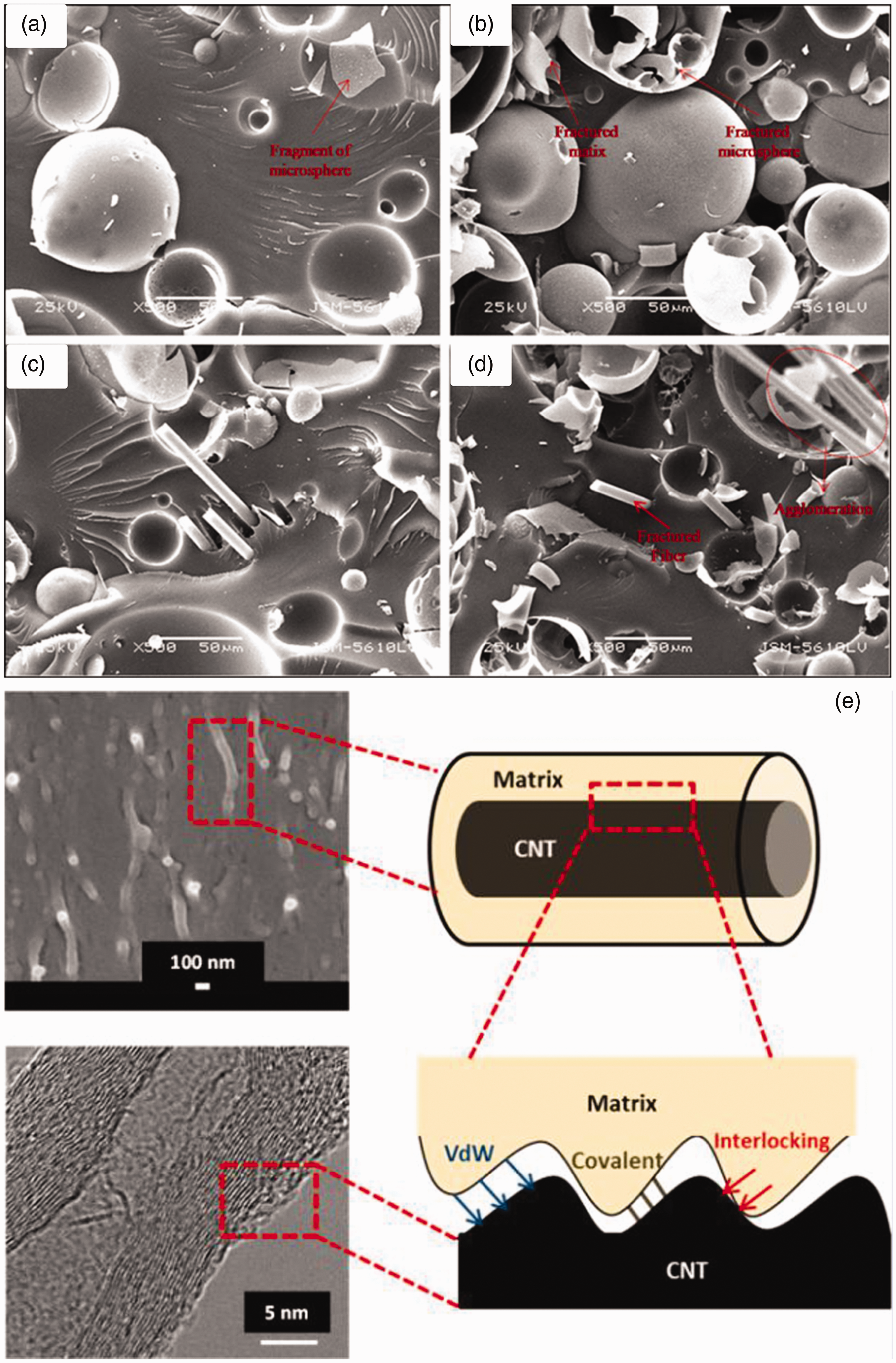

Coal ash could also produce weak interface, which plays an important role in alleviating properties of carbon fiber reinforced polymer concrete composites [107]. The fracture surface and interface region of synthetic foam reinforced with hollow glass microsphere is shown in Figure 6(a) to (d). It has been observed that the second-phase nanoscale dispersion of nanoclay in glass fiber reinforced composites significantly enhanced the damping behavior of hybrid composites [108]. The improvement of damping ratio could be obtained by the synergetic effects of viscoelastic and interface friction due to the incorporation of mica powder in glass fiber reinforced epoxy [109]. Recently, polyetherimide graphene composite has been fabricated via solution processing [110]. The superior energy dissipation capacity enhancements for the composites could be observed with 3.0 wt% loading of graphene nanoplatelet, and the damping factor is three times higher than pristine polyetherimide.
The interest of carbon nanotubes in the application of attenuation fiber reinforced composite is also increasing rapidly. Theoretically, in nanotube-based polymeric composite, the high damping ratio could be obtained by the interfacial friction between the nanotubes and polymer matrix. Carbon nanotube-based composite has excellent damping capacity, which has potential advantages in damping applications [75]. Gardea et al. [111] investigated the energy dissipation mechanisms of carbon nanotube reinforced composites. The results indicated that the friction between carbon nanotubes can significantly improve energy dissipation, especially at large strain conditions. In addition, it has further demonstrated that matrix plasticity and tearing due to misorientation of carbon nanotubes is also a major approach of energy dissipation. Considering the high specific area of carbon nanotubes, it has powerful advantages in the application of damping composites.
DeValve and Pitchumani [112] have experimentally investigated the damping effects of carbon nanotube embedded in the matrix of carbon fiber reinforced composites. The results indicated that the addition of 2 wt% of carbon nanotube into the matrix of carbon fiber reinforced composites could increase the damping ratio. Khan et al. [113] found that the loss modulus of carbon fiber reinforced composites increased with the increase of carbon nanotubes content, which is consistent with the hypothesis theory of sliding at the carbon nanotube–matrix interfacial region. The incorporation of the carbon nanotubes into epoxy resin can increase both storage modulus and loss modulus. The composites modified with carbon nanotubes showed a consistently higher tan δ than the pristine epoxy over the whole temperature range. The difference becoming more pronounced with increasing carbon nanotubes content, which is consistent with the improved energy dissipation observed from the tests. Furthermore, the enhanced damping capacity was achieved without sacrificing the storage modulus.
The damping properties of interface could be tailored by incorporation of nanofillers into the coating of fiber [114]. Integration of uniform and highly oriented array nanostructured particles into fiber surface has been increasingly important in the development of novel functional materials such as photovoltaic devices, wearable electronics, renewable energy systems, and fiber reinforced composites in damping applications. The fabricated composites with the growth of zinc oxide nanowire arrays on nanostructured graded interfacial region, which not only exhibits remarkable high damping enhancement but also stiffness improvement, as presented in Figure 7 [115]. It has been further demonstrated that the properties of fiber reinforced composite could be controlled by tuning the growth morphology of the zinc oxide nanowire. Remarkable enhancement in energy dissipation properties along with improvement in flexural rigidity of the composites was achieved by the novel nanowire-modified interface. The aspect ratio of the zinc oxide nanowires and nanoscale-graded interface significantly affected the damping capacity of the hybrid composites.
(a) Carbon fabric composites and (b) dynamic mechanical analysis [115], (c) and (d) nanowires grown on carbon fiber [116], (e) SEM image, and (f) measured adhesive energy [117]. HOPG: highly oriented pyrolytic graphite; NW: nanowire. Source: (a) and (b), (e) and (f) Copyright 2015, American Chemical Society; (c) and (d) Copyright 2013, American Chemical Society.
It was shown that the interaction between reinforced fiber and nanoparticles plays a critical role in the bonding conditions. The strength of the interface between vertically aligned zinc oxide and carbon fiber was measured with atomic force microscopy [117]. Carbon nanotubes were deposited on the surface of carbon fibers by low-temperature synthesis technique [118]. The results indicated significantly enhanced energy dissipation capacity of 56% compared to the control sample. The interfacial damping could be primarily attributed to the frictional sliding at the grown nanotube/epoxy and carbon fiber/epoxy interface. Gardea et al. [106] fabricated carbon nanotube polystyrene composites with high degree of carbon nanotubes alignment through the combination of twin-screw extrusion and hot drawing. The interfacial slip mechanisms of strain energy dissipation and damping of highly aligned carbon nanotube reinforced polymer composites were studied. The results indicated that carbon nanotube interfacial slip has the potential for damping augmentation in rotary wing structures.
The reported approaches to increase energy dissipation capability in fiber reinforced composites included the incorporation of auxiliary dampers into matrix, such as graphite nanoparticles, inorganic powders, polymer tapes, etc. Furthermore, the damping behavior of fiber reinforced composites could be efficiently enhanced through the addition of nanoparticles into interfacial region. The mechanism could be attributed to the stick sliding of the interfacial region and high shear deformation. Therefore, the incorporation of nanoparticles is an efficient approach for improving damping and would shed bright light in the promising vibration control applications.
Conclusions
In this review, various works have been reviewed concerning the investigations on the damping behavior of composites, including the effects of fiber volume fraction and the energy dissipation capacity of different matrices. Both theoretical and experimental efforts have been reported on the enhancement of damping capacity. Interpenetrating polymer networks have been increasingly taken as the matrix in fiber reinforced composites for vibration control applications. It has been found that fiber orientation and stacking sequence would simultaneously determine damping and stiffness properties. Interface region is also an important component in fiber reinforced composites, and the interfacial modification is being under the spot of interest recently. Recent works concerning interfacial region design to obtain high damping have been gathered in this review, such as fiber surface modification and incorporated fillers. The improvement of damping behavior could be obtained by incorporating high damping materials into the interfacial region with high shear strain. The incorporation of nanofillers is efficient to increase the frictional stick–slip and improve the damping behavior. Thus, interface damping is a promising approach in the limited scope of vibration control and energy dissipation of fiber reinforced composites.
Footnotes
Declaration of conflicting interests
The author(s) declared no potential conflicts of interest with respect to the research, authorship, and/or publication of this article.
Funding
The author(s) disclosed receipt of the following financial support for the research, authorship, and/or publication of this article: This research was supported by the Fundamental Research Funds for the Central Universities (BCZD2018005).