




Abstract
In this paper, a flexible and wearable fabric-based and highly conductive wrist band with portable electrocardiogram (ECG) equipment is presented for the long-term monitoring of ECG signals. The impedance properties, skin irritation, and sensitivity are then investigated using the proposed wrist band. The wrist band was constructed using conductive fabric, a Velcro strap, a metal snap, and a nickel connector. The entire polyester fabric surface was coated with nickel, copper, and gold. The sheet resistance of the conductive fabric is 0.06 Ω/sq. It is appropriate to use a dry fabric electrode for long-term monitoring purposes, rather than a gel-based Ag/AgCl electrode. The proposed system does not require additional active electrodes, and a single-layer standard printed circuit board (PCB) was developed to allow for portable ECG signal acquisition. We measured the impedance as per the frequency change and compared the outcomes with those of Ag/AgCl electrodes. Subsequently, we measured the ECG signal and investigated the possible artifacts caused by motion. The skin-electrode impedance of the wrist band was measured and compared to the Ag/AgCl electrodes, where we found a lower impedance for the wrist band electrodes. In addition, the power spectrum of the biopotential signals obtained from the wrist band electrodes are evaluated and compared to those obtained with Ag/AgCl electrodes for estimating signal quality. The experimental results show that the proposed electrode can successfully acquire an ECG signal from the wrist when the subject is resting and fewer motion artifacts are shown when the subject moves, rendering the proposed electrode comparable with the traditional disposable and gelled Ag/AgCl electrodes.
Introduction
During the past decade, wearable sensors in textile have developed into more than just an expression. Technical research has opened the way to integrate the wearable sensor into textile structures [1–6] that is especially relevant for the healthcare sector, where monitoring of body parameters such as respiration, biopotentials, and body movements are of particular interest. Biopotentials can be categorized into various medical diagnostic procedures such as electrocardiography (ECG), electroencephalography (EEG), electromyography (EMG), and electrooculography (EOG) [6,8,27–35]. The electrodes used in the monitoring of biopotentials are conventional wet electrodes (Ag/AgCl). These electrodes are fitted well onto the skin contour and minimize the impedance of the skin–electrode interface. Since an electrochemical process develops between the gel and the human skin, skin irritation and allergies can occur when these electrodes are used for long-term monitoring. This time-related issue is the main problem regarding the use of these kinds of electrodes. The gel underneath the electrode dries out during prolonged usage periods and it is infeasible to continuously replace the gel, as it can be very irritating for the patients. With chronic use, Ag/AgCl electrodes show signal quality degradation as the electrolyte gel dehydrates. Moreover, toxicological concerns occur regarding electrolyte gels [7–12]. Therefore, to ensure continuous monitoring without harm, dry electrodes made of different materials are used. Researchers are currently developing alternative electrodes that can be used long-term without causing skin irritation. Dry electrodes [7–27] are deemed promising for use in long-term ECG monitoring. Since the electrode does not contain gel, these electrodes are treated as dry electrodes and can be categorized as either contact or non-contact [13–27]. Dry systems suffer from several difficulties since no conductive gel is used. First, the electrode must be carefully designed such that it touches the skin directly. Next, the sensor must be securely attached to the skin in a specific order for the minimization of artifacts and noise. A dry contact electrode is highly sensitive to motion artifacts when the electrode moves because of charge distribution changes in the polarizable electrode interface. Finally, the amplifier circuit must both tolerate a high contact impedance and reject any power line noise. The primary difference between a dry contact electrode and a dry non-contact electrode is that an insulating layer exists between the human skin and the electrode in the latter. The working principle of the dry non-contact electrode is the capacitive coupling between the human skin and the electrode [37–39]. Since direct contact with the body does not occur, gel-related problems such as the development of skin irritation and allergies after prolonged use are eliminated. Textile-based biopotential electrodes are becoming more common because of its flexibility and wearability [2,3,7,8]. Wearable- and textile-based electrodes have been proposed for long-term ECG signal monitoring [12–16,18,20]. Smart textiles have received a lot of attention in research in the last decade for their use in wearable technologies and sensor applications [35,36]. The electrical properties of five textile-based dry electrodes are proposed for ECG monitoring by Tong et al. [35]. The skin-electrode impedance impact on the ECG from using a conductive textile is shown by Bahareh et al. [7], whereby a new method for an ECG reconstruction is also proposed. Screen and stencil printing processes were used for the fabrication of electrode networks on textiles for a variety of human biopotential monitoring applications by Gordon et al. [13,14]. A wearable ECG acquisition system was implemented with a P-FCB-based (Planar-Fashionable Circuit Board) shirt by Jerald et al. [18]. Two versions of the fabric-based active electrodes are presented by Carey et al. [8] for ECG monitoring applications. In Murat et al. [24], a dry conductive textile was prepared by dipping nylon fabric into a reduced graphene oxide (RGO) solution, followed by a thermal treatment that allowed the formation of a conformal coating of conductive graphene layers around the fabric. A flexible, conformable, and gel-free dry electrode that was formed on the conductive textile electrodes for biosignal acquisition is examined by Murat and Jesse [25]. A conductive dry electrode made of polydimethylsiloxane (PDMS) and adhesive PDMS was attached to a hairy scalp for EEG monitoring by Seung et al. [34]. Flexible polymeric dry electrodes for long-term ECG monitoring are examined by Ju et al. [19]. A biopotential acquisition system for portable and ubiquitous healthcare applications using flexible PDMS dry electrodes (FPDEs) and a low-power recording circuit is proposed for ECG monitoring in Chih et al. [9]. In Yong et al. [37], the subjects sat on a chair wearing ordinary clothes while the ECG measurements were undertaken without the need for any direct conductive contact with the skin; here, the measurements were made using electrodes that were attached to the back of a chair. High-input impedance amplifiers were mounted on the electrodes and a large ground plane was placed on the chair seat. A capacitive-coupled ECG measurement system, for which conductive textiles that have been placed on a bed are used for long-term healthcare monitoring is proposed by Hong et al. [15]. In Danilo et al. [11], conductive PEDOT:PSS-based textile electrodes were fabricated for wearable ECG monitoring systems. In Philippe et al. [29], a system that monitors two of the most vital physiological parameters is integrated in a wearable textile garment. Of the different types of electrodes, most of the dry electrodes have received a considerable amount of interest because of their electrical and mechanical properties. In general, the different types of electrodes are made from various materials that are readily available in the market. Even though portable biopotential monitoring systems are available, long-distance personal healthcare applications have received an increasing amount of attention from researchers in recent years. Telemedicine and web-based health monitoring have attracted much attention from researchers owing to their universality. Furthermore, cardiac patients can check their signals from a smart phone using Bluetooth communications. Biopotential signals can also be monitored without attaching sensors to the surface of the body, and this is referred to as non-contact ECG. A non-contact ECG measurement was proposed with a subject wearing ordinary clothes while sitting on a chair [38]. However, the impedance between the skin and the non-contact electrodes is very high as a result of the insulation. Therefore, a high input impedance amplifier is required to amplify the ECG signals. Hence, an additional active electrode is required to obtain the original ECG signal. To improve the signal quality of the ECG, the signal is to be purified using an additional hardware-based filter. Therefore, it is necessary to provide a large amount of power to operate the device. Capacitive measurements of an ECG signal have been reviewed for use in mobile healthcare [37,38]. Based on the discussion above, a dry electrode is very promising for use in long-term biosignal monitoring. A lot of research has been performed for long-term ECG monitoring applications; further, user-friendly and portable ECG monitoring devices have been recently studied in the literature. Some published research papers have addressed the portability of such systems. However, little effort has been undertaken to analyze the issues related to the user-friendliness and portability. In this paper, a conductive-fabric-based portable ECG signal monitoring system is proposed, because conductive-fabric-based electrodes are capable of collecting ECG with accuracy comparable to the accuracy of the signal collected by gel electrodes. Moreover, conductive-fabric-based electrodes do not require skin preparation. Therefore, they are a good choice for biomedical applications. In the experiments, the obtained ECG signals were compared with signals obtained using gel Ag/AgCl electrodes. The proposed electrode is user-friendly and can be used without any subject preparation. The proposed electrode shows promise for long-term and stable ECG signal-monitoring applications.
System architecture
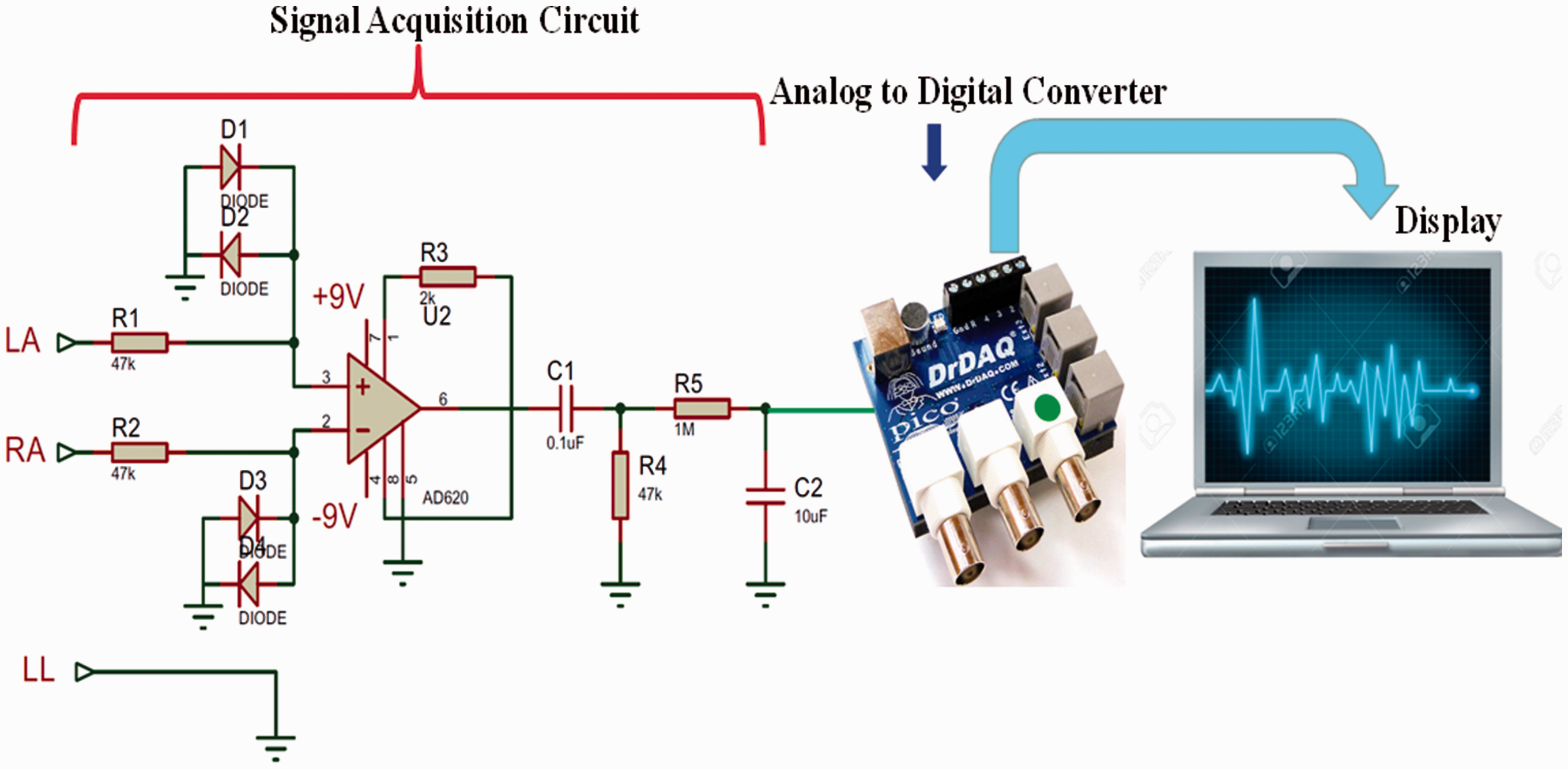
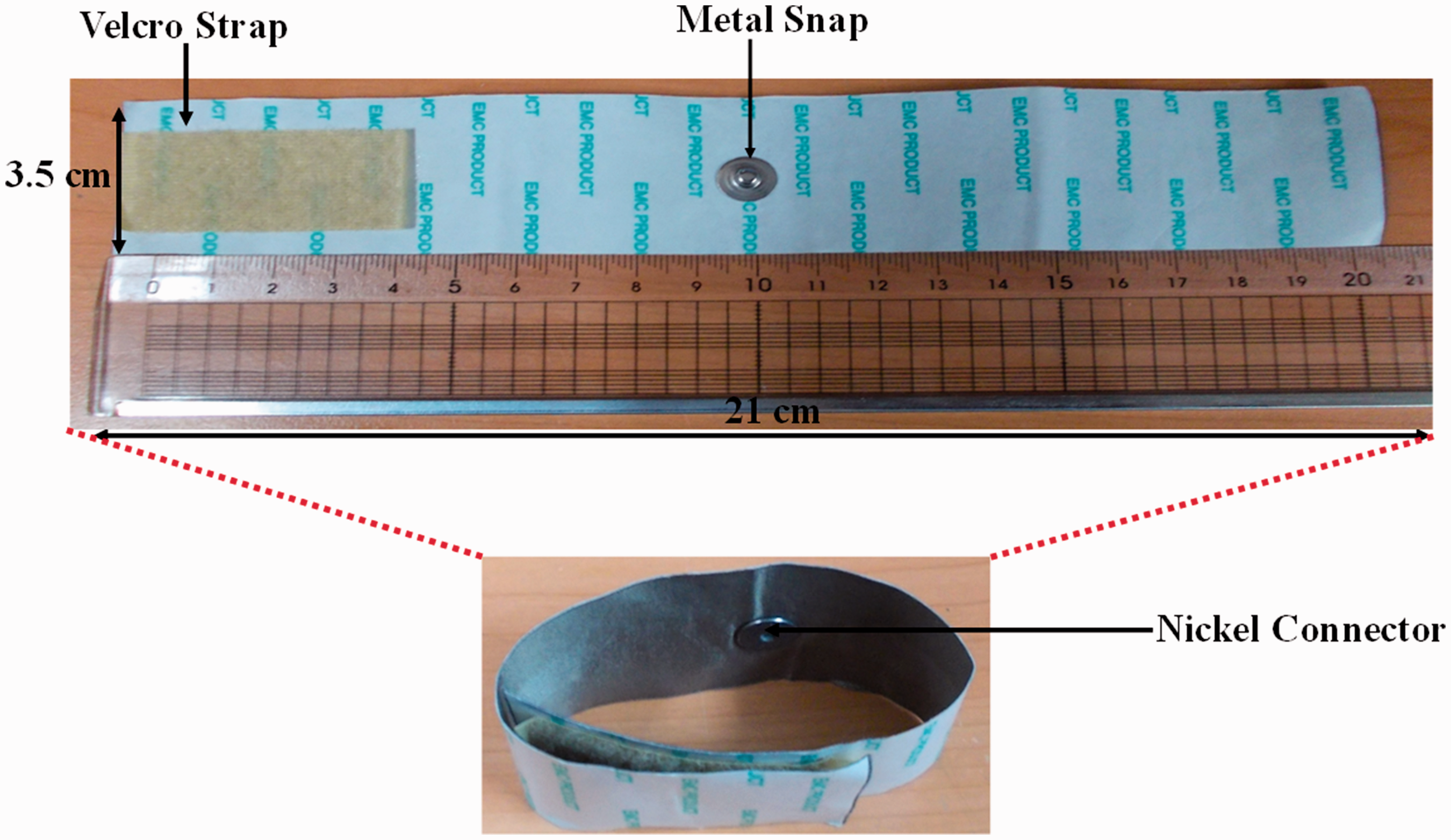
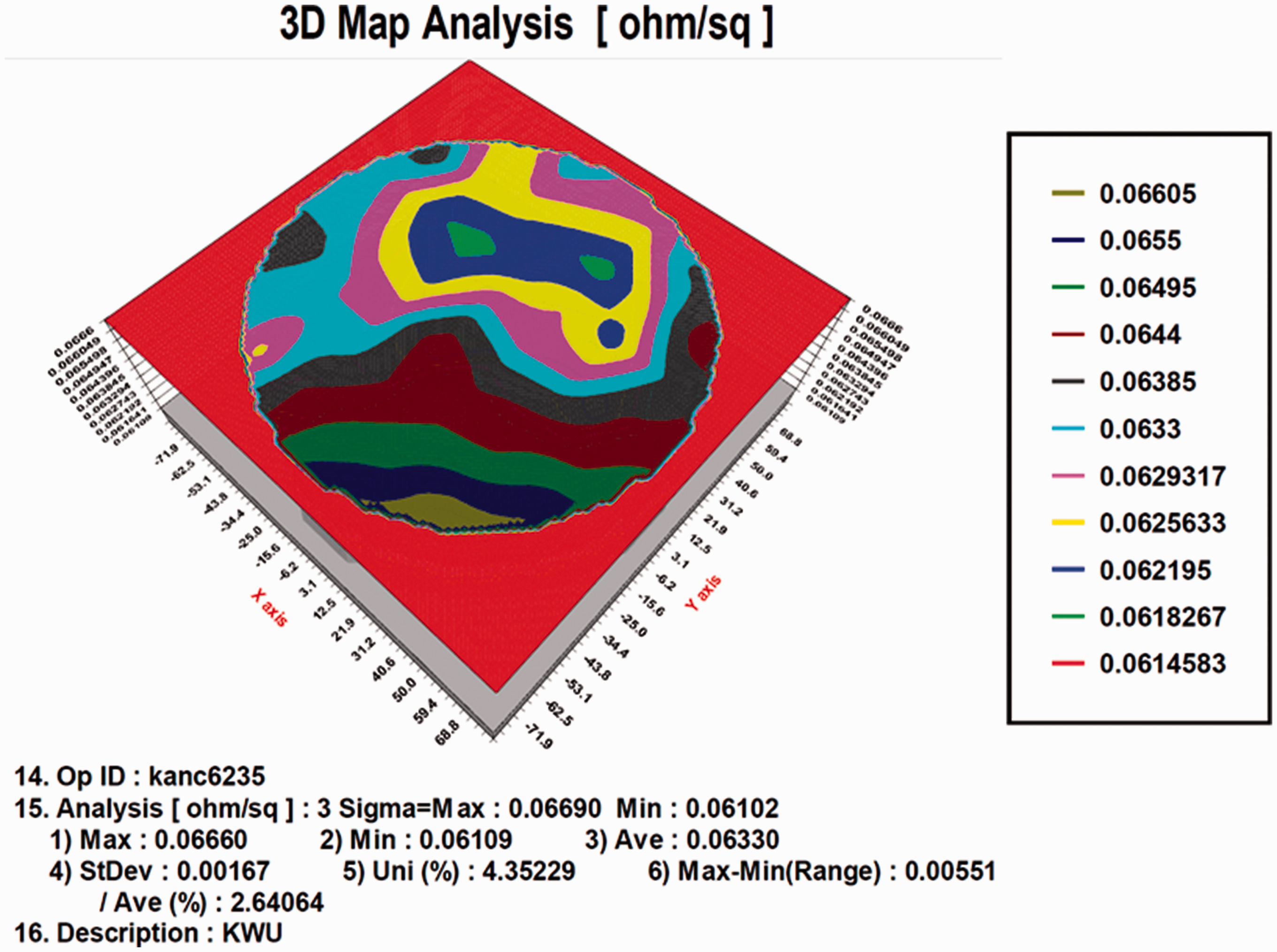
The proposed conductive-fabric-based wearable ECG monitoring system is shown in Figure 1, which is composed of a wrist band, an ECG data acquisition circuit, and a digital filter. Two wrist bands are used for signal acquisition from the hand, and one is used on the left leg as shown in Figure 1. Since the sensors are used for long-term monitoring, a high-capacity battery has to be provided to ensure that the sensors do not need to be changed often. A driven right leg (DRL) requires the use of a battery, which results in a system that is inconvenient and large. Nevertheless, the main goal of our study is to maintain a system with the smallest possible size. Furthermore, it is inconvenient to increase the total size of the system to monitor the regular heart signal of a patient. Many researchers have used active electrodes to achieve impedance matching with the skin electrode. However, active electrodes also require cumbersome wires, which make the system rather inconvenient. The complete ECG monitoring circuit includes an instrumentation amplifier with a low-pass and high-pass filter and the analog-to-digital converter (ADC) that is shown in Figure 2. The wrist band was made using a commercial, highly conductive fabric that can be easily placed on the hand for the monitoring of long-term ECG signals. The length and width of the proposed wrist band are 21 cm and 3.5 cm, respectively, as shown in Figure 3. The wrist band is a small piece of fabric that is composed of a Velcro strap, a metal snap, and a nickel connector as shown in Figure 3. The woven conductive fabric was bought from DOOSUNG, Product name: Conductive Fabric (P/N: IDF-GF), Korea [39], which was chosen in consideration of its conductivity, durability, weight, elasticity, and sensor suitability. The thickness of the conductive fabric is 0.05 mm. The sheet resistance of the conductive fabric was analyzed using a standard four-point probe (CMT-SR2000N, Advanced Instrument Technology), which is shown in Figure 4. The sheet resistance ranges between 0.0614583 Ω/sq and 0.06605 Ω/sq and the average value is 0.06330 Ω/sq. Measuring the average sheet resistance using 3D map analysis is a more precise method that ensures the dry electrode electrical properties. If the average sheet resistance is low, then the conductivity will be high, which can result in a low skin-electrode contact impedance. Since the conductive fabric is flexible and soft, the sheet resistance of the conductive fabric was measured on different locations to verify the sheet resistance variation. If the difference in sheet resistance is large from one measuring point to another, it implies that the thickness of the material is not uniform. We found the uniform thickness of the conductive fabric as shown in Figure 4. The schematic of woven conductive fabric is shown in Figure 5(a). At first, nickel plating (0.15 Ω/sq) was applied to a bundle of polyester fibres. Then the copper (0.21mΩ/sq) and gold (15 mΩ/sq) were plated on the bundle of polyester fibres. Several methods such as woven, sewing, knitting embroidery, printing, and deposition are available for making conductive fabrics. However, woven method was used in this case for making the conductive fabric. The woven polyester fibers were found to be fully covered with nickel, copper, and gold, which is shown in Figure 5(b). In order to investigate the formation of metal layers on the polyester fibres, we obtained the Field Emission-Scanning Electron Microscope (FE-SEM) (FEI, Quanta 250 FEG) images of the conductive fabric cross section, which is shown in Figure 5(c) to (e). Although this version of the ECG-monitoring system is implemented on a separate PCB board, future versions will be directly integrated on the conductive fabric. The wrist band allows free bending and the close attachment to the skin, such that a subject will feel comfortable during monitoring in everyday life. The ECG-monitoring circuit is connected to the wrist band, and the ECG data are captured and stored. The output of the biopotential electrode feeds the main board for amplification, which is carried out using the instrumentation amplifier AD620, an initial high-pass and low-pass filtering stage. The AD620 is a high-precision, low-noise instrumentation amplifier that was specifically designed for use with low-level transducers. To produce a portable system, a single-layer printed circuit board (PCB) was developed to acquire the ECG signal. The output signal of the initial filter is converted into digital signals by a low-power USB DrDAQ that operates with a maximum 12-bit resolution.
Proposed wrist band ECG sensor for which conductive fabric is used. ECG signal acquisition circuit and analog-to-digital converter. Conductive fabric-based wrist band. 3D sheet-resistance map analysis of the conductive fabric using four-point probe station (CMT-SR2000N, Advanced Instrument Technology). (a) Schematic diagram of the woven conductive fabric. The inset showing the cross-sectional view of a bundle of polyester fibres with different layers. (b) FE-SEM image of the side view of the conductive fabric. (c) to (e) FE-SEM images of the cross-section of the conductive fabric in different scale.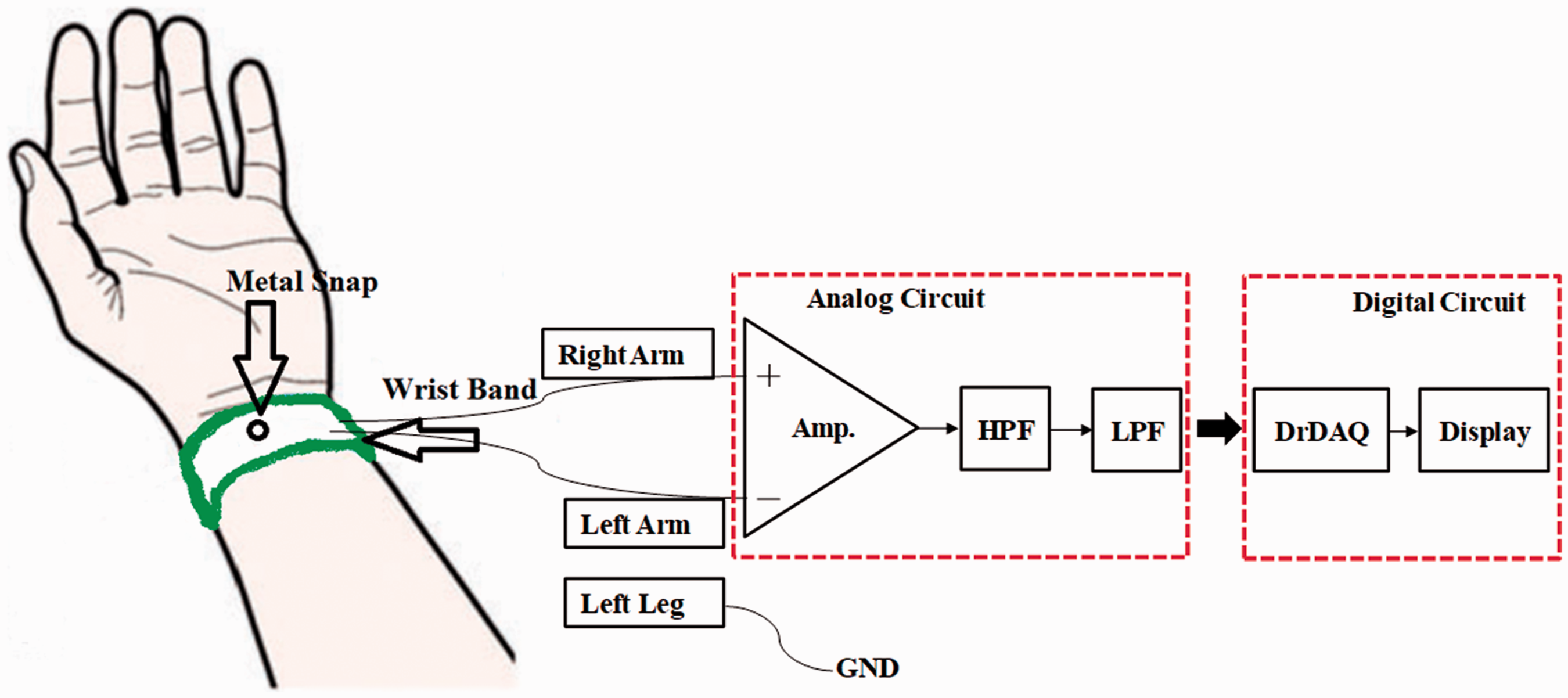

Measuring skin irritation and impedance of wrist band
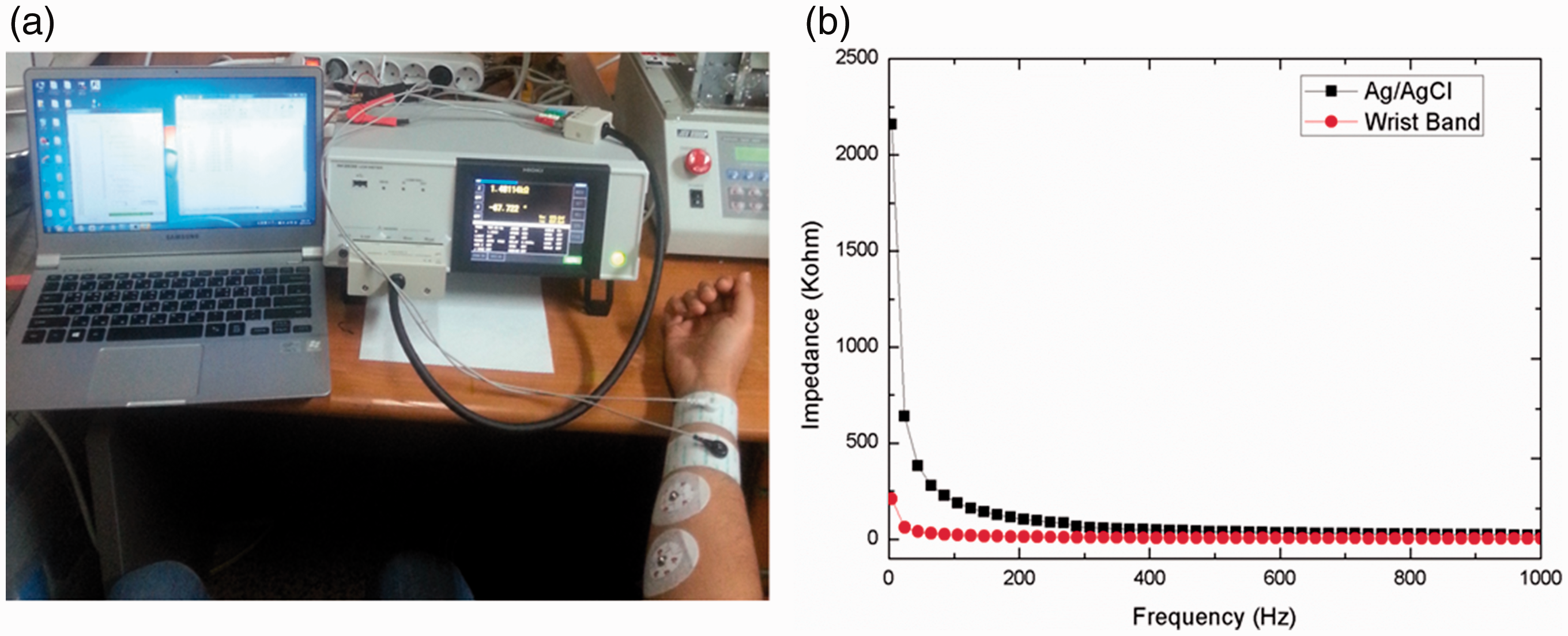
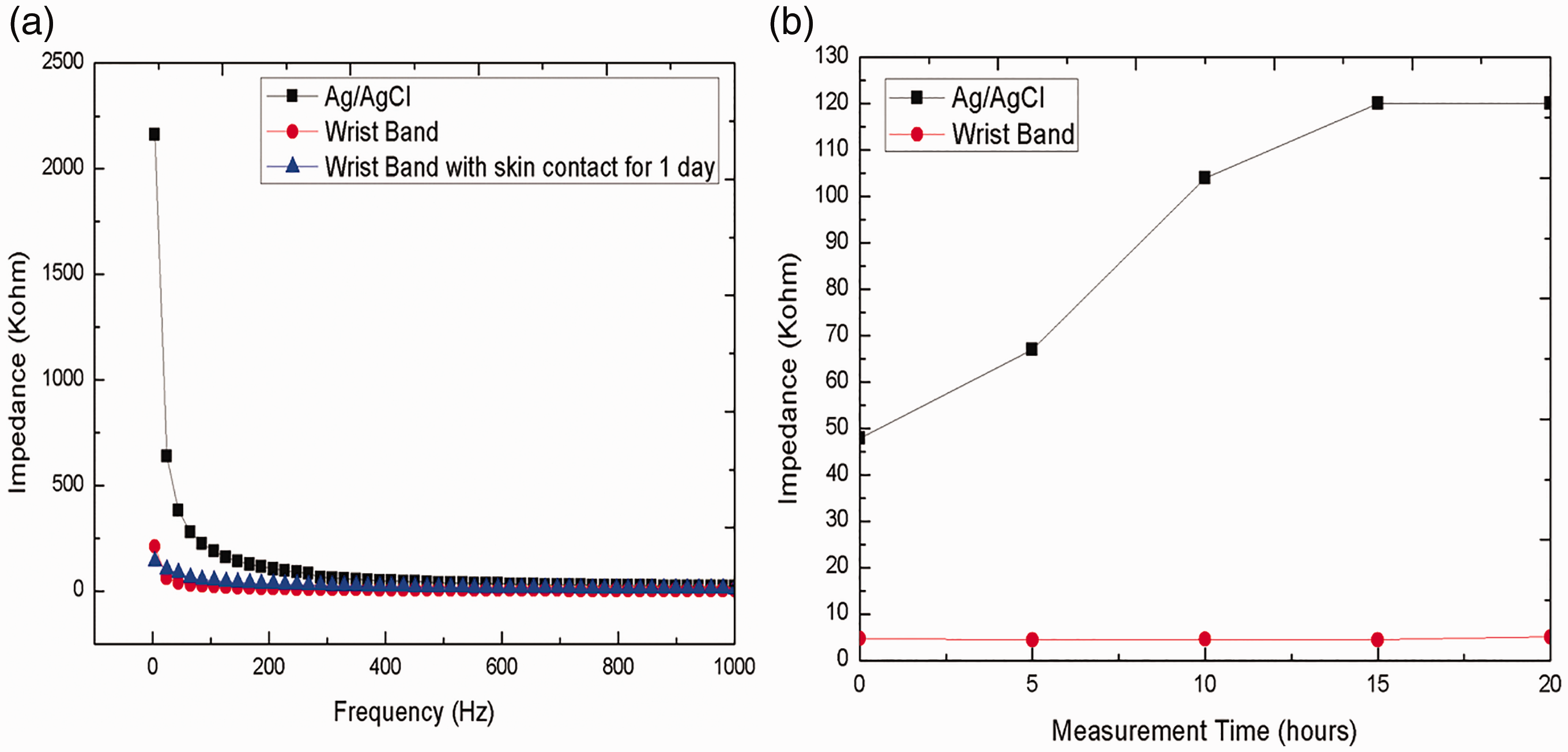
The primary problem of conventional ECG measurements is the lack of long-term usability, which means that monitoring is performed only for a short amount of time. Such systems are not suitable for long-term daily-life ECG monitoring because the impedance of the skin electrode degrades when the gel dries. Many studies have developed alternative monitoring systems that can overcome this problem. If the impedance is too high, then the ECG signal deteriorates, resulting in a small signal-to-noise ratio. The setup of the skin-electrode impedance measurement test is shown in Figure 6. The impedances versus the frequencies of the wrist band and the wet electrodes were measured from 4 Hz to 1 kHz, as shown in Figure 7(a) and (b). Figure 8(a) illustrates the impedance-test results of the Ag/AgCl, the wrist band, and the wrist band with skin contact for 1 day. For the measurement of the impedances of the wrist band and the wet electrode, a precision LCR meter (inductance (L), capacitance (C), and resistance (R)) (HIOKI IM 3536) was used. The LCR meter can support the impedance measurements of two terminal components including capacitors, inductors, and resistors; therefore, it was suitable for the measurement of the electrode impedances. The Ag/AgCl and the proposed wrist band were both placed on the subject’s wrist. The impedances were recorded between each pair of electrodes according to the frequency change from 4 Hz to 1 kHz. We performed five successive experiments in this study to prove both the long-term stability of the band, and the impedance value of the wrist band is similar to that of the Ag/AgCl for the high-frequency band. Figure 8(b) shows the significant impedance variations in both the Ag/AgCl and the dry electrodes for a long-term test (20 h) at 1 kHz with a five-time measurement. The Ag/AgCl impedance becomes high after a lengthy usage duration because the conductive gel is drying during this period. However, a variation in the wrist band impedance does not occur during that period, thereby proving the reliability of the proposed wrist band structure for ECG signal monitoring. To investigate the skin reaction, the wrist band and Ag/AgCl electrodes were attached on the wrist for three days with scotch tape. The skin under the Ag/AgCl electrode turned red because of the gel as shown Figure 9(a). On the contrary, no skin irritation or itchiness occurred under the wrist band as shown in Figure 9(b). These experimental results indicate that the wrist-band electrode is flexible and wearable for long-term ECG measurement. To further evaluate and compare the performance of the estimated power spectral density (PSD) of the wrist band and the Ag/AgCl electrodes, the PSD of the recorded ECG signals were estimated using the Blackman window. Figures 10 and 11 show the PSD of the ECG signals from the two electrodes before and after filtering, respectively. Similar frequency response curves are observed for the two electrode types in Figure 11, which indicate that the wrist band performs closely to the Ag/AgCl electrode. Figure 11 clearly shows that the 60 Hz noise is removed using the finite impulse response (FIR) filter, which does not interfere the ECG content. The images of the ECG experiment are shown in Figure 12. The use of dry electrodes has been proposed to reduce skin irritation and to achieve unconstrained monitoring. Therefore, because of its flexibility, dry wrist band electrodes are considered as a unique solution to acquire ECG signals without using a conductive gel. Many studies have proposed various methods for ambulatory ECG measurements with dry electrodes; as a result, a flexible wrist band based on a conductive fabric has been developed in this study to produce a robust design that is small sized and minimizes motion artifacts. To abate noise caused by motion artifacts, the sensors should be tightly attached. Since the electrodes are on the skin of the subject’s hand, the subject of comfort is not of concern since the surface of the proposed electrode is smooth enough to easily fit well over the skin.
Skin-electrode contact impedance measurements setup. (a) Image of impedance measurement test; (b) Impedance characteristics comparison of conventional Ag/AgCl electrode and fabricated wrist band. (a) Impedance-test results of Ag/AgCl, wrist band, and wrist band with skin contact for 1 day; (b) Long-term impedance-test result of Ag/AgCl and wrist band. Ag/AgCl and wrist band electrodes attached to the forearms of one subject for 3 days: (a) Ag/AgCl and (b) wrist band. Estimated power spectral density (PSD) of wrist band and Ag/AgCl before filtering using Matlab. Estimated power spectral density (PSD) of wrist band and Ag/AgCl after filtering using Matlab. ECG experimental setup showing the wrist band.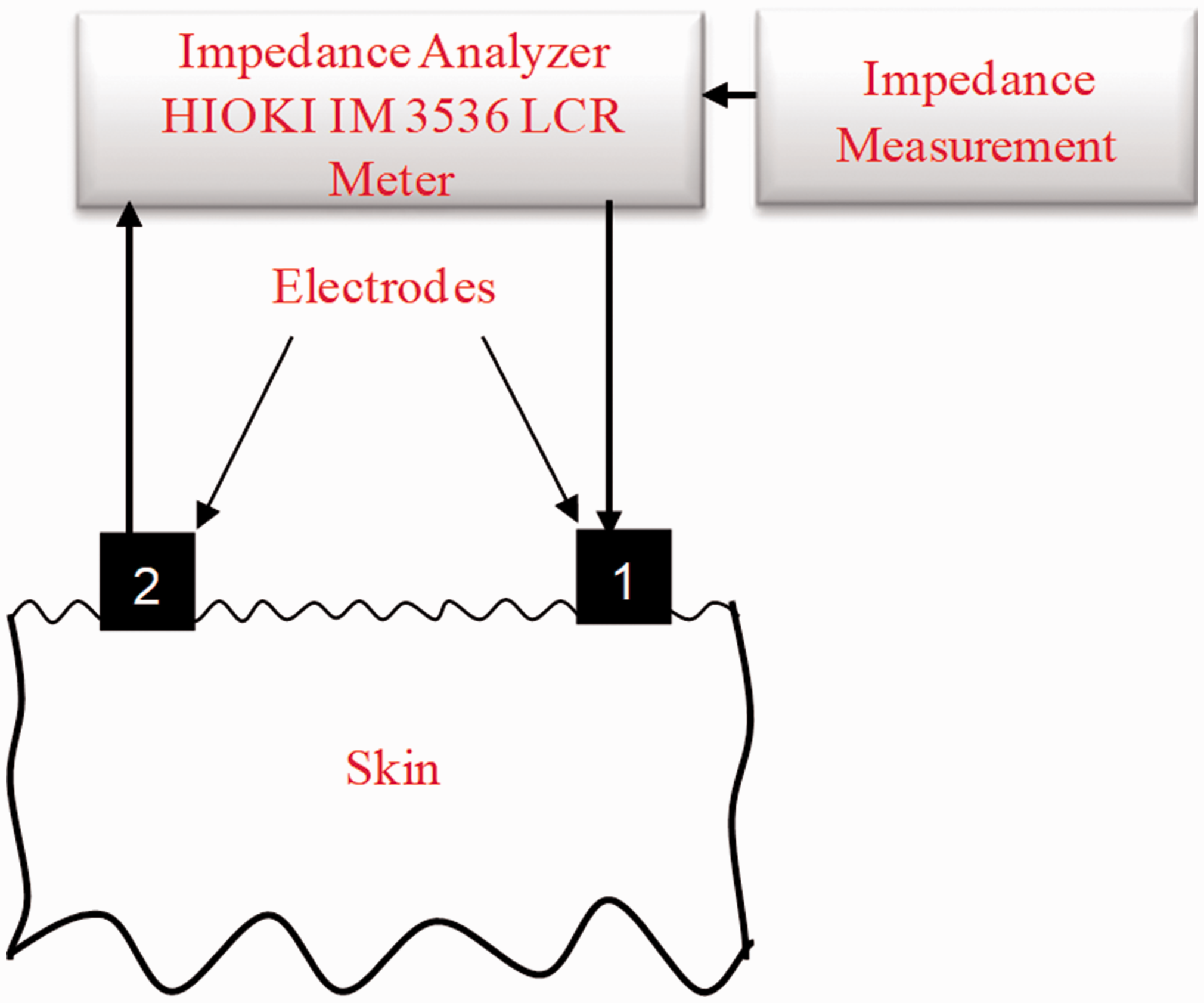


Experimental results
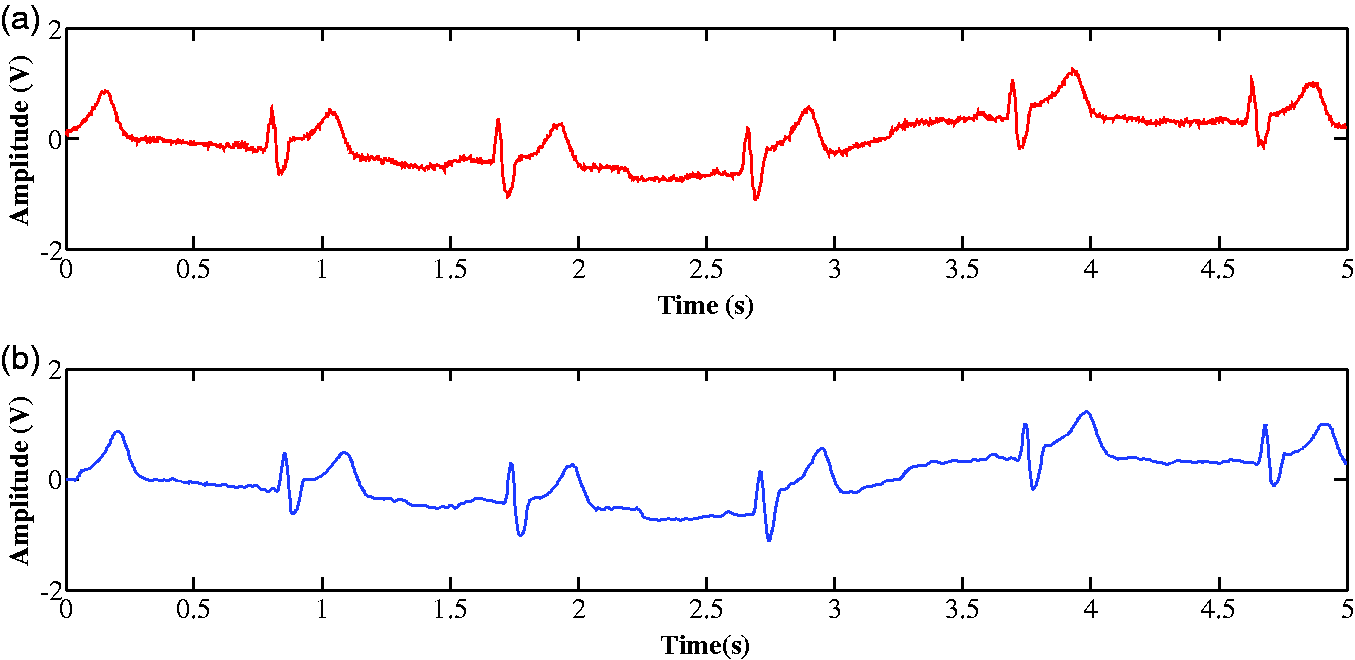
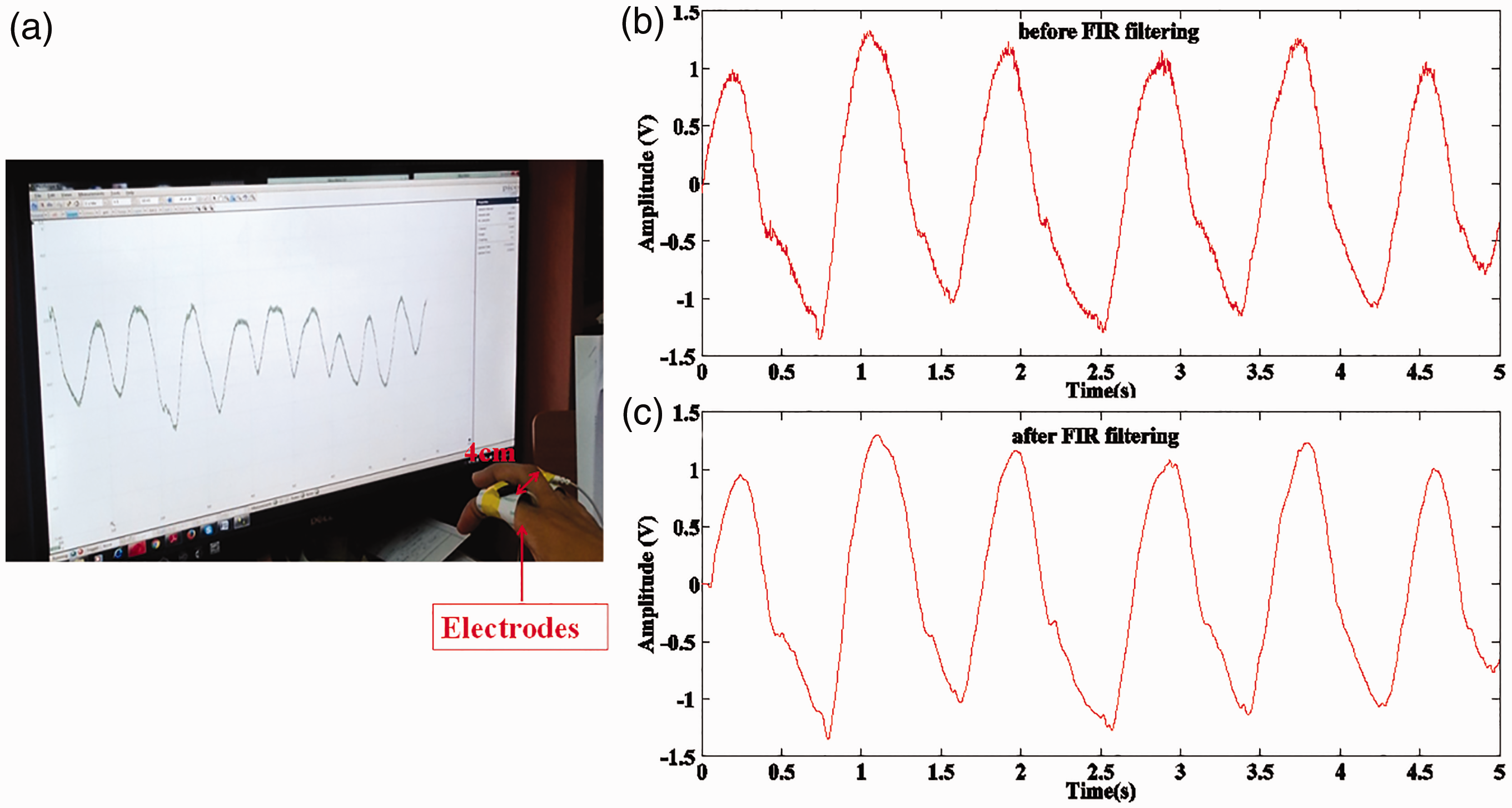
We measured the ECG signals from a healthy subject who was 28 years old and never suffered from cardiovascular diseases. Using the wrist band electrodes and the Ag/AgCl electrodes without a FIR filter, the measured signal results are illustrated in Figure 13. Figure 14 shows the ECG signal that was obtained using the wrist band and the Ag/AgCl after an FIR filtering process. In the comparison with the ECG signals of the wrist band and the Ag/AgCl electrodes, we did not discover any significant differences between the two signals. The P, QRS, and T waves all appeared clearly, and the waveform of the ECG signal from the wrist-band electrode is almost similar to that from the Ag/AgCl electrode. We investigated the motion effects using the “walking slowly, moving hand rapidly” test, whereby we measured the signals under both of the seated statuses. Figure 14(a) to (c) illustrates the ECG signals of the Ag/AgCl electrode, and Figure 14(d) to (f) shows the wrist-band electrode under the “seated, moving hand rapidly,” and the “walking slowly” statuses; both signals are stable and are almost the same. The effect of the motion artifact on the ECG signal of the wrist-band electrode is greater than that on the ECG signal of the Ag/AgCl electrode; however, the R-wave is sufficiently detectable. The reason for this larger motion artifact is, in part, due to the high impedance of the dry electrode, while other reasons might include the movement of the wrist band away from the skin; this connecting area was shaken during the moving period. All of the acquired signals were processed after an FIR filtering process using Matlab. To investigate the performance of the device from moisture effects, the ECG signal was obtained after running such that the sweat from the skin could act as the electrolyte as shown in Figure 15. Sweat reduces the skin-electrode contact impedance. Owing to low skin-electrode contact impedance, the obtained ECG signal was less noisy than the seated condition as shown in Figure 15. We further investigated the sensitivity of the flexible conductive fabric for human motion detection (Jain et al. [33]), which has attracted extensive interest for robots and wearable electronic devices as shown in Figure 16(a). The electrodes were attached and wrapped on a finger using scotch tape. The signal was obtained when the muscle fiber on the index finger was bent, as shown in Figure 16(b) and (c). The attached sensor responded rapidly and repeatedly, as the finger goes upward and downward. The results indicate that the sensors are highly sensitive in monitoring human body motions. The sensors are suitable for human–machine interface applications. Table 1 shows the comparison of the characteristics with other related research works using various materials. Although the proposed wrist band was developed using a simple and low cost fabrication method, it exhibited good performance in comparison with other electrodes previously reported.
ECG recordings of Ag/AgCl wet electrode and wrist band dry electrode while subject was (a) and (d) seated; (b) and (e) moving hand rapidly and (c) and (f) walking slowly before FIR filtering process. ECG recordings of Ag/AgCl wet electrode and wrist band dry electrode while subject was (a) and (d) seated; (b) and (e) moving hand rapidly; and (c) and (f) walking slowly after FIR filtering process. ECG recordings of wrist band dry electrode after running for analyzing the impact of sweat before and after FIR filtering process. (a) Wrist Band - After Running (Without FIR), (b) Wrist Band - After Running (With FIR). Signal responses via human index finger (a) photographs of a wearable conductive fabric attached onto fingers for monitoring human motion, (b) and (c) recorded signal after moving human index finger. Characteristics comparison with other various textile-based electrodes.


Conclusions
In this paper, a wearable sensor is proposed for ECG monitoring. The aim of this paper is to investigate the performance of the wrist-band-based ECG sensor. When developing a wearable sensor, user comfort, usability, and stability should be considered for long-term monitoring to ensure the reliability of the acquired signals. The developed wrist band is versatile, with this paper showing that it is suitable for ECG measurements. Further, unlike the conventional wet electrode, it is free from the skin-irritation problems, rendering it suitable for long-term monitoring. The results of the experiments indicate that the proposed sensor is user-friendly and can be used without additional preparation by the subjects. The average sheet resistance of wrist band is 0.06330 Ω/sq and the skin-contact impedance at 20 Hz is ∼250 KΩ. The wearable wrist band provides high electrical performance, in addition to being flexible, biocompatible, and wearable. The wearable wrist band of this study for which conductive fabrics were employed can be used for a variety of biopotential monitoring applications over a very long period. Although the wrist band had slight baseline shifts when the object was in motion, it is appealing for the fabrication of long-term wearable multiuse platforms owing to the nonexistence of electrode dehydration and skin-related issues. In addition, the project can be further developed in the future by adding heart rate variability analysis and wireless ECG signal transmission. Therefore, the proposed touch sensor shows promise for use in long-term and stable biopotential monitoring applications.
Footnotes
Acknowledgements
The authors are grateful to the MiNDaP group members of the Kwangwoon University for their technical discussion and support.
Declaration of conflicting interests
The author(s) declared no potential conflicts of interest with respect to the research, authorship, and/or publication of this article.
Funding
The author(s) disclosed receipt of the following financial support for the research, authorship, and/or publication of this article: This research was supported by the Bio & Medical Technology Development Program of the NRF funded by the Korean government, MSIP (2017M3A9F1031270), and the Technology Innovation Program (10065696) funded by the Ministry of Trade, Industry & Energy (MI, Korea).