




Abstract
In this study, the influence of a new surface treatment of the textiles to reinforce concrete materials has been investigated. The short polyvinyl-alcohol fibers were attached to the textile surface to achieve a fluffy textile. The flexural and peel tests were employed to study the effectiveness of the surface treatment on the carbon textile. As a result, the applied treatment considerably improved the bond properties between the textile and cement matrix up to 43%, and enhanced load-bearing capacity of textile-reinforced cementitious composites by up to 56%.
Introduction
Textile-reinforced concrete (TRC) is a new kind of fiber-reinforced cementitious composites (FRCCs) consisting of a finely grained cement-based matrix. The textiles, including continuous multifilament yarns made of alkali-resistant (AR) glass, carbon, or polymer are used in TRC materials [1]. The TRC structures have major advantages in comparison with other concrete materials reinforced with steel or randomly dispersed short fibers such as higher tensile strength, excellent ductility and no risk of corrosion [2].
TRCs have many advantages over FRCCs, because only a limited amount of short discrete fibers can be added to the cementitious materials due to clustering effect and uneven distribution of fibers in mixture [3]. Textile reinforcement provides higher amount of fibers contained in cementitious materials compared to ordinary FRCCs and shows better bonding to cement-based materials because of the interlocking of textiles net and hydrated cement matrix [4].
These materials due to their excellent properties can be used for applications in load-bearing structural members such as structural panels, impact and blast-resistance structures, repair and retrofit and strengthening of unreinforced masonry walls [5].
Despite its favorable stress–strain behavior, TRC exhibits undesirable wide cracks at high deformation. Introducing short fiber in the cement matrix can help to bridge the micro-cracks and inhibit the growth during crack formation phase. Randomly dispersed short fibers increase the stiffness and the load-bearing capacity of composite compared to the mere TRC due to the effective increase in the reinforcement ratio [6]. Addition of short fibers has been used for further improvement in the various properties of the TRC [7]. The composites obtained by two or more different kinds of fibers are termed as hybrid composites [8,9]. These composites exhibit better properties than composites containing only mono type fiber.
Since the matrix cannot penetrate into the bundle of the filaments of textile used in TRC, the outer filaments only have the capability to create bonding with surrounding matrix [10]. The textile tows consist of thousands of filaments which can limit matrix penetration. The mechanical properties of TRC depend not only on its components, but also on the bond quality between textile and cementitious matrix [11]. Many attempts have been made to increase the bonding strength of textiles to cementitious matrix using surface treatment [12,13]. Yin et al. [14]. investigated the influence of textile treatment with resin impregnation on mechanical performance of TRC. It was reported that applying sand on the resin-impregnated textile can enhance the bond between the two and the cement matrix [15].
The geometry and chemical structure of the fiber influence the bonding of the fibers to cementitious materials. Fibers with different shapes and chemical properties can be produced and used as reinforcement [16–18]. Fiber/cement matrix bonding has a direct effect on the mechanical performance of composites by the resistance to crack opening and to crack propagation under loading [17].
In this study, the effect of a new surface treatment on textile for the TRC is investigated using the three-point bending and peel test. The surface treatment was employed to enhance bond between textile and cementitious matrix. The carbon textile was used to reinforce a fine aggregate cementitious matrix. Engineering cementitious composite (ECC) matrix was used as fine aggregate cement matrix. ECC is a new kind of high-performance fiber-reinforced cementitious composites (HPFRCCs) which exhibits strain-hardening behavior under tensile or bending loading accompanied by multiple cracking [19]. This behavior results in higher strength and tensile ductility of composite [20]. The tensile strain capacity of ECCs is more than 2% and shows the averaged tight crack width development about 60 µm even when strained to beyond 1% [21]. In this research, the advantages of both TRC and ECC are combined for producing high-strength materials with improved load-bearing capacity.
Experimental
Materials
Cementitious matrix composition
The mix design of engineered cementitious composite proportion by weight.

HRWR, High-range Water Reducers.
High range water reducer.
Fibers and textile
Physical and mechanical characteristics of PVA fibers.

The textile used for the production of TRC composites was a unidirectional carbon fabric with a mesh size between tows up to 2 mm in the warp direction (Figure 1). The carbon tows were made up of 12,000 (12 K) filaments with a linear density of 800 Tex (Tex = grams/1000 m of yarn). The properties of carbon fiber and fabric are given in Tables 3 and 4, respectively.
Carbon textile. Physical and mechanical properties of the carbon tows. Physical and mechanical properties of carbon fabric.


Methods
Treatment of carbon textile
In order to improve the performance, carbon textiles have been treated using short PVA fiber to achieve fluffy surface. To perform this treatment, a carbon textile with higher fabric density was used. At first, the adhesive (an epoxy resin) was sprayed on the carbon textiles. Then the short PVA fiber with a cut length of 6 mm was scattered on its surface before hardening of the adhesive. The PVA short fibers were tightly attached to the surface of textiles and a fluffy cloth was produced, as illustrated in Figure 2. The weight of short fibers attached to the textile was approximately 10 g. This method was employed to enhance the bonding strength between textile and cementitious matrix.
Carbon textile impregnated with short PVA fiber.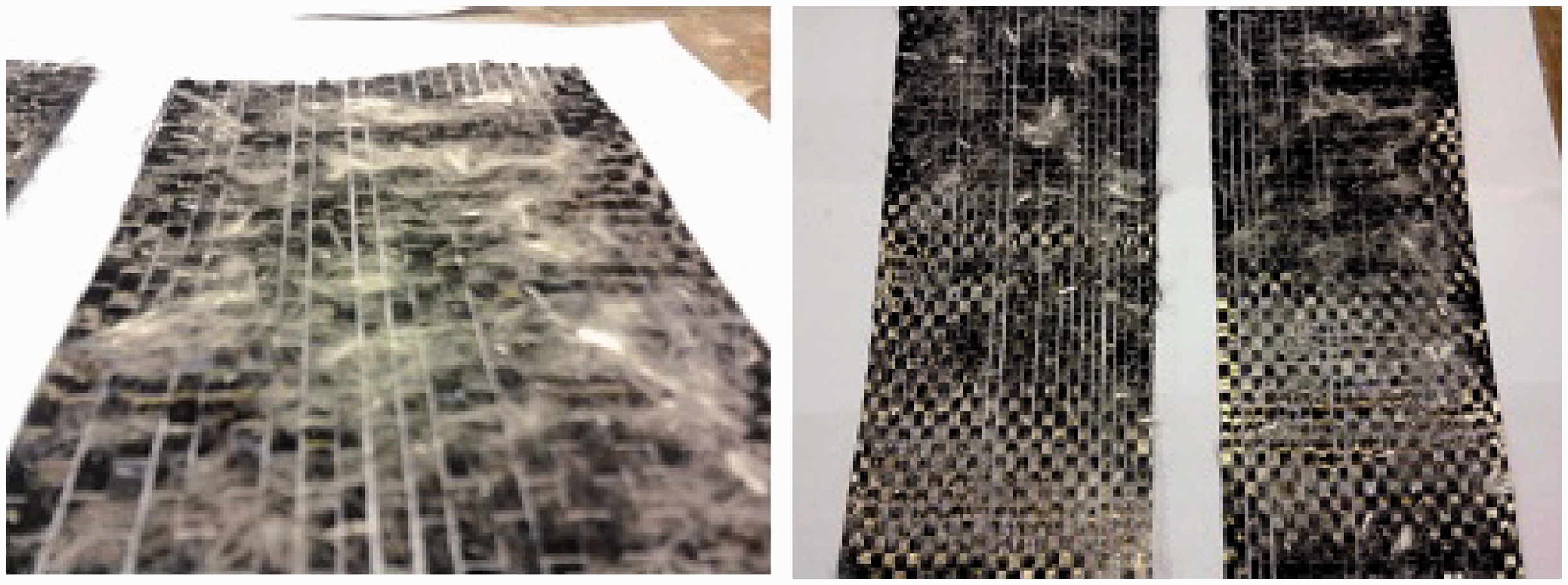
Production of test specimens
In this study, three sets of TRC samples were produced, as follows:
TRC containing two layers of untreated carbon textile (Control-TRC) TRC containing two layers of untreated carbon textile and short PVA fibers added to matrix (Hyb-TRC) TRC containing two layers of treated carbon textile (fluffy surface) and short fibers added to matrix (Hyb-TTRC)
All TRC samples were produced with the so-called laminating technique. Two layers of carbon textiles were used for casting laminates horizontally. To produce laminates, at first a thin matrix layer was spread on the bottom of the mold. Then the first sheet of carbon textile was laid onto this fresh matrix layer and pressure was applied partially for smoothening of layer. Another layer of matrix was poured onto the mold, and subsequently another carbon textile was placed on the matrix. Finally, a thin layer of cement matrix with the same thickness to the first layer of matrix was spread on the second textile. The dimension of specimen was 300 mm×100 mm×25 mm. The weight percent of carbon textiles in composite was 0.37%. TRC specimens were demolded after 48 h and were immersed in water for 27 days.
Flexural strength test
Flexural behavior of TRC samples was investigated using a three-point bending test by a SANTAM Universal testing Instrument. The test was performed under displacement control at a constant rate of 0.083 mm/s. The span length of the flexural loading was 250 mm. During the flexural test, load and mid-span deflection were recorded. The average results of three specimen flexural tests are reported.
Peel test
To study the effect of textile’s fluffy treatment on its bonding quality to the matrix, the common 90° peel test similar to ASTM D6862–11 was used. This test can be used to study of textile bonding strength to the concrete surfaces [22]. Specimens for bond test were prepared by casting 40 mm×40 mm concrete blocks directly on top of textile specimens.
The schematic of peel test for carbon textile is shown in Figure 3. In this test, the carbon textile bonded to the cementitious matrix is pulled away from it at a controlled rate of cross head speed [23]. Samples are tested in the same condition. The load and the length of textile over which debonding occurred (peel separation) were recorded during the test. Three specimens were tested using tensile testing instrument (SANTAM) and the average results were reported.
Schematic description of peel test.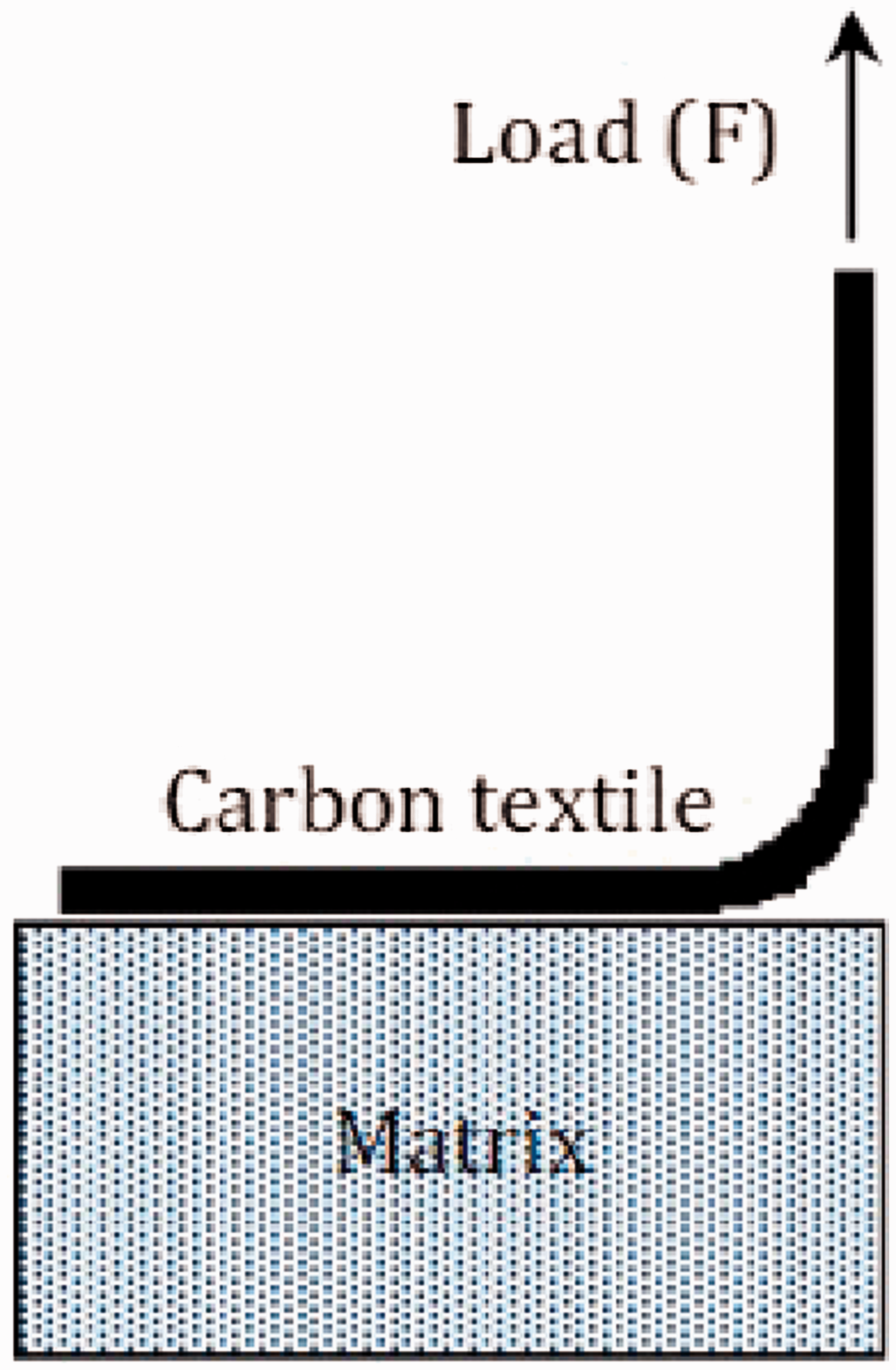
Results and discussion
Flexural test results
Effect of short fiber addition to TRC
The flowability of cementitious matrix is an issue which could be influenced by incorporation of short PVA fibers to the mix. The decrease in the flowability can reduce the matrix penetration into the opening between yarns in the carbon textiles causing reduction in the mechanical properties of TRC. Also, the larger quantities of short fibers added to matrix resulted in trapped air because of the growing deterioration of the mix workability [6]. To avoid these problems and to increase the first cracking strength of TRC, an appropriate fiber volume fraction is required. Therefore, the optimum PVA fiber content was chosen to be 0.5% by volume.
Figure 4(a) shows the stress–strain curves of cementitious composite containing 0.5% of short PVA fiber by volume. Since the flexural strength of cement matrix was 6.14 MPa, flexural strength of composite containing short PVA fibers was increased up to 15%. The main role of short fibers is to change the fracture behavior of composite after first-cracking which represented a strain-softening behavior. Cement composite containing short fibers indicated a good crack-bridging ability in the descending branch.
(a) flexural behavior of Composite containing 0.5 volume percent PVA fiber, and (b) effect of dispersed PVA fiber on stress–strain behavior of TRC.
Figure 4(b) shows the stress–strain curves obtained from the flexural tests on TRC specimens both with (Hyb-TRC) and without the addition of short dispersed PVA fibers (Control-TRC). Generally, addition of short PVA fiber improved the load-bearing capacity of TRC over the entire strain range as shown by shaded area in the Figure 4(b). This is due to the bridging effect of generated cracks on composites which diminishes transferred load to the interface between textile and matrix [15]. Therefore, the load-bearing capacity can be enhanced.
Flexural performance of Control-TRC and Hyb-TRC.

The fracture area of Hyb-TRC is shown in Figure 5. The cement matrix has good penetration between tows in carbon textile as shown in Figure 5(a). Dispersed short PVA fibers in cement matrix are shown in Figure 5(b).
Fracture zone of composite; (a) penetration of matrix between carbon tows, and (b) major crack of Hyb-TRC sample.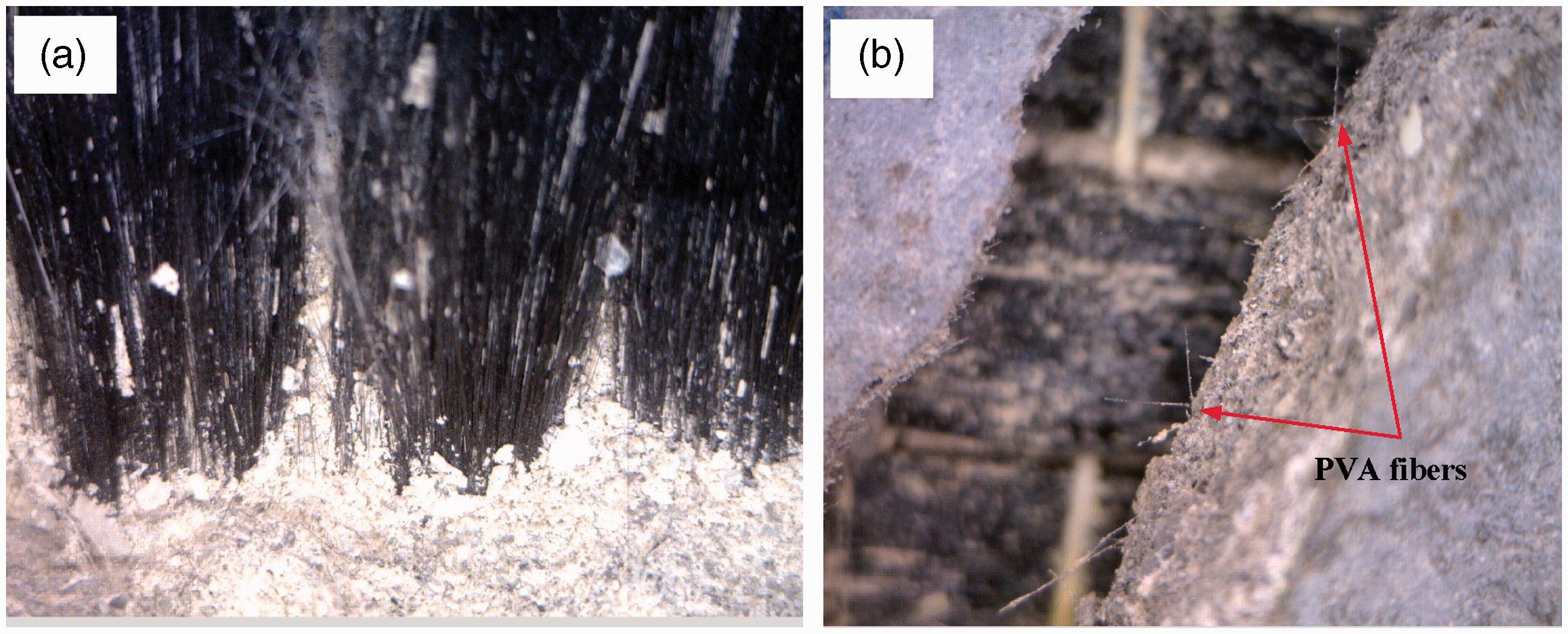
The effect of dispersed short fibers on cracking behavior of TRC is shown in Figure 6. Addition of short PVA fibers to the cement mixture increased the number of cracks on the Hyb-TRC specimen as shown in Figure 6(b). Control-TRC fractured with the first crack due to lack of short PVA fibers. Formation of multiple micro-cracks can enable better energy absorption of composite and contribute to a higher fracture resistance by preventing crack localization.
Cracking pattern of TRC; (a) Control-TRC sample, and (b) Hyb-TRC sample.
Cracking of TRC under bending
The crack propagation in Hyb-TRC under flexural loading is shown in Figure 7(a). Figure 7(b) shows fractured specimen after the test. During the test, two-step cracking was observed for the Hyb-TRC samples in vertical and longitudinal directions of the specimen. At first, the crack propagates through the thickness of TRC specimen in the vertical direction. Afterwards, cracking in longitudinal direction occurs, related to the delamination between the textile and the cement matrix through the interface.
Crack propagation of Hyb-TRC under flexural load; (a) during the test, (b) after the test.
Figure 8 schematically represents the stress–strain behavior of a conventional TRC under flexural loading. On the basis of the cracking behavior, the stress–strain curve can be subdivided into three stages. Stage I can be attributed to the elastic state of the un-cracked TRC in the linear section and the region of crack-formation across the TRC specimen up to the maximum load-bearing capacity. The magnitude of flexural stress depends on the quality of the bonding strength between textile and matrix, as well as on the volume proportion of PVA fibers in the composite activated for load transfer [1]. At a relatively low flexural load, fracture is initiated by matrix cracking in this stage.
Schematic stress–strain behavior of a TRC.
Stage II is related to the change in the direction of crack propagation with the rapid reduction in the flexural load bearing capacity of composite. In this stage, the existing cracks become wider and matrix is failed and the flexural load completely transferred to the interface between textile and matrix.
In stage III, the cracks propagate in the direction perpendicular to the previous macro-cracks and between the interface of carbon textiles and the cementitious matrix. In this stage, the dominant factor for the load-bearing capacity of TRC composite is the bond quality between the carbon textiles and the cementitious matrix. Due to insufficient bonding strength between the textile and cement, a rapid decline in the load-bearing capacity by increase in the separation length can be observed. Improving the bonding strength between textile and matrix in stage III can enhance load-bearing capacity and energy absorption of TRC composite.
Effect of textile’s surface treatment
The complete flexural stress–strain curve of Hyb-TRC is shown in Figure 9(a). As indicated in the figure the flexural stress drops after 2% strain. The flexural stress–strain of Hyb-TTRC composite (containing carbon textile impregnated with short PVA fibers) is shown in Figure 9(b). It was observed that the treatment of textile with short PVA fibers has no significant effect on the flexural strength of the composite, but the load-bearing capacity in stage III is considerably improved. It can be attributed to the crack resistance effect of PVA fibers bonded to both the textile’s surface and the cement matrix. The fracture in stage III is mainly due to the delamination between textiles and the matrix. The presence of PVA fibers on the carbon textile surface effectively increased the bonding in the textile/matrix interface. It was observed that the sprayed adhesive on the textile surface reduced its flexibility and caused a sudden drop in stress–strain curve after peak load for Hyb-TTRC compared to the Hyb-TRC sample.
Flexural behavior of: (a) Hyb-TRC, and (b) Hyb-TTRC.
The average flexural strength and stress at stage III for hybrid TRC samples (Hyb-TRC and Hyb-TTRC) are shown in Figure 10. The applying treatment on the carbon textile decreased the flexural strength of composite by 5%, in average. It may be attributed to the decrease in the matrix penetration into the textiles due to the adhesive used for textile treatment. According to the results in Figure 10, the load-bearing capacity of Hyb-TTRC sample was increased up to 56% by using fluffy treatment.
The flexural stress of Hyb-TRC and Hyb-TTRC.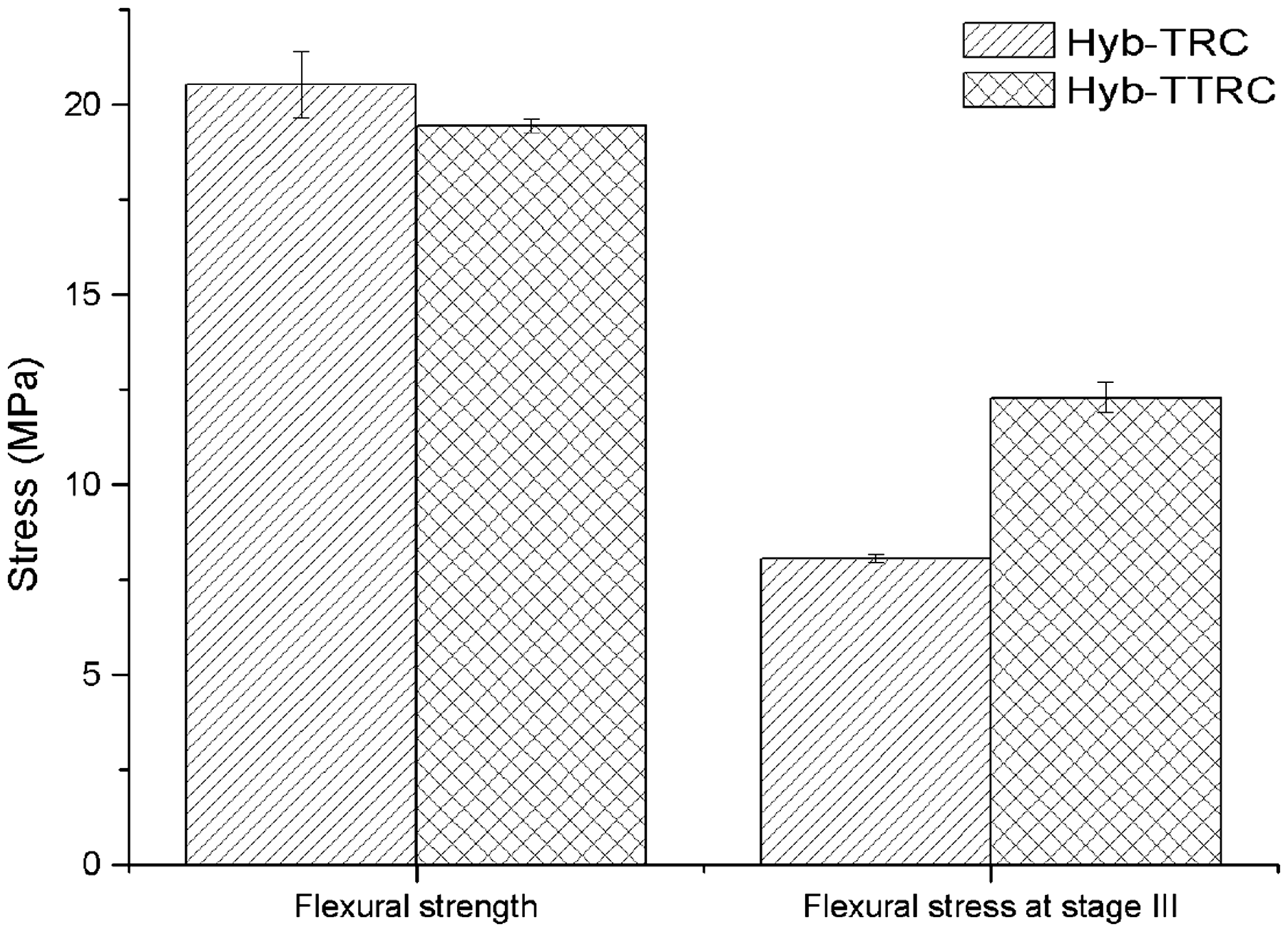
Peel test results. To investigate the effect of surface treatment of carbon textile, a peel test was employed. Peel force is the term of the force required to separate the two materials which can provide a good estimate of bonding strength and interfacial fracture energies [22]. The peel test behavior of untreated textile and treated textile is shown in Figure 11. The treated textile exhibited higher peel load with increase in the area under the load Peel-off test behavior of: (a) untreated textile and (b) treated textile.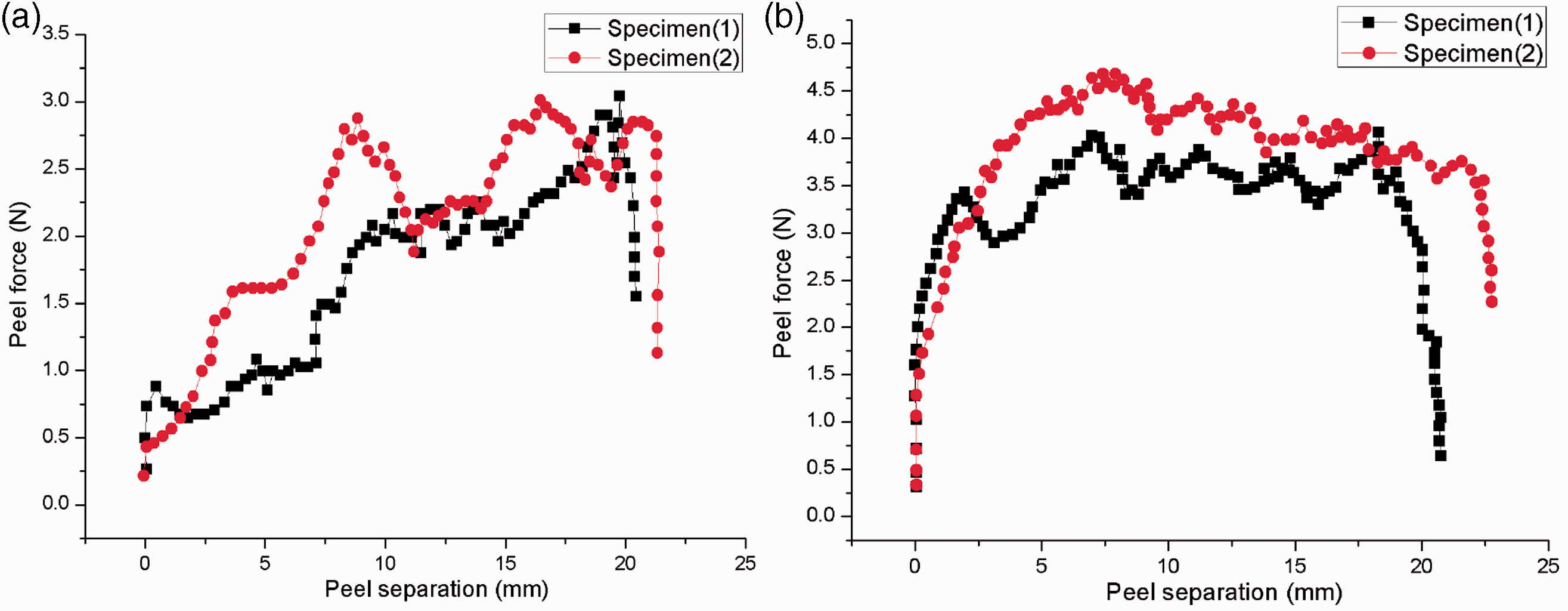
The details of peel-off test.

Conclusion
A surface treatment with short PVA fibers was applied to the carbon textiles. The textile-reinforced concrete specimens produced using the carbon textiles in combination with and without short dispersed PVA fibers were tested under the three-point bending test. Also peel-test was employed to study the effectiveness of surface treatment.
It was found that addition of short PVA fiber to matrix improved the flexural properties of Hyb-TRC sample. Furthermore, the Hyb-TTRC samples have better load-bearing capacity under flexural loading after peak load in comparison with Hyb-TRC sample. On the basis of the flexural test and peel test results, it was concluded that the fluffy treatment can be used as an effective way to enhance the bonding strength of textiles to the cementitious matrix. Furthermore, it was found that addition of higher amount of fibers to the mixture can negatively influence the mechanical properties of TRC. Using higher amount of PVA fibers with adhesive can decrease matrix penetration in textile, and results in lower mechanical performance.
The described surface treatment can be used in repair and strengthening of reinforced concrete members. One of the main concerns in the case of repair applications is the durability of textiles bonding to the concrete elements. The bonding strength between the textile strips and concrete beams can be improved by employing the fluffy fiber treatment.
Footnotes
Declaration of Conflicting Interests
The author(s) declared no potential conflicts of interest with respect to the research, authorship, and/or publication of this article.
Funding
The author(s) disclosed receipt of the following financial support for the research, authorship, and/or publication of this article: This research received no specific grant from any funding agency in the public, commercial, or not-for-profit sectors.