




Abstract
Natural rubber composites with different contents of 1 wt%, 3 wt%, 5 wt%, 10 wt%, and 20 wt% vapor-grown carbon nanofibers were synthesized using a solvent casting method. The morphology, electrical conductivity, dielectric property, and electromagnetic interference shielding effectiveness of natural rubber/vapor-grown carbon nanofiber composites at room temperature were investigated. The scanning electron microscopy image showed there was an even dispersion of vapor-grown carbon nanofibers in natural rubber. The electrical conductivity increased with the increase in vapor-grown carbon nanofiber content. The percolation threshold of natural rubber/vapor-grown carbon nanofiber composites was about 4.9 wt% according to the power law. The dielectric property of natural rubber/vapor-grown carbon nanofiber composites had frequency dependence and increased along with the addition of vapor-grown carbon nanofibers. The electromagnetic interference shielding effectiveness in X-band microwave frequency of natural rubber/20 wt% vapor-grown carbon nanofiber composite with 1 mm thickness was 12.8 dB.
Introduction
Rubber is an inexpensive, flexible material and rubber composites have many technological applications. There are sorts of textile/rubber products in textile industry, such as rubber-coated fabric and rubber roller. Various rubber products with excellent tensile, viscoelastic, and friction properties have been fabricated by adding different fillers [1–3]. Nanofibers could provide sufficient adhesive strength of the coating layer to the fabric. Recently, electroactive polymer materials are of great interest in the development of electronic equipments [4]. Excellent electrical property becomes very important for rubber composites from the point of view of using these materials in electronic and electrical engineering fields, such as highly conductive polymerized capacitor and electromagnetic wave absorption. It is well known that the electrical conductivity and dielectric properties of insulating medium can be modified by dispersing electrically conductive particles in the medium [5–7]. Conductive particles dispersed in the medium affect the electric polarization and electric conductance of composite, thus contribute to the dielectric properties and electromagnetic interference (EMI) shielding effectiveness of the composites [8,9]. The insulating material can in turn be made into conductor or semiconductor, depending on the amount of filler particles dispersed in the medium [10]. These polymer composites can be used in applications like EMI shielding and electrostatic charge dissipaters [4,11,12]. The materials with an electrical conductivity in the range 10−12–10−8 S/cm can be brought to electrostatic discharge applications, 10−8–10−2 S/cm to semi-conductive applications, and above 10−2 S/cm to EMI shielding applications.
Among different types of conductive additives, carbon black and metals are the most widely used for rubber matrix; they provide electron carriers for the insulator. However, a large amount of carbon black is needed to get the required electrical properties since carbon black is an amorphous form of carbon with a structure similar to disorder graphite [13]. As for metal, they are heavy, expensive, and tend to suffer from the poor scratch resistance for their incompatibility with the rubber [5]. In the last few years, carbon nanotubes (CNTs) have attracted great interest in many engineering applications for their high tensile strength and high electrical properties. CNTs may be metallic or semi-conducting with a large band gap [14,15]. The graphite-like structure, intrinsic dimension, and closed topology endow CNTs with not only the in-plane properties of graphite, such as high thermal [16] and electrical [17–19] conductivity, superior strength and stiffness [20,21], and strong chemical and thermal inertness, but also novel electronic properties depending on its helicity and diameter [19]. There are many studies [21–25] on the mechanical and electrical properties of polymer composites filled with CNTs, but few studies focus on vapor-grown carbon fibers (VGCFs) reinforced rubber composites [12]. VGCFs are produced by catalytic chemical vapor deposition of a hydrocarbon or carbon monoxide over a surface of a metal or metal alloy catalyst [12,26]. The structure of VGCFs is similar to multi-walled CNTs. They consist of turbostratic stacks of carbon layers, parallel to the fiber axis, and are arranged in concentric sheets. The better mechanical properties, lower density, and smaller diameter are the major advantages of CNTs over VGCFs. However, VGCFs are an excellent alternative for CNTs because of their availability and relatively low price. VGCFs could be a good substitute of carbon fibers and carbon black in many applications due to its excellent mechanical, electrical, and chemical properties.
Natural rubber (NR) is a natural elastomer and there have been many reports on the studies on mechanical and electrical properties of NR composites [2,3,27]. However, reports on the study of electrical properties of composites based on NR and VGCFs are not very abundant. In this study, NR was selected as the matrix and VGCFs as the filler. We fabricated various NR/VGCF composites with different VGCF contents and investigated the effect of VGCF content on the electrical properties of NR/VGCF composites. The EMI shielding effectiveness in X-band microwave frequency from 7 to 12 GHz of NR/VGCF composites was also evaluated.
Experimental
Materials
NR gum (Sumitomo Rubber Co. Ltd., Japan) and untreated VGCFs (Showa Denko Co. Ltd., Japan) were used as raw materials. Figure 1 shows that VGCFs with some metal catalyst have a large length-to-diameter ratio and stacks of carbon layers (see the inset). NR/VGCF composite films were made in solvent casting method by dispersing VGCFs in NR with ultrasonic stirring at room temperature. Five types of NR/VGCF vulcanizates with VGCF contents 1 wt%, 3 wt%, 5 wt%, 10 wt%, and 20 wt% were made. The NR/VGCF composite films were about 1.0 mm thickness. For comparison purposes, NR film was also fabricated by the same method. The compositions of NR composites used in this study were listed as: NR (100 per hundred rubber, phr), zinc oxide (5 phr), sulfur (2 phr), stearic acid (2 phr), and cyclohexyl benzothiazole sulfonamide (0.8 phr). NR/VGCF composites were prepared by solvent casting. As a previous report about preparing single-walled CNT reinforced NR composites by Kueseng and Jacob [28], the fabrication of NR/VGCF composites was divided into the following steps in this study. First, VGCFs (10 mg/mL) with contents of 1 wt%, 3 wt%, 5 wt%, 10 wt%, and 20 wt% were added into toluene and were well dispersed by ultrasonic stirring at room temperature for 2 h, respectively. NR gum (50 mg/mL) was also dissolved into toluene in a separate beaker. Second, vulcanizing agents, VGCF solution, and NR solution were mixed and stirred for 1 h. Third, the solvent was evaporated off at 50°C for approximately 2 days in vacuo. Finally, the vulcanization was carried out at 160°C for 15 min using a hot press. NR/VGCF composite sheets with a thickness of 1 mm were fabricated.
TEM micrographs of VGCFs.
Characterization
Pristine VGCFs were visualized by transmission electron microscopy (TEM) in a JEM-2010 electron microscope with an accelerating voltage of 200 kV. The dispersion of VGCFs in NR was examined with a Hitachi S-3400N mode scanning electron microscopy (SEM) at an accelerator voltage of 20 kV. The samples observed by SEM were coated with Pt–Pd sputtering. The electrical volume resistivity was measured by four-probe method at room temperature with a high-resistance meter (MCP-HT450). The impedance magnitude and impedance phase of composites were measured in the frequency range 1.0–106 Hz at room temperature, using an impedance analyzer (Solarton 1260). The EMI shielding effectiveness was measured in X-band microwave frequency from 7 to 12 GHz using a coaxial-type shielding effectiveness measurement system and a vector network analyzer (Anritsu 37247D, Anritsu Co., Japan). Circular discs were cut out from the sheets of composites with a diameter of 12 mm for dielectric studies.
Results and discussion
Direct current conductivity of NR/VGCF composites
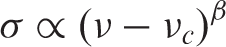
Figure 2 shows the direct current (DC) conductivity (σ) of NR/VGCF composites as a function of fill mass fraction (p). No results were obtained for pure NR and NR/1 wt% VGCF composites because they were out of the measurement range. VGCFs were found to be much effective in improving the electrical conductivity of NR composites. As could be seen in Figure 2(a), the conductivity increased with increasing VGCF content. At 5.0 wt%, the conductivity displayed a dramatic increase of 10 orders of magnitude, indicating the formation of percolating network. This result was supported by the power law. Figure 2(b) shows that the electrical conductivity of NR/VGCF composites obeyed the power law [29]
(a) DC conductivity as a function of VGCF weight content at room temperature and (b) log σ versus log (p − pc) plot of NR/VGCF composites and the prediction by the power law. SEM morphology of NR/5 wt% VGCF composite.

Dielectric properties of NR/VGCF composites
Besides electrical conductivity, the presence of VGCFs substantially affected the dielectric behavior of NR composites. Figure 4(a) and (b) shows the dependence of impedance magnitude and impedance phase of the NR/VGCF composites on frequency at room temperature. The impedance magnitude and impedance phase of NR, 1 wt%, 3 wt%, and 5 wt% VGCF composites showed apparent frequency dependence due to their high capacitive reactance. That is to say, the impedance magnitude decreased sharply with increasing frequency, and the impedance phase was close to 90°. But for 20 wt% VGCFs-reinforced NR composites, the impedance phase remained close to 0°, which indicated that ohmic resistance elements played an important role. Therefore, there was no frequency dependence for the impedance magnitude of NR/20 wt% VGCF composite. As for NR/10 wt% VGCF composite, at low frequency, the ohmic resistance element operated mainly, then the capacitive reactance characteristic was observed with increasing frequency. The peaks of impedance phase were caused by the dielectric relaxation of the composites. With the increasing VGCF content, more and more electrons supplied by VGCFs contributed the remarkable interfacial polarization. In addition, Figure 4(a) shows that the impedance magnitude decreased with the addition of VGCFs. It reflected the reinforcement effect of VGCFs as the conductive filler, which was well agreed with the experimental data of volume resistivity.
Dependence of (a) impedance magnitude and (b) impedance phase of the NR/VGCF composites on frequency at room temperature.
Figure 5(a) and (b) shows the complex dielectric permittivity as a function of frequency. The dielectric permittivity and loss increased with increasing the VGCF content. The dielectric permittivity and loss at 103 Hz were summarized in Figure 6. For the NR/VGCF composites, there were different phases of the composites resulting in charge accumulation at the interfaces. VGCFs were conductors and NR was a high insulator; therefore, when these charges were made to move by the application of an external electric field, Maxwell–Wagner interfacial polarization was formed. With the increasing VGCF content, more and more electrons supplied by VGCFs contributed to the remarkable interfacial polarization, resulting in the improved dielectric permittivity. There was no frequency dependence for 1 wt% and 3 wt% VGCFs-reinforced NR composites. It was on account of their low capacitive reactance caused by the non-polar rubber, NR, and a lower content of VGCFs. There was a suddenly decreasing peak in the curve of dielectric permittivity of NR/20 wt% VGCF composite due to the motion/rotation of atoms or molecules in the alternating current (AC) field. According to the above analysis, at low frequency, the impedance of the NR/20 wt% VGCF composites was mainly dominated by resistance, which produced a lot of conduction loss and eventually produced a rise in temperature of the sample placed in the AC field. The high temperature caused the charge carriers moving in disorder and broke the regular arrangement of mobile charge carriers at the interface of composites. According to Figure 6, it was found that there was an obvious increment for dielectric loss compared to dielectric permittivity, and the dielectric loss of NR/10 wt% or 20 wt% VGCF composites was larger than dielectric permittivity. It is implied that the electric conductance loss mainly contributed at this time and that electromagnetic wave absorption would mainly operate when used as EMI shielding materials.
(a) Real dielectric permittivity and (b) dielectric loss of NR/VGCF composites as a function of frequency. Dependence of dielectric permittivity and loss of NR/VGCF composites on the VGCF content at 103 Hz frequency.

EMI shielding effectiveness of NR/VGCF composites
Figure 7 shows the EMI shielding effectiveness in X-band microwave frequency for NR/VGCF composites with various VGCF loadings. The EMI shielding effectiveness increases with increasing content of VGCFs in the composites. It was also observed that the shielding effectiveness of the composites increased with increasing the frequency for the same loading. The shielding effectiveness of the composites containing 20 wt% was 12.8 dB at 12 GHz. The improved EMI shielding effectiveness of composites was highly coupled with the increased dielectric property and intrinsic conductivity of the NR/VGCF composites according to EMI theory [30].
EMI shielding effectiveness as a function of frequency for NR/VGCF composites with various VGCF loadings.
Conclusions
NR/VGCF composites with different filler contents were fabricated in solvent-casting method. It was found that the electrical conductivity of NR/VGCF composites increased with the increase of VGCF content. There was a percolation threshold of 4.9 wt% according to the power law. The EMI shielding effectiveness of NR/20 wt% VGCF composite with only 1 mm thickness was 12.8 dB. The enhance mechanism was: with the increasing VGCF content, more and more electrons supplied by VGCFs contributed the remarkable interfacial polarization, resulting in the improvement of dielectric properties and when VGCF content was above the percolation threshold, a continuous carrier path was formed. The enhanced electrical properties finally improved EMI shielding effectiveness of NR/VGCF composite. It could be deduced that the developed NR composites with lower VGCFs content have potential applications as antistatic coating layers and supercapacitor. And NR composites with 10 wt% and 20 wt% VGCFs could be used as EMI shielding materials. The addition of VGCFs must also have an effect on the adhesive strength of NR to fabric when it is used as a coating layer. This work will be done in the near future.
Footnotes
Funding
The authors were grateful for the financial support provided by the Fundamental Research Funds for the Central Universities of Jiangnan University (JUSRP211A51).