



Abstract
India being the second largest nurse exporter to the Organisation for Economic Cooperation and Development (OECD) countries, currently faces a shortage of 2.4 million nurses. The problem of nurse shortage has been aggravated by the COVID pandemic. The young age at which the Indian nurses migrate, suggests that the decision to work overseas is made probably at the time of pursuing the studies or probably one pursues nursing because it opens the opportunity for working overseas. The objective of this study was to assess the intensions of nursing students to pursue overseas career on completion of their studies. The study used a cross-sectional survey design to collect data from 1408 nursing students from across four states of India namely, Karnataka, Kerala, Maharashtra and Rajasthan using a google survey form. The major finding of the study was that 54% of the respondents intended to migrate overseas. Better career advancement opportunities, better working conditions, higher pay, better lifestyle, were the reasons cited by those who had an intension to migrate. Establishing norms for nurse-patient ratios, and scope of work along with pay scales for nurses with various qualifications and experience could be the most strategic moves that the policy makers can consider to control brain drain in nursing and control nurse migration.
Introduction
The global shortage of nurses was estimated to be 5.9 million nurses in 2018. Nearly 59% of the total health workforce across the globe comprises nurses (State of the World's Nursing, 2020). The National Health Workforce Account 2018 report shows that nearly 50% of the total health workforce in India comprises nurses. India has been facing a huge shortage of nurses since independence (Mallapur, 2020). Union Health Ministry data, 2019 shows that India has 1.7 nurses per 1,000 population, which is 43% less than the World Health Organization norm of three per 1,000 (Mallapur, 2020). Around 2 million nurses are required to fill this shortage. To address the nursing shortage, India has expanded the nursing education institutions resulting in remarkable growth of nursing schools and colleges over the last two decades. According to the 2020–2021 annual report of the Indian Nursing Council, 2,82,219 students completed nursing courses from various nursing schools and colleges across India and there were a total of 23,40,501 registered nurses practicing in the country (Indian Nursing Council, 2022).
The nursing shortage continues to bother as India also is the second largest nurse exporter to the Organization for Economic Cooperation and Development (OECD) countries. It is reported that about 16,000–18,000 nurses migrate annually from India (Srinivasan, 2016). The exodus of Indian nurses continues with greater impetus with the recent COVID pandemic which has exponentially increased the demand for Indian nurses. Nurses prefer to migrate at a young age, mostly immediately after the completion of their studies and before marriage. A study on trends and challenges of migration of Indian Nurses to the OECD countries reveals that the average age of nurses working in India and aspiring to migrate to OECD countries is 26.25 years (range 24–29 years) (Sharma et al. 2022). It is also observed that a majority of nurses who migrate overseas, hail from the Indian State of Kerala.
However, with changing demographic backgrounds (religion, caste, socioeconomic status) of students seeking admission to nursing courses, the number of nurses migrating overseas from other states of India is also growing. The most common causes of nurse migration cited in literature, include low wages, poor working conditions, lack of career growth pathway and low social status (Issac, 2015; Kumar, 2021).
The young age at which the Indian nurses migrate, suggests that the decision to work overseas is made probably at the time of pursuing the studies or probably one pursues nursing because it opens the opportunity for working overseas. The trends of admission to undergraduate programs in nursing education institutions are synchronous with the demand for Indian nurses overseas. The objective of this study was to assess the intentions of nursing students to pursue overseas careers upon completion of their studies.
Materials and Method
The study used a cross-sectional survey design to assess the nursing students’ intention to migrate overseas. The survey was conducted from January to March 2021. A Google survey form was created after reviewing relevant literature and consultation with the subject experts. The questionnaire consisted of 23 items. The first 15 questions were intended to elicit sociodemographic information from the participants; eight items were focused on understanding the intentions of the nursing students to migrate overseas and the reasons for it. The validity and reliability of the tool was established (α = 0.8). The ethical clearance for the study was obtained from the institution's ethical review board. The participants for the study included nursing students pursuing General Nursing and Midwifery, BSc Nursing, Post Basic BSc Nursing (P. B. BSc Nursing) and MSc Nursing from selected colleges from four states of India, namely, Karnataka, Kerala, Maharashtra, and Rajasthan. The study used a convenient sampling technique. The Google survey questionnaire was sent to the participants through the social media application, WhatsApp. The subjects were given brief information about the purpose of the survey at the beginning of the Google form and were required to indicate their consent for taking up the survey before proceeding to answer it. A total of 1414 participants responded to the survey. Among the survey forms received from subjects’ six forms were found incomplete and were hence excluded from the analysis.
Results
Among the 1408 responses analyzed, it was found that the majority of the respondents were unmarried (95.7%) females (76.5%) aged between 19 and 22 years (67.5%). With regard to religion, 68.8% were Hindus. Of the total, 22.7% respondents had a relative working abroad as a nurse. With respect to their economic status, the majority (51.8%) had monthly family income ranging between 10,001 and 50,000 INR and 31.5% of the respondents’ families had availed loan. The majority of the respondents were natives of West Bengal (36%) and Kerala (26%) (Figure 1).
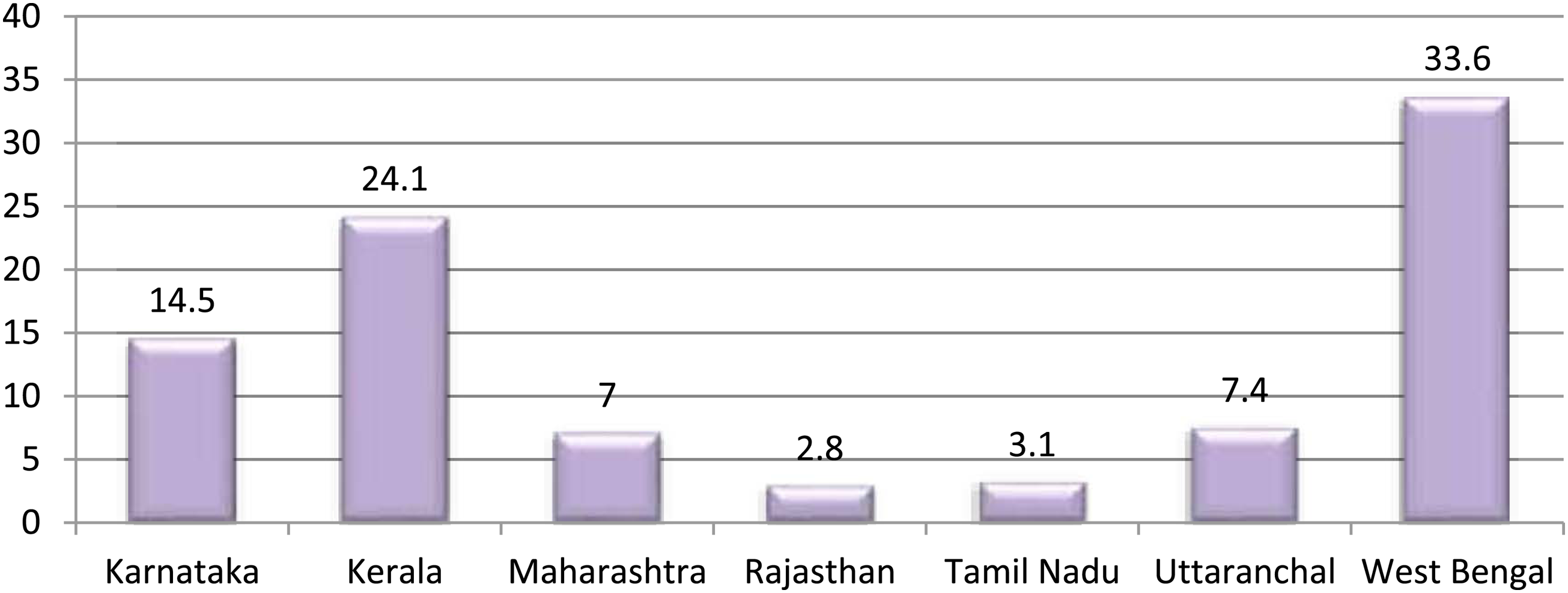
Native State of the Respondants.
The respondents’ reasons for choosing nursing were surveyed. The respondents could choose multiple responses. Interest in caring for the sick (64%), and job guarantee (41.5%) were the topmost reasons for choosing nursing. However, 16.8% of the respondents chose nursing as it would help them easily migrate overseas for work (Figure 2). With respect to their intention of migration, 54% of the respondents intended to migrate overseas for work, and 23.3% were unsure (Figure 3). With regard to the choice of country for migration, a vast majority of the respondents (34.5%) intended to migrate to any country. However, a small percentage of respondents had preferences for migrating to specific countries like the United Kingdom (15.4%), and the United States of America (14.1%) etc. Better career advancement opportunities, better working conditions, higher pay, and better lifestyle, were the reasons cited by those who had an intention to migrate (Figure 4). When asked about intentions to return to India, 57% of the respondents wished to return to India after some years, while 37% were unsure and 4% wished to never return.
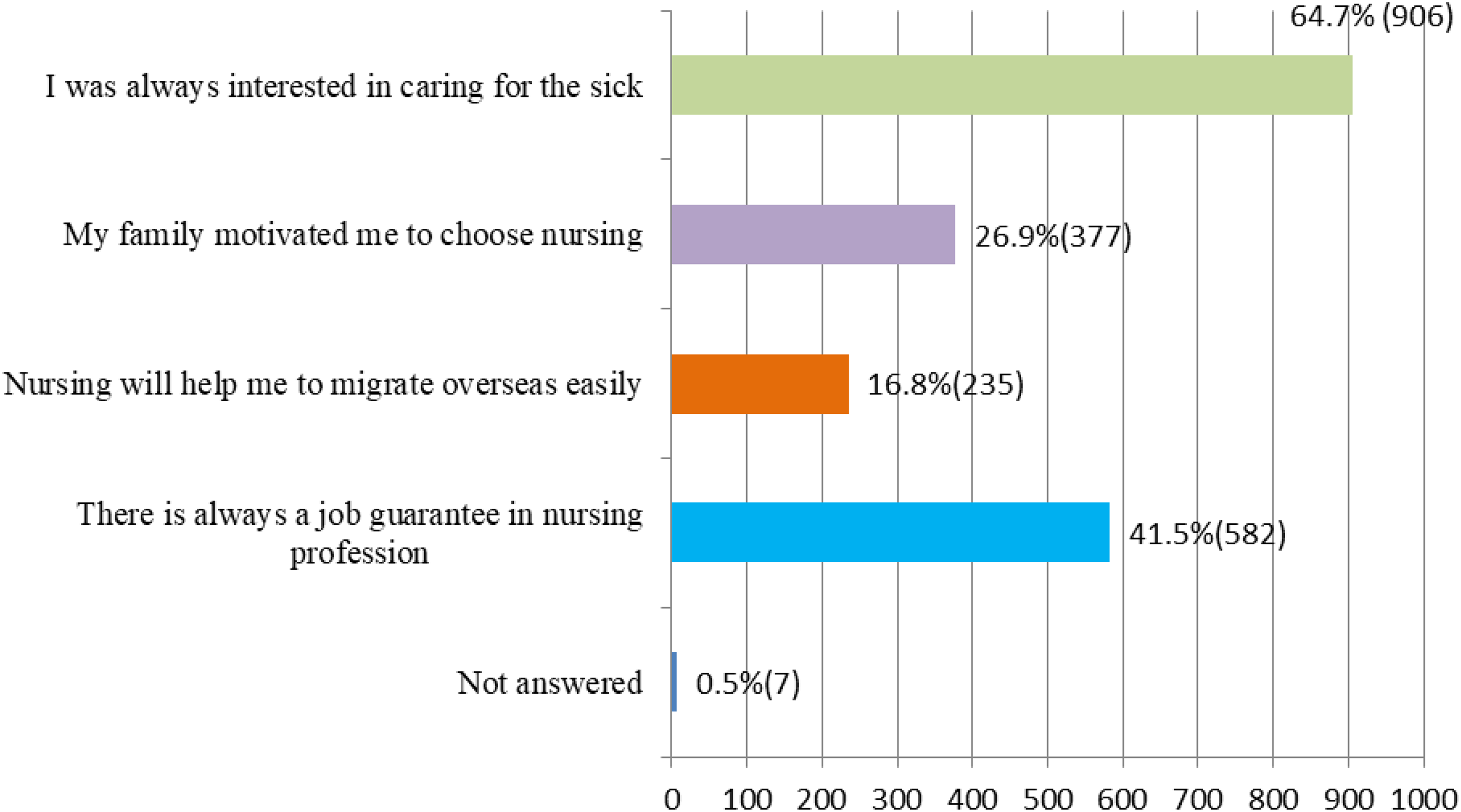
Reason for Choosing Nursing.
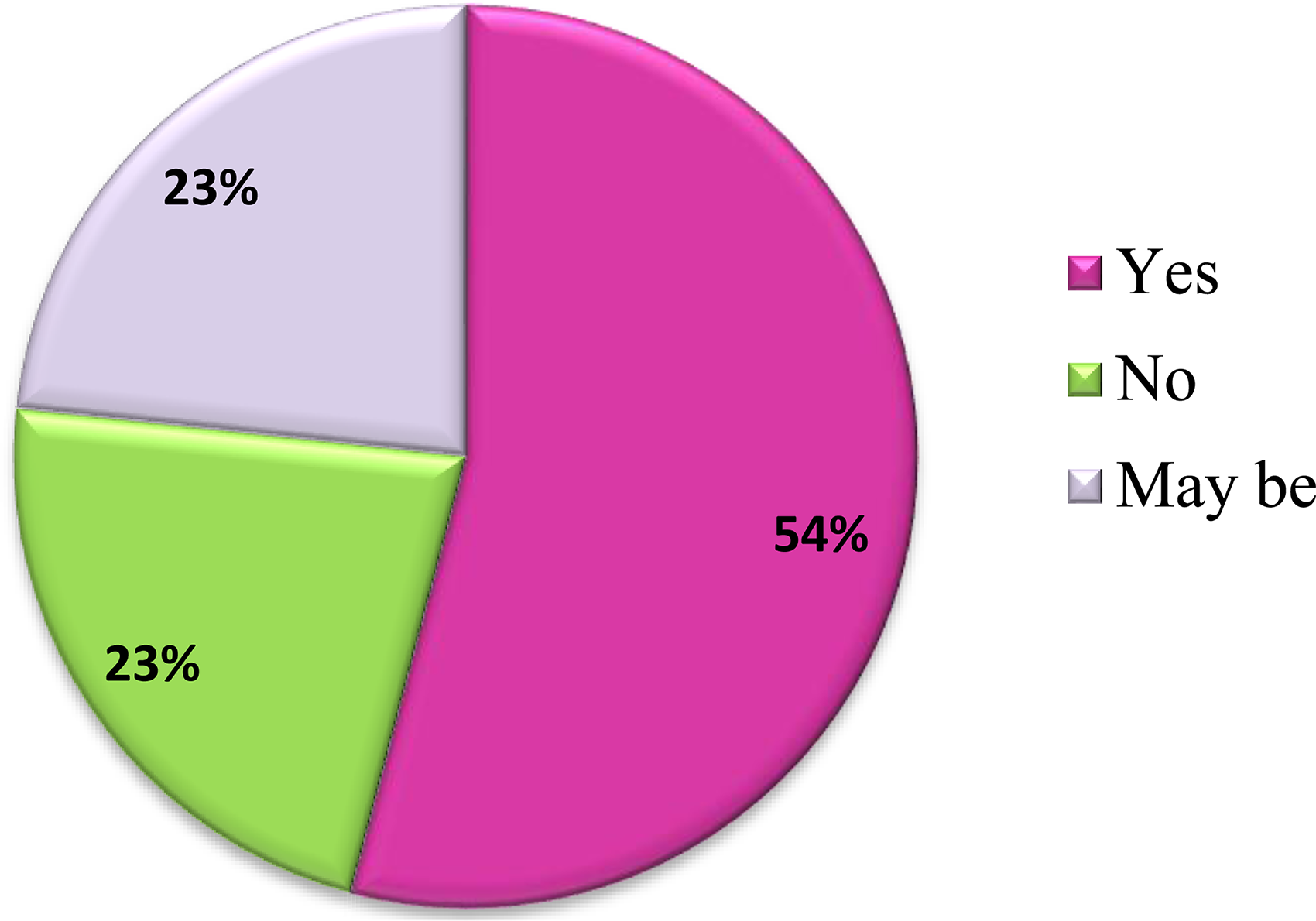
Intention to Migrate for Work.
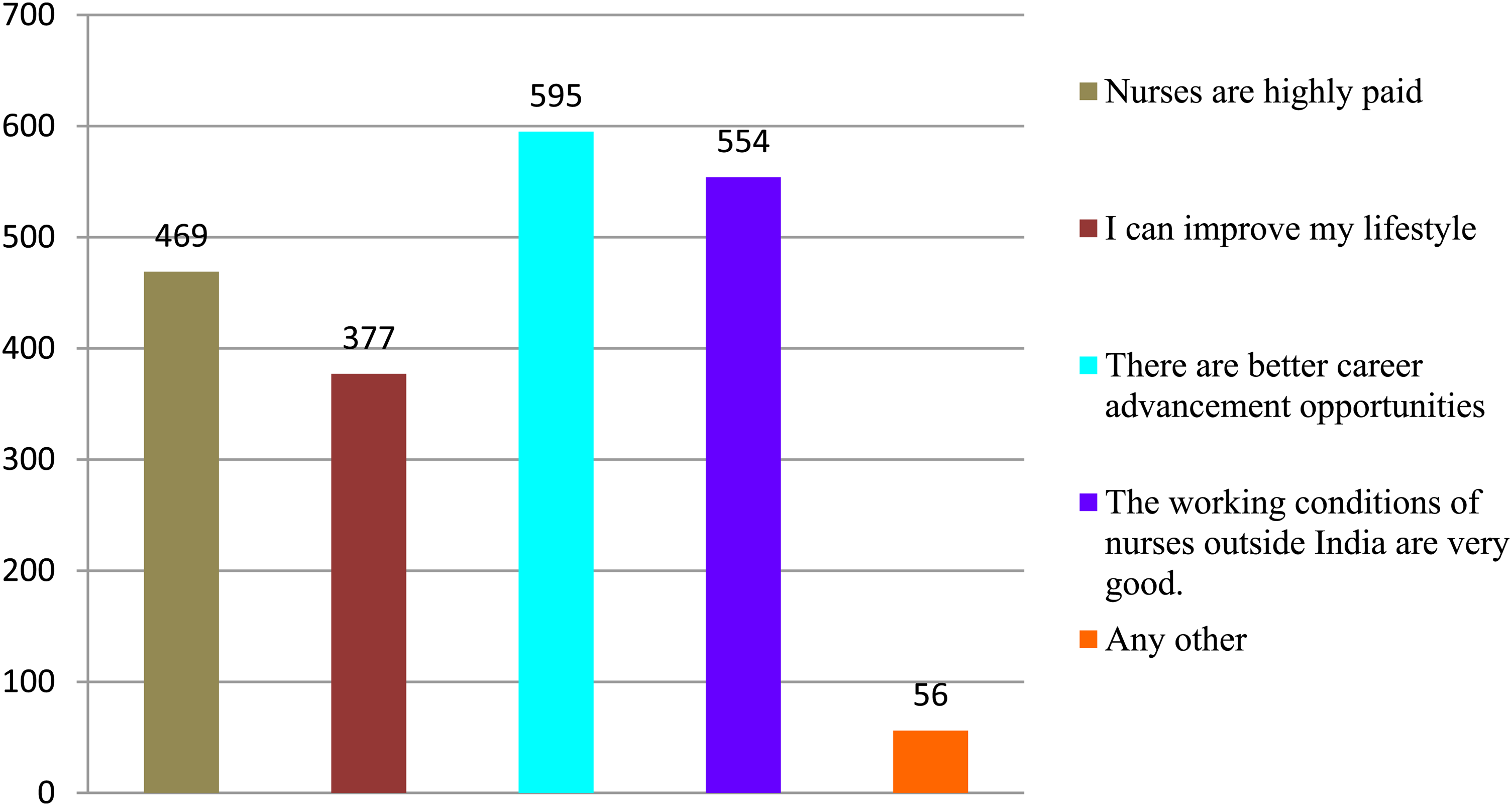
Reason for the Intention to Migrate for Work.
Discussion
The gender bias in nursing appears to continue with 76.5% of the respondents in this study being females. Estimates from the National Sample Survey Office (NSSO), 2017–2018, show that there is a clear numerical dominance of females (75.85%) in the nurses’ category of health professionals (Karan et al., 2021). Most nursing students also continue to be from lower middle-class families with more than half of the respondents of this study reporting low family income and 31.5% availing educational loans to fund their studies. However, in contrast to the reports of previous studies, the trend of Hindus and the upper caste not preferring nursing as a career appears to be changing with 68.8% respondents belonging to the Hindu religion and 53.8% being from the open category. (Philip et al. 2018; Sharma, 2022; Tsujita et al. 2022). Although the survey was administered in four states (Karnataka, Maharashtra, Rajasthan, and Kerala) the majority of the respondents pursuing nursing were natives of West Bengal and Kerala states indicating the inclination of students from these states to pursue nursing as a career. The study findings are in agreement with previous studies (Sharma, 2022; Tsujita et al. 2022; Walton-Roberts et al., 2017)
A whopping 54% of the respondents in this study indicated intention to migrate overseas for work with the other 23.3% being unsure about their migration. It is also important to note that 16.8% of the respondents chose nursing as it would help them easily migrate overseas for work. Very few studies in India have explored the intention of nursing students to migrate overseas. A review of the international migration of nurses from the state of Kerala, India, in 2022 reported that more than half the students who joined the nursing course had the intention to migrate overseas. By the time they reached the third year of their course, the majority would report their desire to migrate. One of the major reasons for their intention to migrate was peer influence. More than three-fourth of students were therefore ready to seek opportunities by the time they graduated (WHO 2022). The findings of this study are very much similar. Overseas migration of nurses seems to be a long-time trend in Asia, with a study from Nepal reporting 92.5% of nursing students expressing some intention to migrate overseas. (Poudel et al., 2018). The Department of Health, Philippines estimated in 2021 that 3,16,000 licensed Filipino nurses, or 51% of the total number of those qualified, had migrated overseas (Beltran, 2023).
The most commonly cited reasons for the intention to migrate in this study include the opportunity for career advancement, the belief that the working conditions for nurses are very good in other countries and the perception that nurses are paid well in other countries. Several studies have shown that there is a lack of career advancement opportunities for nurses in India (Chakravarty, 2022; Walton-Roberts, 2017). The qualification of the nurse is not recognized in the service industry for securing senior positions or specialized nursing roles as there is a lack of legislation that specifies the scope of nursing practice for nurses with various nursing qualifications and experience (Sharma 2022). With regard to the working conditions of nurses, it is observed that the nurses have higher workloads owing to poor nurse-patient ratios maintained by hospitals (Walton-Roberts, 2017). The nurse staffing norms (Staff Inspection Unit Norms [1991] and Indian Nursing Council Norms [1985]) are not adhered to by many hospitals due to a lack of adequate regulatory mechanisms. Further, they are also dated and there is a need for revision of the staffing norms. Contrary to this most OECD countries have much lower workloads and offer attractive pay for Indian nurses. Poor pay has been a significant factor that pushes nurses toward international migration (Chakravarty, 2022; Seth, 2017; Sharma, 2022)
It appears that the admission trends in nursing education institutions in India correlate with nurses’ demand in international markets. The country had an estimated shortage of 2.4 million nurses prior to COVID pandemic and was already the second-highest supplier of trained nurses to OECD countries. The international demand for nurses has been on the rise after the pandemic with the United Kingdom doing away with minimum clinical experience requirements as prerequisite criteria for migration of Indian nurses (Perappadan, 2022).
While the National Institution for Transforming India (NITI ayog) is concerned about the mushrooming of substandard nursing education institutions and poor quality of education there is also an acute shortage of nurses in India due to post-COVID exodus of nurses to foreign countries. The best quality nurses are exported and those with poor knowledge and skills are working in the country. Nurses form the backbone of public health services with 50% constituting the health workforce. The time is ripe for the government to form policies relating to the scope of work, pay and working conditions of nurses to retain the nurse talent. Although studies in the past have identified several push and pull factors for nurse migration, the findings of this study suggest that poor working conditions, lack of scope of work specifications and low pay are the most critical push factors. Establishing norms for nurse-patient ratios (the existing norms are dated, fragmented and do not address the current needs), and pay scales for nurses with various qualifications and experience could be the most strategic moves that the policymakers can consider to control brain drain in nursing.
Footnotes
Funding
The authors received no financial support for the research, authorship, and/or publication of this article.
