



Abstract
This study investigates the determinants of voluntary and involuntary head coach turnovers using a large dataset of some 6,500 coach-game observations from Major League Soccer over 2004–2019. The duration analysis results show that team performance related to expected playoff qualification and performance expectations matter for both types of separations. Moreover, the findings reveal that coach reputation decreases dismissal probabilities, while coach age increases quit rates. The results of this study will be of particular interest to Major League Soccer team owners and managers as well as for business management outside the sports industry.
Introduction
As stated in various labor market studies, insufficient organizational performance is considered the most important determinant of top manager turnover (e.g., Fiordelisi & Ricci, 2014; Puffer & Weintrop, 1991; Weisbach, 1988). However, attributing the manager's idiosyncratic performance to the overall organizational performance is, in most cases, difficult for decision makers. In this regard, the manager's role and the corresponding possibilities to take influence need to be clarified, especially in light of a decision to continue or terminate the employment relationship. According to Alchian and Demsetz (1972), the manager's role is to make sure that the workers “reduce shirking … [and] make team production economical” (p. 785). Thus, the manager is responsible for motivating the workers to total effort to maximize team production. This function is applicable not only for managers in business but also for coaches in professional team sports. Coaches have an essential leadership effect on team performance through their ability to recruit, training, and motivating individual players to achieve higher levels of sporting performance 1 (Dawson et al., 2000).
While many empirical studies concentrate on big companies and use market- or accounting-based performance measures to examine the determinants of managerial replacements, research on coach turnovers in professional team sports is growing because of the availability of large, accurate, and transparent data on managerial change and team performance (d’Addona & Kind, 2014). Among the strand of studies using sports data, a couple of studies used data from professional football to study managerial turnover (for an overview, see Van Ours & Van Tuijl, 2016). The coaches’ position in professional football resembles top managers’ position in companies, and as such, an analogy can be drawn (compare Pieper et al., 2014). However, some differences exist. The primary difference is that coaches’ performance is measured more accurately, frequently, and is directly observable for the public. Moreover, another difference is that coaches’ performance can be evaluated based on prior expectations of the market. In most professional football leagues, betting odds are provided for each game in the season reflecting the performance expectations of the market. The odds incorporate all available performance-related information up till the game starts and are, therefore, according to Buraimo and Simmons (2009), an excellent proxy for outcome uncertainty and the evenness of teams in the league. Thus, decision makers can use the odds to evaluate coach performance conditional on expectations in a likewise equal competition compared to other branches, which allows for comparisons between the teams in the league.
This study investigates the determinants of head coach dismissals and quits in Major League Soccer (MLS) over 16 consecutive seasons using duration analysis. The paper contributes to the literature on coach turnovers in professional football mainly in two ways. First, it provides new insights for voluntary and involuntary coach separations in a professional football league with an idiosyncratic competition and ownership structure and compares the findings to studies examining coach turnovers in European football leagues. Second, this study adds to previous studies by emphasizing the impact of a new variable stating if a team is not on a qualification rank for the post-season knockout tournament based on an expected final table at game day level. Considering the sporting and economic importance for teams to reach a playoff spot at the end of the regular season, missing this goal implies having no chance to win the MLS Cup and lose additional revenues and reputation. Although the (regular) season in most football leagues worldwide does not end up with a post-season knockout tournament, this paper contributes to the literature by providing new information about the timing of managerial replacement decisions in football leagues operating under a playoff system.
In contrast to European football leagues, MLS is organized as a single entity. In this organizational structure, each team is possessed by the league and separately managed by the league's investors. The league decides about expansion activities and aims to maintain and promote financial stability to grow further. The role of MLS owner-investors in this organizational system is limited compared to franchise owners in other professional team sports. For instance, while each franchise is responsible for the salaries of coaches and office staff, the league covers the cost of player salaries and travel expenses (Strutner et al., 2014). Also, MLS differentiates from other professional football leagues through their organization of the competition (e.g., two conferences, playoff system), different rules and regulations (e.g., designated player rule, salary cap), and a rapid growth through expansion. 2
Most striking, however, is that MLS is a closed league with no promotion or relegation system. In contrast to European football clubs, MLS franchises do not face the threat of being relegated to a lower division and the resulting consequences (e.g., lower TV revenues). Due to this league organization, the consequences of lousy performance are lower than in most other football leagues and might affect the decision to continue or terminate the coach's contract. Consequently, coach duration in the league and the determinants of voluntary and involuntary coach turnovers might differ in contrast to European leagues.
Moreover, the schedule of MLS does not match with the international match calendar of the FIFA (Fédération Internationale de Football Associations). The regular season in MLS usually runs from March to October each year, followed by a post-season knockout tournament (November–December) to determine the MLS Cup Champion. This schedule differentiates distinctly from European football leagues (most seasons usually run from August–May, often with a winter break). This noninternational fixture is part of the overall growth strategy of MLS. The primary reasons for this schedule are the better weather conditions at that time and the prevention from direct competition with the National Football League (NFL) and the National Basketball Association (NBA) season (MLS, 2013). For MLS coaches, the different schedule offers the possibility to leave the team in mid-season and immediately take up a job in a football club (e.g., in Europe) at the start of the new season's preparation time (mainly in June or July). Thus, the timing is beneficial for MLS coaches. They do not face the disadvantage of starting their new job within the season and having a lesser amount of time for putting their training methods into practice and getting their style of play across to the players. Besides, while the summer transfer window is usually open a few weeks before the start of the new season, coaches have the opportunity to build up a new squad for the upcoming season. From this perspective, coach duration in the league might be affected by suitable alternative job options in MLS mid-season. Therefore, examining the determinants of coach turnovers in MLS and comparing the findings to the results presented in the already existing literature on coach separations in European football is particularly interesting and provides new knowledge about (potential) similarities and differences.
This paper adds to previous studies by investigating coach turnovers’ determinants and the duration time of coaches in a professional football league with a unique setup. The findings will be of particular interest to MLS officials and team owners. Also, they can be useful for business management out of the sports industry by providing insights into voluntary and involuntary managerial turnover decisions in a specific industry characterized by detailed and frequent data about managerial performance and its expectations.
Literature Review and Hypotheses
The increasing number of studies examining managerial turnover using sports data consists mainly of two strands. While the first strand studies the determinants of coach changes (e.g., Holmes, 2011; Salaga & Juravich, 2020; Wangrow et al., 2018) and distinguishes in a small number of cases between coach dismissals and quits (e.g., Bryson et al., 2020; Van Ours & Van Tuijl, 2016), the second strand deals with the effect of coach changes on team performance (e.g., Audas et al., 2002; Bykova & Coates, 2020; Paola & Scoppa, 2012). Because this study examines the determinants of coach dismissals and quits in the context of professional football, the literature review concentrates mainly on studies in this research field.
As emphasized in recent studies (e.g., Bryson et al., 2020; Van Ours & Van Tuijl, 2016), dismissals and quits are distinct forms of turnovers. Although dismissals are viewed as the consequence of poor job matches or “as the result of hiring errors, which employers can correct by terminating poor performers, quits are seen as the outcome of a relatively rational process in which employees weigh their current job against alternative prospects” (Batt & Colvin, 2011, p. 695). Considering the heterogeneity in manager's ability affecting (team) performance (e.g., see Muehlheusser et al., 2018) and the underlying problem of information asymmetry, organizations attempt to detect and hire the presumably high-skilled managers hoping to improve performance. Thus, frequent assumptions in the literature are that bad-performing managers have a higher likelihood of dismissal, whereas well-performing managers are more likely to quit (Batt & Colvin, 2011). However, the results from previous studies are mixed.
Prior studies use various methodologies, such as linear probability regressions or discrete-choice models, to investigate the determinants of coach turnovers. However, more recent studies mainly use duration analysis (e.g., Bryson et al., 2020; Gilfix et al., 2020; Van Ours & Van Tuijl, 2016; Wangrow et al., 2018) to study managerial turnover in the context of sports. These studies include several covariates primarily related to team performance, team characteristics, and coach characteristics that (might) influence voluntary and involuntary coach turnovers.
Concerning team performance measures, previous research finds that recent match results (e.g., d’Addona & Kind, 2014; Pieper et al., 2014; Van Ours & Van Tuijl, 2016), coach win percentage (e.g., Frick et al., 2010) or the league position (e.g., Bryson et al., 2020; d’Addona & Kind, 2014; Dobson & Goddard, 2001; Gilfix et al., 2020) are associated with involuntary turnovers. However, several studies find that those team performance measures are mostly insignificant in explaining voluntary turnovers (e.g., Audas et al., 1999; Van Ours & Van Tuijl, 2016). Examining the effect of team characteristics, such as team salary costs, on coach separations, some studies find that team salary costs are associated with higher dismissal rates (e.g., Barros et al., 2009; Frick et al., 2010).
Despite team performance and team characteristics, many studies also investigate the role of coach characteristics in explaining coach turnover. The findings are equivocal. Some studies find that coach experience before employment is associated with a decrease in voluntary (e.g., Audas et al., 1999) and involuntary coach turnover rates (e.g., Audas et al., 1999; d’Addona & Kind, 2014; Frick et al., 2010). Instead, other studies find that coach experience is associated with an increase in dismissal (e.g., Van Ours & Van Tuijl, 2016) or quit rates (e.g., Bryson et al., 2020). Also, most studies find that dismissal probabilities increase with coach age (e.g., d’Addona & Kind, 2014; Dobson & Goddard, 2001) but find an insignificant effect for quits (e.g., Van Ours & Van Tuijl, 2016). Moreover, recent studies examine the influence of the coach's nationality on coach duration. For instance, Gilfix et al. (2020) find that domestic coaches in MLS survived significantly longer in the league than their foreign colleagues.
Another important coach characteristic represents the reputation of the coach. In light of the decision to terminate or continue the incumbent coach's employment relationship or hire a new coach, information and facts are crucial for rational decision-makers. Thus, decision-makers are interested in credible performance information to reduce uncertainty and information asymmetry (Graffin & Ward, 2010; Rindova et al., 2005). Signaling can reduce the information asymmetry between two parties (Connelly et al., 2011). Prior performance achievements or certification contests can provide reliable signals from impartial third parties about organizational leaders’ abilities (Graffin & Ward, 2010). The resulting level of reputation serves as a measure of prestige power and reflects the collective evaluation of quality and skills by observers over time (Rindova et al., 2005). Thus, credible performance achievements and certification contests can lead to higher reputational capital, reduce the information asymmetry concerning the coach's abilities and signal greater prestige (Graffin & Ward, 2010; Wangrow et al., 2018). From this perspective, the level of reputational capital may influence team owners’ perception concerning the skill set of the coach, reinforcing the faith in the coach's capabilities, and complicate the decision on terminating the coach's contract.
Previous studies using data from professional team sports find that coach success in the past (e.g., Bryson et al., 2020) or higher levels of coach's reputational capital (e.g., Wangrow et al., 2018) are associated with a reduction in the likelihood of dismissal. Besides, coaches with a high level of reputation are a “scarce resource” in the candidate pool for the coach position and are very sought after. Consequently, quit rates for coaches with a higher level of reputational capital might be greater. The first hypothesis is:
The tenure of the coach spell might also depend on prior expectations regarding team performance. Although betting odds are available for each game in the season, team owners can use this information to evaluate the performance of their team, respectively their coach, in comparison to opponents. Previous studies find that performance above expectations is associated with lower dismissal rates (e.g., Bryson et al., 2020; Pieper et al., 2014; Van Ours & Van Tuijl, 2016). Therefore, poor team performance conditional on expectations is expected to increase the likelihood of dismissal, whether the unexpected bad game outcomes are perceived as an indicator of poor coach performance or due to a sequence of unfortunate circumstances. In contrast, performing above expectations will lower the likelihood of dismissals owning to presumably satisfied team owners and increase the probability of quitting because the coach arouses interest by other employers and might receive more job offers. Thus, Hypothesis 2 is:
Theoretically, the standard model of labor relations states that workers are employed when the match-specific surplus generated for the company surpasses the employment costs. Both contract parties can terminate existing employment relationships. Either through a dismissal by the employer or through a quit by the worker, when the value of production in the current match for one or both contract parties falls below the value of an alternative option (Farber, 1999). In MLS, a dismissal of the coach can occur when the job match turns sour due to unforeseen developments such as missing or running the risk of missing the qualification for playoffs. Although earlier studies find that the league position matters for coach firings (e.g., Gilfix et al., 2020), considering the consequence of teams’ rank in an expected final league table on game day level (qualification or no qualification for the playoffs) provides further insight. Thus, missing or running the risk of missing the qualification for the post-season knockout tournament is expected to increase dismissal rates. Although the winner of the MLS Cup is determined by the playoffs and not by the total points achieved in the regular season, particular emphasis is given to the playoffs’ qualification. Besides, participating in the playoffs is essential for MLS teams to generate additional revenues and increase prestige and attention via greater media interest. Bonuses are paid by the league for playoff qualification, reaching the MLS Cup final, or winning the MLS Cup (between 2015 and 2019, 275,000 US dollars for the MLS Cup win) (MLS Players Association, 2020). However, while these additional revenues represent a relatively small part of the teams’ revenues in a season,
3
the monetary and nonmonetary side effects of (successfully) participating in the playoffs provide powerful incentives for teams to reach the playoff competition. Thus, qualifying for playoffs is crucial for MLS teams, not only in the short run.
Hitherto, no study investigating the determinants of coach turnovers in sports leagues characterized by a postseason knockout tournament has considered if the coach's team is ranking on a playoff spot at game day level. Summing up the number of points obtained up to game day X plus the expected number of points (based on betting odds) in the remaining regular-season games for every team in the league yields an expected final table at game day level. This expected league table allows distinguishing between teams currently ranking on a playoff spot in the respective conference or not. Therefore, this study accounts for the teams’ final league position concerning playoff qualification on each game day. Hypothesis 3 is:
Lastly, apart from organizational performance, several socio-political forces influence managerial replacement decisions (Fredrickson et al., 1988). As Fredrickson et al. (1988) stated, the availability of candidates represents one of the socio-political factors that influence chief executive officer (CEO) turnover decisions. Fredrickson et al. (1988) theorized that a dismissal of the incumbent CEO becomes more likely when a supply of qualified candidates is available for the CEO position. For the context of sports, previous studies investigating the relationship between the availability of alternative candidates for the coach position and managerial turnover report mixed results (Foreman & Soebbing, 2015; Holmes, 2011; Salaga & Juravich, 2020; Wangrow et al., 2018). Candidate availability is calculated as the number of coaches exiting an employment spell in MLS in the previous 3 years and is available for hire at the time a coach exists a spell. Testing the Fredrickson et al. (1988) model, the last hypothesis is:
Data and Empirical Approach
The dataset consists of 63 Coaches who were in charge of the football games played by the 25 teams in MLS in the period 2004–2019. The total sample contains 6,469 coach-game observations, including regular season and playoff games. Coach spells that started before 2004 or did not end within the observation period were omitted from the sample. 4 Following previous studies (e.g., Wangrow et al., 2018), interim coaches are excluded from the sample since they are appointed to manage the team for a short period and often due to the sudden dismissal of an incumbent coach.
Data about the performance of MLS teams were retrieved from the official MLS website (www.mlssoccer.com). Betting data to account for the market's expectations were drawn from Odds Portal (oddsportal.com), providing average closing odds for all regular season and playoff games since 2004. To determine if a coach belongs to a racial minority, reports from the University of Central Florida's Institute for Diversity and Ethics in Sports (www.tidesport.org) were used. Information about the coaches in the dataset was collected from several sources. Length of tenure at a franchise (in days), nationality, number of teams coached, and age (in years) were obtained from Transfermarkt (www.transfermarkt.de). Because Transfermarkt does not provide reasons for coach turnovers, further examination was needed. As Holmes (2011) and Wangrow et al. (2018) mentioned, identifying the reasons behind a coach replacement commonly requires judgment, as clubs often are unwilling to provide this information. Thus, Wikipedia coach biographies and local (online) newspaper articles surrounding each coach replacement were independently read by the author and one student assistant to investigate the reason for the coaching turnover. However, there were no disagreements according to the coding of the coach turnovers into either dismissals or quits.
Similar to other professional football leagues, many of the coaches in the dataset have held different employment relationships in MLS. Thus, 50 coaches have experienced one coach spell, nine coaches have experienced two coach spells, and four coaches have experienced three coach spells in the league. Above all, the dataset consists of 80 coach spell durations, of which 52 ended in dismissal while in 28 cases, the coach quit the franchise. Similar to coach turnovers in European football leagues, the number of dismissals is substantially higher than the number of quits (e.g., see Bryson et al., 2020; Van Ours & Van Tuijl, 2016). While the number of events (dismissals, quits) in the dataset is relatively small, it is consistent with previous studies on coach separations in professional football (e.g., Van Ours & Van Tuijl, 2016).
In this study, duration models for dismissals and quits are estimated. First, a Cox Proportional Hazard event-history model (Cox, 1972) is used. In comparison to other event-history models, the Cox models have a few advantages. An advantage of Cox models is that they do not make assumptions about the hazard function, allowing the covariates to shift the baseline hazard function. Moreover, Cox models can handle censored data and allow for including time-varying covariates, in which explanatory variables can take different values at different times in the measurement for an individual at risk (Box-Steffensmeier & Jones, 2004). This characteristic is particularly important for this study because several independent variables vary by observation period (e.g., team points in the last four games).
To estimate time to failure (event), following Bryson et al. (2020) and Van Ours and Van Tuijl (2016), time to dismissals and time to quits are estimated separately using Cox proportional hazard rate models estimated with maximum likelihood. The rate at which coaches are replaced at time t (measured in days), conditional on time-invariant characteristics x and time-varying characteristics zt, is specified as

For the estimation of the dismissal rate, the coach duration until a quit is considered a right-censored observation. For the estimation of the quit rate, the coach duration until a dismissal is considered a right-censored observation. Coach-specific duration models are estimated in which durations refer to the coach's term at a franchise. All models are estimated with a robust estimator to correct for potential heteroscedasticity, and standard errors are clustered on coach identification to account for the noninterdependence of coach spells.
Second, while a coaching spell in the dataset ends with either a dismissal or a quit, a time competing risks model, according to Fine and Gray (1999), is used to account for competing events. Basically, the Fine and Gray model is similar to the Cox model. The baseline (sub-)hazard is unspecified, the effects of covariates are assumed to be proportional, and the estimator can handle multiple failures per subject. In the Fine and Gray model, competing events are kept in the risk set. However, these have time-dependent weights after their event time incorporated into the partial-likelihood, with the weights being a function of the censoring distribution (Fine & Gray, 1999). The weights account for the probability that these observations could have been censored increases with follow-up time. Similar to the Cox proportional hazards model, time is measured in days, and the same covariates are included. The models are estimated through maximum likelihood. Regression coefficients are displayed.
And third, for comparison purposes, a multinomial logistic regression is performed as another discrete-time competing risks model. Again, the same covariates are included. The coefficients are presented compared to the no turnover baseline.
Dependent Variables
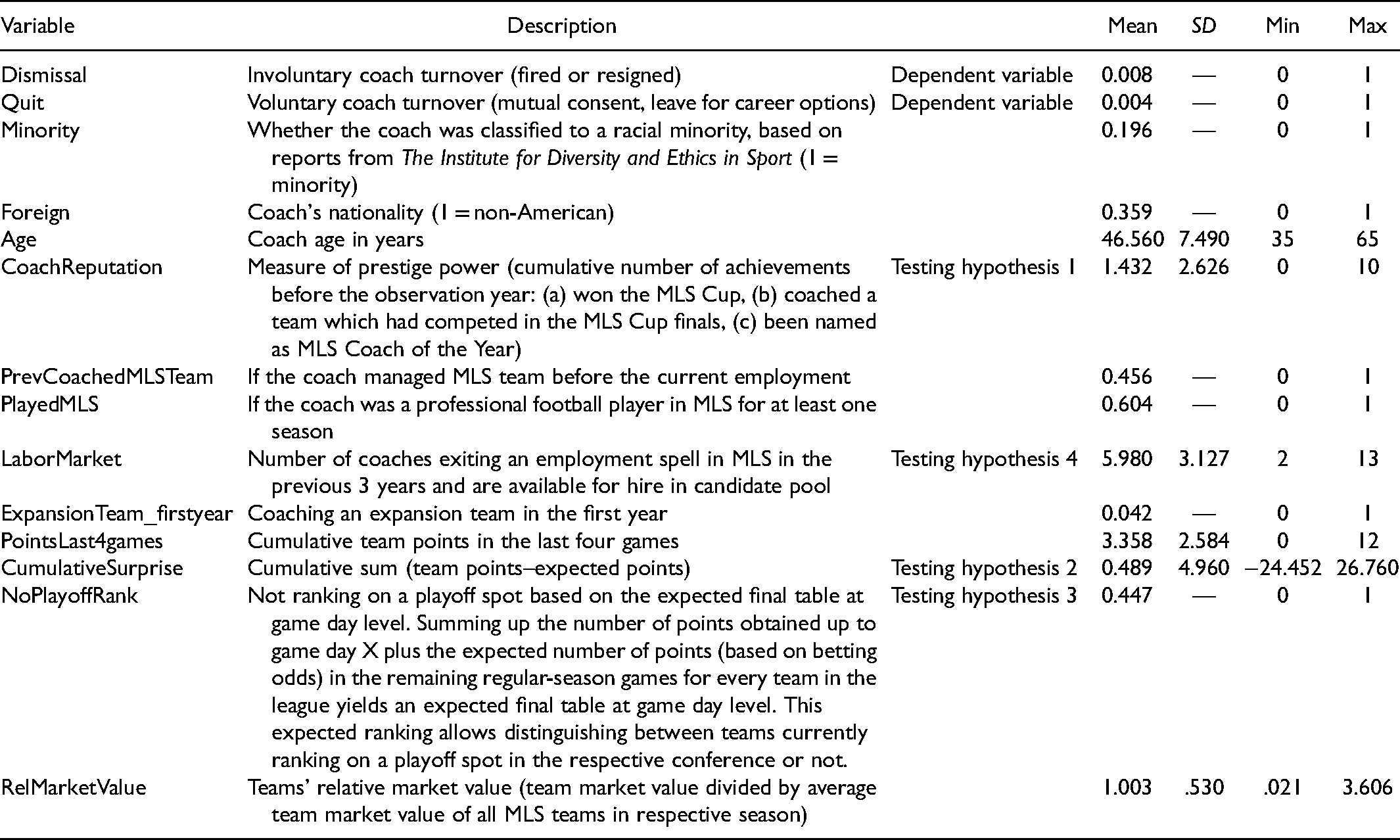
Two distinctive dependent variables are used. The variable
Independent Variables
The explanatory variables include four time-invariant variables and eight time-varying variables. If the coach belongs to a racial minority (
Although previous studies find mixed results for the effect of age on coach turnovers, a variable measuring coach age in years (
Another aspect that can influence the ownership's decision to terminate the coach is the availability of alternative candidates for the coach position (Foreman & Soebbing, 2015). To proxy the available candidate pool, a similar approach to Wangrow et al. (2018) and Salaga and Juravich (2020) is used in this study. The variable
Coates et al. (2016) find that teams in their first MLS season perform poorly compared to more experienced teams. To control for this effect, the variable
Concerning team salary costs, Barros et al. (2009) find that coaches of more expensive teams tend to be dismissed earlier, suggesting that management and supporters’ expectations are higher than in teams spending less money for their players. In this study, market values are used instead of team salary costs for two reasons. First, because team salary costs “may be a weak proxy for dispersion of player abilities” (Bykova & Coates, 2020, p. 203). And second, as shown by Prockl and Frick (2018) for MLS, market values can serve as an excellent proxy for salaries that are not disclosed. Therefore, the team's relative market value (
Characteristics of the Variables.
Results
On average, the survival time of coaches in the dataset is 733 days and is substantially higher than in European football leagues (compare Bryson et al., 2020; Gilfix et al., 2020). The reasons for this more prolonged average coach spell in MLS are not entirely clear but can be explained partially. In European football leagues, the threat of relegation is a crucial source of pressure to fire a coach. This threat is absent in MLS. Nevertheless, dismissals of MLS coaches can still be observed. Intending to improve team performance, the incumbent coach's dismissal represents a convenient way for team owners and other decision makers to appease fans and other stakeholders and displace blame away from themselves and onto the coach (Gamson & Scotch, 1964). However, considering the sporting and economic consequences of relegation for European football clubs, the pressures for immediate results in MLS may be lesser compared with top football leagues in Europe. Thus, MLS coaches may be granted more time to fulfill the performance expectations.
Figure 1 presents the Kaplan–Meier survival curves (Kaplan & Meier, 1958) for dismissals and quits.
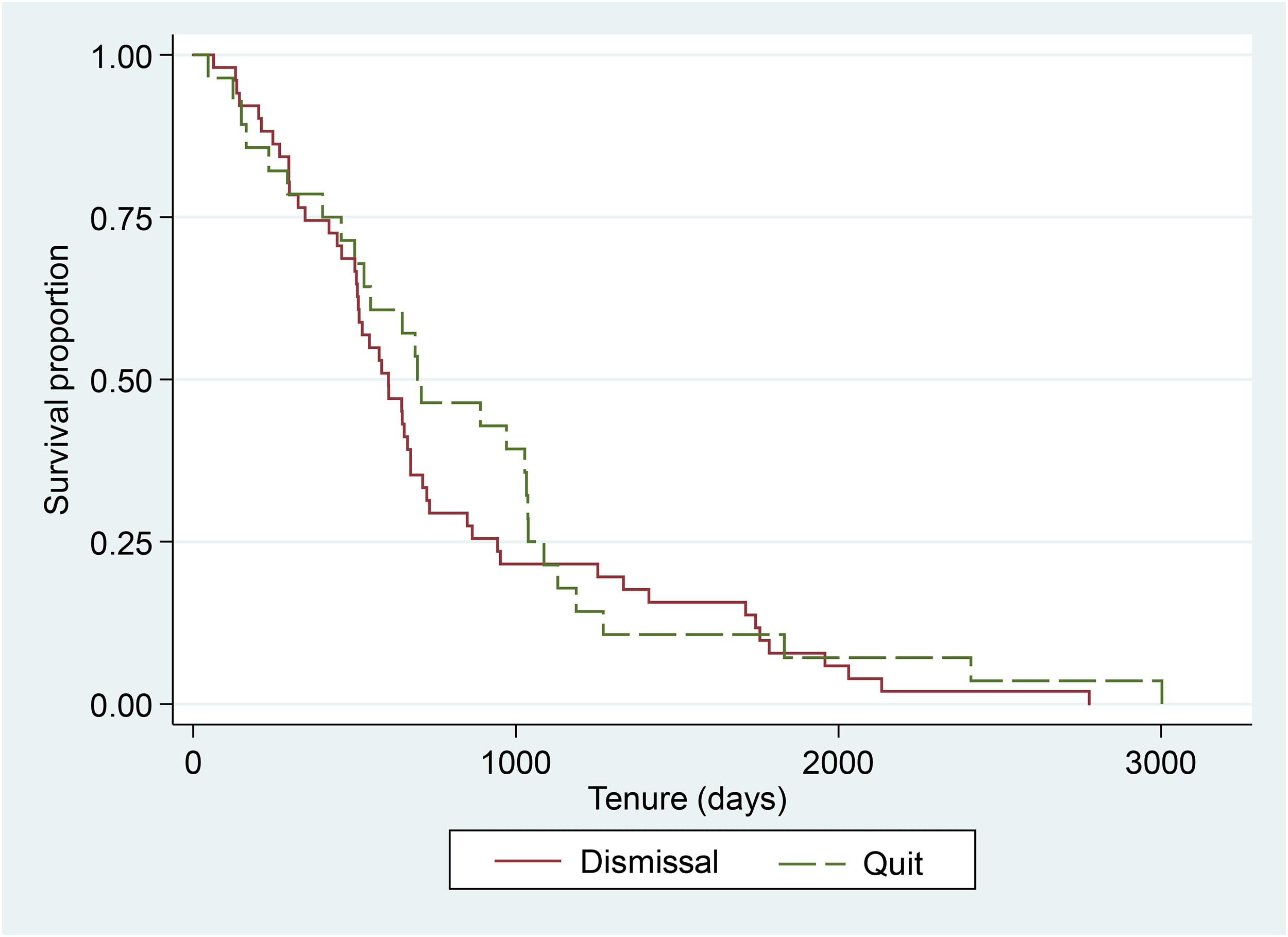
Kaplan–Meier survival curves for dismissals and quits.
As apparent from Figure 1, the survival time of coaches dismissed compared with coaches who quit the franchise differs slightly, with a lower mean survival time for coach spells that end up with a dismissal. Although the number of dismissals and quits per season (for an overview, see Appendix Table A1) also depends on the number of teams in the league, Figure 2 accounts for this relationship and displays the development of the number of coach turnovers over the observed period.
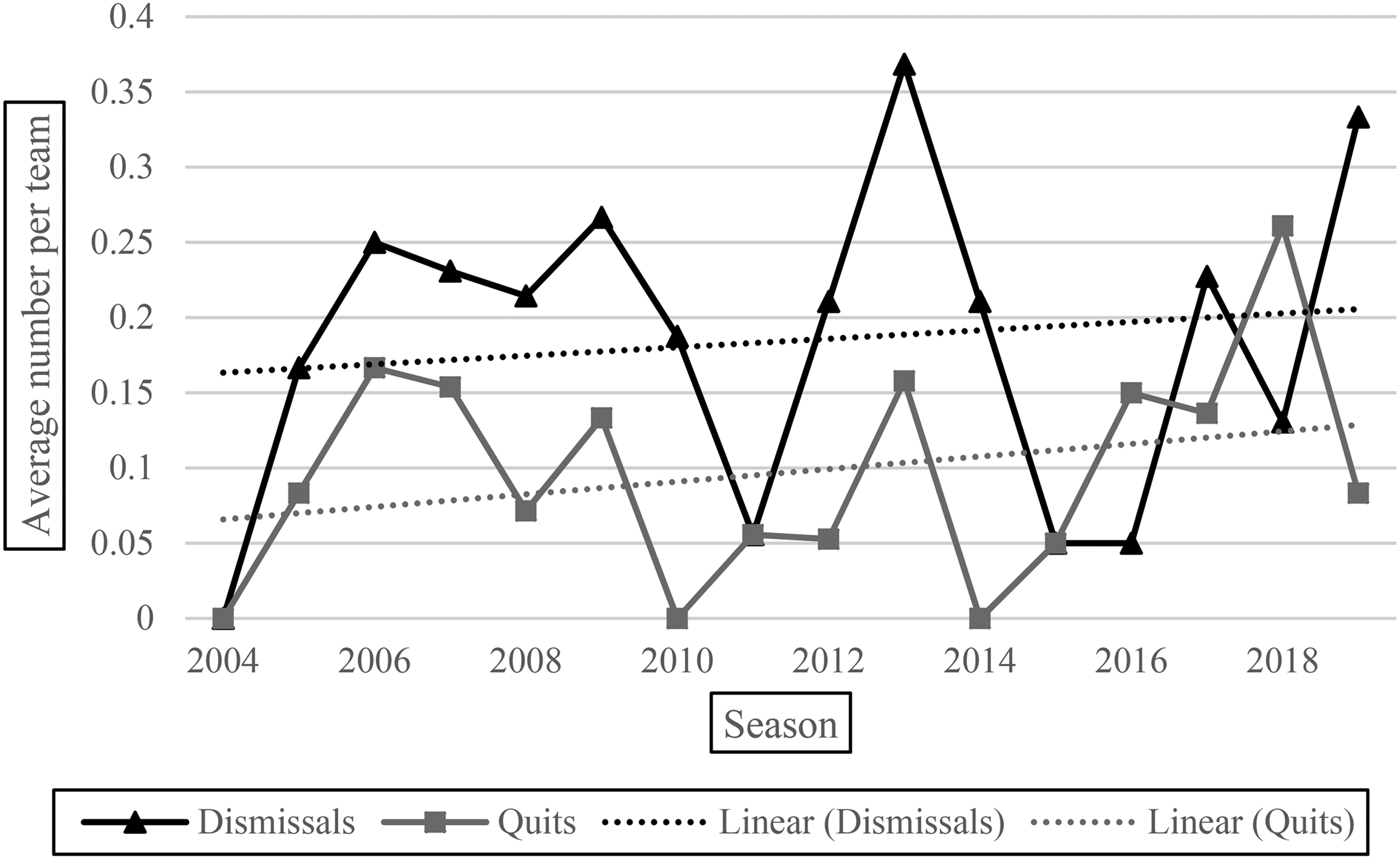
Average number of dismissals and quits per Major League Soccer (MLS) Team, 2004–2019.
As presented in Figure 2, the average number of dismissals and quits per team is subject to relatively strong fluctuations over time. However, a slight increase is visible for both types of coach turnovers in the observed period. An explanation for the outlier in the average number of dismissals per team in 2013 might be the well-balanced competition for the last playoff spots in the Eastern and Western conferences in that season. In both conferences, the team ranked at the last playoff spot, and the team that finished at the first nonplayoff spot end up with the same number of points at the end of the regular season. In the hope of improving team performance, all these four teams dismissed their incumbent coach in that season. Although the varying number of dismissals and quits per season is in line with previous studies for European football leagues (e.g., Van Ours & Van Tuijl, 2016), the slight increase of coach turnovers in MLS over time cannot be generally confirmed by earlier studies analyzing football leagues in Europe.
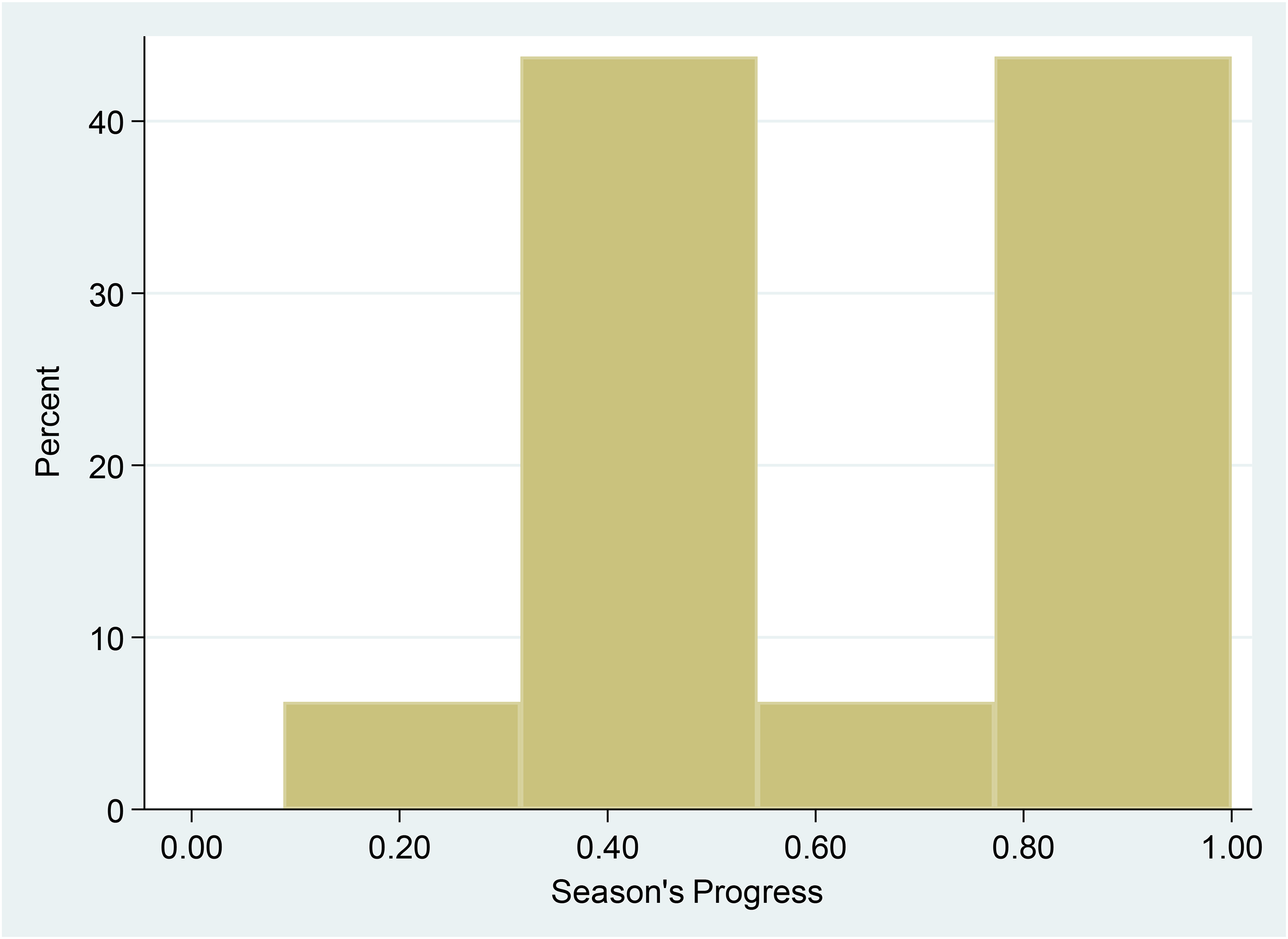
Concerning the time of the coach changes, 85% (44) of the dismissals in the dataset took place in the season (regular season or playoffs) and 15% (8) between seasons. According to voluntary turnovers, 57% (16) of the quits occur in the season (regular season or playoffs), whereas 43% (12) take place between seasons. Figures 3 and 4 show the timing of dismissals and quits, respectively, as the regular season progresses. Time lapsed is measured as the percentage of games rather than total games since MLS has a differing number of game days over time. 9
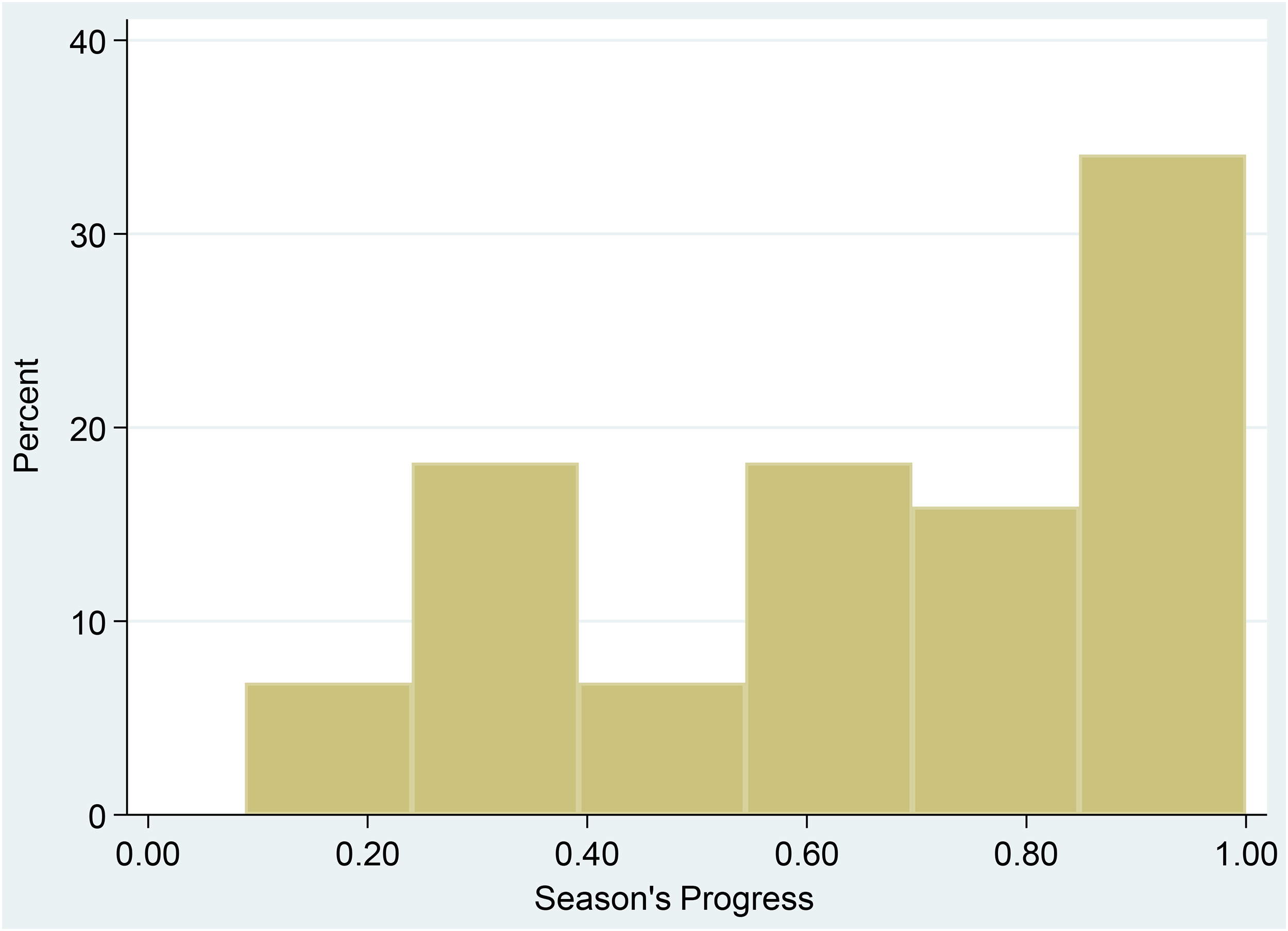
Histogram of coach dismissals by period (regular season).
Histogram of coach quits by period (regular season).
The two histograms provide the first indication that differentiating between coach dismissals and quits might be important to prevent misleading results. Similar to findings of studies examining the determinants of coach turnovers in different European football leagues (e.g., Bryson et al., 2020), a large number of coach dismissals occur at the end and during the closed season. Conversely, the percentage of coach quits in MLS is highest in the mid and at the end of the regular season. This finding is in contrast to previous studies analyzing managerial turnover in European football leagues. For instance, Bryson et al. (2020) do not find higher numbers of quits in the middle of the season (in and around the winter break). Thus, the relatively high number of MLS coaches quitting the franchise's employment relationship in the summer term is noteworthy. One explanation is that this period of time is favorable for MLS coaches having or searching for an alternative job option, especially in Europe. The different schedule of MLS compared to European football leagues enables them to leave their current MLS team in time to start with their new team the preparation for the upcoming season. While not all coaches leaving their MLS team voluntarily in mid-season get an employment relationship by a new team in immediate succession, all these coaches find a job not later than 9 months after the dissolution of their contract (see Appendix Table A2).
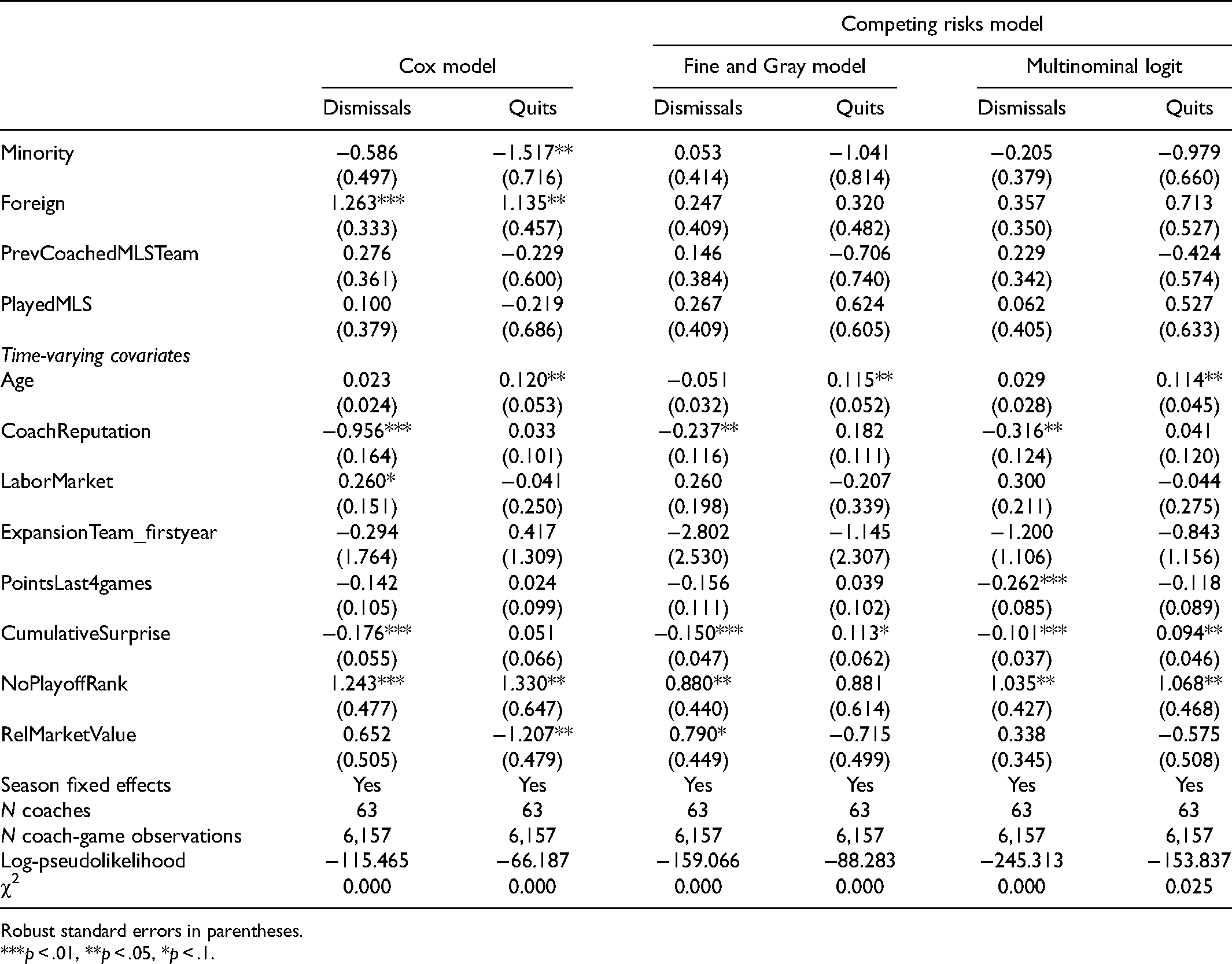
According to the estimation results, Table 2 presents the Cox proportional hazard model results, the competing risks model by Fine and Gray (1999), and the results of the multinomial logistic regression. 10 The dependent variables are tenure with the current team until dismissal and tenure with the current team until quit (measured in days). Identical model specifications are used for the two dependent variables. In line with most other survival studies (e.g., Wangrow et al., 2018), exponentiated hazard coefficients are reported for ease of interpretation. Therefore, a positive coefficient reflects a variable that increases the probability of being dismissed or quit, whereas a negative coefficient indicates a variable that decreases the probability.
Estimation Results.
Robust standard errors in parentheses.
***p < .01, **p < .05, *p < .1.
Regarding the hypotheses, despite some differences in the statistical significance of the explanatory variables, the estimates in the competing risks models generally confirm the findings from the Cox models. Concerning Hypothesis 1, the coach's reputation is associated with a reduction in the likelihood of dismissal, indicating the team owner's faith in the coach's capabilities to manage the team successfully on the pitch. For quits, only insignificant positive coefficients can be found. Thus, Hypothesis 1 can only be partially confirmed.
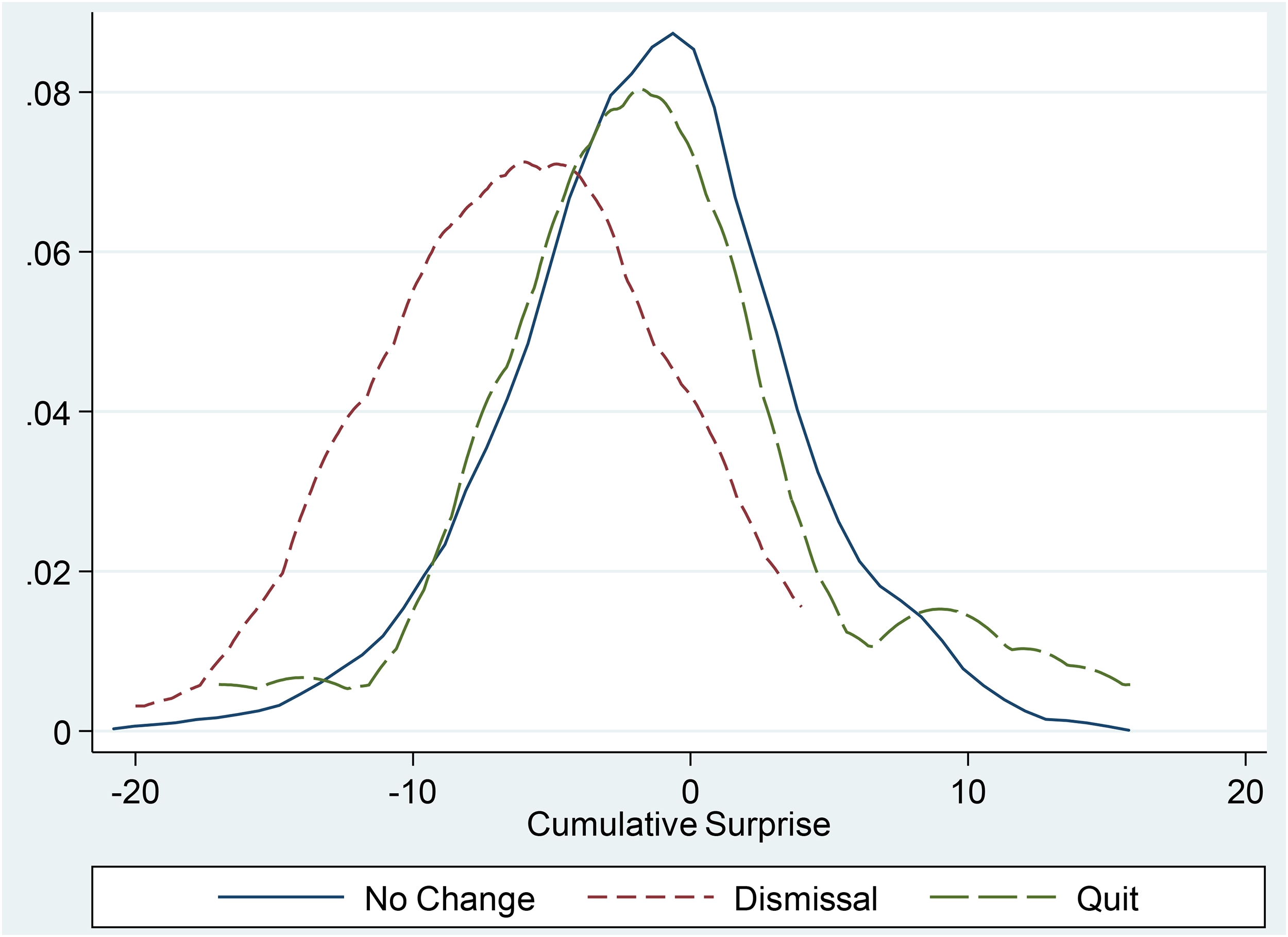
Not surprisingly and in line with previous studies examining coach separations in European football leagues (e.g., Bryson et al., 2020; Van Ours & Van Tuijl, 2016), team performance above expectations is associated with a decrease in the likelihood of dismissal, acknowledging that the coach is doing a good job conditional on the given circumstances. For quits, the results from the competing risks models confirm a statistically significant positive relationship between performance above expectations and quit rates. The findings for this relationship from studies analyzing coach turnovers in European football leagues are mixed. For instance, while Bryson et al. (2020) find that performing above expectations decreases quit rates, Van Ours and Van Tuijl (2016) find no significant relationship. An explanation for the positive relationship in this study is the limited pool of high-skilled coaches with experience in the league. Coaches that perform better than expected attract attention from other teams, resulting in an increasing number of job offers. Therefore, Hypothesis 2 is supported by the estimation results. Figure 5 provides a visualization of the relationship, reporting kernel densities for the variable
Kernel densities cumulative surprise.
Figure 5 shows a visible difference in the cumulative surprise between coach spells ending in dismissal and the other ones. As expected, coach dismissals appear mostly at teams where the coach's team performs poorly conditional to prior expectations. This finding is in line with earlier studies on coach turnovers in European football (e.g., Van Ours & Van Tuijl, 2016) and confirms the relevance of market expectations in explaining coach separations.
Moreover, as expected, not ranking on a playoff spot based on the expected final table at game day level is associated with an increase in the likelihood of dismissal, thus confirming Hypothesis 3. Although the qualification for the playoffs usually constitutes the primary sporting goal for the teams in the regular season, the results show that the decision to terminate the coach's contract heavily depends on this criterion. Concerning the last hypothesis, the results in Table 2 do not support a positive relationship between candidate availability and dismissal rates. Therefore, Hypothesis 4 has to be rejected.
For the other explanatory variables, most coefficients do not appear statistically significant in all estimation models. However, a significant positive effect of coach age on the likelihood of quitting can be found in the tested estimations. This result is in contrast to studies investigating coach turnovers in European football leagues finding no significant effect of coach age on quit rates (e.g., Van Ours & Van Tuijl, 2016). In this respect, it seems that older MLS coaches either enter into retirement or might be more willing to move to another team or club for several reasons.
While the estimation results reveal that the team's performance is associated with both types of coach separations, the role of individual coach characteristics in light of a turnover decision needs to be clarified. Assuming rational decision-making on the franchise side, all relevant available information, such as game outcomes, team performance stats, or further performance-related information, will be analyzed before it comes to a turnover decision hoping to improve performance. Thus, some individual characteristics of the coach, such as his nationality or if the coach belongs to a racial minority (based on published reports), should not influence the decision to dismiss the coach. Consequently, the importance of those individual characteristics to dismiss a coach should be interpreted as a franchise's cognitive bias.
Concluding Remarks
This paper analyzes the determinants of coach dismissals and quits in MLS throughout 16 consecutive seasons by comparing the results of different estimations. In general, by employing Cox proportional hazards and discrete-time competing risks models, the estimations’ results reveal that dismissals and quits are distinct forms of coach turnovers. Therefore, when analyzing the determinants of managerial turnover, differentiating between these two forms of separations is crucial to gain unbiased estimates. Using a set of time-dependent and time-independent explanatory variables as (potential) determinants of coach dismissals and quits, the results of this study show that team performance related to expected playoff qualification and performance expectations are major determinants for both. Also, the results provide evidence that the coach's reputation decreases dismissal probabilities, while coach age increases the probability of voluntarily quitting the franchise.
This study provides new insights for managerial turnover in a football league with a unique setup and compares the findings to studies analyzing coach replacement decisions in European football leagues. The results are relevant to MLS investors, league officials, and the management of teams, shedding light on the driving factors of coach separations for the case of MLS. Because of the similarities between football coaches and top managers in business, the findings are also of interest for labor market research by enhancing the knowledge related to voluntary and involuntary manager turnovers. Given the decision to terminate or continue a manager's employment relationship, board members must consider measures of company performance and assessments of the manager's capabilities to improve organizational performance. The board generates performance expectations based on comparatively infrequent information and evaluates actual performance to whether prior expectations are met (Puffer & Weintrop, 1991). The results of this study demonstrate that accurate and frequent measures of performance expectations matter for voluntary and involuntary turnovers in a homogenous competition compared with top European football leagues (see Brandes & Franck, 2007). In this regard, less frequent information on performance and its expectations should gain a higher relevance in more diverse industries outside the sports sector in explaining managerial turnover.
Nonetheless, this study faces some limitations. In contrast to MLS player salaries, data on coach salaries is still not publicly available. However, considering that player market values serve as excellent proxies for player salaries (Prockl & Frick, 2018), incorporating the teams’ relative market values might catch up a large part of the difference in coach salaries. Besides, cup games (e.g., U.S. Open Cup) are not included in the sample, providing performance information and probably impacts the coach's dismissal or quit rates. Furthermore, the coach's reasons to quit the franchise might play a crucial role in explaining voluntary coach turnovers. However, these are hard to observe and thus, cannot be considered for this econometric analysis. Lastly, even using regular performance data from professional football, causal statements according to the determinants of dismissals and quits of a manager cannot be provided. In this regard, identifying the causal effects of manager turnovers in and outside the area of sports economics remain a major challenge for future studies.
Footnotes
Acknowledgments
The author thanks Dennis Coates, Bernd Frick, and Rob Simmons for their valuable comments on this article.
Declaration of Conflicting Interests
The author declared no potential conflicts of interest with respect to the research, authorship, and/or publication of this article.
Funding
The author received no financial support for the research, authorship and/or publication of this article.
