



Abstract
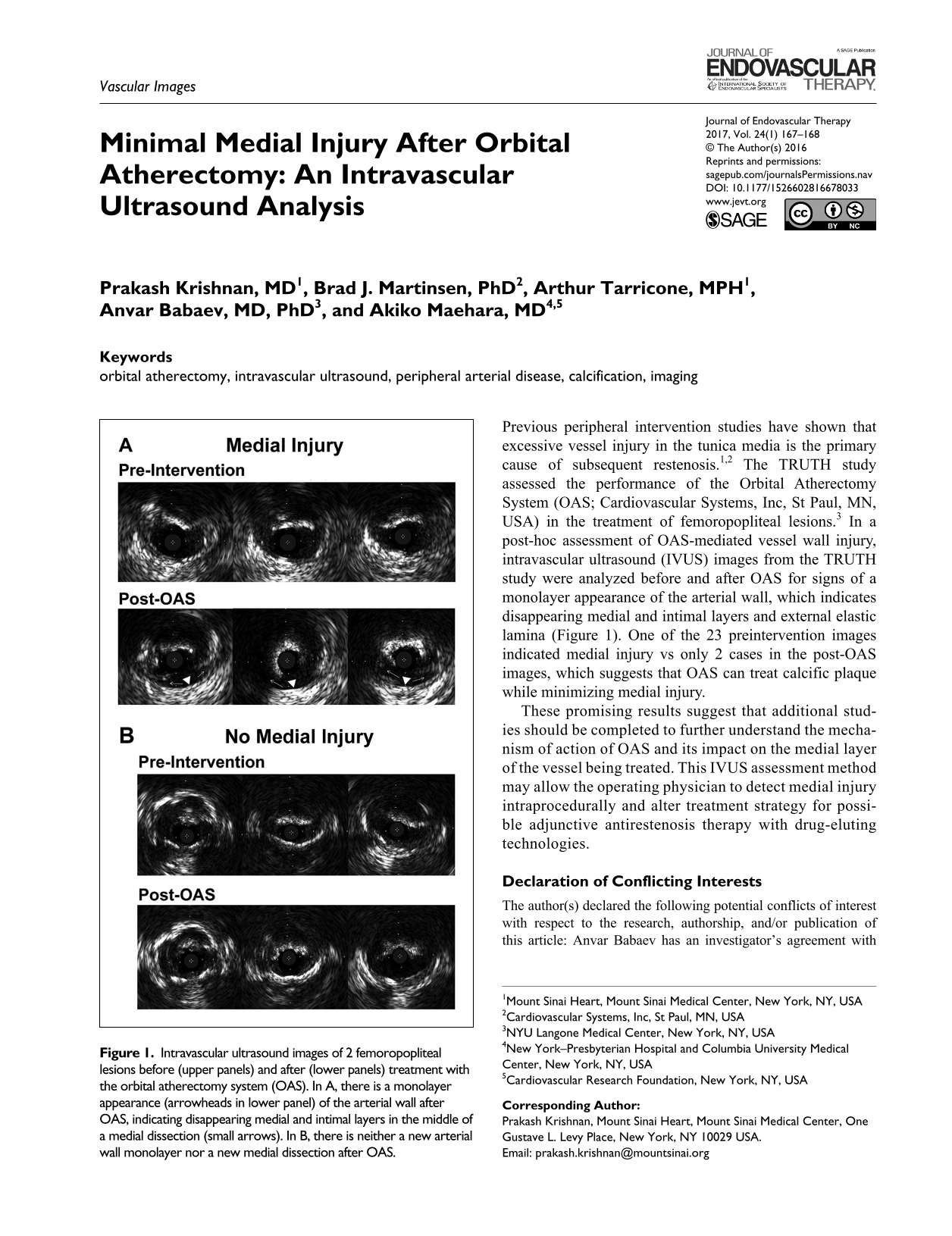
Previous peripheral intervention studies have shown that excessive vessel injury in the tunica media is the primary cause of subsequent restenosis.1,2 The TRUTH study assessed the performance of the Orbital Atherectomy System (OAS; Cardiovascular Systems, Inc, St Paul, MN, USA) in the treatment of femoropopliteal lesions. 3 In a post-hoc assessment of OAS-mediated vessel wall injury, intravascular ultrasound (IVUS) images from the TRUTH study were analyzed before and after OAS for signs of a monolayer appearance of the arterial wall, which indicates disappearing medial and intimal layers and external elastic lamina (Figure 1). One of the 23 preintervention images indicated medial injury vs only 2 cases in the post-OAS images, which suggests that OAS can treat calcific plaque while minimizing medial injury.
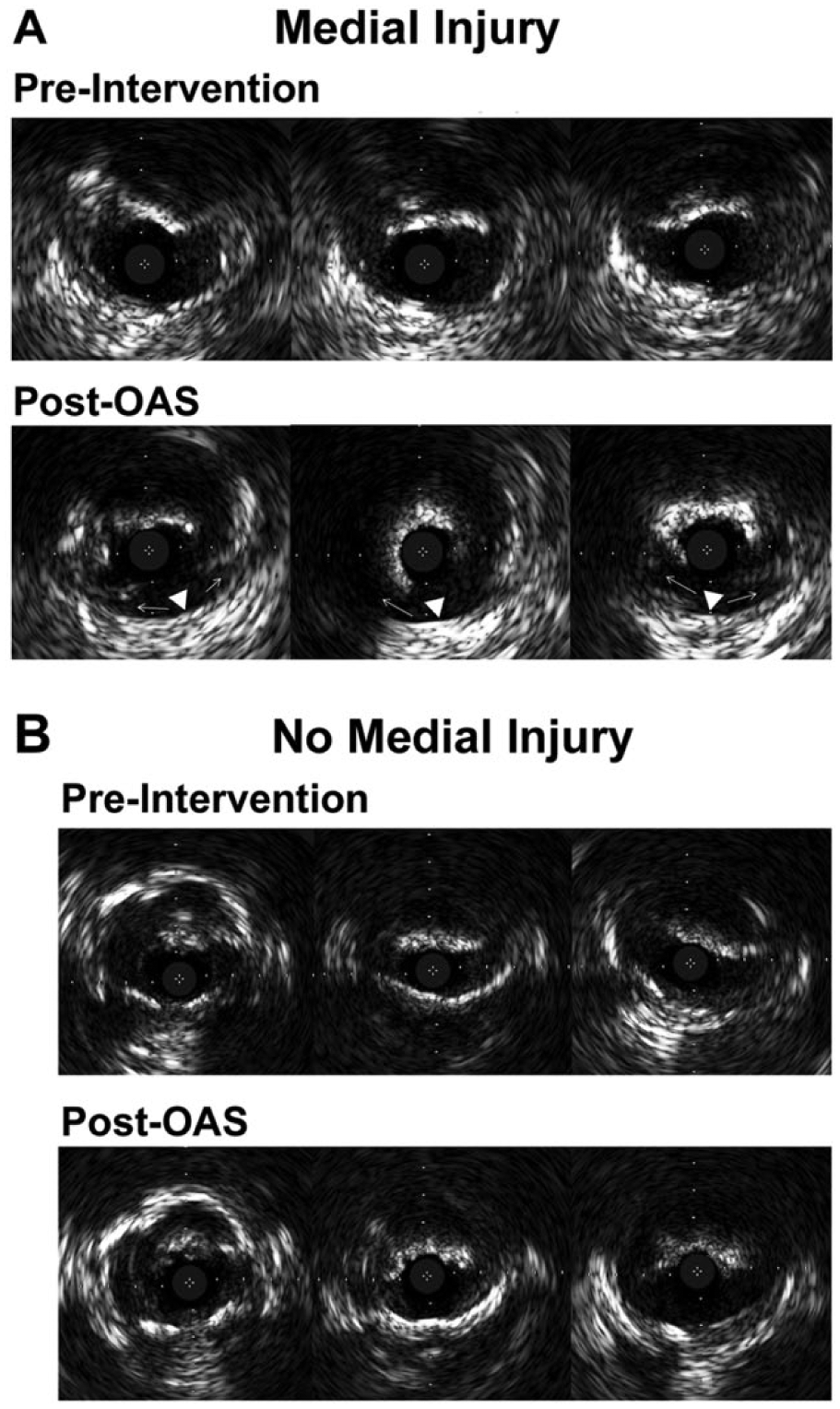
Intravascular ultrasound images of 2 femoropopliteal lesions before (upper panels) and after (lower panels) treatment with the orbital atherectomy system (OAS). In A, there is a monolayer appearance (arrowheads in lower panel) of the arterial wall after OAS, indicating disappearing medial and intimal layers in the middle of a medial dissection (small arrows). In B, there is neither a new arterial wall monolayer nor a new medial dissection after OAS.
These promising results suggest that additional studies should be completed to further understand the mechanism of action of OAS and its impact on the medial layer of the vessel being treated. This IVUS assessment method may allow the operating physician to detect medial injury intraprocedurally and alter treatment strategy for possible adjunctive antirestenosis therapy with drug-eluting technologies.
Footnotes
Declaration of Conflicting Interests
The author(s) declared the following potential conflicts of interest with respect to the research, authorship, and/or publication of this article: Anvar Babaev has an investigator’s agreement with Cardiovascular Systems, Inc (CSI). Akiko Maehara is employed at the Cardiovascular Research Foundation, which receives funding from CSI. Brad Martinsen is employed by CSI.
Funding
The author(s) received no financial support for the research, authorship, and/or publication of this article.