



Abstract
Special education teachers have students in their classrooms with a variety of needs, and it is their responsibility to meet these needs for all students. Research shows special education teachers oftentimes enter the field with limited knowledge and skills to serve students with complex communication needs. The lack of background in augmentative and alternative communication practices is detrimental, as communication skills are fundamental for students’ independence. To better understand the needs of special education teachers, a survey was conducted to identify recommendations from the experts, U.S. in-service special education teachers, to incoming educators on augmentative and alternative practices. Results show that certain participant demographics impacted the recommendations offered to incoming special education teachers. Practical implications for incoming special education teachers, school administrators, and teacher preparation programs are discussed, along with suggestion for future research directions.
Keywords
Across the United States, special education teachers are prepared through different teacher preparation programs, each with their own set of standards and instructional models (O’Neill, 2018). Nonetheless, the goal of teacher preparation programs is to train future special education teachers with the knowledge and skills necessary to be successful in their jobs. The main responsibility that special education teachers hold is to meet the needs of every student in their caseload. These responsibilities can be difficult due to the various needs of the students. Especially in cases where students have complex communication needs, as they will require different supports and services to be successful, independent communicators.
Despite special education teachers fulfilling all the requirements in their teacher preparation programs, many special education teachers feel unprepared to meet the needs of students with complex communication needs (Da Fonte et al., 2022). These students will require augmentative and alternative communication (AAC) modalities to effectively communicate. The use of AAC includes the implementation of aided language supports or systems, which can range from picture symbols to speech-generating devices (Da Fonte & Boesch, 2019; Baxter et al., 2012). To effectively determine the most suitable communication system, it is important to conduct a comprehensive AAC assessment to understand the individual needs and abilities, and then identify a specific system that best aligns with the individual’s assessment profile (Da Fonte et a.l, 2019; Erickson & Geist, 2016).
Special education teachers are expected to be involved in the assessment and implementation of AAC (Uthoff et al., 2021). Yet, evidence indicates a critical shortage of special education teachers who have the competences needed to deliver effective AAC practices (Andzik et al., 2019; Da Fonte et al., 2022). The trend of unprepared professionals has persisted over the years. Almost three decades ago, Koul and Lloyd (1994) reported that less than 25% of teacher preparation programs included a course in AAC. Of the programs that offered courses in AAC, 22% of the courses were offered at both the graduate and undergraduate levels, while 80% were only offered at the graduate level. A more recent study conducted by Costigan and Light (2010) indicated similar results, where more than 75% of special education teacher preparation programs did not offer courses in AAC. The lack of such training is detrimental, especially when opportunities to learn AAC content in their preparation programs are low for special education teachers, speech-language pathologists, and occupational therapists (Costigan & Light, 2010). The lack of AAC training for special education teachers continues (Aldabas, 2017). As such, special education teachers have found themselves unsure of the expectations and instructional needs of these students (Ghani & Mohamed, 2019).
To better support incoming (or novice) special education teachers, school districts have attempted to implement mentorship programs (Dempsey et al., 2009). Veteran teachers who serve as mentors typically support novice teachers by answering questions and providing advice as they engage in their teaching responsibilities. Often this guidance is based on the knowledge and skills gained through their in-service training or on-the-job experiences (Dempsey et al., 2009; Hobson et al., 2012). Unfortunately, mentorship programs cannot be viewed or used as the primary solution to this complex problem. The main challenge is that there is a lack of well-trained veteran teachers in AAC currently working in the field (Andzik et al., 2019; Da Fonte et al., 2022). While veteran teachers may have years of experience to mentor novice teachers on general special education practices, their knowledge and skills in AAC are insufficient to effectively mentor others in that area (Da Fonte et al., 2022). Despite the limited training opportunities, special education teachers are still expected to be a member of the AAC decision-making team (Binger et al., 2012; Erickson & Geist, 2016), and at times, may be expected to lead such a team (Bailey et al., 2006). The combination of these challenges could lead to AAC system abandonment for students with complex communication needs (Moorcroft et al., 2019). To determine if special education teachers reported having knowledge and skills in AAC, Da Fonte et al. (2022) disseminated a nationwide survey that yielded an abundance of data. To determine what current special education teachers believed assisted them in serving students with complex communication needs, a subset of the data from the section that contained open-ended questions was used in the current study. The purpose was to identify the perspectives of in-service special education teachers on what they would suggest to incoming or novice special education teachers on AAC practices. The research questions were: (a) Do in-service special education teachers report not having a recommendation due to limited or no experience in AAC? (b) What were the most frequently reported recommendations by in-service special education teachers? and (c) Were the recommendations made by in-service special education teachers related to such characteristics as years of teaching experience, types of professional licensure, or other demographic variables?
Method
Participants
Respondents were 1,972 in-service special education teachers from across the United States. However, only the 750 respondents who fully completed the demographic information and the open-ended question were included. School professionals, such as general education teachers, related service professionals (i.e., physical therapists, speech-language pathologists, and occupational therapists), school administrators, and support staff (paraeducators) were excluded. Special education teachers were recruited through snowball sampling (Merriam & Tisdell, 2016). Snowball sampling allowed the research team to identify key personnel who could identify target participants. As such, the research team could not determine the number of special education teachers who had access to the survey link; and consequently, the response rates could not be calculated.
Instrument
A survey was developed and disseminated using REDCap™, a platform to build and manage online surveys (Harris et al., 2009). To determine the validity of the survey, the first version survey was sent to five professionals in the field to evaluate the questions, provide feedback, and pilot test the final version. Three special education teachers and two university faculty served as evaluators. The evaluation team was not directly involved with the project nor data were included in the analysis. The special education teachers earned master’s degrees, one had 10+ years of teaching experience and two had 30+ years of experience. The two faculty had doctoral degrees, were employed at two different universities, and had expertise in survey studies. Feedback was provided on the language, format, and type of participant responses. The survey was revised for clarity, format, and presentation of questions. Three members of the research team completed the survey to estimate the time of completion of all sections (20–25 minutes) and to ensure it was ready for dissemination (data not included in analysis).
Both quantitative and qualitative data were collected through demographic information and an open-ended question (see Supplementary Materials). The demographic information was composed of 18 questions, where data were gathered regarding the participants’ background and work setting demographics. The goal of the open-ended question was to allow participants to provide open responses to the research question, without any pre-existing options. The question asked was “what would you suggest to incoming or novice teachers on how to implement AAC practices?”
Procedures
Post receiving Institutional Review Board (IRB) approval, the research team created a list of school administrators’ contact information. Using the U.S. Department of Education website for each state, publicly available information was compiled of superintendents, principals, and directors of special education. For states where information was not publicly available, the Department of Education was contacted via phone or email to request a list of special education directors. A total of 63,153 (99.05% of the email list) school administrators’ email addresses were collected from across the country. An additional 1,486 email addresses were added to the list (0.95% of the email list) with former undergraduate and master’s graduates from two universities, for a total of 64,639 email addresses. The recruitment email contained the survey link, an explanation of the study, its purpose, a description of the inclusion criteria, and a request to disseminate the survey to all potential participants (special education teachers). Reminders were sent every two to three weeks for 6 months. Prior to each reminder, the email list was updated by deleting email addresses of emails that were returned, or where requests were received to be removed from the contact list, and new emails were added if updated contact information was provided by the specific organization.
Data Analysis
The data were exported from REDCap™ and analyzed using Statistical Package for the Social Sciences (SPSS; version 29). Open-ended responses were exported from REDCap™ to a Microsoft Excel® spreadsheet. Responses from the open-ended survey question were coded through thematic analysis. Correlates were conducted by comparing themes to participant demographic information using t-tests, and chi-square.
Thematic Analysis
Responses to the open-ended question were coded by determining phenomenological qualitative analysis, allowing for individual responses to be assigned to categories with descriptive codes (Creswell & Poth, 2018). A codebook was created to operationally define each theme and outline examples and non-examples of potential responses. Two members of the research team coded the first 225 responses. The remaining responses (n = 525) were coded by one of the coders and the second coder conducted reliability checks on 30% of the responses (n = 158). Cohen’s (1960) Kappa was used to calculate reliability between two coders, resulting in substantial agreement across all themes (κ = 0.7359).
Descriptive Statistics and Correlates
To address RQ1 and RQ2, descriptive statistics were used to calculate means, standard deviations, frequencies, and percentages on participant demographic information. Participants’ demographic factors were evaluated across all themes. Demographic factors such as highest degree level, type of teaching licensure, type of classroom, years of experience serving students with complex communication needs, and years of teaching experience were evaluated. To answer RQ3 and determine influencing factors, participants’ demographic information was used as continuous and categorical variables. t-Tests were used to analyze the relationship between the themes and participant demographics that involved two-group comparisons (a continuous variable and each of the identified themes) to indicate if there is a significant difference between the means of the two groups. Pearson chi-square tests (p-value set at <0.05) were used as univariate analyses to determine if participants’ responses under each theme correlated with their background demographic and work settings. The purpose was to draw conclusions and make recommendations for future practices. Given the sample size (N = 750), the parametric test (t-tests) chosen met the assumption of normality.
Results
Findings are representative of a nationwide sample of 750 in-service special education teachers, who served as participants in this study. Most of the participants taught in public school settings (95.47%), across suburban communities (39.07%). Close to half (48.80%) of the participants’ highest degree earned was a master’s in special education and held a special education cross-categorical teacher licensure (51.73%). More than half of the participants taught at the elementary school level (53.87%) and most frequently in resource classrooms (39.60%). Participants’ years of teaching experience varied from ≤2 years (8.00%) to 16+ years of experience (38.67%). Participants’ years of teaching experience while serving students with complex communication needs also varied from ≤2 years (28.27%) to 16+ of experience (13.47%) among participants. Tables 1 and 2 outline participants’ background and work settings demographic, respectively.
Participants’ Background Demographics.
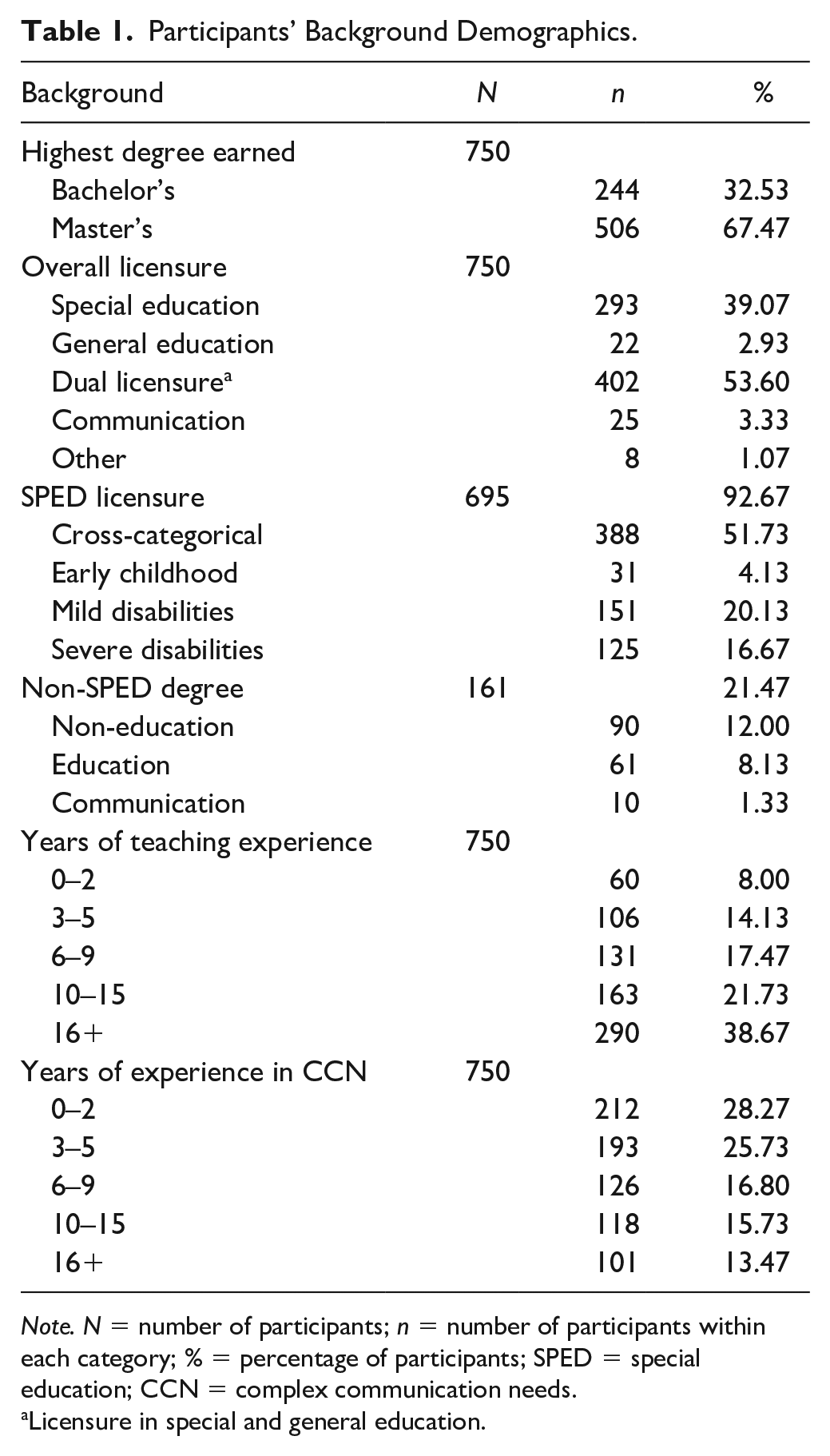
Note. N = number of participants; n = number of participants within each category; % = percentage of participants; SPED = special education; CCN = complex communication needs.
Licensure in special and general education.
Participants’ Work Setting Demographics.
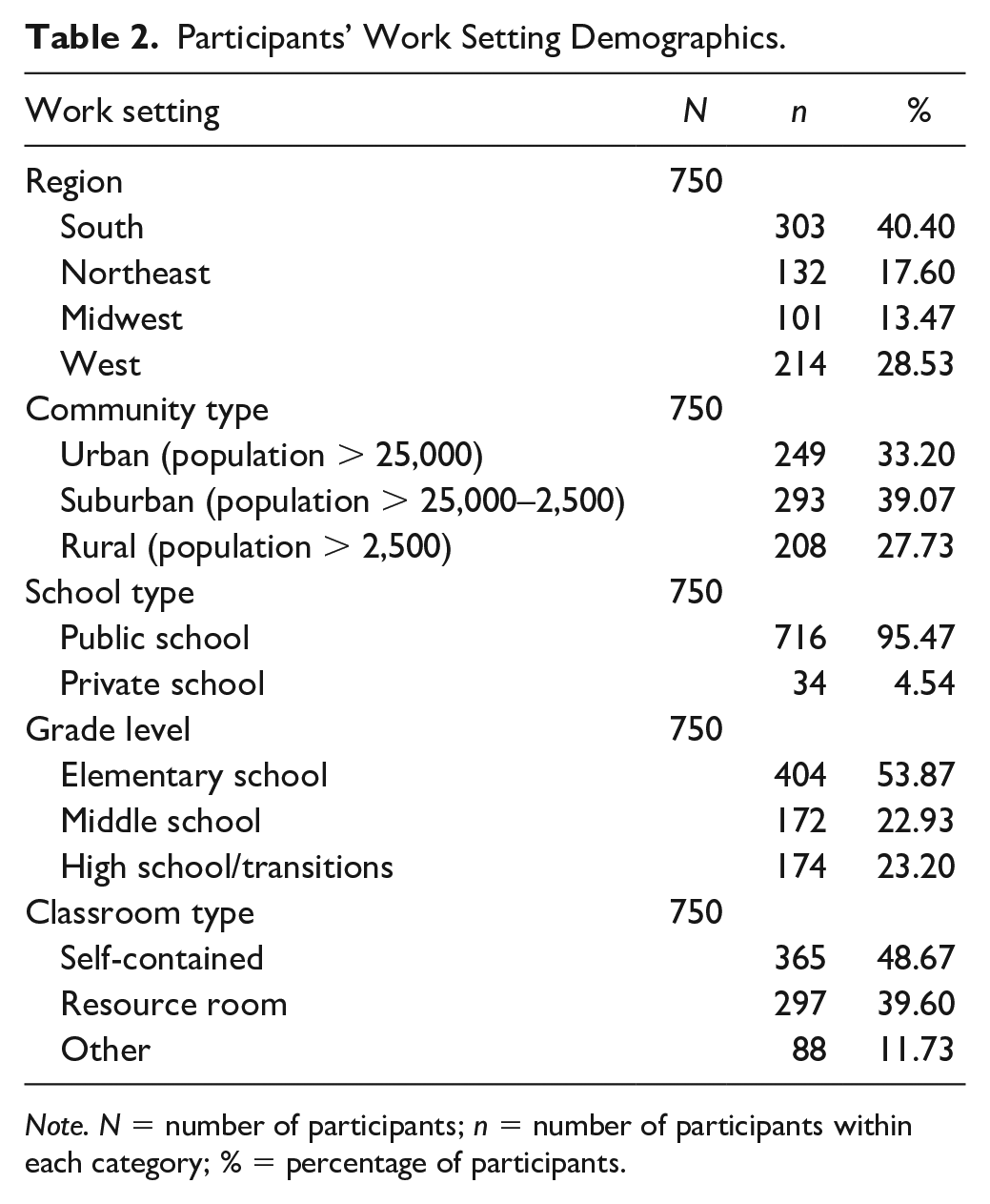
Note. N = number of participants; n = number of participants within each category; % = percentage of participants.
Six themes were identified from the participants’ recommendations. Operational definitions were created by the research team to outline key elements of each theme (see Table 3). This resulted in 588 responses coded for one theme, and 162 responses coded across multiple themes with a total of 973 responses. The themes included “lack of experience” (6.06%), the “need to advocate” (9.46%), “need to collaborate” (10.59%), “need to be proactive” (35.46%), the “need to be receptive to implementation” (8.53%), and “the need for training” (27.75%). The remaining responses (2.16%) were unrelated to the identified themes.
Operational Definitions for Identified Themes.
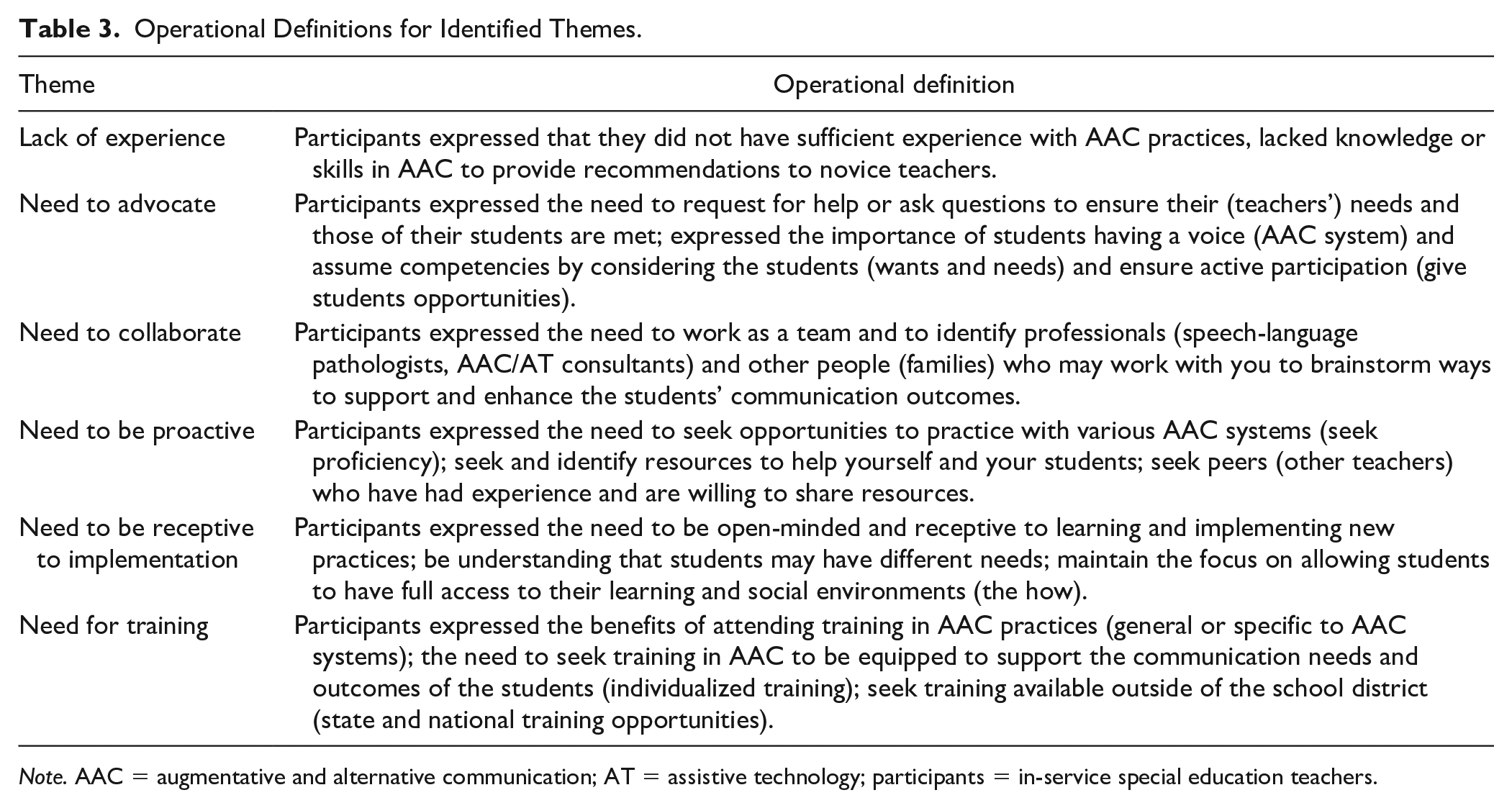
Note. AAC = augmentative and alternative communication; AT = assistive technology; participants = in-service special education teachers.
Lack of Experience
Results related to RQ1 suggested that 6.06% (n = 59) of the participants indicated having a “lack of experience” working with students with complex communication needs or unfamiliarity with AAC practices. It is noteworthy to mention that participants with ≤5 years of experience serving students with complex communication needs (54.00%; n = 405) noted a lack of experience more than participants with 6+ years of teaching experience, χ2(2, N = 750) = 10.762, p = .005. When comparing participants with ≤1 year of experience serving students with complex communication needs (M = 3.58, SD = 3.041) to those with ≥1 years of experience (M = 6.05, SD = 3.565), results show that there was a significant difference t(748) = 5.075, p < .001, Cohen’s d = 0.69, suggesting a medium effect. Interestingly, participants’ lack of experience was significantly related to their educational background and their highest degree earned. For example, participants with the highest degree earned in an area other than special education (21.47%, n = 161), reported lacking experience in AAC or serving students with complex communication needs, more so, when compared to participants with degrees in special education, χ2(4, N = 750) = 13.169, p = .001. Similarly, participants working in resource classrooms reported a lack of experience compared to those working in a self-contained classroom, χ2(4, N = 750) = 17.950, p = .001 (see Tables 4 and 5).
Comparisons of Participants’ Background Demographics and Identified Themes.
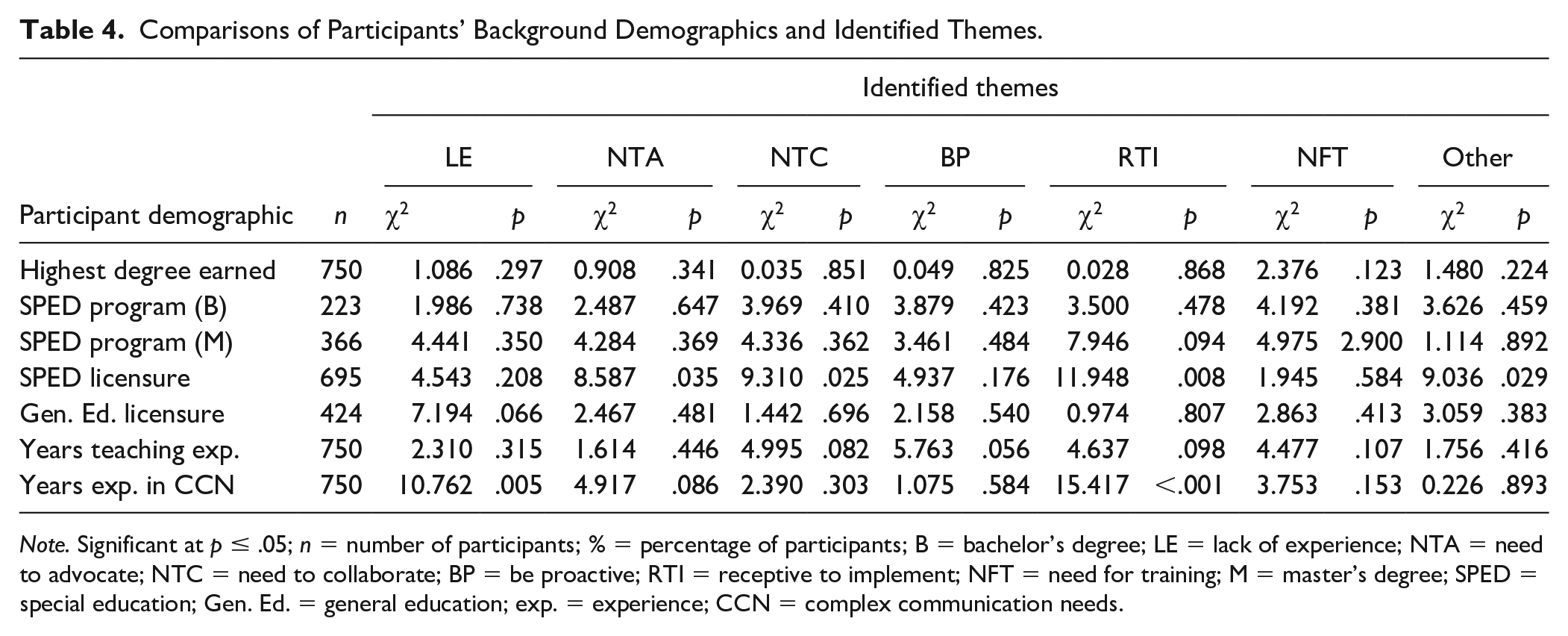
Note. Significant at p ≤ .05; n = number of participants; % = percentage of participants; B = bachelor’s degree; LE = lack of experience; NTA = need to advocate; NTC = need to collaborate; BP = be proactive; RTI = receptive to implement; NFT = need for training; M = master’s degree; SPED = special education; Gen. Ed. = general education; exp. = experience; CCN = complex communication needs.
Comparisons of Participants’ Work Setting Demographics and Identified Themes.
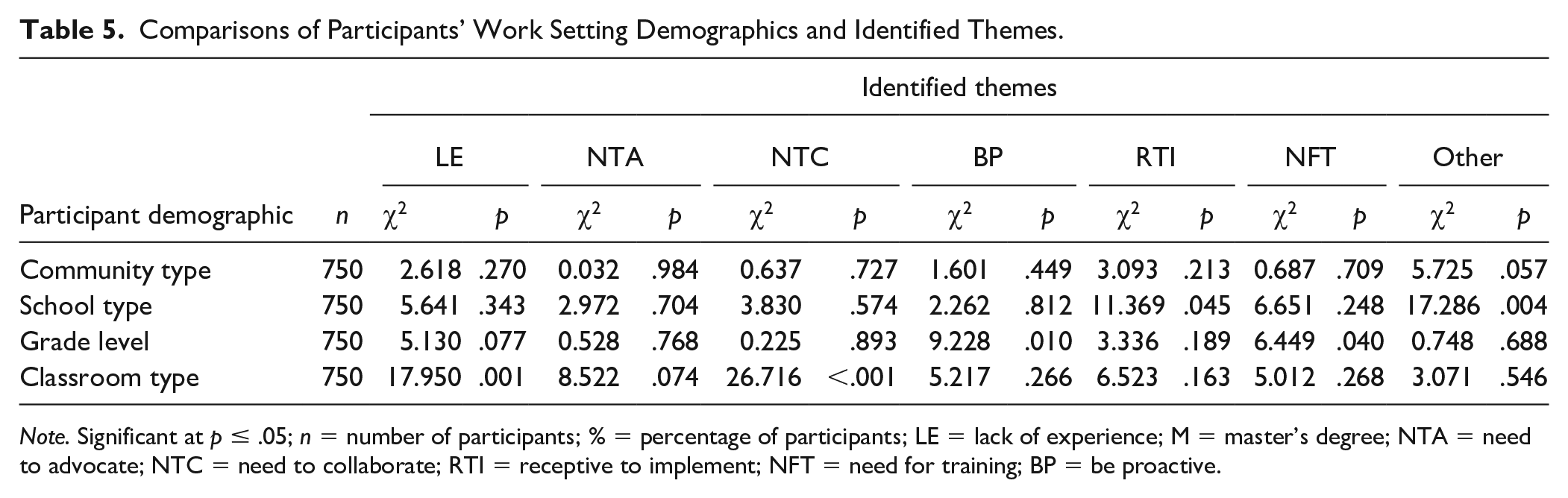
Note. Significant at p ≤ .05; n = number of participants; % = percentage of participants; LE = lack of experience; M = master’s degree; NTA = need to advocate; NTC = need to collaborate; RTI = receptive to implement; NFT = need for training; BP = be proactive.
Recommended Practices
Participants suggested five overarching practices they would recommend to incoming special education on AAC practices. These included the “need to advocate” (9.46%; n = 92), “to collaborate” (10.59%; n = 103), “being proactive” (35.46%; n = 345), “receptive to implementation” (8.53%; n = 83), and “the need for training” (27.75%; n = 263). Tables 4 and 5 outline the results and their significance for each of the identified themes.
Participants who recommended the “need to advocate,” suggested to advocate for students with complex communication needs (4.11%; n = 40) and to advocate for oneself (5.34%; n = 52). An example of such a suggestion can be outlined by Participant 2368 who indicated “teach others on the importance of communication for students. How communication can allow them to express themselves and be heard.” Similarly, Participant 1014 suggested to “. . .ask as many/any questions you can to learn about what you do not know.” When analyzing participants’ responses under this theme to their special education teacher licensure, those who held an early childhood or low incidence disabilities teacher licensure were more likely to suggest that incoming special education teachers should advocate for the student when compared to participants with other types of teacher licensures, χ2(3, n = 695) = 8.252, p = .041. Similarly, participants who reported working in self-contained classroom settings suggested the need to advocate for students more than participants who reported working in a resource classroom, χ2(4, N = 750) = 10.126, p = .038.
When analyzing responses under the theme “need to collaborate,” this recommendation comprised responses that outline the importance of working with other professionals and families. They were significant when compared to participants’ type of special education teacher license and years of experience serving students with complex communication needs. For example, participants with an early childhood special education teacher licensure were more likely to suggest the need to collaborate when compared to participants with other types of special education licensures, χ2(3, n = 695) = 9.310, p = .025. Comments made by participants can be summarized as “. . .collaborating and sharing information as a team is crucial to meet the needs of any child with a disability” (Participant 974). Furthermore, significant differences such that teachers with less years of teaching experience were more likely to report the need for collaboration; t(748) = −2.415, p = .016, e.s = small, Cohen’s d = −0.255, suggesting that participants with more years of teaching experience were more likely to report the importance of collaboration.
For those who recommended the “need to be proactive,” they were suggesting how vital it is to seek information, support, or guidance, and take initiative. Results indicated that the grade level taught had an impact on participants’ responses. For example, 55.81% (n = 96) of participants who taught at the middle school level suggested being proactive more than participants at the elementary and high school levels, χ2(2, N = 750) = 9.228, p = .010. In addition, significant differences were found related to years of teaching experience; where those with less years of experience (M = 9.00, SD = 3.563) reported the need to be “proactive” less than those with more years of experience (M = 8.41, SD = 3.637); t(748) = 2.226, p = .026, Cohen’s d = 0.004, indicating a small effect. An example of the suggestions for the need to be proactive can be best represented by “take as many classes, workshops, webinars as you can to expose yourself, especially if you know your passion is to work with students that have significant language challenges” (Participant 2019; or Participant 1439 who suggested “to be proactive and find resources and learning opportunities in which you can gain knowledge on AAC.”
It is important to highlight that the recommendations under the theme of “being receptive to implementation” included responses that emphasized the necessity of being open to try new strategies and embed the communication system. When analyzing these results, participants with a low incidence disabilities teacher licensure made this recommendation most often (20.00%) while it was less common (8.76%) by participants with a cross-categorical teacher licensure, χ2(3, n = 695) = 11.949, p = .008. A common representation of such sentiment was outlined by Participant 2277 who indicated “at least try things with your students, even if you think they won’t get it, or it is too complicated for a student to comprehend. Students surprise us every day with how complex they can use various devices or communication skills.” Results under this theme also indicated that participants with 6 to 15 years of experience serving students with complex communication needs more commonly suggested being “receptive to implementation” than other participants, χ2(2, N = 750) = 15.417, p < .001. Furthermore, years serving students with complex communication needs was also significant; specifically, those with more years of experience were more likely to report “being receptive to implementation” (M = 6.82, SD = 3.297); t(748) = −2.809, p = .009, Cohen’s d = −0.30, suggesting a small negative effect; then those with less years of experience (M = 5.74, SD = 3.605).
One interesting theme that arose from participants’ recommendations was the need to “seek training” (27.75%; n = 270). More specifically, requests were made for both general (25.59%; n = 249) and specific training in AAC (2.16%; n = 21). Examples included sentiments such as “I would suggest that all new teachers and those in training have some exposure to AAC. The more we all know about the resources available, the better equipped we will be to work with students” (Participant 606), and “. . . go to as many PDs related to AAC” (Participant 2027). Moreover, 39.11% (n = 158) participants who reported working in an elementary school, more often recommended a need for training when compared to participants who worked in middle or high school settings, χ2(2, N = 750) = 6.449, p = .040.
Discussion
This study focused on three research questions pertaining to the special education teachers’ recommendations for incoming special education teachers. For research question 1 (RQ1) and 2 (RQ2), six main themes were identified as the recommendations from the in-service special education teachers’ survey responses. These included: (a) “lack of experience”; (b) “advocate”; (c) “collaborate”; (d) “be proactive”; (e) “receptive to implementation”; and (f) “need for training.” Additionally, several influencing factors (RQ3) were identified based on in-service special education teachers’ characteristics (demographic and work setting) to their recommendations for novice special education teachers.
Limited Experience Serving Students With Complex Communication Needs
For RQ1, approximately 7.87% of in-service special education teachers reported being unable to provide recommendations about AAC for incoming special education teachers due to a “lack of experience” in AAC (theme 1). Teachers with certain characteristics (RQ3) were more likely to fall within this group if they had <1 year of experience serving students with complex communication needs, had the highest degree earned in an area other than special education, or worked in a resource classroom. These results align with past research suggesting there is a lack of AAC pre-service training available to special education teachers (Da Fonte et al., 2022; Costigan & Light, 2010; Koul & Lloyd, 1994). Findings by Andzik et al. (2019) further display the need for more AAC training. They interviewed both veteran and novice special education teachers about AAC services in schools. They showed that while 29% of the participants received some AAC training from the school speech-language pathologist, 35% of participants reported that their schools did not provide any AAC training. Thus, any training they chose to attend was at the expense of the special education teacher. Moreover, past research indicates that pre-service training of special education teachers has been a long-standing barrier to the implementation of AAC for students with complex communication needs (Costigan & Light, 2010; Koul & Lloyd, 1994; Mukhopadhyay & Nwaogu, 2009).
Recommended Practices
Five themes were derived from the data for RQ2 and were aligned with two overarching areas, professional disposition (i.e., advocate, collaborate, be proactive, be receptive to AAC implementation) and professional skills (i.e., need for training). Within professional disposition (i.e., attributes related to the special education teachers’ mindset and commitments when working with students), in-service special education teachers primarily recommended that incoming special education teachers “advocate” for the needs of students with complex communication needs and for themselves. Special education teachers who were licensed (RQ3) in early childhood or low-incidence special education, or who taught in a self-contained classroom, were more likely than other participants to suggest the importance of advocating. These findings are not surprising given that others have noted the importance of advocacy. Puig and Recchia (2012) reported in their study that first-year teachers who were dually certified in early childhood and special education acted as advocates for students with special needs in their classrooms to meet the student’s needs.
Additionally, special education teachers in the current study who had either an early childhood special education teacher licensure or had 16+ years of experience serving students with complex communication needs were more likely to recommend that incoming special education teachers “collaborate” with others to support students with complex communication needs as compared to teachers with other backgrounds. As with a study conducted by Bailey and colleagues (2006), they highlighted collaboration as an important factor during the AAC decision-making and implementation process. These findings further align with an assertion by Da Fonte and Boesch (2016) in which they reported that teamwork and collaborative practices with different stakeholders were critical for effectively serving students who use AAC. Collectively, these findings indicate that students with complex communication needs may be better served when professionals can collaborate and draw upon others’ expertise and experiences to support the students.
In-service special education teachers also recommended that incoming teachers should “be proactive” in obtaining information, support, and guidance in addressing the needs of students with complex communication needs. Upon further inspection of the data, special education teachers who reported teaching in middle schools were most likely to recommend that incoming special education teachers be proactive. While it is unclear why this subset of teachers was more likely to report being proactive, Bailey et al. (2006) conducted a study in which participants outlined the importance of being proactive and planning how to incorporate AAC systems into the classroom. Similarly, in Andzik et al.’s (2019) study, participants reported being proactive and seeking out trainings on their own time; however, much of it was informal training such as reading articles and blog posts or using other internet resources to gain tips on AAC implementation.
For special education teachers in the current study with low-incidence disabilities teacher licensures or 6 to 15 years of experience serving students with complex communication needs, they were more likely to recommend that incoming special education teachers “be receptive” to AAC implementation than teachers with other demographics. Some of their responses pertained to the importance of having teachers be willing to try different AAC strategies and devices. Past research also supports the importance of being receptive to implementation and individualizing the AAC selection process for students (Da Fonte, 2019; McBride, 2011). One possibility for those with teacher licensures in low-incidence disabilities is that given their type of teacher preparation program, they likely have a greater understanding of the importance of using AAC with students with complex communication needs (Da Fonte et al., 2022). Likewise, due to their veteran status in serving students with complex communication needs, the teachers’ first-hand experience likely influenced their thoughts about the value of implementing AAC with this student population.
The findings pertaining to the teachers’ professional dispositions are noteworthy, especially given the scant professional development training offered by many school districts. As such, the final overarching theme from in-service special education teachers was a “need for training.” This was most often suggested by those who reported working in elementary schools. Given that most of the participants in the study worked in elementary school settings, it is possible that their views were overrepresented. Nonetheless, one speculation is that elementary special education teachers are serving students with a range of needs, unlike secondary classrooms where specialized classrooms are typically more prevalent. Thus, they may be more inclined to want more AAC training. In elementary schools, students are beginning to display different needs as they navigate their new learning environment. There may be more gaps in teacher training on how to support these new growths. Unfortunately, previous studies have shown that special education teachers have limited or no training in AAC (Andzik et al., 2019; Da Fonte et al., 2022; Costigan & Light, 2010), and therefore, it is not surprising that a need for AAC training was a theme that was identified from the findings in the current study.
Overall, when considering the findings from other research coupled with the results from the current study, it is important to note that AAC training is essential for all special education teachers, rather than specifically for incoming special education teachers. Teachers who will be serving students with complex communication needs will need to know how to advocate for their students and themselves, collaborate with others who may be more knowledgeable in AAC, be proactive in meeting the varying needs of their students, and be receptive to AAC implementation to maximize their students’ communicative abilities.
Practical Implications
For special education teachers, school administrators, and teacher preparation programs, these findings highlight the need to train teachers meaningfully in a multifaceted manner such as through professional development training, course curricula, or practica. To support the special education teachers in acquiring skills related to professional disposition, a call is warranted to teacher preparation programs to ensure that pre-service special education teachers have opportunities to learn about and practice advocating and collaborating through specific coursework, mock simulations, or role-playing, and in real-life situations under the mentorship of veteran supervising teachers during practica or student teaching. For novice special education teachers, similar learning opportunities could be addressed through targeted professional development or with direct instruction plus coaching. As for helping special education teachers become proactive or receptive to AAC implementation, both of these areas require that teacher preparation programs and school administrators facilitate an environment that is conducive to building and encouraging broader skill sets such as being proactive in understanding what the students may need to be successful communicators, including seeking guidance and support, as well as how to be receptive to learning about and using AAC strategies for the benefit of their students.
Based on the results of this study, a call should also go to state departments and professional organizations to evaluate teacher licensure categories and requirements. Findings indicated a significant difference across preparation programs leading to different types of teacher licensures and recommendations being made by these special education teachers. Perhaps more consideration should be given to redesigning curricula and practica in a way that stresses the needs of students of younger students, and those with low-incidence disabilities, including students with complex communication needs.
Limitations and Future Research Directions
Several limitations were identified in this study. Foremost, the survey was set up in a manner in which open-ended questions were optional and without a character minimum for a response. While there is value in open-ended questions due to their ability to allow participants to freely respond, 123 (14.45%) participants were excluded from the study based on no response (e.g., N/A, none). Future extensions of this study should include requiring that all open-ended questions be completed prior to advancing to subsequent sections and that the responses meet a minimum character count. Future research should also consider asking multiple open-ended survey questions that center on the themes identified in the current study to gather richer data.
Another potential limitation was that snowball sampling was employed. As such, not all special education teachers may have been given the opportunity to participate in the study, leading to possible sample bias and inability to generalize the results to the broader special education teacher population. Furthermore, future research should consider asking participants to identify the disability categories that best describe the students they serve with complex communication needs. This would allow for comparison analyses between the participants’ demographics, the specific disability categories of their students, and the relationship with their responses. Additionally, future research could incorporate branching logic into the survey. Thereby, depending on the participant’s responses in the demographic section, subsequent questions are specifically formulated for the targeted sample to obtain in-depth perspectives and allow comparisons to be made across groups.
Conclusion
The current study builds on previous studies, and from the perspectives of in-service special education teachers, the findings suggest there is a continued need for further training in several key areas for incoming teachers. Results also show there is a link between certain participant demographics (e.g., teacher licensure category, work setting, and years of experience) and their recommendations for incoming special education teachers. Based on the identified themes from the responses, incoming special education teachers must learn to advocate, be proactive, collaborative, and be receptive to AAC implementation. These areas are critical to supporting the needs of students with complex communication needs as well as encouraging their functional independence.
Supplemental Material
sj-docx-1-cdq-10.1177_15257401231219231 – Supplemental material for Lighting the Path for Incoming Special Education Teachers: Advice From Special Educators on AAC Practices
Supplemental material, sj-docx-1-cdq-10.1177_15257401231219231 for Lighting the Path for Incoming Special Education Teachers: Advice From Special Educators on AAC Practices by Rachel D. Young, Alexandra M. Da Fonte, Miriam C. Boesch, Hanneh S. Shiheiber and Gillian C. Neff in Communication Disorders Quarterly
Footnotes
Acknowledgements
We would like to thank Robert M. Hodapp, for all his help and guidance with the data analysis. We would also like to give a special thanks to Nicole Wolfe for all her help during early phases of this project, and Kaitlyn R. Shaw and Jennifer F. Lipo for all their assistance during the editing phase of this project. The findings reported are part of the first author’s master’s thesis.
Declaration of Conflicting Interests
The author(s) declared no potential conflicts of interest with respect to the research, authorship, and/or publication of this article.
Funding
The author(s) received no financial support for the research, authorship, and/or publication of this article.

References
Supplementary Material
Please find the following supplemental material available below.
For Open Access articles published under a Creative Commons License, all supplemental material carries the same license as the article it is associated with.
For non-Open Access articles published, all supplemental material carries a non-exclusive license, and permission requests for re-use of supplemental material or any part of supplemental material shall be sent directly to the copyright owner as specified in the copyright notice associated with the article.
