



Abstract
Nail technicians face various hazards in their work environment, influenced by complex factors, involving not only nail technicians and owners but also customers. While significant research has focused on technicians’ health and safety views, customers’ perspectives remain underexplored. This study addresses this gap by assessing changes in customer attendance since COVID-19 and describing their perceptions of nail salon health and safety. Using an online survey, we analyzed responses from 428 participants. Over 50% of participants reported a change in their nail salon attendance since the beginning of the COVID-19 pandemic; 32% reported visiting more frequently, while 22% visited less often. Most customers expressed satisfaction with salon cleanliness (93%) and air quality (86%). Approximately half had no strong preference for technician glove (46%) or mask use (53%). In addition, 80% were unaware of products marketed as having fewer chemicals. Raising awareness among customers toward the vital of health and safety in nail salons—such as the benefits of technicians’ glove and mask use, as well as the merits of safer product use—can protect both customers and nail technicians. This study suggests that customers may be important partners in enhancing workplace health and safety. Future research should explore customers’ expectations regarding health and safety and their preferences for safer products, providing valuable insights for advocates and policymakers to effectively tailor educational programs/public health campaign for customers and improve health and safety standards in the beauty industry.
Nail technicians are often women, recent immigrants, and precariously employed and have less power to implement health regulations. Nail technicians encounter a variety of hazards, including chemicals and ergonomic stressors at the workplace (Abareshi et al., 2022; Harrichandra et al., 2020; Lamplugh et al., 2019; Lee et al., 2022; Ma et al., 2019; L. Nguyen et al., 2022; Zhong et al., 2019). Data on the number of nail salons and nail technicians are difficult to locate, but some sources suggest that there were over 39,000 hair and nail salons in Canada in February 2020, prior to the COVID-19 pandemic (IBISWorld, 2024a).
Nail technicians and nail salons were severely impacted by the COVID-19 pandemic, and efforts to improve health and safety in nail salons were interrupted. In Ontario, Canada, salons were shut down by a Public Health Order from March 2020 to May 2020 and then again from December 2020 to June 2021. This had profound personal impacts on nail technicians but also economic impact (Nail Technicians’ Network, 2021, 2023). Industry data suggest the nail and hair industry’s revenue declined 25.7% in 2020, but that some recovery has occurred (IBISWorld, 2024a). Revenues are reported to have increased 0.5% over 5 years (2019–2024; IBISWorld, 2024a). Similarly, the number of hair and nail salons is reported to have increased from over 38,000 in 2022 to just over 43,000 in 2023 (IBISWorld, 2024a); industry data projects that there will be 70,024 employees working hair and nail salons in Canada in 2024 (IBISWorld, 2024b).
The nail salon work environment is affected by complex factors, including salon management, client preferences, and the regulatory landscape. It has been suggested in previous research that nail technicians, salon owners, customers, non-profit organizations, government agencies, and researchers need to cooperate and collaborate to create a healthier and safer work environment (Dang et al., 2021; T. B. Huynh et al., 2019; Le & Huynh, 2023; D. T. Nguyen et al., 2023; Quach et al., 2015). The nail salon dynamics are aligned with Robson et al.’s (2005) “Conceptual Model of a Healthy Workplace” that considers both individual-level factors (i.e., nail technicians, customers, and salon owner preferences) and system-level influences, such as regulations, policies, and guidelines in different jurisdictions (Robson et al., 2005). Robson et al.’s (2005) healthy workplace model emphasizes the interconnected roles of workplace parties, in this case that of nail technicians and customers, as significant contributors who can influence the workplace and foster a safer, healthier salon environment.
Nail salons are workplaces that are open to the public, and nail technicians provide services to customers who are members of the public. Health concerns affecting both nail technicians and customers have become an emergent focus of community-based healthy nail salon initiatives across North America, including the California Healthy Nail Salon Collaborative (www.cahealthynailsalons.org) and the New York Healthy Nail Salon Coalition (nyhealthynails.org). Previous research suggests that customers can have positive or negative effects on practices in nail salons (Dang et al., 2021; T. B. Huynh et al., 2019; Quach et al., 2015; Seo et al., 2019; Huynh et al., 2024). This is hypothesized to occur through customer preferences that influence the products and practices used in the salon (Sanaat et al., 2021; Seo et al., 2019). For example, a particular brand of polish may be preferred by customers and thus ordered more. Customers might also play an important role in advocacy, specifically customers’ attitudes about chemicals in products that are being used on their bodies (J. Huynh, Sharma, et al., 2024). The removal or reduction of toxic chemicals in products could, therefore, benefit the health of customers but also nail technicians who are using the products all day, every day (Quach et al., 2015; Seo et al., 2019). Generally, this evidence comes from studies involving nail technicians and owners; research directly focused on customers is less common. In 2023, the California Healthy Nail Salon Coalition conducted an online survey of 500 nail salon customers in California focused on how customers can contribute to improve nail technicians’ labor conditions, finding that customers were generally willing to pay more to support better labor conditions for nail technicians (J. Huynh, Sharma, et al., 2024). The goals of the current study were to better understand the impact of COVID-19 on nail salon customers’ attendance and to describe customers’ perspectives on health and safety in the nail salon environment.
Method
This study was approved by the Human Research Ethics Board at the University of Toronto. Nail salon customers who had received a manicure or pedicure in a nail salon in the past 5 years and who lived in Ontario, Canada, were eligible to complete the survey. An online survey was designed to collect data on customers’ use of nail salons before and after the onset of the COVID-19 pandemic; experiences and satisfaction with nail salon’s safety practices; as well as awareness of different types of beauty products. Data collection was managed using REDCap electronic data capture tools hosted at the University of Toronto (Harris et al., 2009, 2019). Informed consent was collected online, and eligibility was confirmed before beginning the survey. Participants were able to complete the survey anonymously. At the end of the survey, participants were asked a series of demographic questions and given an opportunity to be entered into a draw for one of three gift cards. To be entered into the draw, they needed to provide their contact information.
Recruitment, Data Review, and Exclusion
The recruitment was conducted online via email through research and professional networks and was also posted on social media (Facebook and X) (Phase 1). As we were concerned about potential fraudulent or automated responses (e.g., bots) to an online survey, we then conducted recruitment in-person by distributing on a physical flyer and posted or shared in public spaces (e.g., community message boards; nail, hair, and barber salons; at beauty events and conferences; and at transit hubs) (Phase 2). The data from the two phases were collected through unique links so that they could be compared. We used a set of simple rules to screen responses and identify potentially invalid responses: batched responses (same start and end time), a text response about the current weather, reported postal code, and email address. In addition, respondents who lived outside of Ontario, Canada, or who did not complete the survey were excluded. The study resulted in 728 unique responses overall, of which 148 (20%) were deemed fraudulent and 152 (121%) were either incomplete or outside the geographic area (Supplemental Table S1), leaving a total of 428 responses for analysis.
Data Analysis
Data were collected in REDCap and then exported for analysis in SPSS (IBM Corp., 2022). Several variables were re-coded (age, income, education, employment, postal code) with groups combined (or created) to ensure adequate group sizes for statistical analysis. For employment, respondents who identified as a student (regardless of other responses) were considered as students. Caregivers, retirees, and those unemployed were considered to have “other” employment status. Geographic area was described using the first character of respondent’s postal code, which identifies provinces or districts in Canada (Greater Toronto Area [M]; Central Ontario [L]; Other [K, N, P]) (Canada Post, 2022).
Descriptive (e.g., frequencies, proportions) and bivariate statistics (e.g., Chi-square, Fisher’s exact) were conducted as appropriate for the variable type and cell sizes. Kappa was used to assess agreement between two variables. Where a participant responded “prefer not to answer” the participant was excluded from analyses that included the variable; as a result, the sample size varies between individual statistical tests. In this article, we report analysis for Phase 1 and Phase 2 data combined. As a sensitivity analysis, we also conducted a full analysis using Phase 2 data only; these results were similar, leading to the same conclusions, and thus are not presented separately here.
Results
Study Demographics
Demographics for survey participants (n = 428) are shown in Table 1 overall and also stratified by study phase. Participants were largely women (96%) from the Central region (92%). The majority (55%) were under 30 years of age and were born in Canada (64%). Overall, 48% of participants reported a household income greater than $100,000. There were no statistically significant differences between Phases 1 and 2 in terms of age, sex, employment status, or income level (Table 1). However, Phase 2 participants (where recruitment was done in person) were significantly more likely to be located in Central Ontario, more likely to be born outside of Canada, and less likely to identify as White (Table 1).
Study Participant Demographics Overall and Stratified by Phase 1 and Phase 2
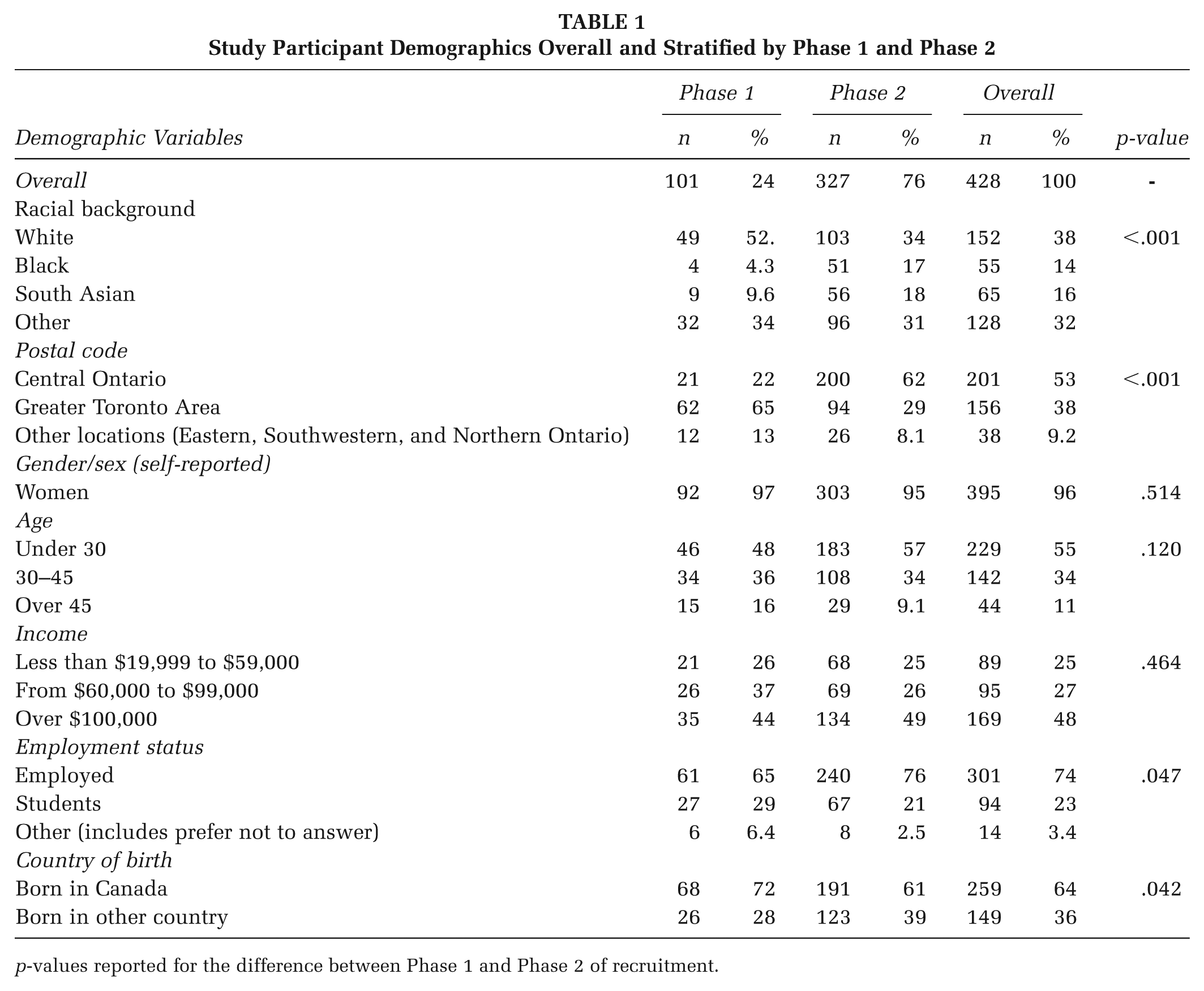
p-values reported for the difference between Phase 1 and Phase 2 of recruitment.
Nail Salon Attendance
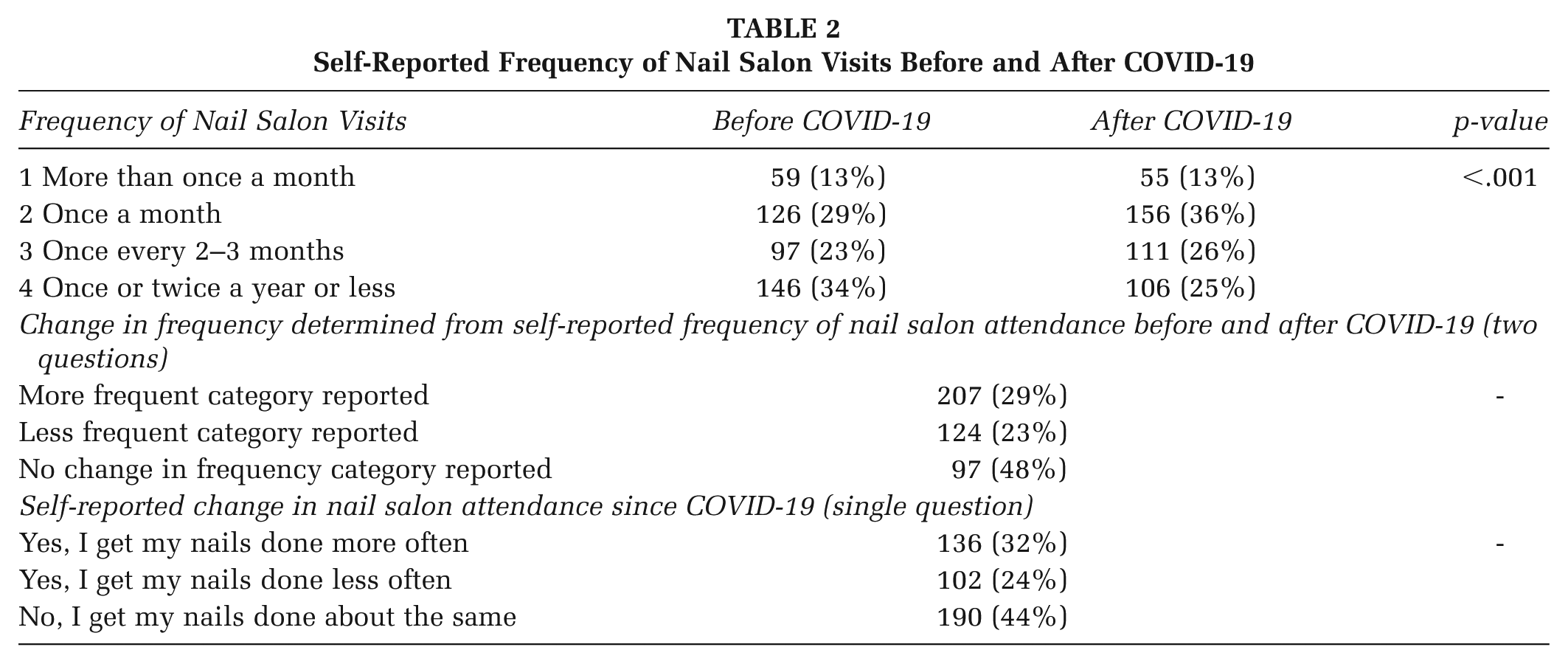
Participants’ self-reported frequency of nail salon visits since nail salons re-opened during COVID-19 (July 2021) indicated that almost half (49%) of participants visited nail salons at least every single month, 26% of participants visited once every 2–3 months, and 25% of participants visited once or twice a year or less (Table 2). Changes in nail salon comparing attendance from pre-COVID with attendance after July 2021 were examined in two ways. When asked directly, 32% (n = 136) reported that had their nails done more often than before COVID-19, 24% (n = 102) reported having their nails done less often, and 44% (n = 190) reported no change (Table 2). We also investigated this indirectly, with questions that asked about frequency of nail salon attendance at different time points (Table 2). The change in frequency of self-reported attendance before and after COVID-19 had substantial agreement with the direct question; 29% had an increase in frequency of attendance, 23% a decrease in attendance, and 48% no change in attendance (kappa = 0.78, p < .001) (Supplemental Table S2). During nail salon visits, the majority of participants reported that they usually go to the same salon (77%) and the same nail technician (44%) (Supplemental Table S3).
Self-Reported Frequency of Nail Salon Visits Before and After COVID-19
Demographic characteristics of participants were examined by change in nail salon attendance using the direct question responses (Supplemental Table S4). Results suggested that younger participants (aged less than 30 years) were significantly more likely to report going to nail salons more often after COVID-19 (71%), while those aged 30–45 years were more likely to report going to nail salons less often (42%). In terms of employment, customer participants who were students seemed to report attending more often (30%), while employed participants tended to be more likely to report attending less often (80%), but this did not reach statistical significance (Supplemental Table S4). Results were similar when the indirect question responses were used (results not shown). No associations were observed by geographic location, income, race, or country of birth (Supplemental Table S4). There was no relationship between the change in nail salon attendance and whether the participants reported going to the same salon (Supplemental Table S5).
Customer Perspectives on Health and Safety
Overall, the vast majority of participants were satisfied with cleanliness (93%) and indoor air quality (86%) in the nail salons (Table 3). Dissatisfaction was low (air quality 4.2%; cleanliness 2.8%) and seemed to be more common among people who attended nail salons less frequently post-COVID-19, although this only reached statistical significance for cleanliness (Table 3).
Relationship Between Frequency of Nail Salon Attendance and Satisfaction With Salon Air Quality and Cleanliness
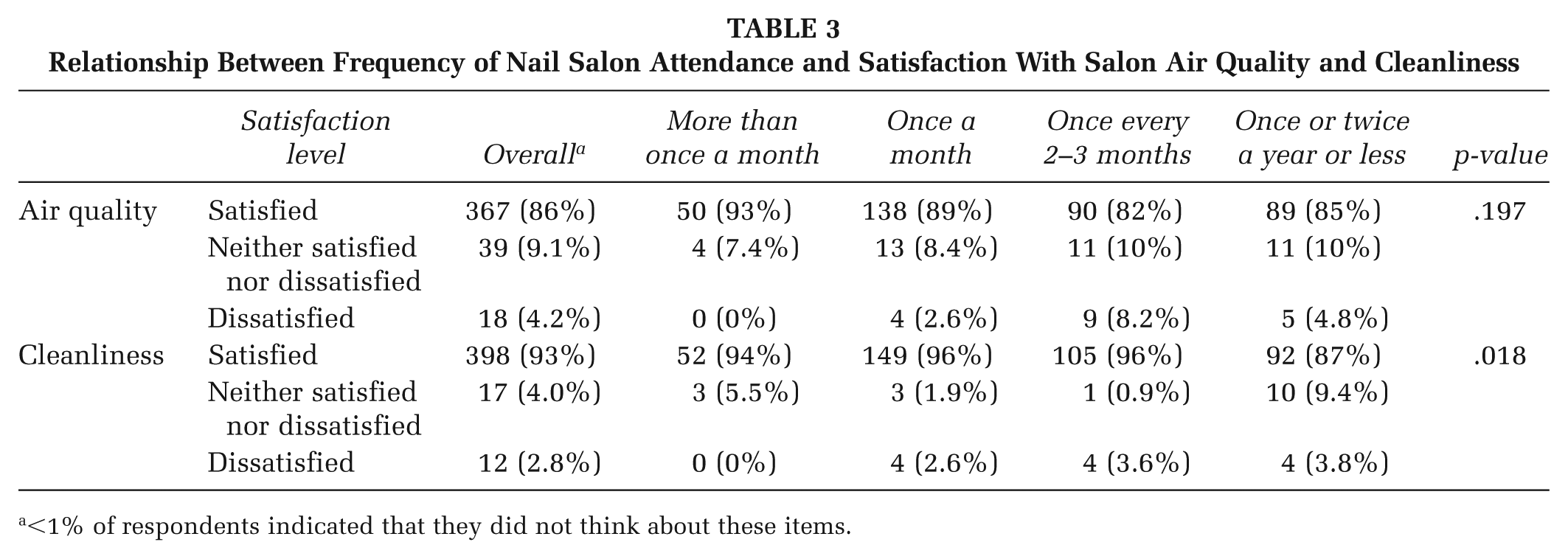
<1% of respondents indicated that they did not think about these items.
Only 12% of participants reported that the nail technician did not wear a mask, while 40% of participants reported that nail technicians did not wear gloves. When asked about what they would prefer, half of the participants (49%) did not have a preference and would be comfortable whether nail technicians wore gloves or a mask or not (Supplemental Table S6). Individual participants’ reported feelings about nail technicians wearing gloves and masks showed fair agreement (k = 0.38; % agreement = 59%) (Supplemental Table S7).
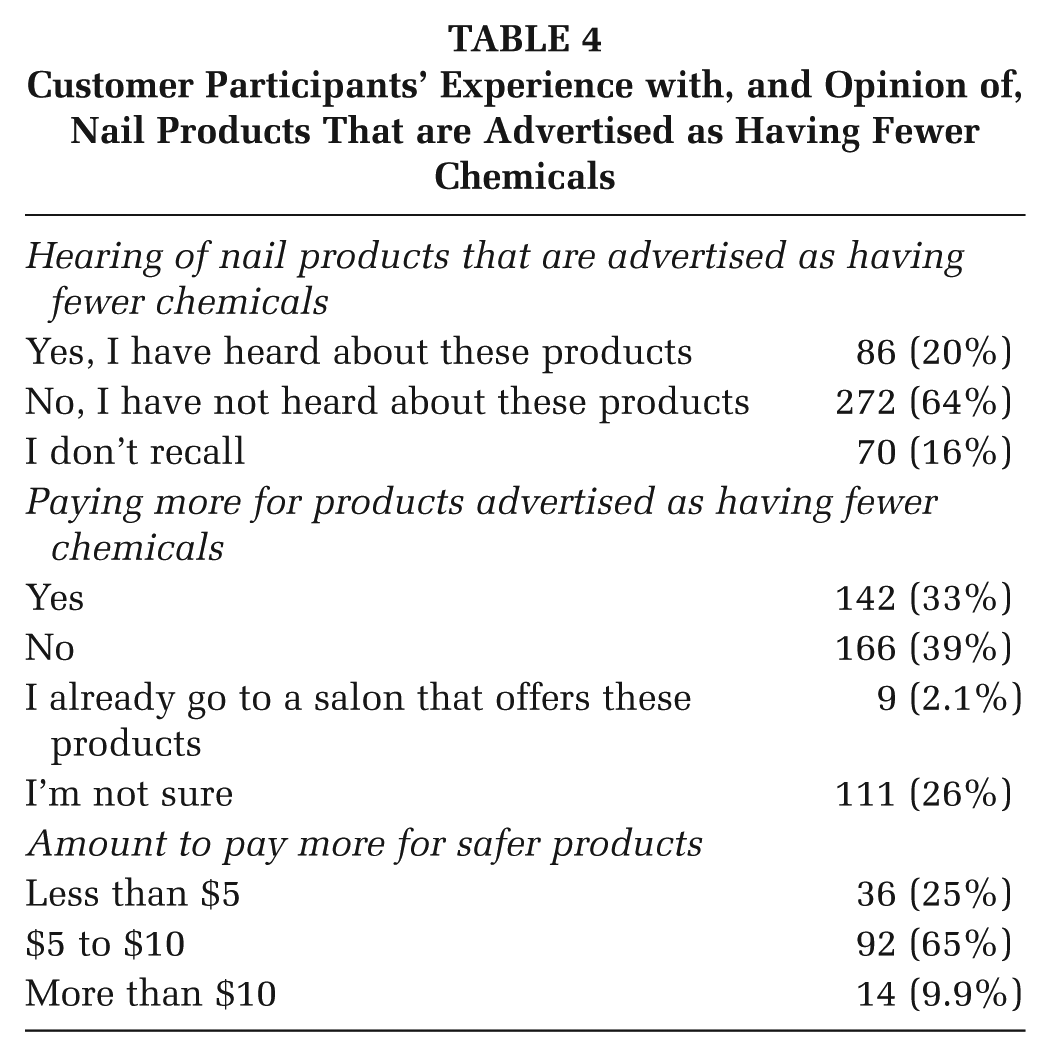
When asked, most participants (64%) had not heard of nail salon products that are advertised to have fewer chemicals (Table 4). Of those that had heard about products with fewer chemicals, one-third of participants (33%) reported being willing to pay more for these products, if offered. Among this group, most (75%) were willing to pay an additional $5 or more for services that used these products (Table 4).
Customer Participants’ Experience with, and Opinion of, Nail Products That are Advertised as Having Fewer Chemicals
Discussion
The study found varying patterns in how self-reported nail salon attendance changed before and after the onset of the COVID-19 pandemic, but most reported going as much, or more, than before. This is different than what we have heard from local nail technicians and discount nail salon owners engaging with the Healthy Nail Salon Coalition (HNSC), a local advocacy organization focused on worker health and safety in discount nail salons, and health promoters in our city.
Owners and technicians anecdotally report that customer volumes remain low following the COVID-19 shutdowns. Similarly, two online focus groups with nail salon workers and salon owners in the United States reported that the nail customers’ volumes continued to be low (J. Huynh, Sharma, et al., 2024). The difference in results may be explained by the type of salon that customers attend. Customers who participated in the current study attended any type of nail salon, spa, or aesthetician across a large region, while the HNSC mainly works with discount salons in a dense urban area. Results may also be explained by geographic variability. Downtown locations may be more severely impacted because many offices continue to work on a hybrid schedule. Unfortunately, this could not be assessed within the current study, as participants were not asked about the geographical location of the salon(s) they visited in relation to their residence or place of work. Future work could better ascertain where people live and work and the salon location(s) relative to these locations.
When considering their last salon visit, just over half of participants reported that nail technicians wore gloves with many more (over 80%) reporting that nail technicians wore a mask. A 2018 survey of 155 nail technicians in the same city had consistent findings for mask use (88% of technicians reported using a mask at work) but divergent results for glove use with 96% of technicians reporting glove use at work (Sanaat et al., 2021). Another pre-COVID (2013) survey of 65 nail technicians in California, USA, reported that 30% of nail technicians always used a mask and 92% always used gloves during manicure and pedicure tasks (White et al., 2015). Use of masks and gloves may have been influenced, at least in part, by the COVID-19 pandemic and the more widespread use of masks to prevent disease transmission. This was also the conclusion in a 2021 U.S. study where self-reported mask use was high (100%) (T. B. Huynh et al., 2023). In the same study, only 34% wore gloves during manicure but 89% wore gloves during pedicure (T. B. Huynh et al., 2023).
The relatively low rates of glove use are concerning and highlight an opportunity for more active health promotion initiatives. Skin exposure to chemicals (e.g., acrylates) has been reported in nail polishes (Kalenge et al., 2020; Ma et al., 2019; Quach et al., 2011), and skin problems are commonly reported by nail technicians (Harris et al., 2009; Quach et al., 2011; Shadaan, 2024). Customer preferences on whether nail technicians wear gloves and masks were mixed (Supplemental Table S5). In the current survey, most customer participants had no preference on whether nail technicians wore gloves (46%) or masks (53%); only a small group (1.4%) preferred no glove/mask use at all. A larger group wanted gloves (18%) and masks (20%) worn at all times. Some researchers have suggested that customer preferences can influence whether nail technicians wear protective equipment, but this evidence comes from research with nail technicians not the customers themselves (Garbaccio & Oliveira, 2015; T. B. Huynh et al., 2019; Seo et al., 2019). A 2015 survey of 235 Brazilian nail technicians found that most (71.5%) reported not using personal protective equipment (PPE) while serving clients (Garbaccio & Oliveira, 2015). The most common reasons for not wearing PPE were personal discomfort (38.3%) and allergy (25.1%); customer discomfort was only reported by 3.8% of participants (Garbaccio & Oliveira, 2015). In a 2019 qualitative study of 20 Korean nail technicians in the United States, participants had many different reasons for avoiding the use of masks and gloves, including discomfort, the inconvenience of donning and doffing, incomplete protection, high costs of supplies, and also customer complaints (Seo et al., 2019). Nail technicians in a 2019 U.S. study reported that if clients were allergic to latex gloves, they were asked not to wear any gloves (T. B. Huynh et al., 2019).
In the current survey, customers’ satisfaction was high in terms of salon cleanliness (93%) and air quality (86%), but there was slightly more dissatisfaction with air quality (4.2%) than cleanliness (2.8%). Anecdotal comments and concerns with air quality are common in the community, and nail technicians have often reported unpleasant odors in nail salons (Dang et al., 2021; T. B. Huynh et al., 2019; Shadaan, 2024). When asked, only 37% of participants recalled hearing about nail salon products that are advertised as having fewer chemicals. Among those who did know about these products, only a third were willing to pay more for services with these products. Previous work suggests that safer products are a consideration for customers when selecting a salon (T. B. Huynh et al., 2024), as noted above, that customer preferences may play a role in determining which brand of products was used in the salon (Sanaat et al., 2021).
Strengths and Limitations
In addition to the challenges of online data collection, this study has several limitations. The Phase 2 method of recruitment (in person and in salons) may have differentially captured people who are still going to nail salons, so people who are attending salons less often may be underrepresented in the study population. The survey tool was presented in English, and thus, responses from people not fluent in English may also be underrepresented. The results from this study may not be generalizable to other locations, as nail salon (and other business) closures varied in timing and duration across jurisdictions. Despite these limitations, this study reports on a large group of nail salon customers, including their nail salon attendance before and after COVID-19 closures, as well as their perspectives on health and safety in nail salons.
Implications for Health Promotion Practice
The results from this survey indicate that there are knowledge gaps among both nail technicians and nail salon customers relating to health and safety practices and products. The findings indicate that the use of skin protection among nail salon technicians could be improved (i.e., more frequently and consistently used). The use of gloves protects the workers from chemical and biological exposures and similarly protects the customer. Our results also suggest that nail salon customers did not have a clear preference for whether technicians wear gloves and masks, or not, and the majority would be comfortable if nail technicians wore PPE during nail services. Education in nail salons on PPE use, including its benefits and customer perceptions, may help to reduce barriers to PPE use for nail technicians. These health promotion activities could be incorporated into existing infection prevention and control programs (e.g., salon inspection programs like BodySafe in Toronto, Canada) or community-based training (e.g., Toronto Health Nail Salon Collaborative) and delivered by community health workers, health promoters, and other public health professionals.
Conversely, in scenarios where customers would prefer that nail technicians do not wear gloves and/or masks, it is vital to educate on how these measures can protect both clients and technicians. Customers could be actively engaged as partners for promoting health, safety, and infection prevention and control in nail salons to foster a collaborative environment where both technicians and clients are invested in creating a safer environment for everyone. To raise awareness among nail salon customers, public health agencies and community organizations can lead campaigns using salon posters, handouts, and targeted social media—featuring videos, testimonials, and infographics—to promote safety practices, engage clients, and highlight their role in maintaining a safe salon environment. These practices may include customers sanitizing their hands during visits, supporting technicians’ use of masks and gloves, politely reminding staff about tool disinfection, and respectfully discussing ventilation in the salon. Public education campaigns could be reinforced through multilingual materials, community outreach events, or partnerships with local influencers to extend their reach.
In addition, the study highlights that customers may not be fully aware of safer or less harmful alternative products. Health promotion could also aim to raise awareness of these options in salons and online, potentially influencing customer choices and improving overall safety in nail salons. As customers become more attentive to safety practices, less harmful products, and nail technicians’ protective behaviors, they can influence salon owners, policymakers, and manufacturers to adopt safer practices. As described in Robson et al.’s (2005) conceptual framework, individuals in the nail salon ecosystem are interconnected, where customers, technicians, and salon owners are active contributors. Coordinated efforts at the individual as well as the institutional level are essential to creating safer, more supportive salon environments.
Implications for Research
Future research needs to more deeply explore customers’ expectations and preferences for safer products and improved safety practices in salons. This information can provide valuable insights for advocates and policymakers, enabling them to tailor educational programs, health promotion activities, and public health campaigns more effectively. Ultimately, this will help improve health and safety standards in the beauty industry more broadly.
Conclusion
This study suggests that many customers continue to visit salons at similar or increased frequencies compared to before the COVID-19 pandemic. Customer satisfaction with cleanliness and air quality was high, but perception of PPE use was varied. The absence of strong preferences for gloves or masks presents an opportunity for targeted health promotion to raise awareness of how prevention practices protect the health of both the customers and the nail technicians. The study also revealed gaps in customer awareness of safer nail products, emphasizing the need for public campaigns to promote less harmful alternatives. Engaging customers in health discussions can foster collaboration beneficial to both clients and technicians.
Supplemental Material
sj-docx-1-hpp-10.1177_15248399251415425 – Supplemental material for Toward Improvement of Occupational Health and Safety in Nail Salons: Customer Perspectives
Supplemental material, sj-docx-1-hpp-10.1177_15248399251415425 for Toward Improvement of Occupational Health and Safety in Nail Salons: Customer Perspectives by Tu Van Anh Tran, D. Linn Holness and Victoria H Arrandale in Health Promotion Practice
Footnotes
Author’s Note:
The authors acknowledge the contribution of Yizhi (Annabel) Zhang for her support in the navigating the data collection on the REDCap platform. The authors declared no potential conflicts of interest with respect to the research, authorship, and/or publication of this article. The authors disclosed receipt of the following financial support for the research, authorship, and/or publication of this article: This work was supported through funding from the Social Sciences and Humanities Research Council Race, Gender, and Diversity Initiative.
Author Contributions
VHA and DLH conceptualized the work. TVAT, VHA, and DLH designed the study and the survey tool. TVAT conducted the recruitment activities and analyzed the data. TVAT drafted the manuscript, and all authors participated in the editing and final approval of the manuscript.
Ethics Statement
This study was approved by the University of Toronto Health Sciences Research Ethics Board (protocol no. 44521). All participants gave informed consent before participating.

Availability of Data
The data that support the findings of this study are available from the corresponding author (VHA) upon reasonable request. In addition, the survey questions used in the data collection are also available from the corresponding author (VHA) upon reasonable request.
References
Supplementary Material
Please find the following supplemental material available below.
For Open Access articles published under a Creative Commons License, all supplemental material carries the same license as the article it is associated with.
For non-Open Access articles published, all supplemental material carries a non-exclusive license, and permission requests for re-use of supplemental material or any part of supplemental material shall be sent directly to the copyright owner as specified in the copyright notice associated with the article.
