



Abstract
Through an adaptation of photo-based methods, which we call artifact creation, we wanted to understand the risks and strategies of young South African people regarding intimate-partner violence and HIV exposure. We worked with 17 young men and women (ages 18–24 years) from urban informal settlements and a rural village in KwaZulu-Natal, South Africa, to understand the everyday lives of young people. This article reflects on the strengths and limitations of the artifact-creation process. The artifact creation highlighted the advantages and disadvantages of using visual methods as a method and WhatsApp as a collection tool. This included the ease of sending artifacts deemed appropriate by young people and the rich stories that were shared based on these artifacts. The cost and connectivity of cellular data hampered this ease of sending artifacts at times, especially in rural areas. Overall, the artifact creation provided valuable lessons in furthering nontraditional qualitative methods. We argue that visual methods and tools such as WhatsApp can be beneficial when working with young people. However, there are apparent limitations as to what research can effectively be achieved through social media platforms.
Keywords
Data-collection methods are an essential part of the research process, as the collection process influences what type of data may be generated (Lim, 2024). Qualitative research tends to rely on established data-collection methods, such as focus groups, in-depth interviews, and observations (Gill et al., 2008). However, there are other methods, such as visual methods, that have the potential to elicit data that might remain invisible with traditional methods (Pink, 2013). Visual methods consist of, but are not limited to, photo-elicitation, photovoice, cognitive mapping, and film or artmaking (van den Scott, 2018). The selection of appropriate qualitative methods is a commitment by researchers to explore social phenomena in a manner that enables a connection with the subjective experiences of participants (Lim, 2024; Paradis et al., 2016). This is of particular importance when conducting research with young people, especially on sensitive topics (Simmonds et al., 2015; Copes et al., 2018). In this article, we reflect on the suitability and our experience of drawing from visual methods to create a method we call “artifacts creation” to engage young people in qualitative research. We used the method to explore the everyday lives of young people living in KwaZulu-Natal informal settlements and rural communities.
Visual Methods
Contemporary visual ethnography gained prominence in the early 1990s, focusing on enabling participants to represent their experiences from their perspective, rather than being informed by others (Azzarito, 2023). It uses visual methods such as photography and video to study a culture or community while acknowledging that the researcher and the participants actively construct meaning and understanding of what is observed within a particular social context (Schembri & Boyle, 2013). This situates visual ethnography within a social constructionism paradigm, which asserts that reality is not seen as an objective truth but a socially constructed phenomenon that is shaped by participant-researcher interactions (Schwandt, 1998).
Commonly used visual methods are photo-elicitation and photovoice. Photo-elicitation uses photographs to generate discussions in interviews. Photographs are either provided by the researcher or created by the participant and included in the interview to draw out emotions, memories, and information (Glaw et al., 2017). Photovoice is a process in which participants “identify, represent and enhance their community through specific photographic techniques” (Walker, 2023, p. 390). Participants lead the research by taking photographs of a defined topic. These photographs are then discussed in groups, with the aim of reaching policymakers (Wang & Burris, 1997). Photovoice has been used for participatory research with young people in South Africa (Kessi et al., 2019; Langa, 2017). Photo-based methods rely on participatory action research (PAR), 1 enabling collaboration between researchers and participants. Participants’ voices are strengthened and established as collaborators in the research process (Alexander, 2002). The methodology is not without challenges, including the ethical implications of visual methods, participants not understanding the methodology (Azzarito, 2023), or those who are more introverted struggling to articulate the meaning of visuals (Burke & Evans, 2011). Using a phenomenological approach, we drew on PAR and narrative inquiry methodologies as they emphasize the study of subjective experiences to understand phenomena contextually (Savin-Baden & Niekerk, 2007; Wang & Burris, 1997).
Photo-based methods are typically done in communities directly with participants. The COVID-19 pandemic restrictions challenged researchers’ ability to work directly with participants, necessitating the development of online data collection (Chen et al., 2020; Uleanya & Yu, 2023). We used the cellphone-based app WhatsApp to engage participants. WhatsApp was selected because it is generally accessible and part of the everyday lives of young people (Gibbs et al., 2023; Mavhandu-Mudzusi et al., 2022). It is within this context that we adapted and extended photo-based methods for our method, artifacts creation. Artifacts creation should not be understood as an alternative to traditional photo-based methods but as an extension, incorporating and allowing for a virtual data-collection process.
The Siyaphambili Youth Study
The Siyaphambili Youth was led by the South African Medical Research Council, an NGO called Project Empower, and the University College London, working in partnership with young people from informal settlements in eThekwini and a rural area in northern KwaZulu-Natal in South Africa. The Project Empower coordinators were young people with further education (including master’s level training) and had previously worked on a range of intervention and research projects.
HIV incidence is both a cause and a consequence of IPV (Jewkes et al., 2010). National estimates suggest that 26% of ever-partnered women have experienced intimate partner violence (IPV) (Department of Health, 2019), with young women experiencing much higher rates of IPV (Gibbs et al., 2018; Mthembu et al., 2021). Despite extensive conventional qualitative and quantitative research, there remains a paucity of interventions that effectively integrate young women’s perspectives and views on their vulnerability to address both HIV and IPV risk. This project sought to build directly on young people’s views and experiences (Mannell et al., 2023) to codevelop and test a prevention intervention to address these challenges (Mannell et al., 2019, 2023). The research questions driving the project were:
How do contextual factors shape and limit young people’s agency and the syndemic of HIV-acquisition risk, IPV, poor mental health, and substance misuse?
What does an intervention that seeks to strengthen young people’s agency to overcome contextual factors for HIV risk and comorbidities look like?
For the project recruitment, our inclusion criteria sought young people between the ages of 18 and 25, not in education or employment, living in our selected urban and rural settings. We invited young people to a 2-day workshop, engaging them in their lived realities. From these workshops, we selected 17 youth peer research assistants (YPRAs—nine female YPRAs (five urban/four rural) and eight male YPRAs (four urban/four rural) who had been engaged participants and who expressed an interest in further engagement. YPRAs were introduced to the study through induction workshops where we discussed the research framework, provided appropriate training and established expectations for their participation in the study.
The artifact-creation process was part of the first stage of our study. We aimed to understand the everyday lived experiences of the YPRAs, including how they navigated risks related to IPV and HIV. It also supported YPRAs to start engaging in critical thinking about their lives (Mannell et al., 2023).
Ethical Considerations
The study received ethical approval from the South African Medical Research Council (EC041-10/2020) and University College London (9663.003). The YPRAs provided written informed consent. In the training, we discussed the ethical principles of research and photo-based methods with the YPRAs. We emphasized that the YPRAs do not document others without their consent.
Artifact-Creation Process
We outlined a three-phase process based on the literature on visual methods and a series of discussions between the Project Empower team and the researchers. The process included three steps: (1) training YPRAs, (2) creating artifacts, and (3) in-depth interviews about artifacts.
The training reaffirmed the YPRAs’ participation, the study objectives, and ethical consent to participate or withdraw from the study at any time. Linked to this, we discussed ensuring people’s privacy was respected when capturing artifacts, including cropping or blurring the faces of people not participating in the study, before sending the pictures. We provided clear instructions to YPRAs on what we were asking them to do. We explained that creating artifacts required them to send us photographs, voice notes, or texts reflecting their daily routine for 1 month. We did not provide further prompts as we also sought to understand how they made meaning of their lives, rather than them reflecting on IPV and HIV. To ensure privacy, YPRAs were asked to send private WhatsApp messages of their artifacts to a coordinator (Project Empower team member). We did not place limitations on the sending of artifacts; this meant they could send any artifact they deemed appropriate at any time. This allowed for artifacts to be sent in real-time. We also explained that we would create WhatsApp groups to enable participants and the NGO team to check in with one another, emphasizing that these groups should not be used for the submission of artifacts. Third, we explained that each YPRA would receive a monthly allowance of R100 (~US$5.30) per YPRA for the purchase of cellular data bundles.
The second stage of the process consisted of the creation of artifacts. The urban group of YPRAs sent artifacts between December 2020 and January 2021, with the rural group, delayed because of national restrictions, sending their artifacts from February to March 2021. We purposively selected these periods as they overlapped with South Africa’s main holiday periods (Christmas and Easter), which, for many young people, are periods of increased IPV and HIV exposure. During this stage, YPRAs would decide on a situation that they felt represented their daily lives, produce a photograph, voice note, or text, and send this to their coordinator. The coordinator would then ask participants to provide brief details about the context of the artifact.
As the final step in the process, we conducted semi-structured, in-depth interviews lasting approximately an hour and a half with each YPRA to encourage their reflections on HIV and IPV risk factors in their daily lives. These were conducted when social distancing regulations were relaxed and were led by the coordinators. For each YPRA, we asked them to select the 10 artifacts they had sent in that they thought were relevant to their life or the lives of other young people and the risk of HIV acquisition and/or IPV experience or perpetration. For each artifact, we asked them to explain their reasons for selecting it, to discuss their feelings about the artifact and to discuss whether it represents a common or unusual situation for young people in their context. We then asked YPRAs a series of questions aimed at the relationship between the situation portrayed in the artifact and the risk and protective factors we were concerned about. These interviews were translated and transcribed. Once transcribed, the research team, along with the YPRAs, held a series of discussions where we evaluated the artifact-creation process, identifying the strengths and challenges presented by the process. The artifact dataset formed part of a larger dataset collected with YPRAs, which were then analyzed as part of the ongoing co-development process (Mannell et al., 2023).
Findings: Learnings and Reflections
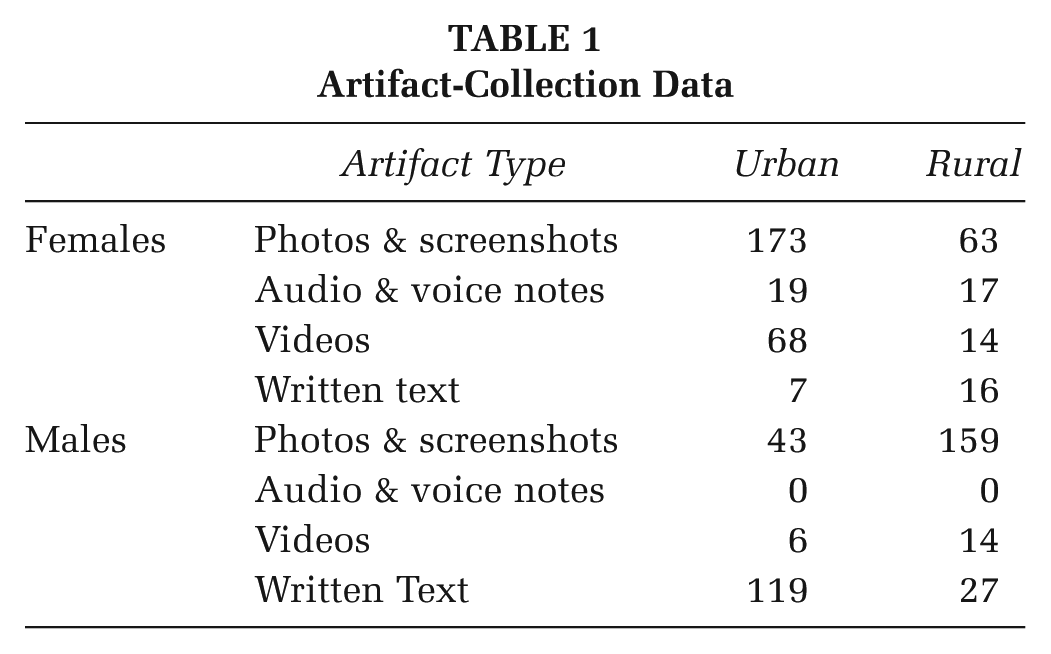
Over the data-collection period, over 700 artifacts were collected (see Table 1). Most YPRAs sent a few artifacts per week. Overall, young women sent slightly more artifacts than young men. Significantly, differences were noted according to location; in the urban setting, young women sent more artifacts, while in the rural setting, it was the young men. Artifacts showed a range of situations, including high alcohol consumption (Artifact 1), multiple sexual partners (Artifact 2), and conflicts in relationships (Artifact 3). Photographs were the most commonly used medium among YPRAs. Voice notes were only sent by young women, with young men tending to rely on text. Depending on the context of the artifact, follow-up texts on the artifact could be short or an ongoing conversation. The artifact-creation process was a valuable initial step in the co-development process, building trust and open relationships between the coordinators and the YPRAs, as well as generating a rich data set. Although we faced challenges, these were more related to YPRAs’ access to technology rather than inherent in the design of the process.
Artifact-Collection Data
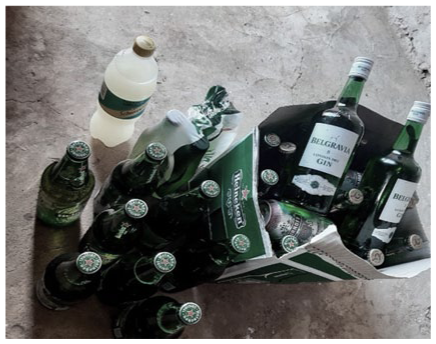
A Female Urban YPRA Showing the Coordinator of the Amount of Alcohol She and Her Friends Planned on Consuming for that Day, at a Time When Alcohol Sales Were Banned in the Country
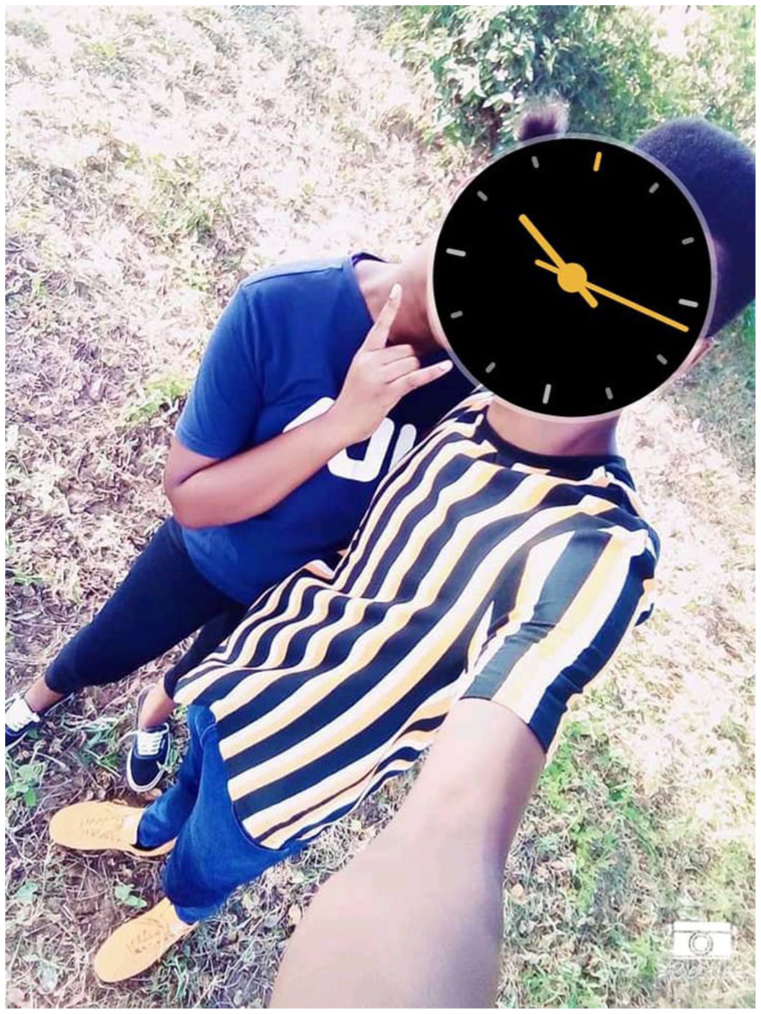
A Rural Male YPRA Hiding the Face of His New Girlfriend. He Explained the Relationship Was Too New to Show Her Face or Give up His Other Sexual Partners
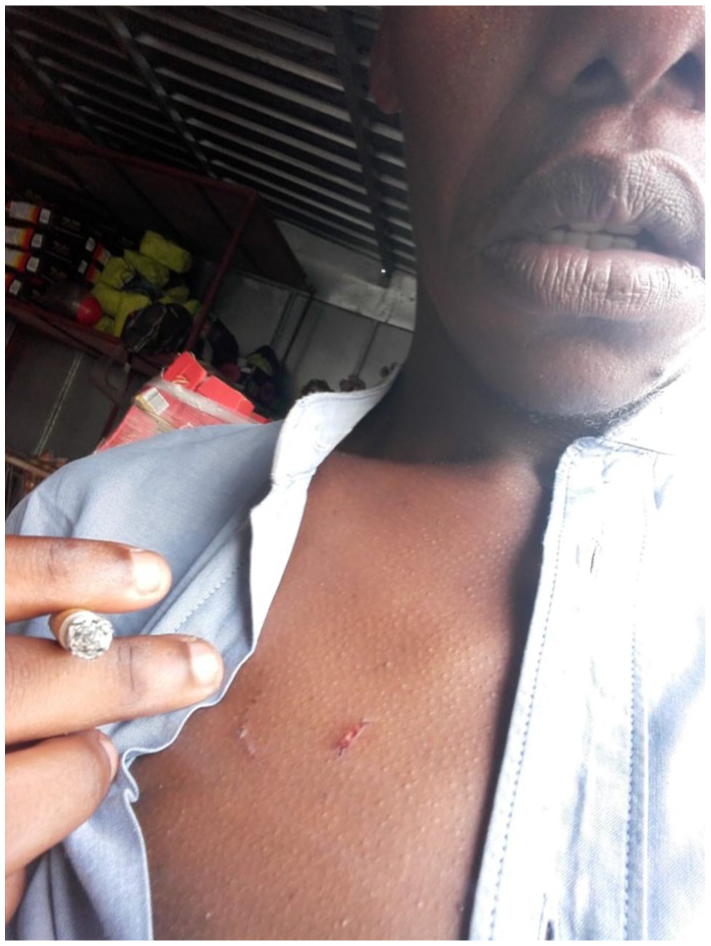
A Male Urban YPRA Showing the Coordinator How His Girlfriend Scratched Him During a Fight
Advantages of Artifact Creation
We found that the artifact-creation process, particularly through WhatsApp, provided many additional advantages over conventional photo-based methods. A strength of photo-based methods is the ability to build rapport through the use of visuals during the interview (Pain, 2012). WhatsApp is a familiar platform to most of the YPRAs, and the discussion between YPRAs and coordinators on WhatsApp about the artifact enabled them to build rapport outside of the formal process. This was facilitated by WhatsApp features such as status updates, where YPRAs and coordinators could see and comment on each other’s statuses. These insights into one another’s lives allowed them to build a familiarity which would not be possible with typical qualitative data tools.
YPRAs were able to send artifacts whenever they felt it was appropriate, making for organic interactions. For many YPRAs, WhatsApp was a normal part of their lives, and they noted that the process did not feel burdensome. WhatsApp also enabled numerous options for self-expression, which the YPRAs drew on widely, sending a range of varying data (photos, short videos, voice notes and messages), compared to what is typically available in photo-based methods. The production of different types of data also enhanced the organic nature of the interactions. Many YPRAs said it felt like they were having a conversation with a friend.
The immediate and informal discussions that YPRAs and coordinators had about artifacts enabled a richer understanding of the lived experiences of the YPRAs. In photo-elicitation and photovoice methods, data is often only shared at one or two points, sometimes a few weeks after it was taken, and discussions happen at the end of the data-collection process, usually through interviews (Simmonds et al., 2015). As such, the immediate meaning of the data may change during this period (Nykiforuk et al., 2011). WhatsApp allowed for immediate discussions without the pressures of an interview dynamic, enabling a continuation of conversations over longer periods. The idea of a continuous conversation on social issues permitted the YPRAs and coordinators to reflect on a subject and revisit it over time.
The large amount of data collected provided new and different insights into young people’s lived experiences, despite the team’s previous extensive research on gender and young people’s lives. Again, “typical” photo-based methods only allow a smaller number of data artifacts to be created. Some of the insights generated because of the large amount of data included how young women responded to food insecurity including carrying food received from soup kitchens in plastic bags instead of containers so the community would not know one was receiving food-aid, or making extra food and taking it to other young women, if it was known that person did not have food, without having to subject them to the “shame” of asking for food (Artifact 4).

A Friend Receiving Food From a Female Urban YPRA, Which they then Eat Together so the Friend Does not Feel “Ashamed”
Although we did not provide in-depth prompts for the artifact creation, the YPRAs were able to identify moments of how they experienced and mitigated risk factors for HIV and violence (Artifacts 5 and 6). In photo-based methods, prompts are usually used to guide participants on the type of visuals they should collect or to guide the interview process (Harper, 2002). By limiting prompts during the collection process, the artifacts were grounded in how the YPRAs produced meaning based on their constructed conditions. Furthermore, it allowed the amplification of the participants’ voices. This was most evident during the interviews, where we were able to learn that a simple photograph that seemed insignificant to the research team could have profound meaning to the YPRAs. In Artifact 7, a tub of yoghurt signified the perception of the YPRA’s boyfriend’s prospects and willingness to provide for her in the future.
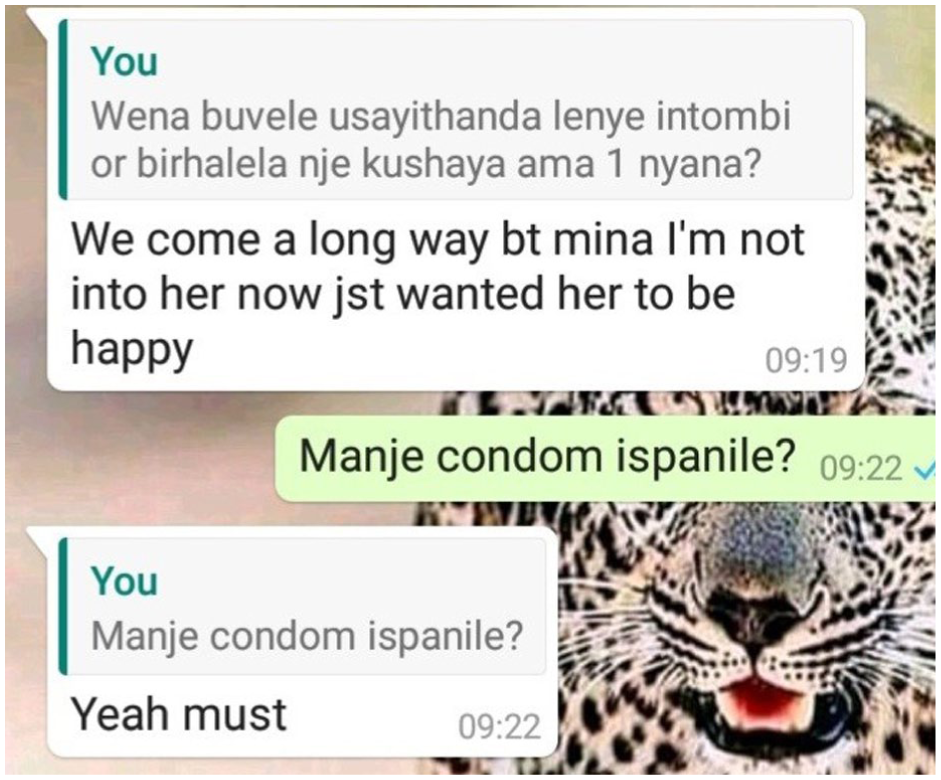
A Male Urban YPRA Discussing with his Coordinator About One of his Sexual Partners that He Was No Longer Interested in, But Still Engaging in Sexual Activity With, When Asked if He Used a Condom, He Said “Yeah, [it’s a] Must” Indicating his Awareness of HIV and Other STIs
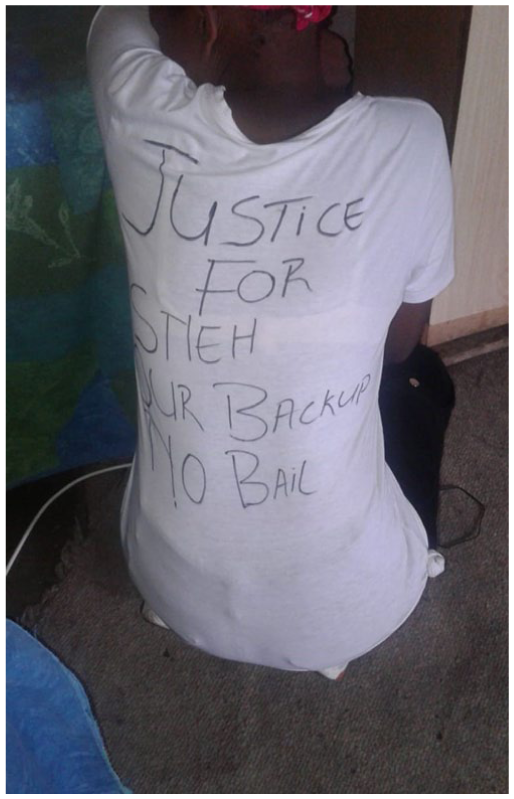
A Female Urban YPRA Posing Before Court to Oppose Bail for Her Friend’s Murder
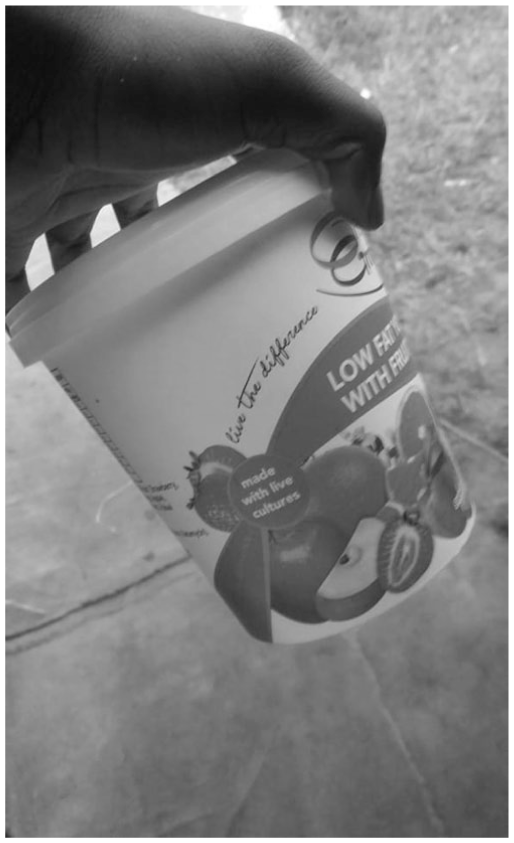
A Female Urban YPRA Holding a Tub of Yogurt Which Was the First Gift She Got From Her Boyfriend, and the First Time She Had Received a Gift From a Boyfriend. She Saw It as an Indication that He Would Be Able To Do More in Future
The relationships built between the coordinators and the YPRAs while sharing and discussing artifacts over WhatsApp allowed for ease when “formally” discussing the artifacts during the interview process. This addressed some of the challenges of conventional photo-based methods, such as time-lapse and participants who were less vocal. When the YPRAs struggled to articulate themselves, the coordinators could use the informal discussions to remind participants of the context in which the artifact had been generated. This also enabled new reflections on artifacts. For many artifacts, it was a retelling of what was said during the informal WhatsApp conversations, but with more depth and greater context. There were instances when the YPRAs expressed that they felt comfortable enough to share information that they normally would not share with other people. This would not have been possible without initially building trust and rapport through WhatsApp.
Challenges of the Artifact Creation
There were several limitations to the artifact-creation process, many of them linked to broader issues of connectivity and the use of technology in the process. Connectivity was the biggest challenge for the YPRAs, particularly for those who lived in rural areas or traveled to rural communities during the data-collection period leading to delays in sending artifacts at times and disrupting the order in which they sent their artifacts, with some artifacts arriving at once as more of a “photo dump.” This impacted the potential for us to engage interactively with the YPRAs about the meaning of artifacts, as compared to when YPRAs sent artifacts throughout the weeks.
The cost of cellular airtime to send artifacts remained an issue, even though the YPRAs were provided with R100 airtime to purchase data. YPRAs used their phones (we were concerned about their security if we bought them a new phone for the study). The airtime was used to send artifacts for the study and also for personal calls and messages. Over the socially busy holiday periods, the airtime was quickly used up, delaying the sending of artifacts and interrupting the free flow of information between YPRAs and coordinators.
Some YPRAs lost their cell phones during this period. This was expected as the December–January period is commonly associated with high levels of festive socializing for young people. The loss of cell phones meant that for some YPRAs, there were periods where they did not provide artifacts. However, the disruption was minimal, and most YPRAs were able to get a new cell phone within a few days and begin once again to share artifacts.
There was variation in the interactions over WhatsApp between YPRAs and the coordinators. Overall, young women from the rural community were the least responsive, possibly attributable to their noted infrequent use of WhatsApp as their main means of communication. Another possible reason for the varying interactions was that many YPRAs stated that it did not feel like work, and they were not expected to send artifacts daily but rather when they felt it was relevant. This might have led to them forgetting or not seeing the importance of sending artifacts until they were reminded to. Finally, although all YPRAs said they found this process fun and easy, it is possible that they felt that this method was an intrusion into their lives. Many artifacts depicted a distinct mundaneness—pictures of sitting around or doing housework (Artifacts 8 and 9). This may have been either because of the reality of restricted activities for young people or a way for the YPRAs to resist the intrusion into their lives while meeting the requirements of the artifact-creation process. In addition, some might not have felt comfortable sharing photos or other artifacts about activities that they were worried could have elicited negative judgment by the research team.
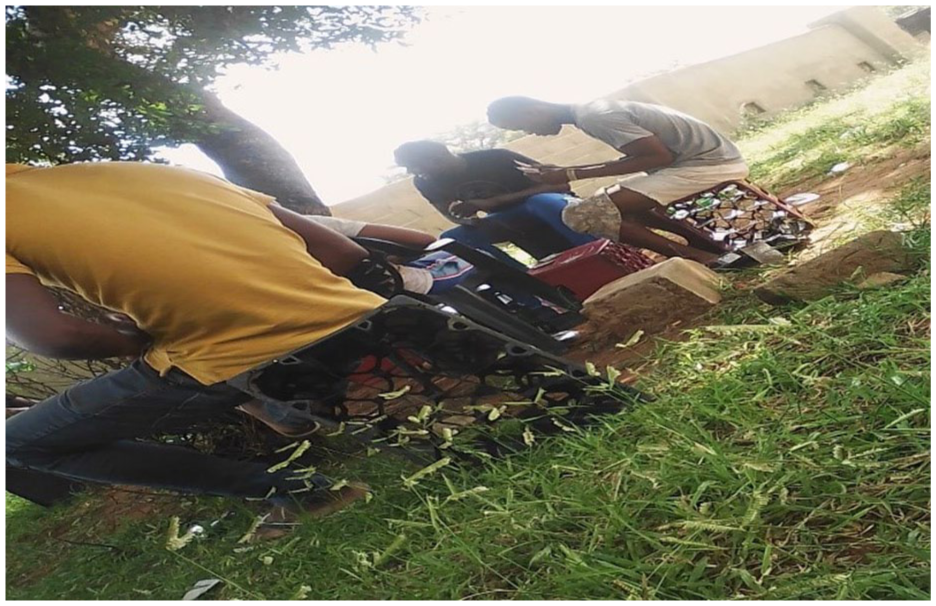
Young Men Sitting Around During the Week Doing “Nothing” as Described by a Rural Male YPRA
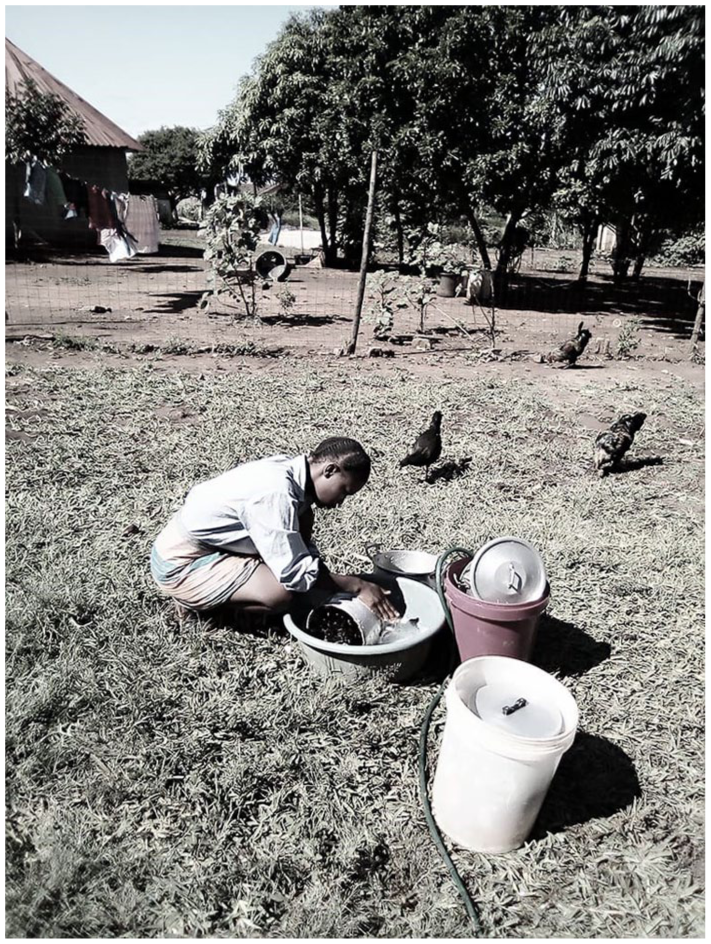
A Rural Female YPRA Washing Pots at Home. These Types of Images Were Typical of Women From Urban and Rural Sites, as the Tasks that They Were Expected To Do Every Day
Implications for Practice
Aligned with the traditional photo-based methods, the artifact-creation process not only placed the YPRAs at the center of the study but also put them in control of the process (Azzarito, 2023; Wang & Burris, 1997). It extended standard photo-elicitation methods as participants decided both the meaning of their data and how and when data were sent. The process also encouraged YPRAs to step back from their experiences and consider young people’s lives more analytically. Artifact creation as a visual method has both potential strengths and weaknesses. While the approach was driven by the national restrictions, it provided opportunities to develop novel insights into young people’s lives. Public health practitioners who might explore this methodology should note that the use of WhatsApp (or a similar instant messaging service) enables an engagement with young people in a way that feels familiar. Other platforms, such as Instagram, have been used for photo-based data collection in high-income countries (Yi-Frazier et al., 2015) but should be used with caution in low-resourced settings, as these may require higher data usage, potentially affecting the process. Our young people stated that the immediacy of capturing and sharing data in real-time felt more like an organic part of regular social interactions. This helps embed the data-collection process within everyday experiences rather than requiring young people to fit within existing research frameworks that center the researcher. Furthermore, the immediacy of this method may also help overcome the loss of information and context that often occurs in the lag between capturing the data and later discussions about the data with participants (Copes et al., 2018; Nykiforuk et al., 2011; Liebenberg, 2018). Despite the obvious benefits, there are challenges, particularly linked to access to cellular networks and data when working in low-resourced settings, which hindered a free-flowing and reflective process at times. It is also important to conduct an in-depth interview with young people about artifacts afterwards to ensure that the meaning of artifacts is ascribed by them rather than by us as health practitioners and researchers.
Conclusion
Utilizing the benefits of technology, such as online platforms to enhance existing visual methods, as we did in the artifact creation, enabled this approach to resonate more closely with young people’s lives. As an approach, the artifact-creation process completed primarily over WhatsApp, complemented with in-depth interviews, provided an important way to engage with young people, supporting them to think about their lives and the challenges within them. The method, while developed and run during COVID-19 lockdowns, had several additional benefits over “traditional” photo-based methods. It “slotted” into young people’s lives, it provided multiple forms of options for producing data, and the immediacy of sharing alongside its interactive nature enabled greater insight into young people’s lives. Despite the promise of the artifact-creation methodology, there remained challenges with the context in which it was undertaken, particularly poor connectivity, costs of data, and young rural women’s lack of familiarity with the platform. As an adapted photo-based method, the artifact-creation method enables a more engaged approach that can be adapted as needed for other groups.
Footnotes
Authors’ Note:
The authors thank the YPRAs for generously sharing their daily lived experiences, for openly participating in the project, and for their commitment to creating a better future for other young people. We remember with sadness the contributions of Mziwethu Gcuma who was laid to rest in April 2024. This study was funded by the UKRI Global Challenges Research Fund, Context and Health Grant (MR/T029803/1).
Contributors
ZK, SK, MG, JM, LW, and AG conceptualized this paper. ZK and SK wrote the initial draft of the manuscript, with detailed comments from all authors. All authors reviewed the final version of the manuscript.
