



Abstract
Keywords
Background
Prevalence and Significance
Individuals with African descent and senior adults are more susceptible to morbidity and mortality rates linked to chronic diseases. In Washington, District of Columbia (DC), 50% of residents are of African descent and 2.5 times more likely to die from cardiovascular disease than Caucasian residents (King & Cloonan, 2020). Rates of hypertension are nearly two times higher than Caucasians in Washington DC (King & Cloonan, 2020). In addition, the rates of diabetes among those with African descent in Washington DC are seven times higher than Caucasians (King & Cloonan, 2020). Given these disparities, attention needs to be dedicated toward solutions. One organizational source of diversity and inclusion in food and nutrition-related materials is the Oldways advocacy program (Oldways: Cultural Food Traditions, 2023). Oldways is a non-profit organization dedicated to improving public health by promoting healthy and sustainable eating patterns through cultural heritage models and changing the traditional notion of healthy diets (Oldways: Cultural Food Traditions, 2023). They provide programs, educational resources, and recipes that reflect global foodways. Emerging trends suggest there is a noteworthy intersection between public health, history and heritage due to their meaningful ties to human life. Heritage and diet were identified as one of the nine major themes in the framework of public health significance in a comprehensive review (Orthel, 2021). Another study found that health measures improved among individuals who consumed traditional diets of African, Asian, and Latin American origins; however, these studies remain limited in comparison to subjects with European descent following a Mediterranean diet (LeBlanc et al., 2024).
Nutrition Interventions With Creative Arts/Narrative Storytelling
In addition to culturally inspired models of healthy eating, narrative storytelling may offer a departure from the widespread assumption that logic and reasoning are superior methods to promote sustainable change. From a historical context, storytelling preserved the identities of enslaved individuals of African descent who were separated from their native languages, families, other customs, and banned from learning to read (Dos Res Dos Santos, n.d.). One study on healthy dietary patterns to prevent colorectal cancer risk among Latinos found comparable effectiveness between culturally compatible formats for storytelling vs. didactic interventions (Larkey et al., 2021). Narrative storytelling involves a variety of modalities such as audio, video, print-based versions of storytelling, and persuasive communication. This has resulted in the need for more definitive assessments on its effectiveness (Balint & Bilandzic, 2017). History is a form of storytelling that overlaps with health and heritage, considering that immigrants had to adapt to differences in food availability and their new environment in Western society (Orthel, 2021).
Evolving Roles of Technology in Program Delivery
The dramatic increase in the global use of digital communication modalities before and during the COVID-19 pandemic highlighted gaps in effective delivery of and access to digital content across socioeconomic status, minoritized groups, and recipients of cooperative extension education (Paccoud et al., 2021; Xu et al., 2023). A combination of changing lifestyles in the 21st century and the COVID-19 pandemic have taught us that it is imperative to achieve basic competence in delivering health/nutrition education through online and social media platforms as supplemental resources to reach and impact wider audiences. One study that tracked the reach of cooperative extension educators affiliated with Rutgers University found that they averaged lower monthly participation rates of 178 contacts with in-person instruction and outreach whereas the online webinars, instructional materials, and videos reached over 2,000 monthly contacts (Hughes & Wilson, 2017).
Recent studies have examined content needs, design preferences and health and behavioral outcomes of emerging digital health interventions among older adults (Ng & Markworth, 2021; Robert et al., 2021; Turner et al., 2024). Researchers performed a systematic review of experimental studies on the use of eHealth Apps, a self-management digital tool designed to improve health behaviors and clinical indicators of standalone (nutrition-only) and multicomponent (nutrition paired with other lifestyle measures) nutrition interventions. They found improvements in weight, waist circumference, and dietary behaviors within 4–6 months and higher drops in adherence after 6 months (Robert et al., 2021). In a participatory study design that aimed to determine digital health needs and preferences among older adults in Australia, participants preferred practical nutrition information with recipes and evidence-based content free from misinformation (Turner et al., 2024). Conversely, low digital literacy was a barrier to fully engaging with the technology among some participants (Turner et al., 2024). Moreover, use of the Zoom platform to deliver a Food Smarts workshop series for older adults from seven congregate meal sites during the COVID-19 pandemic resulted in nearly 100% of participants reporting increased fruit and vegetable consumption, improved knowledge, and stronger self-efficacy (Ng & Markworth, 2021).
Conceptual Framework
We used the salad bowl theory to inform the design of our intervention. The salad bowl theory is a framework of multiculturalism which postulates that multiple ethnicities can co-exist within a dominant culture, particularly a mainstream Eurocentric society, without deconstructing their own identities (Berray, 2019). They can integrate into the experience of other cultures while maintaining their own values and customs. This is an analogy to the bowl of various ingredients that make up a tossed salad (Berray, 2019). The co-existence we implemented involved educating participants on US Dietary Guidelines for Americans (DGAs) and utilizing practical tools of the Oldways African Heritage Diet and African American-oriented narrative storytelling activities. These strategies were used to encourage older adults with African descent to make informed decisions about consuming adequate amounts of health-promoting foods as well as added sugars, fats, and sodium in moderation. Our use of the salad bowl theory also served as a counter approach to the melting pot theory. The Melting Pot Theory insinuates that immigrant and minoritized groups meld together and assimilate into one dominant culture (Berray, 2019). Some problematic aspects of this theory are the abandonment of diversity attributes that add value and representation to Westernized societies and the perpetuation of White Supremacy, the root of systemic racism. Most cultural contexts for healthy eating in the United States (US) emphasize the Mediterranean Diet and Dietary Approaches to Stop Hypertension (DASH) (Wang, Liu, & Lee, 2022; Wen et al., 2023). However, many common foods within other cultures have nutritionally similar characteristics to specific foods of the Mediterranean and DASH diets that individuals are encouraged to consume (Wang, Foster, & Yi, 2022).
This salad bowl concept has relevance for the design and implementation of nutrition education among various racialized/ethnic and religious groups. These considerations guided our design of the Black Wellness Matters-Nutrition Series (BWM-NS). The BWM-NS is a component of the Merging Health with Culture project. This project aimed to mitigate lifestyle-related chronic diseases through heritage-based nutrition education, evaluate the influence of acculturation on diet quality, and assess intergenerational perceptions on the cultural inclusiveness of US DGAs among people of color. We integrated a salad bowl approach to teaching DGAs through a historical and sociological context of African Heritage and the African American experience. This consisted of healthy eating tools/activities with nutrient-rich foods and spices from the Oldways African Heritage diet pyramid, media viewing of performances by individuals with African descent and facilitated discussions. The purpose of this component of the Merging Health with Culture project was to measure the technological logistics and participant affinity to a hybrid heritage-based nutrition curriculum that merged the Oldways healthy eating guides of African Heritage with interactive storytelling/games among senior adults with African descent residing in Washington DC.
Methods
Subjects
Thirty-five adults (55–89 years old) from two senior wellness organizations/congregate meal sites participated in our BWM-NS. These sites are funded by the DC Government Office on Aging with community partnerships, including the cooperative extension programs of our academic institution. This study was approved by the Institutional Review Board of the University of the District of Columbia. Participants provided informed consent.
Curriculum
We piloted the BWM-NS curriculum at two sites. Sessions were designed to empower adults of African descent with tools to sustain healthy eating patterns and promote a positive sense of identity during the mid to late COVID-19 pandemic phases. From February through March of 2021, we implemented a virtual-only platform with a non-profit organization when social distancing mandates in Washington DC were still in place. From June through July of 2022, we facilitated a hybrid delivery of the series at a senior center. The BWM-NS is a heritage-based nutrition education component of the Merging Health with Culture project that consisted of a relationship-building and recruitment/introductory session followed by four 1-hour educational sessions. We implemented a salad bowl framework into the curriculum content using African American and African heritage-specific tools and healthy recipe demonstrations with cultural foods. The content included Oldways African Heritage print materials of the African heritage food pyramid, health benefits of commonly used spices, and grocery shopping tips. Nutrition messages during each session were integrated with culturally specific creative arts/storytelling themes with games, poetry, drama skits, music, and narrative problem-solving scenarios focused on informed eating choices of predicted daily experiences. We used images of common foods within the mainstream and African American culture as examples of what to consume liberally and in moderation during Who am I? games. In narrative problem-solving scenarios of barriers to changing or maintaining healthy eating patterns, we included images of adults with African descent. Finally, we accessed individuals with African descent performing spoken word poetry, drama skits, personal stories, and music through publicly available YouTube content.
Instrument
In the process evaluation tool, we employed descriptive quantitative and qualitative items, detailed in Table 1. We used a five-point Likert-type scale on 11 items (5 for strongly agree to 1 for strongly disagree) for participant feedback on the delivery of heritage-based content in an interactive game and creative arts/storytelling format and level of ease completing the online diet intake surveys (Supplemental Materials 1 and 2). In addition, we included four open-ended short answer items on things they enjoyed about the series and suggestions for improvement (Supplemental Material 3).
Black Wellness Matters-Nutrition Series: Process Evaluation Tool
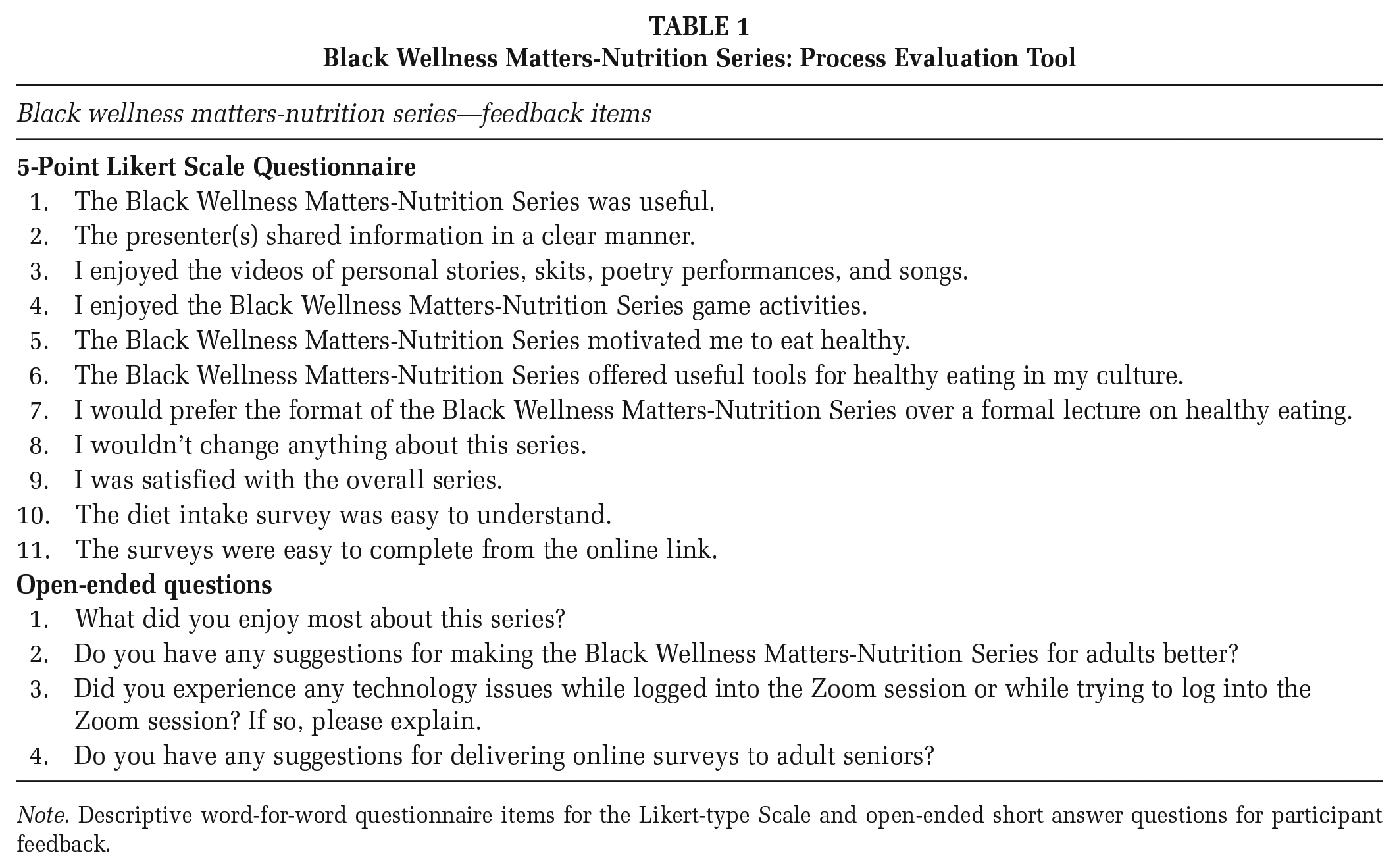
Note. Descriptive word-for-word questionnaire items for the Likert-type Scale and open-ended short answer questions for participant feedback.
Analysis
Univariate analyses of frequencies, descriptive data, and process evaluation feedback were completed using Microsoft Excel 2010. We used a five-point Likert-type scale to tally results on 11 questions in our evaluation tool. Participant comments on open-ended questions of the BWM-NS were grouped based on the four categories: beneficial aspects of the series, suggestions for improvement, opinions on online distribution of surveys, and the technology platform/troubleshooting. We performed a Cronbach’s alpha reliability test on the 11 Likert-type-scale items using JASP version 0.18.1 software and content analysis of open-ended questions by coding and categorizing response frequencies using the highlighter feature in Microsoft Office.
Results
Demographics
The BWM-NS was piloted with approximately 35 participants (30 virtual and 5 in person). The 17 participants who completed the surveys were majority female (64.7%), male (11.76%), one individual who reported other (5.88%), and three individuals who did not disclose their gender (17.64%). All participants were ≥55 years old. The majority (>88%) identified themselves as African American and non-Hispanic (94%). All participants had a high school diploma and 47% reported earning a bachelor’s degree or higher. Twelve survey respondents attended the series virtually (70.6%), whereas five respondents attended in person (29.4%). Finally, 70.5% of participants reported earning an annual income of less than $50,000 (Table 2).
Demographic Characteristics
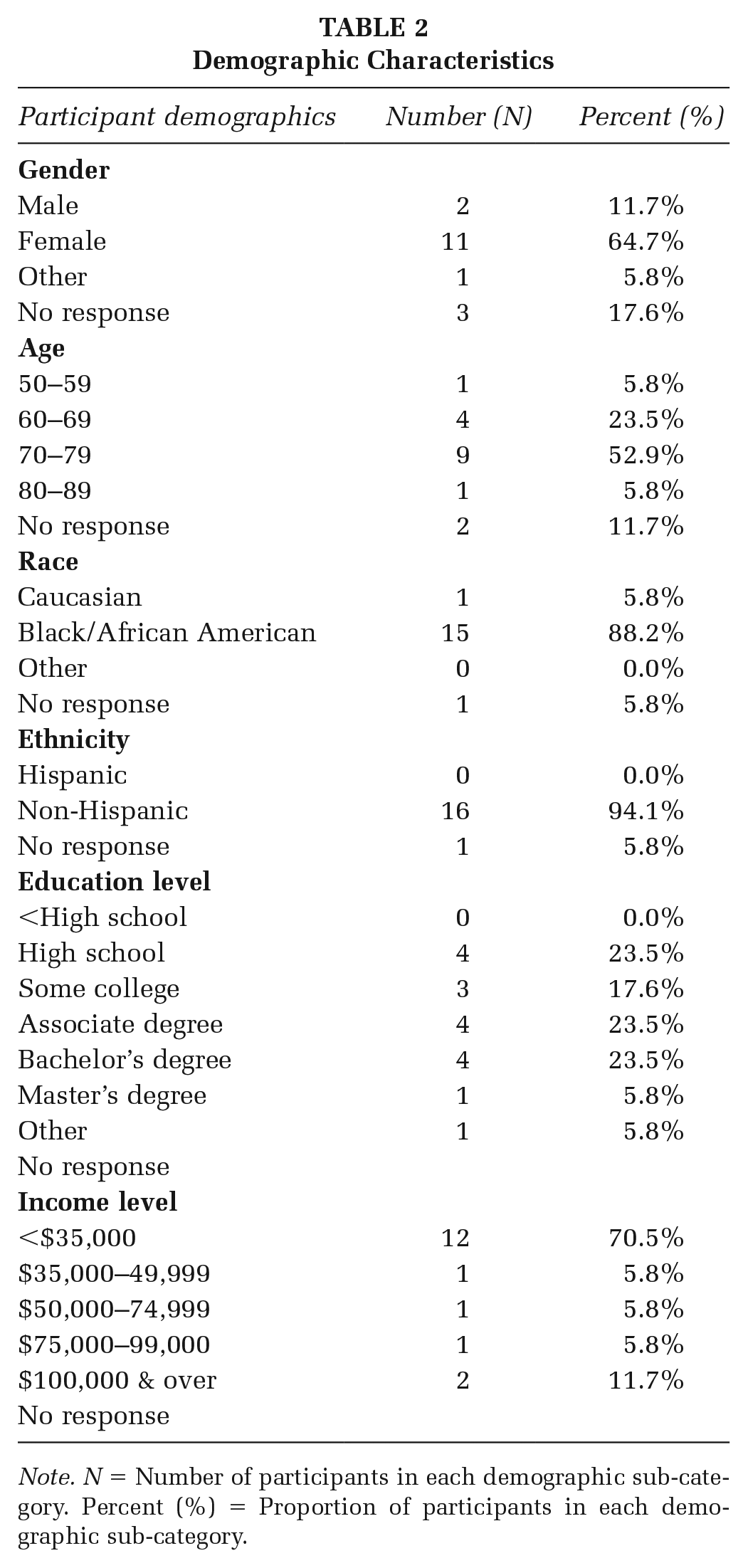
Note. N = Number of participants in each demographic sub-category. Percent (%) = Proportion of participants in each demographic sub-category.
Reliability Test
A coefficient score of 0.70 and above is an acceptable standard for survey items (Taber, 2018). These Likert-type-scaled items demonstrated high reliability with a point estimate of 0.852 (95% CI of 0.719–0.930) and Cronbach’s alpha coefficient range of 0.819–0.877 (Supplemental Material 4).
Likert-type-Scale Evaluation of Black Wellness Matters-Nutrition Series
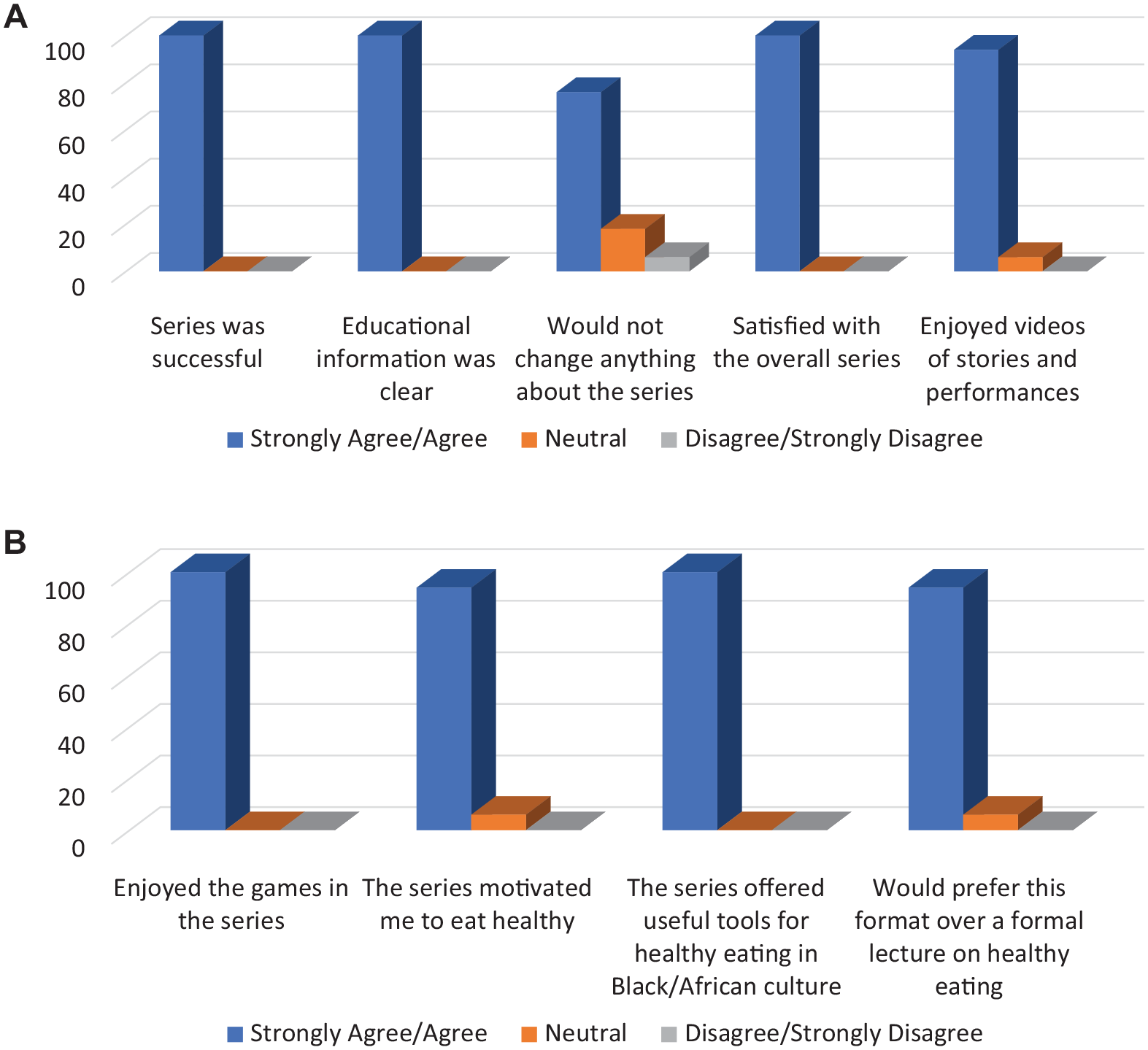
Participants who attended at least three series sessions completed the evaluation. Seventeen of approximately 35 participants attended three or more sessions and completed surveys on the series. Of the respondents, 100% strongly agreed/agreed that the information was shared in a clear manner, 76% strongly agreed/agreed they would not change anything about the series, 94% strongly agree/agreed that the series motivated them to eat healthy, 100% strongly agreed/agreed that the non-traditional game and storytelling channels for nutrition education were enjoyable, and 100% reported they strongly agreed/agreed that the series offered useful tools for healthy eating within their cultural framework (Table 3) Figure 1.
Qualitative Feedback on Black Wellness Matters-Nutrition Series
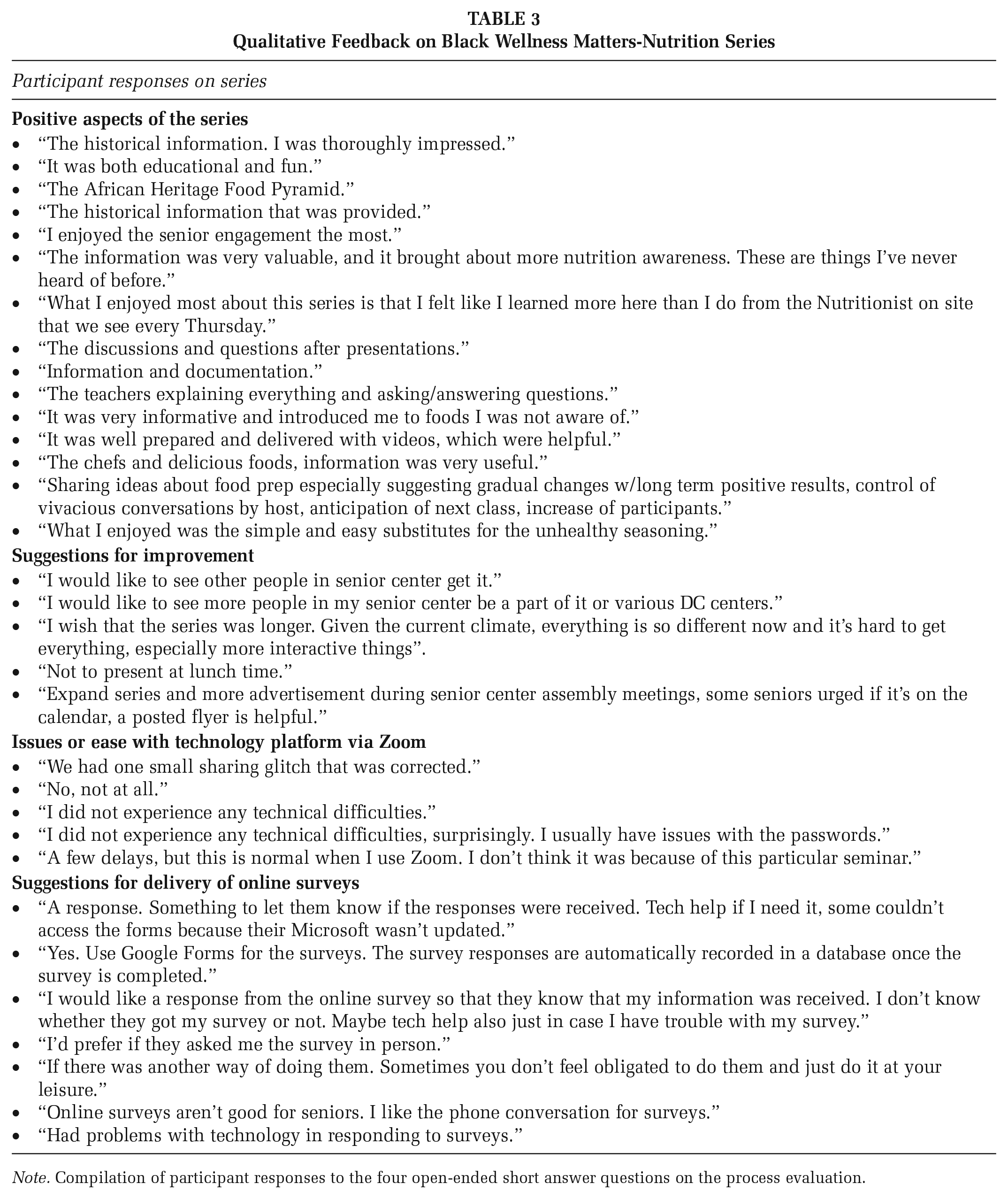
Note. Compilation of participant responses to the four open-ended short answer questions on the process evaluation.
Qualitative Feedback on BWM-NS
There was a range of 10–15 responses to four open-ended questions. Fifteen respondents commented on the positive aspects of BWM-NS. Participant feedback on the positive aspects included the historical information about foods and healing practices of the African diaspora, informative nutrition education, engaging group fellowship discussions, and food demonstrations. Five respondents offered suggestions for improvement. Suggestions for improvement included exposing the series to other seniors who did not participate, extending the length and advertisement of the series, and a more convenient presentation time. Thirteen respondents reported feedback on their ease of use with the Zoom platform. Eight of nine virtual-only respondents from the first group reported no technical difficulties whereas there were glitches that 10 Zoom participants in the hybrid series experienced. However, eight were unreported due to non-submission of surveys by those participants. Twelve virtual-only respondents provided feedback on online delivery of the surveys. One-third of those respondents reported no issues with online delivery of surveys, a few participants stated that seeing email or website confirmation that the survey was received would have been helpful, one-fourth of respondents preferred an alternative digital platform over Qualtrics, and 20% of the respondents preferred manual/in-person surveys or phone call interviews instead of online surveys. To increase the overall response rate, a few project team members obtained survey responses via phone calls to virtual participants. During the hybrid session, a 100% response rate was observed among in-person attendees. Content analysis information on the coded open-ended question responses is available in Supplemental Material 5.
Discussion
Highlights
Non-traditional methods of nutrition education were positively received among respondents. Storytelling can integrate culturally specific material, and sustained implementation has potential to reduce disease risk among adults with African descent. The strengths of this approach included our focus on an understudied priority population of seniors with African descent and the integration of healthful preparation of ethnic foods via Oldways materials with our culturally tailored creative arts/storytelling method of educating participants on protective factors for disease prevention and management. Although recruitment is a challenge with this population due to past and present exploitation, one attribute was our existing relationship with partner sites prior to implementation. Relationship-building, trust, and rapport are relevant factors for community-based research and programs.
Culture-Specific Nutrition Interventions
The participants of our preliminary intervention responded positively to the Black history and African heritage centered approach to plant-focused healthy eating. In addition, they expressed their appreciation of the historical references to African heritage diets and healthy staple foods that are common among African Americans. Researchers have found positive associations between the Mediterranean diet and prevention/management of chronic diseases and cognitive decline (Agarwal et al., 2023). Notably, its dietary patterns are plant focused. Positive associations have been observed with other plant-focused diets and health outcomes as well (Thompson et al., 2023). Recent studies on interventions that emphasized traditional diets among African American and Mexican American adults found improvements in biomarkers of health status (O’Keefe et al., 2015; Reicks et al., 2022; Santiago-Torres et al., 2016; Turner-McGrievy et al., 2023). Two of the studies that investigated health outcomes from “A Taste of African Heritage” (ATOAH) interventions found higher frequencies of plant food intakes, lower systolic blood pressure, waist circumference, weight, and blood lipids by post-intervention (Reicks et al., 2022; Turner-McGrievy et al., 2023). The two-year randomized-controlled trial found no differences in CVD risk factors between subjects in the vegan vs. low-fat omnivore groups (Turner-McGrievy et al., 2023). The authors noted that the plant-focused regimens of ATOAH among both approaches could have mitigated intervention effects (Turner-McGrievy et al., 2023). A study that evaluated markers of inflammation for colon cancer risk among African Americans vs. rural Africans found increased levels of mucosal biomarkers of cancer risk among rural Africans after only two weeks of being transitioned from their traditional high-fiber/low fat and African-style diet to a higher fat and low fiber westernized diet (O’Keefe et al., 2015).
A study that targeted healthy first and second generation Mexican American women on traditional Mexican vs. US diets for over three weeks found higher insulin sensitivity and lower insulin resistance but no effect on inflammatory markers such as blood glucose, CRP, adiponectin, and interleukin among the group on the traditional Mexican eating pattern (Santiago-Torres et al., 2016). We noted that the diets were not weight-loss specific due to isocaloric similarities among both groups and subjects were younger without pre-existing comorbidities to specifically capture any intervention influences on inflammation (Santiago-Torres et al., 2016). In addition, fewer years spent in the US has been associated with higher diet quality scores among Hispanic Americans (Maldonado et al., 2021; Thomson et al., 2023). These outcomes warrant consideration that an emphasis on any culturally tailored eating pattern with plant-focused and nutrient-dense characteristics may continue to offer promising findings in future studies.
Narrative Storytelling Approaches to Positive Change
We designed client scenario activities and cultural passages of Who am I? fruit and veggie games. Furthermore, we pulled from a variety of publicly available content that consisted of YouTube videos of individuals with African descent incorporating nutrition education and health-related reflections into personal stories, spoken word poetry, drama skits, and music. Approximately 94%–100% of respondents agreed/strongly agreed that this series was motivational, clear, offered useful healthy eating tools, and creative expressions of educational content were enjoyable. Moreover, 76% agreed/strongly agreed they would not change anything about the series. Multiple respondents expressed appreciation for the historical context of health in Black culture, the unique presentation of information, and wanted other peers to be exposed to the series. Storytelling and other forms of creative expression have been rooted in native traditions of the African diaspora (Banks-Wallace, 1998; Williams-Clay et al., 2001). Considering the oppressive and systemic nature of racism, the continuation of storytelling through written stories, testimonies, songs, and poetry have been employed as a collective means of survival and healing in the Black community (McNeil-Young et al., 2023; Mosley, 2021).
One qualitative study utilized the radical healing framework to address the process of storytelling as a collective means of promoting wellness in the African American community beyond individual therapy. They found that racial justice advocates attributed hearing stories of racism influencing their motivational impact on their communities. They reported that stories of racism survival were passed through family members/friends from a historical context, personal experiences, and the use of multiple venues (i.e., rallies, academic settings, social media, radio/TV, church, other community sites) (McNeil-Young et al., 2023). Ballard et al. (2021) performed a systematic review and meta-analysis comparing the effectiveness of audio-visual and written narratives on persuading African American women toward health-promoting practices and found that both platforms were effective regardless of health topic. A HealthSpeaks curriculum designed to use poetry to improve knowledge and awareness of healthy eating and exercising, mental health, substance abuse, and sexually transmitted infections was pilot tested with adolescents (Robinson et al., 2018). Respondents strongly agreed/agreed that this format was effective, made them think about health in a different way, found it more desirable than a traditional lecture, and learned something new (Robinson et al., 2018).
The format of BWM-NS included poetry, music, games, problem-solving scenarios, and videos of personal stories. Creative expression in its various types, format and settings have various levels of influence. More comprehensive studies are imperative to better understand the effectiveness of artistic therapies in multiple platforms. One review of literature found that the four most common therapies which offer emerging healing benefits were music engagement, visual arts, movement-based creative expression, and expressive writing (Stuckey & Nobel, 2010). Other researchers employed an interdisciplinary approach to determine the effects narratives have on subjects and how strong one mode of expression is compared to another (Shaffer et al., 2018). They found that the most effective narratives felt realistic, were persuasive, and tailored to the race/ethnicity or culture of the priority audience. In addition, they emphasized the importance of pilot testing narrative messages due to its highly subjective impact on individuals and groups (Shaffer et al., 2018).
Limitations
This intervention was limited to small cohorts of two senior-serving organizations in Washington DC, thus limiting its generalizability to one small sample of seniors in the DC metropolitan area with African descent. The male sample was limited to two subjects, which prevented our ability to measure gender distinctions. Other limitations of this study were the small sample of participants that we could reach for follow-up surveys from the virtual participants. The coordinators of the host facility for the hybrid series were prohibited from disclosing personal phone numbers of the participants, which prevented the project team from making follow-up phone calls to remind virtual participants to return manual surveys or complete the virtual survey link after the BWM-NS concluded. These formative outcomes are also limited to, and to some degree, dependent upon participants’ reception of the educator/facilitator of these programs.
Everyone was in a mandated virtual-only phase of the COVID-19 pandemic during our first launch of the BWM-NS with one of the senior organizations. Their virtual-only Zoom platform functioned efficiently. Conversely, there were Wi-Fi connection issues with the other facility during our second launch of the BWM-NS. This site implemented a hybrid approach of in-person and virtual (Zoom) attendance options when the district liberalized its social distancing mandates. The technological glitches affected the quality of delivery for the virtual attendees in the second group. The Wi-Fi service of the facility frequently lost connection with the participants logging in via Zoom. Therefore, the audio was not stable enough for virtual participants in the hybrid program at the second partner site to hear the BWM-NS presentations on multiple occasions. Moreover, we had a poor survey response rate among the virtual attendees from both facilities despite a 100% response rate with the five in-person attendees. Therefore, it is plausible to presume that feedback on the technology platform and overall experience may have been less favorable among the virtual attendees at the second facility had they completed the feedback survey.
With the self-reporting aspect of the evaluation, we were unable to probe participants to expound upon some of the reasons they felt the series was, as described, informative, fun, and so on. Due to the small-scale nature of this formative study, it was not feasible to individually test participant affinity with various modes of narrative storytelling. Finally, this study was limited to information on the interest and feasibility of delivering a culturally tailored nutrition education curriculum with creative storytelling components to an audience of urban-residing senior adults with African descent without the inclusion of health biomarkers.
Implications for Practice
Embracing multiculturalism is a critical step toward diversity, equity, and inclusion in nutrition education and health promotion. The US DGAs has been challenged concerning its limited guidance on ethnic food practices and the need for culturally adaptive recommendations, especially communities of color (Wang, Foster & Yi, 2022). The intervention studies we highlighted, and our formative BWM-NS feedback provides some insights and tools as models for consideration among stakeholders who plan and implement federal and state nutrition programs.
The quality of internet and Wi-Fi connection in the area or facility and self-efficacy among older adults utilizing a digital platform may impact the success rate of program delivery as well. Program facilitators must consider Wi-Fi connection needs for high quality digital delivery rather than reliance on internet service alone. Studies have been underway to determine the most effective use of learning management systems such as Canvas, D2L, and Zoom Pro for content delivery and engagement among students (Veluvali & Surisetti, 2022), which will be worthwhile investigating among community participants. Some potential solutions for mitigating these technological challenges include digital literacy training for staff as well as program participants, technical support to ensure Windows software updates for Wi-Fi connectivity devices within a reasonable time frame prior to the start date of program sessions, and manual survey options for seniors.
The ability of the facilitator to effectively communicate and engage with participants, deliver evidence-based information, build rapport, and invoke enthusiasm can be a factor in how well the program and instruction are received by the priority audience (Ash et al., 2023). Initiating the program and/or the beginning of each series session with activities such as mindfulness segments, comical images/quotes, and icebreaker activities are some rapport-building strategies facilitators can consider including. Moreover, nutrition and health education professionals can benefit from implicit bias training and doing research on the environment and cultural norms of their clientele to tailor storytelling activities and nutrition recommendations to those distinctions.
Implications for Policy
This evidence presents an opportunity for the scientific committee of the US DGAs to provide strategic guidance for health promotion professionals to integrate inclusive methods into program designs with groups who are most impacted by health inequities. Moreover, there is potential for future transferability of heritage-based and storytelling curricula for USDA-funded public health nutrition programs including the Supplemental Nutrition Assistance Program, Women, Infants and Children, and cooperative extension programs housed under land-grant universities. As achievements in health promotion align with public health goals, heritage and diet should be at the forefront of strategic advancements.
Implications for Research
Future iterations of these programs through partnerships with additional community sites could expand their reach to increase exposure and support analyses by gender, age groups and region. Considering that an adequate male sample in African heritage-based nutrition programs was limited in the literature as well (Reicks et al., 2022), a comprehensive understanding of incentives that would achieve higher male participation in health promotion and education programs warrants further investigation. In the post-pandemic phase of COVID-19, fewer participants are attending events virtually compared to our implementation period. This warrants an opportunity to repeat the program with in-person digital technologies for the education, storytelling and group engagement. Expanding the program by recruiting more centers and more ages across the Washington DC metropolitan area and at the national level can increase generalizability.
Although participants were receptive to the facilitator in this pilot, these factors should be controlled if future investigations include multiple facilitators. Reicks et al (2022) used the Bonferroni adjustment for covariates such as teacher, sex, and site type in their analyses. Low-respondent burden has been a common barrier for multiple researchers of community-based interventions. With up to 34 participants per class across 21 states and the District of Columbia, an average of only 6 participants per class met inclusion criteria for data collection in the A Taste of African Heritage Curriculum study (Reicks et al., 2022). Despite the low survey response rate among virtual-only participants, it is noteworthy that attendance rates among this group was exponentially higher than in-person attendance. This finding is consistent with the in-person vs. online contact reach of cooperative extension programs in the Hughes and Wilson (2017) study. Therefore, strategies for improving virtual response rates could enhance best practices for obtaining evaluation outcomes in virtual platforms. Posting clickable survey links after each series or session can offer efficient tracking as well.
We gathered participant feedback about online delivery of diet intake surveys to gauge the effectiveness of this platform with seniors. Participant preferences for digital/online vs. print options for completing the questionnaires were mixed. Some respondents discouraged their suitability with senior adults and preferred phone or manual completion of surveys whereas others reported a satisfactory level of self-efficacy completing their questionnaires digitally. One consideration for varied feedback about online delivery of surveys is whether participants use devices with Windows updates that are compatible with the digital survey platform that researchers select. Determining software needs for system compatibility would be advantageous to determine prior to project initiation.
Future studies should evaluate the effectiveness of this curriculum style with adults of African descent on diet intake and health outcomes. Furthermore, future studies should administer validated pre- and post-surveys on eating behaviors, utilize artificial intelligence-based digital tracking of biomarkers in non-invasive ways and explore a variety of storytelling formats to establish heritage-based nutrition education as an evidence-based curriculum. Health biomarkers we would measure with validated instruments in future iterations of the program include abdominal circumference/waist-height ratio, body composition, blood pressure, continuous glucose monitor, blood lipid profiles, and the veggie meter, a skin carotenoid indicator of recent fruit and vegetable intake. Finally, when considering studies oriented toward community-based participatory research, it is imperative to gather ongoing feedback by study participants and other key stakeholders’ and disclose the need for flexibility throughout the process in applications for institutional review board approval.
Conclusion
For this formative study, we tailored our curriculum to senior adults with African descent interested in prevention and management of chronic diseases in an underserved area. Our continuation study is a qualitative exploration of intergenerational perceptions of dietary guidelines, the culture of nutrition information, and the representation of minoritized individuals as health promotion figures among subjects with African descent. We aspire to add physical fitness and mental health components to BWM and tailor other versions of this curriculum to Black, Indigenous, and People of Color (BIPOC)-serving youth and adult sports/recreational programs and organizations. Furthermore, it will be useful to expand the team with researchers investigating the effectiveness of this heritage-based approach on health behaviors and outcomes among other ethnic groups. Finally, a departure from traditional modes of nutrition education warrants strong consideration for minoritized communities whose lived experiences differ from mainstream American culture.
Supplemental Material
sj-docx-1-hpp-10.1177_15248399251354955 – Supplemental material for Hybrid Delivery of a Heritage-Based Nutrition Education Program for Black Older Adults
Supplemental material, sj-docx-1-hpp-10.1177_15248399251354955 for Hybrid Delivery of a Heritage-Based Nutrition Education Program for Black Older Adults by Tia Jeffery, Amy Schweitzer, Lillie Monroe-Lord and Carolyn Miller in Health Promotion Practice
Supplemental Material
sj-docx-2-hpp-10.1177_15248399251354955 – Supplemental material for Hybrid Delivery of a Heritage-Based Nutrition Education Program for Black Older Adults
Supplemental material, sj-docx-2-hpp-10.1177_15248399251354955 for Hybrid Delivery of a Heritage-Based Nutrition Education Program for Black Older Adults by Tia Jeffery, Amy Schweitzer, Lillie Monroe-Lord and Carolyn Miller in Health Promotion Practice
Supplemental Material
sj-docx-4-hpp-10.1177_15248399251354955 – Supplemental material for Hybrid Delivery of a Heritage-Based Nutrition Education Program for Black Older Adults
Supplemental material, sj-docx-4-hpp-10.1177_15248399251354955 for Hybrid Delivery of a Heritage-Based Nutrition Education Program for Black Older Adults by Tia Jeffery, Amy Schweitzer, Lillie Monroe-Lord and Carolyn Miller in Health Promotion Practice
Supplemental Material
sj-xlsx-3-hpp-10.1177_15248399251354955 – Supplemental material for Hybrid Delivery of a Heritage-Based Nutrition Education Program for Black Older Adults
Supplemental material, sj-xlsx-3-hpp-10.1177_15248399251354955 for Hybrid Delivery of a Heritage-Based Nutrition Education Program for Black Older Adults by Tia Jeffery, Amy Schweitzer, Lillie Monroe-Lord and Carolyn Miller in Health Promotion Practice
Supplemental Material
sj-xlsx-5-hpp-10.1177_15248399251354955 – Supplemental material for Hybrid Delivery of a Heritage-Based Nutrition Education Program for Black Older Adults
Supplemental material, sj-xlsx-5-hpp-10.1177_15248399251354955 for Hybrid Delivery of a Heritage-Based Nutrition Education Program for Black Older Adults by Tia Jeffery, Amy Schweitzer, Lillie Monroe-Lord and Carolyn Miller in Health Promotion Practice
Footnotes
Authors’ Note:
Carolyn Miller is now affiliated with Medstar Harbor Hospital, Baltimore, MD, USA. The authors would like to thank their community partners, TERRIFIC Inc and Congress Heights Senior Wellness Center, especially Joseph McCarley, Susan Shepard, Regina Jeter, and William Ritchie, without their support this would not have been possible to implement. The authors thank them for all they do for them and the citizens they serve every day. This project was funded by NE1939 Multistate and ME063 from USDA-NIFA HATCH funds.

References
Supplementary Material
Please find the following supplemental material available below.
For Open Access articles published under a Creative Commons License, all supplemental material carries the same license as the article it is associated with.
For non-Open Access articles published, all supplemental material carries a non-exclusive license, and permission requests for re-use of supplemental material or any part of supplemental material shall be sent directly to the copyright owner as specified in the copyright notice associated with the article.
