




Abstract
Dominant biomedical perspectives in health care view impairment as incompatible with living a good life. This leads to care that is often focused on “fixing,” falling short of supporting nuanced experiences of living a good life among people experiencing impairment. For many people, including those living with and beyond cancer, impairment is a common and “normal” part of everyday life. Scholars suggest that the arts are a powerful tool to challenge dominant perspectives and enhance understanding of complex human experiences. Therefore, this study aimed to explore and describe experiences of a good life from the perspective of women living with cancer through a series of community-based art workshops. Using an arts-based and community-based participatory research approach, we facilitated two series of virtual, community arts-based workshops. A total of 10 women participated in the study. Workshops were video-recorded, and postworkshop, individual interviews were completed. Data collection also consisted of photographs of participants’ artwork. Data were analyzed using interpretive description. Our findings offer two interrelated themes that constitute key components of a good life: (a) the centrality of human connection and social relationships and (b) recognizing dynamic processes of transformation. Participants described the arts-based workshops as a valuable tool to explore, express, and support their experiences of a good life. This study provides important insights into understanding the complex experience of living a good life with cancer from personal perspectives. It also illuminates the potential of community arts in fostering positive experiences of living well with impairment.
Popular biomedical perspectives of health suggest that illness and impairment must be eliminated to live a good and healthy life (Gibson, 2016). In Canada alone, over 1.5 million individuals are living with and beyond cancer 1 due to the steady rise of new cases and increase in cancer survival (Canadian Cancer Statistics Advisory, Canadian Cancer Society, Statistics Canada & Public Health Agency of Canada, 2022). For many women with and beyond cancer, living with chronic impairment is a common and “normal” part of life well beyond the acute phases of treatment (Reinertsen et al., 2010). For example, women 5 to 10 years postbreast cancer are at significantly higher risk of cognitive dysfunction, fatigue, lymphedema, pain, sexual dysfunction, anxiety, and depression (Carreira et al., 2021; Hill et al., 2014). Such conditions often disrupt valued activities, including those related to self-care, work, leisure, and social participation (Hopkins et al., 2024). Addressing these challenges in cancer survivorship is prominently featured in public health research (Buchanan et al., 2015; M. C. White et al., 2015). Nonetheless, women with cancer also report positive psychosocial adjustment, feelings of hope and joy, experiences of growth and transformation, and a heightened sense of meaning and mastery in their lives (Michalczyk et al., 2022; Ranger et al., 2023; R. Thomas et al., 2017).
Critical scholars note that the dominant view of health as the absence of disease and impairment has led “to care [that is] focused on fixing rather than living well” (Gibson, 2016; R. Thomas et al., 2021, p. 2). As a result, individuals living with cancer report limited support and few opportunities to develop resilience and their personal idea of a good life (Hodgkinson et al., 2007; Ranger et al., 2023). This is despite public health recommendations to incorporate “the needs of survivors from their own point of view” in the development and implementation of cancer survivorship interventions (M. C. White et al., 2015, p. 4).
Living well or a good life stems from philosophical, humanistic, and positive psychology traditions. It is understood as a dynamic “process of becoming” and a sense that one’s life has meaning. It is closely connected to the concepts of eudaimonia and flourishing, or the ongoing realization of one’s life purpose and intrinsic potential (Baumeister et al., 2013; Deci & Ryan, 2008). Traditionally, cancer care and survivorship interventions have focused on reducing symptoms, optimizing function, and promoting healthy behaviors rather than attending to broader human needs related to finding purpose, meaning, and transformation. Even within psychosocial interventions, there is often an emphasis on deficit reduction (e.g., reframing negative thoughts and emotions through cognitive-behavioral therapy) rather than supporting positive experiences of living well with cancer (Steel & Carr, 2022). While biomedical interventions are undoubtedly an essential part of cancer care, they fall short of supporting the complex and multifaceted experiences of patients living with cancer. Furthermore, the lack of studies exploring the lived experiences of individuals living with lasting impairment, more specifically, women with cancer, can render these experiences invisible and further reinforce the ableist belief that a life with impairment is inferior to one without (Gibson, 2016; R. Thomas et al., 2021).
To better understand and support the nuanced experiences of living a good life with cancer, it is helpful to look outside the health domain to the arts and the broader social sciences (R. Thomas et al., 2021). Indeed, certain scholars have described the arts as a powerful way for public health to challenge dominant assumptions, promote different ways of knowing, and support self-determination in groups with marginal or underrepresented lived experiences (Jackson, 2021). In a recent North American white paper developed by the University of Florida Center for Arts in Medicine and ArtPlace America, Sonke and colleagues (2019) highlight the value of the arts for community-based health promotion and encourage cross-collaboration between the art, public health, and community development sectors. Community-based arts programs are an example of this cross-collaboration, in which opportunities for participatory art activities occur in communities experiencing various health or social conditions (M. White, 2009). A growing body of evidence has demonstrated that community arts activities can promote meaning creation, feelings of empowerment, positive self-discovery and self-expression, and a stronger sense of identity, as well as increase social inclusion, belonging, and social support (Fancourt & Finn, 2019; Gordon-Nesbitt & Howarth, 2020). Within cancer care, the provision of art therapy, or art as a nonpharmaceutical intervention for the psychosocial effects of cancer, has been explored. A meta-analysis by Jiang et al. (2020) found art therapy to have significant positive effects on symptoms of depression, anxiety, and fatigue, as well as overall quality of life in individuals living with cancer. The arts have also been frequently used as an education and health promotion tool for some of the most common cancers affecting women, including breast cancer (B. Thomas et al., 2004; Vinay Kumar, 2024), colorectal cancer (Friedman et al., 2019), and cervical cancer (Macario & Matiella, 2015; Murphy et al., 2015). Despite their potential, community arts activities have received limited attention in cancer care research and practice. This study builds on our research team’s broader research program entitled Creating a Good Life (CGL), through which several interdisciplinary studies on the topic of creative practices in community settings were realized (Thomas et al., 2020, 2021). In particular, our pilot study (Ranger et al., 2023) highlighted women with cancer’s experiences of self-discovery, transformation, and therapeutic flow through community art-making. This study expands on these findings by exploring the ways in which women perceive living a good life with cancer, as well as their experience with community arts as it relates to its potential to illuminate and enrich a good life with impairment.
Considering the above, we held community-based mixed-media art workshops for women with cancer and cancer-related impairment. Our research had two interrelated objectives. First, to explore personal experiences of a good life from the perspective of women with cancer. Second, to describe the experiences of women with cancer in a series of community-based art workshops as they relate to a good life.
Method
Research Design
Our study is informed by Gibson’s (2016; Gibson et al., 2018) postcritical approach to rehabilitation, which draws on critical theory and sociological and disability perspectives to interrogate rehabilitation priorities and desirable outcomes and emphasize how illness and impairment can be experienced and supported in ways other than as a biomedical issue to be fixed. Through this lens, nuanced experiences of cancer, such as from existential and social perspectives, can be gleaned to better understand a good life with cancer.
For the present study, we used arts-based and community-based research methods. Arts-based research methods can be considered an extension of qualitative methodologies and may capture perspectives that are not easily expressed in words. These qualities make them especially valuable for complex human experiences of impairment, identity, and well-being (Leavy, 2009).
Our research was also informed by community-based research principles, which emphasize positive community engagement and foster the cocreation of knowledge (Coughlin et al., 2017; R. Thomas et al., 2021). Specifically, our art workshops facilitated collaboration between researchers and participants and provided participants with opportunities to convey their experiences of living well with impairment.
Participants
Using advertising at a local cancer organization, we recruited a total of 10 women with cancer living in the Ottawa region. The recruitment poster shared an invitation for participants to engage in a supportive art workshop series, provided information on the study objectives and inclusion criteria, and specified that no experience with art or online platforms was necessary. Purposeful sampling was used to recruit women in the community who were willing to explore their personal experiences of cancer and a good life. The recruitment was done on a first-come-first-served basis over two recruitment periods. Specifically, four women were initially recruited and participated in the first workshop series in March 2021. Next, six additional participants were recruited and participated in a second workshop series, which took place in January 2022. Participants were included if they (a) were women 18 years of age or older, (b) had completed active treatment for cancer, (c) spoke English, and (d) could consent to the research requirements.
Ethics
This study was approved by the University of Ottawa’s Research Ethics Board. All participants consented to be involved in the study and agreed to be identifiable by their first name.
Community-Based Art Workshops
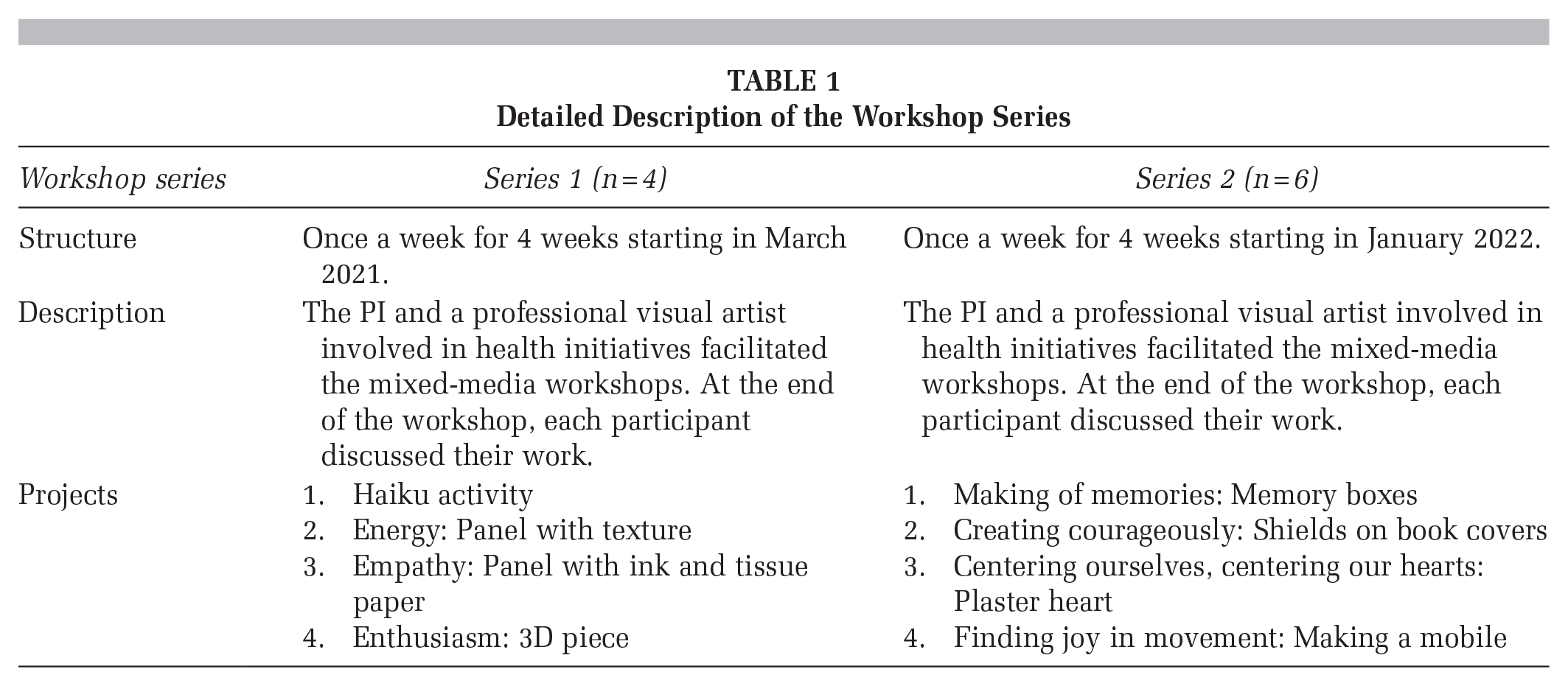
We offered two series of mixed-media visual arts workshops, each involving four two-hour sessions delivered over four weeks. Both workshops were delivered over Zoom, due to the COVID-19 pandemic. Workshops were developed and facilitated by a community artist and arts-based researcher (PI) based on their extensive collaboration and experience with arts programming (R. Thomas et al., 2020). The specific art activities were carefully chosen in consideration of the participants’ varying degrees of experience and comfort with visual arts, hence the different activities offered in each series. Throughout the various activities, the facilitators emphasized the importance of creating art that represented one’s perspective of a good life with impairment. Prior to the workshop, participants received a kit of art supplies and an art-making guide with foundational tips and tricks for mixed-media techniques. Each workshop session included introductory instructions, verbal and visual guidance during the art-making activity, and time allocated for participants to discuss and share their artwork and process with each other. The workshop themes and activities centered on the concept of a good life with cancer, informed by our previous research, which illuminated the experiences and stories of joy, hope, resilience, and living well with impairment (Ranger et al., 2023; R. Thomas et al., 2017). Table 1 provides a detailed description of each workshop.
Detailed Description of the Workshop Series
Data Collection
Before the workshops, we met each participant virtually to obtain consent and complete a sociodemographic questionnaire. Each participant received the required electronic equipment (e.g., phone tripod, laptop stand) to engage in the workshops. 2 Each session was video-recorded using Zoom by both the researchers and each participant to allow for different video perspectives. We also asked each participant to take photographs of their artwork and share them with the researchers, along with one workshop recording of their choice. Following the workshop, our research assistant conducted 60-minute, individual, semi-structured, virtual interviews with each participant. The interviews included questions about their perspectives on a good life with cancer and their experiences during the art workshops. The interviews were audio-video recorded.
Data Analysis
We used an iterative process and interpretive description guidelines for analysis. With its roots in nursing research, interpretive description is a qualitative and interpretive methodology that aims to bridge theory with clinical health practices and contexts (Thorne, 2016). Audio recordings from the workshops and interviews were transcribed, and photographs of the participants’ artwork were embedded in the transcripts to promote a holistic analysis of the textual and visual data. Using NVivo qualitative software (Lumivero version R1), three team members independently coded the same transcripts, followed by different transcripts from the first workshop series. An initial detailed coding structure was established and refined during multiple discussions. Throughout, we also reflected on the relationship between the content of the text and visual imagery. For example, noting how particular images represented or symbolized the experiences being shared in the interviews. Once the coding framework was finalized, the remaining transcripts were divided between the three members and analyzed. Reflexivity was encouraged as each member kept notes of their reflections during transcriptions. Once coding was complete, the team members met to ensure coding consistency and consensus and to distinguish major themes by identifying overlapping codes and recurring patterns.
Findings
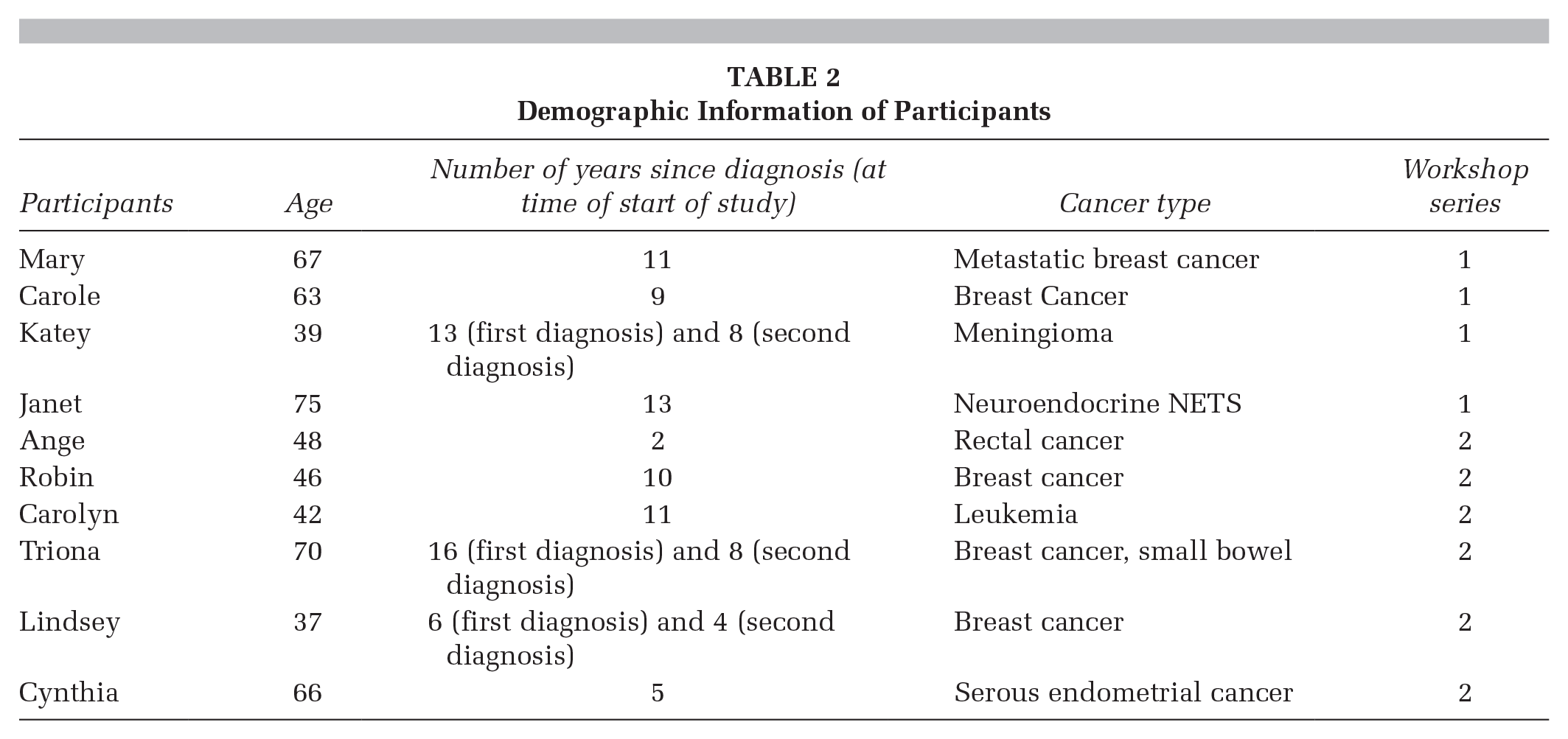
A total of 10 women participated in this study. The participants ranged in age from 37 to 75 and were diagnosed with various types of cancer. Table 2 shows the demographic information on the participants.
Demographic Information of Participants
Through our collaborative analysis, we found two themes particularly relevant for understanding a good life for people living with cancer and impairment. The first theme focuses on the importance of human connection and social relationships. The second theme explores experiences of a good life with cancer as a dynamic process of change, adaptation, and transformation. Participants described the value of the arts-based workshop across both themes.
Theme 1: Centrality of Human Connection and Social Relationships
This first theme illuminates the desire for human connection, the importance placed on long-standing relationships, and the value of new opportunities for meaningful relationships. Participants consistently expressed their need and desire to feel connected to others in almost all facets of the study (e.g., workshops, interviews, and artwork). In Figure 1, Katey’s artwork illustrates the importance of human connection using connecting hands, which she describes as “the people along the way [of the cancer journey]” (Workshop).
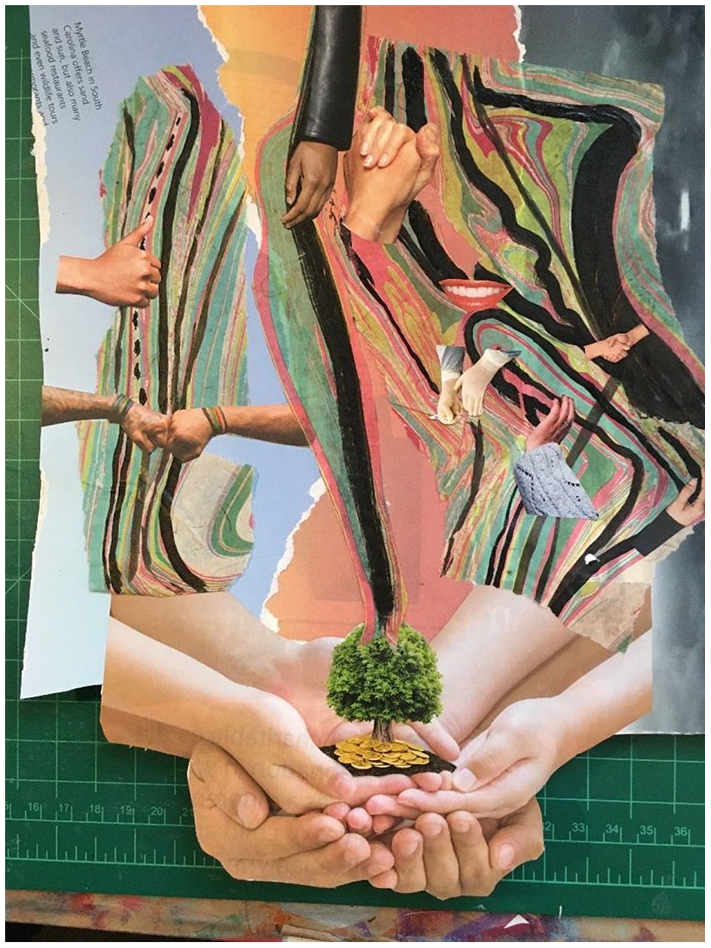
Compassionate Lines by Katey
Many participants reflected on their present and past relationships while living with cancer, including those with their spouses, children, grandchildren, friends, and extended family. Participants emphasized that these close relationships provided necessary support and validation during challenging times. Triona shared, “If it wasn’t for the support of my friends and family, I don’t think I would have survived. Friends and family are the most important part of a good life.” (Interview)
Moreover, participants often articulated how these close social ties helped foster other elements of living well, such as feelings of safety and acceptance and the ability to be one’s authentic self. Social ties were also said to provide a grounding effect on one’s identity. Friendships were often described as a key, yet fluctuating, source of support. For example, Carolyn described the changing nature of friendships throughout her 10-year cancer journey: “You know, some friends stick, and some don’t. You meet new ones, and you lose some.” (Workshop)
For a few participants, the cancer experience led to the development of strong friendships in unexpected places. Robin explains, “It’s the idea of how the connections that we make when we’re in low places are surprising, some of the friendships that are forged in the fire of cancer are quite unique and very, very special.” (Interview)
Many participants highlighted that the art workshops provided a safe, nonjudgmental, and supportive environment through which caring and understanding relationships emerged. Robin described the importance of having opportunities to engage with other women with shared stories and experiences: Spaces like this [the art workshop] are essential . . . there’s an unconditional compassion we have for each other. That shared experience . . . where I find in other spaces there’s a lot of explaining, when I’m around this particular peer group, it’s like there’s interest in each other; there’s no real explanation needed. (Workshop)
Some participants also expressed that the workshops helped fill a gap in community resources for cancer, which were often focused solely on discussion of cancer experiences, symptoms, and education. Participants appreciated that the creative and group process was at the forefront of the workshops, providing an opportunity to explore and share stories of the nuances of living well with cancer. Lindsey notes: It’s unique, and it feels so good not to have cancer be the center of the conversation but to have an outlet to express it and to hold space with everyone, share space with everyone, and do creative things together. (Workshop)
While most participants described social relationships as a critical part of living well with cancer, many of the women also described challenges to remaining socially connected, including introversion, lack of understanding from others, and the social distancing restrictions from the COVID-19 pandemic. Janet specifically shared how the online format of the art workshops helped avoid feelings of isolation and highlighted the ability of online art communities to provide comfort and support: It was a lovely feeling of companionship. Even knowing you’re on the screen, I’d look over once in a while and see somebody looking at something or painting. It was very companionable just to feel that we were all together creating because I’m usually doing it alone. (Workshop)
Theme 2: Recognizing Dynamic Processes of Transformation
The second theme relates to the participants’ perspectives on living well with cancer and impairment as a dynamic process of change and transformation. The process and the ability to make sense of one’s journey were described as foundational to a good life. The participants often depicted these experiences through their art and described the value of the shared art-making experience for infusing their journeys with meaning.
Most participants described change as an inevitable aspect of life, and “being open to change and not expecting things to stay the same” (Ange, Interview) was perceived as critical to living well with cancer. Many participants described navigating change as a singular and continuous journey. Some highlighted that, like art-making, there is no right or wrong way to undertake this process. A few participants also shared how the workshops reinforced this idea by reminding the women to trust their intuition and supporting each participant to embark on their own creative journey. Ange’s “memory box” booklet (see Figure 2) depicts her personal story of change using arrows to illustrate the different paths one can take and numerous butterflies to represent the personal metamorphosis taking place.
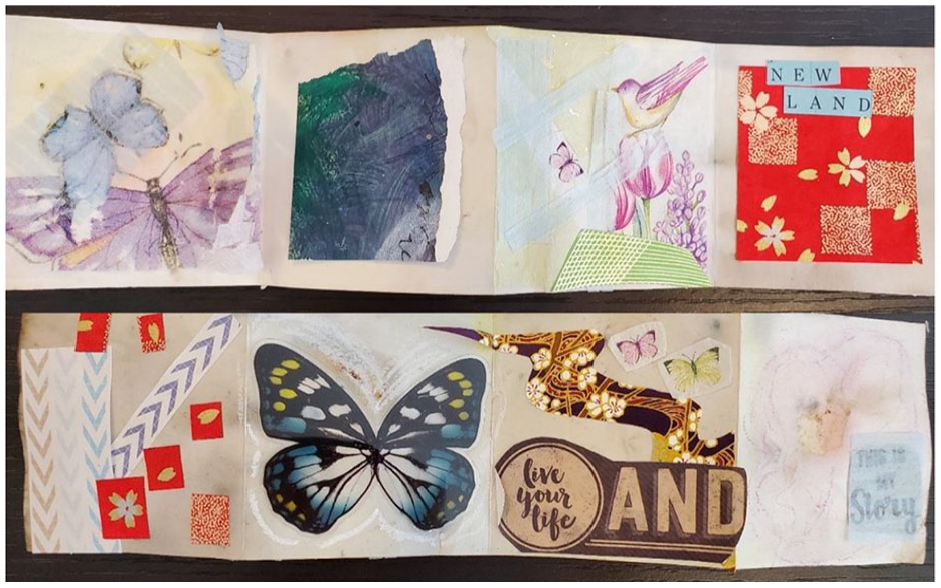
This is My Story by Ange
Experiences of change were often described as resulting from symptoms related to having cancer or cancer treatments, such as fatigue and pain that caused disruptions to valued identities, roles, and activities. For example, many participants acknowledged the challenge of losing the ability to engage in valued activities they once saw as part of their version of a good life. Mary remarks: There are things I used to love to do, and my husband and I’d love to do together, that I cannot do anymore, and he will not do without me: bicycling, cross-country skiing, and downhill skiing. [Before], I would have included those in a good life, and now I’ve had to adjust. (Interview)
For many, “the inability to adapt to changes that are inevitable” (Carole, Interview) was seen as a barrier to living well with cancer. They described an iterative process of acknowledging the positive and negative sides of their experiences, shifting their perspectives, and “getting out of [their] comfort zone” (Lindsey, Interview). Furthermore, many participants described how their resolution not to resist or dwell on these challenges provided a meaningful opportunity for agency and control in their lives. Some participants also described a parallel between such experiences and responding to challenges in the creative process. Below, Cynthia describes how she changed her artwork outside the workshop until it suited her vision and needs: There was no colour balance, no size, no shape. So I continued to work after the workshop, and I changed things around so that it made me happy. I guess I like to have control. You can’t control everything, but you can control your response, and, in this case, I was able to control this little bit of art. (Interview)
In both the workshop and interviews, many participants also highlighted that a good life with cancer includes “resilience” (Robin) and “strength” (Triona), as well as “self-love” (Lindsey) and “acceptance” (Janet). Indeed, all participants shared their unique experiences of positive transformation. Many also discussed “having purpose and things to do” (Carolyn) as a facilitator to a good life. More specifically, participants discussed opportunities to learn, contribute, and engage in new roles and valued activities such as art, community advocacy groups, nature walks, and strength training, which helped support their version of a good life (Carolyn, Triona, Ange, Cynthia, Lindsey). For some women, the cancer experience was described as a catalyst for newfound meaning and power in their lives. Triona describes, “What happened is part of my life; it’s part of who I am. And, I think it [the cancer experience] has, in many ways, made me stronger.” (Interview)
Finally, many participants described the significance of undertaking their creative journeys alongside other women with shared experiences of change and transformation. They described that sharing stories and art was meaningful and inspirational and that it supported their own journey of self-determination and resilience.
Discussion
In this study, we endeavored to extend dominant biomedical understandings of health and a good life for people living with cancer and lasting impairment by exploring the personal experiences of women via arts-based community workshops. Two interrelated themes reflect the complex experience of living well with cancer and related impairment, including the centrality of social connections and the good life as a dynamic process of change and transformation.
The findings on the importance of social connections fit well within broader public health research, which focuses on social relationships as a key determinant of health (Holt-Lunstad & Steptoe, 2022). To this end, substantial research has demonstrated that positive social relationships are linked to better health outcomes and reduced mortality rates through increased social support and access to health-enhancing resources (Proctor et al., 2023). Drawing on Fowers (2016), whose work examines Aristotle’s theory of the good life as “nature-fulfillment,” our findings also relate to the philosophical understanding of humans as naturally social beings. Thus, the desire for human connection fulfills this primary need through which one’s good life can take place (Fowers, 2016). Whether conceptualized as a determinant of health or as a central human need, the importance of looking beyond individualized views of health and toward relational understandings of living well with impairment is evident in the perspectives and experiences shared by the women. The arts workshops were an important new source of understanding and support between the women that could be reciprocated in their shared experiences. Specifically, being creative with others was seen as valuable for reframing their cancer experiences into positive social and bonding opportunities. Finally, these findings support the need to offer art-making opportunities beyond individual therapy within cancer care, in order to provide the social benefits of community-based art-making that can support living well with cancer.
Our second finding relates to understanding the good life as an ongoing and iterative process of change and transformation. This contrasts with biomedical views of illness and impairment as something to overcome in order to reach a point where life is improved. Here, the perspectives shared by the participants also bear similarities to philosophical and psychological constructs surrounding eudaimonia and flourishing. Notably, the women’s need to acknowledge cancer-related challenges and disruptions, all the while recognizing that obstacles and change are a necessary part of life, echoes eudaimonic understandings of well-being as finding a balance for positive and negative aspects of being human (Deci & Ryan, 2008; Fowers, 2016). Having the ability to make decisions to embrace change also reflects the eudaimonic theories that center agency and autonomy for living a good life (Deci & Ryan, 2008). Finally, the experiences of transformation and self-acceptance described by our participants are reminiscent of the eudaimonic concept of human flourishing 3 as “the discovery of deep meaning” that can occur from experiencing obstacles and challenges (Frankl in Ekman & Simon-Thomas, 2021, p.3).
Importantly, we found that the creative process was seen not only as a representation of personal journeys of change and transformation but also as a meaningful opportunity to support these experiences. This is consistent with research demonstrating that engaging in activities of self-reflection and self-expression, such as creativity, can support one’s experience of a good life (Baumeister et al., 2013; Ranger et al., 2023). Equally important was the communal aspect of the creative process in our study. Indeed, connection to others is considered foundational to the experience of human flourishing (Ekman & Simon-Thomas, 2021). The workshop was considered a safe space where the women could share and relate to each other’s stories, ultimately reinforcing their journeys of flourishing and transformation.
Limitations
While we aimed to give voice to the overall underrepresented perspectives of women living with cancer-related impairment, the snowball sampling strategy utilized led to most of the women in our study being White, living in urban areas, well-educated, and middle-class. While this strategy was necessary given the context of the COVID-19 pandemic, future studies could utilize other sampling strategies to explore a good life with impairment with people from various cultural and socioeconomic backgrounds. We have also reflected that the online delivery of our art workshops may have deterred some potential participants who were not comfortable using technology or preferred in-person activities. Nonetheless, the online delivery of the workshops was a novel adaptation of community-based arts programming that might conversely promote accessibility.
Implications for Practice
Our study has important implications for public health and health promotion delivery and education. Notably, the iterative process of living well described by the women illuminates an ongoing need for support that is often missing later in the cancer care continuum. Our study also highlights the importance of care that goes beyond reducing impairment and optimizing function toward a practice that supports individuals in engaging in what makes life good for them (e.g., embracing opportunities to learn, to create, to engage in valued activities and their communities). Our findings demonstrate that virtual community arts workshops are a valuable tool for supporting various aspects of the good life for women with cancer, including social connection, social support, and the processes of navigating change and transformation. To foster access to community arts, public health agencies aimed at supporting patients living with cancer could provide recurring series of virtual art-based workshops on their websites or provide links to local community art programs. From a methodological standpoint, our study supports the value of arts-based research in public health research to provide essential insights into complex human experiences of illness and health.
Conclusion
Our study set out to blur the boundaries between public health, community arts, and the social sciences to advance understandings of a good life with impairment from the perspective of women with cancer and to explore the potential of community arts to support such experiences. Through the personal stories shared and the artwork created, the women in our study described the importance of human connection and social relationships to living well with cancer and their perspectives of a good life as a dynamic process of change and transformation. Such viewpoints challenge perspectives that equate living a good life to living without impairment and are more consistent with philosophical notions of the good life, eudaimonia, and human flourishing. Our study illuminates the ongoing support necessary to support women in their journeys of living well with cancer and the value of community arts in fostering positive experiences of social connection and transformation. Cross-sector collaboration between public health agencies and local community programs is essential to develop and maintain future programs to support people living with chronic conditions and impairment.
Footnotes
Funding
The author(s) disclosed receipt of the following financial support for the research, authorship, and/or publication of this article: This research was completed with the support of the Social Sciences and Humanities Research Council of Canada Insight Grant [435-2020-0175].
