



Abstract
Non-Hispanic Black (Black) and Hispanic/Latino (Latino) populations face an increased risk of COVID-19 infection, hospitalization, and death from COVID-19 relative to non-Hispanic White (White) populations. When COVID-19 vaccines became available in December 2020, Black and Latino adults were less likely than White adults to get vaccinated due to factors such as racial discrimination and structural barriers to uptake. In April 2021, the U.S. HHS COVID-19 public education campaign (the Campaign) was launched to promote vaccination through general and audience-tailored messaging. As of March 2022, Black and Latino adults had reached parity with White adults in COVID-19 vaccine uptake. This study evaluated the relationship between Campaign exposure and subsequent vaccine uptake among Black, Latino, and White adults in the United States and assessed whether participant race/ethnicity moderated the relationship between Campaign exposure and vaccine uptake. Campaign media delivery data was merged with survey data collected from a sample of U.S. adults (
Keywords
The burden of infections, hospitalizations, and deaths linked to the COVID-19 pandemic has disproportionately affected people of color, in particular Non-Hispanic Black-identifying (Black) and Hispanic/Latino-identifying (Latino) populations who are at elevated risk of adverse COVID-19 outcomes relative to Non-Hispanic White-identifying (White) populations (Artiga & Hamel, 2021; Centers for Disease Control and Prevention [CDC], 2022; Lopez et al., 2021; Rubin-Miller et al., 2020). Starting with the initial COVID-19 vaccine rollout period in December 2020, vaccine uptake in Black and Latino populations was lower compared with White populations (Artiga & Hamel, 2021; Siegel et al., 2022). Lower vaccine uptake among Black and Latino populations has been linked to medical and government mistrust due to historically traumatic events associated with medicine (e.g., the Tuskegee Syphilis Study; Scharff et al., 2010) and racial discrimination practices in medical contexts (Hamed et al., 2022; D. R. Williams & Rucker, 2000). Furthermore, there is evidence that structural barriers (e.g., convenience, transportation, language) have contributed to racial/ethnic disparities in COVID-19 vaccination (Njoku et al., 2021). The unequal impact of the COVID-19 pandemic has exacerbated existing health disparities among Black and Latino populations compared with White populations (Bailey et al., 2021; Boserup et al., 2020; Rubin-Miller et al., 2020; A. M. Williams et al., 2022).
In April 2021, the United States Department of Health and Human Services (HHS) introduced the national “We Can Do This” COVID-19 public education campaign (the Campaign; Weber et al., 2022) to promote greater COVID-19 vaccine confidence and uptake among U.S. adults. Campaign messages informed by health behavior theories and formative research were delivered across a wide variety of media channels, including television, digital and social media platforms, radio, print, and out-of-home advertising (e.g., billboards; see Weber et al., 2022 for a detailed background on the Campaign). While some advertisements were designed to broadly promote vaccine confidence among U.S. adults across racial/ethnic groups, others were tailored to resonate with Black and Latino populations, respectively. These research-informed tailored advertisements featured messages that aimed to address specific vaccine concerns held by each audience, while being mindful of cultural values, featuring messengers and organizations that are trusted by Black and Latino populations.
COVID-19 vaccine uptake surveillance shows that by early 2022, the rates of vaccine uptake among Black and Latino adults reached and, for Latino adults, even exceeded the rate of vaccine uptake among White adults (Ndugga et al., 2022). The observed changes in uptake rates coincided with the timing of the Campaign, making it plausible that the Campaign contributed to increasing parity in COVID-19 vaccination uptake across Black, Latino, and White adults; however, this relationship has not been formally investigated. Initial evaluations demonstrate that the Campaign has been successful in increasing COVID-19 vaccine confidence and uptake, as self-reported recall of Campaign advertisements was positively associated with vaccine confidence (Kranzler et al., 2023), and increased Campaign digital and television advertising corresponded with increased first-dose vaccine uptake (Denison et al., 2023; C. J. Williams et al., 2023).
In this study, we expanded upon previous Campaign evaluation work by examining whether the Campaign contributed to reducing disparities in COVID-19 vaccine uptake across Black, Latino, and White populations. Specifically, this study evaluates whether race and ethnicity moderate the relationship between Campaign exposure and first-dose COVID-19 vaccine uptake, such that the association between Campaign exposure and vaccine uptake is stronger or weaker for Black and Latino adults relative to White adults.
Method
Data for this study were collected from the HHS four-wave (January 2021–March 2022), longitudinal COVID-19 Attitudes and Beliefs Survey (CABS). The baseline CABS sample of 4,398 participants was obtained from NORC at the University of Chicago’s AmeriSpeak probability-based online panel (NORC, 2022). The survey waves were fielded as follows: Wave 1 (January–February 2021), Wave 2 (May–June 2021), Wave 3 (September–November 2021), Wave 4 (January–March 2022). Retention rates ranged from 90% to 93% across the four waves. See the online supplement for additional survey methodology details.
Dependent Variable
The dependent variable was the date on which participants reported having received their first dose of a COVID-19 vaccine (vaccine date) and was measured in CABS waves 3 and 4. To be used in the analysis, each self-reported vaccine date was required to pass a series of quality assurance checks. This process included checks on the vaccination timing compared with vaccine availability to the American public and to vaccine uptake as reported in previous survey waves, and the consistency of vaccine uptake responses over time. Participants who reported being unvaccinated in all survey waves were classified as being unvaccinated for the analysis. The analytic sample of 2,923 respondents was required to have completed at least survey waves 1 to 3, to have passed all vaccine quality assurance checks, and to have no missing data on covariates. See the online supplement for additional data cleaning and management details.
Independent Variables
Campaign Digital Impressions
The first independent variable was Campaign digital advertising impressions (impressions), an estimate of the frequency with which Campaign digital advertisements are seen and/or heard by audience members. Impressions were organized by geographic regions known as designated market areas (DMAs), which are often used for media buying (Nielsen, 2021), and by broadcast weeks, which run from Monday to Sunday. Impressions included those designed for the general market adult audience (ages 18 and older), the Black adult audience, and the Latino adult audience. Impressions were combined across these audiences because we anticipated all Campaign digital advertisements, whether they intended to appeal to a subset of adults or to the general population of adults, to influence COVID-19 vaccine uptake due to their shared visual identity (e.g., Campaign logo and color scheme) and broader goal to influence uptake. That is, we expected that increases in vaccine uptake attributed to increased Campaign exposure would reflect the influence of all ads to which an individual could have been exposed and were not limited to general market or audience-specific advertisements.
Impressions data by DMA-broadcast week were reformatted into a cumulative variable that aggregated values from the current week with the values from previous weeks using a half-life decay function. The half-life function summed impressions from the current week along with those from previous broadcast weeks where the previous values are discounted, such that after a set period, the discount rate halves. Research suggests that half-life accumulation is an effective way to represent the effect of adstocks, or the persistence of marketing messaging in memory, and that ads for products tend to have approximately 3-week half-lives (Broadbent, 2000). Recent research has demonstrated relationships between Campaign dose for TV and digital advertising and COVID-19 vaccine uptake using a 3-week half-life decay (Denison et al., 2023). We used the 3-week half-life decay to construct the cumulative impressions metric for this analysis (see also the approach in Denison et al., 2023). The impressions variable aggregated a total of 18 broadcast weeks (approximately 4 months) of impressions and were natural-logarithm transformed. See the online supplement for additional details relevant to data transformation.
Participant Race/Ethnicity
The second independent variable was CABS participant self-reported race and ethnicity, as measured at Wave 1, and was coded into six different race/ethnicity groups: non-Hispanic Black (Black), Hispanic/Latino (Latino), non-Hispanic White (White), American Indian or Alaska Native, non-Hispanic Asian American or Pacific Islander, and non-Hispanic Multiple Races or another Identity. Given this study’s focus on Black, Latino, and White populations, and due to small analytic sample sizes for the other racial/ethnic groups, analyses were limited to Black, Latino, and White participants, with indicator variables for Black and Latino participants.
Interaction of Campaign Digital Impressions and Race/Ethnicity
The third and fourth independent variables were the interactions, or product terms, between the cumulative impressions variable and the Black and Latino indicator variables. These interactions were used to evaluate the focal research question examining the extent to which the relationship between Campaign exposure and COVID-19 vaccine uptake differs by race/ethnicity.
Covariates
Covariates included the following sociodemographic variables, as measured in CABS Wave 1: participant age (18–24, 25–44, 45–64, 65 and older), gender (male, female), education (no college, some college, bachelor’s degree or a higher degree), annual household income (<US$50,000; US$50,000–US$74,999; US$75,000–US$99,999; US$100,000 and greater), political ideology (liberal, moderate, conservative), U.S. Census Region of residence (Northeast, Midwest, South, West), rurality (urban, suburban, rural), essential worker status (essential worker, non-essential worker), and having a preexisting health condition (preexisting health condition, no preexisting health condition). See the online supplement for descriptive statistics.
Another covariate was participant COVID-19 vaccine confidence, as reported in Wave 1. Vaccine confidence was included because it reflects intentions to be vaccinated against COVID-19 as assessed before the launch of the Campaign. Vaccine confidence was coded into three categories reflecting increasing intentions to be vaccinated: Vaccine Refuser, Movable Middle, and Vaccine Confident (see online supplement for definitions). DMA population size was included as a covariate to account for variation in Campaign exposure due to population size; because impressions are counts of individual advertising exposures, DMAs with larger populations are likely to have higher impression counts due to their larger size.
Analysis
We used a survey-weighted logistic model with within-person cluster-robust standard errors to assess the association of impressions, race/ethnicity, and interactions between impressions and race/ethnicity (Black and Latino) with COVID-19 vaccine uptake. Broadcast week fixed effects for weeks ranging from December 7, 2020, to December 27, 2021, were included in the model as dummy codes to capture the emergence of COVID-19 variants and other events (e.g., changes in COVID-19 cases and deaths) that might covary with cumulative impressions and vaccine uptake timing. The survey weight was computed for all participants at Wave 3.
Results
Figure 1 depicts logged impressions across all 210 DMAs for the broadcast weeks from December 7, 2020, to February 28, 2022, and illustrates the delivery of impressions beginning in April 2021 when the Campaign launched.
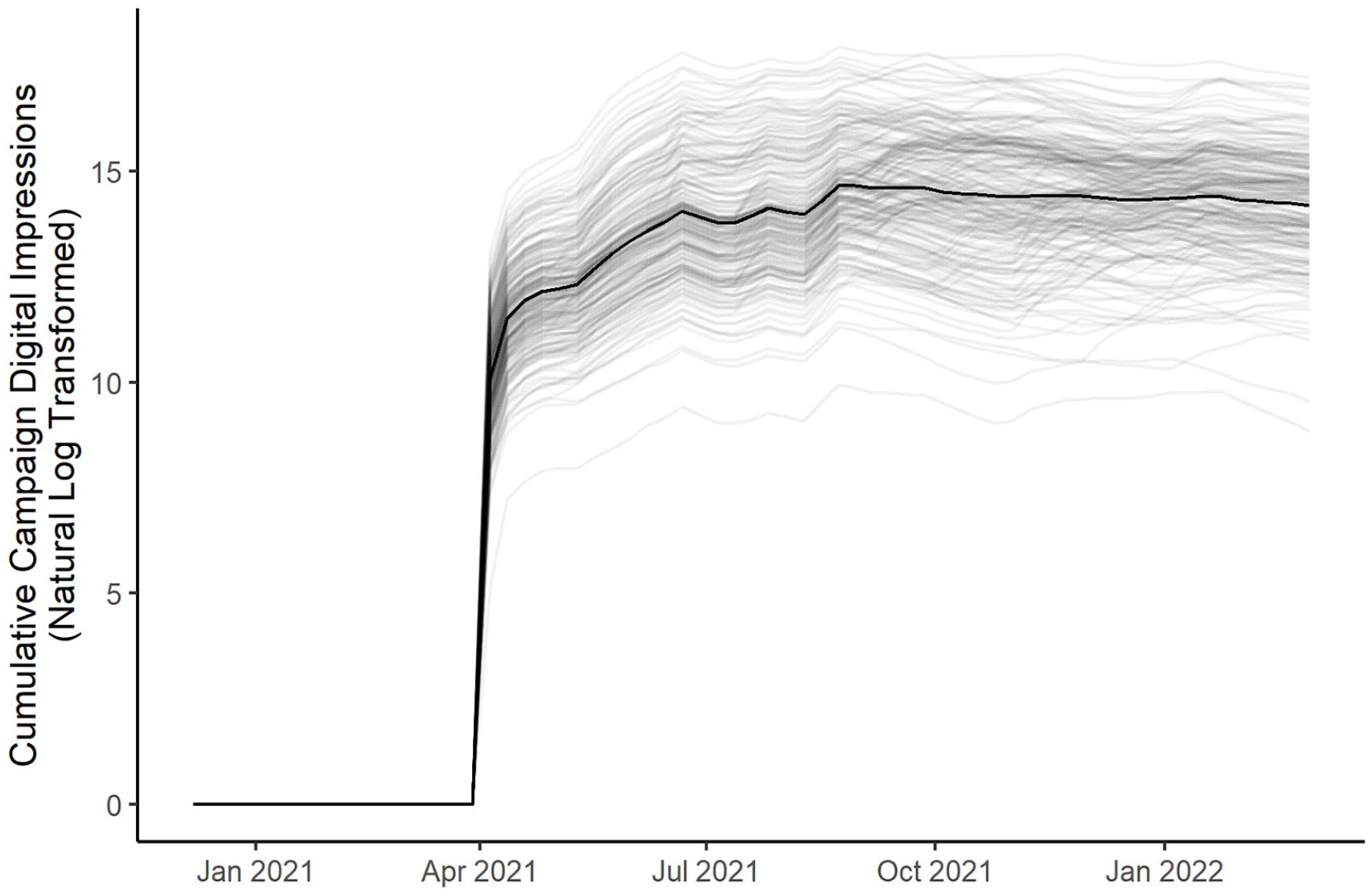
Cumulative Campaign Digital Impressions for Each DMA, December 2020 to March 2022
Figure 1 shows that for most DMAs, exposure to the Campaign was relatively stable over time. The figure shows that there were similar rates of impression delivery across DMAs from April to October 2021, after which point cumulative impressions become more varied across DMAs.
Figure 2 shows the distribution of COVID-19 vaccine uptake by participant race/ethnicity from January 2021 to March 2022. By April 2021, when the Campaign began, nearly 50% of White participants had received the first dose of a COVID-19 vaccine. By contrast, approximately 40% of Latino participants and nearly 30% of Black participants had received a first vaccine dose. This distribution mirrors findings from other research, which shows disparities in vaccine uptake by race/ethnicity in April 2021 (Ndugga et al., 2022).
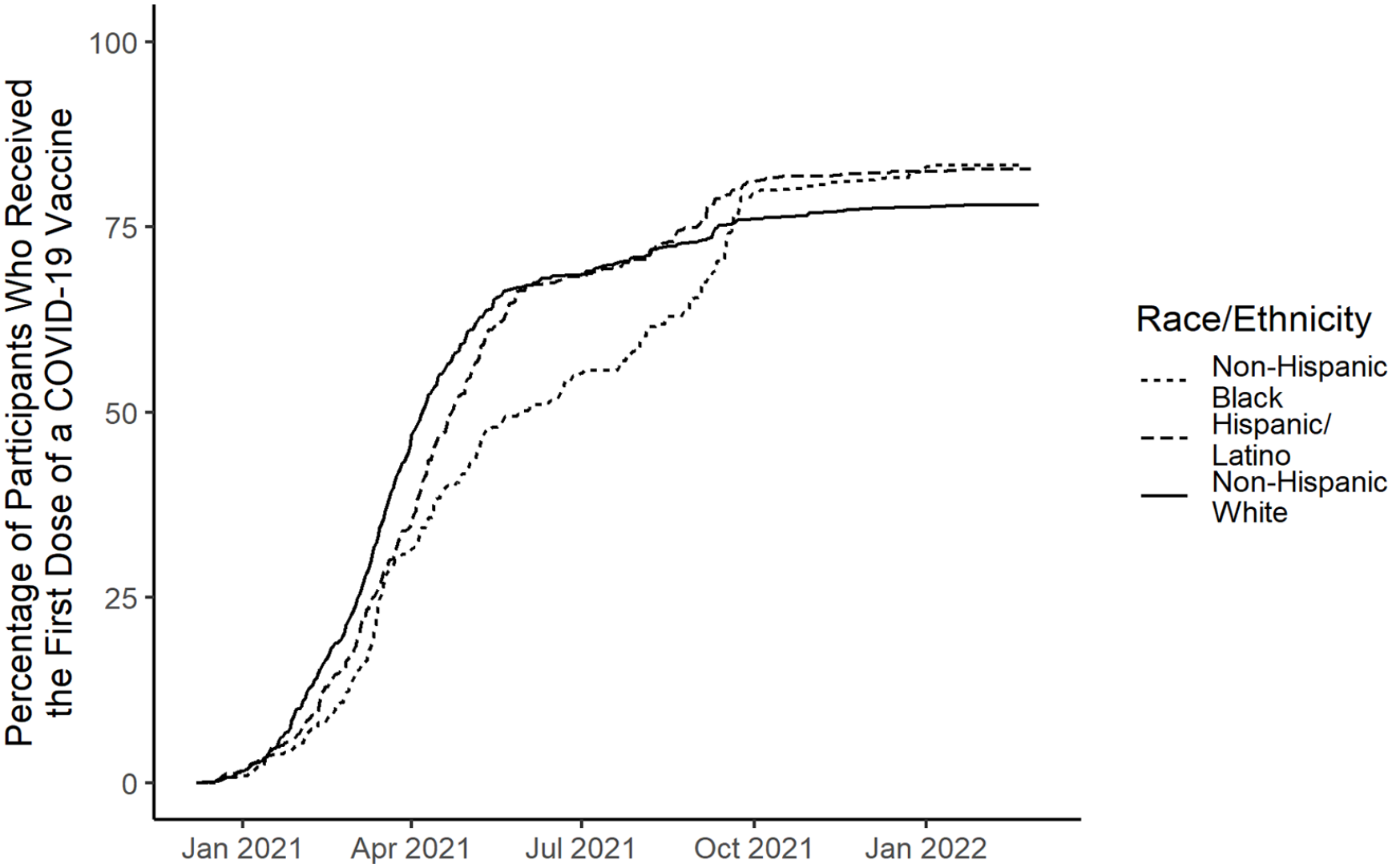
COVID-19 Vaccine Uptake by Race/Ethnicity, December 2020 to March 2022
Figure 2 also shows that the rate of vaccine uptake among White participants slowed substantially around May 2021, at which point nearly 60% of White participants had received a first vaccine dose. Vaccine uptake among White participants increased to 75% by October 2021, with minimal increases in uptake thereafter through the end of the CABS Wave 4 fielding period (near 80% uptake). Between April and June 2021, Latino participants showed a steep increase in their rate of vaccine uptake, from approximately 35% to 70%, and another increase in vaccine uptake from July–October 2021; by October, around 80% of Latino participants reported having been vaccinated. Black participants showed a substantially different pattern of vaccine uptake, with just under 50% of this group having received a COVID-19 vaccine by May 2021. Vaccine uptake was more gradual among Black participants from May–October 2021; by October, the percentage of Black participants who were vaccinated (nearly 80%) was similar to that same percentage for both White and Latino participants. After October 2021, vaccine uptake among Black participants mirrored that of Latino participants.
Modeling Results
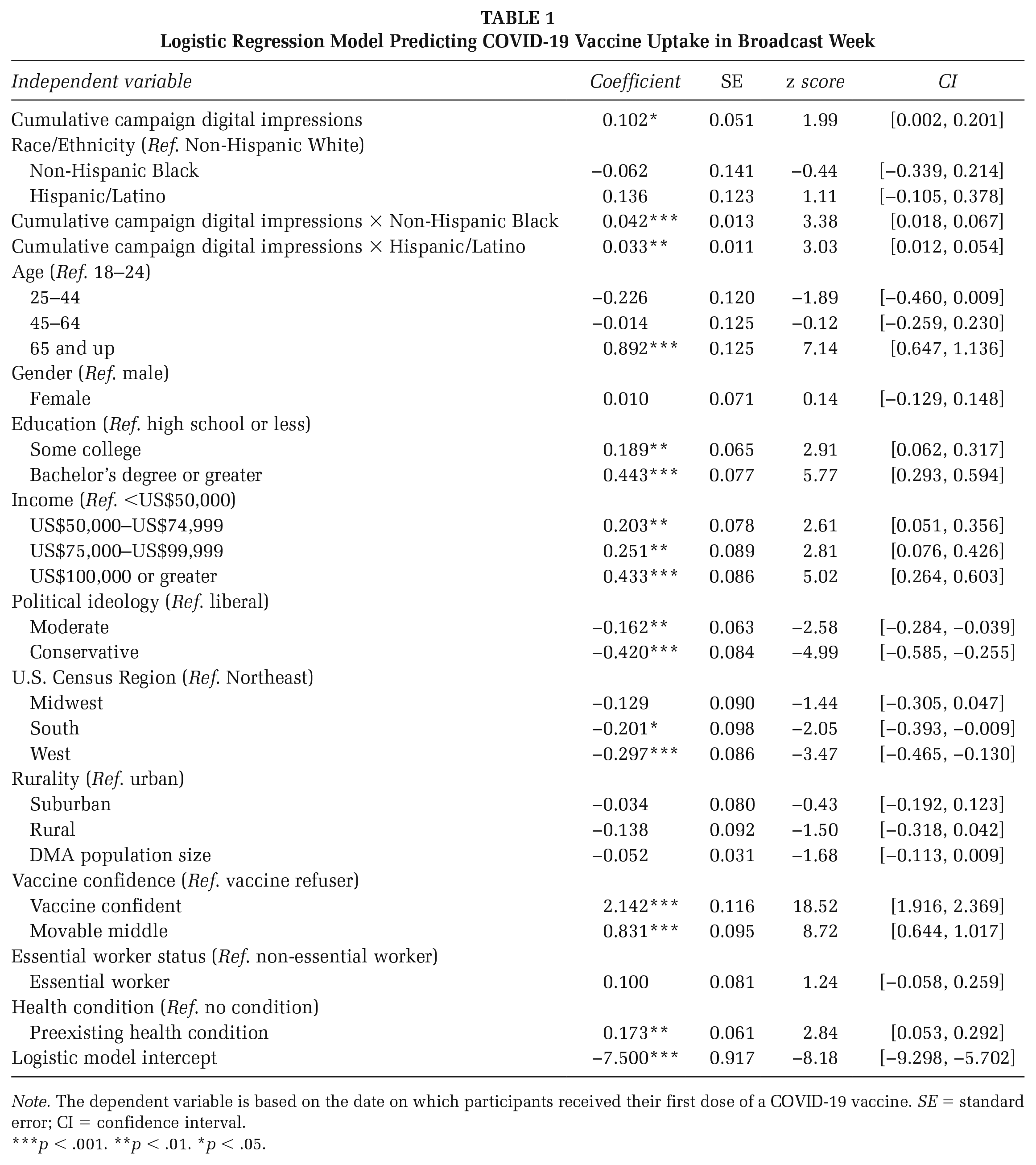
Table 1 presents the results of the weighted logistic regression model predicting COVID-19 vaccine uptake.
Logistic Regression Model Predicting COVID-19 Vaccine Uptake in Broadcast Week
Note. The dependent variable is based on the date on which participants received their first dose of a COVID-19 vaccine. SE = standard error; CI = confidence interval.
p < .001. **p < .01. *p < .05.
Campaign Digital Impressions
White participants were the reference group for the race/ethnicity variable. Hence, the regression coefficient for the cumulative impressions variable reflects results for White participants, for whom there was a significant, positive association between cumulative impressions and COVID-19 vaccine uptake (β = 0.102, z=1.99, p=.046). This result suggests that, among White participants, each 1% increase in cumulative impressions in the previous broadcast week was associated with a 10.7% (e0.102) increase in the odds of getting vaccinated in the current broadcast week, controlling for covariates and week-specific fixed effects.
Results also indicate that the interactive effects of cumulative impressions with both Black (β = 0.042, z = 3.38, p<.001) and Latino (β = 0.033, z = 3.03, p = .002) race/ethnicity on COVID-19 vaccine uptake were positive and significant. Among Black participants, a 1% increase in cumulative impressions within a participant’s DMA corresponded with 15.5% greater odds of vaccination in the current broadcast week. Thus, when cumulative impressions were equal, Black participants had 4.3% greater odds of vaccination relative to White participants. A similar effect was observed among Latino participants, for whom a 1% increase in cumulative impressions within a participant’s DMA corresponded with 14.4% greater odds of vaccination in the current broadcast week. Latino participants had 3.3% greater odds of vaccination compared with White participants given equivalent cumulative impressions.
The form of the interaction is depicted in Figure 3, which illustrates the estimated marginal means from the regression model by race/ethnicity.
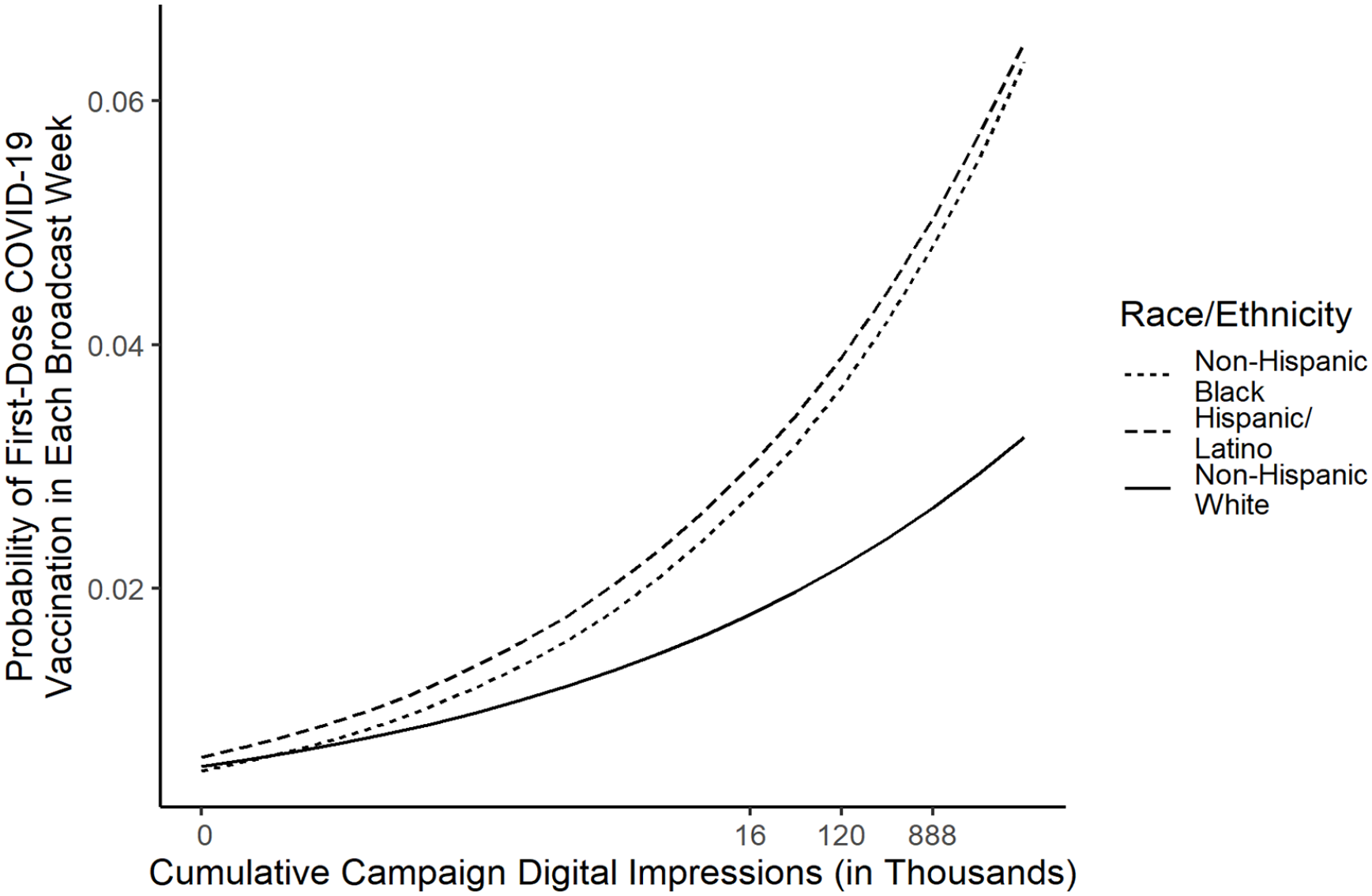
Estimated Marginal Means of Cumulative Campaign Digital Impressions on COVID-19 Vaccination By Race/Ethnicity
Figure 3 shows that, at effectively no cumulative impressions in a broadcast week, the probability of COVID-19 vaccine uptake in that broadcast week was not meaningfully different by participant race/ethnicity (approximately 0.005 for all groups). In the typical range of observed cumulative impressions (the non-zero x-axis values), the probability of vaccine uptake in a broadcast week differed substantially by race/ethnicity. For example, during a broadcast week in which there were 16,000 cumulative impressions, the probability of vaccine uptake among White participants was around 0.018, whereas that same probability was approximately 0.028 for Black participants and 0.030 for Latino participants. This difference in the probability of COVID-19 vaccine uptake by race/ethnicity was of a greater magnitude for broadcast weeks in which there were 888,000 cumulative impressions, for which the probability of vaccine uptake among White participants was around 0.026, whereas that same probability was approximately 0.048 for Black participants and 0.050 for Latino participants.
Closing the Vaccination Gap With the Campaign
The differential effects of cumulative impressions on COVID-19 vaccine uptake by race/ethnicity suggest that exposure to the Campaign may have contributed to increased vaccine uptake among Black and Latino participants after April 2021 (Figure 2). To estimate the Campaign’s contribution toward closing the vaccination gap between Black and Latino adults and White adults, we conducted two simulations. In the Cumulative Impressions simulation, we used the predicted probabilities from the logistic regression model (shown in Figure 3) to estimate the rates of vaccine uptake by race/ethnicity over the study period. In the Vaccine Confidence simulation, we used a similar model to estimate rates of vaccine uptake by race/ethnicity; this model excluded cumulative impressions and week fixed effects and included interactions of the Wave 1 vaccine confidence variable with linear and quadratic broadcast-week time trends. The Vaccine Confidence simulation was conducted to serve as a potential alternative explanation for the closing of the vaccination gap across racial and ethnic populations, as differences in vaccine confidence across Black, Latino, and White populations could have influenced differences in vaccine uptake across these groups. See the online supplement for simulation details.
Figure 4 depicts the predicted rates of COVID-19 vaccine uptake, by race/ethnicity, as estimated by the two simulations between January 2021 and March 2022. Vertical lines denote the closure period (the period over which the vaccination gap closed) from April to mid-September 2021.
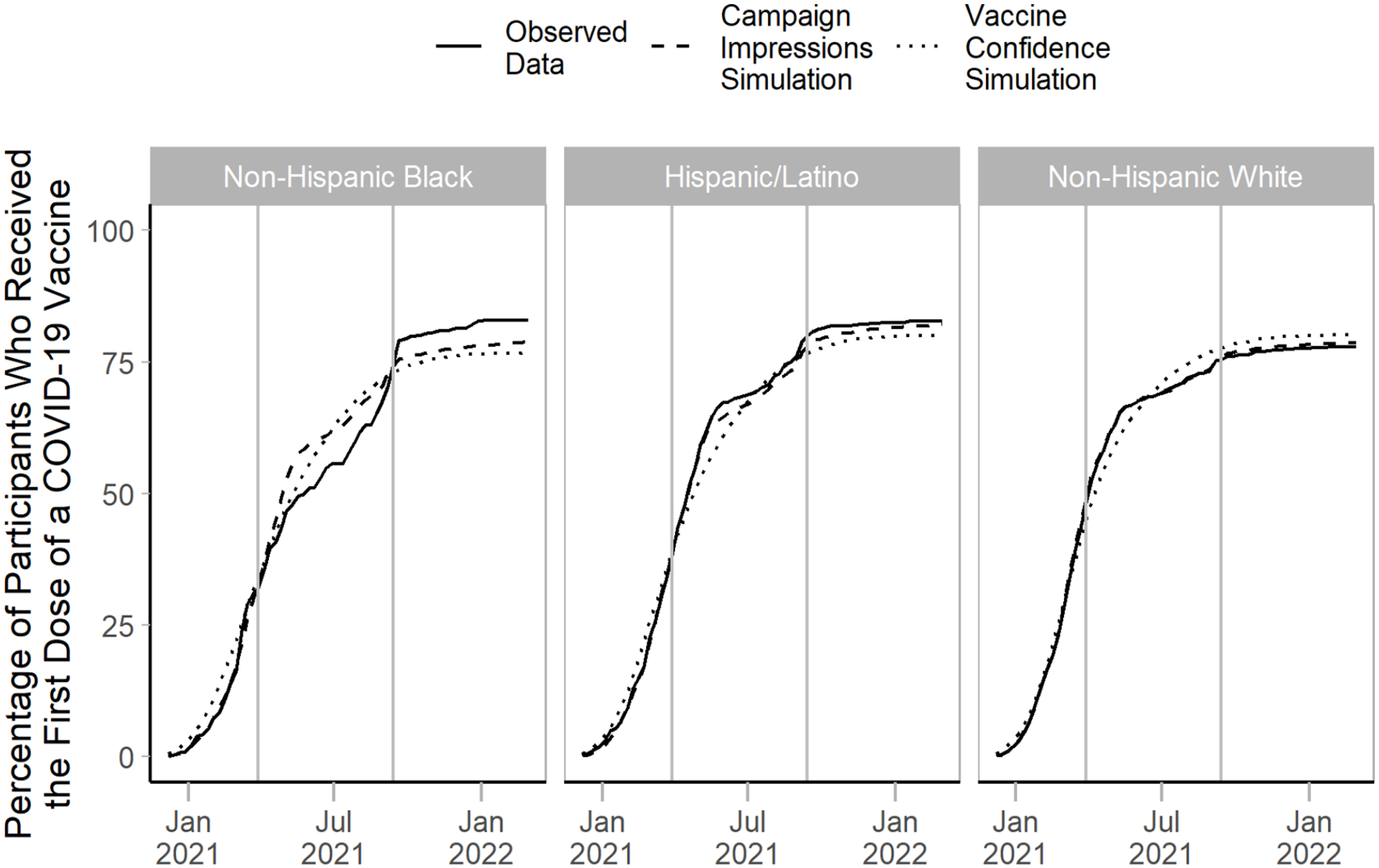
Observed and Simulated COVID-19 Vaccine Uptake Over Time by Race/Ethnicity
To estimate the proportion of the closure in the COVID-19 vaccination gap that can be attributed to the Campaign, we developed two linear regression models using the simulation data and the observed data and compared their corresponding R2 values. The first model, which used the simulated vaccine confidence data to predict the observed data during the closure period, produced an R2 of 0.875. The second model, which used the simulated vaccine confidence data and the simulated cumulative impressions data to predict the observed data during the closure period, produced an R2 of 0.925. The difference between the two R2 values was 0.050, representing the estimate of the Campaign’s proportional contribution to closing the vaccination gap. Thus, we estimated that around 5.0% of the closure of the COVID-19 vaccination gap between Black, Latino, and White populations was associated with Campaign impressions. See the online supplement for simulation analysis details and interpretation of results.
Discussion
In this study, we found that the positive, statistically significant association between cumulative Campaign digital impressions and COVID-19 vaccine uptake was moderated by race/ethnicity, such that it was significantly stronger among Black participants (4.3% greater odds of vaccination) and Latino participants (3.3% greater odds of vaccination) compared with White participants. These results suggest that exposure to the Campaign was associated with increased COVID-19 vaccination, in line with findings from other evaluative studies of this Campaign (Denison et al., 2023; Kranzler et al., 2023; C. J. Williams et al., 2023). Moreover, results suggest that the effect of Campaign exposure on vaccination was more pronounced for Black and Latino populations, for whom there were lower levels of vaccine uptake relative to White populations when the Campaign was launched in April 2021.
Furthermore, results from simulated models suggest that the Campaign was one of several factors that contributed to the closing of the gap in COVID-19 vaccination between Black, Latino, and White populations, attributing 5.0% of the gap closure to the digital component of the Campaign. This finding may stem from the Campaign’s marketing strategy, which included tailored messages to Black and Latino audiences, in addition to messages aimed to reach the general U.S. adult population. Given the COVID-19 pandemic exacerbated health disparities among Black and Latino populations compared with White populations (Boserup et al., 2020; Rubin-Miller et al., 2020; A. M. Williams et al., 2022), findings from this study suggest that public education campaigns can be effective tools for bridging health equity gaps.
Although study results suggest that the Campaign contributed toward the closing of the COVID-19 vaccination gap, the results do not offer evidence as to why the Campaign was effective. One mechanism through which the Campaign may have increased vaccination, particularly among Black and Hispanic individuals, is by reducing specific concerns about the safety and efficacy of COVID-19 vaccines. Research conducted in early 2021 shows noteworthy differences in concerns about the effectiveness, risks, and novelty of COVID-19 vaccines across different racial/ethnic groups (Chen & Shiu, 2022; Nguyen et al., 2022). Indeed, Campaign advertisements that aimed to reach Black and Latino audiences were tailored to address concerns about safety and vaccine effectiveness. The Campaign may have also increased vaccination among Black and Hispanic individuals because advertisements contained culturally relevant content and featured messengers and organizations that are trusted by their respective communities. Future research could evaluate whether Campaign exposure is associated with changes in concerns about vaccine effectiveness and safety and whether these changes in concerns are also associated with COVID-19 vaccine uptake.
Limitations
Self-reported data, including the COVID-19 vaccination dates used in this study, are subject to social-cognitive biases such as recall bias (Tourangeau et al., 2000), given the nearly 4-month window between vaccination and reporting for most participants due to the cadence of survey administration. However, the quality assurance methods used to verify these dates, which accounted for longitudinal response patterns, reduced the potential for bias. Campaign advertisements were disseminated across multiple media channels (television, digital, radio, print, and out-of-home), and corresponding Campaign evaluation research has shown unique effects of different media channels on first-dose COVID-19 vaccine uptake. Analyses for this study were restricted to the use of Campaign digital impressions; thus, the findings may not apply to the effects of the Campaign as disseminated through other media channels. Accordingly, this study may underestimate the extent to which Campaign delivery across media channels contributed toward filling the vaccination gap between racial/ethnic populations.
Cumulative impressions were combined across digital advertisements that aimed to reach the general market, Black audiences, and Latino audiences. Thus, our findings cannot speak to the distinct influence of these types of advertisements on Black, Latino, and White participants. This aggregation of impressions across audiences assumes that all audiences could have been exposed to all ads. However, as part of the Campaign implementation strategy, the placement of messaging tailored to audiences by their race/ethnicity was informed by their geographic distribution, such that geographic regions with proportionally more Black and Latino individuals received a higher proportion of Black- and Latino-focused impressions. Accordingly, participants in geographic regions with proportionally fewer Black and Latino individuals, who, therefore, did not receive as much tailored messaging, may have been more likely to change their vaccination behavior due to exposure to general market advertisements.
Implications for Practice
Findings from this study, which suggest that the Campaign helped to close the COVID-19 vaccination gap between Black, Latino, and White populations, provide evidence of the value in adopting a multifaceted approach to public education campaign messaging to bridge health equity gaps. Public education campaigns that use both general market messaging and tailored population-specific content can be a valuable tool for reaching historically underserved populations, increasing health equity, and improving public health outcomes. Health communication practitioners may aim to develop and disseminate a diverse set of campaign messages to influence priority outcomes across audiences.
Supplemental Material
sj-docx-1-hpp-10.1177_15248399231221159 – Supplemental material for Association Between the United States Department of Health and Human Services’ COVID-19 Public Education Campaign and Initial Adult COVID-19 Vaccination Uptake by Race and Ethnicity in the United States, 2020–2022
Supplemental material, sj-docx-1-hpp-10.1177_15248399231221159 for Association Between the United States Department of Health and Human Services’ COVID-19 Public Education Campaign and Initial Adult COVID-19 Vaccination Uptake by Race and Ethnicity in the United States, 2020–2022 by Joseph N. Luchman, Tyler Nighbor, Elissa C. Kranzler, Benjamin Denison, Heather Dahlen, Jae-Eun C. Kim, Christopher Williams, Sarah Trigger, Morgane Bennett, Leah Hoffman and Joshua Peck in Health Promotion Practice
Footnotes
Authors’ Note:
The authors gratefully acknowledge our current and former colleagues at the U.S. Department of Health and Human Services (HHS) Office of the Assistant Secretary for Public Affairs (ASPA), especially Monica Vines, Elizabeth Petrun Sayers, Allison Kurti, and Jessica Weinberg; the HHS Office of the Assistant Secretary for Planning and Evaluation (ASPE); the U.S. Centers for Disease Control and Prevention (CDC), especially Lynn Sokler; and the Fors Marsh–led team of agencies contributing to the implementation and evaluation of this campaign. We are grateful to Victor Vuong, Marcus Maher, Autumn Chen, Callum Lever, Adam Howley, Lindsey Strausser, Elizabeth Goodman, Stephanie Miles, Ronne Ostby, Colin Macfarlane, Nabila Rahman, Kathryn Rehberg, Maria DelGreco, Crystal Lam, Sarah Lessem, and other Fors Marsh staff who played key roles in survey design and implementation, weighting, data management and quality assurance, project administration, and funding acquisition. We thank the thousands of research participants who made this study possible. No financial disclosures were reported by the authors of this paper. This publication represents the views of the authors and does not represent U.S. Department of Health and Human Services position or policy. This work was supported by the U.S. Department of Health and Human Services (HHS) using National Institutes of Health contract #75N98019D00007, task orders 75N98020F00001, 75N98021F00001, and 75N98022F00001. This study was approved by the Biomedical Research Alliance of New York (BRANY; protocol 20-077-821).

References
Supplementary Material
Please find the following supplemental material available below.
For Open Access articles published under a Creative Commons License, all supplemental material carries the same license as the article it is associated with.
For non-Open Access articles published, all supplemental material carries a non-exclusive license, and permission requests for re-use of supplemental material or any part of supplemental material shall be sent directly to the copyright owner as specified in the copyright notice associated with the article.
