



Abstract
Introduction
Place-based systems change approaches are gaining popularity to address the complex problems associated with locational disadvantage. An important stage of place-based systems change involves understanding the context that surrounds (re)produces a target problem. Community resource mapping can be used to establish the context and identify the strengths of a community that might be leveraged through systems change efforts. Approaches to community resource mapping draw on a range of philosophical assumptions and methodological frameworks. However, comprehensive, practical guidance for researchers and practitioners to conduct community resource mapping is scarce.
Method
Drawing on the learnings from a literature review, scoping workshops, and reflective practice sessions, we developed a flexible, methodologically robust process called the Contextualize, Collect, Analyze, and Present (C-CAP) process: a four-phase approach to preparing for, conducting, and reporting on community resource mapping. The C-CAP process was co-developed by researchers and practitioners and was tested and refined in two different communities.
Results
The C-CAP process provides robust guidance for conducting and reporting on a community resource mapping project. The C-CAP process can be applied by public health practitioners and researchers and adapted for use across different communities, problems, and target groups. We encourage others guided by differing theoretical perspectives to apply C-CAP and share the learnings.
Conclusion
Application of the C-CAP process has the potential to improve the comparability and comprehensiveness of findings from community resource mapping projects and avoids duplication of effort by reducing the need to design new processes for each new community resource mapping activity.
Keywords
Disadvantage is often characterized as a complex problem that is persistent, nonlinear, and challenging to address (Finegood, 2011). Experiences of disadvantage are widely acknowledged to influence the health and wellbeing of individuals and communities, acting as significant social determinants of health. The mechanisms underlying the relationship between disadvantage and health are intricate and multifaceted, and experiences of disadvantage emerge from the complex interplay between an individual’s personal characteristics and the wider social, economic, and cultural contexts in which they are situated (Byron, 2010). The complexity of disadvantage represents a key challenge to achieving health equity (Braveman, 2006).
Place-based disadvantage, specifically, refers to situations where a geographically bounded location lacks the adequate resources or supports necessary for residents to flourish, such as access to quality health care, employment opportunities, or community services (Halliday et al., 2020). In recognition of this, place-based systems change approaches seek to enhance community health outcomes by drawing on systems thinking perspectives to tackle the complexity of locational disadvantage (Craike et al., 2023; Gullett et al., 2022; Tucker et al., 2022). A defining feature of place-based system change efforts is the recognition that each geographically defined area (or “place”) is unique in the social, political, cultural, economic, and/or environmental conditions that give rise to the problems its residents face. Change efforts are thus designed and implemented in ways that are cognizant of and responsive to these underlying contextual conditions (Foster-Fishman & Watson, 2012).
An initial step when implementing place-based systems change efforts is to establish an understanding of the situation that surrounds and (re)produces the targeted problem. Part of this process of situation analysis involves the identification of key system resources, or the “levels, niches, organizations, and actors” of direct relevance to the targeted problem (Foster-Fishman et al., 2007, p. 202). Identifying these component parts is an essential step in developing an understanding of how the distinct parts of a system interact, and what conditions or behaviors these interactions produce. Community resource mapping is one method that can contribute to this requisite understanding of a particular system or “place.”
Community resource mapping typically involves the systematic identification, analysis, and visualization of data related to existing resources (such as infrastructure, organizations, policies, programs, or individuals) within a defined geographic area. Mapping a community’s existing resources is not novel, with the practice having been applied across a range of fields, including public health and health promotion (Luo et al., 2023; O’Connor et al., 2019), community development (Aigner et al., 2002), and social work (Lightfoot et al., 2014). Approaches to community resource mapping have drawn on a range of philosophical assumptions and methodological frameworks for guidance, and while the different approaches may diverge in their epistemological, theoretical, or disciplinary traditions, most align in their overall objective: that is, the systematic identification, collection, analysis, and presentation of relevant information about resources of interest.
Despite the widespread interest in community resource mapping, the methods used for collecting, collating, presenting, and mapping resources are often vague, and standardized procedural guidance on conducting community resource mapping remains limited in the literature (Luo et al., 2023). In cases where the methods used to map a community’s resources have been clearly described, they are often specific to the target population, place, or problem to which they have been applied and so are limited in their transferability to other contexts (Aicken et al., 2010; Marcil et al., 2016).
Given that the reliability and integrity of research findings rests on the application of relevant methods (Noble & Smith, 2015), it follows that drawing on a robust and replicable process can improve the comprehensiveness and comparability of the results of a community resource mapping project. Moreover, developing, communicating, and disseminating a process for community resource mapping that can be applied across a range of contexts can reduce duplication of effort, thus saving researchers’ and practitioners’ time. Considering the growing interest in place-based systems change efforts and the enduring legacy of community resource mapping, there is a need for a robust process that can strengthen the integrity of findings from this approach. To remedy this gap, this paper introduces the Contextualize, Collect, Analyze and Present (C-CAP) process for community resource mapping: a four-phase approach to preparing for, conducting, and reporting on community resource mapping activities.
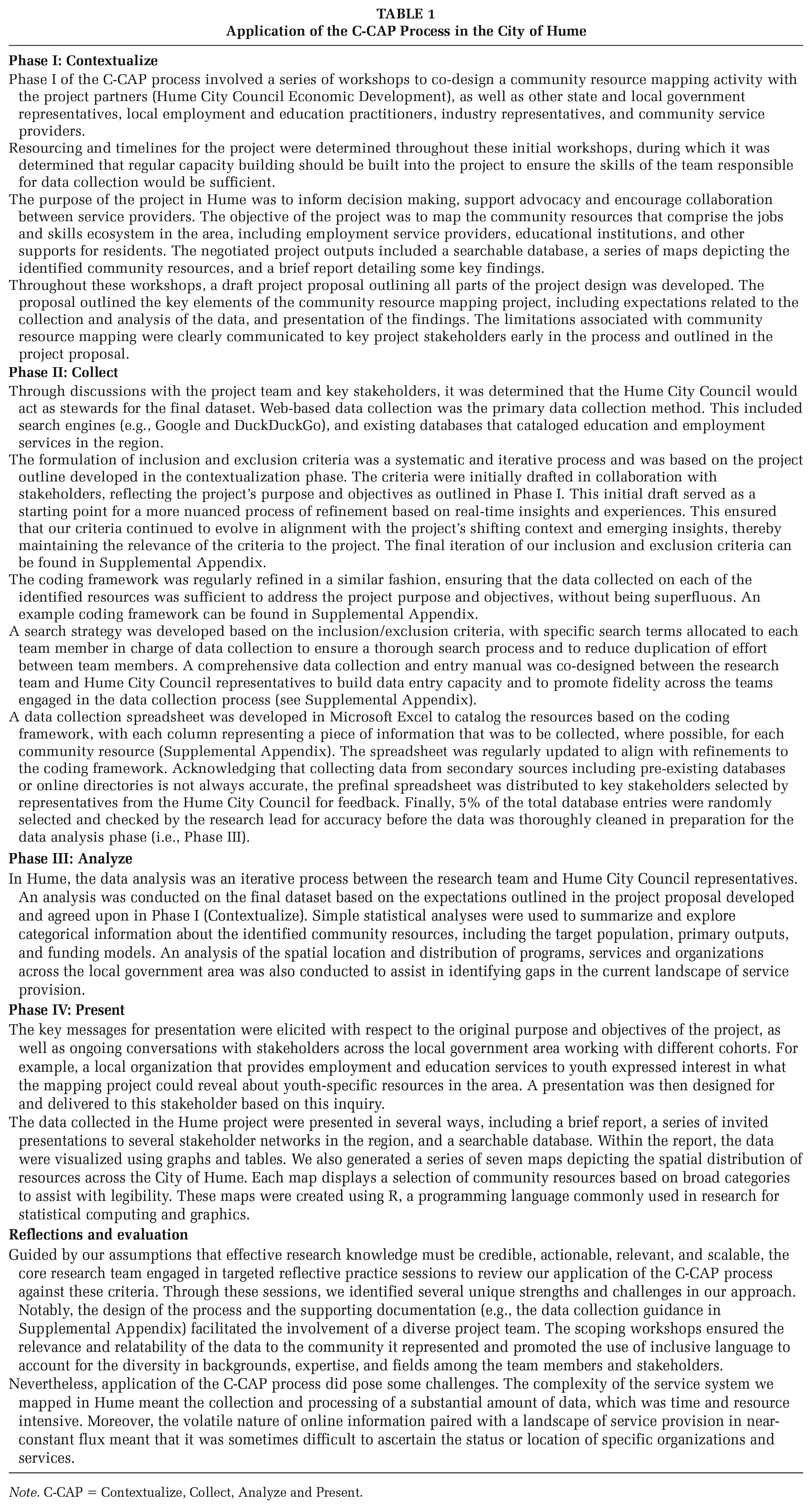
This paper has three parts; first, we introduce the study context. Then, we provide an overview of the development of the C-CAP process. Finally, we explain each phase of the C-CAP process in-depth. A working example of our application of the C-CAP process in an Australian community experiencing disadvantage is also provided (Table 1).
Application of the C-CAP Process in the City of Hume
Note. C-CAP = Contextualize, Collect, Analyze and Present.
Study Context
The C-CAP process was developed as part of Pathways in Place: Co-Creating Community Capabilities (Pathways in Place), a 5-year program of research funded by The Paul Ramsay Foundation and co-led by two Australian universities—Victoria University (VU), in Victoria and Griffith University in Queensland (see www.pathwaysinplace.com.au). This study was conducted by the Pathways in Place-VU team. All activities undertaken in Pathways in Place-VU are aligned with, informed by, and contribute to, the Theory of Systems Change (Craike et al., 2023).
The Theory of Systems Change (Craike et al., 2023) guides the work of Pathways in Place. A central focus of the Theory of Systems Change is to embed system capacity to adapt, align, collaborate, and engage in evidence-driven action and learning. Evidence-driven action and learning is conceptualized as a cycle involving (a) situation analysis and problem framing, (b) coordinated action, (c) monitoring and evaluation, and (d) communication and dissemination. Community resource mapping was undertaken by the Pathways in Place-VU team in two Australian Local Government Areas as part of situation analysis and problem framing efforts, leading to the development of the C-CAP process.
Furthermore, the Theory of Systems Change proposes that research knowledge seeking system level change needs to be credible, accessible, relevant, and scalable, rather than prescriptive or standardized. These are the criteria through which we evaluate the research knowledge produced through Pathways in Place, including in the development and application of the C-CAP process.
Method
The C-CAP process was co-developed by the research team and community stakeholders through formal and informal discussions, meetings, and workshops that occurred throughout 2021 and 2022. Although the development was dynamic and iterative, here we describe the process in a series of interconnected stages:
First, we conducted a comprehensive review of academic and gray literature on community resource mapping from various fields and disciplines to identify existing tools and guidance on the topic. Based on this review, we held a series of workshops and targeted discussions with the interdisciplinary research team to draft up an initial process for conducting resource mapping that was specifically suited to our needs.
This initial process was applied to a project in the City of Brimbank—an Australian Local Government Area—over a 4-month period in 2021. The project aimed to map youth-focused education, employment, and mental wellbeing services in the area. During this phase, we engaged in a process of continuous testing and refinement to ensure the knowledge generated through this process was aligned with the criteria for research knowledge described above (i.e., credible, accessible, relevant, scalable). This targeted reflection allowed us to identify crucial learnings that informed subsequent iterations of the framework. For instance, we found that an initial, process-oriented scoping phase is necessary to ensure that the data collected is adequate to address the project objectives.
In the first quarter of 2022, we tested and applied this iteration of the process to a community resource mapping project in the City of Hume, another Australian local government area with entrenched socio-economic disadvantage and elevated levels of unemployment (Hume City Council, & ArcBlue, 2022). This project aimed to identify employment and education-related programs, services, and organizations in the area, while also identifying areas of duplication or gaps in current service provision. This time, the project was co-designed with local stakeholders through a series of scoping workshops convened by our project partners at Hume City Council. The data collected throughout these workshops were analyzed for insights that could strengthen our approach to community resource mapping. For example, we identified a need for in-depth data collection guidance (see Supplemental Appendix) and ongoing capacity building sessions to ensure the project team (which included researchers, students, community members, and local government representatives) were equally confident in their ability to search for, collect, and record data.
Finally, drawing on our experience in Hume, the research team conducted a series of reflective practice sessions to both integrate feedback on the process from our project partners at Hume, and incorporate the experiences and reflections of the research team into the approach to community resource mapping described in this paper.
Throughout its development, the C-CAP process was regularly evaluated against our criteria for research knowledge to ensure its credibility, accessibility, relevance, and scalability:
Credible: The development of the C-CAP process was rigorous and transparent. The process was informed by existing literature, iteratively developed, and tested in two different communities. It is therefore robust and credible.
Accessible: The authorship team plans to disseminate this guidance actively and widely across our networks to ensure it reaches the intended audience.
Relevant: The C-CAP process addresses a problem of relevance to practitioners, policymakers, and researchers across a range of sectors and disciplines: the lack of a well-defined process for undertaking community resource mapping. The collaborative development of the C-CAP process paid attention to stakeholder needs. Furthermore, by publishing this paper, which includes guidance, practical examples, and useful tools (Supplemental Appendix), the C-CAP process is accessible to researchers, practitioners, and policymakers.
Scalable: By taking a process-orientated approach that identifies the core phases of community resource mapping, the C-CAP process can be adapted and applied across different communities, target groups, and social problems.
Results: The C-Cap Process
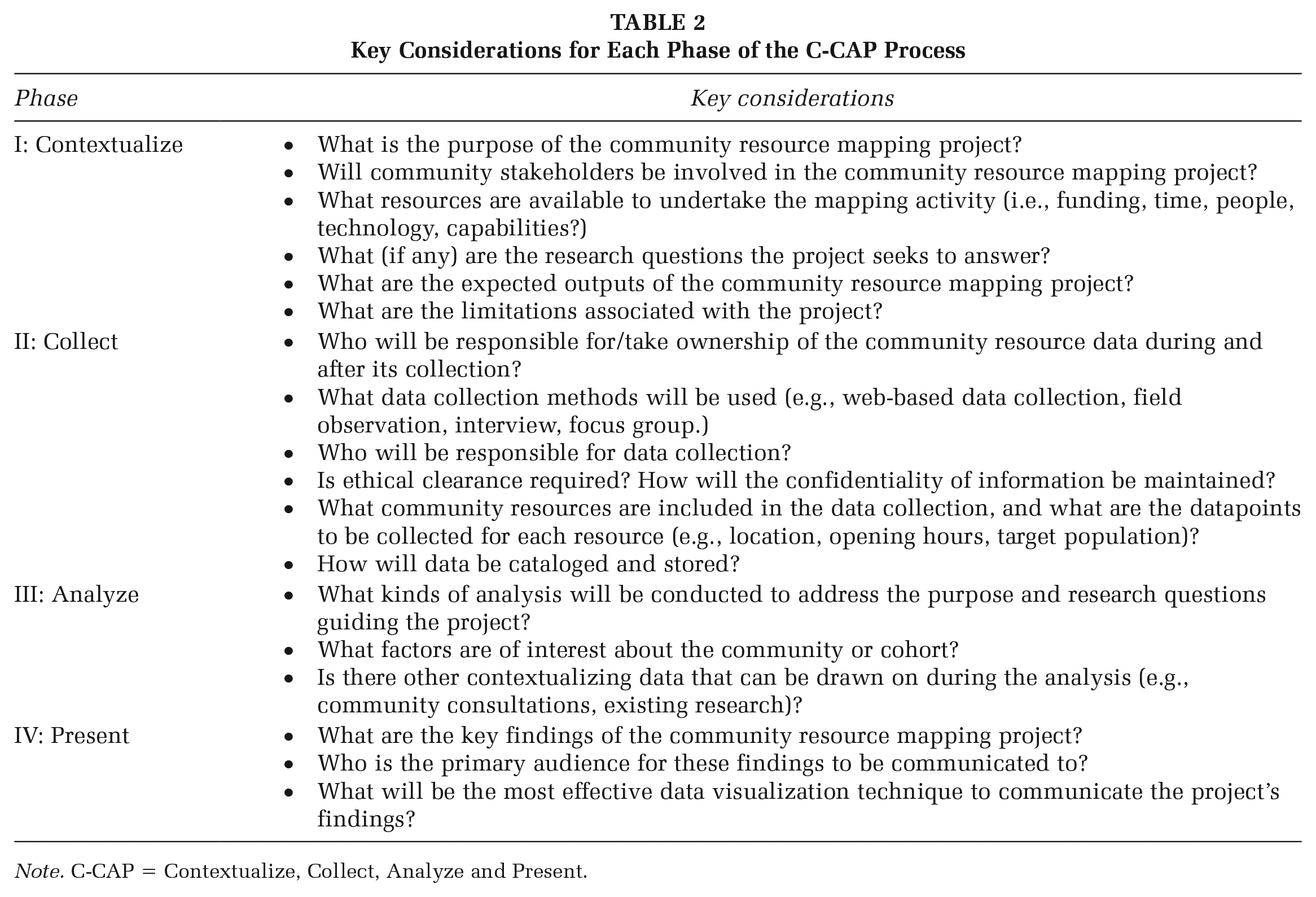
The C-CAP process is comprised of interrelated phases: (a) Contextualize, (b) Collect, (c) Analyze, and (d) Present (Figure 1). In this section, we provide a detailed overview of each phase of the C-CAP process. An example of our application of the process in the City of Hume is provided in Table 1. The four phases of the C-CAP process are interrelated, and so the decisions made in one stage will have implications for the next. Key considerations to guide decisions and directions throughout each phase of the C-CAP process are outlined in Table 2.
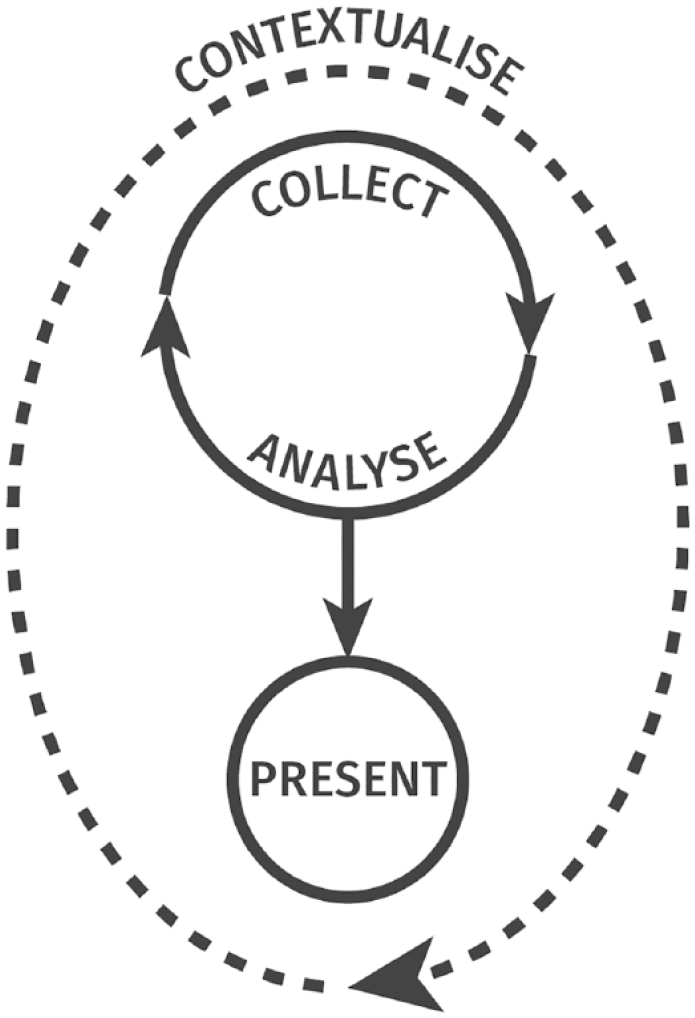
The C-CAP Process for Community Resource Mapping
Key Considerations for Each Phase of the C-CAP Process
Note. C-CAP = Contextualize, Collect, Analyze and Present.
Phase I: Contextualize
The process of resource mapping can be time- and resource-intensive. For this reason, the rationale (why), parameters (what), and utility (how) of a community resource mapping project should be defined prior to undertaking the resource mapping activity. The contextualizing phase of the C-CAP process involves scoping, outlining, and negotiating all aspects of the community resource mapping project to set clear priorities and expectations before data collection.
In the context of place-based systems change approaches, this process can be undertaken prior to directly involving the community as part of situation analysis and problem framing. This allows the research team to build a contextual understanding of the existing conditions, possibilities, and challenges within a community prior to engaging local residents. However, when employing community resource mapping as the primary analytical method for a project, it is strongly advised to incorporate mechanisms for participatory engagement with community stakeholders throughout the process. This reflects the idea that communities are complex and dynamic social and cultural entities whose members possess a wealth of skills and knowledge (Israel et al., 1998). Thus, taking a collaborative approach to research that involves community stakeholders throughout the entire process not only enriches the relevancy of the project but can also boost the effectiveness of the intervention (Minkler, 2005).
During this phase, the following project components should be considered:
Key project/community stakeholders: Define who will be involved in each stage of the community resource mapping process, why, and to what extent. Importantly, these decisions will heavily depend on the purpose of the community resource mapping project. For example, for our work in Brimbank, community resource mapping was used as part of the situation analysis and problem framing phase of a cycle of evidence-driven action and learning, in which the research team sought to establish a baseline understanding of the current context prior to community engagement efforts. On the other hand, the purpose of our work with Hume City Council was to generate relevant insights into the current state of service provision to assist with planning and advocacy efforts. In this way, it was imperative that community stakeholders were driving the project in Hume, including establishing boundaries, and outlining objectives. Involving a diversity of stakeholders during the contextualization phase can yield a richer, more comprehensive understanding of the system, as different vantage points are likely to produce different perspectives and thus different motivations and behaviors (Williams & Hummelbrunner, 2010). This can help surface assumptions about the underlying causes of problems as they appear within systems. A range of techniques, such as focus groups, interviews, or workshops, can be implemented to facilitate stakeholder involvement during this phase.
Boundaries: Determine the boundaries of the system that the project seeks to capture. It is important to note that “there is no single, legitimate boundary to draw around a system,” and decisions about where to draw boundaries will be guided by the purpose of the enquiry (Meadows, 2008, p. 97). For place-based systems change approaches, spatially explicit boundaries are drawn to help us understand the composition of a system as it exists within a defined geographic area. These boundaries should then be refined to capture only those parts of the system relevant to the problem or question at hand.
Resourcing and timelines: Develop an outline of the resources available for the project, including staffing, budgets, equipment or software, and other project requirements. Key dates for project timelines and output delivery should also be stipulated and agreed upon prior to commencing the project. Depending on the project’s scope, obtaining ethical approval for data collection should be considered and factored into project timelines.
Project objectives and outputs: Clear, concise, and achievable objectives are essential for the appropriate design of the community resource mapping project. Expected project outputs should be clearly defined and agreed upon, and decisions about project outputs will have significant implications for the collection (Phase II), analysis (Phase III), and presentation (Phase IV) of community resource data.
Project design: Scope and outline the possible data collection methods (see Phase II), data analysis techniques (see Phase III), and preferences for presenting the data (see Phase IV).
Project limitations: Clearly define the project’s limitations to ensure all stakeholders are aware of what community resource mapping can (and cannot) do. Depending on the project’s circumstances, it may also be advantageous to outline limitations pertaining to the selection and involvement of stakeholders or restrictions associated with timelines and resourcing.
We found addressing these components essential to successfully contextualize a community resource mapping project. However, depending on the project-specific context and the nature of the relationship between the stakeholders involved in the project, some of the above components may be omitted and additional ones may be added.
Phase II: Collect
The data collection phase primarily involves identifying and classifying community resources and collecting and extracting key data points related to each resource into an inventory or database. While selecting data collection methods will depend on the overall project components addressed in Phase I, decisions made regarding data collection will influence the possibilities for analysis and presentation in later phases.
The major components to be addressed in Phase II are as follows:
Data stewardship: This phase calls for a robust protocol for data stewardship, defined as “a collection of data management methods covering acquisition, storage, aggregation, and deidentification, and procedures for data release and use” (Rosenbaum, 2010, p. 1444). Emphasis on privacy-by-design principles, community data sovereignty, and ethical data sharing agreements could enhance trust and participation, especially when the data involves community participants or sensitive information (Kukutai & Taylor, 2016). Considerations of data stewardship should take into account the capabilities of those who will be responsible for the data, including technical and administrative skills, and networking and hardware requirements.
Data collection methods: Decisions regarding data collection should consider the project’s resources, team members’ existing skills, timelines, and the project’s intended outcomes, objectives, and outputs. Data collection methods could include interviews, focus groups, field observation, document analysis, surveys, or web-based data collection, and using a combination of data collection methods has the potential to promote fidelity, triangulate findings, and check assumptions. Depending on the composition of the project team, it may be beneficial to develop comprehensive data collection guidance (see Supplemental Appendix) to support a diversity of skills, expertise, and experience.
Inclusion and exclusion criteria: Define which community resources will and will not be mapped through clear inclusion and exclusion criteria. To ensure these criteria are comprehensive and robust, they should be iteratively developed and regularly refined throughout the course of the mapping project. It is advisable to reassess the criteria periodically throughout the project, adjusting as necessary to accommodate shifting contexts or emerging insights. Inclusion and exclusion criteria should be based on the system boundaries established in the contextualization phase and aim to place reasonable and feasible boundaries around data collection to ensure only those resources relevant to the project are captured.
Coding framework: The coding framework outlines the key data points (e.g., location, target population, cost, opening hours) to be collected about each identified resource. When designing the coding framework, it is important to consider expectations for the analysis (Phase III) and presentation (Phase IV) of the data. For example, plans to geographically map the resources may require that spatial coordinates (i.e., latitude and longitude) are included in the coding framework. An example coding framework is available in Supplemental Appendix.
Data collection and entry guidance: The development of data collection and entry guidance will help to ensure coherent and accurate data entry. This is particularly useful when multiple people are working on data collection and extraction. An example data collection guidance document is available in Supplemental Appendix.
Inventory or database for data collection: The inventory or database is the central repository for all community resource mapping data. A range of tools can be used for this purpose, including Microsoft Excel and QGIS (QGIS Development Team, 2022). For an example of an inventory developed in Microsoft Excel, see Supplemental Appendix.
Phase III: Analyze
Phase III of the C-CAP process involves the analysis of the final community resource dataset to generate relevant observations or insights into the problem being examined. Decisions made in this phase are contingent on the nature of the target problem, the anticipated project outputs, and how data were collected and cataloged in Phase II.
For the analysis phase, the following components should be addressed:
Appropriate analysis techniques: Opportunities for data analysis are contingent not only on the decisions made in Phase II (collect) of the process but also on the skills and capacity of the project team. Simple statistical analysis can be used to summarize quantitative data and can be helpful in identifying patterns across the dataset, whereas data generated through methods such as interviews or focus groups can be interrogated using qualitative methods such as thematic analysis (Sullivan-Wiley et al., 2019). Moreover, descriptive mapping techniques using GIS software allow for the management and presentation of locational data, making possible the visual exploration of spatial patterns in the dataset (Chaney & Rojas-Guyler, 2016).
Contextualizing the mapping data: Depending on the nature of the project, the insights generated by community resource mapping data may be limited in the absence of broader contextualizing data. As such, other datasets relevant to the topic of interest can improve the reliability of the implications drawn (Sullivan-Wiley et al., 2019) and help to contextualize the role played by the system resources in reproducing the targeted problem.
Phase IV: Present
The final phase of the C-CAP process is the presentation of findings, and involves considering data visualization techniques, key messaging, target audience(s), and resourcing. Many community resource mapping projects choose to present data in spatial maps; however, it is also possible to present the data through graphs or charts, as a searchable database, or in a report format. The visualization and presentation techniques used in this phase are contingent on the decisions made in Phase II (Collect) and Phase III (Analyze).
The major components to be considered in this phase are as follows:
Appropriate data visualization and presentation techniques: Many data visualization techniques can be used to present the findings of a community resource mapping project. Generating spatial or cartographic maps using geographic information systems (GIS) software has become more accessible due to technological development, and there is a range of freely accessible tools that can be used to generate spatial maps of the resource dataset, such as QGIS (QGIS Development Team, 2022) and R (R Core Team, 2022). Moreover, GIS maps can be static or interactive and can draw on a range of datasets (e.g., census data) to contextualize the spatial distribution of resources across a geographical area. Depending on the audience, other visualization techniques may be helpful in communicating key insights into the dataset, either in addition to or exclusive of GIS mapping, including tables, graphs, interactive databases, or detailed reports. The choice of visualization technique should consider the knowledge and expertise of the project team, as well as resourcing and timelines, as some techniques are more resource-intensive than others, or require a specialized skillset.
Audience selection: Choosing the appropriate audience for the presentation of community resource mapping findings is an important step in communicating and disseminating the results. Target audiences should ideally include those who have been engaged throughout the research process and those who are most directly influenced by the findings. It is recommended that dissemination strategies also include those who are positioned to actively utilize the information, including decision-makers who can modify policy or practice, or community advocacy groups who can draw on the information to address identified service gaps (Ross-Hellauer et al., 2020).
Key messages: Several key messages drawn from the data should be selected for presentation based on factors such as the knowledge and expertise of the target audience, and the purpose and objectives of the project. Once the key messages have been established, framing them in terms of both “why” and “what” questions is important. Most presenters are inclined to answer the “what” question (i.e., what are the findings of the mapping project?) yet starting with the “why” (i.e., why is community resource mapping and its findings important to this audience?) can be a more effective way to communicate a message (Sinek, 2011).
The ultimate value of a community resource mapping project lies in the usefulness of the results for the end users. When presenting the findings, it is important to consider which findings will be meaningful to which audiences and thus tailor the presentation to their needs and interests (Wilson et al., 2010). When planning to present the data, consider that each audience has “different knowledge, skills and perspectives” and so “what is obvious to one person may not be to another” (Thomas & McDonagh, 2013, p. 51). It is also beneficial to consider the ways in which different audiences might apply the information. For instance, service providers may draw on the data to address gaps and avoid duplications, and community members may use the information to access services more effectively. Regardless of the audience, it is wise to avoid using jargon, abbreviations, technical terms, or overly complex or abstract language.
Discussion
Community resource mapping can contribute valuable knowledge about what exists in a community to inform place-based systems change efforts, and the C-CAP process adds to the practical toolkit available to practitioners and researchers interested in delivering systems change interventions to improve population health outcomes (Bensberg, 2021). However, the processes used to conduct community resource mapping projects are often underreported, and there are few published processes that are flexible enough to be applied across diverse contexts or communities. The C-CAP process remedies this gap by outlining a flexible method of community resource mapping that can be applied to a range of communities, target groups, or problems, and can be adapted to meet the needs of researchers and practitioners.
Of course, the C-CAP process is not without limitations. While community resource mapping can generate useful data about resource distribution within a particular place at a particular time, the “ever-changing landscape of service provision” can undermine the ongoing relevance of the resource data (Mowle et al., 2021). As such, the lists of resources derived from the C-CAP process may become outdated quickly, potentially limiting their long-term usefulness. Despite the potential for these data to become outdated, the “snapshot” generated through this process can provide critical insights into the current state of community resources, serving as an essential foundation for planning interventions. Moreover, recurrent applications of the C-CAP process across different time points can generate comparative data about the changing state of service provision and resource allocation in an area of interest. From a systems perspective, repeated applications of the C-CAP process can highlight the evolutionary patterns of resources within communities, and thus provide a more comprehensive understanding of changes over time within a particular system.
By virtue of its flexibility, the C-CAP process can be adapted to suit a range of methodological approaches or theoretical assumptions and provides a structure for planning the design and reporting of the findings of a community resource mapping project. Through the development of C-CAP, we have successfully applied the method in two communities, and in both cases, the project was guided by our Theory of Systems Change (Craike et al., 2023) and system thinking perspectives more broadly. While we believe that the C-CAP process is flexible enough to be adapted according to the canons of other theoretical perspectives, such as asset-based community development (McKnight et al., 2021), we leave it to others to evaluate this assumption.
Implications For Research And Practice
Community resource mapping is commonly implemented in public health research and practice to better understand the local context and guide place-based systems change efforts. The C-CAP process provides robust guidance for conducting community resource mapping that is relevant for researchers, practitioners, and policymakers working across a range of contexts, or from within diverse methodological or theoretical traditions (Ashcraft et al., 2020; Majid et al., 2011). By involving both researchers and practitioners in the development of the C-CAP process, we were able to design a process that is relevant and actionable across both research and practice, reducing the need to design a new process for each new community resource mapping activity, thereby avoiding duplication of effort. Application of the C-CAP process can strengthen the evidence base around community resource mapping by contributing to the coherent and strategic implementation of community resource mapping projects and improving the comparability and comprehensiveness of their findings.
Supplemental Material
sj-docx-1-hpp-10.1177_15248399231193696 – Supplemental material for The C-CAP Process: A Comprehensive Approach to Community Resource Mapping
Supplemental material, sj-docx-1-hpp-10.1177_15248399231193696 for The C-CAP Process: A Comprehensive Approach to Community Resource Mapping by Amy Mowle, Bojana Klepac, Therese Riley and Melinda Craike in Health Promotion Practice
Supplemental Material
sj-docx-2-hpp-10.1177_15248399231193696 – Supplemental material for The C-CAP Process: A Comprehensive Approach to Community Resource Mapping
Supplemental material, sj-docx-2-hpp-10.1177_15248399231193696 for The C-CAP Process: A Comprehensive Approach to Community Resource Mapping by Amy Mowle, Bojana Klepac, Therese Riley and Melinda Craike in Health Promotion Practice
Supplemental Material
sj-xlsx-3-hpp-10.1177_15248399231193696 – Supplemental material for The C-CAP Process: A Comprehensive Approach to Community Resource Mapping
Supplemental material, sj-xlsx-3-hpp-10.1177_15248399231193696 for The C-CAP Process: A Comprehensive Approach to Community Resource Mapping by Amy Mowle, Bojana Klepac, Therese Riley and Melinda Craike in Health Promotion Practice
Footnotes
Authors’ Note:
We would like to acknowledge the Hume City Council Economic Development team for their contribution to and involvement in the workshops and discussions that led to the development of the C-CAP process for community resource mapping. The research was funded by Hume City Council, Victoria University, and the Paul Ramsay Foundation (grant number 681). Any opinions, findings, or conclusions expressed in this article are those of the authors and do not necessarily reflect the views of the Foundation or other funders.

References
Supplementary Material
Please find the following supplemental material available below.
For Open Access articles published under a Creative Commons License, all supplemental material carries the same license as the article it is associated with.
For non-Open Access articles published, all supplemental material carries a non-exclusive license, and permission requests for re-use of supplemental material or any part of supplemental material shall be sent directly to the copyright owner as specified in the copyright notice associated with the article.
