




Abstract
Firearm-related injuries are the leading cause of death among youth in the United States, and rates of firearm-related suicide in rural youth are more than double those in urban youth. Although safe firearm storage has been shown to reduce firearm injuries, little is known about how to culturally tailor such interventions for rural families in the United States. Informed by community-based participatory methods, focus groups and key informant interviews were conducted to design a safe storage prevention strategy for rural families. Participants included a broad array of community stakeholders (n = 40; 60% male, 40% female; age 15–72, M = 36.9, SD = 18.9) who were asked to identify acceptable messengers, message content, and delivery mechanisms that were perceived as respectful to the strengths of rural culture. Independent coders analyzed qualitative data using an open coding technique. Emerging themes included (1) community norms, values, and beliefs about firearms; (2) reasons for ownership; (3) firearm safety; (4) storage practices; (5) barriers to safe storage; and (6) suggested intervention components. Firearms were described as a “way of life” and family tradition in rural areas. Owning firearms for hunting and protection influenced family storage decisions. Intervention strategies that use respected firearm experts as messengers, refer to locally derived data, and that reflect community pride in firearm safety and responsible ownership may improve the acceptability of prevention messages in rural areas.
Firearm-related injuries are now the leading cause of death among youth in the United States, making pediatric firearm injury prevention a national priority (Goldstick et al., 2022). Suicide rates and firearm-related suicide rates are higher in rural relative to urban areas (Centers for Disease Control and Prevention [CDC], 2019). Among rural youth, rates of firearm-related suicide were more than double those of urban youth (CDC, 2019). About half of all suicides in the United States involve a firearm (CDC, 2019), and while only 4% of nonfirearm suicide attempts are fatal, 91% of firearm-related suicide attempts result in death (Conner et al., 2019). In 79% of youth firearm suicides across five states (Barber et al., 2022), the weapon used belonged to a family member, and in 19%, the firearm belonged to the youth. Universal prevention strategies focusing on safe firearm storage in all homes with youth may be an important and underutilized strategy with potential to reduce youth suicides and other firearm-related injury.
Rates of firearm ownership are substantially higher in rural than suburban and urban regions (Parker et al., 2017). Among adults residing in rural areas, 46% report owning a firearm, compared with 28% of suburban adults and 19% of urban adults (Parker et al., 2017). Among U.S. adult firearm owners, 38% report having a firearm loaded and accessible to them at all times (Parker et al., 2017). The term “firearm localism” was coined to capture differences between “rural and urban gun culture” (Blocher, 2013), with individuals in rural communities describing positive personal experiences of the law-abiding and safe use of firearms for hunting, sport, and protection, while individuals in urban areas tend to associate firearms with crime and violence.
Safe firearm storage practices have been associated with reduced risk of pediatric firearm injury, including suicide and unintentional injury (Grossman et al., 2005), with reductions in risk of 75% to 80%. Firearms in households of youth who sustained firearm-related injuries or deaths were more likely to be stored without a locking mechanism (unlocked), live with ammunition (loaded), or with accessible and unlocked ammunition (Grossman et al., 2005). Previous safe storage interventions for youth have relied largely on health care providers to impart safety education during well-child visits (e.g., Beidas et al., 2019; Grossman et al., 2000) or to screen for suicide risk and counsel parents of high-risk youth to reduce access to lethal means at home (e.g., Sale et al., 2018). Such approaches may not be as feasible in rural areas due to limited access to health care (Health Resources and Services Administration, 2022) and aspects of rural culture that can interfere with help-seeking (e.g., stigma, lack of anonymity, limited insurance coverage, or preference for self-reliance or family-based solutions; Fontanella et al., 2015; Varia et al., 2014). Despite these challenges, there are also a wealth of protective factors in rural communities (e.g., sense of community, loyalty, resource-sharing, and collaboration; Rural Youth Suicide Prevention Workgroup, 2008). Strengths-based community interventions may have untapped potential to increase safe storage practices in rural families with children.
Culturally Tailored Approaches to Health Promotion and Decision-Making
Culturally tailored health communications have been shown to lead to deeper processing of content, more accurate consideration of pros and cons, choices that align with personal values, and better decision-making overall (Betsch et al., 2016; Palmer-Wackerly et al., 2014). Acknowledging that firearm-related beliefs may vary between rural communities located in different regions of the United States, this project worked to intentionally draw upon the lived experience of local community members, drawing from community-based participatory research (CBPR) methods (Espinosa & Verney, 2021).
Purpose/Aims
This study details the initial phase of an intervention development project that utilized a university–community partnership (Derwin et al., 2019) influenced by CBPR methods to design a culturally tailored community-based firearm safety prevention strategy for rural families. Focus groups and key informant interviews were conducted to identify messengers, message content, and delivery mechanisms seen as acceptable and impactful with the goal of developing an intervention that was feasible to deliver in a rural area, perceived as respectful to the strengths of rural culture and had the potential to increase safe firearm storage.
Method
Community-Based Participatory Approach
The project team included injury prevention researchers based at an academic medical center, a public health educator from the local health department, and an advisory board of 35 community members, including representatives from the county’s suicide prevention coalition, health care, law enforcement, veteran navigators, local business leaders, school personnel, child welfare, juvenile justice, and the region’s crisis center. In accordance with a CBPR philosophy, this collaboration reflects a years-long university–community partnership that originated with funding from Substance Abuse and Mental Health Services Administration’s (SAMHSA) Garrett Lee Smith State/Tribal Youth Suicide Prevention and Early Intervention Program Grants, with the local community initiating the focus on firearm safety as a key component of suicide prevention in a rural area. The need to culturally tailor firearm-related prevention became clear to public health educators who noticed the benefits of, for example, including a local firearms expert/retired veteran as a credible firearm safety spokesperson at events. Throughout the current project, community partners provided input and advice, co-developing the approach, assisting with participant recruitment, and developing focus group questions. In addition, findings from focus groups and key informant interviews were reviewed by local partners to assist with interpretation and were presented to community partners for feedback.
Recruitment and Description of Participants
Focus group and key informant interview participants (n = 40; 60% male, 40% female) ranged in age from 15 to 72 years (M = 36.9, SD = 18.9). All participants were residents of one rural county located in the midwestern United States. The county is 3,425 square miles and home to approximately 27,000 households with a population density of 37 people/square mile; residents are 94% White, and the median household income is US$56,000/year (U.S. Census Bureau, 2020). The following groups were recruited to participate, given their importance as stakeholders for a firearm safety intervention: (1) middle, high school, and college-age youth; (2) parents and grandparents; (3) individuals with professional firearms experience (e.g., law enforcement, military, hunter safety, or concealed carry permit instructors); (4) firearm owners (e.g., gun club members, hunters, sport shooting enthusiasts); (5) other community members to include government officials, school staff, and health care providers; and (6) individuals with lived experience of firearm injury. Individuals were recruited with the help of the community advisory board and local public health educator. Table 1 describes participant demographics and firearm ownership.
Participant Demographics
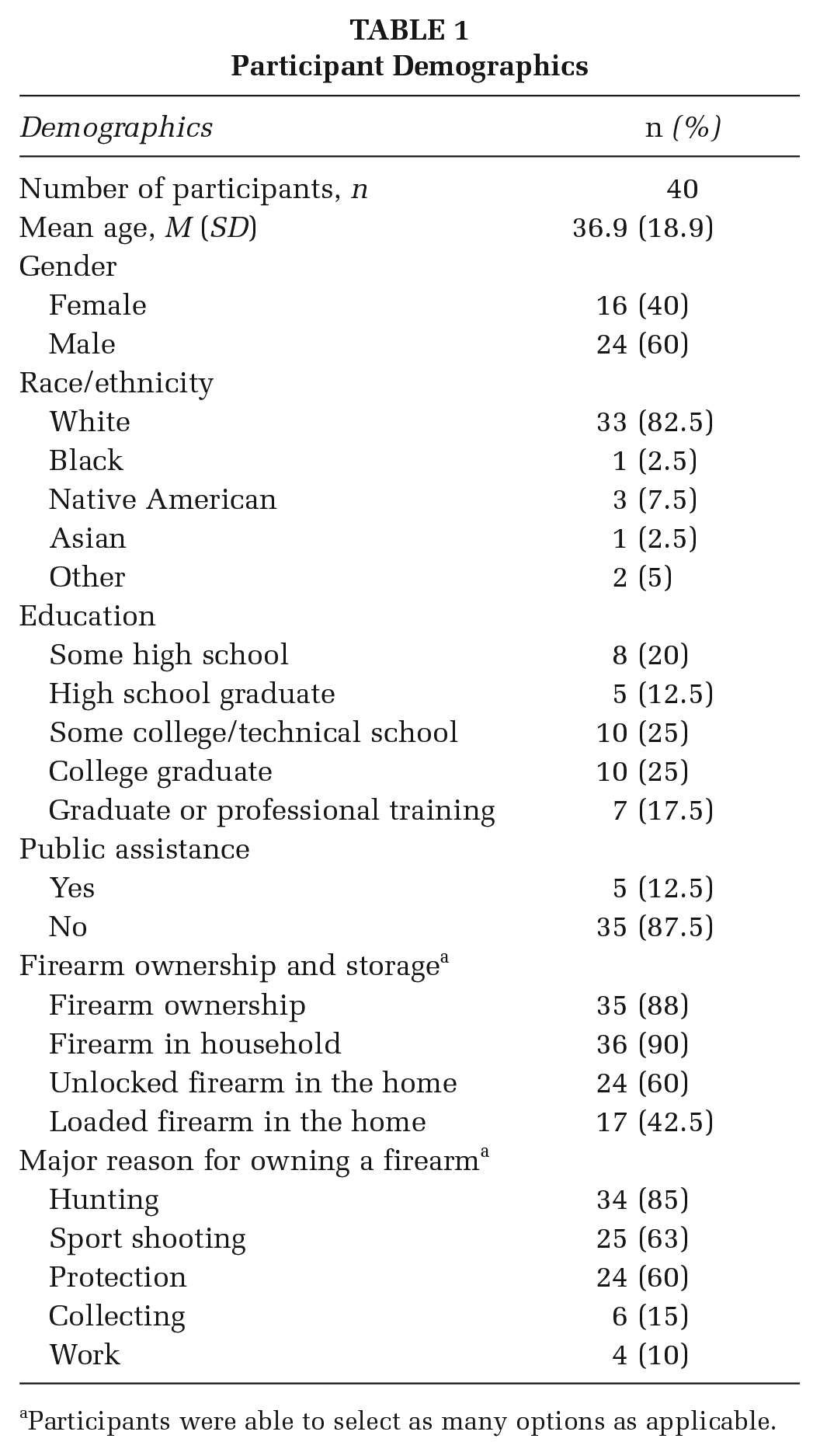
Participants were able to select as many options as applicable.
Focus Group/Interview Procedures
The local public health educator facilitated all interviews in person in 2019 (prior to the COVID-19 pandemic). Focus groups (n = 6) ranged in size from three to eight participants (M = 5.8) and were conducted in community locations such as libraries, schools, a sportsmen’s club, and the local health department. Key informant interviews (n = 6) were conducted individually, primarily to capture input from visible community leaders who may have been reluctant to express their thoughts in a group setting or those for whom scheduling was difficult. Participants provided informed consent as required by the Institutional Review Board and were paid US$40 for their time. The facilitator reviewed project goals and set expectations for privacy and conduct during discussions, which were audiotaped and later transcribed.
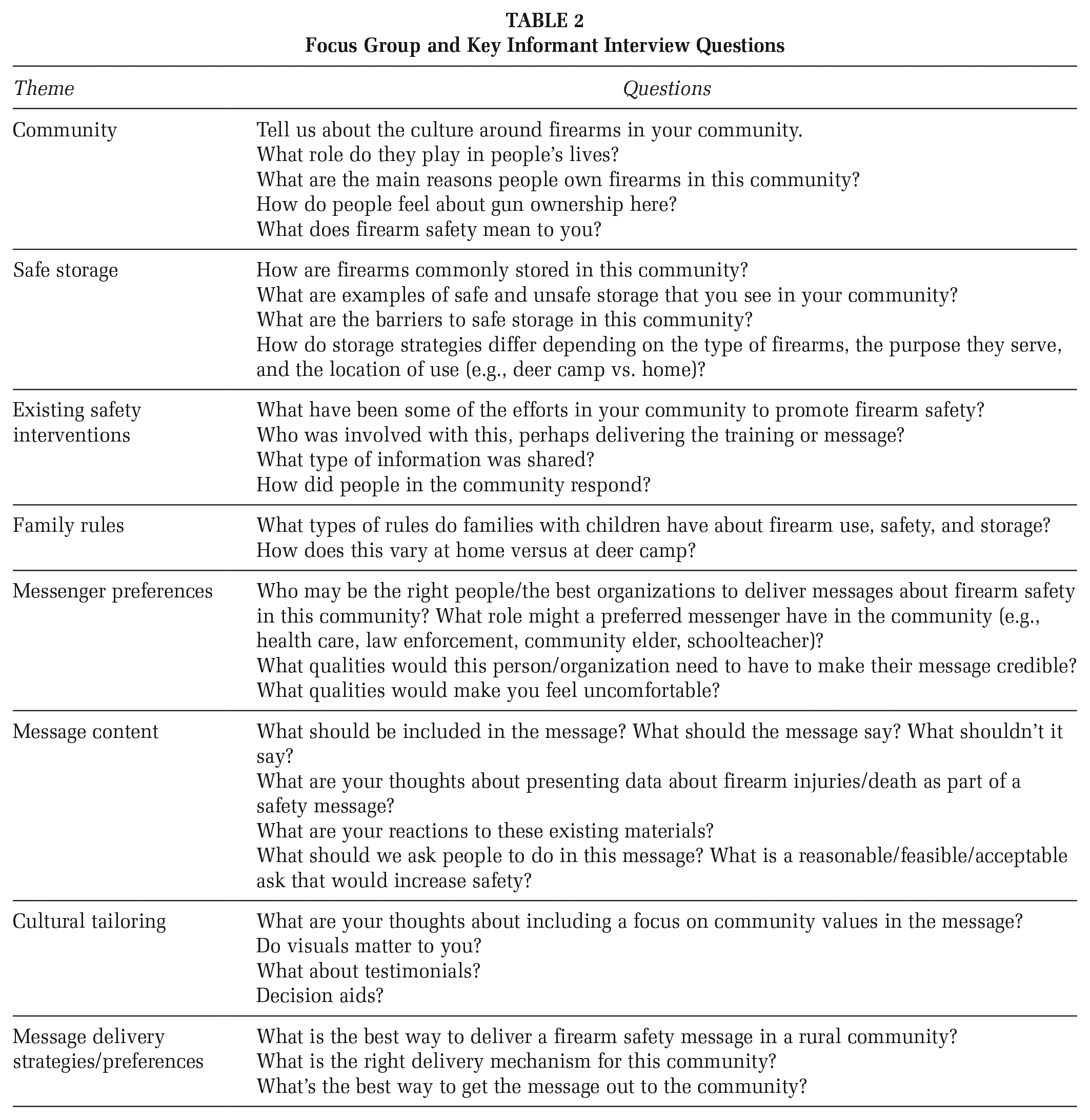
Focus group/interview questions were standardized and identical across the group versus individual formats. Table 2 depicts the questions used to guide conversations, with topics focused on community norms and values regarding firearms, reactions to previous safety efforts, and intervention development. Participants were provided hard copies of existing firearm safety educational materials for their review and feedback (e.g., National Shooting Sports Foundation, American Academy of Pediatrics, CDC-funded Injury Prevention Center infographics). At the conclusion of each session, participants completed a brief survey to collect demographic characteristics, firearm ownership and storage practices (Parker et al., 2017; Sokol et al., 2021), and preferences regarding firearm safety messengers, messages, and delivery mechanisms.
Focus Group and Key Informant Interview Questions
Coding Procedures
A team of four individuals (C.E.F., L.A.B., M.E., J.L.V.) engaged in qualitative data analysis, with two coders (M.E. and J.L.V.) and two supervisors (C.E.F. and L.A.B.). During a training period, the coding team (three of whom were not involved in designing or conducting focus groups) familiarized themselves with project goals, transcripts, and audio recordings. An open coding technique was used to generate themes across qualitative focus groups and key informant interview questions (Strauss & Corbin, 1998). Using questions as thematic anchors, operational definitions for each theme and subthemes were created using three randomly selected transcripts. Any uncategorized content was reviewed as a group for agreement. The coding system was iteratively improved by consensus during weekly meetings. After the codebook was finalized, one coder (M.E.) coded all transcripts with 25% of transcripts double-coded (by J.L.V.) to achieve intercoder consistency. Any discrepancies were resolved by consensus among the full coding team. The following strategies for rigor (Padgett, 2016) were included in the study: (1) triangulation (i.e., analytic triangulation with more than one coder), (2) use of an audit trail, and (3) member checking with participants (i.e., with community advisory board members).
Results
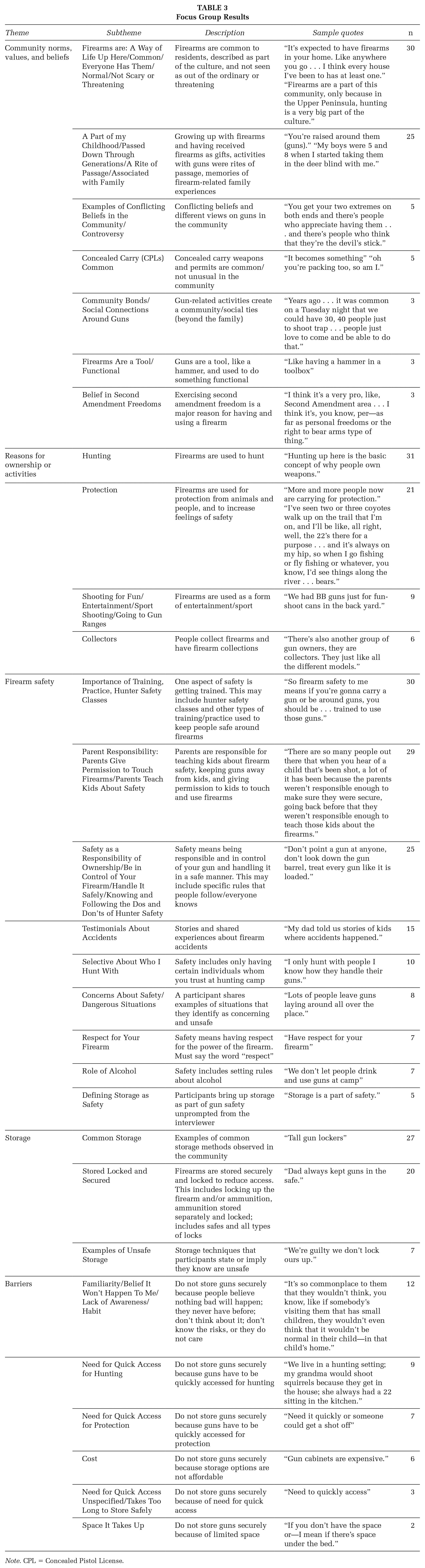
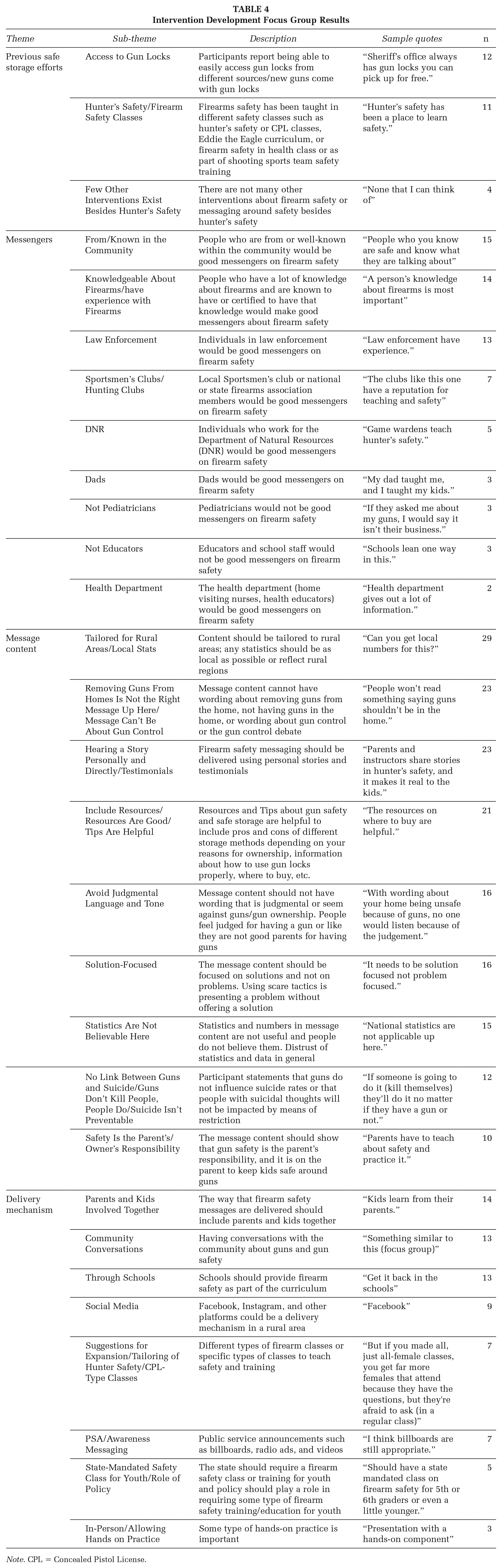
Tables 3 and 4 summarize the themes, subthemes, sample quotations, and extent to which subthemes were mentioned during the six focus groups and six key informant interviews. Qualitative findings are organized by theme, with quotations labeled as derived from a Focus Group or Key Informant Interview.
Focus Group Results
Note. CPL = Concealed Pistol License.
Intervention Development Focus Group Results
Note. CPL = Concealed Pistol License.
Community Norms, Values, and Beliefs About Firearms
Firearms were described as a way of life, both common and nonthreatening. One participant stated, Everyone had-had guns and, like, during hunting season, pretty much half the school was gone . . . ’cause they were all out hunting, and so everybody had ’em. Everybody used ’em . . . .we’re all just shootin’ guns out there, and nobody cared ’cause it happens all the time. Like, nobody would call the cops if they hear a gunshot or anything . . . for me, it’s weird if you don’t own a gun. (Focus group participant)
Participants also associated firearms with family, sharing memories of receiving firearms as gifts from parents and grandparents, and learning to use firearms safely as part of multigenerational family outings: I think most kids—young boys, uh, like, myself or whatever, grow up and, kind of like, a rite of passage and everybody goes and sits in the wood . . . . I started out hunting with my dad when I was little. (Key informant interview)
Reasons for Ownership
Hunting was the most frequently reported reason for owning a firearm, followed by protection, sport shooting, and collecting. In addition to describing hunting as part of their culture, participants also spoke about the need to protect themselves and their pets from wild animals while hiking or fishing. “There are a lot of predators, and you may not have a big enough gun for a bear, but you can scare a predator off with a gun you do carry” (Key informant). Lengthy response times for law enforcement in rural areas were also noted. One participant stated, “Home defense too, I mean, in a rural setting, you dial 9-11, if you have phone signal and how long is it going to take?” (Focus group). Participants referred to firearms used for home protection as “nightstand guns,” distinguishing them from firearms carried on their person with a concealed carry permit.
Safety
With respect to safety, the most frequently mentioned subthemes included (1) “hands-on” training and practice, (2) safe handling as an owner’s responsibility, and (3) parents’ role in youth safety. Safe storage was rarely mentioned (unprompted by the interviewer) as a component of safety. One participant stated, If you’re gonna make that choice to, legally, to carry that you should be practicing from time to time . . . you know, go to the range or join a club or, I mean, should just practice . . . it’s a responsibility, you’re gonna have a gun, then you have to be responsible with it and you have to know how to use it. (Key informant)
Across participants, the “dos and don’ts” of safe firearm handling were emphasized, including “Don’t point it [a gun] at anything you don’t want to shoot” (Focus group); “Treat every weapon as if it’s loaded” (Key informant); “That safety remains on until you are ready to shoot (Focus group)”; “Don’t bring it into the house loaded” (Focus group). Some participants placed blame on parents for youth injuries, focusing on parents’ responsibility to control access to firearms, teach kids about the danger of firearms, and ensure that kids will be “in trouble” for touching firearms without permission. A teen stated, “If I was even to go shooting with myself or my friends, I’d have to go to him [Dad]—go to him, tell him to unlock the safe” (Focus group).
Storage Practices/Barriers
Participants, especially those whose occupations involved firearms (e.g., hunter’s safety instructors, law enforcement), described firearms stored in safes, gun cabinets, or locked rooms separate from ammunition. Others mentioned the practice of locking most guns but making exceptions for a “nightstand gun” used for protection or a rifle required for hunting or protecting against animals. Other common practices included storing between the mattress and box spring, in a gun case under the bed, in a closet, behind furniture, in dresser drawers, in a vehicle, and displayed in a gun rack. Multiple participants indicated that their storage practices could be improved. For example, one participant stated, “My house is probably one that’s . . . probably not safe enough . . . . we don’t have a safe, but, you know, we hide ’em. Um, but I’m sure they wouldn’t be unaccessible completely to the kids . . . we’re probably not as safe as we could be” (Key informant).
When asked about barriers to storing under lock and key, three subthemes involved the need for quick access related to protection, hunting, or the sense that secure storage “takes too long.” Another prominent subtheme was the notion of habit, familiarity, and the sense that nothing could go wrong: People . . . get comfortable with firearms, they get lackadaisical with guns . . . . They’ll keep—they’ll leave guns around, or they’ll think, my kid won’t grab . . . or somebody . . . that . . . won’t happen to me, or my—they know better . . . And they’re, like, “Oh, I . . . taught my kids. They know better.” And I’m like, “Man, you say that until somethin’ happens.” (Key informant).
Intervention Development
Participants agreed that existing community efforts to promote firearm safety were limited. The most credible/preferred messengers for firearm safety were people known and respected in the community, individuals knowledgeable or experienced with firearms, and law enforcement. “If someone seems to know what they’re talking about, I’d listen to ’em, anyone. . . .You obviously want a hunter, rather than some dude that sits in an office” (focus group). Pediatricians and educators were mentioned as nonpreferred messengers by several participants. Figure 1 presents survey ranking results (collected at the conclusion of interviews) of the most credible firearm safe storage messengers.
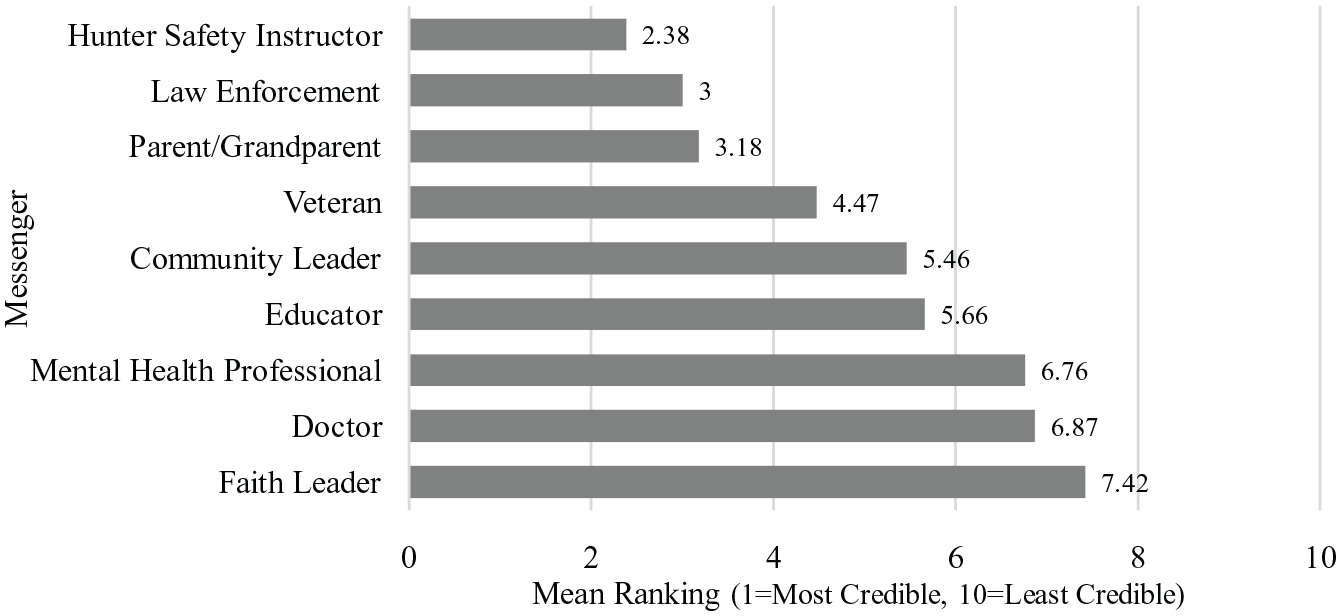
Preferences for Intervention Messengers and Content Credibility Rankings of Safety Messengers
To facilitate conversation about the content of a safety message, participants were shown existing firearm safety educational materials. One common response included the desire for materials to be tailored for the rural community. For example, in response to the national statistic that “Over 41,000 children and youth are injured or killed by firearms each year” (CDC, 2014), many sought clarifications about how and where data were obtained. One participant stated, “you know, if you take at the look at the vast majority of those, they’re-they’re gonna be between the 17 to 21 range—and it’s gonna be gang-related” (Key informant). A second common subtheme was that asking individuals to remove guns from the home or implying that homes were safer without guns would not be acceptable in a safety message. One key informant stated, When they see the comment “Remove guns and ammunition from your house,” like, no guns, they’re gonna be completely, like, turned off from it . . . and think, “okay, well, I’m not listening to them . . . you know,” “I’m pro guns, and um, people aren’t gonna tell me that I can’t have a gun.” . . . . they’re not even gonna wanna read it.
Multiple participants reacted to the wording that “the safest home for children is one without a gun” (American Academy of Pediatrics, 2019) that they perceived as judgmental, offensive, or implying that firearm owners did not take their children’s safety seriously.
A majority of participants also expressed a preference for personal testimonials in a safety message and for “how to” tips and resources (i.e., where to buy safe storage products, the pros and cons of each storage method related to the purpose of the weapon, etc.). Several participants objected to linking firearms to increased risk of suicide. One participant stated, “It’s that whole correla-correlation is not causation. So like, just because there was a gun there, and there was a suicide there, does not mean they had anything to do with each other” (Focus group), with others repeating their belief that someone who had decided to end their life would find a way regardless of the presence of a firearm. Figure 2 presents survey rankings of preferred safe firearm storage message content.
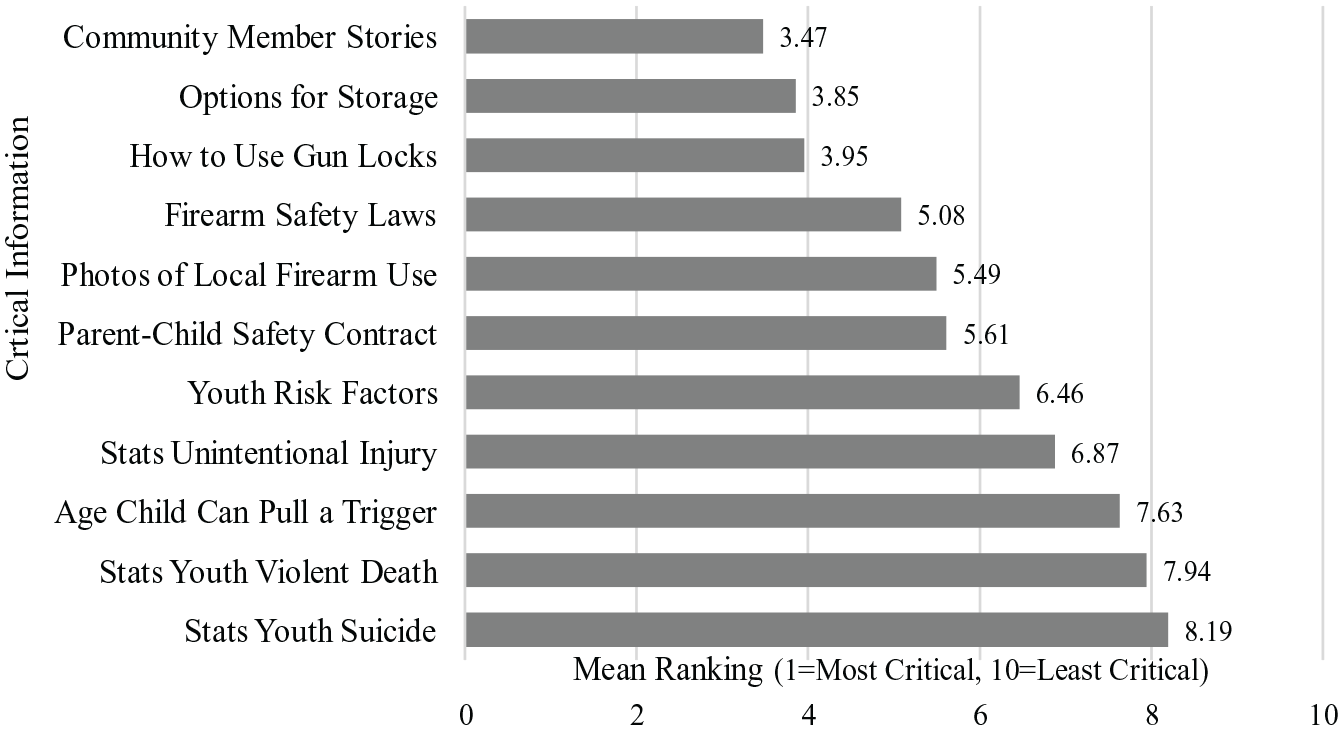
Critical Information to Include in Firearm Safety Message
When asked about the best strategy to deliver a safe firearm storage intervention for rural families with children, the most popular responses involved (1) the need to involve parents and youth together, (2) a desire to reintegrate hunter safety curriculum into schools, and (3) an interest in generating community conversations “like this focus group” to increase awareness and provide tailored strategies.
Discussion
Despite evidence that rural youth are at elevated risk of firearm-related mortality (Goldstick et al., 2021), that firearm ownership rates are higher in rural areas relative to other regions (Parker et al., 2017), and that safe storage is a promising prevention strategy (Grossman et al., 2005), little is known about how to develop and implement culturally tailored safe storage interventions in rural communities (Derwin et al., 2019; Varia et al., 2014). In this initial phase of intervention development, focus groups and key informant interviews were used to collect qualitative data and identify emerging themes of acceptable and potentially impactful safe storage messengers, message content, and delivery mechanisms.
Implications for Practice, Policy, and Research
Consistent with the notion of “firearm localism” (Blocher, 2013) and with nationally representative surveys (Parker et al., 2017), participants in this study reported positive family experiences with firearms, saw most firearm owners as responsible and law-abiding, and did not view firearms as threatening. Prevention messaging that implied that firearms were unsafe did not “land” with participants and contributed to a sense that such messages did not apply to their community or were developed by individuals who were inexperienced with firearms or who had an “agenda.” Many participants expressed strong negative reactions to existing educational materials that they perceived as judgmental or insulting to rural culture, consistent with survey data indicating that rural residents feel “misunderstood or looked down on” (Parker et al., 2018).
Participants expressed pride in teaching children about firearm safety through hands-on experiences (e.g., going to deer camp [i.e., traditional family hunting locations] with grandparents and parents, the “do’s and don’ts” of safe handling, hunter safety training, and strict rules about supervision of and permission to access firearms). It was rare for participants to conceptualize safe storage as a component of firearm safety, with community definitions of safety focused primarily on safe handling rather than storage. This is consistent with a recent qualitative study focused on firearm-owning families in the southern United States (Aitken et al., 2020) in which many parents felt that the most powerful safety intervention was teaching children respect for and safe handling of the firearm (don’t touch, assume it’s loaded), rather than to store firearms under lock and key. The sense that growing up with guns would protect youth from firearm injury or death was pervasive among participants. Unfortunately, with firearm-related deaths rising in rural areas (CDC, 2019), this assumption is not supported. Many participants expressed doubts that national firearm mortality statistics included rural youth experienced with firearms. A strong recommendation would be to ensure that any statistics used in safety messages be locally derived. Acknowledging community pride in youth safety education and responsible ownership may be an important engagement strategy and is consistent with preferences for messengers who are known and respected in the community for their firearm expertise. This recommendation conflicts with common safety messengers nationally (i.e., pediatricians and mental health professionals, for example, Beidas et al., 2019).
The use of a harm reduction (Single, 1995) philosophy to move individuals toward even modest improvements may be an important missing piece in current safe storage messaging, which is often perceived as “all-or-nothing” in terms of what is “safe” (guns locked in a safe and separated from locked ammunition). The acceptability of interventions may be improved by consideration of the owner’s perceived need for protection along with a discussion of the pros and cons of various “safer” options. Two thirds of respondents in a nationally representative survey of firearm owners cited protection as a reason for ownership (Parker et al., 2017), suggesting that harm reduction concepts of acceptance, nonjudgment, and practicality may be of benefit outside of rural communities as well. Our participants recommended solution-focused approaches that considered storage options tailored for the type and purpose of the firearm. This is consistent with “decision aid” interventions that use motivational interviewing strategies to clarify firearm owners’ values and needs and provide information to inform decision-making (Betz et al., 2018).
Limitations
This study has several limitations. First, findings emerged from interviews with a small sample of 40 participants recruited from one rural midwestern county. Although many participants identified as male, White, and non-Hispanic/Latinx, participants were representative of the region studied and findings were consistent with a sample of firearm owners from a southern region of the United States (Aitken et al., 2020). Second, as all participants were open to firearm-related questions, qualitative data may differ for individuals who are less willing to discuss these topics, resulting in potential self-selection bias. Finally, data were cross-sectional and collected between July and October 2019; thus, patterns of attitudes and beliefs were not examined over time, and we have no data on how attitudes might have been affected by the COVID-19 pandemic.
Conclusion
Safe firearm storage practices have the potential to reduce child and adolescent firearm-related injury and deaths, but it is critical that public health messages be aligned with community norms and values. Our findings suggest that a safe storage prevention strategy for rural families should be delivered by credible messengers with firearm expertise using messages that honor local traditions, involve flexible storage options that acknowledge reasons for firearm ownership, and link any statistical data provided to the local community.
Footnotes
Authors’ Note:
The authors would like to thank Rebecca Cunningham (FACTS PI), Patrick Carter, Mark Zimmerman, Rinad Beidas, Bernadette Hohl, and the rest of the FACTS consortium for their consultation on research design and measurement. They also acknowledge Pat Smith and the Transforming Youth Suicide Prevention in Michigan Program, funded by the Substance Abuse and Mental Health Services Administration with grant funds to the Michigan Department of Health and Human Services (Smith, PI,5U79SM061767), as well as the community members who shared their experiences and wisdom with us. This work was supported by the FACTS (Firearm-Safety Among Children & Teens) Consortium (also known as “Building Research Capacity for Firearm Safety Among Children”), funded by the National Institute for Child Health and Human Development (NICHD, 1R24HD087149).
