



Abstract
There are profound health inequities for agricultural workers. We sought to assess the literature on migrant and seasonal farmworker health with an eye toward health promotion interventions, special populations, use of community health workers (CHWs), and technology. We conducted a systematic mapping review by searching five databases in March 2021. Using quantitative content analysis after establishing interrater reliability, we coded titles and abstracts to assess 13 topics and six characteristics of the research such as its focus on health promotion, use of technology, and inclusion of CHWs. We identified 1,083 records. Just 8.2% of records described or evaluated a health promotion effort to intervene in farmworker well-being and even fewer (4.2%) examined unique populations of farmworkers such as indigenous farmworkers (n = 11) or sexual minority farmworkers (n = 1). A small body of literature focused on the role of CHWs or promotores most frequently described their role in implementing health interventions. The literature on farmworker health has gaps regarding health promotion interventions, special populations, and integration of CHWs into research projects. We offer suggestions to fill in identified gaps in the literature.
Keywords
Providing health services and addressing health inequities for migrant and seasonal farmworkers (“farmworkers”) in the United States has been a longstanding problem (Thompson & Wiggins, 2002). There are over 1.1 million farmworkers in the United States (Economic Research Service, 2020). While comprehensive data on migrant and seasonal farmworkers are lacking, the 2015–2016 National Agricultural Workers Survey found 68% of farmworkers were men and the average age was 38 years. Over 80% identify as Latino or Hispanic, 24% as White, 6% as Indigenous, and 3% as Black or African American. Farmworkers’ median personal income reported for the prior year were in the range of $17,500 to $19,999, average educational attainment was the eighth grade, and 40% of farmworkers were living away from their immediate family at the time of the interview (Hernandez & Gabbard, 2018).
In a 1945 report to the American Public Health Association, a U.S. public health service doctor wrote, Migrants are people. They deserve a chance to live in decent housing, to feed and educate their children, to get needed healthcare for their families. [. . .] The lessons of experience must be translated into a really effective long-range program of health and welfare for our migrant farm families. (Mott, 1945, p. 313)
Over 75 years later, we find ourselves still trying to translate evidence on the well-being of farmworkers into laws, policies, health programs, and community health promotion efforts to address these inequities (Arcury & Quandt, 2007, 2020; Frank et al., 2013; Liebman et al., 2013).
Farmworkers continue to face serious health inequities, including diabetes, infectious diseases, pesticide poisoning, and musculoskeletal injuries resulting from work-related machinery, combined with a lack of transportation and limited access to health services (Arcury et al., 2013). Chemical exposures, extreme temperatures, mechanical and animal hazards, and other crop-specific sources of risk are present for farmworkers at work (Arcury & Quandt, 2020). Inequities extend beyond a hazardous workplace to include limited protections in housing (Arcury, Weir, Chen, et al., 2012), dangerously high temperatures in cooking facilities (Quandt, Wiggins, et al., 2013), and a lack of access to clean water (Quandt, Summers, et al., 2013).
Across the country, outreach or community health workers (CHWs) for non-profits and community health centers identify, enroll in health systems, and provide enabling services to farmworkers to connect them with healthcare and information (Hu et al., 2016; Lambar & Thomas, 2019). For example, in North Carolina, there are approximately 60 farmworker CHWs each agricultural season. Most are women who speak Spanish as a first language, self-identify as Hispanic/Latinx, and have earned a high school diploma or completed some college (LePrevost et al., 2014).
Focus groups in North Carolina with farmworker CHWs found CHWs often requested new research on topics where there was already robust evidence (LePrevost et al., 2018). Any public health practitioner outside of a university likely faces substantial barriers to keeping up to date with the scientific literature, and researchers have a poor record overall of communicating findings beyond scientific publications (Vidrine et al., 2010). Further complicating dissemination of farmworker health research is the fact that this research is often conducted and disseminated on a regional basis. Farmworker health research frequently focuses on a specific “migrant stream” (Eastern, Midwestern, or Western) given differences in climates, crops, and farmworker cohorts. Therefore, lessons learned in one region may not be applied to another part of the country, even when those lessons have relevance and promise.
Thus, the goal of this study was to identify and categorize existing literature relevant to addressing health issues in migrant and seasonal farmworker populations living in the United States. We used a systematic mapping review approach to address our aims of identifying farmworker health literature (1) to describe the existing literature by topic, age, and journal, (2) to inform understanding of gaps in the existing literature with a focus on interventions to address health inequities for farmworkers, and (3) to promote dissemination of evidence to CHWs and other public health practitioners as an intermediary step in improving access to scientific literature.
Method
To address these aims, a systematic mapping review was conducted. Briefly, mapping reviews leverage the strengths of systematic review approaches to efficiently assess the characteristics of the existing literature on a given subject (Cooper, 2016; Grant & Booth, 2009). Mapping reviews do not capture the results of studies, but instead allow for an assessment of what topics are published. We next describe the search, inclusion coding, and content coding of the identified studies.
Search
Two health sciences librarians (JEB, GCF) developed the search strategy in an iterative fashion and executed it in five databases: AGRICOLA (searched via the Agricultural & Environmental Science Collection [ProQuest] with results limited to the AGRICOLA database), LILACS, PubMed, PsycINFO (EBSCOhost database), and Toxicology Abstracts (ProQuest). Searches were initially conducted on December 4, 2019, and the search was rerun on March 4, 2021. The search strategy and translated search strings are publicly available in our institutional repository (https://thescholarship.ecu.edu/handle/10342/8755) and in the Supplemental Appendix (available in the online version of this article). No limits or filters were applied to any of the search strategies. Google.com was also searched with a modified search string as a means of screening for grey literature not discoverable with traditional database searches.
The search identified a total of 9,773 items across the five databases, and 1,549 duplicates were removed. We included 8,134 items in the title and abstract screening, and three reviewers (JEB, GCF, JGLL) independently completed the title and abstract review using Covidence software (www.covidence.org) for each record. We resolved conflicts about inclusion by discussion to reach consensus.
Inclusion Criteria
We included articles, scientific papers, dissertations, theses, or government reports about migrant or seasonal farmworkers in the United States. We purposefully included all records regardless of age to “map” the full body of published research. We used the Health Resources and Services Administration definition of migrant or seasonal farmworkers: [T]he term “migratory agricultural worker” means “an individual whose principal employment is in agriculture, who has been so employed within the last 24 months, and who establishes for the purposes of such employment a temporary abode.” Per section 330(g)(3)(B), “seasonal agricultural worker” means “an individual whose principal employment is in agriculture on a seasonal basis and who is not a migratory agricultural worker.”
We followed the Code of Federal Regulations definition of agriculture. 1 Our use of this definition meant that we excluded articles on dairy workers, concentrated animal feeding operation workers, and poultry workers if it was unclear if they were seasonal workers or year-round employees that did not meet the Health Resources and Services Administration definition. We also excluded fishermen and seafood workers as the food products were not being grown on “the land” as per the above definition of agriculture. We excluded newspaper or magazine articles. A total of 1,095 articles were marked for inclusion after the title and abstract review.
Content Coding
We coded the title and abstract of each included record for the topics shown in Table 1. We selected topics using three steps. First, we identified the 47 health education topics from a state farmworker outreach enabling encounter form (North Carolina Farmworker Health Program, 2019). Second, we asked our advisory panel, which included representation from CHWs, college students from farmworker families, and experts on health education and library science, for additional suggestions and to identify the topics of greatest importance. Third, we provided the resulting list of topics to a state farmworker health program’s health education staff lead. This resulted in the 13 topics and six characteristics we coded. Following best practices in quantitative content analysis methods (Riffe et al., 2005), we developed a codebook, piloted its use, measured reliability of coding with Krippendorff’s alpha (Hayes & Krippendorff, 2007). This was done between three independent coders, and the process was repeated to achieve reliability. This resulted in reliable coding (mean reliability of 0.76, range: 0.66–0.90; two topics had too few records to meaningfully calculate reliability: green tobacco sickness and records about the use of technology). One of two coders (AGZ, JGLL) then coded each of the records. The codebook and individual reliability numbers are available in our institutional repository. Content coding identified other ineligible (n = 4) or duplicate (n = 8) records, leaving a total of 1,083 records.
Topics and Definitions for Content Coding of Existing Research Articles’ Titles and Abstracts Related to Migrant and Seasonal Farmworkers
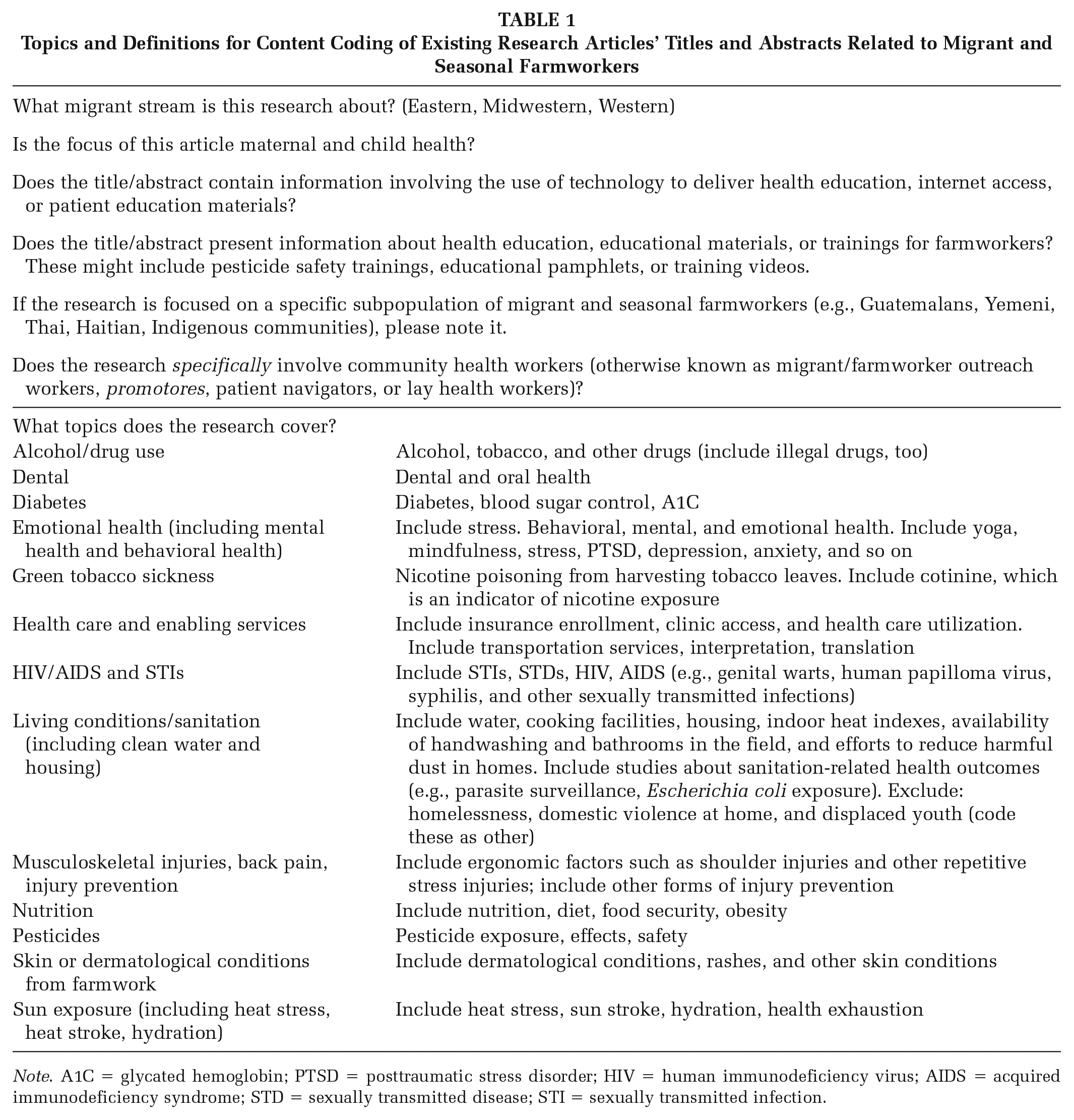
Note. A1C = glycated hemoglobin; PTSD = posttraumatic stress disorder; HIV = human immunodeficiency virus; AIDS = acquired immunodeficiency syndrome; STD = sexually transmitted disease; STI = sexually transmitted infection.
We report descriptive statistics calculated in Microsoft Excel and SPSS Version 27 (IBM Corp). As there were no human participants, this research was not subject to review by an institutional review board.
Results
Aim 1: Describe the Existing Literature by Topic, Age, and Journal
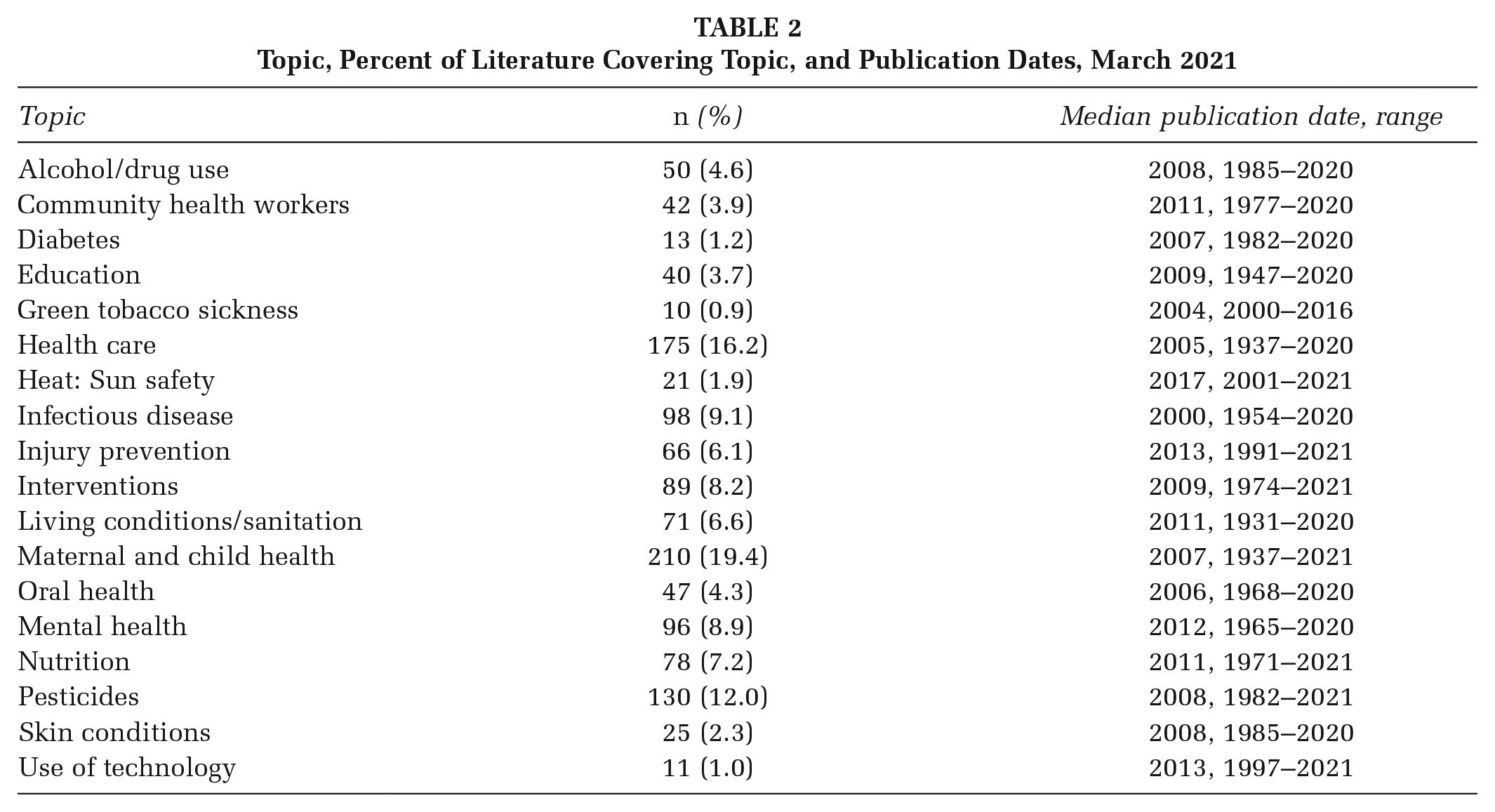
In total, we identified 1,083 articles about farmworker health of which 87.5% were from academic journals; the remaining literature (n = 135) was from dissertations, reports, preprints, or book chapters. Table 2 shows the breakdown of existing literature on addressing health issues in migrant and seasonal farmworker populations living in the United States by topic and age of literature. The earliest published article we identified was a 1931 bibliography regarding migrant housing (Folsom, 1931). Figure 1 shows the number of articles over time by Eastern, Midwestern, or Western migrant streams.
Topic, Percent of Literature Covering Topic, and Publication Dates, March 2021
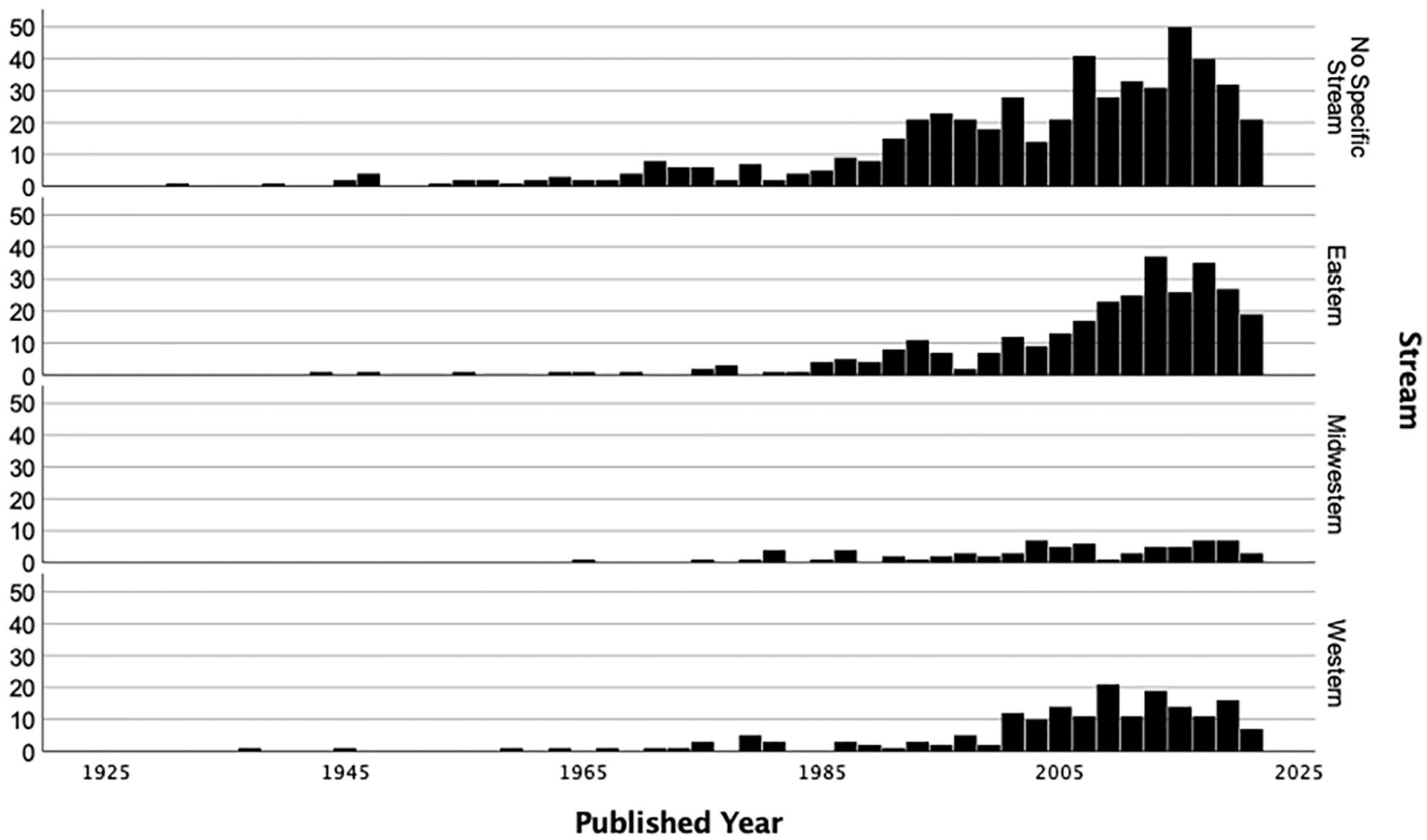
Histogram of identified articles published over time by migrant stream, March 2021
The top 10 journals for published articles were Journal of Agromedicine (n = 78), Journal of Immigrant and Minority Health (n = 60), American Journal of Industrial Medicine (n = 59), American Journal of Public Health (n = 36), Journal of Agricultural Safety and Health (n = 33), Journal of Rural Health (n = 26), Journal of Occupational and Environmental Medicine (n = 23), Public Health Reports (n = 19), and tied at 10th place with 15 articles each International Journal of Environmental Research and Public Health and New Solutions. We identified eight articles in Health Promotion Practice.
Aim 2: Understanding of Gaps in the Existing Literature With a Focus on Interventions to Address Health Inequities for Farmworkers
Regarding our second research aim to inform understanding of gaps in the existing literature, we first present the state of the literature regarding specific populations of farmworkers. We then present results regarding interventions and use of technology followed by information about CHWs.
While the farmworker literature in the United States is mostly nonspecific about the origins of farmworkers or is focused on farmworkers from Mexico and Central America, we identified records (n = 45) regarding nine specific farmworker subpopulations by race/ethnicity and sexual minority status (Table 3). Articles specific to any group were few, with there being only seven focused on African American or Black farmworker populations and 11 on indigenous farmworkers.
Records With a Focus on Unique Farmworker Populations in Their Title and Abstract, n = 45, March 2021
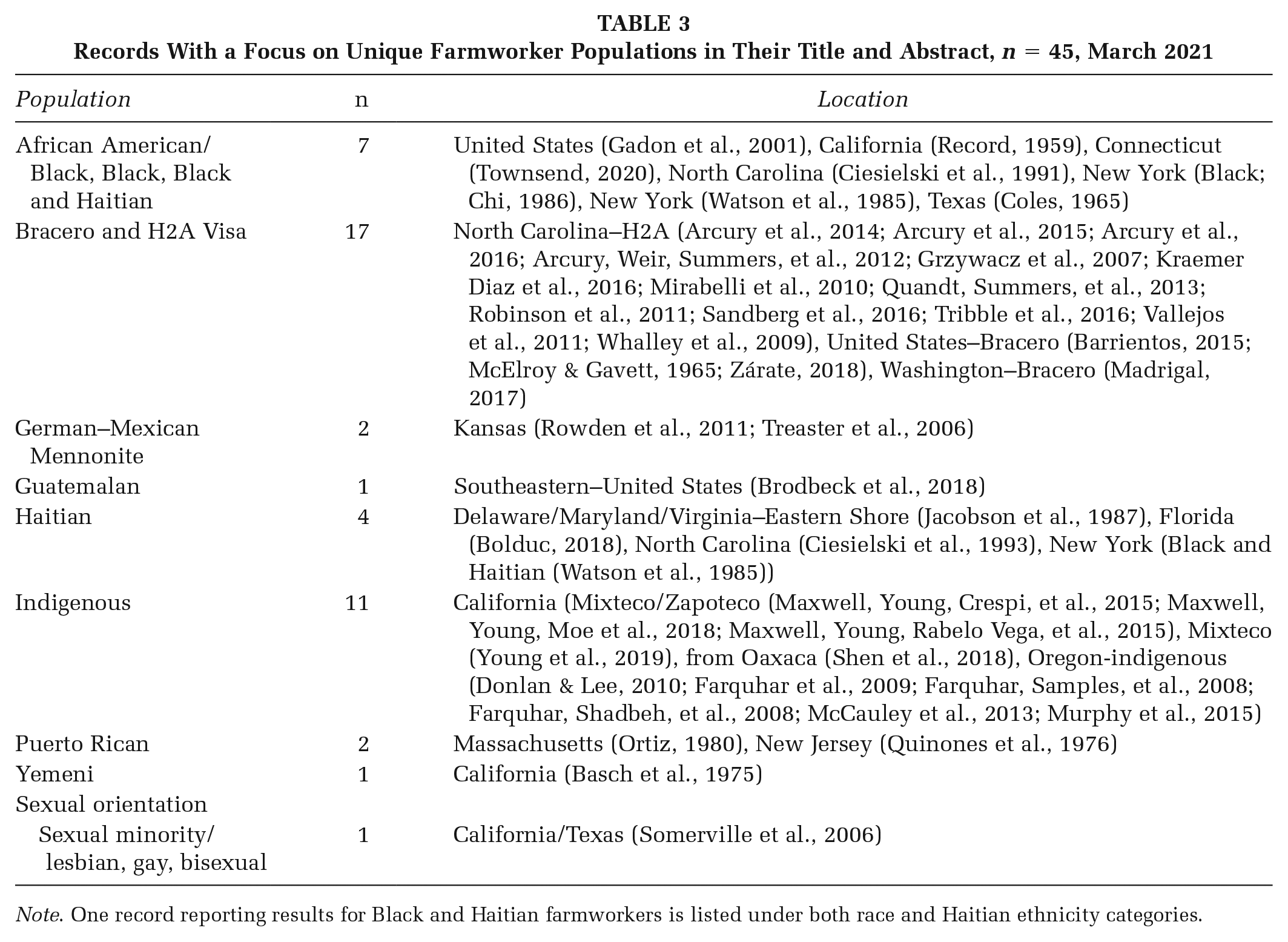
Note. One record reporting results for Black and Haitian farmworkers is listed under both race and Haitian ethnicity categories.
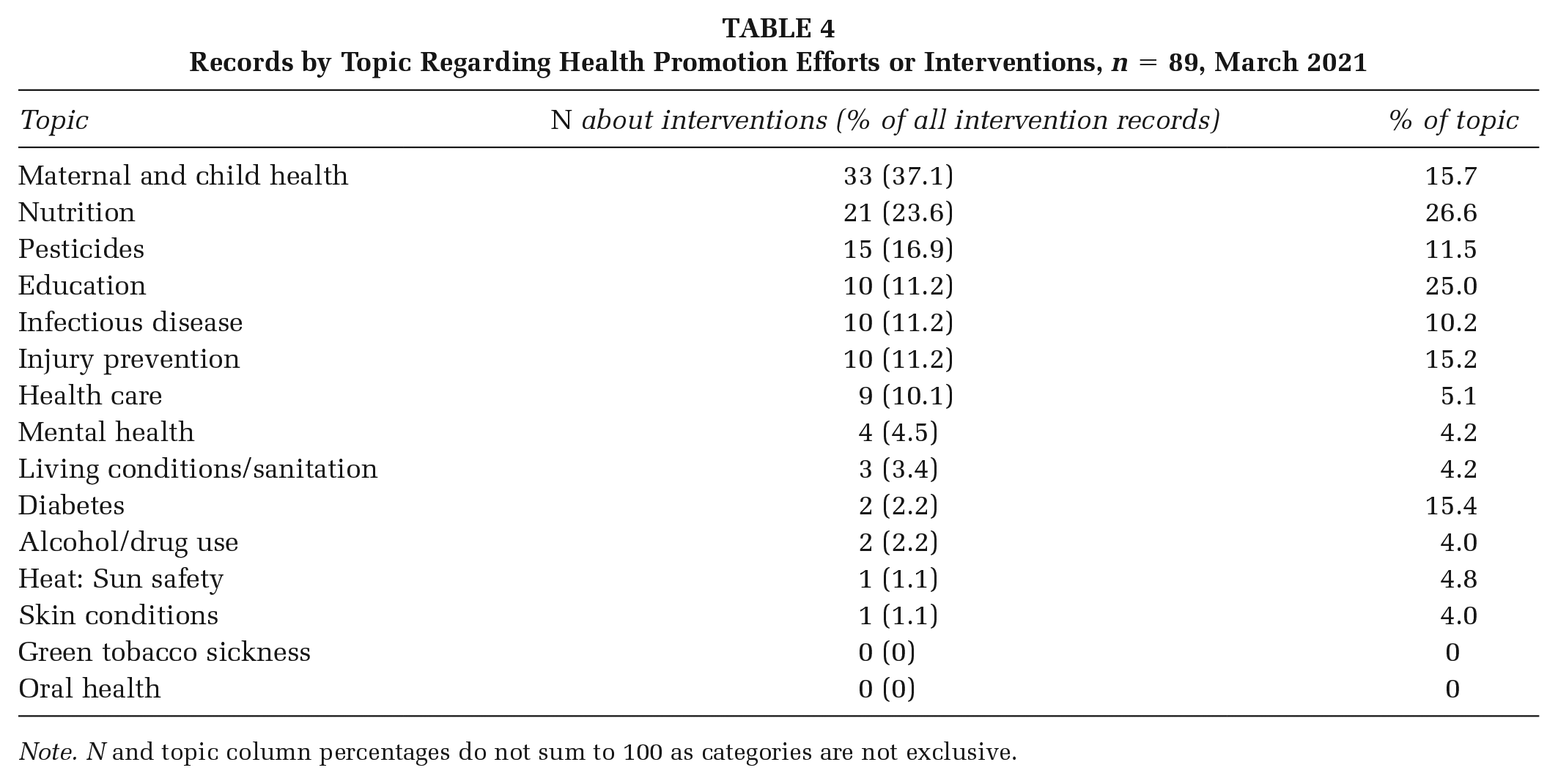
In addition to documenting and understanding the many health inequities facing farmworkers and their families, the literature describes and evaluates health promotion efforts or interventions to improve farmworker health. As shown in Table 4, this literature is not equally developed across selected topic areas and remains sparse overall, representing just 8.2% of the farmworker health literature.
Records by Topic Regarding Health Promotion Efforts or Interventions, n = 89, March 2021
Note. N and topic column percentages do not sum to 100 as categories are not exclusive.
Regarding the use of technology to address farmworker health, we identified 11 records. Just two records addressed telehealth delivery for farmworkers (Norton et al., 1997; Price et al., 2013), and one addressed use of geographical information systems to inform service delivery (Vela Acosta et al., 2005). Others assessed the ability to use computers and mobile phones for delivery of information (Anger et al., 2006; Arcury et al., 2017; Lee et al., 2020; Mendez et al., 2019), and using technologies for data collection (Becklinger, 2020; Kilanowski et al., 2013; Kilanowski & Trapl, 2010). Finally, one looked at using technology to inform clinical decision making about occupational injuries for farmworkers (Weichelt et al., 2019).
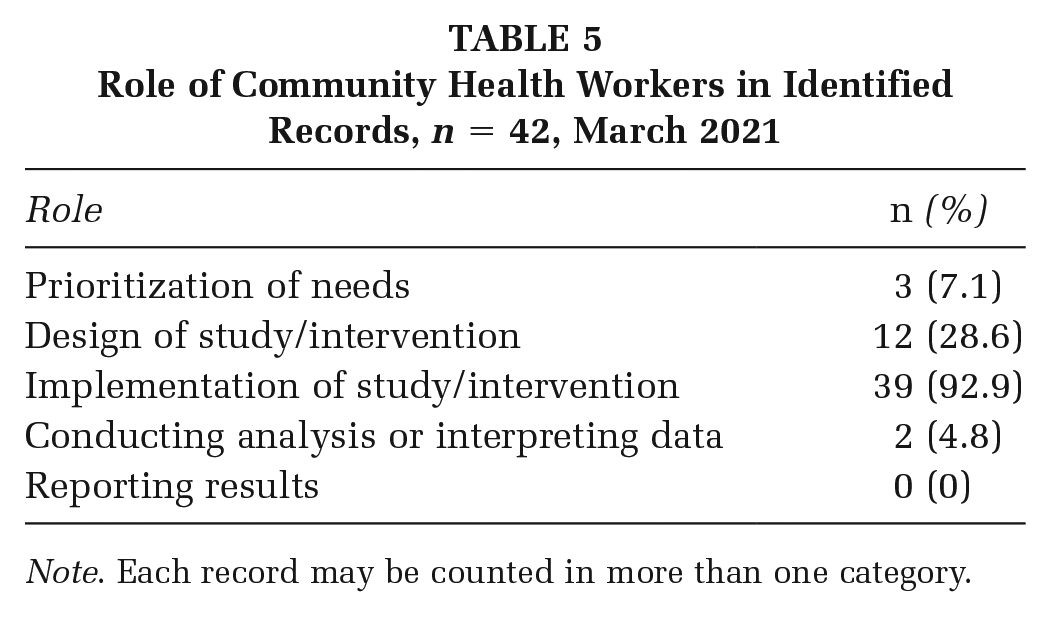
CHWs represent an important part of farmworker health efforts and interventions. We identified 42 records involving research on or with CHWs. To further describe the literature, we categorized how CHWs were involved in the records, which is shown in Table 5. Predominantly, CHWs participated in implementation of the study or intervention (n = 39), with fewer engaged in study design (n = 12). Of the 42 articles involving CHWs, 23 involved interventions. The greatest number of these were in pesticide safety (Cravey et al., 2000; Grzywacz et al., 2013; LePrevost et al., 2014; Liebman et al., 2007; McCauley et al., 2013; Quandt, Grzywacz, et al., 2013), followed by health care access (Fernández et al., 2005; Levin & Philips, 2018; Patton, 1995; Young et al., 2019), nutrition (La cocina saludable The healthy kitchen, 2002; Mitchell et al., 2015; Serrano et al., 2000), and infectious disease (Luque et al., 2011; Somerville et al., 2006).
Role of Community Health Workers in Identified Records, n = 42, March 2021
Note. Each record may be counted in more than one category.
Aim 3: Identification of Literature for Dissemination to Community Health Workers and Other Public Health Practitioners
From the 1,083 articles about farmworker health that we identified, we classified the articles’ topic(s) and created bibliographies (available from our institutional repository; https://doi.org/10.15139/S3/JNW5XE), which are available to CHWs, researchers, and the public. We disseminated our findings through our state’s farmworker health program, to community partners, and on the (now defunct) Migrant Health Research Listserv. In addition to compiling information about farmworker health for these audiences, we wanted to enable CHWs to easily access and disseminate relevant information to farmworkers. Therefore, we provided a series of webinars to CHWs on finding trustworthy and reliable information about farmworker health. Two of these webinars focused on increasing CHWs’ skills in searching using Google and PubMed through training videos we developed. One webinar was designed to train CHWs how to develop effective farmworker education materials and how to use Canva.com to create infographics for dissemination to farmworkers.
Discussion
Principal Findings
We found 1,083 records about farmworker health and categorized them into 18 topical categories. The earliest article was published in 1931 about migrant housing (Folsom, 1931), an issue that remains a major problem today. It appears there is more research regarding the Eastern migrant stream than the Midwestern or Western stream. Overall, we identified trends in the farmworker health literature that parallel the scientific literature in general, with increasing numbers of records over time. We then delved more deeply into the characteristics of these records and identified how the existing literature covers special populations of farmworkers and health promotion efforts.
Regarding special populations, we found limited literature regarding special populations of farmworkers by race, religious/ethnic identity, nationality, indigeneity, and sexual orientation. Just 8.2% of records described or evaluated a health promotion effort or intervention to improve farmworker well-being. Of the 89 records describing or assessing interventions related to farmworker health, the most common topical areas were maternal and child health, nutrition, pesticides, education, infectious disease, and injury prevention. The literature regarding other important topics in farmworker health such as mental health, drug use, and heat/sun safety was much smaller with four or fewer records identified in each topic.
We also assessed which records covered the use of technology to address farmworker health. The literature was sparse (n = 11). There were substantial gaps in the literature regarding internet access for farmworkers, use of mobile and telehealth service delivery, and even basic questions about how many farmworkers have mobile phones or internet access. Future work should expand the evidence to inform digital inclusion efforts and ensure rural broadband includes farmworkers and their families.
A small body of literature focuses on the role of CHWs or promotores (n = 42), with a large proportion of these records reporting the use of CHWs to implement research on educational interventions. A much smaller number used community-based participatory approaches or involved CHWs in the design or development of research or programs. Health promotion efforts involving CHWs described in the records we identified focused heavily on pesticide safety and health care access. There are gaps in how and for what topical areas CHWs are being engaged in farmworker health research. This suggests to us that there is an opportunity for researchers to recognize and leverage the integral role CHWs can play in developing effective interventions and building an efficient pathway for dissemination of health information to reduce inequities.
We found health-related topics that were not well covered in the farmworker health literature. Fewer than 15 articles specific to migrant and seasonal farmworker populations in the United States were identified and coded as addressing diabetes, green tobacco sickness, or use of technology regarding health. Additionally, of the articles identified as including health promotion efforts or interventions specific to this population, fewer than five were identified and coded for the topics of mental health, diabetes, heat/sun safety, skin conditions, alcohol/drug use, living conditions/sanitation, and oral health. These findings reveal topics that may be salient for farmworker health and thus a direction for future research.
Study Findings in Context
Our findings fit with the existing literature documenting health inequities for farmworkers and their families (Arcury & Quandt, 2007, 2020). To us, the topography of the existing literature suggests the importance of future efforts moving from describing and understanding inequalities to identifying intervention or health promotion strategies (Kilbourne et al., 2006). Additionally, given the paucity of research on specific populations of farmworkers who may experience unique sources of vulnerability, future research should consider approaches to examine differences in experiences by gender, indigeneity, race, sexual orientation, and other identities (Thomas et al., 2011). Funders should consider investing in efforts to identify (Leviton & Gutman, 2010), and formally test practice-based (Green, 2008) interventions being implemented by community health centers, nonprofit organizations, and CHWs.
Regarding CHWs specifically, they are usually members of the communities they serve who specialize in connecting their fellow community members with health information and services. This includes interpretation and translation services, provision of culturally appropriate health education and information, informal counseling and guidance on health behaviors, and distribution of direct services such as first aid and blood pressure screening. Grassroots, state-level, and national efforts are underway to formalize the CHW position (e.g., The Community Health Worker Core Consensus (C3) Project: c3project.org), and these efforts have included CHWs involved in farmworker outreach. The C3 Project delineates 10 core CHW roles, which include providing culturally competent health education and information and participating in evaluation and research.
This mapping review is therefore timely in its aim to improve CHW access to scientific literature and in its examination of how CHWs are represented in the literature. CHWs were described as primarily being engaged in the implementation of educational interventions in the small number of records focusing on CHWs. Understanding the limited way that CHWs have been involved in evaluation and research in the literature informs discussions related to the vision for CHW engagement in research in the future. Our mapping review reveals a paucity of records reporting CHW involvement in prioritization of needs, conducting data analysis and interpretation, and reporting back; ongoing efforts to formalize the CHW profession may seek expanded definitions for CHW participation in research.
Implications for Practice
Practitioners, outreach teams, community health centers, and state programs should strongly consider partnering with evaluators to augment the literature on health promotion efforts for farmworkers and their families. Farmworker health programs and funding agencies should prioritize evaluation efforts. Researchers should partner with practitioners to assess “practice-based” evidence for health promotion efforts (Green, 2008). Each of these stakeholders should work to build greater evidence that recognizes diversity among farmworkers. Advocates and policymakers should focus on addressing underlying structural determinants of disadvantage.
Strengths and Weaknesses
Our study’s strengths, which include professional health science librarian searches, use of multiple databases, an advisory board’s input on topics, and verification of coding reliability, must be balanced against its limitations. First, our use of a mapping review approach inherently provides an overview of the available literature, and coding of article topic based on title and abstract may omit articles that do not include relevant information in their abstracts. Second, we did not exclude studies based on age; the results from studies that are decades old may not be relevant to the current context of farmworker health. Third, the topics we chose to assess were based on input from our advisory panel and state farmworker health program; as such, some topics may be less applicable to other regions of the country.
Conclusion
A 1954 report from the U.S. Public Health Service’s Interbureau Committee on Migrants published in Public Health Reports recommended, “Existing housing, health, and other standards, and laws and regulations applicable to migrants need to be applied to their situation; if necessary, these should be modified to assure the migrant the same protection and benefits available to other citizens” (Leone & Johnston, 1954, p. 8). Sixty-six years later, we find ourselves assessing a body of literature on farmworker health that highlights structural vulnerabilities from an agricultural exceptionalism undergirded by structural racism. Moreover, only a small part of the literature tests or describes health promotion interventions. By identifying gaps in the literature and highlighting the importance of research in farmworker health, this mapping review will hopefully provide inspiration for advancing research agendas to promote structural interventions, equity, and health promotion efforts, as well as inform the formalization of the critical CHW role in farmworker health and research.
Supplemental Material
sj-pdf-1-hpp-10.1177_15248399211033308 – Supplemental material for Advancing the Health of Migrant and Seasonal Farmworkers in the United States: Identifying Gaps in the Existing Literature, 2021
Supplemental material, sj-pdf-1-hpp-10.1177_15248399211033308 for Advancing the Health of Migrant and Seasonal Farmworkers in the United States: Identifying Gaps in the Existing Literature, 2021 by Jamie E. Bloss, Catherine E. LePrevost, Abdul G. Zahra, Gina C. Firnhaber, Leslie E. Cofie, Ramón Zepeda and Joseph G. L. Lee in Health Promotion Practice
Footnotes
Authors’ Note:
The authors thank Jessenia Diaz for early help with coding. Drs. C. E. LePrevost and J. G. L. Lee are unpaid members of the governing board of the NC Farmworker Health Program, Office of Rural Health, NC Department of Health and Human Services. Research reported in this publication was supported by the National Library of Medicine of the National Institutes of Health under award number G08LM013198. The content is solely the responsibility of the authors and does not necessarily represent the official views of the National Institutes of Health.

Notes
References
Supplementary Material
Please find the following supplemental material available below.
For Open Access articles published under a Creative Commons License, all supplemental material carries the same license as the article it is associated with.
For non-Open Access articles published, all supplemental material carries a non-exclusive license, and permission requests for re-use of supplemental material or any part of supplemental material shall be sent directly to the copyright owner as specified in the copyright notice associated with the article.
