




Abstract
Gender-transformative approaches (i.e., approaches that support male-identified individuals to critique and resist stereotypical male gender role norms that negatively affect health and well-being) are increasingly recognized as a key health promotion strategy. However, there is limited evidence to date on gender-transformative interventions for male-identified adolescents. In addition, given the dynamic and socially constructed nature of gender, methods beyond quantitative data collection are needed to gain a holistic understanding of promising gender-transformative health promotion approaches. One newer method to capture lived experiences with adolescents is photo-based evaluation, where youth program participants take pictures to represent their knowledge, attitudes, and/or behaviors before and after a program. The present study presents findings from the photo-based evaluation of a gender-transformative health promotion program called WiseGuyz. WiseGuyz is offered to mid-adolescent, male-identified youth in school and community settings, and is designed to promote mental and sexual health and prevent violence. Six youth photographers from a rural Canadian setting took part in this evaluation, taking photos to represent what being a guy in their world meant before and after WiseGuyz. Youth then participated in an individual visual storytelling interview and a group-based photovoice process. Key themes in relation to masculinities that emerged from these data were around changes to (1) social norms and (2) emotionality following program participation, and the need for a safe program space to support these changes. This study adds to literature demonstrating the promise of gender-transformative approaches with adolescents, with implications for future health promotion research and practice with male-identified youth.
Keywords
Background
The health and well-being of men and boys 1 is a topic of increasing research and practice interest (American Psychological Association, Boys and Men Guidelines Group, 2018). This interest stems from an acknowledgment of certain health disparities faced by male-identified groups in North America. For example, men in the United States report higher rates of sexually transmitted infections (gonorrhea, syphilis; Centers for Disease Control and Prevention, 2019), greater rates of heavy drinking (National Center for Health Statistics, 2018), more deaths by suicide (Hedegaard et al., 2018), and higher all-cause mortality (Murphy et al., 2018), as compared to women. Similar disparities are observed in the Canadian context (e.g., Navaneelan, 2015; Pearson et al., 2015). From a social determinants of health perspective (Public Health Agency of Canada, 2013), gender (or, the socially constructed roles that individuals are expected to perform based on their assigned sex at birth) is a key root cause of such disparities, both within and between groups. Specifically, for men in Western settings, an extensive literature now documents that adherence to stereotypical male gender role norms (e.g., around emotional restriction, avoidance of femininity) is linked to poorer health for all genders (e.g., Evans et al., 2010; Wong et al., 2017). Intersections between race, gender, class, and other identity factors are also critical considerations when understanding the health of male-identified individuals (e.g., Rogers et al., 2015).
To prevent these adverse health outcomes, upstream health promotion targeted at challenging these health-harming gender norms is needed. As we and other authors have previously documented (Exner-Cortens, Hurlock, et al., 2020; Way et al., 2014), adolescence is a key time for this upstream work, due in part to the salience of identity exploration in this developmental period. More broadly, this type of intervention falls under the umbrella of gender-transformative approaches, which “engage men and boys to reflect critically on—and then to challenge and change—gender-inequitable attitudes and behaviors” (Brush & Miller, 2019, p. 1635). Gender-transformative approaches often draw on social norms theories (Brush & Miller, 2019), as well as theories that highlight the need for broader structural change (e.g., intersectional feminism; Dworkin & Barker, 2019). Such theories assume that social norms and behaviors are shaped by the intersections of social, gendered, political, and racialized identities. Using an intersectional framework in gender-transformative approaches accounts for a dynamic conceptualization of gendered norms within the context of dominant social structures. However, while gender-transformative approaches are a recommended violence prevention and health promotion strategy for men and boys (Brush & Miller, 2019), evidence of specific intervention effectiveness is limited (Dworkin & Barker, 2019).
Purpose
This article presents the photo-based evaluation of a gender-transformative program for male-identified adolescents called WiseGuyz. WiseGuyz is a healthy relationships program for mid-adolescents developed by the Centre for Sexuality (Calgary, Alberta, Canada), and aims to improve mental and sexual health and reduce male-perpetrated violence by supporting participants to deconstruct and resist health-harming gender norms. While a number of gender-neutral health promotion initiatives for youth exist in the Canadian context (e.g., Kutcher et al., 2015; Lupien et al., 2013), to our knowledge, WiseGuyz is the first school-based, gender-transformative health promotion program in Canada with preliminary evidence of effectiveness. To date, we have used within-groups quantitative analysis to demonstrate WiseGuyz’ promise for promoting positive mental health and friendship quality (Exner-Cortens, Claussen, et al., 2020; Exner-Cortens, Hurlock, et al., 2020), and decreasing adherence to health-harming gender norms (Claussen, 2016).
However, while quantitative evidence of effectiveness is needed for gender-transformative programs like WiseGuyz (Dworkin & Barker, 2019), it is not sufficient in providing a holistic understanding of potential mechanisms of change. Given the socially constructed and situated nature of gender (American Psychological Association, Boys and Men Guidelines Group, 2018; Hollander & Pascoe, 2019), evaluation methods that center lived experience are also needed. For adolescents, the use of photos to actively engage youth in a participatory evaluation process that meaningfully explores perceived outcomes is promising (Halsall & Forneris, 2016), but we found no established methods for using photo-based youth participatory evaluation to understand changes in a health promotion program. Thus, we developed such a method (Exner-Cortens, Sitter, et al., in press) and, in this paper, present key themes as they pertain to perceived changes around masculinity from the initial use of this method in a rural setting. This project was guided by feminist evaluation principles (Brisolara & Seigart, 2014).
Description of WiseGuyz
WiseGuyz was originally developed in response to rising sexually transmitted infection rates in a large metropolitan area, but since then, it has expanded to a 20-session curriculum (for a list of all sessions and modules, see Exner-Cortens, Hurlock, et al., 2020). WiseGuyz is typically offered in school-based settings during instructional time, but a condensed version is also offered in a variety of community-based settings (e.g., youth justice settings). Like many gender-transformative interventions (Dozois & Wells, 2020; Orchowski, 2019), the program supports participants to critically examine and explore injunctive social norms related to gender and masculinity as a group and as individuals, and then take action to create and negotiate new norms for themselves, their peers, and their communities. Since achieving gender equity also requires larger structural change (Dworkin & Barker, 2019; Hollander & Pascoe, 2019), WiseGuyz discussions and activities are also guided by intersectional feminism (Carastathis, 2014). Finally, because skills practice is key to enacting behavioral change (e.g., safer sex practices), the capability, opportunity, motivation, and behavior model is used to guide program activities focused on skills development (Michie et al., 2011).
Method
Project Setting and Youth Photographers
The setting for this project was a high school in a rural setting in a Western Canadian province. The school was selected as it had been offering WiseGuyz for the past 2 years, was interested in participating, and allowed us to pay youth photographers for their time (Exner-Cortens, Sitter, et al., in press). The median income at this school was 1.5 times the Canadian federal poverty line. Youth who were participating in the WiseGuyz program at the participating school in the 2017–2018 academic year were invited to participate in this project in January 2018.
At this school site, WiseGuyz facilitators used a standard recruitment script to explain the project and gave a research project information package (containing a parent information letter, parent consent form, youth assent form, and youth information form) to all current program participants who were interested in potentially participating. Eight ninth-grade youth signed up, and six completed the project, M (SD) age = 14.40 (0.31), 83.3% White. All youth used a personal camera or cell phone to take photos for this project. Participants received a $25 CAD gift card for each attended event (group orientation meeting, visual storytelling interview, photovoice focus group, two community events), to a maximum of $125 CAD. All events were held outside of WiseGuyz time. The honorarium was based on the provincial minimum wage where this project took place. Parents were reimbursed for all mileage related to the project, and food was provided for participants during group meetings. This study was reviewed by a university research ethics board and the participating school division.
Overview of Photo-Based Evaluation Method
We describe our photo-based evaluation method in brief here, as it is fully described in Exner-Cortens, Sitter, et al. (in press). In sum, it blends elements of visual storytelling and photovoice methodology, with a focus on youth photographer-led interviews and adult-led data analysis (Exner-Cortens, Sitter, et al., in press). The participatory, reflexive, and action-focused emphasis of this method is also well-aligned with feminist evaluation principles (Brisolara & Seigart, 2014). After providing parent consent and their own assent, the youth photographers attended an initial group orientation meeting, where they did a warm-up activity on expressing emotions through photos; were given an overview of the project; and discussed the ethics of picture-taking. To guide the picture-taking process, participants were asked to consider the following question: What does it mean to be a guy in your world (1) before WiseGuyz? and (2) after WiseGuyz? These questions and overall method were developed by the research team based on the prior work of Drew et al. (2010). These questions also draw on the interest in feminist evaluation practice in the gendered experiences of men and boys (Brisolara & Seigart, 2014). Because of our location in the school, photos could not be taken on school property or contain any details that identified the school or any individual student.
After photographs were taken, a graduate research assistant scheduled an interview with each youth photographer. Interviews were on average 30 minutes, with the purpose of discussing the five most meaningful photographs as identified by the youth photographer (Drew et al., 2010; Kramer et al., 2013). The first and fourth authors conducted the interviews. Both individuals are White, cisgender women. Youth discussed the meaning they derived from their images and provided insight into their reasons for taking particular photos. During these interviews, the youth photographers also chose their favorite “before” and “after” photographs to share at the second group meeting (photovoice focus group and storyboard creation).
During the second group meeting, all youth photographers discussed their favorite two photos with each other for ~60 minutes. To facilitate this collectively led discussion with the group, an adapted version of the SHOWeD method was implemented. SHOWeD is a mnemonic word (Shaffer, 1983) based on Freire’s (1973/2002) theory of praxis. Adapted by Wang and Burris (1994) to facilitate the collective interpretation of photographs, participants reflect on why images are important, why situations exist, and what can be done to effect change. Through this process, participants also become aware of how their personal circumstances are inherently connected to larger social conditions (Liebenberg, 2018).
In our project, as an adaptation of the SHOWeD method, we asked youth photographs to consider (1) why they picked these photos, (2) what is happening in these photos, and (3) how the photos relate to their time in WiseGuyz. This group was cofacilitated by the first and fifth authors (both White, cisgender women) and three, male-identified WiseGuyz facilitators from different schools (i.e., who did not have a prior relationship with the youth). Following the group discussion, the youth photographers spent the second half of the meeting creating individual titles and narratives for their “before” and “after” photos, and arranging their chosen photo(s), respective titles, and text on a poster board. The third author then transposed the poster into a digital format 2 and created a photobook that features all youths’ photos, titles, and narratives. The poster display was shared by the youth photographers at two community events (the Centre for Sexuality’s annual general meeting and the WiseGuyz graduation ceremony for all 2017–2018 participants; Exner-Cortens, Sitter, et al., in press).
Data Analysis
The individual visual storytelling interviews and photovoice focus group were audio-recorded and transcribed verbatim, and are the sources of data for this study. Based on the recommendations of Drew and Guillemin (2014), a multiphase process—grounded in qualitative description methodology and that centered gender—guided transcript analysis (Sandelowski, 2000). To create an initial codebook, the first three authors reviewed the transcripts and met to discuss emerging themes. To establish interrater reliability, the second and third authors engaged in four rounds of test coding, codebook updates, and team discussion, which informed further refinement of the codebook. When this process was complete, interrater reliability (Cohen’s pooled kappa) was .83, which signifies very good agreement (Landis & Koch, 1977). Following reliability establishment, the transcripts were all coded by both the second and third authors using a blend of descriptive coding, subcoding, and simultaneous coding (Saldaña, 2013). The second and third authors met after coding each transcript to come to agreement on any inconsistencies. Codes were then reviewed by the first four authors to create themes. Given the richness of the data, multiple themes emerged; in this article, we focus on themes related to perceived changes around masculinity following WiseGuyz. Themes were identified from both the visual storytelling interviews and photovoice focus group. All coding was completed in Dedoose.
Results
Foundation for Change: Safe Space 3
Overall, most participants shared that the creation and maintenance of a safe space anchored their ability to engage in critical discourse and reflect on gender norms during the WiseGuyz program. For example, one participant shared that “the space it’s just, there’s like there’s no judgment or shame in it” (Gerald
4
). Furthermore, a participant in the focus group noted, If I wasn’t in WizeGuyz with all that like support, and additional support that I get at home, I probably wouldn’t be here [in the focus group] discussing. And even if there was WiseGuyz and there wasn’t that support and trust [in WiseGuyz], I probably wouldn’t be like this open and sharing about like personal stuff. (Focus group participant)
To further illuminate how facilitators create the safe space, Evan took a photo of a bag of oranges, saying that it was a metaphor for how the facilitators brought guys together, and sharing (Figure 1), Well, with the positioning of the oranges because it’s all clustered together like within a net. In a way the oranges are kind of imprisoned and then when I went to WiseGuyz it was kinda like this is like a safe space where we’re allowed to be open and honest with each other.
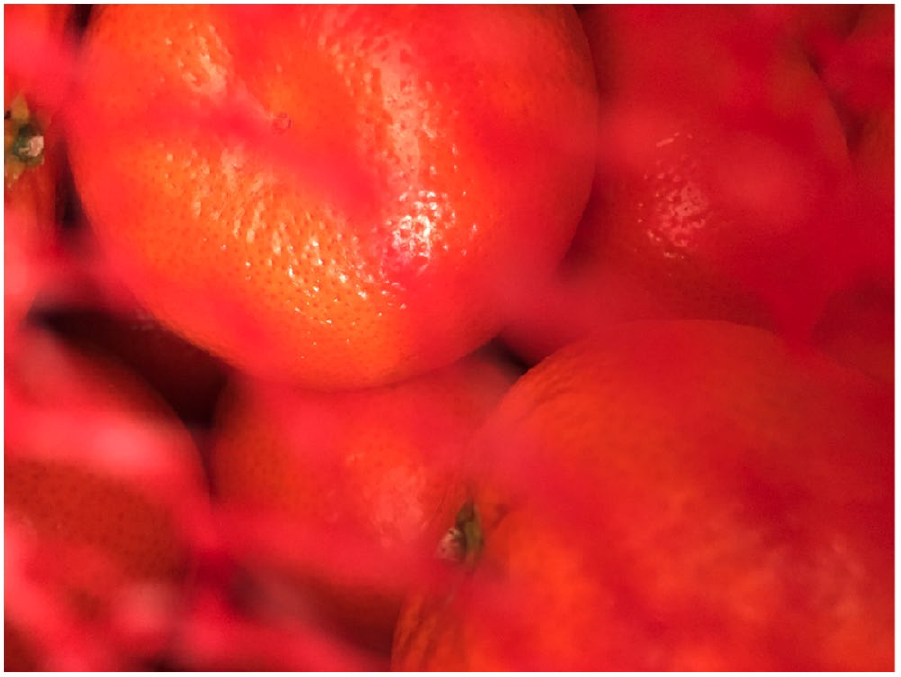
Metaphor of a Safe Space
Evan further shared, “I could go on about this forever about like the respect aspect. Like they [the facilitators], they ask for respect and they will give us the same respect back.” In sum, a safe space appeared to be the foundation upon which the guys could critically discuss and share their thoughts, feelings, and beliefs about masculinities.
Masculinities
The WiseGuyz program seeks to deconstruct health-harming gender norms and support young men in exploring their identity as it relates to the influence of stereotypical male role norms. Through critical reflection, participants in WiseGuyz are also encouraged to explore the intersection of their identity as it relates to gender with other salient identity factors (e.g., race). Our method’s focus on the exploration of what it meant to be a guy before and after WiseGuyz demonstrated important changes in participants’ understanding of the lived experiences and implications of gender. Particularly, some participants shared that when they first came to the program, they did not “actually know a lot about gender to be honest” (John). Others recalled feeling confused and “represented that by taking a photo and having the image blurred,” as Gerald did in his photo of blurred trees (Figure 2A).
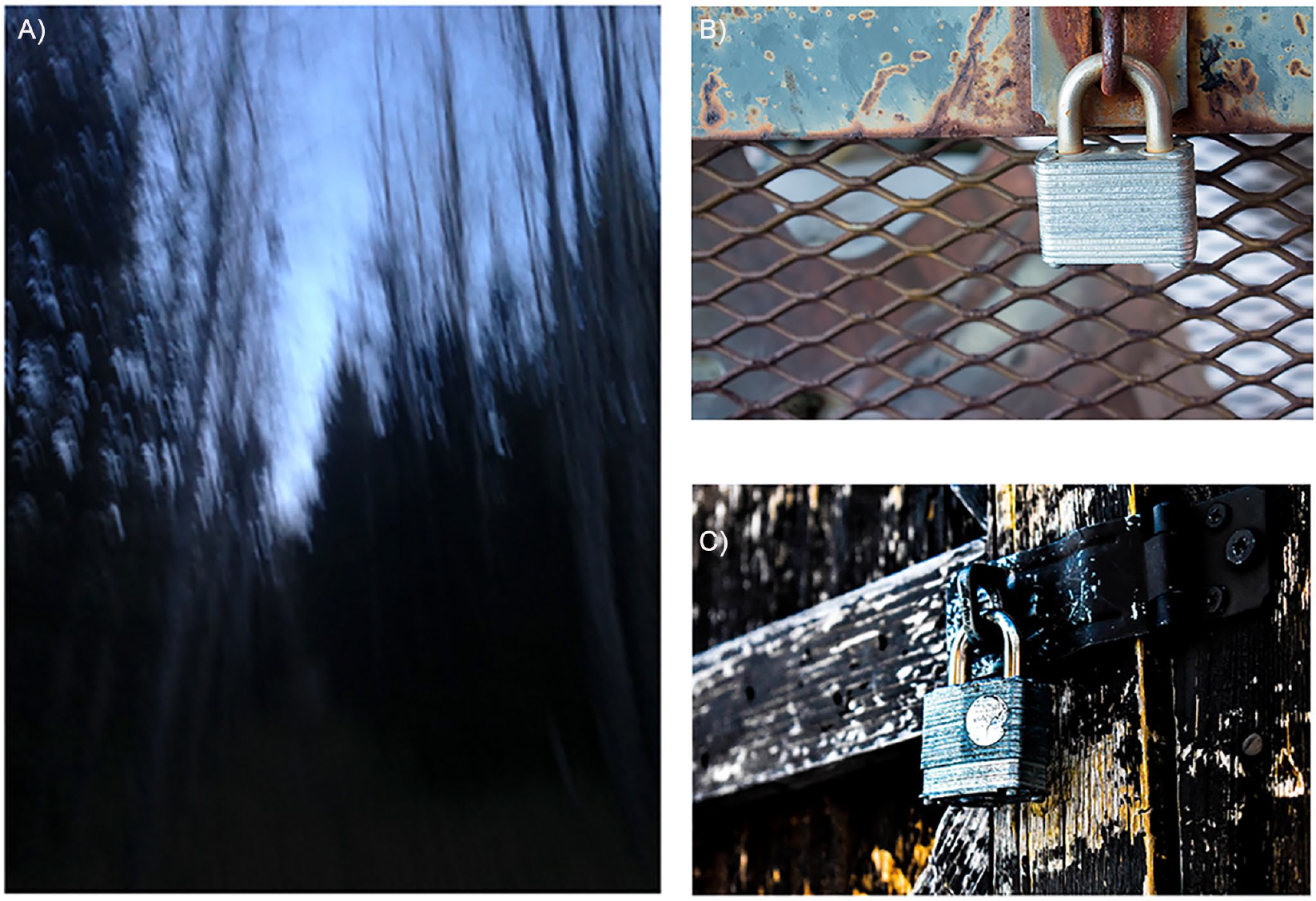
Metaphors of Masculinity
After engaging with the program, however, participants described a shift, particularly in their understanding of dominant male role norms and how these norms shape their own experiences of gender. Several participants described their before and after photos in terms of opening the gender lock, where the lock represented the restrictions participants felt as a result of dominant gender norms prior to the program. As Sky shared, “[Before WiseGuyz], it could be very difficult to break out of the system, almost like a lock without assistance. [They] can be stuck in and forced to not be themselves” (Figure 2B). Related to this, Merman shared that before WiseGuyz, his “life was very locked up” but now he “can feel [the facilitators] trying to take that lock off [. . .] and just open [him] up to more people” (Figure 2C). Continuing this metaphor, Sky also used the idea of a tree branch to indicate the restriction and isolation one can feel from trying to fit into stereotypical ideas about what a guy is supposed to be (Table 1). After the program, however, participants shared that they could “feel [WiseGuyz] like trying to take that lock off in a way. Like they’re just yeah being there for support saying that everything’s fine, you’re accepted here . . .” (Merman).
Additional Supporting Quotes for Key Themes
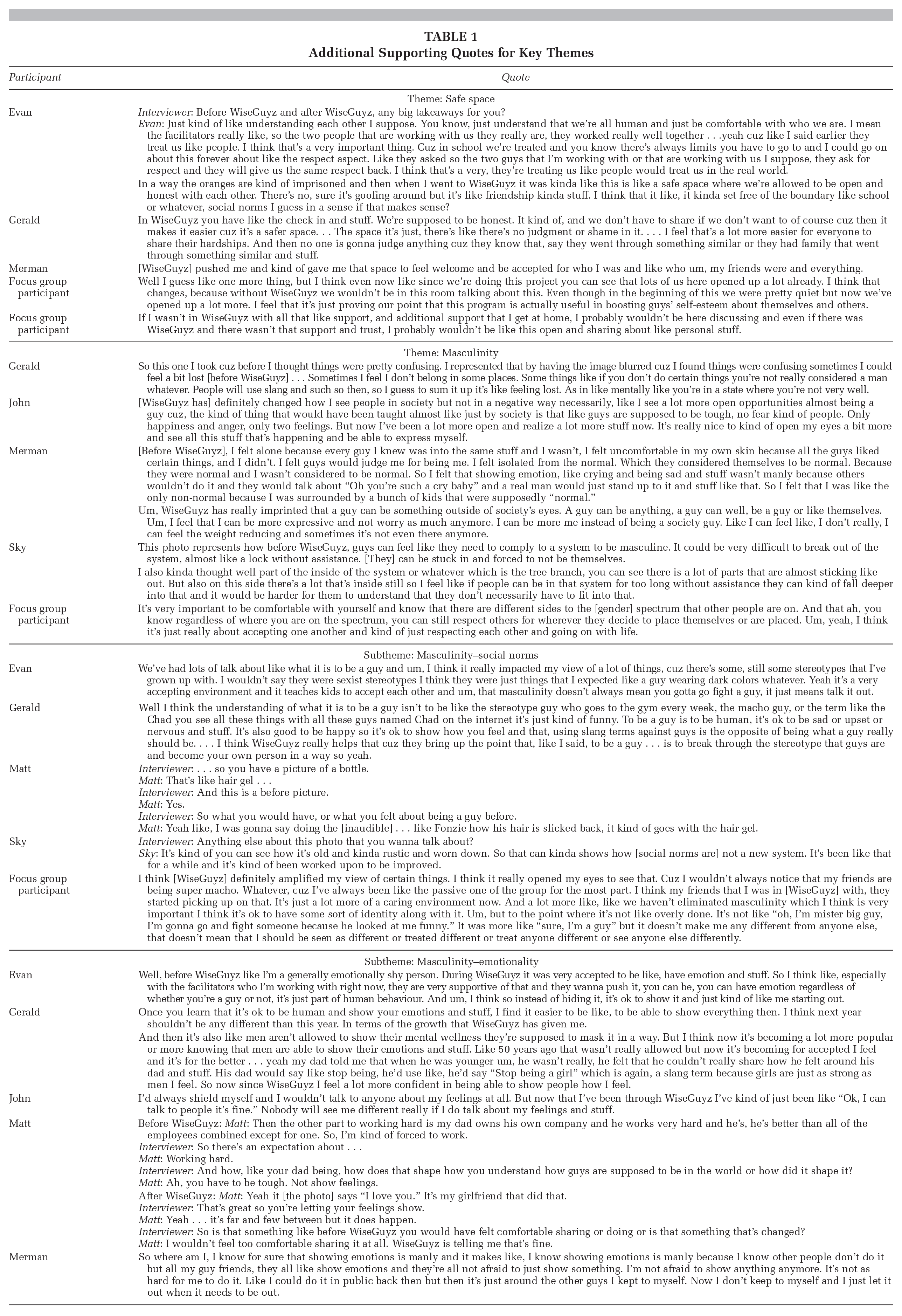
Overall, through WiseGuyz, participants were able to identify, deconstruct, and unlock these norms and embrace new understandings of masculinities and an understanding of gender as a continuum. Exploring the idea of masculinities in more detail, youth photographers discussed that WiseGuyz allowed them to specifically explore the concepts of social norms and emotionality.
Social Norms
Through the participatory group process and cocreation of a safe space, participants felt comfortable to discuss their awareness of social norms (particularly, injunctive norms), the pressure to conform to these norms, and how they acquired confidence to resist conforming. These key learnings were evident throughout the interviews as many participants recognized they could “be who they want to be” (Sky). In general, participants shared that they learned a new way of thinking about social norms as they pertain to gender, particularly about possibilities for identities that did not conform to stereotypical expectations of masculinity. As one example, Evan shared his reflections on the stereotypical expectation to be macho but noted that WiseGuyz helped bring clarity to what it truly means to be a guy (Figure 3A). In his photo, Gerald used the metaphor of a storm to represent how society’s expectations and norms can be “overwhelming and a bit ominous,” but once the storm passes, “everything becomes more clear” (Figure 3B). Gerald also shared that once the storm passed and he realized he did not have to conform to these social expectations, he recognized, To be a guy is to be human, it’s ok to be sad or upset or nervous and stuff. It’s also good to be happy so it’s ok to show how you feel and that. I think WiseGuyz really helps that cuz they bring up the point that, like I said, to be a guy . . . is to break through the stereotype that guys are and become your own person . . .
In sum, critical awareness of stereotypes was a key learning for WiseGuyz participants. Participants shared that they had developed the courage, confidence, and ability to make decisions on how to engage by observing before reacting, and discovered that they had a choice in adhering to stereotypical male gender role norms.
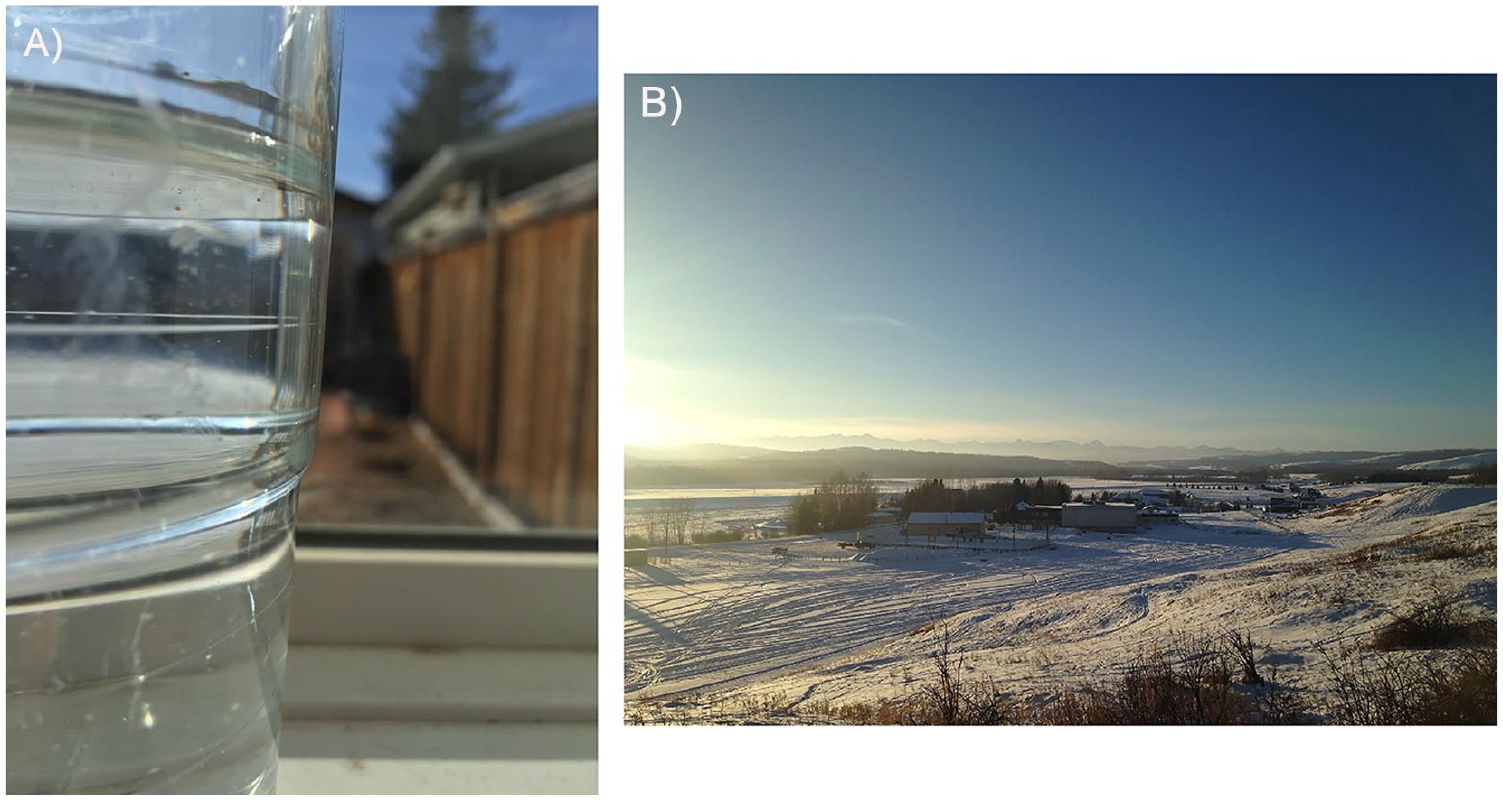
Metaphors of Social Norms Related to Gender
Emotionality
In many of their “before” photos, participants talked about their experiences with emotions prior to entering the program. Some participants talked about feeling alone and isolated from their peers due to their lack of conformity to stereotypical male norms (Table 1). The pressure to fit into the mold of “what it is to be a guy” (Evan) resulted in feeling emotionally restricted. For example, one participant visualized emotional restriction as being alone on a bridge (Figure 4). Following the WiseGuyz program, however, most participants shared that they felt less emotionally restricted. In the discussion of their ‘after’ photos, participants’ confidence to share their emotions grew as they learned that it was okay to ask for emotional and mental health support following the program: I’m not afraid to show anything anymore. It’s not as hard for me to do it. Like I could do it in public back then but then it’s just around the other guys I kept to myself. Now I don’t keep to myself and I just let it out when it needs to be out. (Merman)
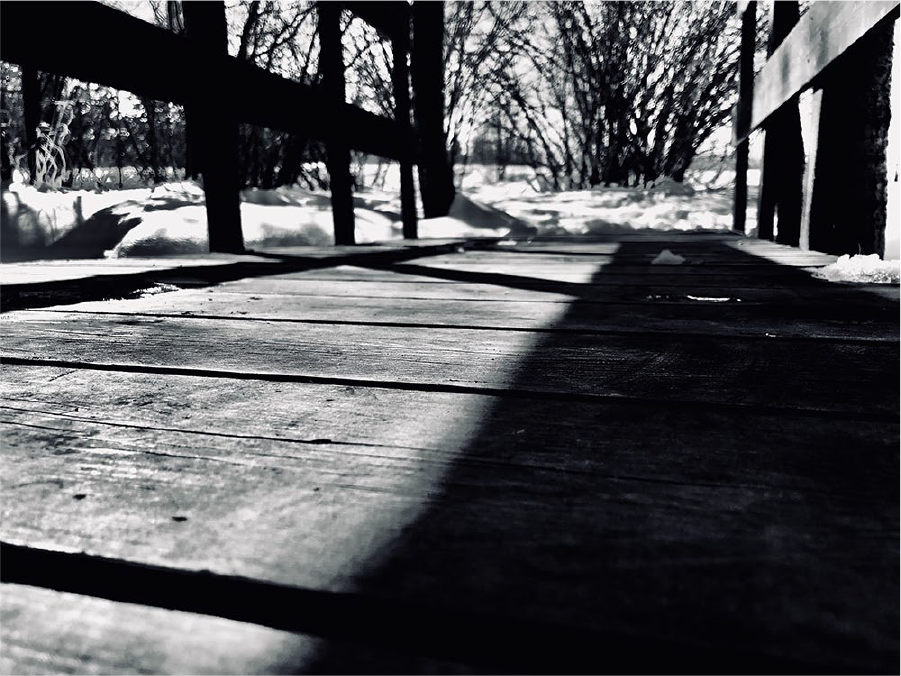
Metaphor of Emotionality
Discussion
To our knowledge, this study is the first to use a photo-based tool to evaluate a health promotion program with male-identified adolescents. First, the rich data generated from this evaluation suggest that participation in WiseGuyz allowed youth to deeply explore their own masculinity, which subsequently supported changes to social norms around gender and emotionality. Second, youth affirmed the necessity of a safe space within the WiseGuyz program (i.e., a respectful, nonjudgmental, and confidential space where participants felt trusted, accepted, and included) to support these changes.
Findings from our study are well-aligned with the extant masculinities literature and past WiseGuyz research. For example, focus groups conducted from 2013 to 2016 with WiseGuyz participants in urban settings consistently highlighted the critical role of a safe space in facilitating change (and that when the safe space was disrupted, learning did not occur; Hurlock, 2016). Themes of freedom to be oneself and express emotions also align with past qualitative WiseGuyz work, but we found that the photo-based method allowed participants to more clearly articulate their perceived growth in these areas. As emotional restriction and lack of social support are likely key causes of adverse outcomes related to strong adherence to stereotypical male gender role norms (Evans et al., 2010; Exner-Cortens, Wright, et al., in press; Wong et al., 2017), participants’ emphasis on the emotional freedom they felt after participating in WiseGuyz is an especially promising finding.
In terms of social norms, Hollander and Pascoe (2019) discuss the role of “nets of accountability” (or, group-level sanctioning of “appropriate” behavior) as key to understanding enforcement of stereotypical gender role norms among men and boys. Thus, when considering how to support boys to resist these norms, “We . . . must grapple not only with the individual’s perceptions of the consequences for behavior but with the perceptions of others in their social context and the collective consequences of failure” (p. 1684). As highlighted in our findings, WiseGuyz can support the loosening of these nets by promoting both individual- and group-level change. Together, individual- and group-level change may lead to larger cultural change within participants’ other contexts, as they bring ideas learned in WiseGuyz into other spaces.
Finally, the idea of resistance to norms was also present in these data, including how participating in WiseGuyz allowed youth to imagine other (yet still valid) ways of being a guy in their world. This is a key finding, as Way and colleagues have written extensively on the importance of fostering resistance to stereotypical role norms to promoting the health and well-being of adolescent boys (e.g., Rogers & Way, 2016, 2018; Way et al., 2014).
Limitations
Several limitations of our study should be noted. First, we had six participants, though our initial goal was 7 to 12 participants (Wang, 1999). We also note that these youth all chose to participate in a photo-based evaluation study, which may mean they had a more positive experience than youth who did not choose to participate, or may simply mean they were more willing to participate in this type of project (Exner-Cortens, Sitter, et al., in press). In addition, these youth were very economically and racially homogenous, precluding an intersectional analysis. Second, both interviewers were White, cisgender, female-identified individuals. It is possible youth would have shared somewhat different impressions of their photos had the positionality of the interviewers matched the positionality of the interviewees. On the other hand, the differing positionalities may have encouraged youth photographers to explain more deeply than they would have to a male-identified peer interviewer. We also note that our own positionality as authors supported a reading of the data from a feminist worldview, and different conclusions may have been drawn from a different theoretical grounding. Finally, it is worth noting that guys who choose to participate in WiseGuyz (where participation is always voluntary) may be more open to learning about different aspects of gender than those who do not choose to participate (i.e., WiseGuyz can open the lock, but there has to be room for the key).
Implications for Policy, Practice, Research
This study adds to a growing body of literature demonstrating the promise of gender-transformative approaches as a health promotion strategy for adolescent boys (Brush & Miller, 2019), and specific evidence that WiseGuyz is a promising gender-transformative approach (Claussen, 2016; Exner-Cortens, Claussen, et al., 2020; Exner-Cortens, Hurlock, et al., 2020). We encourage both practitioners and policy makers to consider how they might integrate gender-transformative approaches into curriculum and policy recommendations, respectively. For example, for gender-neutral health promotion programs, this could include specific revision/addition of content on the experience of gender and its relation to health. As the field of gender-transformative program evaluation research is just emerging, there are numerous research opportunities to evaluate the use of these approaches with different populations of male-identified adolescents. In particular, use of photo- (or potentially other arts-) based evaluation tools is a promising strategy to enable youth to share their thoughts in deep ways that can influence change in their communities.
Footnotes
Authors’ Note:
Ms. Carter and Ms. Krause are the Director of Programs and the President and CEO of the Centre for Sexuality, respectively. The Centre for Sexuality developed and implements the WiseGuyz program. All data collection and analyses in this article were done by the first four authors, who have no conflicts of interest to report. We would like to thank the participating school and students. We also thank Liam Potter, Stafford Perry, Colin Bath, Joe Campbell, and Kerry Coupland for their contributions to this project. This research was supported in part by a Seed Grant from PolicyWise.
