



Abstract
Child neglect is the most prevalent form of child maltreatment reported to child protection services in many countries, yet research in this area remains underdeveloped. This study examined how Israeli courts define and interpret child neglect in practice, addressing the significant gap between theoretical definitions and legal operationalization. A systematic analysis of 68 Israeli court judgments spanning 50 years was conducted using thematic analysis. Cases were selected from “Nevo,” a legal database, based on specific criteria involving allegations or substantiation of child neglect, with courts making specific determinations regarding neglectful behavior. Three central themes emerged: (1) Tangible neglect—failure to meet essential and observable needs (physical, medical, educational); (2) Emotional neglect—failure to meet emotional needs, ranging from subtle shortcomings to complete parental abandonment; (3) Distinguishing poverty from neglect—economic hardship alone does not constitute neglect. Courts demonstrated remarkable consistency in their approaches despite the conceptual complexities of neglect. Courts rely on existing legislation for clear cases but engage in judicial interpretation for ambiguous situations, particularly regarding emotional neglect and the distinctions between poverty and neglect. The study reveals that Israeli courts have developed a coherent practical framework that progresses from easily identifiable to increasingly complex forms of neglect, particularly where legislation provides clear guidance. At the same time, the findings highlight the need for clearer statutory frameworks to help ensure that such consistency is maintained.
Introduction
Child neglect is widely recognized as the most prevalent form of child maltreatment reported to child protection services and is considered a significant global concern (Morrongiello & Cox, 2020). Like other forms of abuse, neglect has profound consequences for a child’s well-being, including cognitive development, emotional regulation, social functioning, and long-term physical and mental health (Naughton et al., 2017; Turner et al., 2019; Vanderminden et al., 2019).
Legally, child neglect is typically defined as an act of omission or a passive failure to act by a parent or caregiver that places the child at risk (Children’s Bureau, 2018). While other adults in a child's life such as educators or extended family members may also perpetrate neglect (Ikhrom et al., 2023; Slee, 2012), legal and policy frameworks overwhelmingly assign primary responsibility to parents or legal guardians (Convention on the Rights of the Child, 1989, Article 27[2]). Most statutory definitions of neglect emphasize inadequate supervision, protection, or failure to provide essential needs including food, shelter, medical care, clothing, and education (Barnett et al., 2010).
Despite its prevalence and serious impact, research on child neglect remains relatively underdeveloped. This gap was famously termed the “neglect of neglect” by Wolock and Horowitz (1984), and has been echoed in later critiques (Dubowitz, 1994; Gorin, 2016; Kaplan et al., 1999). Several factors contribute to this scholarly deficit. Chief among them is the absence of a clear, universally accepted legal and conceptual definition of neglect (Daniel, 2017; Kobulsky et al., 2019). What constitutes “neglectful” behavior can vary significantly across cultural, social, and legal contexts (Morrongiello & Cox, 2020).
Accordingly, this study aims to understand the practical definition of child neglect as it is applied within the legal system, taking into account the significant role that law plays in shaping child welfare policies (Rebbe, 2018). The current study focuses on the Israeli courts' perceptions of child neglect. The underlying assumption is that by examining how courts interpret and handle cases of child neglect in their day-to-day operations, we can gain deeper insight into how the concept is defined and operationalized in practice. Kobulsky et al. (2019) emphasize the need for international legal harmonization and dialogue concerning the definition and thresholds of neglect, particularly in culturally diverse contexts. Without a shared legal and policy framework, efforts to design and implement effective, evidence-based interventions remain severely limited (Lewin & Herron, 2007). To deepen this understanding, the current study aims to expose the practical definition of child neglect as applied in the Israeli legal system, with the assumption that examining court interpretations can offer deeper insights into how the concept is defined and implemented in practice. We examined Israeli court judgments related to child neglect over the past 50 years.
Child Neglect—Definitions and State of Current Literature
Child neglect is a global issue whose severe implications extend beyond children to their families and communities (English et al., 2005; Kobulsky et al., 2019; Moody et al., 2018). Neglect is usually classified as a distinct form of child maltreatment, with long-term detrimental effects on children’s well-being, development, social skills, academic achievement, and both physical and mental health (Elias et al., 2018; Maguire-Jack & Showalter, 2016; Naughton et al., 2017; Turner et al., 2019; Vanderminden et al., 2019).
Despite its magnitude and severe implications, child neglect remains relatively underexplored in academic research (Moody et al., 2018; Stoltenborgh et al., 2014). In particular, psychological and emotional neglect—often not codified in law to the same extent as physical forms—remain significantly understudied (Christ et al., 2017). The terminology surrounding neglect is highly variable, and both social researchers and lawmakers define and categorize it differently (Institute of Medicine and National Research Council, 2014), often influenced by divergent cultural norms and value systems (Horovitz & Barboy, 2013).
Accordingly, neglect proves to be more challenging to recognize than other maltreatment forms, thereby impeding its reporting (Laajasalo et al., 2023). Neglect may be more difficult to recognize due to its heterogeneity and the complexity of specifying the absence of care instead of active forms of abuse (Straus & Kantor, 2005). Moreover, neglect is often conceptualized as a continuum rather than a discrete category (DeLong-Hamilton et al., 2016), and its identification frequently depends on subjective, context-sensitive judgments (Elias et al., 2018; Proctor & Dubowitz, 2014). Thus, for example, in the United States, each state defines child neglect differently (Drake & Jonson-Reid, 2018).
Statutory definitions in child protection laws typically define neglect as parental behaviors of omission or passive non-fulfillment that endanger a child’s welfare. Neglect is characterized by a failure to act—rather than deliberate harm—and includes inadequate supervision, protection, medical care, or provision of basic needs such as housing, education, and nutrition (Institute of Medicine and National Research Council, 2014). Scholars have identified multiple subtypes of neglect, including physical, emotional, supervisory, medical, and educational neglect (DePanfilis, 2006; Kobulsky et al., 2020; Morrongiello & Cox, 2020).
Due to underreporting and the lack of a unified legal and conceptual framework, the incidence of neglect is difficult to quantify accurately at both local and global levels (Christ et al., 2017; Kobulsky et al., 2019). Estimates vary, but global evidence suggests that more than one in five children experience neglect (Clément et al., 2016; Stoltenborgh et al., 2014). In the United States, 76% of child maltreatment cases in 2021 involved neglect, and neglect accounted for 86% of maltreatment-related child fatalities (U.S. Department of Health & Human Services, Administration for Children and Families, Administration on Children, Youth and Families, & Children’s Bureau, 2023).
The challenge of identifying neglect is further complicated by its frequent correlation with structural and socioeconomic factors that may fall outside the scope of intentional or willful neglect as defined in law (DePanfilis, 2006). Contributing risk factors include financial stress, poverty, unemployment, parental burnout (Mikolajczak et al., 2018), and residence in disadvantaged neighborhoods (Powell & Davis, 2019; Rothwell et al., 2019). Thus, from a legal perspective, differentiating between neglect and poverty is contested, as the inability to meet a child’s needs may stem from circumstances beyond parental control (DeLong-Hamilton et al., 2016; DePanfilis, 2006). This distinction shapes policy, child-protection, and court decisions and helps explain the wide variation in neglect rates. A multi-phased analysis done in the United States revealed alarming rates of neglect, ranging from 1.5% to 92.2%, with over 50% in most states (DeGuerre et al., 2021).
Child Neglect in the Israeli Context
In Israel, child neglect was the second most common reason for reports of child maltreatment in 2021, following physical abuse, with 10,716 cases accounting for 34% of all maltreatment reports (The Ministry of Welfare and Social Affairs, 2023). In previous years, neglect had consistently been the leading cause (IMLSASS, 2017). More detailed information on these cases, such as their handling or outcomes, is not available. A national prevalence study reported rates of 18% for physical neglect and 17% for emotional neglect, representing more than 12,000 adolescents who reported such experiences when generalized to the population (Lev-Wiesel et al., 2018).
Child neglect in Israel is reflected primarily through three central laws that together form the statutory framework for identifying and responding to neglect. The first law is the Penal Law 5737-1977, the second is the Youth Law 5720-1960, and the third is the Adoption of Children Law 5741-1981. These laws address different aspects of parental responsibility, state intervention, and judicial oversight.
The Penal Law 5737-1977 establishes the criminal duty to provide for a child’s basic needs. Two clauses are central to this issue. Section 362(b) applies to parents and states that a parent who fails to provide food, clothing, lodging, and other essential living needs required to preserve a child’s safety and health may be sentenced to imprisonment unless the parent proves that reasonable efforts were made to obtain what was necessary to meet these needs. 1 Section 362(c) addresses non-parental caregivers, such as guardians, foster parents or residential care staff, and imposes a similar duty of care regarding the living needs of a minor under their supervision. 2 These provisions create a broad legal obligation to raise and supervise a minor and encompass essential needs including food, clothing, housing, safety, and health.
The Youth Law 5720-1960, which replaced the Young Offenders Ordinance of 1937, further expands the state’s authority to intervene when a minor is at risk. The law operationalizes this authority through its definition of a “minor in need,” which includes a child who lacks a responsible caregiver, whose caregiver is unable to supervise or care for the child, or whose home environment exposes the minor to danger, criminal activity, or harmful influences. The definition also includes minors who wander, beg, or are found loitering, as well as minors whose physical or mental well-being is endangered for any reason.
Under this law, juvenile courts may issue orders necessary for the child’s protection, including temporary removal from the home (Faber & Slotsky, 2007).
The Youth Law 5720-1960 grants Child Protection Officers (CPOs), who are trained social workers, extensive legal authority to implement protective measures. They may, in urgent situations, issue temporary emergency orders for up to 7 days without parental consent or prior court approval. Most neglect cases in Israel are managed by CPOs and do not reach the courts (IMLSASS, 2021). Investigations typically lead to collaborative treatment plans that address the family’s needs without judicial involvement, while high-risk cases may be brought before Planning, Intervention, and Evaluation Committees for longer-term decisions that can include supervised care or out-of-home placement (Faber & Slotsky, 2007).
Discussions in the Knesset during the formulation of the Youth Law reflected two competing perspectives regarding the sources of neglect. One view attributed neglect to parental withdrawal from educational responsibility, while the other emphasized poverty and material deprivation as primary contributors. Although some legislators proposed adding support measures for families of minors in need, these proposals were rejected to avoid creating disparities in the allocation of welfare resources (Protocol 5.1.1960, Session 24, Knesset of Israel).
The Adoption of Children Law 5741-1981 also addresses situations involving parental neglect, particularly in cases of abandonment. The original 1960 law permitted adoption without parental consent when abandonment was proven. The revised Adoption Law of 1981 expanded the criteria under which a court may declare a child adoptable without parental consent. Section 13(a)(4) allows such a declaration when a parent abandons the child or refrains, without reasonable cause, from maintaining contact for 6 consecutive months. Section 13(7) further enables the court to determine adoptability when a parent is unable to care for the child properly due to the parent’s behavior or condition and when no change is expected in the foreseeable future despite reasonable support efforts.
The Current Study
Within this legal framework, a small portion of child neglect cases handled by CPOs reach the courts. These cases provide a unique opportunity to understand how Israeli courts apply legal definitions of neglect in practice. Accordingly, this study examines how Israeli courts interpret and operationalize the concept of child neglect in their judgments. To this end, the present study analyzes court judgments involving allegations of child neglect to illuminate how the concept is interpreted and operationalized within judicial decision-making.
Methods
Procedure
In this study, systematic case coding was employed following the guidelines of Hall and Wright (2008). This method involves extracting legally relevant facts, identifying the issues addressed by the court, coding judicial reasoning into structured analytical categories, and iteratively reviewing the codes to ensure consistency and reliability across cases. Relevant judgments were located through “Nevo” (n.d.; www.nevo.co.il), one of the most comprehensive and up-to-date online databases used by the Israeli legal community.
The judgments in this study were selected according to the following criteria. First, the judgments took place in a court that hears cases involving child neglect (in the Magistrate Court, the Family Court, the District Court, or the Supreme Court) in which child neglect was alleged and substantively addressed. Second, the court made specific findings or rulings regarding neglectful behavior by parents or those responsible for the minor’s care.
The study’s database contained all the judgments identified according to the two criteria. Based on these criteria, the study examined the perceptions of Israeli courts regarding child neglect over a 50-year period (1975–2024). 3
The systematic search of the legal database was conducted between June 21, 2024, and September 9, 2024. Two search strings were used. First, a search using the term “Section 362 of the Penal Law, 5737–1977” yielded 89 judgments. Second, a combined search using the terms “Youth Law (Care and Supervision), 5737–1960” and “neglect” yielded 81 judgments. Although the Adoption of Children Law 5741–1981 constitutes a third relevant legal framework, it was not included as a separate search string for two reasons: this law addresses child abuse broadly rather than neglect specifically, and any judgment under this law that includes substantive discussion of neglect would have emerged organically through the two search strings above. The initial search identified 170 judgments in total. After a thorough review and removal of duplicate cases, 102 were disqualified due to their failure to meet the two inclusion criteria (N = 68). A table with a brief description of all these cases, including the year, judicial body, minors’ ages, type of neglect, welfare involvement, and main outcomes, is provided in the Supplemental Materials.
The researchers independently reviewed all identified cases against the two inclusion criteria. Cases were excluded if (1) the term “neglect” appeared but not in the context of child neglect, such as “neglect of property” or “neglect of a building,” or (2) they were duplicate references to the same case. After removing such cases, 68 cases remained for analysis. Instances of uncertain applicability of the inclusion criteria were resolved through discussion among the researchers until consensus was reached.
It should be noted that the legal database is open to the public. Any sensitive or identifying information was redacted by the court prior to publication, in accordance with its legal and ethical obligations.
Data Analysis
In Step 1, the judgments were methodologically and systematically reviewed to identify “meaning units” through thematic analysis following an inductive approach (Braun & Clarke, 2022). In Step 2, the judgments were reorganized by meaning units to ascertain the commonality of all meaning units present in each text. In Step 3, the main themes were coded and constructed, initially using an “open coding” system by two researchers working independently, followed by axial coding. Gaps in coding were discussed until consensus was reached. Eight main subthemes emerged during the open coding phase. 4 During the axial coding phase, certain subthemes were consolidated while others were discarded based on their relative importance. Prerequisites were then determined for each category. In Step 4, the final themes were described using the prerequisites of each theme and classifying each meaning unit accordingly. The different subthemes were then combined, creating the final three main themes.
Trustworthiness
To examine the trustworthiness of the analysis, we applied these components of trustworthiness (Braun & Clarke, 2022; Denzin & Lincoln, 2002):
(1) Reliability: The study team included two women. One is a researcher and lawyer who teaches courses on social work law and ethics, focusing on issues related to harm to minors and vulnerable populations. She has experience representing clients in family matters and specializes in analyzing court decisions related to social welfare. The other team member is a researcher with a social work background who specializes in studying diverse perspectives on child neglect. This combination of legal and social work expertise contributed to the reliability of the analysis by ensuring that coding decisions were informed by both legal knowledge and child welfare research, thereby reducing the risk of misclassification or misinterpretation of judicial reasoning.
(2) Generalization: The researchers were careful not to remove the texts from their original context while providing “thick descriptions” of the textual examples. This approach supports transferability by enabling readers to assess the applicability of the findings to other legal and cultural contexts.
(3) Transparency: The researchers described with transparency the way the data was analyzed, detailing the coding procedures, the development and refinement of categories, and the analytic decisions that led to the formulation of themes and subthemes. This provides readers with an open account of how interpretive decisions were made throughout the analysis.
Results
The dataset comprises 68 judicial decisions dealing with child neglect, spanning a wide temporal range from 1975 to 2024, with the majority of cases originating in the last 2 decades. Cases were heard in multiple courts: 21% in family courts, 3% in juvenile courts, 37% in district courts, 34% in the Supreme Court, and 6% in magistrates’ courts. Most proceedings were civil (73.5%), with 26.5% criminal. Across all cases, 105 children were involved in the legal proceedings: 16% were under 1 year of age, 27% were 1–3 years old, 27% were 4–6, 20% were 7–12, and 10% were 13–18. Multiple forms of neglect were identified, with 63% involving physical neglect, 46% emotional neglect, 22% supervisory neglect, 22% educational neglect, 10% medical/health neglect, and 22% parental alienation (in 7%, the type of neglect was not specified). The judgments reflect a wide range of outcomes, including 7.4% custodial deprivation, 15% declarations of the child as adoptable, 15% declarations of the child as in need, 15% placements in out-of-home care, 9% approvals of continued out-of-home placements, and 28% other types of decisions.
An analysis of the court rulings examined in the study reveals three central themes concerning how Israeli courts perceive the phenomenon of neglect: (1) Tangible neglect—failure to meet vital and concrete needs; (2) Emotional neglect—Failure to meet emotional needs and parental abandonment; (3) The distinction between poverty and neglect—economic hardship is not a criterion for defining neglect.
This section presents these central themes, accompanying each with an analysis of relevant judicial rulings that illustrate them.
Theme 1: Tangible Neglect—Failure to Meet Vital and Visible Needs
Tangible neglect constitutes one of the most prevalent and readily identifiable forms of child neglect. The courts consistently describe physical, medical, and educational neglect through concrete, observable indicators. The prominent visibility of the indicators associated with this type of neglect facilitates its identification by authorities and the legal system, in contrast to more subtle forms of neglect. In our coding, the term tangible neglect was used as an overarching category to capture forms of neglect that appeared in the judgments through explicit and concrete descriptions of unmet needs. This overt category of tangible neglect encompasses three primary subthemes referenced separately in the rulings: physical neglect, medical neglect, and educational neglect.
Subtheme 1.1—Physical Neglect
In CA 5034/96 Anonymous v. Attorney General—21, the case involved parents who had been married for 20 years and had 4 children. The three older children (two daughters and a son) were already over the age of 17, and the youngest daughter was about 6 years old at the time the ruling was given. The three older children had mostly grown up outside the home in institutional care and foster care due to severe neglect, and the youngest was declared “a minor in need” according to the Youth Law (Care and Supervision), 1960, and was removed from her parents’ home to a foster family. A petition was filed to declare the minor adoptable due to parental incapacity. The District Court granted the petition, and an appeal was submitted to the Supreme Court by the parents.
The Supreme Court rejected the appeal and ruled that the conditions for declaring the minor adoptable under Section 13(7) of the Adoption Law, 1981 were met, due to the incapacity of both parents. The ruling emphasizes the physical neglect suffered by the children as a central element in the reasoning for declaring the minor adoptable due to her parents’ incapacity: The children were neglected all these years; they were dirty and roamed around outside the house until late evening hours without supervision. Their clothes were worn and dirty, food was lacking at home, and the children were often hungry. The mother did not prepare hot meals; basic food items were missing . . . The family’s living conditions did not change. There was no boiler, heater, or hot water for bathing, and the house was in a state of disrepair and neglect. The minor wandered around neglected, in dirty and sometimes torn clothes (pp. 35–36).
Similarly, in FC (Nazareth) 1379-09-18 S.A. v. Z.A., the court addressed concerns of physical neglect involving an 8-year-old child in the father’s custody. While the father had alleged that the mother was unfit due to psychological issues, the court’s investigation revealed the opposite. The social worker’s report found that the mother was cooperative with treatment and acted in the children's best interests, whereas concerns arose regarding physical neglect and lack of care on the father’s part, as reflected in the judgment: Reports from the teacher to the social worker described severe neglect of the child in terms of sanitation, clothing, and hygiene. The minor even arrived at school without food, and the teacher took it upon herself to provide him with meals during school hours (p. 5).
In its decision, the court rejected the father’s request, declared the child “a minor in need,” and ordered his immediate removal from the father’s custody and that of his family due to physical neglect.
Analysis of court rulings reveals that Israeli courts identify physical neglect as the most common form of neglect. The rulings show that courts view physical neglect as involving inadequate nutrition, poor clothing and hygiene, and substandard living conditions. Courts rely on clear legislative guidance: Section 362(b) of the Penal Law defines the obligation to provide basic needs, while the Youth Law allows for declaring a minor as “in need of care.” The defining feature of physical neglect is its visibility through observable external indicators, enabling courts to quickly identify and intervene in cases where minors’ safety and well-being are at risk.
Subtheme 1.2—Educational Neglect
An additional dimension of tangible neglect emerges in the court rulings and is reflected in unmet educational needs. In Matzban (Haifa) 17412-02-22 Welfare Department H.—Local Council H. v. G.P. (the father), the case concerned a request by the welfare authorities to extend the order removing a 15-year-old minor—diagnosed as on the autism spectrum—from his parents’ custody and placing him in an out-of-home facility. The background to the request included a deterioration in the minor’s condition and violent behavior toward his mother and sister. The mother informed authorities that she could no longer care for him, while the father refused to cooperate with treatment professionals.
The ruling reveals that over the years, both parents struggled to care for the minor, while the child’s condition deteriorated. Consequently, an emergency order was issued, placing the child in an external residential facility for 30 days. Following improvements in the child’s condition, an extension of the emergency order was requested. The request stated: “According to reports from the educational program, the minor’s condition is good. He attends school, participates in extracurricular activities, and appears clean and well-groomed” (p. 4).
The Family Court accepted the welfare authorities’ request to extend the order due to the neglect the minor had suffered, including failure to meet his educational needs and lack of cooperation with educational authorities: The father prevented the minors from receiving responses to their needs due to his inability to accept their condition. It was claimed that for about a year—before his parental authority in matters of education and health was revoked—the court, within the family proceedings, gave the father opportunities to maintain regular visitation and ensure the minor’s consistent attendance at school. It was noted that the father prevented the minor from attending school, did not cooperate with educational staff, and did not allow home visits (p. 5).
Subtheme 1.3—Medical Neglect
An additional dimension of tangible neglect reflected in case law is the denial of proper medical care to a minor. For example, in Criminal Case (Tel Aviv) 40237/05 State of Israel v. Anonymous, the court dealt with a couple charged with abuse and neglect of their young children. The case centered on the mother’s failure to seek medical care after the father’s violent actions toward their infant. As the court described the incident: The defendant (father) was asleep at home and woke up to the crying of the three-month-old baby. When the baby did not calm down, the defendant became angry, grabbed his arm, and slammed him against the wall. As a result, the baby’s leg hit the wall and his right thigh was broken. He began to scream from pain, and his leg became swollen (p. 2).
The court convicted the mother of neglect, even though she was acquitted of abuse. Her conviction was based on the fact that “she was aware of the baby’s condition and the defendant’s behavior toward him, after seeing the baby cry for days from pain while his leg was swollen, and she was indifferent to it” (p. 4).
The father was convicted of abuse and neglect; the mother was acquitted of abuse but convicted of neglect only. This case illustrates how denial of necessary medical care constitutes a core component of tangible neglect, especially when the parent is aware of the child’s medical condition and fails to act to secure appropriate care.
Theme 2: Emotional Neglect—Failure to Meet Emotional Needs and Parental Abandonment
While the previous theme addressed aspects that are usually more concrete and visible, the court also identified harms that are not externally visible, ranging from unmet emotional needs and relational disruption up to parental abandonment as emotional neglect. Emotional neglect encompasses a spectrum that includes inadequate emotional care within ongoing relationships as well as the total severance of the parent-child bond.
An example of emotional neglect within ongoing parental presence arises in AM (Tel Aviv) 1034/01 Anonymous v. Anonymous. This judgment addressed an appeal to the District Court against a decision by the Family Court that declared two minors “in need” and ordered their removal from parental custody. The background to the case was a prolonged divorce conflict that resulted in neglect of the children’s emotional needs, leading to welfare services’ intervention: In the meantime, since the custody proceedings failed, visitation orders were not honored, and the child L.’s mental state deteriorated, a youth law social worker (CPO) intervened, leading to the submission of a petition for declaration of need by the legal advisor under the Youth Law . . . It was found that both parents were incapable of caring for or supervising him, the father was even neglecting his own care, and the minor’s mental well-being was harmed or was likely to be harmed (p. 8). Furthermore, the court viewed emotional neglect as manifest in the following situation: “The current reality of the children's lives is extremely difficult; they are in a deep loyalty conflict . . . They are experiencing intense and continuous quarrels between the parents, with taunts, curses, and humiliation . . . The children are in great anxiety and uncertainty regarding their future” (p. 2).
The legal recognition of emotional duties and the most severe form of abandonment are both demonstrated in TA (Tel Aviv) 1016/88 D.A. v. Y.A. This case concerned a tort claim filed by three adult siblings against their father for physical and psychological harm caused by his alleged neglect and abandonment during their childhood. Following their mother’s suicide, the children were placed in institutional care. As a result, each plaintiff allegedly suffered severe and permanent psychological disabilities.
In its ruling, the court dealt deeply with emotional neglect and determined that parents’ duties toward their children are not limited to material provision. The court recognized that the emotional neglect and estrangement experienced by the plaintiffs constituted a violation of legal duties, not merely moral ones, and emphasized: “The duty to provide the minor with his emotional and therapeutic needs, to care for him and nurture him, is a legal duty, in addition to being a moral one” (p. 5).
The court further highlighted the severity of the neglect: In our case, the father’s arbitrary disconnection from his children, to serve his personal interests and to rid himself of all responsibility for them, while ignoring their needs, cries, and pleas for care and a relationship, constitutes neglect that cries out to the heavens and, by any measure, is not the behavior of a reasonable parent (p. 5).
Therefore, the court ruled that it is possible to sue for compensation due to psychological harm caused to children by their father’s neglect, and that this also serves the public interest in condemning child neglect and deterring fathers from violating their responsibilities toward their children. The court further emphasized the emotional implications of the most extreme form of parental responsibility violation, manifested in complete abandonment through severance of contact.
This principle is also illustrated in Adoption Case 45/12 Anonymous v. Anonymous, which involved a petition to declare two minors adoptable after removal from their mother’s custody. The court emphasized that severance of contact constitutes a fundamental breach of parental duty: “It cannot be ignored that it is undisputed that for many months the respondent severed all contact with the minor and stopped visiting him at the visitation center” (p. 9). The court ruled that “severing contact between a parent and a minor, certainly for a number of months, constitutes harm to the child and a fundamental misunderstanding of his (the child’s) most basic emotional needs” (p. 9).
Similarly, in Juvenile Court (Nazareth) 6000-03-24 Social Services Department v. Youth Social Worker v. Anonymous, parents failed to visit their severely neglected daughter during her eight-month hospitalization and continued to avoid contact even after her placement with nearby foster parents. The Supreme Court characterized this as total abandonment: “the appellants’ behavior toward their daughter reflects total abandonment of all their obligations—and therefore also of their rights toward her. Throughout her 6 years of life, they did nothing to show—either to her or to themselves—that they are her parents and she is their daughter” (p. 464).
Another example of complete disconnection appears in CA 17/88 Anonymous v. Attorney General, involving an appeal against declaring a 4-year-old minor adoptable. The child had never been cared for by his biological parents and showed signs of severe emotional deprivation. The Supreme Court noted the father’s failure to maintain meaningful contact: “the father’s visits were infrequent, only once every few weeks, even though the appellant had no steady employment and was available. As a result, no personal connection was formed between the child and his parents, and he is described as ‘desperately seeking a warm connection from any nearby figure and clinging even to strangers’” (p. 619).
The Supreme Court added: We asked the appellant again and again why he at least did not bother to visit the child frequently, especially when the child so badly needed warmth and a sense of closeness from a father. And given that he had the time as he had no regular job, we received no satisfactory answer. In fact, no explanation was given for this failure (p. 622).
The Court emphasized that when biological parents cannot meet a child's emotional needs, “the child has a right for society to intervene and attempt to ensure that he is raised in a regular family setting that can provide the warmth and emotional care necessary for natural and normal development” (p. 620).
Theme 3: Distinguishing Between Poverty and Neglect—Economic Hardship Alone Does Not Constitute Neglect
This theme refers to how the analysis of the rulings highlighted the essential distinction Israeli courts make between poverty and neglect. Across the rulings, courts repeatedly stress that poverty alone does not justify removing minors from their parents’ custody, and that it is important to distinguish between economic difficulty and intentional neglect.
For example, in CA 8081/17 Anonymous v. Department of Social Services, the case concerned an appeal of a district court decision ordering the removal of two minors from their parents’ custody. The appellants argued that the removal application was made due to partial cooperation with social services rather than actual parental incapacity and argued that their limited cooperation was due to financial hardship and a lack of trust in the authorities. They argued that less extreme alternatives should have been pursued before resorting to separation from their parents.
In its ruling, the Supreme Court made it clear that neglect must not be conflated with poverty: The fact that the petitioners struggle to make a living is not a reason for removing the children from their home (nor is the disagreement regarding the child's medication or its dosage). The petitioners should be commended for bearing the burden of providing for their family day and night. That is not the basis on which the lower courts reached their conclusions. (p. 11)
Eventually, the court did uphold the removal of the minors, but not due to financial difficulty. Rather, the removal was based on a prolonged pattern of failure to meet the children’s basic needs in a way that could harm their health and proper development. Although there had been some improvement in the children’s condition recently, it was minor, and expert opinions raised concerns that granting another chance might worsen the children’s condition.
In CA 9/78 Anonymous v. Attorney General, the Supreme Court addressed a mother’s appeal against a District Court ruling that determined she consistently failed to fulfill her obligations to her minor son and therefore ordered his adoption without her consent. The child was born out of wedlock and placed in a shelter at 4 months old. He remained in institutional care for about 3 years and was later placed in foster care with the mother’s agreement. After the District Court’s ruling, the child was transferred to another family seeking to adopt him.
The Supreme Court accepted the appeal and found that the facts did not justify the claim that the appellant consistently neglected her obligations. The judgment specifically addressed the link between claims of neglect and the mother’s financial hardship: To complete the factual picture, here are additional details: the appellant’s economic situation was difficult. She worked as a cleaning woman, but work was not always available. She testified: “I worked in various places. Right now, I am not working because of the child. . .” Given her financial hardship, lack of steady employment, and inadequate housing, the appellant did everything she could to maintain and nurture her maternal relationship with her son. Is this to be considered indifference or a lack of concern for the child's fate? Does this justify the claim that the mother consistently neglected her duties toward her son? (p. 626)
Additionally, the ruling made a clear distinction between inability to provide materially and fulfillment of emotional obligations: We have always said that a parent who, though forced by circumstances to rely on public support for their child’s material needs, still ensures emotional care and maintains a meaningful relationship with the child—such a parent is not considered to have failed in their parental duties. Frequent and genuine visits to a child in institutional care are a clear sign of such a relationship (p. 626).
Finally, even outside of the parental context, this principle holds. In CrimA 8488/07 State of Israel v. Slava Shifrin, the case involved the state’s appeal against the acquittal of the respondent on charges of neglecting children and dependents under Section 362 of the Penal Code, 1977. The respondent had managed a residential care institute for minors aged 14 to 18, and the criminal proceedings examined whether she was responsible for the harsh living conditions in the institution.
The District Court found that financial hardship played a key role: The respondent’s expectations for funding were not met. She turned to donations, charity funds, and her own personal savings. The residential care institutions operated without supervision or a budget. As financial sources dwindled, daily routines in the institutions were harmed. The equipment provided was minimal, outdated, and random. As it wore out, it was not replaced (p. 4).
Therefore, the District Court acquitted the respondent. The State appealed, but the Supreme Court rejected the appeal, ruling that neglect due to lack of funding does not meet the criminal threshold: The respondent was a key figure in the operation of the residential care institutions. She managed them, ran them, bought and cooked food, fed students in her home, raised funding, taught classes, and more. The multitude of tasks she took on, under conditions of no budget, was the cause of the shortcomings (p. 5). The respondent had good intentions. She dedicated her energy and time to what she saw as a sacred mission—encouraging youth immigration to Israel. She used her own savings to realize her vision—and the concept of criminal intent is as far from her as east is from west (p. 6).
From the analysis of the current theme, it appears that the courts in Israel make a clear distinction between poverty or financial constraints and neglect. The rulings emphasize that a difficult economic situation in itself does not constitute grounds for removing children from their parents’ custody, and that the efforts made by the parents to nurture the emotional bond with their children and to provide attention and care must be examined, distinct from economic hardship. The courts recognize that parents in economic distress may be forced to rely on public support systems for the care of their children, but this does not constitute neglect as long as they maintain a meaningful relationship with their children and care for their emotional well-being. Furthermore, our analysis finds this principle applies not only in the context of relationships between parents and their children, but also in cases of responsibility for minors in institutional settings, as demonstrated in the last court ruling presented, in which a residential care director was acquitted of the charge of neglect when the harsh conditions resulted from a lack of budget and not from intentional neglectful behavior.
Discussion
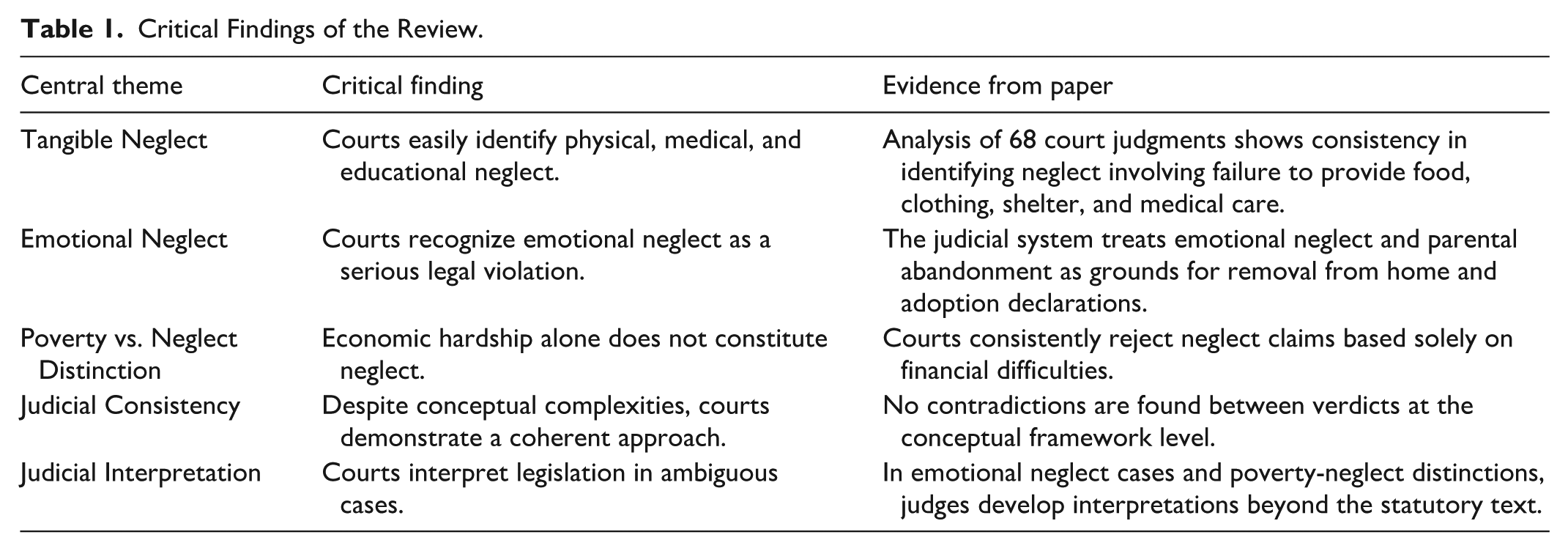
The analysis of the judgments reveals three main themes regarding how Israeli courts perceive neglect.
The first theme is tangible neglect, which is considered a common form of neglect, also in the literature, due to a failure to meet a child’s basic needs, often evident through visible or concrete signs. In our analysis of court judgments, this was the most common form of neglect, particularly physical neglect. Physical neglect is known to be the easiest type of neglect to identify (Brandon et al., 2014; DePanfilis, 2006). It is also the form most thoroughly addressed and detailed in Israeli law. Section 362(b) of the Penal Law, 5737–1977, explicitly criminalizes parental failure to provide essential needs such as food, clothing, and shelter. Similarly, the Youth Law (Care and Supervision), 5720–1960, defines a “minor in need” as including situations of inadequate care or supervision that endanger the child’s physical or mental well-being. It should further be noted that in the cases we examined, manifestations of physical neglect often involved multiple aspects simultaneously, including a combination of failure to provide food, clothing, shelter, and other essential needs for daily living, as was also found by others (Mennen et al., 2010).
The second theme addresses both emotional neglect and disengagement as serious forms of neglect. It encompasses the full spectrum, from aspects of emotional neglect that are usually not visible to the naked eye to the most extreme form of total parental abandonment through disengagement, to which the court appears to assign significant emotional weight. The theme demonstrates that although Israeli law addresses emotional neglect in a very limited manner, Israeli courts view emotional neglect (and especially extreme cases like abandonment) not only as a moral failing, but also as a legal violation that justifies significant intervention, including removal of a child and even a declaration of eligibility for adoption. In this respect, the judgment appears to acknowledge, at least to some degree, findings in the literature indicating that emotional neglect has wide-ranging implications for children (Cohen & Thakur, 2021; Cohen et al., 2017).
The third theme differentiates between poverty and neglect, emphasizing that economic status does not equal neglect. This theme highlights the legislative framework and social boundaries between economic hardship and neglectful behavior, as identified by Israeli courts. This distinction is also explicitly reflected in Israeli legislation. Section 362(b) of the Penal Law, 5737–1977, includes a provision that exempts parents who have taken reasonable measures to provide for their children’s needs but are unable to do so due to circumstances beyond their control. Similarly, Section 13(7) of the Adoption of Children Law, 5741-1981, permits declaring a child adoptable only when parental incapacity stems from behavioral or personal conditions unlikely to change despite reasonable economic and therapeutic support. These provisions demonstrate that the Israeli legislator recognizes the potential impact of economic capacity and poverty on childcare, while establishing that economic hardship alone does not constitute neglect when parents make reasonable efforts within their circumstances to meet their children’s needs.
Altogether, the study shows that the judgments of Israeli courts progress from easily identifiable forms of neglect to increasingly complex forms. This structured approach indicates that while neglect may be vague in theory, Israeli courts have developed a relatively coherent practice for dealing with its manifestations.
Despite the phenomenon of neglect being known as elusive, our analysis reveals a surprising finding: across the cases we examined, the courts’ perspective on child neglect appears to be relatively consistent. This is noteworthy, given that child neglect is typically regarded in the literature as an ambiguous and contested concept. Previous studies have shown that neglect is difficult to define, and that practitioners from different agencies often interpret it differently and even disagree on its dimensions (DePanfilis, 2006; Grégoire-Labrecque et al., 2020). It has been argued that because neglect is a continuous and context-dependent phenomenon, its identification often relies on the subjective judgment of professionals, leading to considerable variability (Elias et al., 2018). However, the Israeli judicial system appears to have developed a coherent approach to addressing this conceptual challenge.
To the best of our knowledge, no similar court-based studies focusing specifically on neglect have been conducted elsewhere. Thus, more in-depth analyses of how courts handle neglect in additional countries are warranted and would potentially enable meaningful comparative analysis, perhaps also taking into account local differences between communities that are critical in the context of child maltreatment (Ben-Arieh & Haj-Yahia, 2006).
Beyond the thematic findings, two broader issues emerge from our analysis: (1) the types of child neglect cases that come before the courts, and (2) how Israeli courts interpret existing legislation in addressing these cases. These two issues help illuminate both the threshold for judicial involvement and the normative boundaries courts draw when statutory guidance is either limited or ambiguous.
What Types of Cases Reach the Courts?
Our analysis of Israeli court rulings on child neglect reveals several key insights into how the judicial system addresses this complex issue. On the one hand, in our sample, the cases brought before the courts tend to reflect a broad range of neglect types commonly recognized in the literature—including physical neglect, educational neglect, medical neglect, and emotional neglect. The very fact that a case reaches the court generally indicates that it involves a certain degree of severity, with broad consensus—at least on the part of welfare authorities—that significant neglect may have occurred (Barth, 1996; Sedlak et al., 2006; Tjaden & Thoennes 1992).
Accordingly, in our dataset, the cases under judicial review typically involve relatively clear and serious instances of neglect. Many cases present a stark picture of ongoing, substantial neglect, leaving little doubt as to its existence. Therefore, the main judicial focus in these cases is usually not on determining whether neglect has occurred, but rather on determining the appropriate legal or protective responses, such as removing the child from the home, deciding on custody arrangements, or declaring the child eligible for adoption. In other words, while the existence of neglect is often assumed based on professional assessments, the court’s primary task is to determine the appropriate legal response.
An exception to this general pattern arises in cases involving the distinction between poverty and neglect. In such instances, courts have indeed addressed the question of whether a specific situation qualifies as neglect in light of the family’s economic circumstances. Still, even within the broader case law, one rarely encounters rulings in which the court explicitly finds that no neglect has taken place—except in those exceptional cases tied specifically to poverty.
In this context, it is important to emphasize the central role of welfare authorities, particularly social workers operating under the Youth Law (Care and Supervision), 5720-1960. Their professional assessments are often treated as a major foundation for judicial decisions. Even when disputes arise, whether between the parents themselves or between a parent and the welfare authorities, the courts tend to give considerable weight to the professional judgments of the social workers. Prior research on the relationship between child welfare agencies and the courts highlights the central role of social workers’ assessments in structuring judicial decision-making (Carnochan et al., 2006) and demonstrates that such assessments provide critical evidential resources for the court’s deliberations (Brophy et al., 2012). On the other hand, it is important to recognize that the cases reaching the courts are not necessarily the most extreme or egregious instances of neglect. In fact, some of these cases—despite their seriousness—might have been resolved through welfare services and therapeutic interventions, without the need for judicial proceedings. Often, it is the presence of a dispute, typically between the parents or between a parent and welfare authorities, that leads to court involvement. In some instances, one parent may insist on their parental rights, sometimes coupled with a denial of the neglectful circumstances described by professionals.
Such scenarios illustrate the complex position courts must navigate. On the one hand, these cases frequently involve long-term neglect, sometimes with persistent harm to the child’s rights and well-being; on the other hand, the courts are still obligated to respect parental rights, adhere to the principle of proportionality, and ensure that the state has exhausted all therapeutic and supportive avenues before resorting to drastic interventions such as removal from the home or termination of parental rights.
Thus, it seems case law analysis indicates that the primary function of courts in child neglect matters is to act as a decisive authority in the presence of entrenched disputes or when authorization is needed for actions with far-reaching implications. Courts are usually not asked to rule on whether neglect exists, but rather on the appropriate response, which is typically informed by welfare services. Nevertheless, the cases that reach the courts are not necessarily fundamentally different from those that do not, but rather include a component of disagreement that justifies or requires judicial intervention. This observation also points to the need for further studies examining how neglect cases are managed by social workers without court involvement, as was recently done by Palmer et al. (2024). In Israel, such work has been undertaken to some extent in the context of child protection teams at hospitals, showing they were able to differentiate between neglect and physical abuse or accident victims (Davidson-Arad et al., 2010).
Judicial Interpretation of Israeli Legislation in the Context of Child Neglect
An analysis of Israeli case law reveals that existing legislation provides sufficient guidance for courts in many cases of child neglect. Most notably, the primary legal framework derives from the Youth (Care and Supervision) Law, 1960, which grants social services broad authority in cases where a minor’s well-being is considered at risk. In more “tangible” instances of neglect—such as clear cases of physical, medical, or supervisory neglect, the courts rely directly and explicitly on statutory guidance. This pattern also holds for cases involving severance of contact between children and parents, which the law and judicial decisions interpret as circumstances that may endanger a child's safety. This reliance on statutory guidance is consistent with findings from comparative child-protection systems showing that courts’ decisions are shaped and constrained by the governing legal framework, which defines the principles, thresholds, and factors that must guide judicial intervention (Estin, 2010; Foster, 2024).
However, when it comes to more ambiguous cases, particularly those involving emotional neglect or the intersection of poverty and neglect, the existing legal framework in Israel presents interpretive challenges for the judiciary. Concerning the intersection of poverty and neglect, in some jurisdictions, there is a “poverty exemption” within the law. A recent study found that 15 states in the United States have such an exemption (DeGuerre et al., 2021). According to such exceptions, the legislation explicitly distinguishes between economic hardship and neglectful behavior; For example, the Wisconsin law states that “‘neglect’ means failure, refusal, or inability on the part of a caregiver, for reasons other than poverty, to provide necessary care, food, clothing, medical or dental care, or shelter so as to seriously endanger the physical health of the child” (Ann. Stat. § 48.02). In contrast, Israeli law does not clearly define the boundary between legitimate poverty and neglect that warrants state intervention. As a result, in such cases, courts are required to interpret the law and fill legal lacunae by articulating guiding principles—and, indeed, they appear to be doing so in several of the cases we examined. It should be noted that this differentiation is important in light of a recent analysis of 295 child protective services investigations of neglect in California, which found that unmet material needs almost never appeared as the sole concern, with most cases involving additional parental risk factors such as substance use, mental illness, domestic violence, or co-reported abuse (Palmer et al., 2024).
The judgments demonstrate the emergence of judicial boundaries for the interpretation of “neglect,” extending beyond the literal wording of the statute. A notable example of this trend can be found in rulings related to emotional neglect—a legally vague yet psychosocially significant domain. In decisions addressing deep emotional estrangement between parents and children, courts have used broad formulations such as: “When a biological parent is unable to provide a child with his material and emotional needs and especially the emotional needs . . . the child has a right for society to intervene and attempt to ensure that he is raised in a regular family setting that can provide the warmth and emotional care necessary for natural and normal development” (CA 17/88 Anonymous v. Attorney General–26). These formulations suggest that in abandonment cases, courts sometimes frame the harm in terms that highlight children’s emotional needs, even though the legal category applied may encompass multiple forms of neglect. This may reflect a judicial effort to articulate the emotional dimensions of neglect within a statutory framework that does not explicitly define emotional neglect. Similarly, studies have found that social workers often perceive psychological neglect as more harmful than physical neglect (Bernard, 2019; Stone, 1998).
The gap between limited legislation and practical field realities encourages the judiciary to rely, at times, on a kind of “common knowledge” or shared cultural assumptions about what constitutes neglect. Frequently used phrases such as “There can be no dispute that” or “We have always said that a parent who” indicate that courts often draw on an unwritten collective understanding—a form of normative common knowledge—regarding what constitutes neglectful parenting. This tendency reflects a discrepancy between the prevailing social consensus concerning child welfare and the absence of a clearly defined statutory framework to reflect that consensus.
It is interesting to note that in these judgments, the judges appeared attentive to the distinction between neglect and poverty, and in several cases explicitly noted that economic hardship alone does not constitute neglect. This stands in contrast to the findings of numerous academic studies that demonstrate overwhelming evidence of a strong correlation between poverty, low income, and child neglect (Jonson-Reid et al., 2019; Maguire-Jack & Font, 2017; Turner et al., 2019). These findings are explained by the prevailing discourse, which emphasizes individual pathology while disregarding the structural effects of poverty and its intersection with neglect, which contributes to the stigmatization of parents and ultimately undermines the rights of children and families (Gupta, 2017). However, surprisingly, this is not reflected in the findings of our study.
One possible explanation is that judges, positioned at a later stage of the process and operating from a more distanced and formal, detached, objective, and procedural perspective by the nature of their role may sometimes be more likely to explicitly articulate the distinction between structural hardship and parental neglect in their reasoning, even when these factors coexist In several cases in our sample, judges revised or questioned earlier assessments and highlighted poverty as an important contextual factor. By contrast, front-line child protection workers’ decisions are shaped by structural and socioeconomic bias (Enosh et al., 2021; Feely & Bosk, 2021) and may underestimate the extent to which poverty constrains parenting options and exacerbates parental stress (Palmer et al., 2024). This interpretation is consistent with Gupta’s (2017) characterization of poverty as the “elephant in the room.” The comparatively clearer perspective that was somewhat demonstrated by the judges, and the fact that judicial intervention was required to correct earlier assessments, raise broader concerns about the many cases that do not reach judicial review and therefore remain unexamined. This issue calls for a reflective re-examination of current practices and for enhanced training of social workers in the assessment of neglect, particularly in the context of poverty.
Nevertheless, this reliance on informal judicial discretion carries inherent risks. It can lead to inconsistencies and inequalities in the protection afforded to children in similar circumstances across different cases. Comparative work on child protection decision-making underscores that, in the absence of robust procedural safeguards and clear statutory criteria, informal and less adversarial processes may jeopardize transparency, consistency, and the protection of family rights (Walsh & Douglas, 2012). Thus, the reliance on discretionary, case-by-case development of the law, without clear procedural and substantive benchmarks in primary legislation, underlies our argument that there is a need for a clearer legislative framework on neglect in Israel. Academic critiques of this trend have called for the clearer codification of the concept of neglect in the law, including the establishment of both procedural and substantive boundaries, similar to legal developments in other countries (Gupta-Kagan, 2023).
Implications for Research and Policy
Beyond Israel, these findings may be instructive for other jurisdictions that likewise grapple with indeterminate statutory definitions of neglect and a strong reliance on welfare agencies and judicial discretion. They suggest that while courts can, over time, develop relatively coherent working frameworks for differentiating types of neglect and distinguishing neglect from poverty, this form of “judicial legislating” is most defensible where it is accompanied by explicit statutory safeguards. In addition, the analysis highlights the importance for other systems of examining how judicial understandings of neglect interact with front-line professional practices.
Limitations
Alongside the significant strengths and contributions of this review, its limitations must also be acknowledged. First, the analysis is based solely on judgments that reached substantive legal proceedings, which represent only a small fraction of neglect cases in Israel. Most responses to neglect cases are handled by CPOs and rarely reach the courts; only the more severe cases appear in legal judgments, which were assessed in this review. Therefore, further research is needed into how neglect cases are managed by CPOs and treatment and supervision committees, and how these processes interact with the courts. Nonetheless, precisely because such court cases are rare, they provide valuable insights into judicial perspectives on child neglect in Israel, which underlines the importance of this research.
Moreover, court judgments as a data source have inherent limitations. They reflect the judicial perspective and capture only legally relevant information, often omitting the full context of family situations and the voices of parents and children. Details considered peripheral to the legal determination may be excluded, limiting our understanding of the broader social and relational dimensions of neglect.
Additionally, our analysis does not systematically examine how ethnicity, religion, migration status, or other axes of diversity shape which neglect cases reach the courts or how judicial thresholds are applied. As a result, we cannot determine whether the relatively coherent judicial approach we describe operates uniformly across different social groups.
At the same time, these rare cases provide an important and otherwise inaccessible window into how Israeli courts conceptualize and evaluate child neglect. This underscores the need for future research on how neglect is addressed within administrative and social service processes and how these processes intersect with the courts. Lastly, the Israeli legal system differs from many legal systems worldwide, and therefore, broad generalizations from this framework to other jurisdictions may not be feasible. There is room for further in-depth studies on court handling of neglect phenomena in additional countries, and possibly even comparative analyses.
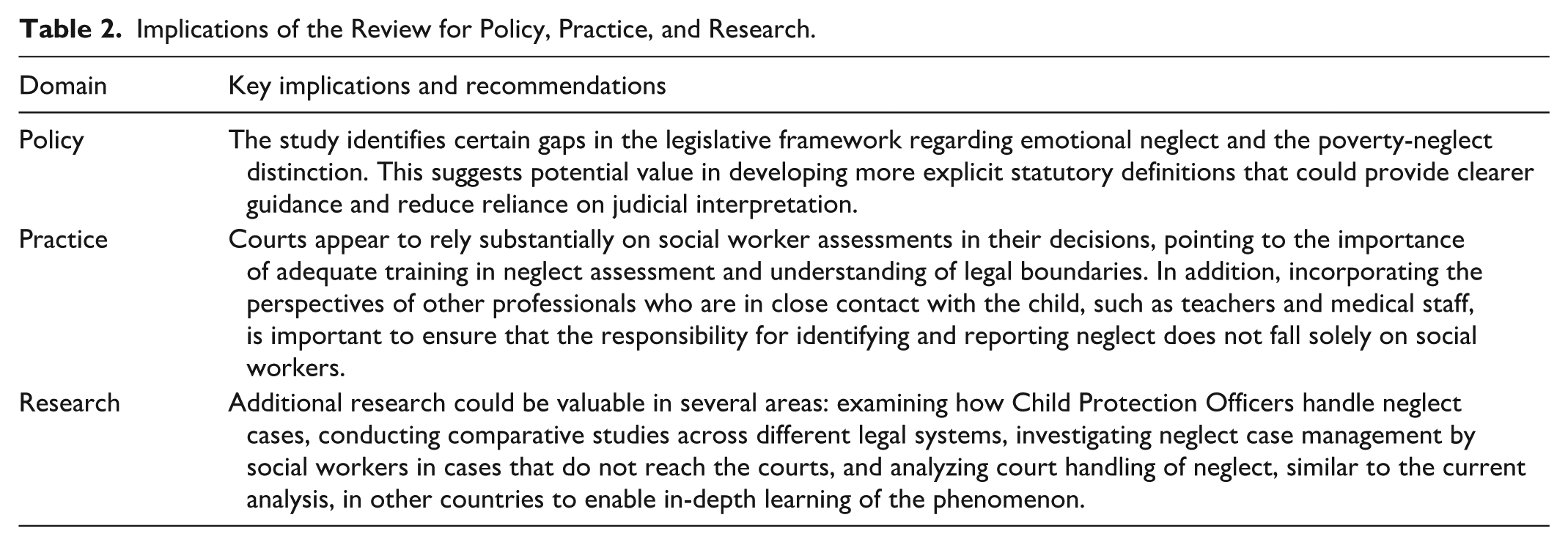
Tables 1 and 2 summarize the central findings of this review and their implications for policy, practice, and research.
Critical Findings of the Review.
Implications of the Review for Policy, Practice, and Research.
Conclusions
Israeli courts draw on both statutory provisions and normative judicial interpretation when addressing cases of child neglect. Where the law is clear—especially in more “tangible” forms of neglect—judges rely on direct legal guidance. But in more ambiguous cases, the courts demonstrate interpretive flexibility and a readiness to establish moral and legal boundaries through value-laden and discretionary discourse. Our analysis shows that this flexibility effectively compensates for gaps in the statutory framework, functioning as a substitute for more detailed legislative guidance. This trend highlights the central role of judicial interpretation in Israel and suggests that the very reliance on such judicial discretion exposes the limitations of the current legal framework, underscoring the need to further develop a clear, coherent, and explicit legal framework in the field of child neglect. Thus, the study calls for policy reforms that introduce more explicit statutory definitions of emotional neglect and clarify the distinction between poverty-related neglect and other forms of neglect. The research points to the connection between legislation and court patterns. While existing legislation provides useful guidance for many cases of child neglect, the findings reveal important gaps in more ambiguous domains, particularly emotional neglect and the distinction between neglect and poverty, then there is heavy reliance on judicial interpretation. In these contexts, particularly regarding emotional neglect and, to some extent, also in the context of distinguishing between poverty and neglect, it appears there is room for developing clearer legislation to prevent cases where interpretation creates differences in rulings. Lastly, the methodology applied in this study may serve as a model for similar analyses in other jurisdictions, helping identify legislative gaps, strengthen judicial decision-making, and ensure that families experiencing poverty are not systematically disadvantaged.
Supplemental Material
sj-pdf-1-tva-10.1177_15248380261439147 – Supplemental material for Child Neglect in the Legal System: A 50-Year Review of Israeli Court Rulings
Supplemental material, sj-pdf-1-tva-10.1177_15248380261439147 for Child Neglect in the Legal System: A 50-Year Review of Israeli Court Rulings by Michal Segal and Daphna Gross-Manos in Trauma, Violence, & Abuse
Footnotes
Acknowledgements
The study is affiliated with the Research Center for Innovation in Social Work at Tel Hai College.
Author’s Note
Daphna Gross-Manos is now affiliated with Center for Research on Child Poverty and Neglect.

Funding
The authors received no financial support for the research, authorship, and/or publication of this article.
Declaration of Conflicting Interests
The authors declared no potential conflicts of interest with respect to the research, authorship, and/or publication of this article.
Supplemental Material
Supplemental material for this article is available online.
Notes
Author Biographies
References
Supplementary Material
Please find the following supplemental material available below.
For Open Access articles published under a Creative Commons License, all supplemental material carries the same license as the article it is associated with.
For non-Open Access articles published, all supplemental material carries a non-exclusive license, and permission requests for re-use of supplemental material or any part of supplemental material shall be sent directly to the copyright owner as specified in the copyright notice associated with the article.
