



Abstract
Female incarceration rates are rising worldwide. Evidence has suggested important distinctions between women and men who commit crimes, with women presenting significant vulnerabilities related to adverse and traumatic experiences. This highlights the importance of developing prison interventions that adequately respond to these specificities, namely gender-responsive, trauma-informed, and needs assessment-based (such as the risk-needs-responsivity model). This review aims to describe recent psychosocial interventions delivered to imprisoned women, including their treatment modalities, targets, and theoretical models, ultimately analyzing the degree to which the recommended principles guide them. In accordance with Preferred Reporting Items for Systematic Reviews and Meta-Analyses (PRISMA) guidelines, our search yielded 66 articles across 5 databases. The results showed that most studies targeted a wide range of treatment targets aligned with gender specificities. However, this was not the case for program duration, format, and multimodality, which were rarely adapted to women’s gendered and trauma-related needs, mostly consisting of group-based interventions, many under 12 sessions, and addressing specific targets. Additionally, only 29 studies reported interventions that were gender-responsive, 18 trauma-informed, and 5 based on the risk-needs-responsivity model. These results show a gap between the reality of the interventions that are being delivered to female prisoners and the best practices recommended by scientific literature.
Keywords
Introduction
Despite women constituting only about 7% of the global prison population, their incarceration rates are rising at a rapid pace, with a global increase of 57% since 2000 (Fair & Walmsley, 2022). Thus, women now represent one of the fastest-growing demographic in prisons (Castro Rodrigues et al., 2022; Grills et al., 2015), which, in turn, has intensified the need to address the unique physical, emotional, and social challenges they face within correctional systems and prompted a surge in research aimed at understanding and addressing the distinct needs of incarcerated women, particularly around issues of mental health, trauma, and substance abuse (Mejia et al., 2024).
However, most of the research in this field has historically focused on men, generally failing to address these gender-specific needs (Ang et al., 2025). This one-size-fits-all model has led to implementing male-centric interventions frequently ineffective or even detrimental when applied to women, overlooking the distinctive pathways that lead women to incarceration (Bloom & Covington, 2008; Castro Rodrigues et al., 2022). Higher rates of reoffending can then be the result of poor interventions, which do not seem to allow for the development of coping skills that are necessary to deal with their context upon reentering their communities (Chen, 2023).
Furthermore, pre-incarceration trauma has been shown to be very prevalent among women who have committed crimes, particularly in terms of personal victimization, mental health problems, and substance abuse (Balis, 2021). Thus, there is an urgent need to rethink the penal responses for these women (Fazel et al., 2016), designing gender-responsive treatment programs tailored to the specific needs of incarcerated women prior to their return and reintegration in their communities (Anderson et al., 2020), besides sanctioning the criminal behavior.
Trauma-informed and gender-responsive practices are being increasingly recognized as essential for the rehabilitation of female inmates, as they address issues stemming from past victimization, aiming to avoid re-traumatization in correctional environments and prioritizing safety, trust, and empowerment (Praetorius et al., 2017; Shortt et al., 2014; Sousa et al., 2024). These approaches are crucial given that incarcerated women are at higher risk for mental health issues, suicidal behaviors, and substance abuse and have distinct needs related to reproductive and general physical health (Gharagozloo et al., 2025; Swopes et al., 2017). Gender-responsive practices further address the specific life experiences and social roles of women, including the impact of separation from children, family, and support networks, factors that mostly affect women, as they are typically the primary caregivers (Bartlett & Hollins, 2018; Kulkarni et al., 2010; Mejia et al., 2024; Shortt et al., 2014). These practices recognize that women in prison often have histories of victimization, mental health struggles, and substance use disorders, requiring targeted, holistic interventions rather than punitive approaches (Kulkarni et al., 2010; Mejia et al., 2024).
The pathways theory (Daly, 1992) underscores that women’s involvement in crime often arises from survival mechanisms developed in response to abuse, economic marginalization, and trauma (Pollock & Pollock, 1998; Steffensmeier & Allen, 1996). As such, trauma-informed and gender-responsive programs should integrate mental health treatment, substance abuse interventions, and skills development to address the underlying causes of criminal behavior and promote long-term well-being (Covington et al., 2008). Regarding trauma, some conceptual distinction is needed. Although trauma-informed care/practice, trauma-informed treatment, and trauma-focused treatment denote different levels of trauma responsiveness, these terms are often applied interchangeably across intervention studies. Trauma-informed care typically refers to organizational principles emphasizing safety, empowerment, and avoidance of re-traumatization (Substance Abuse and Mental Health Services Administration [SAMHSA], 2014), whereas trauma-informed treatment involves clinician-delivered interventions that integrate these principles without engaging in direct trauma processing (Fallot & Harris, 2009). Trauma-focused treatments, by contrast, explicitly target the processing of traumatic memories using structured therapeutic modalities (Ford & Courtois, 2020). In practice, however, primary studies rarely articulate these distinctions consistently or in a theoretically transparent manner.
By incorporating comprehensive needs assessments, these programs can tailor interventions to the individual experiences and risk factors of incarcerated women, enhancing their effectiveness (Bloom et al., 2003). Thus, there has been a growing interest in therapeutic approaches that can more effectively address these individuals’ multifaceted challenges (Covington, 2022): This aligns with the Bangkok Rules (United Nations Office on Drugs and Crime, 2011), which recognizes the need for trauma-informed correctional policies that integrate comprehensive mental health and addiction services. These standards advocate for healthcare and rehabilitative measures that align with the specific needs of incarcerated women, fostering recovery and reducing recidivism (Bartlett & Hollins, 2018; Steiner & Meade, 2016).
The introduction of the risk-need-responsivity (RNR) model in the 1990s sought to enhance rehabilitation outcomes by matching intervention intensity to individuals’ criminogenic risks and needs (Bonta & Andrews, 2023). The RNR model stipulates three main principles for an effective rehabilitation of people who offend, namely the risk principle – which advocates that the intervention intensity should match the individual’s risk; the need principle – which states that intervention should target the individuals’ criminogenic needs, that is, the dynamic component of the risk factors that predict recidivism (i.e., antisocial behavior, substance misuse) and, the responsivity principle – which asserts that the intervention should match the offenders’ learning skills (general responsivity) and it should address personal characteristics that could impact the extent to which the individual might benefit from the intervention (specific responsivity; Bonta & Andrews, 2023; Parisi et al., 2025). Gender has been identified as a key responsivity factor (Duwe & Clark, 2015). Despite this, women have a range of static and dynamic gender-specific needs associated with recidivism that are not directly addressed by the RNR framework (Messina & Esparza, 2022). Considering that the RNR remains the dominant framework for best practices in correctional services (Crocker & Leclair, 2025) and its widespread impact on correctional intervention policies, it is crucial to examine how programs following this model can enhance their responsiveness for women (Parisi et al., 2025). Several studies revealed that gender-neutral risk needs assessment and interventions were not well suited for women who committed crimes (see Van Voorhis, 2022). As research continues to expose the limitations of conventional correctional approaches, the RNR model aligned with trauma-sensitive and gender-responsive principles is pointed as offering a promising path forward in enhancing the well-being and rehabilitation of incarcerated women (Covington, 2022). Indeed, the literature has shown that gender-responsive and trauma-informed approaches are more effective in reducing female recidivism (Covington, 2022; Gobeil et al., 2016; Summers et al., 2024) and have a positive impact in secondary outcome measures (i.e., anxiety, depression, post-traumatic stress disorder (PTSD); Messina et al., 2010) when compared to gender-neutral approaches, which are often based on male experiences (Covington et al., 2008).
Accordingly, this systematic review intends to analyze the extent to which recent psychological interventions delivered to imprisoned women adhere to gender-responsive, trauma-informed principles and align with the RNR model.
Current Study
A few reviews and meta-analyses have been conducted on the topic of interventions with female prisoners (Agarwal & Draheim, 2024; Ang et al., 2025; Bartlett et al., 2015; Criss & John, 2025; Macdonald et al., 2025; Rosenfeld et al., 2024; Sousa et al., 2024; Van der Ploeg, 2024). However, they present some limitations and/or are fundamentally different from this one: some focused on specific designs (i.e., randomized control trails [RCT], quasi experimental), leaving out case or pilot studies (Ang et al., 2025; Criss & John, 2025) or on specific evidence-based programs (i.e., Seeking Safety; Agarwal & Draheim, 2024). Others included interventions focused on specific mental health challenges (i.e., PTSD; Rosenfeld et al., 2024; Van der Ploeg, 2024); drug use (Macdonald et al., 2025) or on crime (i.e., sex crimes against children; Sousa et al., 2024), or were focused on a broader female forensic population (i.e., women offenders in forensic health services, institutionalized or in the community; Bartlett et al., 2014). So, although evidence on intervention effectiveness has grown, limited attention has been given to how programs are framed and whether they report adherence to recommended models for working with imprisoned women. This gap informed the rationale for the current study. Thus, the current study aims to broadly and comprehensively review and describe the interventions designed and/or delivered to incarcerated adult women, assessing the extent to which these programs align with trauma-informed, gender-responsive, and RNR principles. By mapping the current landscape of prison-based interventions for women in these terms, this review will evaluate whether contemporary correctional practices reflect scientific advances and identify areas for future research and policy development.
Method
This systematic review followed the current Preferred Reporting Items for Systematic Reviews and Meta-Analyses (PRISMA) guidelines (Page et al., 2021). Moreover, it was registered on OSF REGISTRIES (registration DOI: 10.17605/OSF.IO/J57PF).
Eligibility Criteria
The inclusion criteria were established using the PICOS framework: Participants (P), Intervention (I), Comparison (C), Outcome (O), and Study Design (S). To be included in this systematic review, the following criteria had to be met: studies with adult incarcerated women (P), who underwent an individual or group intervention in prison or jail (I), with or without a comparison group (C), and with any psychological outcomes (O). All kinds of study designs were accepted (S). For this systematic review, we define as an intervention any activity conducted in the prison context that aims to address psychological, emotional, and/or behavioral issues or needs in incarcerated women. We restricted the review to psychological interventions and psychological outcomes to ensure conceptual coherence with the gender-responsive, trauma-informed, and RNR frameworks, which are theoretically grounded in psychological models and typically operationalized within psychologically based treatments.
The exclusion criteria were as follows: (a) studies not written in English or Portuguese; (b) published before 2014; (c) studies with both male and female participants in which the results are not disaggregated by gender; (d) literature reviews, systematic reviews, and meta-analyses; (e) gray literature; and (f) studies in which the intervention is not detailed. The exclusion criteria (b) was established to ensure that the review captured evidence produced in the last decade, reflecting current conceptualizations and implementation standards of gender-responsive, trauma-informed, and RNR-aligned interventions. These frameworks have evolved substantially in recent years, particularly in relation to trauma-informed practice (following SAMHSA’s 2014 guidelines) and the integration of gender-responsive principles in correctional settings. Including older studies would have introduced conceptual heterogeneity and limited comparability with contemporary intervention models.
Search Sources/Search Strategy/Data Sources
Studies were identified through the following databases: Scopus, PubMed, Web of Science, B-On, and PsycNet. The initial search was conducted in May 2024, and an additional search was performed in March 2025, by three independent researchers. The following equation was used to search for suitable articles by title, abstract, and keywords: (psychological AND intervention* OR therapy OR intervention AND program* OR psychotherapy OR rehabilitation) AND (wom?n OR female*) AND (inmate* OR prisoner* OR incarcerated OR crim*). Additional relevant references were added through the analysis of other reviews assessing in-prison interventions that were not detected through database searches (Agarwal & Draheim, 2024; Ang et al., 2025; Auty et al., 2017; Beaudry et al., 2021; Byrne & Ghráda, 2019; Canada et al., 2020; Criss & John, 2025; Galway et al., 2022; Hidayati et al., 2023; Macdonald et al., 2025; Malik et al., 2023; Roberts et al., 2017; Rosenfeld et al., 2024; Stijelja & Mishara, 2022; Villafaina-Domínguez et al., 2020; Winicov, 2019; Yoon et al., 2017).
Study Selection and Data Extraction Procedures
Following the search process, the extracted data were imported into Rayyan. Duplicate articles were deleted, and titles and abstracts were screened against the inclusion criteria previously defined, enabling the selection of papers for full-text reading and analysis. These steps were conducted by three independent raters and assisted by a fourth reviewer, who resolved discrepancies when disagreements persisted after discussion.
The papers that met the inclusion criteria were fully read and relevant data were extracted, according to the following topics: (a) reference details (i.e., authors and year), (b) country where the intervention took place, (c) study design, existence of control group and sampling technique, (d) sample characteristics (i.e., size, subsample), (e) type of intervention, (f) treatment modalities (i.e., format, duration, and facilitators), (g) treatment targets, and (h) intervention responsiveness (i.e., gender-responsive, and/or trauma-informed, and/or based on the RNR model). In this review, the classification of interventions as gender-responsive, trauma-informed, or aligned with the RNR model was based exclusively on explicit statements made by the authors of the primary studies. We intentionally avoided reinterpreting or re-evaluating whether interventions “truly” met these frameworks, as such an assessment would exceed the scope of a systematic review and introduce substantial subjectivity. These frameworks are well established and widely recognized in the literature; therefore, when authors adopt them, they typically report this directly. Conversely, the absence of such claims was treated as meaningful, and no assumptions were made. This procedure ensured methodological transparency and prevented the imposition of external judgments on peer-reviewed interventions whose theoretical fidelity had already been evaluated through the publication process. Coding decisions were therefore purely descriptive and based on what was explicitly reported in each article.
Methodological Quality Assessment
The methodological quality of the studies included in this systematic review was independently assessed by two of the authors using the Mixed Methods Appraisal Tool (MMAT; Hong et al., 2018). This tool aims to appraise the methodological quality of different categories of studies (e.g., qualitative, RCT, non-RCT, quantitative descriptive, and mixed methods), through an evaluation of two screening questions and five items classified as either yes, no, or can’t tell. Therefore, each study could range from a score of 0 to 5, and, in case of disagreements, those were resolved by a third author.
Results
The search strategy used in this systematic review identified a total of 1.226 articles. Fourteen extra papers were identified through the examination of previously published reviews, totalizing 1.240 recorded articles. Of these, a total of 188 were duplicates and were removed. As a result, a total of 1.052 titles and abstracts were assessed for eligibility. This initial screening yielded 174 papers for full-text reading. Thereafter, 108 papers were excluded due to distinct reasons: wrong target population (n = 13); other setting than a prison or jail (n = 3); not assessing psychological outcome (n = 5); lacking a description of the intervention (n = 14); systematic review or meta-analysis (n = 31); not reporting data by gender (n = 27); reporting on secondary data (n = 2); written in other languages than English or Portuguese (n = 3); published prior to 2014 (n = 2), and no access (n = 8). A total of 66 articles met our eligibility criteria and were included in the systematic review (see Figure 1).
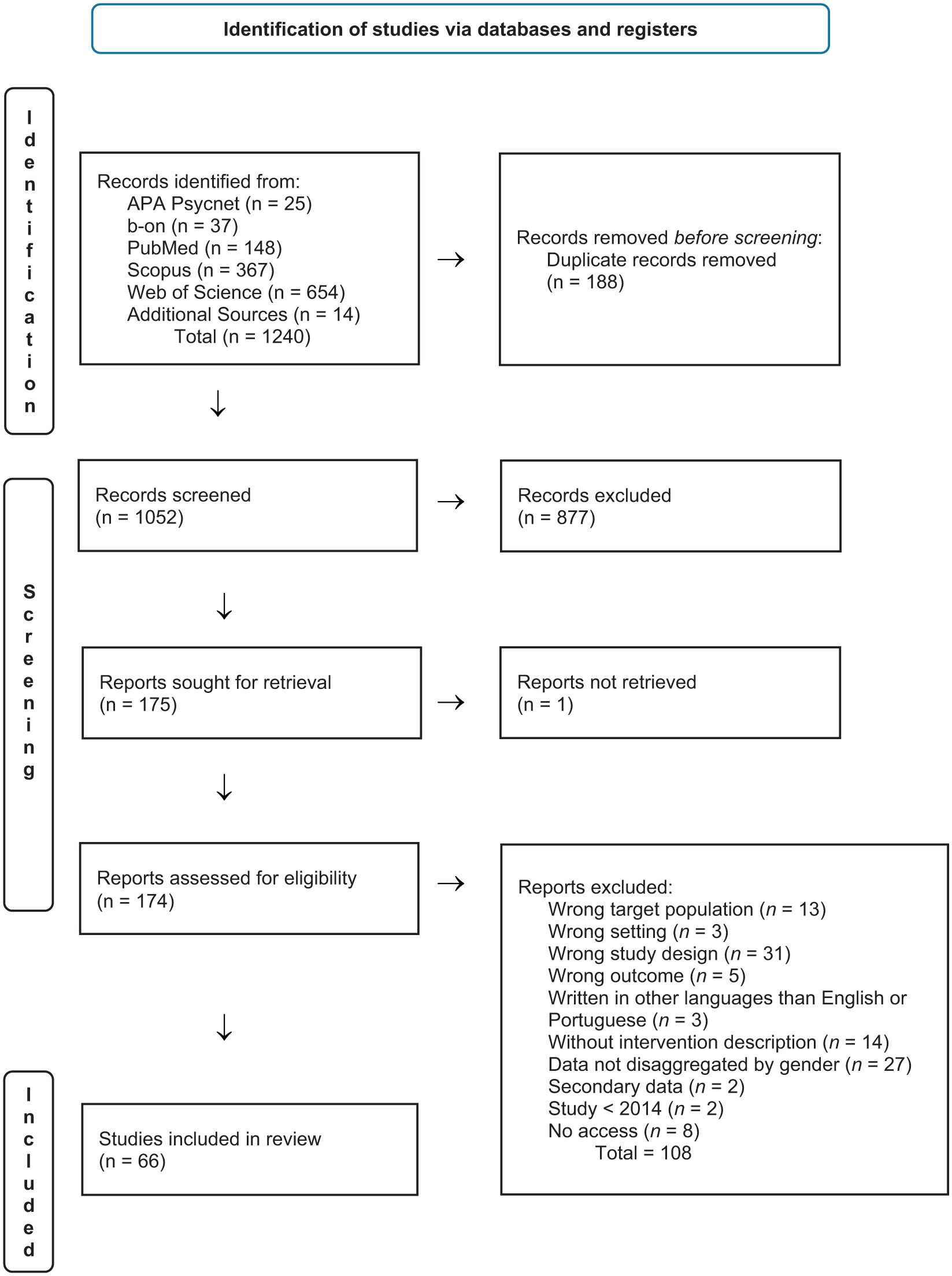
PRISMA 2020 flow diagram.
Quality Assessment
Out of 66 articles, 6 met all 5 of MMAT’s criteria; 13 met 4 criteria, 21 met 3, 19 met 2 criteria, and 7 met only 1 of MMAT’s criteria (see Table 1). The most prevalent limitations of the assessed studies are: lack of a representative sample of the target population, the outcome assessors not being blind to the provided intervention, failure to present complete outcome data, and failure to consider confounding factors in the data analysis.
Studies’ Intervention Characteristics.
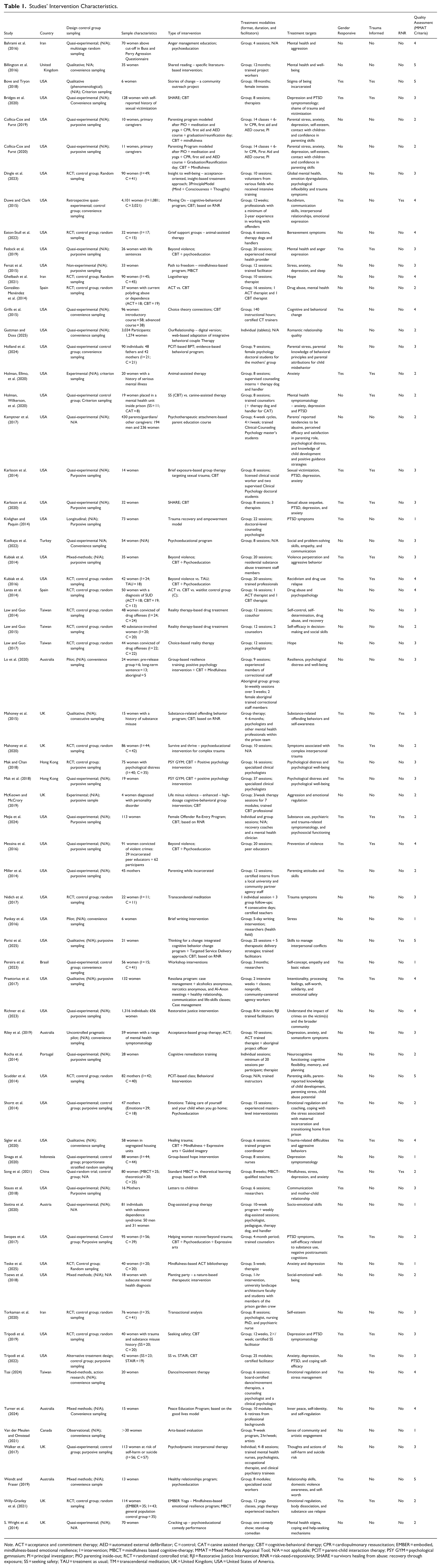
Note. ACT = acceptance and commitment therapy; AED = automated external defibrillator; C = control; CAT = canine assisted therapy; CBT = cognitive-behavioral therapy; CPR = cardiopulmonary ressuscitation; EMBER = embodied, mindfulness-based emotional resilience; I = intervention; MBCT = mindfulness based cognitive-therapy; MMAT = Mixed Methods Appraisal Tool; N/A = not applicable; PCIT = parent-child interaction therapy; PSY GYM = psychological gymnasium; PI = principal investigator; PIO parenting inside-out; RCT = randomized controlled trial; RJI = Restorative Justice Intervention; RNR = risk-need-responsivity; SHARE = survivors healing from abuse: recovery through exposure; SS = seeking safety; TAU = treatment as usual; TM = transcendental meditation; UK = United Kingdom; USA = United States of America.
Included Studies
Sample’s Characteristics
Most studies were conducted in the United States (n = 37; 56%). Other studies were conducted in the United Kingdom (n = 7; 10.6%), Australia (n = 4; 6.1%), Taiwan (n = 4); 6.1%, Iran (n = 3; 4.5%), Spain (n = 2; 3%), Hong Kong SAR (n = 2; 3%), Canada (n = 1; 1.5%), Austria (n = 1; 1.5%), Brazil (n = 1; 1.5%), Indonesia (n = 1; 1.5%), mainland China (n = 1; 1.5%), Turkey (n = 1; 1.5%), and Portugal (n = 1; 1.5%).
The sample sizes of the included studies ranged from 4 (McKeown & McCrory, 2019) to 4,101 participants (Duwe & Clark, 2015), with a total of 9,328 participants (M = 141.33; SD = 523.71). Four studies included both men and women (Holland et al., 2024; Kamptner et al., 2017; Richner et al., 2023; Stetina et al., 2020).
Some studies focused on specific subsamples, such as parents/caregivers; women at risk of self-harm or suicide; women placed in Segregated Housing Units as disciplinary sanctions; women with a self-reported history of sexual victimization; women convicted of violent crimes or with above cut-off scores in aggression measures; women with a substance abuse history or with mental health issues, such as PTSD or other symptomatology, reflecting treatment targets (see Table 1).
Study Design
Design
Quasi-experimental pre–posttest studies were the most common (n = 27; 41%). Other designs included RCTs (n = 17; 25.8%), qualitative methodologies (n = 6; 9.1%), and mixed-methods design (n = 5; 7.6%). A smaller number of experimental (n = 2; 3%) and pilot studies (n = 2; 3%), as well as retrospective quasi-experimental (n = 1; 1.5%), non-experimental (n = 1; 1.5%), longitudinal (n = 1; 1.5%), quasi-random trial (n = 1; 1.5%), observational (n = 1; 1.5%), uncontrolled pragmatic pilot (n = 1; 1.5%), and alternative treatment design (n = 1; 1.5%) were also represented (see Table 1).
Control Group
Of the totality of included studies, 26 (39.4%) employed study designs with clearly defined control groups. Of those, 17 (65.4%) were in the context of RCTs (e.g., Mahoney et al., 2020; Tripodi et al., 2019; Willy-Gravley et al., 2021) and were either comparing interventions to standard care (treatment as usual [TAU]; Kubiak et al., 2016), comparing Beyond Violence with TAU – or alternative therapies. The remaining 40 studies (61%) lack the inclusion of a control group (see Table 1).
Sampling
The samples were typically drawn using purposive (n = 23; 34.8%), convenience sampling (n = 16; 24.2%), or random sampling methods (n = 16; 24.2%). Criterion sampling (n = 3; 4.5%), multistage random sampling (n = 1; 1.5%), proportionate stratified random sampling (n = 1; 1.5%), and consecutive sampling (n = 1; 1.5%) were also utilized. Five studies provided no information on this matter (7.6%; see Table 1).
Treatment Modalities
Format
Most of the studies implemented group-based interventions (n = 61), while three implemented individual interventions (Guttman & Doss, 2025; Rocha et al., 2014; Walker et al., 2017). Two adopted a combined format (Mejia et al., 2024; Nidich et al., 2017).
Duration
The duration of the included studies varied from a single hour session (Toews et al., 2018) to 37 sessions (Mak et al., 2018). Twelve-sessions’ programs were the most prevalent duration type (n = 6), followed by 16 sessions (n = 5), 10 sessions (n = 4), and 20 sessions (n = 4) (see Table 1). Additionally, 18 interventions were module or time-based, varying from 7 (McKeown & McCrory, 2019) to 25 modules (Tripodi et al., 2022), and from 2-week intensive training (Praetorious et al., 2017) to year-long interventions (Billington et al., 2016; see Table 1).
Treatment Targets
The treatment targets will be presented in seven main categories: mental health, interpersonal skills, intrapersonal skills, parenting, trauma, substance use, violence prevention and recidivism. Forty-one studies addressed mental health, namely depression (n = 11), anxiety (n = 9), overall well-being (n = 7), emotional (des)regulation (n = 6), stress (n = 4), psychological distress (n = 3), and bereavement symptoms (n = 1). Interpersonal skills were addressed in 12 (i.e., communication, n = 4; empathy, n = 2; social and problem-solving skills, n = 4; romantic relationship quality, n = 1; and sense of community and artistic engagement, n = 1), while seven studies focused on intrapersonal skills, addressing resilience (n = 2), self-esteem (n = 1), self-efficacy in decision-making (n = 1), self-regulation (n = 1), hope (n = 1), executive functioning, such as cognitive flexibility, memory and planning (n = 1), cognitive and behavioral change (n = 1), and mindfulness (n = 1). Fourteen interventions focused on parenting, specifically on parenting attitudes and skills (n = 5), parental stress (n = 4), mother-child relationships (n = 3), and parents’ anxiety, depression, and self-esteem (n = 2). Trauma-related problematics were attended to in 16 studies, targeting PTSD (n = 8), general trauma symptoms (n = 5), sexual abuse sequelae or victimization (n = 2), and shame of trauma (n = 1). Substance use interventions include substance use treatment (n = 3), relapse prevention (n = 2), self-efficacy in recovery (n = 2), and substance-related offending (n = 1). Finally, 10 studies targeted violence prevention and recidivism, particularly aggression/anger (n = 3), prevention of violence (n = 2), recidivism (n = 2), understanding the impact of crimes on the victims and the community (n = 1), stigma of incarceration (n = 1), and domestic violence awareness (n = 1).
Type of Intervention/Intervention Models
Intervention theoretical models or approaches are grouped into six main categories: cognitive‑behavioral therapy (CBT), third wave therapies, other psychological theoretical frameworks, psychoeducational and didactic workshops, animal‑assisted therapies, and arts‑based and expressive interventions.
Twenty-four programs were based on CBT. Among interventions based on third wave therapies, four employed acceptance and commitment therapy, three mindfulness‑based cognitive therapy, two Mindfulness to the Parenting Inside‑Out program, and one Embodied, Mindfulness-Based Emotional Resilience yoga protocol for emotional resilience.
Other psychological theoretical frameworks included logotherapy (n = 1), integrative behavioral couple therapy (n = 1), parent–child interaction therapy (n = 2), trauma recovery and empowerment model (n = 1), reality therapy (n = 3), positive psychology (n = 3), transactional analysis (n = 1), dance/movement therapy (n = 1), and psychodynamic interpersonal therapy (n = 1). Finally, five studies employed animal‑assisted therapy.
Psychoeducational and didactic workshops included anger management education programs (n = 5), four of them through the program beyond violence, meditation or yoga components within broader parenting programs (n = 2), social and problem-solving skills programs (n = 1), psychoeducational complex‑trauma curriculum (n = 2; survive and thrive and helping women recover/beyond trauma), healthy relationships or domestic violence awareness programs (n = 2), nature‑based “Planting Party” workshop (n = 1), and comedy performance (n = 1; “Cracking Up”). Furthermore, one study focused on the Peace Education Program, another examined workshops focused on self-concept, empathy, and basic values, and three focused on parental classes, such as an attachment-based course.
Arts‑based and/or expressive interventions included transcendental meditation (n = 1), shared reading groups (n = 1), expressive arts embedded within trauma‑healing curricula (n = 1), arts‑based evaluation sessions (n = 1), nature-based therapy (n = 1), comedy performance (n = 1; “Cracking Up”) (n = 1), and writing letters to children (n = 1), among others.
Finally, one study focused on bridging the gap between prison and community through presentations in high schools; one used the three principle model; one focused on the Resolana Program, a holistic in-prison program aimed at the underlying issues of addiction; one focused on Restorative Justice; one was a cognitive remediation intervention; one focused on hope, and one addressed a nature-based intervention.
Interventions Responsiveness
From the total of the studies included, 29 (44%) detailed programs aimed to address the idiosyncratic life experiences and social roles of women, such as mothers, partners, or community members (see Table 1). Helping Women Recover/Beyond Trauma (Swopes et al, 2017), Female Offender Re-Entry Program (Mejia et al., 2024), or Substance-Related Offending Behavior Program (Mahoney et al., 2015) are examples of such programs.
Furthermore, 18 studies employed trauma-informed interventions, such as, Beyond Violence (Kubiak et al., 2014, 2016), aimed at preventing violence perpetration and reducing trauma-related symptoms; Seeking Safety (Tripodi et al., 2019) or SHARE: Survivors Healing from Abuse: Recovery Through Exposure (Karlsson et al., 2020).
Lastly, only five studies appear to comply with the RNR model (Duwe & Clark, 2015; Mahoney et al., 2015; Mejia et al., 2024; Parisi et al., 2025; Song et al., 2021). Additionally, one study (Turner et al., 2024) focuses on the good lives model and another (Praetorius et al., 2017) adopts case management as a fundamental practice to better align the goals of the intervention with the needs of each participant. The study by Mejia et al. (2024) seems to present a framework compatible with these three principles.
Discussion
In the last decades, literature has been advocating for gender specificities regarding the pathways to incarceration, as well as the circumstances and effects of prison (Grills et al., 2014; Kubiak et al., 2016; Mejia et al., 2024), that is, gender differences in terms of vulnerabilities prior to the crime, during imprisonment, and after release. These vulnerabilities are shown to be related to adverse and traumatic experiences (e.g., Grills et al., 2014). However, programs traditionally developed to intervene with offenders (often based on male-centric models) tend not to consider gender factors and histories of victimization, which are very present in the trajectory of individuals that committed crimes, especially in the case of women (Bove & Tryon, 2018; Collica-Cox & Furst, 2020; Kubiak et al., 2014). This calls for gender-specific and trauma-responsive interventions, designed based on proper needs assessments, that address these gender factors. This systematic review aimed to analyze the recent literature regarding interventions delivered to imprisoned women, determining whether these initiatives align with the best practices recommended by recent literature, namely being gender-responsive, trauma-informed, and based on the RNR model. The focus on these intervention principles, as well as the inclusion of different study designs distinguish this review from previous ones, allowing for a more precise and broad perspective on the reality of psychological interventions with incarcerated women (Agarwal & Draheim, 2024; Ang et al., 2025; Bartlett et al., 2014; Criss & John, 2025; Macdonald et al., 2025; Rosenfeld et al., 2024; Van der Ploeg, 2024).
Firstly, we highlight the number of included papers. Although we reached a considerable pool of papers for a systematic review, considering our broad research question – psychological interventions for incarcerated women -, this pool is quite small, especially since some studies refer to the same intervention program, such as Beyond Violence (Fedock et al., 2019; Kubiak et al., 2014, 2016; Messina et al., 2016). In fact, if we consider the total number of women who participated in the included interventions, these represent only 1.26% (n = 9.328) of the total estimated incarcerated women in the world, which is over 740.000 (Fair & Walmsley, 2022).
Regarding methodological quality, most studies (n = 40; 60.6%) reported acceptable quality and a low risk of bias. However, 26 (39.4%) did not exhibit acceptable quality with 7 (10.6%) meeting only one criterion and 19 (28.8%) meeting 2, thus posing a bias risk. Several of the observed limitations are quite comprehensive in prison research, especially when conducted with women. Namely, the lack of a representative sample and the use of a convenience sample are common aspects since, in many cases, such as the Portuguese context, the prison administration decides upon the selection of participants, imposing limits in sample size, and access to participants. On the other hand, it is also common that the outcome assessors are not blind to the provided intervention, whether due to limited human and time resources, or due to other concerns related to the relational and support aspects of these interventions and studies. Additionally, the failure to present complete outcome data, related to experimental mortality and dropout rates, is a very prevalent issue in prison research, as there are many factors that can disrupt the participants’ attendance to the intervention (Loper & Tuerk, 2011). However, this remains an important aspect, as literature suggests that dropping out is associated with higher rates of recidivism (Olver et al., 2011).
Moreover, we have observed variations regarding the presence or absence of control groups, which significantly influenced methodological rigor, as well as the strength of the findings and the ability to draw causal inferences about the interventions’ efficacy. Of the totality of included studies, only 26 (36.4%) employed study designs with clearly defined control groups, thus allowing for more robust comparisons and stronger conclusions about the intervention effects (e.g., Dingle et al., 2023; Duwe & Clark, 2015). However, it is important to highlight the challenge that this methodological step brings to research with small groups, which is many times the case for the studies with imprisoned women (Tripodi et al., 2011).
Furthermore, most included studies were conducted in the United States, highlighting the country’s strong research focus on interventions for incarcerated women (e.g., Bridges et al., 2020; Guttman & Doss, 2025; Kamptner et al., 2017). Contributions from non-English-speaking countries, although fewer in number, provided valuable perspectives on interventions in diverse cultural and socioeconomic contexts. We highlight, for example, the studies by Law and Guo (2014, 2015, 2017), which provide an overview of the Taiwanese context. Nevertheless, these results call for the need to expand the literature on psychological interventions with incarcerated women worldwide, which, in turn, reflect the need to increase the interventions being delivered to these women (Collica-Cox & Furst, 2020).
Regarding intervention format, group-based programs were the most common, offering cost-effective delivery and peer interaction (e.g., Eaton-Stull et al., 2022; Fedock et al., 2019; Mak & Chan, 2018). Nevertheless, we might discuss whether these group-based interventions properly address individual needs. Although group interventions may have several advantages (Karlsson, 2015), caution must be exercised to ensure that they do not neglect individual needs and allow for working with emotions often difficult to be expressed in group interactions, such as shame and guilt (Mahoney et al., 2015; Mejia et al., 2024; Walker et al., 2017). Although much more complex to implement, in terms of time and human resources, individual formats allow for more flexible interventions, which may better respond to individuals’ specific needs, as advocated by gender-responsive approaches (Davies, 2019). Additionally, individual formats may also allow for a more accurate progress assessment, further aligning with trauma-informed principles (Davies, 2019; Walker et al., 2017). Indeed, according to a systematic review on the effectiveness of trauma-focused approaches among incarcerated individuals, individualized treatments led to more significant reductions in PTSD symptoms when compared to group-based interventions (Malik et al., 2023). Also, in the study by Mejia et al. (2024), the researchers mention working with recovery coaches to provide assistance throughout the intervention and to be aware of potential barriers to recovery, valuing this individual approach.
The reviewed studies encompassed a wide range of treatment targets addressing the specific needs of incarcerated individuals, such as mental health, interpersonal skills, intrapersonal skills, parenting, trauma, substance use and, finally, violence prevention, and recidivism. Although this set of intervention targets aligns with the gender-specific needs reported in previous studies, some ideas must be discussed. First, these needs are often worked in a fragmented way; that is, most studies focus on a particular issue, or a small constellation of issues, which leaves others unattended. As several studies recognize that criminogenic and non-criminogenic needs often co-occur, programs are more effective when they have multiple intervention targets (Mejia et al., 2024; Praetorius et al., 2017; Van Voorhis, 2022). Obviously, it is not possible to address all these needs in one single program, but the multimodal approaches with recognized efficacy must be reflected in the number of sessions of the programs. In the included studies, although the majority report 12 or less sessions, 19 of the 66 delivered group interventions were below this number of sessions. Such a multimodal format is not feasible to accomplish in a small number of sessions (Mahoney et al., 2015; Mak et al., 2018; Parisi et al., 2025). Nevertheless, the relevance of this result, we must consider the hypothesis that many carceral settings might offer several treatments, providing women with multiple treatments that in combination might have multiple targets. However, besides the fact that this diversity is not offered in many contexts, this fragmentation, itself, compromises a general availability of this multimodal response.
A related issue concerns the distinction between trauma-related and general mental health outcomes, as treatment targets. Across the included studies, authors varied widely in how they framed symptoms such as anxiety or depression: sometimes as trauma-related processes, sometimes as broader psychological outcomes. Given this inconsistency, our categorization followed the terminology used by each study to preserve methodological transparency. This variability underscores the need for clearer reporting of how trauma-specific mechanisms are defined and targeted within interventions for imprisoned women.
An important finding of this systematic review was that only 29 (44%) of the 66 papers are gender-responsive. Considering all the literature advocating for the advantages of this approach, this result is quite disappointing. Although gender-responsive interventions show larger effect sizes in reducing recidivism than gender-neutral (Bridges et al., 2020; Collica-Cox & Furst, 2020; Gobeil et al., 2016; Messina et al., 2016), our findings show that this is not the predominant paradigm of the interventions currently delivered in female prisons.
Additionally, these gender responsive interventions call for the recognition of the pathways of trauma (e.g., Auty et al., 2022; Bove & Tryon, 2018; Gobeil et al., 2016; Shortt et al., 2014; Song et al., 2021; Tsai, 2024). Our results also show that only 18 (27.3%) of the 66 interventions were trauma-informed, despite the effectiveness of this approach in responding to female prisoners’ specific needs, such as the subjective experiences of anxiety, depression, and PTSD (Holman, Ellmo, et al., 2020a; Mejia et al., 2024; Swopes et al., 2017; Tripodi et al., 2022; Willy-Gravley et al., 2021). From these 18, 16 (88.9%) are also gender-responsive, whereas the other 2 solely comply with trauma-informed principles. Thus, from the 29 gender-responsive interventions, only 16 (55.2%) explicitly state trauma-informed concerns (e.g., Sigler et al., 2020; Swopes et al., 2017; Tripodi et al., 2019; Willy-Gravley et al., 2021).
Finally, despite the RNR model’s longstanding influence in correctional rehabilitation, explicit RNR grounding – particularly in a gender-responsive form – was rare in the studies included. Only five (7.6%) interventions were clearly based on RNR principles, and four (6%) of these incorporated gender-responsive elements (Duwe & Clark, 2015; Mahoney et al., 2015; Mejia et al., 2024; Parisi et al., 2025; Song et al., 2021). This scarcity reflects a broader pattern: although RNR has often been treated as the dominant “what works” framework (Bonta & Andrews, 2023), its translation to women has been limited and uneven (Messina & Esparza, 2022; Van Voorhis, 2022). A key reason is that RNR was originally developed and validated primarily in male samples, prompting concerns that gender-neutral applications may overlook the relational, contextual, and trauma-related factors that shape women’s pathways into, and experiences within, the criminal justice system (Van Voorhis, 2022). As a result, many interventions for women target specific needs – such as trauma recovery, emotional regulation, or relational functioning – but do so without explicitly locating these components within a structured RNR framework, or specifying how women’s life circumstances and trauma sequelae should be incorporated into responsivity and delivery (Van Voorhis, 2022). This matters because, without clear articulation of risk, criminogenic needs, and responsivity factors – including gendered and trauma-liked considerations – programs may struggle to demonstrate consistent recidivism reductions or to target the drivers of offending in a systematic, testable way (E. M. Wright et al., 2012). At the same time, a more complex view of RNR is warranted. Recent synthesis work has challenged the strength and independency of the evidence base underpinning RNR claims, highlighting inconsistencies across meta-analyses and raising concerns about study quality, transparency, and potential authorship bias (Fazel et al., 2024). Importantly, however, these conclusions have been contested. Commentaries argue that parts of the umbrella review operationalized RNR principles too narrowly – risk was not consistently assessed as risk-treatment matching, and the need principle was partly inferred from predictive performance of risk tools rather than from whether programs successfully target criminogenic needs – thereby underestimating RNR’s theoretical coherence and practical value (McGuire et al., 2025). Taken together, this debate suggests that the central question is not whether RNR should be abandoned, but how it can be specified and evaluated more rigorously – particularly for women – using transparent, independent designs and outcomes that reflect both rehabilitation targets and women’s gendered contexts (Fazel et al., 2024; McGuire et al., 2025). In line with this, our systematic review highlights a clear gap between recommended best practices and the reality of current interventions. Future programs would benefit from implementing RNR principles more explicitly while integrating gender-responsive and trauma-informed evidence within responsivity – so that women’s trauma histories, relational needs, caregiving responsibilities, and structural vulnerabilities are treated as core design parameters rather than peripheral adaptations (Phillips et al., 2022; Van Voorhis, 2022). The invisibility of several female characteristics related to their specific needs and functioning (such as trauma-based reactions of acting out, discrete mental health needs that are only noticed when exacerbated into critical events, etc.) may give the illusion that gender-responsive interventions are unnecessary and, in turn, discourage the further development of effective service delivery models for women (Van Voorhis, 2022). In correctional systems, commonly characterized by chaotic functioning, what is not assessed is often not seen or taken into consideration (Van Voorhis, 2022). If we are not intentionally looking for something, it may seem not to be lacking. However, the experience of prior adversity may impair individuals’ capacity to benefit from structured rehabilitation efforts, reducing their effectiveness in preventing recidivism, which is, as stated, particularly common among women who committed crimes. This underscores the growing emphasis on gender-responsive and trauma-informed interventions designed to address these underlying vulnerabilities more directly.
Prison should serve not merely as a space of confinement, but as a potential platform for change (Bove & Tryon, 2018), by an opportunity to intervene addressing women’s unique needs (Collica-Cox & Furst, 2020; Grills et al., 2014), in terms of changing lifelong patterns of violence, addiction, and unsatisfying relationships and building productive lives with greater emotional literacy and increased prosocial behavior. This systematic review shows that this opportunity has not yet been seized, not in terms of systematic, worldwide widespread intervention, nor in terms of the degree of intentionality and specialization that interventions of this nature should address to provide the most effective results.
A final idea to discuss relates to the conceptual ambiguity within the trauma literature, which presents a challenge for interpreting the findings of this review, namely the distinction, presented in the introduction, regarding the concepts of trauma-informed care/practice, trauma-informed treatment, and trauma-focused treatment. As we stated, primary studies rarely articulate these distinctions consistently or in a theoretically transparent manner. As such, within this review, differentiating these categories was not methodologically feasible. The level of intervention detail varied substantially across studies, and many provided insufficient information to support reliable classification beyond the authors’ chosen terminology. Because this review synthesized evidence across broader frameworks – gender-responsive, trauma-informed, and RNR-aligned approaches – introducing additional sub-categorizations would have required subjective reinterpretation and risked compromising analytic consistency. Accordingly, we adopted a conservative strategy by coding trauma-related frameworks strictly as reported.
A parallel issue arises regarding gender terminology. Terms such as gender-sensitive, gender-informed, and gender-responsive are frequently used with limited definitional precision, despite indicating different degrees of integration of gendered pathways and needs. While gender-sensitive approaches acknowledge that gender shapes experiences of risk, need, and engagement, gender-responsive interventions explicitly tailor program content and delivery to women’s lived experiences and relational contexts (Bloom et al., 2003; Covington, 2008). Yet, as with trauma terminology, inconsistent reporting prevented systematic differentiation in the present review. For coherence and methodological transparency, gender-related classifications were therefore extracted exactly as reported by the primary authors.
Taken together, these challenges point to a broader field-wide issue: the absence of clear conceptual boundaries and consistent reporting practices in studies of interventions for justice-involved women. This limits cross-study comparability, constrains the precision of evidence syntheses, and hampers the cumulative development of theory-driven intervention models. Strengthening the conceptual and reporting coherence of trauma- and gender-related frameworks represents an essential next step for advancing scholarship in this area.
Limitations
Despite the contributions of this work, some limitations need to be addressed. First, the inclusion criteria may have led to the omission of several interventions. However, given our focus on empirically validated interventions clearly described in the articles, those criteria were methodologically relevant and necessary for this review. A related limitation of this review is that the classification of interventions as gender-responsive, trauma-informed, or RNR-aligned relied solely on explicit statements in the primary studies. Because we did not independently audit the theoretical fidelity or accuracy of intervention frameworks, it is possible that some interventions may incorporate components consistent with these models without explicitly naming them. Our decision was intentional, as inferring such classifications would introduce subjectivity, exceed the scope of a systematic review, and risk misrepresenting the original authors’ intended descriptions. Thus, our findings reflect what the literature currently reports, rather than an external evaluation of the adequacy or completeness of these frameworks within each intervention. In line with this, we would like to encourage the authors to clearly state if their interventions are aligned with TI, GR, and RNR principles, or any other framework, to allow for more accurate research reports. In addition, the restriction to papers written in Portuguese and English might also have left out interventions described in other languages. Another limitation relates to the interventions’ heterogeneity, in terms of intervention targets, implementation modalities and formats, and theoretical frameworks. Although this diversity was itself a goal of this review, at the same time, it adds additional complexity to the task of describing the results and selecting the core information to highlight. Another limitation is the lack of assessment of the interventions’ effectiveness in the included articles. This goal is crucial but could not be adequately addressed in this paper without losing the degree of detail necessary to respond to the core question of this review. As such, assessing the effectiveness of these interventions should be addressed in future research.
Conclusion
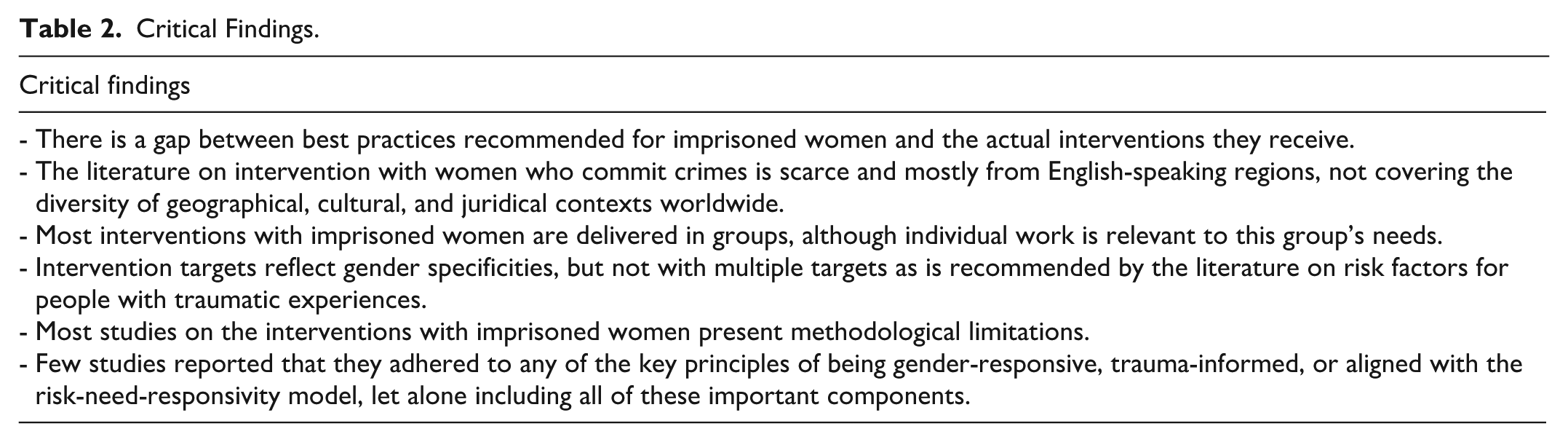
Despite our disconcerting findings, aligned with the most recent literature, we advocate that developing and implementing RNR, gender-responsive, and trauma-focused interventions, correctional systems can not only improve the well-being of incarcerated women but also support their successful reintegration into the community, contributing to better long-term outcomes (Bove & Tryon, 2018; Mejia et al., 2024). We realize that the adoption of these frameworks brings additional challenges in prison settings (e.g., Kubiak et al., 2014), since they tend to be, in their current formats and practices, dangerous and disempowering (Holman, Wilkerson, et al., 2020) and not characterized by the safety and security necessary to create trauma-informed environments (Auty et al., 2022). However, studies revealed that it is possible to deliver interventions focusing on gender and trauma (e.g., Kubiak et al., 2014; Mejia et al., 2024). In fact, beyond these challenges, trauma-informed practices may be, in some way, an extension and implementation of good practices in the prison context (Auty et al., 2022; see Table 2 regarding the critical findings).
Critical Findings.
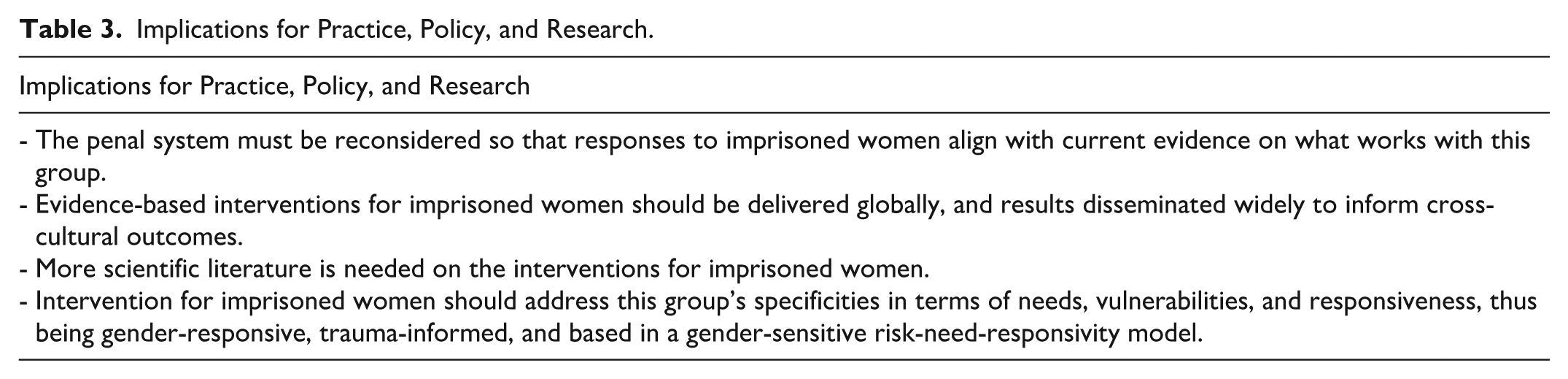
Such an approach regarding prison intervention, particularly with women, also implies and feeds a change in the paradigm of who the people who commit crimes are and what it is that they need. This shift implies changing the questioning from what is wrong with people who committed crimes to what happened to them (Auty et al., 2022), changing the mindset of criminal justice from how they shall pay for their crimes to what we must do for and with them (see Table 3 with the implications for practice, policy, and research).
Implications for Practice, Policy, and Research.
Footnotes

Funding
The authors disclosed receipt of the following financial support for the research, authorship, and/or publication of this article: This work is funded with national funds from FCT – Fundação para a Ciência e Tecnologia, I.P., in the context of the R&D Unit: UID/04810/2025 – William James Center for Research.
Declaration of Conflicting Interests
The authors declared no potential conflicts of interest with respect to the research, authorship, and/or publication of this article.