



Abstract
This systematic review sought to synthesize stakeholder perspectives relating to benefits, risks, and recommendations for using restorative justice (RJ) practices in cases of intimate partner violence (IPV). The review identified 16 articles containing the perspectives of IPV victims and relevant stakeholders, including RJ facilitators, judges, victim advocates, and IPV experts on the perceived benefits, risks, and recommendations for use of RJ practices for IPV. The results highlight a range of potential benefits afforded to IPV victims through their participation in RJ processes; however, inherent risks are identified, which may limit the utility of RJ in IPV cases and undermine potential benefits. Benefits included increasing victim voice and empowerment, addressing needs and providing greater support for victims, and supporting relationships between victims and perpetrators. Risks included the risk of power imbalances between victims and perpetrators, retraumatization of victims, and RJ delivered by unskilled facilitators who fail to provide adequate care and information to victims. Recommendations captured in the review may help mitigate risks and increase positive outcomes for victims.
Introduction
Family violence (FV), or domestic violence (DV) as it is also commonly known as, refers to acts of violence committed between family members, including parents and children, siblings, intimate partners, and extended family members (Australian Institute of Health and Welfare [AIHW], 2023). Intimate partner violence (IPV) is a subtype of FV, and specifically refers to violence between individuals currently or formerly involved in an intimate relationship, such as spouses or dating partners, and can include physical aggression, sexual coercion, psychological abuse, or controlling behaviors (AIHW, 2023; World Health Organization [WHO], 2021). The WHO (2021) estimates that approximately one in three women over the age of 15 has experienced some form of sexual or physical violence perpetrated by an intimate partner. Questions have been raised about whether restorative justice (RJ) practices should be used in cases of IPV and other forms of gendered violence, including FV, adult sexual violence, and child sexual abuse (Daly, 2006; Daly & Stubbs, 2006; Proietti-Scifoni & Daly, 2011).
RJ is an umbrella term used to describe diverging and heterogeneous practices, which share a common underlying ethos: to repair the harm caused by crime, rather than punishing the offender (Umbreit et al., 2007). Over recent decades, RJ has become an increasingly popular means of addressing criminal behavior, and is now utilized in legal and criminal justice (CJ) systems across the world (Hansen & Umbreit, 2018; Wemmers, 2020). Some of the most common forms of RJ dialogues used in CJ processes today are Victim-Offender Mediations, also commonly referred to as victim-offender conferences, or victim-offender dialogues; RJ Conferencing, also commonly referred to as group conferencing, or family group conferencing; and Sentencing Circles, also referred to as peacemaking circles, which have traditionally been used in cases involving Indigenous persons (Hansen & Umbreit, 2018; Strang et al., 2013). The rise in popularity and application of RJ practices in CJ settings can be attributed in part to these practices offering an attractive alternative to traditional legal interventions, which have been criticized for their inadequacy in addressing and reducing criminal behaviors, and in addressing the needs of crime victims (Joudo-Larsen, 2014). Research has indicated that benefits for crime victims engaging in RJ include high levels of satisfaction with the process and outcomes compared to conventional CJ processes (Hansen & Umbreit, 2018; Strang, 2002); reduction in negative emotions such as fear, anger and self-blame (Strang, 2002; Strang et al., 2006; Wemmers & Cyr, 2005); and reductions in posttraumatic stress disorder (PTSD) symptomatology (Lloyd & Borrill, 2020).
Although RJ practices have been implemented in a wide range of interpersonal crimes, they have generally been considered inappropriate for crimes of a gendered nature, including IPV, especially in the UK, USA, and Australia (Nettleton & Strang, 2018). Researchers have noted that commonly reported benefits of RJ practices may not generalize to IPV crime victims (Stubbs, 2007), and concerns have been raised about inherent power and control dynamics in cases of IPV; risks of re-victimization; and failure to achieve desirable justice outcomes for victims (Curtis-Fawley & Daly, 2005; Decker et al., 2022; Proietti-Scifoni & Daly, 2011). Other concerns include that using RJ as a means of addressing IPV may risk minimizing and “re-privatizing” the issue; potentially sending a message to the community that the legal system does not consider IPV a serious CJ issue (Daly, 2002). Despite concerns, research indicates that a sizable portion of IPV victims and perpetrators would choose to participate in RJ practices if given the chance (Nettleton & Strang, 2018). Furthermore, the number of legal jurisdictions implementing RJ in IPV cases continues to grow.
Despite a growing number of studies and pilot programs exploring the use of RJ processes in cases of IPV (e.g., Gaarder, 2015), researchers have pointed to a concerning lack of evidence regarding the suitability and strengths of RJ practices in cases of gendered violence, especially FV and sexual violence (Gang et al., 2021). In the face of limited research and fieldwork, researchers, along with proponents and opponents of RJ, have advocated for more research to take place (Gavrielides, 2015). Furthermore, although there has been lively debate about the suitability of RJ in cases of IPV amongst scholars and professionals, there has been comparatively little focus on the perspectives of victims and perpetrators (Decker et al., 2022). Although the research may be scant, the extant literature shows some studies that have explored IPV victim and perpetrator perspectives of RJ (e.g., Hayden, 2014; Herman, 2005; Nettleton & Strang, 2018), and more studies are likely underway given calls for further research (e.g., Gavrielides, 2015). To date, no systematic reviews focusing on the qualitative literature and the perceived benefits and harms for victims in this emerging area of research have taken place. One review has captured the usefulness of RJ for IPV (Barocas et al., 2020), however this review focused on qualitative and quantitative research. A review of qualitative research alone is useful to capture the lived experiences, concerns, and priorities of those affected by RJ in cases of IPV, especially the voices of victims, which have at times been neglected in the literature on the suitability of RJ in cases of IPV.
To help capture the current field of research, and to inform future research and discussion, the current review seeks to summarize the perspectives of IPV victims, victim advocates, and other relevant stakeholders, regarding the perceived benefits, risks, and best-practice recommendations for using RJ in cases of IPV. The research questions guiding this review included: (a) What elements of RJ processes are believed to make them beneficial to IPV victims? (b) What are the perceived harms for IPV victims through participation in RJ processes? (c) What features of RJ processes are believed to be important to ensure they are suitable for IPV victims?
Given current debate concerning the appropriateness of RJ in cases of IPV, there is a clear need to consolidate current perceptions on the suitability and concerns about the use of RJ for victims of IPV, insights that cannot be captured through quantitative literature. Despite interest in RJ for IPV, the evidence base remains fragmented, with few studies examining the perspectives of victims and key stakeholders, and no systematic reviews available to guide practice or policy. By synthesizing the emerging qualitative research on the perceived benefits, risks, and conditions necessary for safe and effective RJ processes for IPV, this review addresses a significant gap in the literature and provides a foundation for more informed discussion, research, and implementation.
Method
A systematic review of research literature was undertaken to locate and assess qualitative data on the use of RJ practices in cases of IPV. A systematic review methodology was selected because it is a highly rigorous and comprehensive approach for identifying available evidence in contested and emerging fields of research (Munn et al., 2018). The 2020 Preferred Reporting Items for Systematic reviews and Meta-Analyses (PRISMA) statement (Page et al., 2021) was consulted to inform the systematic review; this was done to ensure the review was robust, and the purpose, methods, and results were reported clearly and effectively. Specifically, the authors consulted the PRISMA guidelines at the start and during the review process to ensure that processes aligned with this approach, including having clearly stated research questions, and inclusion and exclusion criteria, a clear and robust review process involving multiple researchers, and creation of tables, figures, and descriptive text to describe, integrate, and interpret data.
Terminology
For the purpose of this review, RJ practices included those that claimed to be RJ, were said to employ RJ principles, or otherwise involved meetings or discussions between a perpetrator of IPV and the victim, and which were designed to address the wrongdoing or harms caused. In keeping with the broader literature on IPV and FV, the terms IPV, FV, and DV were used interchangeably between articles to describe the same or similar phenomena, and sometimes this reflects differences in regional dialects and preferences. For the purposes of this review, studies met the definition of IPV if they described any form of violence (e.g., physical, psychological, verbal, emotional) occurring between individuals involved in a current or former intimate relationship. For consistency, the term “perpetrator” was used in this review to refer to persons responsible for committing IPV, and “victim” for persons the violence was committed against.
Eligibility Criteria
Articles were included if they reported perspectives on any risks, benefits, or recommendations for using RJ practices for IPV victims. The population of interest for the review was primary victims of IPV, and the service providers/stakeholders who support them, rather than secondary victims (e.g., witnesses), or other affected parties (e.g., children, family, friends, or broader communities); this was done to focus the results on those most directly impacted by RJ processes. Studies that sought to gather how programs met or implemented RJ principles, without exploring why this was important for victims, were not included in the review (e.g., Pennell et al, 2021).
Studies were limited to English-language papers published in academic peer-reviewed journals and dissertations. Non-peer-reviewed sources (e.g., book chapters, conference papers, gray literature), and studies not reporting primary data (e.g., protocol papers, reviews of the literature), were excluded. No limitations were placed on country of origin or year of publication. This was done because we anticipated there would be limited studies in this emerging area of research. Studies were limited to those employing qualitative or mixed methods designs, with only the qualitative data from mixed method studies being included in the review. This was done to address the research questions of this paper, which focus on the perceptions and experiences of IPV victims, victim advocates, and other relevant stakeholders.
Search Strategy
To locate relevant articles, search terms were entered into five separate databases: PsycINFO, Scopus, Web of Science, Medline, and Criminal Justice Abstracts with Full Text. Key terms were identified through searches of the literature on IPV and RJ, and pilot searches were conducted across the databases to refine the search terms further, including to identify common synonyms for each key concept. The final search terms were combined with Boolean operators (AND, OR) and proximity operators, and entered into each database, adhering to the required search conventions of each database. The only search limit applied in each database was for English language. Table 1 shows the final search terms and structure used for each concept.
Search Terms and Structure Used Within Databases.
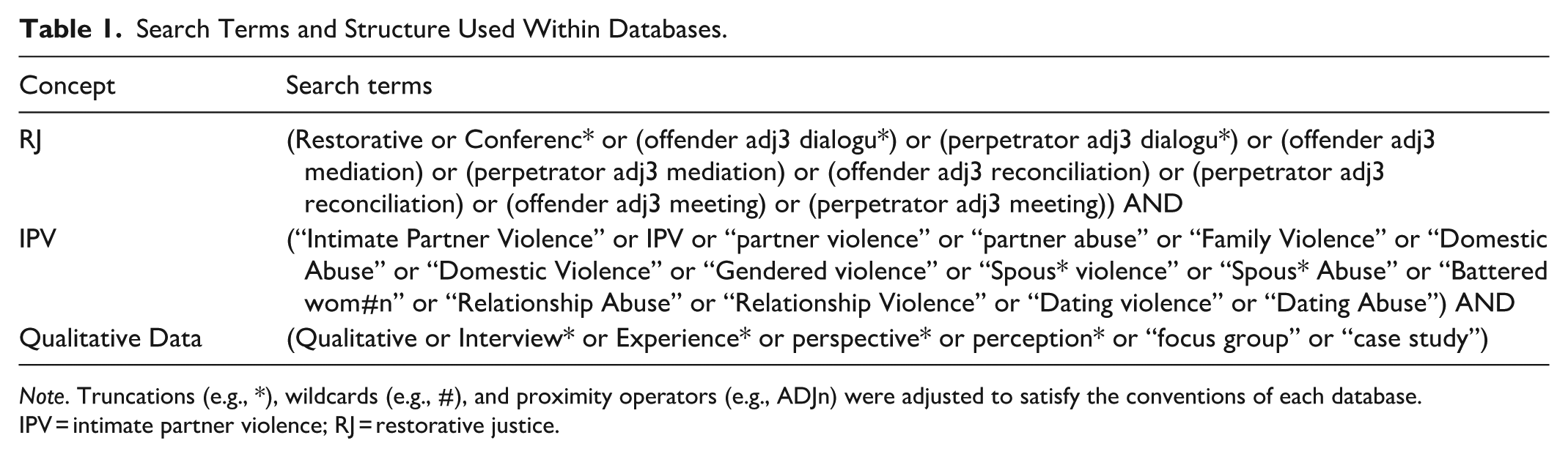
Note. Truncations (e.g., *), wildcards (e.g., #), and proximity operators (e.g., ADJn) were adjusted to satisfy the conventions of each database. IPV = intimate partner violence; RJ = restorative justice.
Procedure
Covidence systematic review software (Veritas Health Innovation, 2023) was used to import and manage articles during the systematic review process; Figure 1 outlines the number of articles retained at each stage of the process. A total of 1,380 articles were recovered. After duplicate articles were removed (n = 259), the title and abstract of each of the remaining article (n = 1,121) were screened independently by two reviewers. One of the reviewers is the first author, while the other reviewer was a research assistant supporting the project. The reviewers initially disagreed on 73 articles, and a meeting between the two was able to resolve the conflicts. One hundred articles were retained at this stage of screening, but this was further reduced after additional duplicates (n = 7) were manually removed. An additional three articles were included for full-text screening after being identified during scoping searches and backward reference searching. The full text of the remaining 96 articles was then screened by the authors, with 80 articles subsequently excluded after applying the inclusion and exclusion criteria. In total, 16 articles met full inclusion criteria and were included in the review (see Figure 1). Data relevant to the review questions were then extracted from each of the studies, including author, publication year, and country of the study; participant information; type of RJ intervention assessed or used in the study; research methodology; and findings. The extracted data for each study is displayed in Table S1 in Supplemental Material.
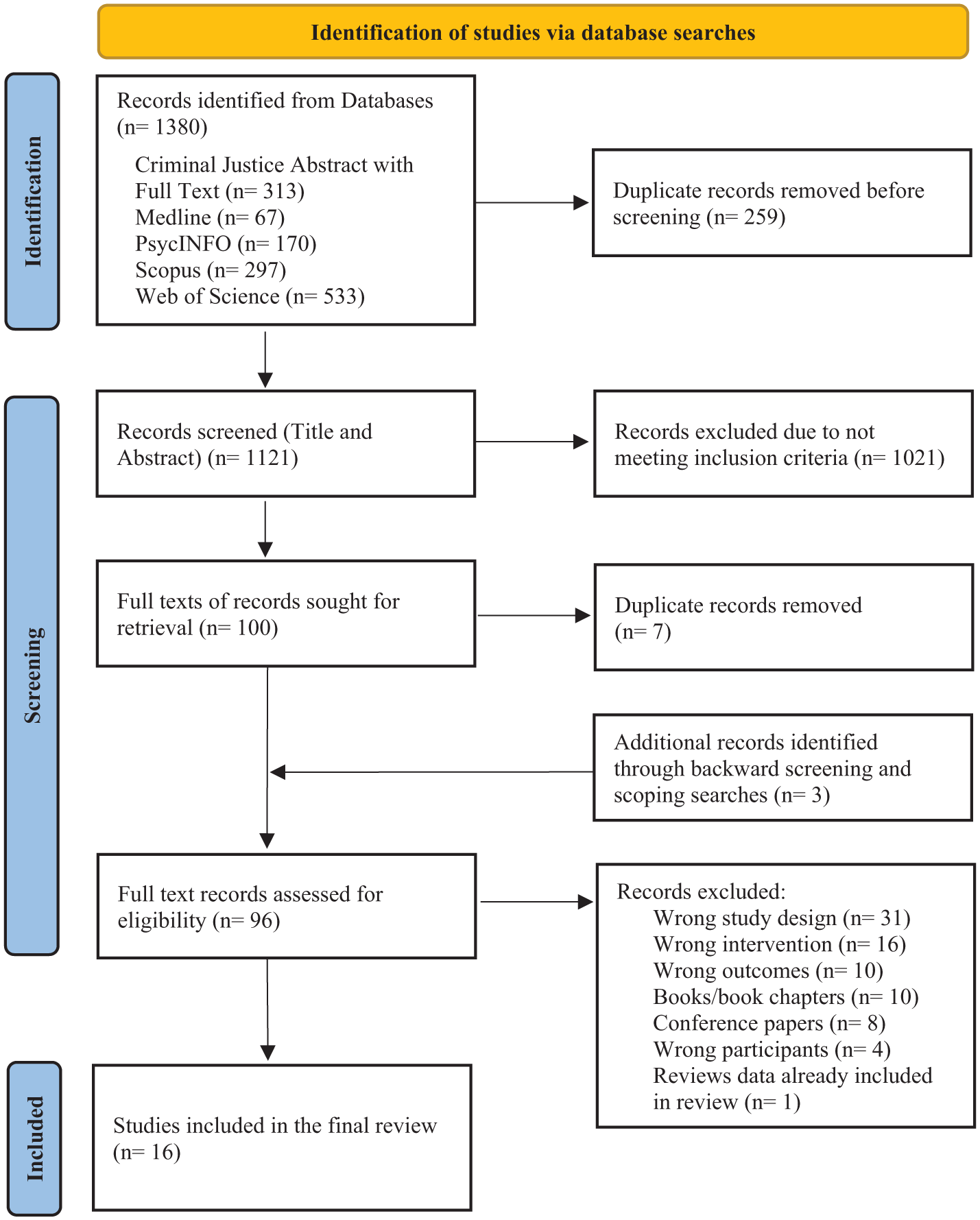
Flow diagram of the systematic review process and records included and excluded at each stage.
Quality Assessment
A quality assessment of the included articles was undertaken by the researchers using the Mixed Methods Appraisal Tool (MMAT; Hong, 2018; Pluye et al., 2009), which enables a critical appraisal of the methodological quality of studies included in systematic review research, including qualitative, quantitative, and mixed method studies (Hong et al., 2018). The MMAT contains two screening questions to assess the empiricism of a study, and five criterion questions are used to appraise qualitative studies. A detailed presentation of the criterion ratings for each study is displayed in Table S2 in Supplemental Material. It is recommended that the MMAT is used to rate studies rather than as a tool to exclude articles that receive a low ranking (Hong, 2018). Therefore, all 16 articles that met the inclusion criteria were retained for the review. In keeping with the recommendations of Hong et al. (2018), the MMAT was used in the current review to identify studies of higher or lower quality; and in so doing, help contextualize the extracted data, and strengthen the overall review.
Data Analysis
Once all of the data were extracted from the included articles, the authors reviewed the data and categorized the findings. Categorization of the data was a shared decision between the authors and involved the authors reviewing the studies and identifying broad categories and subcategories within the data. Data from the 16 articles fell into three broad categories: perceived benefits, risks, and recommendations for using RJ processes in IPV cases.
Results
Quality Assessment
Twelve of the 16 articles were rated as meeting all seven criteria from the MMAT, indicating they were of high research quality (Hong et al., 2018). Of the remaining studies, one was rated as lacking sufficient information to make a determination on one item from the MMAT (Nancarrow; 2006); two were rated as lacking sufficient information on two items (Gaarder, 2015; Wasileski, 2017); and the remaining article (Miller & Iovanni, 2013) was rated as lacking sufficient information on five items, and received a “no” rating for two others. The study by Miller and Iovanni (2013) was found to lack clear research questions and appeared to lack sufficient data to substantiate some of the interpreted results included in the study. Importantly, Miller and Iovanni’s (2013) study contributed data from one participant, which made up a small fraction of the total data and findings reported in the present review. All 16 articles were included in the review, regardless of their ratings from the MMAT. Excluding articles based on low methodological quality is usually discouraged, as it can risk biasing the research results (Hong, 2018).
Perceived Benefits of RJ
All of the 16 articles reported perceived benefits for IPV victims participating in RJ processes. Through a process of data extraction and analysis, all of the primary and recurring benefits across the studies were identified and sorted into categories, including Victim Voice and Acknowledgement of Harms; Maintaining Relationships; Fostering Greater Understanding; Informal Supports and Community; Empowering Decisions to Leave; and, Material Aid. The results for each category are summarized below.
Victim Voice and Acknowledgement of Harms
In 11 studies, participants reported the benefit of victims having a voice in the process. In Curtis-Fawley and Daly’s (2005) study, victim advocates believed RJ can enable victims of IPV and gendered violence to speak and be heard in a way not possible in traditional CJ processes. Similarly, IPV and RJ stakeholders interviewed in Jeffries et al.’s (2021) study believed RJ could provide victims of gendered violence and IPV a more viable way of being involved in justice processes, compared to traditional CJ interventions. Victims can ask direct questions of the perpetrator during RJ processes (Jeffries et al., 2021), and importantly, can have those questions answered (Miller et al., 2020). A victim of IPV felt her participation in Post Conviction Dialogue provided an opportunity to voice how the abuse had harmed her (Miller & Iovanni, 2013). IPV victims and stakeholders interviewed by Gavrielides (2015) highlighted how RJ processes could enable victims to speak and participate on equal footing with the perpetrator. A head social worker and female IPV victims interviewed in Roy’s (2020) study, similarly highlighted that the process could provide victims an equal opportunity to talk and express their feelings. Other IPV victims and RJ facilitators believed victims were able to express themselves and talk openly about topics they would otherwise avoid or feel afraid to speak about (Zakheim, 2009). A Canadian judge interviewed in Belknap and McDonald’s (2010) study believed victims could be empowered to speak openly about the impacts of violence they had experienced.
Maintaining Relationships
Six studies included perspectives that RJ could benefit victims who want or plan to stay with the perpetrator (Coker (1999)). Court judges interviewed in Belknap and McDonald’s study (2010) recognized that some victims wish to return to the perpetrator or maintain the relationship following episodes of violence, and in such cases, the judges believed RJ practices could lead to safer and less violent relationships. Public prosecutors in Greece believed RJ Mediation could help restore relationships between perpetrators and victims and maintain family units (Wasileski, 2017). In Gaarder’s (2015) study, female IPV victims, victim advocates, and family members who participated in a RJ program, believed such programs could improve the relationship between the victim and perpetrator. Other IPV victims and RJ facilitators believed RJ processes could help identify triggers, improve communication between partners, and increase anger management skills (Zakheim, 2009).
Fostering Greater Understanding
Five studies emphasized the potential benefit of RJ practices to increase victims’ awareness and understanding of their experiences (Gavrielides, 2015; Zakheim, 2009), and the dynamics of IPV more broadly. Some interviewees spoke about the importance of involving people in the RJ process who are knowledgeable about IPV, including gender violence experts, victim advocates, and fellow victim-survivors (Ehret, 2020; Gaarder, 2015). It was believed that such individuals can provide education about coercive dynamics in IPV, options to increase personal safety, and empower victims to leave violent relationships (Ehret, 2020; Gaarder, 2015).
Informal Supports and Community
Five studies highlighted benefits to IPV victims through access to and involvement of broader communities during the RJ process. Some interviewees believed that the inclusion of support people was an inherent benefit of RJ processes (Barocas et al., 2022; Belknap & McDonald, 2010). Court judges believed that community involvement could enable support for victims and perpetrators and could strengthen the relationship between both parties (Belknap & McDonald, 2010). Sentencing Circles and Peacemaking Circles, which prioritize community involvement, might be a preferred method of justice-seeking for Indigenous communities over traditional CJ processes (Belknap & McDonald, 2010; Nancarrow, 2006). Victims and IPV advocates believed that inclusion of family members in the RJ process might help to strengthen and repair familial relationships, benefiting the victim (Gaarder, 2015).
Empowering Decisions to Leave
Two articles included perspectives that RJ processes could help victims in their decisions to leave perpetrators. For instance, education, insights, and support provided during RJ processes might help victims reach decisions about leaving their abusive partners (Roy, 2020). Interviewees in Coker’s (1999) study believed a benefit of RJ was that victim participants might gain insight into the perpetrator’s intention to change, and help victims decide whether they want to continue in the relationship. Additionally, RJ facilitators might provide direct assistance to victims who want to separate or divorce from the perpetrator (Coker, 1999).
Material Aid
Interviewees in two studies recognized that RJ processes can provide opportunities for victims to benefit from access to material aid and resources (Coker, 1999; Gaarder, 2015). Victims might receive direct reparation from the perpetrator or perpetrator’s family; they might be referred to social services or cultural and community services that provide material support; or their reconnection with family and informal supports might provide access to material aid (Coker, 1999; Gaarder, 2015).
Perceived Risks of RJ
Thirteen of the included studies contained perspectives on potential risks for IPV victims participating in RJ processes. Extraction and analysis of qualitative data from the studies revealed six primary categories relating to risks, these include Power Dynamics, Control Tactics, and Risks of Re-victimization; Inadequacy in Addressing IPV; Pressure to Participate; Insufficiently Skilled Facilitators; Denial of Abuse; and Inadequate Information.
Power Dynamics, Control Tactics, and Risks of Re-victimization
Thirteen studies mentioned risks of harm for victims as a result of power and control dynamics and further victimization. Studies flagged that power dynamics inherent in IPV cases may undermine the effectiveness of RJ processes and pose a risk to victim participants (Coker, 1999; Ehret, 2020; Jeffries et al., 2021; Miller et al., 2020; Pennell & Francis, 2005), and that these inherent power imbalances might be exacerbated by the RJ process itself (Curtis-Fawley & Daly, 2005; Miller et al., 2020). RJ and IPV stakeholders worried that victims would not be able to participate freely, fairly, and openly due to power imbalances and coercive control (Jeffries et al., 2021; Miller et al., 2020). This includes factors relating to victims’ enmeshment with the perpetrator, including economic interdependence and shared parenting responsibilities (Jeffries et al., 2021). Some stakeholders believed that RJ is less appropriate in cases of IPV where the relationship between victim and perpetrator is ongoing, due to power and control dynamics (Proietti-Scifoni and Daly, 2011). Others believed that RJ is inappropriate in all circumstances of IPV due to risks posed by inherent power dynamics and violent, controlling behaviors (Proietti-Scifoni & Daly, 2011). IPV victims and RJ facilitators worried that perpetrators might attempt to control discourse and topics of discussion during RJ meetings (Zakheim, 2009). Coercive tactics might include perpetrators remaining closed off and unwilling to engage in open and honest discourse; attempts to dominate and control conversations, use of threats, and manipulation tactics used to gain validation, collude with facilitators and other participants, and further violate the victim (Curtis-Fawley & Daly, 2005; Jeffries et al., 2021; Zakheim, 2009). Judges and victim advocates worried that perpetrators could manipulate RJ processes for their own gain; including using them to access victims and perpetuate cycles of abuse (Belknap & McDonald, 2010; Coker, 1999; Jeffries et al., 2021; Miller et al., 2020). RJ facilitators and program directors worried that perpetrators’ use of covert coercive tactics may go unnoticed, including by RJ facilitators, and serve to influence, control, or torment victims (Miller et al., 2020). Court judges worried that perpetrators might attempt to “stack the deck” with support people in the room; and this imbalance of supporters might create safety issues for victims by serving to intimidate or control them (Belknap & McDonald, 2010). Victims might also face secondary victimization by informal supports, including friends and family, who might validate the perpetrator, deny the abuse, or engage in victim-blaming (Coker, 1999; Ehret, 2020; Jeffries et al., 2021).
RJ and IPV stakeholders believed victims would be at risk of violence before, during, and after RJ processes (Coker, 1999). All victims interviewed in Roy’s (2020) study reported experiencing a resumption of violence after participating in a RJ process. Similarly, RJ and IPV stakeholders worried that victims would face retribution after RJ processes for having spoken out (Jeffries et al., 2021), and yet victims could also face repercussions if they choose not to participate (Jeffries et al., 2020). Some victim advocates believed risk of harm would be higher in face-to-face meetings, given perpetrators’ access and proximity to victims (Curtis-Fawley & Daly, 2005), yet even during preparatory phases of RJ, victims might be re-traumatized by mock-conferences and pre-meeting questions (Gavrielides, 2015).
Inadequacy in Addressing IPV
Seven studies questioned whether RJ was at all suitable for use in IPV cases. Female IPV victims interviewed in Ehret’s (2020) study wondered whether RJ was “too idealistic,” and may not work in practice. Similarly, other RJ and IPV stakeholders believed RJ was a worthwhile process, but worried that it may not work for IPV and gendered violence (Proietti-Scifoni & Daly, 2011). Stakeholders highlighted fundamental differences between crimes involving random versus intimate attackers; where the complex relationship dynamics in IPV, including enduring patterns of abuse and coercive control, intergenerational violence, and power imbalances, would likely limit the effectiveness of RJ in these types of cases, and may ultimately make them unsuitable (Curtis-Fawley & Daly, 2005; Miller et al., 2020; Proietti-Scifoni & Daly, 2011). RJ programs that involve a single, one-off meeting were believed to be especially insufficient in addressing the complex nature of IPV and unlikely to change the behavior of violent perpetrators (Proietti-Scifoni & Daly, 2011). RJ facilitators questioned whether it was possible for RJ to promote victim healing, given the long-term nature of abuse (Miller et al., 2020), and FV victim advocates questioned the adequacy of RJ in holding men accountable and sending a message to the community that violence is wrong (Nancarrow, 2006).
Insufficiently Skilled Facilitators
Risks associated with insufficiently trained or skilled facilitators were raised in four studies. Stakeholders worried that facilitators may not receive adequate training in DV dynamics and in assessing the danger posed by perpetrators (Coker, 1999). There were concerns that perpetrators could engage in covert and coercive behaviors during the RJ process, designed to control the victim, but which go unrecognized by facilitators (Miller et al., 2020). Inadequately skilled facilitators could also struggle to manage power imbalances and may be vulnerable to manipulation by perpetrators (Proietti-Scifoni & Daly, 2011).
Denial of Abuse
Participants in four studies worried about risks posed by perpetrators lacking accountability for their actions (Proietti-Scifoni & Daly, 2011), and continuing to deny the abuse during RJ processes (Zakheim, 2009). IPV victims raised doubts about the likelihood of perpetrators taking accountability (Ehret, 2020), and some studies questioned whether the stage of CJ proceedings might increase the likelihood of perpetrators denying abuse. RJ facilitators in Miller et al. (2020) were concerned that RJ occurring pre-sentence, may deprive victims of honest and accountable answers, as perpetrators may try to protect themselves from harsher criminal penalties. Informal support people participating in RJ may also deny the abuse (Zakheim, 2009).
Inadequate Information
Three studies included concerns about IPV victims receiving insufficient information about the process. Limited information about RJ processes may mean that some victims are unaware of the existence and availability of RJ (Gavrielides 2015). Lack of information about RJ and specific programs may mean victims are unaware of what they are signing up to; they may lack sufficient knowledge about the process and possible consequences of participating; and therefore, unable to make informed decisions about participating (Coker, 1999; Roy, 2020). Victims may also be unaware of their right to choose not to participate in a RJ program, or lack information about where and how to access support and additional information (Coker, 1999).
Recommendations for Using RJ
In total, 13 articles contained recommendations regarding features and processes that should be included in RJ interventions to better cater to the needs of IPV victims, and to improve their experiences and safety throughout. Recommendations were grouped into seven categories, including Safety Measures; Victim-Led, Victim-Centered, and Victim Choice; Holistic Supports; Involvement of Professionals, Experts, and Advocates; Risk and Suitability Assessments; Facilitator Knowledge and Skills; and Facilitators as Advocates.
Safety Measures
Seven studies included recommended safety measures for RJ in IPV cases. RJ and IPV stakeholders drew attention to dangers posed by insufficient safety protocols, and recommended use of RJ in IPV cases only where victim safety can be assured (Proietti-Scifoni & Daly, 2011). It was recommended that practitioners work with victims to ensure RJ procedures are safe and appropriate for them (Gavrielides, 2015). Some stakeholders suggested that cases could be referred to court first to obtain a Personal Protection Order, which could then remain in place throughout the RJ process to help protect victims (Coker, 1999). RJ and IPV stakeholders offered practical planning measures that could be implemented to increase safety of victims; including management of arrival times to ensure victims and perpetrators arrive separately and are greeted by facilitators; ensuring there are adequate breaks provided throughout the RJ meeting; and consideration of how details of the offense are narrated during proceedings (Jeffries et al., 2021). The setting of the RJ process should also be considered; for instance, prison settings might afford greater control and security (Miller et al., 2020). For victims residing in women’s shelters, hosting RJ meetings at the shelter might benefit victims through inclusion of peer support, however, when perpetrators participate, hosting the meeting externally can maintain confidentiality of the victim’s whereabouts (Pennell & Francis, 2005). Moreover, involvement of perpetrators in RJ safety conferencing might be made contingent on their active involvement in a batterer intervention program (Pennell & Francis, 2005).
Holistic Supports
Seven studies mentioned the essentiality of providing wrap-around supports to victims. Participants recommended that RJ processes occur within a broader context of support and intervention, and that support must be provided to victims before, during, and after participating in RJ (Belknap & McDonald, 2010; Jeffries et al., 2021; Miller et al., 2020; Proietti-Scifoni & Daly, 2011). Ideally, victims would have access to therapeutic interventions prior to participating in RJ to address trauma, support their healing and recovery, and to increase their safety and ability to participate effectively during the RJ process (Jeffries et al., 2021). Stakeholders in Jeffries et al.’s (2021) study believed RJ interventions should involve behavior change programs for perpetrators and counseling support for victims. Judges in Belknap and McDonald (2010) likewise recommended that post-intervention, RJ participants should be given access to additional well-being programs, including drug and alcohol, anger management, and counseling. IPV victims and Healing Circle facilitators recommended that RJ processes should be conducted multiple times, rather than occurring as a single, one-off event (Zakheim, 2009); and other victims and stakeholders suggested that RJ programs should only proceed if ongoing support can be guaranteed (Gavrielides, 2015; Miller et al., 2020).
Victim-Led, Victim-Centered, and Victim Choice
Seven studies raised the importance of RJ processes being victim-led; including where victims are given ultimate decision-making over whether their case is disposed of through RJ or CJ proceedings (Curtis-Fawley & Daly, 2005; Gavrielides, 2015); how the RJ process should be conducted (Jeffries et al., 2021); what stage of the justice process it should occur (Miller et al., 2020), and whether informal support persons such as friends or family members should be involved (Ehret, 2020).
For victims to make informed participatory decisions, it was recommended that victims receive adequate information about the process (Jeffries et al., 2021), and given ample time to consider participating (Gavrielides, 2015; Nancarrow, 2006). To enable this, it was recommended that the option of RJ should be brought up at the earliest opportunity, and revisited multiple times where appropriate, to ensure victims have adequate time to consider their options (Gavrielides, 2015).
Involvement of Professionals, Experts, and Advocates
Five studies included perspectives that RJ processes should involve experts or professionals knowledgeable about IPV, and individuals who can provide emotional, psychological, and material support to victims (Ehret, 2020), along with therapeutic intervention and advocacy (Belknap & McDonald, 2010; Jeffries et al., 2021). RJ and IPV stakeholders believed that experts should be involved to assess the suitability of perpetrators to participate, and to determine the risk of power and control dynamics playing out (Jeffries et al., 2021). For IPV victims seeking refuge in women’s shelters, DV counselors in Pennell and Francis’ (2005) study recommended that shelter staff be involved in coordinating Family Group Decision Making conferences to safeguard victims’ rights.
Risk and Suitability Assessments
Three studies recommended that victims and perpetrators need to be adequately screened prior to participating in RJ programs, and throughout the process, including assessments of risk and suitability (Belknap & McDonald, 2010; Curtis-Fawley & Daly, 2005; Jeffries et al., 2021). Court judges recommended that IPV victims should be screened to determine whether they are at risk of harm, or suffering from battered women’s syndrome, prior to participating in a Sentencing Circle (Belknap & McDonald, 2010). IPV and RJ stakeholders also believed that perpetrators should be assessed for suitability to ensure victims are kept safe, and support persons should be screened for the same reason (Jeffries et al., 2021). Moreover, they believed that victims should receive ongoing assessment to determine their needs, expectations, capacity to participate, safety, advocacy, and therapeutic requirements (Jeffries et al., 2021).
Facilitator Knowledge and Skills
Three studies included explicit recommendations regarding the required knowledge, training, and skills of persons facilitating RJ interventions in cases of IPV (Jeffries et al., 2021; Miller et al., 2020; Proietti-Scifoni & Daly, 2011). Stakeholders and RJ facilitators believed that facilitators should receive specific training in gendered violence, have knowledge of power dynamics, and possess adequate skills and abilities to recognize subtle and indirect manipulation tactics employed by perpetrators (Jeffries et al., 2021; Miller et al., 2020).
Facilitators as Advocates
Two studies spoke about facilitators advocating for victims involved in RJ processes, instead of adopting a stance of strict neutrality. RJ facilitators and stakeholders recognized that facilitators may have to take on an active role of challenging perpetrators about their denial of abuse, rather than relying on informal support people to do so (Coker, 1999). Female IPV victims and a social worker in Roy’s (2020) study recommended that RJ programs and facilitators take a “strict” stance toward perpetrators, to hold them accountable, and advance respect of women and anti-DV norms.
Discussion
The present review captured perspectives of IPV victims and stakeholders regarding the potential benefits and risks posed to IPV victims taking part in RJ processes, and recommendations for safeguarding the rights and needs of victims. It is important to note that the vast majority of participants included in the reviewed studies were professional stakeholders and not victims of IPV. This in keeping with previous observations that the voices of victims are vastly overshadowed by professionals in discussions about using RJ in cases of gendered violence (Decker et al., 2022). Research on IPV often includes service providers more than victims’ voices because provider may be perceived as more accessible, face fewer safety and confidentiality risks, and can participate without the ethical and logistical challenges involved in recruiting and protecting people with lived experience of violence. However, overreliance on professional views at the expense of victim voices may produce a skewed and incomplete understanding of RJ in cases of IPV. For example, the views of professionals may be influenced by policies and resource limitations of organizations, or may result in overestimating or underestimating risks posed by RJ for victims. The results of this review highlight the nuances of planning and delivery of RJ in cases of IPV; perspectives that are only gathered through research that considers the views of both service providers and victims.
The reviewed studies reported a range of perceived benefits of RJ for IPV victims. This included giving victims a voice in the process, having their harms acknowledged, and allowing thier needs to be addressed. The main risk identified to victims having a voice in RJ processes was the inherent power and control dynamics that feature in IPV; these elements make IPV fundamentally different to other types of crimes where RJ is commonly applied (Miller et al., 2020; Proietti-Scifoni & Daly, 2011). Victims and stakeholders doubted whether IPV victims would be able to express themselves openly and honestly during a RJ process, given factors such as fear of retribution, threats, ongoing relationship dynamics and enmeshment, and coercive and controlling tactics employed by perpetrators (Jeffries, 2021; Miller et al., 2020; Proietti-Scifoni & Daly, 2011; Zakheim, 2009). These risk factors also diminish the likelihood of victims’ harms being acknowledged and their needs addressed during RJ processes (Proietti-Scifoni & Daly, 2011; Ehret, 2020). Moreover, perpetrators may seek to manipulate the process in their favor; engage in collusion with RJ facilitators; and attempt to control discourse and discussion of topics (Miller et al., 2020; Proietti-Scifoni & Daly, 2011). Researchers have previously discussed the risk of re-victimization for crime victims taking part in RJ processes where offenders fail to account for their actions and for the harms caused (Strang, 2002).
The risks identified in the review challenge claims made by RJ proponents that victims of gendered violence can benefit from voicing their story, being heard, and having their experiences validated (Daly, 2006). Core recommendations raised in the reviewed studies may help to address these problems, or at least mitigate them. For instance, ensuring RJ facilitators receive specialized training and are adequately skilled in IPV dynamics, and in identifying and responding to abusive, controlling, and coercive tactics (Jeffries, 2021; Miller et al., 2020; Proietti-Scifoni & Daly, 2011; Roy, 2020). Moreover, involving IPV and FV experts throughout RJ processes, including during preparatory phases, and post-intervention, can help ensure victims are kept safe, receive adequate information, and are supported throughout (Belknap & McDonald, 2010; Coker, 1999; Ehret, 2020). The involvement of adequately trained facilitators and professionals can also provide opportunities for victims to access additional support services, and garner greater awareness and understanding of their experiences, including the nature of IPV and risk of future harm. This in turn may support victims to make decisions about leaving the perpetrator (Gaarder, 2015; Gavrielides, 2015; Ehret, 2020; Zakheim, 2009).
The reviewed studies highlight the benefits of involving informal supports during RJ processes, such as friends, family, and community members, which is a distinction from conventional CJ proceedings (Belknap & McDonald, 2010). Benefits include establishing new support networks and repairing damaged relationships; as well as helping to hold perpetrators accountable, supporting victims, contributing to agreed RJ plans, and monitoring adherence to agreed outcomes (Barocas et al., 2022; Belknap & McDonald, 2010; Gaarder, 2015; Pennell & Francis, 2005). However, the potential benefits afforded by community involvement are not guaranteed; it is conditional on many aspects including whether they have the capacity, requisite knowledge, skills, and ability to help (Belknap & McDonald, 2010). Furthermore, victims may face pressure from informal support people to participate in RJ for the perpetrator’s benefit; and may face secondary victimization where support people validate the perpetrator, deny the abuse, or engage in victim-blaming (Coker, 1999; Jeffries, 2020). Informal support members may also harbor unhelpful or problematic beliefs about gendered violence (Ehret, 2020). Some of these risks may be minimized through effective screening of all potential RJ participants, including perpetrators, victims, and support persons.
A conflict was identified in this review between recommended screening practices and that RJ processes in IPV cases must be victim-centric and victim-led (Curtis-Fawley & Daly, 2005; Gavrielides, 2015; Jeffries, 2021). On one hand, victims and stakeholders discussed the importance of IPV victims having ultimate decision-making power as to if, when, and how their case should proceed with RJ (e.g., Curtis-Fawley & Daly, 2005; Jeffries et al., 2021; Miller et al., 2020); and some stakeholders believed that RJ should be offered and conducted anytime at the request of victims(Miller et al., 2020; Proietti-Scifoni & Daly, 2011). Yet, other stakeholders stressed that RJ should only proceed in IPV cases where it is deemed safe to do so (Proietti-Scifoni & Daly, 2011). Rigid screening processes may inhibit victims’ decision-making power, position professionals as gatekeepers to RJ, and strip victims of choice and control. Yet not all victims will want to be burdened by the responsibility of choosing how their case is disposed of (Curtis-Fawley & Daly, 2005). This highlights the nuanced approach needed when considering RJ for individual cases. Furthermore, regardless of the steps taken to minimize risk and enhance victim safety, it seems inevitable that some level of risk will always exist when using RJ in IPV cases.
Results of this review indicate that adequate preparation of parties is an essential element when planning RJ for IPV. For victims, this means ensuring they fully understand the process, including potential benefits and risks, so that they can make an informed decision about participating. It also means victims should understand the consequences of engaging in RJ instead of or as an adjunct to conventional CJ processes, including the implications of engaging in RJ at different stages of CJ proceedings. Victims must also understand and decide which method of participation, if any, will suit their needs best (e.g., face-to-face meetings versus shuttle processes; use of victim representatives or surrogates; or pre-prepared victim statements).
Implications
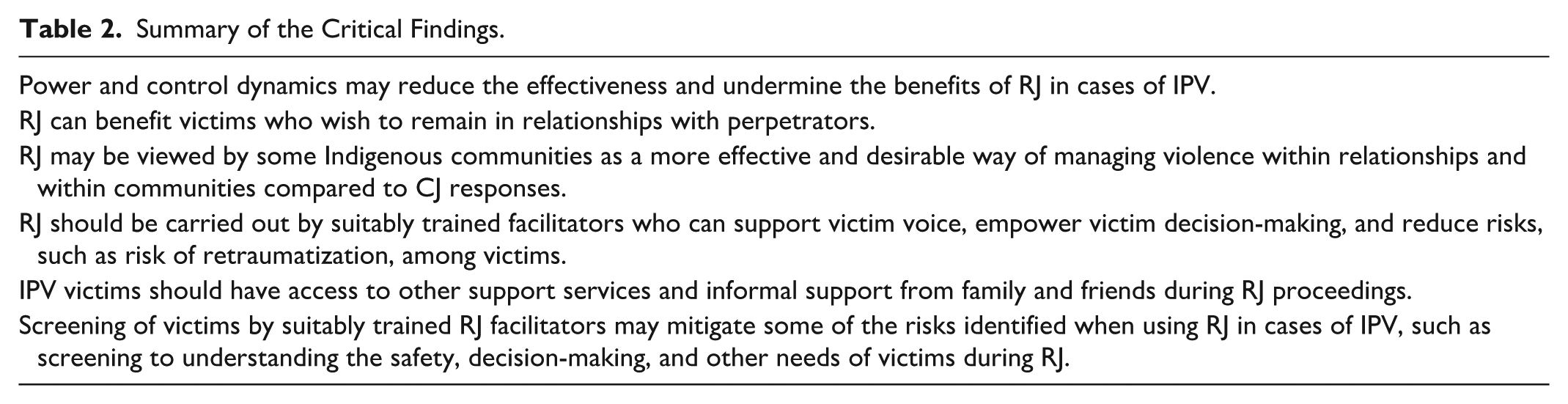
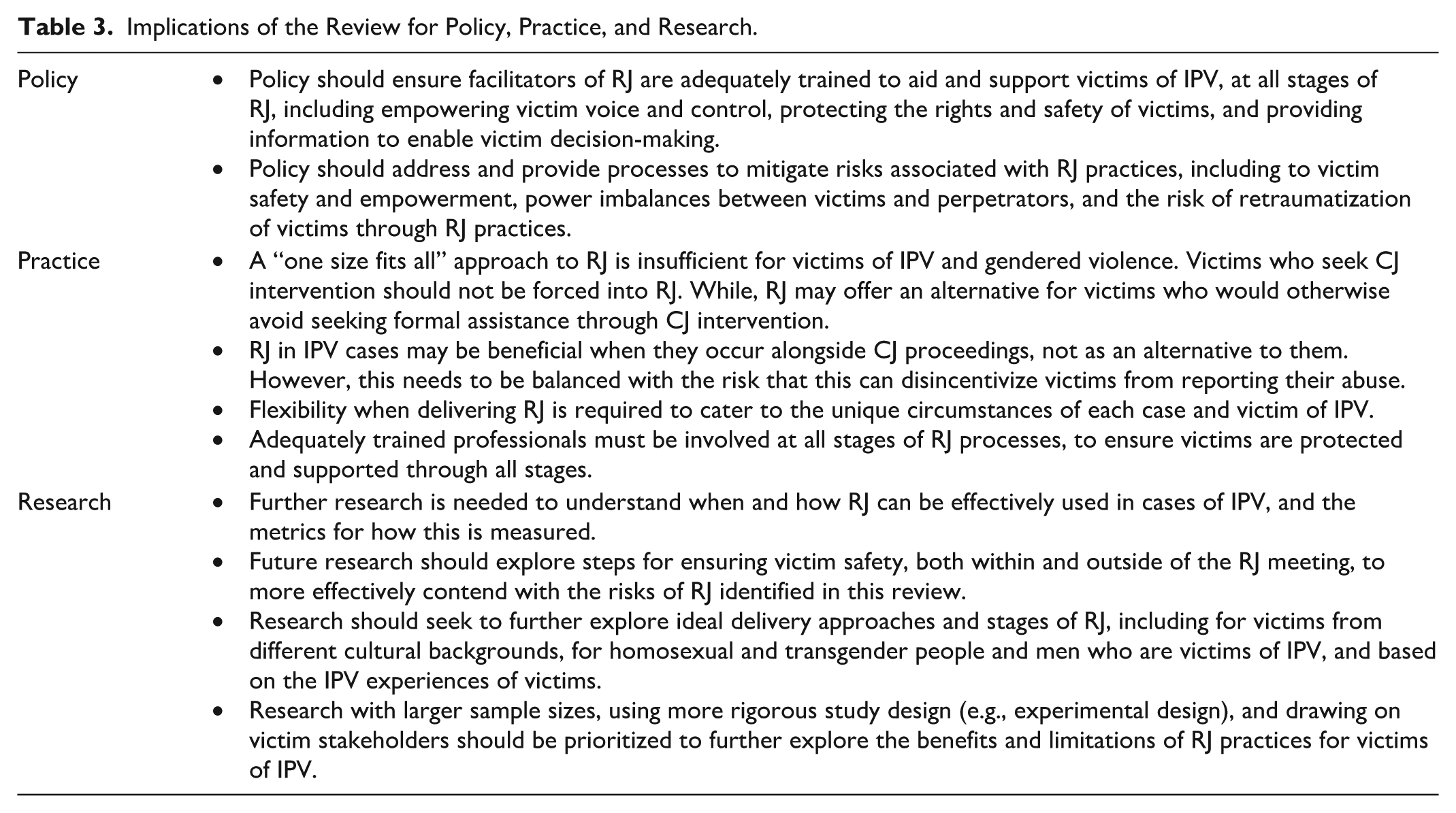
There are a number of implications to consider based on the results of this review. Firstly, it is essential that victim participation is voluntary and informed, with clear communication that victims can determine the extent of their participation. Second, ongoing and detailed assessments before, during, and after RJ processes are important to determine suitability and safety, including for informal supports, regarding participation in RJ processes. Thirdly, the use of highly trained facilitators with specialized expertise in family violence dynamics, power imbalances, and skills to hold perpetrators to account is important. Fourthly, victim-led decision-marking, which allows for alternative formats and flexible delivery of RJ processes, and follow-up support for victims, is important. These practices can be used to prioritize victim safety, autonomy, and well-being while reducing the risk of further harm by ensuring accountability and compliance of perpetrators. Table 2 provides a summary of the critical findings. Table 3 lists the implications of the review for practice, policy, and research.
Summary of the Critical Findings.
Implications of the Review for Policy, Practice, and Research.
Limitations
Although the present review focused on the suitability and applicability of RJ for IPV victims, future research should include a broader consideration of the use of RJ for other forms of FV. The current review also did not consider the benefits and risks posed to perpetrators, nor to secondary victims, or broader communities; future research should pay attention to these populations when considering the application of RJ practices to IPV, to gain a more complete picture of the suitability of RJ practices in these cases. Moreover, while existing research has considered enhancing traditional Batterer Intervention Programs for male perpetrators (Barocas et al., 2022), a gap in the literature exists for the use of RJ as an intervention for IPV cases involving female perpetrators, especially incarcerated female perpetrators who have been shown to lack treatment options for their offending behaviors (Mackay et al., 2018). Representativeness of different socio-cultural groups is also limited in the current review, demonstrating the lack of research evaluating RJ practices for culturally diverse and people of minority groups. It is well documented that victims from minority groups experience greater systematic harm, discrimination, and cultural and language barriers when interacting with family violence services (Pokharel et al., 2023) These harms are likely to alter the experiences and needs of victims when engaging in RJ processes, differences that are not reflected in the current literature.
A further potential limitation is that this review included interventions that are not primarily RJ programs but incorporate RJ principles. Although these studies met our inclusion criteria, it is possible that their differing aims, structures, and delivery contexts—particularly in batterer intervention settings—may limit comparability and interpretation. For instance, batterer intervention programs are typically court-mandated and offender-focused programs aimed at reducing future violence, sometimes with little to no direct victim involvement. This may be viewed in direct contrast to RJ programs, which, based on the results of this review, should be victim-focused and led, and position the needs of victims above the needs of perpetrators. The inclusion of these programs may also risk overstating the evidence for RJ itself, highlighting the need for future research to distinguish clearly between full RJ models and programs that merely integrate RJ-informed components.
Furthermore, the current review did not consider important concerns about risks and implications for perpetrators’ legal and due process rights. In one example, participants in Curtis-Fawley and Daly’s (2005) study explored the benefits and risks of providing victims with veto-powers over whether cases are referred to RJ or CJ proceedings, as well as victims’ ability to weigh in on sentencing decisions. Researchers and legal scholars have raised concerns about impacts to defendants’ legal rights due to victim-centered justice policies and therapeutic jurisprudence (Stobbs, 2017). Future reviews should be undertaken to capture the full gamut of risks, benefits, and recommendations of using RJ in IPV cases, including from the perspectives of perpetrators, communities, and jurisprudence.
In the present review, only interventions that involved participation of victims directly affected by the perpetrator’s actions were included. For example, studies analyzing the use of victim impact panels (e.g., Sackett-Kerrigan & Mankowski, 2023), which involve IPV perpetrators and victims not personally known to each other, were excluded. Future research should be expanded to include the experiences and perspectives of IPV victims involved in surrogate forms of RJ. Victims’ participation in such programs likely presents a range of benefits and risks to their recovery, despite not engaging with the direct perpetrator. Lastly, the qualitative nature and scope of the present review means results and discussion are limited to subjective reports and informed opinions about the use of RJ processes in IPV cases; there is no consideration of between-subject effects, or objective outcome measures for different types of RJ interventions. Future research should include a quantitative exploration of these topics to inform a more holistic assessment of the advantages and disadvantages of RJ practices in cases of IPV.
Conclusion
The results of this review reaffirm existing concerns raised by feminists, and RJ and DV stakeholders, regarding the use of RJ practices in cases of IPV (Curtis-Fawley & Daly, 2005). Namely, inherent power and control dynamics may reduce the effectiveness and utility of applying RJ to IPV cases; and may undermine the proposed benefits offered through participation. Key findings from this review include the necessity for effective screening and assessment measures before and during RJ processes, to be carried out by suitably qualified professionals, so that risks and needs can be identified and addressed, and ensure participants are adequately prepared. Further research is required to better understand the benefits and risks of using RJ in IPV cases; including which specific processes, under what circumstances, and for which victims, they are suitable.
Supplemental Material
sj-docx-1-tva-10.1177_15248380261433020 – Supplemental material for Restorative Justice Processes and Intimate Partner Violence: A Qualitative Systematic Review of Perceived Benefits, Risks, and Best Practices for Victims
Supplemental material, sj-docx-1-tva-10.1177_15248380261433020 for Restorative Justice Processes and Intimate Partner Violence: A Qualitative Systematic Review of Perceived Benefits, Risks, and Best Practices for Victims by Aaron Hudson and Emily Berger in Trauma, Violence, & Abuse
Supplemental Material
sj-docx-2-tva-10.1177_15248380261433020 – Supplemental material for Restorative Justice Processes and Intimate Partner Violence: A Qualitative Systematic Review of Perceived Benefits, Risks, and Best Practices for Victims
Supplemental material, sj-docx-2-tva-10.1177_15248380261433020 for Restorative Justice Processes and Intimate Partner Violence: A Qualitative Systematic Review of Perceived Benefits, Risks, and Best Practices for Victims by Aaron Hudson and Emily Berger in Trauma, Violence, & Abuse
Footnotes
Acknowledgements
The authors would like to acknowledge Nicole Gerson, School of Educational Psychology and Counselling, Faculty of Education, Monash University, Clayton, Australia, for her contributions to the title and abstract screening stage of the review process.

Funding
The authors received no financial support for the research, authorship, and/or publication of this article.
Declaration of Conflicting Interests
The authors declared no potential conflicts of interest with respect to the research, authorship, and/or publication of this article.
Supplemental Material
Supplemental material for this article is available online.
Author Biographies
References
Supplementary Material
Please find the following supplemental material available below.
For Open Access articles published under a Creative Commons License, all supplemental material carries the same license as the article it is associated with.
For non-Open Access articles published, all supplemental material carries a non-exclusive license, and permission requests for re-use of supplemental material or any part of supplemental material shall be sent directly to the copyright owner as specified in the copyright notice associated with the article.
