



Abstract
Allegations of child sexual abuse (CSA) in family law cases, such as child custody, child visitation, and child protection proceedings, present complex and sensitive challenges for legal and psychological decision-making. This scoping review synthesizes key findings from 47 empirical studies examining the prevalence, substantiation, and legal consequences of CSA allegations as well as typical case characteristics in this context. The empirical literature falls into three main clusters: Canadian studies using large national datasets from the late 1990s and 2000s; Australian court-based studies primarily from the 2010s; and U.S. research spanning several decades with diverse methodologies. Overall, we found a mean CSA allegation prevalence of 8.9%, and indications that CSA allegations occur less frequently than allegations of other maltreatment types. Substantiation rates vary across studies but average around 43%, with only marginal evidence suggesting slightly lower substantiation when only custody and visitation disputes were analyzed. Deliberate false allegations are seemingly rare; most unsubstantiated claims appear to arise from genuine but mistaken concerns. Limited findings on legal consequences indicate that substantiated allegations usually lead to suspended contact between the accused parent and child. When allegations lack sufficient clarity, courts respond more variably, sometimes restricting contact despite non-substantiation. Significant research gaps remain, particularly regarding the timing and context of allegations, the association of substantiation with legal outcomes, and specific allegation constellations within families. Further empirical research, especially from European and non-Western jurisdictions, is essential to informing evidence-based, child-centered practice.
Keywords
Introduction
Child sexual abuse (CSA) and sexual violence against children pose a significant risk to children’s psychological development (e.g., Hailes et al., 2019; Maniglio, 2009). Due to the danger CSA presents to children’s welfare, CSA allegations are not only prosecuted under criminal law, but can also play a significant role in custody, visitation, and placement decisions in family court proceedings as well as child protection proceedings by authorities (Ackerman et al., 2021). To ensure child protection, CSA allegations against caregivers can therefore lead to a restriction of parental rights and access (custody and visitation proceedings) as well as a state intervention like the removal of the child from the family (child protection proceedings). Accordingly, family courts and child protection services (CPS) play a crucial role in determining the appropriate course of action when faced with CSA allegations in the given context. CPS are government agencies responsible for safeguarding children from abuse and neglect, whereas family courts adjudicate disputes over custody, visitation, and related family matters (Zumbach et al., 2022). CPS are often the first agency notified and may intervene in emergency contexts, while custody and visitation cases are generally initiated by one parent to challenge the other parent’s rights. In both child protection proceedings and custody or visitation disputes, CSA allegations can shape decisions about the child’s living arrangements, the restriction of contact with an accused parent, or the need for out-of-home placement. Because both systems must evaluate CSA allegations and make decisions that directly affect children’s safety and well-being, we include both types of proceedings in this review.
A central dilemma for both institutions arises from the fact that any misjudgment can compromise the child’s welfare. If the risk of ongoing sexual abuse is underestimated, the child may be exposed to further harm, with potentially serious consequences for their psychological development. Conversely, a decision to intervene, such as restricting contact with a parent, when such measures are not necessary for the child’s protection can also be detrimental to the child’s well-being (Bowles et al., 2008.; Death et al., 2019; Forslund et al., 2021; Lamb, 2012). Moreover, compared to other forms of child abuse, concerns about false allegations 1 arise more frequently in cases of suspected CSA within custody, visitation, and child protection proceedings. This discourse gained momentum in the 1980s amid growing awareness of intra-familial CSA and the expansion of prevention efforts, accompanied by reports of rising allegations and claims of high rates of falsity in custody disputes (Green, 1991). Debates persist today over whether false allegations are indeed more common in family law contexts or whether courts display disproportionate skepticism, particularly when mothers raise the concerns (Lapierre et al., 2026; Milchman, 2017).
However, the evidence base regarding how CSA allegations are handled in family law proceedings appears fragmented: much of the research comes from different countries with varying legal frameworks and professional practices. Also, the body of research spans several decades, which possibly limits the extent to which the documented findings reflect current practices and contemporary understandings of CSA. An existing review by Smit et al. (2015) focused on CSA allegations arising only during ongoing divorce proceedings, and did not include relevant empirical data such as prevalence rates. Thus, the current scoping review set out to systematically map the internationally dispersed and partly outdated literature, clarifies where reliable evidence exists, and identifies areas where updated empirical work is needed. By consolidating this knowledge, the review fills a critical gap for practitioners and policymakers who require an up-to-date, cross-jurisdictional foundation to inform decision-making, expert assessments, and child protection policies.
Specifically, we concentrated this review on several key areas of interest that align with broader debates in CSA research and family law policy. Understanding how frequently CSA allegations arise in custody, visitation, and child protection contexts is essential for evaluating claims about whether such cases are increasing in frequency and to estimate their significance within proceedings (Bala et al., 2007; Neoh & Mellor, 2009). Examining typical case characteristics may contribute to discussions about risk indicators and family dynamics when CSA is alleged (Faller & DeVoe, 1996). Investigating substantiation outcomes and how allegations are substantiated directly engages with debates about the prevalence of false allegations, quality of investigative procedures, and the contested use of concepts such as parental alienation (Death et al., 2019). Finally, exploring how substantiation relates to custody, visitation, and placement decisions addresses the key issue in these proceedings concerning the appropriate balance of child safety with procedural fairness (Neoh & Mellor, 2009). These considerations motivated the following research questions, which structure the scope of the review:
(1) How often do allegations of CSA occur within child custody and visitation proceedings as well as child protection proceedings?
(2) What are the typical case characteristics when CSA is alleged in child custody and visitation proceedings as well as child protection proceedings?
(3) How are allegations of CSA substantiated in these cases?
(4) Among the reported decisions, to what extent are the allegations of CSA considered substantiated, unsubstantiated, 2 unverifiable, 3 or not specified in these cases?
(5) What custody/visitation/placement decisions are reported in these cases and how does the substantiation of allegations of CSA relate to the custody/visitation/placement decisions made by authorities?
(6) What is the relationship between the substantiation of allegations of CSA and typical case characteristics?
Although some of these research questions are sufficiently specific to be addressed within a systematic review, we adopted a scoping review approach since, at the time of planning this review, the knowledge base regarding the research questions was unclear. Thus the primary aim of this review was to map the existing evidence and identify gaps in the literature, rather than to generate specific guidelines for practice (Munn et al., 2018).
Methods
This scoping review followed the Joanna Briggs Institute (JBI) Manual for Evidence Synthesis recommendations for scoping reviews provided by the JBI (Peters et al., 2020) and the PRISMA-ScR Checklist for scoping reviews. The literature search strategy and review protocol of this scoping review were preregistered with the Open Science Framework (OSF) on June 12, 2024, to ensure transparency and prevent bias (link to anonymized registration: https://osf.io/vzrt7/?view_only=4da63ca9124b44ec85d34aec20a1fd0f). This review was carried out as a part of a larger research project funded by the German Federal Ministry for Education, Family Affairs, Senior Citizens, Women and Youth/the Independent Commissioner for Child Sexual Abuse Issues.
Article Search
The systematic literature search was carried out in the electronic databases PsycINFO, Scopus, and Web of Science. To find relevant preprints and dissertations, we also searched the Web of Science Preprint Citation Index and the Web of Science ProQuest™ Dissertations & Theses Citation Index.
The search was conducted between June 12, 2024, and July 19, 2024. We focused on articles published in English and German. Although this choice may limit the diversity of the review, it was necessitated by resource constraints. Due to an assumed scarcity of research, we used query strings to maximize the number of relevant sources found, and entered as many relevant terms as possible. The query strings used both in German and English in all databases were as follows:
Set 1: Sex* AND (Abuse* OR Violen* OR Victimiz* OR Offence OR Crime OR Harassment OR Molestation OR Maltreat* OR Assault OR Rape OR Exploitation OR Allegation OR Susp* OR Accus* OR Assertion OR Investigation)
Set 2: AND (“Family law” OR “Family court” OR “Child protection” OR “Child welfare” OR “Youth welfare” OR Divorce OR Separation OR Dispute* OR Custody OR Visitation OR “Access arrangements” OR “Termination of parental rights” OR Alienation OR “Parenting plan” OR Placement OR Removal)
Screening, Inclusion Criteria, and Exclusion Criteria
The identified studies were imported into Covidence (https://www.covidence.org), a browser-based software for conducting systematic reviews. After deleting duplicates, the screening was conducted in three steps, using the Covidence software: Title and abstract screening, full-text screening, and extraction. The title and abstract screening were independently conducted by JS and JO, whereas the full-text screening was independently conducted by JS and AS. Screenings were based on a priori defined inclusion and exclusion criteria. Discrepancies in screening decisions were discussed and resolved through consensus. After the initial screening was completed, the reference lists of the included studies were reviewed to identify any additional relevant publications not captured in the original search. The screening process was based on the following inclusion and exclusion criteria:
− Study type: We included original quantitative and qualitative studies. Reviews and meta-analyses were excluded as well as gray literature (i.e., reports and policy documents from governments or organizations) to maintain a focus on sources that meet established standards of scientific rigor.
− Publication type: We included empirical and peer-reviewed studies as well as dissertation theses and preprints. Conference abstracts and presentations as well as books and book chapters were excluded.
− Language: The publications had to be written in English or German.
− Allegations: The included studies had to investigate CSA allegations concerning children and adolescents under the age of 18.
− Context of allegations: Studies were only included if they investigated CSA allegations within child protection proceedings and/or parental disputes after separation (visitation and custody disputes).
− Study design: The processing of CSA allegations had to be investigated by case file analyses (i.e., family court files, case files from CPS, and clinical case records), surveys, and/or interview studies among professionals (see restrictions with respect to the included populations). Deviating from the preregistration, we excluded vignette studies involving professionals, as we decided to focus the review as closely as possible on real cases, procedures, and the actual behavior of parties involved in legal proceedings, particularly since hypothetical scenarios may bear only a limited resemblance to real-world behavior (Eifler & Petzold, 2019).
− Participants/Population: If studies involved participants, they had to belong to the professional groups relevant to the processing of CSA allegations in child protection proceedings (i.e., family court judges, lawyers, administrators, mediators, counselors, evaluators, social workers, psychological, and psychiatric expert witnesses). Studies focusing on lay persons in the context of the specified child custody and visitation proceedings as well as child protection proceedings (i.e., interviews/surveys with parents, other family members) were excluded.
− No specific inclusion or exclusion criteria for the case characteristics measured in the various studies were specified, as a wide range of case characteristics were relevant to our posed research questions.
Figure 1 displays a PRISMA diagram of the complete study selection process.
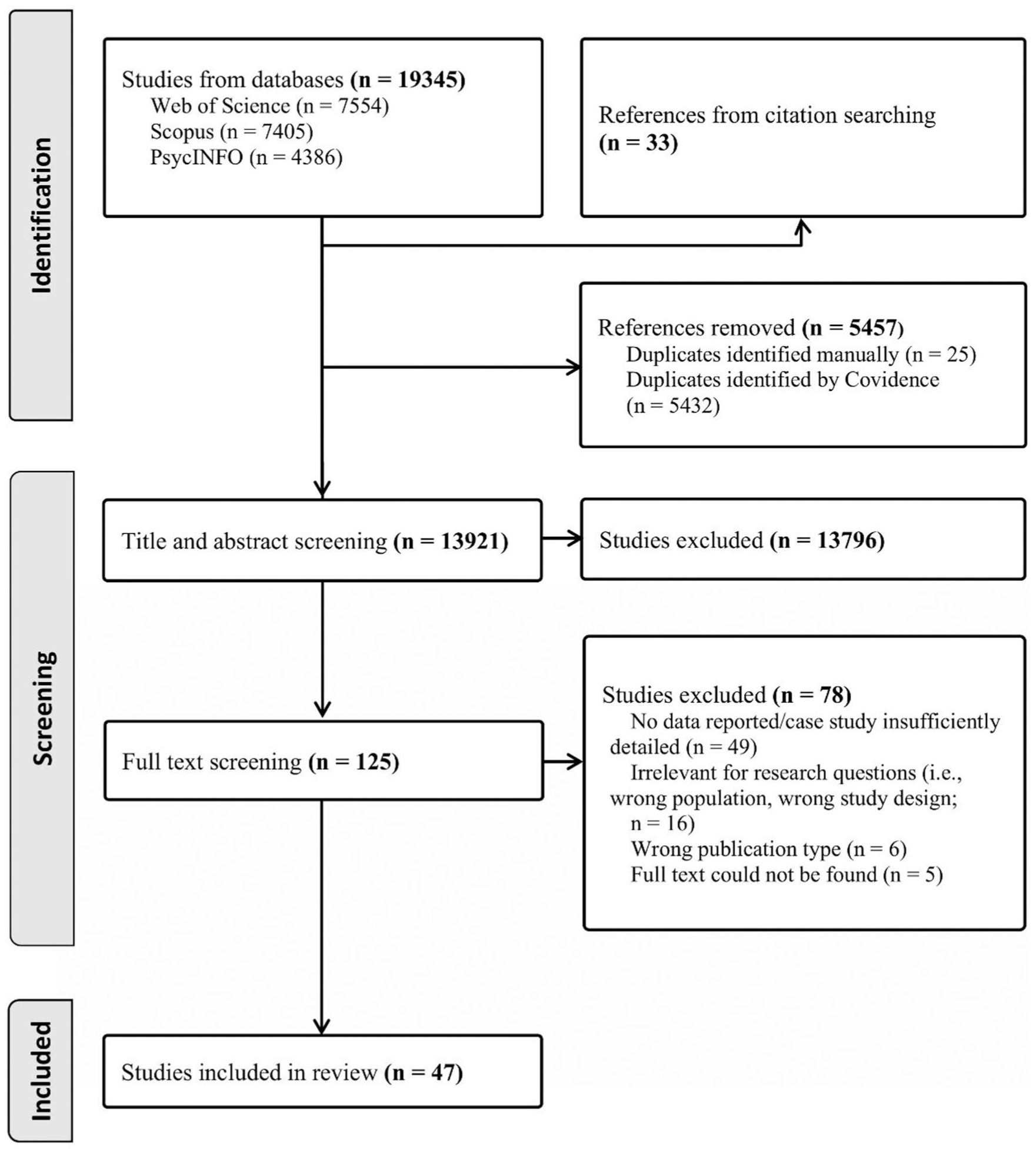
Flow diagram for the scoping review process.
Extraction
We used a preregistered spreadsheet for data extraction (see online supplemental materials). JS and AS independently extracted the data. Any discrepancies during extraction were discussed in detail by JS and AS and resolved by consensus. Metadata encompassed information such as authors, publication year, the publication type, and the country in which the study was conducted. Method data encompassed study aim, design, sample size, sample characteristics, and analysis methods. Information relevant to the research questions included various variables such as case characteristics (e.g., information on the accused, child variables), frequency of CSA allegations, the evaluation of CSA allegations, and documented decisions regarding custody, placement, and visitation. Whenever associations among substantiations and case characteristics or documented custody, placement, and visitation decisions were reported, these were extracted as well.
Synthesis
The tabulated extracted data were descriptively mapped and narratively synthesized, based on the review’s research questions outlined above. This process was based on the Guidance on the Conduct of Narrative Synthesis in Systematic Reviews by Popay et al. (2006). The data presentation also involves frequency counts and graphical mapping. The PRISMA-ScR Checklist for scoping reviews was followed when reporting the results. Not every information to extract was covered in all of the included studies. Consequently, missing data was expected but did not pose a problem because of the scoping review methodology we employed in this analysis.
Results
While the dataset is extensive and varied, this article prioritizes the most salient findings. The complete extraction sheet can be found in the online repository (https://osf.io/hf7jb/?view_only=683d40c5d7e94bcf9510d8c8b521130b).
General Information on the Studies Included in the Review
A total of 47 studies (1983–2024) was reviewed (asterisked in the reference list); 46.4% were published in 2000 or earlier and 69.4% in 2010 or earlier. This limits the contemporary validity of the review’s findings, given the significant developments in CSA discussions and legal frameworks over recent decades, as well as the need for current evidence to inform policy and practice (Spratt et al., 2015). Of these 47 studies, 41 were peer-reviewed journal articles, two were non-peer-reviewed academic journal articles included for their legal scholarship value, and four were doctoral dissertations assessed by academic committees. No relevant preprints were found. Regarding study design, 39 studies presented quantitative data analyses, five employed qualitative methods, and three used mixed-methods approaches.
Sample Sizes
The included studies reported on a total of N = 80,343 cases. Sample sizes varied greatly with a minimum of n = 1 (case study; Brooks & Milchman, 1991) and a maximum of n = 15,980 (Black et al., 2016). The median sample size was n = 188. However, sampling strategies varied substantially, hence the reported total sample size should be interpreted as a broad indicator of the database.
Geographic Distribution
Most studies were conducted in North America: 28 in the United States (59.6%), nine in Canada (19.2%), and eight in Australia (17%). Only two studies originated from Europe – one from the United Kingdom and one from Germany (2.1% each). When looking at case counts rather than number of studies, 65.8% of all 80,343 included cases were from Canada, followed by the United States with 28.7%. Although Australia was the source of eight studies, these accounted for only 1.8% of all cases. In contrast, the single German study contributed 3.6% of cases. Only 0.1% of cases were from the United Kingdom, specifically a sample of Scottish court decisions (MacKay, 2014). Thus, this review’s findings primarily reflect Western contexts and therefore have limited cross-cultural applicability. These jurisdictions share modern rule-of-law frameworks, liberal family norms, relatively strict legal definitions of CSA, and longstanding public debates on CSA and its sequelae, all of which may differ more or less from the cultural and legal settings in other regions, where norms surrounding family, marriage, and even the meaning of CSA may vary (Dubowitz, 2017; Sanjeevi et al., 2018).
Data Sources
Data sources across the 47 studies fell into three categories: child protection agencies, courts, and clinical institutions. Twenty-two studies (46.8%) used child protection data (three also drew on court data, one on a clinical source); 19 (40.4%) relied on court records (three also included child protection data, one a clinical source); and 12 (25.5%) used clinical data (one each also included court or child protection data). Most studies (n = 32, 68.1%) were based on case files, sometimes supplemented by interviews (e.g., with professional stakeholders), including records from child protection agencies, courts, clinical institutions, and sometimes independent expert witness reports. Judicial decisions were specifically analyzed in 10 studies (21.3%). The remaining five studies used written surveys or interviews with professionals (n = 4, 8.5%) or with children directly (n = 1, 2.1%).
Summary
Overall, three main clusters of research can be identified. First, Canadian studies based on large, representative Canadian Incidence Study (CIS) datasets, which draw on CPS data from the late 1990s and 2000s, account for more than half of all participants across the selected studies. Second, Australian studies focus on court cases, primarily from the Federal Court of Australia in the 2010s; these studies are more recent but involve small samples, representing roughly 2% of participants. Third, U.S. studies are more heterogeneous, drawing on clinical, court, and CPS samples and covering both recent and older periods.
Research Question 1: How Often Do Allegations of CSA Occur Within Child Custody and Visitation Proceedings as Well as Child Protection Proceedings?
Thirteen studies reported frequency estimates from non-preselected samples, 4 yielding a total of 17 frequency estimates, as four studies reported multiple values. These estimates are presented in Table 1 in the supplemental materials. When each of the 17 estimates were treated as a single data point, 5 the mean frequency of sexual abuse allegations was 8.9% (SD = 10.31; min = 0%, max = 39%; Md = 6%). Notably, only six of the estimates exceeded 10%, while 47% (n = 8) were 5% or lower.
Overview of the Studies Included in the Analyses of CSA Allegation Frequencies and Substantiation Rates.
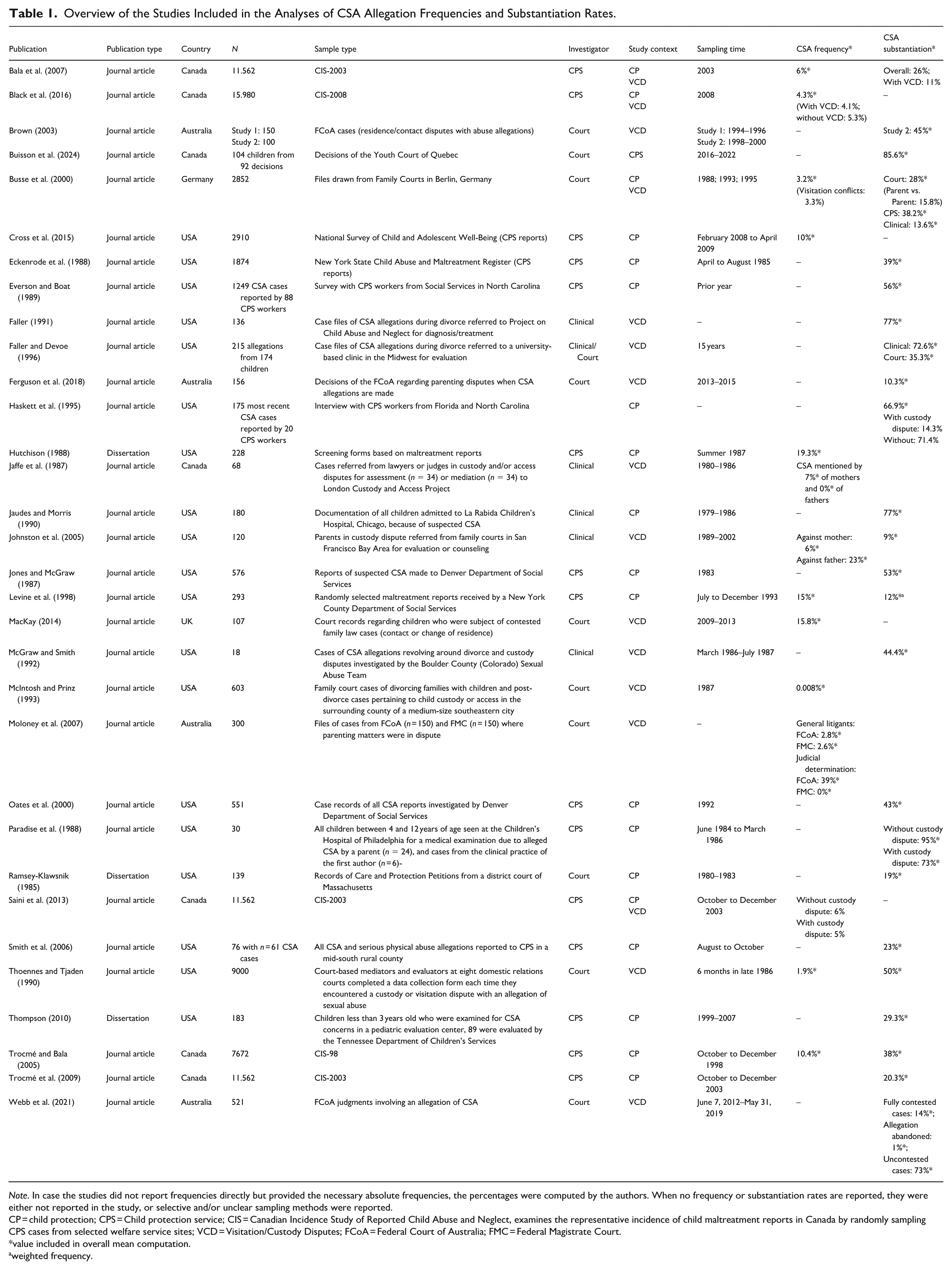
Note. In case the studies did not report frequencies directly but provided the necessary absolute frequencies, the percentages were computed by the authors. When no frequency or substantiation rates are reported, they were either not reported in the study, or selective and/or unclear sampling methods were reported.
CP = child protection; CPS = Child protection service; CIS = Canadian Incidence Study of Reported Child Abuse and Neglect, examines the representative incidence of child maltreatment reports in Canada by randomly sampling CPS cases from selected welfare service sites; VCD = Visitation/Custody Disputes; FCoA = Federal Court of Australia; FMC = Federal Magistrate Court.
value included in overall mean computation.
weighted frequency.
Custody/Visitation Disputes
The mean frequency of CSA allegations was slightly lower (M = 7.9%; SD = 11.04; min = 0%, max = 39%, Md = 3.7%) when the analysis was restricted to cases involving ongoing custody/visitation disputes (n = 9). 6 It should be noted, however, that most studies did not distinguish whether abuse allegations were already known or raised before the parental separation, or whether such allegations emerged during the custody or visitation proceedings (Faller, 1991; Faller & DeVoe, 1996). Two studies analyzed CIS data directly comparing cases with and without custody/visitation disputes, and found only small differences (Saini et al., 2013: 5% vs. 6%; Black et al., 2016: 5.1% vs. 4.3%). Both found that other maltreatment types were far more frequently alleged than CSA, both in cases involving custody disputes and in those without (i.e., Saini et al., 2013 reported physical abuse at 32% vs. 28%, and emotional maltreatment at 20% vs. 14%).
Research Question 2: What Are the Typical Case Characteristics When CSA Is Alleged in Child Custody and Visitation Proceedings as Well as Child Protection Proceedings?
Affected Children and Adolescents
Gender
Twenty-three studies 7 reported on the gender of the children and adolescents allegedly affected by CSA. From 20 studies 8 with quantitative data, an average of 27.2% of affected children were boys (SD = 12.72%; min = 12%, max = 56.07%), and 71.7% were girls (SD = 13.37%; min = 43.93%, max = 88%).
Age
Twenty-three 9 studies provided age-related data for the children. From 11 10 out of these 23 studies providing quantitative mean data, an average age of 7.8 years was calculated (SD = 1.84; min = 6, max = 11.9).
Medical/Psychological Condition
Six studies 11 reported medical and/or psychological data of the affected children. For example, Busse et al. (2000) reported “severe behavioral abnormalities” in about half of the children and developmental delays as well as learning difficulties in 18% of cases, respectively. Jaudes and Morris (1990) found that 15% of children had developmental delays, with these children being significantly younger than those without delays. In the clinical sample analyzed by Hlady and Gunter (1990), 70.6% of children exhibited behavioral issues, including sexualized behavior (35.3%), nightmares (26.5%), anxiety (17.7%), enuresis/encopresis (14.7%), and withdrawal (8.8%).
Accused Individuals
Twenty-two studies 12 provided information on the identity of the accused person. In the studies naming (biological) fathers, their average proportion was 60% (SD = 22.96%; min = 30.1%, max = 100%). 13 In the nine quantitative studies reporting cases in which the mother was identified as the accused, mothers accounted for an average of 5.5% of accused persons (SD = 1.9%; range = 2.9–8.4%). Eight studies 14 identified the mother’s new partner or the stepfather as the accused party at least once, with an average prevalence of 21.89% (SD = 13.67%; min = 3.2%, max = 52%).
The Accusing Individuals
Among the 23 studies 15 providing information on the identity of the accusing party, 9 studies 16 included only cases in which accusations originated from parents against parents (involving visitation/custody disputes) with two reporting quantitative data that identified the mother as the most frequent accuser (Wakefield & Underwager, 1990: 94.4%; Webb et al., 2021: 89.3%). From seven studies providing quantitative data that did not restrict their sample to accusing parents, 17 the average prevalence of mothers as accusing individuals was 76.7% (SD = 8.01%; min = 64%, max = 89.25%). For fathers, the average prevalence was 14.5% (SD = 11.75%; min = 4%, max = 40%). Meier (2020) and Silberg and Dallam (2019) analyzed only cases involving accusing mothers. However, large CIS data analyses found that even in the context of parental separation, only roughly half of the CSA allegations were made by (non-)custodial parents (Bala et al., 2007).
Other accusing individuals or institutions were professionals (4–29%; Bala et al., 2007; Trocmé et al., 2005), medical personnel (11.4%; Levine et al., 1998), child protection agencies (60%; Faller & DeVoe, 1996), youth welfare offices (8%; Faller, 1991; and 30.8%; Thompson, 2010), other authorities or the courts (20%; Faller, 1991), police (8.2%; Thompson, 2010), schools (11.4%; Levine et al., 1998), grandparents (4–16%; Foote, 2006; and 2.2%; Thompson, 2010), and the children themselves (3.3%; Busse et al., 2000; and 22%; Faller, 1991).
Research Question 3: How Are Allegations of CSA Substantiated in These Cases?
Among the studies that mentioned sources of substantiation, not all reported specific information on how professional opinions were formed. For example, Thoennes and Tjaden (1990) reported that only the CPS worker’s opinion (20%), only the custody evaluator’s opinion (47%), or both (33%) were available. The next section details the main substantiation methods used in the included studies.
Physical/Medical Evidence
McGraw and Smith (1992) specified that physical evidence includes any indications of ejaculation, sexually transmitted diseases, or physical trauma. Across the studies reporting physical evidence, it was a relatively rare form of evidence (i.e., Ferguson et al., 2018: 3.8%; Hlady & Gunter, 1990: 17.6%). In their interview study with CPS workers, Haskett et al. (1995) found that a medical consultation occurred in 66.9% of cases (see also Smith et al., 2006).
Expert Testimony
In a relevant number of studies, mostly drawing from court samples, expert testimony was an important source for substantiation. However, the involvement of experts and the qualifications required for them vary considerably across countries, which may limit the comparability of findings. Haskett et al. (1995) found that U.S. CPS workers used medical (66.9%) and mental health experts (19.4%) in the process of substantiation. Smith et al. (2006) reported medical exams in 57.1% of cases examined in a Child Advocacy Center in the United States. While Busse et al. (2000) reported that psychological expert witnesses were involved in approximately one-third of the examined German court cases, Webb et al. (2021) and Schindeler (2019) found in their analyses of judgments by the Family Court of Australia that independent expert opinions from various professionals (psychologists, social workers, medical experts) were heard in the vast majority of cases. Schindeler (2019) highlighted the lack of standardized qualifications for expert witnesses in Australia, noting conflicting conclusions between treating psychologists and non-treating experts, as well as courts’ skepticism toward reports based on biased data or questionable indicators (e.g., behaviors, drawings). Similarly, Busse et al. (2000) identified major methodological flaws in some German reports, particularly the absence of child interviews and inadequate assessment of suggestive influences which in many cases is considered an important scenario to be investigated (Laajasalo et al., 2018).
Testimonies and Interviews
One of the most frequently relied-upon forms of evidence is the testimony of the children involved. In studies focusing on clinical assessments, Jones and McGraw (1987), McGraw and Smith (1992), and Everson and Boat (1985) listed several aspects of a child’s statement as relevant for the substantiation process (i.e., details, expressed emotions, consistency).
Child interviews and their evaluations were important factors in court- and CPS-related studies as well. For example, Busse et al. (2000) reported that child interviews were conducted in 58% of cases. Haskett et al. (1995) found that all children were interviewed, with additional interviews conducted for siblings (n = 41, 23.4%), the nonoffending parent (n = 135, 77.1%), and the alleged offender (n = 34, 19.4%). Ferguson et al. (2018) found that substantiation was primarily based on reports from alleged abusers and children (substantiated cases: 68.8%; unsubstantiated cases: 58.4%), with eyewitness accounts playing a lesser role. Schindeler (2019) highlighted that children were often interviewed multiple times and discussed potential harm for children due to multiple interviews.
Child’s Behavior and Other Problematic Indicators
Several studies also reported that substantiation relied on the child`s behavior as well as other indicators that can be considered problematic. As already mentioned above, some expert witnesses in the court case sample collected by Schindeler (2019) seemed to interpret emotional reactions and drawings of the child involved. Other studies listed the children’s use of toys and drawings as well as the behavior of the child during the period of the abuse as relevant indicators (Jones & MacGraw, 1987; McGraw & Smith, 1992). Similarly, Haskett et al. (1994) named anatomical dolls (21.7%) and drawings (11.4%) as interview aids, and mentioned behavioral and emotional indicators to be used as factors of substantiation (fear of offender/retaliation: 18.8%; distress during interview: 10.3%; disturbances: 9.4%; depression: 9.4%). This contradicts established assessment standards, which highlight the suggestive nature and limited reliability of interpreting such “signs.” Drawings and many behavioral indicators are ambiguous, easily misinterpreted, and can arise from numerous causes unrelated to abuse; therefore, current guidelines advise against using them as evidence of CSA and instead recommend a combination of socio-emotional support and focusing on open questions (Korkman et al., 2024; Lamb et al., 2007).
Research Question 4: To What Extent Are the Allegations of CSA Considered Substantiated, Unsubstantiated, Unverifiable, or Not Specified?
Twenty-three studies reported 29 eligible CSA substantiation rates from unselected samples 18 (see Table 1). The average across these 29 reported substantiation rates was 42.8% (min = 1.0%, max = 85.6%; SD = 26.0%; Md = 41.0%). On average, clinical institutions (n = 6; M = 48.9%) and CPS (n = 13; M = 45.1%) substantiated more often than courts (36.1%, n = 10).
However, there was a wide variation in reported frequencies especially in court samples. For example, Buisson et al. (2024) analyzed n = 92 decisions from the Québec Youth Court (Canada) between 2016 and 2022 involving children aged 12 or younger in non-settled cases. In this sample, 85.6% of mostly intra-familial abuse allegations involving 104 children were substantiated. By contrast, Ferguson et al. (2018) analyzed n = 156 decisions of the Family Court of Australia from 2013 to 2015 regarding parenting disputes when CSA allegations were made, and found a substantiation rate of 10.3%. Webb et al. (2021) reported substantiation rates separately for contested, uncontested, and retracted allegations, with a very low substantiation rate of 1% for the last group, but higher rates for the other two (uncontested: 73%; contested: 14%).
Differentiations of Non-Substantiated Cases
Only a minority of the studies further differentiated non-substantiation. Overall, these studies mostly found that non-substantiated claims were very rarely intentional lies and seldom initiated by the children themselves. Instead, they were primarily made by adults, usually without any intention to fabricate allegations.
Lies
Eight studies 19 reported frequencies of intentional false allegations, whether made by adult caregivers or children. On average, these studies reported that 7.0% (min = 1.6%, max = 16.8%; SD = 4.8%; Md = 6%) of all substantiation decisions involved allegations judged to be intentionally fabricated. 20 Again, estimates varied widely but the rates of intentionally false allegations were consistently much lower than the non-substantiation rates.
Unresolved/Not Determined
The category unresolved or not determined was reported in 10 eligible studies using 13 estimators. 21 This included cases where suspicions remained, but a final decision could not be reached. On average, 16.9% of cases fell into this category (min = 3.3%, max = 41%; SD = 9.6%; Md = 17%).
Details About False Allegations
Some studies reported more detailed information about the nature of false allegations. Ferguson et al. (2018) listed insufficient evidence (41.6%), the reporting individual (14.2%), or the child being viewed as unreliable (10.5%). In 6.3% of cases, the reporting parent was believed to have coached the child or the child was thought to have made a deliberate false allegation. In 4.2%, mental health issues or inconsistencies in testimony were noted. In 23.9% of unsubstantiated cases, Parental Alienation Syndrome (PAS) was mentioned. In their review of 551 child protection case files from Denver involving suspected CSA, Oates et al. (2000) found that 17.3% of the non-substantiated cases (n = 185) involved exaggerated concerns by a parent or relative, and 16.2% were based on unconfirmed reports from laypersons (11.3%) or professionals (4.9%), while in 4.8%, an adult was believed to have fabricated the allegation. In only 2.5% of all cases (n = 14), children were believed to have made false accusations. Similarly, both Jones and McGraw (1987) and McGraw and Smith (1992) found that fictitious accounts from children were noted less often than those from adults (1% vs. 5% and 5.5% vs. 11%, respectively). Finally, Schindeler (2019) reviewed contested custody dispute cases from the Family Court of Australia, and reported that in 40% of all n = 93 cases, evidence for parental coaching was found. In n = 10 cases (10.8%), such coaching was classified as a deliberate attempt to support a false allegation by the child.
Custody Dispute Context
When only cases with custody/visitation disputes between parents were included, the substantiation rate was slightly lower than the overall substantiation rate reported above (M = 35.5%; min = 1.0%, max = 77.0%; SD = 27.0%; Md = 35.3%). Within the CIS-2003 from Canada, Bala et al. (2007) also found that substantiation rates were lower in a subsample of cases involving parental separation (n = 69; 11% vs. 26%). Similar results were reported by Paradise et al. (1988) (custody conflict: 73%;. no custody conflict: 95%) and Haskett et al. (1994) (custody conflict: 14.3%; no custody conflict: 71.4%), although their samples especially of custody-related cases were quite small (n = 11 vs. n = 14). Busse et al. (2000) reported a lower substantiation rate when one parent accused the other (n = 19) compared to the overall rate (15.8% vs. 28%). Therefore, individual studies reported larger differences between substantiation rates in custody-related versus non-custody-related cases than those observed in the aggregated findings; however, these results were generally based on small samples, making their reliability uncertain.
Very few studies included differentiated data on non-substantiation in cases involving a custody dispute. For example, only two studies reported intentional false allegations in the context of custody disputes (McGraw & Smith, 1992: 16.5%; Faller, 1991: 2.2%). Bala et al. (2007) 22 found that the overall rate of intentional lies was much higher when only the context of parental separation was considered (5% vs. 18%). However, with a rate of 36% accusations classified as unsubstantiated but made in good faith were twice as common.
Research Question 5: What Custody/Visitation/Placement Decisions Are Reported and How Does the Substantiation Relate to the Custody/Visitation/Placement Decisions?
Of the 47 studies included in the literature review, only six reported a direct association between substantiation decisions made by an institution and the resulting family law outcomes. Busse et al. (2000) found that in 45 German custody/visitation cases, the abuse allegations influenced only 19 decisions. Even when allegations, mostly against the fathers, were considered unsubstantiated (n = 8), visitation was restricted in some cases due to residual doubts or conflict concerns while in custody cases with unfounded allegations (n = 7), the accused parent kept or was granted custody in five cases. Substantiated allegations (n = 3) always led to visitation suspension or custody removal. Faller and DeVoe (1996) studied 215 CSA allegations arising in the context of separation (174 children, 1976–1991) and found that courts denied unrestricted access to children more often in likely than in unlikely cases (60.3% vs. 37.2%). Such decisions were associated with abuse severity, conviction, confession, or professional corroboration. The court’s substantiation rate (35.3%) was lower than the overall rate of protective action (53.5%), suggesting that courts considered more factors than substantiation alone. Buisson et al. (2024) found that in 27% of cases with substantiated allegations from the Family Court of Quebec, the children were removed from the home, although 87.5% of removals occurred before the hearing. Ferguson et al. (2018) provided data from a sample of court rulings in the Federal Court of Australia on substantiation rates and whether the mother or father was granted residence or responsibility. However, the study did not indicate which parent was accused or whether the rulings altered existing custody arrangements, leaving the impact of the allegations on parental rights unclear.
Court Studies Involving PAS Claims
Meier (2020) analyzed 4,338 U.S. family court decisions (2005–2014). Custody never transferred to the father in substantiated CSA allegations by the mother (n = 27). When mothers reported CSA (alone or with physical abuse) and fathers claimed PAS, the mother lost custody in 56% of instances (n = 26/46). Courts accepted PAS claims in 25 cases, which often corresponds to non-substantiation of abuse allegations, and in 76% of these cases (n = 19), the mother lost custody. Similarly, Meier and Dickson (2017) found in a U.S. family court decision sample (n = 238, from 2002 to 2013) that 6% of CSA allegations with PAS claims were substantiated; in 95% of these cases, custody transferred from the mother to the father.
Summary
Overall, these findings suggest that substantiation is an important but not the only decision-making factor, as placement and visitation restrictions usually occur more frequently than formal substantiations, and courts sometimes impose protective limitations on a parent even when allegations cannot be confirmed. In the United States in particular, PAS appears to play a notable role in interpreting non-substantiated CSA claims. However, research remains scarce and often lacks the detailed data necessary to fully understand the dynamics of allegations and court decision-making, both in cases with and without PAS claims.
Research Question 6: What Is the Relationship Between the Substantiation of Allegations of CSA and Typical Case Characteristics?
A total of 21 studies 23 provided various findings regarding case-level variables associated with substantiation rates. We summarize the most important results.
Child-Related Variables
Some studies examined the role of age in substantiation outcomes, mostly identifying a positive association between the child’s age and the likelihood of substantiation (Thoennes & Tjaden, 1990; Eckenrode et al., 1988; Oates et al., 2000; Haskett et al., 1995; Thompson, 2010; no age effect found by Buisson et al., 2024). By contrast, Oates et al. (2000) found that children who made false allegations were significantly older than those in the comparison groups. Two studies investigated gender and found higher substantiation rates for cases involving female children (Eckenrode et al.,1988; Faller & DeVoe,1996). Several studies suggested that verbal disclosures or specific information provided by the child were positively associated with substantiation (Thompson, 2010; Faller & DeVoe, 1996; Haskett et al., 1995).
Variables Related to the Accused and the Accuser
Faller and DeVoe (1996) reported a higher likelihood of an allegation being rated as “likely” if the accused had made a confession. With respect to the accuser, there were some indications that false allegations may be more common among individuals with personality disorders (Wakefield & Underwager, 1990), and that substantiation rates tended to be lower when the accusing party was the child’s mother (Ferguson et al., 2018). In their sample of U.S. court decisions with unclear search strings, Meier (2020) reported lower substantiation rates in cases where Parental Alienation Syndrome (PAS) was alleged (2% vs. 15%; see also Meier & Dickson, 2017).
Other Case Variables
Several studies found that the presence of testimony from other witnesses (Faller & DeVoe, 1996; Thompson, 2010; see also sibling interviews in Haskett et al., 1995), other forms of evidence (e.g., medical examinations; Faller & DeVoe, 1996; Haskett et al., 1995), and indicators of investigative intensity or authority involvement (such as professional sources of suspicion, number of contacts with affected individuals, duration of the investigation, and legal action following disclosure; Eckenrode et al., 1988) were positively associated with substantiation. Similar associations were observed for abuse characteristics such as the frequency of abuse or prior abuse history (Faller & DeVoe, 1996; Thoennes & Tjaden, 1990), and abuse severity (Haskett et al., 1995).
Discussion
This preregistered scoping review addressed the current state of scientific knowledge regarding allegations of sexual abuse within the context of family court and child protection proceedings. The key results are summarized in Table 2. Overall, the empirical literature can be grouped into three clusters: Canadian analyses of large national datasets from the late 1990s and 2000s; Australian court-based studies from the 2010s; and U.S. research spanning several decades with varied methodologies. Across studies, CSA allegation prevalences averaged 8.9% and were less frequent than other maltreatment allegations, with most – but not all – cases involving mothers accusing fathers. Substantiation rates averaged 43%, with only slight, if any, reductions in custody and visitation disputes. Most unsubstantiated claims reflected genuine but mistaken concerns. Though many studies did not specify the evidence, substantiation appears to have relied mainly on testimonies from children, other witnesses, and expert evaluations. However, potentially problematic indicators, such as behavior, may also still play a role. Evidence on legal consequences is limited, but substantiated allegations typically led to restricted or suspended contact, while unsubstantiated or unclear allegations elicited more variable judicial responses, sometimes including restrictions despite non-substantiation.
Critical Findings.
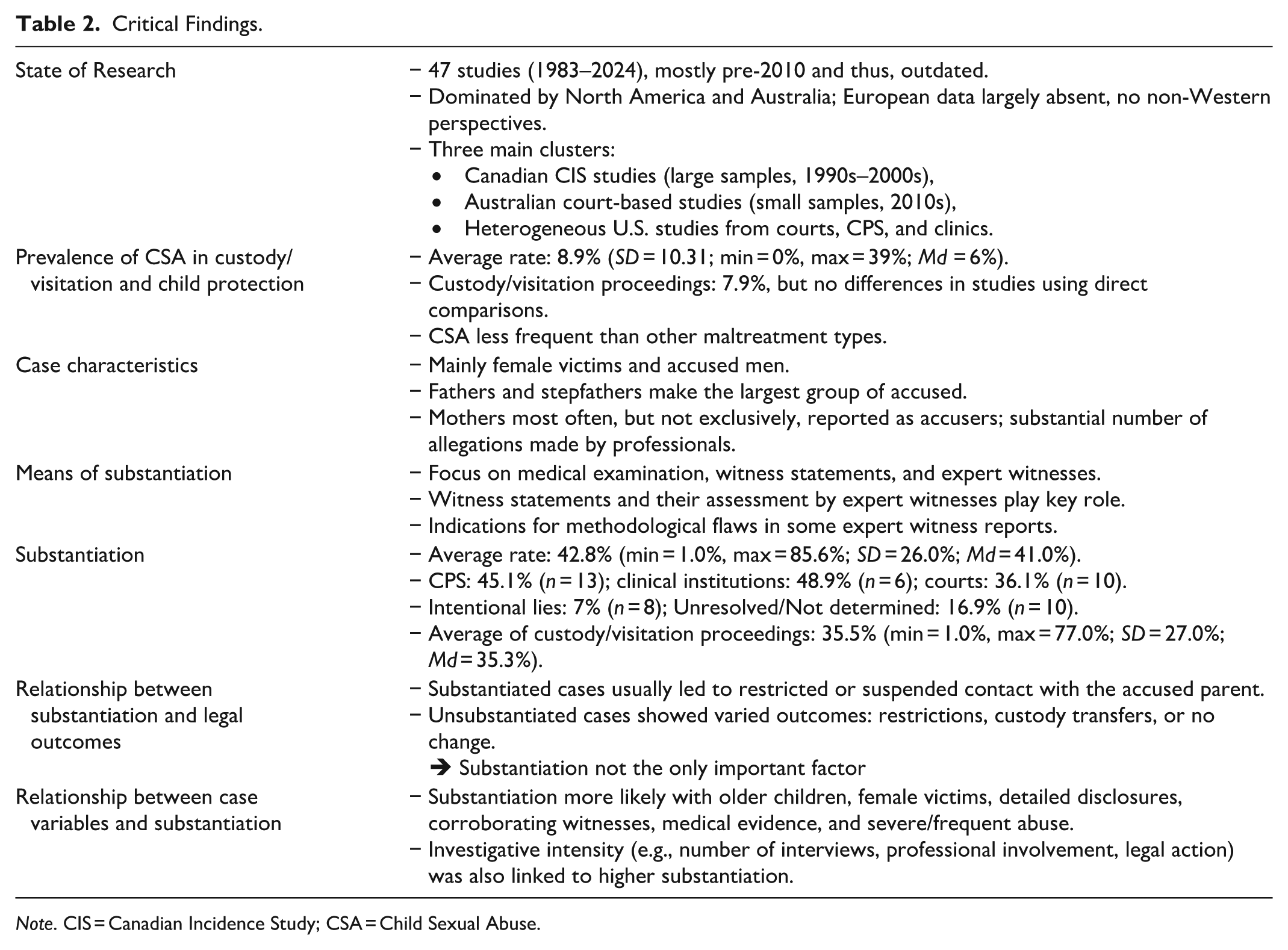
Note. CIS = Canadian Incidence Study; CSA = Child Sexual Abuse.
The Current State of Empirical Research
First, with fewer than one-third of the 47 studies published after 2010, much of the research may be outdated. Since then, custody practice has evolved through new forensic guidelines, ethical standards, and evaluator expertise (Ackerman et al., 2021), alongside greater awareness of CSA, trauma-informed approaches, and shifts in societal attitudes. Legal standards, safeguards, and institutional responses have also changed, meaning older studies may no longer reflect current legal, clinical, or social realities, limiting their relevance for today’s practice and policy. Second, while the field’s Western roots explain the dominance of studies from North America and Australia, the near absence of European studies is striking and difficult to justify. European child protection and family law systems differ in important ways, for example, responsibilities for conducting assessments vary, and custody/visitation evaluations and child maltreatment assessments are often less clearly separated than in North American contexts, with direct practical implications (Zumbach et al., 2022). Also, the USA, Canada, and Australia rely on mandatory reporting of suspected abuse (although there are differences concerning which cases should be reported to whom; see Mathews & Kenny, 2008). This feature is not shared by all European systems and likely influences which cases enter official processes. As a result, the lack of evidence from Europe may have had a major influence on the results. Moreover, incorporating non-Western perspectives on family law, abuse, and custody would also add valuable insights by highlighting cultural and legal approaches that may differ markedly from those in Western contexts. While the language constraint of the current review may have influenced the findings, there is evidence that addressing CSA as both an individual and societal issue presents distinct challenges across cultures and regions. Many of these challenges are not unique to particular cultures but occur in diverse contexts worldwide, such as patriarchal norms, conservative family values, and limited recognition of children’s rights. Yet, their expression and impact vary and are shaped by cultural contexts. These factors can make it particularly difficult to discuss CSA, especially when it intersects with family matters such as separation or divorce (i.e., Attrash-Najjar & Katz, 2023; Sanjeevi et al., 2018). Third, in light of the complexity of decision-making in family law proceedings, especially those involving CSA, there is a lack of in-depth qualitative research exploring how judges assess and evaluate such cases (for exceptions see Higgins, 2010, and Buisson et al., 2024). Finally, key questions remain underexplored, particularly how substantiation outcomes relate to custody or placement decisions. Little data exists on specific accusation constellations (e.g., mother vs. father, father vs. mother, or professionals vs. parents), and how these compare with one another in relation to substantiation and subsequent custody or visitation rulings. Similarly, most studies did not provide systematic information regarding whether the allegation was made prior to parental separation, potentially contributing to the decision to divorce, or after custody proceedings had commenced (for an exception, see Faller & DeVoe, 1996). This is a notable gap given the frequently voiced concern that CSA allegations, particularly those raised by mothers, may be strategically motivated to influence custody outcomes (for a critical perspective, see Milchman, 2024).
Based on the current state of research, we propose a research agenda to address existing gaps. Future work should adopt mixed-methods designs that integrate quantitative estimates with qualitative analyses examining how substantiation relates to custody, placement, and access decisions, as well as how the constellation and timing of allegations shape outcomes. Cross-national comparisons, particularly in Europe and non-Western contexts, are needed to capture legal and cultural variation. Ideally, longitudinal designs would follow cases across the entire decision-making process, allowing closer analyses of influencing factors and the longer-term consequences of placement and access decisions for affected children.
Findings on CSA Allegations in Family Law Proceedings
With the shortcomings of the current state of research in mind, the reviewed data allow for some cautious conclusions.
CSA Allegations May Not Be Overly Prevalent in Family Law Proceedings
Although often the subject of intense public and professional debate, and unquestionably of critical importance when they arise, CSA allegations appear to occur only in a small minority of family law and child protection proceedings, and less frequently than other forms of maltreatment mirroring general prevalence rates reported by large studies (Stoltenborgh et al., 2015). When restricting the analysis to studies specifically focusing on custody or visitation disputes, we observed a slightly lower average prevalence of CSA allegations compared to the global average. However, due to substantial methodological variation across studies, including differences in case selection, definitions, and data sources, this mean estimate should be interpreted with caution. Moreover, large-scale Canadian studies that directly compared the frequency of CSA allegations in cases with and without custody disputes found, at most, negligible differences. Thus, we found no evidence to support the sometimes voiced assumption that CSA allegations occur particularly frequently in custody proceedings.
Rare False Allegations, Moderate Substantiation Rates, and Complex Decision-Making
The brief overview of the substantiation methods we provided shows the complexity of decision-making in CSA cases. Given that sexual abuse often leaves no physical evidence, child interviews remain the most critical source of information. This highlights the importance of adhering to established, evidence-based guidelines for forensic child interviewing (Korkman et al., 2024). Such interviewing includes the use of socio-emotional support and primarily relies on open questions (Lamb et al., 2007). It also encompasses awareness of the suggestive potential of closed questions, the ambiguity of children’s behavior and drawings, and the risk of eliciting false allegations when using facilitators such as anatomical dolls. Given the core ethical challenge to protect children from abuse while preserving family integrity by avoiding false accusations, it is imperative for investigators to closely follow these evidence-based interview guidelines.
The mean substantiation rate of 43% should be interpreted with caution as it treated all rates equally, although key features such as sample sizes varied significantly. Nevertheless, this number is consistent with substantiation rates documented in international studies (e.g., Laajasalo et al., 2018). Although there are some indications of lower substantiation rates in custody disputes and parent-against-parent accusations, the evidence is too inconsistent to support claims of significant differences. Thus, we found no clear evidence to support the often voiced concern regarding an overly skeptical stance toward CSA allegations raised in custody proceedings. However, the relatively low substantiation rates highlight persistent challenges in confirming CSA allegations regardless of the proceedings type while our data do not allow us to determine whether this reflects a genuinely higher incidence of false allegations, or simply the limitations of available means of substantiation.
Cases were more likely to be substantiated when the child provided detailed and specific accounts of the alleged incidents, when the allegations involved multiple and severe instances of abuse, when additional forms of corroborating evidence were available, when the alleged perpetrator confessed, and when child protection and investigative authorities were consistently and actively involved before and during the proceedings (for similar variables in criminal proceedings involving CSA, see Duron, 2018, and Joki-Erkkilä et al., 2018). These findings underscore the need for authorities to become involved early and proactively with affected families, ideally supported by a well-functioning prevention network. They also highlight the importance of collecting evidence carefully, potentially in collaboration with police investigators, while adhering to established child interview standards (see above). The lower average substantiation rate in court-based studies (36%) should be interpreted cautiously, as some studies report higher rates (e.g., Buisson et al., 2024) and court cases likely represent a preselected, more complex, and contested subset of allegations.
The current review also showed that when institutions do not substantiate allegations, this should not be equated with assuming intentional deception. In the few studies that explicitly reported on the frequency of deliberate fabrication, confirmed false allegations were found to be exceedingly rare. This underscores the challenging role of institutions handling CSA allegations, which must make complex decisions amid heightened societal awareness, potential consequences, and the risk of false or inconclusive claims. All the more, careful communication of non-substantiation decisions, particularly to the alleging parent, appears crucial for supporting subsequent custody and access proceedings, as well as for maintaining parental cooperation and trust in the legal system.
When Substantiation Matters – and When It Doesn’t: Legal Responses to CSA Allegations
Available evidence suggests that courts adjust their decisions based on the substantiation of CSA allegations. When substantiated, contact with the accused parent is often restricted or suspended. In unsubstantiated or unclear cases, outcomes vary: contact may still be limited, custody may transfer, or arrangements may remain unchanged. This highlights the central role of substantiation, while also showing that additional factors, such as the accusing parent’s response or the child’s welfare, can influence decisions. U.S. data indicate that assumptions of PAS may also affect rulings, though further research is needed. It must be stressed that, especially in an emotionally challenging situation such as a divorce, false suspicions can lead to often unintentional suggestive questioning of a child by their parent (O’Donohue et al., 2010; Principe & London, 2022). At the same time, the concept of PAS has been criticized for making overly strong claims and being unscientific (Meier et al., 2022; Neustein & Lesher, 2009). This makes the uncritical use of its claims and terminology unwarranted; nevertheless, any potential suggestive influences must still be examined with particular care. Future research may examine the use of PAS more closely, particularly with respect to potential gender asymmetries in its application and the judicial biases that may accompany it.
Implications of This Review for Future Practice, Policy, and Research
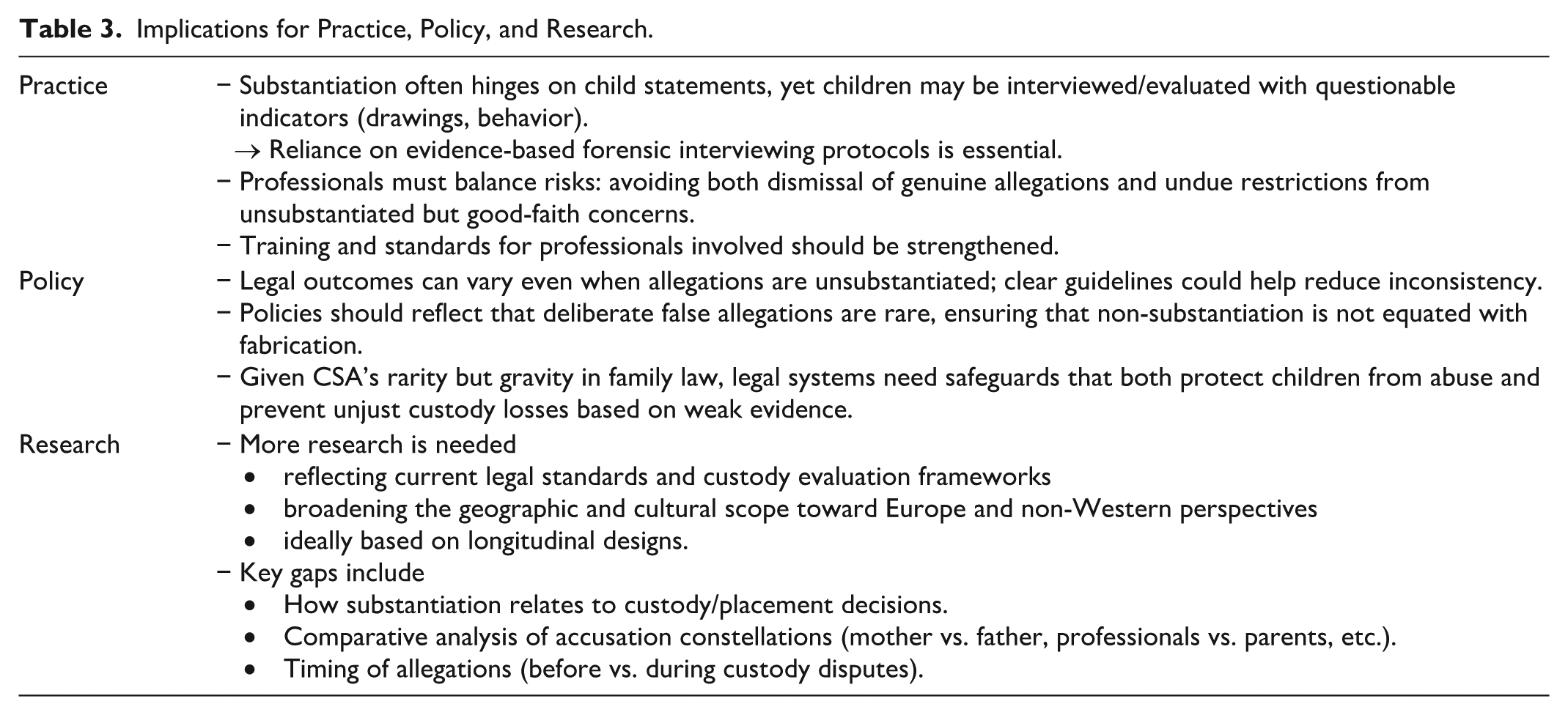
The implications of this scoping review for practice, policy, and research are summarized in Table 3. Overall, practice implications highlight the central role of child interviews, underscoring the need for evidence-based forensic protocols, as questionable indicators still influence decision-making. Moreover, decision-making authorities must carefully communicate substantiation decisions and ensure cooperation of all persons involved. At the policy level, inconsistent legal responses, sometimes restricting contact even in unsubstantiated cases, highlight the need for clearer, evidence-informed guidelines that protect children without unfairly penalizing parents. Such guidelines should also communicate that, while many cases may not be substantiated, they are nevertheless not intentionally fabricated. In terms of research, much of the literature is outdated, and European evidence is almost entirely absent despite the issue’s global relevance. Key gaps include the timing of allegations, comparisons across different accusation constellations, and especially studies providing non-Western perspectives. We call for a research agenda that not only addresses these gaps, but ideally incorporates mixed-methods longitudinal designs and enables cross-cultural comparisons.
Implications for Practice, Policy, and Research.
Footnotes

Ethical Considerations
Since no primary data involving human participants was collected, ethical approval was not required.
Funding
The authors disclosed receipt of the following financial support for the research, authorship, and/or publication of this article: Research grant by the German Federal Ministry for Family Affairs, Senior Citizens, Women and Youth/the Independent Commissioner for Child Sexual Abuse Issues.
Declaration of Conflicting Interests
The authors declared no potential conflicts of interest with respect to the research, authorship, and/or publication of this article.