



Abstract
Millions of children are growing up forcibly displaced in protracted crises lasting years or decades. We conducted the first global systematic review of protective parenting in protracted refugee situations, examining evidence in 22 languages across 10 databases, 16 humanitarian reports, and the top 100 websites from 72 host countries. From 45 studies, we identified three categories of parenting behaviours, the ‘3 Cs’ of parental protection: Control (surveillance or restriction of the child’s behaviour), Conceal (hiding children from threats or hiding threats from children), and Concede (abandoning or separating from the child). Such strategies address immediate risks but may hinder children’s education, social development, independence, and psychological wellbeing – representing a protective paradox. Three empirically informed principles emerge for addressing this paradox: (a) demonstrating rather than prescribing protective alternatives, (b) stratifying rather than simplifying interventions to account for intersecting vulnerabilities that influence families’ risk assessments, and (c) replacing rather than prohibiting existing strategies by providing safer alternatives that address immediate threats while enabling development. These principles may guide practitioners and policymakers in helping refugee families navigate the trade-offs between minimising immediate threats and avoiding delayed development.
Keywords
Introduction
Over 120 million people have been displaced by war and conflict (UNHCR, 2024), enough to form a line around the Earth’s equator almost twice if standing in single file (Gordon, 2012; NASA, 2024). Of the entire refugee population, children make up around half, despite representing less than a third of the world’s population (UNHCR, 2024). For most of these children, displacement is not temporary but rather a lifelong ordeal spent in protracted refugee situations (UNICEF, 2023), defined as “25,000 refugees from the same country [who] have been living in exile for more than five consecutive years” (UNHCR, 2020). Protracted situations exist in more than 70 countries worldwide (Khraisha, Abujaber, et al., 2024; UNHCR, 2004).
In such situations, refugee children face numerous serious threats, including sexual and physical violence, theft, and discrimination (Kobia et al., 2009; Milner, 2011). At the same time, their parents’ capacity to ensure their safety is restricted by legal and economic factors (Aleinikoff & Poellot, 2014). Weak legal protections and ineffective law enforcement push refugee parents into exploitative job markets, forcing them into long working hours that limit their ability to supervise and safeguard their children (Hassel & Krause, 2016; Lischer, 2017; Norwegian Refugee Council, 2019). This exploitation of refugee labour creates unfair competition with local workers, fostering distrust towards refugee communities (Betts et al., 2023; BouChabke & Haddad, 2021). As a result, discriminatory attitudes develop, which local children may observe and direct against their refugee peers (Barron et al., 2023). Consequently, the same systemic vulnerabilities that initially hinder refugee parents’ ability to protect their children can ultimately give rise to further threats.
Previous systematic reviews have made it difficult to understand refugee parental protection strategies because they conflate refugee experiences with those of other migrants, including people who ceased to be refugees (Eltanamly et al., 2021; Merry et al., 2017). This is problematic because caregiving quality is hindered by legal precariousness and prolonged uncertainty about the future (Alonzo & Kindsvater, 2008; Shalhoub-Kevorkian, 2019). Specifically, the unpredictability and harshness of protracted displacement may force refugee parents to adopt fast or slow life history strategies for their children, characterised by early or delayed child maturation (Cabeza de Baca & Ellis, 2017; Csathó & Birkás, 2018). To better understand this, we conducted the first systematic review on protective parenting behaviours in protracted refugee situations.
Methods
Our systematic review strategy is detailed in Khraisha, AbuJaber, et al., (2024). We followed the Joanna Briggs Institute’s guidelines for mixed methods reviews and the Preferred Reporting Items for Systematic Reviews and Meta-Analyses reporting standards (Page et al., 2021; Stern et al., 2020). Our protocol was pre-registered on both the Open Science Framework and the International Prospective Register of Systematic Reviews (PROSPERO) databases (https://osf.io/tuv6q/?view_only=d52cc358015642fea2f762dd9d589883). Note that this work is part of a more extensive systematic review targeting all research on parenting in protracted refugee situations.
Criteria
Our focus is on studies published on or before July 2022 conducted in protracted refugee situations, defined as situations involving 24,000+ refugees from the same country living in exile for over 5 years (UNHCR data finder; See Supplemental Material Table 1). The number of refugees needed to satisfy the definition of a protracted refugee situation was reduced from 25,000 (UNHCR official criteria) to account for settings where precise refugee population tracking is challenging, as UNHCR may round figures to the nearest thousand among these populations (UNHCR, 2007). In addition to being conducted during a protracted refugee situation, studies needed to contain data on parenting relating to someone who is both a refugee (as defined by the Refugee Convention as those outside their home country due to persecution) and a parent (including any legal or customary caregivers) of children under 18 (Darling & Steinberg, 1993; UNHCR, 1951). Parenting was defined as any directly observable parental behaviours, including overall parenting practices or styles carried out in relation to a child aged 18 or less (we considered parenting practices and styles in line with Darling & Steinberg, 1993). Studies did not require child or parent participation (e.g. other stakeholders could report on observed parenting behaviours) so long as the data were focused on parenting.
We screened for parental behaviours that related to protection. A behaviour was considered protective if it was done to keep the child safe from direct harm or help prevent dangerous situations, regardless of the degree of approach, that is, whether the behaviour was ‘overprotective’ or ‘underprotective’ (Thomasgard et al., 1995, p. 244). What is ‘harmful’, ‘risky’, or ‘dangerous’ was based on what parents perceived to be as such. We decided upon this to avoid prescriptive expectations of parenting when displaced families face ecological conditions that differ significantly from those of non-displaced families (Eaton et al., 2018). This meant that, while our assessment criteria aligned partially with UNHCR’s (1994, 2012, 2021) best interests determination procedures, they differed in one crucial aspect: whereas UNHCR procedures prioritise objective measures of child wellbeing, our criteria focus exclusively on parents’ expressed understanding of what is best for their children. For instance, a refugee parent might keep their children out of school to shield them from perceived, albeit ambiguous, dangers such as moral corruption. Although access to education is objectively beneficial and no clear threat may be present, we would have interpreted this decision as a protective act, reflecting the parents’ reported intention to safeguard their children.
Search and Synthesis
Our search strategy was extensive, covering both academic and non-academic sources: 10 electronic databases were searched for peer-reviewed literature: the Medical Literature Analysis and Retrieval System Online (MEDLINE; via EBSCOhost), the American Psychological Association’s APA PsycINFO (via EBSCOhost) and APA PsycArticles (via EBSCOhost) databases, as well as the Education Resources Information Centre (via EBSCOhost), the Cumulative Index to Nursing and Allied Health Literature (via EBSCOhost), the Maternity and Infant Care Database (MIDIRS; via Ovid), Sociological Abstracts (via ProQuest), Embase, the Cochrane Central Register of Controlled Trials (CENTRAL), and the Web of Science Core Collection.
Grey literature was gathered from unpublished scholarly work through ProQuest, documents from 16 humanitarian organisations, and local materials from 72 refugee-hosting countries. Searches were conducted in English, Arabic, Urdu, French, and Italian (languages our team members were proficient in). These languages also align with the primary languages used in regions with significant refugee populations, particularly in the Middle East, South Asia, and parts of Europe and Africa. Additionally, our search yielded articles in the following languages: Armenian, Chinese, Croatian, Danish, Dutch, German, Hebrew, Iranian, Japanese, Polish, Portuguese, Russian, Serbian, Slovenian, Spanish, Turkish, and Vietnamese. Our reviewers screened all languages except Armenian, Hebrew, Slovenian, Russian, and Polish, which were screened using a large language model (GPT-4). This screening process was validated and double-checked by the reviewers, who translated the text (Khraisha, Put, et al., 2024). This multilingual approach captures literature from diverse geographical regions, thereby reducing potential publication bias toward English-language studies.
Selection and data extraction involved multiple reviewers for quality control. A group of 23 research assistants extracted data, with all work reviewed by Q.K. A third reviewer independently screened 10% of the studies. We extracted information on study identifiers, participant details, methodology, and findings. All relevant study findings were exported and then thematically classified (e.g., material relating to mental health, responsive feeding, parental protection, etc.). This was done by Q.K., with approximately 10% of the classifications being checked by at least 2 different reviewers. We used the QuADS tool for quality assessment, which evaluates studies based on their theoretical framework, research settings, sampling, and stakeholder involvement (Supplemental Material Table 2; Harrison et al., 2021). No studies were excluded based on quality scores.
Results
After screening 18,125 non-duplicate documents, we included 36 peer-reviewed studies and 9 works of grey literature (Supplemental Material Figure 1). Of the 45 papers covered by this review, 31 included data on refugees whose country of origin is Syria or Palestine, whereas 22 papers included data for those whose country of residence was Lebanon or Jordan at the time of data collection (Figure 2, Table 1). Bearing in mind this geographical concentration, three categories of parenting behaviours emerged from the included studies – the ‘3 Cs’ of parental protection (Figure 1): Control (surveillance or restriction of the child’s behaviour), Conceal (hiding children from threats or hiding threats from children), and Concede (abandoning or separating from the child).
Studies on Parental Protection in Protracted Refugee Situations.
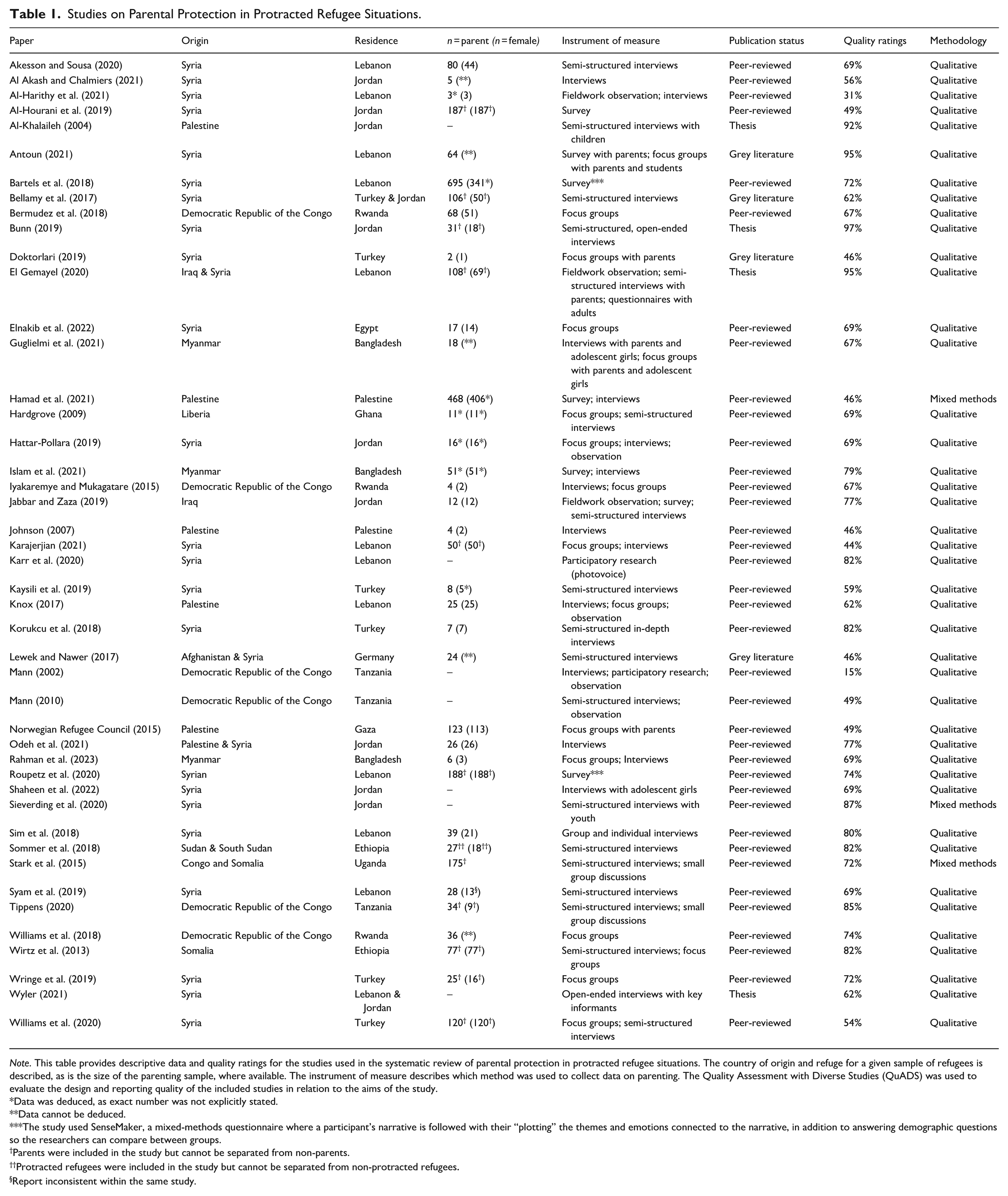
Note. This table provides descriptive data and quality ratings for the studies used in the systematic review of parental protection in protracted refugee situations. The country of origin and refuge for a given sample of refugees is described, as is the size of the parenting sample, where available. The instrument of measure describes which method was used to collect data on parenting. The Quality Assessment with Diverse Studies (QuADS) was used to evaluate the design and reporting quality of the included studies in relation to the aims of the study.
Data was deduced, as exact number was not explicitly stated.
Data cannot be deduced.
The study used SenseMaker, a mixed-methods questionnaire where a participant’s narrative is followed with their “plotting” the themes and emotions connected to the narrative, in addition to answering demographic questions so the researchers can compare between groups.
Parents were included in the study but cannot be separated from non-parents.
Protracted refugees were included in the study but cannot be separated from non-protracted refugees.
Report inconsistent within the same study.
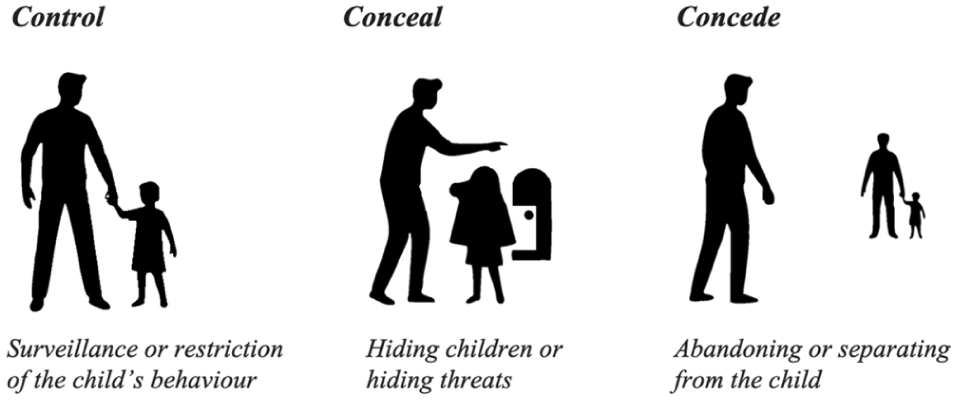
Visual illustration of the ‘3Cs’ of parental protection in protracted crises.
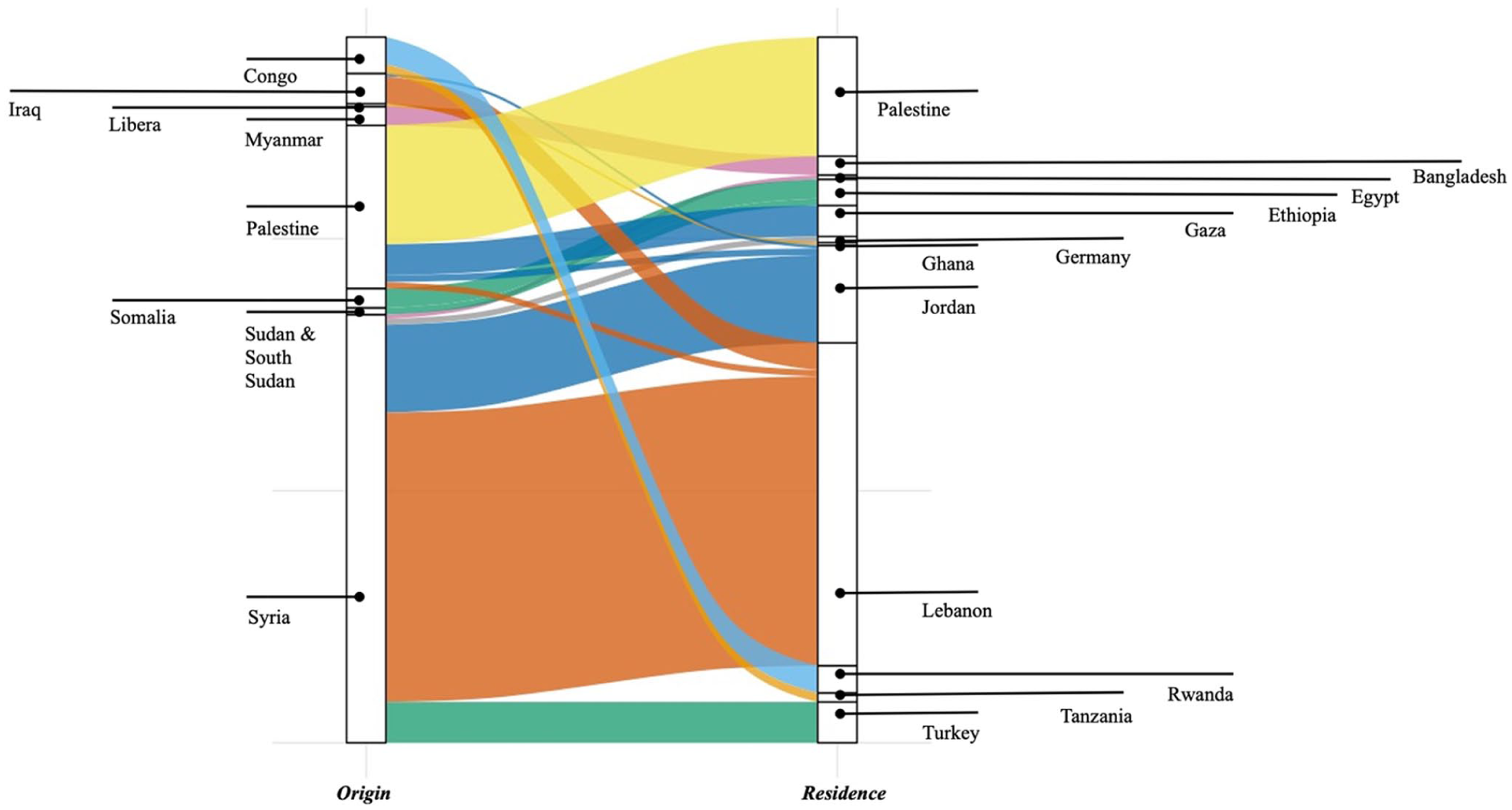
Refugee parents in protracted refugee situations, country of origin and residence.
Control
Upon entering a protracted refugee situation, parents intensified Control over their children’s behaviours as a protective response to their precarious circumstances. Some Syrian refugee parents in Lebanon, for example, implemented strict restrictions on their children’s movements, with one mother noting that her children had been “under lock and key for four years now” (Sim et al., 2018, p. 23). Similar Control strategies have been observed in several studies of Syrian refugees in Turkey and Germany, as well as Congolese and Somali refugees in Uganda (Akesson & Sousa, 2020; Al-Harithy et al., 2021; Doktorlari 2019; Lewek & Nawer, 2017; Stark et al., 2015; Syam et al., 2019).
At the community level, parents at times increased their Control over their children’s movements because they feared deportation following potential conflicts with host communities and because they felt unable to respond to community threats (Al-Harithy et al., 2021; Sim et al., 2018; Syrian refugees in Lebanon). Some controlled their children’s speech, warning them against sharing information about their background (Bunn, 2019; Syrian refugees in Jordan), while others monitored cars for strangers and prohibited unsupervised street play and outdoor activities after dark (Al-Khalaileh, 2004; Palestinian refugees in Jordan). During crises, such as the COVID-19 pandemic or outbreaks of conflict, such Control strategies tended to intensify (Karajerjian, 2021; NRC, 2015; Syrian and Gazans refugees in Lebanon and Palestine).
Gender and culture were important factors when it came to Control. Sudanese and South Sudanese refugee parents in Ethiopia restricted girls from socialising with boys to protect the family’s reputation (Sommer et al., 2018). Meanwhile, Congolese refugee parents displaced in Rwanda, as well as Liberians displaced in Ghana, increased their surveillance on adolescent girls as a way of precluding sexual assault (Bermudez et al., 2018; Hardgrove, 2009). This aligns with other studies suggesting that parental absence increases adolescent girls’ vulnerability to physical and sexual abuse in refugee camps (Iyakaremye & Mukagatare, 2015; Congolese refugees in Rwanda) and urban areas (Mann, 2010; Congolese refugees in Tanzania). While evidence suggests parents mostly controlled their children’s behaviour, they sometimes controlled their own behaviour: for example, Syrian refugees in Turkey maintained specific post-birth customs (confining themselves indoors for 40 days) to protect their infants’ health (Korukcu et al., 2018).
Conceal
Congolese refugee parents in Tanzania concealed their refugee identity from their children by falsifying their family background in an attempt to shield them from discrimination (Tippens, 2020). Iraqi refugee mothers in Jordan limited their own interactions with friends to prevent their children from overhearing conversations that might reveal their refugee status or expose them to harm (Jabbar & Zaza, 2019). Due to concerns about bullying and racism, Iraqi and Syrian refugees in Jordan, and Syrian refugees in Lebanon and Turkey withdrew their children from schools (Antoun, 2021; El Gemayel, 2020; Kaysili et al., 2019). Other refugee parents turned to more ‘creative’ measures, such as constructing makeshift bathrooms within their homes so as to Conceal their daughters from the dangers associated with using a public restroom at night (Al-Hourani et al., 2019; Syrian refugees in Jordan).
An element of intersectionality was evident in the application of the Conceal protective strategy. Gender (girls faced more limitations) age (limitations increased during adolescence), in addition to location, cultural context, nationality/citizenship status, and presence of a physical or mental disability were all important factors in shaping the Conceal protective strategy (Al Akash & Chalmiers, 2021; Bermudez et al., 2018; Elnakib et al., 2022; Hardgrove, 2009; Johnson, 2007; Karr et al., 2020; Korukcu et al., 2018; Mann, 2002; Odeh et al., 2021; Sommer et al., 2018; Wirtz et al., 2013; Wringe et al., 2019). Notable examples highlighting the importance of intersectionality include how Rohingya parents in Bangladesh emphasised ‘purdah’ for their teenage daughters, a practice requiring girls to cover their bodies to protect them from being seen in public (Guglielmi et al., 2021; Rahman et al., 2023). Another example is Syrian refugees in Jordan living in rural areas, who tended to Conceal their children’s disabilities from others to protect their family’s reputation from stigma (Odeh et al., 2021).
Concede
Despite the serious harm to the child, parents in various protracted refugee situations sometimes conceded their parental role, most prominently by marrying off their children and framing this as a safeguarding strategy against future physical or reputational harm (Bellamy et al., 2017; Roupetz et al., 2020; Sieverding et al., 2020; Williams et al., 2018, 2020). While refugee parents may believe that such decisions to Concede their child to someone else are justified and protective, the evidence points to significant harm for the children involved. This is because child marriage frequently introduces additional risks, thereby rendering it a strategy with minimal, if any, protective benefits. Evidence suggesting it may even exacerbate risk is clearly shown in a study of Palestinian and Syrian refugees in Jordan, where half of the girls who married early experienced spousal abuse, most dropped out of school, and many suffered health issues related to early pregnancy (Hamad et al., 2021).
Although intersectionality played a crucial role in shaping child marriage decisions, the practice typically emerged from family vulnerabilities. Some decisions represented coercive concessions driven by acute external threats: among Congolese refugees in Rwanda and Syrian refugees in Turkey, some parents viewed child marriage as a defence against sexual assault in the absence of effective law enforcement (Bellamy et al., 2017; Williams et al., 2018, 2020). This was also the case for many Syrian refugee parents in Lebanon and Jordan, where child marriage was viewed as a solution when parents could no longer financially support and protect their children (Roupetz et al., 2020; Sieverding et al., 2020). Other decisions centred on honour and reputation. These cultural concessions were apparent among sons where, for instance, parents encouraged child marriage primarily to prevent premarital sexual activity, expressing concerns about potential moral transgressions which they believed would harm the family’s reputation (Al Akash & Chalmiers, 2021).
In decisions about child marriage, mothers and fathers may be exposed to different types of concessive pressure and, as a result, prioritise different protective considerations. For example, Syrian refugee mothers balanced safety concerns with the preservation of their cultural identity (e.g. Wyler, 2021), while fathers weighed safety against economic factors (e.g. Bartels et al., 2018). Though fathers generally held primary decision-making power in arranging child marriages (Williams et al., 2020), their protective approaches varied. Some actively prevented child marriages while others perceived them as a safety measure (Wirtz et al., 2013), despite the harmful consequences. In rare cases, it was the children themselves who reportedly expedited their marriage arrangements in an effort to gain more freedom or protect another family member from harm (Knox, 2017). While little evidence on non-biological caregivers’ roles in child protection was included in this review, there was one reported instance where a girl had no ‘male member’ in the family, which prompted a local community leader to arrange her marriage over concerns about her security (Islam et al., 2021). Interestingly, some Syrian refugees in Jordan became less accepting of child marriage after observing Jordanian communities’ norms of women pursuing education and marrying in their 20s or 30s (Shaheen et al., 2022).
Discussion
Our systematic review represents the first comprehensive examination of protective parenting behaviours in protracted refugee situations, in which 78% of all refugees reside (UNHCR, 2024). We observed a dominance of harsh and abusive protective parenting styles that represent a marked departure from positive parenting styles long-held to be associated with healthy child development (Baumrind, 1966, 1971). To explain these findings, it is helpful to consider life history theory: it suggests that under conditions of high uncertainty and threat, such as those characterising protracted refugee situations, parents may reorient their caregiving behaviours in ways that prioritise survival over long-term development (Alonzo & Kindsvater, 2008; Cabeza de Baca & Ellis, 2017). This means that abusive parenting behaviours, such as child marriage or child labour participation, could be framed as “adaptive responses (whether conscious or unconscious) to ecological constraints” in protracted refugee situations (Cabeza de Baca & Ellis, 2017, p. 1).
Viewing the literature through this theoretical lens reveals a ‘protective paradox’ that lies at the core of parental protection in protracted refugee situations (Figure 3; Table 2). This paradox manifests in two contrasting but interrelated dynamics. One side of this paradox is that refugee parents’ protective actions have high long-term developmental costs, including impaired cognitive skills, weakened social skills, and declining emotional health due to premature adult responsibilities (Committee on Child Maltreatment Research, Policy, and Practice for the Next Decade: Phase II et al., 2014; Sanvictores & Mendez, 2024). On the other side is the issue that these harmful protective practices appear to be rational adaptations to ongoing threats. This is evidenced by how parental restrictions consistently intensify in response to documented ongoing security risks rather than varying by parents’ trauma histories (e.g. Al-Khalaileh, 2004; Bermudez et al., 2018; Jabbar & Zaza, 2019; Lewek & Nawer, 2017); this pattern aligns with the literature on continuous traumatic stress, where behaviour is better predicted by present danger than past experiences (Eagle & Kaminer, 2013).
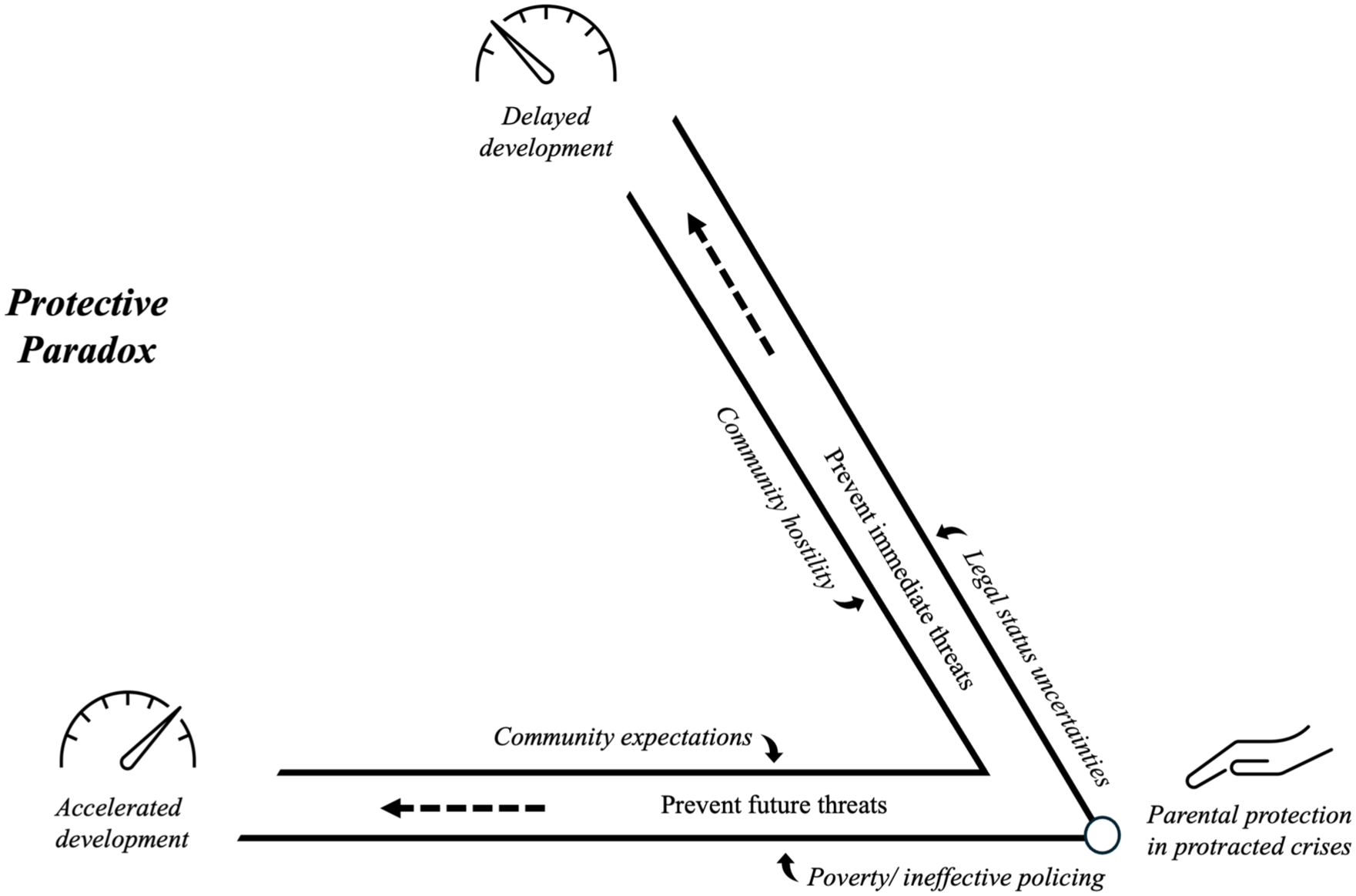
The protective paradox.
Critical Findings on Parental Protection in Protracted Refugee Situation.
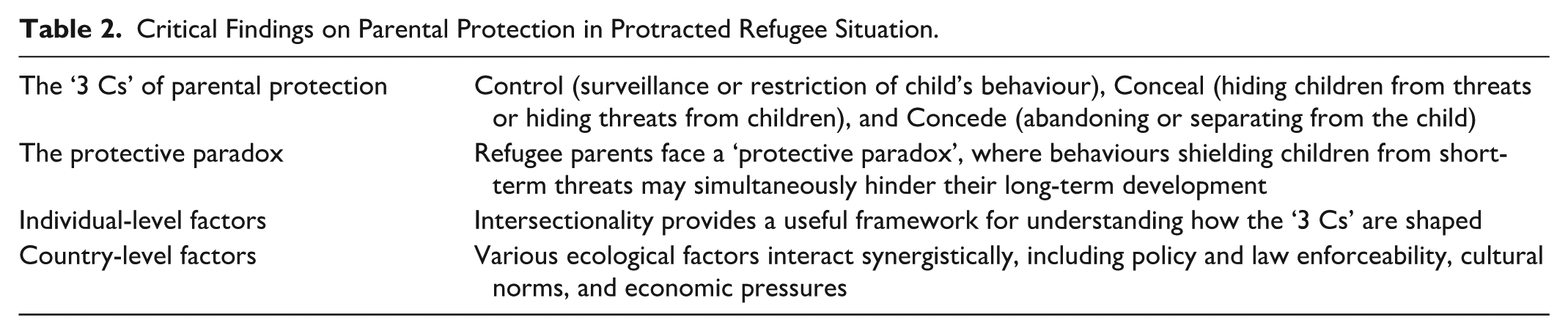
On a country level, national legal frameworks and their enforcement mechanisms informed the ‘3 Cs’ strategies, whereas cultural and community-level factors determined the extent to which and to whom protective strategies are applied. Children within the same families were subject to different levels of Control based on local customs (e.g. Ethiopia), perceived unequal enforcement of the law (e.g. in Lebanon), and policies on movement restrictions (e.g. the COVID-19 pandemic). When it came to concealment, the role of policy was particularly evident. Syrian refugee children withdrew from schools in Jordan, Lebanon, and Turkey, not due to cultural preferences, but because ineffective policing of threats against refugees left them vulnerable to bullying and racism. Of course, refugee parental protective strategies were also, at times, the result of various ecological factors interacting synergistically: for example, the Concede strategy may have emerged from policy gaps (inadequate enforcement of rules to protect refugee children), cultural norms (gender roles, family ‘honour’), and ecological pressures (economic insecurity, physical safety threats).
At an individual level, intersectionality, and particularly the role of gender, played a key role. Refugee teenage girls faced the most immediate physical threats, such as unsafe public restrooms and insecure camp environments. As a result, they experienced a severe tension between delayed development, due to being more frequently concealed and controlled, and accelerated development, as they were more likely to be married off at a young age. Across several studies, refugee mothers played an especially active role in responding to the threats faced by girls through daily protective strategies (Wyler, 2021). This might have been the case because refugee mothers are physically with their children more often compared to their husbands, who typically work long hours in informal markets to support the family (Syam et al., 2019). It is also important to mention that refugee mothers appeared to operate within legal and cultural systems that ultimately privileged the authority of refugee fathers in major protection decisions. This underscores the importance of involving refugee fathers and other paternal figures in interventions that address the trade-offs inherent in the ‘protective paradox,’ particularly when it comes to refugee teenage girls.
Taken together, the evidence yields three critical principles for practitioners and policymakers (Table 3). The first principle, ‘show, do not tell,’ emphasises the importance of demonstrating viable alternatives. As this review indicates, when refugees observe effective protective models that allow girls to pursue education while remaining safe, they adapt their protective strategies accordingly (Shaheen et al., 2022). The second principle is ‘stratify, do not simplify,’ which acknowledges the layers of risk that emerge from intersecting identities. Much of the literature examined in this review demonstrates how vulnerabilities compound at the intersection of multiple marginalised identities, necessitating similarly nuanced, intersectional intervention approaches (Al Akash & Chalmiers, 2021; Bermudez et al., 2018; Elnakib et al., 2022; Hardgrove, 2009; Johnson, 2007; Karr et al., 2020; Korukcu et al., 2018; Mann, 2002; Odeh et al., 2021; Sommer et al., 2018; Wirtz et al., 2013; Wringe et al., 2019).
Policy, Practice, and Research Implications.

The third principle, ‘replace, do not prohibit,’ recognises that interventions may prove more effective when they acknowledge the survival imperatives underlying parental protective strategies in protracted refugee contexts, rather than seeking to eliminate such practices outright. The broader literature provides instructive examples: to address sexual violence in Rwandan refugee camps, authorities distributed fuel-efficient cookers to households, thereby reducing the necessity for children to venture outside camp boundaries to collect firewood or water (Iyakaremye & Mukagatare, 2015). In these refugee camps, material aid was supplemented by comprehensive community prevention programs that addressed root causes by targeting perpetrators through efforts to transform societal attitudes toward sexual violence and modify perpetrator behaviour (Gurman et al., 2014).
Limitations and Future Research
The Control category was supported by a wide range of studies spanning multiple geographic contexts, displacement types, and cultural settings; in contrast, the Conceal and Concede categories draw from a narrower set of studies. Such disparity in ‘what’ is being captured may be in part due to stigma associated with concealment and concession (El Arab & Sagbakken, 2019). Additionally, most studies included in this research were qualitative, focusing on mothers and protracted refugee situations in the Middle East, which potentially underrepresented the heterogeneity underlying refugee parents’ protective behaviours. Although several factors could explain the lack of diversity in ‘who’ and ‘where’ refugee parental protective behaviours are studied, one likely factor is that Syria, the world’s current largest refugee producer, has its displaced population predominantly hosted in the Middle East.
As for the limited gathering of quantitative data on parental protection in protracted refugee situations, it may reflect the lack of specialised, culturally appropriate measurement tools; existing parenting and child protection measures mainly were developed and validated on non-displaced populations and, therefore, fail to capture the unique protective strategies that refugee parents employ within the constraints of prolonged displacement and the legal uncertainties it entails. This methodological gap, rooted in long-held assumptions about which caregivers merit research attention, may also explain the paucity of data on fathers. Throughout the 21st century, maternal-centric research paradigms have dominated parenting scholarship (Lamb, 2000; Panter-Brick et al., 2014), and refugee research has mirrored these trends by predominantly focusing on mothers while overlooking fathers’ roles in child-rearing (Eltanamly et al., 2021; Merry et al., 2017). While the trend is shifting toward more father-inclusive refugee parenting research (Bunn et al., 2022), such studies have either been conducted in resettlement contexts or have not specifically captured protective parenting behaviours.
When protective strategies are not the primary focus of research, broader contextual factors that sculpt these strategies may not be a priority to be understood. Consequently, we can currently draw only tentative conclusions about how protracted refugee situations influence the intensification of certain protective strategies. This is also true about our observations regarding parental gender roles, which, while aligning with life history theory, must be interpreted cautiously: some evidence suggested that mothers engaged in higher frequency, day-to-day protective behaviours (like monitoring speech), while fathers invested in less frequent but potentially higher-stakes protective strategies (such as child marriage arrangements).
With these observations and their caveats in mind, there is an important opportunity for future research to explicitly examine protective parental behaviours as primary phenomena while considering the multi-level factors (e.g. individual, family, community, and structural) that influence them in protracted refugee situations. To our knowledge, only one study has employed a system-level analysis of protective parenting in protracted crises (Khraisha, Sawalha, et al., 2024). The study documented how parents negotiate control over children’s time outside the home and employ concealment strategies, such as school withdrawal, with mothers often acting as gatekeepers who safeguard their daughters’ futures by maintaining their school enrolment. The research further suggested that protection flows in both directions within refugee families: parents strategically concealed spousal conflicts in response to their children’s visceral reactions to domestic tension, while children attempted to shield their parents from their own emotional distress. Such findings underscore the value of future research that examines how protective parenting strategies are proposed, contested, and redefined by various family members.
Conclusion
Drawing on evidence from Middle Eastern and East African contexts, where the majority of protracted refugee situations are concentrated, our findings add important nuance to the common deficit-based view of negative ‘refugee parenting.’ They highlight that what may appear as hostile or abusive parenting choices are sometimes used by parents as efforts to address immediate dangers to their children, often at the cost of long-term harm. Although recognising these behaviours as adaptations to challenging circumstances should not be mistaken for endorsing their developmental appropriateness, the findings bring to light the impossible choices parents in protracted refugee situations frequently face between balancing their children’s immediate safety against their long-term development. In highlighting this protective paradox, our results suggest that much of the dysfunction does not stem from ‘refugee parenting’ strategies themselves, but rather from displacement systems that compel parents to choose between protecting their children today and preparing them for tomorrow.
Supplemental Material
sj-docx-1-tva-10.1177_15248380251411241 – Supplemental material for Protective Paradox: Caregiving in Protracted Crises Across 72 Countries
Supplemental material, sj-docx-1-tva-10.1177_15248380251411241 for Protective Paradox: Caregiving in Protracted Crises Across 72 Countries by Qusai Khraisha, Stella Roney, Cameron Murphy, Kate Schnoebelen, Johanna Kappenberg, Beatrice Volta, Orla Norton, Sadhbh Carpenter, Ronan Kelly, Ferdia Geary, Jiayue Sun, Nadeen Abujaber, Catherine Panter-Brick and Kristin Hadfield in Trauma, Violence, & Abuse
Supplemental Material
sj-docx-2-tva-10.1177_15248380251411241 – Supplemental material for Protective Paradox: Caregiving in Protracted Crises Across 72 Countries
Supplemental material, sj-docx-2-tva-10.1177_15248380251411241 for Protective Paradox: Caregiving in Protracted Crises Across 72 Countries by Qusai Khraisha, Stella Roney, Cameron Murphy, Kate Schnoebelen, Johanna Kappenberg, Beatrice Volta, Orla Norton, Sadhbh Carpenter, Ronan Kelly, Ferdia Geary, Jiayue Sun, Nadeen Abujaber, Catherine Panter-Brick and Kristin Hadfield in Trauma, Violence, & Abuse
Supplemental Material
sj-pdf-3-tva-10.1177_15248380251411241 – Supplemental material for Protective Paradox: Caregiving in Protracted Crises Across 72 Countries
Supplemental material, sj-pdf-3-tva-10.1177_15248380251411241 for Protective Paradox: Caregiving in Protracted Crises Across 72 Countries by Qusai Khraisha, Stella Roney, Cameron Murphy, Kate Schnoebelen, Johanna Kappenberg, Beatrice Volta, Orla Norton, Sadhbh Carpenter, Ronan Kelly, Ferdia Geary, Jiayue Sun, Nadeen Abujaber, Catherine Panter-Brick and Kristin Hadfield in Trauma, Violence, & Abuse
Footnotes
Acknowledgements
We would like to express our gratitude to Sophie Put, Laila Banerjee, Anna Flynn, Abigail Coyne, Anna O’Riain, Chuhan Mei, Matthew Walker, Evan Carron-Kee, Meltem Cakmak, Caroline Welch, Caitríona Finlay, Irewonuola Sanyaolu, Salam Jabbour, and Aislinn Wilkins.

Author Contributions
Qusai Khraisha: Writing – original draft, Visualisation, Validation, Supervision, Resources, Project administration, Methodology, Investigation, Formal analysis, Data curation, Conceptualisation. Stella Roney: Writing – review & editing, Investigation. Cameron Murphy: Writing – review & editing, Investigation. Kate Schnoebelen: Writing – review & editing, Investigation. Johanna Kappenberg: Writing – review & editing, Investigation. Beatrice Volta: Writing – review & editing, Investigation. Orla Norton: Writing – review & editing, Investigation. Sadhbh Carpenter: Writing – review & editing, Investigation. Ronan Kelly: Writing – review & editing, Investigation. Ferdia Geary: Writing – review & editing, Investigation. Jiayue Sun: Writing – review & editing, Investigation. Nadeen Abujaber: Writing – review & editing, Investigation. Catherine Panter-Brick: Writing – review & editing. Kristin Hadfield: Writing – review & editing, Supervision, Methodology.
Funding
The authors received no financial support for the research, authorship, and/or publication of this article.
Declaration of Conflicting Interests
The authors declared no potential conflicts of interest with respect to the research, authorship, and/or publication of this article.
Supplemental Material
Supplemental material for this article is available online.
Author Biographies
References
Supplementary Material
Please find the following supplemental material available below.
For Open Access articles published under a Creative Commons License, all supplemental material carries the same license as the article it is associated with.
For non-Open Access articles published, all supplemental material carries a non-exclusive license, and permission requests for re-use of supplemental material or any part of supplemental material shall be sent directly to the copyright owner as specified in the copyright notice associated with the article.
