



Abstract
With the growing use of information technology, individuals are now able to hurt others, often with little recourse due to the anonymity provided in these online spaces. Cyberviolence (CV) can cause significant psychological and even physical harm as it has the potential to spill into the offline realm. Prevention programs have been implemented to address CV among youths, though additional evidence is necessary to inform initiatives that could be implemented to prevent various forms of CV. A scoping review was thus carried out to identify and map studies on issues related to the prevention of CV among youths. The review followed PRISMA reporting guidelines, and nine electronic databases were searched. In total, 114 empirical manuscripts (119 individual studies) were identified that met the inclusion criteria of addressing a CV prevention program. Studies were most commonly quantitative (n = 86), using randomized controlled trials (n = 35) or quasi-experimental designs (n = 24), though qualitative (n = 23) and mixed-methods (n = 10) designs were also used. Findings revealed that intervention programs mainly targeted cyberbullying (n = 100), followed by cyber dating abuse (n = 4) and cyberaggression (n = 5). Other forms of CV appeared in fewer than three studies. Most frequently, interventions took an educative approach (n = 62), and program components were typically activities (n = 27) or lessons (n = 20). Most commonly, program objectives targeted outcomes (n = 44) or processes (n = 31), with some targeting both (n = 15). Results from our review reveal that several programs utilized strong methodological designs, offering the potential for new systematic reviews to be conducted to document the effectiveness of several types of programs targeting CV.
Introduction
The World Health Organization (2024, no page) defines interpersonal violence as “the intentional use of physical force or power, threatened or actual, against oneself, another person, or against a group or community, that either results in or has a high likelihood of resulting in injury, death, psychological harm, maldevelopment, or deprivation.” 1 The concepts of threats and psychological traumas are particularly important nowadays with the growing popularity of platforms such as Facebook, YouTube, Instagram, and TikTok. The lenient legislation, the anonymous nature of social media, and the rapid distribution of information offer several opportunities for harmful situations (Elsaesser et al., 2021). According to Mukred et al. (2024), the prevalence of cyberviolence (CV) has surpassed traditional forms of offline violence. Cyberbullying is probably the most frequent form of CV investigated in scientific literature (Backe et al., 2018). About 10% to 40% of adolescents have been exposed to cyberbullying in their lifetime (Kowalski et al., 2014, 2016; Patchin & Hinduja, 2012; Tokunaga, 2010). Exposure to CV has been associated with negative psychological, social, and reproductive health outcomes, and these negative consequences are especially observed among girls and gender minorities (Backe et al., 2018).
Systematic reviews (SR) have recently identified the best programs against interpersonal violence. However, such SRs usually focused on offline violence or were specific to cyberbullying even though several forms of CV exist. Furthermore, SRs have not incorporated data on processes. Several scholars argue that SRs should incorporate qualitative findings to identify best practices in intervention implementation (Blais et al., 2022; Weisburd et al., 2017). The present article reports on findings from a scoping review (ScR) that could be useful for future SRs. This article reports findings related to approaches used to prevent cyber violence, study designs, program components, barriers, and outcomes. ScRs are often seen as a preliminary step to SRs as they offer an overview of the available evidence.
Different Forms of Cyberviolence
In comparison to offline violence, CV involves the use of technology to carry out more traditional forms of violence, such as utilizing social media to harass or coordinate acts of physical violence toward individuals or groups (Mukred et al., 2024). The term CV surfaced in the early 2000s, in parallel with the widespread acquisition of portable laptops and the diffusion of Web 2.0. Several terms are used to depict CV, such as cyber abuse, cyber aggression, digital abuse, and technology-related violence (Backe et al., 2018). These terms are not, however, necessarily interchangeable, showing the lack of consensus regarding a universal definition of CV.
The most common type of CV included in SRs is cyberbullying (see Chen et al., 2023; Ng et al., 2022, for examples). Cyberbullying consists of “any behavior performed through electronic or digital media by individuals or groups that repeatedly communicate hostile or aggressive messages intended to inflict harm or discomfort on others” (Tokunaga, 2010, p. 278). While this form of CV has been more thoroughly studied, SR should also consider prevention programs aimed at other forms of CV. For instance, 75% of 18- to 25-year-old students surveyed from a large Midwestern university had experienced cyberdating violence by a romantic partner or former partner (Marganski & Melander, 2018). CV can be used in the context of domestic violence to coerce victims into staying in abusive relationships (McLachlan & Harris, 2022). Other forms of CV include online sexual exploitation, which consists of “the creation, distribution, or threat of distribution, of intimate or sexually explicit images of another person without their consent (also known as revenge pornography)” (Henry & Powell, 2016, p. 201), and sexting coercion, which is described as “engaging in unwanted sexual behavior via sexually explicit text, pictures, or video” (Henry & Powell, 2016, p. 201). The growing presence of street gangs on social media has led to a new phenomenon of violence online called cyberbanging, which has three main purposes: (a) promote gang affiliation or communicate about gang activities; (b) gain notoriety by expressing participation in violent acts or communicating an imminent threat; and (c) share information about rival gangs (Patton et al., 2013).
The Need to Identify the Best Practices Against Various Forms of Cyberviolence
The high rates of CV reported in numerous studies (Marganski & Melander, 2018; Tokunaga, 2010) call for the implementation of effective prevention programs. With few exceptions, SRs have mainly focused on cyberbullying, which is a very specific form of CV (Chen et al., 2023; Ng et al., 2022; Nocentini et al., 2015; Wang & Jiang, 2023). Blaya (2019) conducted a SR on cyberhate speech, which led to the identifications of three intervention areas, namely law, technology, and education; they did not find any rigorously assessed interventions. In their SR, Galende et al. (2020) summarized the effects of universal prevention programs against cyber dating violence. From 163 records, only 4 studies were included in their SR. While all evaluation studies reported decreases in violent or aggressive behaviors among program participants, additional studies are needed to support their conclusions. Furthermore, SRs have not incorporated findings about implementation issues or other processes that could be associated with effective prevention programs. The growing popularity of SRs in the past 20 years led to the recognition that prevention programs should be based on the best scientific evidence. By combining effects found in several evaluation studies, SRs increase our ability to generalize findings in comparison to single evaluation studies (Welsh & Farrington, 2001). Before conducting a SR, one must make sure that enough evaluation studies for one type of program are available. ScRs permit to determine whether sufficient evaluations are available to conduct a SR (Munn et al., 2018), and whether studies address issues related to implementation.
ScRs are one strategy available to summarize scientific evidence (Pham et al., 2014). While there is no universally accepted definition for a ScR (Peterson & Densley, 2017), a six-step framework is usually used : (a) identifying the research question, (b) identifying relevant studies, (c) study selection, (d) charting the data, (e) collating, summarizing, and reporting the results, and (f) an optional consultation exercise (Arksey & O’Malley, 2005). A ScR maps the body of literature on a specific topic, often exploratory in nature, using sufficient studies to answer certain questions (Pham et al., 2014). ScRs explore the extent and range of a subject and identify research gaps in prior studies. They are particularly useful when a topic has not been extensively studied or is complex in nature (Pham et al., 2014). ScRs can also serve as a preliminary step to determine the value and potential cost of pursuing a full SR, as they share several characteristics regarding meticulous methods for identifying and evaluating relevant information in the existing literature related to a research question (Munn et al., 2018).
Problem Statement
Despite the numerous forms of CV, previous SRs have mostly focused on cyberbullying (Chen et al., 2023; Ng et al., 2022; Nocentini et al., 2015; Wang & Jiang, 2023). Two SRs have respectively focused on cyberdating violence (Galende et al., 2020) and hate speech (Blaya, 2019). Galende et al. (2020) have, however, only included universal prevention programs while Blaya (2019) failed at identifying soundly evaluated interventions. Previous SRs have not considered qualitative findings or data on processes that could complement evidence about the impact of a program.
This article reports the findings of a ScR that identified themes related to the prevention of CV. Our ScR addressed the following questions: (a) what forms of CV are targeted by prevention programs offered to youths? (b) what methodologies are used to address issues related to the prevention of CV? (c) what are the program components, objectives, and preventive approaches being used? and (d) what outcomes are used in evaluation studies?
Methodology
This ScR focused on prevention programs targeting at least one form of CV and specifically delivered to youths. Crime prevention programs were limited to any non-coercive strategy (programs had to operate outside the criminal justice system) and were defined as a set of coordinated measures or services used to reduce CV or associated risk factors. Programs targeting individual, relational, situational, or community risk factors were considered. Primary, secondary, and tertiary programs were included. The PRISMA guidelines were followed throughout each phase of the ScR (Moher et al., 2009; Peterson & Densley, 2017).
Search Strategy
Prior to the formal search of databases, a preliminary search was conducted on January 19, 2024, to identify literature reviews on EBSCO related to the prevention of CV. This search resulted in 35 articles (SRs, literature reviews, and ScRs) on violence (not specific to cyber) that were screened to identify relevant primary sources. When other reviews were found, they were added to the list of reviews to be screened.
Following this preliminary search, two reviewers searched nine electronic databases between January 2024 and February 2024: (a) Web of Science, (b) PsychInfo, (c) ERIC, (d) EBSCO, (e) ProQuest: Sociology Database, (f) ProQuest: Sociology Collection, (g) ProQuest: Sociological Abstracts, and (h) ProQuest: NCJRS Abstracts and Databases. The search included a list of 44 terms related to CV, 14 terms related to prevention, and 11 terms related to youth (the list is available on request).2,3
Inclusion and Exclusion Criteria
To be eligible, studies had to meet specific criteria. First, studies had to report qualitative, quantitative (or mixed method) results related to the prevention of CV (e.g., evaluation of a program, perceptions or experiences about a program). All types of CV as well as all outcomes of program evaluations were eligible. Second, the ScR focused on scientific literature. Documents had to be published in scientific journals, books, or book chapters. Third, publications had to be written in either English or French (languages of the authors) and been published between 1997 and 2024. The year 1997 marks the arrival of social media (Boyd & Ellison, 2007), a landmark event in the role of initiation and relationship formation among adolescents (McGeeney & Hanson, 2017). Fourth, the target group of the programs had to be adolescents or young adults (12–29 years old). Hango (2023) found that individuals between 12 and 29 years old displayed the highest risk of CV, indicating a priority for prevention efforts. Articles were excluded if they did not: (a) focus on CV, (b) report empirical findings related to the prevention of CV, (c) publish their findings in English or French, or (d) target the 12 to 29-year-old age range.
Study Selection and Data Extraction
Two research assistants 4 first screened the titles and abstracts of each article independently to distinguish between articles that should be excluded and those that should be moved to full article screening. Studies moved to full-text screening were then read in their entirety by the same two research assistants, and those that met the inclusion criteria were moved into extraction. Both research assistants needed to reach consensus on each publication prior to moving them forward toward extraction. Divergent decisions between the two research assistants were discussed with the principal investigator (PI) to resolve the conflict.
Once screening was completed, a preliminary grid was created. Four research assistants and the PI applied the grid to the same four articles (Baraldsnes, 2015; Bickmam et al., 2021; Biernesser et al., 2023; Calvete et al., 2021). Grids were compared to ensure that all fields were understood in the same way. Conflicts were discussed and resolved, and adjustments to the grid were iteratively made to account for varied study components. Finally, three research assistants extracted the data from the 114 studies with a final grid consisting of 20 codes. 5
Strategy for Summarizing and Reporting the Data
The analytical strategy involved a mix of descriptive and qualitative thematic analyses. Frequency counts were conducted on the general information of the studies (e.g., countries, year of publication, types of CV). Studies were also grouped based on their methodologies (e.g., qualitative, quantitative, or mixed). Specific elements from these grouped studies were then analyzed in NVivo 6 using both inductive and deductive thematic approaches. For instance, evaluation studies were analyzed inductively to identify themes related to program objectives, components, and the type of approach. Additionally, program outcomes of quantitative or mixed method studies were classified in categories related to (e.g., attitudes, behaviors, skills) as well as on the direction of the relationship between the program and the outcome.
Results
The results are presented in four sections. The first section reports the PRISMA flowchart. The second section presents study characteristics and methodologies. The third section focuses on preventive approaches used in programs, their objectives, and components. The fourth section classifies study outcomes based on program components.
Study Selection Process
Following the removal of duplicates, 2,228 references were screened (Figure 1). Of the 208 full-text publications reviewed, 114 were included in the ScR (2 dissertations, 1 book chapter, 111 articles). Five of these 114 texts contained 2 independent studies. For these 5 articles, data extraction was completed in separate grids, leading to 119 extractions in total.
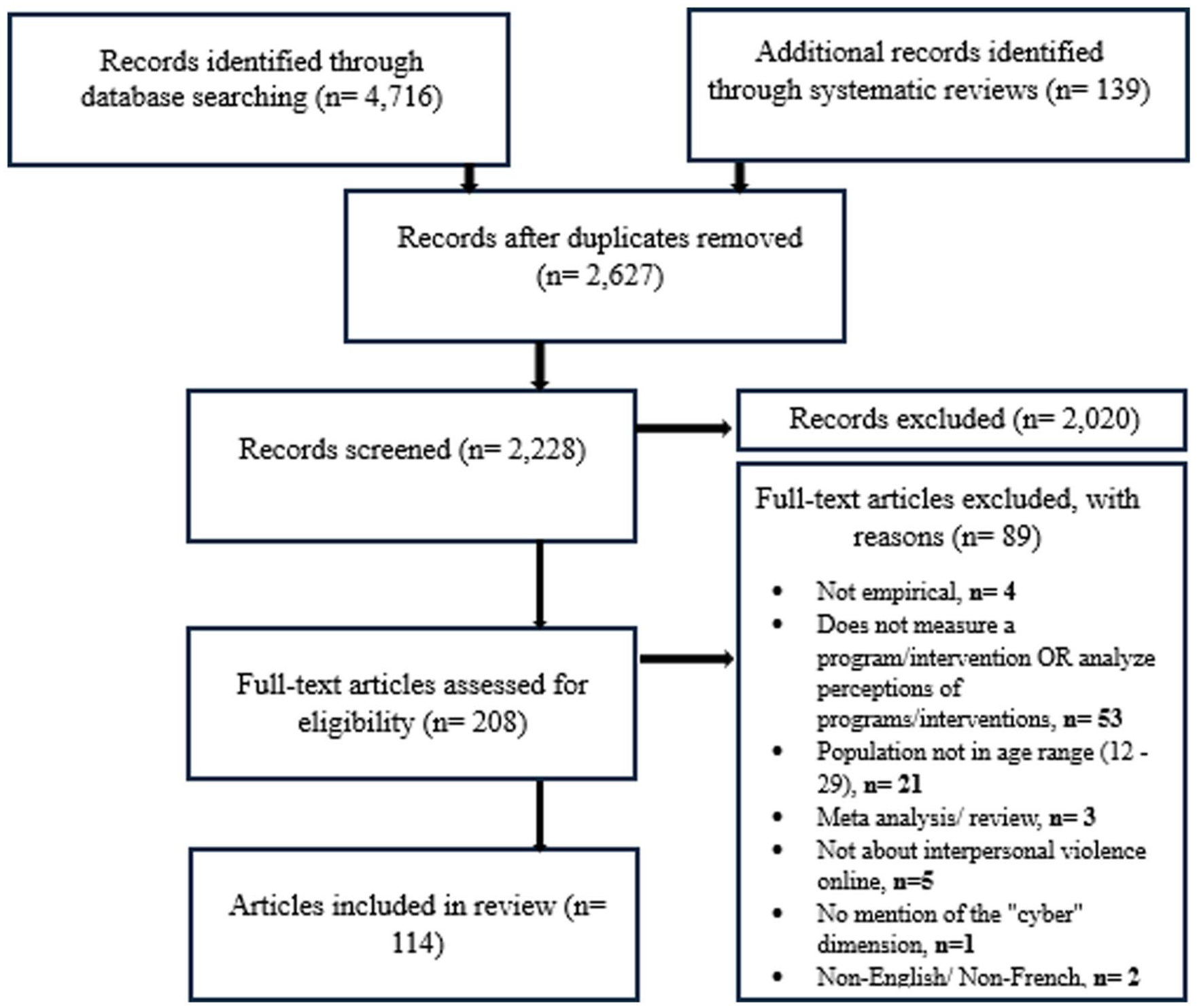
PRISMA flowchart: selection process of studies.
Study Characteristics and Methodologies
The studies were conducted in 30 different countries, and the reported results from studies conducted in Spain (22%) and the United States (18%). About 15% of the studies were published between 2010 and 2014, 50% between 2015 and 2019, and 34% between 2020 and 2024. All studies were published in English language. Sample sizes ranged from 8 to 18,412 participants, with 22% of studies including <100 participants, 38% of studies including 100 to 499 participants, 18% of studies including 500 to 999 participants, and 23% of studies including over 1000 participants. Most studies used individuals as the unit of analysis (92%). Other studies either used classes (5%), individuals nested in classes or schools (3%), or the whole school (1%).
Ten different forms of CV were identified (Table 1). Five studies (4%) included multiple forms of CV. For instance, one program targeted cyberbullying, online grooming, sexting, and online dating violence (Calvete et al., 2023). Cyberbullying was the most frequent issue addressed (84%), followed by cyberaggression (4% of studies). The remaining types of CV were targeted in 3% or less of the studies.
Distribution of Studies by Type of Cyber Violence Targeted.
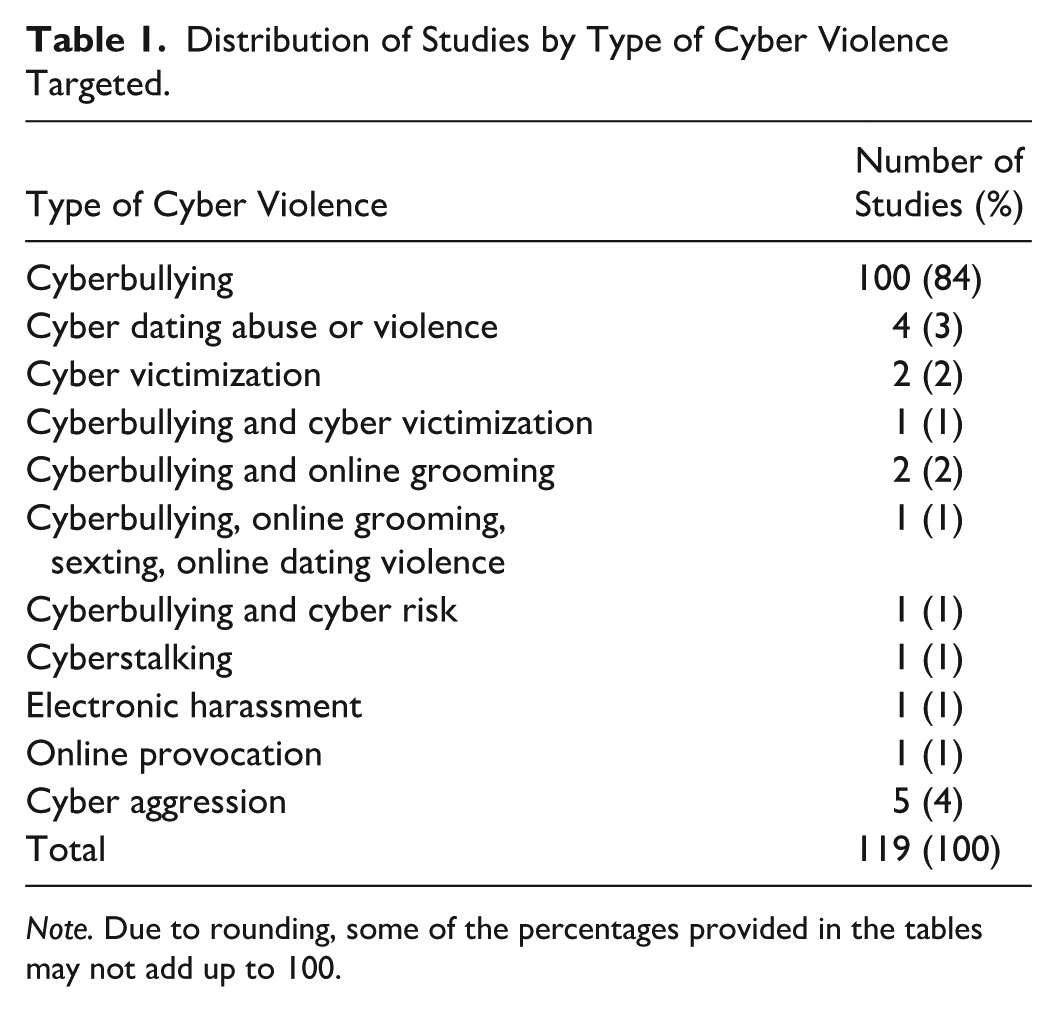
Note. Due to rounding, some of the percentages provided in the tables may not add up to 100.
Table 2 presents the three methodological approaches used in the 119 studies. Most studies used quantitative methods (72%), and qualitative methodologies (19%). Table 2 also displays analytical designs. Most quantitative studies (n = 86) evaluated a program with an experimental design (n = 35). Quasi-experimental designs—measures of CV or risk factors taken before and after the program for the treatment and the control groups—were used by 24 studies. Other studies based their evaluations on a before-and-after design with no control group (n = 15) or a cross-sectional (n = 10) design (i.e., correlation between a program and CV at a single point in time with no control group).
Methodologies and Designs Used in Eligible Studies.
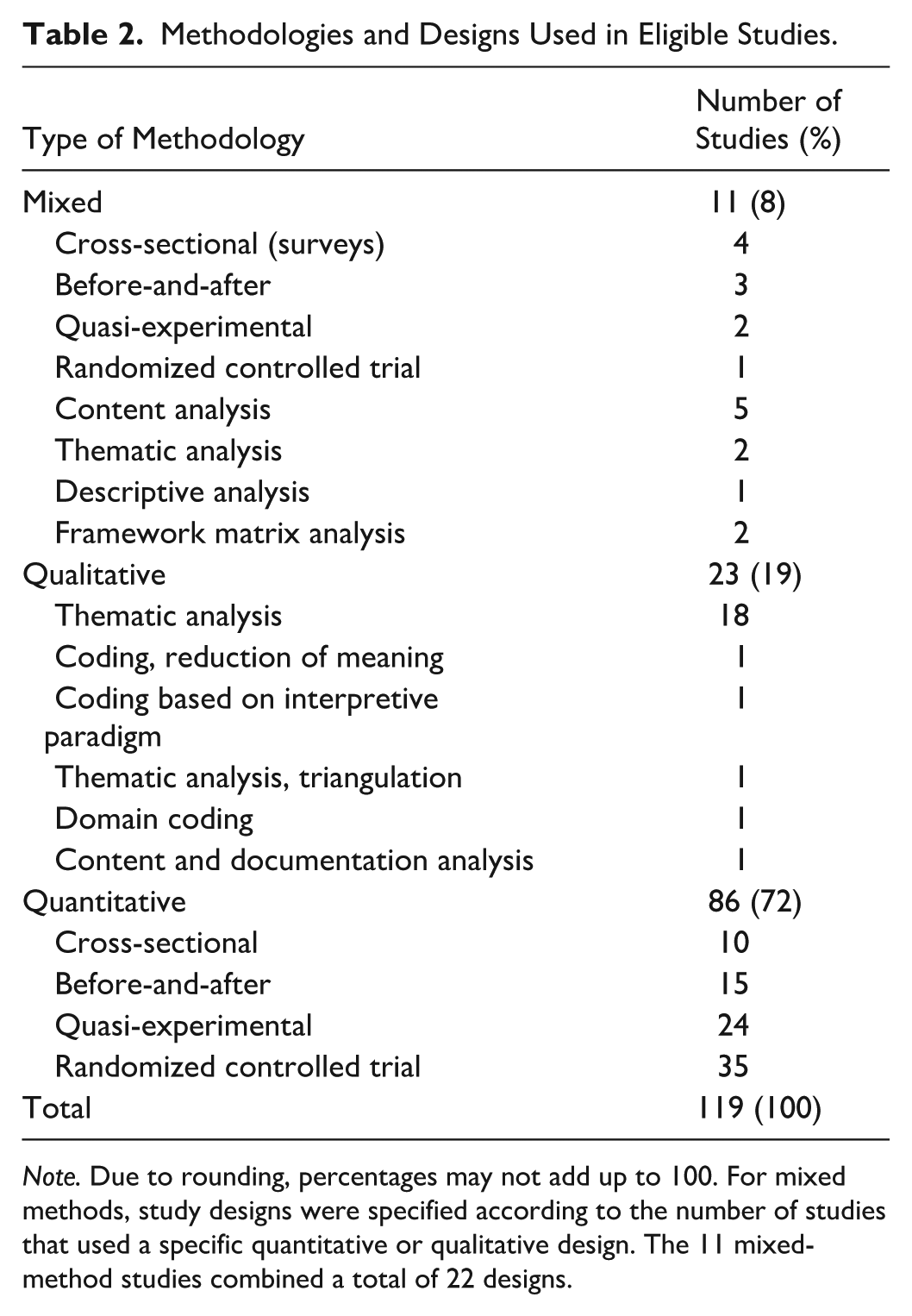
Note. Due to rounding, percentages may not add up to 100. For mixed methods, study designs were specified according to the number of studies that used a specific quantitative or qualitative design. The 11 mixed-method studies combined a total of 22 designs.
Table 2 also shows that most qualitative studies relied on thematic analyses (n = 18), while three of the studies used some form of coding technique (n = 3) and one used a content and documentation analysis (n = 1). Finally, Table 2 indicates that some studies relied on mixed methods (n = 11). Qualitative data were often combined with quantitative analyses based on data collected through cross-sectional (n = 4) or before-and-after designs (n = 3). The content analysis (n = 5) was the most common qualitative design used in mixed-method studies.
Components and Objectives Found in Prevention Programs
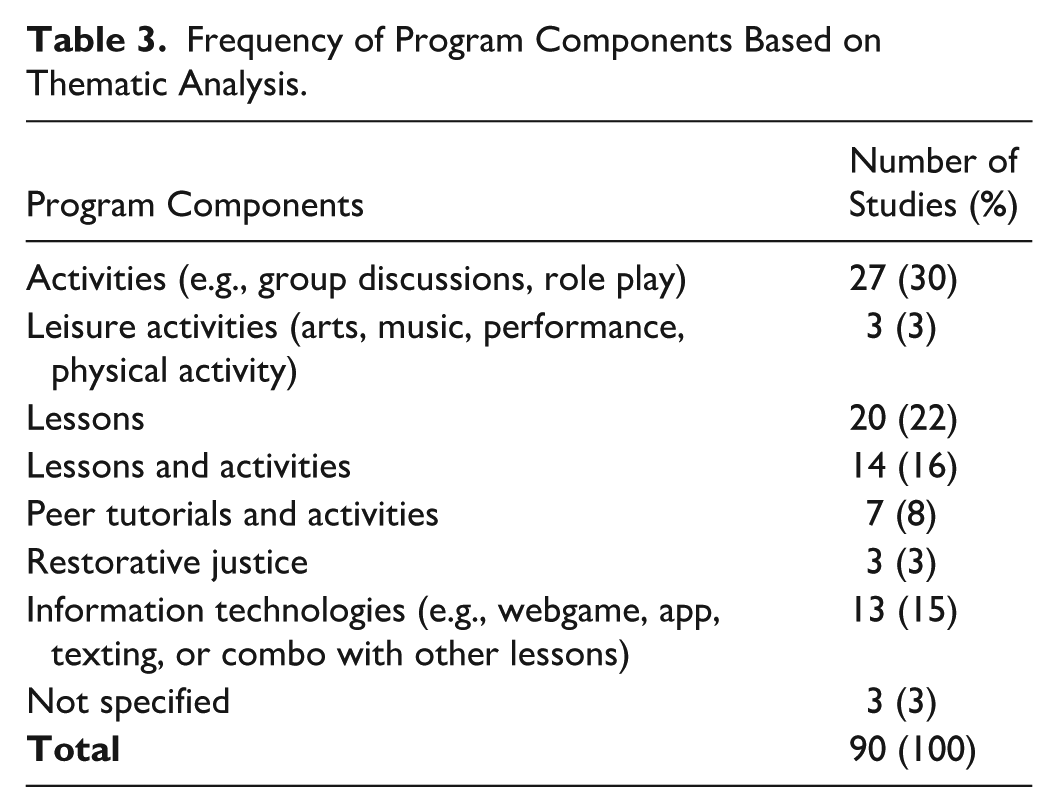
Objectives and program components were documented in 90 studies. Most studies (n = 83) were conducted on primary prevention programs. The other studies (n = 7) targeted secondary or tertiary prevention programs (not shown in Table 3). According to Table 3, activities were used in 30% of all programs. These activities included, among other things, writing reflections about a scenario (e.g., Calvete et al., 2023; Fernández González et al., 2020), participating in discussion groups, or engaging in role playing (e.g., Garaigordobil & Martinez-Valderrey, 2015a, 2015b). Lessons were found in 22% of the programs, including presentations on topics given by experts or teachers (e.g., Athanasiades et al., 2015). Information technology that relied on web games, apps, texting, or combo with other lessons was found in 15% of programs, with some using an online game designed for the program or text messages sent to participants (e.g., DeSmet et al., 2018).
Frequency of Program Components Based on Thematic Analysis.
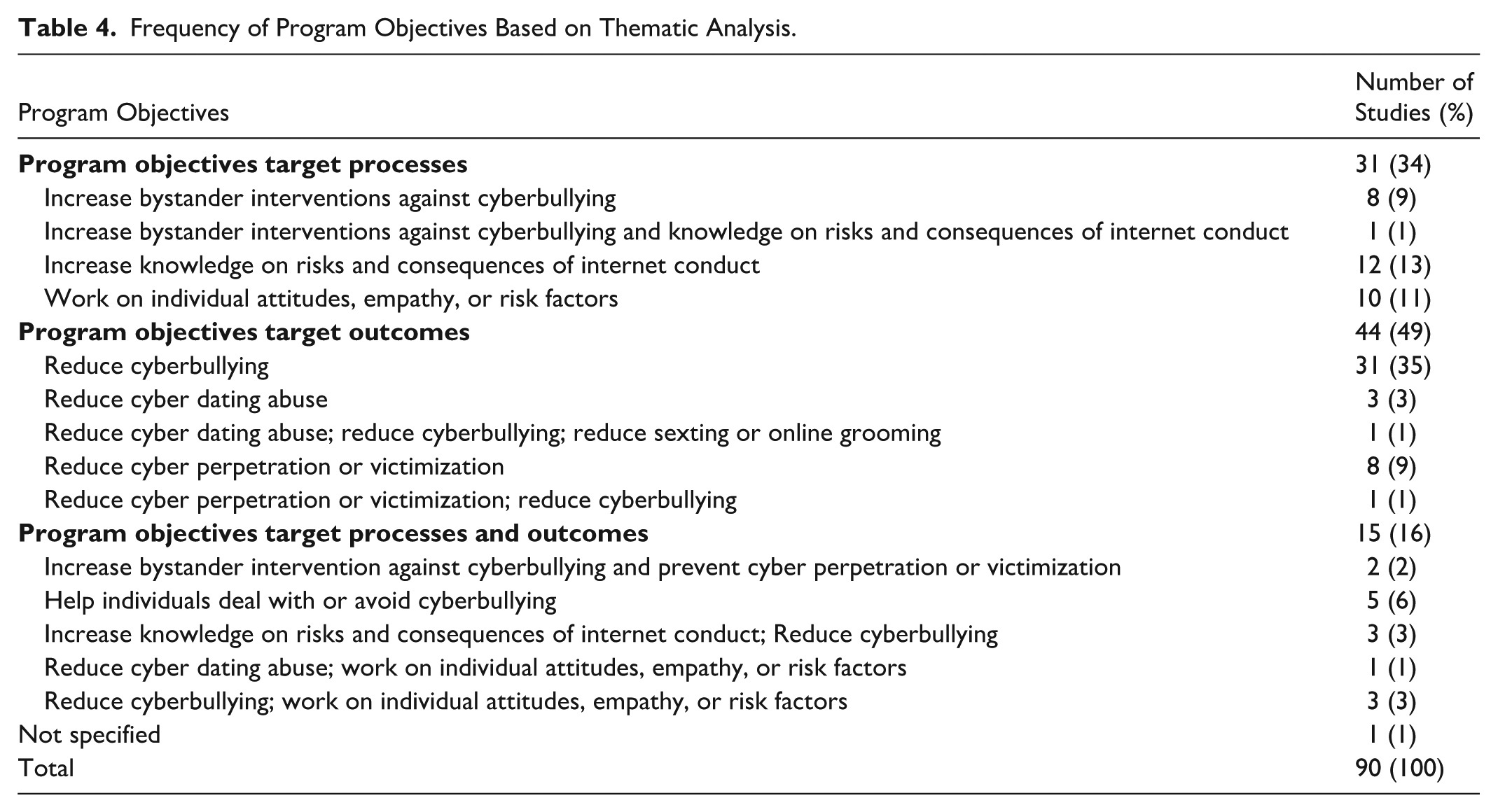
An inductive qualitative thematic analysis led to the identification of program objectives that were addressed in the 90 studies (Table 4), which were classified into three mutually exclusive categories: (a) those focusing on processes; (b) those focusing on outcomes; and (c) those incorporating processes and outcomes. Most studies (49%) only considered outcomes or themes related to CV. Accordingly, 35% of all studies either assessed the effect or addressed themes related to the prevention of cyberbullying. Another 34% of all studies focused on themes or outcomes related to processes such as knowledge related to risks and consequences of internet conduct (13%) or improving attitudes and empathy while addressing risk factors (11%). Eight studies (9%) addressed the capability of prevention programs to increase bystander interventions. Finally, only 16% of studies focused on the effects of programs on outcomes related to the process and CV.
Frequency of Program Objectives Based on Thematic Analysis.
Intervention Outcomes
Among the 96 studies based on a mixed method or a quantitative methodology, a total of 84 studies evaluated a program. Table 5 reports outcomes that were assessed in evaluation studies. As there were several different outcomes among the studies, a thematic analysis was employed to code outcomes into specific categories. Hence, categories were created based on the type of outcomes reported in the evaluation studies (e.g., attitudes, skills, or behavior) and on the direction of the relationship (e.g., improvements, no change, mixed, or unclear). A new category was created when a study reported more than one outcome. Table 5 shows that 56% (n = 47) of all studies reported improvements (i.e., decreases) in behaviors related to CV. These studies only evaluated the effect of their program on one category of outcomes. Positive changes in attitudes were reported in six studies. Six studies did not observe change in participants’ behaviors, and six other studies presented unclear or mixed results.
Program Outcomes and Components.
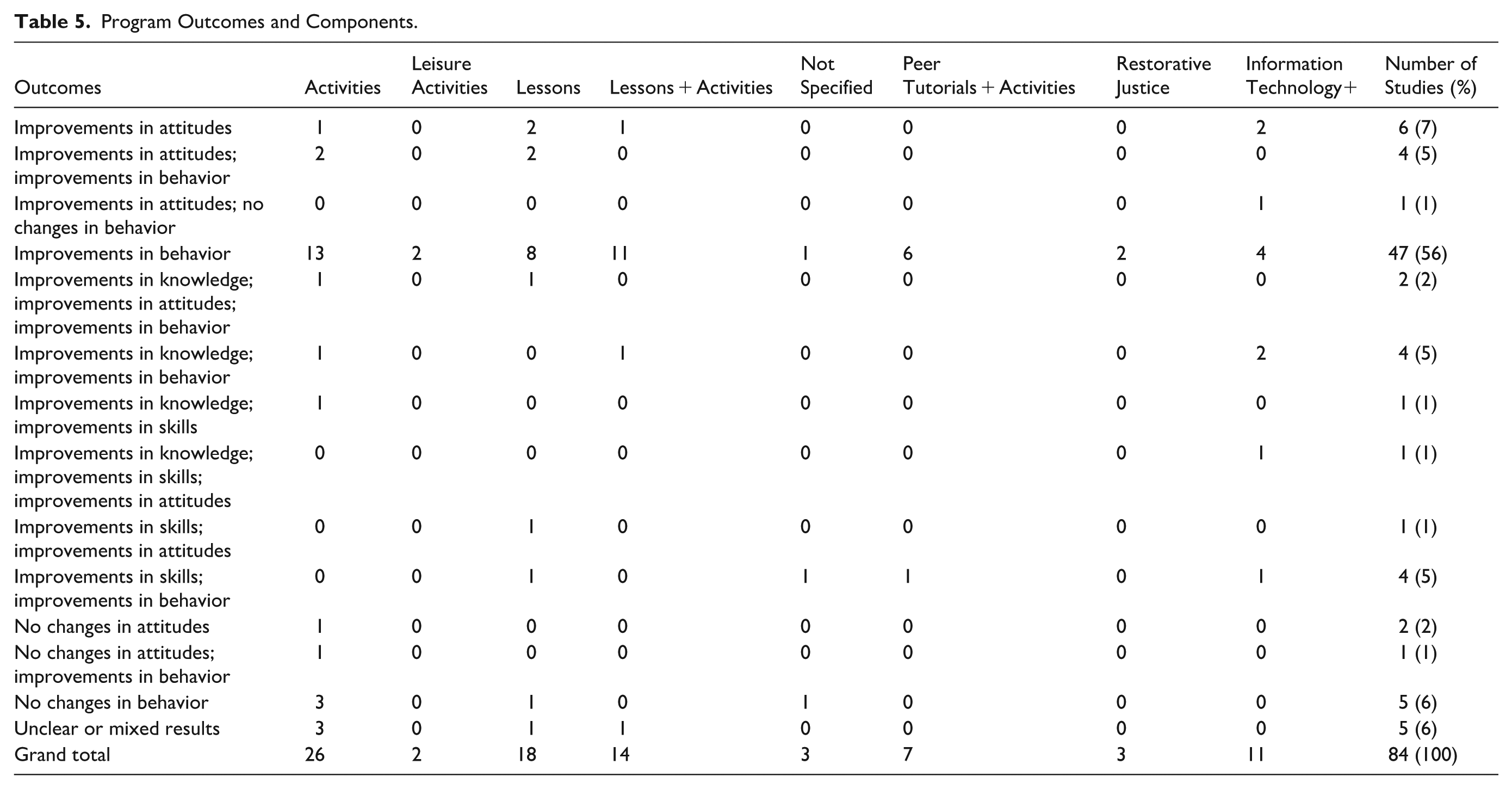
Table 5 also classifies the program outcomes according to their components. Results indicate that all types of components were somewhat associated with improvements in CV behaviors. For instance, 13 programs based on activities were associated with improvements in behaviors. Conversely, participants did not improve their behavior according to three studies that evaluated programs based on activities. At last, one study reported positive behavioral changes following the participation in a program based on activities while attitudes remained stable.
Discussion
The objective of this ScR was to map out empirical evidence of studies related to the prevention of CV among 12 to 29 year olds. Data were extracted from 119 studies found in 114 scientific publications. The results provided insight into: (a) forms of CV targeted by prevention programs; (b) methodologies and designs; (c) program objectives and their components; and (d) program outcomes. Such results could then be used to plan future SRs or studies addressing some research gaps. Table 6 provides a summary of the main findings of our ScR and implications for future research and prevention.
Findings and Implications.
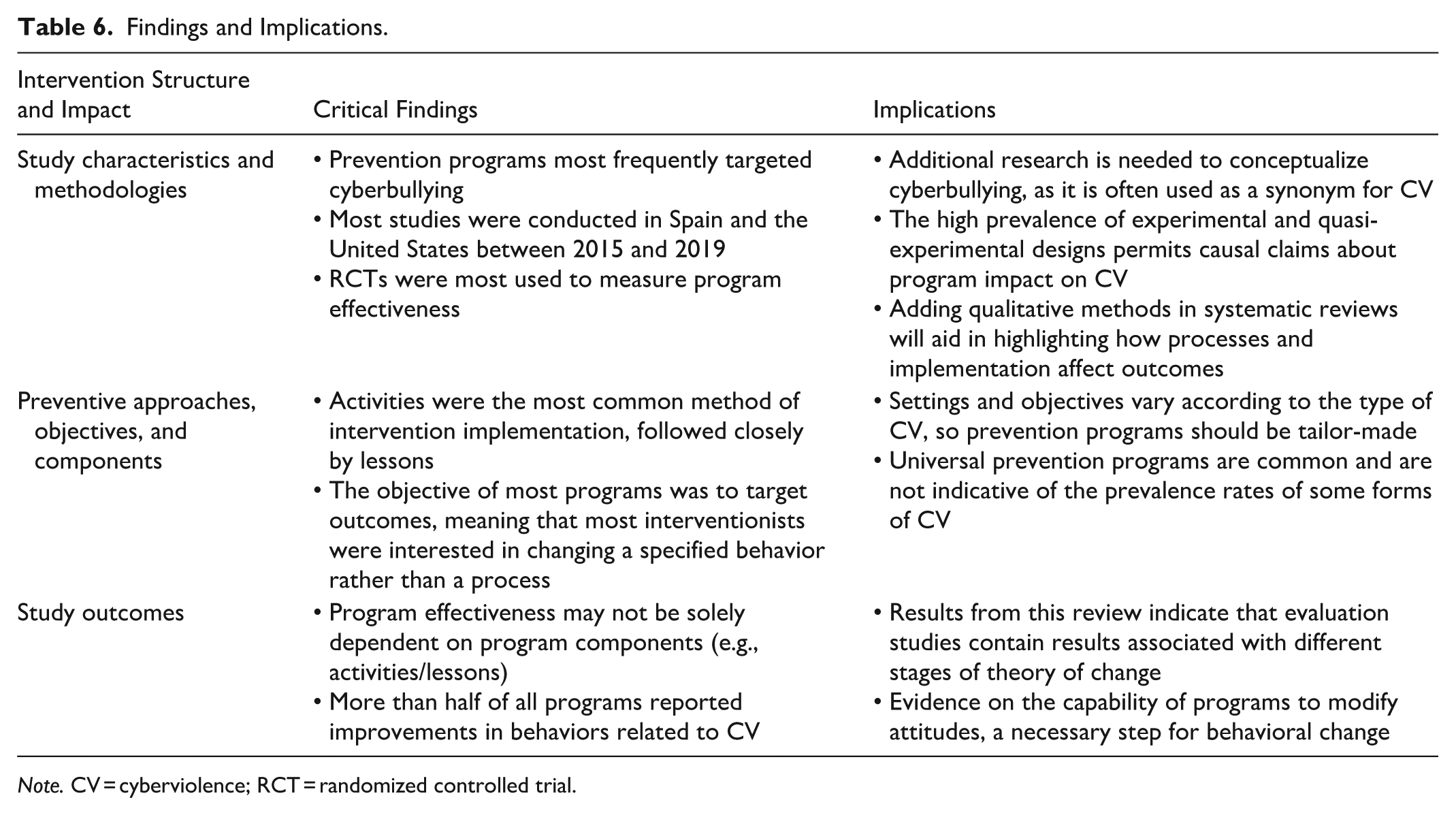
Note. CV = cyberviolence; RCT = randomized controlled trial.
Most studies included in our ScR focused on the prevention of cyberbullying, leaving a gap in the literature regarding other types of CV (Mukred et al., 2024). This finding has implications for future research. Future studies need to carefully define cyberbullying as this concept seems to be used as a synonym for CV. Results found in several studies, however, show that motivations and settings vary according to the types of CV. For instance, information technologies facilitate intimate partner abuse (McLachlan and Harris, 2022). Besides using spyware and localization applications, CV directed at intimate partners includes harassment through text messages, tracking partners on social media, threats of or publications of intimate images or video (Afrouz, 2023). Other individuals use social media to distribute intimate and sexually explicit images without the consent of the other party (Henry & Powell, 2016). Hence, evaluation studies are needed to determine whether prevention programs attempting to change attitudes, risk factors, and behaviors related to these specific forms of CV are effective. Few studies are available at the moment to conduct a SR about the effect of prevention programs targeting CV associated with cyberdating, cyberstalking, or electronic harassment.
Our results, however, indicate that empirical evidence is available for overcoming limitations found in previous SRs. SRs generally focus on violence-related outcomes associated with a program and underestimate the importance of processes and implementation issues in the delivery of services (Blais et al., 2022; Weisburd et al., 2017). Hence, each prevention program is articulated around a theory of change (ToC) even if the latest was not always explicitly referred to in our sample. A ToC “describes how an intervention is expected to lead to intended results, showing the causal links from inputs to impact and the assumptions underlying the ToC” (Mayne, 2023, p. 102276). A ToC also incorporates potential obstacles likely to be experimented at different stages of the program. Results from our ScR indicate that studies on the prevention of CV contain results associated with different stages of their ToC that could eventually be useful to improve the effectiveness of prevention programs and have a precise understanding of their operation and delivery.
Accordingly, the present ScR shows that studies reported outcomes related to knowledge, skills, and online behaviors. Future SRs have the potential to enlighten processes involved in the prevention of CV. Changes in bystander interventions, increases in knowledge, and decreases in risk factors could be used as moderators at the meta-analysis stage of SRs. Similarly, prevention programs of CV varied in their components. Some prevention programs included activities such as group discussions and role play while others mainly relied on lessons. These components could also be used as moderators in meta-analyses. Meta-regression analysis, for instance, has been conducted to identify components likely to improve the effectiveness of school programs designed to prevent violence. The intensity of the programs, the involvement of both children and parents, the ecosystemic approach, and using various activities were associated with increased effectiveness (Gaffney et al., 2021; Ttofi & Farrington, 2011). Such reviews are highly needed in the field of the prevention of CV as effective programs are often supported by a sound theory of the problem (Eck, 2006).
Our results also show that several studies used experimental or quasi-experimental designs to assess the effect of prevention programs against CV, which is an encouraging result since evaluations in other fields of crime prevention generally rest on “weak” evaluation designs (Weisburd et al., 2017). Evaluations of programs based on experimental or quasi-experimental designs address several threats to internal validity, and their results permit causal claims about the impact of an intervention on CV (Farrington, 2003). Our ScR indicates that numerous high-quality studies are available to conduct SRs about the impact of prevention programs on CV (Pham et al., 2014). Several studies reported improvements in attitudes, skills, and behaviors, suggesting that some programs were effective in curbing CV. Additional studies are, however, needed to further appraise and make associations between the methodologies used in these evaluations, program components, and outcomes (see Weisburd et al., 2017 on this issue).
Our results show that most prevention programs used lessons, group discussions, role play, and leisure activities mainly found in primary crime prevention programs. In fact, among the 90 studies for which the information was available, 83 (or 92.2%) studies presented findings related to a primary crime prevention program. Additional studies need to assess programs developed for the prevention of CV among at-risk youths. While several expressions and their synonyms were used, our search strategy did not lead to the identification of empirical studies on the prevention of cyberbanging and or CV used specifically in the context of domestic violence.
Besides solely including studies that empirically addressed issues related to the prevention of CV, our ScR did not use exclusion criteria related to the location of the study (e.g., country) or sample characteristics. Studies on the prevention of CV were conducted in 30 countries, showing the possibility to implement programs that are culturally significant or adapted when needed (see Rodney et al., 2005 on this issue). While our ScR did not directly address issues related to diversity and inclusion, forthcoming SRs need to evaluate the effect of prevention programs according to culturally relevant indicators or gender. Such SRs are particularly needed as gender minorities and girls, for instance, are more likely to be the target of CV than males (Backe et al., 2018).
Finally, a few studies used qualitative methods and, accordingly, issues related with the implementation were seldom addressed. SRs combining qualitative and quantitative data are needed (Weisburd et al., 2017) as they inform on challenges that need to be addressed to facilitate the implementation of a program. For instance, in their SR about the impact of police-based diversion initiatives for drug consumption or simple possession, Blais et al. (2022) were able to cross qualitative and quantitative findings in order to identify effective initiatives as well as their components (e.g., user characteristics, eligibility criteria, services) and implementation strategies related to staff training, outreach activities, procedures for interagency collaboration, admission procedure and timely access to services. Their results provide guidance on the best practices to prevent harm related to the criminalization of drug consumption as well as indications for stakeholders or service providers interested in implementing police-based diversion programs (Blais et al., 2022).
Conclusion
The objective of this ScR was to explore themes associated with the prevention of CV in empirical literature. Our results show that several evaluation studies have been conducted, and accordingly, systematic reviews could be conducted to identify the best practices for the prevention of CV. Studies used qualitative and quantitative methodologies; the effect of prevention programs was assessed on various outcomes. This plethora of evaluation studies also represents an opportunity for future research to overcome limitations found in numerous systematic reviews. Upcoming systematic reviews could incorporate qualitative and quantitative findings to improve program theories and provide guidance on implementation procedures.
Footnotes

Funding
The authors disclosed receipt of the following financial support for the research, authorship, and/or publication of this article: This research was supported by the Chaire de recherche sur la prévention de la violence armée dans la région métropolitaine (Research Chair on the Prevention of Armed Violence in the Metropolitain Region), grant number 2023-OMLM-337119.
Declaration of Conflicting Interests
The authors declared no potential conflicts of interest with respect to the research, authorship, and/or publication of this article.
Data Availability Statement
Data can be made available upon request.