




Abstract
In many countries, protection orders are the civil court system’s primary response to domestic violence. While there is significant evidence as to their effectiveness, as many as half of all temporary protection orders are withdrawn or dismissed before being finalized, with limited empirical research as to why. As the first step in a multi-phased research-community partnership to improve a counseling and service program for survivors of domestic violence in South Africa, we undertook a systematic review of the literature to identify what is known about why some female survivors finalize protection orders and others do not. Using a keyword search strategy in academic databases, we included peer-reviewed studies published from January 2004 to June 2024 that focused on case attrition and the factors associated with retention and/or withdrawal. Of the eight studies that met the eligibility criteria, six reported findings from the United States, one from Ecuador, and one from South Africa. Key reasons for attrition were emotional attachment, concerns for children, perceived behavior change in partner, fear of retaliation, challenges in the court processes, default at hearing, financial dependence, gender stereotypes, and lack of opportunities for economic independence. Most of the data supporting these findings were more than a decade old. Without more contemporary research on why female survivors remain in or exit protective order processes, communities may miss opportunities for intervention to reduce personal, procedural, and structural impediments to safety.
Introduction
Protection orders (also referred to as civil protection orders, orders of protection, restraining orders, violence protection orders, peace bonds, or protection from abuse orders) are the civil court system’s primary response to domestic violence, or violence between partners, family members, or cohabitants (Cattaneo et al., 2016; Cordier et al., 2021). Intended as a response to the safety needs of survivors, protection orders typically prohibit the alleged abusive parties from contacting, threatening, or assaulting their targets of abuse, and may contain directives concerning visitation and support for children, financial support, firearm ownership, and/or housing arrangements (Goodman & Epstein, 2008; Pomeranz & Ochoa, 2021). While court protection procedures vary globally and locally across jurisdictions, courts generally issue protection orders in stages when a survivor of domestic violence or their representative files for legal protection through the courts. If the court feels that an immediate danger is present, a judge can issue a temporary (also referred to as ex parte or iterim) order based only on the survivor’s petition. If the request for protection is made at a time when the court is not open (such as nights, weekends, and holidays), some jurisdictions may issue emergency protection orders, which afford short-term protection for survivors until the court next reopens and can review a request for a temporary order. As part of the temporary order, the court sets a date for an evidentiary hearing of the case at which both the survivor (petitioner) and their abusive party (respondent) are to appear to give their statements. Typically, police or other officers of the court are responsible for serving the respondent with the temporary order, although in some jurisdictions, petitioners must serve the temporary order themselves. Petitioners can withdraw their request for protection at any stage in the process. At the full hearing, the court reviews the evidence from both parties and, based on this review, dismisses a case due to insufficient cause or the failure of the petitioner to appear, extends the temporary order if both parties are not present, or issues a final order. Notably, the respondent sometimes files a countersuit asking for their own protection order against the survivor, often to further control the survivor and complicate the legal process. Final orders usually last for 1 year, but the petitioner may request an extension for another year or longer. In some countries like South Africa, courts extend temporary protection orders if the respondent does not appear at the hearing, and, when granted, final protection orders remain in effect permanently unless withdrawn by the petitioner.
A significant percentage of female survivors who receive temporary protection orders withdraw from the protection order process before orders are finalized (Artz, 2011; Denman et al., 2009; Zoellner et al., 2000). Courts often refer to this phenomena as case attrition – a term that reflects the difference between the number of survivors who initiate a protection order process and those who remain in it until the orders are finalized (Groggel, 2022). Research as to why case attrition occurs and what motivates a woman to withdraw from or remain in the process is very limited. While there have been a number of systematic reviews of literature relating to protection orders, these have focused on their effectiveness in protecting survivors from recurrent violence. To our knowledge, this is the first effort to review existing literature on personal, procedural, and structural factors associated with female survivors’ attrition from the court protection process.
This scoping review was conducted as the first step in a multi-phased community-engaged collaboration between two U.S. academic institutions and a South African community-based organization that aims to improve service delivery for female survivors of domestic violence. This review examined existing scholarly literature from the past 20 years on the factors that may be associated with the finalization of civil protection order processes initiated by or on behalf of female survivors of domestic violence. For purposes of consistency, this review used the terms “temporary orders,” “emergency protection orders,” or “final orders” regardless of the terminology used in the articles referenced within this scoping review, to indicate orders issued before the hearing, those issued while the court is closed, and those that are issued after the hearing, respectively. Following the language used in the court system, we have used “petitioner” to indicate the individual who filed the original order and “respondent” for the alleged abusive individual.
Methods
This review followed the structure, methodology, and reporting guidelines contained in the Preferred Reporting Items for Systematic reviews and Meta-Analyses for Protocols (Colquhoun et al., 2014; McGowan et al., 2020; Moher et al., 2015; Tricco et al., 2018). This form of analysis was selected by the study team following a preliminary search of keywords that suggested that academic work on attrition from protection order processes by female survivors was limited and that available data were both dated and narrow in geographic scope. Scoping reviews are intended to summarize existing knowledge and identify gaps for future research.
We examined peer-reviewed literature and white papers published in English between January 2004 and June 2024. Journal articles and other scholarly literature that examined female survivors’ use of protection orders, but which did not consider the nature and extent of attrition from the court process, were not included in the final group of articles from which data were extracted.
Search Criteria
The following electronic bibliographic databases were included in a search for journal articles and white papers: PsycINFO, Social Work Abstracts, Social Services Abstracts, Applied Social Sciences Index and Abstracts (ASSIA), HeinOnLine, ProQuest Sociology Collection, ProQuest Criminology Collection, PubMed, Social Science Premium Collection, SafetyLit, EBSCOhost, and Scopus. The search strategy utilized Boolean terms for “Gender Based Violence” AND “Protection Order” AND “Attrition” to identify literature relevant to our study’s research questions (see Appendix 1). The search phrase was adapted to fit unique search criteria frameworks, respectively. A “title/abstract/keyword” and a “No full text” (NOFT) search were used in all database searches.
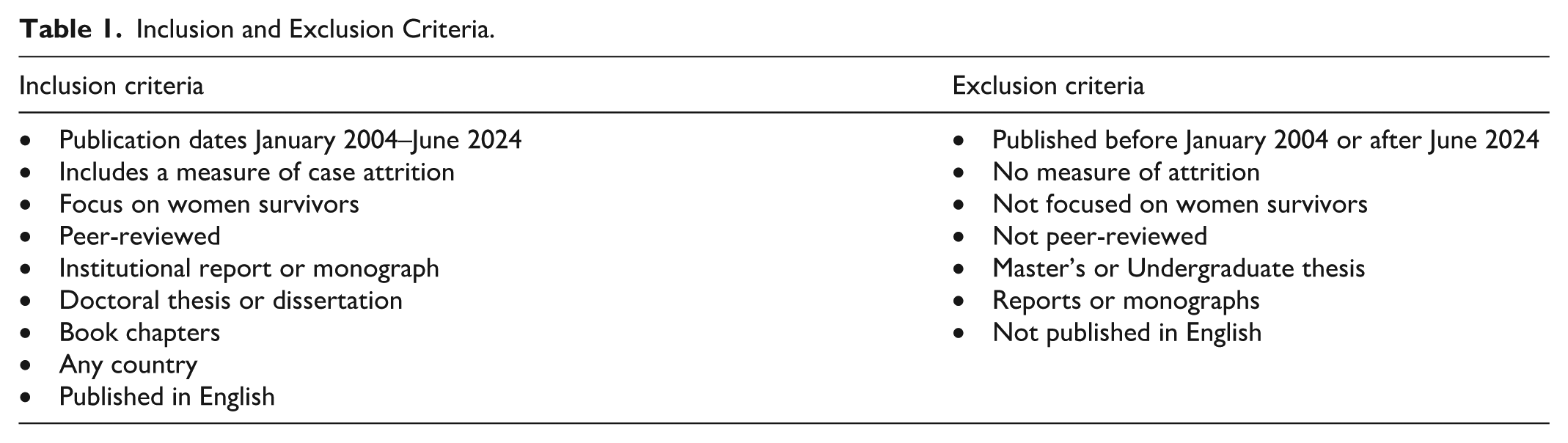
Search results were imported into a collaborative review software for the analysis (Covidence Systematic Review Software, n.d.). Two of the authors reviewed the articles, working independently to assess the relevance of each study to this review and meeting subsequently to resolve any conflicts. Inclusion and exclusion criteria used in the review are reported in Table 1.
Inclusion and Exclusion Criteria.
Results
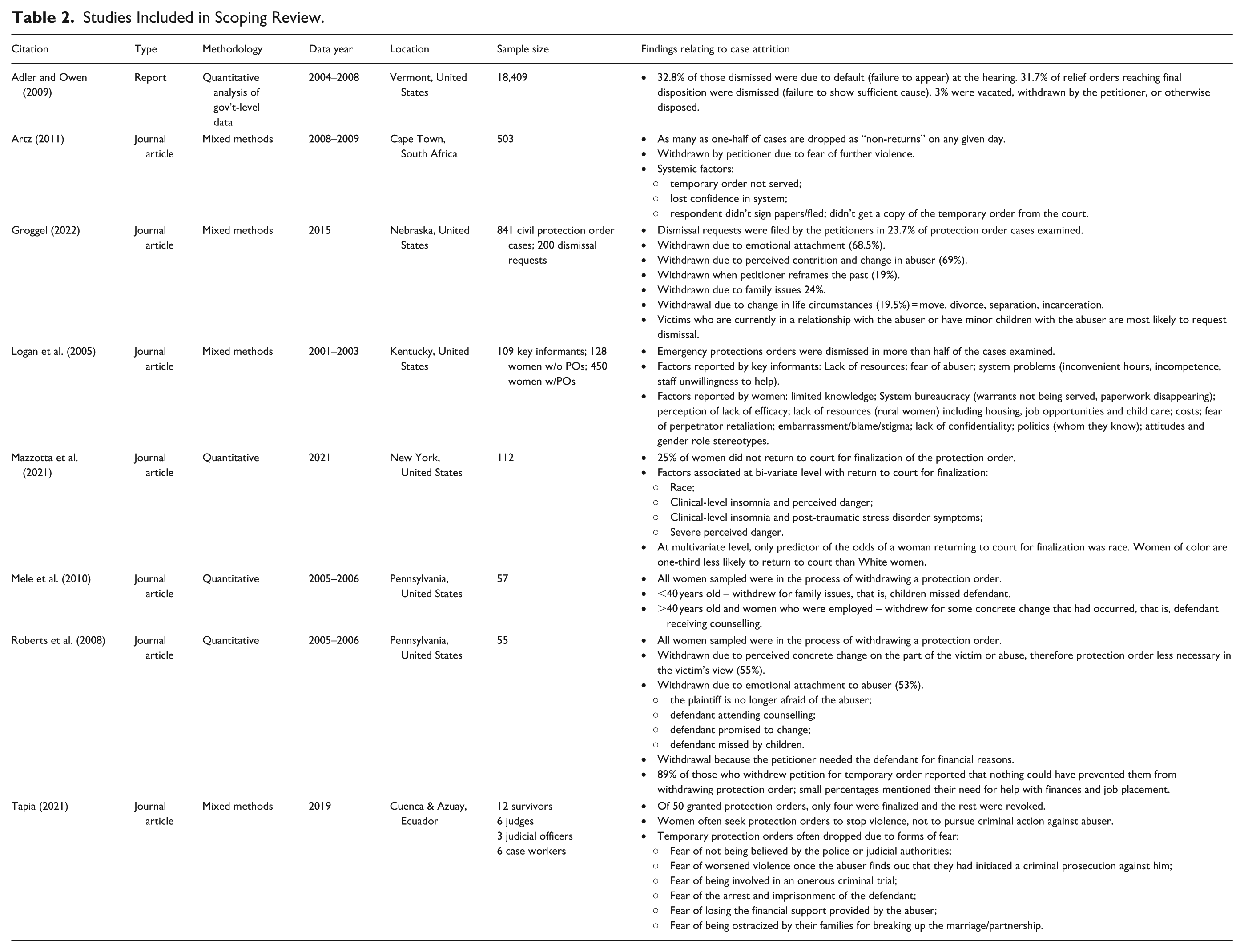
As illustrated in the PRISMA flow chart (Figure 1), the search yielded 862 unique articles, of which 834 were excluded during title and abstract screening. The primary reason for exclusion was the lack of content on case attrition from the protection order process. Of the 29 entries screened during full-text review, eight met the study’s eligibility criteria (see Table 1). These included seven journal articles (Artz, 2011; Groggel, 2022; Logan et al., 2005; Mazzotta et al., 2021; Mele et al., 2010; Roberts et al., 2008; Tapia, 2021) and one report (Adler & Owen, 2009). Four of the studies utilized quantitative methods; four used mixed-methods approaches. Only two studies utilized data from countries other than the United States: Ecuador (Tapia, 2021) and South Africa (Artz, 2011). All studies interviewed female survivors to understand case attrition, sometimes in combination with administrative data, except the Adler and Owen (2009) report, which only examined court data. Table 2 summarizes study characteristics and findings.
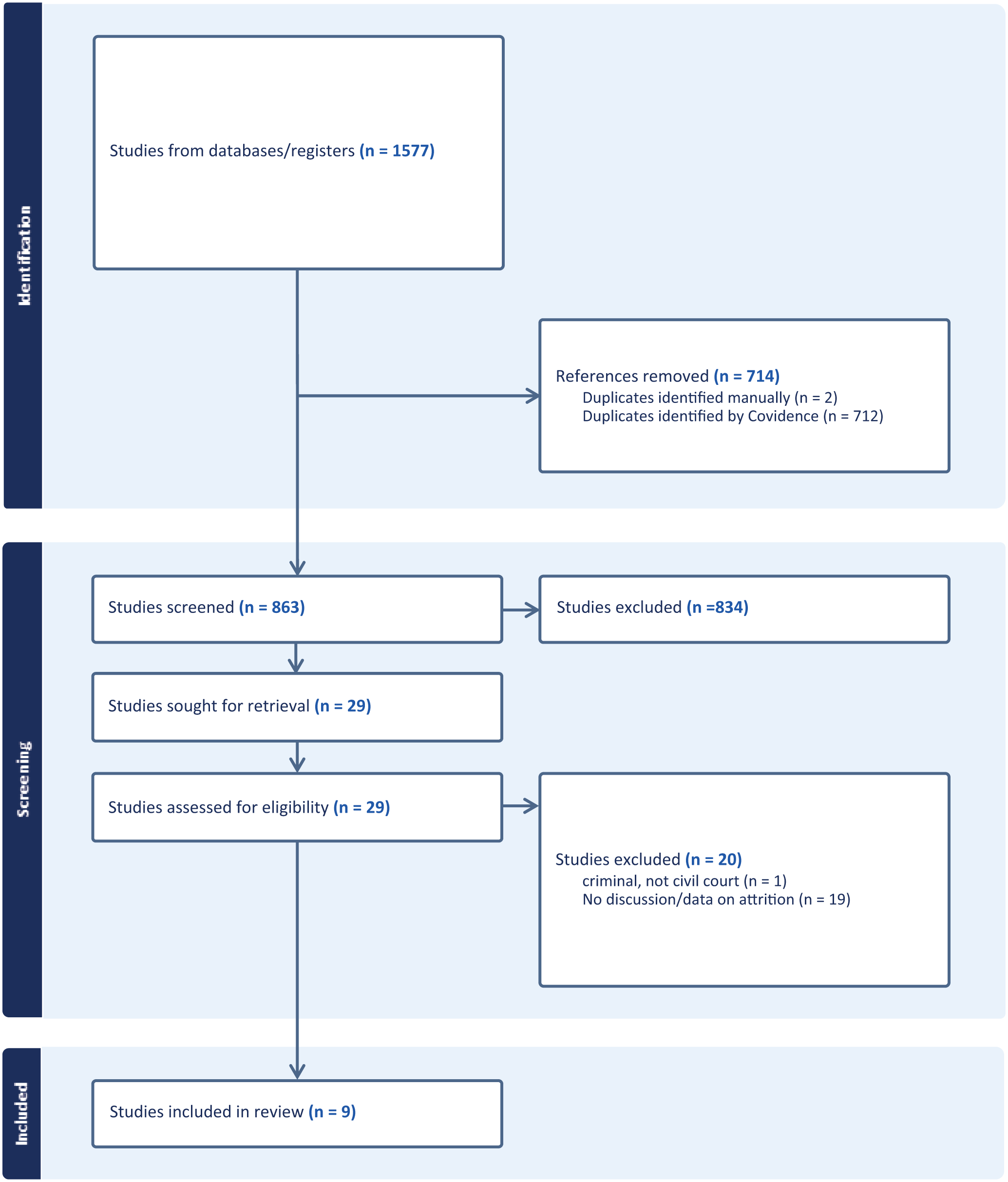
PRISMA flow chart.
Studies Included in Scoping Review.
Prevalence of Attrition
Case attrition reported in the included studies ranged from 23% to 50%. In some instances, attrition was the result of default or dismissal at the final hearing (Adler & Owen, 2009; Artz, 2011), while in others, petitioners asked that temporary protection orders be withdrawn (Groggel, 2022; Logan et al., 2005; Mele et al., 2010; Roberts et al., 2008; Tapia, 2021).
Reasons for Attrition
The studies included in this review provided limited information on the attributes of female survivors that may be associated with their engagement in the court protection order process. Some studies found that case attrition varied according to demographic factors such as race, age, and location. In a study of women in New York, race was significantly associated with the odds of a woman returning to court for finalization of temporary orders after controlling for other factors: Women of Color were one-third less likely to return to court compared to White women (Mazzotta et al., 2021). Age mediated survivors’ reasons for withdrawal in a 2010 study in Pennsylvania, with women under 40 years of age having withdrawn for family reasons, and women over the age of 40 and women who were employed having withdrawn because of some concrete change in respondent behavior (Mele et al., 2010). Results of a study conducted in Kentucky found that more women in rural settings faced barriers to the finalization of protection orders than women living in urban settings (Logan et al., 2005).
Women who were currently in a relationship with their abusive partners and survivors with minor children were more likely to withdraw or request dismissals of temporary orders than women who were not currently partnered or without minor children (Groggel, 2022). Other relational reasons for withdrawal before finalization of protection orders identified in these articles included fear of further, worsening, or retaliatory violence as a result of the protection order (Artz, 2011; Logan et al., 2005; Mazzotta et al., 2021; Tapia, 2021); emotional attachment to the respondent either on the part of the petitioner or her children (Groggel, 2019, 2022; Mele et al., 2010; Roberts et al., 2008); lack of resources or financial dependence on the respondent (Artz, 2011; Tapia, 2021); perceived contrition, behavior change, or promise of behavior change on the part of the respondent (Groggel, 2019, 2022; Mele et al., 2010; Roberts et al., 2008); embarrassment or stigma in disclosing violent experiences (Logan et al., 2005; Tapia, 2021); and changes in life circumstances, such as a move or divorce (Groggel, 2022).
Other researchers found that perceptions of the court system and limitations of the system itself impacted attrition. Survivors cited issues such as a lack of familiarity with protection processes (Logan et al., 2005) or they found the bureaucracy of the court challenging due to inconvenient hours, missing paperwork, and court documents incorrectly filled out by the system (Artz, 2011; Logan et al., 2005). Almost 90% of female survivors included in a study in Pennsylvania did not feel that if assistance had been offered to navigate the challenges in court processes, it would have altered their decisions to withdraw their petitions (Roberts et al., 2008). In some instances, a respondent was never served with a temporary order or the petitioner did not receive a copy of the temporary order from the court (Artz, 2011; Logan et al., 2005). Petitioners feared that they would not be believed by the court (Tapia, 2021) or reported a lack of confidence in the system (Artz, 2011). Survivors reported experiencing negative attitudes within the court system, including victim-blaming, shaming, and stereotyping of gender roles during judicial review, prompting women to lose confidence in the court system (Logan et al., 2005; Tapia, 2021). The study from Ecuador suggested that women often pursued protection orders to stop the violence, not to press charges against their partners, and withdrew their petitions out of fear that the civil proceedings could escalate into criminal proceedings without their consent (Tapia, 2021).
Importantly, these studies provided almost no data regarding the reasons that women remain in the protective order process to finalization or the extent to which some women withdraw from the process because their needs have been met by the temporary order (be it a cessation of violence or restoration of positive relationships with respondents) and decide that the pursuit of a final order is unnecessary.
Discussion
In 1993, the United Nations General Assembly recognized violence against women, including domestic violence, as a violation of their fundamental human rights (United Nations, 1993). This gave rise to the promulgation and further refinement of statutes intended to protect women from abuse, including those establishing protection order processes. Today, all U.S. states and the majority of nations worldwide have protection order statutes that allow women to file through the civil court system for protection from current or former partners, family members, and cohabitants (Richards et al., 2018). Not surprisingly, a decade after the UN Resolution was adopted, scholars began to examine whether that globally endorsed action had been largely rhetorical or had led to tangible reductions in domestic violence. Most of the studies from that time and since have focused on examining the effectiveness of protection orders in reducing women’s experiences of domestic violence (Benitez et al., 2010; Cordier et al., 2021; Dugan et al., 2001; Russell, 2012; Russell et al., 2025; Spitzberg, 2002). Only those few included in this scoping review focused on case attrition and its underlying causes. None, to our knowledge, have proposed interventions that might reduce case attrition by addressing the impediments that survivors face.
The articles included in this review identified a number of demographic, relational, procedural, and structural impediments that contribute to case attrition. Some of these are more easily addressed than others. Procedural challenges stemming from the complexity of language, difficult forms and filing processes, or lack of accessibility when women cannot leave work to attend evidentiary hearings, may be barriers that court systems could resolve. Given that many civil court systems adopted procedures for virtual filing and hearings due to COVID-19, updated research on structural barriers to obtaining final orders is needed that better reflects today’s context (Ajmi, 2022; Walker, 2022). There is some evidence that negative attitudes of court actors caused survivors to lose confidence in the court system (Logan et al., 2005; Tapia, 2021). Such barriers might be resolved by increasing the hours and breadth of training that civil court judges and officers receive on domestic violence and providing the judiciary with bias training.
Many of the relational factors reported to drive case attrition may be more intractable and not easily addressed or remedied by social service agencies or the courts. Survivors often seek protection through civil courts to stop the violence, not to end their relationships (Tapia, 2021). Emotional attachment to the petitioner and perceived behavioral change are complex factors that can exert a powerful influence on a woman’s decision to continue pursuing protection through the courts and are unlikely to be influenced by outside intervention. Given that many survivors simply want the violence to end, it may behoove communities to better invest in effective programs for abusive partners that help them change their behaviors before the violence escalates to a level that necessitates legal intervention. Further, many women are dependent on their partners for financial support for themselves and their children, complicating survivor decision-making. Job-training and other programs that support women in achieving some degree of financial independence from their partners may allow them to seek the full measure of protection afforded by the court without having to weigh their ability to meet basic needs (Logan et al., 2006). While not unique to protection processes, survivors’ lack of resources, such as money, housing, and childcare, may stop them from pursuing a final protection order rather than risk being cut off from the resources on which they and their children depend. Assisting female survivors in addressing these barriers, however, may not outweigh the influence of relational factors on their decisions to remain in the court protection through finalization (Roberts et al., 2008).
Study Limitations and Future Directions
While this scoping review can inform practice by synthesizing reasons for attrition from the protection order process, it is not without limitations. Many of the articles included in this review reported on data that were more than 10 years old and were largely restricted to factors driving attrition among survivors in a few U.S. states (Kentucky, Nebraska, New York, Pennsylvania, and Vermont). While many of the reasons why survivors may withdraw from the protection order process may still be true today, much of the context in which orders are sought has changed since these articles were published. The rise of modern technology and social media has introduced a battery of technology-facilitated abusive tactics that have altered abusive partners’ access to survivors, even when under a temporary order (Rogers et al., 2023). Many U.S. states have added policies since the early 2000s that require relinquishment and/or seizure of firearms, even for temporary orders, to improve implementation of protection order-related firearm restrictions; this may alter how survivors, particularly in communities with high rates of firearm ownership, use and seek protection orders (Adhia et al., 2021; Cuomo, 2025; Dìez et al., 2017; Lynch et al., 2019; Zeoli et al., 2019). Finally, during and since the COVID-19 pandemic, some jurisdictions have increased virtual access to the protection order process, which may decrease barriers and/or generate technology-specific barriers to seeking orders (Ajmi, 2022; Walker, 2022).
Some articles reported findings based on very small samples or samples limited to a particular age or racial group (Mele et al., 2010; Roberts et al., 2008; Tapia, 2021). In two instances, authors drew on the same study sample and findings to generate several papers (Groggel, 2019, 2022; Mele et al., 2010; Roberts et al., 2008). More research is needed to understand the extent to which factors identified in these studies are the drivers of survivor engagement in other settings. For example, while findings from one study in New York found that Women of Color were more likely to withdraw from the protection order process than White women (Mazzotta et al., 2021), more research is needed before that finding can be generalized to other jurisdictions in the United States and elsewhere. Similarly, while age was found to mediate the reasons women gave as to why they did not remain in the protective order process through to completion, this finding was based on a study involving a small sample of women in Pennsylvania; this finding may not hold in other populations or settings. Future research should involve the curation and analysis of nationally representative samples in the United States and other countries. Research that combines administrative and interview data from nationally representative samples is needed to understand variation in attrition, increase generalizability, and understand attrition better in different national and local court systems globally.
Conclusion
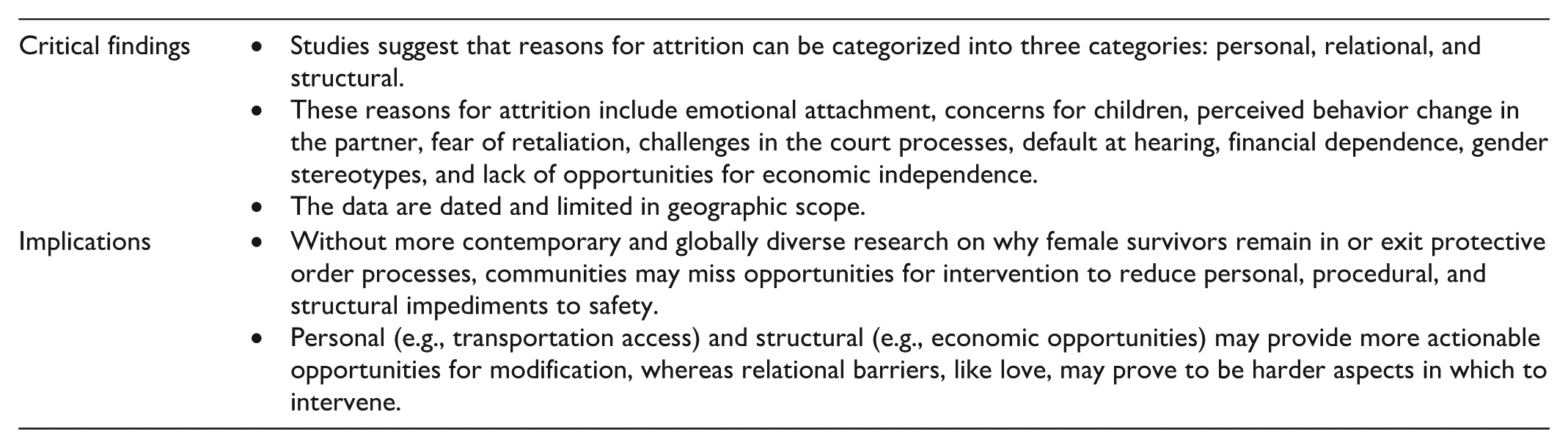
Scholarly work to understand the drivers of case attrition in civil court protection processes is limited and based on data that are old and U.S.-centric, limiting providers’ ability to respond proactively to barriers and optimize survivors’ experiences with the civil court system. In the absence of more recent and geographically representative data, factors that could be addressed through targeted interventions by social service agencies or improvements to the court processes themselves may be overlooked. More research is needed on current trends in case attrition, factors that shape female survivors’ decisions to remain in or exit court protection processes, and attributes of survivors that may have predictive value in identifying who is most at risk of leaving the court protection order process due to modifiable factors.
Implications for Practice, Policy, and Research
Footnotes
Appendix 1

Ethical Considerations
This systematic review was not subject to human subjects review by our institutions.
Funding
The authors received no financial support for the research, authorship, and/or publication of this article.
Declaration of Conflicting Interests
The authors declared no potential conflicts of interest with respect to the research, authorship, and/or publication of this article.