



Abstract
Young adults increasingly initiate, maintain, and end sexual relationships online, an evolution that has also transformed how sexual violence may be perpetrated. Nonconsensual intimate image dissemination (NCIID) has gained attention in research, policy, and media. Yet, to date, there has been no synthesis of the literature on NCIID victimization. The goals of this review were to: (a) describe the frequency and nature of NCIID victimization, (b) examine the impacts of experiencing NCIID, and (c) identify survivor coping strategies. Following the Preferred Reporting Items for Systematic Reviews and Meta-Analyses extension for Scoping Reviews (PRISMA-ScR) guidelines, PubMed, Scopus, Web of Science, and ProQuest were systematically searched for peer-reviewed qualitative, quantitative, and mixed-methods studies published in English by February 1, 2025. A total of 49 studies met the inclusion criteria. The reported frequency of NCIID ranged from 3% to 65%, with higher rates among those who experienced some other form of technology-facilitated sexual violence. Perpetrators were often current or former partners, and content was shared through both private messaging and public platforms. Victim-survivors frequently reported psychological (e.g., depression, anxiety, post-traumatic stress disorder), social (e.g., ostracism, victim-blaming), and academic/occupational harms. Help-seeking strategies included disclosing to trusted others, legal action, and content reporting, while coping through avoidance strategies included relocation, withdrawal, or trying to act as if nothing happened. Barriers to help-seeking included stigma, lack of awareness, and prior negative experiences with authorities. Findings highlight the urgent need for survivor-centered support systems, awareness campaigns, and broader conversations about consent in digitally mediated sexual encounters.
Keywords
Sexting refers to the sending of sexual images, videos, and texts using digital media and is fairly common among young adults, with estimates suggesting that as many as 50% sext (Mori et al., 2020). Research shows that sexting often begins during adolescence and tends to become more prevalent in early adulthood (Mori et al., 2020). Sexting also appears to be commonplace across different relationship contexts (e.g., established, casual) and is typically viewed as a form of flirting and a means to express one’s sexual interest or remain sexually engaged with a partner (Mori et al., 2020).
However, similar to face-to-face sexual encounters, sexting may not always be a positive experience, namely when consent is not discussed or honored. Even when intimate content is voluntarily created and consensually shared, consent can still be violated if the recipient shares it with others outside the intended audience, as is the case with nonconsensual intimate image dissemination (NCIID; Henry & Beard, 2024). NCIID is one form of the broader category known as image-based sexual abuse (IBSA), which also encompasses a range of behaviors involving the nonconsensual creation, distribution, or threat of distribution of intimate images. Therefore, in addition to NCIID, IBSA can also refer to cyberflashing (Karasavva et al., 2023a), sextortion (Miguel-Alvaro et al., 2025), sexting coercion (Swanek et al., 2025), and downblousing or upskirting (Fido et al., 2025).
To date, three reviews have surveyed the empirical research on IBSA (Henry & Beard, 2024; Paradiso et al., 2024; Parton & Rogers, 2025). Two of them focused on the predictors and implications of both IBSA perpetration and victimization (Paradiso et al., 2024; Parton & Rogers, 2025). The third review specifically explored IBSA perpetration (Henry & Beard, 2024). Six additional reviews summarized the published research on technology-facilitated sexual violence (TFSV), which, along with IBSA, encompasses behaviors such as cyberstalking, gender- and sexuality-based harassment, and online sexual harassment (Benítez-Hidalgo et al., 2025; Henry et al., 2020; Pak et al., 2024; Patel & Roesch, 2022; Powell & Henry, 2019; Sheikh & Rogers, 2024). A common issue identified across all published reviews is the lack of specificity in defining and measuring IBSA and TFSV.
The wider scope of previous reviews means that the unique experiences, challenges, and help-seeking behaviors of NCIID victim-survivors may be overlooked, emphasizing the need for a more targeted examination of the topic. Indeed, the experience of NCIID victim-survivors and the recourse available to them is likely different than that of a person who was cyberflashed or coerced into sexting. To date, only one systematic review has focused on NCIID victimization, albeit among youth, and found that it is linked with a range of adverse social and mental health impacts (Schmidt et al., 2024). Still, further work on NCIID victimization among adults is needed, as their experiences, legal protections, and help-seeking behaviors are likely different.
This is the first scoping review on NCIID victimization among adults. Findings from this work can provide valuable insights to inform policy and intervention strategies to prevent and address NCIID. Ultimately, such interventions, whether psychological, legal, or social, can meaningfully contribute to creating better recourse for victim-survivors. This review aims to answer three research questions: (1) What is the frequency of NCIID victimization, who is most likely to be affected by it, and in what contexts does NCIID occur? (2) What are the social, financial, and mental health impacts on victim-survivors?, And (3) How do victim-survivors cope?
Method
In this work, we followed the guidelines set out by the Preferred Reporting Items for Systematic Reviews and Meta-Analyses extension for Scoping Reviews (PRISMA-ScR).
Eligibility Criteria
Included studies had to (a) be published before February 1, 2025, in a peer-reviewed journal; (b) be written in English; (c) be considered an original qualitative, quantitative, or mixed methods study; (d) include adult NCIID victim-survivors; (e) address at least one of the research questions. Given the distinct challenges associated with sexually abusive online behaviors targeting children and youth, research focusing on child sexual abuse material or NCIID in minors was not included (e.g., Gámez-Guadix et al., 2022). Finally, studies investigating IBSA or TFSV without distinguishing NCIID from other forms of victimization were also excluded (Borwell et al., 2025; Champion et al., 2022; Cripps & Stermac, 2018).
Search Strategy
The PsycINFO, PubMed, and SCOPUS databases were searched on February 1, 2025. Additionally, the reference lists and citations of included papers, as well as published systematic and scoping reviews on issues related to NCIID (e.g., IBSA and TFSV), were reviewed. In this review, “image” and “content” refer to nude or sexual images or videos, but exclude deepfake, content generated using artificial inntelligence, or other artificially created sexual content. Previous reviews have identified inconsistencies in terminology used to describe NCIID-related topics. To address this, an iterative process was used to develop a broad, comprehensive keyword list. Initially, a set of core terms was identified based on the research questions, including terms like NCIID, IBSA, and TFSV. Terms like “revenge pornography” that have been historically used in NCIID research were also included. Synonyms and related concepts were incorporated in consultation with an academic librarian to help identify any gaps in the search terms. During this process, I initially tested a secondary list of keywords related to “victimization.” However, relevant articles often did not include these terms in their titles, keywords, or abstracts causing them to be excluded from search results. The final set of search terms is presented in Table 1.
Search Terms.
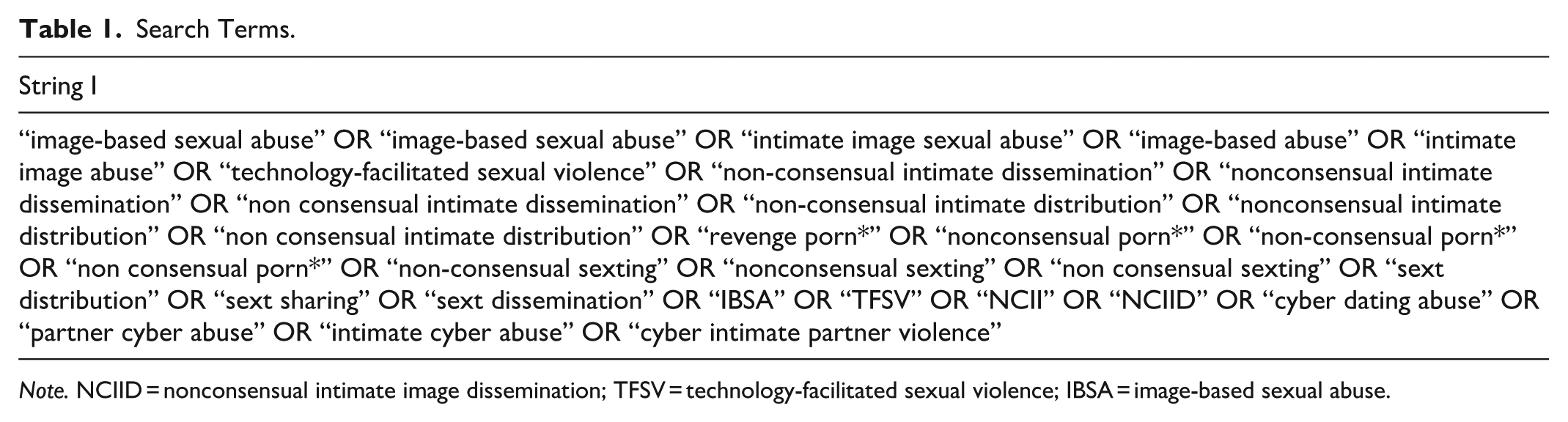
Note. NCIID = nonconsensual intimate image dissemination; TFSV = technology-facilitated sexual violence; IBSA = image-based sexual abuse.
Study Selection
All identified articles were imported into Covidence, to remove duplicates and streamline the screening process. The initial search retrieved 6,541 articles, with 5,362 remaining after duplicate removal. Prior to the title and abstract review, the inclusion criteria underwent pilot testing to ensure clarity and consistency in how reviewers interpret them (Supplemental Appendix A). All reviewers met and each independently screened the same 10 articles to determine whether they met the inclusion criteria. Each article was screened by two independent reviewers during both the title/abstract and full-text review phases. All disagreements were resolved by the first author. After the title and abstract review, 5,211 articles were excluded, followed by the exclusion of 102 articles during the full-text review. As a result, a final sample of 49 articles was retained. The PRISMA flowchart (Figure 1) illustrates this selection process. Consistent with other scoping reviews, due to the limited research on this topic and the main goal of this review being to comprehensively map the available evidence, a critical quality appraisal of the studies was not performed (Henry & Beard, 2024; Parton & Rogers, 2025). The extracted information included the author(s) and year of publication, title, country where data were collected, sample size, methodology, and key findings relevant to the research questions.
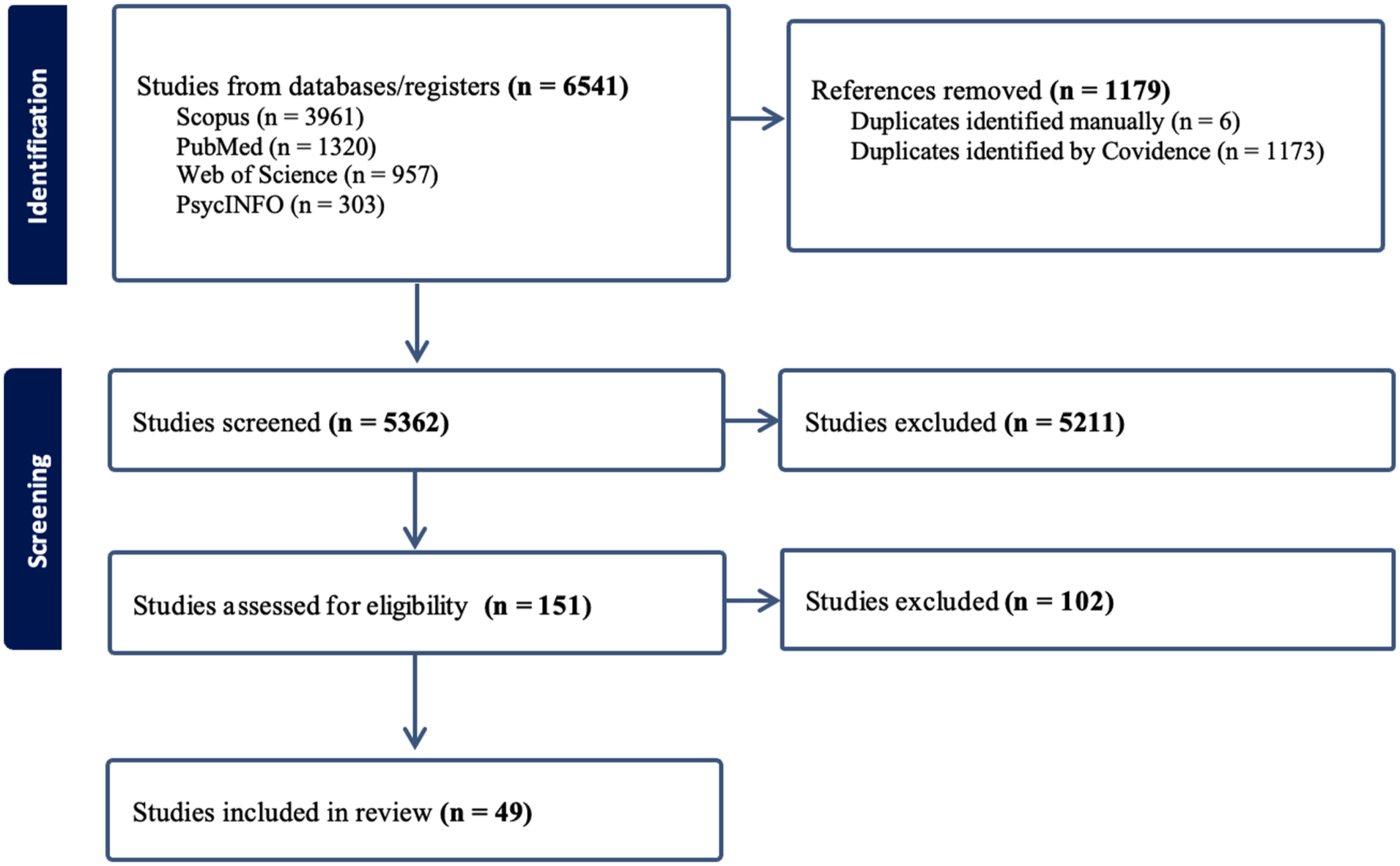
The PRISMA flowchart of included studies.
Results
The 49 articles included in this review (Table 2) were published between 2015 and 2025. Most studies were conducted in Western countries, with 20.4% (n = 10) involving multicountry collaborations across various combinations of the United Kingdom, New Zealand, Australia, the United States, Canada, Bosnia and Herzegovina, and Croatia. Likewise, most single-country studies were conducted in Western nations, primarily in the United States (n = 10, 20.4%), the United Kingdom (n = 6, 12.2%), and Australia (n = 5, 10.2%). The majority of the studies were quantitative (n = 31, 65.3%), followed by qualitative work (n = 15, 30.6%), and mixed methods (n = 3, 6.1%). Two of the included articles contained duplicate data (Gassó et al., 2020, 2021). An overview of the results from all included articles is provided in Table 2.
Overview of Included Studies.
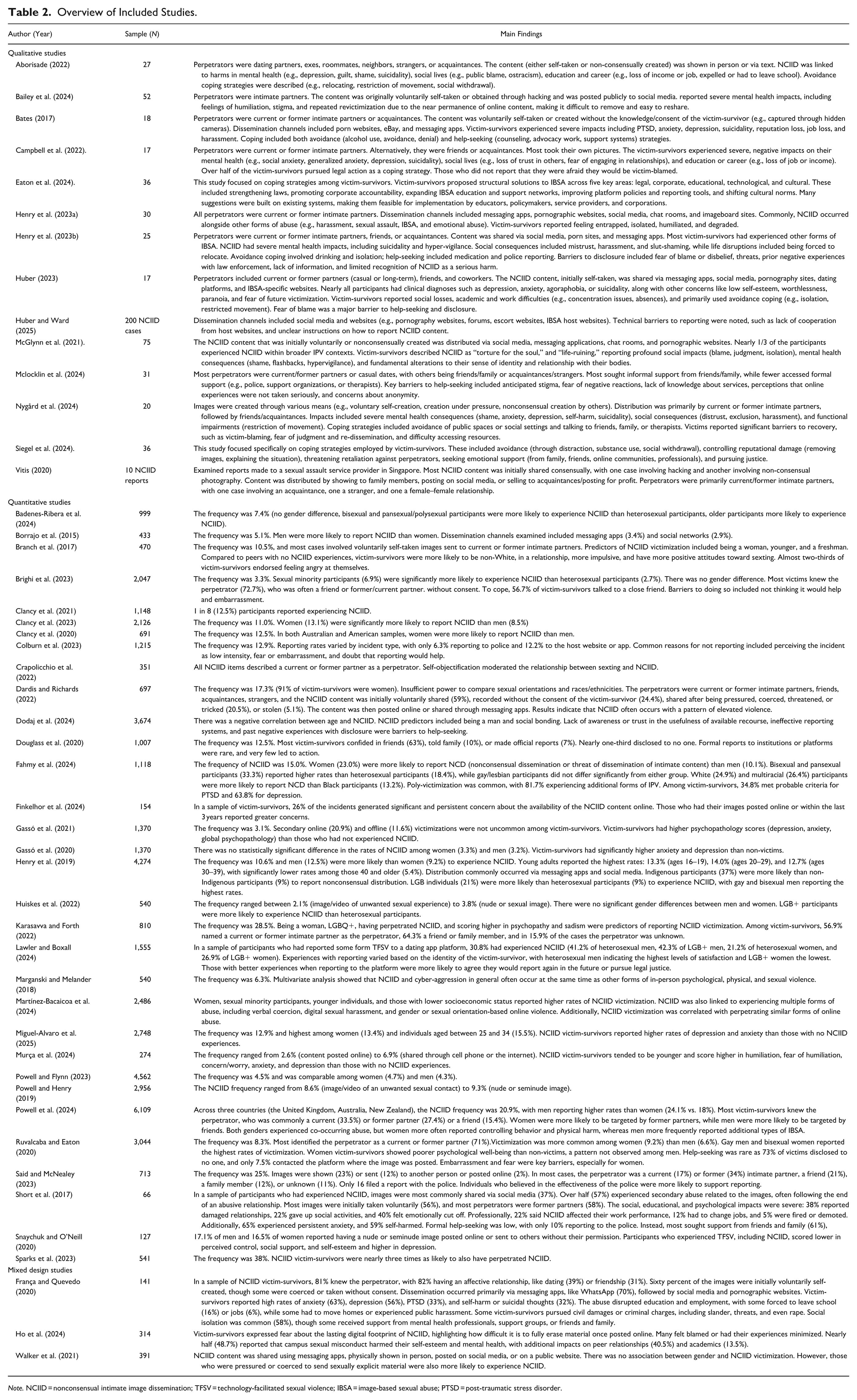
Note. NCIID = nonconsensual intimate image dissemination; TFSV = technology-facilitated sexual violence; IBSA = image-based sexual abuse; PTSD = post-traumatic stress disorder.
Research Question 1: What Is the Frequency and Nature of NCIID Victimization?
Frequency
Twenty-eight out of 49 studies (57.1%) measured the frequency of NCIID victimization (Table 3). An additional 13 (26.5%) studies exclusively recruited samples of NCIID victim-survivors. NCIID rates ranged from 3% to 65%, with higher rates observed in samples of TFSV victim-survivors.
Critical Findings.
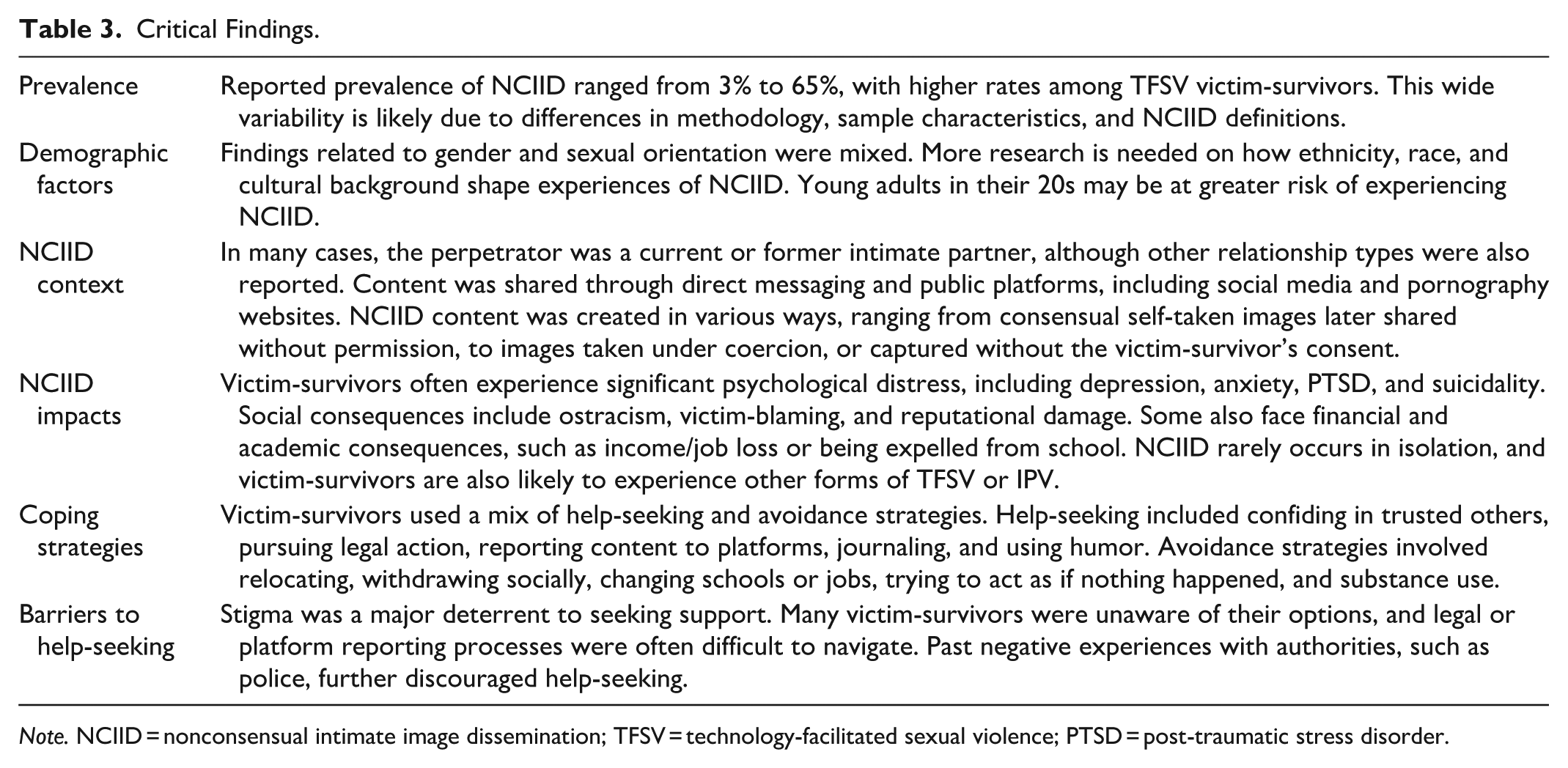
Note. NCIID = nonconsensual intimate image dissemination; TFSV = technology-facilitated sexual violence; PTSD = post-traumatic stress disorder.
Demographic Risk Factors
Age
Seven studies examined age as a risk factor for NCIID victimization, yielding mixed results. For instance, Badenes-Ribera et al. (2024) determined that older age increases victimization likelihood, while Douglass et al. (2020) found no significant age effect. However, other work demonstrated that younger age was linked with a greater likelihood of NCIID victimization (Branch et al., 2017; Martínez-Bacaicoa et al., 2024). Four papers examined specific age ranges and NCIID victimization, collectively suggesting that young adults in their 20s and early 30s being particularly vulnerable to NCIID victimization (Finkelhor et al., 2024; Henry et al., 2019; Miguel-Alvaro et al., 2025; Ruvalcaba & Eaton, 2020).
Gender
Twenty-three (46.9%) studies explored the link between gender and NCIID. Of these, 9 found that women were more likely to experience victimization (Branch et al., 2017; Clancy et al., 2023; Clancy et al., 2021; Dardis & Richards, 2022; Fahmy et al., 2024; Karasavva & Forth, 2022; Martínez-Bacaicoa et al., 2024; Miguel-Alvaro et al., 2025; Ruvalcaba & Eaton, 2020), 6 found that men were more likely (Borrajo et al., 2015; Henry et al., 2019; Lawler & Boxall, 2024; Powell & Henry, 2019; Powell et al., 2024) and 10 reported no gender differences (Badenes-Ribera et al., 2024; Brighi et al., 2023; Clancy et al., 2020; Douglass et al., 2020; Gassó et al., 2020, 2021; Huiskes et al., 2022; Powell & Flynn, 2023; Snaychuk & O’Neill, 2020; Walker et al., 2021). Research on the reported incidents of NCIID found that most included women victim-survivors (Finkelhor et al., 2024; Vitis, 2020). NCIID was often discussed as a form of gendered violence in the included papers, as evidenced by the fact that several recruited samples of only women (Aborisade, 2022; Bailey et al., 2024; Bates, 2017; Crapolicchio et al., 2022; Huber, 2023; Murça et al., 2024; Vitis, 2020). Although transgender, nonbinary, agender, Two-Spirit, and gender-questioning participants were included in 10 studies, their data were either excluded from gender-based analyses or omitted entirely due to the small number of respondents in these groups (Dardis & Richards, 2022; Douglass et al., 2020; Fahmy et al., 2024; Karasavva & Forth, 2022; Lawler & Boxall, 2024; Martínez-Bacaicoa et al., 2024; Miguel-Alvaro et al., 2025; Powell & Flynn, 2023; Powell & Henry, 2019; Powell et al., 2024).
Sexual Orientation
Determining the link between sexual orientation and NCIID presents significant challenges based on the studies included in this review. First, there is limited research available as only 14 (28.6%) papers investigated sexual orientation as a risk factor for NCIID. Furthermore, there is significant inconsistency in the ways that sexual orientation was assessed, which complicates meaningful comparison between studies. Indeed, some researchers grouped all sexual minority participants together when making comparisons with heterosexual participants. Among the studies using this grouping method, six found LGBQ+ participants were more likely to experience NCIID, while two found no significant difference between LGBQ+ and heterosexual participants. More nuanced approaches in two papers compared different sexual orientations separately, and both concluded that bisexual and pansexual/polysexual individuals reported higher rates of NCIID victimization than heterosexual participants (Badenes-Ribera et al., 2024; Fahmy et al., 2024). Ruvalcaba and colleagues found that bisexual women had the highest rates of NCIID victimization, while gay men experienced significantly higher rates than heterosexual men; however, there was no statistical difference between heterosexual and lesbian women. In the sample collected by Henry et al. (2019), gay and bisexual men were the most likely experience NCIID (Ruvalcaba & Eaton, 2020).
Race
Only 3 (6.1%) studies tested whether race was a risk factor for NCIID victimization with inconsistent findings. Two found higher rates of NCIID among non-White or Indigenous populations compared to White participants (Branch et al., 2017; Henry et al., 2019), while another study presented mixed results (Fahmy et al., 2024). It also needs to be emphasized, that the majority of studies in this review, including those with multicountry collaborations were conducted in Western, majority-White countries, except four: one in Nigeria (Aborisade, 2022), two in Singapore (Ho et al., 2024; Vitis, 2020), and one in Brazil (França & Quevedo, 2020).
Context of NCIID
Relationship with Perpetrator
Twenty-three (46.9%) studies investigated the relationship between victim-survivors and perpetrators at the time the NCIID incident took place. One study found that 73% had known them for more than a year (Brighi et al., 2023), while another reported that 82% had an emotional relationship with them (França & Quevedo, 2020). All quantitative studies showed that in at least 50% of the cases, the perpetrator was a current or former, casual or long-term intimate partner (Branch et al., 2017; Brighi et al., 2023; Campbell et al., 2022; Dardis & Richards, 2022; França & Quevedo, 2020; Karasavva & Forth, 2022; Powell et al., 2024; Ruvalcaba & Eaton, 2020; Said & McNealey, 2023). Two more papers conceptualized NCIID occurring within a pattern of intimate partner violence and asked participants only about NCIID perpetrated by a partner (Borrajo et al., 2015; Crapolicchio et al., 2022).
Victim-survivor and perpetrator relationships also included being roommates, neighbors, acquaintances, coworkers, friends, and family members (see Table 3). Additionally, in most papers, a smaller but present proportion of victim-survivors did not know who the perpetrator was (Aborisade, 2022; Brighi et al., 2023; Dardis & Richards, 2022; França & Quevedo, 2020; Huiskes et al., 2022; Karasavva & Forth, 2022; McGlynn et al., 2021; Mclocklin et al., 2024; Nygård et al., 2024; Powell et al., 2024; Ruvalcaba & Eaton, 2020; Said & McNealey, 2023; Short et al., 2017). Importantly, almost all papers addressed primary NCIID victimization, meaning they inquired about the first person to share the NCIID-related content and not all who potentially downloaded and reshared it. In contrast, in a sample of university students where participants were encouraged to report their relationship with everyone who had shared their nude or sexual images without their consent, 57% named a current or former intimate partner and 64% a friend or family member as a perpetrator (Karasavva & Forth, 2022).
Distribution Channels
There was considerable variability among the 18 studies (36.7%) that assessed how the content was shared. First, qualitative studies (Aborisade, 2022; Bailey et al., 2024; Bates, 2017; Henry et al., 2023a, 2023b; Huber, 2023; Huber & Ward, 2025; Huiskes et al., 2022; McGlynn et al., 2021; Vitis, 2020), documented a wide range of distribution channels, offering rich contextual information. These included messaging applications and group chats, social media and forums (including the hacked personal social media of one victim-survivor), as well as being shown to others in person. Host websites such as pornographic websites, dating sites, or websites created for the purpose of posting the victim-survivor’s intimate content were also discussed. In one extreme case, a victim-survivor shared how nude and sexual images that depicted them were sold through eBay auctions (Bates, 2017).
Quantitative studies (Dardis & Richards, 2022; França & Quevedo, 2020; Murça et al., 2024; Powell & Henry, 2019; Said & McNealey, 2023; Short et al., 2017) demonstrated that mobile messaging applications were consistently the most common distribution channel, followed by public sharing on social media or pornographic websites. It is also likely that nonconsensually distributed intimate content is shared across multiple channels, with 40% of victim-survivors in a large, Australian sample reporting that this was their experience (Henry et al., 2019).
Creation of Nonconsensually Distributed Intimate Content
The ways that the content was initially created ranged from voluntarily self-taken to self-taken under pressure or coercion or taken without the consent of the victim-survivor, as demonstrated by eight qualitative studies (Aborisade, 2022; Bailey et al., 2024; Bates, 2017; Campbell et al., 2022; Huber, 2023; McGlynn et al., 2021; Nygård et al., 2024; Vitis, 2020). These results were corroborated by three papers that employed a quantitative or mixed-design study design and found that 56% to 60% of the content was initially provided consensually (Dardis & Richards, 2022; França & Quevedo, 2020; Short et al., 2017). Furthermore, Dardis and Richards (2022) also reported that 21% did so under pressure or threats, while Short et al. (2017) found 14% of victim-survivors were coerced into image creation, and 24% were completely unaware they were being photographed.
Poly-Victimization
Poly-victimization was another significant finding across 12 (24.5%) included papers, which suggested that NCIID may frequently be a part of a broader pattern of violence, both online and in person (Dardis & Richards, 2022). Fahmy et al. (2024), demonstrated this quantitatively, showing that 81.7% of the NCIID victim-survivors in their sample had also experienced some other form of IPV. Many victim-survivors experienced further sexual harassment, abuse, and TFSV as a direct consequence of NCIID, particularly when nude or sexual content was posted on pornographic or dating sites (Aborisade, 2022; Bates, 2017; França & Quevedo, 2020; Gassó et al., 2020; Henry et al., 2023b; Huber, 2023; Marganski & Melander, 2018; McGlynn et al., 2021; Nygård et al., 2024). For instance, one participant in the study recounted how a man who discovered her intimate images online actually came to her home and harassed her (Bates, 2017). Another crucial aspect to consider is the apparent permanence of internet content, which can result in repeated victimization as NCIID materials may be downloaded and reuploaded seemingly indefinitely, creating a cycle of ongoing harm (Bailey et al., 2024).
Research Question 2: What Are the Impacts of NCIID?
Mental Health
Twenty-one (42.9%; 9 quantitative, 2 mixed-method, and 12 qualitative studies) of the reviewed studies showcased the profound harmful impacts of NCIID on the mental health of victim-survivors. As one participant in Campbell et al.’s (2022) study expressed, “I live in fear and despair every day” (p. 9). Overall, victim-survivors reported lower psychological well-being and scored higher in global psychopathology than non-victims (Gassó et al., 2020, 2021; Ruvalcaba & Eaton, 2020).
More specifically, depression and anxiety were consistently identified as primary concerns among victim-survivors in both qualitative (Aborisade, 2022; Bates, 2017; Campbell et al., 2022; Henry et al., 2023b; Huber, 2023; McGlynn et al., 2021; Nygård et al., 2024) and quantitative work. Several other studies reported significantly higher depression and/or anxiety scores among NCIID victim-survivors compared to non-victims or the general population (França & Quevedo, 2020; Gassó et al., 2020, 2021; Miguel-Alvaro et al., 2025; Murça et al., 2024; Short et al., 2017). NCIID is a traumatic experience, and accordingly, Fahmy et al. (2024) found that one in three victim-survivors met the probable diagnostic criteria for post-traumatic stress disorder (PTSD). Qualitative work also extensively documented experiences with PTSD and trauma-related symptoms, such as flashbacks and hypervigilance (Bates, 2017; Campbell et al., 2022; Henry et al., 2023b; McGlynn et al., 2021; Nygård et al., 2024). Other negative psychological impacts included loss of bodily integrity, decreased self-esteem, sleep disturbances, and fear of going outside (Aborisade, 2022; Bates, 2017; Henry et al., 2023b; Huber, 2023; McGlynn et al., 2021; Murça et al., 2024; Nygård et al., 2024; Ruvalcaba & Eaton, 2020; Short et al., 2017). Despite limited direct measurement in quantitative work, suicidal ideation, planning, and attempts were frequently discussed in qualitative work (Aborisade, 2022; Bates, 2017; Campbell et al., 2022; Huber, 2023; Nygård et al., 2024).
Social Functioning
Results from nine studies (18.4%), show that the social functioning of NCIID victim-survivors is significantly impacted (Aborisade, 2022; Bailey et al., 2024; Bates, 2017; Campbell et al., 2022; Gassó et al., 2020; Henry et al., 2023b; Ho et al., 2024; McGlynn et al., 2021; Nygård et al., 2024). Papers with diverse study designs (qualitative, quantitative, mixed-method) consistently found that victim-survivors reported being blamed, judged, and ostracized by their social circle, resulting in lost relationships (Aborisade, 2022; Bates, 2017; Campbell et al., 2022; Gassó et al., 2020; McGlynn et al., 2021; Nygård et al., 2024).
Academic and Work
NCIID was also shown to negatively affect victim-survivors’ work and academic functioning across five studies (10.2%). Short et al. (2017) reported that 22% of victim-survivors felt their job performance was directly impacted, 12% had to change jobs, 5% were fired or demoted, and 35% lost money or incurred significant expenses, such as legal or therapy costs. Qualitative studies also described cases where victim-survivors lost jobs or sources of income (Aborisade, 2022; Bates, 2017; Campbell et al., 2022; França & Quevedo, 2020). For those still in university, some were forced to leave, expelled, or lost scholarships (Aborisade, 2022; França & Quevedo, 2020). Others worried about applying for jobs or choosing where to study and work, fearing that their nonconsensually shared intimate content might become known to future employers or colleagues (Campbell et al., 2022; Henry et al., 2023b).
Research Question 3: How Do NCIID Victim-Survivors Cope?
Help-Seeking Behaviors
Fifteen (30.6%) studies in this review illustrated a wide range of coping strategies of victim-survivors in the aftermath of NCIID. Leaning on trusted friends and family was often a primary source of support (Bates, 2017; Brighi et al., 2023; Douglass et al., 2020; Eaton et al., 2024; Henry et al., 2023b; Mclocklin et al., 2024; Ruvalcaba & Eaton, 2020; Siegel et al., 2024). Formal and institutional resources included counseling or therapy and prescription medication (Bates, 2017; Henry et al., 2023b; Siegel et al., 2024). Efforts to pursue justice such as reporting to the police, contacting host websites, or local sexual assault service provider, and submitting content takedown requests were also frequently discussed in both quantitative and qualitative work but rarely used by victim-survivors (Bates, 2017; Brighi et al., 2023; Campbell et al., 2022; Colburn et al., 2023; Eaton et al., 2024; Henry et al., 2023b; Huber & Ward, 2025; Lawler & Boxall, 2024; Ruvalcaba & Eaton, 2020; Short et al., 2017; Siegel et al., 2024; Vitis, 2020). In fact, in a sample of 66 adult NCIID victim-survivors in the United Kingdom (Short et al., 2017) and 126 Australian victim-survivors (Douglass et al., 2020), less than 10% turned to formal support services and police reporting. Some victim-survivors also coped by turning to advocacy work and helping others (Bates, 2017; Siegel et al., 2024). Additional coping mechanisms included peer communities, religious communities, writing, and using humor to process (Bates, 2017; Eaton et al., 2024).
Avoidance Behaviors
Many victim-survivors employ various strategies to distance themselves from their experiences with NCIID and protect against potential future harms, as detailed in eight studies (16.3%). Some avoidance strategies entailed victim-survivors removing themselves geographically, like moving, changing work, or schools (Aborisade, 2022; Bates, 2017; França & Quevedo, 2020). Others included social withdrawal both online and offline, including leaving social media altogether (Aborisade, 2022; Bates, 2017; Henry et al., 2023b; Siegel et al., 2024). Avoidance can also take the form of substance and/or alcohol use aimed at forgetting the experience or by immersing oneself in work as a distraction (Bates, 2017; Henry et al., 2023b; Siegel et al., 2024). Quantitative work underscores that avoidance behaviors are not uncommon (Brighi et al., 2023; Douglass et al., 2020; Ruvalcaba & Eaton, 2020). In a community sample of over 3,000 participants, nearly three-quarters of victim-survivors did not disclose their experience to anyone (Ruvalcaba & Eaton, 2020). Similarly, 7% victim-survivors in a large, community sample of more than 2,000 Italian adults attempted to move on by acting as if nothing happened (Brighi et al., 2023).
Barriers to Help-Seeking
Accessing support can be an arduous process, with victim-survivors encountering numerous, and often compounding, barriers, as detailed in 19 of the included papers (38.8%). Victim-survivors are faced with pervasive social stigma and are blamed, shamed, and judged both by friends and family as well as from authority figures, like police officers (Aborisade, 2022; Bailey et al., 2024; Brighi et al., 2023; Campbell et al., 2022; Eaton et al., 2024; França & Quevedo, 2020; Gassó et al., 2020; Henry et al., 2023b; Ho et al., 2024; McGlynn et al., 2021; Mclocklin et al., 2024; Nygård et al., 2024). Such responses can discourage help-seeking, especially when they are preceded by past negative experiences with disclosure (Dodaj et al., 2024; Eaton et al., 2024; Henry et al., 2023b; Lawler & Boxall, 2024). Stigma may also become internalized by some victim-survivors who described self-blame and minimizing their experiences as a deterrent to help-seeking (Colburn et al., 2023; Henry et al., 2023b; Mclocklin et al., 2024; Nygård et al., 2024; Ruvalcaba & Eaton, 2020). In some cases, victim-blaming can even escalate into outright hostility, threats, and so called “honor-based” violence (Henry et al., 2023b). Another major barrier is a lack of knowledge about available resources. This can range from a belief that no meaningful solutions exist, to partial awareness accompanied by skepticism about their effectiveness (Brighi et al., 2023; Dodaj et al., 2024; Fahmy et al., 2024; Henry et al., 2023b; Karasavva & Forth, 2022; Mclocklin et al., 2024; Nygård et al., 2024). Difficulties navigating the legal system can also stop people from reporting (Fahmy et al., 2024). Unfortunately, ineffective or difficult to navigate reporting and content removal systems can make these pathways inaccessible (Dodaj et al., 2024; Fahmy et al., 2024; Ho et al., 2024; Huber & Ward, 2025). Finally, a lack of anonymity and the perceived gendered nature of services were also barriers to reporting, especially among men (Mclocklin et al., 2024).
Discussion
This is the first scoping review on NCIID victimization on its own, rather than as a subset of IBSA or TFSV. In turn, findings from this work can identify gaps in the research literature and provide insights for policy and practice. Table 3 contains an overview of critical findings.
NCIID Frequency
There was notable variation in the ways NCIID was measured spanning scales that prompted participants to consider different forms of victimization to single-item measures. Moreover, some papers studied solely nonconsensual photos, omitting videos, while others discussed only online posts of nonconsensual images but not in-person sharing or distribution via mobile devices. Thus, it is possible that some studies may have captured a narrower gamut of NCIID experiences, potentially underestimating its true frequency. Finally, while all studies included adult participants, some did not delineate when NCIID occurred, meaning they may have reported incidents from the participants’ childhood or adolescence. These methodological differences complicate direct comparisons across studies and highlight the need for more standardized methodological approaches in NCIID research. Finally, although this work did not focus on deepfakes or AI-generated content, it is undeniable that AI-generative models are becoming increasingly sophisticated. Thus, the likelihood of their weaponization trough IBSA perpetration is also increasing. Future research should investigate the potentially devastating impacts of AI-generated nonconsensual sexual content and the recourse available to victim-survivors.
Beyond these methodological differences, it is also important to acknowledge broader challenges in collecting data on sexual and gender-based violence and TFSV. Many may be reluctant to disclose their experiences due to stigma, shame, or fear of not being believed. These barriers can be especially pronounced among male-presenting individuals or those assigned male at birth, who may face additional social pressures to conform to norms of toughness or invulnerability. Furthermore, it remains especially difficult to collect data from trans, nonbinary, agender, and Two-Spirit people. While this review identified 10 studies that included participants outside the gender binary, the sample sizes in all were too small to allow for meaningful statistical comparisons, who may be wary of participating due to prior negative experiences with researchers, misgendering, or concerns about the misuse of their data. These barriers further complicate efforts to accurately estimate prevalence and highlight the need for more inclusive and adequately powered research.
NCIID Demographics
This review found mixed findings regarding the link between demographic characteristics (i.e., age, gender, sexual orientation, race) and NCIID victimization. Vulnerability to NCIID may stem more from gender dynamics within relationships rather than from sexual orientation. Thus, future research should also consider the perpetrator's gender as a potential risk factor, rather than the victim-survivor’s sexual orientation. This distinction is especially important for bisexual and pansexual individuals, whose partners may have diverse gender identities. Very few studies examined race and NCIID with inconsistent results. Of note, most of the included papers recruited participants from Western countries. Additionally, in most studies, minority-based identity groups were combined. Nevertheless, references to so-called “honor-based” violence as an additional form of harm survivors may face, highlight the importance of cultural context (Henry et al., 2023b). Future research should investigate how factors such as religion, religiosity, ethnicity, and cultural values (particularly those related to machismo and misogyny) may compound the impact on survivors and deprive them of social support.
Viewing NCIID as gendered forms of violence is supported by the ways it is perpetrated, experienced, and responded to. Men are more likely to perpetrate, excuse, or minimize NCIID (Henry & Beard, 2024; Karasavva et al., 2023b; Paradiso et al., 2024). Common motivations behind NCIID, such as control, sexual trophism, and desire for status, reflect themes of gendered power dynamics (Clancy et al., 2021, 2023; Parton & Rogers, 2025). A potential by-product of these two factors is that many NCIID-host websites allow only content featuring cisgender women (Henry & Flynn, 2019). Moreover, women tend to face harsher public stigma, and are at a heightened risk for secondary victimizations, like harassment or further violence (Amudhan et al., 2024; Parton & Rogers, 2025). At the same time, the findings on gender and rates of NCIID victimization from this review were mixed. It is important to acknowledge both the gendered dynamics of NCIID as well as the reality that people of all genders can be harmed by it. Crucially, there is a gap in the literature on NCIID victimization among individuals beyond the gender binary.
NCIID Context
NCIID is often minimized or excused and victim-survivors face blame, especially when they are deemed “promiscuous,” stressing how sexual double standards and gender dynamics may disproportionately impact female-presenting victim-survivors (Karasavva et al., 2023b; Mckinlay & Lavis, 2020). Victim-blaming stems at least partially from the underlying assumption that victim-survivors voluntarily shared their nude or sexual content and should have anticipated potential consequences (Amudhan et al., 2024). This review found that the reality is far more complex, with many victim-survivors having been pressured, coerced, or tricked into sexting. Others were not aware of or did not consent to their nude or sexual image being taken in the first place. Importantly, even when individuals consent to an intimate content being taken and voluntarily send it to another person, this does not constitute consent for it to be shared with a wider audience. Taken together, these results call attention to the fact that consent must be discussed and honored at every step of a digitally mediated sexual encounter. As well, discussions of NCIID and sexual violence in general frequently focus on what the victim-survivor should have done differently rather than on the violation committed by the perpetrator. Sexting has become a normal part of the sexual repertoire for many, and it carries some risk, as do all other in-person and online sexual encounters. However, the social messaging that is aimed predominantly at assigned female at birth and female-presenting individuals and dictates they abstain from sexting to avoid NCIID is neither fair nor helpful. Instead, we should work on dismantling the stigma surrounding NCIID and placing responsibility squarely on perpetrators.
As implied by its colloquial term “revenge pornography,” NCIID is typically portrayed as being perpetrated by a scorned lover at the end of a relationship. Although most included studies found that victim-survivors were frequently targeted by intimate partners, this was not the full picture. Perpetrators were also other people in the victim-survivor’s life or even strangers. This review also identified several dissemination channels, such as messaging apps, social media, and public websites. Consequently, NCIID introduces additional challenges when pursuing legal action, such as jurisdiction issues when victims and perpetrators are geographically separated and issues with identifying the perpetrator, since identity concealment is easier online.
The Harms of NCIID
There was a clear consensus that the harms of NCIID are severe, extensive, and long-lasting among the included studies. The mental health consequences for victim-survivors are particularly acute, with individuals frequently reporting feelings of fear, anxiety, humiliation, shame, and self-blame. The apparent permanence of online content and the ease with which images can be downloaded, reshared, and reuploaded without the victim-survivor’s consent or knowledge add to the distress. This persistent fear reinforces the trauma and makes it difficult to move on.
In addition to these psychological effects, NCIID significantly disrupts social functioning. Because the perpetrator is often someone the victim-survivor knows, like a current or former intimate partner, the fallout can be complicated. Possibly, others in the victim-survivor’s life may know and have relationships with the perpetrator, potentially leading to tension and divided loyalties. These difficulties are exacerbated by social stigma and victim-blaming surrounding NCIID, reflecting and reinforcing gendered power dynamics. The impacts also extend into academic and professional settings. Thus, converging findings from this review agree that NCIID is a deeply traumatic violation with serious and enduring consequences that permeate many if not all aspects of the victim-survivor’s life. As such, victim-survivors of NCIID represent a high-need population requiring support in multiple areas of functioning.
Coping with NCIID
NCIID victim-survivors face multiple, compounding barriers that collectively exert a significant impact on their likelihood of accessing support (Pijlman et al., 2025). Findings from this review indicate that victim-survivors predominantly seek informal support from trusted friends and family rather than formal services. A barrier to seeking support from people close to victim-survivors was stigma and shame. In some cases, the victim-survivors feared further violence from the people they would disclose to, including so-called “honor-based” violence (Henry et al., 2023b). In response to these real or perceived threats, victim-survivors may adopt avoidance strategies, such as relocating, changing workplaces or schools, and withdrawing socially. While these strategies may provide short-term relief, in the long term, they could lead to increased isolation and emotional distress (Leiner et al., 2012).
NCIID victim-survivors may require specialized attention, particularly technical help in removing the content from the internet. Despite this, few turn to formal support systems as it is not only unappealing but potentially re-traumatizing, particularly for individuals from historically marginalized communities (Decker et al., 2019; Edwards et al., 2023). Perhaps more critically, the authorities often cannot achieve what survivors need most: the removal of their intimate content from the internet (North Yorkshire Police, Fire and Crime Commissioner, 2021). The options NCIID victim-survivors have at their disposal are highly contingent on their location and legal context. Differences in legislation and enforcement shape both access to recourse and willingness to seek help. In Australia, the eSafety Commissioner can compel social media platforms to remove nonconsensual content, offering a clear and efficient reporting pathway. In contrast, the regulatory landscape elsewhere remains more fragmented. Although Canada criminalized NCIID in 2015 through Bill C-13, enforcement is often difficult. There is no national body with direct removal powers, and survivors typically rely on police or platform-specific reporting tools. These gaps can limit awareness of available remedies. Overall, stronger national and international coordination is needed to ensure consistent support and protection for victim-survivors. Feelings of self-blame and internalized minimization of their experiences may also discourage some from seeking help, particularly if they question whether what they experienced counts as “real” abuse.
Implications
Standardized operationalizations of NCIID are needed that encompass both images and videos, whether voluntarily or non-consensually created, across diverse relationship contexts. Research should also move beyond focusing solely on the initial perpetrator and investigate the role of those who download and reshare the nonconsensually distributed content. Too often, minoritized groups are binned together, masking important differences and insights. Thus, we need more inclusive research that better reflects the diverse identities of NCIID victim-survivors.
From a policy perspective, legal options to combat NCIID may be both complicated and insufficient to fully address them (Karasavva & Noorbhai, 2021; Kolisetty, 2021). Thus, it is imperative to establish consistent criminal and civil statutes that specifically address NCIID. It would perhaps be more effective to promote international legal standards for NCIID that could address jurisdictional challenges and hold hosting platforms to account. For example, pornographic websites could be required to ask for written consent from all individuals depicted in uploaded content. On the technical front, collaboration between different search engines could ensure that nonconsensually distributed intimate images are delisted and not found when searching a victim-survivor’s name.
Educational campaigns can minimize stigma, challenge victim- and self-blame, and raise awareness about the available recourse for victim-survivors. In fact, acknowledging self-blame has been shown to increase engagement with NCIID-related educational campaigns (Pijlman & Burgmeijer, 2024). Education campaigns could also strategically leverage the unique affordances of the internet to empower bystanders to support victim-survivors by speaking up, offering private support, or initiating the reporting and takedown process (Karasavva & Mikami, 2024; Kromann & Flynn, 2025). Public discourse about consent should also evolve to incorporate digitally mediated sexual encounters, like sexting. Finally, specialized training for police, support workers, and therapists could ensure a better experience for those who seek help (Table 4).
Research, Policy, Technical, and Education Recommendations.
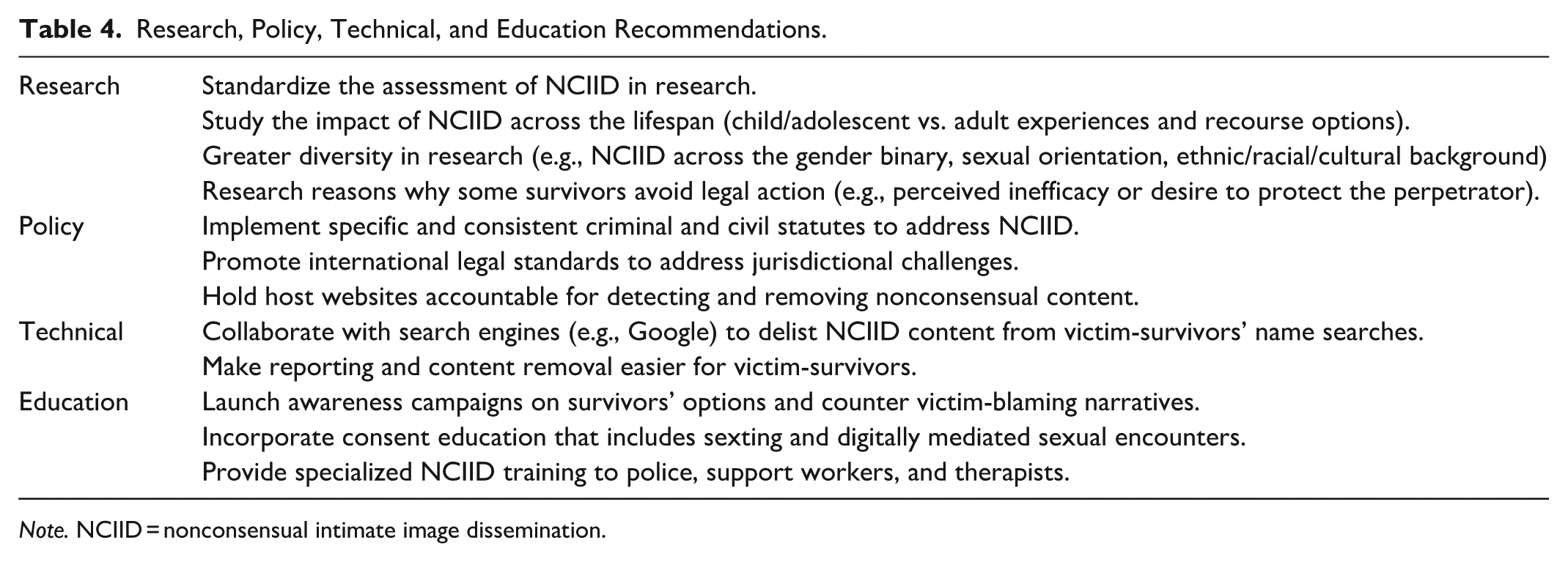
Note. NCIID = nonconsensual intimate image dissemination.
Limitations
A main limitation of this review is that several of the included studies explored broader topics, like IBSA and TFSV. Hence, there was marked variation in the ways that NCIID victimization was assessed, as discussed earlier. Nonempirical work (e.g., theoretical articles, legal analysis, reports, case studies) was excluded from this review. Practically, this could mean that important insights into NCIID were potentially overlooked. In addition, we omitted non-English work, which further limits understanding of NCIID to primarily Western perspectives. Finally, there is limited prior research available for several of the topics addressed in this review, underlining the great need for future work.
Conclusion
This scoping review explored the empirical literature on NCIID victimization. The findings indicate that NCIID is fairly common, can occur across various different relationship contexts, and often takes place along other forms online or in-person abuse. Victim-survivors report a wide array of mental health, social, and academic or work-related challenges. To cope, many turn to trusted friends and family with some seeking professional help or legal action. Avoidance-based coping strategies are also common and can include social withdrawal, relocation, or attempts to try to act as if nothing happened. Several barriers can deter victim-survivors from seeking help, including stigma, lack of awareness about available recourse, and previous negative experiences with self-seeking. Overall, results from this review emphasize the urgent need to prioritize the voices and experiences of victim-survivors. More resources are needed to support them both psychologically and practically (e.g., technical assistance). At a societal level, we must confront the normative practices and harmful attitudes, like sexism, that enable NCIID, and work to expand the public discussion on consent to fully include digitally mediated sexual encounters. Above all, efforts must be grounded in empathy, respect, and a commitment to centering the needs of victim-survivors.
Supplemental Material
sj-docx-1-tva-10.1177_15248380251383940 – Supplemental material for The Frequency, Nature, Impact, and Coping Strategies of Nonconsensual Intimate Image Dissemination Victimization: A Scoping Review
Supplemental material, sj-docx-1-tva-10.1177_15248380251383940 for The Frequency, Nature, Impact, and Coping Strategies of Nonconsensual Intimate Image Dissemination Victimization: A Scoping Review by V. Karasavva in Trauma, Violence, & Abuse
Supplemental Material
sj-docx-2-tva-10.1177_15248380251383940 – Supplemental material for The Frequency, Nature, Impact, and Coping Strategies of Nonconsensual Intimate Image Dissemination Victimization: A Scoping Review
Supplemental material, sj-docx-2-tva-10.1177_15248380251383940 for The Frequency, Nature, Impact, and Coping Strategies of Nonconsensual Intimate Image Dissemination Victimization: A Scoping Review by V. Karasavva in Trauma, Violence, & Abuse
Footnotes
Acknowledgements
I would like to thank Dr. Samantha Dawson and Dr. Sheila Woody for their thoughtful feedback on earlier drafts of this manuscript. I am also grateful to Arella Ng, Kiahna Siy, and Aafreen Siddiqui for their valuable assistance with abstract and full-text screenings.
Declaration of Conflicting Interests
The author declared no potential conflicts of interest with respect to the research, authorship, and/or publication of this article.
Funding
The author received no financial support for the research, authorship, and/or publication of this article.

Supplemental Material
Supplemental material for this article is available online.
Author Biography
References
Supplementary Material
Please find the following supplemental material available below.
For Open Access articles published under a Creative Commons License, all supplemental material carries the same license as the article it is associated with.
For non-Open Access articles published, all supplemental material carries a non-exclusive license, and permission requests for re-use of supplemental material or any part of supplemental material shall be sent directly to the copyright owner as specified in the copyright notice associated with the article.
