



Abstract
Intimate partner violence remains a pervasive issue globally, affecting individuals, families, and communities at alarming rates. While interventions have traditionally focused on supporting victims and survivors, including court-mandated behavioral change programs for men who perpetrate violence, there is a growing need to explore voluntary programs for men who use violence. This reflects a broader shift toward prevention, education, and support rather than a sole focus on reactive measures. By engaging men before violence escalates or becomes more frequent, these programs may offer a valuable opportunity to reduce harm, promote healthier behaviors, and ultimately create safer communities. This review assesses the current state of knowledge and identifies gaps in voluntary group programs for men who use violence. A scoping review was undertaken to better understand the current state of knowledge in the scholarly literature on voluntary programs for men who use violence. Thirteen studies meeting the eligibility criteria (published from 2014 to June 2025) were included for analysis after systemically sourcing articles from four databases and screening them using transparent inclusion and exclusion criteria. These studies were selected based on their relevance to voluntary, non-court-mandated interventions. The findings demonstrate significant gaps in the literature, particularly regarding the ability of voluntary programs to foster sustained and meaningful behavior change. While some studies reported positive short-term outcomes, such as increased self-awareness and improved relationship dynamics, the long-term impact of these programs remains uncertain. In addition, challenges in participant engagement and retention were frequently reported, further complicating the evaluation of program effectiveness.
Introduction
Intimate partner violence (IPV) remains a critical issue in Australia and is highly gendered in nature, with most people who use IPV being men (World Health Organization, 2021). This paper focuses on men who use violence against their female partners, acknowledging there is some evidence that women may use violence against male partners and that intimate partners may include a range of genders. Recent research reveals that one in four women in Australia has experienced physical, emotional, and/or sexual abuse from an intimate partner since the age of 15 (Australian Institute of Health and Welfare, 2024). Australia’s National Plan to End Violence against Women and Children 2022–2032 underlines the importance of holding perpetrators accountable to reduce domestic, family, and sexual violence. The plan emphasizes the need to address the underlying social drivers of violence, such as attitudes and systems that perpetuate harm against women (Australian Government Department of Social Services, 2022).
To date, most research and interventions have understandably focused on supporting victim survivors of IPV. However, there is increasing recognition that providing interventions for men who use IPV is essential for reducing violence (Forsdike et al., 2021; Tarzia et al., 2020; Wilson et al., 2021). Preventing IPV requires tackling the drivers of such violence, including transforming societal norms that enable violence (OurWatch, 2021). Voluntary programs for men who use violence present a promising contribution. Programs that are community-based and focused on behavior change offer a pathway to disrupting cycles of violence, before escalating or becoming more frequent. By challenging traditional gender norms and fostering accountability, these interventions may promote lasting change (Australian Government Department of Social Services, 2022). In Australia, organizations like OurWatch and Australia’s National Research Organisation for Women’s Safety also emphasize that voluntary and early intervention with men is a key strategy in addressing and preventing IPV (ANROWS, 2024; OurWatch, 2024).
While many theoretical frameworks explaining IPV emphasize the role of patriarchal social norms and gendered power imbalances, particularly in cases of coercive control or what Johnson (1995) termed intimate terrorism, it is also important to acknowledge the broader spectrum of IPV dynamics (Johnson, 1995). Johnson’s typology distinguishes between different forms of partner violence, including situational couple violence, characterized by conflict-driven, often bidirectional, and lower-severity incidents, which may not be rooted in the same patterns of domination or control. This distinction is particularly relevant for voluntary programs, which may be more likely to engage men who use IPV that aligns with situational couple violence rather than coercive control (Johnson, 2008).
In Australia, responses to men who use violence typically fall into two categories: legal and police actions, and behavioral change interventions (Australian Institute of Health and Welfare, 2024). However, men’s behavior change programs globally vary significantly in their approaches and delivery. While earlier evaluations of court-mandated IPV interventions raised concerns about limited efficacy, particularly with respect to recidivism outcomes, more recent evidence suggests a more nuanced picture. Initial motivational readiness for change may be higher among voluntary than mandated men who use IPV. However, mandated men typically demonstrate higher program completion rates (Begun et al., 2003; Maldonado & Murphy, 2021). Meta-analyses demonstrate that some mandated programs, especially those incorporating newer therapeutic models or tailored approaches, have shown encouraging results (Babcock et al., 2024; Cheng et al., 2021). However, there remains a need for alternative, voluntary interventions to address the root causes of violence and promote long-term change (Bell & Coates, 2022; Helps et al., 2025; Hooker et al., 2020). This review does not aim to negate the value of court-mandated programs, but to explore the emerging area of voluntary intervention as a complementary strategy within the broader spectrum of IPV responses.
There is a considerable gap in the literature separating outcomes for court-mandated versus voluntary participation, with most research focusing on men involved in the criminal justice system (Bouchard & Wong, 2020). The limited evidence of the effectiveness of these programs reflects the complexities and ideological differences surrounding intervention approaches (Bell & Coates, 2022). This paper explores voluntary strategies designed to engage men who use violence prior to their involvement with the criminal justice system. We examine evidence-informed approaches that aim not only to reduce IPV but also to foster lasting changes in behavior and broader social norms related to violence and masculinity. Our focus is on non-mandated programs directed at men who have already perpetrated violence but are not compelled to participate through legal or court orders. These interventions typically operate outside formal justice processes and often reach participants earlier than conventional criminal justice responses, though they are not preventative in a primary sense. As such, this review recognizes the complexity and heterogeneity of IPV and seeks to incorporate a nuanced understanding of the different forms and drivers of violence that may inform the design and delivery of voluntary interventions.
Through this scoping review, we examine what is known in the scholarly literature about these voluntary programs and explore how they might be adapted for regional Australian contexts. This paper focuses on the potential of group-based interventions for men who use violence against their female partners, drawing on international best practices and voluntary program models.
Context of the Study
Australia is classified across five geographical levels of remoteness, with 33% of Australians living outside of the greater capital cities (Australian Bureau of Statistics, 2021). The Centre Against Violence operates services across regional and rural communities in Northeast Victoria (Department of Health, 2022). Rural and regional communities are often built upon close social networks, where perpetrators’ and victims’ social networks are closely integrated, and the consequences for both victims and perpetrators are complex. Furthermore, violence against women has certainly been recognized as being higher in rural than urban areas, although the prevalence is still relatively unknown, particularly for young women (Australian Bureau of Statistics, 2017; Hooker et al., 2019). Sexual harassment also permeates male-dominated workplaces in rural Australia (Saunders & Easteal, 2013). This could be a ‘reflection of a predominant masculine sub-culture’ in rural areas (Saunders & Easteal, 2013, p. 130), an issue of increasing significance with changing gender relations across rural culture as more women take up farming and rural employment. Developing appropriate initiatives is complex in settings with close social networks and intergenerational family engagement.
This study was informed by international learning and local innovation. In late 2023, the first and third authors (then Chair and CEO of The Centre Against Violence) undertook a study tour to the Netherlands and Sweden to explore innovative group-based interventions for men who use violence in their intimate relationships. These countries demonstrated a presence of such programs within broader national violence prevention frameworks. Drawing on insights from this tour, the authors identified an opportunity to adapt and develop group programs for men who use IPV in the Australian context, particularly for regional communities. While rooted in the Australian context, this study offers insights into how voluntary programs can be translated across different cultural and service delivery settings. The results contribute to a growing international conversation about the design and implementation of voluntary IPV interventions in diverse practice contexts. The critical elements, both practical and theoretical, necessary to inform the development of an evidence-informed group program for men who use violence will be explored in this paper. By identifying and integrating best practices and voluntary participation, a better understanding of programs that may contribute to the overall reduction of IPV.
Methods
Frameworks established by Arksey and O’Malley (2005) and Davis et al. (2009) were used in this scoping review. The approach followed a five-stage sequential process: (a) defining the research question, (b) identifying relevant studies, (c) selecting studies, (d) charting the data, and (e) collating, summarizing, and reporting results. The method of narrative synthesis is well-suited for the appraisal of studies, utilizing an iterative and conceptual approach that emphasizes the importance of developing a critique based on the credibility and contribution of selected studies (Arksey & O’Malley, 2005; Davis et al., 2009; Levac et al., 2010). This method emphasizes the importance of developing a well-founded critique when investigating a relatively unexplored topic (Munn et al., 2018). The collaborative process between practitioners and researchers enhanced the robustness of the results and discussion and contributed to manuscript drafting by ensuring the interpretations were grounded in real-world experiences and practices.
This paper draws on critical theory to explore the complexities of voluntary group work for men (Fook, 2022; Theobald et al., 2020). Through this lens, we can examine how masculinity is socially constructed, maintained, and challenged. Traditional gender roles and patriarchal structures often perpetuate harmful norms around masculinity (Christofidou, 2021; Forsdike et al., 2022). Critical theory further extends the analysis by interrogating the broader societal and institutional systems that reinforce power imbalances and inequalities (Fook, 2022).
Step 1: Identifying the Research Question
The research question that guided the review process was what is known about voluntary programs for men who use IPV?
Step 2: Identifying Relevant Studies
The search strategy was designed to identify peer-reviewed literature. With the assistance of a research librarian, four electronic databases (Medline, CINAHL, PsycINFO, and ProQuest Social Science Premium Collection) were searched using a combination of carefully selected keywords. Searches were conducted for literature published between 2014 and June 2025. This time frame was elected to highlight the most recent innovations, strategies, digital tools, and program evaluations that have emerged in the field. This approach ensures that the findings are grounded in the latest research, making them particularly relevant to practitioners and policymakers seeking contemporary, evidence-informed solutions to support voluntary programs for men who use violence. In addition, relevant studies were identified by manually searching the reference lists of selected articles (Table 1).
Search Strategy.
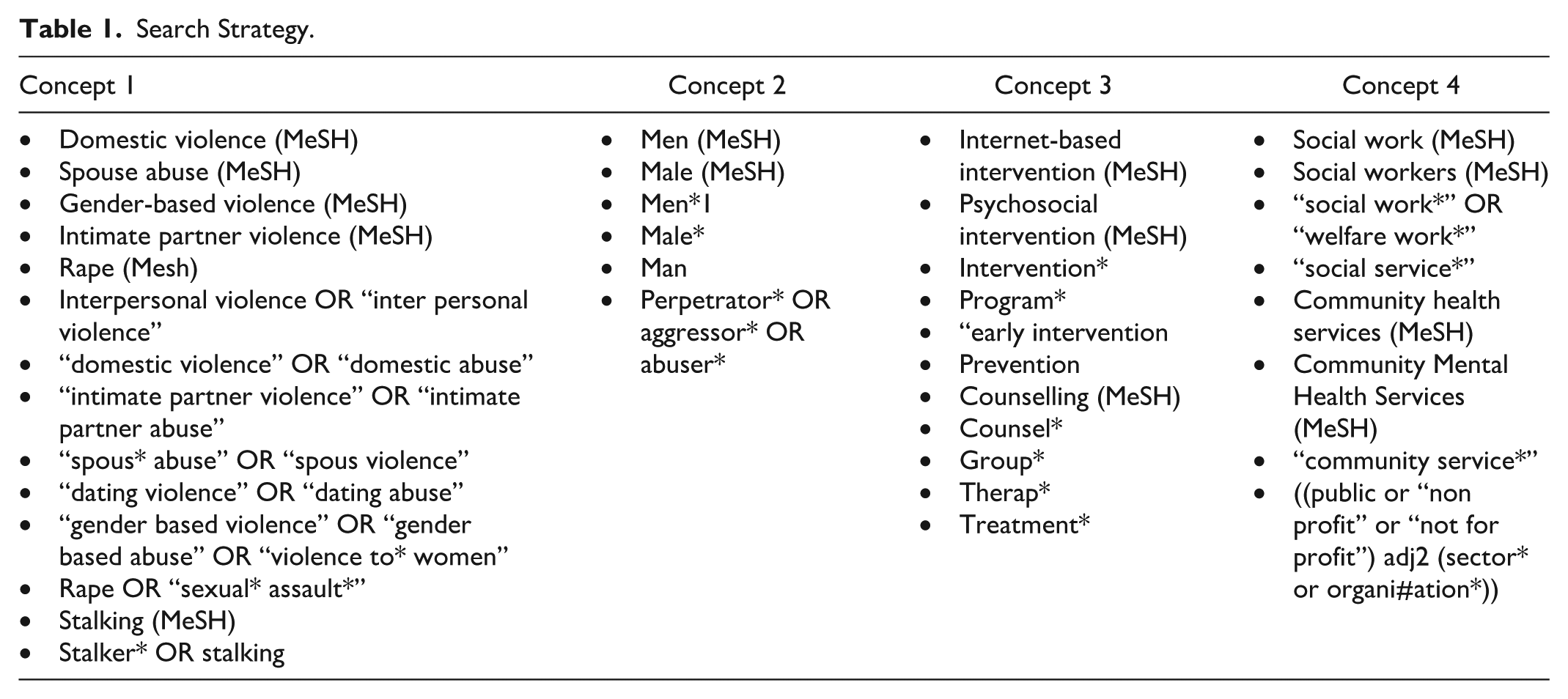
Studies were included if they identified practical features and examined voluntary, non-court-mandated group programs for men who use violence. Programs were considered voluntary if men participated without legal compulsion, including through self-referral, community services, or informal encouragement from family or support networks. The review focused specifically on group-based interventions aimed at engaging men outside of criminal justice mandates. Programs that were part of court orders or legal requirements were therefore excluded.
Voluntary interventions, as described in this review, aim to provide preventive and supportive opportunities for men who engage in IPV to recognize and change violent or abusive behaviors. These programs needed to be delivered across community health, community mental health, community service, and not-for-profit sectors. The review specifically focused on informing the development of voluntary group work for a regional-based, not-for-profit agency specializing in family violence and sexual assault services. However, the search was not limited by rural, regional, or remote areas, as this was recognized to narrow the scope of available literature. The review considered studies employing any design, including qualitative and quantitative methodologies and reports. Studies were excluded based on the following criteria:
Programs delivered to women
Programs delivered to children and young people under 18
Community programs that raise awareness of interpersonal violence
Group programs that overall focus on alcohol and drug treatment
Court-ordered/mandated programs, including men’s behavioral change programs
Prison programs
Co-ed or mixed-gender groups
Conference abstracts and book reviews
Faith-based programs
Non-English language
Step 3: Study Selection
The inclusion and exclusion of studies were determined by three researchers with the support of the screening tool Covidence™. SB-O and CM screened 1435 studies for relevance based on the information provided in the title and abstract. Records that did not match the inclusion criteria were excluded (n = 1362), and any citations that SB-O and CM did not agree upon were reviewed by LH for a final decision. Full articles (n = 73) were retrieved for citations that had been approved. SB-O and CM examined these articles, continually reflecting on search strategies and methodological choices at each stage of sifting, charting, and sorting (Arksey & O’Malley, 2005) to decide if the citations conformed to the inclusion criteria. LH resolved any disagreement, resulting in 13 studies being included in the scoping review (see Figure 1—PRISMA flowchart).
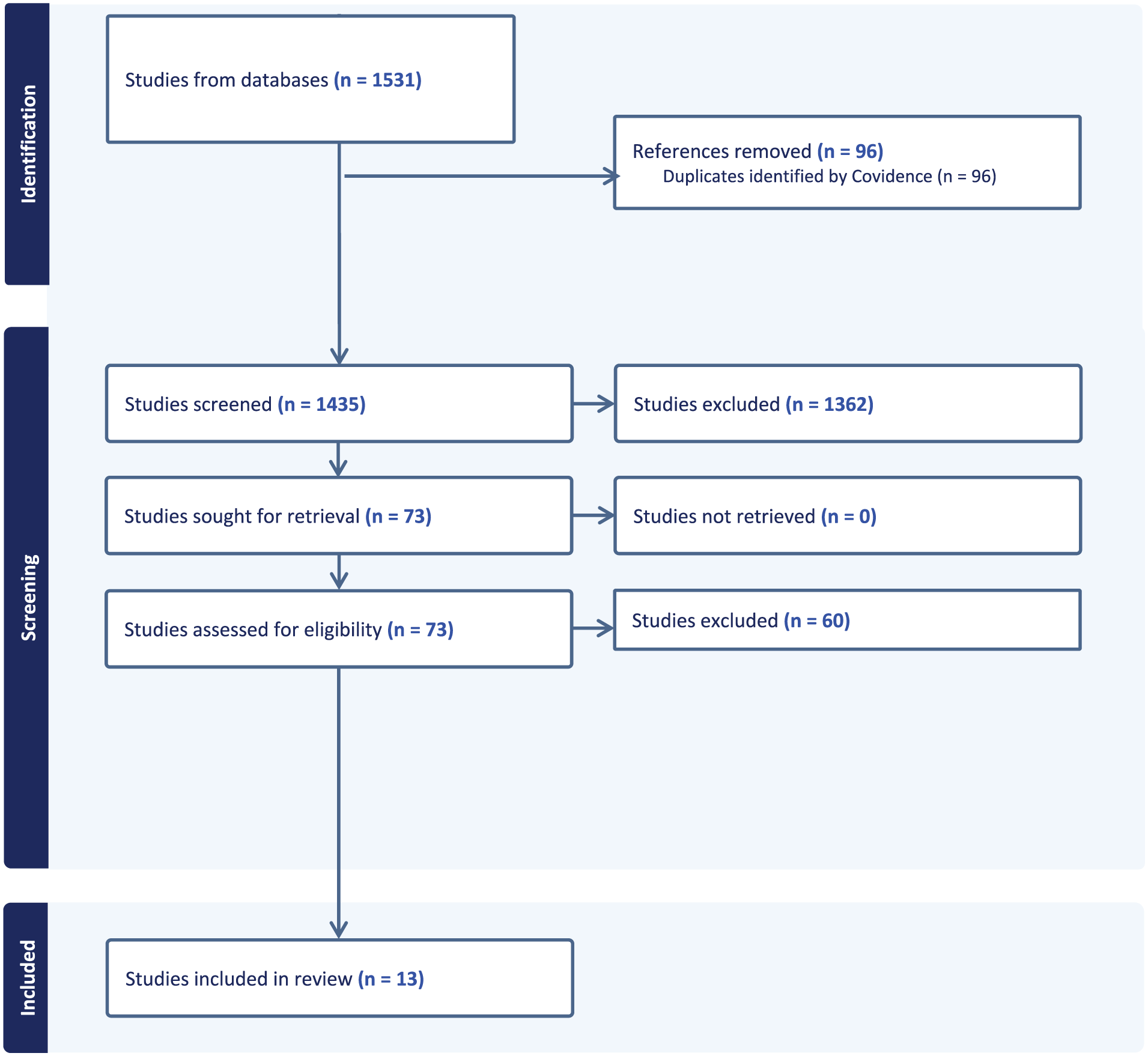
PRISMA flowchart.
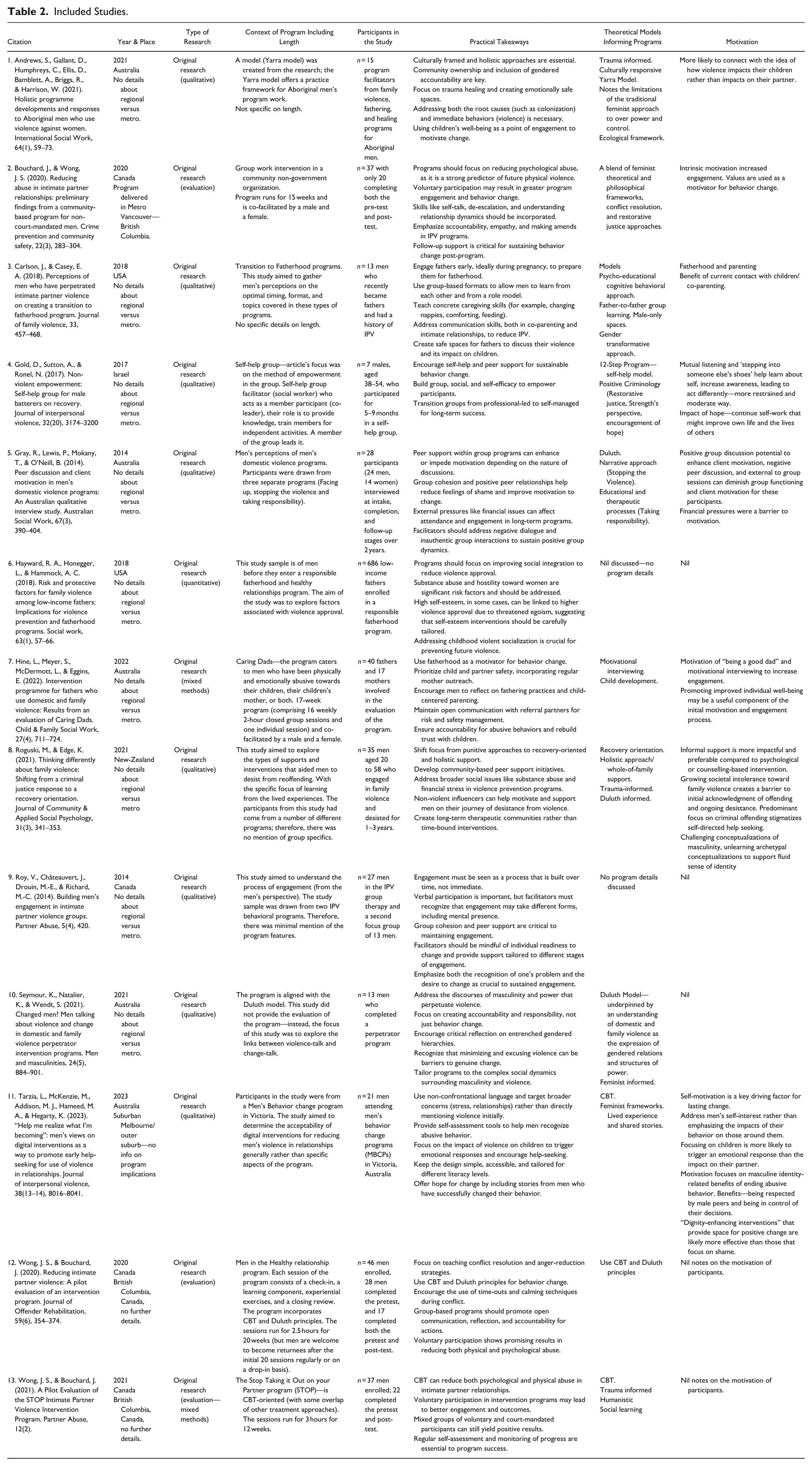
Thirteen articles published between 2014 and 2023 met the criteria and are presented in Table 2 in chronological order.
Included Studies.
Step 4: Charting the Data
Charting within a scoping review is a systematic analytical process that organizes, synthesizes, and interprets data around key topics to address the research question (McKinstry et al., 2014). Two researchers (CM and SB-O) and one practitioner (KB) created preselected headings to chart the data according to author, year of publication, and location, study participant data, design, and available practical content around programs delivered.
Author details/date/location: Details about the authors, the year of publication, and the location in which the studies were undertaken are available in Table 2. Of the 13 papers selected, five were from Australia (Andrews et al., 2021; Gray et al., 2014; Hine et al., 2022; Seymour et al., 2021; Tarzia et al., 2023), four were from Canada (Bouchard & Wong, 2020; Roy et al., 2014; Wong & Bouchard, 2020, 2021), two were from the United States (Carlson & Casey, 2018; Hayward et al., 2018), one was from New Zealand (Roguski & Edge, 2021), and one was from Israel (Gold et al., 2017). Most of the included papers did not specify the location of the programs. Among those that did, the programs were situated in Canadian metropolitan areas (Bouchard & Wong, 2020) or in metropolitan and suburban areas of Australia (Gray et al., 2014; Tarzia et al., 2023). Five papers were published between 2014 and 2018, and the other eight from 2020 onwards, which may suggest increased interest in this topic.
Data: Participants, or the study population, included men, program facilitators, fathers, and a mix of men and women. Programs were included only if they were designed for men who use violence, and co-ed or mixed-gender groups were excluded. The mix of men and women refers here to complementary services for women affected by family violence (Gray et al., 2014; Hine et al., 2022). Of the 13 studies, one study included program facilitators as participants (Andrews et al., 2021), nine included men as participants of a group program (Bouchard & Wong, 2020; Carlson & Casey, 2018; Gold et al., 2017; Roguski & Edge, 2021; Roy et al., 2014; Seymour et al., 2021; Tarzia et al., 2023; Wong & Bouchard, 2020, 2021), two included a mix of men and women (Gray et al., 2014) with one of those two specifically focused on mothers and fathers (Hine et al., 2022), and one study included fathers only (Hayward et al., 2018).
Design: Of the 13 selected studies, 10 used a qualitative design (Andrews et al., 2021; Bouchard & Wong, 2020; Carlson & Casey, 2018; Gold et al., 2017; Gray et al., 2014; Roguski & Edge, 2021; Roy et al., 2014; Seymour et al., 2021; Tarzia et al., 2023; Wong & Bouchard, 2020), two used mixed methods (Hine et al., 2022; Wong & Bouchard, 2021), and one study was quantitative (Hayward et al., 2018).
Program details: Five papers detailed practical information around recruitment of men, facilitators (e.g., co-facilitation by a man and woman), length of the intervention, and design of the work and follow-up with the participants (Bouchard & Wong, 2020; Gold et al., 2017; Hine et al., 2022; Wong & Bouchard, 2020, 2021). Only one study reported on rules around attendance (Roy et al., 2014). The content of the voluntary group work remained somewhat unclear, with only two papers detailing the topics of the group program (Wong & Bouchard, 2020, 2021). One study specifically focused on Aboriginal men (Andrews et al., 2021), one specifically on a digital intervention (Tarzia et al., 2023), and two were focused on fatherhood (Hayward et al., 2018; Hine et al., 2022).
Step 5: Collating, Summarizing and Reporting the Results
The researchers and practitioners conducted reflexive consultations both collectively and independently to enhance the overall research process. This critical process involved researchers and practitioners screening, charting, and collating data. By incorporating this reflexive consultative approach, the authors ensured continuous reflection was undertaken on search strategies and methodological choices. This method was not linear but iterative, requiring both academics and practitioners to engage reflexively with each stage of the scoping review. Bearing in mind the research question—what is known about voluntary programs for men who use IPV—we begin our reporting of the results by exploring the outcomes of voluntary programs and the theoretical frameworks that guide these interventions. From there, we review the formats, timing, and facilitation and training of practitioners who deliver these programs. Key program elements are then highlighted, before considering the challenges faced during implementation. We also examine participant motivations for engaging in these voluntary programs.
Results
Outcomes of Voluntary Programs
The primary outcome measured across these studies is the effectiveness of voluntary programs in achieving sustained behavior change among men who use violence. Across the 13 studies, voluntary programs demonstrated mixed effectiveness. While some programs, such as those focused on psychological abuse reduction and conflict resolution, reported improvements in participant self-awareness and relationship dynamics, most studies were limited by short-term follow-ups or lacked objective measures of behavioral change. Programs that showed limited effectiveness, such as those evaluated by Hayward et al. (2018), often relied on cross-sectional designs or self-reported data from participants, which limited their ability to capture sustained behavior change. Moreover, several evaluations lacked feedback from victim survivors, making it difficult to validate the men’s self-reported improvements.
Programs like Transforming Relationships in Canada (Bouchard & Wong, 2020) and culturally responsive interventions for Aboriginal men in Australia (Andrews et al., 2021) reported success in reducing psychological abuse and improving conflict resolution skills. These programs achieved short-term behavioral changes by emphasizing self-awareness and culturally sensitive interventions. Other studies focused on the subjective experiences of participants or facilitators and without robust before-and-after comparisons of behavior change (Andrews et al., 2021; Bouchard & Wong, 2020; Carlson & Casey, 2018; Gold et al., 2017).
One of the few studies with a large sample size (686 participants), conducted by Hayward et al. (2018), was cross-sectional in design. Similarly, Wong and Bouchard (2021) relied on self-reported data from the men themselves. Self-reporting may be subject to social desirability bias, where participants provide responses they believe are more acceptable or favorable, rather than accurately reflecting on their behaviors or attitudes (Wong & Bouchard, 2021).
The issue of sustainability also arose in several studies. Andrews et al. (2021) point out that culturally responsive programs, particularly those tailored to Aboriginal men, often lack ongoing funding, making it difficult to assess their long-term impact. In addition, many of the programs included in this review were pilot initiatives, with limited data on their effectiveness beyond initial implementation. Community consultation and ownership are key to this work and need to address colonization as a deeply rooted contributor to violence (Andrews et al., 2021). While some research addressed the need for trauma-informed, culturally relevant approaches (Andrews et al., 2021; Roguski & Edge, 2021), most did not report on the unique social, cultural, and geographic factors that influence the success of interventions in diverse contexts.
Carlson and Casey (2018) highlight the lack of long-term data in their study on the potential for a transition-to-fatherhood program for men who have perpetrated IPV. Their study focused primarily on the participants’ expressed desire for such a program but provided little information about how these interventions might impact violent behavior over time. Several studies highlighted the use of children’s well-being as a powerful point of engagement to motivate behavior change among men. Discussing the impact of violence on children emerged as an effective strategy in many interventions, as it helped participants recognize the broader consequences of their actions. This approach was especially prominent in programs that focused on fatherhood or family dynamics, where emphasizing the harm caused to children became a key factor in promoting accountability and reducing violent behavior (Andrews et al., 2021; Carlson & Casey, 2018; Hine et al., 2022; Tarzia et al., 2023).
Gray et al. (2014) conducted a study that included three time points for data collection post-intervention (program completion, follow-up at 6 and 12 months). While this approach offered some insight into the men’s experiences of intervention, it provided limited evidence of whether the programs achieved long-term reductions in IPV.
Theoretical Frameworks
Across programs, a wide range of theoretical models were applied to frame interventions and program design. Notably, two studies did not mention the underpinning model (Hayward et al., 2018; Roy et al., 2014). Trauma-informed practice emerged as central in several studies (Andrews et al., 2021; Roguski & Edge, 2021; Wong & Bouchard, 2021). Cognitive behavioral therapy (CBT) was referenced for teaching conflict resolution and anger management techniques, as well as promoting reflection and accountability (Carlson & Casey, 2018; Tarzia et al., 2023; Wong & Bouchard, 2020, 2021).
The Duluth Model also appeared as a recurring framework, used to understand domestic and family violence as rooted in gendered power relations, patriarchy, and male privilege. Programs implementing this model focused on accountability and challenging masculine norms that perpetuate violence (Gray et al., 2014; Seymour et al., 2021). By contrast, a wider discursive impact of Duluth-informed positions was seen as leading to communities that are less willing to work with men who use violence, which, in turn, hinders their ability to change. Such discursive barriers were most commonly discussed in relation to the criminalization of family violence as antagonistic to many men seeking help (Roguski & Edge, 2021).
Motivational interviewing, particularly in fatherhood-focused interventions, was used to foster engagement by appealing to fathers’ desire to be good role models and rebuild trust with their children (Hine et al., 2022). Meanwhile, programs incorporating a gender-transformative approach aimed to reshape entrenched masculine norms by encouraging critical reflection on the impact of violence on intimate relationships and children (Carlson & Casey, 2018).
Programs integrating restorative justice (Bouchard & Wong, 2020) and strengths-based approaches, such as self-help groups, advocate for empowerment through peer support (Gold et al., 2017). Positive criminology, which encourages hope and peer-led accountability, formed the backbone of peer groups’ success in reducing recidivism and promoting self-efficacy. The ecological framework, as discussed by Andrews et al. (2021), addressed not just immediate behaviors like violence but also broader social and historical influences, such as colonization, in the context of Aboriginal men’s healing programs (Andrews et al., 2021). These programs prioritized practice frameworks centered around cultural perspectives and healing rather than gender-focused theories.
Feminist theoretical and philosophical frameworks were mentioned by several authors (Bouchard & Wong, 2020; Seymour et al., 2021; Tarzia et al., 2023). However, the Yarra Model, which offers a practice framework for Aboriginal men, noted that traditional feminist approaches were present but were significantly more discrete and generally not privileged. The holistic model provides avenues for addressing socio-economic, political, and psychological aspects of the men’s journeys (Andrews et al., 2021)
In summary, a combination of feminist theories, CBT, restorative justice, and trauma-informed approaches is prevalent across these programs, with authors highlighting the importance of addressing both individual behaviors and broader societal structures that contribute to violence (Andrews et al., 2021; Wong & Bouchard, 2021).
Format and Timing
Across the programs, the group interventions’ format and timing varied quite significantly. One study reported on different types of programs that all varied in length (Gray et al., 2014). Three of the included studies did not discuss program specifics (Andrews et al., 2021; Roguski & Edge, 2021; Tarzia et al., 2023). The length of programs ranged from 12 to 24 weeks (see Table 2). The program reported by Gray et al. (2014) ran for 24 weeks, starting with a 6-week program, and participants were only able to move onto the 18-week program if they had taken ownership of and responsibility for their actions, as observed by the facilitators. The program reported by Gold et al. (2017) operated on an ongoing basis, allowing participants the flexibility to attend sessions as needed. This program was specifically designed for individuals who had already completed domestic violence therapy (Gold et al., 2017). The study by Carlson and Casey (2018) did not report on a specific program but rather what men would want out of a transition-to-fatherhood program, with most participants wanting flexibility and the ability to attend as many sessions as they needed. Not all studies provided details about the length of each session. Among those who did, the length of sessions varied from 2 to 3 hours (Bouchard & Wong, 2020; Gray et al., 2014; Hine et al., 2022; Wong & Bouchard, 2021).
Facilitation and Training of Practitioners
A consistent finding across all studies reporting on the format of interventions was the recommendation to have two facilitators—ideally one man and one woman. However, Gold et al. (2017) described an ongoing program structured as a self-help group, where participants were also trained to take on leadership roles alongside a social worker. In this format, the social worker acted as a co-leader and participant, providing guidance, imparting knowledge, and training group members to engage in independent activities.
Not all studies provided detailed information about facilitator qualifications, but those that did highlighted several key elements contributing to program effectiveness. For some of the programs, facilitators were required to hold a minimum of a bachelor’s degree and have experience working with male perpetrators of domestic violence and group therapy processes, ensuring they could manage complex dynamics effectively (Roy et al., 2014; Wong & Bouchard, 2021).***
Facilitators often modeled healthy relationships, with male-female co-facilitation teams designed to demonstrate respectful interactions and balanced gender dynamics (Wong & Bouchard, 2020). In culturally specific Aboriginal programs, such as Andrews et al. (2021) report on, facilitators with deep cultural understanding anchored interventions in traditions and practices that address intergenerational trauma. In the other support group model, facilitators adopted collaborative roles, fostering equality and shared responsibility within the group rather than relying on hierarchical structures (Gold et al., 2017). One article mentioned the use of a comprehensive manual across the program that supports standardized implementation while allowing flexibility for facilitators to adapt to group needs (Wong & Bouchard, 2021).
Key Program Elements
Programs utilized diverse recruitment strategies and intake processes to ensure participant suitability and readiness. Recruitment methods included self-referrals, as well as referrals from family members, friends, counsellors, social workers, religious organizations, and community organizations (Bouchard & Wong, 2020; Hine et al., 2022). In some cases, such as the self-help group described by Gold et al. (2017), current members recruited new participants. Intake interviews were a common feature, often involving one-on-one sessions to assess motivation, willingness to change and barriers such as substance use, severe mental illness, or denial of responsibility (Bouchard & Wong, 2020). These interviews sometimes included self-report inventories to evaluate father involvement, relationship challenges, economic stability, and service needs (Hayward et al., 2018). Although all programs included in this review were voluntary in terms of referral and participant engagement, one study reported attendance requirements, removing participants after four absences (Roy et al., 2014). While another study implemented pre- and post-program clinical interviews with participants and their partners, non-violent contracts or permission to contact female partners (Gray et al., 2014). These features were embedded in the program design to support accountability and participant commitment, even within a voluntary framework.
The content of the voluntary group work remained somewhat unclear, with only two papers detailing the topics of a group program (Wong & Bouchard, 2020, 2021). Wong and Bouchard’s (2020) evaluation of a 20-week program included key topics like building healthy relationships, emotional and physical safety, managing emotions (anger, anxiety, and stress), and breaking abusive behavior cycles. The content emphasizes skills in communication, conflict resolution, parenting, and emotional intelligence while addressing the impact of abuse on families. Participants also learned self-management strategies, relationship boundaries, and the role of intimacy and sexual health, with a focus on practical application and long-term maintenance (Wong & Bouchard, 2020). In the 12-week program reported by Wong and Bouchard (2021), there were some similarities around emotional regulation, improving communication, fostering empathy, and promoting accountability and self-reflection to address abusive behaviors. However, the 12-week program incorporated a formal accountability tool, the letter of responsibility, and focused on addressing emotional wounds and core beliefs (Wong & Bouchard, 2021).
Challenges to Implementation
Several implementation challenges emerged, including funding, retention of participants, the balance between voluntary and mandatory participation, and geographical issues. Challenges to implementation in IPV intervention programs often stem from systemic and logistical barriers. Funding constraints were mentioned in a few studies, highlighting the limited availability of resources for sustainable program operation, comprehensive facilitator training, and essential components like partner contact work (Andrews et al., 2021; Bouchard & Wong, 2020; Wong & Bouchard, 2021). Retention rates pose another challenge, particularly in voluntary programs, as participants often disengage early due to the emotional demands of confronting abusive behavior or lack of external mandates reinforcing commitment (Carlson & Casey, 2018; Gray et al., 2014).
The balance between voluntary and mandated participation adds complexity, as voluntary participants may exhibit lower motivation to complete a program, requiring facilitators to adopt engagement strategies like motivational interviewing to sustain participation (Carlson & Casey, 2018; Gray et al., 2014). In addition, geographical location can present challenges in rural and remote areas, as there is limited access to facilitators and participants, which can hinder consistent program delivery and highlight the need for tailored approaches to diverse regional needs (Hayward et al., 2018; Wong & Bouchard, 2020).
Motivation of Participants
Several studies identified various factors that drive engagement and sustained change, with voluntary participation showing some promising results in reducing physical and psychological abuse (Wong & Bouchard, 2020). Four studies did not discuss the motivation to attend group programs (Hayward et al., 2018; Roy et al., 2014; Seymour et al., 2021; Wong & Bouchard, 2021).
Fatherhood and the desire to be seen as a good parent emerged as significant motivators across multiple interventions (Andrews et al., 2021; Carlson & Casey, 2018; Hine et al., 2022; Tarzia et al., 2023). Hine et al. (2022) argue that framing behavioral change within the context of improving parenting practices encourages men to reflect on their actions and prioritize their children’s well-being. Similarly, Andrews et al. (2021) found that Aboriginal men are more likely to engage with programs that emphasize how violence impacts their children rather than focusing solely on the effects on their partners.
The voluntary nature of participation also affected motivation. Empathy and accountability proved to be effective motivational tools (Bouchard & Wong, 2020). Teaching participants to empathize with their partners and take responsibility for their actions promoted deeper reflection and long-term behavioral adjustments (Bouchard & Wong, 2020). In addition, peer support within self-help groups fostered motivation through mutual listening and increased self-awareness, helping men recognize the benefits of change for both themselves and their families (Gold et al., 2017; Gray et al., 2014).
Self-interest and masculine identity played important roles in motivation. Appealing to men’s self-interest by highlighting the benefits of ending abusive behavior, such as gaining respect from male peers or maintaining control over one’s decisions, was identified as a powerful driver for change (Tarzia et al., 2023). Creating spaces where men can safely explore their roles as fathers and partners further enhanced motivation by aligning change with positive masculine identities (Carlson & Casey, 2018). Interventions that avoided shame, labeling, or stigmatizing of men supported opportunities for connection with a better version of themselves (Tarzia et al., 2023).
Discussion
The scoping review into voluntary group programs for men who use IPV demonstrates mixed results, with several studies reporting positive behavioral changes and others highlighting challenges in achieving long-term transformation. Overall, results indicate that voluntary programs can lead to reductions in physical and psychological abuse when participants are engaged and motivated to change. For example, programs such as those described by Wong and Bouchard (2020) found improvements in men’s emotional regulation, communication skills, and accountability, all of which can contribute to healthier relationships. In programs focusing on fatherhood, like those explored by Hine et al. (2022), participants were motivated to maintain or rebuild relationships with their children, which led to improved paternal engagement and reduced violence. Programs that incorporate culturally responsive practices and focus on the broader impacts of violence, such as its effects on children, are more likely to engage participants effectively and foster initial behavior change (ANROWS, 2024). Notwithstanding, a key motivator to change in being a better father does not address the underlying issue of misogyny and, for this reason, may not change violence against women.
Issues of participant retention and sustained behavioral change are consistent challenges. Voluntary programs often face dropout rates, with participants leaving before completing the full course of intervention (Carlson & Casey, 2018; Gray et al., 2014). This highlights the tension between voluntary and mandated participation, as men who choose to engage in programs without court mandates may lack the external accountability that can drive sustained engagement. At the same time, questions are raised about whether court-mandated programs are effective and whether it is unlikely that they reduce violent behaviors (ANROWS, 2024; Wilson et al., 2021). While some voluntary programs report positive results, others provide insufficient or inconsistent evidence of long-term behavioral change. For instance, Andrews et al. (2021) highlight the difficulties in measuring sustained impact, particularly in programs that do not track participants post-intervention. Similarly, the lack of longitudinal data in many studies limits the ability to assess the durability of changes made during the program, with recidivism rates remaining largely under-reported or unmeasured.
Another limitation concerns the generalizability of findings across diverse populations. Many interventions are developed based on specific cultural or socio-political contexts, making it difficult to transfer lessons learned from one setting to another. For example, trauma-informed and culturally specific programs for Aboriginal men (Andrews et al., 2021) show promise in addressing intergenerational trauma and community healing but may not apply to non-Indigenous populations. Conversely, programs rooted in Western feminist frameworks, such as the Duluth Model, may face resistance in cultures or communities where gender roles and norms differ significantly (Roguski & Edge, 2021). This highlights the need for more culturally adaptive models that consider the diverse needs of participants and communities, rooted in community strength and integrating co-design principles. A noteworthy example is the Indigenous-informed practice model arising from the Aotearoa New Zealand-based movement She Is Not Your Rehab, which seeks to break cycles of intergenerational trauma, violence, and abuse by fostering safe, healthy relationships. Rooted in cultural contexts and informed by both Western and Pacific therapeutic models, this program is significant due to its integration of Indigenous perspectives, offering a culturally grounded approach to trauma (Leonard et al., 2022).
The results demonstrate limited exploration of nonviolent resistance and bystander approaches in the voluntary space. While some studies touch on restorative justice and peer-led accountability (Gold et al., 2017; Wong & Bouchard, 2020), few fully integrate these frameworks into a holistic understanding of how communities and nonviolent men can play proactive roles in challenging IPV behaviors. This gap underscores the need to expand the scope of early intervention measures beyond individual responsibility to include broader social and community-based solutions (Leonard et al., 2022).
While most studies report some improvements in men’s emotional regulation and relationship skills, there is a lack of critical reflection on the extent to which these changes translate into meaningful shifts in gendered power dynamics. Programs often focus on individual behavior change but may fall short of addressing the deeper structural issues of patriarchy and male privilege, which are known to be key drivers of IPV (OurWatch, 2021; Seymour et al., 2021). Without fully confronting these systemic forces, the risk of reverting to abusive behaviors remains.
Across the studies, motivation for change was most commonly linked to participants’ identities as fathers, a desire to improve relationships, and the influence of supportive peer dynamics within group settings. These motivators were often reinforced by program elements such as emotional safety, culturally responsive practice, and opportunities for self-reflection, which together supported sustained engagement and behavior change.
Results did not find any specific focus on rural and regional service delivery, highlighting a significant gap in the literature. This absence suggests that many interventions may not fully account for the unique challenges faced by men in rural and regional areas, such as limited access to services, geographic isolation, and entrenched cultural norms. For CAV, this shows the need to prioritize the development of programs that are specifically tailored to these contexts. CAV could lead efforts in designing and implementing regionally adaptive, community-based interventions that address both logistical barriers and local cultural factors, as well as engagement in regional settings.
The studies included in this review primarily focused on heterosexual, cisgender men who use violence against women, with limited reporting on other dimensions of diversity such as culture, sexuality, socioeconomic status, or geographic context. This narrow focus limits the generalizability of the results and overlooks how intersecting identities may shape experiences of violence. The lack of data on diverse populations also constrain understanding of the applicability and effectiveness of programs across different contexts. Future research should prioritize inclusion and detailed reporting of diverse participant characteristics to inform more equitable and contextually relevant interventions.
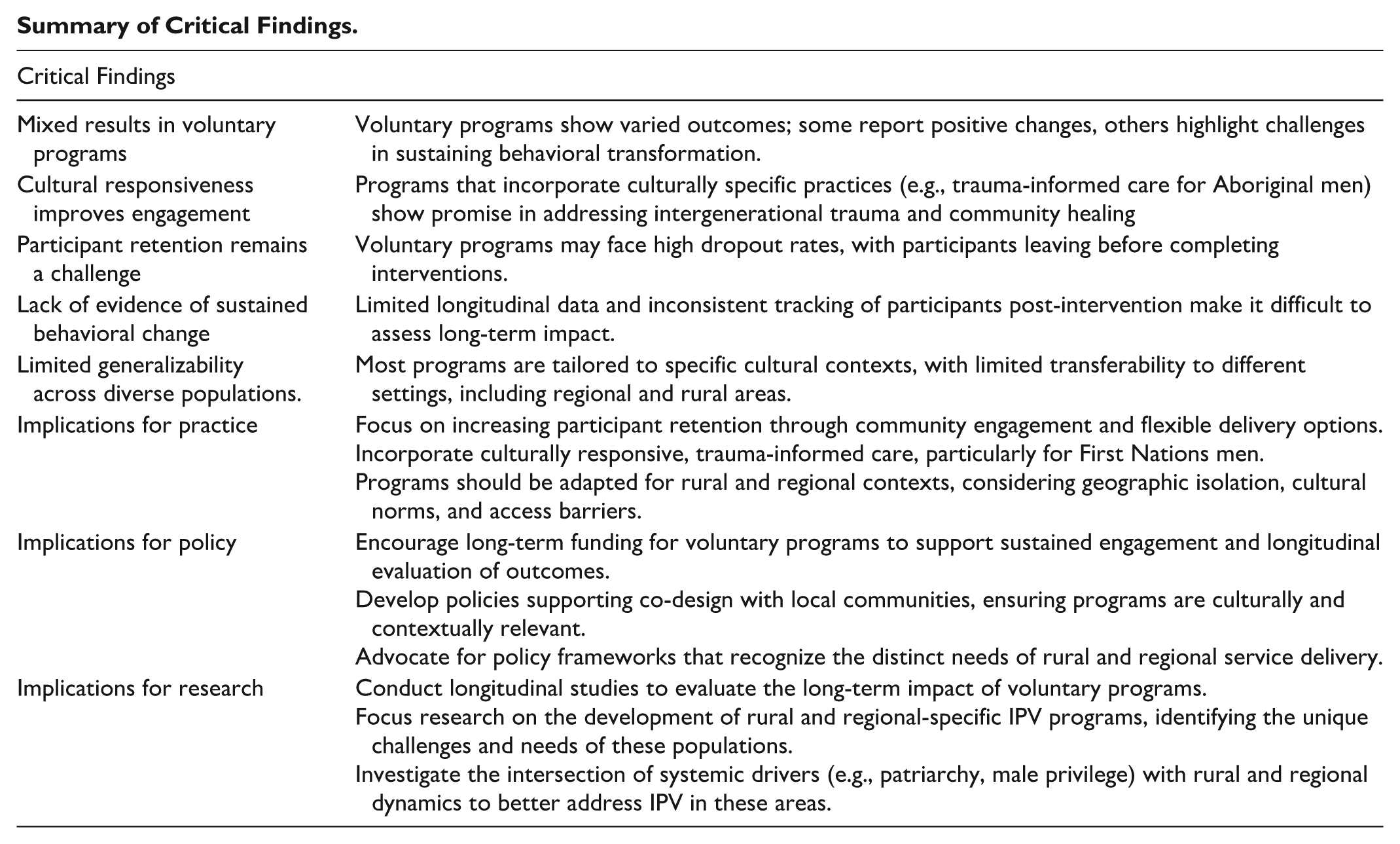
The evidence from this scoping review leaves some uncertainty about whether voluntary programs can truly foster genuine or sustained behavior change, particularly when they fail to fully address the social, cultural, and geographic complexities that shape men’s lives. Most studies did not consider how patriarchal norms, male privilege, and situational couple violence (Johnson, 2008) intersect with these factors, influencing the effectiveness of interventions. Without engaging with these deeper systemic issues, even well-intentioned programs may fall short of achieving sustainable change. To strengthen their impact, particularly in regional communities facing unique social and structural challenges, we advocate for the development of culturally responsive, context-specific models underpinned by a commitment to long-term evaluation. By embedding robust mechanisms for tracking outcomes over time, voluntary programs can evolve, adapt, and more effectively contribute to lasting reductions in IPV.
Limitations
The limitations of this scoping review should be acknowledged. First, the review only considered literature published between 2014 and June 2024 and therefore excluded potentially relevant studies conducted before this period. In addition, only English-language publications were included, which may have excluded significant research and insights from non-English sources. The paper was developed by white researchers and practitioners who identify as female and does not include First Nations worldviews. We engaged in reflexive dialogue throughout the scoping review to recognize and mitigate potential biases in interpretation. The quality of the studies included in this review was not formally assessed, in keeping with the Arksey and O’Malley (2005) scoping review methodology, which prioritizes mapping the breadth and nature of existing literature rather than evaluating study rigor. As such, while the findings highlight reported outcomes and program characteristics, the strength of the evidence underlying these results cannot be determined.
A strength of this scoping review lies in its contribution to the global understanding of voluntary group programs for men who use IPV, offering international readers a comprehensive synthesis of current evidence and emerging trends. Conducted in close collaboration with industry partners based in regional Australia, the review also provides some insights into program delivery in non-urban contexts and the applicability of findings across diverse settings.
Conclusion
The findings from this scoping review highlight a gap in what is currently known about voluntary programs for men who perpetrate IPV, particularly in terms of developing evidence-informed programs suited to the regional Australian context. While voluntary programs for men who use IPV hold promise in reducing violence and promoting behavior change, they face significant challenges related to participant retention, cultural adaptability, and demonstrating long-term outcomes. To improve their effectiveness, future research and practice should prioritize integrating more robust mechanisms for sustained engagement and culturally responsive frameworks that address the systemic root causes of violence, including patriarchy and male privilege. These factors not only perpetuate gender inequality but also reinforce harmful behaviors that contribute to IPV.
Summary of Critical Findings.
Footnotes
Acknowledgements
We thank Ms Johnson, research librarian at La Trobe University, Bendigo, for her support in developing and undertaking the search strategy.
Declaration of Conflicting Interests
The authors declared no potential conflicts of interest with respect to the research, authorship, and/or publication of this article.
Funding
The authors received no financial support for the research, authorship, and/or publication of this article.
