



Abstract
Child abuse in youth-serving organizations (YSO) is an increasingly referenced topic, but it currently has a limited epidemiological foundation. A body of research is beginning to shed light on this abuse, and this scoping review was aimed at better documenting what is currently known. The review specifically examined published and gray literature on child abuse in YSOs across several subcategories: daycare, detention/juvenile justice, healthcare, recreation, religion, residential, schools, and sports. A total of 112 academic papers and 28 gray literature resources were reviewed for the first 7 sectors, and a 2023 review was summarized for the daycare sector. Findings highlight that the definitions and measurement of maltreatment in YSOs vary, and significant research gaps remain. Some sectors of YSOs have better coverage than others: for example, more on residential settings and detention/juvenile justice, while less on healthcare settings. Recommendations include a need for: (a) more multi-sector YSO epidemiological studies measuring various forms of abuse; (b) modifications to general child maltreatment surveys to specify YSO settings and YSO staff and volunteers; (c) modifications to existing police or child protection data systems to allow for classification of abuse in YSO settings or by YSO staff and volunteers.
Abuse in youth-serving organizations (YSOs) is a relatively recent topic to emerge in research and literature on child maltreatment. Concerns about abuse of children in YSOs came out of a series of sexual abuse reports in prominent organizations that generated considerable publicity, litigation, and public advocacy. Among the most prominent of these reports was the revelation of sexual abuse perpetration among the Catholic clergy in many countries and among volunteer leaders for Boy Scouts of America (BSA); (Boyle, 1994; France, 2005). In addition, for a period of years starting in the 1980s, some extreme cases of sexual abuse of young children in daycare centers came to light (Finkelhor et al., 1988). More recently, U.S. Gymnastics and other sports have been roiled by sexual abuse reports (Lutz, 2023; North, 2021), accompanied by calls for institutional changes to prevent abuse in sports.
Increased attention to YSO abuse has been bolstered through formal recognition by governmental authorities in response to concerns from survivor advocates and the general public about the safety of children. In the United States, the Centers for Disease Control and Prevention established a task force and developed a report on preventing abuse in YSOs (CDC, 2024; Saul & Audage, 2007). In Australia, a royal commission was established about what was termed “Institutional Abuse” of children and generated a great deal of analysis and research to help address the problem (Royal Commissions, 2017).
However, because scholarly attention to YSO abuse has been fairly recent, the empirical literature is still patchy and dispersed. Studies have focused on certain organizations, sectors, or forms of abuse more than others. The definitions and terminology have been variable and uncoordinated. Advocates and policymakers want information about prevalence rates for organizations or sectors. They are also seeking help to identify risk factors that need to be addressed. To move forward toward answers to such questions, the goal of this scoping review is to assess more completely the present state of empirical literature on YSO abuse, particularly the epidemiology describing the problem and its variations. It aims to identify important gaps that need to be filled.
Methods
Because the literature on YSOs is recent and diverse, we adopted a scoping review approach to summarize knowledge on this topic (Arksey & O’Malley, 2005). A scoping review maps the current body of literature in a field and is useful when it is in its early phases of development. Our key research question concerned what epidemiological findings were available on various forms of abuse in YSOs and their subsectors, looking particularly at questions of prevalence, victim and offender characteristics, and types of abuse that were measured.
The definition of a YSO is not clearly established, and there is no consensus about a YSO typology. An important element is that YSOs are organizations to whom parents (or the state) consign the care of children for extended periods with the expectation that they have a responsibility to ensure the child’s safety. YSOs are distinguished from other establishments like hotels, retail establishments, and transport companies, for example, which may serve children, but where caretaking responsibilities are not a substantial component of the service. Many YSOs serve children primarily or exclusively. For others, like churches and health agencies, while children may not be the sole clients, they incorporate units of caregiving that are largely child focused. Nonetheless, a key guiding element for inclusion was organizations with which parents expect that there exists a responsibility for care or “in loco parentis” in a parent’s absence.
Our preparatory perusal of the literature and discussions with experts and advocates active in YSO prevention efforts led us to a categorization that represented the diversity while also being succinct. The review is organized around eight subcategories of YSOs that had clear visibility in the literature and empirical findings: daycare, detention/juvenile justice, healthcare, recreation, religion, residential other, schools, and sports. One of these subsectors, daycare, had a recent review close enough in coverage to our criteria that we chose to rely on summarizing its findings versus conducting a separate search (Talmon et al., 2024). Thus, the search terms below focused on identifying research across the seven additional subcategories and YSO abuse in general.
Our scoping review was conducted using Preferred Reporting Items for Systematic Review and Meta-Analysis Protocols (Moher et al., 2015). In June 2024, we systematically searched databases PsycINFO, PubMed, Violence & Abuse Abstract, and Web of Science. A gray literature search was also conducted with Google, where the first 100 results were accepted for further review to determine eligibility. We searched for relevant articles that were published between 2014 and 2024 and written in English. The search terms used to identify relevant articles are listed in Table 1. The search term variations for “child” and “abuse” were the same for all the YSO sectors, while the remaining terms were specific to each sector. Additionally, using search terms focused on an employee or volunteer in some sectors yielded more relevant terms than the organization name or descriptor.
Search Terms.
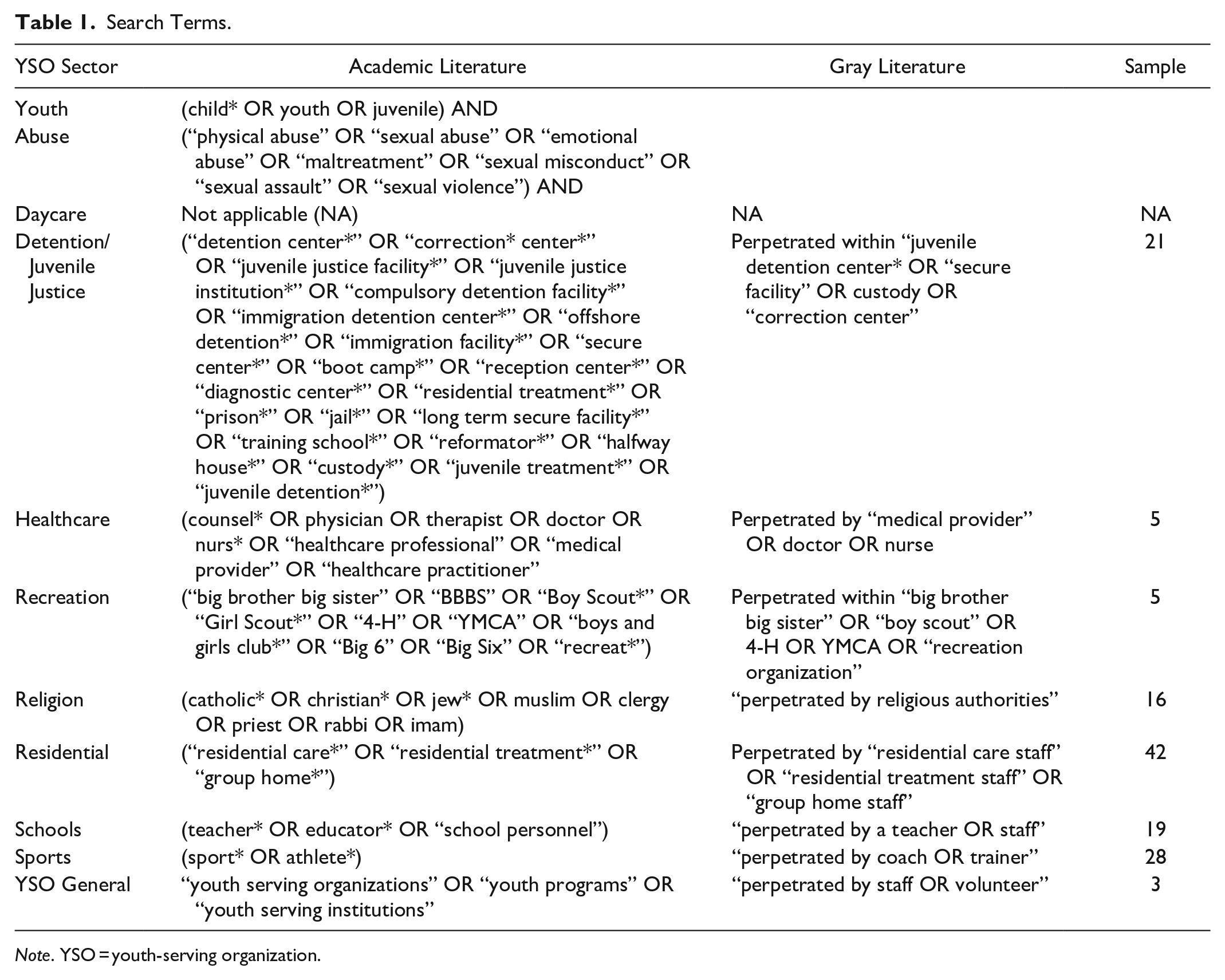
Note. YSO = youth-serving organization.
Results were exported to the open-source reference manager, Zotero. Combined, the academic and gray literature searches resulted in 8,269 entries for all YSO sectors (see Figure 1). An additional 26 records from other sources, primarily referenced by experts within the sectors, resulted in a total of 8,295. Duplicates were excluded, resulting in 6,387 remaining entries for screening. Exclusion criteria included: (a) no empirical findings, (b) no findings related to prevalence, incidence, rates, or proportions, (c) no quantitative findings on risk factors, (d) no focus on child abuse in YSOs or a YSO sector. Studies from one sector search that referred primarily to child abuse within another YSO sector were kept for review in that other sector.
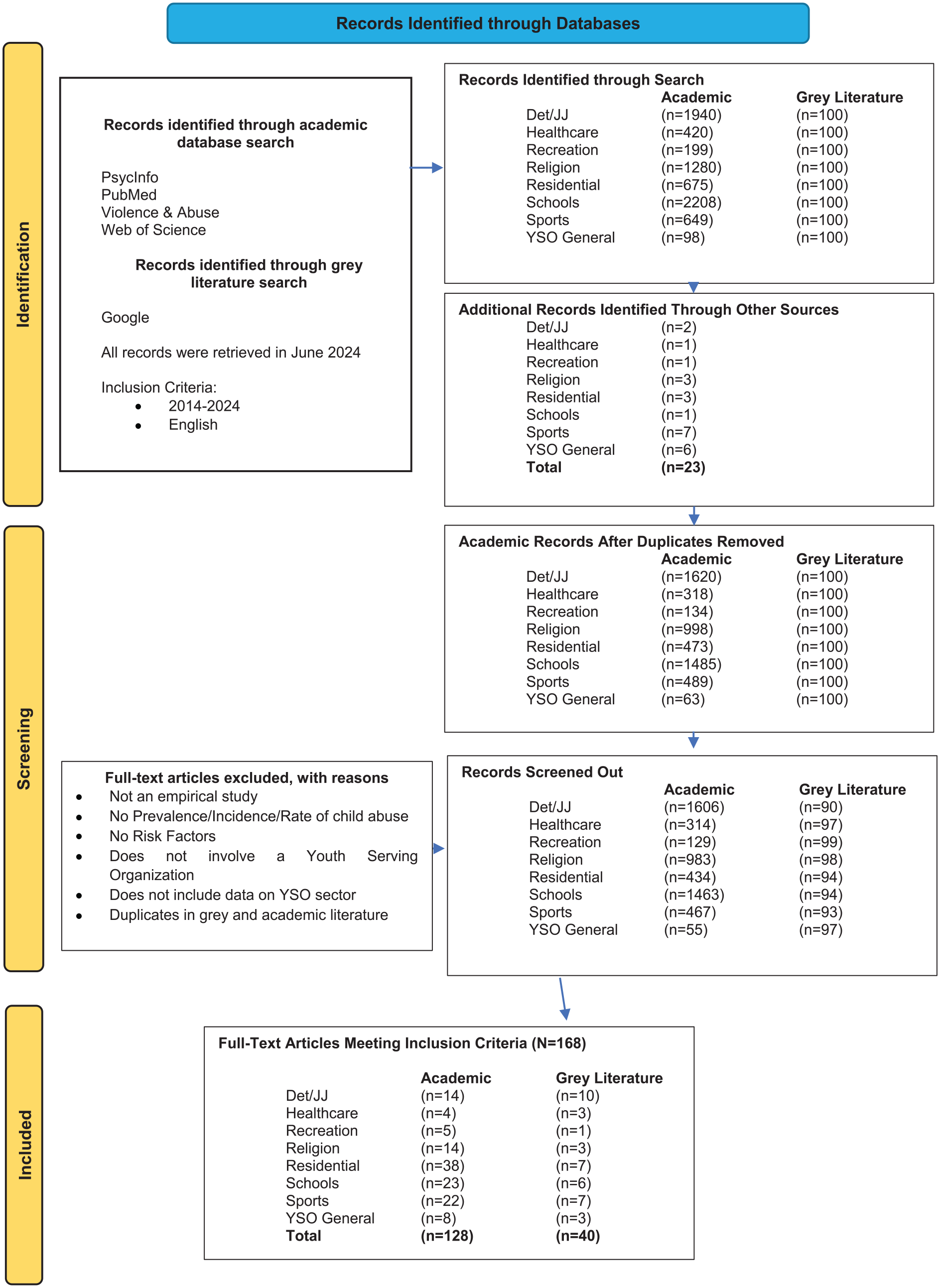
Records identified through databases.
Abuse for purposes of inclusion was conceptualized broadly as relating to all forms of crime, violence, or maltreatment occurring to children. This included physical and sexual assault and abuse, as well as emotional, psychological, and verbal abuse. Neglect was also included. Accepted studies could limit abuse episodes to ones that occurred on the premises of the organization, as well as ones committed by organizational employees or representatives in other venues. Perpetrators of the abuse could be other youth or program participants in addition to organizational staff or employees.
The scope of the literature search was global; there was no exclusion based on where the study was conducted, only that it be written in English. After manual screening, 140 full-text studies were included in this review. Three coders reviewed the studies. An Excel spreadsheet was created to extract data from the 140 full-text studies screened in from our searches. Table 2 summarizes key findings from each sector related to the number of studies with prevalence estimates, exemplars of such estimates, findings about peak age of vulnerability, highlighted victim features, perpetrator features, the types of abuse covered, and other risk factors. Given the early and exploratory nature of the empirical work in this field, no effort was made to systematically assess study quality.
Selected Critical Findings.
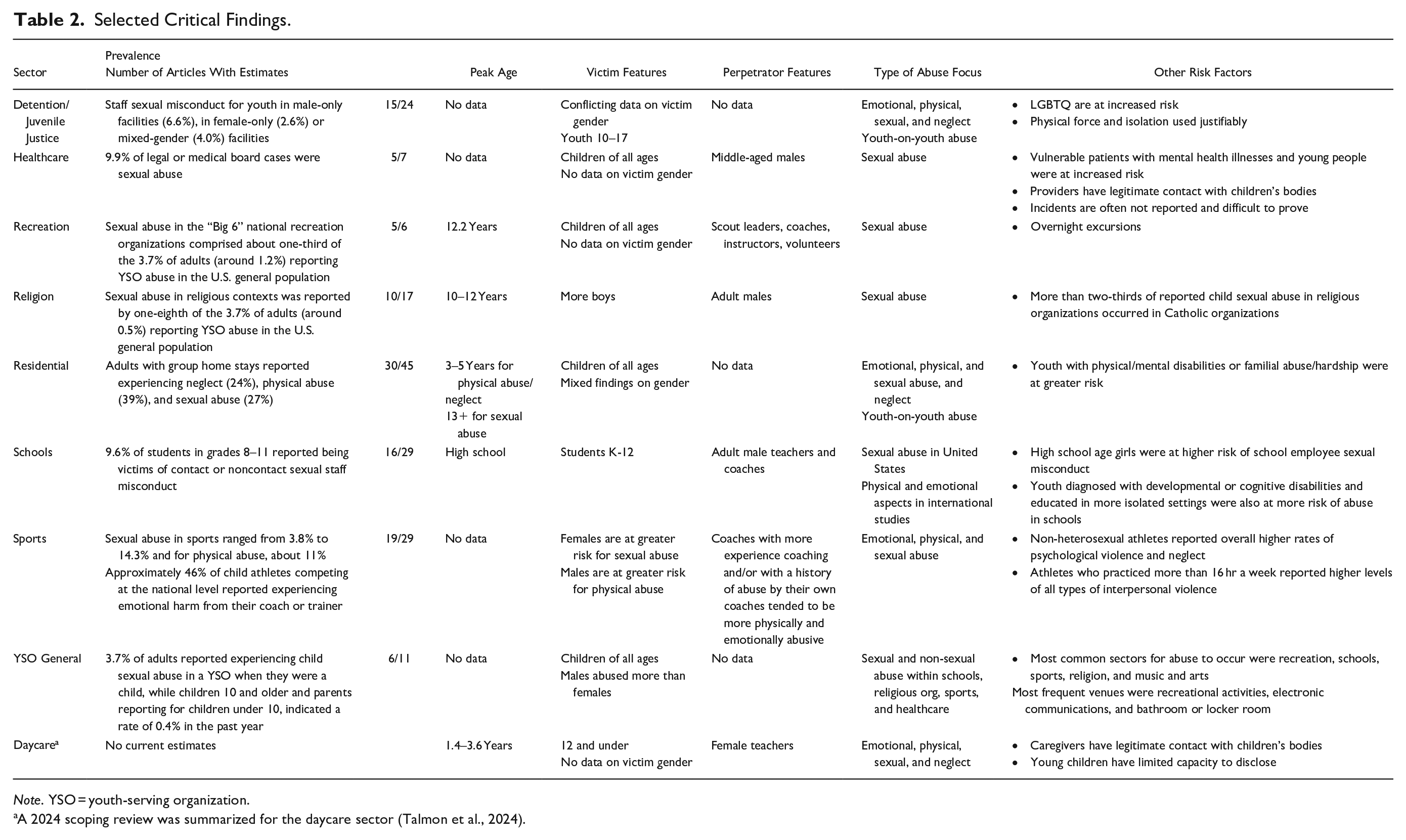
Note. YSO = youth-serving organization.
A 2024 scoping review was summarized for the daycare sector (Talmon et al., 2024).
Salient studies and their findings are reviewed by sector. However, given space limitations, not all studies are mentioned in the text. Appendix 1 contains a list of all the qualifying studies aggregated by subsector.
Results
The number of qualifying empirical articles by sector ranged from a high of 45 for residential care to a low of 7 for health care (Table 2). There were some abuse prevalence estimates for all sectors except healthcare and day care. Sexual abuse was covered in the literature in all sectors. Physical abuse was covered in six sectors, and emotional abuse or neglect in five sectors. Only two sectors, detention/juvenile justice and residential, had studies that included coverage of maltreatment by other youth.
Detention/Juvenile Justice
The academic and gray literature searches on the detention/juvenile justice sector resulted in eight articles from the United States and five articles from outside of the United States. Two of the eight articles from the United States used data from the National Survey of Youth in Custody (NSYC). The gray literature search resulted in six articles. Attention to this issue in the United States has been partially driven by federal legislation like the Prison Rape Elimination Act (Office of Juvenile Justice and Delinquency Prevention, 2003).
Definitions
The detention/juvenile justice facilities refer to institutions serving as pre-adjudication and post-disposition residences for children and adolescents in the juvenile justice system. A range of terminology is used to refer to this sector, often differing by country: “custodial institutions,” “young offender institutions,” “detention and juvenile justice centers.” According to the Annie E. Casey (AEC) Foundation, approximately 15,600 youth are held in detention in the United States on any given night. Additionally, the AEC foundation estimated that about 195,000 young people are admitted to justice facilities in the United States every year (Annie E Casey Foundation, 2020).
Studies
Abuse in detention/juvenile justice has been the focus of a number of systematic studies. Two large surveys of youth in custody have been funded in the United States. The Survey of Youth in Residential Placement (SYRP) was a nationally representative survey of 7,073 youth ages 10 to 20 residing in 204 juvenile facilities conducted in 2003. Analyses and reports on this survey continue to be published within the timeframe of our review, including detailed information on the youth’s characteristics and backgrounds, the conditions of their confinement, their needs and the services they received, and their experiences of victimization in placement (Sedlak & Bruce, 2016).
The NSYC, which is part of the Bureau of Justice Statistics data collection for the National Prison Rape Statistics Program, gathered mandated data on the incidence and prevalence of sexual assault in these juvenile facilities. This is an ongoing data collection initiative: the first NSYC was conducted in 2008. The most recent NSYC-3, conducted in 2018, provided data from adjudicated youth in 327 facilities owned or operated by state juvenile justice authorities and locally or privately operated juvenile facilities contracting with states to hold adjudicated youth. Survey responses from 6,049 adjudicated youth were used to generate estimates of sexual victimization. A significant finding from this study was that youth in male-only facilities were more likely to report staff sexual misconduct (6.6%) than youth in female-only (2.6%) or mixed-gender (4.0%) facilities (Lauger & Field, 2022). Outside of the United States, Brereton (2020) examined secure training centers and young offender institutions in the United Kingdom, highlighted that nearly 30% of youth in these institutions reported experiencing some form of victimization by staff. Seven percent reported experiencing physical abuse and 3% sexual abuse. In addition, 16% reported feeling threatened or intimidated by staff, and 19% reported being subjected to insulting remarks from staff.
Abuse and harmful behavior perpetrated by other youth have also been measured in this sector. The Survey of Sexual Violence (Beck & Rantala, 2016) reported that in the 5-year period between 2007 and 2012, a total of 1,686 substantiated incidents of youth sexual victimization occurred, approximately 76% of which were perpetrated by other youth and 24% of which were perpetrated by staff. Similar ratios were reported in another study (Juvenile Justice Information Exchange, 2023).
The gender breakdowns vary across studies (Thusi, 2022). According to Ahlin (2020), 7% of girls reported forced sexual victimization compared to 6% of boys in the NSYC-2. However, more boys experienced sexual victimization at the hands of staff (4%) than girls (2.7%), while girls experienced higher rates of peer sexual victimization.
The rate of abuse in detention/juvenile justice facilities varied by some environmental factors. In the NSYC-3, rates of sexual abuse were higher in facilities that were larger, housed older youth, had more shared bedrooms, gang activity, and staff turnover. Facilities that provided more specific prevention education had lower rates (Lauger & Field, 2022).
Special Features
Some other unique features of detention and juvenile justice settings may aggravate the potential for abuse. One is the degree to which the use of physical force and constraint is legitimatized in a way they would not be for youth in other environments, justified particularly for safety and control. For example, strip searches can be carried out even though accompanied by a degree of humiliation, especially for girls. According to Thusi (2022) if one defines sexual assault as “nonconsensual sexual contact,” then these strip searches would qualify. In a study of detention facilities, 90.91% conducted pat downs and 66.67% conducted strip searches (McKenna, 2023). Other forms of coercion include chemical restraints and isolation that would be considered abusive in other environments (Mendel, 2015; Smith, 2016; YouthFirst, 2019).
Second, detention/juvenile justice centers pose increased risk for youth with stigmatized identities. For instance, LGBTQ+ youth have been found to be at greater risk for physical, emotional, and sexual abuse by both staff and peers (Ahlin, 2020, 2021). Youth who find themselves in adult custodial institutions are at an even greater risk for assault (Justice Policy Institute, 2014). Research points to an even greater risk for sexual abuse among those charged with sexual offenses (Powell, 2022).
Healthcare
The academic and gray literature searches on the healthcare sector from 2014 to 2024 resulted in only one article from the United States and four from outside the United States. Data from the studies that focused on child abuse was obtained mostly from adults recollecting earlier events.
Definitions
The smaller size of the literature is a barrier to clarifying the boundaries of the relevant healthcare sector. High profile cases have focused on abuse by doctors, but people who commit abuse could include many other health professionals, such as nurses, orderly staff, hospital cleaners, mental healthcare professionals, dental practitioners, and health visitors. In-patient healthcare for children is clearly a YSO context. But much of the literature on YSO abuse in healthcare also includes physicians in outpatient settings who are granted expectations of in loco parentis by families.
Studies
Three of the five articles focused exclusively on sexual abuse. One German study, for which there were two resulting articles, looked at physical, emotional, and sexual abuse, as well as neglect (Clemens et al., 2019; Hoffmann et al., 2020). Two studies included abuse at any age (DuBois et al., 2019; Okonji et al., 2024), while the other three focused exclusively on abuse occurring to children (Clemens et al., 2019; Hoffmann et al., 2020; Zammit et al., 2020).
An exploratory study conducted in the United States (DuBois et al., 2019) involved literature reviews of legal cases where physicians were accused of sexually abusing their patients. Qualifying cases had to be described in at least five legal or medical board documents and be reported between 2008 and 2015. Researchers identified 101 or 9.9% of the cases as involving children. All the people who committed sexual abuse were middle aged men, and almost all the cases involved repeated abuse of multiple children.
The Independent Inquiry into Child Sexual Abuse (“The Truth Project”) looked at child sexual abuse incidents that occurred in U.K. healthcare organizations or institutions or were perpetrated by healthcare professionals between the 1960s and 2000s (Zammit et al., 2020). Out of the 4,295 sexual abuse survivors who shared an experience between June 2016 and July 2020, 109 reported sexual abuse that took place in a healthcare context. Victims reported being alone or isolated from their chaperones and abused under the guise of a medical/clinical procedure or examination. Although many reported that they had disclosed the abuse during childhood, few were believed.
In a population representative sample in Germany (Clemens et al., 2019), researchers queried participants 14 years of age and older who reported having inpatient stays in a psychiatric hospital, medical hospital, rehabilitation center, facility for the disabled, or any inpatient residential care prior to the age of 18. Out of the 544 participants who reported receiving care in such facilities, 10% reported incidents of physical abuse by nursing staff. There was a decrease in physical abuse among younger generations, thought to be due to reduced toleration of corporal punishment over time. Rates for sexual abuse in health institutions were stable across all generations.
A scoping review of international media reports found that people who committed rape in a healthcare setting were predominantly middle-aged male general practitioners, surgeons, or mental health professionals. Most of these incidents occurred in the consulting room (a private space where patients receive medical care), including cases of rape and sodomy that occurred either while a chaperone was present or immediately after the chaperone left the room (Okonji et al., 2024).
Special Features
Most patient-victims do not report sexual violations (Teegardin, 2015). Reasons for failing to report may include shame, fear, not being aware of the abuse, or being confused as to whether abuse occurred. It is also more difficult to confirm sexual abuse by healthcare providers due to the legitimate body access that medical staff are normally permitted and victims needing to prove that contact was in a manner inappropriate for medical care (Okonji et al., 2024).
Recreation
The search for articles on recreational organizations serving youth yielded five results, three of which were from the academic search and all within the United States. Gray literature search yielded an Australian study, and one article was found from an outside referral (Warren & Reed, 2021).
Definitions
The recreation sector, referred to by some as the “youth development sector,” is more fragmented than many other YSO sectors. Articles and reports typically focused on a singular recreational organization as opposed to the sector as a whole, whose boundaries are not fully defined. The so-called “Big 6” are frequently recognized as a core of this sector in the literature: 4-H, Big Brothers Big Sisters of America, Boys and Girls Clubs of America, Boy Scouts of America (BSA), Girl Scouts of the United States, and YMCA of the United States. These are high-enrollment, widely recognized organizations with a longstanding history in the United States (Assini-Meytin et al., 2025), and they have national organizations that guide their policies. The majority of the focus in the research literature was on the BSA.
Studies
The articles for this sector focused predominantly on sexual abuse. Only one (Cubellis, 2016) included sexual, physical, and emotional abuse. The only study with a national rate estimate was based on a multi-sector U.S. survey of victims in the general population and found that sexual abuse in the “Big 6” recreation organizations comprised about a third of the national rate of YSO sexual abuse as a whole (total YSO rate: 3.7%) (Assini-Meytin et al., 2025). Cubellis (2016) found the average age of victims to be 12.2.
Four of the studies within recreation addressed historical cases of abuse, mostly not recent and mostly using the Ineligible Volunteer files from the BSA, infamously dubbed the “perversion files,” which captured data from cases during the years 1960 to 1990 (Cubellis, 2016; Mackinem & Laufersweiler-Dwyer, 2024; Shon & Tewksbury, 2021). In Cubellis (2016), 20.1% of cases were related to explicit sexual contact, 15.1% to touching, 0.9% to illegal images of children, and 49.4% to unspecified sexual abuse. Mackinem and Laufersweiler-Dwyer (2024) made place-based distinctions. Camp activities or scouting trips were the location of 23% of cases, while the offender’s home was the location for 31% of cases.
One study of 133 cases in Boys and Girls Club of America identified by news reports found that YSO leaders abused more children than lower level staff members due to their power and status (Palmer et al., 2024). The Australian Royal Commission into Institutional Responses to Child Sexual Abuse (2017) discussed a wider scope of sexual abuse in recreation organizations, including hobby groups and art-related organizations, that stretches beyond the U.S.’s typical “Big 6.” This report, also primarily of historical cases, found that 36.6% of survivors were abused by youth group leaders, predominantly scout leaders, while 20.4% were abused by coaches or instructors and 6.4% by volunteers within the institution.
Special Features
BSA has been distinguished as a historically risky environment in the literature due to several features: the all-male setting (Shon & Tewksbury, 2021), lack of checks and balances over leadership (Cubellis, 2016; Mackinem & Laufersweiler-Dwyer, 2024), the opportunities for one-on-one alone time and overnight excursion and camping, the ease of access through adult volunteer participation, and opportunity for staff or volunteers dismissed for violations to move to other scout groups.
Religious Institutions
The academic and gray literature searches on the religion sector resulted in three articles from the United States and eight articles from outside of the United States. Two of the three studies from the United States used data from the same Catholic Church report. The gray literature search resulted in three articles, one of which originated in the United States. An additional three articles were identified through other sources.
Definitions
Religious organizations or settings include places where people gather to share collectively in their religious faith, such as churches, temples, and mosques. It may also include places of education and instruction regarding faith, tradition, or cultural matters pertaining to religious observance, such as Christian Sunday schools or Jewish yeshivas and chadarim (Jay et al., 2022). As a result, there is some overlap with the school sector.
Studies
Much of the literature has focused on child sexual abuse in the Catholic Church. Following the release of a series of articles by the Boston Globe in 2002, that exposed sexual abuse by Roman Catholic priests in the Archdiocese of Boston, the U.S. Conference of Catholic Bishops commissioned John Jay College of Criminal Justice (2004) to conduct a study of allegations of sexual abuse in Catholic dioceses in United States from the years 1950 to 2002. In the years following the John Jay report, other countries commissioned reports pertaining to their religious organizations, such as the Australian Royal Commission (2017) report about child sexual abuse in the Catholic Church.
One of the articles that came up in this review examined the Austrian Catholic Church and provided information about emotional and physical abuse as well as sexual abuse (Lueger-Schuster et al., 2014). The focus on the Catholic church may be primarily due to the disproportionate number of media reports of child sexual abuse occurring in Catholic organizations. Hunt et al. (2024) reported that more than two-thirds of instances of people in Australia who reported child sexual abuse in religious organizations said this occurred in Catholic organizations.
Sexual abuse in religious contexts was reported by one-eighth of the 3.7% of adults (around 0.5%) reporting YSO abuse in the U.S. general population (Assini-Meytin et al., 2025). Sexual victimization rates in religious contexts have been estimated in general population surveys for three countries outside of the United States: 0.28% in Germany (Witt et al., 2022), 0.4% in Australia (Hunt et al., 2024), and 1.7% in the Netherlands (Langeland et al., 2015).
Dressing et al. (2021) in Germany found sexual abuse allegations for 1,670 clerics, 4.4% of all clerics from 1946 to 2014, whose personnel records and other documents were screened and reviewed in the dioceses. Böhm et al. (2014) and Winters et al. (2023) reported that allegations had been made against approximately 4% of active clergy in the U.S. Catholic Church, involving 10,667 children during the period of 1950 to 2002.
One article measured emotional and physical abuse in addition to sexual abuse in a sample of adult survivors of institutional abuse in settings connected to the Catholic Church in Austria (Lueger-Schuster et al., 2014). Sexual violence was reported by 68% of the total victim sample. Physical violence was experienced by 68.3% and emotional violence by 83.3% of the total sample.
It is important to note that rates have dropped from peak numbers in some surveys (Winters et al., 2023). Bajos et al. (2023) found that the prevalence of Catholic clerical child sexual abuse in France dropped significantly from 0.89% in 1940 to 1969 to 0.33% in 1970 to 1989. While the rate increased to 0.55% starting in 1990, this change was not statistically significant from the 0.33% rate of 1940 to 1969. Hunt et al. (2024) reported that 1 in 45 men (2.2%) aged 65 and older experienced child sexual abuse by adults in religious organizations in Australia, noting a significant decline in sexual abuse of boys in more recent times.
Some articles provided an average age of the victims, such as Winters et al. (2023) who reported an average age of 12.5 years, Bottoms et al. (2015) who reported an average age of 10 to 11 years old, and Dressing et al. (2021), who reported an average of 12 years old.
Special Features
Abuse in religious settings differs from other child sexual abuse in terms of victim gender in that victims are more likely to be male. In the Netherlands, Langeland et al. (2015) found that considerably more men reported child sexual abuse experiences than women (2.7% vs. 0.7%) for both victims who grew up Roman Catholic and in other religious settings. Similar trends were noted in France (Bajos et al., 2023), Germany (Dressing et al., 2021), and the United States (Winters et al., 2023).
Child sexual abuse in the Catholic Church is typically perpetrated by men who offend against boys (Böhm et al., 2014). Most people who commit child sexual abuse in religious settings are monastics or clergy with easy access to children through such roles as teachers or leaders of youth groups (Lueger-Schuster et al., 2014). However, people commit child sexual abuse throughout the hierarchy of religious leaders and staff.
McPhillips and McEwan (2022) investigated the role nuns played in the facilitation and perpetration of child sexual abuse. Catholic Church’s nuns are a relatively unique religious group of celibate women. They found that between 3% and 10.5% of people who committed child sexual abuse within the Catholic Church were women. Perpetration by these women included not only contact abuse but also facilitating abuse by delivering children to male clerics, particularly in the orphanage system. Australia’s Royal Commission report also found that 10% of people who committed child sexual abuse were female (Royal Commission into Institutional Responses to Child Sexual Abuse, 2017).
Children were often abused in either a clerical setting or in the adult’s private residence (Böhm et al., 2014; Dressing et al., 2021). Additionally, Catholic Church offenders often had dual roles, particularly in positions of teachers and caretakers. Lueger-Schuster et al. (2014) noted that 82% of their sample experienced abuse by religious staff in contexts such as boarding schools, orphanages, monasteries, or convents.
Another feature of abuse within religious settings is the power of clerical leaders, associated with the authority of God and religious moral teachings. It gives these individuals the ability to claim justification for their activities and to intimidate others from questioning their conduct. Civil authorities have sometimes given deference to religious leaders, including their formal exclusion (or partial exclusion) from reporting responsibilities required of other organizations.
Residential Facilities
The academic search for articles pertaining to abuse in residential YSOs yielded 29 articles, while the gray literature search yielded 7. Of the academic search results, 24 were outside of the United States while 5 were within the United States. Nine of these articles offered literature reviews as opposed to new data. An additional six articles were obtained through other sector searches and three through other sources.
Definitions
Residential settings are supervised environments where a number of unrelated youth live together because they lack safe family environments or are dealing with special health, behavioral, or educational challenges. Other terms used and sometimes distinguished are group homes, group foster care, orphanages, institutional care, and reception facilities. There is some overlap in this category with other youth-serving sectors, such as schools, healthcare settings, and juvenile justice facilities.
While residential organizations are generally thought of as group homes or broader institutional care settings, it is also important to acknowledge that some questionable additional settings were included in some studies. For example, kinship and non-kinship family foster care, which may not be traditionally thought of as an “organization,” is part of a larger child welfare system and was sometimes included along with group homes. Some studies included these familial settings in their residential care statistics, and some made clear distinctions between them (Cochran, 2023; Euser et al., 2014a; Sherr et al., 2017; Wissink et al., 2018; Zijlstra et al., 2020). Familial foster care settings are characteristically different from group care settings (Hobbs et al., 1999; Barth, 2002) and probably should not be considered YSOs because the dynamics are more like intra-family abuse.
Studies
Most studies collected abuse reports directly from the youth residents (Euser et al., 2014a; Wissink et al., 2018), although some asked retrospective questions to adults about their childhood experiences in residential care (Cochran, 2023; Fernandez & Lee, 2017; Ortiz, 2018) or captured survey data that included those slightly over 18 (Administration for Children and Families, 2017, 2019; Attar-Schwartz, 2014; Attar-Schwartz & Khoury-Kassabri, 2015; Death et al., 2021; Khoury-Kassabri et al., 2014; Moore et al., 2020; Rus et al., 2017; Sherr et al., 2017; Stativa et al., 2017; Zijlstra et al., 2020).
In a U.S. retrospective survey of 312 adults (18–45), recruited through an online questionnaire via Amazon’s MTurk and who had been in foster group homes, 24% reported neglect, 39% physical abuse, and 27% sexual abuse during their time in group homes (Cochran, 2023). One aggregation of rates from multiple studies found that prevalence of sexual, physical, and emotional abuse within long-term care residential care averaged 67%, 63%, and 71% of the samples respectively, but many of these studies were outcome studies containing only abuse survivors rather than representative samples from facilities (Carr et al., 2020). In the Netherlands, a survey of 669 youth aged 12 to 17 in out-of-home care found rates of physical abuse by staff of about 20% (Euser et al., 2014b).
With regard to victimization by age, Moore et al. (2020) described a greater likelihood of sexual abuse among older (13+) children. Physical abuse and neglect were higher among those aged 3 to 5 (Cochran, 2023). Results were not entirely consistent regarding victimization by gender. Webster et al. (2017) found that boys more frequently experienced physical abuse while girls more frequently experienced sexual abuse. According to Milne and Collin-Vezina (2014), 38% of youth reported child sexual abuse, with girls reporting approximately four times as much as boys. However, when specifically examining sexual victimization by peers, Attar-Schwartz (2014) found relatively similar rates of sexual victimization for boys (40.1%) and girls (38.7%).
Canaff (2022) suggested that young people with disabilities were at greater risk for abuse. Children with intellectual disabilities are a special population that faces unique risks for abuse in YSO facilities, which Wissink et al. (2018) suggest may be attributed to less developed social skills to manage their sexuality, dependence on caregivers, and desire for belonging and affection.
Special Features
Peer violence is a recurring theme in studies of residential YSOs. Fifteen studies, not including systematic reviews, documented peer violence as a distinguishing element in these settings. This may in part relate to the trauma histories and mental health challenges of children in residential care. It may also be in part due to a lack of adequate supervision (Moore et al., 2020). One study found that boys in Dutch residential care were more likely to engage in sexual harassment compared to boys in the general population (van Lieshout et al., 2019). Not surprisingly, studies have found an association between victimization by staff and victimization by peers (Khoury-Kassabri & Attar-Schwartz, 2014).
Placement instability is often a chronic element of youth’s experiences in residential care (Gatwiri et al., 2020; Kor et al., 2021; Moore et al., 2020; Zijlstra et al., 2020). Youth often move from one placement setting to the next rather quickly, leaving little time to develop relationships and build trust and feelings of safety with either peers or staff (Kor et al., 2021). When youth move from one setting to the next, they may be at increased risk of child sexual abuse because their connections and resources for reporting or seeking help are limited. Simultaneously, staff turnover remains high (Moore et al., 2020), which can leave many children without stable and protective allies.
Schools
The academic and gray literature searches on the school sector resulted in 10 articles from the United States and 11 from outside the United States. An additional 6 media reports were referenced in one of the U.S. articles.
Definitions
In this review, schools included both public and private schools from grades K-12. Given that almost all children spend a considerable amount of time in school contexts, this category of YSO has the potential to affect large numbers of children. At the same time, some of the literature on YSOs excludes schools, such as the Center for Disease Control publications (Saul & Audage, 2007). Schools’ ubiquity, large footprint, and government management could be reasons for treating schools as a different category than YSO. However, in many respects, the challenges of preventing and intervening in school abuse have strong similarities to other YSOs.
The articles reviewed defined “abuse within the school” as abuse occurring in all areas within a school building, but also in many instances, the outside grounds of the school, school buses/vans, school outings/field trips, training facilities used by schools, and driver’s education cars. Some also included abuse by any employee of the school where the child attended, even if the abuse occurred at another location not mentioned above. Adults who committed abuse included teaching personnel, administrators, coaches, related service providers, transportation workers, and other non-professional school staff. Peer victimization and school bullying also have a large literature base (Hymel & Swearer, 2015) and are sometimes combined with staff-perpetrated abuse when looking at school climate overall. However, this review did not cover the separate school bullying literature.
The predominant topics in the school abuse literature are sexual abuse and sexual harassment, variously referred to as educator or school employee sexual misconduct, sexual maltreatment, inappropriate relationships with students or minors, and professional misconduct. However, emotional/verbal and physical abuse were also recognized. The topic of corporal punishment in schools, which is referenced considerably in literature outside the United States, has a topical treatment separate from YSO abuse because there is still considerable disagreement about the legitimacy of this practice. It is considered illegal and abusive in some countries and some U.S. states and acceptable discipline in others (Heekes et al., 2022).
Studies
Several studies are often cited on the prevalence of educator sexual misconduct in a general population survey. A national poll from the Harris research firm in 2000 found 9.6% of students in grade 8 to 11 reported being victims of contact or noncontact sexual staff misconduct (Lipson, 2001). A survey of students in 4 state colleges in the United States asking similar questions found 11.7% reporting educator sexual misconduct in their K to 12 school career (Jeglic et al., 2023). Another survey based on college students found 17.4% experienced sexual misconduct from a school employee in their K to 12 careers (Grant et al., 2024). The multi-sector U.S. survey found that school-related sexual abuse by an adult comprised 33% of the national rate of YSO sexual abuse (total rate: 3.7%) (Assini-Meytin et al., 2025).
Other countries and UNESCO have also done surveys of maltreatment in schools, and some report very high rates and include other forms of abuse (Jere, 2015; Lee & Rudolf, 2022). For example, in Sri Lanka, approximately 80% of students reported experiencing at least one episode of corporal punishment in the past term, and almost 53% of students reported experiencing at least one episode of physical abuse (by a teacher) in the past term (de Zoysa et al., 2021). In Turkey, 54.9% of the participating students reported that they were exposed to violence by teachers at least once in the last month. The prevalence of emotional violence by teachers was 53.6% and of physical violence by teachers 25.2% (Kızıltepe et al., 2020).
Special Features
High school students (vs. elementary) and girls (vs. boys) were found to be at higher risk of victimization from school employee sexual misconduct, while emotional and physical abuse was more commonly directed at boys (Henschel & Grant, 2019). Another group at high risk for abuse in schools was children diagnosed with developmental or cognitive disabilities and educated in more isolated settings (Caldas & Bensy, 2014). Family dysfunction, low socioeconomic status (of the family or the community), and violent school environments appear to increase risk as well (Scharpf et al., 2023).
Out of the U.S. studies, one study found that staff who committed sexual abuse were more likely to be male general education teachers, averaging 36 years of age. A quarter of people who committed sexual abuse were identified as athletic coaches, and half of them were the subject of previous allegations of inappropriate relationships with students (Henschel & Grant, 2019). Academic teachers made up 63.4% of those who committed sexual misconduct, and coaches/gym teachers made up 19.7% (Jeglic et al., 2023). In cases where the sexual offender was a female teacher, their average age was 32 years, the majority were white (94%) and married (72%). The victims in sexual crimes perpetrated by women were mostly boys with an average age of 15 (Steely & Ten Bensel, 2020). Younger and early career educators were more likely to engage in inappropriate relationships with students (Robert & Thompson, 2019).
Sports
The academic and gray literature searches on the sports sector resulted in 4 articles from the United States and 15 articles from outside of the United States. Two of the articles from outside the United States used the same sample of coaches from a prefecture in Japan. The gray literature search resulted in three articles, all of which originated outside of the United States. An additional six articles were identified from other sources.
Definitions
There is no agreed-upon definition for sports institutions within policy, government, or academic literature. In the broadest term, sports organizations could include small recreational and casual activities, as well as organized, competitive or elite sports or games (Darling et al., 2020). The literature focused primarily on sports that have some institutional or governing body that has been specifically set up for training, competition, advocacy, licensing, or monitoring. Examples include U.S. Gymnastics and the U.S. Swimming.
Studies
Studies have investigated physical, emotional, and sexual abuse in sports settings in a wide range of sports. Most of the studies include multiple forms of child maltreatment, while five of the studies focus solely on sexual abuse and harassment. Of the five articles within the United States included for this report, two of the articles focused solely on sexual abuse (Dodd et al., 2024; Timon et al., 2022), one included emotional abuse as well as sexual abuse (Wilinsky & McCabe, 2021) and the other investigated a wide variety of child abuse in sports (Tuakli-Wosornu et al., 2020).
Prevalence rates for sexual abuse in sports in the United States ranged from 3.8% to 14.3%. The multi-sector survey found that sports comprised 11% of YSO sexual abuse (so approximately one tenth of the total rate of 3.7% for the national sample) (Assini-Meytin et al., 2025). A U.S. online survey of athletes distributed by national sports governing bodies, found that 8.3% were touched in a non-consensual and/or sexually inappropriate way, and 3% reported attempted or completed rape (US Center for Safe Sport, 2024). But only roughly 43% said it was before 18 and peer athletes were a large portion of offenders. In terms of emotional abuse, Wilinsky and McCabe (2021) found that approximately 46% of U.S. child athletes competing at the national level reported experiencing emotional harm from their coach or trainer. Emotional abuse in sports is defined as repeated screaming or shouting, belittling, and denying attention and support (Wilinsky & McCabe, 2021). Tuakli-Wosornu et al. (2020) reported an 11.3% prevalence rate for physical harm, including being shoved, punched, or having something thrown at them. Other authors also included forced overtraining leading to the risk of injury or being forced or encouraged to train while injured or exhausted (McPherson et al., 2017).
The articles from outside of the United States cover countries such as Canada, Australia, and Japan, as well as various European nations. Prevalence rates for child sexual abuse in sports in countries outside of the United States ranged from 10.6% in Canada to 38% in Australia (Parent et al., 2023; Pankowiak et al., 2023). Prevalence rates for physical abuse in sports in countries outside of the United States ranged from 6.2% in Japan to 23.8% in Canada (Hagiwara et al., 2019; Parent et al., 2023). In terms of emotional abuse, prevalence rates ranged from 54% of youth athletes in Canada to 79% in Belgium (Parent et al., 2023; Vertommen et al., 2022).
Special Features
There have been no reported data on vulnerability by specific age ranges for various forms of abuse in sports. Cases typically involved female athletes being victimized by a male coach or authority figure (Hartill et al., 2023; Timon et al., 2022). While male athletes were also at risk for victimization, they were more likely to report experiencing physical abuse compared to female athletes, who typically reported more sexual abuse (Vertommen et al., 2022). Vertommen et al. (2022) found that there was no gender difference in likelihood to report psychological abuse or neglect but that LGBTQ athletes reported higher overall rates of these two forms of maltreatment.
There were specific factors that also appeared to increase risk for youth involved in sports. These included the amount of time spent practicing per week and the status level of the competition. Athletes who practiced more than 16 hours a week reported higher levels of all types of interpersonal violence (Daignault et al., 2023; Vertommen et al., 2022). Additionally, athletes who specialized in one sport earlier or who played at a higher competitive level were more likely to experience abuse (Daignault et al., 2023). In a recent scoping review on sexual violence and the coach-athlete relationship, the authors found most of the screened articles stress as a risk factor the powerful position that coaches have over the career of athletes (Gaedicke et al., 2021). A series of studies in Japan found that coaches with more years of coaching tended to be more physically abusive toward their athletes. Also, coaches with personal physical abuse experiences by their own former coaches and those with more acceptance of verbal or physical abuse were more likely to be physically abusive toward their athletes. They also found this true for emotional abuse (Hagiwara et al., 2019; Yabe et al., 2018).
Daycare (Externally Sourced)
Note: Because a 2024 review had been published on maltreatment in daycare settings (Talmon et al., 2024), we chose to report that review’s findings and not conduct a new review. That review was based on 25 papers from 18 studies, 12 of which were conducted in the United States. However, only two studies since 2014 were included in the review, neither of them in the United States. So the study’s inclusion criteria are broader than the rest of this review, particularly in regard to date of publication.
Definitions
The studies tended (10 of 18) to focus on multiple kinds of abuse—emotional, physical, and sexual abuse, as well as neglect. Five studies focused exclusively on sexual abuse. The frequent inclusion of emotional abuse (nine studies) was large compared to other YSO sectors. People who committed abuse in their studies were most often teachers and caregivers in the daycare environment. Two studies included harm by other children, and some covered harm by family members of employees or volunteers. None of the studies provided a definition of daycare organizations. Given the large variety and sometimes informality of care operations in some places, not all daycare operations may necessarily be considered YSOs.
Studies
None of the empirical studies attempted to estimate the prevalence of daycare abuse in the general population. The National Child Abuse and Neglect Data System, which measures substantiated abuse by daycare providers, reported 2091 cases in 2022 or 0.4% of all substantiated abuse (Administration for Children and Families, 2024). A study from the 1980s based on inquiries to child welfare, licensing authorities, and searches of newspaper accounts found 270 cases of sexual abuse over a 2-year period involving 1,639 children (Finkelhor et al., 1988).
Special Features
The unique feature of daycare maltreatment cases is the very young age of the children who experience abuse, ranging from ages 1.4 to 3.6 (Talmon et al., 2024). Children of this age have limited capacity to disclose, understand questions from interviewers, or resist leading questions or suggestions. Caregivers for children of these ages also often have legitimate contact with children’s private parts to assist with diapering and toileting, making both sexual abuse and other abuse cases particularly hard to investigate and prosecute. Women abusers were more common in this YSO sector since the workforce is predominantly women. Some of the studies suggested that, in daycare settings, it may be common for multiple people to commit abuse and/or for multiple children to experience abuse (Talmon et al., 2024).
YSO Multi-Sector Literature
The search for empirical articles with a general, multi-sector focus on YSO abuse or institutional abuse yielded five studies, three from the United States and two from elsewhere.
Definitions
Schools, religious organizations, and sports were generally included in the multi-sector epidemiology studies of YSO abuse. Healthcare was also commonly included. Other sectors were included but with inconsistent and varying terminology like social services, youth development, recreation and culture, corrective services or detention, higher education, and government.
Studies
National prevalence of YSO abuse was estimated in four studies using general population surveys. An adult retrospective study in the United States found a rate of 3.7% for experiencing child sexual abuse in YSOs (Assini-Meytin et al., 2025). A U.S. study using self-reports for children 10 and older and parent reports for children under 10 found a rate of 0.4% for experiencing any form of abuse in a YSO in the past year (Shattuck et al., 2016). Another adult retrospective study from Australia found that 2% of the sample experienced child sexual abuse in a YSO, and rates were higher for boys than girls (2.7% vs. 1.3; Mathews et al., 2024).
A population survey for England and Wales (Brown et al., 2020) assessed lifetime prevalence of all forms of abuse among persons aged 18 to 24. Abuse by adults in the category of “organization (teacher, coach, youth leader)” had population rates of 0.6% for physical abuse, 0.6% for sexual abuse, and 1.7% for all maltreatment. Such organizational adults made up 12% of all maltreatment. In cases of YSO abuse, boys were abused more often than girls, 16.3% versus 6% (Brown et al., 2020). Verbal abuse (63%) was the most common form of abuse experienced by participants in the United States, followed by physical abuse (35%) and sexual abuse (6%) (Shattuck et al., 2016). In the United States, the most common sectors where abuse occurred were recreation (37%) and schools (33%), compared to sports (11%), religious (12%), and music and arts 8% (Assini-Meytin et al., 2025).
Praesidium, Inc, a child safety consulting group, publishes multi-sector statistics from various sources relevant to the YSO field as a whole. In a national inventory of over 1,000 YSO abuse litigation cases, the two highest litigation sectors were schools (28%), and religious (24%) with sports, healthcare, higher education, government, social services and youth development each 10% or less (Praesidium, 2024). The most frequent venues for adult-on-child abuse episodes were recreational activities (16%), electronic communications (17%), and bathroom or locker room (16%) (Praesidium, 2023). Of adult-to-youth cases, 31% involve sexual abuse, 24% nonsexual abuse (such as verbal or physical abuse or inappropriate discipline).
Discussion
This review of the research literature on abuse in YSO has yielded insights into the shortcomings of the knowledge base and some of its complexities and challenges.
Research on Abuse in YSOs Is Fragmented and Has Many Serious Gaps
A few studies have conducted surveys across a range of YSO environments (Assini-Meytin et al., 2025; Mathews et al., 2024; Shattuck et al., 2016), and some generic YSO prevention literature has been published (Letourneau et al., 2020; Saul & Audage, 2007). There has been some strong epidemiological research within a couple of the sectors, such as detention/juvenile justice (Ahlin, 2020; Yoder et al., 2019). By contrast, epidemiology on YSO abuse within healthcare is particularly sparse. Within some sectors, the studies have focused on single organizations, such as Boy Scouts in the recreation sector and the Catholic Church in the religion sector. This may be in part because studies have often been motivated by publicity and survivor advocacy. Nonetheless, the evidence from the cross-sector studies suggests important insights can be gained from such an approach, such as comparative prevalence and gender contrasts. But the overall quality of studies is still weak and far from systematic.
The Definition of a YSO and Its Sectors for Purposes of Abuse Epidemiology Is Not Clear
The literature seems to regularly designate schools, recreational organizations, and religious institutions as YSOs. Daycare and healthcare are less routinely included. The boundaries of various sectors are also unclear; for example, there is an overlap between residential, detention/justice, and healthcare. Daycare is a large sector; some daycare providers are very informal and may not constitute a YSO, and others may overlap with the school sector. Schools can also sometimes be embedded in religious organizations. Clarifying these areas of overlap may strengthen epidemiological research and allow for more tailored prevention efforts. Other categorizations based on organizational features may also be useful.
Some Sectors Have Considerably More Epidemiological Evidence Than Others
Many studies focused on residential, detention/juvenile justice, or sports sectors, while very few focused on healthcare. The reasons for this imbalance are unclear. The emphasis on certain sectors in the research literature does not necessarily reflect where abuse is most likely to occur. Given the small number of studies overall, the explanation may simply be that certain topics have garnered the attention of individual researchers or funding organizations. Additional research is needed in these understudied sectors.
Research in Some Sectors Focuses Primarily on Child Sexual Abuse, and Other Forms of Abuse Are Neglected
In almost all sectors, there is some research examining sexual abuse, but less focus on physical abuse, emotional abuse, and neglect. Schools and religious institutions are examples where the focus has been almost entirely on sexual abuse. Concerns about other forms of maltreatment have been most frequent in daycare, residential care, and detention/juvenile justice sectors. The reasons for emphasis on sexual abuse in research on maltreatment within YSOs are unclear. School staff certainly engage in physical and emotional abuse of students. The more frequent focus on sexual abuse may be the result of some of the advocacy efforts that have helped to shape the discussion in various sectors. However, while sexual abuse has had particular salience in the child maltreatment field, the literature also clearly recognizes that other forms of maltreatment have substantial harm and are more common (Turner et al., 2020). Unless research on YSOs can demonstrate a convincing reason to prioritize sexual abuse, research in the YSO field in all sectors should move toward encompassing all forms of abuse.
Should Perpetration By Other Youth Be Studied in All YSO Sectors?
The question about abuse or harmful behavior by other children in YSO contexts is very unresolved. In several sectors and several surveys where these instances were measured (like detention/juvenile justice or residential settings), harmful behavior by other children was more frequent than abuse by staff or other adults. The prevention of this kind of abuse is arguably a responsibility of YSOs and considerably under their control. For example, abuse by other youth was more common under conditions of lax supervision (Hong & Espelage, 2012). Some of the literature on YSO abuse may also be ignoring and undercounting this peer abuse. These are arguments for including victimization by other children in YSO epidemiologic research.
On the other hand, the management and prevention issues relevant to harmful behavior by youth are not the same as those relevant to staff abuse. For example, screening for hiring or mandatory reporting laws is primarily applicable only to adults and employees. The literature on YSOs clearly places a higher level of priority and concern on employee abuse, perhaps because of public concern. These are reasons for special attention to YSO staff abuse.
Judging by the available literature, the field seems more often than not to exclude peer abuse from discussions of YSO abuse. This is particularly true in the school sector, where peer victimization in schools already has a separate research and policy domain. But it is also rarely mentioned in religion, health care, recreation, and daycare. While peer victimization should continue to be a useful element to be included for research in some YSO sectors, it is probably better not to insist that it always be included in broader YSO abuse conceptualization, advocacy, and research.
Many Sectors Have Unique Abuse Dynamics
The literature suggests that some YSO sectors may have unique dynamics or characteristics that increase the risk of maltreatment. For example, sexual abuse of boys was particularly high in religious institutions and in the Boy Scouts. This implies particular challenges, like making sure that prevention materials are tailored to boys. In the daycare sector, very young children may be unable to understand or report abuse. The healthcare sector faces the problem of professionals disguising abuse under claims of legitimate treatment, which can leave children and families feeling unable to question behavior that strikes them as invasive or inappropriate. Despite these unique factors, no studies have made direct comparisons about differences in risk factors and dynamics from one sector to another. The nature of these differences and their implications warrant future research.
General Population Survey Designs Are Feasible and Important but Have Limitations
The literature includes several representative survey designs for estimating the prevalence of YSO abuse, analyzing its various dynamics, assessing risk factors, and monitoring change over time. The two main designs are general population surveys and targeted surveys of children specifically involved in the relevant organizations. In the category of general population surveys, Assini-Meytin et al. (2025) used an online representative sample of 6411 U.S. adults aged 18 to 24 and found a rate of 3.7% for sexual abuse of children by YSO staff. Several nationally representative studies of adult populations have measured experiences of child abuse in religious organizations, with rates varying from 0.4% in Australia (Hunt et al., 2024) to 1.7% in the Netherlands (Langeland et al., 2015; Witt et al., 2022). Unfortunately, these relatively low overall rates mean that very large samples are needed to compare sectors in detail for specific dynamics and risk factors.
General population studies have also studied time trends retrospectively, comparing younger to older cohorts. This can also be accomplished with ongoing surveys of current youth or young adults. Unfortunately, given relatively small rates, the large confidence intervals around rates in such general population surveys mean that very large sample sizes are needed in order to detect small changes.
The other prominent survey strategy has been to survey respondents who are sampled through their affiliation with the YSOs. One example was a survey of youth currently residing in juvenile justice facilities (Lauger & Field, 2022). In that study, 6,049 participants from 327 state-owned or operated or private detention centers were drawn to represent a nationally representative sample of youth in custody. Such studies may be able to detect smaller trends over shorter periods of time than general population surveys.
Conclusions
While there is a growing literature on child abuse in YSOs, the field of study lacks breadth across YSO sectors, depth within sectors, and is limited by varied approaches to defining and measuring abuse. The current scoping review provides a more comprehensive assessment of where current knowledge stands and highlights key gaps. Based on the scoping review, we have a number of recommendations for researchers and other stakeholders in the field.
(1) There is a need for more general population surveys that measure various forms of abuse across and within multiple YSO sectors to ascertain full childhood exposure rates. For contemporary relevance, these surveys should particularly focus on young adults (e.g., 18–24), older teens if possible, and surveys with younger teens and parents of children under 12, where this is feasible.
(2) Data collection on child maltreatment and violence against children should include a category for YSO staff and volunteers when their questionnaires or data management systems record victim-perpetrator relationship. A definition that has been used effectively is “any adult staff member or another adult at school or other youth organization” (Assini-Meytin et al., 2025). This could also be broken down into sector categories. For example, if “YSO staff or volunteer” is selected as the person who committed abuse or maltreatment, a follow-up question could demarcate what sector of YSO the staff member or volunteer was affiliated with.
(3) In addition to general population surveys or data systems, surveys can be conducted specifically among the participants or staff of YSOs (full universe or representative samples) in some sectors. There are some excellent examples of these designs, for example, the SYRP in the domain of detention/juvenile justice facilities (Yoder et al., 2019). Such surveys can yield samples with higher exposure to YSOs and more cases to study dynamics and monitor time trends. Such studies are also particularly useful to encourage better oversight in organizations that have not been strongly motivated to police themselves.
(4) Information about YSO abuse may be available in existing data collection systems, like state and federal child maltreatment reports (the National Child Abuse and Neglect Data System), and state and federal police data (National Incidence Based Reporting System). Modifications to these data systems to allow for classification of abuse in YSO settings or by YSO staff and volunteers could expand epidemiological knowledge.
Implications.
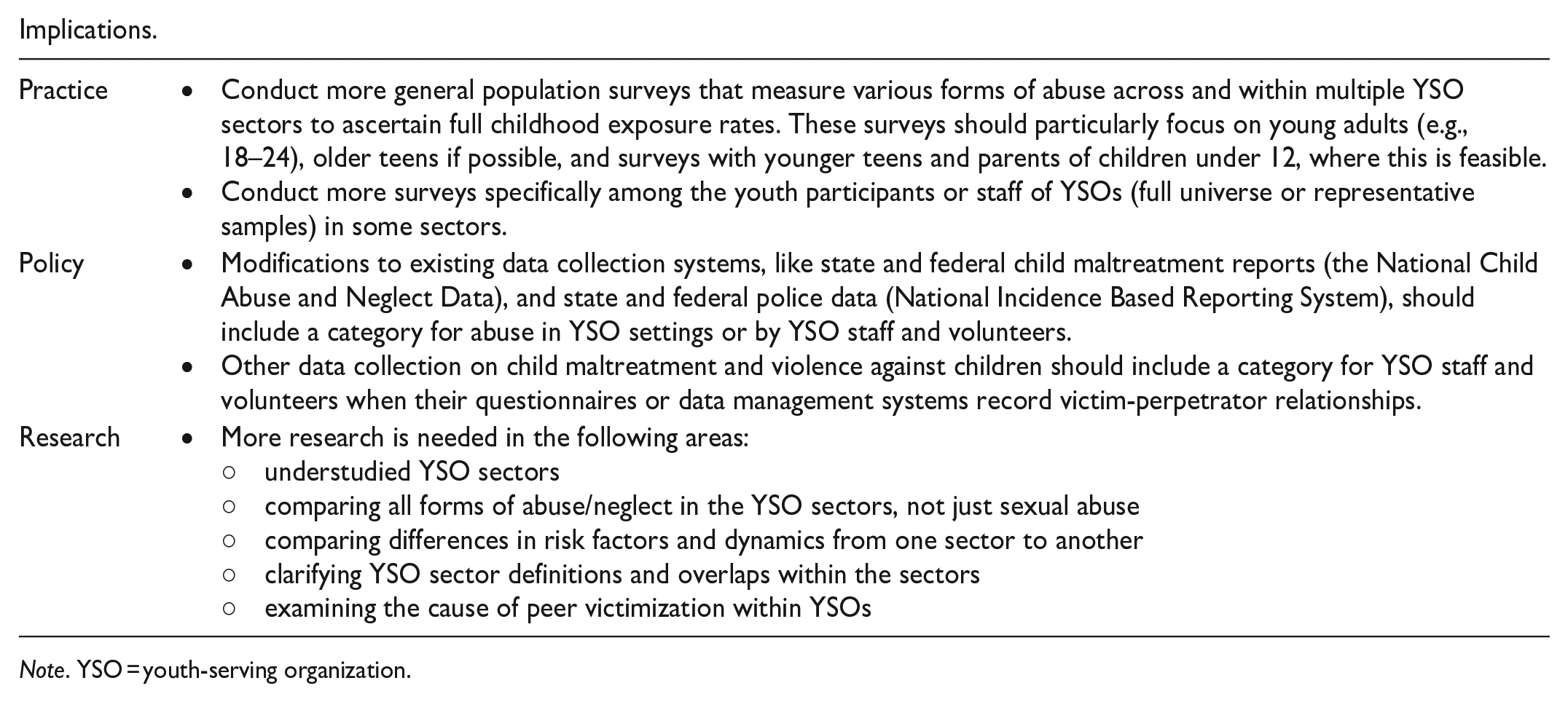
Note. YSO = youth-serving organization.
Supplemental Material
sj-docx-1-tva-10.1177_15248380251357613 – Supplemental material for Child Maltreatment in Youth-Serving Organizations: A Scoping Review
Supplemental material, sj-docx-1-tva-10.1177_15248380251357613 for Child Maltreatment in Youth-Serving Organizations: A Scoping Review by David Finkelhor, Leanne Gast, Casey Cavanaugh, Samantha Sutton, Lisa M. Jones and Heather Turner in Trauma, Violence, & Abuse
Footnotes
Acknowledgements
The authors wish to thank members of this project’s expert advisory group, including Katie Hanna, Maggie Ingram, Bart Klika, Aaron Lundberg, Luciana Assini-Meytin, Julie Novak, Glen Pounder, Anthony Rizzuto, and Andrea Sedlak, for sharing their professional knowledge of abuse in youth serving organizations.
Data Availability Statement
Not applicable.
Declaration of Conflicting Interests
The author(s) declared no potential conflicts of interest with respect to the research, authorship, and/or publication of this article.
Funding
The author(s) disclosed receipt of the following financial support for the research, authorship, and/or publication of this article: This project was supported by Award No. 13713764, awarded by the National Institute of Justice, Office of Justice Programs, U.S. Department of Justice. The opinions, findings, and conclusions or recommendations expressed in this publication/program/exhibition are those of the authors and do not necessarily reflect those of the Department of Justice.
Ethical Approval and Informed Consent
Not applicable.

Supplemental Material
Supplemental material for this article is available online.
Author Biographies
References
Supplementary Material
Please find the following supplemental material available below.
For Open Access articles published under a Creative Commons License, all supplemental material carries the same license as the article it is associated with.
For non-Open Access articles published, all supplemental material carries a non-exclusive license, and permission requests for re-use of supplemental material or any part of supplemental material shall be sent directly to the copyright owner as specified in the copyright notice associated with the article.
