




Abstract
Helping professionals working with people who have experienced trauma are at risk of developing psychological distress. To date, most studies exploring psychological distress among helping professionals have focused on risk factors associated with the development of adverse reactions to secondary trauma, and few have identified strengths or protective factors, which may buffer and/or alleviate distress. Therefore, this scoping review uses the Resilience Portfolio Model (Grych et al., 2015) to synthesize literature on individual and environmental strengths, which may mitigate adverse reactions to secondary trauma in helping professionals. Utilizing the CINAHL, PsycArticles, PsycInfo, and MEDLINE databases, 43 articles published between 1990 and May 2023 from over 20 countries were identified. The findings suggest that professionals draw upon a portfolio of meaning-making, regulatory, interpersonal, and ecological strengths to increase their protective resources. Most studies identified were quantitative, and usually explored organizational factors, such as supervision. Further empirical investigations could help identify individual strengths that could be targeted within interventions to protect professionals against the impact of secondary traumatic stress. Additionally, more research is needed to investigate the interconnectedness of individual, organizational, and systemic factors that buffer helping professionals from the deleterious effects of trauma work.
People who witness traumatic events or care for trauma survivors can experience adverse effects on their psychological well-being (Cieslak et al., 2014) and may develop responses consistent with post-traumatic stress disorder (PTSD; Kendall-Tackett, 2023). Professionals working in health and social care settings are frequently exposed to trauma through learning about their client’s traumatic experiences via discourse with patients/clients, reviewing written documents such as case notes and client histories, and working with clients who exhibit trauma symptoms (Ogińska-Bulik et al., 2021). This recurring exposure has been linked to an increased likelihood of experiencing psychological distress (Sprang et al., 2019). Currently, the available literature has focused on prevalence and risk factors of secondary traumatic stress (STS), and few studies have explored the potential protective factors, which may support professionals in managing the impact of secondary trauma. Therefore, the present review aimed to synthesize the available literature on strengths, which protect professionals from experiencing STS.
The current version of the Diagnostic and Statistical Manual of Mental Disorders (DSM-V; American Psychiatric Association, 2013) is the first to recognize work-related indirect exposure to trauma in the formal diagnostic criteria for PTSD. Prior to this, researchers developed constructs to capture post-traumatic stress symptoms in helping professionals exposed to trauma through their work including STS, compassion fatigue (CF), and vicarious traumatization (VT; Kendall-Tackett, 2023). Some define CF as a bi-factorial construct containing STS and burnout, which develops in response to chronic work stress and is characterized by emotional exhaustion, depersonalization, and reduced sense of professional efficacy (Rossi et al., 2012). VT describes the distortion of a person’s core beliefs, associated with trust, intimacy, and safety (Pearlman & Saakvitne, 1995). However, there has been a contradictory use of these terms in the literature with some researchers using these constructs interchangeably (Hayes, 2013; Kapoulitsas & Corcoran, 2015), and others conceptualizing them as unique conditions (Sutton et al., 2022). Although this confusion is present in the evidence base, scholars agree that STS presents a significant concern for helping professionals (Cummings et al., 2021). In this review, the term secondary trauma is employed to describe the event of exposure, while STS is utilized to refer to the effects of such exposure.
Existing reviews have suggested that STS is prevalent among helping professionals (Cavanagh et al., 2020; Van Mol et al., 2015). Empirical work has reported STS among Australian social workers and psychologists (prevalence of 30%; Rayner et al., 2020) and Polish medical professionals (prevalence of 43%; Ogińska-Bulik et al., 2021), with 50% of Jordanian nurses reporting high to severe levels of PTSD symptoms (Ratrout & Hamdan-Mansour, 2020). Therefore, STS is a global issue affecting helping professionals.
STS has been associated with both personal and professional challenges, such as interpersonal difficulties, substance misuse, reduced professional commitment, and higher staff turnover (Labrague & de Los Santos, 2021; Stevenson et al., 2022). Although existing reviews have identified risk factors like personal trauma history, high caseloads, and maladaptive coping strategies (Hensel et al., 2015; Xie et al., 2021), they often overlook the strengths that foster resilience in professionals working with trauma survivors. Furthermore, existing reviews tend to focus on specific professions, such as teachers (Ormiston et al., 2022) and mental health professionals (Turgoose & Maddox, 2017), or on interventions to manage symptoms of STS (Sinclair et al., 2017). This approach restricts the scope of the strengths reviewed among helping professionals more broadly. Individual studies have identified resilience-enhancing factors such as humor, optimism, commitment to professional role, family and organizational support, and religious faith (Aggarwal & Sriram, 2018; Bhola et al., 2012; Mathew et al., 2013). These findings suggest that resilience in the context of STS consists of a range of strengths from individual, family, peer, and community sources, but the literature has not yet been integrated. A focus on malleable protective factors instead of static traits could provide deeper insights and practical strategies to buffer the negative impacts of STS (Grych et al., 2015).
The Resilience Portfolio Model (RPM; Grych et al., 2015) is a strength-based framework that offers a holistic understanding of protective factors that help people to overcome trauma. The RPM proposes that people have a “portfolio” of individual and interpersonal-ecological strengths, which they can draw upon to cope with adversity. In this model, strengths are categorized into three domains: (a) meaning-making strengths, which allow people to find meaning and purpose in life; (b) regulatory strengths, which enable individuals to manage their emotions and behaviors in adaptive ways; and (c) interpersonal strengths, which facilitate the creation and maintenance of relationships as well as resources in one’s social network (Gonzalez-Mendez et al., 2021). The RPM suggests that the density (intensity of strengths) and variety (poly-strengths; Hamby et al., 2018) of protective factors a person possesses shapes an individual’s response to adversity, and that a larger number of strengths lead to increased adaptability when faced with hardship.
The RPM has been used in previous research to investigate factors which enhance people’s ability to adapt and thrive in response to adversities. Most of the available research using the RPM has focused on populations who have experienced direct exposure to trauma and who were not operating in a professional capacity when exposed. For instance, qualitative work with firefighters in Colorado (Stout & Shafer, 2023) identified meaning-making, regulatory, and interpersonal strengths that contributed to resilience and called for these strengths to be promoted to support better well-being. This study highlights the RPM’s potential utility in identifying protective factors for adversity-facing helping professionals and its potential for interventions that enhance well-being in high-risk occupations.
There is limited literature that has synthesized protective factors that help to mitigate STS in helping professionals. Therefore, using the RPM framework, the aim of this scoping review is to examine strength-based resources and assets that may mitigate adverse reactions to secondary trauma in helping professionals, and to examine how these factors are used to enhance professionals’ ability to be adaptive despite experiencing repeated exposure to secondary trauma at work.
Methodology
For this scoping review, we conducted a literature search of the CINAHL, PsycArticles, PsycInfo, and MEDLINE databases. Inclusion criteria were set to include peer-reviewed papers published in English between 1990 and May 2023. Search terms associated with STS in professionals, including STS, CF, and VT, began to appear within the literature from 1990 onwards; therefore, we utilized these terms as keywords in our search. Other inclusion criteria included papers focusing on helping professionals (e.g., working in health and social support settings and the criminal justice system) exposed to secondary trauma at work, and papers that examined STS or the related constructs listed above as an outcome. Our search included studies from all countries, research designs, and settings. Our exclusion criteria included: (a) non-peer reviewed articles; (b) studies that did not focus on STS or related constructs as an outcome; (c) studies with samples other than helping professionals; and (d) if resilience was measured as a trait and not an assembly of strength-based assets or resources.
The search strategy included three steps to capture the appropriate literature including: (a) an outcome term related to STS including, “secondary trauma*” and “vicarious trauma*”; (b) a mediator/facilitator of protection against a STS outcome (e.g., “protect*,” “predisposing,” “strengths-based,” “predictors,” “individual,” and “organisational/organizational”); and (c) terms associated with the targeted population such as “professionals,” “workers,” “staff,” “clinicians,” and “practitioners.” As depicted in Figure 1, the review yielded 623 articles. After screening the abstracts of the articles, those that did not meet our inclusion criteria or were duplicates were omitted (N = 387). A comprehensive review of the full text of the remaining 236 articles resulted in an additional 193 papers being removed. After the final review process, 43 papers were selected for inclusion in the scoping review (see Figure 1). The screening and review process was supplemented using Rayyan (Ouzzani et al., 2016), a web-based browser developed to support conducting systematic and scoping reviews. All 623 articles were imported into Rayyan for review. The first author completed the initial screening of the original sample (N = 623), and the remaining 236 articles were independently reviewed by the first and second author. Disagreements were resolved through discussion between the first, second, and third authors. After the final sample of papers had been selected, the first author extracted the data onto a Microsoft Excel spreadsheet sorting the reported protective factors into the RPM. After initial sorting, the cataloged factors were checked by the second and third authors, and uncategorized factors were organized through discussion between the first, second, and third authors.
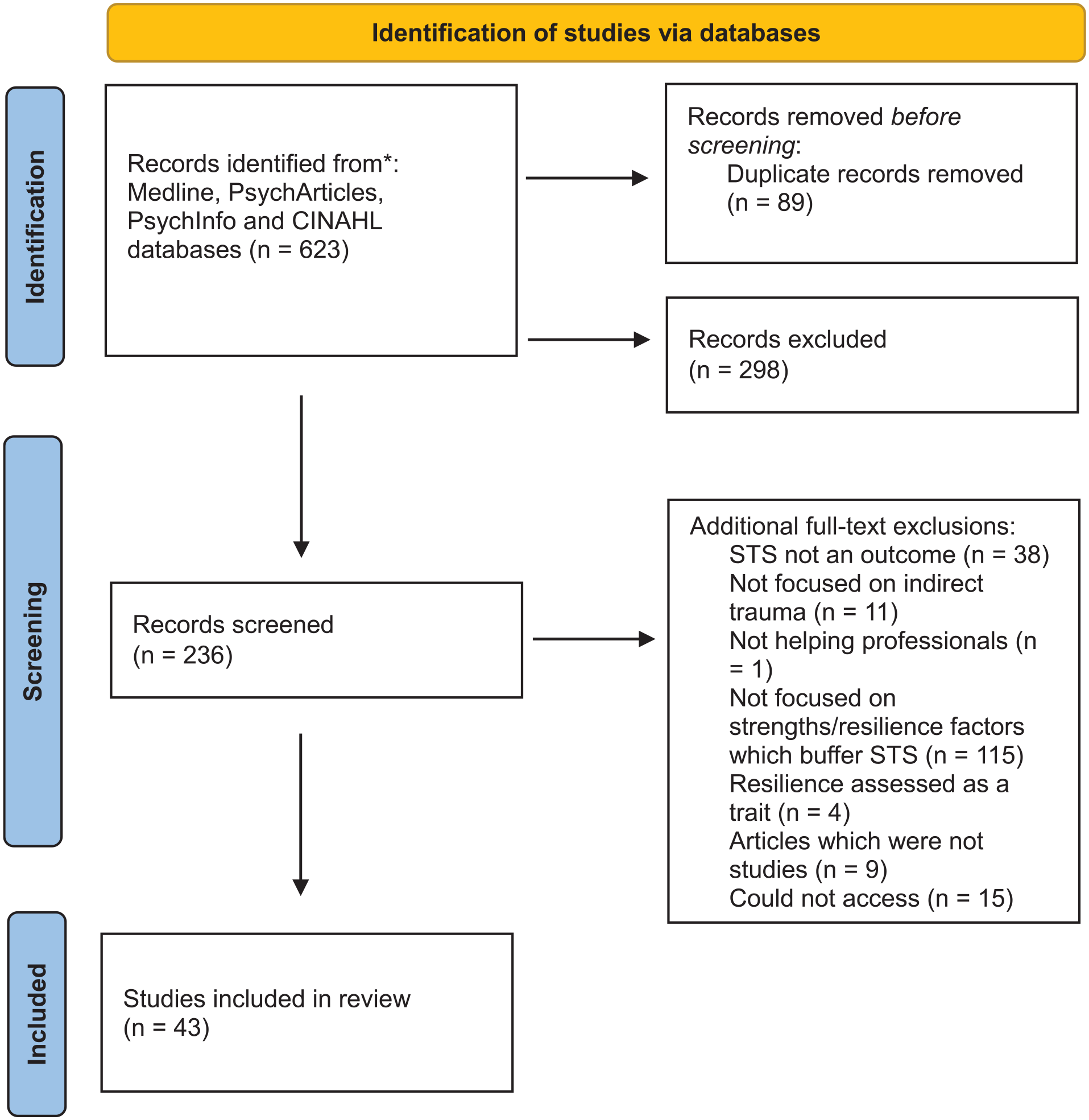
PRISMA flow diagram of searches and extraction of studies.
Results
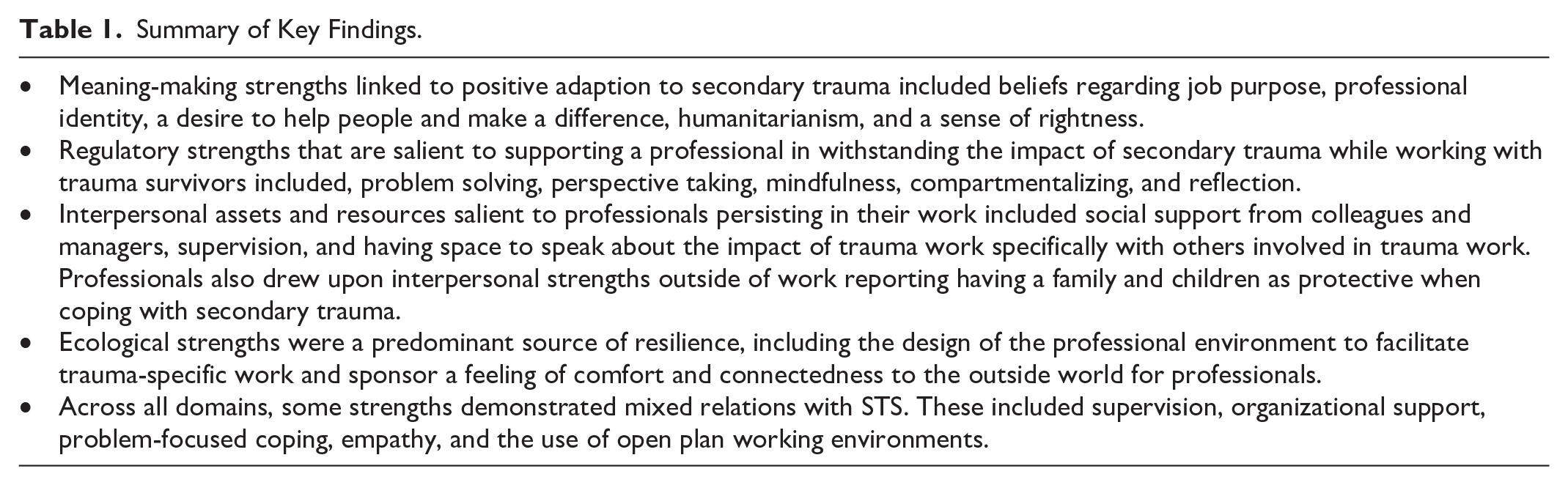
Forty-three studies published between 2003 and 2023 were identified during the literature search. Of these, 34 utilized quantitative methods, primarily with cross-sectional designs. Eight opted for qualitative methodologies, and one combined both approaches. The geographical scope of the included studies was expansive, encompassing research conducted in North America (44%), Europe (26%), Asia (14%), South America (2%), and Africa (2%). These studies incorporated heterogeneous and homogenous samples of helping professionals from a multitude of vocations. Among these vocations were medical professionals (nurses, physicians, and surgeons), mental health professionals, social workers, emergency workers, law enforcement, refugee workers, forensic investigators, and scientists. The findings from the reviewed studies were categorized according to the meaning-making, regulatory, and interpersonal strengths domains of the RPM, with the addition of an ecological strengths domain to capture strengths from the natural and built environment. Table 1 contains an overview of the key findings, with a summary of the 43 included studies presented in the Supplemental Information (Supplemental Table S1).
Summary of Key Findings.
Meaning-Making Strengths
Nineteen out of 43 (44%) reviewed studies identified an array of meaning-making strengths associated with lower levels of STS among professionals working with populations with lived experience of trauma. These strengths were reported to have contributed to a sense of meaning and intrinsic motivation, fueling commitment and perseverance in a demanding field of work, and lower rates of STS.
The most prominent meaning-making strengths that were negatively associated with STS were linked to professionals’ beliefs in job purpose, for example, an increased sense of “passion for the fight” (McCormack & Lowe, 2022), beliefs that work is valuable and successful (Bell, 2003), having a strong rationale for the job and wanting to make a difference (Denk-Florea et al., 2020), a strong sense of professional identity (Caricati et al., 2023; Maurya & DeDiego, 2023) and affective organizational commitment (Vagharseyyedin et al., 2018), and a desire to help people (Duran & Woodhams, 2022) and make a difference (Muehlhausen, 2021). In addition, work dedication (Remegio et al., 2021), ethical behavior (Avieli et al., 2016), work vigor (Remegio et al., 2021), maintaining an interest in the profession and wanting to help (Bell, 2003), and harmonious passion for the job driven by intrinsic factors (Moreno-Jiménez et al., 2020, 2021) were protective against STS. One study among healthcare workers (Caricati et al., 2023) found that a strong identification with care units was unrelated to STS at the bivariate level and associated with increased STS symptoms in multivariate analyses. In the same study, organizational identification was unrelated to STS.
Some meaning-making strengths derived from a professional’s job were related to fewer STS symptoms. Job satisfaction (Ogińska-Bulik et al., 2021; Shi et al., 2023) and finding work stimulating (Teffo et al., 2018) were negatively associated with STS, although other research found that satisfaction with the organization was unrelated to STS (Bonach & Heckert, 2012). Another area of meaning making found to be protective against STS was factors associated with professionals’ beliefs of the inherent dignity and worth of human beings, including beliefs in women’s rights (Teffo et al., 2018), humanitarianism (O’Neill, 2010), beliefs in client’s need to have power in their own lives and building client strength and autonomy (O’Neill, 2010), and the sacredness of all persons (Muehlhausen, 2021).
Further review of the included studies revealed a protective cluster of meaning-making attributes linked with enhanced adaptive attitudes, including purpose in life (Singer et al., 2020), life satisfaction (Xu et al., 2023), hardiness (Zakeri et al., 2022), sense of purpose (McCormack & Lowe, 2022), sense of rightness (Bell, 2003), hope (O’Neill, 2010), optimism (Bell, 2003; Duran & Woodhams, 2022), and mastery (Dagan et al., 2016). Sense of coherence demonstrated mixed findings, being related to STS at both the bivariate and multivariate level (Kindermann et al., 2017), or the multivariate level only (Greinacher et al., 2022).
Additionally, some studies revealed that some professionals’ religiosity or spiritual beliefs acted as internal resources when faced with secondary trauma at work. These factors included beliefs in higher power (Bell, 2003), congruence between religious faith and professional obligation (McCormack & Lowe, 2022), and religious or spiritual beliefs guiding work, prayer, and faith in a high power (Muehlhausen, 2021). Finally, some factors reported as strengths were described as developing through exposure to either direct (personal experience) or indirect trauma (through work), for example, developing a new sense of gratitude for one’s own life after learning about others’ experiences of adversity (McCormack & Lowe, 2022), or developing resources and skills through resolving personal trauma (Bell, 2003).
Regulatory Strengths
Twenty-one (49%) studies reported various regulatory strengths within and outside of the professional setting which professionals use to sustain their work with trauma survivors. Predominantly, different cognitive and meta-cognitive skills, which orientated a professional’s attention, reasoning, or decision making, were reported as buffers against potential STS. These strengths included acceptance (Duran & Woodhams, 2022; Ogińska-Bulik et al., 2021), viewing the trauma as a story (Duran & Woodhams, 2022), cognitive reappraisal (Shi et al., 2023), compartmentalizing (Muehlhausen, 2021; Turkington et al., 2023), reflection (Turkington et al., 2023), resolving personal trauma (Bell, 2003), concentrating on the patient (Mistry et al., 2022), acceptance of limits and need for support (McCormack & Lowe, 2022), not personalizing clients’ behaviors (Mistry et al., 2022), mindfulness (Szoke et al., 2023; Zakeri et al., 2022), mindful attention (Greinacher et al., 2022), and self-awareness (Roberts et al., 2022).
Additionally, positive cognitive restructuring was negatively associated with STS at the bivariate level only (Ogińska-Bulik et al., 2021), while self-compassion was negatively related to STS in some studies (Scott et al., 2021; Szoke et al., 2023), but unrelated to STS in others (Moreno-Jiménez et al., 2020). Emotional intelligence was also found as a protective asset when exposed to secondary trauma (Akinsulure-Smith et al., 2018). Further, some studies reported that professionals actively seek to suppress thoughts (Duran & Woodhams, 2022), detach emotionally (Badger et al., 2008; Duran & Woodhams, 2022), or use humor (Denk-Florea et al., 2020) when working with trauma survivors to protect themselves from experiencing STS.
Studies noted useful resources within the professional environment to regulate how much trauma professionals were exposed to when working with survivors. These included taking breaks from trauma material (Duran & Woodhams, 2022), using different viewing strategies of trauma materials (Denk-Florea et al., 2020), and boundaries around workload and type of clients (Roberts et al., 2022). Additionally, some studies reported that feeling equipped and prepared for secondary trauma may act as a protective factor, reducing the likelihood of experiencing STS. These strengths included feeling prepared for emergency situations (Greinacher et al., 2022), raising awareness and preparing colleagues (Duran & Woodhams, 2022), having a feeling of confidence (Greinacher et al., 2022), and belief about one’s ability to cope (Bell, 2003).
Moreover, other literature noted how professionals leveraged personal resources and strengths beyond the professional environment to remove themselves from their professional work. Having a clear self-care plan (Rienks, 2020), engaging in self-care (Roberts et al., 2022; Turkington et al., 2023), meditation (Turkington et al., 2023), relaxation activities such as gardening, yoga, petting animals, or watching television (Denk-Florea et al., 2020; Duran & Woodhams, 2022), hobbies and activities outside of work (Rienks, 2020), having a work-life balance (Mistry et al., 2022; Turkington et al., 2023), and transition between leaving work and coming home (Rienks, 2020) emerged as crucial protective factors for coping with STS.
Studies further indicated that disengaging from the work environment through utilizing vacation time and incorporating regular breaks (Turkington et al., 2023) contributed to professionals’ positive adaption to STS. Physical activity and health may also serve as regulatory supports to manage responses to secondary trauma. Exercise was repeatedly reported as a protective factor for buffering STS (Boyas et al., 2022; Muehlhausen, 2021; Roberts et al., 2022) and one study identified self-rated health and healthy eating (Boyas et al., 2022) as additional strengths.
Other studies reported mixed findings among regulatory strengths used by professionals. Problem-focused coping was unrelated to STS (Al Barmawi et al., 2019) among critical care nurses. One study found that all components of mental toughness (emotional control, control over one’s life, confidence in abilities, commitment to carrying out tasks despite challenges, and interpersonal confidence) were negatively related to STS at the bivariate level, yet only control of life was a significant predictor of STS at the multivariate level (Turkington et al., 2023). Another study of coping factors and STS (Al Barmawi et al., 2019; Vukčević Marković & Živanović, 2022) revealed that acceptance, active coping, humor, and restraint were unrelated to STS at the bivariate level. At the multivariate level, problem-focused coping (active coping, planning, and positive reinterpretation) was associated with lower STS symptoms, and passive coping (acceptance, humor, and restraint) related to more STS symptoms. Perspective taking was unrelated to STS among physicians (Gleichgerrcht & Decety, 2013).
Interpersonal Strengths
Twenty-eight (65%) of the reviewed studies reported a range of strengths related to interpersonal relationships among helping professionals. Studies found social support (Badger et al., 2008; Denk-Florea et al., 2020; Duran & Woodhams, 2022; Kindermann et al., 2017; Michalopoulos & Aparicio, 2012; Muehlhausen, 2021; Ogińska-Bulik et al., 2021; Shi et al., 2023; Szoke et al., 2023; Turkington et al., 2023) and acceptance of a need to seek social support (McCormack & Lowe, 2022) were strengths professionals used to buffer against STS. Findings from two studies identified communication (Duran & Woodhams, 2022) and talking to colleagues (Denk-Florea et al., 2020) as contributing factors to resilience. Interpersonal connections outside of work were also reported as strengths for professionals at risk of STS, including family care (Xu et al., 2023) and having children (Boyas et al., 2022; Zakeri et al., 2022). External social support was related to lower STS (Bonach & Heckert, 2012), although external job support (i.e., perceived support from clients and the public) was negatively associated with STS at the bivariate level.
Evidence concerning some interpersonal strengths were less conclusive in other research. Social support was only related to STS at the bivariate level in some studies (Al Barmawi et al., 2019; Dagan et al., 2016; Slattery & Goodman, 2009) and unrelated to STS in others (Al Barmawi et al., 2019; Vukčević Marković & Živanović, 2022). Furthermore, getting feedback from others about the quality of work undertaken was also unrelated to STS (Teffo et al., 2018). A study of forensic interviewers found that overall job support (consisting of external social support, internal job support, and external job support), along with relationships with leaders, was negatively related to STS at the bivariate level, whereas external social support and internal job support were related to STS in multivariate analyses (Bonach & Heckert, 2012). In other research (Ogińska-Bulik et al., 2021), support from friends and coworkers was negatively and positively related to STS among health care helping professionals at the multivariate level, respectively. Support from supervisors, family, and friends was protective against STS at the bivariate level only, with coworker support unrelated to STS.
Interpersonal characteristics and relationships were also identified as protective factors. For example, having a secure attachment style (Kindermann et al., 2017) and compassion satisfaction (i.e., a sense of accomplishment stemming from caring for trauma survivors; Hinderer et al., 2014; Singer et al., 2020; Zakeri et al., 2022) was associated with better coping, although compassion satisfaction was unrelated to STS at the bivariate level among healthcare workers (Caricati et al., 2023). Interpersonal relationships at work were reported as protective by studies reporting peer support (Townsend & Campbell, 2009). Communicating with others about trauma work (Mistry et al., 2022), debriefings with other counselors (Roberts et al., 2022), and colleagues (McCormack & Lowe, 2022) were reported as shielding factors. There was mixed evidence as to the benefits of positive teamwork with managers or other colleagues, with some studies reporting negative (Scott et al., 2021; Turkington et al., 2023) or no associations with STS (Townsend & Campbell, 2009). One study reported drawing on positive role models of coping (Bell, 2003) to also enhance a professional’s resilience to STS. Empathic concern for clients was related to greater (Badger et al., 2008; Gleichgerrcht & Decety, 2013; Moreno-Jiménez et al., 2020) or fewer STS symptoms (Shi et al., 2023).
The presence of a positive and supportive workplace environment emerged as a frequently cited strength mitigating the impact of secondary trauma among helping professionals. One study (Scott et al., 2021) explored work environment as a multifactorial strength and found that communication with other staff, support from other staff and colleagues, clarity of role, and teamwork related to better coping at the bivariate level, although leadership was unrelated to coping.
Other studies reported organizational support, a feeling that the organization cares about a professional’s well-being, perceived support available inside an organization (Rienks, 2020; Xu et al., 2023), perceptions of shared power within the workplace environment (Slattery & Goodman, 2009). and a supportive work environment to be able to work effectively with clients and to manage one’s own emotional reactions and fatigue when working with survivors (Boscarino et al., 2004), as factors which helped professionals sustain working when exposed to STS. Additionally, one study reported that a perception of support offered by the organization (e.g., leadership and mission of the organization, employee empowerment) to combat STS as protective (Levin et al., 2021), suggesting helping professionals’ benefit from organizational support specifically designed for preventing STS. Nevertheless, organizational support was viewed as inadequate if it was unavailable, perceived to be unhelpful (Duran & Woodhams, 2022; McCormack & Lowe, 2022; Townsend & Campbell, 2009), or seen to be delivered by individuals lacking knowledge of the effects of STS (Denk-Florea et al., 2020; Muehlhausen, 2021). In some studies, debriefs were viewed as beneficial (Mistry et al., 2022), although they were less helpful when professionals perceived a lack of understanding of the effects of STS among facilitators delivering the debriefing sessions.
Supervision emerged as a vital protective asset (Denk-Florea et al., 2020), but in other studies, it was only related to STS at the bivariate level (Dagan et al., 2016), or was viewed as conducive to coping only when it was accessible for staff or delivered in a more informal manner (Mistry et al., 2022). Some studies also reported that seeking support through supervision (Mistry et al., 2022) and having quality supervision (Quinn et al., 2019) was protective against STS, although in the latter study, the frequency of supervision was unrelated to STS. Quality of supervision was only related to STS at the bivariate level among domestic violence advocates (Slattery & Goodman, 2009).
Ecological Strengths
Organizational and wider ecological/systemic strengths that sat outside of the existing RPM domains were identified in nine of the 43 studies (23%). Studies reported organizational characteristics having protective qualities, including role clarity (Argentero & Setti, 2011), satisfaction with job renumeration (Townsend & Campbell, 2009), challenging work which is intellectually stimulating (Duran & Woodhams, 2022), and health promotion at work (Boyas et al., 2022). Some studies reported certain activities which support professionals working with trauma, including the provision of training (Bonach & Heckert, 2012; Levin et al., 2021; Townsend & Campbell, 2009) and education (Townsend & Campbell, 2009). Other research found that some characteristics, such as reward structures within organizations, were unrelated to STS (Townsend & Campbell, 2009).
Some studies investigated profession-specific working modalities associated with enhanced resilience in the face of trauma exposure. Examples included exclusive facilities for Sexual Assault Nurse Examiners (SANEs; Townsend & Campbell, 2009) with specially designed areas that provide medical care and forensic evidence retrieval for sexual assault survivors, and the utilization of a fly-in fly-out care model (Roberts et al., 2022) where professionals are employed temporarily in remote communities with regular rest periods.
Furthermore, in some studies, professionals reported engaging with psychological care as an asset to maintaining resilience when working with traumatized populations. Reported contributing factors included access to mental health services/psychological support (Bonach & Heckert, 2012; Denk-Florea et al., 2020), accessing psychological support to understand own symptoms, and having their own therapist (Roberts et al., 2022).
Features of the workplace environment also contributed to resilience among helping professionals. Having a physical workplace in which professionals feel comfortable and connected to the outside world was perceived as a factor which supported coping (Denk-Florea et al., 2020). The physical location of staff with offices next to one another was seen as useful to mitigate STS, as the close proximity allowed for informal debriefings between staff (Muehlhausen, 2021). In addition, the amount of natural light, proximity to a gym, and open plan offices were conducive of employee well-being (Denk-Florea et al., 2020), although open plan offices were also viewed as disruptive and lacking privacy. Access to shared spaces in the work environment, and training and development opportunities were unrelated to STS at the bivariate level (Scott et al., 2021).
Discussion
The purpose of this scoping review was to investigate and synthesize literature that examined strengths supporting the well-being of helping professionals who experience STS. Utilizing the RPM (Grych et al., 2015), we identified 43 studies that examined strengths that support helping professionals in adapting to the impact of STS. These studies were organized into the RPM strengths-based categories of meaning-making, regulatory, and interpersonal strengths, and we identified a fourth domain comprising of ecological/organizational strengths. The results from this scoping review demonstrate multilevel resilience factors that are present within individuals, organizations, and systems and may improve support for helping professionals and organizations responding to STS. Further, results from this scoping review highlight the interconnected nature of individual, organizational, and systemic experiences, positioning the well-being of helping professionals as dynamic and contextually dependent on the portfolio of strengths available to them in their distinct environments.
Meaning-making strengths identified in this scoping review highlighted the importance of personal attitudes and behaviors in buffering helping professionals from the deleterious effects of secondary trauma. Individual factors connected to meaning making demonstrated that personal practices such as hope (O’Neill, 2010), gratitude (McCormack & Lowe, 2022), religious beliefs (McCormack & Lowe, 2022; Muehlhausen, 2021), and prayer (Muehlhausen, 2021) supported helping professionals with managing STS responses. Notably, some have suggested that meaning making is an important intervention that strengthens resilience in populations experiencing STS (Kerig, 2019). Pack (2014) found that creating meaning following exposure to client’s trauma was the igniting factor that led trauma therapists to developing coping strategies and enhancing resilience. Likewise, meaning making and connection to one’s own values (Park & Slattery, 2014) may be catalysts to resilience among helping professionals.
Results from this scoping review included several studies that have established initial evidence suggesting that regulatory strengths such as emotional regulation and affective skills (Badger et al., 2008; Bell, 2003; Shi et al., 2023), physical exercise (Boyas et al., 2022; Muehlhausen, 2021), and other relaxation and self-care activities (Denk-Florea et al., 2020; Duran & Woodhams, 2022; Roberts et al., 2022) are effective coping strategies following exposure to STS. Self-regulation, including the regulation of one’s body and mind, is accepted widely as appropriate intervention for managing responses to post-traumatic stress (Seligowski et al., 2015; Tan et al., 2023). Similarly, this scoping review identified regulatory strengths as important components in managing responses to exposures to trauma in helping work and increasing helping professionals’ resilience.
Several studies demonstrated the importance of interpersonal strengths in supporting professionals who are exposed to STS. Notably, organizational culture and context were suggested as paramount to supporting helping professionals in coping with exposure to secondary trauma. For example, supportive relationships at work including with peer colleagues and supervisors has been shown to reduce STS among helping professionals (Dagan et al., 2016; Hinderer et al., 2014; Levin et al., 2021; Quinn et al., 2019). These findings are consistent with other organizational behavior literature that has consistently documented the importance of culture and context in workforce well-being to improve factors such as employee happiness (Nierenberg et al., 2017), workplace stress (Dóra et al., 2019), and employee retention (Dóra et al., 2019; Iqbal et al., 2017). However, the review also highlighted that organizational culture could have negative aspects, particularly if individuals have strained dynamics in staff teams or if support is not provided (Duran & Woodhams, 2022).
Several studies identified ecological strengths that may promote resiliency against STS. Ecological strengths, including the characteristics of the physical workspace, and organizational resources in the form of training (Bonach & Heckert, 2012), working modalities (Townsend & Campbell, 2009), and health promotion (Boyas et al., 2022) also contributed to lower STS symptoms among helping professionals. These findings align with organizational research on the work environment and its potential contribution to employee well-being (Kazlauskaitė et al., 2023; Page & Tolmie, 2024).
Limitations
Results from this scoping review should be considered alongside limitations. First, while we did attempt to use search terms that would identify the studies most aligned with the purpose of the scoping review, we acknowledge that not all pertinent studies may have been included. Second, a large portion of the studies included in this scoping review was cross-sectional, which limits our understanding about temporal dynamics, cause–effect, and how processes and mechanisms operate. Third, the search terms used in this scoping review may have unintentionally omitted studies that examined phenomenon related to STS. For example, in the final search, the term CF was omitted as this yielded articles that defined CF as a condition including both STS and burnout. Various authors are utilizing the terms “secondary traumatic stress” and “vicarious trauma” with inconsistent definitions, which may impact a shared understanding and application of the results in this scoping review. Fourth, the review excluded studies written in languages other than English, which limits diverse perspectives to addressing STS among helping professionals from being included in this scoping review, particularly those outside of a non-Western context where alternative healing or collective approaches to building resilience for workplace trauma may be more salient (Melinte et al., 2023). Finally, while scoping reviews offer an overview of the current state of the literature, they lack critical examination of the robustness of the included studies and effectiveness of the identified strengths at reducing STS.
Research Implications
Results from this scoping review provide several implications for future research, practice, and policy impacting helping professionals (see Table 2 for summary). Although studies in this review suggest several meaning-making attitudes and behaviors that may strengthen helping professionals’ resilience to STS, few studies have compared the effectiveness of these strategies. Many of the studies that identified meaning-making strengths were conducted using qualitative methods. Thus, more quantitative research utilizing robust statistical methods is warranted to examine the effects of various ways in which helping professionals create meaning out of their experiences and whether some practices prove to be more effective than others at assisting helping professionals with coping with STS. To facilitate this research, measures of meaning-making strengths are needed, so these factors can be compared with other strengths, which may buffer against STS.
Summary of Key Implications.
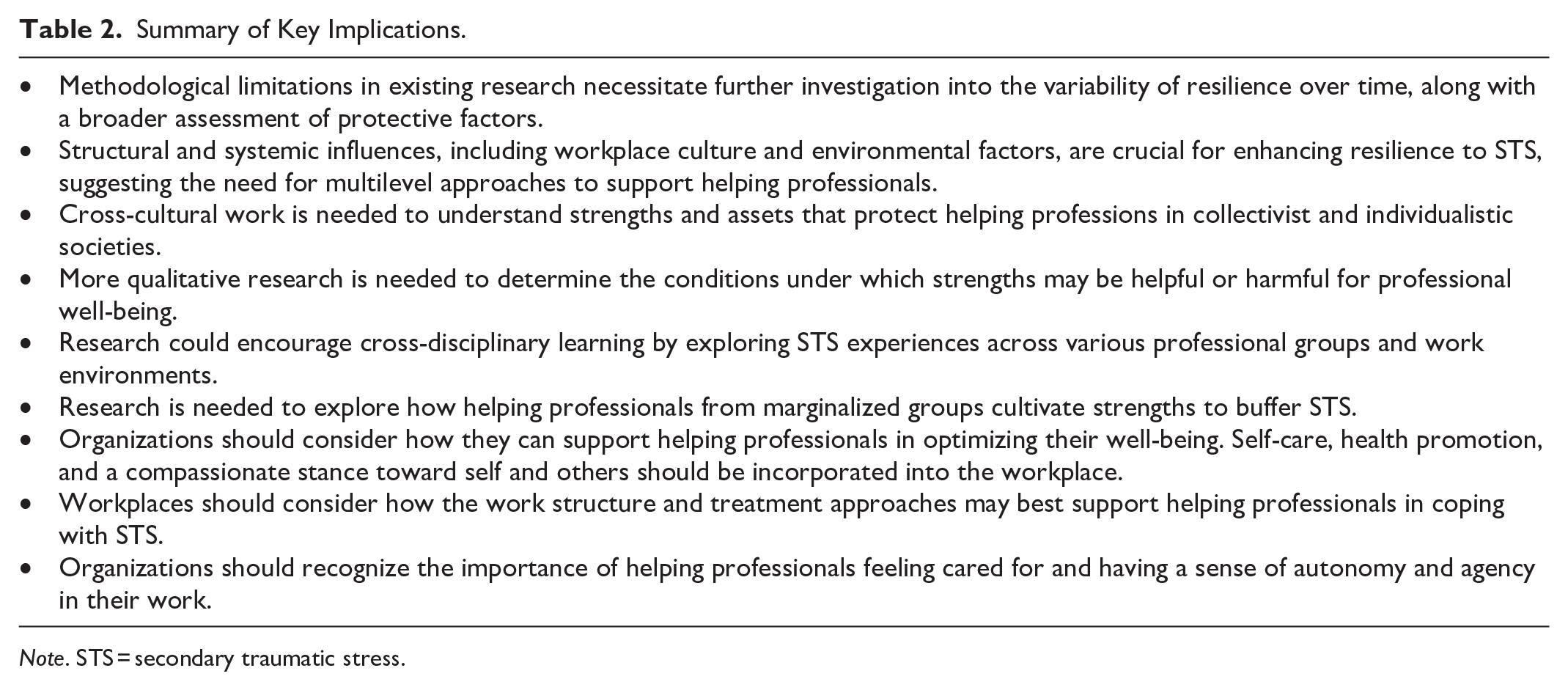
Note. STS = secondary traumatic stress.
There were methodological limitations inherent in the existing research. Many studies utilized cross-sectional designs, and additional research is needed to understand how individual attitudes, behaviors, and regulatory skills are developed and may vary among helping professionals over time. In addition, studies focused on a narrow range of strengths and/or employed trait-based measures of resilience, such as hardiness (Zakeri et al., 2022) and sense of coherence (Greinacher et al., 2022), which do not reflect the dynamic nature of the strengths that professionals draw upon. Future research should assess a broader portfolio of protective factors at multiple levels for a more rounded understanding of resilience in the face of secondary trauma.
Findings from this scoping review demonstrate structural and systemic influences that may shape the strengths available to helping professionals coping with STS. The findings demonstrated that workplace culture, context, and environment were imperative to strengthening helping professionals’ resilience to STS. Emerging research has started to identify potential strengths in the human (Kazlauskaitė et al., 2023) and natural environments (Silva et al., 2024) that are aligned with better well-being in helping professions. The RPM could be adapted to include a fourth dimension that taps into wider ecological resources in the human and natural environments that may buffer professionals against STS symptoms. Although we have framed these factors as occurring at the individual level, we urge researchers to consider how environmental factors may support or inhibit individuals from accessing and utilizing these strengths. Thus, more research investigating the implementation and effectiveness of multilevel interventions designed to strengthen workforce well-being across the RPM domains is needed.
Although many of the strengths identified in this review demonstrated fairly stable relations with STS, other strengths, such as organizational social support and empathy, were less consistent. Research has highlighted the positive and negative aspects of organizational social support (Duran & Woodhams, 2022; Levin et al., 2021) and empathy (Moreno-Jiménez et al., 2020; Shi et al., 2023) among helping professionals. Equally, other factors that may not be usually viewed as strengths, such as thought suppression (Duran & Woodhams, 2022) and emotional detachment (Badger et al., 2008), appeared to have some adaptive qualities for buffering against STS, at least in the short term. More qualitative work is needed to better understand which responses may be best optimized and the conditions under which responses can be helpful or harmful to a professional’s well-being, to create an optimal environment for managing STS.
More research is needed to explore how individual and organizational factors intersect and influence one another. Along this vein, this scoping review identified strengths across areas of a professional’s life (e.g., home, family, work). At an individual level, studies suggest that health (Boyas et al., 2022; Levin et al., 2021), self-care practices (Boyas et al., 2022; Roberts et al., 2022), and self-compassion (Scott et al., 2021) can increase helping professionals’ regulatory approaches to coping with STS. However, interpersonal-ecological factors may shape a helping professional’s access to and capacity for engaging in meaning-making and regulatory attitudes and behaviors. Therefore, more research is needed to understand the interplay of meaning-making, regulatory, interpersonal, and ecological strengths at the individual and organizational levels.
Notably, this scoping review has global reach, with studies occurring in more than 20 countries across North America, South America, Europe, Asia, and Africa. Although this international representation strengthens the results of the scoping review, most studies were from North America (48.8%) and Europe (27.9%). We acknowledge the complexity of systems and approaches to care across diverse cultural and geographic contexts with differing political and social structures and priorities. Additional research is needed to compare resilient portfolio outcomes addressing helping professionals’ STS in different geographic locations and social and political contexts. For instance, professionals have reported greater STS in Asia compared to those in Europe, Australia, and North America (Xie et al., 2021). These higher rates could be explained by factors including larger populations (i.e., more people to care for) and less-developed economic and medical infrastructure (Jang et al., 2021), which lead to professionals being exposed to STS with fewer strengths to maintain their own well-being. Additionally, there is a lack of research on protective factors associated with STS among countries in Africa and South America. Further research is needed to explore potential strengths that buffer against STS among helping professionals within different cultures to understand the ways in which strengths are perceived and used by helping professionals cross-culturally. Professionals in collectivist countries may prioritize factors such as collective well-being, environmental considerations, and hierarchical structures, while those in Western countries may place more emphasis on individual well-being, personal development, and flexible approaches (Melinte et al., 2023). These differing priorities may translate into different strengths supporting motivation for working in challenging environments. Further, more research is needed to investigate policy differences across geographical contexts that may impact how helping professionals cope with STS at work.
This scoping review represents multiple helping professional disciplines, with a large proportion of the studies including nurses. More research is needed to better understand how various helping professionals experience STS similarly and differently. Research is needed to investigate congruencies and distinctions across professional groups and working environments that may impact the breadth and depth of helping professionals’ resilience portfolios. More cross-disciplinary research is needed to investigate the idiosyncrasies and nuances of helping work conducted in specific settings and job roles, and to honor what diverse professional bodies can learn from one another.
Beyond diverse geographical contexts and job roles, more critical scholarship is needed to examine how people with marginalized identities such as race, gender, and sexuality cultivate meaning-making, regulatory, interpersonal, and ecological strengths to buffer the effects of STS. Helping professionals with marginalized identities may experience discrimination and other forms of prejudice-driven violence in the workplace (Shell et al., 2021). More research is needed to investigate how these experiences may influence STS and the cultivation of resilience factors. Further, factors that are protective in minoritized or non-Western contexts may not be robustly reflected or centered in the literature, and so research prioritizing the lived experiences of those with marginalized identities is needed.
Practical Implications
Building upon research implications, results from this scoping review highlight strategies that may strengthen practices and policies to better address STS among helping professions. It is important to recognize helping professionals as whole people living full lives. Rather than positioning the personal and professional contexts of helping professionals’ lives as separate and dichotomous, we encourage understanding these contexts as interwoven and connected. Along with others, we urge organizations to consider how they can support helping professionals in optimizing their well-being within the workplace rather than placing the responsibility for health, self-care, and self-compassion solely on individuals (Clark et al., 2024). Therefore, self-care activities that promote health and a compassionate stance toward self and others should be incorporated into the work environment (Reizer, 2019). Some studies (Roberts et al., 2022; Townsend & Campbell, 2009) identified that STS could be managed by intentionally structuring the work environment to account for exposure to traumatized clients. Furthermore, helping professionals may benefit from working for employers that honor and prioritize work-life balance.
Helping professionals may benefit from engaging with workplaces that properly support them in preparing and planning for secondary trauma that is inherent within their work, and that provide resources, training, and workplace relationships to assist them in managing their own responses to trauma work. Workplaces should consider how the work structure and treatment approaches (e.g., SANE and fly-in-fly-out approaches) may best support helping professionals in coping with STS. Structuring work in a manner that matches the type of helping work being provided may mitigate the risk of STS. For example, implementing a fly-in-fly-out model of care within emergency or disaster relief contexts may be an appropriate intervention given that services could be provided without needing community knowledge and relationships. However, fly-in-fly-out models may not function as well in contexts where helping work relies heavily on community knowledge and relationships.
Factors associated with a supportive work environment such as caring supervisors and colleague relationships and transparent and collaborative leadership were identified as impactful in addressing STS among helping professionals (Levin et al., 2021; Quinn et al., 2019). These findings emphasize the importance of helping professionals feeling cared for and having a sense of autonomy and agency in their work. Helping professionals need the right information and relationships to work effectively in environments where they are exposed to secondary trauma. Given the evidence that a sense of competence about their work supported helping professionals to work effectively with service recipients (Greinacher et al., 2022), workplaces may provide targeted coaching and training.
Conclusion
The deleterious impacts of STS have been well-documented among helping professionals, demonstrating a need to also understand strengths, assets, and resources that may support helping professionals’ well-being. Scholarship investigating resiliency factors that assist helping professionals, organizations, and professional bodies in responding to secondary trauma is burgeoning. Using the RPM, this scoping review illuminates a portfolio of factors that may strengthen helping professionals’ well-being to better prepare for and respond to secondary trauma, while also acknowledging gaps in our current knowledge about these factors. Developing this portfolio of factors is integral to helping professionals being able to continue their work while maintaining their well-being. While evidence continues to demonstrate the significance of workforce well-being among helping professionals and organizations achieving positive outcomes with service recipients, more action is needed on the part of helping professional disciplines internationally to support and actualize well-being among helping professionals with an appreciation for difference in culture and geographical locations including values and systemic factors.
Supplemental Material
sj-docx-1-tva-10.1177_15248380241309371 – Supplemental material for Strengths for Helping Professionals Exposed to Secondary Trauma: A Scoping Review
Supplemental material, sj-docx-1-tva-10.1177_15248380241309371 for Strengths for Helping Professionals Exposed to Secondary Trauma: A Scoping Review by Kate Whittenbury, Shelby L. Clark, Matthew Brooks, Tessa Murphy, Martin J. Turner and Hannah Fawcett in Trauma, Violence, & Abuse
Footnotes
Declaration of Conflicting Interests
The author(s) declared no potential conflicts of interest with respect to the research, authorship, and/or publication of this article.
Funding
The author(s) received no financial support for the research, authorship, and/or publication of this article.

Supplemental Material
Supplemental material for this article is available online.
Author Biographies
References
Supplementary Material
Please find the following supplemental material available below.
For Open Access articles published under a Creative Commons License, all supplemental material carries the same license as the article it is associated with.
For non-Open Access articles published, all supplemental material carries a non-exclusive license, and permission requests for re-use of supplemental material or any part of supplemental material shall be sent directly to the copyright owner as specified in the copyright notice associated with the article.
