




Abstract
Domestic violence and abuse (DVA) is a form of interpersonal violence perpetrated by intimate partners or family members. It includes physical, sexual, psychological, emotional, and economic abuse, as well as coercive and controlling behaviors. DVA is associated with severe physical, psychological, social, and economic consequences for the victims. Muslim women, like women from all communities, experience DVA in its various forms, however, they may experience additional barriers when seeking support. This review was conducted using a meta-ethnography approach to synthesize published qualitative evidence on Muslim women’s perspectives and experiences of DVA. A systematic search of global evidence in six electronic English databases including Medline, CINAHL, Scopus, Web of Science, PsycINFO, and ASSIA identified a total of 33 qualitative studies that met the inclusion criteria. The synthesis of these studies revealed four major themes: the experience and impacts of abuse; risk factors contributing to abuse; help-seeking; and the coping strategies of Muslim women. These findings emphasize the importance of religion not only as a risk factor for violence and a barrier to help-seeking but also as a coping strategy for dealing with violence. The findings offer important insights for policymaking and in supporting these women more effectively.
Keywords
Introduction
Domestic violence and abuse (DVA) refers to any kind of violent or abusive act—either of a physical, psychological, or sexual nature—performed by an intimate or romantic partner or family member against another regardless of the location (Rakovec-Felser, 2014). DVA does not only represent a public health issue, but it is also considered a violation of human rights since it affects the life, security, and dignity of women (UN Women, 2015) and intersects age, social class, ethnicity, religion, nationality, and culture. According to the World Health Organization’s [WHO] (2021) report on violence against women, over 30% of women worldwide experience some kind of DVA. Around 40% of murders perpetrated against female victims are committed by an intimate partner. These rates can be up to 10% higher in some areas, such as Southeast Asia, Africa, and the Eastern Mediterranean region (WHO, 2021). DVA is associated with severe physical and psychological consequences, such as bruises, injuries, fatigue, sleep disorders, stress, depression, panic attacks, and suicide ideation and attempts (Dheensa et al., 2023).
Religion plays a significant role in the lives of individuals, families, and communities and has always been important throughout human history. For many people, religion provides a sense of purpose, meaning, and direction in life. It can be a source of comfort in times of hardship, a guide for ethical and moral decision-making, and a way to connect with others who share similar beliefs and values (Pinter et al., 2016). Religion provides a framework for understanding the world and one’s place in it. Many religious traditions offer guidance on how to live a meaningful and fulfilling life, emphasizing values such as compassion, generosity, and kindness. It provides a foundation for family values and traditions, reinforcing principles such as respect for elders, honesty, and forgiveness. It can also offer support and guidance during difficult times, such as illness, death, or other crises. For parents, religion can provide a framework for raising children with strong ethical and moral values, helping them to navigate the challenges of adolescence and young adulthood (Jung & Park, 2020). Religion can also play an important role in building and sustaining communities. It can bring people together across cultural and social boundaries, fostering a sense of shared identity and purpose (Miller & Anderson, 2009).
While religion is a source of inspiration and positive change in society, it can also be used to support negative practices. This is often the case when religious teachings are used to justify harmful behaviors or attitudes toward certain groups of people (Rogers & Konieczny, 2018). One of the most striking examples is the misuse of scripture to justify discrimination against women and marginalized individuals. Throughout history, religious texts have been used to support oppressive systems such as slavery, apartheid, and the subjugation of women. In many cases, these practices were justified by selectively interpreting religious teachings to support the status quo (Jayasundara et al., 2017; Ross, 2020). In many religions, women have been assigned particular roles and responsibilities based on interpretations of sacred texts or cultural norms. These roles have often perpetuated gender inequalities and reinforced traditional patriarchal structures (Afrouz et al., 2020). For instance, some religious doctrines have limited the leadership and decision-making roles available to women within religious institutions, hindering their ability to contribute fully to the community.
Certain religious teachings have contributed to harmful beliefs and practices that perpetuate gender-based violence. This can include justifying or tolerating practices such as DVA, forced marriage, female genital mutilation, honor killings, and restrictions on women’s autonomy and agency (Cornelius, 2013; Kroeger & Beck, 2019). Many religions, including Islam, can be seen as a double-edged sword: they are often used to justify the marginalization and abuse of women, yet victims also turn to religion as a coping mechanism (Istratii & Ali, 2023; Pertek et al., 2023). While religion is frequently invoked to condone abusive practices, there is significant potential to utilize religious teachings to prevent DVA. Various beliefs and practices associated with oppressive outcomes for Muslim women are frequently supported by certain religious interpretations. However, it is often overlooked that Islam, as a faith, promotes an emancipatory stance toward women and upholds respect for their individual roles and rights (Afrouz, 2023; Hassan, 1995). For instance, prior to Islam, practices such as femicide were common in many communities and tribes, but Islam explicitly prohibited this heinous crime (Bowen, 2004; Hassan, 1995). Furthermore, Islam granted women the right to own and manage their property and the right to inheritance—rights that are not provided to the same extent by other religions (Bowen, 2004). Islam was also the first religion to recognize a woman’s right to divorce. However, it should be noted that Muslim societies often violate Qur’anic commands by denying women their rightful share of inheritance, the freedom to choose their life partner, and the autonomy to decide whether to remain in a marriage or seek a divorce (Engineer, 2008). This highlights the discrepancy between religious teachings and their application, underscoring the need for a more accurate and empowering interpretation of Islam that truly reflects its principles regarding women’s rights and dignity.
DVA is often rooted in deeply embedded cultural beliefs and is falsely attributed to religious tenets (Kasturirangan et al., 2004; Truong et al., 2022). Indeed, DVA can flourish in any culture and ethnicity with patriarchal values that give men more status than women. In such societies, women are socialized to adhere to certain gender roles and obey their husbands. Family structure also supports these cultural values, so that women are encouraged to be resilient and tolerate abuse they experience to maintain the family structure. Consequently, women who disclose abuse are subject to negative judgments. Although some cultural values, rules, and practices can fuel violence, women gain strength from some shared values, and many families provide social support and protection (Kasturirangan et al., 2004).
Muslim women, like women from all communities, experience DVA in various forms (Istratii & Ali, 2023). Muslim women who experience DVA may face unique challenges due to cultural expectations, social pressures, and interpretations of religious teachings. They often encounter barriers when seeking help or support. Fear of stigma and judgment, cultural pressures to maintain family harmony, and lack of awareness about available resources can make it difficult for them to come forward or seek assistance (Afrouz et al., 2020). This can lead to many cases of abuse going unreported, leaving women trapped in abusive relationships.
The plight of Muslim women living in Muslim or non-Muslim countries is no different. In Muslim countries, the intersection of culture and religion makes lives difficult for women victims of DVA. Whereas, in Western countries, additional factors such as language barriers, poverty, social deprivation, and lack of access to health and social care services are sources of marginalization in addition to the experience of DVA (Ali & Ahmed, 2023). While research on the DVA experiences of women from various religious backgrounds is increasing, there is a need to review and aggregate literature on the experiences of women from particular religious backgrounds to be able to identify specificities attached to victims/survivors of different religions that can inform appropriate intervention to support victims/survivors and in terms of preventative measures DVA. This paper aims to synthesize published qualitative evidence on Muslim women’s experiences and perspectives about DVA. We will use the term DVA in which the word partner refers to husband, spouse, or partner to ensure inclusivity and readability. Our review questions are:
What are the experiences and perspectives of Muslim women regarding domestic violence and abuse?
How do individual traits and characteristics, interpersonal relationships, community factors, and societal norms and values influence Muslim women’s behavior and their perceptions of domestic violence and abuse?
This review is informed by an ecological perspective that acknowledges complex phenomena, such as DVA, rarely have a singular explanation, but are influenced by the interplay of factors at various levels of the social ecology (including individual, relationship, community, and societal; Bronfenbrenner, 1979). Explanations for why DVA occurs might be influenced by individual traits and characteristics (e.g., gender identity), interpersonal relationships, community factors, and societal norms and values (e.g., religion) (Rogers & Ali, 2023).
Methods
Design
A literature review of qualitative studies was undertaken according to the Preferred Reporting Items for Systematic reviews and Meta-Analyses literature search extension (PRISMA-S; Rethlefsen et al., 2021) and guided by the meta-ethnography reporting guidance (eMERGe; France et al., 2019). A meta-ethnography is an interpretive form of knowledge synthesis that aims to develop new conceptual understandings (Noblit & Hare, 1988). As we aimed to produce a conceptual synthesis of qualitative findings about Muslim women’s experience of DVA, the use of a meta-ethnography was considered appropriate.
Search Methods
A literature search was performed using a three-step structured search strategy to search six electronic databases including Medline, CINAHL, Scopus, Web of Science, PsycINFO, and ASSIA from inception until April 2022 to locate unpublished and published studies. (a) A preliminary search of Medline was undertaken to identify initial Mesh terms and keywords including domestic violence OR battered women AND Muslim OR Islam AND psychological OR experience OR perspective from the titles and abstracts of relevant studies. (b) Then, a comprehensive search was conducted and adopted to all included databases using the combination and derivations of initial search terms and keywords. (c) Finally, the reference lists of the previously gathered studies were hand-searched to identify additional relevant records. The search was updated in November 2023 in Medline (PubMed), and two additional records were identified for inclusion.
Inclusion and Exclusion Criteria
This review included studies with qualitative data in English published between January 2002 and November 2023 exploring Muslim women’s experiences of DVA. The studies with qualitative designs, such as phenomenology, grounded theory, ethnography, and mixed-method studies, which captured qualitative evidence that included a Muslim women population of 60% or greater proportion of the participants or provided separate data for Muslim women were included in this review. The population included Muslim women aged 18 years and older who had experienced DVA or Muslim women who had not experienced but were aware of the phenomenon within their communities. Studies that did not mention the religion of the participants were included if these were conducted in Muslim-majority countries according to the World Population Review (Pew Research Centre, 2024). Studies with non-qualitative data, dissertations, conference abstracts, reviews, discussion papers, editorials, commentaries, and book chapters were excluded.
Study Selection and Data Extraction
All identified records from the search strategy were uploaded into EndNote 20.2, and duplicate records were removed. The titles and abstracts of studies were then screened against the inclusion and exclusion criteria by two first reviewers (A.M.S. and H.B.) and checked by the third reviewer (P.A.). The full text of the relevant studies was retrieved and assessed according to the eligibility criteria by all reviewers. Any disagreement that arose in this step of the search was resolved through discussion between all reviewers. The specific study details such as design, country, purpose, sampling, participants, data collection, data analysis, main findings, limitations, and comments were recorded by two first reviewers (A.M.S. and H.B.) and checked by a third reviewer (P.A.) using a standardized data extraction tool.
Methodological Quality Assessment
The methodological quality of each paper was independently reviewed and rated by two reviewers (H.B., A.M.S.) and checked by a third reviewer (P.A.) using the JBI Critical Appraisal Checklist for qualitative research (Lockwood et al., 2015). All studies regardless of their methodological quality were included in the review. This instrument assesses qualitative research with 10 criteria with each criterion allocating a score (Yes = 2, Unclear = 1, No = 0). Studies that met 0% to 33%, 34% to 66%, or more than 67% of the criteria were considered as low, medium, and high quality, respectively.
Data Analysis
The meta-ethnography approach was utilized to synthesize the study findings. The findings from the included studies were analyzed according to the seven phases of meta-ethnography: (a) identifying an area of interest; (b) selecting relevant studies for inclusion and quality assessment of the included studies; (c) repeated reading of studies, extracting the row data, and identification of themes and metaphors; (d) comparison of themes and determining the relationship between different themes; (e) reducing the themes from the different studies into relevant categories; (f) synthesizing the categories; and (g) expressing the findings (Sattar et al., 2021).
Results
Study Selection
A total of 1,720 studies were identified from the systematic search, duplicates removed, and 957 titles and abstracts were screened according to the eligibility criteria. Following screening, 85 records were selected, and 84 full texts were retrieved, of which 31 qualitative studies met the criteria. The updated search identified two additional relevant papers, resulting in a total of 33 studies included in the synthesis. The PRISMA flow diagram demonstrates the selection process (see Figure 1).
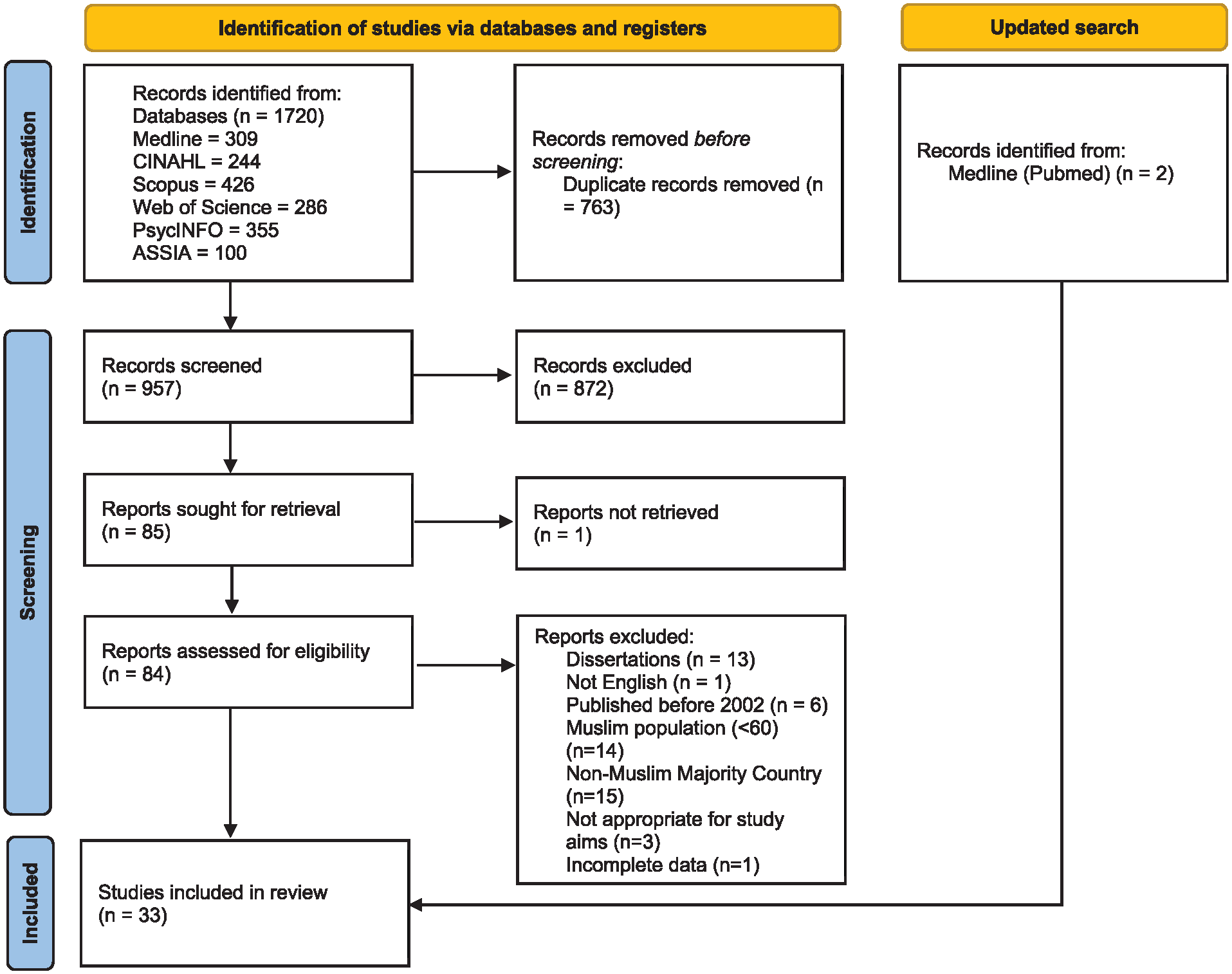
PRISMA 2021 flow diagram (Rethlefsen et al., 2021).
Study Characteristics
A total of 33 studies were included in this review which were conducted in 21 different countries including two multinational studies: one study was conducted in Pakistan and the UK (Ali et al., 2021), and another study (Fineran & Kohli, 2020) was conducted in five different countries: Somalia, Iraq, Jordon, Morocco, and Sudan (see supplemental file Table 2 for a summary of studies). Twenty-six studies used qualitative methods only, and four studies used a multi-methods design incorporating interviews and focus groups. The sample size, in the included studies, ranged from 6 (Nordien et al., 2003; Oyewuwo, 2020; Oyewuwo-Gassikia, 2020) to 110 participants (Schuler & Islam, 2008). A total of 764 participants contributed to the 33 included studies.
All included studies revealed high methodological quality in the JBI quality assessment tool indicating 75% to 100% of the quality items. Not addressing the impact of the researcher on the research and vice versa and not locating the researcher culturally and theoretically were the issues that most studies did not address in critical evaluation.
Qualitative Findings
The synthesis of included papers revealed four major themes: the experience and impact of abuse; factors contributing to abuse; help-seeking; and the coping strategies of Muslim women. The description of synthesized findings and their categories are presented in Table 1 and Figure 2.
Summary of Critical Findings.

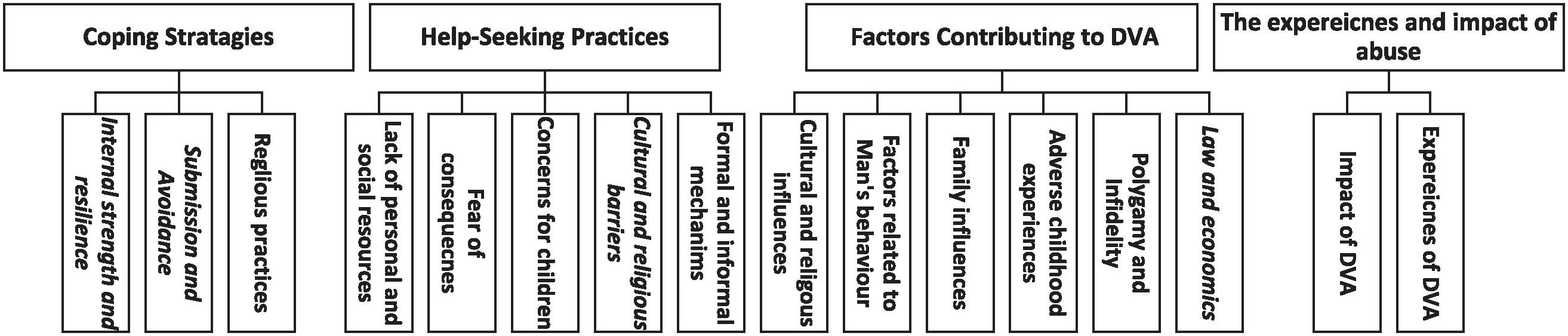
Synthesized findings and their categories.
The Experience and Impact of Abuse
This theme describes the abusive experiences of women, the type of DVA they experienced, and the impact it had on their physical, psychological, and emotional health.
Experiences of DVA
Muslim women reported experiencing a range of forms of DVA, encompassing physical, psychological, emotional, economic, social, and sexual abuse. Further, the majority of women in the studies endured more than one form of DVA at any one time (Amoah et al., 2021; Demir, 2017; Fineran & Kohli, 2020; Turk et al., 2017). In terms of physical violence, women encountered various forms such as beatings, slaps, kicks, and hits from their partners and from members of the family-in-law (Afrouz et al., 2021b; Amoah et al., 2021; Demir, 2017; Hayati et al., 2015; Khan et al., 2022; Nordien et al., 2003; Safadi et al., 2013).
Psychological and emotional abuse manifested as insults, verbal aggression, and pervasive control over various aspects of their lives (Afrouz et al., 2021b; Demir, 2017; Fineran & Kohli, 2020; Nordien et al., 2003). Notably, psychological and emotional violence emerged as the most prevalent form of abuse within their relationships, deeply affecting them and potentially serving as a precursor to physical violence (Afrouz et al., 2021b; Amoah et al., 2021; Khan et al., 2022). Psychological abuse also manifested as humiliation and slander by husbands, which could jeopardize a woman’s dignity, self-esteem, and overall personality, leading to negative psychosocial consequences (Baloushah et al., 2019; Hayati et al., 2015). Unsurprisingly, tolerating insults and disrespect appeared to be even more challenging for these women than dealing with physical violence (Tonsing, 2016). Psychological violence intersected with social abuse in the form of harassment and/or isolation, including severe restrictions on their interactions with the outside world, such as rarely being allowed to leave their homes and rarely having visitors (Demir, 2017).
Findings suggest that women may experience sexual assault at the hands of both their husbands and in-laws (Afrouz et al., 2021b; Baloushah et al., 2019). The experiences of and perspectives on sexual violence varied, with some women considering it too sensitive to discuss openly (Khan et al., 2022), while others perceived it as a societal norm and their husband’s conjugal right (Amoah et al., 2021) that a woman should fulfill.
Economic abuse was often tied to a lack of financial support from husbands and, therefore, dependency on partners meant that women had no or little autonomy in their households (Amoah et al., 2021; Nordien et al., 2003; Turk et al., 2017). Most women in the studies held traditional views about gender roles, seeing men as breadwinners and women as domestic caregivers (Amoah et al., 2021). This meant that men were expected to provide for the basic needs of their family and, consequently, when they failed to do so, including by withholding money, women considered themselves to be experiencing economic abuse. Women considered the withholding of money as a clear means of forcing dependency and controlling behavior (Nordien et al., 2003). This clearly conflicts with the emancipatory tenets of Islam in terms of its perspective on the positioning of women.
Psychological and Emotional Impacts of DVA
Muslim women experienced a complex array of emotional responses because of the DVA they endured. They reported feeling hurt, and angry (Nordien et al., 2003), and often expressed deep concerns for the welfare of their children (Hayati et al., 2015). Participants of the included studies felt mistreated and unloved, worthless, hopeless, and helpless (Hayati et al., 2015; Nordien et al., 2003; Turk et al., 2017). In one study, the abuse suffered by women left them feeling disgusted and harboring a desire for retribution (Nordien et al., 2003). Many described as feeling emotionally numb, exhausted, and trapped within their marriages (Nordien et al., 2003). These emotional reactions underscore the profound psychological distress imposed upon these women by their partners.
Abusive spouses frequently manipulated their wives into feeling guilt and placing blame on themselves for any issues within the marriage, whether related to children or finances (Nordien et al., 2003). Many women felt sorry for their husbands, who were seemingly under the influence of their parents or family members (Nordien et al., 2003). The influence of the wider family, in this respect, provides another dynamic in the abusive relationship that is not necessarily reflected in DVA research on Western women’s victimization and is discussed in the next section.
Women who sought formal assistance later in their marriage often regretted not acting sooner (Ghafournia & Easteal, 2021). They regretted their physical, emotional, and financial investments in the relationship, and this affected other aspects of their lives, including work, education, and personal relationships (Alghamdi et al., 2021). Furthermore, Muslim women were discouraged from disclosing DVA to those closest to them due to feelings of shame and a perception of abandonment by God (Nordien et al., 2003; Oyewuwo-Gassikia, 2020). Some felt a sense of futility in discussing the violence, believing that speaking out would bring about no change (Fineran & Kohli, 2020).
Women who contemplated leaving a violent relationship experienced feelings of emptiness, hopelessness, and overall life dissatisfaction (Turk et al., 2017). For some women, these emotions served as a pivotal moment, motivating them to leave the relationship (Ghafournia & Easteal, 2021). In other studies, participants who could no longer endure the abusive marriage often experienced profound distress and reported a complex mix of emotions, including pain, helplessness, humiliation, and a loss of self-identity, leading to suicidal thoughts (Nordien et al., 2003; Safadi et al., 2013). In some cases, accusations of infidelity by their husbands drove some women to contemplate or commit suicide (Hayati et al., 2015) to avoid stigma and negative attitudes from family and others. Divorced women who sought assistance from shelters often reported newfound strength, a heightened sense of independence, increased self-esteem, and a sense of rebirth (Safadi et al., 2013). DVA services played a crucial role in helping them understand their rights, secure employment, and achieve financial independence. These women exhibited concern for the next generation of women, emphasizing the importance of personal development, character strength, and education as a means to develop self-reliance (Safadi et al., 2013), which reflected the emancipatory tenets of Islam.
Factors Contributing to DVA
This theme described various risk factors contributing to DVA from the perspective of participants in the included studies. This is composed of six subthemes: Law and education; polygamy and marital disinterest; adverse childhood experiences; family influences; factors related to men’s behavior; and, cultural and religious influences.
Law and Economics
Findings suggest that women face an elevated risk of DVA due to inadequacies in law enforcement, the dominance of men in influential roles, and the lack of opportunities for women in Muslim countries (Afrouz et al., 2021b). For example, in Afghanistan, despite legal safeguards for women, they are often not effectively enforced at the community level due to the influence of male community leaders and the challenges involved in translating and implementing policies within the socio-cultural context (Fitzgerald et al., 2021). In another study, women expressed the view that there should be stringent government legislation to hold men accountable for DVA, such as legislation pertaining to dowries (Schuler & Islam, 2008). Reflecting the need for such legislation to be fully implemented, economic dependence on their spouses was found to be a significant vulnerability and factor that influenced DVA perpetration (Amoah et al., 2021; Demir, 2017; Igbolekwu et al., 2021; Schuler & Islam, 2008; Turk et al., 2017).
Polygamy and Infidelity
Studies reported that polygamy and concubinage were contributing factors to DVA (Amoah et al., 2021; Niu & Laidler, 2015). In some studies, participants did not identify polygamy as an abusive practice but something that contributes to DVA as, unlike Islamic teachings, husbands are not able to maintain parity within their relationships with wives resulting in conflict and competition. Specifically, conflicts resulted from the competition among wives for financial support and husbands’ lack of attention, deceit, and inability to meet women’s needs (Amoah et al., 2021). A lack of interest, love, and respect were some of the factors that led to infidelity between spouses, particularly when women were pregnant or infertile (Fineran & Kohli, 2020). Women felt that the erosion of love, respect, or affection between spouses was the catalyst for DVA, particularly when promises made during marriage were not fulfilled (Turk et al., 2017). However, some women believed that their actions, contrary to their husbands’ wishes, provoked DVA (Amoah et al., 2021). Studies reporting polygamy and infidelity illuminated the specificity of contributing factors for Muslim women in comparison to DVA research on Western communities.
Adverse Childhood Experiences
A substantial risk factor for DVA identified in the included studies was adverse childhood experiences (ACEs). Study participants reported experiencing ACES including childhood abuse, primarily of a physical nature, inflicted by their parents (Alghamdi et al., 2021; Safadi et al., 2013; Turk et al., 2017), and parental DVA in which mothers were subjected to various forms of abuse by their fathers (Alghamdi et al., 2021; Safadi et al., 2013). ACEs extended beyond DVA and encompassed a spectrum of traumas, including parental loss, abandonment, polygamous marriages of fathers, neglect, residing in conflict zones, impoverishment, illiteracy, incarceration, and child labor—complexities that permeated their lives since childhood (Alghamdi et al., 2021). In addition, a number of studies identified child marriage as a significant risk factor for DVA, characterizing it as the coerced marriage of immature children who are physically and mentally unprepared for the responsibilities of matrimony (Amoah et al., 2021; Demir, 2017; Safadi et al., 2013).
Family Influences
In the context of DVA, the involvement of in-laws emerged as a specific interpersonal factor for Muslim women. In-law dynamics can encompass both direct and indirect perpetrations of DVA; the latter by, for example, through the encouragement of husbands’ abusive behaviors, often through means such as spreading detrimental rumors about wives to their spouses (Amoah et al., 2021; Niu & Laidler, 2015; Nordien et al., 2003; Sattar et al., 2022; Turk et al., 2017). The influence of in-laws could be particularly potent when residing in close proximity or with the married couple, as husbands may be influenced by the opinions and behaviors of their family members (Turk et al., 2017). Evidence also suggested that the family can play a neutral role where they observe but do not address the abusive behavior of the husband (Amoah et al., 2021; Nordien et al., 2003) or can play a constructive role in averting abuse between spouses by challenging abusive behavior or maintaining a certain distance from the marital affairs and offering support only when necessary (Ali et al., 2021). In any case, what was distinct about the studies, in divergence from most Western DVA research, was the primary role that in-laws and wider families can perform.
Factors Related to Men’s Behavior
Low self-esteem in men has been identified as a risk factor for DVA (Nordien et al., 2003). Indeed, several included studies suggested that men resorted to DVA as a means of concealing sexual issues such as impotence, adultery, or not conforming to gender identity (Hayati et al., 2015; Nordien et al., 2003; Turk et al., 2017). Additionally, economic strain, particularly stemming from a lack of or unstable employment, was identified as a catalyst for DVA (Nordien et al., 2003; Razaghi et al., 2022; Sattar et al., 2022; Turk et al., 2017). In such cases, men may engage in deviant behaviors, including substance abuse and gambling, which exacerbates the likelihood of DVA (Gennari et al., 2017; Nordien et al., 2003; Sattar et al., 2022; Turk et al., 2017). Participants in the various studies described abusive husbands as possessing negative personalities and behavioral traits such as being domineering, aggressive, cruel, careless, secretive, unfaithful, jealous, possessive, strict, controlling, irresponsible, selfish, and miserly. In general, these behaviors have been associated with an exacerbation of DVA (Nordien et al., 2003; Razaghi et al., 2022; Safadi et al., 2013; Sattar et al., 2022).
Cultural and Religious Influences
Muslim women identified a myriad of cultural and gender norms as significant societal risk factors for DVA. These norms dictated that women adhere to specific gender roles to avoid being subjected to abuse by their partners. For instance, the concept of patriarchy, in which men hold privileged positions over women, mandated that women exhibit respect and obedience to their partners (Demir, 2017; Gennari et al., 2017; Razaghi et al., 2022; Sattar et al., 2022).
The family unit held a central role in the initiation of marriage contracts, leading to a higher prevalence of arranged marriages as compared to love marriages (Gennari et al., 2017; Sattar et al., 2022). Women believed that the typical family structure hindered open communication and sharing between spouses and limited their ability to spend time together (Ali et al., 2021). This structure reflects extended families where members of the family across generations live together and typically after marriage a woman will live with her husband’s family.
Traditional expectations and the influence of extended family members represented another set of norms that governed the behavior of women. An illustrative example is the expectation for brides to fulfill a subservient role in relation to their mothers-in-law (Safadi et al., 2013; Sattar et al., 2022). Women voiced their concerns over these societal norms, which they viewed as perpetuating discrimination against women (Safadi et al., 2013).
It was believed by some parents that women should obey their husbands, and this may also involve accepting abusive behavior. Women were expected to display resilience and strength in the face of DVA from their spouse but to keep it secret to avoid stigma and shame (Khan et al., 2022; Safadi et al., 2013; Sattar et al., 2022). Moreover, it was a prevailing belief that women should bear male heirs and maintain family unity despite the abuse they endured (Fineran & Kohli, 2020; Niu & Laidler, 2015; Sattar et al., 2022). This meant normalization and acceptance of DVA including marital rape (Fineran & Kohli, 2020; Gennari et al., 2017; Khan et al., 2022), as the fulfillment of the sexual needs of the husband was considered a wife’s duty.
The intersection of culture and religion was a prominent feature of such families in the included studies. Cultural beliefs often influenced Islamic values within the society (Ghafournia, 2017). These religious values and beliefs were subject to the interpretation and guidance of religious leaders. Sharia law plays a role in shaping the behavior of many individuals within the community. Sharia law dictated that women must be obedient to their husbands. Men felt empowered to punish their wives if they perceived them as disobedient (Afrouz et al., 2021b; Amoah et al., 2021; Demir, 2017; Ghafournia, 2017; Niu & Laidler, 2015).
Women who sought to maintain a traditional interpretation of Islam considered religion a protective shield. They believed that their partners would not subject them to abuse if they were religious, as Islam was seen as a religion of equality and peace that did not endorse DVA (Ghafournia, 2017; Hassouneh-Phillips, 2003; Razaghi et al., 2022). Some participants further highlighted that the misinterpretation of religious doctrine contributed to gender inequality and, in some instances, justified DVA (Fineran & Kohli, 2020; Ghafournia, 2017; Hassouneh-Phillips, 2003; Sattar et al., 2022).
Help-Seeking Practices
Formal or Informal Mechanisms
Muslim women experiencing DVA sought help from various sources, both informal and formal. Informal resources included family and friends (Gennari et al., 2017; Ghafournia & Easteal, 2021; Hayati et al., 2015; Khan et al., 2022; Oyewuwo-Gassikia, 2020; Yusof et al., 2022; Zakar et al., 2012), neighbors (Zakar et al., 2012), community members, and religious leaders (Ghafournia & Easteal, 2021).
The most cited strategy was seeking assistance from family and friends, primarily because of the potential consequences associated with more formal approaches (Oyewuwo-Gassikia, 2020). Muslim women’s experiences of seeking support were somewhat similar in different contexts and countries. Some women found informal help-seeking to be empowering, as it provided them with support and improved their well-being (Ghafournia & Easteal, 2021). However, others reported unsupportive and negative responses from informal sources, including withdrawal, shaming, victim blaming, anger, or indifference. These negative responses, referred to as “closed doors,” could further deter victims/survivors from seeking help in the future (Ghafournia & Easteal, 2021; Hayati et al., 2015; Sattar et al., 2022). Although most women received either positive or negative responses from informal sources, some encountered mixed responses (Ghafournia & Easteal, 2021). The outcomes of the informal help-seeking strategy varied, resulting in either protection or prolonged abuse, depending on the responses received by the abused women (Oyewuwo-Gassikia, 2020).
Additionally, women sought help from formal sources such as DVA services, healthcare professionals, and the legal system (Fitzgerald et al., 2021; Ghafournia & Easteal, 2021; Hayati et al., 2015; Oyewuwo-Gassikia, 2020; Razaghi et al., 2022; Safadi et al., 2013; Yusof et al., 2022). There were instances where women sought formal help after reaching a critical point, often described as a “rock bottom,” where they felt compelled to seek assistance as they believed their survival depended on it, with no other viable option (Oyewuwo-Gassikia, 2020; Safadi et al., 2013).
Women reported that DVA services often acted as a significant hindrance to both seeking help and leaving abusive relationships. They highlighted a notable lack of effective cooperation between various services and providers, such as those offering financial, housing, and general support, which resulted in their needs not being met (Afrouz et al., 2021a). Additionally, there was an expressed concern and distrust towards these service providers due to fears that their confidentiality might be compromised (Afrouz et al., 2021a). Many found that the services available did not cater to their specific requirements (Oyewuwo-Gassikia, 2020). Their experiences with formal services varied widely. While some described effective support and positive interactions, others encountered negative experiences, a pattern consistent across different contexts and countries. Notably, there were reports of sexual harassment by staff members at service centers, and some women felt that seeking assistance was futile or even worsened their situations (Fitzgerald et al., 2021; Ghafournia & Easteal, 2021). Nevertheless, for some, engaging with formal services played a crucial role in helping them acknowledge the abuse, sustain their hope, and ultimately exit the abusive relationship (Oyewuwo-Gassikia, 2020).
When it came to seeking help from healthcare professionals, women identified their concerns and expectations as significant obstacles to sharing their experiences of abuse. They were more inclined to open up about their experiences when healthcare professionals directly asked about them, rather than posing vague and open-ended questions (Damra et al., 2015). Generally, women felt more comfortable discussing DVA with female healthcare providers (Damra et al., 2015). Nevertheless, many women expressed uncertainty regarding the appropriateness of discussing DVA with healthcare professionals, questioning whether these professionals would be genuinely interested in or capable of providing assistance (Damra et al., 2015).
Upon disclosing experiences of DVA to healthcare professionals, many women reported dissatisfaction with the responses and guidance they received. They observed that healthcare professionals often did not offer significant support, seldom making referrals to other agencies or providing comprehensive information on addressing DVA (Damra et al., 2015; Zakar et al., 2012). Privacy and confidentiality issues were highlighted by some women, who indicated a preference for spending more time building a trusting relationship with healthcare providers before discussing their DVA situations (Damra et al., 2015). Women are expected to be informed about available DVA support services, to receive referrals to relevant organizations if necessary, and to be offered psychological support. However, they perceived that healthcare professionals generally showed reluctance to initiate these actions (Ghafournia & Easteal, 2021; Turk et al., 2017). Consequently, these challenges led some women to concoct stories to explain their injuries rather than revealing the truth about their DVA experiences (Damra et al., 2015). This reticence is understandable given that research has shown a lack of knowledge and confidence among healthcare professionals in responding to disclosures of DVA (Damra et al., 2015).
Despite the availability of official services and healthcare professionals, some women preferred to seek help from the police and through the legal system (Babakhani & Miller, 2022; Hayati et al., 2015; Oyewuwo-Gassikia, 2020; Razaghi et al., 2022). For some, this choice was driven by safety concerns (Oyewuwo-Gassikia, 2020). Participants acknowledged that seeking help from the legal system could be effective (Ghafournia & Easteal, 2021). Some women described it as particularly effective in preventing abuse in the immediate period (Oyewuwo-Gassikia, 2020), and for others, the mere threat of involving the police served as a deterrent to further abuse (Ghafournia & Easteal, 2021). However, some women believed that the legal system was not fully efficient and called for changes in policies and attitudes to enhance its effectiveness (Fitzgerald et al., 2021).
Women in one study expressed cynicism toward the judicial system and criticized its patriarchal and gendered nature (Babakhani & Miller, 2022). Participants in this research felt judges and police officers attempted to discourage them from pursuing the petition (Babakhani & Miller, 2022). They were also blamed for bringing the family matters to the criminal court (Babakhani & Miller, 2022). In some cases, police officers and judges legitimized DVA by minimizing and presenting it as a normal part of life (Babakhani & Miller, 2022). They discredited victims’ accounts if they did not provide forensic reports or witnesses from family members (Babakhani & Miller, 2022). Seeking assistance from the legal system had various consequences, including the arrest of abusers and facilitating the departure from an abusive relationship (Oyewuwo-Gassikia, 2020) as well as victim blaming and escalation of violence by family and community (Sattar et al., 2022).
Cultural and Religious Barriers
Muslim women highlighted cultural norms within their communities as significant barriers to seeking help and leaving abusive relationships. These norms, once internalized, mandated obedience (Afrouz et al., 2021a; Alghamdi et al., 2021; Ghafournia, 2017; Niu & Laidler, 2015; Taherkhani et al., 2017). DVA was perceived as an unavoidable aspect of culture that had permeated the community. Women felt obliged to endure the abusive relationship to maintain family unity, with some women expressing their commitment to remaining married as “marrying in the white of the bride and leaving in the white of the dead” (Afrouz et al., 2021a; Fineran & Kohli, 2020; Gennari et al., 2017; Gharaibeh & Oweis, 2009; Razaghi et al., 2022; Taherkhani et al., 2017).
In accordance with certain cultural norms, safeguarding the family’s reputation and honor was of utmost importance, and the family resisted external interference in what they considered their private affairs. The prevailing belief was that a virtuous woman should not bring disgrace to the family by exposing abuse and seeking help, and the family did not support women in doing so (Afrouz et al., 2021a; Fitzgerald et al., 2021; Gharaibeh & Oweis, 2009; Khan et al., 2022; Niu & Laidler, 2015; Taherkhani et al., 2017; Tonsing, 2016). This norm was described by some women as the “conspiracy of silence” (Niu & Laidler, 2015). Consequently, women who disclosed marital conflicts faced ostracism from their families and communities and were subjected to negative judgments. They encountered social disapproval, isolation, and punishments, such as accusations of engaging in extramarital affairs, being immoral, and being irresponsible (Afrouz et al., 2021a; Alghamdi et al., 2021; Fitzgerald et al., 2021; Sattar et al., 2022; Zakar et al., 2012).
Women’s religious beliefs were another important factor in not disclosing DVA and staying in abusive relationships (Ghafournia, 2017). Many believed in the afterlife and therefore this life does not matter and that God rewards women who suffer to maintain their families. They referred to being a good wife in the face of hardship as a form of integrity and tried not to talk about the violence they suffered (Hassouneh-Phillips, 2003; Nordien et al., 2003).
Concerns for Children
Children played a pivotal role in women’s decisions regarding seeking help and leaving abusive relationships, as each decision significantly impacted their children’s lives. Women who expressed concerns about their children’s well-being and future chose to endure DVA and stay in abusive relationship (Afrouz et al., 2021a; Demir, 2017; Khan et al., 2022; Nordien et al., 2003; Razaghi et al., 2022; Safadi et al., 2013; Tonsing, 2016) as they believed that divorce would disrupt their children’s stable lives. Some women, who were threatened by their husbands with the loss of their children, were willing to endure any form of abuse to safeguard their children (Ghafournia & Easteal, 2021; Gharaibeh & Oweis, 2009; Hayati et al., 2015). Although children were viewed as a barrier to help-seeking, some women, recognizing the adverse effects of DVA on their children, decided to leave abusive relationships (Razaghi et al., 2022; Safadi et al., 2013).
Fear of Consequences
Out of fear of the negative consequences associated with help-seeking, women often chose not to disclose DVA (Nordien et al., 2003). Some women were apprehensive that people would not believe their accounts or would reject their pleas for help due to their husbands’ duplicitous personalities (Fineran & Kohli, 2020; Oyewuwo, 2020). For some, the fear of facing more violence was a significant deterrent (Taherkhani et al., 2017). Distressing their relatives was another concern; they did not want to cause upset to their parents (Taherkhani et al., 2017). Some women were afraid of jeopardizing their husband’s reputation within the family (Taherkhani et al., 2017). Separation and the potential loss of their families, particularly their children, were fears that weighed heavily on women’s minds (Ghafournia & Easteal, 2021; Taherkhani et al., 2017; Tonsing, 2016). Many of these fears are reported in the wider scholarship on DVA.
One of the most prominent fears voiced by Muslim women was the anticipation of social consequences associated with help-seeking. They believed that disclosing DVA might trigger a strong social backlash, subjecting them to labels, judgments, stigmas, and gossip fueled by society’s traditional values and gender roles. These women were afraid of losing their respect and status within the community, potentially resulting in their marginalization (Fineran & Kohli, 2020; Fitzgerald et al., 2021; Ghafournia & Easteal, 2021; Gharaibeh & Oweis, 2009; Khan et al., 2022; Razaghi et al., 2022; Taherkhani et al., 2017; Tonsing, 2016; Turk et al., 2017). Some women, lacking better alternatives, were fearful that disclosing DVA might backfire and exacerbate their problems. For instance, they might end up living with abusive brothers or marrying an even worse man (Schuler & Islam, 2008; Zakar et al., 2012).
Lack of Personal and Social Resources
The inadequacy of personal and social resources emerged as a significant factor influencing women’s help-seeking behaviors. Women require essential social resources, including support from family and the community, to guide them toward leaving an abusive relationship (Alghamdi et al., 2021; Fineran & Kohli, 2020; Taherkhani et al., 2017; Tonsing, 2016). Additionally, knowledge and awareness of formal services played a pivotal role in women’s decisions to seek help. Women with higher levels of education found it easier to locate resources and leave a violent partner compared to women with lower levels of education, and a lack of financial independence (Ghafournia & Easteal, 2021; Khan et al., 2022). Many women were entirely reliant on their husbands (Afrouz et al., 2021a; Gharaibeh & Oweis, 2009; Nordien et al., 2003; Razaghi et al., 2022). Women also reported the barrier posed by language when it came to seeking help. The inability to communicate in the official language deprived them of access to information about services and resources through social networks, resulting in their isolation (Afrouz et al., 2021a; Holtmann, 2016).
Coping Strategies
Religious Practices
Muslim women described various religious practices that they used to cope with DVA and its consequences. Seeking refuge in God through prayer was a common practice (Demir, 2017; Hassouneh-Phillips, 2003; Hayati et al., 2015; Nordien et al., 2003; Oyewuwo, 2020; Turk et al., 2017; Yusof et al., 2022; Zakar et al., 2012). Reading the Qur’an and other religious texts was another way they sought solace (Hassouneh-Phillips, 2003; Oyewuwo, 2020; Turk et al., 2017). Some engaged in meditation as part of their spiritual coping (Hassouneh-Phillips, 2003; Yusof et al., 2022), while others connected the experience of abuse to a greater purpose and meaning in their lives (Oyewuwo, 2020). Participants sought help and guidance from religious leaders and the Muslim community as a way to cope with DVA (Oyewuwo, 2020). However, whilst spirituality and religious practice enabled coping, women’s interactions with religious leaders yielded mixed responses. While these leaders instructed the husbands to refrain from DVA, they also advised the wives to be patient and remain in the relationship (Ghafournia, 2017; Oyewuwo, 2020).
Engaging in communal religious activities also played a role in coping with DVA, offering women opportunities to gain information, make acquaintances, and form new relationships with others. However, it was noted that such activities could sometimes reinforce gender stereotypes and displease husbands and in-laws (Zakar et al., 2012). For example, a mother-in-law suspected her daughter-in-law of engaging in illegal spiritual activities to control her son.
*Religious beliefs provided some women with strength, resilience, and peace of mind (Ghafournia, 2017; Niu & Laidler, 2015). However, others cited religion as a basis for accepting their husbands’ abusive behavior (Fitzgerald et al., 2021).
Submission and Avoidance
Many women in the studies resorted to silence and crying as a means of dealing with DVA, refraining from taking any action against it or sharing their experiences with others (Demir, 2017; Turk et al., 2017). Placating techniques were also employed, including avoiding contact with their husbands and submissive behaviors, such as complying with their husband’s wishes and ignoring them to maintain silence (Ghafournia & Easteal, 2021; Hayati et al., 2015; Zakar et al., 2012). However, it’s important to note that sometimes silence did not protect women and could even intensify DVA (Ghafournia & Easteal, 2021).
Other strategies that women used included engaging in employment, spending time with their children, smoking, participating in various social activities, reading, and singing (Ghafournia & Easteal, 2021; Nordien et al., 2003; Turk et al., 2017; Yusof et al., 2022; Zakar et al., 2012).
Avoidance of DVA was a common coping strategy employed by women. They used denial in various forms, treating the DVA as an isolated or emotional event, ignoring the husband’s behavior, justifying their husband’s actions (Fitzgerald et al., 2021), blaming themselves or their fate (Fitzgerald et al., 2021; Schuler & Islam, 2008; Tonsing, 2016), remaining silent, showing obedience, taking violence lightly, or denying it completely (Fitzgerald et al., 2021; Hayati et al., 2015; Zakar et al., 2012). Some women, who held onto the hope that their husbands would change, made efforts to preserve their husbands’ image by not disclosing the abuse that they had endured (Nordien et al., 2003; Oyewuwo-Gassikia, 2020).
Muslim women indicated that their relationship needs, marriage commitment, and hope for change served as powerful coping mechanisms which meant that women accepted DVA as an aspect of their relationship and remained in the abusive relationship (Alghamdi et al., 2021; Nordien et al., 2003).
Internal Strength and Resilience
Women facing DVA relied on inner strength and resilience (Nordien et al., 2003), drawn from positive thinking (Yusof et al., 2022), spiritual beliefs (Ghafournia & Easteal, 2021), and their children (Yusof et al., 2022). Some women actively pursued positive changes in their lives as a form of coping. They prepared for higher education, improved their English language skills, and sought employment (Ghafournia & Easteal, 2021; Hayati et al., 2015). These women leveraged assertiveness, authority, self-regulation, and self-confidence as sources of personal empowerment (Hayati et al., 2015). Many women recognized the importance of finding employment and achieving financial independence as potential routes to divorcing and escaping violence (Nordien et al., 2003; Turk et al., 2017). Findings that indicated women’s resilience and inner strength were notable, demonstrating that Muslim women were resisting the patriarchal gender and cultural norms that influenced women’s experiences of DVA. Some women took this resistance further and, in some cases, participants used retaliation and revenge as a strategy to influence and confront DVA by mirroring their husbands’ behavior, using similar language, attempting to hurt them, suggesting anger management or therapy, or even responding with anger (Ghafournia & Easteal, 2021; Nordien et al., 2003; Razaghi et al., 2022).
Discussion
Despite the global prevalence of DVA, wide-scale recognition of it as a global epidemic, and a burgeoning body of scholarship, there exists limited literature that focuses specifically on DVA within Muslim communities, while Muslim women, communities, and countries are very diverse. This qualitative review focused on the experiences and perspectives of Muslim women who are DVA victims synthesizing the results of 33 studies. It revealed similarities with non-Muslim victims/survivors, particularly in terms of the types of DVA experience and the impacts of this, but, importantly, it also unveiled significant contextual differences rooted in Muslim women’s socio-cultural backgrounds and religious beliefs. It is the specificity of Muslim women’s experiences and associated factors that are explored further here.
An ecological analysis of the above findings demonstrates the interplay of societal, community, and individual experiences with the influence of patriarchy and patriarchal gender norms having a significant role in Muslim women’s experiences of DVA. This influence ranged from more structural factors, such as inefficiencies in legal implementation even when law existed to protect women (e.g., around dowries), to more individual factors, widely reported as a range of ACEs, such as child marriage and the experience of growing up with a polygamous father. Indeed, women identified a myriad of cultural issues and gender norms that were present from childhood to adulthood, and which were associated with the risk of DVA. Specifically, these norms dictated the rules of behavior that girls and women should follow such as adhering to gender roles that required subservience (Demir, 2017; Gennari et al., 2017). As such, the intersections of characteristics across social ecology highlight the complex interplay of factors that serve to perpetuate DVA for Muslim women and prevent help-seeking.
Concerningly, the workings of patriarchy and traditional gender norms are reinforced by a common-found misinterpretation of Sharia law in which a reading of the law requires women to be obedient to their husbands, enabling men to meter punishments if women are seen to be disobedient (Afrouz et al., 2021b; Amoah et al., 2021; Demir, 2017; Ghafournia, 2017; Niu & Laidler, 2015). Sharia is a body of religious law that forms part of the Islamic tradition and is derived from the scriptures of Islam. It has an influence at all levels of social ecology and this was evident from an analysis of the studies included in this review.
In the studies, women adopted the principles of Islam as a religion of peace and equality, which should offer protection to women. However, they also recognized that the tenets of Islam are often reinterpreted or corrupted by men and religious leaders to control women and justify DVA (Fineran & Kohli, 2020; Ghafournia, 2017; Hassouneh-Phillips, 2003). These findings are crucial for professionals and services dedicated to supporting victims/survivors of DVA, especially those who identify as Muslim women residing in non-Muslim countries. It’s imperative that these findings inform the approach and strategies of such support systems to ensure that they are effectively meeting the unique needs and challenges faced by this group. Moreover, scholars in the field of interpersonal violence would benefit from helping to diversify the current scholarship to depart from rigid, Eurocentric conceptualizations of religion or spirituality to account for diversity in religious experience as encountered cross-culturally (Istratii & Ali, 2022).
The workings of patriarchy and traditional gender norms, and the resulting abuse that women suffered, were complicated by various additional factors like women’s economic dependence and lack of education; men’s sexual problems, infidelity, and problematic behavior such as substance use; sharia and religion. Whatever the complex interplay of factors and experiences, Muslim women experiencing DVA were expected to show indifference to all types of abuse and to accept it as part of the marital contract (Fineran & Kohli, 2020; Khan et al., 2022; Safadi et al., 2013). While some of these dynamics may not be unique to Muslim women, the specific social conditions influenced by patriarchy are distinctive. It is important to recognize that women were not unaware of the influence of patriarchy and societal gender norms, which they acknowledged as perpetuating discrimination that many Muslim women face (Safadi et al., 2013). This difference needs to be recognized by scholars, policymakers, and support providers. For instance, in addition to women’s varied identities and backgrounds, there are varying degrees of religiosity or spirituality. Istratii and Ali (2022), in their evidence synthesis, revealed that studies indicating a high degree of religiosity have pernicious effects, while those exhibiting a low or medium level have lesser impacts. They also found that the effects on men as DVA perpetrators were equally nuanced. They argued that “some studies found that perpetrators could use religious language or theology to justify their authority over their intimate partners or spouses and some could even abuse their partners spiritually” (Istratii & Ali, 2022, p. 26). Some studies reported that religious men are less likely to engage in DVA and are more likely to condemn it.
Other interpersonal factors include the role of the extended family in maintaining and sustaining the conditions for abuse which are specifically tied to wider societal or community-level factors, specifically, religious and cultural conditions. The studies in this scoping review found the role of extended family to be unambiguous. Indeed, the gendered expectations and the influence of patriarchy were not only enforced by the men in women’s lives, and accepted by women as the norm, but extended family members, or in-laws, had a significant influence in enforcing these too. Moreover, norms around women’s acceptance of abuse and subservience to their husband’s extended family, and particularly to their mothers-in-law, reinforced women’s inferior positionality within the context of the family (Safadi et al., 2013). Ironically, this inferiority comes with responsibility as women are expected to not only speak out against abuse but also keep quiet for the same of family unity (Fineran & Kohli, 2020; Niu & Laidler, 2015). While the role of the extended family is apparent, within scholarship, it is mostly under-theorized and under-explored and this has implications for understanding Muslim women’s experiences of DVA and the ways in which formal systems of support can be responsive to their needs and wishes.
Our ecological analysis of help-seeking highlighted similarities with extant studies on non-Muslim women’s help-seeking behavior as the most common form was to seek informal help via family and friends. However, many studies in the current review reported negative responses including shaming, victim blaming, anger, indifference, estrangement, and isolation from the family serving to deter victims/survivors from future help-seeking (Ghafournia & Easteal, 2021; Hayati et al., 2015; Oyewuwo-Gassikia, 2020). Being a dutiful wife in the face of adversity was seen as a form of virtue, leading many women to refrain from discussing the violence they endured (Hassouneh-Phillips, 2003; Nordien et al., 2003). It is evident that religious beliefs were a strong influence on women’s acceptance of DVA and reluctance to leave and seek help. This critical finding highlights the specificity of Muslim women’s experiences by illuminating an effective help-seeking barrier at the interpersonal level.
Similar to the wider body of DVA scholarship, formal help-seeking experiences were mixed. Some women contacted criminal justice enforcement or took the legal route to prevent abuse in the immediate period or to be a deterrent to future DVA (Ghafournia & Easteal, 2021; Oyewuwo-Gassikia, 2020). For some, seeking help led to the arrest of abusers and enabled women to leave relationships; again, findings are not dissimilar to the mainstream DVA research (Oyewuwo-Gassikia, 2020).
What was distinctive in the findings of the review were multiple, intersecting social ecological factors affecting help-seeking on both informal and formal bases. In the same way as patriarchy and gendered cultural norms influenced women’s experiences of DVA, together these impeded women’s help-seeking behavior. As stated above, Muslim women are expected to be obedient, subservient, and passive; they should view their experiences within a marriage, whether positive or harmful, as their “destiny” and as a correctional action (Afrouz et al., 2021a; Alghamdi et al., 2021; Damra et al., 2015; Niu & Laidler, 2015; Taherkhani et al., 2017). That DVA is accepted to such a degree and linked to multiple justifications is a distinct feature in Muslim women’s lives. It raises concerns about the ways in which patriarchy and gendered cultural norms operate, but also in the ways in which aspects of Islam are misinterpreted, consciously or not, and in the latter case, it is this corruption that raises concerns due to the powerful barrier to help-seeking that emerges as a result. Not only this but cultural norms around a family’s status and honor are valued more than a woman’s safety and well-being. This obviously has repercussions not only for women but also for their children. On a structural and longitudinal basis, this norm has wider implications for generations of girls and the perpetuation of patriarchy and norms that harm women and girls.
The review identified diverse coping strategies used by women to cope with DVA and its consequences, which replicates those mechanisms reported in mainstream DVA research. However, many of the behaviors described by women as being adopted to cope with DVA or to lessen the severity of incidents were undoubtedly influenced by the patriarchal and gendered cultural norms that shape the socio-cultural everyday contexts for Muslim women’s lives.
Again, what was distinct was the ways in which Muslim women drew from their religion and religious practices to cope with DVA and its consequences. Seeking refuge in God through prayer, reading religious texts (such as the Qur’an), meditation, seeking guidance from religious leaders and their Muslim community were common practices (Demir, 2017; Hassouneh-Phillips, 2003; Hayati et al., 2015; Nordien et al., 2003; Oyewuwo, 2020; Turk et al., 2017; Yusof et al., 2022; Zakar et al., 2012). While others connected the experience of abuse to a greater purpose and meaning in their lives (Oyewuwo, 2020), participants sought help and guidance from religious leaders and the Muslim community as a way to cope with DVA (Oyewuwo, 2020). Some women articulated the value of engaging in communal religious activities as a means to build social support and gain information helpful in making sense of their experiences or providing information to support decisions to take action. However, with all these activities came mixed experiences with some of the problems identified earlier in the paper, affecting women’s coping with community members colluding with perpetrators and/or suggesting that women subscribe to the patriarchal and gendered cultural norms that led to the abuse in the first place.
Implications for Research, Policy, and Practice
This comprehensive review has unearthed a multitude of pertinent findings concerning Muslim women experiencing DVA. It is recommended that future research adopts a specific focus on each of the findings delineated in this review, independently, to attain a more nuanced understanding of the experiences of Muslim women and to discern the most effective strategies for their support. To understand the diversity of factors influencing Muslim women’s experiences, conducting more qualitative studies across various cultures and religions would be beneficial. These studies could delve into the nuances of cultural, societal, religious, and individual differences that shape their experiences.
Cultivation becomes imperative in the mission to eradicate cultural and gender stereotypes pervasive in society, which not only exacerbate DVA but also create formidable barriers for women seeking help in the face of such DVA. Empowering women through education is an essential step toward enhancing their comprehension of DVA, fortifying their awareness of available DVA services and shelters within their communities, and providing them with the knowledge and awareness necessary to navigate the complexities of exiting a violent relationship. The development of comprehensive services to cater to women’s immediate post-separation needs, including financial support, accommodation, and nutritional sustenance, can obviate the necessity for additional referrals to external services. In addition, recruiting staff from Muslim religious groups to support these women better. Enhancing the knowledge of healthcare professionals in recognizing and addressing instances of DVA/IPV within marital relationships is of paramount importance. Equipping them with the tools to effectively screen and refer women to the available community services is a pivotal step toward ensuring the well-being of DVA victims and survivors. Lastly, a comprehensive reevaluation of existing legal frameworks is essential to address the issue at its roots, holding perpetrators of violence accountable and thereby curbing the cycle of abuse (see Table 2).
Implications for Research, Policy, and Practice.

Note. DVA = domestic violence and abuse.
Strengths and Limitations
This review used a rigorous search strategy and employed a systematic approach, with three reviewers engaged in the searches, data extraction, and analysis. The review also looked at studies from the last twenty years, from a wide and diverse literature. The use of meta-ethnography facilitated a deeper analysis of the experiences and perspectives of Muslim women, generating reliable findings that can inform evidence-based practice.
There are limitations to consider. Even though we tried hard to find all relevant papers, our review only included English-language ones. This means we might have missed important research in other languages. In addition, relevant papers may have been inadvertently missed due to indexing, slight differences in study subjects and objectives, or other reasons.
Conclusion
This meta-ethnography provides a comprehensive synthesis of the experiences and perspectives of Muslim women facing DVA. It highlights the complex interplay of individual, interpersonal, community, and societal factors that shape these experiences. The findings reveal that, while Muslim women share many commonalities with non-Muslim women in their experiences of DVA, they also encounter unique challenges rooted in cultural expectations, social pressures, and religious interpretations. Patriarchy and gender norms are critically influential, and religion plays a dual role, sometimes serving as a source of strength and coping, while at other times being misused to justify or perpetuate abuse.
The review underscores the importance of addressing the specific barriers faced by Muslim women, such as cultural stigmas, the influence of extended family dynamics, and the misinterpretation of religious teachings that endorse patriarchal norms. It also emphasizes the need for culturally sensitive support services that recognize the distinct needs of Muslim women, including tailored interventions that consider their religious and cultural contexts.
Policymakers, practitioners, and researchers must work towards creating supportive environments that empower Muslim women, promote accurate interpretations of religious teachings that uphold women’s rights, and challenge the socio-cultural norms that contribute to their marginalization and abuse. Further research should continue to explore the nuanced experiences of Muslim women across diverse contexts to develop effective, inclusive, and culturally competent interventions that support their safety, well-being, and autonomy.
Supplemental Material
sj-docx-1-tva-10.1177_15248380241286836 – Supplemental material for Muslim Women’s Experiences of Domestic Violence and Abuse: A Meta-Ethnography of Global Evidence
Supplemental material, sj-docx-1-tva-10.1177_15248380241286836 for Muslim Women’s Experiences of Domestic Violence and Abuse: A Meta-Ethnography of Global Evidence by Amir Masoud Sharifnia, Hatice Bulut, Parveen Ali and Michaela Rogers in Trauma, Violence, & Abuse
Footnotes
Acknowledgements
We would like to thank Anthea Tucker for her assist in refining the search strategy and conducting the database searches.
Author Contributions
Data Availability
The data is available upon reasonable request from the corresponding author.
Declaration of Conflicting Interests
The author(s) declared no potential conflicts of interest with respect to the research, authorship, and/or publication of this article.
Funding
The author(s) received no financial support for the research, authorship, and/or publication of this article.

Supplemental Material
Supplemental material for this article is available online.
Author Biographies
References
Supplementary Material
Please find the following supplemental material available below.
For Open Access articles published under a Creative Commons License, all supplemental material carries the same license as the article it is associated with.
For non-Open Access articles published, all supplemental material carries a non-exclusive license, and permission requests for re-use of supplemental material or any part of supplemental material shall be sent directly to the copyright owner as specified in the copyright notice associated with the article.
