




Abstract
Individuals who have experienced child protection system involvement are over-represented in criminal justice systems. This group faces greater risks of serious offending and justice system entrenchment relative to their peers without child protection system contact. Understanding the pathways from child protection to adult criminal justice system contact is critical for informing crime prevention policy and practice, yet most research on the maltreatment-offending relationship solely focuses on children’s pathways from child protection to youth justice systems. This scoping review identified and synthesized evidence from studies examining adult justice system contact among individuals who have experienced child protection system involvement (including placement in out-of-home care [OOHC]). A search of six databases identified 7,599 publications, of which 37 met the inclusion criteria. These primary studies included adult participants with a history of child protection system involvement and adult criminal justice system contact (defined by administrative records or self-reported arrest, conviction, or incarceration). The review identified that many factors associated with increased likelihood of adult criminal justice system contact reflect those identified for youth justice involvement (e.g., male gender, racial minority or Indigenous status, a history of substantiated maltreatment, particularly physical abuse, placement in OOHC, particularly placement in residential care, placement for reasons of problem behavior, initial placement in early adolescence, and placement instability). While youth justice system contact is associated with increased risk, engagement in education or employment (for males), and becoming a parent appear to be associated with decreased risk of criminal justice system contact among adults previously involved in child protection systems.
Keywords
Introduction
Rationale
A growing body of literature has examined the relationship between childhood maltreatment, child protection system involvement, and youth offending (Baidawi & Sheehan, 2020a; Malvaso et al., 2017a). Given that differing terminology exists between jurisdictions, for consistency “child protection” [CP] is used in the current study to reference child welfare (including out-of-home care [OOHC]) systems, “out-of-home care” is used to refer to children formally placed or “looked-after” by kinship (family), foster or residential (group home) carers, while “youth justice” is used to reference youth/juvenile justice systems (including youth detention). The available studies have repeatedly shown that maltreated and child protection-involved children are over-represented in youth justice systems, and face greater risks of early onset and more violent offending (Cho et al., 2019; Malvaso et al., 2017b). At the same time, developmental/life-course evidence indicates that only a minority of child protection-involved children will go on to experience youth justice contact (up to 10%) (Malvaso et al., 2017b; Vidal et al., 2017). Several factors are associated with the increased risk of this outcome. These include sociodemographic predictors such as male gender, racial minority status, and household poverty; maltreatment-related factors, including experiences of physical abuse and neglect, maltreatment recurrence and persistence into adolescence; care-system-related factors, including placement in OOHC settings (particularly residential care), older age of entry into care, and care placement instability; and individual factors such as emotional and behavioral regulation difficulties (Baskin & Sommers, 2011; Cho et al., 2019; Cutuli et al., 2016; Malvaso et al., 2017a; Vidal et al., 2017).
There is also evidence suggesting that child protection involvement is associated with significantly greater risk of involvement in the adult criminal justice system (Lynch et al., 2003; Matthews et al., 2022). For example, U.S. data indicates that 18% of state and federal prisoners had grown up in foster care (Bureau of Justice Statistics, 2021), while data from one Australian jurisdiction shows that 91% of children with child protection and youth justice system involvement progressed to the adult criminal justice system, and 67% experienced adult imprisonment (Lynch et al., 2003). While a reasonable evidence base now exists in relation to children at the nexus of child protection and youth justice systems, comparatively little is known about the criminal justice system involvement of adults with a history of child protection contact, including those who were formerly placed in foster, kinship (family), or residential care (group home) OOHC. Understanding these pathways is critical for generating evidence-informed early intervention and prevention strategies to enhance community safety, reduce adult criminal justice system expenditure, and improve the life trajectories of young people leaving OOHC who typically experience childhood maltreatment, and disproportionately poor adult outcomes across many health and socioeconomic domains (Mendes, Snow & Baidawi, 2014; Mendes et al., 2011).
Objective
This scoping review aimed to identify and synthesize evidence from studies that examine adult criminal justice system contact among individuals with a history of child protection involvement (including placement in OOHC).
Methods
Scoping Review
As opposed to systematic reviews, scoping reviews are broader in scope and aim to map the extent and nature of research activity in a field, which enables the identification of research gaps, as well as areas where more narrowly focused systematic reviews may be viable (Arskey & O’Malley, 2005). Scoping reviews can summarize and disseminate key research findings but do not generally include an appraisal of the quality of the evidence reported. The review follows the reporting guidelines outlined in the PRISMA Extension for Scoping Reviews (PRISMA-ScR) Checklist.
Eligibility Criteria
The following selection criteria were used to determine whether to include or exclude studies identified by the search strategy.
Participants
Participants included adults with a history of child protection involvement and/or a history of placement in OOHC. For this review, child protection involvement is operationalized as involvement in statutory child welfare systems, that is, notification, substantiation, and/or court-initiated intervention prior to the age of 18 years, including placement in OOHC settings with kinship (family), foster (nonfamily), or residential (group home) caregivers. Studies inclusive of offending at the age of 18 and over were included to capture interactions with adult criminal justice systems. Studies may have compared adults with a history of child protection involvement and/or OOHC placement with other groups, for instance, offending adults without a history of child protection involvement and/or OOHC placement or non-offending adults with a history of child protection involvement and/or OOHC placement. Because this review focused on adult justice system contact, studies that only included participants aged 17 years and younger were excluded. For example, studies were excluded if they only reported on the relationship between child protection involvement and youth crime/criminal justice involvement. Where studies included both youth and adult participants, they were only included when adult offending was analyzed separately from youth offending.
Settings
Eligible settings included, but were not limited to, youth justice, child protection, OOHC, education, homelessness, and health settings. Studies that used surveys, questionnaires, and/or interviews, and relevant studies that analyzed administrative or other data relating to the target participants were also included.
Study Designs
Studies must have reported on an empirical primary research study relating to the intersection between child maltreatment (as indicated by child protection involvement or OOHC placement as a proxy) and adult offending (adult justice system involvement as defined by administrative records or self-reported arrest, conviction, or incarceration data). Studies that used either quantitative or qualitative methods were eligible for inclusion. Definitions of child protection involvement were inclusive of administrative data (e.g., child protection substantiations and court records) and/or documented placement in an OOHC setting.
Measures of Interest
This review aimed to capture studies that examined the relationship between a history of child protection involvement (including OOHC) and contact with the adult justice system. Given the expectation that there would be few studies that examined this relationship, this review included studies that reported on a range of measures. These included, but were not restricted to, the following: Child/youth characteristics: for example, age, race/ethnicity, mental health and disability diagnoses; Child/youth maltreatment experiences: for example, types of maltreatment, experiences of multi-type maltreatment and maltreatment recurrence/persistence; Child/youth child protection pathways: for example, age at first child protection notification/substantiation, age at first OOHC placement, placement stability and placement types; Adult offending: any offending/convictions, offense types and violent offending. Studies solely reporting measures relating to aggression, antisocial or externalizing behavior, and substance misuse, rather than specific offending among adults, were not included.
Sources of Evidence
The review included evidence from both published and non-published sources, and no limits were placed on the year of publication or language, though several of the databases searched only include non-English publications that have also provided English language abstracts.
Literature Search Strategy
An electronic search strategy was designed to identify studies that reported on adult criminal justice system involvement among individuals with a history of child protection involvement (including OOHC). Keywords relating to “child protection” and “out-of-home care” (e.g., child welfare, foster care, and residential care) and “offending” (e.g., crime, prison, and recidivism) were used to search the following electronic databases in June 2023): (a) MEDLINE (Ovid); (b) Criminal Justice Abstracts (EBSCO); (c) CINCH—Australian Criminology Database (Informit); (d) Social Work Abstracts (Ovid); (e) APA PsycInfo (Ovid) and (f) Scopus (Elsevier). Text word searches were mapped verbatim into each database, excepting adjustments made for database-specific syntax. The reference lists of systematic reviews identified by the search strategy were also hand searched for additional eligible primary studies.
Data Management and Software
Reference management software EndNote 20 (Clarivate Analytics, Philidelphia, PA, 2013) was used to compile all titles and abstracts derived from the search strategy, and duplicates were removed. All citations were then transferred to the systematic review software Covidence to undertake title/abstract and full-text screening of studies and to identify, track, and resolve discrepancies.
Study Selection
Prior to study selection, review authors underwent training to ensure a comparable understanding of the purpose of the review and the selection criteria. Titles and abstracts retrieved from the electronic searches were screened to exclude publications that did not meet the selection criteria (i.e., those that were not an empirical primary research study relating to the intersection between child protection involvement (or OOHC placement as a proxy) and adult offending (adult justice system involvement as defined by administrative records or self-reported arrest, conviction, or incarceration data). This stage of the screening process was highly inclusive, and a full-text review was undertaken when the information provided in the titles and abstracts was unclear or insufficient. All 7,599 titles and abstracts were screened by Author 2. Any uncertainties as to whether a paper should proceed to full-text review were discussed with Author 1 and a mutually acceptable decision was reached.
Data Charting Process and Items
A data extraction form was developed a priori, and Author 2 extracted the data. The following data items were extracted: authors; year published; country; study aims; methods; population and sample; child protection/OOHC measures; and adult offending measures. A summary of relevant key findings was also recorded. Publications that drew data from the same study were extracted (and have been reported) separately, to capture the different analyses presented.
Synthesis of Results
Following data extraction, studies were categorized according to the key themes derived from study findings. The key results of the scoping review were then narratively synthesized.
Results
Selection of Evidence Sources
A flow diagram outlining the study selection process is presented in Figure 1. Initial title and abstract screening of the 7,599 publications identified 7,524 irrelevant studies, with 74 studies deemed eligible for full-text screening. Of these, 37 met the inclusion criteria.
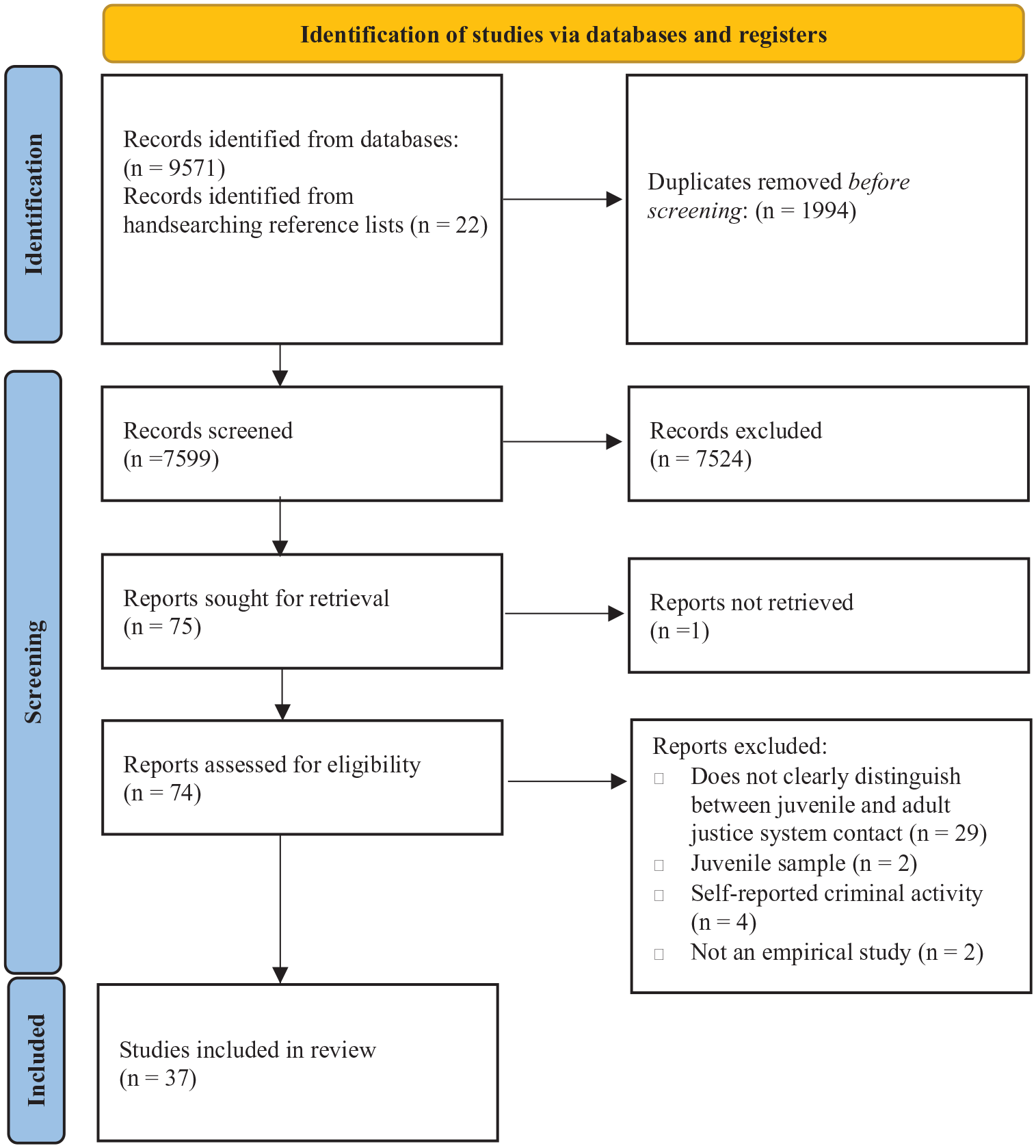
PRISMA flow diagram.
Sample Characteristics
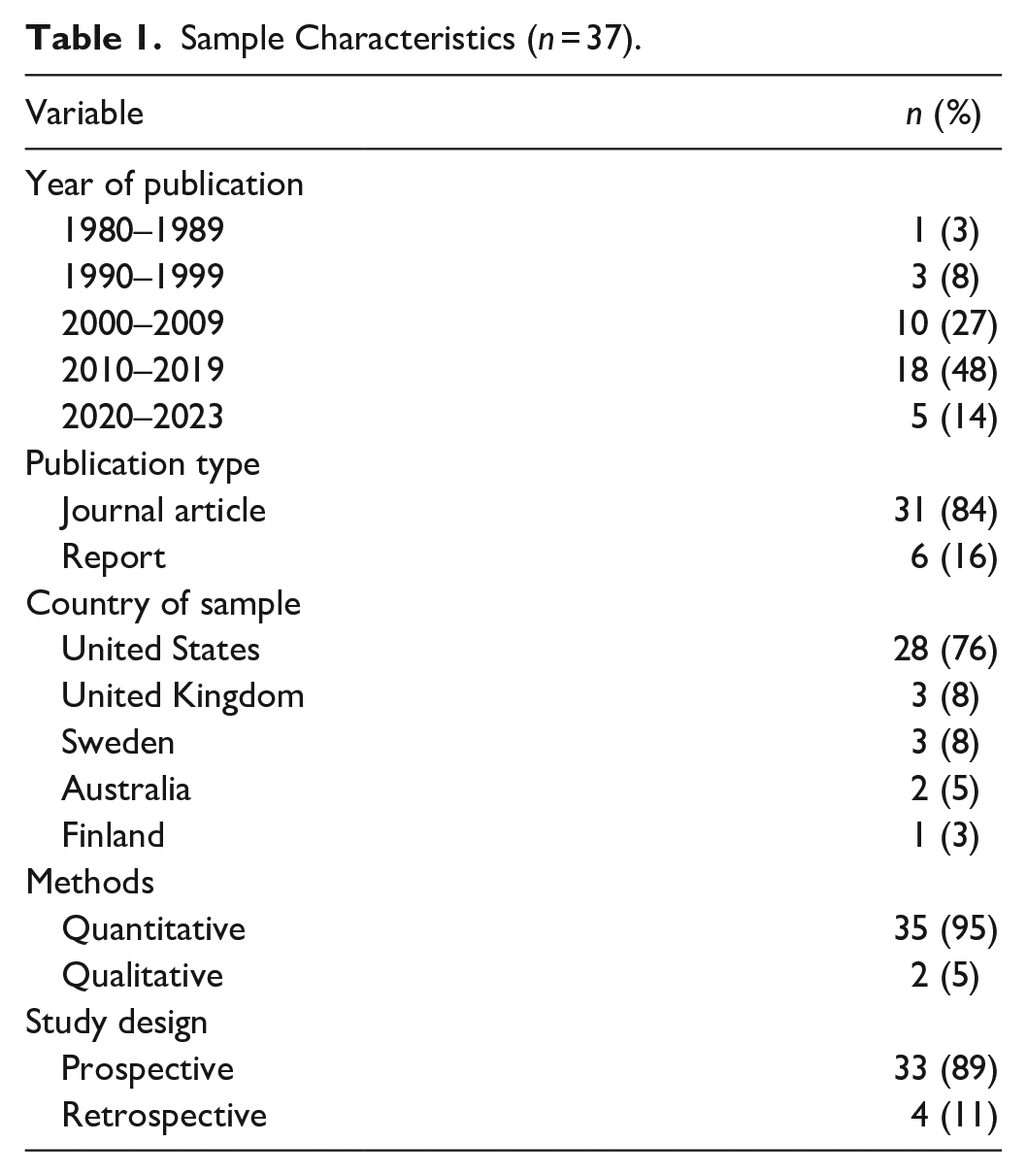
Table 1 provides an overview of the 37 included studies. Of these, a majority were journal articles (84%), with 62% published since the year 2010. Most drew on samples from the United States (76%) with a small number from the United Kingdom (8%) and Sweden (8%). All but two studies solely utilized quantitative methods (95%) and most were prospective studies (89%). Twenty-seven studies (73%) provided clear information about the upper age range of their arrest data. Of these, 10 (37%) utilized arrest data up to and including 25 years of age; 8 (28%) utilized arrest data until the ages of 26 to 30; 8 (28%) utilized arrest data until the ages of 30 to 35; and two studies (7%) utilized arrest data until over the age of 50.
Sample Characteristics (n = 37).
Synthesis of Results
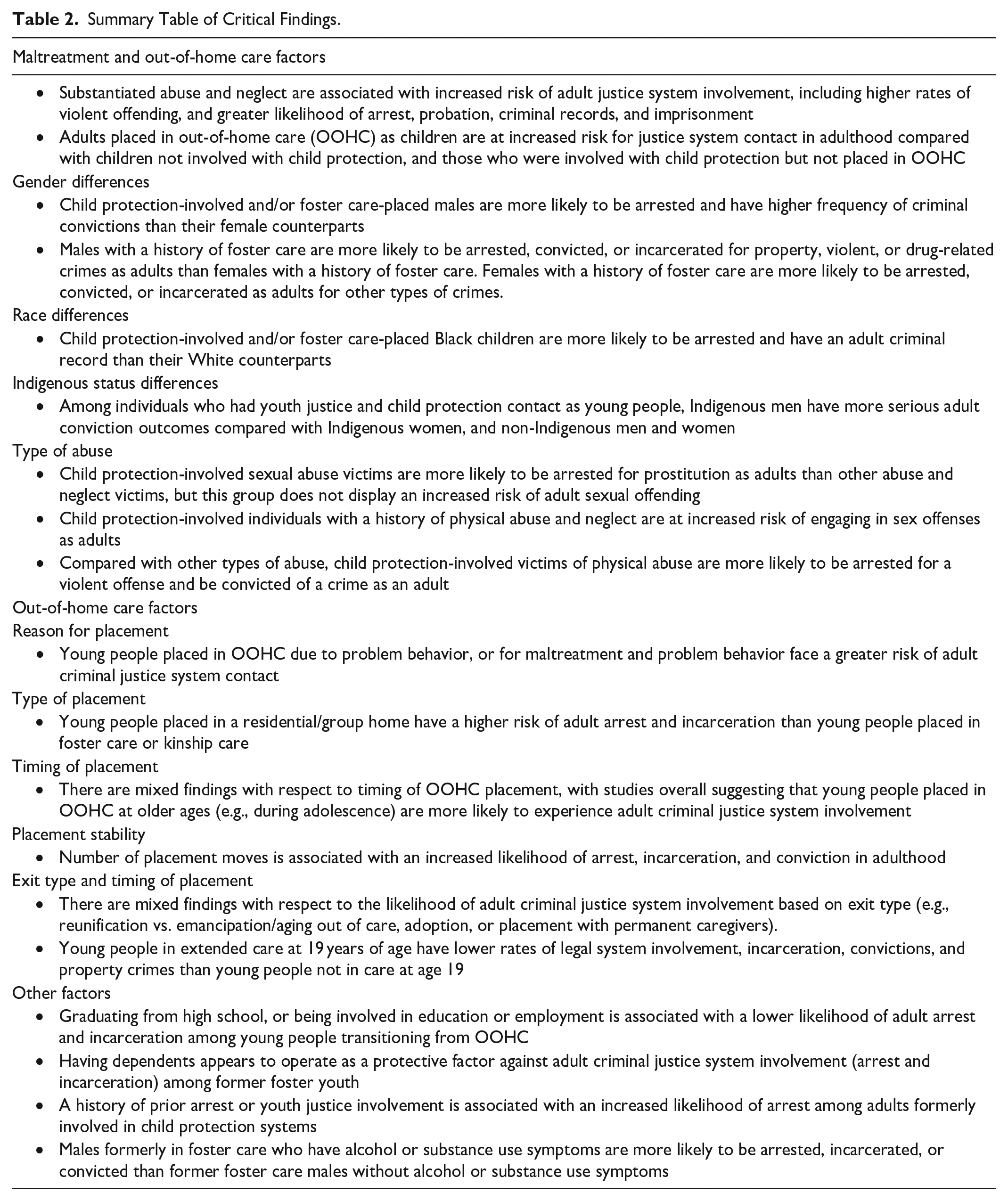
Relevant data from each of the 37 evidence sources are presented in the supplementary table (Supplementary Appendix A. Study characteristics and key findings). The findings below outline key themes and foci of the included studies, which are summarized in Table 2. Publications that drew from similar data sources have been reported as separate studies throughout because these investigated slightly different research questions, and/or utilized adapted forms of the data source (e.g., additional longitudinal data or a data subset).
Summary Table of Critical Findings.
Adult Justice System Contact: Differences Between Individuals With and Without a History of Child Protection Involvement
Seventeen studies (49%) utilized a comparison group to explore differences in adult justice system contact between individuals with a history of child protection involvement (including OOHC) and those without a history of child protection involvement. These studies have been separated below into those that involve individuals with a history of substantiated child maltreatment and/or neglect and those that involve individuals with a history of OOHC.
Substantiated Child Maltreatment
Nine studies (27%) compared adult justice system contact between individuals who had substantiated child maltreatment (abuse and/or neglect) and individuals without a history of substantiated child maltreatment and/or neglect. Despite being published over a 32-year period, and across several countries (Australia, Sweden, and the United States), these studies consistently found substantiated abuse and neglect to be associated with an increased risk of adult justice system involvement. A critical contribution to this field is the series of studies conducted by Widom and colleagues (Allwood & Widom, 2013; English et al., 2002; Widom 1989; Widom & Osborn, 2021). First, Widom (1989) compared a large sample of substantiated cases of abuse and neglect in children with a matched control group of non-substantiated children (with no child protection involvement) and found that having substantiated abuse and neglect as a child significantly increased the risk of having an adult criminal record (and, for males, a violent one). Maxfield and Widom (1996) then investigated longer-term effects of child protection-substantiated abuse and neglect on adult criminality and violent criminal behavior using the same prospective cohort design matching child protection-substantiated cases of abuse and neglect with those of controls (without child protection involvement). They found that those with a CP-substantiated history of abuse or neglect were more likely than controls to have an adult arrest for any nontraffic offense and for a violent crime. English et al. (2002) subsequently found that child protection-involved children were twice as likely to be arrested as an adult (up to 30 years of age), and child protection-involved youth from three backgrounds (Caucasian, African American, and Native American) were at increased risk for being arrested as an adult compared to children from the same ethnic background who did not have child protection involvement. Related studies by Widom and colleagues identified that the association between substantiated abuse and neglect and increased rates of adult arrest (including violent arrest) persisted in subsamples of CP-substantiated abused and neglected children followed up to age 40 years (Allwood & Widom, 2013), and CP-substantiated abused and neglected girls followed to 51 years of age (Widom & Osborn, 2021). The most recent of these studies found that at the mean ages of 26, 32.5, and 51 years, women who had experienced CP-substantiated childhood maltreatment were almost twice as likely to be arrested compared to demographically matched controls. At the mean age of 32, CP-substantiated abused and neglected girls were 2.5 times more likely to be arrested for violent crimes, compared to control girls with no substantiated abuse or neglect. Similarly, at the mean age of 51, females previously CP-substantiated for abuse or neglect were more than twice as likely to have been arrested for a violent crime than the control females (Widom & Osborn, 2021).
Other U.S.-based studies reported similar findings. Another study examined the roles of CP-substantiations of childhood neglect and childhood poverty in predicting crime in young adulthood utilizing a sample of individuals with CP-substantiated histories of neglect and matched controls. They found that CP-substantiated childhood neglect significantly predicted adult arrest (Nikulina et al., 2011). Likewise, Topitzes et al. (2012) investigated whether CP-substantiated child maltreatment between the ages of 0 to 11, significantly predicted several adult indicators of violent offending; they found that CP-substantiated maltreated children exhibited significantly higher rates of offending across all adult indicators of violence. In nearly all cases, maltreatment victims were more than twice as likely as their counterparts without substantiated maltreatment to have any recorded violent offense. For example, participants substantiated for maltreatment as children, compared with children without substantiation for maltreatment, were significantly more likely to be convicted of a violent weapons charge (7.33% vs. 2.86%). While all the above studies were conducted in the United States, one Swedish study similarly found that individuals with a substantiated childhood history of maltreatment had significantly increased odds of being sentenced to prison or probation compared with their majority population peers (Vinnerljung & Sallnäs, 2008).
Finally, one study examined the impact of substantiated abuse and neglect on adult criminal justice trajectories of a sample of justice-involved youth in one Australian state. Lynch et al. (2003) found that among justice-involved children aged 10 to 17 years who served a supervised youth justice order, those who had at least one Care and Protection Order (CPO) (an indicator of substantiated maltreatment), were more likely to progress to adult corrections (91%) and adult imprisonment (67%) than justice-involved individuals who had not been subject to both a supervised youth justice order and a CPO (77% adult corrections and 47% imprisonment).
OOHC (Including Foster Care and Residential/Group Home Care)
Nine studies (24.3%) examined future adult justice system contact among individuals with and without a history of OOHC. While published over an 11-year period, and across diverse jurisdictions (e.g., Finland, Sweden, United Kingdom, and United States), these studies consistently indicate that adults placed in care as children are at increased risk for justice system contact in adulthood compared with children not involved with child protection, and those who were involved with child protection but not placed in OOHC. Cote et al. (2018) found that Finnish individuals placed in OOHC as children (between 2 and 6 years of age) had significantly higher rates of criminal conviction between ages 18 and 25 years compared to non-placed controls (36% vs. 21%); in this study, controls were sourced from the general population and propensity score-matched across a range of child (e.g., intellectual disability diagnosis prior to age 2) and parent (e.g., education and receipt of social assistance) potential confounders. Specifically, this study found that participants who were placed had higher rates of violent offenses and property offenses (Cote et al., 2018). Similarly, Teyhan et al. (2018) found that individuals in Bristol, United Kingdom who were in OOHC or adopted as children were more likely to have been convicted of an offense compared with comparison groups of participants who were not adopted or placed in OOHC. For example, after adjustment for age and socioeconomic-related measures (relationship status, education, financial difficulties, social class, and housing tenure) OOHC-experienced males were 2.6 times more likely, and OOHC-experienced females were 2.4 times more likely to report being convicted of a criminal offense in adulthood (Teyhan et al., 2018). Likewise in Sweden, Bjorkenstam et al. (2019) found that children placed in OOHC before age 12 were 5 to 12 times more likely (depending on what child and parent confounders were controlled for), to have a violent conviction by age 20 than their same-aged peers not placed in OOHC.
Earlier U.S.-based studies identified similar findings. For example, among a U.S. cohort of former foster youth aged 21 to 22 years of age and placed for reasons of abuse or neglect only, Courtney et al. (2007) found that young people with a former foster care background were significantly more likely to be arrested as an adult compared to an age-matched comparison group. At 22 to 23 years of age, this same cohort of former foster youth continued to report higher levels of criminal justice system involvement with a significantly higher proportion of youth in OOHC reporting having been arrested since age 18 than youth in the age-matched population sample (Courtney et al., 2010; Cusick et al., 2011).
While the above studies used matched general population controls, other studies included comparison groups of children who had been substantiated for maltreatment. For example, DeGue and Widom (2009) found that youth in OOHC because of offending behavior and maltreatment were 4.2 times more likely to be arrested as an adult than youth substantiated for maltreatment, but who were not placed in OOHC. Importantly, this study found no significant differences in adult arrests between maltreated youth placed for abuse or neglect only, and those who were never placed in OOHC (DeGue & Widom, 2009). Another study found that compared to individuals who did not enter the child protection system, foster care alumni were more likely to have a criminal record by age 26. The study found that all Child Protective Services (CPS) groups (children who were raised in a household with a CPS record) were two to three times more likely to have been incarcerated or to have had an arrest conviction relative to the group with no CPS household record. Of note is the fact that the group with a CPS household record and no indicated maltreatment history did not differ significantly from the group without a CPS household record in total arrests or in their likelihood of having a violent arrest conviction (Mersky & Janczewski, 2013). Elevated adult justice system involvement among former foster youth is also supported by another study that found that children placed in foster care had two to three times higher arrest, conviction, and imprisonment rates as adults than children who were investigated for maltreatment but who remained at home (Doyle, 2008). Interestingly, among children on the margin of placement (cases in which the investigators/case managers may disagree about the recommendation for placement), those that were ultimately placed in foster care had arrest, conviction, and imprisonment rates as adults that were three times higher than those of children who ultimately remained at home (Doyle, 2008).
While the studies reviewed in this section have prospectively compared the adult criminal justice outcomes of children placed in OOHC and those not placed in OOHC, Kent et al. (2023), compared the characteristics and experiences of 631 adult prisoners in the United Kingdom who had a history of OOHC, with 2021 sentenced adult prisoners who had no previous OOHC placement. Like studies of youth justice populations (Baidawi & Ball, 2023a), adult prisoners who were formerly in OOHC had significantly greater levels of disadvantage and complexity, including those related to indicators of neurodisability, substance abuse, homelessness, and unemployment (Kent et al., 2023).
Factors Impacting the Relationship Between Child Protection and Adult Justice System Contact
Gender
Several studies have examined the impact of gender on CP to adult criminal justice system trajectories, with findings generally reflecting broader population sex-based differences in justice system involvement (i.e., males being more likely than females to experience criminal justice system involvement). For example, Widom (1989) drew on a large sample of substantiated cases of abuse and neglect in children and matched them to a control group of non-abused children to compare the extent to which individuals engage in adult criminal behavior. It was found that males had a higher frequency of criminal records than females. Similarly, DeGue and Widom (2009) examined out-of-home placement as a mediator of adult criminality among maltreated youth and found that males were more likely to be arrested as adults than were females. Another study found that among former foster youth, males had odds of a felony adjudication seven times higher than females (Crawford et al., 2018).
Four studies forming part of the Midwest Evaluation of the Adult Functioning of Former Foster Youth (the “Midwest Study”), a longitudinal study of young people aging out of foster care in the U.S. (placed for reasons of abuse and neglect) and transitioning to adulthood, found several gender differences among their sample. At 19 years of age, they found that males reported a significantly higher level of criminal justice system involvement than females (e.g., 29.8% of males had spent at least one night in jail, prison, juvenile hall, or other correctional facility since the first interview, compared with 10.7% of females) (Courtney & Dworsky, 2006). Among the same cohort at 21 to 22 years of age, the level of criminal justice involvement continued to be significantly higher among the young men (Courtney et al., 2007). In addition, significant gender differences with respect to the types of crimes that led to criminal justice system involvement were observed. Males were more likely to be arrested, convicted, and incarcerated for drug-related and violent crimes than for property crimes; females were more likely to be arrested, convicted, and incarcerated for property and violent crimes than for drug-related crimes. Interestingly, while still having lower rates of adult justice system involvement compared to their male former foster-care counterparts, females in the sample were significantly more likely than males in the age-matched comparison (non-foster care) group to report ever being arrested (57% vs. 20%), ever being convicted (25% vs. 12%), and ever being arrested as an adult (33% vs. 8%) (Courtney et al., 2007). At 22 to 23 years of age, male former foster care youth continued to report higher levels of recent criminal justice system involvement than their female counterparts (Courtney et al., 2010). Forty-two percent reported that they had been arrested (compared to 20% of females), 23% reported that they had been convicted of a crime (compared to 8% of females), and 45% reported that they had been incarcerated since their most recent interview (compared to 18% of females) (Courtney et al., 2010). The pattern continued at 25 to 27 years of age with males more likely than females to report having been arrested, convicted, and incarcerated since their most recent interview. Again, gender differences with respect to type of crime were observed with most females who had criminal justice involvement being arrested, convicted, or incarcerated for something other than a property, violent, or drug-related crime (Courtney et al., 2011). By contrast, property, violent, and drug-related crimes did account for most of the convictions and incarcerations among males (Courtney et al., 2011).
Fitzpatrick et al. (2024) published the only identified study to have focused on women. Through interviews with 54 care-experienced criminalized girls and young women in the United Kingdom, the importance of motherhood, and a desire to break intergenerational cycles of stigma and social care surveillance were identified as critical experiences, with fear of asking for help and a care-less approach to pregnancy and motherhood in prison and beyond as key barriers to realizing these aspirations.
Race
Several U.S.-based studies examining trajectories from child maltreatment to adult offending have included race-based analyses. These studies consistently find that non-White youth (generally Black youth) are significantly more likely to experience adult criminal justice system involvement than their White counterparts. For example, DeGue and Widom (2009) examined out-of-home placement as a mediator of adult criminality among maltreated youth and found that Black youth placed in OOHC were more likely to be arrested as an adult than their White counterparts. Another study examined associations of foster care exit type with risk of entry into state prison, as well as racial disparities in those associations (Font et al., 2021). They found hazard of imprisonment for reunified Black youth was twice that of reunified White youth, but racial differences in prison entry were statistically nonsignificant among emancipated youth (Font et al., 2021). Lee et al. (2012) conducted a prospective study following youth out of the foster care system into their mid-twenties to examine the relationship between extending care past age 18 and self-reported criminal and legal involvement. They found that, for men only, race appeared to play a role in legal system involvement, with Black former foster youth facing significantly higher odds of incarceration. Lee et al. (2014) similarly found that among a sample of former foster youth, being Black as opposed to Caucasian was strongly associated with an increased risk of arrest among males only.
Among a sample of cases of abused or neglected children and matched non-abused or neglected controls, Widom (1989) found that Black individuals with substantiated maltreatment had a higher frequency of adult criminal records than White individuals with substantiated maltreatment across both the abused/neglected and control groups. The difference between Black abused and neglected individuals and controls (39% vs. 26.2%) was much greater than that observed between the White abused and neglected individuals and controls (24.4% vs. 18.4%). Finally, Cusick et al. (2011) examined criminal behavior and criminal justice system involvement among youth making the transition from OOHC to independence. Hazard models used to predict the probability of first arrest after 17 to 18 years of age found that the time to first arrest was significantly shorter for African American respondents.
Indigeneity
Indigenous status was examined as a factor influencing the child maltreatment to adult offending/justice system trajectory in one Australian study. Matthews, McVie, Thompson, and Stewart (2022) studied the associations between childhood contact with welfare and youth justice systems and patterns of criminal conviction in adulthood according to sex and Indigenous status. They found that the cumulative effects of both youth justice and child protection system contact were associated with an increase in the likelihood of conviction, and the severity of conviction trajectories. However, variation in conviction outcomes was conditional on underlying intersectional differences by sex and Indigenous status, with Indigenous males having the most serious adult conviction outcomes overall. They found that Indigenous males were far less likely to be assigned to the No/Low conviction class and far more likely to be assigned to one of four conviction trajectories that varied according to level and trend. Non-Indigenous women were least likely to be assigned to any criminal conviction class, while Indigenous women and non-Indigenous men fell in between.
Type of Abuse
Several U.S. studies by Widom and colleagues have investigated whether the type of maltreatment experienced by children impacts the likelihood of adult offending, as well as specific criminal outcomes, for instance, sexual offending or violent offending. For instance, Widom and Ames (1994) used a prospective cohort design to assess the long-term criminal consequences of different types of childhood abuse. Compared to other types of abuse and neglect, early childhood sexual abuse did not uniquely increase an individual’s risk of adult criminal justice system involvement. As adults, victims of child sexual and physical abuse and neglect were at higher risk of arrest for sex crimes (including prostitution, rape, and sodomy) than controls. However, the study found that childhood sexual abuse victims were more likely to be arrested for prostitution as adults than other abuse and neglect victims and controls. Another U.S. study found that individuals with histories of physical abuse and neglect were at significantly increased risk for arrest for sex offenses, whereas those with histories of sexual abuse were found to be at no increased risk for arrest for sex offenses (Widom & Massey, 2015). These conflicting findings may in part be due to different definitions of sex offenses used in the two studies, with the first study including prostitution, which did not appear to be included in the second study.
Finally, Maxfield and Widom (1996) investigated the long-term effects of child abuse and neglect on adult criminality and violent criminal behavior using a prospective cohort design that matched cases of abuse and neglect with those of controls who were not known to have been maltreated, identifying differences according to type of abuse. The study found that compared with controls and victims of other types of abuse, victims of physical abuse were most likely to be arrested for any violent offense as an adult. Crawford, Pharris and Dorsett-Burrell (2018) found that former foster youth who had been removed from their homes due to physical abuse and forms of maltreatment other than physical, neglect, and sexual abuse had the highest odds of an adjudicated felony as an adult.
OOHC Factors
Reason for Placement
Five studies (13.5%) explored differences in adult justice outcomes between youth placed in OOHC for reasons of maltreatment versus problem behavior, with the majority finding an increased risk of adult justice system involvement for those placed for reasons of problem behavior (including offending behavior). Lindquist and Santavirta (2014) found that boys who were placed in foster families during adolescence on account of their own behavior were roughly 22% points more likely to commit crime during adulthood than their counterparts who those placed due to child maltreatment or parental incapacity. Another study found that maltreated youth placed for abuse or neglect plus offending behavior, as compared to maltreated youth who were not placed, or who were placed for only abuse or neglect, were about twice as likely to be arrested as an adult (DeGue & Widom, 2009).
Vinnerljung and Sallnäs (2008) explored the long-term psychosocial outcomes for young people placed in Swedish OOHC during their early teens (age 13–16). Among a sample of people with former OOHC experience, they too found a general dividing line between young people placed for behavioral problems and those placed for other reasons. In comparison with those not placed in care, males and females placed for behavioral problems had much higher rates of prison sentences and legal sanctions for serious involvement in crime. Young people who were placed in care for other reasons did better, but still far worse in comparison with non-care peers. Conversely, Kapp et al. (1994) examined the likelihood of youth discharged from U.S. residential group homes between 1985 and 1987 being eventually committed to an adult prison. They found that youth placed for child welfare reasons were equally as likely to be imprisoned as those placed for problem behaviors. Conflicting findings between this and other studies may be due to this study having been conducted sometime earlier, reflecting policy and practice differences over time.
Kapp (2000) conducted one of the few qualitative studies identified in the current review, involving males incarcerated in adult prisons and examining their experiences with child protection and youth justice systems. They found that respective paths to prison differed according to the reason for the original out-of-home placement: child maltreatment (child welfare youth) or illegal behavior (delinquent youth). Participants placed for child welfare reasons were placed out of home earlier in life (between the ages of 7–9 vs. early to mid-teens for delinquent youth) because they had been abused or neglected by their caretakers in one way or another. Consequently, they lived in more out-of-home placements for a longer period. Kapp found that the young men seemed to hold the system responsible for their circumstances and their loss of hope. Conversely, those participants who had been placed out of their homes for involvement in illegal behavior did not hold the system responsible for their circumstances and instead accepted personal responsibility for committing an illegal act.
Type of Placement
Four U.S. studies explored the type of placement, generally finding that OOHC placements other than foster or kinship resulted in poorer outcomes with respect to adult justice system involvement. Cusick et al. (2011) found that the risk for arrest was significantly associated with OOHC placement experiences. For example, controlling for various background risk factors and OOHC placement experiences, being in group home care versus traditional foster care at 17 to 18 years of age led to significantly higher hazard rates, with a group care placement at 17 to 18 years of age resulting in a 58% increase in the hazard rate for arrests when compared to a traditional foster care placement. Another study utilized a prospective sample of 772 maltreated youth to age 32 years to examine out-of-home placement as a mediator of adult criminality (DeGue & Widom, 2009). The study found that adult arrest was less likely among individuals who were never placed in OOHC (45.9%) or who were placed in foster care only (33.8%) compared with those placed in foster care plus another setting (56.9%) or only non-foster-care settings (50.3%) (DeGue & Widom, 2009). The study’s findings also suggest not only an impact on adult criminal justice system involvement by type of placement but that this impact varies by gender (i.e., a placement type X gender interaction). For example, males who were placed in foster care plus another placement and males placed in any other non-foster-care placement type were 2.4 and 2.0 times more likely, respectively, to be arrested as adults than were males with no placement history. Males placed in foster care only did not differ from non-placed males with regard to adult arrests—that is, foster care alone for males appeared to exert a neutral effect in this study compared to nonplacement in OOHC (DeGue & Widom, 2009). In contrast, females placed in foster care only were about one-third less likely than non-placed females to have a history of adult arrests, whereas females placed in foster care plus another placement or any non-foster-care placement did not differ from their peers who were never placed out of home (DeGue & Widom, 2009). Lee et al. (2012) found that females who were previously placed in a group or other type of placement (not foster family, kinship care, residential treatment, and independent living) at age 17 were more than twice as likely to be incarcerated compared with their peers who were placed in a non-kin foster family placement.
Timing of Placement
Four studies (13.5%) examined timing of OOHC placement with respect to subsequent adult justice system contact, with varying findings. One study found that abused and/or neglected children who remained with their primary caregiver and were later removed and placed in nonrelative foster care were at higher risk of arrest for adult crimes compared to abused and/or neglected children who remained with their primary caregivers. The relative risk of arrest for these children was higher than for those children initially removed from their primary caregivers at dependency and placed in relative/kin or nonrelative foster care (English et al., 2002). Similarly, another study found that youth placed after age seven were approximately twice as likely to be arrested as an adult than those placed before age nine (DeGue & Widom, 2009).
In Sweden, Lindquist and Santavirta (2014) found a large positive association between foster care and adult criminality for boys first placed in OOHC during adolescence (ages 13–18). No relationship for boys who were placed in foster care before age 13, and no association between foster care and adult criminality was found for girls regardless of when they were placed. Vinnerljung and Sallnäs (2008) explored the long-term psychosocial outcomes for young people placed in OOHC during their early teens (age 13–16). Among a sample of people with former OOHC experience, they found being older at placement was related to better outcomes, regarding sanctions for serious crime (OR was less than 1.0 for every year).
Finally, Jung and LaLonde (2016) investigated the re-incarceration rates of women with foster care experience during their early (10 to 14) and late (15 to 18) teens compared with their female counterparts who went to prison but had no foster care experience. They found that formerly incarcerated women with their first foster care placement during their early teens were about 50% more likely to be re-incarcerated than the female former inmates with no foster care experience. The study further identified that foster care placement during the early teen years was not associated with increased re-incarceration among those women who had high school/GED or higher levels of education. Among those women who were not in foster care during their early teens, but in foster care during their late teens, there was no adverse effect of this experience on their re-incarceration rates with the exception of a strong adverse association between the foster care experience and re-incarceration rates among women with self-reported drug addiction.
Placement Stability
Five U.S. studies (13.5%) that explored placement stability found that a higher number of OOHC placements (or less placement stability) was associated with greater adult justice system contact. DeGue and Widom (2009) found that number of placement moves significantly predicted adult arrest, even when controlling for evidence of early behavioral problems in court records and number of juvenile arrests. In their sample of 772 maltreated youth, 70% of those who experienced three or more placement moves were arrested as an adult. Lee et al. (2012) also found that placement instability was associated with higher odds of involvement with the legal system. Each additional placement was associated with a 4% to 6% increase in the odds of arrest, incarceration, or conviction in adulthood. This study also found that placement instability also increased the odds of legal system involvement for males, with each additional placement associated with an increase in the likelihood of incarceration by 5% and conviction by 4%.
Ryan et al. (2001) found that youths with multiple out-of-home placements were at greater risk for adult imprisonment following long-term residential care. The odds of imprisonment increased by a factor of 1.07 for each additional prior out-of-home placement. Another study of former foster youth found that those individuals who had extensive placement histories were most at risk for felony adjudication as adults (Crawford et al., 2018). Finally, Courtney et al. (2011) found that young people who experienced multiple placements also had a higher hazard rate for arrest as an adult. Each additional placement after the first resulted in a 4% increase in the hazard rate.
Exit Type and Timing
Three studies (8.1%) examined the relationship between placement exit type and adult justice system contact, with mixed findings. Font et al. (2021) examined associations of foster care exit type (e.g., reunification with birth family, adoption, guardianship/permanent relative placement, or emancipation from care) with risk of entry into state prison. Compared with emancipated youth (those who had aged out of foster care), hazard of imprisonment was 1.58–1.96 times higher among reunified youth (those youth who had exited care by being reunified with their families of origin, adopted by another family, or placed in legal guardianship or another permanent arrangement, most commonly a relative caregiver). In contrast, among a sample of incarcerated women with foster care experience, Jung and LaLonde (2016) found that women who were reunified with their parents had the same high re-incarceration rates as their peers who aged out of system or were classified as runaways. Kapp et al. (1994) found that youths released from group homes or residential facilities to their own home, the homes of relatives, or an independent living arrangement were less likely to be sentenced to prison as adult than youths released to foster care, another campus-based program or a state training school.
Two studies examined the impact of extended care in relation to adult justice system contact. Both examined the impact of extending care past age 18 and self-reported criminal and legal involvement among youth aging out of the foster care system. In comparison to participants who were no longer in care at age 19, they found that those who were in extended care reported significantly lower rates of legal system involvement, incarceration, convictions, and property crimes (Lee et al., 2012, 2014). However, Lee et al. (2012) found that the protective effect of extended care appears to have a declining effect over time and in fact, reverses after the first year.
Youth Justice System Involvement
Seven studies (18.9%) found that a history of youth justice system contact was associated with an increased risk of adult justice system involvement among child protection-involved individuals. This was found across studies examining child protection samples (e.g., Allwood & Widom, 2013), youth justice samples (e.g., Lynch et al. 2003), and broader population studies (e.g., Bright & Jonson-Reid, 2015). For example, a study of former foster youth found that having a prior arrest record was strongly associated with an increased risk of arrest, but this was only among males and not females (Lee et al., 2014). Rhoades et al. (2016) examined childhood predictors of first adult justice system contact among adults with significant youth justice system involvement who had been mandated to OOHC due to chronic delinquency. For males, youth justice referrals alone predicted the risk of any first adult arrest as well as felony arrest specifically. Each additional juvenile referral increased the risk of any adult arrest by 9% and adult felony arrest by 8%. This same study also found that, among females, the youth justice referrals did not predict adult arrest (Rhoades et al., 2016).
While other U.S. studies have similarly found that youth placed for delinquency-related reasons were at greater risk of adult justice involvement (e.g., Kapp et al., 1994), this could in some ways be seen to reflect different groups of children. Nonetheless, two Australian studies have found that even when considering all children with youth justice system involvement, child protection system involvement was still associated with an increased likelihood of adult convictions. For example, Lynch et al. (2003) found that 91% of justice-involved children who had been subject to a child protection order had progressed to the adult corrections system (serving community or custodial sentences) with 67% having served at least one term of imprisonment. Similarly, Matthews et al. (2022) found that the cumulative effects of both youth justice and child protection system contact increased not only the likelihood of adult convictions but also the severity of conviction trajectories compared with individuals who solely had contact with either the child protection or youth justice system.
Other Factors
Several studies identified other variables that appear to operate as protective factors with respect to adult justice system contact among individuals with a history of child protection involvement. These include employment and educational factors, being married or having dependents, and having mental health symptoms. Employment and educational factors appear to be especially important among these. For example, Cusick et al. (2011) examined criminal behavior and criminal justice system involvement among youth making the transition from OOHC to independent adulthood. They found that having plans to graduate from college and being employed during the transition from care reduced the hazard rate for arrest by 24% and 32% respectively. Likewise, Lee et al. (2012) found that among males from a foster care background, the odds of arrest when enrolled in school were 45% less than among males not enrolled in school, and males with a high school diploma or equivalency experienced lower odds of arrest and incarceration in comparison to males who had not completed high school. Similarly, Allwood and Widom (2013) found that the odds of arrest among abused and neglected youth who graduated from high school were significantly reduced compared to abused and neglected youth who did not graduate from high school. Allwood and Widom (2013) also found that gaining employment and getting married significantly reduced the likelihood of adult arrest compared to abused and neglected youth who do not attain these developmental roles.
Having dependents may also be a protective factor against adult criminal justice system involvement. One study found that, among a sample of youth aging out of foster care, having at least one resident child decreased the likelihood of arrest and incarceration. The odds of females aging out of foster care who had at least one resident child being arrested were 31% lower, and the odds that they would be incarcerated were 43% lower than their female peers who did not have any resident children. Similarly, fathers with at least one resident child also experienced significantly lower odds of arrest than men without any resident children (Lee et al., 2012). Another study also found that, for females, having a child residing in the home was associated with a lower risk of arrest among former foster youth. However, for males, no similar protective effect of having a resident child was identified (Lee et al., 2014). Lee et al. (2014) also found that having mental health symptoms among a sample of former foster youth was strongly associated with a lower risk of arrest for males.
Conversely, other factors appear to be associated with an increased risk of criminal justice system contact among adults formerly involved with child protection systems. Lee et al. (2012) found that male former foster youth reporting alcohol or substance use symptoms were significantly more likely to be arrested, incarcerated, or convicted than those who did not report any alcohol or substance use symptoms. Similarly, among a sample of former foster youth, Lee et al. (2014) found that having alcohol or substance use symptoms was strongly associated with increased risk of arrest among males only. In the U.S., Crawford et al. (2018) found that former foster youth with a history of receiving mental health services were most at risk for felony adjudication as an adult (odds of an adjudicated felony were nearly ten times higher for those receiving mental health services when compared to those not receiving services).
Finally, some studies examined family or parental factors that may impact child maltreatment in the adult justice system trajectory. One study found that among a sample of former foster youth, those with parents with alcohol and drug histories were most at risk for felony adjudication as an adult (Crawford et al., 2018). Cusick et al. (2011) found that parental presence has an impact on adult justice system involvement among youth making the transition from OOHC to independent adulthood; they identified a 64% increase in the risk for arrest among youth without a mother. However, it was unclear in this study for what reasons young people may not have had their mother present in their lives. Rhoades et al. (2016) found that for females who had experienced chronic juvenile delinquency, family violence and parental divorce functioned as significant predictors of adult arrest, rather than their level of youth justice system involvement. Females mandated to OOHC who experienced parental divorce were nearly three times more likely to be arrested as an adult, and those who experienced family violence 2.5 times more so than those without such experiences.
Discussion
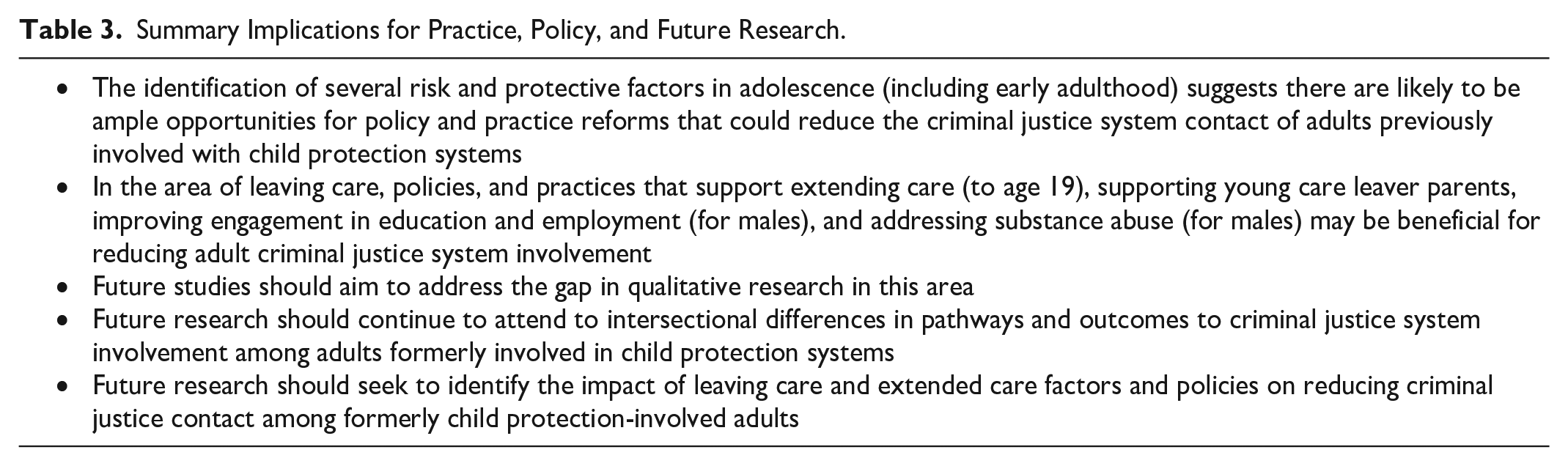
This scoping review identified and synthesized evidence from studies reporting on criminal justice contact among adults with a history of child protection involvement. Across six databases, 37 publications meeting the inclusion criteria were identified, over half of which (62%) were published since 2010, and over three-quarters of which (76%) drew on samples from the United States. While the included studies paid attention to diversity in terms of gender and race, included studies were all conducted in the Global North, and there was less attention to diversity methodologically, particularly in the inclusion of lived experiences perspectives. Particularly surprising was the small number of qualitative or mixed methods studies identified (two studies only), with most studies solely utilizing quantitative methods (95%) and prospective designs (89%). Where information was available, most of the identified studies (70%) utilized arrest data up to the age of 35 years only, reflecting the availability of data and samples for follow-up. The key review findings (Table 2) and their implications for practice, policy, and research (Table 3) are discussed below.
Summary Implications for Practice, Policy, and Future Research.
The review identified several sociodemographic, individual, environmental, and systems-related factors that impact the likelihood of criminal justice system involvement of adults formerly involved in child protection systems. Broadly, these reflect the same risk factors identified for youth justice system involvement among child protection-involved children (e.g., Baidawi & Ball, 2023b; Baskin & Sommers, 2011; Cho et al., 2019; Cutuli et al., 2016; Malvaso et al., 2017a, 2017b). These include sociodemographic factors such as male gender and racial minority or Indigenous status (particularly for males) (Courtney et al., 2007; Lee et al., 2012; Matthews et al., 2022). The greater likelihood of child protection-involved males coming into contact with the adult criminal justice system (relative to females) reflects trends in the broader population, however, of greater interest perhaps is the finding that females formerly involved in the child protection system were even more likely than general population males to experience adult criminal justice system contact (Courtney et al., 2007), reaffirming that these are critical pathways to disrupt in relation to the justice system involvement of girls and women (Baidawi, Papalia & Featherston, 2023).
Regarding racial minority and Indigenous adults being at greater risk of criminal justice system involvement, it is noteworthy that almost all studies reporting this finding solely utilized criminal justice system involvement (e.g., arrests and incarceration) rather than including self-reported offending in their outcome measures. It is unclear, therefore, to what extent the observed differences reflect systemic racism in justice system processes, rather than offending, per se. The one exception was the study by Lee et al. (2012), which found some consistency between the levels of self-reported criminal behavior and criminal justice system involvement by race for males, but not for females. That is, Black men in this study self-reported higher levels of violent and drug crimes than White men, and also faced significantly higher rates of incarceration; conversely, while Black women reported significantly higher levels of violent offending compared with White women, this was not reflected in any significant differences in arrests, convictions or incarcerations (Lee et al., 2012). Future research should aim to disentangle these factors. Furthermore, the identification in the findings of several race, gender, and race x gender differences highlights the importance of continued attention to intersectionality in future research examining these pathways (Baidawi, Papalia & Featherston, 2023; Matthews et al., 2022).
Child protection system-related factors associated with greater risk of adult criminal justice system involvement included experiences of substantiated maltreatment (particularly physical abuse) (e.g., Maxfield & Widom, 1996), and placement in OOHC (particularly placement in residential care, placement for reasons of problem behavior, initial placement in early adolescence, and placement instability) (e.g., Cusick et al., 2011; DeGue & Widom, 2009; Vinnerljung & Sallnäs, 2008). Again, these reflect the same risk factors identified for youth justice system involvement in this cohort (Baidawi & Ball, 2023b; Baskin & Sommers, 2011; Malvaso et al., 2017a; Ryan & Testa, 2005; Ryan et al., 2008). However, it is important to recognize that child protection-involved children with behavioral difficulties have typically also experienced childhood maltreatment, and ought not to be strictly considered as a separate cohort. Indeed, such behavioral difficulties may reflect the impacts of cumulative harm and/or may result in such children’s child’s greater risk of maltreatment, as documented among children with neurodisability (Baidawi & Piquero, 2021; Baidawi & Sheehan, 2020b).
Perhaps the most novel findings of the review related to the identification of factors impacting the likelihood of adult criminal justice system involvement which extend those identified for youth justice system involvement among child protection-involved individuals. These include youth justice system involvement in itself and factors related to the transition from OOHC. The review consistently found that of “dual system” youth who experience both child protection and youth justice system involvement presented with the highest risk of adult justice system contact (e.g., Allwood & Widom, 2013; Bright & Jonson-Reid, 2015; Matthews et al., 2022), indicating that disruption of these pathways is critical for improving outcomes among care leavers. Conversely, findings related to the type (e.g., reunification vs. independent living) and timing of exit from OOHC revealed some mixed findings that warrant investigation in future research. However, the findings suggest that attachment to “institutions of informal control” such as education, employment, and family, are associated with a lower likelihood of justice system involvement among care leavers (Lee et al., 2012). At the same time, it is important to note the numerous ways in which research indicates such lack of attachment to these “institutions,” is driven (in whole or in part) by institutional policies and practices. This can be seen, for example, in policies and practices underpinning the removal of children from families into institutional settings, and those contributing to school exclusion (suspension and expulsion) or placement instability among this cohort (Baidawi & Ball, 2023b; Baidawi & Sheehan, 2020b). Such understandings might lead to the conclusion that strategies focused on simply “reforming” individual children, young people, or young adults, rather than transforming institutional policies and practices, are unlikely to shift these trajectories.
Interestingly, gender differences in risk and protective factors were evident in the research, including that education and employment during the transition from care appear more protective and substance abuse more of a risk factor for adult justice system involvement among males, compared with females (Lee et al., 2012). On the other hand, becoming a parent or caregiver of a child appears to be associated with a lower likelihood of criminal justice system involvement among care leavers, regardless of gender (Lee et al., 2012). The relationship between these and other leaving care factors and supports and the likelihood of adult criminal justice system involvement in this cohort warrants further investigation, particularly in the context of shifting policies and provisions for care leavers across many jurisdictions, and the identified differences in implementation and context of these (Baidawi, 2016; OECD, 2022; Park et al., 2023).
While this review presents a useful consolidation of research focusing on the child protection to adult criminal justice system trajectories, it is not without limitations. Foremost among these is that resource limitations meant that title/abstract and full-text screening were only conducted by a single reviewer. While multi-author decision-making was utilized to address uncertainties, previous research has identified that 9%–12% of relevant publications may be excluded when duplicate screening is not undertaken (Stoll et al., 2019). As such, the review may have overlooked some relevant publications. Additionally, the review presents research findings derived from diverse jurisdictions, over a 34-year period. Variations in policy and practice across time and jurisdictions will impact how reflective of current systems these findings are. Additionally, differences (both within and between countries, and over time) in how abuse and neglect are operationalized by child protection systems, and in other policy and practice approaches (e.g., criteria and process for entry to OOHC) make jurisdictional comparisons and drawing universal findings from the existing research challenging. These factors highlight the need for contemporary and localized research on this topic to usefully guide future policy and practice. However, as outlined in the results, many of the key review findings were remarkably consistent across study jurisdictions and time periods, meaning that substantial reforms may be required to impact these trajectories.
Conclusion
Given the social and economic costs of adult criminal justice system involvement to both individuals and the broader community, identifying strategies to prevent and respond to these outcomes remains a key research and policy priority. Drawing together a fragmented body of evidence in this field, this scoping review highlighted studies that have examined criminal justice system contact of adults who were previously involved with child protection systems. The review identified that many factors associated with increased likelihood of adult criminal justice system contact parallel those identified for youth justice involvement, including male gender, racial minority or Indigenous status, a history of substantiated maltreatment (particularly physical abuse), and placement in OOHC (particularly placement in residential care, placement for reasons of problem behavior, initial placement in early adolescence, and placement instability). While youth justice system contact is associated with increased risk, engagement in education or employment (for males), and becoming a parent appear to be associated with decreased risk of criminal justice system contact among adults previously involved in child protection systems. The identification of these factors suggests there are opportunities for policy and practice change which could reduce the criminal justice system contact of adults previously involved with child protection systems. Future studies should aim to address the gap in qualitative research in this area, to continue to attend to intersectional differences in pathways and outcomes, and to understand the impact of leaving care and extended care factors and policies on reducing criminal justice contact of formerly child protection-involved adults.
Supplemental Material
sj-docx-1-tva-10.1177_15248380241279861 – Supplemental material for From Care to Corrections: A Scoping Review of Pathways from Child Protection to Adult Criminal Justice Systems
Supplemental material, sj-docx-1-tva-10.1177_15248380241279861 for From Care to Corrections: A Scoping Review of Pathways from Child Protection to Adult Criminal Justice Systems by Susan Baidawi, Danielle Newton, Philip Mendes, Jenna Bollinger and Jade Purtell in Trauma, Violence, & Abuse
Footnotes
Declaration of Conflicting Interests
The author(s) declared no potential conflicts of interest with respect to the research, authorship, and/or publication of this article.
Funding
The author(s) received no financial support for the research, authorship, and/or publication of this article.

Supplemental Material
Supplemental material for this article is available online.
Author Biographies
References
Supplementary Material
Please find the following supplemental material available below.
For Open Access articles published under a Creative Commons License, all supplemental material carries the same license as the article it is associated with.
For non-Open Access articles published, all supplemental material carries a non-exclusive license, and permission requests for re-use of supplemental material or any part of supplemental material shall be sent directly to the copyright owner as specified in the copyright notice associated with the article.
