



Abstract
This integrative review aims to analyze and synthesize existing literature to inform our understanding of the multifaceted dimensions of domestic violence during the first year of the COVID-19 pandemic, using a holistic and ecological framework. Utilizing the Preferred Reporting Items for Systematic Reviews and Meta-Analyses (PRISMA) study design, searches were conducted on six databases, yielding a final sample of 58 articles. The study comprehensively overviews North America, South America, Asia, Europe, Africa, and worldwide research. The literature reveals an alarming increase in domestic violence victimization during the pandemic in most regions and studies, exacerbating pre-existing vulnerabilities. The increase in domestic violence during the pandemic is linked to ecological factors such as lower physical and mental health, rising substance use, and financial stress, which heightened individuals’ vulnerability. Lockdowns exacerbated these issues by increasing confinement in homes, disrupting support services, and limiting victims’ access to help. Barriers to help-seeking and amplified personal and professional stressors at the care level are identified. Advocacy for improved awareness, cooperation, and inclusive national and institutional policies emerges. This study underscores the urgency of empirical research to generate reliable data on the pandemic’s impact on domestic violence. The findings of this study highlight the importance of understanding unique factors affecting specific groups, as well as informing prevention efforts and targeted interventions. Recognizing the mutual benefit of research–practice partnerships is crucial in addressing and preventing domestic violence. This research contributes to a deeper understanding of domestic violence during the pandemic’s first year, guiding empirically informed interventions and policy changes.
Introduction
Domestic violence, perpetrated through abuse of power and with serious physical and mental consequences (Machado et al., 2016), violates the fundamental human rights and dignity of the victim as well as of the entire community. Although it may be committed against any member of the family (e.g., elderly people), most of the current international research has focused on intimate partner violence (Hawcroft et al., 2019).
Domestic violence is highly prevalent worldwide (e.g., 1.9%–70% prevalence toward women; Alhabib et al., 2010), and increasing rates were of particular concern during the global COVID-19 outbreak. The pandemic prompted many countries to enact nationwide lockdowns as a preventive strategy against the virus’s transmission. Nonetheless, the repercussions of these widespread lockdown measures proved to be substantial and widespread. These consequences included economic upheaval, mental health difficulties, interruptions in education, pressures on healthcare systems, increased social isolation, and a global upsurge in domestic violence cases.
The necessity of staying at home as a protective measure against the virus inadvertently heightened the vulnerability of individuals to violence, with factors like isolation playing a key role in both the frequency and severity of such abuse (World Health Organization [WHO], 2020). While being required to stay confined with their abusers, and away from those who can provide support (e.g., family support network, neighbors, and support institutions), the home became a very dangerous place for victims of domestic violence living under these circumstances (Marques et al., 2020; Mazza et al., 2020; M’Jid, 2020; Platt et al., 2020; Viero et al., 2021). China, for instance, reported a three-fold increase in violence, while France witnessed a 30% rise. Similarly, Brazil estimated a 40% to 50% jump in domestic violence cases, and Spain observed a trend of intimate partner violence-related homicides (Campbell, 2020). Furthermore, a comparison between April 2020 and the same timeframe in the previous year revealed a 60% surge in emergency calls from women who experienced violence from their intimate partners in the European member states of the World Health Organization (WHO) (Mahase, 2020). However, the findings on the prevalence of domestic violence during the pandemic present a nuanced and mixed landscape. While some studies report an alarming surge in domestic violence cases, attributing the increase to the heightened stressors, economic uncertainties, and confined living conditions brought about by the pandemic, others suggest more equivocal results (Piquero et al., 2021). This nuanced picture underscores the importance of considering diverse perspectives and methodological approaches when comprehensively understanding the impact of the pandemic on domestic violence prevalence.
To understand the link between the COVID-19 pandemic and domestic violence, we based this review on the WHO ecological framework (Krug et al., 2002). This framework can clarify how the changes in domestic violence incidence during the pandemic were influenced by the complex interaction of individual, relationship, and environmental factors, all of which were significantly impacted by the pandemic. This holistic approach highlights that while the lockdown measures and social isolation played a key role in both the frequency and severity of such abuse (WHO, 2020), other consequences of the pandemic, such as economic stressors and disrupted social services, also contributed to the changes in the domestic violence phenomenon.
Previous findings have indicated an increase in domestic violence rates after natural disasters or public health emergencies (Onyango et al., 2019; Schumacher et al., 2010). Furthermore, while the expected increase in domestic violence may not be visible immediately, the risks associated are very high and will likely remain that way in the coming months (Campbell, 2020). Current recommendations call for continuing, concerted efforts against this phenomenon, especially during emergencies like the COVID-19 pandemic, something also highlighted and reinforced in the European Union Strategy on Victims’ Rights 2020 to 2025 (European Commission, 2020).
The confinement measures, economic uncertainties, and heightened stressors brought about by the pandemic have raised questions about the prevalence, risk factors, and impact of domestic violence within the confines of home. To comprehensively address these critical inquiries, this systematic review aims to synthesize and analyze existing literature to inform our understanding of the multifaceted dimensions of domestic violence during the first year of the pandemic. We undertook this integrative review with the following objectives: (a) Summarize the prevalence and reporting of domestic violence: This review provides a comprehensive overview of the prevalence and reporting patterns of domestic violence during the initial year of the COVID-19 pandemic. (b) Summarize risk factors and major concerns: This review systematically examines the literature to identify risk factors associated with the occurrence and escalation of domestic violence during the pandemic, shedding light on the complex interplay of individual, relationship, and social/structural determinants. (c) Summarize major concerns on help-seeking and help-provision: To examine how the pandemic has influenced help-seeking and help-provision, considering the accessibility and adequacy of support services during this challenging period. (d) Synthesize evidence to inform practice, policy, and future research: Finally, this systematic review synthesizes the available evidence to provide actionable insights for practitioners, policymakers, and researchers. By critically evaluating the existing literature, we aim to inform the development of evidence-based practices, shape policy decisions, and identify gaps in the current understanding of domestic violence during the pandemic for future research endeavors.
Each objective contributes a piece to the overall understanding of the issue, creating a comprehensive narrative that can guide not only researchers but also practitioners, policymakers, and advocates in addressing the complexities of domestic violence during the unique circumstances of the pandemic’s first year. While a more focused review might be appropriate for specific questions, an inclusive and ecological approach is beneficial when dealing with a complex and socially significant topic like domestic violence during a global crisis.
Method
Study Design
Authors based their research on the Preferred Reporting Items for Systematic Reviews and Meta-Analyses (PRISMA; Moher et al., 2009). We conducted searches on six databases: Science Direct, Medline/PubMed, Scopus, PsycArticles/PsycINFO, and Web of Science. Articles selected corresponded with a paired combination of the following two keyword categories: (“domestic violence” OR “intimate partner violence” OR “interpersonal violence” OR “violence against women” OR “gender-based violence” OR “battered women” OR “violence against men” OR “family violence” OR “domestic abuse”) AND (COVID-19 OR coronavirus OR pandemic OR SARS-CoV-2 OR quarantine OR lockdown).
Inclusion Criteria
This systematic review considered articles investigating violence within domestic settings in adults (including women and men), during the COVID-19 outbreak. The search parameters for this review were time-bound, covering the period from January 2020 to March 2021, to ensure a comprehensive retrieval of relevant literature. Inclusion criteria comprised empirical studies, specifically excluding commentaries, letters to editors, and theoretical articles. The focus was solely on peer-reviewed journal publications, with exclusion criteria encompassing dissertations, books/chapters, and governmental reports. No limitations were imposed based on the research design. In the case of review articles, inclusion required the presence of one or more outcomes related to domestic violence, even if the primary focus extended beyond this subject. Eligible studies included those involving victims of domestic violence, police or other reports, the general population (e.g., prevalence studies), or alternative sources of data collection. The review did not set restrictions on sample size, study objectives, or statistical methodologies, aiming for a comprehensive overview of the research landscape. Geographical setting or publication status were not restricted, with the only language requirement being that studies must be available in English, Portuguese, French, or Spanish.
Selection of Studies
These initial searches produced 80 articles from PsycINFO/PsycArticles, 199 articles from Web of Science, 241 articles from Medline/PubMed, 327 articles from Sage, 340 articles from Scopus, 369 articles from ScienceDirect, and 6 articles using other techniques (e.g., hand search). These results were combined into a single list using a Rayyan software (Ouzzani et al., 2016), and duplicates were removed, leaving 1,179 articles. In the first stage, two authors screened first titles and abstracts to obtain articles that could potentially meet inclusion criteria that were later accessed in full text for further assessment (AC and MG). An additional manual search was conducted from the reference lists of each included study. The full text of 80 articles was then independently analyzed and evaluated for inclusion. Following this review process, we arrived at a final sample of 58 articles (see Figure 1 for a visual representation of our search process).
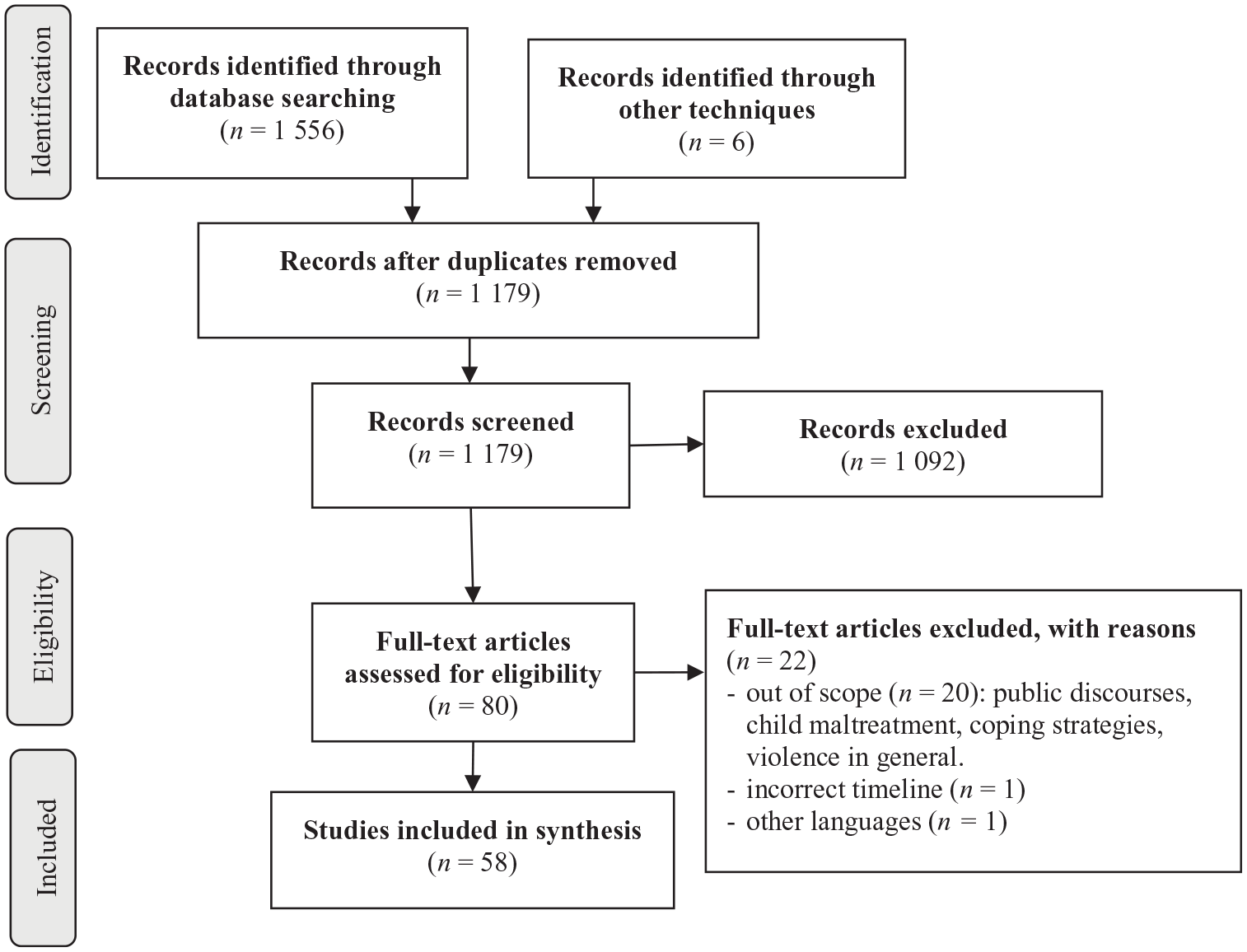
Process flow diagram.
Data Extraction and Analysis
Two researchers (AC and MG) independently extracted data and compared findings to ensure consistency, using a charting form to organize key variables: article title, authors, year of publication, the country where the survey was conducted, purpose/aim related to domestic violence, study design, population, screening methods used, and key findings, including recommendations for practice, policy, and research. The term “domestic violence” was employed as a broad descriptor for violence occurring within domestic contexts (e.g., elder abuse, intimate partner violence, violence against women). Data from North America, South America, Asia, Europe, Africa, and worldwide research were retrieved. The results provided below are organized into these domains for clarity of reporting. Article summaries are listed in Table 1.
Data Chart Original Research.

Note. DV = domestic violence; ER = emergency room; GBMSM = gay, bisexual, and other men who have sex with men; WHO = World Health Organization.
Results
Descriptive Characteristics
The descriptive characteristics of the eligible studies are presented in Table 1. Twenty-six studies presented data from the Americas region (North America: United States n = 20, Canada n = 2, and Mexico n = 1; South America: Peru n = 1 and Brazil n = 2), 15 from the Asian region (South Asia: India n = 4, Jordan n = 3, Nepal n = 1, Bangladesh n = 1, and Pakistan n = 1; West Asia: Lebanon n = 1, Nigeria n = 1, Iraq n = 1, and Iran n = 1; East Asia: Korea n = 1), 8 from Europe (Spain n = 2, United Kingdom n = 2, Italy n = 1, Sweden n = 1, Netherlands n = 1, and Germany n = 1), 5 from the African region (East Africa: Ethiopia n = 3; North Africa (Egypt n = 1 and Tunisia n = 1), and 3 from the Asia-Pacific region (Australia n = 2 and New Zealand n = 1). In an investigation of victims’ encounters with intimate partner violence during the lockdown and the COVID-19 pandemic, forum posts from the United States, the United Kingdom, Canada, Australia, and Cambodia were analyzed. It is important to note that, in the majority of cases, identifying the exact country of origin for these forum posts was not feasible (Lyons & Brewer, 2022).
The majority of studies (n = 47) undertaken to address their research objectives employed quantitative research designs (Abdel Rahman, 2021; Abuhammad, 2021; Abujilban et al., 2022; Agüero, 2021; Akel et al., 2022; Aolymat, 2021; Arenas-Arroyo et al., 2021; Cannon et al., 2021; E. S.Chang & Levy, 2021; Y. R.Chang et al., 2020; de la Miyar et al., 2021; Di Franco et al., 2021; Evans et al., 2021; Every-Palmer et al., 2020; García-Fernández et al., 2021; Gebrewahd et al., 2020; Gerell et al., 2020; Ghimire et al., 2020; Gosangi et al., 2021; Hamadani et al., 2020; Haq et al., 2020; Holland et al., 2021; Hsu & Henke, 2022; Jetelina et al., 2021; Jung et al., 2020; Krishnamurti et al., 2021; Leslie & Wilson, 2020; Mahmood et al., 2022; McLay, 2022; Mohler et al., 2020; Morgan & Boxall, 2020; Muldoon et al., 2021; Naghizadeh et al., 2021; Nix & Richards, 2021; Olding et al., 2021; Pal et al., 2021; Payne et al., 2020; Piquero et al., 2020; Raj et al., 2020; Rhodes et al., 2020; Ribeiro-Junior et al., 2021; Sediri et al., 2020; Sharma & Khokhar, 2022; Singh, 2020; Stephenson et al., 2022; Tadesse et al., 2022; Teshome et al., 2021). Eight studies utilized qualitative methodologies to delve into the nuanced aspects of the phenomena under investigation (Campos et al., 2020; Fawole et al., 2021; Koshan et al., 2020; Lyons & Brewer, 2022; Maji et al., 2022; Nnawulezi & Hacskaylo, 2022; Sabri et al., 2020; Speed et al., 2020). Three studies in this collection employed a mixed design approach, combining both qualitative and quantitative research methodologies (Tierolf et al., 2021; Wood et al., 2022a, 2022b).
Furthermore, a substantial portion of the studies (n = 27) employed a community-based sample (Abdel Rahman, 2021; Abuhammad, 2021; Abujilban et al., 2022; Akel et al., 2022; Aolymat, 2021; Arenas-Arroyo et al., 2021; Cannon et al., 2021; E. S.Chang & Levy, 2021; Every-Palmer et al., 2020; Gebrewahd et al., 2020; Ghimire et al., 2020; Hamadani et al., 2020; Haq et al., 2020; Jetelina et al., 2021; Jung et al., 2020; Krishnamurti et al., 2021; Mahmood et al., 2022; Morgan & Boxall, 2020; Naghizadeh et al., 2021; Pal et al., 2021; Raj et al., 2020; Sediri et al., 2020; Sharma & Khokhar, 2022; Singh, 2020; Stephenson et al., 2022; Tadesse et al., 2022; Teshome et al., 2021). These studies predominantly utilized survey instruments created by the researchers or employed standardized scales, reflecting a methodological emphasis on gathering data directly from community participants to capture their experiences and perspectives in the context of the COVID-19 pandemic. Numerous studies incorporated data from a variety of reports, offering diverse perspectives and information. These studies utilized a diverse array of data sources, including health reports (n = 9;Di Franco et al., 2021; Gosangi et al., 2021; Holland et al., 2021; Muldoon et al., 2021; Olding et al., 2021; Rhodes et al., 2020; Ribeiro-Junior et al., 2021; Y.R.Chang et al., 2020), police reports (n = 8; Evans et al., 2021; Gerell et al., 2020; Hsu & Henke (2022); Leslie & Wilson, 2020; McLay, 2022; Mohler et al., 2020; Nix & Richards, 2021; Piquero et al., 2020; Ribeiro-Junior et al., 2021), reports from help services (n = 2; Agüero, 2021; Fawole et al., 2021), court reports (n = 2; de la Miyar et al., 2021; Koshan et al., 2020), media reports (n = 2; Fawole et al., 2021; Maji et al., 2022), and governmental data (n = 1; Payne et al., 2020). Two studies, conducted by Fawole et al. (2021) and Ribeiro-Junior et al. (2021), employed distinct records as data sources. Fawole et al. (2021) utilized reports from both media and help services, while Ribeiro-Junior et al. (2021) incorporated reports from police and health sources in their analyses. Four studies employed victim-based samples, focusing on individuals who have experienced specific incidents or circumstances related to the topics under investigation (Lyons & Brewer, 2022; Sabri et al., 2020; Tierolf et al., 2021; Wood et al., 2022a). Finally, six studies employed samples derived from service providers (Campos et al., 2020; Nnawulezi & Hacskaylo, 2022; Sabri et al., 2020; Speed et al., 2020; Tierolf et al., 2021; Wood et al., 2022b). Two studies conducted by Sabri et al. (2020) and Tierolf et al. (2021) employed victim-based and service-provider samples.
Geographic Analysis: Results by Regions
North America
Incidence of Domestic Violence
The occurrence of domestic violence in the United States during the COVID-19 pandemic exhibited diverse patterns across multiple investigations. Notably, prevalence rates varied between 10.4% and 18%, as highlighted by Cannon et al. (2021), Jetelina et al. (2021), Raj et al. (2020), and Stephenson et al. (2022), indicating a modest increase compared to prior reports (e.g., 12% as reported by Smith et al., 2018). Correspondingly, Holland et al. (2021) documented heightened domestic violence levels during the pandemic, while Hsu and Henke (2022) observed a 5% uptick in violence coinciding with stay-at-home orders. Leslie and Wilson (2020) reported a noteworthy 10.5% surge in service calls, particularly within the initial 5 weeks. Evans et al. (2021) noted an 11% escalation in domestic violence subsequent to shelter-in-place orders. Rhodes et al. (2020) documented an increase in assaults during lockdown, and Sabri et al. (2020) observed amplified frequency and severity of domestic violence. E. S.Chang and Levy (2021) found a 21.3% prevalence of domestic violence among individuals aged 60 years or older during the pandemic, an 83.6% increase from previous studies. Incidents were reported as occurring more frequently (24.9%) compared to before. Specific elder violence subtypes also increased during the pandemic, with a 114.3% increase in financial mistreatment and a 237.5% increase in physical violence; verbal abuse remained consistent ( E. S.Chang & Levy, 2021). Piquero et al. (2020) noted an initial upswing followed by a subsequent decrease in domestic violence following stay-at-home orders. Krishnamurti et al. (2021) identified comparable levels of violence before and during shelter-in-place, with a slight increase. Gosangi et al. (2021) documented a general decline in reported cases but underscored a troubling rise in physical incidents. Conversely, in Canada, a notable contrast emerged, revealing a substantial increase in psychological abuse compared to sexual and physical abuse, as reported by Muldoon et al. (2021). Also, McLay (2022) indicated a marginal decrease in cases during the pandemic; the same was seen in Mexico (de la Miyar et al., 2021), where a decrease in domestic violence reports was seen.
Risk Factors and Major Concerns
Exploring the multifaceted landscape of risk factors associated with domestic violence during the COVID-19 pandemic, researchers have identified various dimensions. Cannon et al. (2021) shed light on factors such as loss of income, renter status, and nutritional stress, emphasizing the economic and social complexities influencing vulnerability. Jetelina et al. (2021) pinpointed job/income changes as a significant risk factor, while McLay (2022) intriguingly noted a lower likelihood of cases with arrests. E. S.Chang and Levy (2021) found that younger older adults, larger households, poorer health, diminished sense of community, lower adherence to physical distancing, and higher levels of financial strain were risk factors for elder abuse during the COVID-19 pandemic. Mental health emerged as a key facet, with Raj et al. (2020) linking domestic violence to mental health symptoms. Sabri et al. (2020) highlighted the impact of partners being at home and increased stalking/control. Stephenson et al. (2022) delved into risk factors including substance use, skipping meals, and heightened anxiety. Wood et al. (2022a) broadened the perspective, outlining safety concerns related to violence and broader economic and health challenges such as unemployment, food insecurity, and childcare difficulties. This comprehensive understanding of risk factors and their broader implications contributes to a more nuanced approach to addressing domestic violence during challenging times.
Help-Seeking and Help-Provision
Concerns among service providers amid the pandemic were brought to light in the study conducted by Wood et al. (2022b) and Koshan et al. (2020). Wood et al. (2022b) detailed the challenges faced by domestic violence and sexual assault staff, encompassing both personal and professional obstacles. These challenges included perceived decreases in client safety, along with a notable shortage of essential resources for aiding survivors. In a related vein, Koshan et al. (2020) highlighted a pervasive lack of awareness regarding the heightened risks for survivors during the COVID-19 crisis, emphasizing the pressing need for increased awareness and support mechanisms.
South America
Incidence of Domestic Violence
While Agüero (2021) reported a substantial 48% increase in the incidence rate of calls between April and July 2020 in Peru, Ribeiro-Junior et al. (2021) observed a contrasting trend, noting a decrease in domestic violence during the first half of 2020 in Brazil. Interestingly, this reduction persisted even as COVID-19 cases continued to rise, highlighting the complexity of the impact of the pandemic on domestic violence dynamics.
Help-Seeking and Help-Provision
Amid the challenges posed by the COVID-19 pandemic, Campos et al. (2020) shed light on the heightened social vulnerability experienced by women. The study revealed that the pandemic intensified existing vulnerabilities, underscoring the pressing need for targeted support. In response to the evolving circumstances, protective services implemented new emergency measures and care protocols, demonstrating adaptability in their approach to address the unique challenges presented by the pandemic. However, an unfortunate consequence emerged in the form of increased deprivation of remote communication, potentially hindering access to crucial support services. This dual dynamic of heightened vulnerability and adaptive measures in protective services emphasizes the importance of ongoing efforts to enhance help-seeking avenues and ensure that support mechanisms remain accessible, particularly during times of crisis such as the COVID-19 pandemic.
Asia Region
Incidence of Domestic Violence
Studies settled in Asia reported higher values, having found a prevalence of 7.4% (India; Sharma & Khokhar, 2022), 18% (Nepal; Ghimire et al., 2020), 31% (Korea; Y. R.Chang et al., 2020), 35% (Pakistan and Iran; Haq et al., 2020; Naghizadeh et al., 2021), 38.7% (Iraq; Mahmood et al., 2022), 40% (Abuhammad, 2021), and 89.7% (Hamadani et al., 2020), which in the last three studies were almost two times and four times higher than previous studies (e.g., 18%; Smith et al., 2017). In India, Maji et al. (2022) and Pal et al. (2021) observed substantial increases in domestic violence cases during the pandemic and lockdown periods, respectively, indicating a concerning surge in violence. Singh (2020) highlighted the prevalence of high levels of domestic violence, encompassing physical harassment, ill-treatment, and abuse experienced by women in India. Moving to Jordan, Abujilban et al. (2022) noted higher incidences of violence before the quarantine, while Aolymat (2021) reported a significant 20.5% increase in domestic abuse during the pandemic. In Bangladesh, Hamadani et al. (2020) identified marked increases in emotional, physical, and sexual violence since the lockdown. Similarly, Haq et al. (2020) in Pakistan found that 17% of respondents faced emotional violence up to 12 times. Lebanon experienced substantial rates of abuse, with Akel et al. (2022) reporting 41.9% physical, 40.7% psychological, and 38.4% sexual abuse. Fawole et al. (2021) in Nigeria noted that while domestic violence was prevalent before the lockdown, its severity increased or involved new types of violence. In Iran, Naghizadeh et al. (2021) identified disturbing figures, with 32.8% experiencing emotional, 12.4% sexual, and 4.8% physical violence during the pandemic.
Risk Factors and Major Concerns
The intricate interplay between risk factors and domestic violence during the COVID-19 pandemic is evident across diverse countries in Asia. In India, Pal et al. (2021) discovered a significant association between job loss due to the lockdown and increased reports of domestic violence. Singh (2020) identified risk factors in India, including financial crisis, extramarital affairs, and dominant personality traits. Moving to Jordan, Abuhammad (2021) highlighted unemployment and marital issues as key predictors of domestic violence, while Abujilban et al. (2022) emphasized factors like marital conflict, verbal fighting, and a lack of understanding as contributing to the risk of violence. In Nepal, Ghimire et al. (2020) outlined risk factors such as lower age groups, unmarried individuals living with a spouse, lower education levels, and a history of mental disorders, with poor mental well-being and increased substance consumption during lockdown being associated with victimization. In Pakistan, Haq et al. (2020) identified a range of risk factors, including extended households, higher numbers of children, strained relationships, unemployment, anxiety, and disempowerment. Akel et al. (2022) in Lebanon found higher levels of anxiety, stress, depression, and low self-esteem contributing to domestic violence. Fawole et al. (2021) in Nigeria revealed that stressors such as custody disputes, disrupted income, and economic stress during the lockdown heightened the risk of violence, disrupting women’s support networks. In Iran, Naghizadeh et al. (2021) pinpointed self-rated health status, reduced spouse income, aggressive spouse behavior, and the impact of the disease on the relationship as risk factors for domestic violence, with a consequential decrease in the mental health dimension of the quality of life among those exposed to violence.
Europe
Incidence of Domestic Violence
The impact of the COVID-19 pandemic on domestic violence varied across European countries. In Spain, Arenas-Arroyo et al. (2021) reported a concerning 23% increase in violence during the lockdown, highlighting the escalation of domestic violence in this period. Moving to the United Kingdom, Olding et al. (2021) observed a rise in injuries resulting from domestic violence during the lockdown period, even though the proportion of domestic violence cases among total penetrating trauma decreased. Italy, as reported by Di Franco et al. (2021), had a notably low diagnosis rate of domestic violence, constituting only 0.6% of emergency admissions. In Sweden, Gerell et al. (2020) noted a drop in indoor violence during weeks 9–11 of the lockdown, stabilizing at a level slightly lower than expected thereafter. In the Netherlands, Tierolf et al. (2021) found no significant difference in violence before and after the lockdown, indicating a persistence of frequent or serious violence. Germany, as investigated by Jung et al. (2020), witnessed 5% of participants experiencing domestic violence during the pandemic, with women reporting more verbal, physical, and sexual violence compared to men.
Risk Factors and Major Concerns
The impact of the COVID-19 pandemic on domestic violence and associated factors reveals a complex interplay across European nations. In Spain, Arenas-Arroyo et al. (2021) identified risk factors for domestic violence during the lockdown, highlighting the association with economic stress and the confinement of at least one member of the couple. Meanwhile, García-Fernández et al. (2021) in Spain found that females who experienced domestic violence exhibited significantly higher levels of depressive symptoms compared to those who had not, underscoring the profound mental health consequences of domestic violence during the pandemic. In Italy, Di Franco et al. (2021) shed light on the multifaceted impact of the pandemic, with the highest percentages of adverse outcomes such as abortions, impairment of daily activities, psychosomatic symptoms, and anxious-depressive symptoms linked to domestic violence. In the Netherlands, Tierolf et al. (2021) noted the pervasive influence of the coronavirus crisis, which consistently altered the life situations of family members, often leading to heightened stress within families.
Help-Seeking and Help-Provision
The provision of support services for victims of domestic violence during the COVID-19 pandemic in the United Kingdom and the Netherlands faced notable challenges. Speed et al. (2020) in the United Kingdom reported both positive and concerning aspects of service capacity during the outbreak. While some organizations increased their capacity by extending service hours and providing telephone helplines or online facilities, a reduction or withdrawal of support services raised concerns about compromised justice for victims. Only 17 of 40 organizations continued to offer support, indicating a potential gap in assistance for those in need. Accessing justice became a significant worry, with potential delays in criminal trials and a lack of communication with victims. In the Netherlands, Tierolf et al. (2021) highlighted a shift in the format of help provision, with services adapting to the circumstances by employing video calls and telephone communication. These findings underscore the critical importance of maintaining and adapting support services during challenging times, ensuring continued accessibility and effectiveness for individuals experiencing domestic violence.
Africa Region
Incidence of Domestic Violence
The prevalence and impact of domestic violence during the COVID-19 pandemic in African nations shed light on concerning trends. In Ethiopia, Tadesse et al. (2022) reported an overall prevalence of at least one form of domestic violence at 22.4%, highlighting the widespread nature of this issue. Teshome et al. (2021) revealed that 9.5% of individuals in Ethiopia had experienced domestic violence within the year of the interview, with a notable 20.4% reporting an increase in violence after pregnancy and 18.2% perceiving heightened violence following the onset of the COVID-19 outbreak. Gebrewahd et al. (2020) similarly found a high prevalence of domestic violence against women in Ethiopia, reaching 24.6%. This is consistent with values found prior to the pandemic in Ethiopia (e.g., 19.2%–78.0% lifetime domestic violence against women; Semahegn & Mengistie, 2015). In Egypt, Abdel Rahman (2021) identified elevated levels of domestic violence during the pandemic, emphasizing the regional impact of the crisis on interpersonal relationships. Moving to Tunisia, Sediri et al. (2020) observed a significant increase in violence against women during the lockdown, surging from 4.4% to 14.8%.
Risk Factors and Major Concerns
The dynamics and predictors of domestic violence in the African context, particularly in Ethiopia and Egypt, present a complex interplay of sociodemographic factors and pre-existing conditions. In Ethiopia, Tadesse et al. (2022) identified several risk factors for domestic violence, including illiteracy, having an illiterate husband, substance use, and a community-tolerant attitude toward violence. Teshome et al. (2021) highlighted drug and alcohol use as predictors of domestic violence in Ethiopia, underscoring the role of substance abuse in contributing to such incidents. Gebrewahd et al. (2020) identified risk factors such as being an uneducated housewife, aged younger than 30 years, women with arranged marriages, and having a husband aged “between” 31 and 40 years. In Egypt, Abdel Rahman (2021) explored the impact of years of marriage and sex as predictors of domestic violence during the pandemic. The study in Tunisia by Sediri et al. (2020) revealed that pre-pandemic violence was a significant predictor of violence during the lockdown, with individuals having a history of domestic violence experiencing a much higher rate of violence during the pandemic. Moreover, the association between domestic violence and higher scores of depression, anxiety, and stress highlights the psychological toll of violence in this context.
Asia-Pacific Region
Incidence of Domestic Violence
In Australia, Payne et al. (2020) observed that the rate at which domestic violence orders were breached remained unchanged. Nevertheless, another study developed in this area (Morgan & Boxall, 2020) found that 2.9% of women reported experiencing physical or sexual violence by their partner for the first time during the pandemic and 67% of those who had experienced prior violence reported a repeat act of physical or sexual violence during the pandemic. In New Zealand, Every-Palmer et al. (2020) reported that 9.1% of participants directly experienced some form of family harm during the lockdown period, with an additional 3.9% witnessing family harm in which they were not the victim.
Risk Factors and Major Concerns
Morgan and Boxall (2020) identified risk factors and predictors in the Australian context, revealing that individuals with less frequent social interaction with friends or family, spending less time at home, and experiencing a higher level of financial stress were more susceptible to the occurrence of domestic violence during the pandemic.
Multinational Studies
Lyons and Brewer (2022) conducted a global analysis, identifying common themes among posts associated with domestic violence victims’ experiences during lockdown and the global pandemic. The identified themes included the abuser’s use of COVID-19 as a tool, such as making eviction threats, disruptions in essential services like shelters and counseling, delays in victims’ attempts to leave abusive situations, and various factors contributing to increased abuse or distress, such as financial stress and isolation. This comprehensive examination highlights the diverse challenges faced by domestic violence victims across different regions during the pandemic.
Recommendations for Practice and Policy
The screening and assessment of domestic violence cases felled on frontline professionals (e.g., law enforcement, healthcare professionals, and social professionals), as well as in neighbors and communities during COVID-19 pandemic quarantines and shelter-in-place mandates. For example, several studies advocated for improved public awareness about the risk factors and warning signs of domestic violence (Akel et al., 2022; Cannon et al., 2021; E. S.Chang & Levy, 2021; Evans et al., 2021; Fawole et al., 2021; Holland et al., 2021; Jetelina et al., 2021; Lyons & Brewer, 2022; Mahmood et al., 2022; Rhodes et al., 2020; Sharma & Khokhar, 2022; Singh, 2020). Some authors cited the need for professionals to cooperate among themselves and with the public to improve domestic violence assessments and interventions during the COVID-19 pandemic (Campos et al., 2020; Cannon et al., 2021; Gebrewahd et al., 2020; Mahmood et al., 2022; Maji et al., 2022; Muldoon et al., 2021; Nix & Richards, 2021; Sediri et al., 2020).
The need for new national and institutional policies during the pandemic crises was also discussed. Those policies help reinforce and expand these cooperative strategies and develop new prevention, identification, and support approaches (Agüero, 2021; Akel et al., 2022; Evans et al., 2021; Every-Palmer et al., 2020; Haq et al., 2020; Maji et al., 2022; Naghizadeh et al., 2021). Approaches should include evidence-based measures and special resources/incentives to address violence in national response plans during and after the COVID-19 pandemic (Abujilban et al., 2022; Evans et al., 2021; Hamadani et al., 2020; Hsu & Henke, 2022; Jung et al., 2020; Koshan et al., 2020; Lyons & Brewer, 2022; Nnawulezi & Hacskaylo, 2022; Rhodes et al., 2020; Sabri et al., 2020; Sediri et al., 2020). Examples included improving communication and public health approaches (e.g., improving helplines responses and communication, public campaigns, enhancing gender equality, and community- and institution-based approaches; Abuhammad, 2021; Evans et al., 2021; Sabri et al., 2020; Sharma & Khokhar, 2022; Speed et al., 2020; Tadesse et al., 2022), providing housing and economic stability (Evans et al., 2021; Hamadani et al., 2020; Hsu & Henke (2022); Nnawulezi & Hacskaylo, 2022; Raj et al., 2020), providing individualized and flexible services in all areas (Koshan et al., 2020; Nnawulezi & Hacskaylo, 2022), supporting victims to recognize/respond to different forms/levels of violence and to ensure that victims are aware of exceptions to social distancing (Lyons & Brewer, 2022). Also, funding should be directed to service providers to support and help victims leaving violent situations (Jetelina et al., 2021; McLay, 2022; Naghizadeh et al., 2021), and toward (comprehensive and culturally) specific services (Sabri et al., 2020; Speed et al., 2020; Wood et al., 2022b). Additionally, strategies should include the empowerment and reinforcement of (non)governmental organizations and their inclusion in policy decisions (Akel et al., 2022; Cannon et al., 2021; Hamadani et al., 2020).
Since the healthcare system may have a privileged place in the identification and assessment of violence during the pandemic, the reproductive and health systems should take important and proactive measures to reduce the risk of violence in addition to other sectors that usually intervene within this population (e.g., mental health, social, and judicial support services; Aolymat, 2021; Di Franco et al., 2021; Fawole et al., 2021; Gosangi et al., 2021; Krishnamurti et al., 2021; Naghizadeh et al., 2021). Such strategies include the implementation of screening protocols (e.g., traumatic injuries, psychosomatic symptoms, and anxious-depressive symptoms; Di Franco et al., 2021; E. S.Chang & Levy, 2021; Sabri et al., 2020; Sharma & Khokhar, 2022), include the proactive participation of other care providers that usually do not intervene with victims (e.g., radiologists; Gosangi et al., 2021), and consider the unique needs of pregnant women mitigating pregnancy-related risks (Krishnamurti et al., 2021). The need to identify and target vulnerable groups (e.g., based on gender, sexual orientation, economic status, migrant situation, prior violence, and other sociodemographic information; Abujilban et al., 2022; Arenas-Arroyo et al., 2021; Every-Palmer et al., 2020; García-Fernández et al., 2021; Ghimire et al., 2020; Gosangi et al., 2021; McLay, 2022; Olding et al., 2021; Raj et al., 2020; Stephenson et al., 2021; Wood et al., 2022a) was also emphasized.
Some authors highlighted the need for (non)governmental agencies to implement new evidence-based response/intervention programming (Abdel Rahman, 2021; Holland et al., 2021; Krishnamurti et al., 2021; Raj et al., 2020; Rhodes et al., 2020; Sabri et al., 2020). Suggestions for practice included the development of psychological support services (Abdel Rahman, 2021; Every-Palmer et al., 2020; Sediri et al., 2020; Y. R.Chang et al., 2020) through traditional and e-therapies and telehealth support (Abdel Rahman, 2021; Every-Palmer et al., 2020; Holland et al., 2021; Krishnamurti et al., 2021; Raj et al., 2020) while ensuring that the technical conditions are in place (Tierolf et al., 2021). Agencies are encouraged to develop prevention and intervention educational programs directed to professionals in all areas and society in general (Abuhammad, 2021; Haq et al., 2020; Jetelina et al., 2021; Koshan et al., 2020; Lyons & Brewer, 2022; Maji et al., 2022; Nix & Richards, 2021; Sabri et al., 2020; Sediri et al., 2020). Authors indicated that workers should gain competence in domestic violence increased risk, trauma-informed care and interviewing techniques, and cultural intricacies among immigrant victims (Jetelina et al., 2021; Lyons & Brewer, 2022; Nix & Richards, 2021; Sharma & Khokhar, 2022). Organizations should also give training in digital skills while ensuring that professionals have access to guidelines and information about digital contact (e.g., about privacy or the extent to which assistance could be provided; Tierolf et al., 2021; Wood et al., 2022a, 2022b). Societies should be educated and prepared to shatter the existing power hierarchy based on gender (Maji et al., 2022). Given the potential negative consequences of responding to domestic violence incidents, a trauma-informed organizational culture should be implemented, and workers should have access to support services (e.g., mental health; Nnawulezi & Hacskaylo, 2022; Nix & Richards, 2021; Wood et al., 2022b).
Recommendations for Research
The literature also highlighted key recommendations for future research that would advance this field of study. Few studies called for researchers to address the impact of the COVID-19 pandemic on the mental health of victims and on other areas related to domestic violence (e.g., related injuries, women’s empowerment, and mental health problems, evaluation of services, and impact on workers; Evans et al., 2021; Hamadani et al., 2020; Olding et al., 2021; Wood et al., 2022b; Y. R.Chang et al., 2020). The need for similar and comparative investigations in other countries was also discussed (Gerell et al., 2020; Haq et al., 2020), along with the importance of incorporating additional data and analysis to examine the impact of the COVID-19 pandemic on domestic violence incidents (e.g., hotline data, law enforcement data, emergency medical services, neighborhood-level changes, the role of social media in domestic violence communication ecologies, understand if financial aid help reduces domestic violence during the pandemic, account for seasonal and other variations; Agüero, 2021; Cannon et al., 2021; Every-Palmer et al., 2020; Holland et al., 2021; McLay, 2022; Mohler et al., 2020; Nix & Richards, 2021; Payne et al., 2020; Raj et al., 2020; Rhodes et al., 2020; Ribeiro-Junior et al., 2021). Authors cited the need to study the effectiveness of specific interventions and services in this population to guide practice (e.g., culture-sensitive interventions, online counseling, and digital services; Abdel Rahman, 2021; Cannon et al., 2021; Maji et al., 2022; Pal et al., 2021; Sabri et al., 2020).
The literature also called for researchers to address methodological problems (e.g., generalization; Mohler et al., 2020) by including larger, random, and more representative samples (Fawole et al., 2021; Ghimire et al., 2020; Jetelina et al., 2021) and by controlling social desirability effects (Jung et al., 2020). Some authors demonstrated the importance of including all social classes and priority/minority groups like children, adolescents, women, refugees, those in same-sex relationships, and men in relationships with female perpetrators from an intersectional framework point of view (Abujilban et al., 2022; Every-Palmer et al., 2020; Ghimire et al., 2020; Jetelina et al., 2021; Lyons & Brewer, 2022; Mahmood et al., 2022; Stephenson et al., 2021). Further recommendations included the need for different research methodologies (e.g., qualitative, quantitative, or mixed-methods design, Difference-in-Differences study designs; Abuhammad, 2021; Every-Palmer et al., 2020; Fawole et al., 2021; Hamadani et al., 2020; Jetelina et al., 2021; Muldoon et al., 2021; Payne et al., 2020; Tadesse et al., 2022), and longitudinal studies (Ghimire et al., 2020; Raj et al., 2020; Wood et al., 2022a). A final key recommendation is to increase open data sharing between research and practice (McLay, 2022).
Discussion
The present integrative review systematically aimed to synthesize literature on the repercussions of the COVID-19 pandemic on domestic violence crime and to inform and enhance practice, policy-making, and future research. Overall, a consistent finding across global studies indicated an increase or high levels of domestic violence victimization since the onset of the pandemic. Various ecological factors were identified as potential explanations for this increase. At the individual level, lower physical and mental health was a risk factor for increased violence (Akel et al., 2022; E. S.Chang & Levy, 2021; García-Fernández et al., 2021; Naghizadeh et al., 2021; Raj et al., 2020). These physical and mental health challenges can reduce a person’s ability to cope with stress, leading to an increased likelihood of domestic violence. Additionally, the rise in substance use during the pandemic was another critical factor (Haq et al., 2020; Stephenson et al., 2021; Teshome et al., 2021). Substance abuse can impair judgment and increase aggression, making individuals more prone to perpetrating or becoming victims of domestic violence. Furthermore, lower education levels and illiteracy were associated with a higher risk of domestic violence (Gebrewahd et al., 2020; Tadesse et al., 2022). These factors can limit access to information and resources, reducing the ability to seek help or understand the risks and signs of domestic violence. At the relationship level, the pandemic’s lockdown measures forced families to spend more time together, often in confined spaces. Living in larger households, where increased stress and conflict can lead to domestic violence, was a risk factor identified (Abdel Rahman, 2021; Abujilban et al., 2022; E. S.Chang & Levy, 2021; Haq et al., 2020; Singh, 2020). Moreover, the lockdowns meant that victims had to spend more time with their abusers, increasing the risk of violence (Lyons & Brewer, 2022; Sabri et al., 2020). Finally, at the environmental level, financial stress was a well-documented risk factor for domestic violence (Cannon et al., 2021; Jetelina et al., 2021; Pal et al., 2021; Wood et al., 2022a), as it can have heightened tensions within households. Social distancing measures reduced the opportunities for social interaction, cutting off vital support networks for victims. Isolation can prevent victims from seeking help and support, making them more vulnerable to abuse (Morgan & Boxall, 2020; Tierolf et al., 2021). The pandemic also disrupted many support services, such as shelters, hotlines, and counseling services. This made it harder for victims to access the help they needed, exacerbating the impact of the pandemic on domestic violence (Campos et al., 2020; Fawole et al., 2021; Lyons & Brewer, 2022; Speed et al., 2020; Tierolf et al., 2021). In some communities, there is a cultural or social tolerance toward domestic violence. This can be exacerbated in times of crisis as community resources and attention may be diverted to other issues, reducing the focus on preventing and addressing domestic violence and enhancing the risk of violence (Gebrewahd et al., 2020; Tadesse et al., 2022).
These ecological risk factors for domestic violence can also serve as barriers to help-seeking, exacerbating the challenges victims face in reaching out for support and escaping abusive situations. These barriers may also help explain the disparate outcomes observed in other studies within the same regions (e.g., Europe). For example, at the individual level, lower mental health (e.g., depression, and low self-esteem; Akel et al., 2022; Raj et al., 2020) can affect a victim’s ability to seek help. At the relationship levels, imbalances of power within relationships can deter victims from reporting abuse due to fear of retaliation or loss of control (Sabri et al., 2020). Additionally, as most complaints are self-reported by victims, the reporting of domestic violence during lockdowns depends on victims’ ability to make complaints while sharing domestic spaces with perpetrators (Ratnam, 2020, cited in Kumar, 2020). At the environmental level, governmental restrictions due to COVID-19 compelled victims to reduce contact with individuals outside their domestic sphere, including formal and informal support networks (Sacco et al., 2020). The pandemic’s impact on face-to-face interactions hindered victims from accessing support and posed challenges for professionals in providing necessary responses to such cases (Cortis et al., 2021), reinforcing feelings of helplessness among victims. Indeed, while this review showed that service adaptations such as extended hours, virtual consultations, and new emergency measures were implemented to address the evolving needs (Speed et al., 2020; Tierolf et al., 2021), professionals faced challenges when supporting their clients (e.g., decreased client safety, resource shortages, and a lack of awareness about the heightened risks for survivors; Koshan et al., 2020; Wood et al., 2022b). Additionally, decreased police interventions and limited access to the justice system during quarantine hindered reporting and contributed to a lack of accountability (Telles et al., 2021). Essential forensic activities in domestic violence courts, such as forensic examinations of abuse victims, underwent significant changes (Esposito et al., 2022). Forensic practitioners used virtual platforms for evaluations to maintain health and safety and ensure the resolution of criminal and other forensic cases (Mulay et al., 2021). While research on the use of virtual evaluations is limited, findings suggest that the benefits outweigh the concerns (Mulay et al., 2021). These approaches can save resources for organizations and individuals, prevent delays in proceedings, and protect victims from exposure to their perpetrators (Mulay et al., 2021).
Recommendations for Future Research
Considering that the effects of the COVID-19 pandemic on families are expected to extend beyond the “stay-at-home” orders, and the risks of family violence are likely to persist for some time (Humphreys et al., 2020), additional research is needed and recommended. A literature review revealed a dearth of mental health interventions tailored to domestic violence victims in the context of COVID-19 (Su et al., 2021). Consequently, intervention research emerges as a priority to determine effective strategies for addressing domestic violence amid future health crises. Moreover, exploring how victims of domestic violence perceive the measures adopted by support institutions during the COVID-19 pandemic is equally critical. This research is pivotal for ensuring the success of response strategies in combating domestic violence not only in the current crisis but also in future health emergencies. Understanding the perspectives of victims provides valuable insights that can inform the development and adaptation of support systems to better meet the needs of those experiencing domestic violence during challenging times.
Furthermore, acknowledging that comprehending the perspectives and experiences of perpetrators is essential for a comprehensive understanding of the impact of the COVID-19 pandemic on the phenomenon of domestic violence is a proactive approach. To fully address this complex issue, researchers should consider incorporating the viewpoints of perpetrators into their investigations during this period. This approach is particularly relevant as background risk factors, such as childhood history variables, sociodemographic characteristics, abuse, and family of origin problems, may pose challenges to investigation in adulthood (Costa et al., 2015). Examining perpetrators during the pandemic becomes crucial, given previous research indicating that changes in situational circumstances can influence perpetration levels. Factors such as loss of support, food security, housing, and substance use have been identified as impacting perpetration (Adhia et al., 2020), and these dynamics need to be considered in the context of the COVID-19 pandemic. Additionally, the heightened use of technologies during this period (Vargo et al., 2021) has provided perpetrators with new avenues, and research must recognize these technological dynamics within the context of abusive relationships. Gaining insights into the behaviors of perpetrators, considering the unique circumstances brought about by the pandemic, is vital for addressing and ultimately combating domestic violence in a post-pandemic era. By delving into the experiences and perspectives of both victims and perpetrators, researchers can contribute to a more nuanced and comprehensive understanding of the intricate dynamics at play in domestic violence during and after the COVID-19 pandemic.
Our review underscores a gap in studies addressing how the intersectionality of vulnerabilities may influence domestic violence during the COVID-19 pandemic. Despite emerging evidence indicating that members of minority groups often experience higher levels of domestic violence (as observed in studies by Stiles-Shields & Carroll, 2015 and Taft et al., 2009), these groups are underrepresented in the articles included in our review. Notably, immigrants face additional challenges, such as living illegally in the host country, lack of social support, social exclusion, and poverty, as highlighted by Gonçalves and Matos (2016). Similarly, race/ethnic minorities encounter issues like a shortage of resources, racism, discrimination, mistreatment, and cultural barriers, as identified by Taft et al. (2009). Gender/sexual minorities also confront unique challenges, including seeking shelter, discrimination, and mutual battering, as explored in the work of Stiles-Shields and Carroll (2015).
To address these gaps, future studies should explicitly adopt an intersectionality framework, as advocated by scholars like Nixon and Humphreys (2010), when analyzing the impact of the COVID-19 pandemic on domestic violence. This approach is crucial for understanding how support services can better cater to the needs of these diverse populations facing compounded vulnerabilities. Additionally, our review highlights a deficiency in domestic violence research among men in heterosexual relationships, despite indications that men may also be victims of domestic violence. Studies, such as those cited by Scott-Storey et al. (2022), underscore the importance of addressing limitations in interventions and expanding research efforts to encompass the experiences of men in heterosexual relationships. Closing this gap is essential for a more comprehensive understanding of domestic violence dynamics and ensuring that support services are inclusive and effective for all individuals, regardless of gender or sexual orientation.
Finally, recognizing the inherent stress associated with working with domestic violence victims is crucial, as highlighted by Maslach and Leiter (2016). The unique demands of this profession, coupled with the escalating workload during the pandemic, place professionals dealing with domestic violence at risk of developing various mental health problems. These issues include but are not limited to secondary traumatic stress, increased stress levels, sleep problems, and headaches, as noted by Joshi and Sharma (2020) and McLean and McIntosh (2021). Further research focusing on professionals working with domestic violence victims is imperative. This research should delve into the comprehensive impact on their mental health, quality of life, and working conditions. The scope of this investigation should extend across diverse sectors, including social services, healthcare, justice, and shelter organizations. Such research is essential for gaining a nuanced understanding of the challenges faced by professionals in different contexts and developing targeted support mechanisms to address their specific needs.
Study Limitations
This study faced some limitations. This review only included empirical studies published in English, Portuguese, French, or Spanish that appeared in peer-reviewed journals. Therefore, this review may leave out several other studies (un)published about the impact of COVID-19 on the domestic violence phenomenon. In addition, while our search was comprehensive, it was not exhaustive—some outcomes could have been missed, especially the ones outside the scope of our review.
Conclusions
The COVID-19 pandemic was a time of unique vulnerability yet an opportunity to address and investigate domestic violence using an ecological framework approach. Expanding the research on domestic violence will allow researchers to understand unique factors that may impact specific groups, which could have further implications for domestic violence prevention and designing specific interventions for those groups. Furthermore, institutions require robust ways to assess the success of practices, including impacts on staff and users of service, and existing studies do not generally cover the full picture of professionals’ and victims’ experiences with support services during this period. Indeed, since the impact that the pandemic had on domestic violence will long outlive the health crisis, existing research may be insufficient to clearly inform professionals/institutional practices and guide policy decisions regarding the support of domestic violence victims during and after the COVID-19 pandemic. Recognizing the mutual benefit of research-practice partnerships is vital to addressing and preventing domestic violence. Creating those engaging collaborative and participatory alliances may have long-lasting benefits for the health and safety of individuals, families, and communities. Tables 2 and 3 summarize the key findings and recommendations for practice, policy, and research.
Summary of Critical Findings.

Summary of Implications for Practice, Policy, and Research.

Supplemental Material
sj-docx-1-tva-10.1177_15248380241277788 – Supplemental material for Understanding the Dynamics of Domestic Violence During the First Year of the Pandemic: An Integrative Review
Supplemental material, sj-docx-1-tva-10.1177_15248380241277788 for Understanding the Dynamics of Domestic Violence During the First Year of the Pandemic: An Integrative Review by Ana Cunha, Mariana Gonçalves and Marlene Matos in Trauma, Violence, & Abuse
Footnotes
Data Availability Statement
In this integrative review, no new data were generated. The data presented are from previously published studies.
Declaration of Conflicting Interests
The author(s) declared no potential conflicts of interest with respect to the research, authorship, and/or publication of this article.
Funding
The author(s) disclosed receipt of the following financial support for the research, authorship, and/or publication of this article: This work was conducted at the Center of Investigation in Psychology (PSI/01662), School of Psychology, University of Minho (PSI/01662), supported by the Foundation for Science and Technology (FCT) through the Portuguese State Budget (UIDB/PSI/01662/2020); and a PhD fellowship awarded to Ana Cunha (Ref. 2020.10255.BD, DOCTORATES 4 COVID-19) co-funded by the FCT and the European Social Fund (FSE) Program.

Supplemental Material
Supplemental material for this article is available online.
Author Biographies
References
Supplementary Material
Please find the following supplemental material available below.
For Open Access articles published under a Creative Commons License, all supplemental material carries the same license as the article it is associated with.
For non-Open Access articles published, all supplemental material carries a non-exclusive license, and permission requests for re-use of supplemental material or any part of supplemental material shall be sent directly to the copyright owner as specified in the copyright notice associated with the article.
