




Abstract
Intimate partner violence (IPV) is a global health problem enacted with varying degrees of severity, leading to mental and physical damage. Despite the acknowledgment that perpetration can be enacted in a subtle or covert way, there is a paucity of literature defining and describing such subtle abuse. Consequently, understanding about the behaviors and impacts of subtle abuse is limited, and there is a potential inability by therapists to recognize it in their clients. This scoping review sought to identify and synthesize the literature around subtle or covert abuse (SCA) in intimate adult relationships to clarify the concept, with the aim to aid professional recognition. PsychINFO (EBSCO), MEDLINE Complete (EBSCO), CINAHL (EBSCO), PsychArticles (EBSCO), Scopus, ProQuest Dissertations and Theses Global, and EThOS were searched using relevant search terms. In total, 19 studies met the inclusion criteria by containing a description or definition of abuse based on primary research with adults in intimate partner relationships. Findings were synthesized using descriptive content analysis under four headings: (a) Descriptions and groupings of SCA behaviors, (b) The impact of SCA on victims, (c) Underlying theories of SCA, and (d) Recognition by professionals. This review suggests that SCA may be the most damaging of all abuses.
Introduction
Intimate partner violence (IPV) is an international epidemic negatively affecting physical and mental health (Bonomi et al., 2006; García-Moreno et al., 2005). Heterosexual abused women are more likely than nonabused women to suffer from physical health complaints, such as headache, backache, sexually transmitted diseases, other gynecological problems, and digestive problems (Campbell et al., 2002; Coker et al., 2002), as well as depression, posttraumatic stress disorder, and anxiety (Dokkedahl et al., 2022; Lagdon et al., 2014). Adverse effects have also been recorded with less researched groups such as heterosexual male victims (Orzeck et al., 2010; Randle & Graham, 2011) and victims in same sex couples (Donovan et al., 2006).
In March 2022, the UK Office of National Statistics (ONS) estimated nearly one and a half million UK victims of IPV. Of these, 84.3% experienced nonphysical IPV (ONS, 2022). Although historically IPV research has focused on physical abuse (Gelles, 1972; Straus, 1977), research into nonphysical abuse (NPA) has expanded over the past 30 years. The growing body of research has focused on specific NPA such as emotional (Ireland & Birch, 2013), psychological (Follingstad, 2011), sexual (Karantzas et al., 2016), financial (Postmus et al., 2020), pet abuse (Fitzgerald et al., 2020), or general NPA (Hurst, 2015; James & MacKinnon, 2010; Outlaw, 2009). However, none of these areas of research explore the full spectrum of abuse or investigate the subtle end of this spectrum.
This subtle end of the abuse spectrum has long been recognized. For example, Tolman included subtle experiences of abuse in the Psychological Maltreatment of Women Inventory (Tolman, 1989). However, it appears that little research has been conducted to expand our understanding of more subtle abuse. While some literature aims to aid researchers and clinicians by reviewing how specific IPV terms are used, such as “coercion” (Dutton & Goodman, 2005), “coercive control” (Hamberger et al., 2017) “abuse,” “aggression” or “violence” (Follingstad, 2007) and “typologies of violence” (Johnson, 2008), the concept of subtle or covert abuse (SCA) has not been defined in published literature to date. With no accepted definition of SCA, we know little about how such abuse is perpetrated or experienced, its prevalence and impact, or if there are those who experience solely SCA. Without such conceptualization, there is no basis for researchers to explore the effects of SCA on an individual or a societal level or for clinicians to identify those who are victims of SCA (Marshall, 1996; Streker, 2012).
Those experiencing distress through unidentified subtle IPV (Halliwell et al., 2021; Panagiari, 2020) may turn to someone they know (70.7%) (ONS, 2022) or to professional therapists (Gregory et al., 2017; Marsden et al., 2022). However, due to the paucity of literature in this area, therapists lack the knowledge to identify experiences of SCA in intimate relationships. Abusive relationships can therefore be missed, and in some cases, therapeutic work may even enable it to continue (Marsden et al., 2021).
This review aims to define the concept of SCA. Such a definition will provide a basis for future research to fill the gaps in the literature described above, which, in turn, will enable better therapist recognition of clients’ experiencing subtle abuse.
Methods
Scoping Review Overview
Our objective was to use scoping review methods to understand how SCA has been described in literature to date. Scoping reviews enable data from a variety of literature sources to be combined to better understand a concept (Sucharew & Macaluso, 2019; Tricco et al., 2018). This review followed the Joanna Briggs Institute Manual for Evidence Synthesis (Peters et al., 2020). A protocol was published a priori (Parkinson et al., 2023).
Search Strategy
The review question: “How does published literature describe SCA within heterosexual or same-sex intimate partner relationships?” was used to direct the study and search strategy. Due to the aim of improving therapist recognition a second review question was “What advice does published literature offer to therapists on how to recognise or work with subtle abuse?” Initial search terms were based on Gregory et al.’s (2017) systematic review into the impact on friends and family of supporting a victim of IPV, a concept analysis (unpublished) conducted by the first author, and key words from articles mentioning SCA. Owing to the quantity of potential search terms and considerable results’ lists, a specialist health sciences librarian was consulted. The librarian recommended targeting the review to those terms in the research question. Targeting enabled a meaningful review to be conducted without exceeding the resources of the team. The primary terms were “subtle” and “covert,” the secondary term was “abuse,” and tertiary terms were “partner” or “domestic.”
The following databases were searched: PsychINFO (EBSCO), MEDLINE Complete (EBSCO), CINAHL (EBSCO), PsychArticles (EBSCO), as well as the index Scopus. ProQuest Dissertations and Theses Global, and EThOS were also searched.
Inclusion Criteria
The time frame used was 1950 to March 2023. The early start date aimed to ensure pivotal work was captured due to the limited literature on the concept in question as indicated by the concept analysis (unpublished). Participants in included literature were adults over 18 who had experienced SCA in their intimate adult relationships. There was no exclusion on research methods. Inclusion was restricted to literature that specifically used the terms “subtle” or “covert” abuse. Sources included peer-reviewed articles, books based on primary research, discussion papers, or book chapters, and doctoral theses. Only work published in English was included due to the language limitation of the researchers.
Data Extraction
Potentially relevant works, based on titles, were downloaded into Mendeley and duplicates removed. After abstract and full-text screening, clearly irrelevant works were removed. The remaining texts were checked for relevance by the third author with differences of opinion resolved through discussion. Included works were hand searched for relevant references, as were forward citations. Definitions or descriptions of SCA were then extracted into a data extraction tool, developed a priori. Not published here due to size, but these data are available on reasonable request.
Synthesis of Results
Descriptive content analysis (Grbich, 2022; Tricco et al., 2016; Vaismoradi et al., 2013) was used to synthesize the descriptions of SCA. Data extracts from works were grouped according to similarities of topic in an inductive, iterative approach. These were discussed and agreed as a team. These were named, indicating the meaning of foci central to understanding the concept. These were then used to create a definition and visual map of subtle abuse, as described by the review literature.
Results
In total, 39 works met our inclusion criteria. See Figure 1: Prisma flow diagram for search results. Three of these texts were not available online; these were obtained by library loan and by purchasing books, and searched manually for the review terms. Abstract reading of journal articles eliminated 19 works. The remaining 20 works were read in full, which excluded a further 10 sources. References and forward citations of the remaining 10 were searched in the same way as the original database results. A further nine works were found.
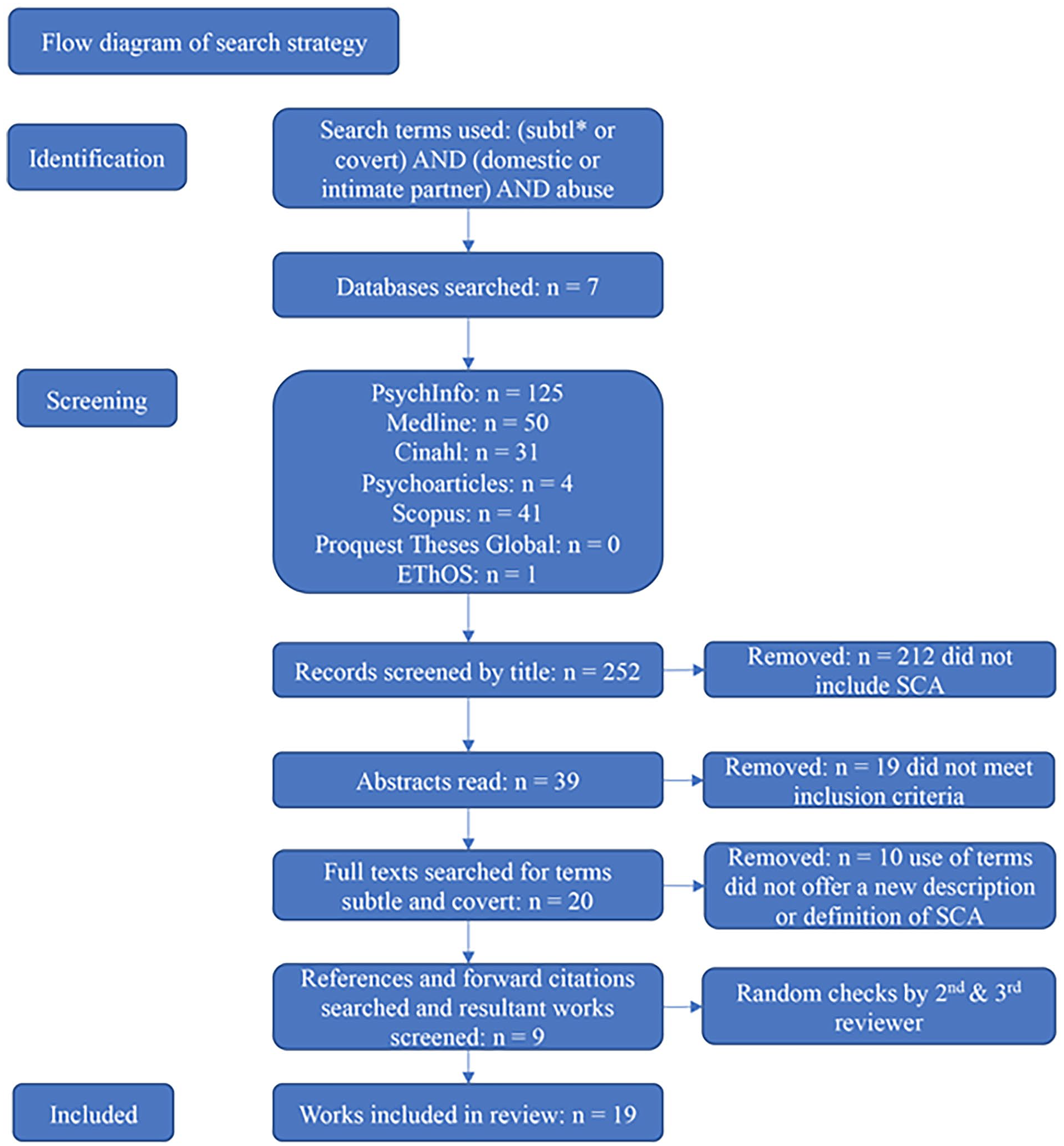
Flow diagram of search strategy with results of searches conducted on March 13, 2023.
The final 19 items that met our inclusion criteria included one book (Loring, 1994) and one book chapter (Marshall, 1994), both based on original research, four discussion or summary of research articles, six journal articles based on original research, and seven PhD theses. Works ranged in date from 1994 to 2020. Of the works based on original research, three used quantitative methods, five used mixed methods, and six used qualitative methods, while one thesis was written as a PhD by practice (Neal, 2022). Of the 14 primary research studies, 10 were conducted with only women, one was with men only and the remaining three included men and women participants. Included works were from the United States, New Zealand/Aotearoa, Australia, Tasmania, Iran, Africa, Spain, Scotland, and the United Kingdom. Table 1 shows the final 19 included works including demographic data.
Final Selection of Works for Review with Study Information.
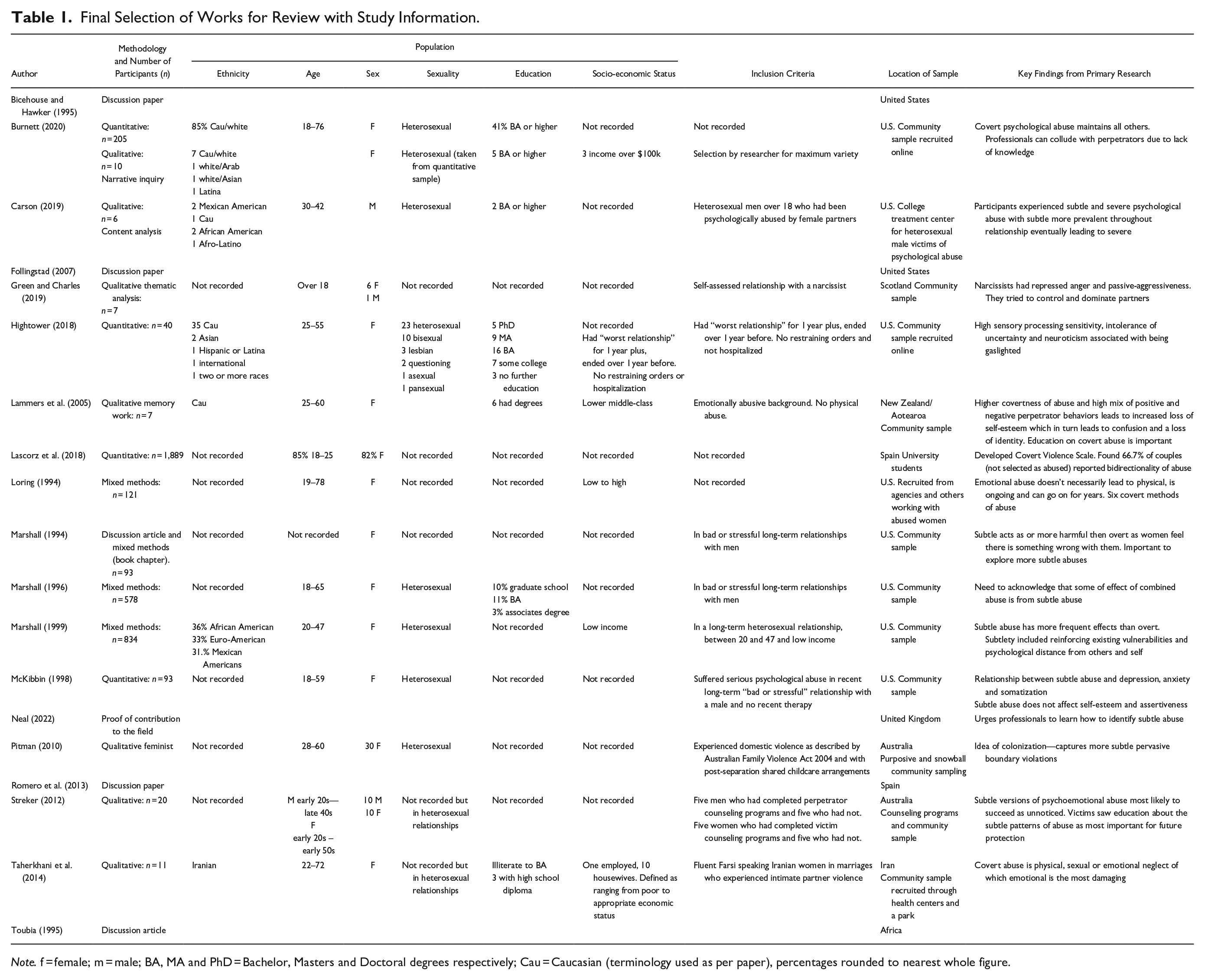
Note. f = female; m = male; BA, MA and PhD = Bachelor, Masters and Doctoral degrees respectively; Cau = Caucasian (terminology used as per paper), percentages rounded to nearest whole figure.
Extraction of Results
Only three works had a specific focus on SCA (although none of these recruited participants who had only experienced SCA): Burnett (2020), Lascorz et al. (2018), and Marshall (1994). Other works included SCA as part of a spectrum of abuse from subtle to extremely overt. Through discussion as a team, we identified four main categories within the literature: (a) descriptions and groupings of SCA behaviors, (b) the impact of SCA on victims, (c) underlying theories of SCA, and (d) recognition by professionals.
Although none of the works offered a specific definition of SCA, four gave a description of SCA behaviors, presented in Table 2.
Descriptions of Subtle or Covert Abuse (SCA) Behaviors.
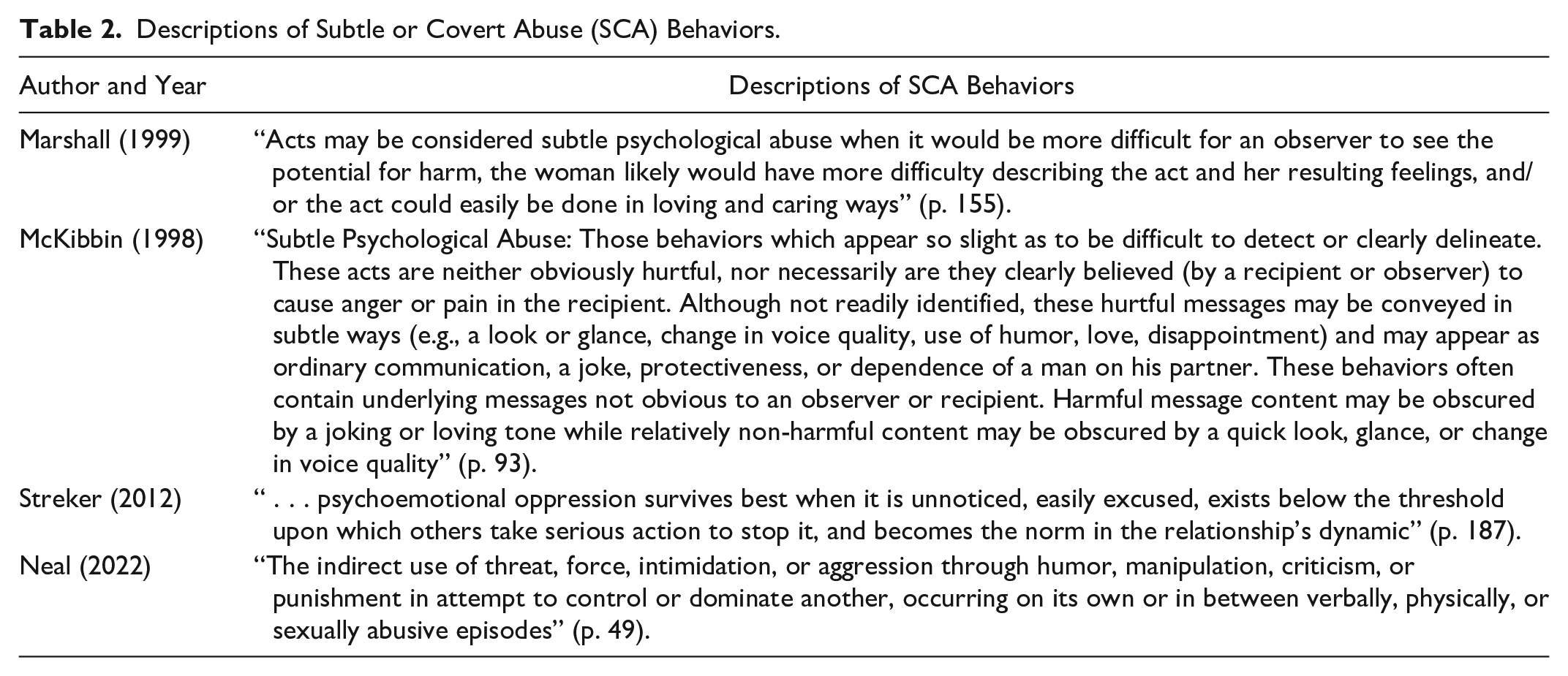
Key contributions from these descriptions to our understanding of SCA are the action of the perpetrator being “indirect” (Neal, 2022) or “done in loving or caring ways” (Marshall, 1999; McKibbin, 1998). In addition, actions of the perpetrator are described as being “easily excused” (Streker, 2012) while becoming “the norm” (Streker, 2012) in the relationship. The acts are “unnoticed” (Streker, 2012) or “difficult to detect” (McKibbin, 1998), existing “below the threshold upon which others take serious action” (Streker, 2012) and a victim “would have more difficulty describing” (Marshall, 1999) the experience while not being obviously harmed by it (McKibbin, 1998). In addition to these descriptions of actions, authors proposed hypotheses about SCA. For example, that SCA’s impact may be due to an accumulation of the effects, such as on the sense of self (Marshall, 1994), and that the normalization of the behaviors may contribute to the confusion experienced by victims (Streker, 2012).
Included works are divided on whether SCA is prevalent throughout the relationship and a precursor to more severe abuse (Carson, 2019; Taherkhani et al., 2014); exists alongside other abuses (Neal, 2022); does not always lead to physical abuse and can exist for many years (Loring, 1994); necessarily leads to other abuses (Marshall, 1999) or can be experienced in isolation (McKibbin, 1998).
Groupings of Behaviors
Four of the review authors devised groupings of SCA perpetrator behaviors. These are presented in Table 3.
Groupings of Perpetrator Behaviors.
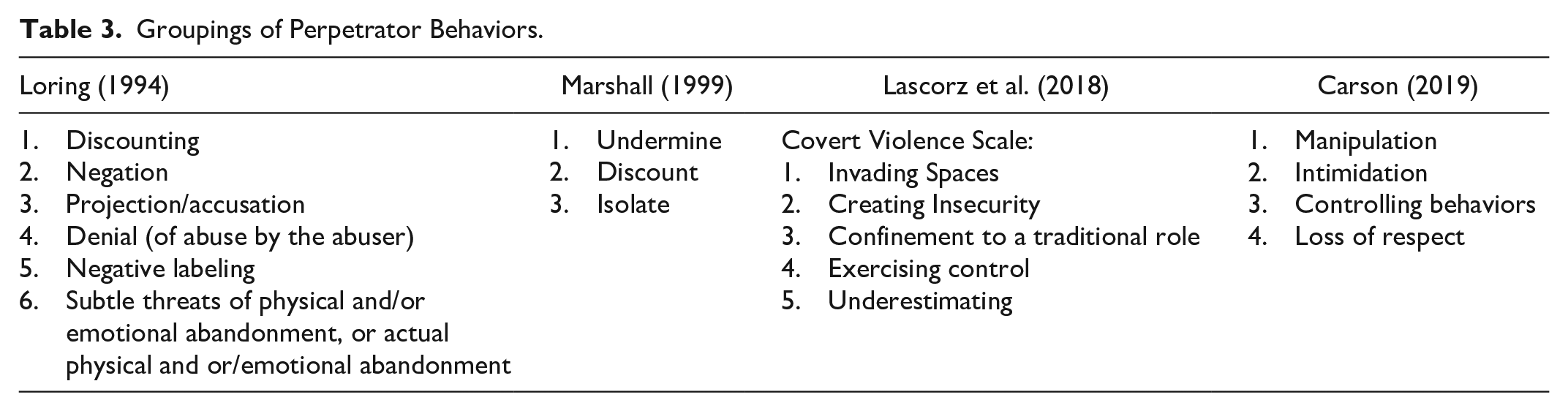
Synthesis of these groupings and the behaviors exemplifying subtle abuse identified in the remaining literature led to three overarching perpetrator behavior groups: undermining, limiting and withholding.
Undermining
Undermining behaviors were described as denying a woman’s perception of things (Lammers et al., 2005), disapproving through sighing or questioning (Loring, 1994), expressing disappointment (McKibbin, 1998), and were conveyed through “insidious messages across the lifespan” (Burnett, 2020, p. 94), and a “condescending style” (Bicehouse & Hawker, 1995, p. 85). Connected to these undermining experiences are other behaviors such as lying and gaslighting (Burnett, 2020), “mindgames, shifting the yardstick and double standards” (Streker, 2012, p. 180) and blaming (Loring, 1994).
Limiting
Behaviors which limit the victim in some way, turning their attention from their needs to the perpetrator’s, included the following: guilt-tripping (Burnett, 2020; Streker, 2012) making their partners focus on them (Marshall, 1996), violation of boundaries (Pitman, 2010), and preventing partners from developing themselves or their interests (Loring, 1994).
Withholding
Terms used by authors which indicate withdrawal or withholding by the perpetrator include “moody” (Streker, 2012), “sulky” and “passive aggressive” (Green & Charles, 2019), “avoidant and withholding communication” (Pitman, 2010, p. 146), physical and emotional withdrawal (Loring, 1994), and a lack of concern (Lammers et al., 2005). Some authors also referred to neglect (Lammers et al., 2005; Pitman, 2010; Taherkhani et al., 2014). Taherkhani et al.’s (2014) study with Iranian women found emotional neglect to be the most distressing involving a lack of “attention, affection and revealing interest, support, understanding, companionship, and appreciation” (p. 234). The perpetrator may also withdraw from activities outside the relationship (Streker, 2012).
Co-existence of Loving and Abusive Behaviors by the Perpetrator
Authors discussed how subtly abusive behaviors are either mixed with positive behaviors (Lammers et al., 2005; Loring, 1994) or performed in a positive way (Marshall, 1999; McKibbin, 1998), both of which make them harder to detect (Burnett, 2020; McKibbin, 1998) and add to the confusion experienced by victims (Green & Charles, 2019; Neal, 2022). Marshall, (1994) also noted that the more an abuser behaved positively, the greater the impact of the abuse on the victim. While women defined as the most subtly abused in Lammers et al.’s (2005) study described a “close emotional connection” (p. 40) to their partners.
Four works used preexisting theories to understand subtle abuse, including two relating to the psychopathology of the perpetrator: narcissistic abuse (Burnett, 2020; Green & Charles, 2019) and psychopathic abuse (Romero et al., 2013) and one relatively undefined theory of perpetration: gaslighting (Burnett, 2020; Hightower, 2018), although Hightower (2018) found that there was a higher correlation between gaslighting and the overt measures on the Subtle and Overt Psychological Abuse Scale (Marshall, 2001).
In general, SCA was seen as an attempt, whether conscious or unconscious, to control the other (Green & Charles, 2019; Neal, 2022) as it was underpinned by an attitude of control and entitlement on the part of the perpetrator (Bicehouse & Hawker, 1995; Burnett, 2020; Pitman, 2010; Toubia, 1995). For some authors, this underlying attitude was linked to an imbalanced power dynamic embedded in societal structure which privileged men (Bicehouse & Hawker, 1995; Lammers et al., 2005; Toubia, 1995). This was also described as part of a “power over” culture (Miller, 1976) embedded in systems and institutions and conveyed by insidious messages (Burnett, 2020). Pitman (2010) compared the experience of abuse, including subtle abuse, to “colonization,” when one country takes over another, imposing new rules, disregarding the conquered land’s needs and rights, and not respecting its boundaries. In addition, the wording of items in quantitative questionnaires devised by Marshall (1999) and Lascorz et al. (2018) indicate an underlying theory that abuse is something that is done by someone to someone else. This was implied or explicit in all included works, although Lascorz et al. (2018) found evidence of significant bidirectionality of covert abuse.
Two authors commented on a difference in impact between SCA and more overt NPA (Loring, 1994; Marshall, 1994, 1999). Both reported that they found subtle abuse to be more harmful than overt abuse or physical abuse (Marshall, 1994) and the most painful of all abuses (Loring, 1994). The impact of SCA on victims was synthesized into four areas: reality bending and self-doubt, loss of self-worth, impact on mood, and limited.
Types of Impact
Reality Bending and Self-Doubt
SCA affected a victim’s ability to trust their own judgment in both the short and long-term. It was seen as “undermining a person’s sense of self” (Marshall, 1994, p. 297), “an attitude change process” (Marshall, 1996, p. 406), and leading to self-blame and isolation from self (Marshall, 1999). Others described the impact on their participants as self-doubt (Burnett, 2020), a loss of a sense of security and trust (Loring, 1994), confusion, developing a belief they had a flawed personality, and lost trust in themselves (Lammers et al., 2005).
Loss of Self-Worth
There is a link between SCA and a reduced self-esteem and sense of identity (Lammers et al., 2005), self-blame (Loring, 1994), loss of confidence (Streker, 2012), harm to a victim’s sense of self (Marshall, 1994, 1999) and reinforced preexisting vulnerabilities and a sense of unimportance (Marshall, 1999). Lammers et al. (2005) also found, however, that those who were most subtly abused, were motivated by the resultant feelings of inadequacy to strive to improve and be the person their partner wanted them to be. McKibbin (1998) was the only author who found that self-esteem was not affected by subtle abuse.
Impact on Mood
Impact of SCA on mood or mental health described by authors included unhappiness, anger and suicidality (Lammers et al., 2005), depression (McKibbin, 1998), severe sadness and loneliness (Loring, 1994), as well as ongoing experiences such as “constant tension,” “feeling blocked and stuck,” “persistently worn down,” and destabilized (Streker, 2012, p. 158).
Limited
As a result of these effects of perpetrator behaviors, victims began to limit themselves. This extended from an impact on their wider social relationships (Streker, 2012), through their day to day actions (Lammers et al., 2005; Pitman, 2010) to a limiting of their personal thoughts and feelings (Burnett, 2020; Marshall, 1999).
An aim of this review was to aid therapist recognition of SCA and inform future research. Of the included works, three provided advice to health professionals. It is suggested they be alert to somatization of covert abuse and a potentially deferential attitude of a male partner to healthcare professionals (Bicehouse & Hawker, 1995). In other words, SCA can result in physical symptoms even though no physical abuse has taken place, while abusive partners can present as helpful and concerned when dealing with healthcare professionals, hiding the abusive behaviors. Authors of the three works advise therapists to name the abuse and to educate clients about subtle abuse to facilitate their recognition of SCA. This in turn will enable clients to avoid the impacts, and consequential depression, anxiety, and somatic symptoms of SCA (McKibbin, 1998) and expedite their leaving process (Burnett, 2020).
Discussion
This scoping review identified 19 works which described SCA, associated behaviors, and impact. While the concept of SCA has been recognized for over three decades (Kirkwood, 1993; Tolman, 1989) and research commonly references abuse as a continuum (SafeLives, 2019; Tolman, 1992), this review shows few researchers have explored the subtle end of the spectrum in detail. Despite research describing subtle abuse as both a distinct experience (McKibbin, 1998) and one which is potentially more damaging than overt physical or nonphysical abuse (Buesa & Calvete, 2011; Loring, 1994; Marshall, 1994), little additional research has been contributed since the 1990s. Indeed, some more recent typologies of abuse do not include SCA (James & MacKinnon, 2010; Mennicke, 2019). Based on inclusion criteria, the review found only three works which explicitly focused on SCA: Burnett (2020), Lascorz et al. (2018) and Marshall (1994). None of these studies solely recruited subtle abuse victims making it difficult to ensure findings relate to the unique experience of subtle abuse.
Based on this scoping review’s analysis of the literature, a definition of SCA was developed. This states that SCA is likely to be underpinned by a societal and/or personal attitude, encompassing undermining, withholding, and limiting behaviors enacted in ways which are invisible, leading to an attitude change process in victims which, in turn, lead to emotional and behavioral changes. Figure 2 (below) offers a visual map of this definition. This definition endeavors to overcome concerns about exploring the subtle end of the abuse spectrum (Follingstad, 2007, 2011) by demonstrating commonalities within subtle abuse experiences.
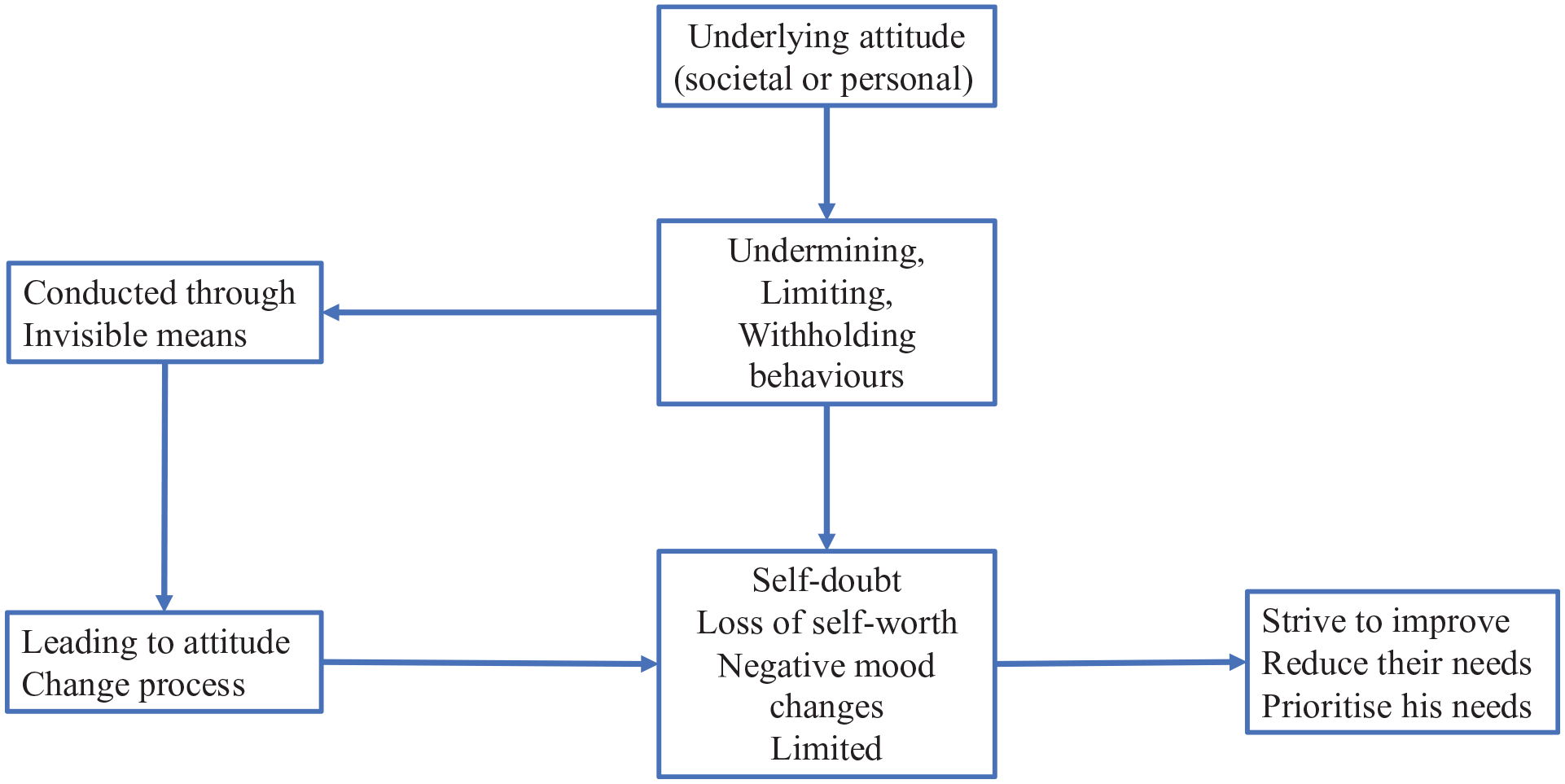
Visual map of a definition of subtle or covert abuse drawn from the findings of the scoping review
There may be overlaps between SCA and other IPV concepts. For example, coercive control, which posits that IPV is underpinned by coercion no matter whether physical or nonphysical (Stark, 2007; Stark & Hester, 2019), or NPA whose victims may have particular difficulties in gaining acknowledgment of their experience and accessing support (Halliwell et al., 2021; Hurst, 2015). This scoping review’s findings indicate SCA may be underpinned by a conscious or unconscious wish to control the other. In addition, the lack of knowledge about SCA may lead to poor recognition among professionals and the general population, leading to similar problems as those faced by victims of NPA. Future research may enable more meaningful comparisons between SCA and other IPV concepts. It may also help understand the complexity of SCA, inform the creation of a measure to assess for SCA, and explore therapist experiences of working with SCA victims.
Diversity
A strength of our study is the wide inclusion criteria, looking at quantitative, qualitative, and mixed methods studies as well as discussion papers across countries, cultures, religions, and age groups over a period of nearly 30 years. This diversity indicated a similarity between the perpetration and experience of SCA across time, place, and population group. However, our review found minimal literature exploring similarities or differences attributed to sex, gender, or sexuality. Of the four studies which included female and male participants, only two looked at the differences between the sexes. Lascorz et al. (2018) found more women than men perpetrated subtle abuses, although their study did not collect data on initial perpetration and only 18.2% of their sample were men. Streker’s (2012) study, which included abuse outside the individual’s intimate relationships, found that while some men reported receiving psychoemotional abuse, a much higher proportion of women experienced this both from their partners and from other members of their community. None of the studies recorded differences in how males or females perpetrated or experienced SCA. Only one study (Hightower, 2018), collected data on participants’ gender identity and sexuality but these data were not linked to findings. While all the primary research studies specified age ranges of participants, none drew conclusions from their data to age of victims. It is possible that SCA may exist in isolation from other IPV over many years. Therefore, a study looking at age of victims and length of victimhood may be more revealing than those focusing on a mainly young, undergraduate populations. There was no literature which specified differences in perpetration or impact of abuse among groups with different physical abilities or neuro-divergence. The understanding of SCA would be enhanced through future research exploring its experience by and impact in different groups.
Limitations and Future Directions
The review was limited by little specific research on SCA, resulting in a small pool of works to analyze, several of which included minimal information relating to SCA. Much of the works focused on the experiences of women as victims. Where demographic information was provided, it did not inform the findings and analysis of SCA.
As anticipated in the protocol (Parkinson et al., 2023), it was not possible to include surrogate terms of “subtle” and “covert” as the potential terminology would have been vast and unmanageable. Other terms which were identified prior to and during the literature search included: invisible (Sims, 2008), insidious (Halliwell, 2019), mild severity of deliverance (Follingstad et al., 2005), microaggression and invisible violence (Dobarrio-Sanz et al., 2022), indirect aggression (Porrúa-García et al., 2016), and implicit aggression (Ireland & Birch, 2013). The team did not have the resources to explore all these surrogate terms. A review including these terms may support the findings of the current review on SCA or offer an opportunity to expand both the knowledge base of SCA and the definition. Our published protocol (Parkinson et al., 2023) also stated that we would include motivations for subtle abuse. However, these data were not found in our included works. In addition, two of the works were based on research in Spain, and published in Spanish and English. Their presence in the search results suggests that there may be more untranslated Spanish literature on SCA, which we were unable to access due to language restrictions in the team. A summary of implications for practice, policy, and research is provided in Table 4.
Implications for Practice, Policy, and Research.

Conclusion
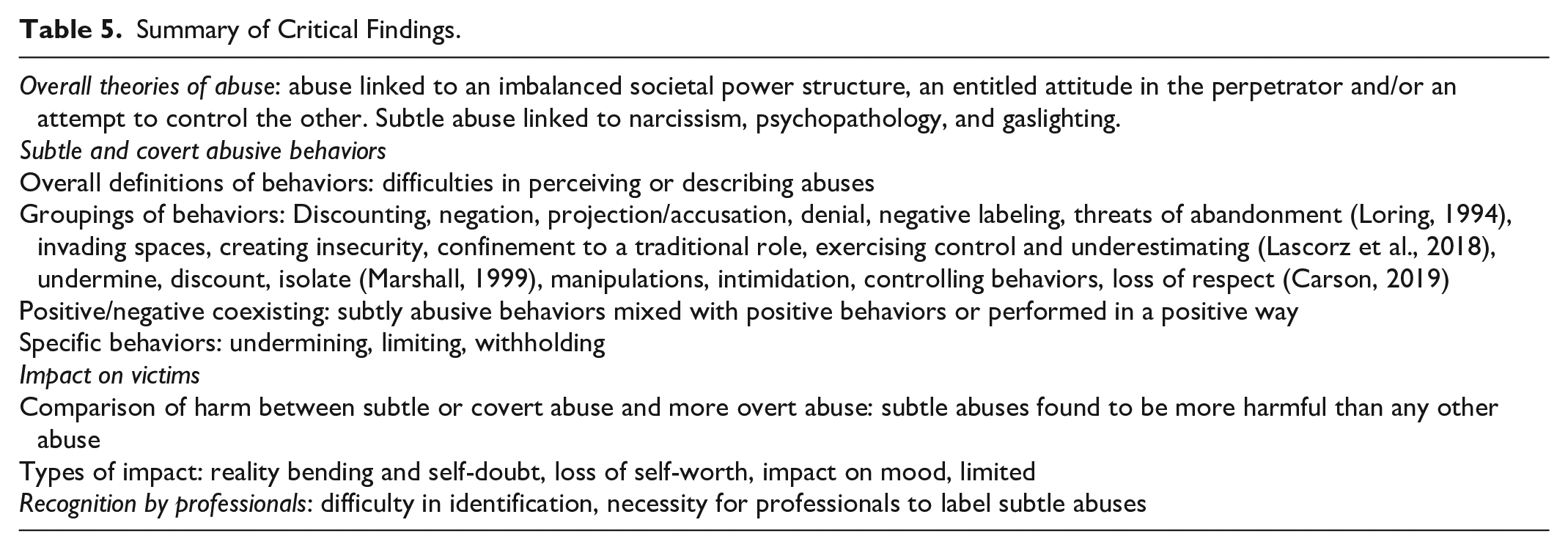
This scoping review identified 19 works of varying types, methodologies, locations, and time points, which offered descriptions of SCA in IPV. To the authors’ knowledge, this is the first review to explore SCA literature. The review literature indicates SCA could be the most pervasive and devastating of all types of abuse, particularly as it is so hard to identify. The development here of a definition and visual map of the literature has shown commonalities between general theories, specific behaviors, and impacts of SCA as summarised in Table 5. The findings highlight the need to investigate SCA further and to establish if there are victims who only experience abuse at this end of the spectrum. Both the public and professionals need to understand this invisible and damaging form of abuse to recognize it and help victims. This review provides a base for future research with the hope that through this, therapists will be enabled to recognize SCA and victims will be helped sooner.
Summary of Critical Findings.
Footnotes
Declaration of Conflicting Interests
The author(s) declared no potential conflicts of interest with respect to the research, authorship, and/or publication of this article.
Funding
The author(s) received no financial support for the research, authorship, and/or publication of this article.
