




Abstract
Image-based sexual abuse (IBSA) refers to the nonconsensual creating, taking, or sharing of intimate images, including threatening to share images. It can also include coercing someone into sharing intimate images, or sending unwanted intimate images. In recent years, there has been growing attention to the nature, scope, and impacts of IBSA, but comparatively little attention has been paid to the perpetration of these harms. This scoping review consolidates and synthesizes the existing knowledge on the perpetration of IBSA against adults. The review involved a systematic search of scholarly and gray literature across select databases. In total, 26 studies met the inclusion criteria. Studies were included if they were published in English between 2013 and 2023 and reported on findings of a sample of adults over the age of 16 who admitted IBSA perpetration behaviors. The review found that prevalence of subtypes of IBSA varied significantly across the studies. There was consensus that adults who engage in IBSA perpetration are more likely to be men, younger adults, and LGBTIQ+. Motivations were multifaceted, but tended to relate to social rewards, power dynamics, sexual gratification, and retaliatory impulses. Dark Tetrad traits were found to be positively associated with IBSA perpetration. The research also indicates on overlap between victimization and perpetration, as well as an association with other offending behaviors, such as intimate partner violence. Prevention interventions should be focused on changing the opportunities, affordances, and infrastructures for offending, as well as addressing problematic societal attitudes and norms, with early interventions focused on building resilience and self-esteem, and promoting healthy behaviors and respectful relationships.
Keywords
Introduction
Image-based sexual abuse (IBSA) is an umbrella term referring to the nonconsensual taking, creating, or sharing of “intimate” (nude or sexual) images (photos or videos), including threatening to share intimate images with others (“sextortion”), pressuring, threatening, or coercing someone into sharing their intimate images (“sexting coercion”), using artificial intelligence (AI) to create fake or digitally altered, sexualized images (“deepfakes”), and the unsolicited and unwanted sharing of sexually explicit images (“cyberflashing”) (Henry et al., 2020). IBSA is a growing problem that can have significant impacts on victim-survivors, including anxiety, depression, suicidal ideation, and other social, psychological, and physical harms, often co-occurring with other forms of abuse (e.g., McGlynn et al., 2021).
While scholarly interest in this topic has been growing in recent years, much of the focus has been on victimization experiences. This includes national surveys to measure the extent and impacts of IBSA victimization (e.g., Henry et al., 2020; Ruvalcaba & Eaton, 2020), as well as qualitative interviews to understand the lived experiences of victim-survivors and their help-seeking needs and actions (e.g., McGlynn et al., 2021). There has also been significant attention to the applicability and desirability of various criminal and civil justice and regulatory responses to IBSA (e.g., Citron & Franks, 2014).
Research on IBSA perpetration prevalence, motivations, and characteristics remains limited, despite the importance of investigating the drivers and characteristics of perpetration, which can help shape interventions for detecting, preventing, and responding to this problem. While several scoping reviews on different forms of technology-facilitated abuse have been published (e.g., Bansal et al., 2024; Rogers et al., 2023), as well as on IBSA more specifically (Paradiso et al., 2023; Walker & Sleath, 2017), the focus of those reviews has been on victimization experiences. Only the systematic review by Paradiso et al. (2023) has summarized key findings on both IBSA victimization and perpetration, yet their review of perpetration studies is brief.
This is the first scoping review focused exclusively on IBSA perpetration. By concentrating solely on IBSA perpetration, we provide a comprehensive synthesis of current research regarding perpetrator characteristics, motivations, and contexts. The findings of this review make a significant contribution to understanding the factors contributing to IBSA perpetration, as well as online abuse more broadly, which is essential for developing targeted interventions and preventative measures. The review identifies key gaps in the existing research literature and outlines potential directions for future studies. The findings have the potential to inform educational programs and other interventions aimed at detecting, preventing, and responding to online harms. Given the differences in pathological profiles and the distinct legal and other consequences associated with abusive online behaviors against children, we have excluded studies examining child sexual abuse material (CSAM) perpetration (see Steel et al., 2021), as well as IBSA against children (see Patchin & Hinduja, 2020).
Method
Scoping reviews are useful for emerging and specialized disciplines, as well as when there is limited existing literature available on a given topic (Peterson et al., 2017). Scoping reviews are also effective for exploring the extent of the literature, identifying boundaries and parameters, mapping key concepts that are reported in a range of studies, and identifying literature gaps (Arksey & O’Malley, 2005; Levac et al., 2010). In this review, we adopted the Preferred Reporting Items for Systematic Reviews and Meta-Analyses extension for Scoping Reviews to ensure the transparent, structured, and comprehensive reporting of literature (Tricco et al., 2018). We used Arksey and O’Malley’s (2005) methodological framework for scoping reviews, which includes five main stages: (a) identifying the research question; (b) identifying relevant studies; (c) study selection; (d) charting the data; and (e) collating, summarizing, and reporting the results.
Identifying the Research Question
The aim of the study was to consolidate what is currently known about IBSA perpetration through an examination of empirical literature focusing on the terminology, prevalence, risk factors, offender characteristics, and offender motivations. The goal of the review was to inform research as well as educational and other interventions to better detect, prevent, and respond to IBSA. Our research questions were as follows:
What terminology is used to describe IBSA perpetration behaviors?
What is the prevalence of IBSA perpetration?
What are the characteristics of those who perpetrate IBSA?
What are the motivations of those who perpetrate IBSA?
Identifying Relevant Studies
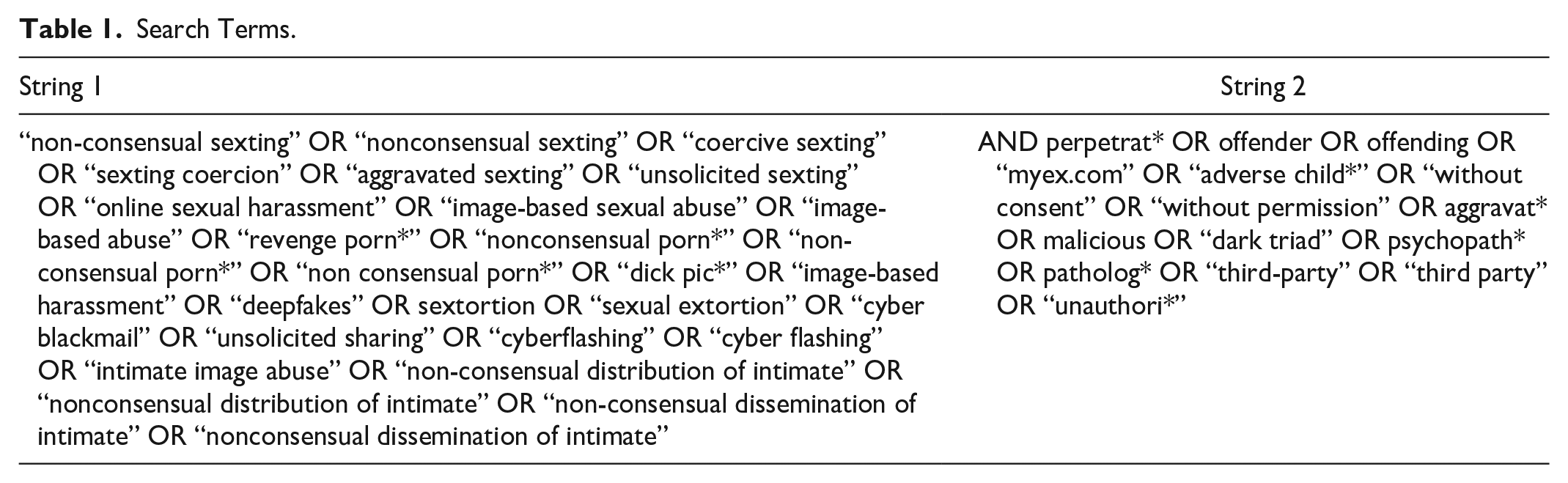
The second stage of our scoping review involved determining a strategy for identifying relevant studies. Based on our knowledge of existing social and psychological sciences databases, we (the two authors) first identified the following suitable databases: Scopus, Web of Science, PubMed, and ProQuest. Second, we developed a comprehensive list of search terms based on our existing knowledge of the field to ensure a broad coverage of studies, while also restricting the search to studies on IBSA and perpetration to make sure that the search was not too broad. This also helped to refine our inclusion and exclusion criteria and we tested our search terms in Scopus initially to ensure our method was sound. And third, in November 2023, we undertook a comprehensive search of the empirical literature by inputting a combination of key terms and filtering for relevant articles using Boolean logic at the title/abstract level. Two search string were used to capture the wide range of IBSA behaviors: string one included terms relating to the different forms of IBSA; and string two included terms relating to perpetration (see Table 1). In addition to searching the main databases, we also manually searched Google Scholar and relevant gender-based violence and online safety agency websites. Furthermore, we also reviewed reference lists of selected studies to identify additional literature.
Search Terms.
Study Selection
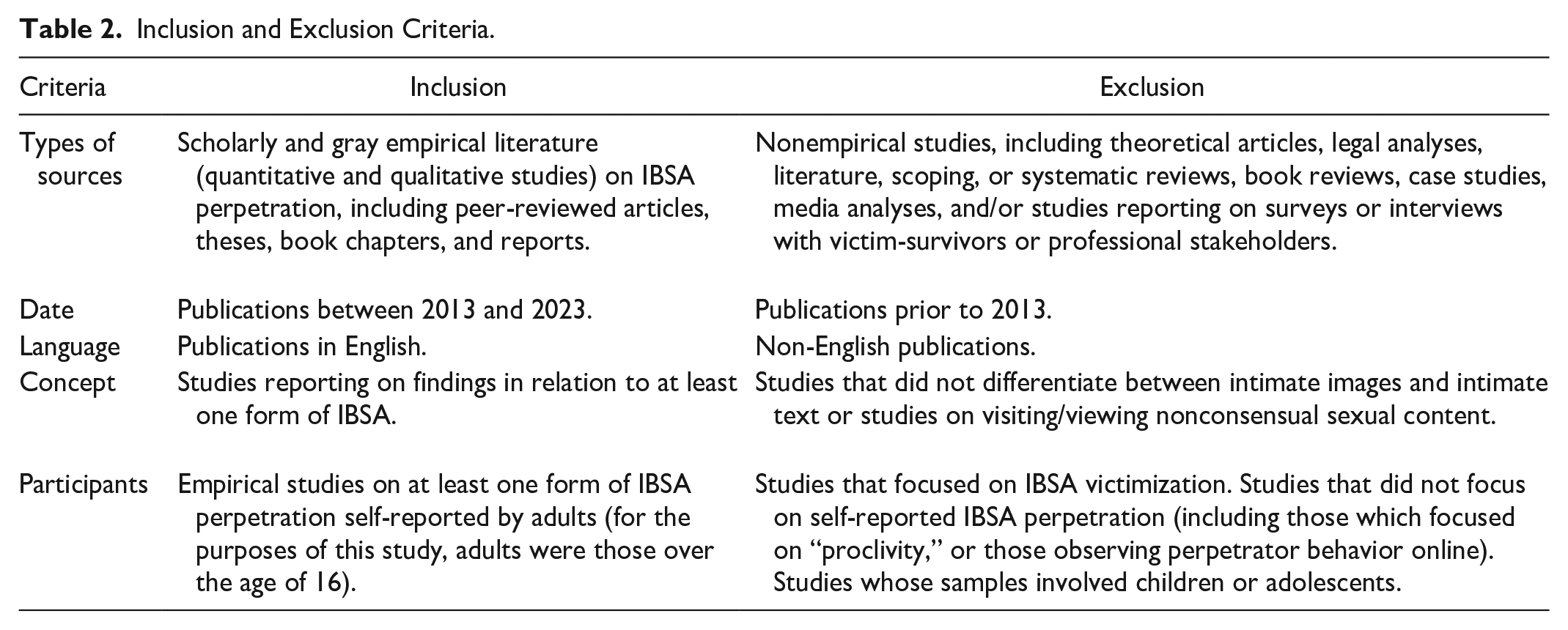
In the next stage, we undertook (independently from each other) searches of each database to ensure consistency across our search results and identify any issues with the search strategy. Once the search strategy was finalized, we independently undertook title and abstract screening, applying our agreed-on inclusion and exclusion criteria (see Table 2). The initial search extracted 99 potentially relevant articles across the four databases. We independently exported the data from each database into a consolidated spreadsheet and merged the spreadsheets to remove any duplicates to create a master spreadsheet. We then merged our two spreadsheets and removed duplicates, leaving us with a total of 41 studies. We sourced the studies and saved them into a shared folder.
Inclusion and Exclusion Criteria.
In the next stage, we undertook a comprehensive examination of each study’s title and abstract to further determine whether the study met our eligibility criteria based on our research questions. We examined the full text of each study to assess relevance and generate a final list of studies. During this stage, we held multiple meetings to compare the selection of studies and discuss any discrepancies in our selection to ensure consistency. After careful discussion and review, we were left with a total of 26 articles (see Figure 1).
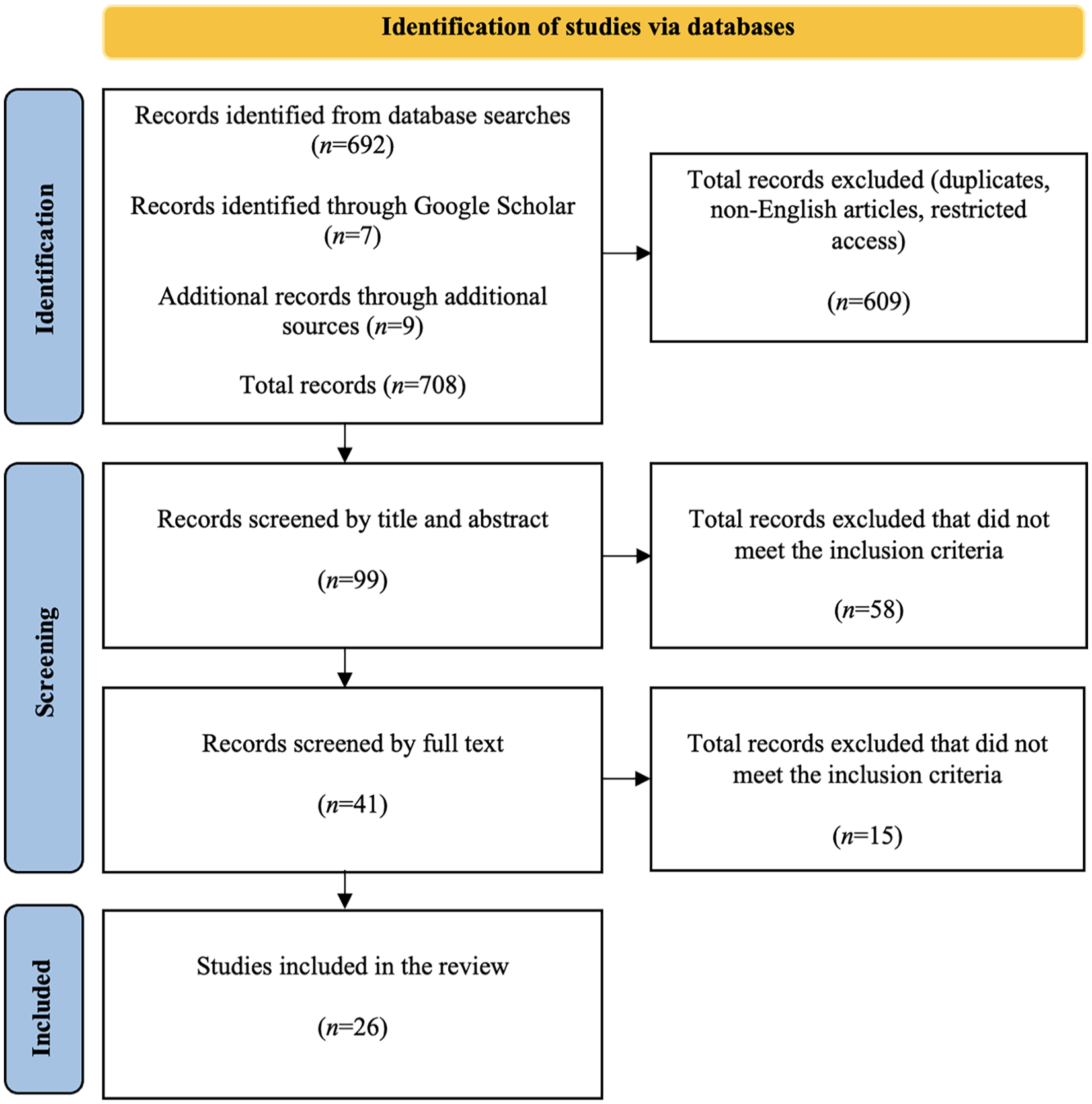
Flow Chart of Included Studies.
Charting the Data
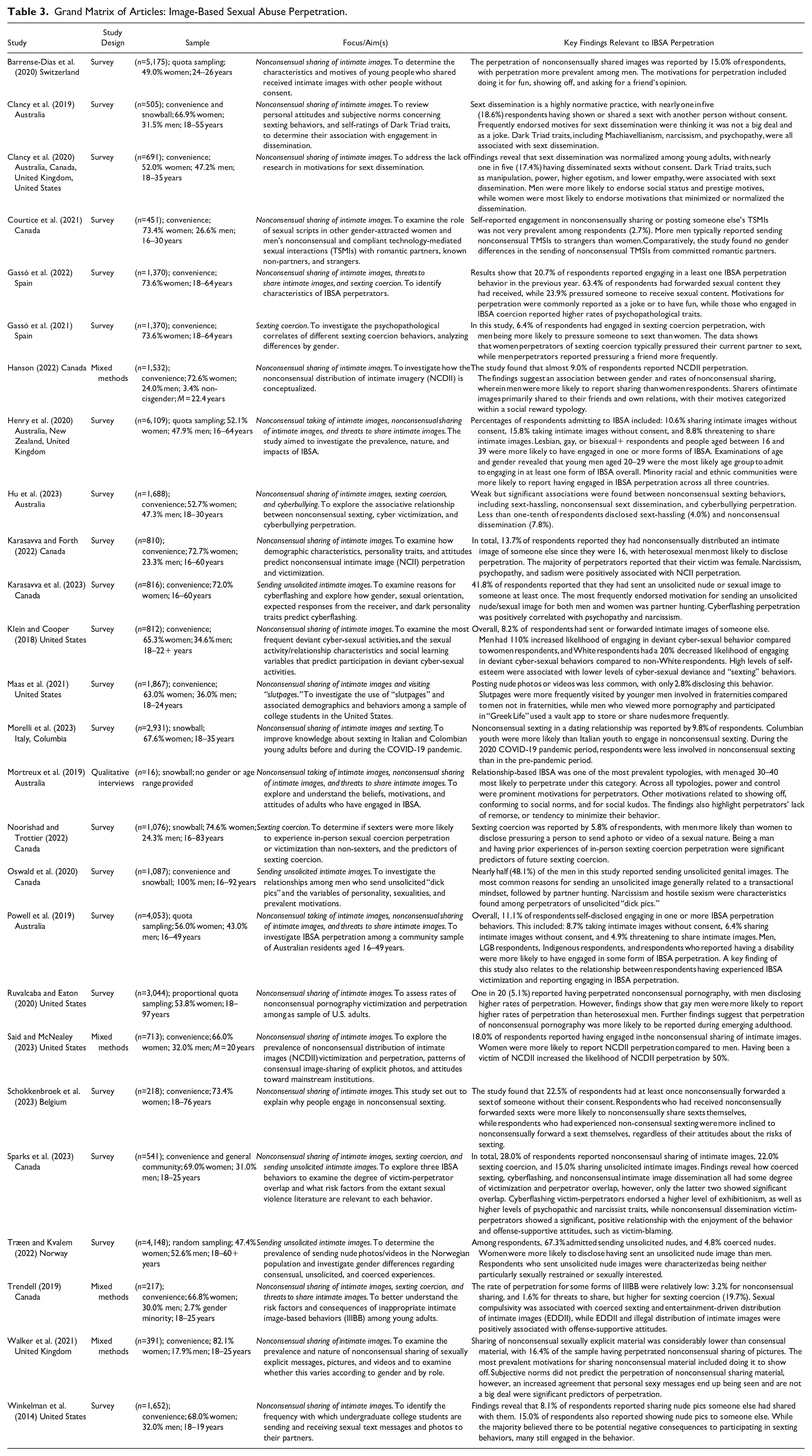
In the fourth stage, we used the Garrad (2017) to critically evaluate the articles to compare, contrast, and synthesize each study’s findings (see Table 3). We independently charted the data, discussed the results, and continuously updated the data-charting matrix as an iterative process.
Grand Matrix of Articles: Image-Based Sexual Abuse Perpetration.
Collating, Summarizing, and Reporting the Results
The final and most extensive stage of our review involved collating, summarizing, and reporting the results of the data recorded in the Grand Matrix. This process involved examining the studies and the information captured, with the goals of addressing the four research questions, applying meaning to the results, and considering the implications of findings within the context of informing research, policy, and practice. We did not undertake a critical quality appraisal of the studies because our aim was to map the evidence and be as inclusive as possible of both scholarly and gray literature (given that this is an understudied phenomenon). This is consistent with the approach of other scoping reviews (Pham et al., 2014).
Results
Interest in IBSA perpetration is growing. Between 2013 and 2018, only two studies investigated IBSA perpetration, compared to 2019 to 2023, where 24 studies have been published on this topic. Below we discuss our key findings on the terminology, prevalence, motivations, and characteristics related to IBSA perpetration.
Terminology
Among the studies included in this review, we found a range of different terms used to describe the misuse or abuse of intimate imagery. In total, there were 15 studies that examined only one behavior, compared with 11 studies that examined a range of behaviors. Among those 11 studies that examined a range of behaviors, the most common umbrella term used was “image-based sexual abuse” (or “image-based abuse”) to refer to one or more behaviors (n = 6), including taking, creating, sharing, threatening to share, or pressuring to share intimate images, or sending unwanted or unsolicited intimate images (Gassó et al., 2022; Henry et al., 2020; Maas et al., 2021; Mortreux et al., 2019; Powell et al., 2019; Sparks et al., 2023). Another study used the term “non-consensual technology-mediated sexual interaction” to refer to the sending and/or receiving of nonconsensual sexually explicit content (Courtice et al., 2021), and another used “inappropriate intimate image-based behaviours” to include coercive sexting, sextortion, as well as the nonconsensual distribution of intimate images (Trendell, 2019). One study used the term “deviant cyber activities,” to refer to sending or forwarding someone else’s nude or sexual images (Klein & Cooper, 2019), and another “unsolicited and coerced sending of nude images” to capture coercive sexting and nonconsensual sharing (Træen & Kvalem, 2023). Finally, one study did not use a specific label, but instead referred more broadly to “sexting” (Winkelman et al., 2014).
The other 15 studies in the review focused on just one form of IBSA. In total, 11 examined the nonconsensual sharing of intimate images. While none of those studies used the more controversial term “revenge porn,” other terms used included: “nonconsensual pornography” (Ruvalcaba & Eaton, 2020); “non-consensual sexting,” “abusive sexting,” or “aggravated sexting” (Barrense-Dias et al., 2020; Hu et al., 2023; Morelli et al., 2023; Schokkenbroek et al., 2023); “non-consensual dissemination of intimate images” or “non-consensual distribution of intimate images” (Clancy et al., 2019, 2020; Hanson, 2022; Karasavva & Forth, 2022; Said & McNealey, 2023); and “nonconsensual sharing of private sexually explicit material” (Walker et al., 2021). There were also four studies referring to behaviors other than nonconsensual sharing, including: “sexting coercion” or “coercive sexting” to refer to pressuring, coercing, or threatening someone to share their intimate images (Gassó et al., 2021; Noorishad & Trottier, 2022); and those that used the terms “cyberflashing,” “dick pics,” or “photographic exhibitionism” to refer to sending unsolicited nude or sexual images (Karasavva et al., 2023; Oswald et al., 2020).
Prevalence and Demographic Risk Characteristics
The second question we sought to address concerned the prevalence of different IBSA perpetration behaviors. Below we describe the key findings from different quantitative studies on a subset of IBSA behaviors.
The Nonconsensual Taking or Creating of Intimate Images
Only two studies investigated prevalence relating to the nonconsensual taking or creating of intimate images. 1 This includes photographing or filming someone in the nude, in a state of undress, or engaged in sexual act—either without them knowing about it, and/or without their consent. It also includes creating fake or digitally altered sexual or nude imagery—including images made using AI—also known as “deepfake pornography.” In our review, no studies had explored the prevalence of creating digitally altered or “deepfake” intimate images, and only two studies investigated the nonconsensual taking of intimate images, with prevalence ranging from 8.7% to 15.8%. First, Powell et al. (2019) found that 8.7% of Australian respondents reported that they had taken nude or sexual photos or videos of someone else without their permission (n = 4,053). This was highest for men compared to women (12.0% vs. 6.2%), and lesbian, gay, or bisexual (LGB) compared to heterosexual respondents (17.2% vs. 7.5%). Second, in the study by Henry et al. (2020), they found 15.8% of respondents reported taking an intimate image of another person without their permission (n = 6,109). Their study found that self-reported perpetration of this form of IBSA was higher for the following groups: New Zealanders (18.1%) compared to Australians (14.8%) or those from the United Kingdom (14.6%); men compared to women (20.6% vs. 11.4%); LGB individuals compared to heterosexuals (25.5% vs. 14.6%); Indigenous and BAME (Black, Asian, and minority ethnicity) compared to White, European, or Pākehā individuals (19.9% vs. 14.4%); and those aged 20 to 29 (23.0%) compared to those aged 16 to 19 (20.4%), 30 to 39 (19.3%), 40 to 49 (11.9%), and 50 to 64 (7.8%).
The Nonconsensual Sharing of Intimate Images
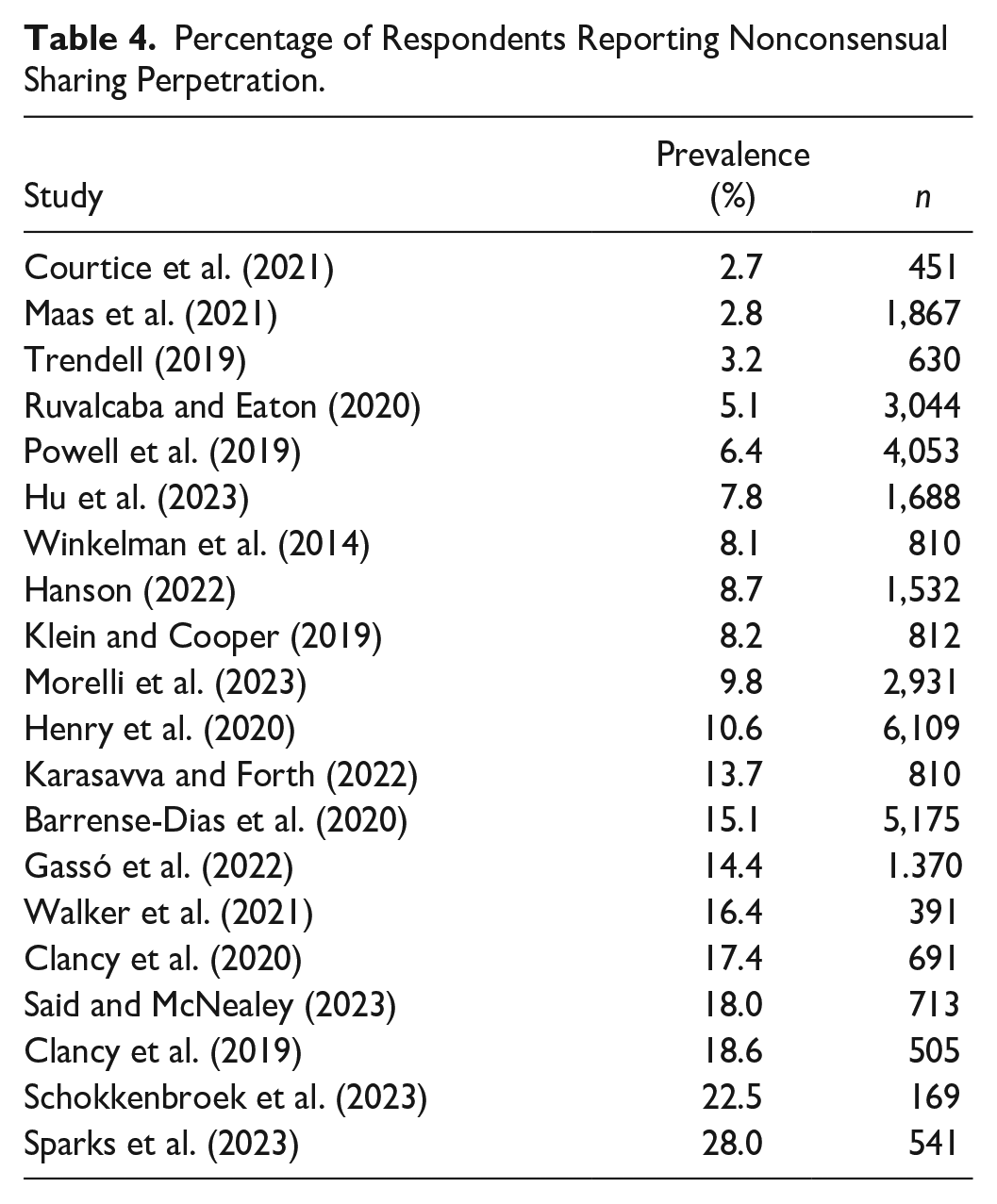
Twenty studies in our review measured the prevalence of sharing intimate images without consent. Rates significantly varied across the studies between 2.7% and 28.0% (see Table 4).
Percentage of Respondents Reporting Nonconsensual Sharing Perpetration.
Among the studies that examined the prevalence of nonconsensual sharing, not all reported on gender differences. Seven studies found that men respondents were more likely than women or non-cisgender respondents to indicate having engaged in this behavior, whereas four studies found that women were more likely than men to engage in the nonconsensual sharing of other people’s intimate images, although the difference was small in Hu et al. (2023) and Clancy et al. (2019) (see Table 5). 2
Nonconsensual Sharing of Intimate Images: Gender Differences.
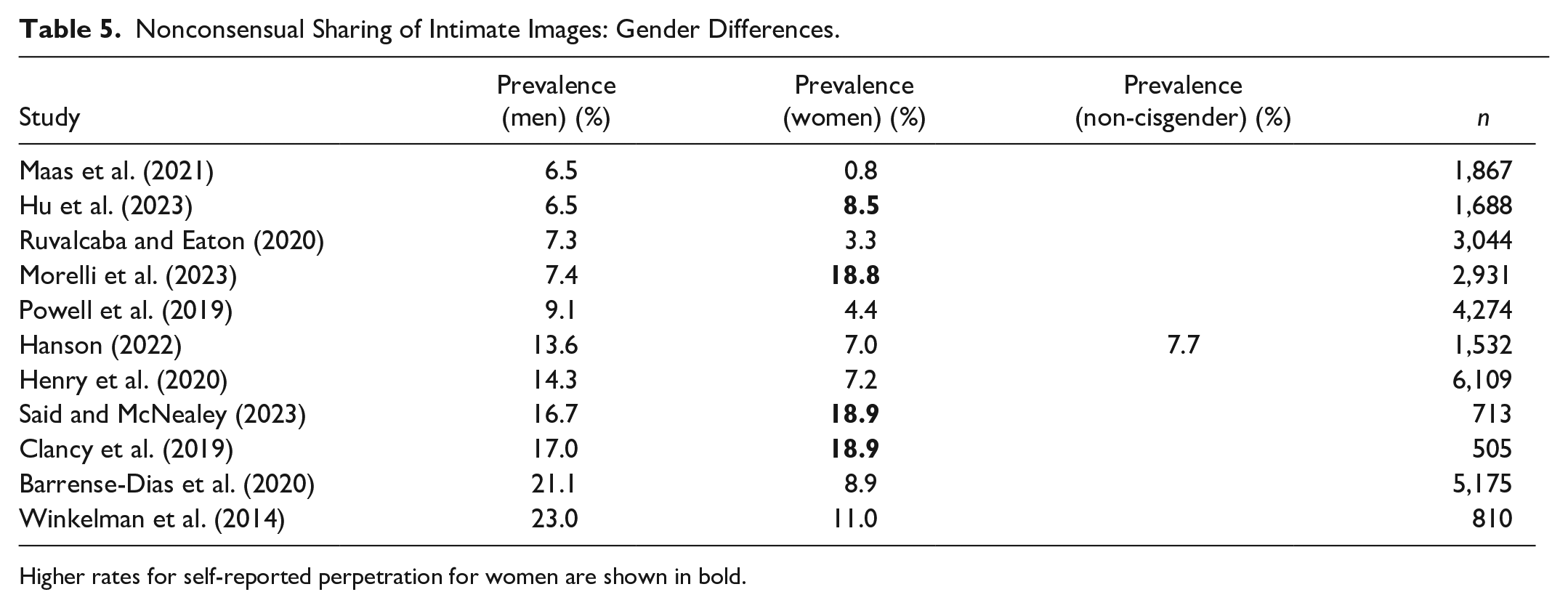
Higher rates for self-reported perpetration for women are shown in bold.
Regarding age as a risk demographic for perpetration, as most studies relied on convenience sampling of college or university students, it was difficult to discern what age groups were more likely to engage in the perpetration of nonconsensual sharing of intimate images (e.g., Clancy et al., 2019). However, in the few studies surveying the broader community, younger age was positively correlated with self-reported perpetration. For instance, Henry et al. (2020) found that age was a factor, with those aged 18 to 19 being the most likely age group to report this behavior (17.2%), followed by those aged 20 to 29 (16.5%), 30 to 39 (14.4%), 40 to 49 (7.1%), and 50 to 64 (2.6%). These findings are consistent with Ruvalcaba and Eaton’s study (2020), which found that people in emerging adulthood (aged 18–29) were the most likely group to self-report this behavior (statistics were not provided).
Only three studies examined the relationship between race/ethnicity and perpetration. Hanson (2022) found there was no significant relationship according to race. Henry et al. (2020) found that Indigenous or BAME respondents were more likely to report this behavior compared to White, European, or Pākehā respondents (15.0% vs. 9.0%), and Barrense-Dis et al. (2020) found higher rates among foreign-born Swiss respondents (statistics were not provided).
Similarly, few studies explored sexual identity. Powell et al. (2019) found that LGB respondents were more likely to report sharing intimate images without consent than heterosexual participants (13.7% vs. 5.4%). Similarly, Henry et al. (2020) found that LGB respondents were more likely to report this behavior (20.8% vs. 9.3%). 3 Ruvalcaba and Eaton (2020) explored gender and sexuality together, finding that bisexual men (11.0%) were the most likely to report perpetration, followed by gay men (10.8%), heterosexual men (6.4%), bisexual women (4.9%), and heterosexual women (2.7%).
Threats to Share Intimate Images
In relation to “sextortion” behaviors, defined broadly as threats made to share someone’s intimate images, four studies measured prevalence, with a range between 1.6% and 8.8%. This includes: Trendell (2019), who found a low rate (1.6%) (n = 630); Powell et al. (2019), who found that 4.9% reported this behavior, which was more common for men than women (7.0% vs. 3.3%), and more common for LGB (9.5%) than heterosexual respondents (9.5% vs. 4.3%) (n = 4,274); and Gassó et al. (2022), who found that 6.7% of respondents had threatened to share someone’s intimate images (we calculated the percentage manually as it was not provided in the paper) (n = 1,370). In another study, Henry et al. (2020) found that 8.8% of respondents reported threatening to share an intimate image of another person (n = 6,109). Their study found that this form of IBSA perpetration was higher for the following groups: New Zealanders (10.5%) compared to Australians (7.6%) and those from the United Kingdom (8.2%); men compared to women (12.0% vs. 5.8%); LGB individuals compared to heterosexuals (16.2% vs. 7.8%); Indigenous and BAME compared to White, European or Pākehā individuals (13.0% vs. 7.2%); and those aged between 16 and 19 (14.5%) compared to those aged 20 to 29 (14.2%), 30 to 39 (11.7%), 40 to 49 (6.3%), and 50 to 64 (1.5%).
Pressure or Coercion to Share Intimate Images
We define sexting coercion as threatening, pressuring, or coercing someone into sharing their intimate images. This is distinct from sextortion, which involves threats to disseminate intimate images. Six studies in our review investigated the prevalence of “sexting coercion.” Across the different studies on sexting coercion, perpetration ranged from 4.0% and 22.0%. Hu et al. (2023) found that 4.0% of respondents had engaged in “sext hassling,” which was more prevalent among men compared to women (7.6% vs. 0.7%) (n = 1,688). Similarly, Træen and Kvalem (2023) found that 4.8% of respondents engaged in “coerced sending” of nudes (more women than men—6.5% vs. 3.2%) (n = 4,148).
Gassó et al. (2021) found 5.5% of their sample (n = 1,370) had pressured another person to sext, and 1.3% had threatenend another person into sexting. In contrast to Træen and Kvalem (2023), they also found that men were more likely to pressure someone to sext than women (14.4% vs. 2.2%), although they did not find any differences between genders for threatening someone into sexting. Noorishad and Trottier (2022) found that 5.8% of respondents (who were “sexters”) reported engaging in sexting coercion (“continuous pressure” on someone “to send a message, a picture, or a video of a sexual nature”), which again was higher for nonbinary people (22.2%), followed by men (11.3%), and then women (4.0%) (n = 585). It is important to note, however, that their findings relate to both images and text, rather than just images (as in the other studies reported here). Higher rates (19.7%) were found in Trendell (2019) (31.7% men vs. 14.7% women), with more heterosexuals than sexual minorities (20.9% vs. 16.0%) admitting to sexting coercion (n = 630). Finally, in the study by Sparks et al. (2023), a high number (22.0%) of respondents reported sexting coercion (but no breakdown of gender reported) (n = 908).
Sending or Sharing Unsolicited and Unwanted Nude or Sexual Images
Finally, four studies in our review investigated the sending or sharing of unsolicited and unwanted nude or sexual images (“cyberflashing”), with a range between 15.0% and 67.3%. Sparks et al. (2023) found that 15.0% had engaged in cyberflashing (sending an “unsolicited sexually explicit image or video”) (n = 908). Oswald et al. (2020) found that 48.0% of heterosexual men had sent unsolicited “dick pics” (n = 1,087). Karasavva et al. (2023) found that among mostly women undergraduate students that they surveyed, 41.8% reported sending “an unsolicited nude or sexual image of themselves at any point in their lives since they were 16” (n = 816). Finally, Træen and Kvalem (2023) found that 67.3% of respondents reported sending unsolicited nude or sexual images, which was higher for men compared to women (77.1% vs. 57.3%) (n = 4,148). None of these studies differentiated between wanted and unwanted unsolicited images.
Motivations and Characteristics
Few quantitative and qualitative studies on IBSA perpetration have explored offender motivations and characteristics. Some studies only investigated characteristics or motivations and not both. One study found a correlation between myth-acceptance of IBSA, as well as self-image behavior (e.g., taking one’s own nude or sexual “selfie”) (Powell et al., 2019), however did not report on these correlations for individual IBSA behaviors. Below we describe key findings in relation to each form of IBSA.
The Nonconsensual Taking or Creating of Intimate Images
For the nonconsensual taking or creating of intimate images, only Henry et al. (2020) investigated motivations for this form of IBSA. They found that the most common motivation identified by Australian, New Zealand, and UK respondents was to be funny or sexy (61.2%), followed by: to control the person (45.2%), to embarrass or get back at the person (38.0%), or to impress friends or trade in the images (37.8%). These findings were roughly equivalent across age, gender, race, and sexuality, with the exception of 50 to 64-year-olds for the following motivations: impress friends, control the person, and get back at the person.
The Nonconsensual Sharing of Intimate Images
Several studies have explored motivations for the nonconsensual sharing of intimate images. Hanson (2022) found that the primary reasons for sharing sexual images without consent were to do with “social rewards” or “individual benefits.” For instance, the top two selected responses from respondents were “I thought it was amusing” (36.4%) and “I thought others would want to see it” (36.4%). These responses suggest the use of nonconsensual sexual imagery as a means-end for personal and social rewards. Similarly, Barrense-Dias et al. (2020) found that 54.4% of their respondents who had nonconsensually shared an intimate image once, and 66.3% of respondents who had done so several times, did so “for fun or as a joke.” Men were more likely to share an intimate image to “show off” to other young men. Henry et al. (2020) found that the most common motivation for the nonconsensual sharing of intimate images was: to be funny or sexy (58.3%), followed by controlling the person (57.5%), impressing friends/trading the images (55.4%), and embarrassing or getting back at the person (51.8%). These motivations were less frequently reported for LGB and 50- to 64-year-olds compared to the other sexuality and age categories.
Clancy et al. (2020) similarly found that the most popular reasons for sharing intimate images without consent was because “the person was hot” (44.2%), “as a joke, to be funny” (28.3%), or “it was not a big deal” (23.3%). Other reasons selected by study respondents included: bragging (22.7%), gossiping (16.7%), and attention-seeking (15.0%). Few respondents gave reasons of revenge or harm (5.8%). They also found that men were more likely than women to endorse reasons related to attractiveness (60.4% vs. 31.3%), as well as improving social status (18.9% vs. 2.9%), and motivations related to bragging (26.4% men vs. 9.0% women). These findings were consistent with their previous study (Clancy et al., 2019), where “it was no big deal” or “as a joke, to be funny” were the most frequently endorsed reasons, and men being more likely to agree that sext dissemination can enhance social status (40.7% vs. 5.0%).
Regarding specific behavioral or attitudinal characteristics, first, several studies have explored correlations between alcohol, drug, and/or pornography use. Maas et al. (2021) found that among their survey respondents, those who used alcohol or viewed pornography more frequently were more likely to post nonconsensual nude images online. Trendell (2019) found that sexual compulsivity was positively correlated with the nonconsensual sharing of intimate images. And Clancy et al. (2020) found that those who were sexually active were more likely to engage in the behavior than those who were not (17.0% vs. 1.6%).
Second, some studies have explored the relationship between personality traits and offending behaviors, most commonly the “Dark Tetrad” of personality—which refers to the “sub-clinical” traits of sadism (cruelty, pleasure from inflicting pain or humiliation), psychopathy (lacking in empathy/remorse, impulsivity), narcissism (grandiosity, self-centeredness), and Machiavellianism (manipulation, self-interest). Trendell (2019) found a positive association between those who were motivated by sharing nonconsensual intimate images (NCII) for entertainment with offense-supportive attitudes (e.g., victim-blaming), interpersonal conflict, and narcissism. This aligns with the motivations mentioned above where the sharing of intimate images may be to brag, show off, or be admired, and as such may be proxy behaviors for Dark Tetrad traits. Sparks et al. (2023) found that all four Dark Tetrad traits showed a significant positive relationship with nonconsensual dissemination behaviors. Karasavva and Forth (2022) found that all Dark Tetrad personality traits, except for Machiavellianism, were associated with the nonconsensual dissemination of intimate images. Moreover, they found that both sexual and aggrieved entitlement correlated with perpetration. Respondents who had higher acceptance of IBSA-related myths were also more likely to have perpetrated the nonconsensual sharing of intimate images (this was also a finding in Walker et al., 2021). Conversely, Clancy et al. (2020) found that disseminating an intimate image “for fun, or as a joke” was significantly associated with Machiavellianism, but not psychopathy or narcissism.
Third, some studies have explored the relationship between the nonconsensual dissemination of intimate images and other forms of abuse. Hu et al. (2023) found that respondents who engaged in nonconsensual image dissemination were 77% more likely to perpetrate cyberbullying. They also found that those same respondents were more likely to report engaging in intimate partner violence.
Finally, some studies established a correlation between victimization and perpetration, including: Henry et al. (2020), Karasavva and Forth (2022), Said and McNealey (2023), Schokkenbroek et al. (2023), and Sparks et al. (2023). In Sparks et al. (2023), victims of nonconsensual dissemination were nearly three times as likely to have perpetrated that behavior. Similarly, Said and McNealy (2023) found that having been a victim increased the likelihood of nonconsensual distribution perpetration by 50% and having received an unsolicited explicit image increased the likelihood of perpetration by 90%. The results also indicate that the strongest predictors of perpetration were previous victimization, sending explicit images, and receiving explicit images. Powell et al. (2019) also found that those who had had intimate images of themselves shared with others without consent had 135% greater odds to report perpetration. The association between victimization and perpetration, however, was not found in the study by Clancy et al. (2020).
Qualitative studies with perpetrators currently remain extremely limited, with only one study identified in our review. In that study, Mortreux et al. (2019) undertook semi-structured interviews with 16 adult perpetrators of IBSA. They found that participants were motivated to share intimate images to obtain, exert, or reclaim power and control. They found that few were aware that their behavior was against the law, instead viewing their behavior as normalized among their peers. The study also found that participants often downplayed and minimized their behavior, blamed the victims, and demonstrated little remorse.
Threats to Share Intimate Images
Only one study included in this review examined motivations for sextortion perpetration. In their study, Henry et al. (2020) found that the most common motivation for making threats to share intimate images with others included: controlling the person (63.1%), embarrassing or getting back at the person (61.4%), to be funny or sexy (55.4%), or impressing friends/trading the images (54.7%). These motivations were less frequent for LGB and 50- to 64-year-olds. Also, in the study by Powell et al. (2019), they found that respondents who had been threatened themselves had 367% greater odds to self-report IBSA perpetration compared to those who had not experienced this.
Pressure or Coercion to Share Intimate Images
Only one study explored motivations for sexting coercion. Gassó et al. (2022) found that the most common motivation for sexting coercion was to flirt (55.7%), or for fun (41.0%). In relation to offender characteristics, in Trendell (2019), all Dark Tetrad traits were positively correlated with coerced sexting. Sexual compulsivity and voyeurism were also associated. Furthermore, Gassó et al. (2021) found that respondents who pressured or threatened someone to share “sexts” showed greater global psychopathology and depression. Finally, in relation to other experiences of either perpetration or victimization, Hu et al. (2023) found that respondents who engaged in sext-hassling were almost three times as likely to engage in cyberbullying perpetration. Noorishad and Trottier (2022) further found that having prior experiences of in-person sexual perpetration was a predictor of perpetration.
Sending or Sharing Unsolicited and Unwanted Nude or Sexual Images
Several studies have explored offender motivations and characteristics for behaviors relating to sharing unsolicited nude or sexual images. According to Oswald et al. (2020), the most common reason for sending an unsolicited sexual image generally related to a transactional mindset (44.0%) (e.g., the hope to receive sex or a “sexy pic” in return). Another common motivation was “partner hunting” (33.0%) (e.g., “to let someone know I have a sexual interest in them”). Many respondents also expressed the expectation or hope that the person on the receiving end would feel “sexual excitement” (82.0%) or feel attractive (50.0%). In contrast, few senders indicated that they hoped to provoke negative emotions, including shock (17.0%), fear (15.0%), or disgust (11.0%). Karasavva et al.’s (2023) study uncovered similar motivations, including partner hunting (64.3%) or to express sexual interest in the receiver (50.0%). Over 25% endorsed that they sent an unsolicited image in the hopes of getting a sexual image in return. Furthermore, 44.4% of the sample endorsed having sent an unsolicited image for their own personal or sexual gratification, including 40.0% who sent the image to show off their body.
In relation to offender characteristics, Karasavva et al. (2023) and Sparks et al. (2023) found that cyberflashing perpetrators had higher levels of psychopathic and narcissistic traits. Karasavva et al. (2023), for example, reported that cyberflashers who scored higher in narcissism were more likely to endorse personal and sexual gratification as motivations for perpetration. Similarly, in Oswald et al. (2020), men who sent unsolicited “dick pics” demonstrated higher levels of narcissism and endorsed ambivalent and hostile sexism compared to men that had not sent these images. In line with other research, respondents who sent unsolicited dick pics had higher levels of narcissism along with exhibitionism and erotophobia (negative views of sex and sexuality). This suggests that men who have the desire to expose their genitals to strangers hold more sex- or genital-related concerns, such as fear of sexuality, fear of sexual intercourse, or low genital-esteem.
Finally, in relation to other factors, Sparks et al. (2023) found a significant victim-perpetrator overlap between cyberflashing and the nonconsensual dissemination of intimate images. They also found that cyberflashing victims were roughly four times more likely to report being a perpetrator of cyberflashing.
Discussion
This is the first comprehensive scoping study dedicated exclusively to IBSA perpetration. The review investigated terminology, prevalence, demographic risk characteristics, personality traits, and motivations for perpetration behaviors. The findings of this review not only highlight critical gaps in the research literature but also provide important insights for law, policy, and practice (see Table 6). Overall, our review clearly demonstrates that interest in IBSA perpetration is growing; however, still very little remains known about IBSA perpetrators, and more research is sorely needed. Although the majority of studies examined prevalence, with most reporting on gender differences in self-reported perpetration, most studies did not examine other demographic risk factors (e.g., race/ethnicity, sexual identity, age, or disability). Only a small number of studies examined motivations or personality, behavioral, or attitudinal characteristics. Moreover, the focus of the current literature was predominantly on the nonconsensual sharing of intimate images, and other forms of IBSA have received significantly less attention.
Critical Findings.
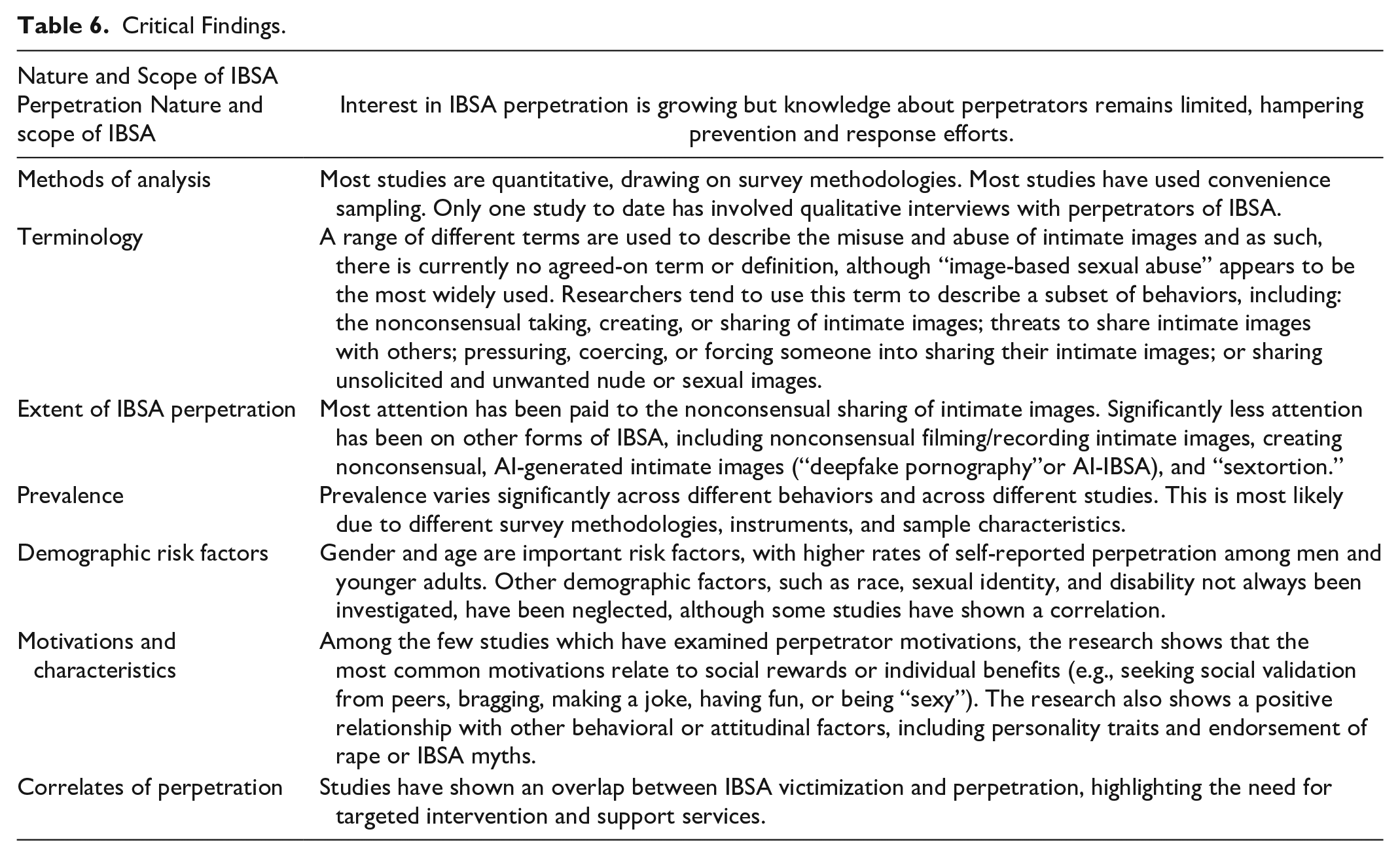
The findings of this scoping review shed light on the diverse range of terms used to describe the phenomenon of intimate image abuse in this field. Some studies used the broader umbrella term of “image-based sexual abuse” to examine a subset of behaviors, such as taking, creating, sharing, or threatening to share intimate images without consent, while others focused exclusively on one form of IBSA, such as the nonconsensual sharing of intimate images, utilizing terms such as “nonconsensual pornography” and “non-consensual sexting.” Interestingly, none of the studies used the term “revenge pornography.” This is most likely because of the rejection of this term by scholars, victim-survivors, practitioners, and victim-advocates alike. Not only is “revenge porn” a misnomer that fails to capture other perpetrator motivations beyond that of revenge, but it also conflates nonconsensually-produced or distributed intimate images with commercially-produced pornography (Citron & Franks, 2014; Henry et al., 2020).
A related issue concerns the use of different language within survey instruments. Some studies asked respondents about both nonconsensual text and images, making it difficult to disentangle image-based abuse from text-based abuse. Other studies asked respondents only about nonconsensual photos (or “pictures”) and not videos. Some studies asked respondents about posting nonconsensual images online, and did not investigate “showing” images to others in person or sending images via mobile phone or other means. Some studies asked only about sexually explicit or sexually graphic images, which could potentially exclude images that are nude but not sexually explicit. Finally, in relation to sharing unsolicited nude or sexual images, one study asked only about “dick pics,” while others were not specific as to the type of unsolicited images. Furthermore, none of the cyberflashing studies reviewed differentiated between unsolicited wanted images and unsolicited unwanted images.
In addition to language and terminology, the review also examined prevalence and demographic risk characteristics associated with different IBSA behaviors. Most of the attention has been focused on the nonconsensual sharing of intimate images, with very little research on other forms of IBSA, especially the nonconsensual creation of fake or digitally altered images (including AI-generated IBSA or “deepfake pornography”) or threatening to share someone’s intimate images (also known as “sextortion”). This is despite heightened media attention to these two emerging forms of IBSA, and the significant impacts that such acts can have on victim-survivors.
Across the different behaviors, prevalence varied considerably. This may in part be explained by the different terminology used in survey instruments (see discussion above), as well the temporal markers used, such as lifetime experiences versus experiences in the past 12 months. Moreover, some studies had small sample sizes, or relied on convenience sampling, such as with college or university students, or surveyed mostly women and/or young people. Consequently, the findings of those studies may not be reliable or generalizable to the broader population. Despite this, factors such as gender, age, race/ethnicity, and sexuality emerged as important demographic risk characteristics associated with different forms of IBSA perpetration.
Of the studies that did examine demographic risk factors, most reported higher rates of perpetration among men and younger adults. Fewer studies explored sexuality or race/ethnicity as risk factors, with some studies finding that sexual and racial/ethnic minorities were more likely to admit to engaging in the nonconsensual taking or sharing of intimate images, or threats to share intimate images, although those studies also showed victimization to be higher among these groups. These findings are consistent with those on sextortion against minors, with studies finding that boys are more likely to be perpetrators of sextortion than girls (e.g., Gámez-Guadix et al., 2022; Patchin & Hinduja, 2020), and that sextortion offending is higher among sexual minorities (Patchin & Hinduja, 2020). Very little research, however, has explored disability as a risk factor for IBSA perpetration, although Powell et al. (2019) did find that respondents with a disability had 106% greater odds to report any form of IBSA perpetration.
There are several possible reasons for the higher rates of IBSA perpetration among men, young people, and LGBTIQ+ people. These groups might be more likely to participate in online gaming, online dating, or be part of online subcultures where abuse is rife (Gámez-Guadix et al., 2022; Gámez-Guadix et al., 2023). Another explanation is that men are also more likely to perpetrate sexual harms more broadly due to sociocultural norms and values, particularly around masculinity and sexuality. Intimate images are also commonly used as a weapon for domestic abuse perpetrators, where men are also more likely to be perpetrators (Henry et al., 2020). Finally, IBSA is often a normalized practice of homosocial masculine bonding—as part of what is commonly referred to as “lad culture”—where leaked images of (some) men may be seen as humorous, and which may have less stigmatization and affect precisely because of the sexual double standards that continue to exist for women and non-binary people compared to men (Ringrose et al., 2022). While not all studies explored perpetrator motivations, characteristics, or experiences, among those that did, a key finding is that motivations underlying different IBSA perpetration behaviors were often related to individual, social, and cultural factors. Regardless of the subtype of IBSA perpetration behaviors, the most common motivations were those related to social rewards or individual benefits (Hanson, 2022), including seeking social validation (e.g., impressing friends), making a joke, having fun, or being “sexy.” Motivations related to bragging or improving social status were more likely to be reported by men compared to women according to one study (Clancy et al., 2019). While motivations such as exerting power and control, seeking sexual gratification, and retaliating against perceived slights or rejections, were still expressed, in other studies, the motivations associated with revenge or punishment were less commonly reported. For instance, in the studies we reviewed on unsolicited images, respondents were mostly motivated by receiving an intimate image in exchange for theirs, or expressing sexual interest in the receiver or showing themselves off in the hope of impressing the other person.
The results on perpetrator motivations, at least for some forms of IBSA, should be interpreted with caution as they rely on self-reporting of people engaging in these behaviors. It should also be acknowledged that motivations to impress, or be funny or sexy can still be consistent with motives of power and control, or certain personality traits lacking in empathy or thought for others and self-centeredness. Indeed, there was consensus among the studies we reviewed about the different forms of IBSA perpetration which had a positive relationship to other behavioral or attitudinal factors, including endorsement of rape or IBSA myths, higher sexual activity (e.g., pornography use or sexual compulsivity), or personality traits. In particular, several studies found a positive association between IBSA perpetration with Dark Tetrad traits (i.e., sadism, psychopathy, narcissism, and Machiavellianism), although not all studies found all four personality traits to be associated. More research is needed to understand the role of personality traits, mental health issues, as well as rape and IBSA myth endorsement in IBSA perpetration. Several studies also showed a correlation between IBSA and other forms of violence and abuse, such as sexual violence or intimate partner violence, and more research is also needed here.
Overall, the findings from this review are broadly supportive of existing theories about gender inequality as a driver of gender-based violence. Gender inequality perpetuates discrimination and unequal power relationships, and is a product of problematic attitudes, stereotypes, beliefs, norms, and values about gender and sexuality (Our Watch, 2021). These societal attitudes shape sexual-double standards, which are the different expectations about sexuality, including promiscuity, sexual expression, and virginity based on a person’s gender and/or their race/ethnicity, class, age, and other markers of “difference.” Problematic norms contribute to ideas of masculine entitlement—the belief or expectation that cisgender, heterosexual men are deserving of opportunities, power, privilege, and resources, including access to women’s bodies. As mentioned above, this is a plausible explanation for why men, particularly young men, are more likely to engage in IBSA behaviors than women and nonbinary people.
Finally, the finding from different studies about the overlap between victimization and perpetration of IBSA suggests a complex interplay between experiences of harm and either prior or subsequent offending behaviors. Victims of IBSA were found to be at increased risk of perpetrating similar behaviors, highlighting the cyclical nature of victimization and the need for targeted intervention and support services. As noted by Gámez-Guadix et al. (2023), the victim-offender overlap might be due to the prevalence of reciprocal online abuse on particular sites or forums. Reciprocal sexting is another explanation. For instance, intimate images are shared consensually by both partners in a romantic relationship, but at the end of the relationship, one person shares without consent, or threatens to share, which leads the other person to retaliate in kind (Sparks et al., 2023).
Limitations
This study had several limitations. First and foremost, the studies that we reviewed relied on self-reports on perpetration of IBSA, which may contribute to a distortion of the nature and extent of such behaviors, since even in an anonymous survey, respondents will still underreport or minimize their offending behavior. Second, our inclusion and exclusion criteria meant that we did not include studies on perpetrators of CSAM, nor did we include studies examining perspectives of victims, stakeholders, or bystanders on perpetrators. Further research should explore perpetrator characteristics and motivations relying on nonperpetrator perspectives, since perpetrators are a difficult population to access, especially in qualitative research. Relatedly, a third limitation was that we did not include qualitative studies that have observed IBSA perpetrator behaviors in online contexts. These studies offer invaluable insights into the interactions that offenders have with other offenders, or the ways in which they justify their actions and the language they use (see e.g., Hall & Hearn, 2019; Henry & Flynn, 2019). Fourth, the review only included studies in English. We ran the search again in Scopus excluding English publications to discover how many studies were excluded, finding that there was only one study that we did not include because it was in German and not in English (Dekker & Koops, 2017). And finally, we did not include studies that focused on proclivity to perpetrate IBSA (e.g., Pina et al., 2017), or those studies which only focused on viewing or storing nonconsensual images (e.g., visiting “slutpages” or storing nonconsensual images in an app or on a Cloud drive).
Implications
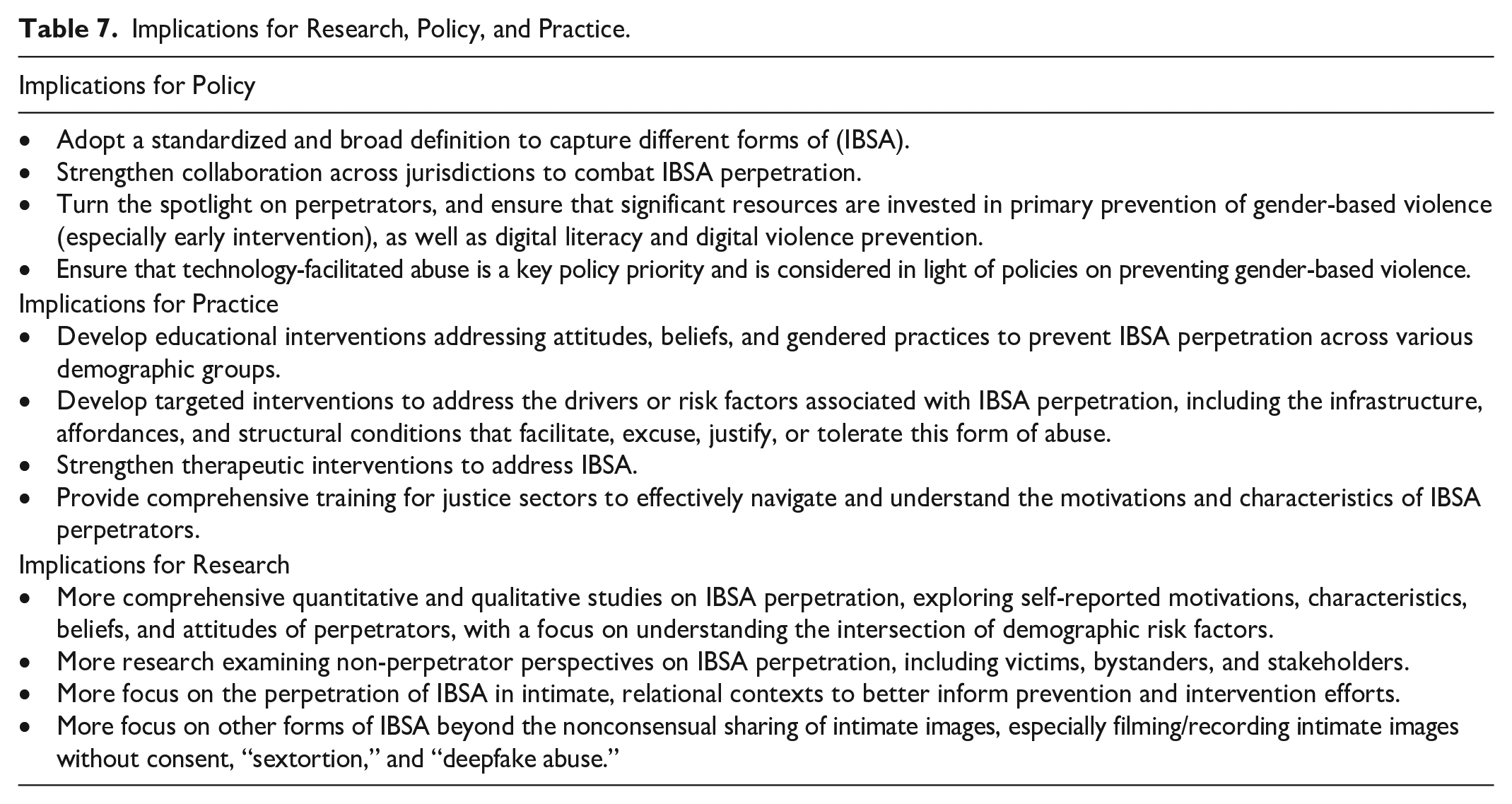
The findings from this review have important implications for research, policy, and practice (see Table 7). First, our findings highlight the need for standardized terminology to facilitate clearer communication and comparability across research studies on this topic. Despite many of the studies using the broader umbrella term “image-based sexual abuse,” there was no evidence of uniformity in how these terms were defined across the studies. We suggest that a broad definition IBSA be applied to capture a range of behaviors. Establishing a broader definition would also allow researchers to consider new ways that these forms of abuse are being perpetrated. It is important, however, that researchers also explore prevalence and risk characteristics in relation to the specific subset of IBSA behaviors. We suggest that future studies consider using the terms “image-based sexual abuse” or “image-based abuse” when investigating different behaviors. For those studies focusing on a single form of IBSA, we suggest the following terms: “sexual extortion” (or “sextortion”) for threats to share intimate images; “sexting coercion” for pressuring, threatening, or coercing someone into sharing their intimate images; “deepfake abuse” or “AI-generated IBSA” for nonconsensual images created using AI tools; nonconsensual synthetic intimate images for digitally created or altered images (using AI or non-AI tools); and “cyberflashing” for the unsolicited and unwanted sharing of nude or sexual images.
Implications for Research, Policy, and Practice.
Second, our review highlights how little is still empirically known about perpetrators of IBSA. There is a need for more comprehensive research exploring the motivations, characteristics, and attitudes of IBSA perpetrators. This includes further exploration of the overlap between victimization and perpetration to better understand the potential risk factors that might differentiate this group from those who have only perpetrated. Our review also highlights the need for more research on perpetration in diverse contexts, including in intimate relational contexts, as well as research exploring demographic risk factors, including age, gender, race/ethnicity, sexuality, and disability (and how they might intersect).
Third, we emphasize the need for targeted interventions to address the drivers or risk factors associated with IBSA perpetration. One limitation with survey research is the focus on individual-level factors, such as offender attitudes, motivations, and personality traits, which means that broader structural factors (e.g., socioeconomic, racial, and gender inequalities) that underpin or drive the behavior, or technological affordances and infrastructures that make offending not only easier but possible, are not always adequately or easily investigated. Future research is needed to provide a better understanding of these sociocultural and technological drivers and factors. Early intervention in particular needs to address individual predispositions (genetic and/or environmental) and societal attitudes and norms, and such interventions should be part of broader prevention efforts around gender-based violence. One prominent finding across the literature related to perpetrators nonconsensually sharing intimate images for fun or as a joke, revealing that the general public might not be fully aware of the harms and impacts associated with IBSA. Regarding gender, findings also demonstrate that men and boys are more likely to nonconsensually share intimate images for personal or social reward. These findings reinforce the need for greater educative initiatives to address problematic gendered norms, beliefs, and attitudes.
Conclusion
A scoping review was undertaken to examine empirical research findings on perpetrators of IBSA. The findings of this review demonstrate a confusing array of different terms used to describe not only the nonconsensual sharing of intimate images, but also other behaviors relating to taking, creating, or threatening to share intimate images, as well as coercing someone into sharing their intimate images, or sending unsolicited and unwanted intimate images. The study shed light on the prevalence of different forms of IBSA, although these rates varied considerably owing to different terminology, instruments, and samples. There was consensus that IBSA is more likely to be perpetrated by younger adults, men, as well as LGBTIQ+ people, and that Dark Tetrad personality types, as well as previous experiences of either perpetration or victimization, are associated with IBSA offending.
These important findings can help shape future research, policy, and practice. In particular, we need more research on IBSA perpetration. Without this research, prevention and response efforts are significantly hampered. Relatedly, more resources are needed to provide comprehensive primary, secondary, and tertiary prevention interventions, and while this needs to be predicated on addressing gender inequality and hostile sexism, it also needs to address the normative practices of younger and older people in sharing intimate content, as well as address more individual-level factors that might emerge in early childhood, including personality traits associated with a lack of empathy, self-centeredness, and concern for others. These intervention efforts also need to be focused on respect and consent, and navigating online interactions in ethical ways.
Footnotes
Authorship Statement
The authors listed here have agreed to the submission and confirm that the article is not currently being considered for publication by any other print or electronic journal. There is no conflict of interest to declare.
Declaration of Conflicting Interests
The author(s) declared no potential conflicts of interest with respect to the research, authorship, and/or publication of this article.
Funding
The author(s) disclosed receipt of the following financial support for the research, authorship, and/or publication of this article: The authors acknowledge funding from the Australian Research Council (ARC; FT200100604).
