




Abstract
Existing measures and theories of intimate partner coercive control largely evaluate men’s coercion of women. The extent of knowledge pertaining to intimate relationships among other genders and sexual identities is unclear. Guided by a theoretical framework of intersectionality, we examined and synthesized original studies on coercive control by (perpetration) or against (victimization) Two Spirit, lesbian, gay, bisexual, trans, queer, questioning, intersex, and asexual individuals within intimate partner relationships. We searched eight academic databases for records from 2014 through 2022 and hand-searched review articles’ reference lists, supplemented with gray literature and website searches. Using duplicate screening, we identified 1,774 unique documents; 526 met preliminary eligibility criteria and 277 were retained for data extraction in duplicate. Coercive control was more common among minority individuals and was related to mental health challenges. Few studies reported on gender- or sexual-identity specific forms of coercive control, and an intersectional focus was uncommon. This review revealed a lack of agreed definition of coercive control or accepted standard of measurement, and a gap in research with individuals who identify as gender diverse, gender fluid or intersex, or those identifying their sexuality as asexual, pansexual, or sexually diverse.
Intimate partner violence (IPV) is a form of gender-based violence especially prevalent in the lives of Two Spirit, lesbian, gay, bisexual, trans, queer, questioning, intersex, and asexual individuals and other gender nonconforming or sexually diverse individuals (2SLGBTQQIA+; e.g., Haller et al., 2021). Coercive, controlling behavior is often used to control a partner in an abusive relationship, and can serve to trap a partner in an abusive and potentially dangerous relationship (Stark, 2007). Coercive control is often understood in terms of men using “male privilege” against women (e.g., Johnson, 1995). However, this theory may not apply to 2SLGBTQQIA+ individuals experiencing coercive control who may face additional controlling acts unique to their identity (e.g., threats to “out” their sexuality or gender identity, intentional misgendering or deadnaming, pressure not to transition, withholding of hormone medication, or pressure to engage in sexual acts that are inconsistent with one’s gender identity; e.g., Araya et al., 2021; Becerra et al., 2021; Hereth, 2021). Therefore, the present review sought to survey the extent of knowledge of a broad range of coercive and controlling behavior to understand the lived experiences of gender-based violence among 2SLGBTQQIA+ individuals.
Need for Research into Coercive Control Among 2SLGBTQQIA+ Individuals
In feminist scholars’ depiction of “power and control” in IPV, physical and sexual violence against a partner is reinforced by “coercion and threats,” acts of intimidation, isolation, emotional and economic abuse, along with minimizing and denying responsibility for the abuse (Shepard & Pence, 1999, p. 275). Later definitions added attempts to exploit, degrade, threaten, frighten, and make demands on partners or their children or pets (MyHill & Hohl, 2019; Stark, 2007). The use of “male privilege” to control women underscores the theory of coercive control as “patriarchal terrorism” (e.g., Johnson, 1995). Stark (2007, 2012) traced the roots of coercive control to a history of systematic constraint of women through patriarchy, and saw coercive control as primarily a behavior by men to exploit and maintain their privileged access to money, sex, and other resources. Women can become constrained in abusive relationships by socially constructed gender expectations that their partners coercively exploit (Crossman & Hardesty, 2018). Perhaps a result of this theoretical lens, a 2019 review found that the great majority of coercive control research was focused on women victimized by men (Stark & Hester, 2019).
However, studies have revealed a high risk of IPV victimization among LGBT individuals (e.g., Kattari et al., 2022; Messinger et al., 2021). A 2014 narrative review of “psychological aggression” (e.g., name-calling, property destruction) in the relationships of LGB individuals found victimization rates varying from 12% to 100% (Mason et al., 2014). Scholars have also highlighted contextual influences such as transphobia and trans prejudice (e.g., Anderson, 2020) and minority stress (e.g., Brubaker, 2020). Whereas the male privilege hypothesis states that when coercive control is used other than by men against women it is based in other forms of privilege, such as social class, income, age, race or homophobia (Stark, 2012), Messinger (2017) suggested that societal gender inequalities are less relevant to 2SLGBTQQIA+ IPV, but homophobia and transphobia are integral, as shown in unique coercive tactics such as threatening to out victims.
An Intersectional Perspective on Coercive Control
Scholars have critiqued the heteronormative lens of much research into IPV in 2SLGBTQQIA+ relationships (e.g., Workman & Dune, 2019). Adopting an intersectionality framework can help address this research gap. Intersectionality was coined by Crenshaw (1989, 1991) to capture how locations within social identity categories (e.g., gender and race) intersect to shape lived experiences. Intersectionality contrasts with single-concept structures framed for addressing discrimination based on one identity category that may still privilege positions of power in a person’s other identity categories. An intersectional lens attends to the multiple intersecting systems of oppression that maintain power among dominant groups and devalue members of marginalized groups. For example, racialized lesbian women have a subjectively different experience of IPV than white heterosexual women, due to their different political and structural positions. Indigenous persons report higher rates of IPV and coercive control than other racial groups (Etaugh, 2020), and may also face state and structural violence that compounds their experiences of coercive control, such as homophobia in their home communities (Ristock et al., 2019). Although coercive control can occur within any intimate relationship, it can be exacerbated in relationships in which one partner’s identity includes multiple intersecting marginalized statuses. Thus, current research requires synthesizing and critiquing with an intersectionality lens.
The Present Review
Mason et al. (2014) identified several methodological problems in the existing literature on coercive experiences in LGB relationships, including unclear differentiation of sexual identities and the use of measures of coercion that lack criterion validity for LGB individuals. Etaugh (2020) identified new IPV measures designed specifically for sexual and gender minority groups, and more recent studies have recruited 2SLGBTQQIA+ participants, but researchers often face challenges in accurately determining individuals’ sexual and gender identities (Snyder et al., 2022). Thus, there is a need to examine current methodological gaps and how they may affect understanding of coercive control in 2SLGBTQQIA+ individuals’ relationships. Our objective was to examine the state of research conducted on coercive control in 2SLGBTQQIA+ individuals’ relationships. We examined the representation of 2SLGBTQQIA+ individuals, the measures of coercive control, and the use of intersectionality. Our definition of coercive control was guided by categories of abuse on validated self-report measures (e.g., threats, sexual abuse, emotional abuse Graham-Kevan & Archer, 2005; Lehmann et al., 2012) and by additional categories informed by current literature, including animal abuse (e.g., Cleary et al., 2021), attitudes supporting IPV (e.g., Hilton et al., 2023), psychological abuse (Mason et al., 2014), technological surveillance (e.g., Klest & Phillips, 2022), and gender- or sexual-identity abuse (e.g., Araya et al., 2021; Rogers, 2021). We excluded studies of physical IPV only.
Method
We conducted a critical scoping review of coercive control in the context of IPV, including quantitative and qualitative studies in the academic and gray literature since 2014, when Mason et al. (2014) published their narrative review, up to December 2022. We followed the five-stage scoping review framework proposed by Arksey and O’Malley (2005) and the updated guidance by Peters et al. (2020) that included predetermining the population, concept, and context (PCC) criteria and publishing our protocol open access (Hilton et al., 2023). We further developed the protocol for searching gray literature through stakeholder consultations in the first half of 2023.
Academic Literature
Step 1: Identifying the Research Question
Our overall research question was: What is the state of knowledge in research on how coercive control is experienced in 2SLGBTQQIA+ individuals’ intimate relationships? We finalized three sub-questions in consultation with stakeholders from agencies providing services to persons affected by IPV within 2SLGBTQQIA+ communities and with IPV specialists in policing services: (a) How are 2SLGBTQQIA+ individuals represented in the literature? (b) What measures are used to study coercive control in 2SLGBTQQIA+ individuals’ relationships? (c) To what extent is existing research informed by or interpreted from an intersectional perspective?
Step 2: Identifying Relevant Studies
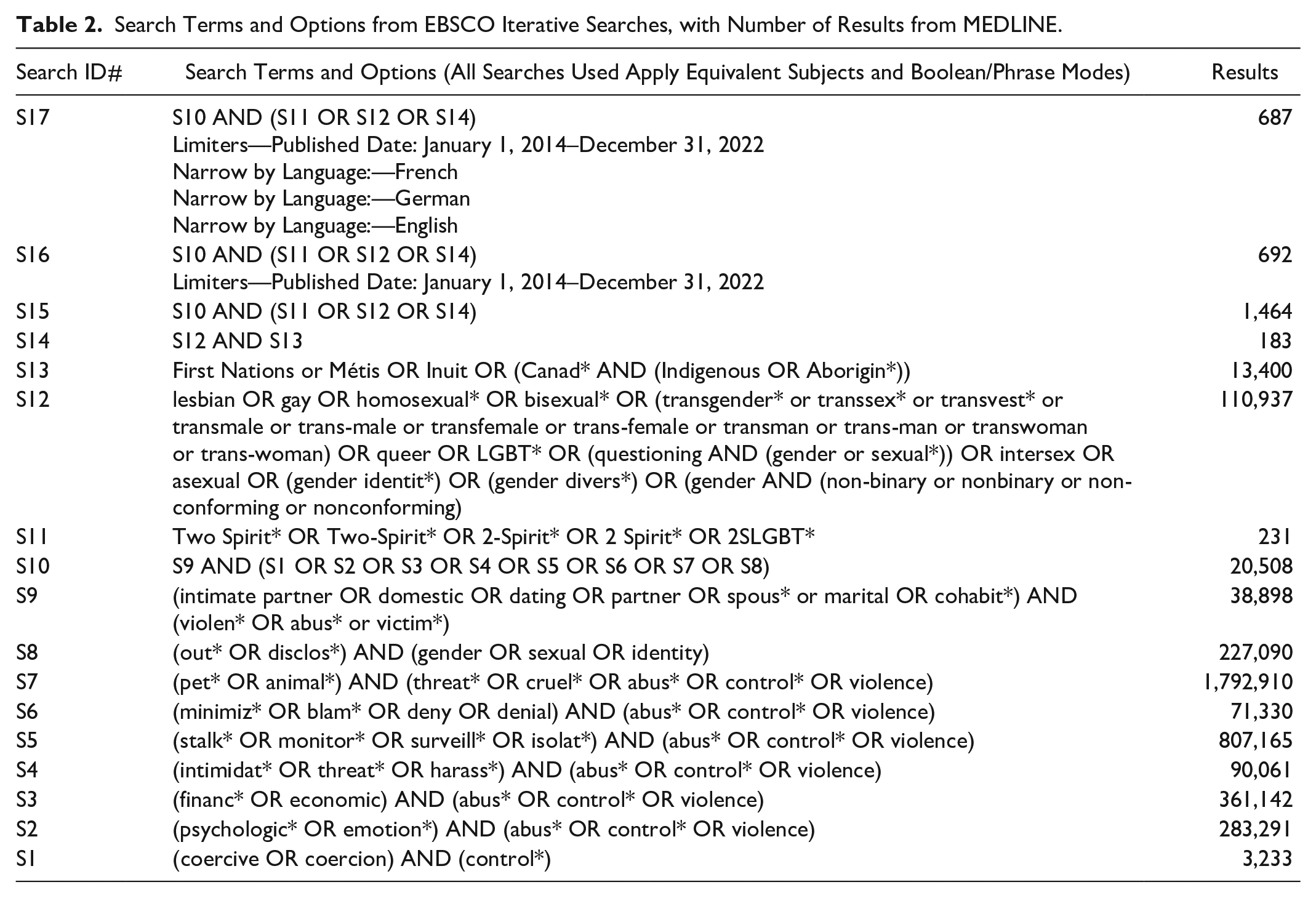
Table 1 shows our PCC inclusion and exclusion criteria. To guide screening of our concept, we created a comprehensive list to classify behaviors as economic abuse, emotional abuse, intimidation, isolation, threatening, minimizing/denying, sexual abuse, stalking/harassment, victim blaming, “male privilege” (broadened to entitlement regardless of gender), animal abuse, attitudes supporting IPV, psychological abuse, technological surveillance, and acts of coercive control specific to gender or sexual identity). We excluded studies restricted to physical IPV only. We did not search for specific research designs as we aimed to include studies using qualitative, quantitative, or mixed methods designs and analysis. Articles in English, French, or German were searched and retrieved from eight databases: Sociological Abstracts, PsycINFO, MEDLINE, CINAHL, Criminal Justice Abstracts, Gender Studies Database, LGBTQ+ Source, and Google Scholar. We searched studies published from 2014 through 2022 and the last data search was conducted in May 2023. Table 2 shows the search strategy with results for MEDLINE as an example. Except for a simplified search in Google Scholar, we used the same strategy and terms within each database, ensuring terms were covered in each database index and thesaurus, and searching within title, abstract, keyword, and/or subject/MESH heading.
Inclusion and Exclusion Criteria.
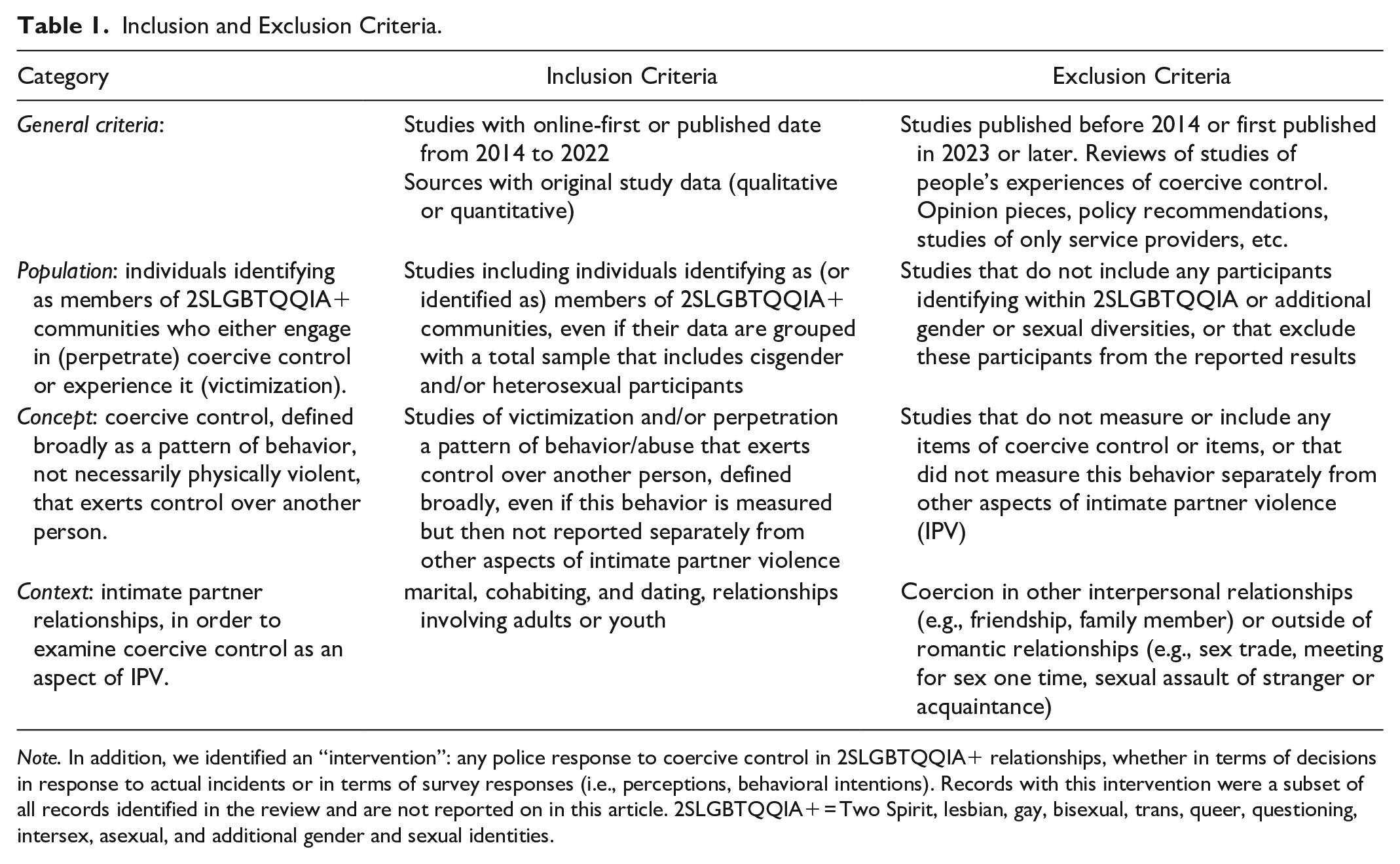
Note. In addition, we identified an “intervention”: any police response to coercive control in 2SLGBTQQIA+ relationships, whether in terms of decisions in response to actual incidents or in terms of survey responses (i.e., perceptions, behavioral intentions). Records with this intervention were a subset of all records identified in the review and are not reported on in this article. 2SLGBTQQIA+ = Two Spirit, lesbian, gay, bisexual, trans, queer, questioning, intersex, asexual, and additional gender and sexual identities.
Search Terms and Options from EBSCO Iterative Searches, with Number of Results from MEDLINE.
Step 3: Study Selection
Figure 1 summarizes the screening and selection process, from a total of 3,618 records to 277 selected full records. Records retrieved from each database were uploaded to Covidence (Veritas Health Innovation, n.d.) in early 2023. In addition, we screened titles from the reference lists of the 93 review articles and chapters identified by our searches and excluded from this review, finding 241 unique references dated 2014 or later with a combination of words in the titles that fit the inclusion criteria (e.g., LGB and violence); after removing duplicates and ineligible sources, we uploaded 29 academic records into Covidence for titles and abstracts screening.
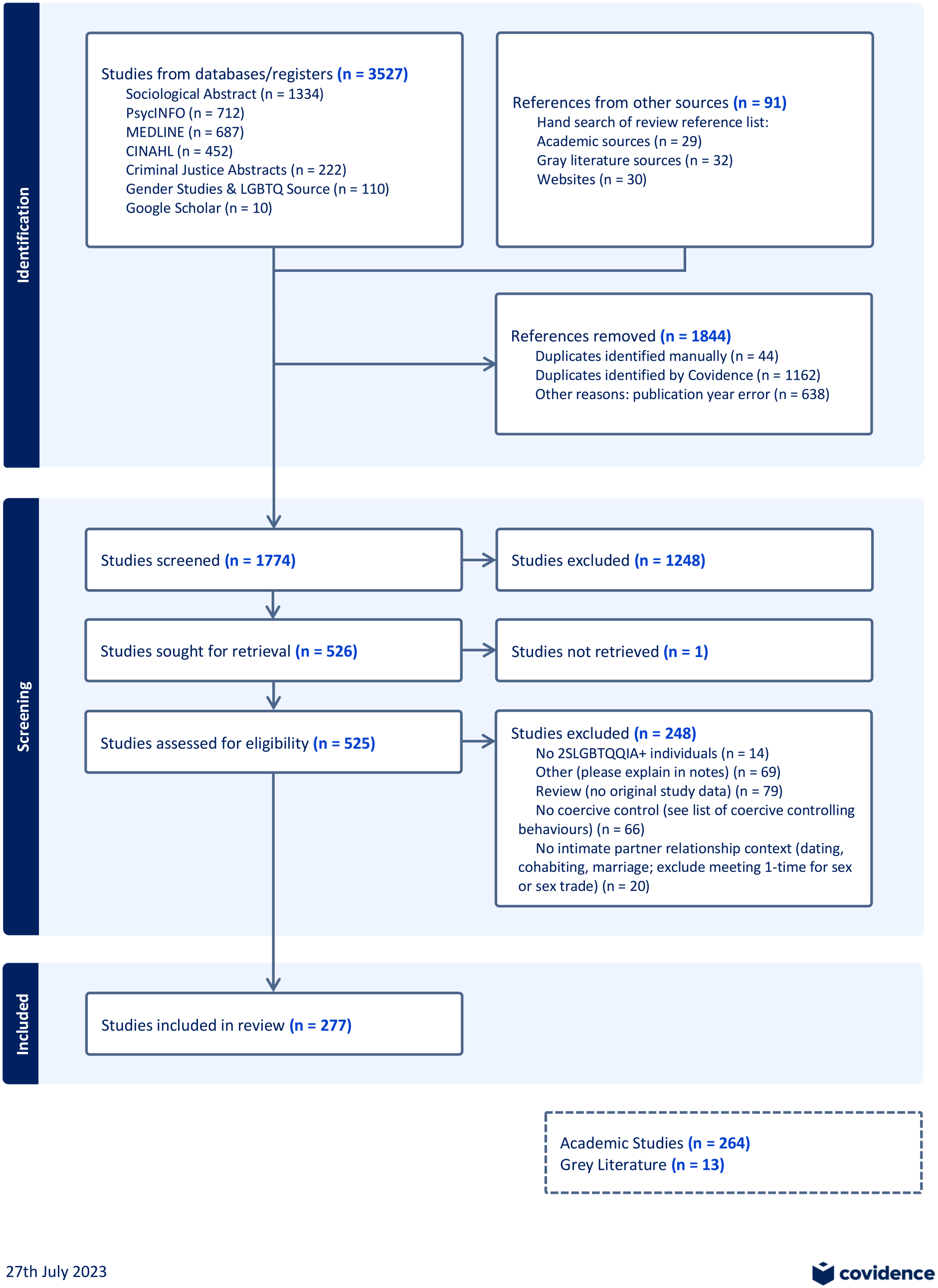
PRISMA flow chart including academic and gray literature sources.
Following team discussion on the first 12 records and graduate student training (supervised readings on scoping review methodology and synchronous training sessions), all screening was conducted in duplicate. Two graduate students independently screened 73% of the academic titles and abstracts and the remaining 27% were screened by the first and second authors. Of 1,721 records, 491 were screened in and 490 full texts were retrieved (after reasonable efforts). The two students independently screened 80% of the full text records and other authors screened the remaining 20%. Multiple records by the same authors (e.g., books or dissertations with related journal publications) were initially screened in and cross-checked at the full-text stage for overlapping content; this resulted in two dissertations being excluded due to research questions, data analysis, or reported results overlapping with a subsequent published article and one chapter being excluded due to content reported more extensively in a dissertation. From full-text reviews, we identified 264 academic sources for full data extraction (Supplemental material Table 1). Supplemental material Table 2 shows records excluded at this stage, along with the reasons for exclusion. Inter-rater agreement between the students was 88% for titles and abstracts screening and 86% for full text reviews. Conflicts were reviewed by the first author and remaining discrepancies were resolved by whole team consensus, including nine titles and abstracts and 13 full texts.
Step 4: Charting the Data
We created a data extraction form in Covidence and revised it following pilot testing by team discussion on approximately 12 records (Supplemental material Table 3). A data extraction discussion video was recorded for training coders (available on request). Two students independently extracted data in duplicate on 69% of records with the remaining 31% extracted by a third student and other team members. All records were reviewed in duplicate then examined for consensus by one of the primary coders and approximately 11 underwent full team consensus.
Step 5: Collating, Summarizing, and Reporting Results
Extracted data were exported from Covidence and saved to an Excel file for summarizing studies within each of our PCC domains. For our population, we examined the number of 2SLGBTQQIA+ participants and how their gender and sexual identities were determined and reported. For our concept, we examined how coercive control was measured and reported, including rates or scores of perpetration and victimization. For the context, we examined the types of relationships included (e.g., marriage, dating, cohabitating) and whether coercive control was a substantial topic or a marginal element (e.g., included as one aspect of a measure of IPV).
Gray Literature
The initial gray literature search protocol included searching relevant websites and unpublished literature identified in hand-searched reference lists from academic literature reviews. Stakeholder consultations resulted in an expanded list of websites and other resources. We hand-searched websites in the first half of 2023 for any research reports meeting our PCC criteria, resulting in 34 records. Three journal articles and one dissertation were excluded as duplicates of the academic search (Supplemental material Table 2). In addition, the hand-search of academic review reference lists yielded 32 unique, relevant, nonacademic reports. Thus, 62 gray literature records were uploaded to Covidence for screening as per the academic literature procedure, with 13 records entering data extraction (Supplemental material Table 1). The third student and second author screened and extracted 100% of the records, with 68% agreement for titles and abstracts screening and 89% agreement for full text reviews.
Results
Summary of Study Characteristics
The number of academic studies included in the review increased as a function of year of publication with 46% published in 2021 and 2022 (Supplemental material Figure 1). Most of the 264 academic records described studies conducted in the United States (n = 187, 71%), with 14 (6%) conducted in Canada, 13 (5%) in China and smaller numbers in countries in Europe, North and South America, Australia, Africa and Asia, including 12 (5%) conducted in multiple countries and 8 (3%) conducted online with no geographic limits. Most studies used a cross-sectional design such as a quantitative survey (n = 198, 75%), and fewer used qualitative (n = 32, 12%) or mixed methods (n = 9, 3%). Total sample sizes ranged from one to over 2 million (median = 440). Most of the 13 gray literature studies were conducted in Canada (n = 6, 46%), followed by Australia (n = 3, 23%) and the United States (n = 3, 23%). Again, cross-sectional designs were the most common (n = 9, 69%) with some mixed methods (n = 3, 23%) and qualitative methods (1, 8%). Total sample sizes ranged from 34 to over 45,000 participants (median = 895).
Population
The number of 2SLGBTQQIA+ participants ranged from 5 to over 96,000 (median = 440) in the academic studies and 34 to 1,557 (median = 813) in the gray literature studies. In nearly two thirds of studies (n = 163, 62% academic; n = 8, 62% gray) the sample was entirely from the 2SLGBTQQIA+ population. A wide range of terms was used for naming gender and sexual identities (Table 3). Self-report was the typical method of determining both gender (n = 256, 97% academic; n = 12, 92% gray) and sexual identity (n = 239, 91% academic; 13, 100% gray). Indigeneity was captured in 84 (32%) of academic studies and 11 (85%) gray literature studies. Indigenous participants were most often identified as American Indian, Alaskan Native, Native Hawaiian/other Pacific Islander, or categorized broadly as Indigenous or Aboriginal (Table 4). Five academic studies and three gray studies included participants identified as Two Spirit.
Frequency of Gender and Sexual Identities Used in Studies.
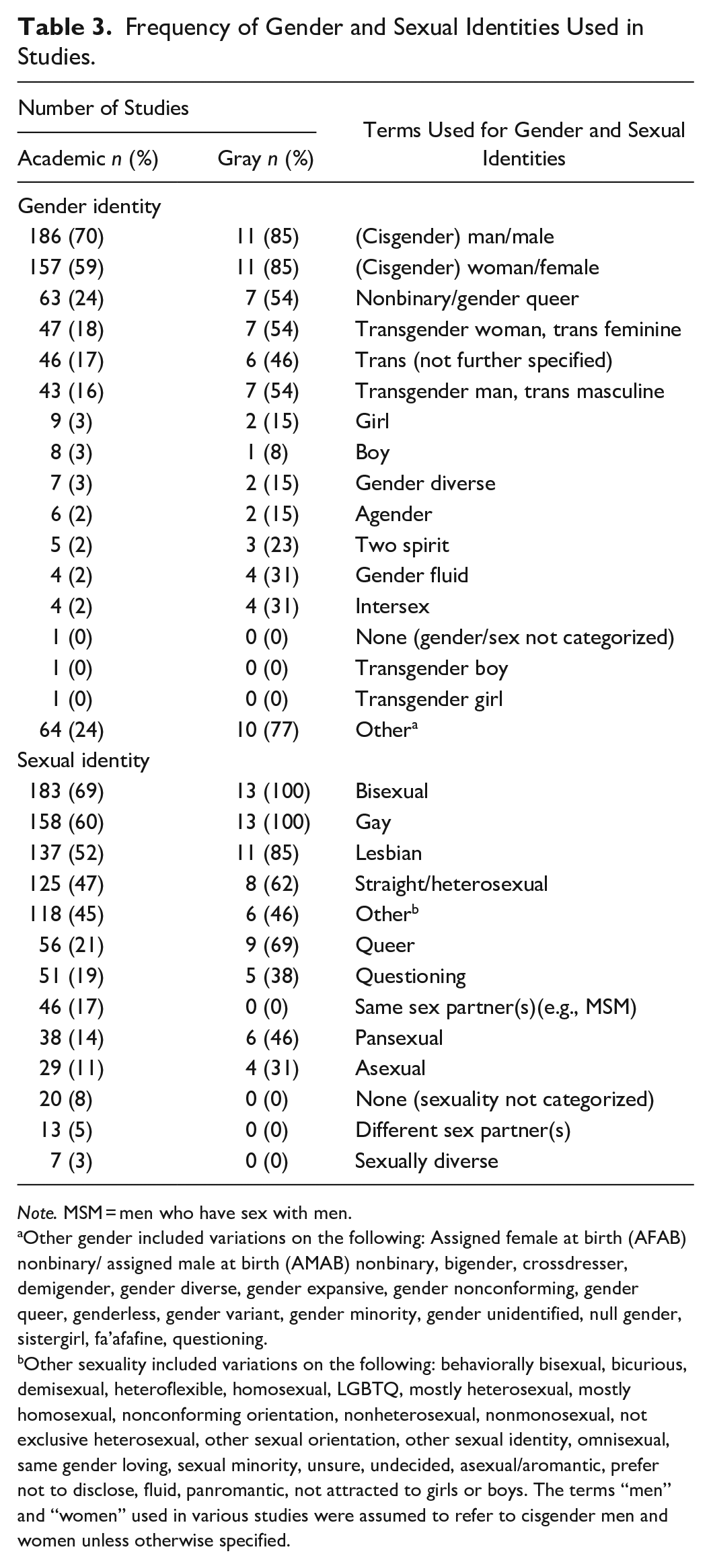
Note. MSM = men who have sex with men.
Other gender included variations on the following: Assigned female at birth (AFAB) nonbinary/ assigned male at birth (AMAB) nonbinary, bigender, crossdresser, demigender, gender diverse, gender expansive, gender nonconforming, gender queer, genderless, gender variant, gender minority, gender unidentified, null gender, sistergirl, fa’afafine, questioning.
Other sexuality included variations on the following: behaviorally bisexual, bicurious, demisexual, heteroflexible, homosexual, LGBTQ, mostly heterosexual, mostly homosexual, nonconforming orientation, nonheterosexual, nonmonosexual, not exclusive heterosexual, other sexual orientation, other sexual identity, omnisexual, same gender loving, sexual minority, unsure, undecided, asexual/aromantic, prefer not to disclose, fluid, panromantic, not attracted to girls or boys. The terms “men” and “women” used in various studies were assumed to refer to cisgender men and women unless otherwise specified.
Frequency of Indigenous Identities Used in Studies.
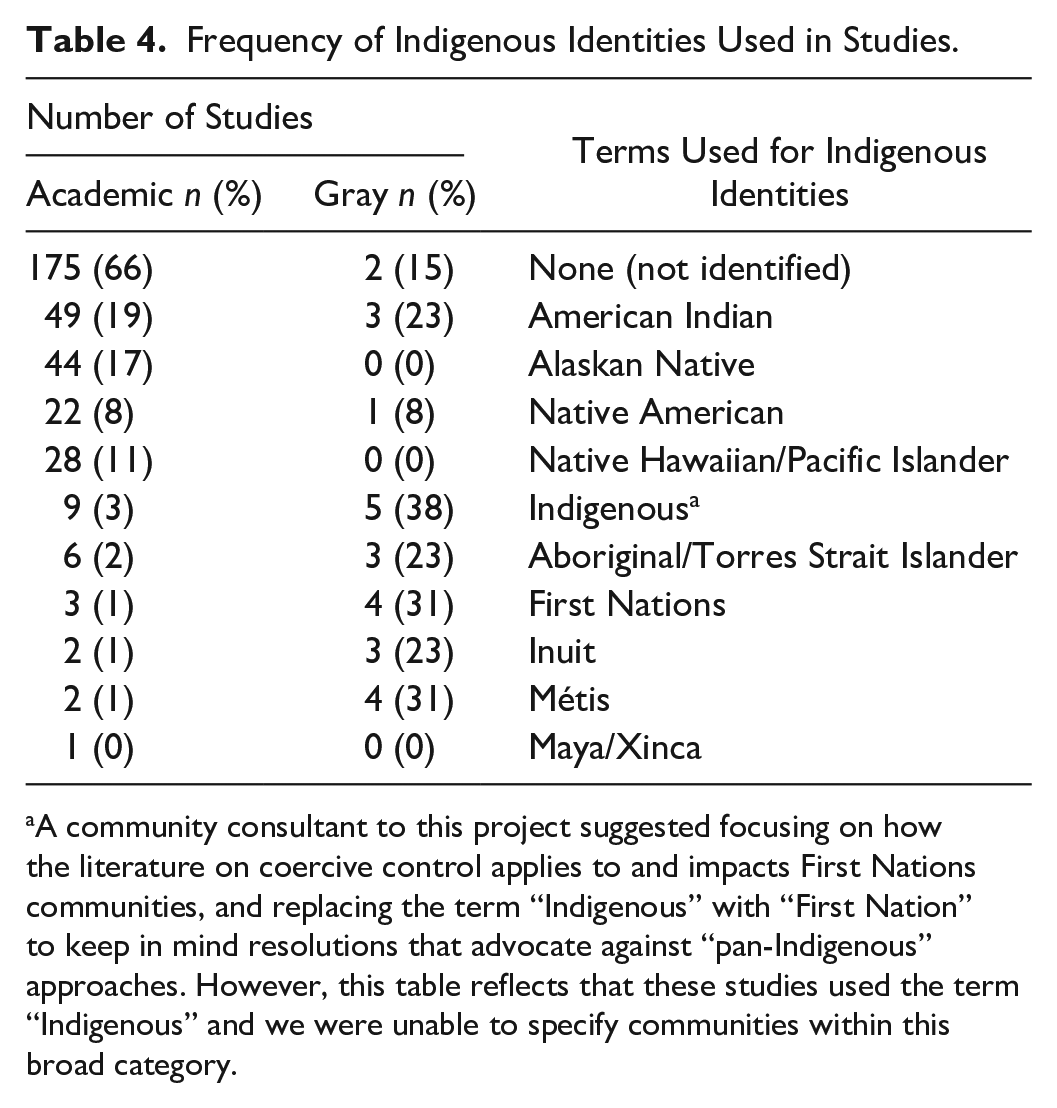
A community consultant to this project suggested focusing on how the literature on coercive control applies to and impacts First Nations communities, and replacing the term “Indigenous” with “First Nation” to keep in mind resolutions that advocate against “pan-Indigenous” approaches. However, this table reflects that these studies used the term “Indigenous” and we were unable to specify communities within this broad category.
Concept
Only nine academic studies (and no gray sources) used “coercive control” in the title or abstract; most appeared in more recent years: 2014 (n = 1), 2019 (n = 2), 2021 (n = 2) and 2022 (n = 4). The most common way that researchers captured the concept of coercive control was to use only author-created, unstandardized questions (n = 83, 31% academic; n = 8, 62% gray). The question wording was not always reported in these studies. In addition, 44 (17%) academic and 2 (15%) gray studies collapsed coercive control data under the umbrella measure of IPV.
Context
Studies enquired about coercive control in a range of intimate partner relationships, including marital, cohabiting, and dating relationships with varying degrees of seriousness. However, about half of academic studies (n = 125, 47%) and a third of gray literature studies (n = 5, 38%) simply asked about experiences within a relationship or with an intimate partner, and did not provide information about the nature of participants’ relationships.
What is the State of Knowledge on How Coercive Control is Experienced in 2SLGBTQQIA+ Individuals’ Intimate Relationships?
Most academic (n = 174, 66%) and gray (n = 11, 85%) studies reported the prevalence of coercive control (Supplemental material Table 4), most often regarding experiences of victimization (n = 163, 62% academic; n = 11, 85% gray) rather than perpetration by participants (n = 92, 35% academic; n = 0 gray). In academic studies whose entire samples comprised 2SLGBTQQIA+ individuals, total sample coercive control prevalence ranged from 5% experiencing the threat of outing (Steele et al., 2020), and 20% experiencing identity abuse (Fedele et al., 2022), controlling behavior (Davis et al., 2016) or sexual abuse (e.g., Braksmajer et al., 2020; Lopez, 2016), to almost 90% experiencing verbal abuse (Garcia, 2015) and nearly 100% experiencing psychological aggression (Fedele et al., 2022). Similarly in gray literature, results for 2SLGBTQQIA+ participants ranged from 5% experiencing surveillance (Wright et al., 2022), through 15% to 40% experiencing economic abuse (Haller et al., 2021; University of NSW, 2014), to 80% experiencing put downs and name-calling (Haller et al., 2021). In addition, the National Coalition of Anti-Violence Programs (NCAVP, 2018) found that, in over 2,100 IPV reports made to LGBTQ service providers, forms of coercive control by the intimate partner ranged from vandalism (1%) and economic abuse (3%) to in-person harassment (19%).
Studies that compared the prevalence of coercive control between participant groups with different identities (n = 73, 28% academic; n = 7, 54% gray) typically reported higher prevalence among minority participants. For example, Hoxmeier (2016) and Griner et al. (2020) found that transgender college students reported the highest prevalence of sexual abuse compared with students identifying as female or male, and Griner et al. (2020) further reported that transgender students were most likely to experience stalking and emotional abuse. Similarly, Jaffray (2021a) found that sexual minority, gay, and bisexual men experienced higher rates of emotional, financial, and psychological abuse than straight men; this trend was similar among women (Jaffray, 2021b). Specific forms of abuse differed between groups in some studies, such as women being more likely to report having to inform their partners who they were with and where they were at all times, compared with men and nonbinary individuals (Haller et al., 2021).
Sexual abuse or sexual coercion was the most commonly measured and reported act of coercive control in both academic (n = 165, 63%) and gray literature (n = 11, 85%), followed by emotional abuse (n = 101, 38% academic; n = 7, 54% gray). Gray studies tended to include more variety of coercive control behaviors (Supplemental material Figures 2 and 3). Forms of abuse specific to individuals’ gender and sexuality identities were measured in 43 (16%) academic studies and 5 (38%) gray studies. Identity abuse included acts such as threatening to out the partner’s identity (Fedele et al., 2022; Goldenberg et al., 2016; McAllister, 2022), telling the partner they were not a “real” woman or man (King et al., 2021), misgendering or deadnaming (Haller et al., 2021; Kurdyla, 2021; Rogers, 2021), pressuring toward or against transitioning (Araya et al., 2021; University of NSW, 2014), controlling hormone treatments (King et al., 2021), requiring the partner to present as a particular gender (University of NSW, 2014), expressing biphobia (Head & Milton, 2014; McAllister, 2022), ridiculing or disrespecting the partner because of identities such as genderqueer or sistergirl (University of NSW, 2014), and forcing gender monogamy for polyamorous partners (Head & Milton, 2014). In one study, 27% of transgender participants had ever experienced identity abuse in an intimate relationship (King et al., 2021).
Several studies related coercive control or other forms of IPV to poorer mental health among 2SLGBTQQIA+ participants (Fedele et al., 2022; Peitzmeier et al., 2019; Scheer & Baarms, 2021; Webermann et al., 2022; Wei, Hou et al., 2020; Wei, Cao et al., 2020; Woulfe & Goodman, 2020). For example, Scheer and Baams (2021) reported that transgender and gender nonconforming young adults experienced more identity abuse victimization than cisgender sexual minority male and female young adults and were approximately twice as likely to seek IPV-related mental health services (e.g., psychotherapy) and other services. Woulfe and Goodman (2020) reported that positive identity affirmation buffered the effects of identity abuse on depression and post-traumatic stress disorder among LGBTQ participants.
How are 2SLGBTQQIA+ Individuals Represented in the Literature?
Most studies focused on a specific gender or sexual identity group, such as men who have sex with men (n = 34; e.g., Kubicek et al., 2016; Stephenson et al., 2022; Wei et al., 2021), LGBTQ youth (n = 25; e.g., Basile et al., 2020; Espelage et al., 2018; Scheer & Baams, 2021), trans adults (n = 24; King et al., 2021, 2022; Messinger et al., 2022) lesbian girls and women (n = 11; e.g., Kelley et al., 2015; Lewis et al., 2017; Tognasso et al., 2022), and transgender adults (e.g., Becerra et al., 2021; Hillman, 2022; Kattari et al., 2022). Less often did studies include individuals identifying their gender as gender diverse, gender fluid or intersex, or those identifying their sexuality as asexual, pansexual, or sexually diverse (for exceptions, see Kurdyla, 2021; Ovenden et al., 2019; Rogers, 2021). Some researchers avoided labeling participants’ identities by asking participants instead to report the gender of their sexual partners (e.g., Kim et al., 2018; Koeppel & Bouffard, 2014; Vives-Cases et al., 2021). Many studies did provide open-ended questions for participants to self-report their gender and sexuality, and used these terms to describe the samples. However, researchers often collapsed the gender and sexual variation into dichotomies for reporting and analysis, such as “nonsexual minorities” and “sexual minorities” (Palm Reed et al., 2022). Some studies erroneously reported transgender as a sexuality category rather than a gender category (e.g., Nelson et al., 2022). This collapsing erased potential nuance and variation across lived experiences of coercive control and the imposed categories may not have been consistent with participants’ self-reports.
Eight records (n = 5, 2% academic; n = 3, 23% gray) identified Two Spirit participants. In one survey of attitudes and experiences of IPV in 266 LGBTQ U.S. college students reported in three published articles, Two Spirit individuals comprised less than 2% of the sample (Jacobson et al., 2015a, 2015b; McRae et al., 2017). Three gray literature studies of gender- and sexual-minority youth or adults reported 3% to 6% of participants identified as Two Spirit (Haller et al., 2021; Wisdom2Action, 2019; Wright et al., 2022). A secondary analysis of a U.S. Trans Health survey included Two Spirit individuals but collapsed their responses in an “additional genders” category (Kattari et al., 2022). In a study of gender or sexual minority-identifying First Nations, Métis, or Inuit adults in Canada, 13 identified their gender as Two Spirit and 24 identified their sexuality as Two Spirit (Ristock et al., 2019); the researchers used an intersectionality lens to explore participants’ experiences of relationship violence, but only one Two Spirit participant spoke of coercive control.
What Measures are Used to Study Coercive Control in 2SLGBTQQIA+ Individuals’ Relationships?
Although most academic studies used author-created questions to measure coercive control, others used previously published measures (Supplemental material Table 5), most often (n = 55, 21%) the Psychological Aggression subscale of the Conflict Tactics Scales-Revised (CTS2; Straus et al., 1996). This scale does not include the full breadth of coercive, controlling behaviors, but does measure verbal abuse such as insulted/swore at the partner, nonverbal behaviors such as stomped out the room or destroyed something of the partner’s, and other acts such as accusing the partner of “being a lousy lover.” The CTS2 and other measures were typically used without adaptation for the 2SLGBTQQIA+ population. Five gray literature studies used existing measures of coercive control, although three of these did not specify the source.
Nine (3%) academic studies described the development or validation of a coercive control measure. Four examined the factor structure (Longares et al., 2018; Palm Reed et al., 2022; Scheer et al., 2019), predictive validity (Rothman et al., 2022), and other properties of cis- or hetero-focused tools in mixed or sexual and gender minority samples. These studies found evidence of psychometric validity and reliability in the existing measures (e.g., Longares et al., 2018; Scheer et al., 2019). However, Palm Reed et al. (2022) observed meaningful differences between straight and sexual minority groups for a “controlling behaviors” scale and other subscales derived from the CTS2. They concluded that the experiences of straight and sexual minority individuals may not be similarly or adequately captured by these scales, and that research comparing rates of abuse across populations using these scales may not be appropriate.
Four other studies (2%) created tools to assess a more comprehensive experience of coercive control, including monitoring and restricting access to money, phone, friends and family, and decision-making (Dyar et al., 2021) or to assess a particular form of coercive control, such as cyber abuse (Fissel et al., 2022), identity abuse (Woulfe & Goodman, 2021), and forms of abuse that leverage transphobia to assert power and control (Peitzmeier et al., 2019; later tested by Peitzmeier et al., 2021). Researchers reported on the test construction and relations of the measures with other aspects of IPV, and Woulfe and Goodman (2021) also used the tool to identify and compare prevalence rates between groups.
To What Extent is Research Informed by or Interpreted From an Intersectional Perspective?
Most academic studies did not mention intersectionality (n = 171, 65%). Most of those that did only introduced the concept in the introduction or discussion (n = 51, 19%) such as highlighting it as a direction for future research, or simply acknowledged its relevance (n = 19, 7%). Some did use intersectionality as a theoretical (n = 16, 6%) or methodological (n = 7, 3%) framework, such as to examine social mechanisms for differences in internalizing heterosexism (Ummak et al., 2022) or to understand how individuals can exploit one identity in which they have more privilege than their partner (e.g., economic class) despite experiencing less privilege in other identities (e.g., race; Quinn, 2020). Similarly, although nine (69%) gray literature records mentioned intersectionality, only one used it as a theoretical framework (Ussher et al., 2020).
Discussion
This scoping review of the state of knowledge in research since 2014 on how coercive control is experienced in 2SLGBTQQIA+ individuals’ intimate relationships found evidence that gender and sexual minorities have a high prevalence of experiencing coercive control and that they experience coercive control more than, and differently from, straight and cisgender victims (e.g., gender and sexuality identity abuse) (Table 5). Across qualitative and quantitative studies with racially diverse samples, inclusive measures of gender and sexuality, and a variety of coercive controlling behaviors, 2SLGBTQQIA+ individuals are experiencing abuse intended to entrap them in harmful relationships. Given this knowledge, 2SLGBTQQIA+ communities deserve further research focused on prevention, harm reduction, and help-seeking (Table 6).
Summary of Critical Findings of the Review.
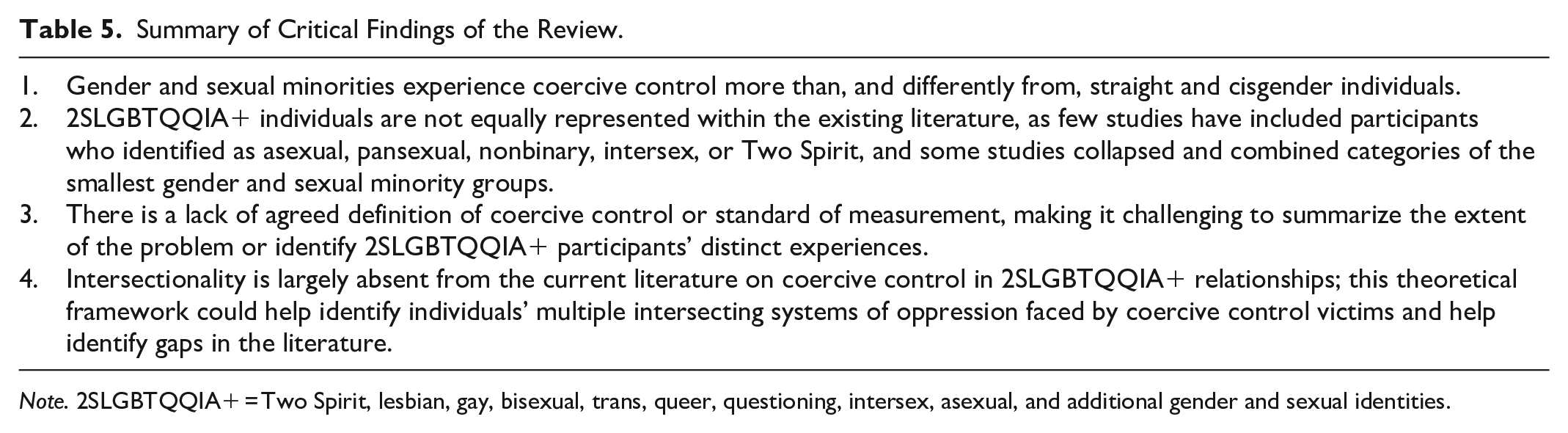
Note. 2SLGBTQQIA+ = Two Spirit, lesbian, gay, bisexual, trans, queer, questioning, intersex, asexual, and additional gender and sexual identities.
Summary of Implications for Research, Theory, and Practice.
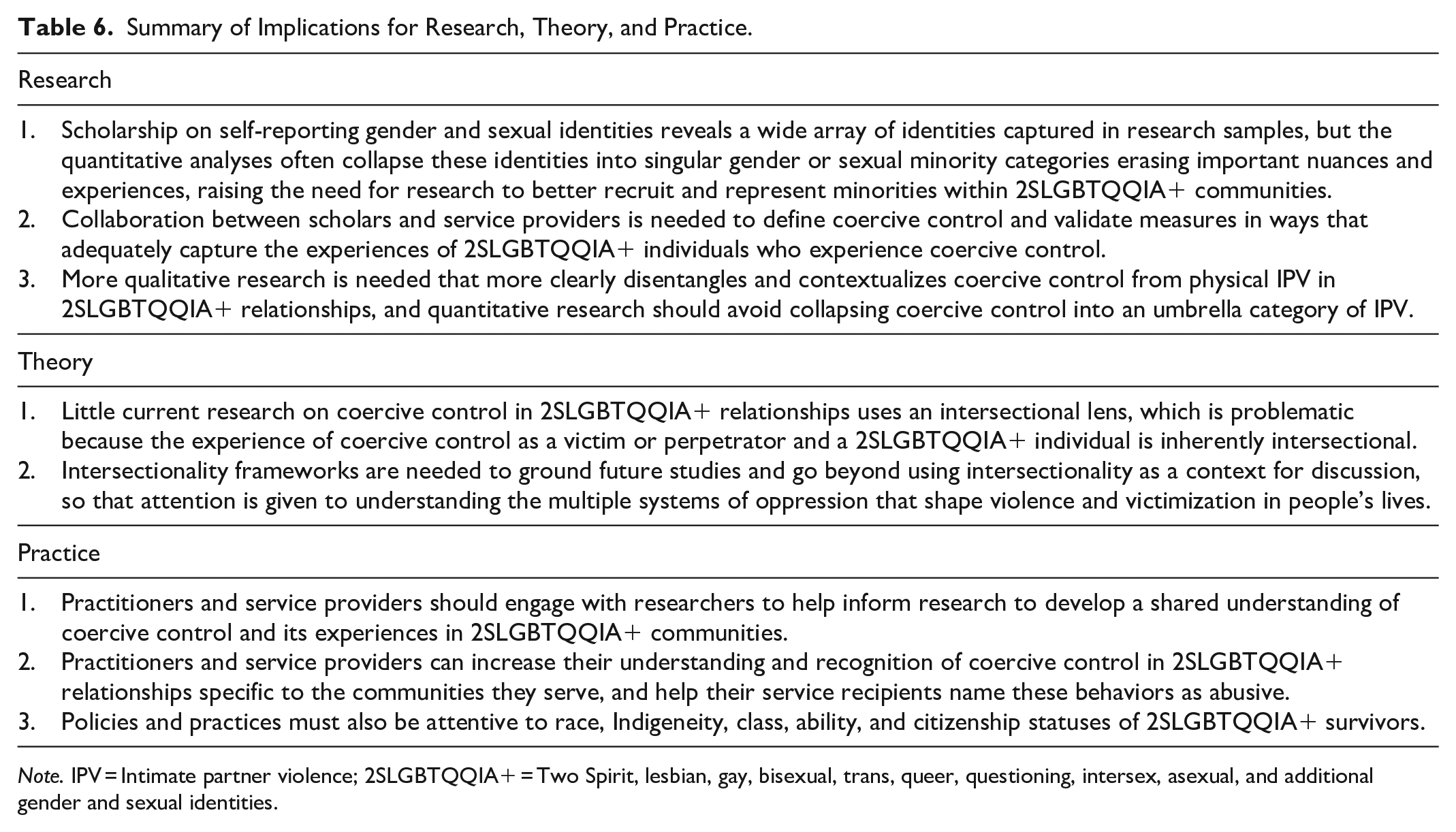
Note. IPV = Intimate partner violence; 2SLGBTQQIA+ = Two Spirit, lesbian, gay, bisexual, trans, queer, questioning, intersex, asexual, and additional gender and sexual identities.
We included quantitative and qualitative studies in the academic and gray literature since 2014, when Mason et al. (2014) reviewed 44 studies since 1997 of “psychological aggression” (encompassing coercive control) in LGB relationships. Our review of 277 records shows the growth in this field, and the emerging use of the term “coercive control,” but similar concerns to those raised by Mason et al. (2014). For example, the most common measure of coercive control remains the CTS Psychological Aggression subscale, which, although widely used and validated for conflict in intimate relationships, does not capture the breadth of coercion and is often used without adaptation for the 2SLGBTQQIA+ population. As in Mason et al. (2014), we found a large range in the prevalence rates of coercive control, and most studies focused on victimization. The literature still offers a better picture of the experiences of those who are victimized by coercive control than the characteristics and risk factors among those who perpetrate it. Mason et al. (2014) noted a lack of clarity in reporting sexual identity or victimization rates by identity; in contrast, many current studies reported victimization rates by gender and/or sexuality groups, offering improved understanding of group differences in coercive control victimization.
Research Gaps and Implications for Future Research
2SLGBTQQIA+ individuals are not equally represented within the existing literature. Few studies included participants who identified as asexual, pansexual, nonbinary, intersex, or Two Spirit. Further, some studies collapsed and combined categories or assigned labels that removed the minimal and nuanced knowledge available on the smallest gender and sexual minority groups. Thus, the 2SLGBTQQIA+ umbrella term may misrepresent the research available. Researchers should endeavor to recruit and represent minorities within 2SLGBTQQIA+ communities to better understand different experiences of coercive control among diverse gender and sexual minorities.
There is a lack of agreed definition of coercive control or standard of measurement, making it challenging to summarize the extent of the problem or identify 2SLGBTQQIA+ participants’ distinct experiences. In future reviews, meta-analysis of the different rates of reported coercive control victimization among participants of specific gender and sexual identities, most notably those identifying as LGBTQ may be feasible, and reviews could examine the effect of varying definitions on the measured prevalence of coercive control. However, some studies collapsed findings for coercive control into an omnibus category of IPV, making it impossible to understand the independent effects of coercive control. Moreover, coercive control has been defined by its effects on the victims, including entrapment in an abusive relationship (Stark, 2007), yet most research focuses on acts of abuse at any point in time rather than the effects of a pattern of coercive, controlling behavior. Research is needed to validate measures that capture the full range of coercive control, using repeated measures and longitudinal designs to capture patterns of abuse over time. Relatedly, since coercive control is not always recognized by victims as “abuse,” attention should be paid to wording in research recruitment strategies and eligibility criteria.
We found little evidence that the current literature on coercive control in 2SLGBTQQIA+ relationships was informed or guided by intersectionality. This absence is problematic because the experience of coercive control as a victim or perpetrator and a 2SLGBTQQIA+ individual is inherently intersectional. Since Crenshaw’s (1989, 1991) foundational work documenting the multiple intersecting systems of oppression that victims face, scholars have been trained to attend to how systems of classism, racism, colonization, cissexism, heteronormativity, misogyny and others reinforce existing power structures and amplify harm against those with multiple marginalized identities. Further, given that coercive control involves exploiting identities in which individuals experience more privilege than their partner, studies that focus on coercive tactics rather than their impact may not sufficiently measure coercive control victimization. An intersectionality lens may improve the potential for identifying gaps in the literature on coercive control in 2SLGBTQQIA+ individuals by pointing out where studies need to have a more inclusive approach to participant recruitment and collect further relevant data. For example, intersectionality points to the need for research with Two Spirit individuals identifying as First Nations in Canada, exploring their distinct experiences rather than adopting a pan-Indigenous approach. In addition, studies of polyvictimization (e.g., IPV plus sexual assault, state violence, harassment, or other types of violence; Radatz & Wright, 2017) in 2SLGBTQQIA+ communities highlight the role of compounding risk factors in marginalized populations (e.g., homelessness, mental illness, poverty; Felix et al., 2024), and similar research is needed to understand experiences of coercive control in these vulnerable populations.
Implications for Policy and Practice
Researchers should consider engaging with community organizations and practitioners providing support to 2SLGBTQQIA+ individuals affected by coercive control in order to raise awareness, develop a shared understanding of coercive control, develop and implement validated measures, and increase resources for inclusive support services to coercive control. Policy-makers and researchers could consider the benefits and limitations of using the umbrella term 2SLGBTQQIA+ or the circumstances in which it may not be appropriate to use. While intended to be most inclusive, it may encourage scholars and decision-makers not to see distinct identities within this broad inclusivity and may discourage an intersectionality perspective.
Training for community organizations and practitioners serving 2SLGBTQQIA+ communities may be valuable to aid awareness of coercive control, its prevalence, and how it affects the individuals they serve. Adopting an intersectional lens is also of practical benefit, as, for many 2SLGBTQQIA+ survivors of coercive control, their gender and sexuality are not the only statuses leveraged against them. Policies and practices must also be attentive to race, Indigeneity, class, ability, and citizenship statuses of 2SLGBTQQIA+ survivors.
Strengths and Limitations of the Review
A strength of our review is that our team members are diverse in age, sexual and gender identities, and lived experience with coercive control. The review developed from our collective backgrounds in psychiatry, psychology, criminology, sociology, and library science, and our quantitative and qualitative methodological training contributed to our nuanced data extraction design and interpretation of the study data. The team’s diverse personal and intellectual backgrounds resulted in an expanded scope of the review, valuing different methodologies, space for open-ended coding, and mobilizing the findings for multiple audiences.
However, methodological issues in the literature affected the clarity of our inclusion criteria and thus our review. We excluded studies that concerned physical IPV only, except where this included sexual assault. Consequently, sexual coercion was the most common type of coercive control reported across studies. Some scholars include all forms of physical and nonphysical abuse in their definition of coercive control (Stark & Hester, 2019), while others focus on nonphysical acts of attempted coercion and control (Crossman & Hardesty, 2018). It is also possible that we missed research on gender and sexuality identity abuse within intimate partnerships if scholars were not naming these behaviors as abuse or violence. Our review highlights a lack of clarity in the literature rather than offering a solution.
We had four deviations from our protocol. First, we excluded some databases that overlapped with other sources (e.g., ProQuest Dissertations) and databases that were discontinued (OpenGray), not accessible (Academic Premier), or not compatible with the search terms used for other databases (JSTOR). Based on input from our full team, we added Criminal Justice Abstracts, Gender Studies Database, LGBTQ+ Source, and Sociological Abstracts. Second, one database search inadvertently included pre-2014 and post-2022 articles; these were tagged and removed in duplicate by the first two authors. Third, we discontinued a plan to assess study quality, preferring to survey all the available literature, consistent with scoping review guidelines (e.g., Peters et al., 2020). Fourth, a plan to hand search abstracts from relevant conferences was discontinued due to time demands and the expected low return of unique and accessible full texts.
Conclusion
This scoping review aimed to provide an overview of academic and gray literature studies since 2014 on coercive control in 2SLGBTQQIA+ individuals’ relationships, guided by an intersectional lens. Studies indicated that 2SLGBTQQIA+ individuals face an increased risk for coercive control victimization and their experiences often differed from straight and cisgender individuals. However, the review highlighted a lack of consensus on defining and measuring coercive control. Additionally, although there is a growing literature on coercive control that is inclusive of 2SLGBTQQIA+ communities, some gender and sexual minorities and their experiences with coercive control are more frequently studied than others. An intersectional framework may guide improvements in future research examining the experiences of coercive control among individuals in 2SLGBTQQIA+ communities.
Supplemental Material
sj-docx-1-tva-10.1177_15248380241257957 – Supplemental material for Coercive Control in 2SLGBTQQIA+ Relationships: A Scoping Review
Supplemental material, sj-docx-1-tva-10.1177_15248380241257957 for Coercive Control in 2SLGBTQQIA+ Relationships: A Scoping Review by N. Zoe Hilton, Elke Ham, Dana L. Radatz, Chris M. Smith, Natalie Snow, Jolene Wintermute, Emma Jennings-Fitz-Gerald, Jimin Lee and Sydney Patterson in Trauma, Violence, & Abuse
Footnotes
Acknowledgements
We would like to thank those individuals who participated in a Phase 1 consultation process: they reviewed our research protocol, consulted with us on terms and objectives, and/or guided us to sources of gray literature. In addition, stakeholders in a Phase 2 consultation process provided feedback on the population focus, the nature of coercive control within the spectrum of IPV, key messages, and practice implications. Consultants included: Amanda Irons-Rindfleisch, Investigator, Niagara County Sheriff's Office, New York, USA; Carmen Gill, University of New Brunswick; Fae Johnstone, Executive Director, Wisdom2Action; Karine Barrettte, Maisons-Femmes, Quebec; Nancy Johnson and Rebekah Ederer, Women’s Initiatives, Chiefs of Ontario; Representatives from the Justice Sector, Chiefs of Ontario; Representatives from the Women’s Health and Wellness Division of the Métis Nation of Ontario; Stacy Suess, Niagara County Victim Services Coordinator, Niagara County Sheriff's Office Domestic Violence Intervention Program & Victim Assistance Unit, New York, USA; and others who asked not to be named. The opinions expressed in this manuscript are those of the authors.
Declaration of Conflicting Interests
The author(s) declared no potential conflicts of interest with respect to the research, authorship, and/or publication of this article.
Funding
The author(s) disclosed receipt of the following financial support for the research, authorship, and/or publication of this article: This project was supported in part by the Social Sciences and Humanities Research Council. The opinions expressed in this manuscript are those of the authors. The authors report having no conflicts of interest to declare.

Supplemental Material
Supplemental material for this article is available online.
Author Biographies
References
Supplementary Material
Please find the following supplemental material available below.
For Open Access articles published under a Creative Commons License, all supplemental material carries the same license as the article it is associated with.
For non-Open Access articles published, all supplemental material carries a non-exclusive license, and permission requests for re-use of supplemental material or any part of supplemental material shall be sent directly to the copyright owner as specified in the copyright notice associated with the article.
