




Abstract
Sexual violence against men has been significantly overlooked, and under-researched, with minimal attention paid to the influence of culture and ethnicity on survivors’ experiences of abuse. This rapid review examines prevalence, disclosure, help-seeking, and criminal justice experiences of Black and Asian male survivors in the United Kingdom. Eight empirical studies published since 2003 involving Black and Asian sexual violence survivors were included through comprehensive database searches, including gray literature and reference lists. Findings suggest prevalence data underestimate the true extent of victimization in ethnic minority groups in the United Kingdom. Barriers to disclosure and help-seeking were associated with specific cultural factors unique to Black and Asian male experiences, as revealed by three qualitative studies. However, accessing and reporting to the criminal justice system remains largely unexplored for Black and Asian male survivors. Methodological limitations within existing studies emphasize the urgent need for substantial, high-quality research that addresses issues with inconsistent definitions, measurements, and lack of ethnic-specific approaches across prevalence, disclosure, help-seeking, and criminal justice experiences. Culturally informed professional training emerges as a critical requirement to sensitively address the unique challenges faced by ethnic minority male survivors. Additionally, targeted outreach initiatives hold the potential to engage minority male survivors more effectively. A collaborative, system-wide approach is vital to bring to the forefront the overlooked experiences of ethnic minority males, thereby promoting an environment of support, understanding, and recovery.
Sexual violence is a deeply rooted societal problem that affects individuals of all ages, genders, sexuality, ethnicity, and religious affiliation (Bagwell-Gray, 2019; Bows, 2018; Messinger & Koon-Magnin, 2019; Smith et al., 2021; Stoltenborgh et al., 2011; Torazzi et al., 2021; Vanderwoerd & Cheng, 2017), which can occur at the hand of current and past intimate partners, family members, figures of authority, acquaintances, and/or strangers (Bagwell-Gray et al., 2015). However, understanding and determining the scope of the problem is challenging since there does not appear to be a universally accepted definition that fully captures this multifaceted phenomenon. 1 Nevertheless, the consequences of sexual violence are well documented and clear, including severe and wide-ranging physio-psychological harms, particularly among women (Jina & Thomas, 2013).
The immediate and radiating effects of sexual violence pose a significant challenge for practitioners and policy makers who strive to accurately determine the prevalence of such crimes within society while working toward establishing pathways that facilitate victims’ help seeking and reporting to the criminal justice system. In the United Kingdom, there has been a notable surge in demand for political accountability and action, particularly in relation to addressing Violence Against Women and Girls (see Home Office, 2021; Mayor of London, 2022), who remain the victim group with highest prevalence of sexual (Office for National Statistics (ONS), 2021b) and domestic violence (Office for National Statistics, 2022a) compared to men across all ages and ethnicities. However, third-sector services and academics have highlighted the importance of broadening the scope of political intervention to other groups affected by sexual violence, such as men and boys (Widanaralalage, Hine, & Murphy 2022) who experience unique barriers to disclosure, help seeking, and access to the criminal justice system. Barriers include fear of not being believed, shame and embarrassment, lack of awareness of available resources, concerns about retaliation or further harm, and systemic/institutional barriers (Abdullah-Khan, 2008; Langdridge et al., 2023; Weare et al., 2024; Widanaralalage, Hine, Murphy, et al., 2022) Thus, it is imperative to widen the conversation to men and boys to ensure comprehensive support for all survivors of sexual violence.
The Scope of Men’s Sexual Victimization in the UK
Data from the Office for National Statistics (2021a, 2021b) reveals approximately 5% of men in England and Wales have experienced sexual assault after the age of 16. Additionally, year-on-year data, which combines information from the Crime Survey for England and Wales (CSEW)and police records, indicates that around 155,000 experienced some form of sexual violence within a 12-month period (Office for National Statistics, 2021a). Recent findings from the CSEW (Office for National Statistics, 2023a) reveal that 25% of all victims of sexual violence are men. These figures are likely underestimates due to the barriers men face when disclosing sexual victimization. Campaigners suggest that as many as 1 in 6 boys and 1 in 4 men have experienced unwanted sexual contact during their lifetime (1in6, n.d.; Dube et al., 2005; Smith et al., 2018) (Dube et al., 2005). Data from the support organization Survivors UK suggest that these figures are as high as 45% in a sample of gay and bisexual men (N = 505) when disclosing experiences of unwanted sexual contact (Survivors UK, 2021). These data reveal a substantial proportion of male sexual victimization remains unreported, highlighting the ongoing struggle men face in acknowledging and disclosing their experiences of victimization (Easton et al., 2014; Sorsoli et al., 2008; Widanaralalage, Hine, Murphy, et al., 2022).
It is important to note that the prevalence of sexual violence against men is influenced by complex dynamics of perpetrator gender (Widanaralalage, Reed et al., 2022). While the available data from the ONS does not explicitly outline the gender of perpetrators per victim group, past UK evidence highlights a higher prevalence of male perpetrators on male victims (96.1% Hickson et al., 1994). Hickson et al.’s work, however, focused specifically on examining the experiences of gay men as victims of nonconsensual sex, which might, in part, explain male perpetrators’ overrepresentation in the sample. Indeed, analysis of forced-to-penetrate incidents across 37 police forces in England and Wales reveals a more nuanced picture, with men found to be the most recorded offenders (60.1%) and women comprising a significant proportion (39.1%) of forced-to-penetrate cases against men (Weare, 2020). These findings highlight how, while men are likely to remain the predominant perpetrators of male sexual victimization, the involvement and prevalence of female perpetrators reflect many of the barriers encountered by men to disclose and recognize their victimization of crimes that are stereotypically seen as “female only” crimes (Willmott & Widanaralalage, 2024), particularly in contexts and communities where male sexual victimization is silenced and taboo.
Sexual violence inflicts long-term and profound effects on male victims, including the development of post-traumatic stress disorder, depression, suicidal ideation, anxiety disorders, dissociation, shame and guilt, self-esteem and body image issues, trust and intimacy difficulties, substance abuse, and sexual dysfunction (Bullock & Beckson, 2011; Coxell & King, 2010; Davies et al., 2010; Lowe & Rogers, 2017; Monk-Turner & Light, 2010; Peterson et al., 2011; Walker et al., 2005). Although attempts to compare men’s symptoms with those of other victim groups have yielded mixed results (Peterson et al., 2011), there is a growing consensus that men experience post-assault sequelae of comparable magnitude yet qualitatively different in nature (Javaid, 2018; Smith et al., 2021; Widanaralalage, Reed et al., 2022).
One significant aspect of male survivors’ experiences is the intense emotional turmoil they often encounter, including feelings of emasculation and confusion over their identity, accompanied by profound shame, guilt, and self-blame (Hlavka, 2017; Widanaralalage, Hine, Murphy, Murji et al., 2022, Widanaralalage et al., 2023). These emotions draw attention to the role played by gendered stereotypes and narratives in shaping men’s reluctance to seek mental health support and engage in legal processes and with law enforcement officers (Dim & Lysova, 2022; Lysova et al., 2020). Men, in general, face challenges with help-seeking and self-caring behaviors (Addis & Mahalik, 2003) due to societal expectations associated with masculinity, which prescribe gender-appropriate behaviors such as being strong, assertive, independent, resilient, and stoic (Thompson & Bennett, 2015). Consequently, these expectations influence how male survivors perceive their mental health and subsequent post-incident behaviors, leading to risk-taking behaviors and compensatory coping strategies such as self-blame, substance abuse, and violence (Bullock & Beckson, 2011; Ellis et al., 2020; Widanaralalage et al., 2023). Acknowledging vulnerability and seeking help after sexual assault can be challenging for many men, as it goes against traditional masculine norms (Pearson & Barker, 2018). As a result, male survivors often resort to avoidance, social withdrawal, denial, and self-medication rather than disclosing the assault or reaching out for support services (Easton et al., 2014; Sable et al., 2006; Walker, 2004).
Homophobia also plays a significant role as a barrier for male victims seeking help (Abdullah-Khan, 2008; Rumney, 2008). Fear of being perceived as gay and the associated stereotypes (Diefendorf & Bridges, 2020) prevents men from reporting the assault or seeking help, perpetuating a harmful silence around their experiences. Such barriers reflect the intersectional nuances of male sexual victimization, whereby a survivor’s gender and sexual identity shape their engagement with key services in the health and criminal justice sector (Jamel et al., 2008; Javaid, 2017; Widanaralalage et al., 2023). While research examining survivors’ post-abuse experiences under an intersectional lens is limited, past research clearly highlights how men from sexual minority groups are reluctant to disclose their abuse for fear of ridicule and dismissal. Underpinning these expected reactions are biases and falsehoods that surround male sexual victimization (Turchik & Edwards, 2012).
Male rape myths are widespread beliefs that deny male sexual victimization, portray male survivors as complicit to their victimization, and minimize and trivialize the emotional consequences of sexual violence for male victims (Struckman-Johnson & Struckman-Johnson, 1992). Examples of male rape myths include: “men cannot be raped,” “only gay men are raped”; “men are only raped in prisons”; “men are too strong to be raped”; “men who are sexually aroused cannot be raped”; “men lie about being raped to hide their sexuality”; “men are not traumatised by rape” (Turchik & Edwards, 2012; Willmott & Widanaralalage, 2024). The existence and experiences of male rape myths leave many male survivors fearing they will not be believed or taken seriously (Hine et al., 2022; Lowe & Rogers, 2017; Turchik & Edwards, 2012). Male rape myths are commonly found in the healthcare system and criminal justice processes and discourage male victims from coming forward (Widanaralalage et al., 2023). For example, many service providers harbor misconceptions that sexual violence only happens to women and lack training on how to respond sensitively to male disclosure (Donnelly & Kenyon, 1996; NHS England, 2022). Poor police attitudes and insensitivity can further traumatize victims and undermine engagement with the legal process (Hine, Murphy, Yesberg et al., 2021; Rumney, 2008). Together, these findings indicate social stigma, stereotypes about masculinity, and institutional biases come together to silence male survivors and inhibit help-seeking. Targeted efforts are needed to promote disclosure and gender-informed approaches across health, social services, and criminal justice agencies.
The Need for an Intersectional Lens
Despite significant growth in research on male sexual victimization and calls for recognizing the intersections of gender and sexuality in shaping male survivors’ experiences of sexual victimization, there remains a notable gap in understanding how ethnicity and culture intersect with gendered expectations to shape the experiences of minoritized men. Particularly in the UK context, studies have tended to overlook male sexual victimization within minoritized ethnic groups. Two of the largest ethnic minority groups in the UK are individuals of Asian and Black African/Caribbean background, comprising approximately 9.3% and 4% of the population, respectively (Office for National Statistics, 2022b). While having important cultural differences, these communities share the fear of dishonoring oneself and family, which shapes how individuals respond to trauma and disclosure (Gilbert et al., 2004; Gilligan & Akhtar, 2006). Individuals from minoritized ethnicities’ decision to conceal their experiences of sexual trauma is often motivated by pressures to not bring shame to their families (Rehal & Maguire, 2014). Moreover, families frequently cover up such incidents, fearing that they may discredit their status in the community (Gill & Harrison, 2019; Harrison & Gill, 2018). Consequently, the sociocultural context creates substantial barriers to disclosure and help-seeking for minoritized men who experienced sexual abuse. This is despite research indicating that sexual victimization is particularly prevalent among minority ethnic men who have sex with men in the UK, with 27% of men from these communities reporting sexual abuse (Jaspal et al., 2017). However, previous studies suggest that these numbers are likely underestimates due to the influence of collectivist norms and patriarchal values prevalent in many minoritized cultures (Sawrikar & Katz, 2017).
Collectivist cultures, commonly found in Black and Asian communities, place significant emphasis on family reputation and honor, playing a pivotal role in social life (Gilbert et al., 2004). Upholding family honor becomes a major preoccupation that refrains sexual violence survivors from disclosing and seeking help, as the stigma associated with male sexual victimization brings shame upon the entire family. Moreover, the expectations of masculinity deeply rooted in the patriarchal values of many minority cultures pressure men to embody traits like dominance, stoicism, and being the family provider (Simkhada et al., 2021). Consequently, admitting vulnerability through the disclosure of sexual trauma may be perceived as a sign of weakness and failure to fulfill the male gender role (Gill & Begum, 2023). These sociocultural barriers further exacerbate the self-stigma, shame, and isolation already felt by male survivors. It is imperative, therefore, to adopt an intersectional lens that considers the complex interplay of ethnicity, culture, and gendered expectations to better understand and address the challenges faced by minoritized male victims of sexual abuse. While primary research with female survivors supports these claims (Armstrong et al., 2018), only a few studies explicitly explore the narratives of adult male survivors from ethnic minority groups.
Recent studies have illuminated the nuanced role of ethnicity in shaping attitudes toward sexual violence. Willmott and Widanaralalage’s (2024) investigation revealed that participants from Black, Asian, and Minority Ethnic (BAME) backgrounds exhibited significantly higher acceptance of male rape myths compared to Caucasian participants, corroborating previous findings by Rosenstein (2015). This highlights the influence of cultural norms and societal perceptions on the endorsement of harmful beliefs surrounding sexual assault. Similarly, Willmott et al., (2024) demonstrated that both male and BAME participants expressed more problematic attitudes toward sexual violence, emphasizing the intersecting identities that contribute to varying degrees of myth acceptance. Furthermore, Lilley et al. (2023) exploration of juror decision-making uncovered significant disparities based on juror ethnicity, with Caucasian jurors demonstrating a propensity for leniency compared to their minority ethnic counterparts. These studies collectively underscore the need for intersectional analyses when examining attitudes toward sexual violence, emphasizing the complex interplay between ethnicity, gender, and societal perceptions in shaping beliefs surrounding rape myths.
Understanding the experiences of sexual victimization in men from minoritized ethnicities in the UK is crucial for the development of culturally sensitive interventions and effective support pathways. This rapid review is the first to investigate and synthesize research on Black and Asian male survivors in the UK by quantifying and qualifying the nature and scope of this public health problem and identifying knowledge gaps to inform practice, policy, and research. The review has the following objectives: (a) determining the prevalence of sexual victimization among Black and Asian men in the UK, (b) identifying the challenges faced by men from minority groups when disclosing their experiences of victimization and exploring the barriers they encounter while seeking help and accessing support services, and (c) examining the difficulties minority men experience when involving the criminal justice system regarding sexual victimization cases. By addressing these objectives, the review seeks to provide valuable insights to guide practice, shape policies, and inspire further research in this critical area.
Methods
A rapid review was undertaken within a 6-month timeframe. By accelerating and streamlining typical traditional systematic review processes, rapid reviews provide a timely and resource-efficient method of synthesized evidence to inform key decisions in healthcare policy and practice (Moons et al., 2021). However, rapid review methodology is variable, and a single validated approach does not currently exist. As such, this review has adopted recent Cochrane interim guidance (Garritty et al., 2021), which aims to support the conduct and improve the utility and robustness of rapid review results. This guidance includes specific recommendations to improve rigor at all stages of the review process including search strategies, screening, study selection, data extraction, risk of bias assessment and synthesis. The review also draws from Rapid Evidence Assessment methodologies to provide a timely synthesis of the available evidence (Barnett et al., 2021) on the prevalence, disclosure, help-seeking, and criminal justice experiences of Black and Asian male survivors of sexual violence in the UK. To enhance transparency and reduce bias, a pre-registered review was published on PROSPERO (ID CRD42023407522) on March 15th, 2023.
Search Strategy
Searches were carried out across four databases in April 2023 (spanning January 1, 2000 to April 1, 2023): Embase, Medline, PsycINFO, and Web of Science. Gray literature searches were also carried out for leading specialist sexual violence organizations in the UK (Male Survivors Partnership, Survivors UK, 1 in 6, Rape Crisis, and ManKind UK), as well as the ONS, gov.uk research database, and British Library EThOS thesis database. Reference lists of included studies were also hand-searched to minimize inaccuracies from the database search and identify any other papers meeting the eligibility requirements.
Assessment of Quality
Citations were initially imported into EndNote software to remove duplicates and then uploaded to Zotero software to facilitate screening. As per Cochrane guidance (Garritty et al., 2021), one reviewer (SJ) screened all titles and abstracts. A second reviewer (KW) also independently screened 25% of abstracts and then screened all excluded abstracts. For full-text screening, one reviewer screened all included full-text articles, and the second reviewer then independently screened all excluded full-text articles. Disagreements were resolved by discussion between the two reviewers and consultation with the wider research group where consensus could not be reached. Notably, given the small number of relevant papers identified and the unsuitability of the excluded papers, the reviewers reached full agreement in their assessments. The Preferred Reporting Items for Systematic Reviews and Meta-Analyses (PRISMA) flow diagram (Figure 1) details the search results and the process of screening and selecting studies for inclusion, including the reasons for study exclusion. Studies clearly not relevant were rejected without recording a detailed reason, but “near misses” were recorded within the PRISMA flow diagram. As per guidance, the relevant Joanna Briggs Institute critical appraisal checklist (Joanna Briggs Institute, 2024) was applied according to the design of the included study (cross-sectional, cohort, experimental, qualitative, or mixed methods). One reviewer (SJ) assessed risk of bias for each study, with a second reviewer (KW) providing a full verification of all judgments and support statements for each. All studies were included in the review irrespective of rating; however, implications of methodological flaws for review findings were discussed within the narrative synthesis.
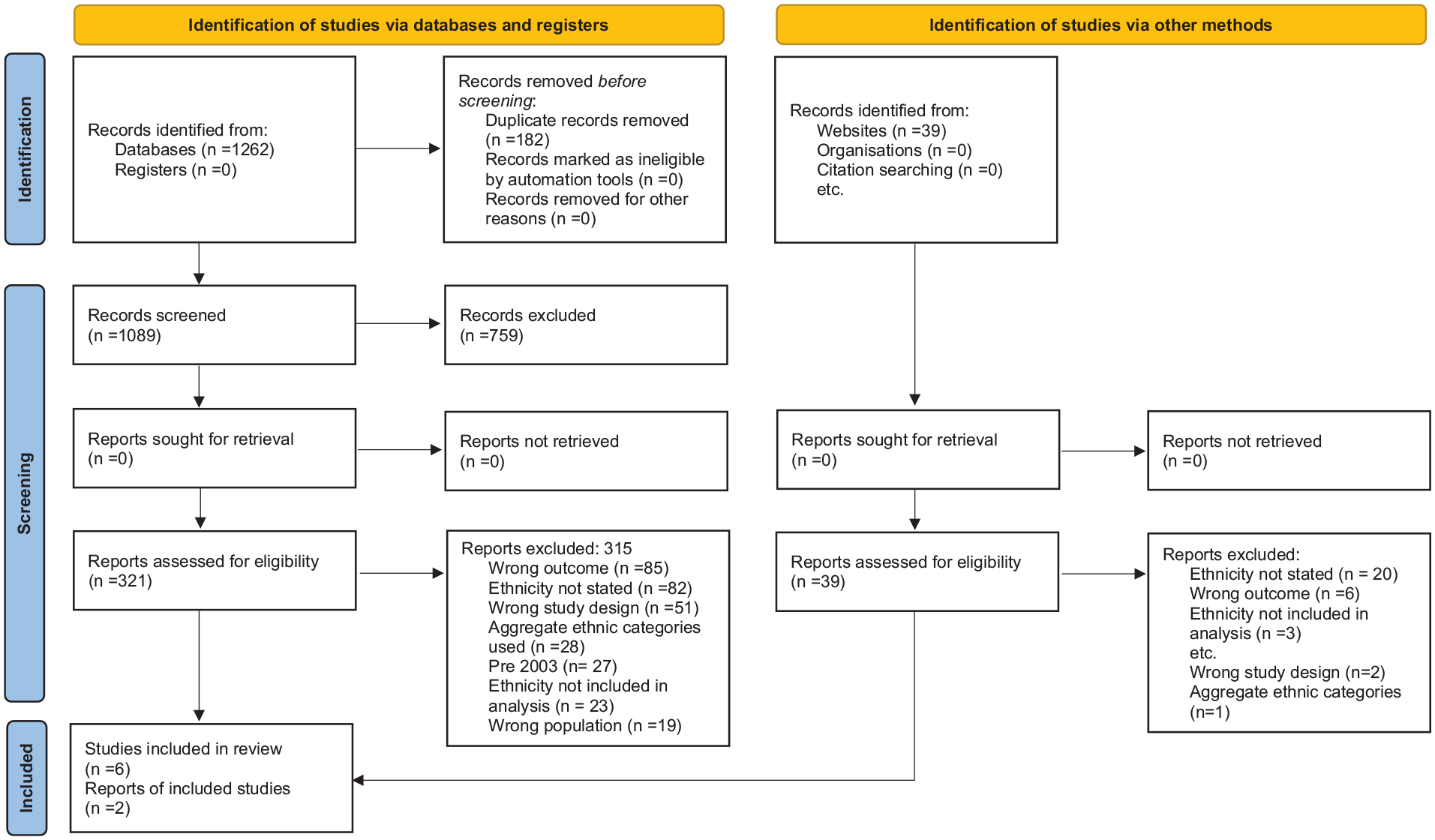
PRISMA flowchart.
Eligibility and Exclusion Criteria
Studies meeting the following criteria were included in the review: examination of the prevalence, disclosure/help-seeking behaviors, or experiences within the criminal justice system related to sexual violence against Black and/or Asian males in the UK context; publication in English from 2000 onwards. Studies based outside the UK were included only if deemed relevant to the UK context. All primary research study designs, including qualitative and mixed methods studies, were eligible for inclusion. Studies falling outside of the above timeframe and not focusing on Black/Asian male populations or not directly relating to prevalence, disclosure, help seeking, and criminal justice experiences were excluded. Additionally, non-empirical studies such as revies, editorials, and opinion pieces were excluded from consideration.
The search strategy employed Boolean operators, combining the core concepts of sexual violence, males, and the UK setting. Ethnicity was not added as a key concept to capture studies that did not explicitly focus on Black or Asian groups but did consider ethnicity within analysis. Searches for other databases were database-specific adaptations of these keywords and/or MeSH headings (See Supplemental materials for the Medline search strategy, which was adapted for other databases). As per Cochrane guidance, only English language papers were included. Searches focused on UK-based studies but included world literature where relevant to a UK context. A methodological filter for qualitative studies was not applied to enable mixed-method studies to be identified.
Study Selection
Studies were assessed for their eligibility according to inclusion and exclusion criteria specified in the pre-registered protocol. The Patient/problem, Intervention/exposure, Comparison/control, Outcome(s) (PICO) framework was adopted as it is suitable for mixed-method reviews composed of quantitative and qualitative lines of inquiry. Given the context-sensitivity of sexual violence policy and practice and ethnic minority experiences across countries, this review focused on UK-based studies. As a prior scoping review found few studies explicitly focused on ethnic minorities, study populations, assessments, and outcomes were broadly defined. No restrictions were applied in terms of research setting or length of study and included both published and unpublished studies. All primary research study designs were permitted. Reviews, case reports, editorials, news/opinion pieces, letters, comments, and purely methodological studies were excluded.
Data Synthesis
Due to the limited number of included studies and the heterogeneity of these studies, a comprehensive thematic analysis could not be conducted. Instead, a descriptive summary was conducted to present the characteristics of included studies. A narrative synthesis of findings from the included studies was then conducted to interpret the collective evidence fully. Synthesis was grouped across each of the three study aims (prevalence, disclosure, help seeking, and criminal justice system experiences) to synthesize current literature and highlight significant research limitations across each area.
Data Extraction
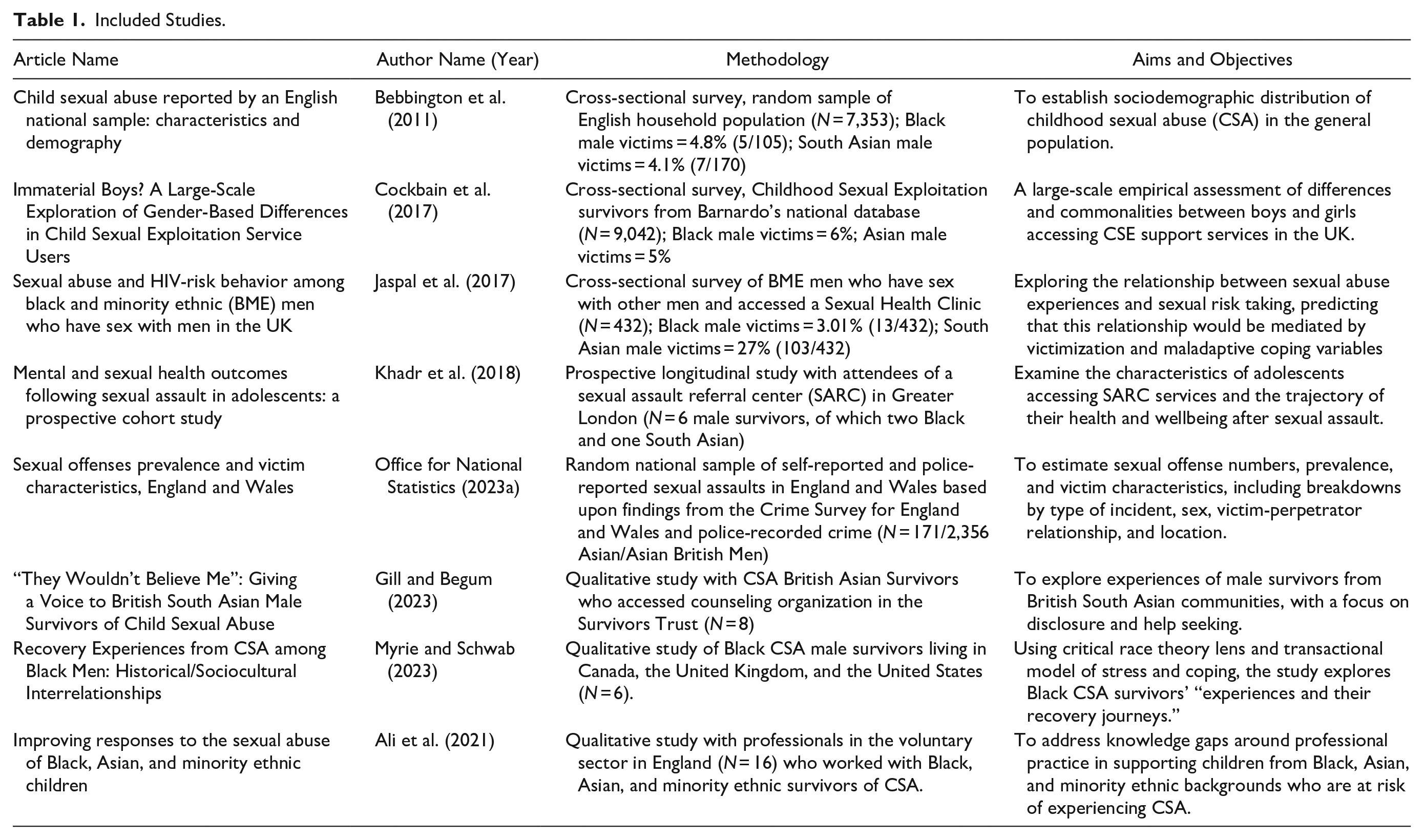
One reviewer (SJ) extracted all relevant data from each study using a piloted data extraction form in Microsoft Excel. A second reviewer (KW) checked extracted data for accuracy and completeness. As per Cochrane guidance, data extraction was limited to a minimal set of essential data items, including publication details (author, title, year of publication), research aim, recruitment procedures, data collection method (e.g., interview, focus group, face-to-face), study design, population (survivors, health professionals), sample characteristics (e.g., age, ethnicity, and religion) and size, outcome, as well as any author recommendations or conclusions based on findings (see Table 1).
Included Studies.
Results
Literature Search and Description of Studies
The search identified 1,080 records after duplicate removal. After title and abstract screening, 321 records were retained for full-text screening. Thirty-nine gray literature reports were also identified for full-text screening. Ten studies relating to sexual violence of Black and Asian men in the UK met the inclusion criteria. Six of these related to prevalence and two related to disclosure and help seeking. No studies were identified related to Black and Asian men’s experiences within the UK’s Criminal Justice System. Study types included four cross-sectional surveys, three qualitative studies, and one prospective cohort design. Overall, very few studies were identified that aligned with review aims and inclusion criteria. Many studies were excluded due to limitations surrounding ethnicity, including a lack of reporting of ethnic makeup of sample, inclusion of White British only samples, inappropriate aggregate (BAME) or binary (White vs Non-White) categorization, or a lack of appropriate analysis making it unclear how salient findings are for Black and Asian groups specifically. Identified papers are analyzed and presented in a narrative synthesis below according to each key review question (a) prevalence, (b) disclosure and help-seeking, (c) criminal justice system), with core limitations and areas for improvement highlighted.
RQ 1: Prevalence
Five studies (Bebbington et al., 2011; Cockbain et al., 2017; Jaspal et al., 2017; Khadr et al., 2018; Office for National Statistics, 2023b) were identified that related to prevalence, one of which was the ONS dataset output on victim characteristics of sexual offenses. In the UK, official statistics on sexual violence are derived from two main sources (a) the CSEW and (b) police record crime. The CSEW is a representative household survey of the England and Wales population comprised of a face-to-face questionnaire that asks respondents to report on sexual violence experiences within the previous year. More recently, an anonymous self-completion survey was introduced to improve the reliability of estimates and reporting rates of sensitive disclosures, including sexual violence. While the ONS does produce regular outputs on victim characteristics of sexual offenses, ethnicity is neglected as a key feature in the main report (unlike age, gender, and deprivation measures). A supplementary table 2 does provide data on victim ethnicity; however, for Asian/Asian British and Black/Black British males, these are largely suppressed due to disclosure constraints. The only figure publicly available is an unweighted base estimate of 171/2356 (7.26%) for Asian/Asian British men. Unfortunately, ONS statistics on UK child sexual abuse prevalence in England and Wales (Office for National Statistics, 2020) also neglects to produce any data on ethnicity.
While lifetime prevalence studies do exist in the UK (Coxell et al., 1999; Coxell & King, 2010; Plant et al., 2004), most are outdated, and none explicitly include a meaningful analysis of sexual victimization across different ethnic minority groups. Alternative, less reliable indicators and sources of prevalence data identified by this review rely on the clinical characteristics of those in services or established British health research cohorts that collect and explore relevant sexual violence variables. However, these studies are limited and fragmented. For example, despite being the recommended treatment pathway for sexual offenses, sexual assault referral centers (SARC) do not currently publish routine data on service user characteristics. While regional and small-scale SARC audits and research studies have shown high prevalence of sexual violence experiences by ethnicity (McLean, 2007), almost none further broke this down by gender. Khadr et al. (2018) was the sole study identified by this review that examined the childhood sexual abuse (CSA) prevalence of a limited number of SARC service users, disaggregated by both ethnicity and gender. However, despite a diverse sample of nearly 50% non-White, this study only included six males (two Black and one South Asian male) compared to 141 females. Interestingly, compared with non-participants, participants were also significantly less likely to be of Asian ethnicity.
While some established British research cohorts collect relevant sexual violence and ethnicity variables (e.g., Chaplin et al., 2021), almost none have explicitly focused on the relationship except Bebbington et al. (2011). This study utilized data from the 2007 Adult Psychiatric Morbidity Survey (N = 7,353) in England to estimate child sexual abuse prevalence. This study estimated 8% of men (294/3,630) to have experienced sexual abuse of any description before 16; however, no significant differences were found in prevalence rates between White (5.4%), Black (4.8%), and Asian (4.1%) men. Jaspal et al.’s (2017) study had a specific focus on the lifetime sexual abuse prevalence of ethnic minority men who have sex with other men accessing a limited number of sexual health charities in the UK. Of 432 male participants, 143 reported sexual abuse (27%), of which 103 (23.84%) were South Asian and 13 (3.01%) were Black. Cockbain et al. (2017) assessed characteristics of individuals who had experienced childhood sexual exploitation on the Barnardo’s central register (a non-governmental organization and the United Kingdom’s largest provider of childhood sexual exploitation services). Of the 2,986 male service users, 83% were White, 6% Black, and 5% Asian, compared to youth population figures of 82%, 4%, and 9%, respectively. This may indicate an overrepresentation of Black and underrepresentation of Asian groups; however, formal statistical analyses were not carried out. It is important to note that the study explicitly stated that it “found no theoretical or empirical grounds to expect an association between service users’ gender and their ethnicity.” (p. 665) without offering further explanation as to the assertion.
RQ 2: Disclosure and Help-seeking
Only three studies were identified relating to disclosure and help-seeking of Asian and Black men survivors of sexual violence in the UK, two from the scientific literature (Gill & Begum, 2023; Myrie & Schwab, 2023) and one from the gray literature (Ali et al., 2021), all relating to CSA.
Gill and Begum (2023) focused specifically on the experiences of eight British South Asian males who had experienced CSA, focusing specifically on understanding the complexities of disclosure for men in these communities. Most Asian survivors in this study opted for disclosing to non-family members for fear of “letting down” the family and compromising the family’s standing in the community. Other Asian survivors in the study expressed doubt over whether family members would believe them, thus pushing survivors to protect themselves from a disappointing reaction to their disclosure.
Myrie and Schwab (2023) conducted a qualitative analysis of the experiences of six Black male survivors of CSA living in Canada, the United States, and the UK. They found that Black survivors were vulnerable to long-term mental health consequences; however, neglected to disclose their experiences and seek support. Black survivors reported concerns around protecting the family from outside judgment, given the shame and stigma attached to mental health in Black and minority ethnic (BME) communities in the UK (Memon et al., 2016). Relatedly, Black men reported a reluctance to disclose and seek support for fear of marginalization from their community, confirming the importance of cultural dynamics in shaping survivors’ experiences with recognition and help-seeking. Despite focusing specifically on Black men’s experiences, Myrie and Schwab call for caution on the transferability of their findings, due to a small sample of men from different countries. Indeed, only one participant was from the UK. Furthermore, the sample was recruited across multiple entry points, including community agencies, support groups, and counseling and therapy centers, thus potentially introducing a sampling bias.
Ali et al. (2021) focused on professional responses to child sexual abuse within general “BAME” groups. The study reports a series of cultural barriers that refrain BAME CSA survivors to disclose, including pressures to conform to gender roles, fear of being disbelieved, and familial pressures to maintain honor and prevent shame. Professionals also reported structural, societal, and organizational barriers to accessing support for minority CSA survivors in the UK, highlighting how agencies’s cultural insensitivity toward BAME survivors may enhance mistrust toward services. The study has many strengths, including a unique perspective on the experiences of CSA survivors from BAME community through the lenses of specialist service providers, an approach that is not uncommon in the male victimization literature, given the well-known challenges accessing these communities (Sivagurunathan et al., 2019; Widanaralalage et al., 2023). However, despite attempts to highlight findings specific to Black and Asian groups, the BAME focus does not allow for a clear appraisal of the extent to which the barriers and challenges for disclosure and help seeking are shared or unique. The publication is also not peer reviewed, so caution is needed in interpreting the findings.
RQ 3: Access to the Criminal Justice System
This review did not identify any eligible studies concerned with the experiences of Black or Asian male survivors within the criminal justice system. While a limited number of UK studies do exist (Jamel, 2010; Jamel et al., 2008) that demonstrate men’s poor experiences with disclosure of sexual assault to the police and the wider judicial system, these studies do not disaggregate analysis by ethnicity. However, both studies do highlight the need for greater training and dedicated support services sensitive to the intersection of sexuality and ethnicity in sexual assault.
Discussion
Our rapid review highlights substantial gaps in the literature on sexual violence against ethnic minority men in the UK. Despite recent calls for improving how ethnicity data is collected and acknowledged in healthcare research, 3 the evidence base on male survivors’ experiences remains significantly limited across all levels of analysis, reporting, and inclusion of diverse groups. This rapid review identified a stark paucity of literature examining prevalence, disclosure, help-seeking, and access to the criminal justice system among Asian and Black male survivors. The sparse data available paints a concerning picture of unmet needs among these populations. Substantial research is urgently required to provide clarity on the true scale and nature of male sexual victimization among Asian and Black men in the UK.
The review highlighted how the UK male sexual violence literature is characterized by suboptimal consideration of ethnicity at inclusion, reporting, and analysis levels. Included studies also suffered from significant methodological flaws identified by recent reviews of male sexual violence literature (Langdridge et al., 2023; Thomas & Kopel, 2023) relating to inconsistency in definition, measurement, and sampling procedures. The studies included in this review provide limited and mixed evidence regarding the prevalence of sexual violence among Asian and Black men, with rates ranging between 5% and 6% (Bebbington et al., 2011; Cockbain et al., 2017). These figures are consistent with both historic (e.g., Coxell et al., 1999) and recent (ONS, 2021a, 2021b) data on prevalence of lifetime sexual victimization among all men in the UK, estimated at around 5% of the adult male population. Similarly, Jaspal et al.’s (2017) work with BME men who have sex with other men emphasize the increased rates of victimization among sexual minority found in other research on male sexual victimization (Hickson et al., 1994; Survivors UK, 2021), highlighting the importance of taking an intersectional lens to the study of sexual violence among these communities. However, caution is necessary when comparing these figures to data available for White male survivors, as significant heterogeneity in sample populations and measurement issues precludes meaningful comparisons.
Research on sexual violence is often hindered by the lack of consistency in defining these crimes (Bagwell-Gray et al., 2015), as was the case for this rapid review. Sources varied in focus, from CSA (Bebbington et al., 2011), adolescent sexual assault (Khadr et al., 2018), lifetime sexual victimization (Jaspal et al., 2017), and recent adult sexual victimization (Office for National Statistics, 2023a). Within each study, different definitions of sexual violence were employed, with varying degrees of inclusion of acts ranging from nonconsensual sexual contact (Jaspal et al., 2017; Khadr et al., 2018) to uncomfortable sexual talk (Bebbington et al., 2011). Sexual assault, as defined by the CSEW encompasses rape or assault by penetration (including attempts), indecent exposure, or unwanted sexual touching, whereas in police-recorded crime refers only to the sexual touching of a person without their consent (Office for National Statistics, 2023a). Police-recorded sexual offenses also cover a broader range of offenses than are measured by the CSEW.
Taken together, the findings of this review highlight an inconsistency in definition that is commonplace across the sexual violence literature, as reflected in the 2018 NHS Strategic Direction for Sexual Assault and Abuse Services report (NHS England, 2018), which includes forced marriage, honor-based violence, female genital mutilation, human trafficking, and ritual abuse in their definition of sexual violence. UK legal definitions further exacerbate this conceptual confusion, whereby the most recent 2003 Sexual Offenses Act only recognizes rape as penile penetration and, therefore, can still only be committed by men (Weare, 2020). This has potential implications for identification and self-report of rape, as well as perpetuating rape myths and stigma for male survivors (Hine, Murphy, & Churchyard, 2021). Challenges with recognition (both personal and institutional) affect self-disclosure and perpetuate stigma.
With no standardized prevalence measures, comparisons were precluded. Nonetheless, existing data indicates concerning vulnerability among ethnic minority males. Their underrepresentation likely reflects non-disclosure rooted in cultural factors like gender norms, fears of stigma, and familial reputation (Gill & Begum, 2023; Lowe & Balfour, 2015; Simkhada et al., 2021). More accurate prevalence estimations require addressing definitional and measurement issues, along with adopting ethnicity-focused sampling and analyses. As no singular validated assessment of sexual violence exists, measurement across studies is also highly variable. Self-report methods have been recognized as being likely to be more accurate for disclosure compared to face-to-face methods of inquiry (as evidenced by the CSEW). However, male disclosure is still limited by several established factors including gendered and cultural differences in what constitutes abuse (Gill & Begum, 2023; Widanaralalage et al., 2023). The understanding of ethnic minority male experiences is even poorer, particularly surrounding the influence of ethnocultural and other relevant factors in driving underrepresentation in prevalence data. Conceptual clarity and transparency within academic literature regarding definitions, measurements, and sample derivation are necessary to gain reliable insights into the prevalence and context of sexual violence experiences for ethnic minority males. An enhanced consideration of ethnicity in national statistics and established healthcare cohorts is desperately required to meaningfully examine scale of issue and address unmet needs of ethnic minority male survivors in the UK.
A notable finding in this review was an emergence of contemporary research exploring disclosure experiences of Black and Asian male survivors of CSA in the UK (Ali et al., 2021; Gill & Begum, 2023; Myrie & Schwab, 2023). Although significant gaps in knowledge remain, initial qualitative studies have identified a reluctance among British South Asian men to disclose CSA to family members due to concerns about bringing shame and dishonor to the family and damaging community standing (Gill & Begum, 2023). Research also indicates that cultural factors, like desires to protect family from judgment and marginalization, create barriers to disclosure for Black male survivors (Myrie & Schwab, 2023). However, small sample sizes and lack of UK-specific data limit the transferability of these findings. Broader examinations of disclosure among BAME survivors highlight cultural barriers related to gender roles, fears of being disbelieved, and familial honor, but lack ethnic specificity (Ali et al., 2021). Overall, existing studies suggest cultural factors pose significant challenges to disclosure for Asian and Black male CSA survivors in the UK, but more research is needed to strengthen the evidence base, particularly using ethnic-specific approaches. Examining the experiences of minority ethnic populations, rather than broader BAME categorization, will likely provide greater insight on the distinct disclosure barriers faced.
This rapid review sheds light on the current state of research on sexual violence against ethnic minority males in the UK, revealing its fundamental limitations and fragmented nature. The lack of comprehensive studies across various contexts, settings, perspectives, and methodologies underscores the urgent need to understand the experiences and unmet support needs within Asian and Black communities. One issue in the existing research is its narrow focus on CSA, neglecting the exploration of other groups, such as adult survivors, and other critical contexts where sexual violence may proliferate, such as chemsex environments (see Blomquist et al., 2020). These diverse experiences likely pose distinct barriers and necessitate separate considerations. Additionally, the lack of studies conducted in various service settings, including primary care, SARCs, faith groups, peer support networks, charities, mental health, and addiction services, is troubling, given the known risks for trauma exposure across minority groups (Motley & Banks, 2018, Widanaralalage et al., 2024)) and the likelihood of men attempting to gain access to support through different entry points.
To gain a more comprehensive understanding, comparative research explicitly contrasting different ethnic groups is essential. Such an approach would allow for the identification of both unique and shared factors that shape experiences, ultimately leading to a more nuanced understanding of the issue. Furthermore, incorporating viewpoints from both service users and professionals would offer invaluable insights into the barriers and facilitators to disclosure and help-seeking, providing a holistic view of the entire system. The male survivor literature itself already suffers from conceptual ambiguity, measurement inconsistencies, and dominance of female perspectives (Widanaralalage et al., 2022c). By neglecting the aspect of ethnicity, the visibility of the issue is further obscured, and intersectional barriers for minority groups are introduced. Therefore, it becomes imperative to address the ethnicity data gap in male sexual violence research, which is equally significant as the gender data gap previously highlighted by Cooper and Obolenskaya (2021). Calls for culturally competent and intersectional approaches to address the needs of marginalized male survivors have been made by organizations like the NHS England (2018) and the Male Survivor Partnership (2021). However, despite these calls, the evidence base remains fragmented. Furthermore, it is essential to consider how emerging issues such as online harassment and revenge porn (reference) intersect with ethnicity, as these, too, can have significant implications for minority groups (Ng et al., 2022).
Implications
The findings of this review have several implications for future research, policy, and practice for supporting Asian and Black minority men who experience sexual violence in the UK. Clearly, further prevalence research is needed to address the substantial gap in knowledge on the scope of this phenomenon. This should be achieved by moving beyond broad categorization of ethnic minority men under the umbrella term “BAME” and examining experiences of specific ethnic minority groups separately. Similarly, more research is needed to further understand the barriers to disclosure and help seeking beyond CSA, by recognizing the intersections of gender, sexuality, and ethnicity in shaping survivors’ post-assault experiences (Armstrong et al., 2018). This can be achieved by involving not only survivors but also professionals and immediate, informal support networks, known in the sexual violence literature to be key players in survivors’ recovery and engagement with formal services in the third and criminal justice sector (Widanaralalage et al., 2023). Furthermore, such efforts would allow for a more comprehensive understanding of barriers encountered by ethnic minority survivors, by examining a wider range of settings, from healthcare, criminal justice, and community.
Efforts to improve research practices and knowledge must be linked with efforts to improve policy, by, for example, mandating an improved collection of ethnicity data and reporting across national cohorts, healthcare, and criminal justice settings. Similarly, policies and training are needed across public services to improve responsiveness to the needs of minority male survivors. This would involve challenging stigma, raising awareness, and identifying cultural-specific barriers, which should be a policy priority to increase rates of disclosure by enhancing cultural competency in organizations serving minority male survivors and addressing the secrecy of sexual violence across Black and Asian communities in the UK. While specialist male support services exist in the UK, dedicated, tailored services and outreach may be required to engage Asian and Black male survivors who fear stigma. This would potentially help developing clearer referral pathways and connect mainstream and ethnic-specific services.
Limitations and Future Directions
The review provides the first attempt to comprehensively examining the existing literature on sexual violence against Black and Asian men in the UK context. It highlights major gaps in knowledge related to prevalence, disclosure, help-seeking, and criminal justice experiences. However, there are important limitations to be considered. As with any review methodology, some relevant studies might have been missed (Ganann et al., 2010). Our ability to conduct a quality appraisal and synthesis was limited by the small number of eligible studies. Furthermore, the sole focus on male survivors’ literature does not allow for complete integration with the broader literature on female sexual victimization. Nevertheless, more systematic reviews of the evidence are needed as the evidence base expands. It is also important to note that, by restricting its focus solely on UK-based studies, the review may have overlooked valuable insights from diverse cultural contexts an backgrounds, potentially limiting the generalizability of our findings. The exclusion of the international literature may have narrowed our understanding of the barriers that are unique to different cultural, social, and legal settings. Adopting a more inclusive approach in future literature reviews will be crucial for developing a comprehensive understanding of Black and Asian male survivors’ experiences of disclosure, help seeking, and access to service. In summary, while the review makes a compelling case for more research on this overlooked topic, its ability to draw firm conclusions is constrained by the limited evidence base. As the literature develops, more comprehensive systematic reviews will be needed. Key future priorities include prevalence research and qualitative inquiries to understand barriers faced by minority males across diverse settings and perspectives.
Conclusion
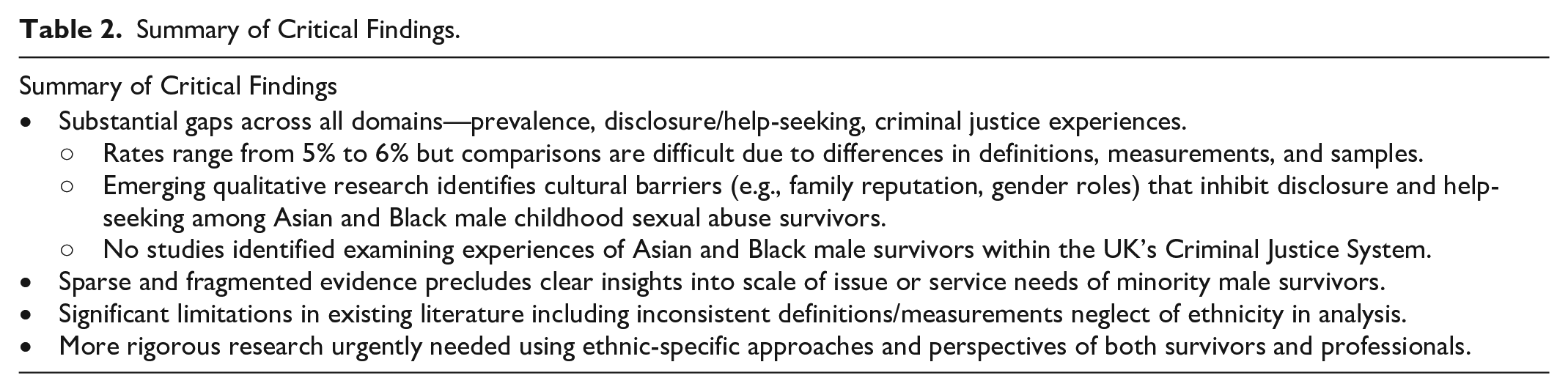
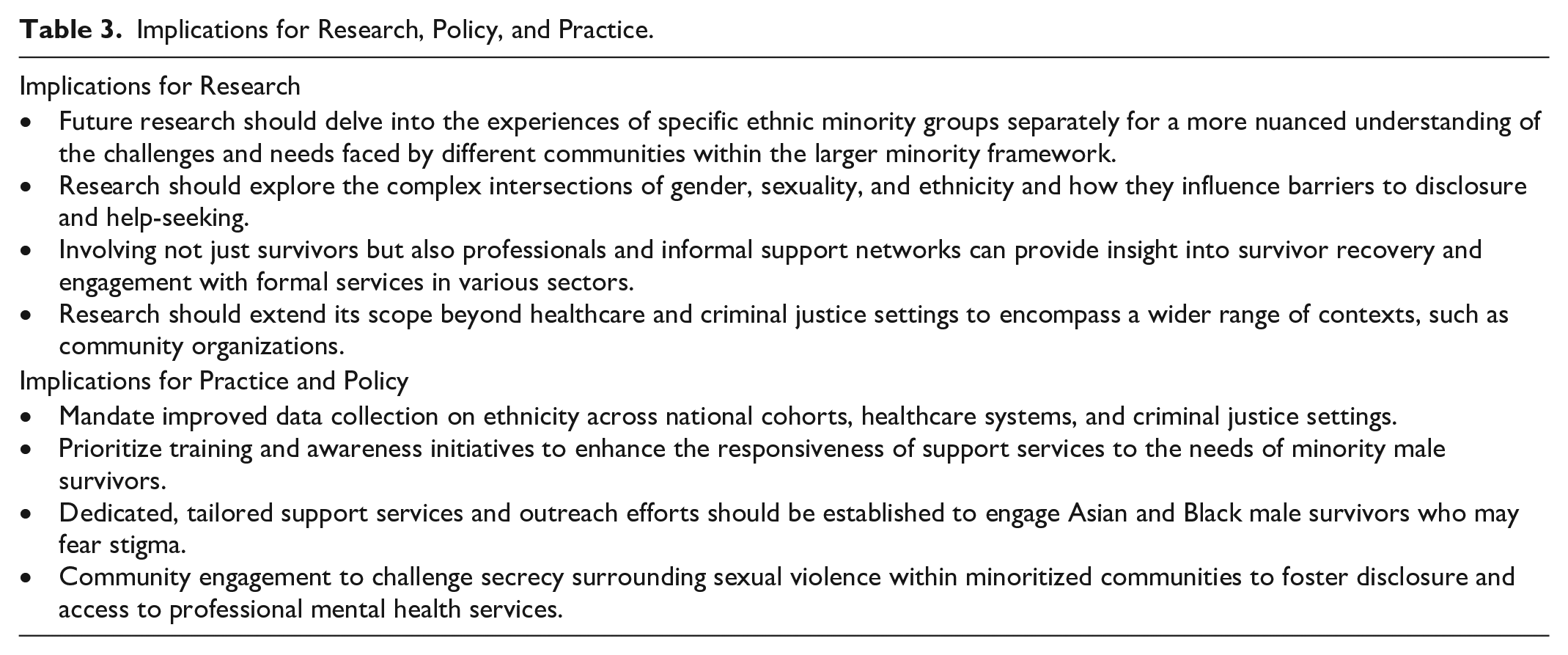
In conclusion, this rapid review highlights profound gaps in the literature on sexual violence against ethnic minority males in the UK context. Existing prevalence data is extremely limited and hampered by inconsistencies, with rates for Asian and Black men ranging from 5% to 6%. Emerging qualitative evidence suggests cultural factors pose barriers to disclosure and help-seeking for these groups, but studies are few and methodologically flawed. No research was identified examining experiences within the criminal justice system. Overall, the review underscores the lack of rigorous evidence across all domains, precluding clear insights into the scale of the issue or service needs of minority male survivors. Substantial research is urgently required using consistent definitions and measurements, ethnic-specific approaches, and perspectives of both survivors and professionals. Alongside further research, enhanced ethnicity data collection and culturally informed training are needed across public services to improve responsiveness. A collaborative, system-wide approach is essential to address this overlooked issue. In summary, this review makes a compelling case for targeted research and policy efforts to elucidate and respond to the neglected experiences of sexual violence against ethnic minority males in the UK (Tables 2 and 3).
Summary of Critical Findings.
Implications for Research, Policy, and Practice.
Footnotes
Declaration of Conflicting Interests
The author(s) declared no potential conflicts of interest with respect to the research, authorship, and/or publication of this article.
Funding
The author(s) disclosed receipt of the following financial support for the research, authorship, and/or publication of this article: British Academy/Leverhulme Small Research Grants SRG 2022 Round: SRG22\220635
