




Abstract
This scoping review explores the breadth and depth to which Domestic Violence Intervention Programs (DVIPs) in the United States and globally: (a) incorporate components that address the relationship between intimate partner violence (IPV) and social injustice, racism, economic inequality, and adverse childhood experiences (ACEs); (b) use restorative (RJ)/transformative justice (TJ) practices, individualized case management, partnerships with social justice actors, and strengths-based parenting training in current programming; and (c) measure effectiveness. In 2021, we searched 12 academic databases using a combination of search terms and Medical Subject Headings. In all, 27 articles that discussed at least one key concept relative to DVIP curricula were included in the final review. Findings suggest that very few DVIPs address ACEs and/or the relationship between structural violence, social inequality, and IPV perpetration. Even fewer programs use restorative practices including RJ or TJ. Furthermore, DVIPs use inconsistent methods and measures to evaluate effectiveness. To respond to IPV perpetration more effectively and create lasting change, DVIPs must adopt evidence-informed approaches that prioritize social and structural determinants of violence, trauma-informed care, and restoration.
Introduction
Intimate partner violence (IPV) is a prevalent public health problem that negatively affects communities, survivors, offenders, 1 and families. Risk factors for IPV perpetration span various social and structural circumstances, and individual traits. Social and structural risk factors for IPV perpetration include income inequality, community disadvantage, systemic marginalization, traditional gender norms, racism, poverty, and adverse experiences of trauma and stress, particularly during childhood (Bell, 2009; Schneider et al., 2016; Solar & Irwin, 2010; Voith, 2019; Voith, Logan-Greene et al., 2020; Whitfield et al., 2003). A growing body of scholarship also recognizes the relationship between criminogenic risk factors and IPV perpetration. Such risk factors include but are not limited to antisocial personality patterns, social supports for IPV, substance abuse, dysfunctional family relationships, and low self-control/impulsivity (Bonta & Andrews, 2016; Hilton & Radatz, 2018, 2021; Stewart & Power, 2014).
Legal system actors rely heavily upon Domestic Violence Intervention Programs (DVIPs), also referred to as Batterer Intervention Programs (BIPs) or offender treatment, as the standard intervention for IPV offenders. DVIPs commonly use psychoeducation-based models rooted in feminist theory that focus on dismantling offender beliefs about “power and control.” Founded in 1977 and 1983, respectively, Emerge and Duluth are two popular feminist-oriented models that hinge on the premise that IPV is a result of patriarchal social and cultural norms and that changing individual-level beliefs and attitudes will lead to behavior change (Hamel, 2020; Pence, 1983; Rosenbaum & Leisring, 2001). These programs are often paired with cognitive-behavioral programming, which focuses primarily on improving skills such as communication and emotional control (Rosenbaum & Leisring, 2001). There is limited evidence of DVIP efficacy in this regard, and scholarship has called these commonly used methods into question (Aaron & Beaulaurier, 2017; Karakurt et al., 2019; Travers et al., 2021; Weissman, 2020).
Programming focused on attitudes and behaviors related to “power and control” also neglects to consider how both criminogenic risk factors, and major structural and social factors such as systemic injustice and racism, economic inequality, and neighborhood disadvantage impact offenders and contribute to violence perpetration (Armstead et al., 2021; Dahlberg & Krug, 2002; Voith, 2019). Moreover, standard DVIP curricula often fail to address offenders’ mental health and trauma histories; decades of research suggest IPV offenders have experienced more adverse childhood experiences (ACEs), and related trauma, compared to the general population (Bell, 2009; Voith, Logan-Greene et al., 2020; Whitfield et al., 2003). Finally, the narrow view taken by popular DVIP models fails to consider IPV survivors. Advocates who work with survivors of domestic violence report that survivors want involvement with and a meaningful process by which the person who harmed them may be held accountable (Bolitho, 2015).
In addition to deficits in comprehensive programming, researchers and practitioners have also recognized that current measures of DVIP efficacy, which is typically assessed by re-arrest rates, offender self-report, or partner self-report, are both inadequate and fraught with complexity, and that more comprehensive indicators are required to accurately gage DVIP implementation and outcomes (Babcock et al., 2016). Currently, however, there is no consensus as to what constitutes “success” for DVIPs, nor how to operationalize “desistance” from violent behavior or recidivism. Similarly, validated measures that assess attainment of program content, mental health and substance use indicators, and indicators of program implementation are lacking in evaluations of DVIPs. Findings from a multi-site study of DVIPs that examined state standards found that “only 5% of states rely on state-of-the-art evidence-based models of partner violence [treatments],” thus indicating the need for measurements of program efficacy (Babcock et al., 2016).
Given the mixed evidence regarding the appropriateness and effectiveness of current DVIP models, scholars and providers are exploring alternative and complementary treatment models that utilize social, restorative (RJ), and transformative (TJ) justice frameworks. RJ, a survivor-centered approach, promotes the agency and perspective of those harmed and leverages community relationships and resources to provide an opportunity for healing (Gang et al., 2021; Kim, 2021). There is evidence for the effectiveness of RJ interventions in other areas, including violent crimes, property crimes, and drunk driving (Sherman & Strang, 2007). TJ encourages broad community participation beyond the survivor/offender dyad, prioritizing comprehensive and collaborative strategies to improve individual and structural circumstances that may contribute to violent behavior (Weissman, 2020). Efforts toward incorporating RJ and TJ into DVIPs are in the early stages, but two small randomized controlled trials in Arizona and Utah have shown encouraging results with respect to effectiveness (Mills et al., 2013, 2019). In addition, some DVIPs have started to experiment with wrap-around, or holistic, community-involved, social justice-oriented services. For example, the House of Ruth in Maryland provides services that assist with individualized needs such as employment, substance abuse counseling, mental health treatment, and parenting programs (Center for Justice Innovation, n.d.). Other programs draw on fatherhood as a motivator and focus on strength-based parenting and skill building to help break intergenerational cycles of violence and assist fathers in becoming supportive parents and partners (Futures Without Violence, 2023; Strong Fathers Program, n.d.). Finally, frameworks like the Risk-Need-Response (RNR) and Principles of Effective Interventions (PEI) assess offenders’ criminogenic risks and needs, then match treatment strategies and programmatic intensity to these unique needs in tailored treatment programs (Bonta & Andrews, 2007; Radatz & Wright, 2016). Research suggests that programs that adhere to individually tailored treatment plans are effective in reducing recidivism among domestic violence offenders (Radatz & Wright, 2016; Radatz et al., 2021).
The consensus among scholars and practitioners underscores the necessity to modernize offender treatment, aligning it with current knowledge, given the recognized ineffectiveness of traditional feminist models. Evidence-based frameworks such as the RNR and PEI show promise in addressing offenders’ criminogenic needs, and at least one systematic review has been conducted to assess the uptake and effectiveness of these frameworks (Radatz & Wright, 2016). However, the uptake and effectiveness of RJ, TJ, social justice principles, and strategies that acknowledge the relationship between social and structural determinants of violence and IPV perpetration beg further investigation. In response to this need, we conducted a scoping review to explore how these approaches are currently incorporated into DVIPs, and whether and how programs using these frameworks are evaluating effectiveness. The following research questions guide this review: (a) To what extent do existing DVIPs incorporate components that address the relationship between IPV and social/structural issues including social injustice, racism, economic inequality, and ACEs? (b) To what extent do existing DVIPs use RJ/TJ practices, individualized case management, strengths-based parenting training, and partnerships with social justice actors in current programming? (c) How do these programs measure effectiveness?
Methods
Definitions and Selection Criteria
This review was guided by the Preferred Reporting Items for Systematic Reviews and Meta-Analyses recommendations for systematic and scoping reviews. We focused on several key concepts including program effectiveness, family group counseling, restorative justice, transformative justice, social justice, case management, program partners, economic inequality, racism, ACEs, and strength-based parenting. Our team agreed upon the definitions of these key terms based on prior knowledge and expertise; we included any related content that embodied the key concept (see Table 1 for definitions). To be included, studies met the following criteria: (a) pertained to DVIPs, (b) discussed at least one key concept of interest, and (c) were written or translated into English. Studies were excluded if they: (a) were conducted before 2000, (b) did not focus on domestic violence interventions (e.g., focused on anger management, couples counseling), (c) program participants were under 18 years old, (d) key concepts of interest were not discussed, or (e) key concepts of interest were not a part of programming. No restrictions were placed on participants’ gender identity, sexual orientation, race, ethnicity, nationality, or any other demographic characteristics. Furthermore, no restrictions were placed on the country in which the study took place or where the DVIP was created or operated, whether participants were court mandated or self-referred into treatment, or type of publication (e.g., peer-reviewed manuscript, dissertation, critical essay).
Description of Key Concepts of Interest.
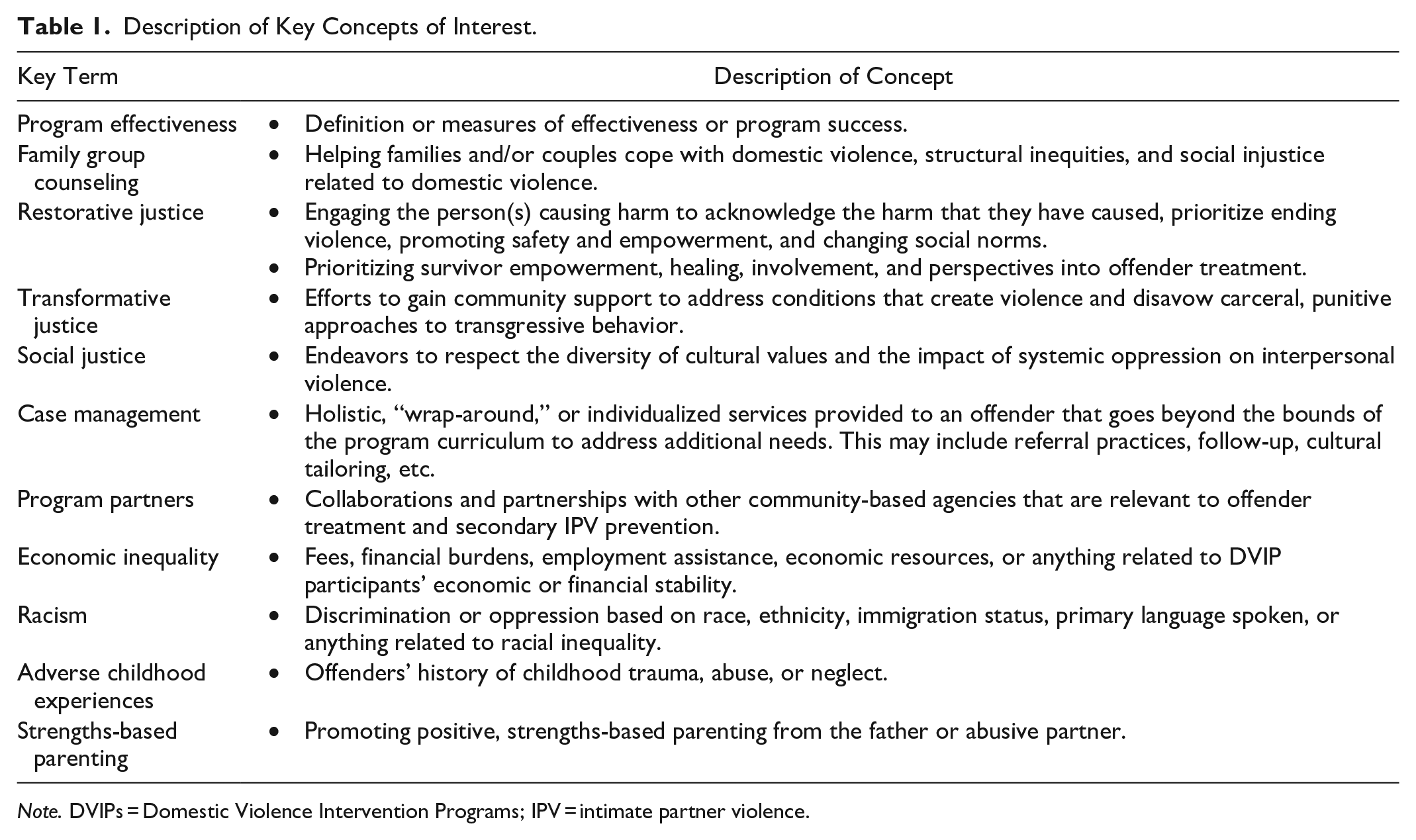
Note. DVIPs = Domestic Violence Intervention Programs; IPV = intimate partner violence.
Search Strategy and Data Extraction
In early 2021, we searched PubMed, Academic Search Premier, PyscINFO, Social Work Abstracts, JSTOR, Sociological Abstracts, PAIS Index, Political Science Database, GenderWatch, Social Services Abstracts, Criminal Justice Database, and Social Science Research Network, using a combination of search terms and Medical Subject Headings. For all database searches, we used the Boolean search string: ((“Abuser” OR “Batterer”) AND (“Treatment” OR “Intervention”) AND (“Program”)) OR (“Domestic Violence Intervention Program” OR “DVIP”) OR (“Fatherhood” OR “Strong Fathers” AND (“Domestic Violence”)). We downloaded returned articles from each database, removed duplicates, and uploaded articles into the systematic review automation manager, Covidence. Five reviewers (JC, SN, SH, SM, and JW) reviewed all titles and abstracts; each article was evaluated by two reviewers, and discrepancies were recorded by Covidence. Reviewers then met to resolve discrepancies and reach an agreement regarding which articles met the criteria for full review. Three reviewers (JC, SN, and BN) assessed the full text of each potentially relevant article and these reviewers met again to resolve discrepancies.
To achieve harmony in data extraction, reviewers collaboratively designed an extraction tool and agreed upon which data to extract. To assess patterns in study results, we extracted article title, author names, year of publication, study design and site, years of data collection, sample size, relevant sample demographics (e.g., gender, age, educational attainment), description of how the key concept was implemented into programming, the measure or indicator used to assess program effectiveness, and key findings related to key concepts of interest (Table 2).
Characteristics of Articles Included in Scoping Review (N = 27).
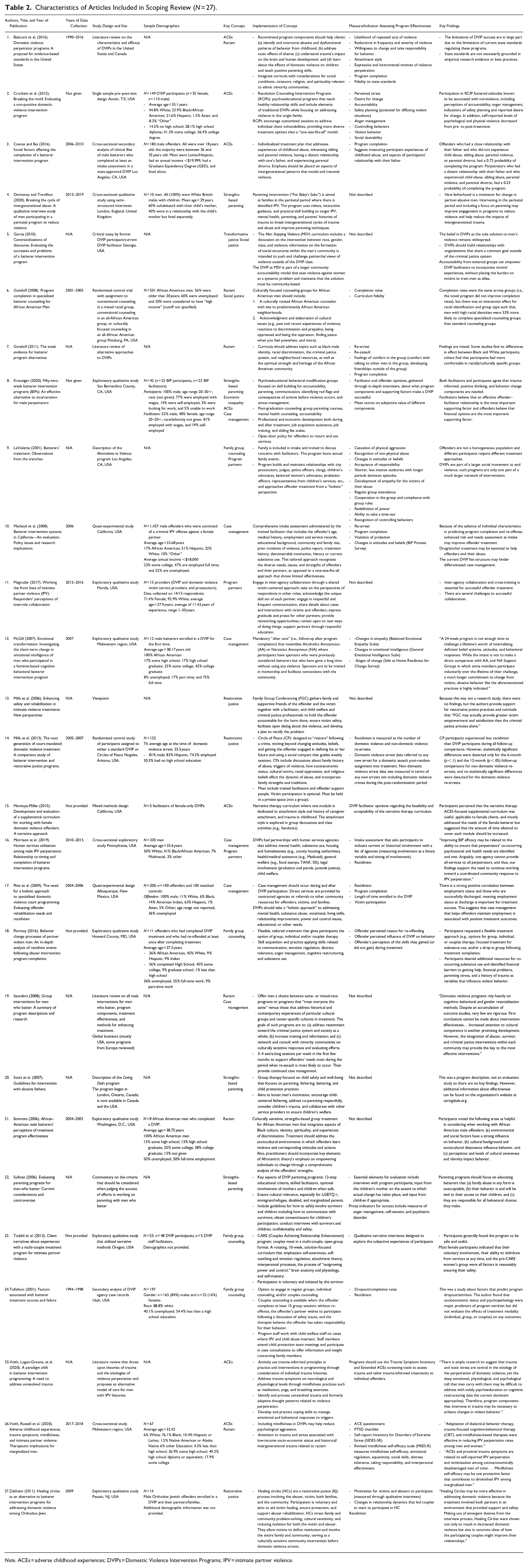
Note. ACEs = adverse childhood experiences; DVIPs = Domestic Violence Intervention Programs; IPV = intimate partner violence.
Results
In our initial database search, we identified 546 unduplicated documents. After title and abstract screening, we retained 292 articles eligible for full-text review. Of these, we identified criteria for exclusion in 253 articles; 12 articles could not be retrieved. The final sample contained 27 articles (Figure 1 and Table 2). The study selection process, with detailed exclusion explanations, is presented in Figure 1. The social-ecological model often serves as a conceptual framework for understanding the complex interplay between individual, relationship, community, societal, and structural determinants of behavior. Behavioral interventions, accordingly, often target one or more levels within this model (Centers for Disease Control and Prevention, 2022). To systematically delineate the initiatives undertaken by DVIPs to address the social and structural determinants of violence, we use this model to guide the presentation of the findings in a hierarchical manner, moving from overarching and structural considerations to nuanced and personalized strategies.
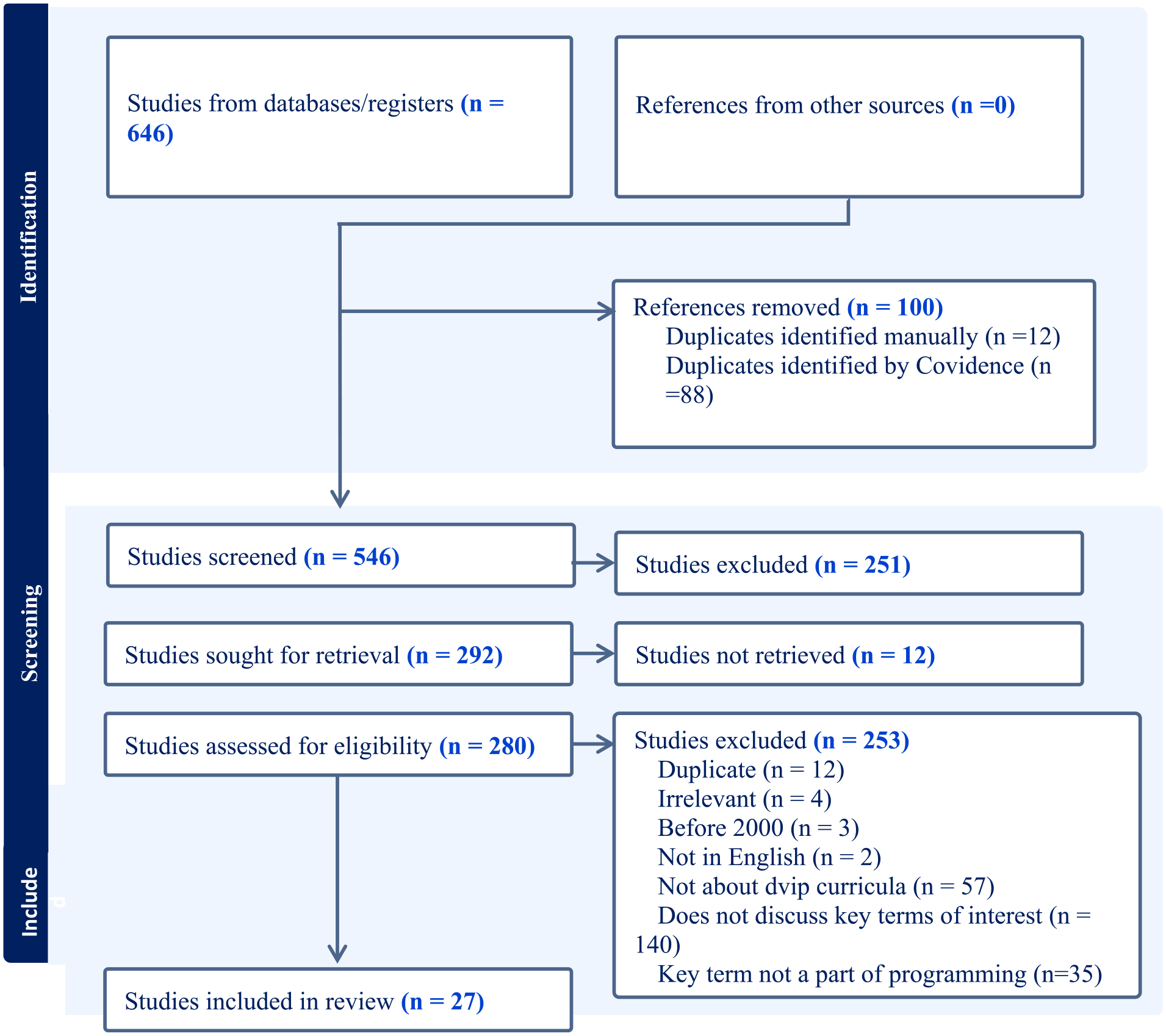
Preferred Reporting Items for Systematic Reviews and Meta-Analyses reporting diagram.
Innovations at the Structural Level
Key terms relevant to structural determinants of IPV included social justice, racism, and economic inequality. Eight studies addressed at least one of these determinants, with only one addressing more than one concept within a single curriculum. Most programs (n = 6) that incorporated any content related to structural determinants of IPV focused on racial discrimination against Black men. Of these, one randomized control trial and two literature reviews recommended facilitating groups that are comprised exclusively of Black men or giving participants a choice between mixed- or same-race groups. Findings on the effectiveness of this approach are mixed: some studies found no differences in outcomes between Black and White participants, others found that participants reported feeling more comfortable in racially/culturally specific groups and that participants in culturally specific groups may be more likely to complete programming than participants in conventional racially mixed groups (Gondolf, 2008, 2011). All six studies recommended that DVIPs should draw connections between violent behavior, current and historical experiences of racial discrimination, and systems of oppression; integrate aspects of tradition, religion, and spirituality relevant to ethnic minority communities into program curricula; and employ diverse program facilitators that have personal ties to culturally specific communities. Studies suggest acknowledging how systems of oppression have rendered many racially minoritized communities powerless and emphasizing the strengths of these communities and individuals (Gondolf, 2008, 2011; Saunders, 2008; Simmons, 2006).
Two articles addressed social injustice more broadly focusing on inequities including, but not limited to, racial inequities. One randomized control trial suggested that programs should acknowledge and elaborate upon cultural issues in programming, including reactions to discrimination and prejudice, identifying as oppressed and identifying as being the oppressor, and finding peace when you feel powerless (Gondolf, 2008). The second article, a critical essay by a former DVIP participant, argued programs must build relationships with social justice organizations outside of the criminal justice system and develop common goals and strategies to reformulate the social structures within offenders’ communities that perpetuate intersectional social injustices relative to race, gender, and class (Garcia, 2010). No articles that emerged in this review addressed social injustices in any communities other than communities of Black men.
Only one article in this review addressed economic inequality. In a 2020 dissertation, Kreuziger conducted an exploratory qualitative study to investigate DVIP program components that contribute to therapeutic gains and reductions in violence. Both DVIP program facilitators and participants agreed that information and instruction on professional and economic development both during and after treatment; job acquisition assistance; job training; and sliding fee scales are vital components of a successful DVIP (Kreuziger, 2020) (Table 2).
Innovations at the Program Level
Key terms relevant to innovative practices at the program level included case management and connecting with program partners. Of the six studies that discussed case management, three stressed the importance of ensuring that participants continue to receive supportive services for both IPV-related and non-IPV-related (e.g., housing, employment, substance use) needs during and after programming because the typical length of programming (24–52 weeks) is insufficient to address the complex needs of many offenders. In two separate exploratory qualitative studies, an “after care,” or maintenance component of programming was identified as vitally important by DVIP participants themselves (Kreuziger, 2020; McGill, 2007). One suggested having an “open door policy” whereby participants can return to treatment when necessary, and the second suggested a mandatory peer mentorship program following program completion. The third, a quasi-experimental study, found that case management provided during and after treatment helps offenders maintain employment and is associated with positive treatment outcomes (Pitts et al., 2009). Other articles emphasized how a “one-size-fits-all” approach to offender treatment does not capture the complex and varying needs, problems, and strengths of offenders and their partners, and shows little effectiveness. Consequently, comprehensive intake assessments designed to clearly delineate offenders’ needs are required to facilitate the tailoring of wrap-around services (MacLeod et al., 2008). Researchers further recommended that programs should provide continued case management either in-house (when possible) or via referrals to partnering organizations. Results from a cross-sectional exploratory study suggest that services should address issues including but not limited to mental health, substance use, housing and homelessness, health/medical assistance, food insecurity, legal involvement, and child welfare (Morrison et al., 2019).
These articles suggested that program partners are vital to successful case management; thus, networking and coalition building are critical to the long-term success of violence prevention and intervention. Of the three articles that discussed program partners, one cross-sectional study and one detailed description of the Alternatives to Violence DVIP made specific suggestions about the types of organizations and individuals that DVIPs should have close partnerships with (Laviolette, 2001; Morrison et al., 2019). Examples include judges, police and probation officers, clergy, children’s advocates, victim’s advocates, human service agencies (e.g., housing, employment), and welfare agencies (e.g., TANF, SSI). The third, an exploratory qualitative study, noted that many of the agencies involved in violence prevention and intervention may operate through different philosophies or frameworks. Thus, open, respectful, frequent, and supportive collaborative efforts are critical (Magruder, 2017) (Table 2).
Innovations at the Individual Level
Key terms relevant to innovative practices at the individual participant level included screening for and addressing ACEs, and strengths-based parenting. Of all the key concepts we included in this review, ACEs were the most widely discussed. Many DVIPs are aware of the well-established relationship between ACEs and violence perpetration and are already working to “help clients identify and overcome the abusive and dysfunctional patterns of behavior they may have learned from their childhood of origin” (Babcock et al., 2016). All six of the included studies on ACEs recommend using principles of trauma-informed care to educate participants about the effects of trauma. These articles—which include two literature reviews, a longitudinal study, two cross-sectional studies, and a mixed methods study—primarily recommended doing this through cognitive-behavioral, dialectical-behavioral, or acceptance and commitment therapy (Babcock et al., 2016; Crockett et al., 2015; Cuevas & Bui, 2016; Kreuziger, 2020; Montoya-Miller, 2015; Voith, Russell et al., 2020). One cross-sectional study with 67 DVIP participants suggested that mindfulness and meditation activities may help reduce aggression (Voith, Russell et al., 2020).
Four programs, as described in two exploratory qualitative studies, and two commentaries on programmatic guidelines, focused on strengths-based parenting, asserting that fatherhood is a motivator for change in partner abusive men. Parenting-oriented programs focused on skill building to help participants take accountability for abusive behavior, break intergenerational patterns of trauma and violence, practice healthy parenting, and enhance the safety and well-being of their children (Domoney & Trevillion, 2021; Kreuziger, 2020; Scott et al., 2007; Sullivan, 2006) (Table 2).
Restoration-Orientated Programs
Key terms relevant to restorative programming included restorative justice (RJ), transformative justice (TJ), and family group counseling. One randomized control trial, one viewpoint essay, and one exploratory qualitative study described how traditional RJ practices, such as family group conferences, circles of peace, and healing circles, can be applied to IPV-offender treatment (Mills et al., 2006, 2013; Zakheim, 2011). Authors explained that these practices generally involve the offender, the victim, families, and communities, and are intended to facilitate victim healing and safety, and offender accountability. Participation of supportive others is vital to help offenders develop and maintain strategic, tailored plans to change their behavior and rectify problems. Findings from these studies suggest that RJ may be more effective in addressing IPV than traditional DVIPs, and provides greater victim empowerment, agency, and satisfaction than the criminal justice process alone (Mills et al., 2006, 2013; Zakheim, 2011). While these studies emphasized the critical importance of including family and community members in restorative practices, only one publication—a critical essay by a former DVIP participant—discussed how to extend these practices to include TJ or the transformation of structures and systems that perpetuate and exacerbate violent behavior. This article stressed how and why pushing, challenging, and transforming violence outside of the DVIP classroom is necessary to effectuate large-scale, prolonged changes that promote violence reduction (Garcia, 2010).
Finally, family group counseling, which is an activity associated with RJ and highlights the value of including victims’ perspectives, was discussed in four articles (Laviolette, 2001; Portnoy, 2016; Todahl et al., 2012; Tollefson, 2001). Together, one program description, two exploratory qualitative studies, and one secondary analysis of DVIP agency case records stressed the importance of including victims and families on a voluntarily basis and when it is safe. All four articles suggest giving victims and families the option to participate in counseling sessions with the offender, and/or discuss concerns with program facilitators. One exploratory qualitative study found that victims perceived these programs to be safe and effective (Todahl et al., 2012), and in another qualitative analysis of offenders’ perceptions of treatment, DVIP participants requested that family group counseling be an optional activity (Portnoy, 2016) (Table 2).
Measuring Effectiveness
We assessed how programs measured success/efficacy and/or how they operationalized indicators of change relative to innovative program components. Of the 27 included articles, 20 provided details on measurement. In terms of indicators of success, seven used rearrest (to assess recidivism); eight used program completion, attendance, or participation; five used self-reported changes in attitudes, beliefs, motivations, or intentions; and five used self-reported changes in empathy, emotional control, use of skills, or violent behavior (i.e., cessation of violent behavior, decreases in severity, or frequency of violent behavior). Five qualitatively evaluated participant and/or facilitator perceptions of success, and five described measurements taken at intake that are not indicative of programmatic effectiveness (e.g., documenting ACEs, attachment style).
Indicators including program completion, rearrest, and attendance were not measured using validated tools, and qualitative studies that used semi-structured interview scripts did not use validated scales either. One study (Laviolette, 2001) measured recidivism and changes in attitudes, knowledge, and beliefs about violence perpetration but did not specify that any of the tools used were assessed for validity and reliability.
Six studies employed or recommended specific, validated measurement tools to assess various aspects relative to DVIP effectiveness. Babcock et al. (2016) recommended using the ODARA, SARA, or Propensity for Abusiveness Scale to assess the risk of repeat violence, and other validated tools (e.g., Danger Assessment) for evaluating abuse type, frequency, severity, impact on victims and families, motivation to change, and relevant personality, relationship, and social factors (Babcock et al., 2016). Crockett et al. (2015) utilized multiple scales, including the Perceived Stress Scale, Anger Readiness to Change Scale, State Trait Anger Expression Inventory, Measure of Control in Romantic Relationships Scale, Revised Conflicts Tactics Scale, and the Marlowe Crowne Social Desirability Scale to gage emotional control and violent behavior (Crockett et al., 2015). Macleod et al. (2008) used the BIP Process Survey to assess changes in attitudes and beliefs (MacLeod et al., 2008). McGill (2007) used the Balanced Emotional Empathy Scale, the General Emotional Intelligence Scale, and the Safe at Home Readiness for Change Survey for empathy, emotional intelligence, and change stages, respectively (McGill, 2007). Voith, Russell et al. (2020) used the ACEs Questionnaire, the Self-report Inventory for Disorders of Extreme for Trauma Experiences, and the Revised Mindfulness Self-Efficacy Scale to assess emotional control, social skills, and accountability (Voith, Russell et al., 2020). Finally, Sullivan (2006) emphasized the need to develop and validate tools for assessing parenting intervention program effectiveness in IPV cases (Table 2).
Discussion
The information summarized in this review suggests only a handful of DVIPs across the United States and abroad are exploring or adopting evidence-informed approaches that prioritize principles of social and structural determinants of violence, trauma-informed care, restoration, and social justice. Some programs draw connections between ACEs and IPV perpetration and focus on disrupting intergenerational patterns of violence using trauma-informed practices and focusing on positive parenting and skill building. While this shift is promising, more support in terms of curriculum development and widespread uptake of innovative programming is needed to help offender treatment programs evolve more holistically and successfully prevent and respond to IPV perpetration (Tables 3 and 4).
Critical Findings.
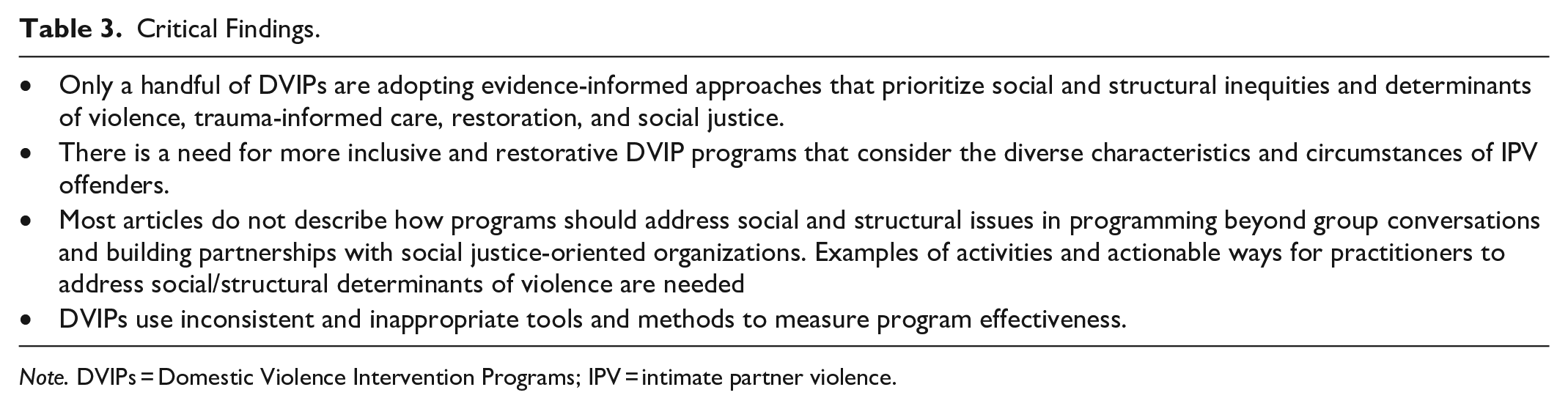
Note. DVIPs = Domestic Violence Intervention Programs; IPV = intimate partner violence.
Implications for Practice, Policy and Research.
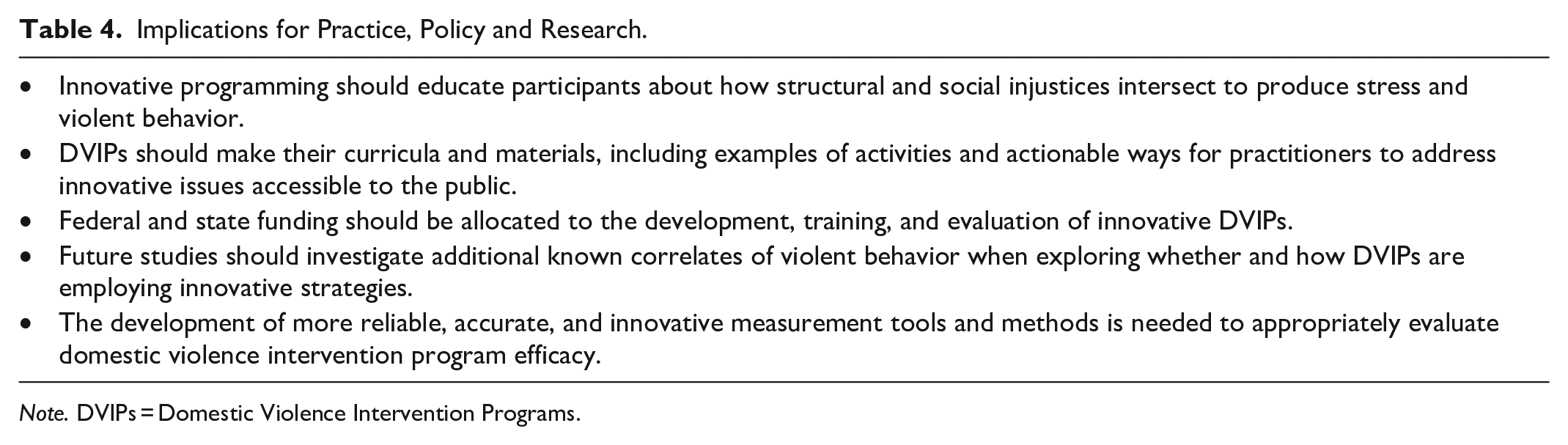
Note. DVIPs = Domestic Violence Intervention Programs.
While traditional feminist-oriented programs do address structural gender inequities, they were designed for heterosexual male offenders. These models lack important nuance for intervention with female offenders (Miller, 2005), or for LGBTQ+ couples, who experience IPV at similar or higher rates than heterosexual, cis-gender couples (Edwards et al., 2015). A more inclusive and restorative DVIP format requires consideration of the diverse characteristics and circumstances of offenders, and the involvement of their partners, families, and communities (Nicolla et al., 2023) (Table 3).
We found that structural and systemic racism is addressed relatively often in the few programs that claim to utilize alternative treatment models. This suggests that programs are aware of and putting effort into addressing the influence of structural racism on violent behavior, particularly among Black men. However, very few programs address social injustice and systemic inequalities that disproportionately affect other marginalized groups. More programs should consider programming that recognizes the structural and systemic oppression of sexual and gender minorities, immigrants, indigenous populations, people with disabilities, and unhoused individuals. Furthermore, very few programs consider structural inequities related to economic strain, educational attainment, employment, housing, and wage discrimination. Innovative programming should educate participants about how structural and social injustices intersect to produce stress and other mediators of violent behavior and work to help offenders overcome associated barriers. A striking gap is that even when they acknowledged the importance of structural issues, most articles did not elaborate upon how programs should address structural issues in programming beyond group conversations and building partnerships with social justice-oriented organizations. Program materials are rarely accessible to the public; thus, details about how to incorporate these innovative practices into programming are scarce. More examples of activities and actionable ways for practitioners to address these issues are needed (Tables 3 and 4).
Evidence on the effectiveness, feasibility, and acceptability of RJ- and TJ-informed practices, including family group counseling, is growing, and suggests that it may be a preferred type of intervention among IPV survivors (Decker et al., 2020; Kim, 2021; Mills et al., 2019). Programs that are already doing family group counseling, or involving survivors and families in programming in some way may consider expanding and formalizing these practices to align with RJ practices. Better still would be adopting transformative practices by partnering with other community organizations to transform local systems, norms, and community practices to support offenders in abstaining from violence and facilitate victim healing. Notably, some DVIP and victims’ services providers are hesitant to incorporate aspects of RJ and TJ into offender treatment, citing concerns related to survivor safety, re-traumatization, and power imbalances inherent to IPV (Campbell et al., 2023; Curtis-Fawley & Daly, 2005; Proietti-Scifoni & Daly, 2011). As such, RJ and TJ should be initiated on a case-by-case basis, align with the legal and social circumstances of the offender (e.g., consider protective or no-contact orders), and be tailored to the specific needs and desires of survivors while emphasizing survivor safety and autonomy. Evidence-based frameworks such as RNR and PEI (Bonta & Andrews, 2007; Hilton & Radatz, 2018; Radatz & Wright, 2016; Radatz et al., 2021) and guiding principles recommended by nationally recognized organizations, like the Center for Court Innovation (Cissner et al., 2019) can guide practitioners in developing tailored treatment plans that are sensitive to offenders’ unique criminogenic and social/structural needs (Table 4).
Inadequate funding, limited staff capacity, and a lack of buy-in from critical community and institutional partners (e.g., state-wide organizations that support and regulate DVIPs) are barriers for many programs to effectuate change (Campbell et al., 2023). In response to these barriers, programs may introduce low-cost activities to start, like discussions and support groups. However, to effectively target the social and structural determinants of violence that impact IPV, interventions inevitably must expand these efforts beyond educational initiatives by implementing evidence-based curriculums and activities that target mechanisms, like intentions and self-efficacy, which are determinants known by health behavior theorists to directly influence behavior change (Ajzen, 1991; Champion & Skinner, 2008).
Finally, efforts to develop novel program curricula that integrate social, structural, and restorative interventions with other evidence-based programming (e.g., RNR or PEI) is needed. Such curricula should address a spectrum of social and structural issues including but not limited to income inequality, community disadvantage, systemic marginalization, racism, poverty, adverse experiences of trauma and stress, parenting dynamics, and restorative and TJ. Program components should encompass tailored psychological and substance use support, ongoing individualized case management, social, emotional, and instrumental support, inter-agency partnerships and collaborations, acknowledgment and dismantling of oppressive policies and practices, consideration of unique cultural contexts in both individual and group settings, implementation of circles of peace and victim–offender dialogs when appropriate, active communication with survivors, family inclusion in programming, and positive parenting skill building. The development of such curricula should be ideally undertaken through collaborative endeavors involving research experts, practitioners, survivors, and offenders. It is imperative that innovative programs undergo comprehensive evaluation using appropriate measures to assess both the extent of curriculum implementation and fidelity, as well as the overall effectiveness of the program. Ideally, the application of rigorous research methodologies, such as randomized control trials or pre–post-test longitudinal studies, should be considered, with adaptability based on local resource availability and specific needs considered (Table 4).
There are at least two limitations to this review. First, some studies were unavailable because of a lack of institutional access to particular journals. It is possible that the inclusion of additional studies would change the results slightly. Nevertheless, the central finding—that many DVIPs that have been operational in the last two decades are not incorporating innovations that focus on social and structural correlates of IPV perpetration into practice—would be unlikely to change with the inclusion of a handful of additional studies. Second, it is possible that if we had included different search terms, we would have identified additional articles that discussed other innovative practices. It is possible that DVIPs are employing other types of novel programming that reflect different key concepts or correlates of IPV and these were not captured in our search. However, given the relationship between structural and social inequities, ACEs, and IPV perpetration, findings suggest that most programs are not addressing important known social and structural predictors of violent behavior. Future studies may seek to include more known correlates of violent behavior to explore whether programs are employing innovative strategies in other ways.
Conclusion
This scoping review identified relatively few studies that describe or assess the effectiveness of DVIPs that incorporate social and structural innovations beyond the standards set forth by the feminist psycho-education models of the original DVIP curricula. Furthermore, we found that DVIPs measure effectiveness inconsistently, and often use insufficient measures, like re-arrest and program completion rates, which are not designed to gauge DVIP implementation and outcomes. More research is needed to reveal what other types of novel programming DVIPs may or may not be engaging in and how effective these alternative curricula are. Priority should be placed on developing recommendations for how DVIPs can alter current practices to align with evidence-based techniques that address known social and structural causes of violence and implement plans and activities to more effectively prevent and mitigate IPV perpetration.
Footnotes
Acknowledgements
Thank you to Scarlett Hawkins, MS, Savanah Morgan, JD, Bridget Nelson, BA, Erika Redding, MSPH, and Julia Weinrich, MPH for their contributions to this research.
Declaration of Conflicting Interests
The author(s) declared no potential conflicts of interest with respect to the research, authorship, and/or publication of this article.
Funding
The author(s) disclosed receipt of the following financial support for the research, authorship, and/or publication of this article: This research was supported, in part, by the University of North Carolina Injury Prevention Research Center, which is partly supported by grant number R49/CE000196 from the National Center for Injury Prevention and Control, Centers for Disease Control and Prevention. This research was also supported, in part, by funds from the University of North Carolina at Chapel Hill Office of the Executive Vice Chancellor and Provost.
