




Abstract
Dating and sexual violence (DSV) is a common occurrence among school aged youth and has been associated with numerous harmful long-term outcomes. The goal of this article is to better understand the range of outcomes associated with DSV during youth and adolescence. This systematic review consists of 28 school-based studies from 20 journals discussing outcomes of youth experiences of DSV. Results demonstrate significant associations between DSV victimization and mental health symptoms, substance use, sexual health, academic, and social outcomes. To better understand this issue, this article recommends that schools offer additional training for staff on recognizing DSV. Additionally, improved research is needed in this area including surveys that are inclusive of diverse student identities and include more comprehensive measures of DSV, and additional research on DSV explicitly focused on minoritized groups.
Dating and sexual violence (DSV) is a pervasive problem that adversely impacts many adolescents (Exner-Cortens et al., 2013). Sexual violence is a broad term that includes attempted or completed nonconsensual penetration, unwanted touching, or non-contact acts such as exposing oneself or verbal sexual harassment (SH) (Basile & Saltzman, 2002; Basile et al., 2005). Violence that is perpetrated by romantic partners, referred to as teen or adolescent dating violence, can also be a form of sexual violence (Basile & Saltzman, 2002). To address the complexity of interpersonal violence more effectively, researchers have begun to discuss these phenomena jointly using the term DSV. Although underreporting makes determining exact statistics on adolescent DSV difficult, the 2019 Youth Risk Behavior Survey (YRBS) found that one in eight youth experienced dating violence and one in nine experienced sexual violence with higher rates for women and gender and sexual minorities (Basile et al., 2019). Rates of childhood sexual abuse (CSA) are also staggering with an estimated 1 in 4 girls and 1 in 13 boys in the United States being sexually abused (Centers for Disease Control, 2022). DSV has been linked with harmful outcomes including higher rates of unprotected sex, sexually transmitted infections (STIs) and HIV, unintended pregnancies and abortions, drug and alcohol use, anxiety, depression, and suicide (Schneider & Hirsch, 2020; Senn et al., 2011; Van Roode et al., 2009). Several systematic reviews have discussed various nuanced outcomes of sexual violence later in life (see Domhardt et al., 2015; Gewirtz-Meydan et al., 2022; Hailes et al., 2019; Havig, 2008; Hillberg, 2011; Maniglio, 2009), we are unaware of any systematic review that discusses the various outcomes associated with DSV victimization during adolescence. Due to our knowledge of the extent of the long-term effects of DSV in adulthood, it is essential for researchers, practitioners, and systems who serve youth to address this issue early. Additionally, adolescence is a time of rapid changes and a significant development in adolescence is the emergence of romantic relationships (Furman & Shomaker, 2008), whereas many of these relationships lead to positive development, a small minority may involve violence or aggression (Exner-Cortens, 2014). Thus, there is a need to understand how the various outcomes associated with DSV may be unique for youth, and how they are predictive of violence into adult relationships.
Using this research as a guide, the primary purpose of this review is to understand the outcomes associated with various forms of DSV in childhood and adolescence. To assess the extent of this issue, we collected, reviewed, and summarized the existing literature on experiences of CSA, SH, sexual violence, teen dating violence, and associated outcomes among K-12 students. Despite the documented overlap between victimization and perpetration of DSV, this review primarily discusses victimization as that is the focus of much of the extant research. Understanding the scope of the existing literature will help researchers and practitioners identify gaps in current research and design prevention programs to more effectively address the needs of the increasing number of students experiencing some form of DSV.
Methods
This review builds on the existing literature discussing experiences of DSV victimization among adolescents. To better understand the scope of this public health problem, this review focuses on articles that highlighted youth experiences of DSV victimization and associated outcomes.
Eligibility Criteria and Search Strategy
The inclusion criteria for this study included data collected in any country during or after 2000 in K-12 school settings written in English, Chinese, Spanish, or Arabic (languages spoken by reviewers) that used a quantitative methodology. Studies had to assess student experiences with various forms of DSV and associated outcomes. The team retrieved articles from the following databases: Academic Search Premier, APA PsycArticles, APA PsycINFO, Medline, and Women’s Studies International. A comprehensive literature search was then conducted using the following search string: (School) AND (“teen dating violence” or “adolescent dating violence” or “unwanted sex*” or rape or “sex harrass*”) AND (“acad*” or “beh*” or health or “mental health” or disclosure or “counsel*” or “internaliz*” or “externaliz*”) AND (“assessment*” or “evaluat*” or “impact*” or “outcome*”) NOT (review or “meta-analysis” or qualitative or “focus group” or interview) NOT (college or adult).
Search Results
The search returned 863 results including journal articles, dissertations, news articles, and books (see Figure 1). After duplicates (n = 34) were removed automatically by Covidence Systematic Review Software (2020), 829 studies remained. The research team then conducted a systematic review of these articles. Abstracts and titles were screened independently by two reviewers to ensure adherence to the inclusion criteria. Any conflicts that arose during the screening process were discussed and resolved by team members during weekly meetings. Inter-rater reliability was 94% for initial screening. After review, 745 articles were excluded for failure to meet the inclusion criteria. The remaining 84 studies were eligible for full-text screening, 67 studies were excluded for failing to meet the inclusion criteria, resulting in 17 studies included from the initial search (see Figure 1 for the full description of exclusion criteria). Reference mining (a review of the references from relevant literature) was also used to identify additional studies that might meet the inclusion criteria. An additional 60 studies were identified for potential inclusion through reference mining, after review, 11 studies were added. A total of 28 studies from 20 journals were included in the final review; 22 studies were conducted in the United States and 6 studies were conducted in Australia, Canada, or Denmark.
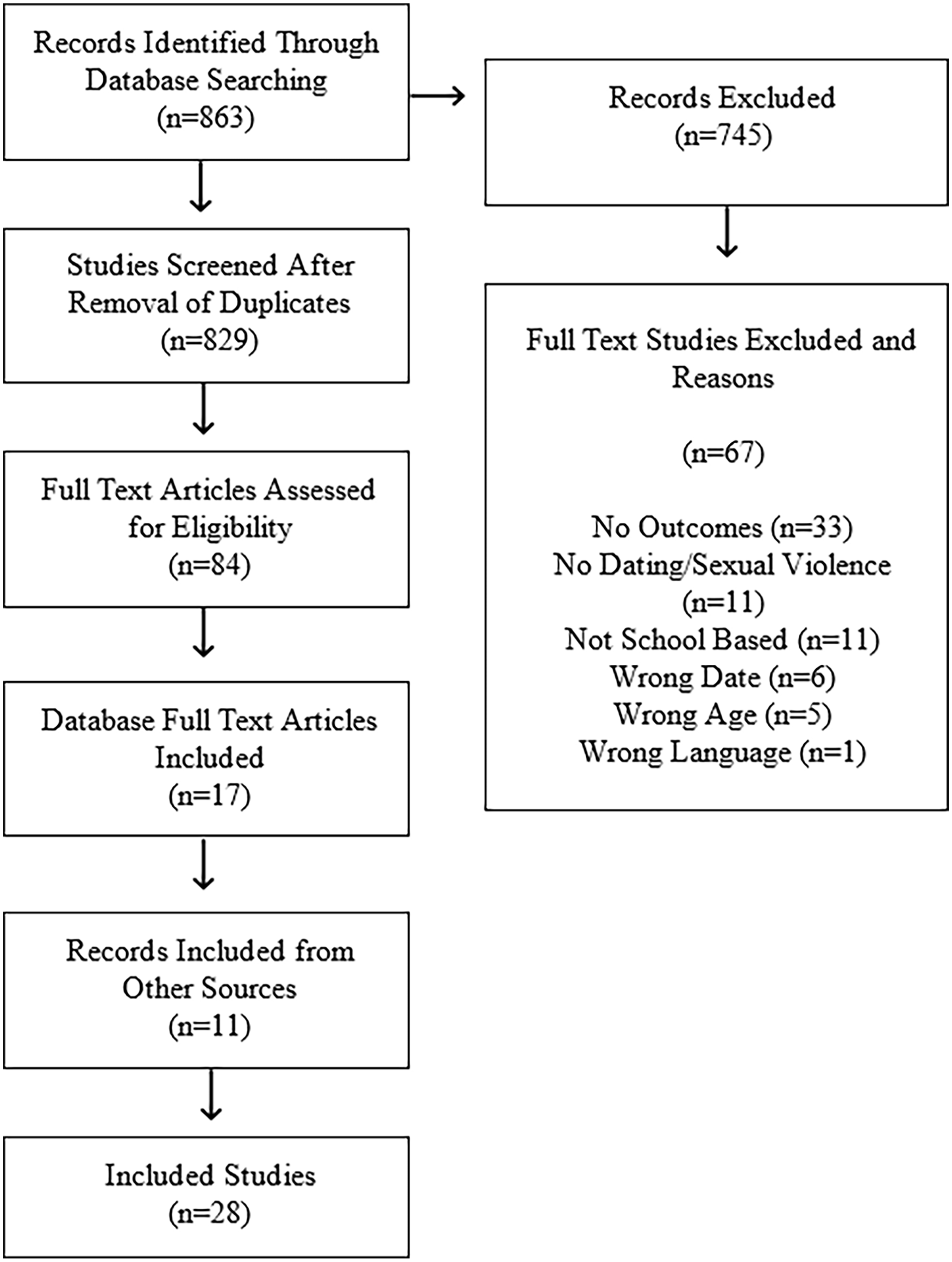
PRISMA chart.
Study Characteristics and Outcomes
Seven measures of school and student characteristics were coded. School and student characteristics included: (a) school location, (b) type of school, (c) sample size, (d) age/grade, (e) gender, (f) sexual/gender identity, and (g) race/ethnicity. Location was reported in 100% (28/28) of studies: 1 in Australia, 4 in Canada, 1 in Denmark, and 22 studies in the United States. School type was reported in 100% (28/28) of studies: 4 middle schools, 19 high schools, and 5 studies that included more than one type of school. Sample size was reported in 100% (28/28) of studies and ranged from 404 to 17,465 students. Age or grade was reported in 100% (28/28) of studies and ranged from 11 to 19 years or 6th to 12th grade. Gender was reported in 100% (28/28) of studies. Sexual orientation and/or gender identities other than male and female were only measured in 29% (8/28) of studies. Finally, race and ethnicity were reported in 86% (24/28) of studies with 57% of studies having a majority white population. In addition to demographic characteristics, study outcomes were also codified and organized into themes. Study themes included mental health/well-being, self-harm and suicide, drugs, alcohol, violence, sexual health, and school-related outcomes. In addition to the general themes, studies were also coded if they specifically discussed a marginalized population (e.g., Lesbian, Gay, Bisexual, Transgender (LGBT), racial and ethnic minorities, disabled students). Studies were independently coded by the lab coordinator and five undergraduate research assistants who were trained on the coding process. The full list of studies included in this review can be found in Table 1.
Studies Included in Review.
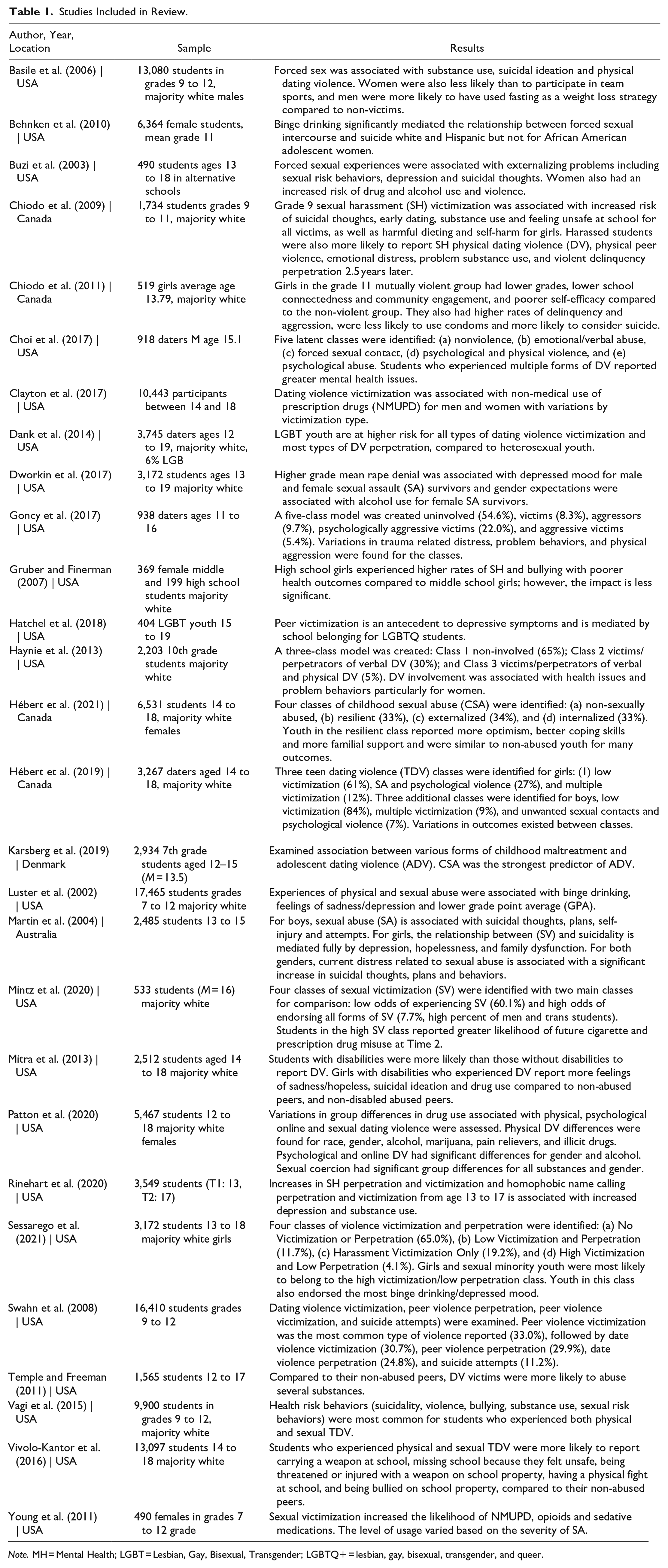
Note. MH = Mental Health; LGBT = Lesbian, Gay, Bisexual, Transgender; LGBTQ+ = lesbian, gay, bisexual, transgender, and queer.
Studies in this review primarily consisted of regression models (17) latent class analyses (7). There was also significant diversity in how forms of DSV were measured both in terms of type of victimization and time of the incident ranging from the past 3 months to lifetime experiences. Several studies used well-established measures such as the Conflict in Adolescent Relationships Inventory (CADRI) and American Association of University Women (AAUW), and many students adapted these measures or created their own unique items. Table 2 details the measure of DSV, timeframe, and methodology to address nuances in their approaches.
Items, Time Frame, Analytic Approach, and Rates of Victimization.
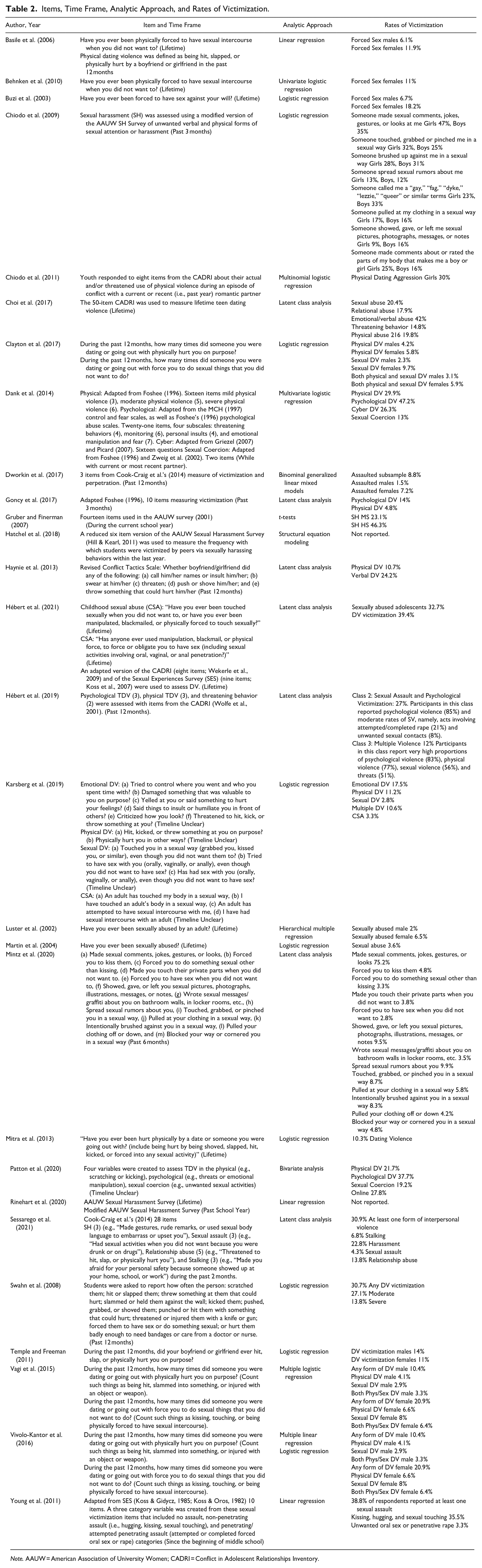
Note. AAUW = American Association of University Women; CADRI = Conflict in Adolescent Relationships Inventory.
Research Team Positionality
The research team consisted of seven female researchers: one lab director, one lab coordinator, and five undergraduate research assistants. All members of the team were involved in conceptualizing the study, conducting the literature review, screening, coding, and writing.
The lab director is a professor and a school safety researcher who identifies as a white female, the lab coordinator who has a MPS in Criminal Justice Policy and Administration also identifies as a white female. The undergraduate research assistants are currently pursuing, or recently graduated with their bachelor’s degree in the fields of Human Development and Family Studies, Psychology, Sociology, Neuroscience, or Music. Two of the research assistants identify as white, one identifies as Latina, one identifies as Asian, one identifies as Muslim, and all identify as female. It is important to acknowledge the unique lived experiences and held beliefs of the research team to contextualize the findings of this study.
Results
Through the synthesis of the literature, five broad themes were identified as outcomes associated with various forms of DSV: mental health, substance use, academic, sexual, and social behaviors. Additionally, studies that highlight outcomes for marginalized populations such as lesbian, gay, bisexual, transgender, and queer (LGBTQ+), racial, and ethnic minorities and students with disabilities were explicitly identified and coded and are discussed in a separate section to highlight findings for these overlooked populations in DSV research. For a complete overview of the themes discussed in each study please see Table 3.
Study Themes.
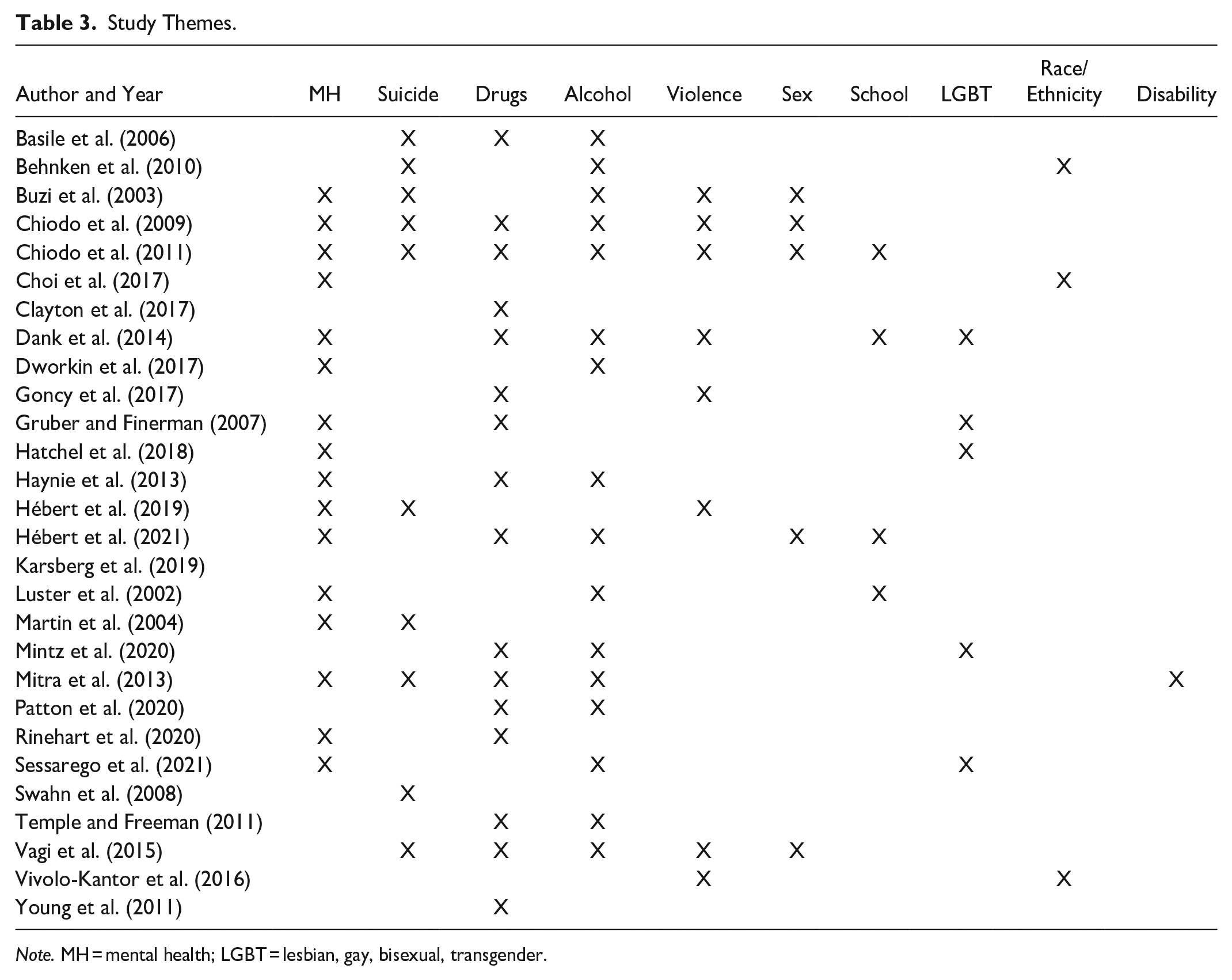
Note. MH = mental health; LGBT = lesbian, gay, bisexual, transgender.
Mental Health
The impact of DSV victimization on various aspects of mental health and well-being was discussed in several studies. Common mental health symptoms such as depression, anxiety, and hopelessness can be exacerbated by experiencing DSV (McNaughton Reyes et al., 2018). In addition to the harms of these depressive symptoms, youth who experience sexual violence victimization may also be at an elevated risk for suicidal thoughts and behaviors (Belshaw et al., 2012). Understanding the impact of DSV victimization on mental health is an important step to addressing adolescents’ needs.
Mental Health and Well-being
Various forms of adolescent DSV have been linked to negative emotional outcomes in victims. 13/26 studies highlighted the association between numerous forms of victimization and decreased mental health including depressive symptomatology, hopelessness, post-traumatic stress disorder, and more. Adolescents who experienced DSV reported higher rates of depression than their non-abused peers (Buzi et al., 2013; Dworkin et al., 2017; Luster et al., 2002; Martin et al., 2004; Rinehart et al., 2020). Dworkin et al. (2017) also found that students exposed to SA were more likely to report depression when they were in a grade (e.g., 9th grade) with high rape denial attitudes. Chiodo et al. (2011) found that victims of physical dating violence also reported higher rates of emotional distress than non-victims. Adolescents reporting any sexual abuse also scored higher on measures of hopelessness than their non-abused peers (Martin et al., 2004). Additionally, in a study of SH and bullying among middle and high school girls, Gruber and Finerman (2007) found that public SH and unwanted personal advances were significantly associated with decreased mental health and increased trauma symptoms. Similarly, Chiodo et al. (2009) found that SH victimization was closely related to emotional distress two and a half years later.
Several studies used latent class analysis to identify how different forms of DSV victimization related to elevated mental health symptoms. Sessarego et al. (2021) studied experiences of victimization and perpetration of various forms of interpersonal violence (SH, SA, relationship abuse, and stalking) and found that participants in the high victimization, low perpetration class exhibited the highest rate of depressed mood (Sessarego et al., 2021). In their 2019 study, Hébert et al. identified that girls in the unwanted sexual contacts and psychological violence (e.g., ridiculing, controlling) classes experienced the highest rates of psychological distress, emotional distress, and post traumatic stress disorder (PTSD) symptoms compared to the other classes. Furthermore, boys in the SA and psychological violence and multiple victimization classes reported significantly higher rates of psychological stress than their peers in other classes, reaching clinical levels (Hébert et al., 2019). In 2021, a study by Hébert et al. identified students in the internalizing group exhibited high probabilities of clinical PTSD, clinical psychological distress, and lower rates of positive adaptation compared to the other classes (Hébert et al., 2021). Choi et al.(2017) found that students in the emotional/verbal teen dating violence class had the highest rates of anxiety and depressive symptoms, whereas students in the psychological and physical violence class had the highest hostility. Haynie et al.(2013) found that participants in the dating violence victimization classes reported higher depressive symptoms, with significantly higher rates for women. Additionally, youth in the physical and verbal dating violence classes reported more psychological complaints including nervousness, temper, feeling low, and trouble sleeping (Haynie et al., 2013).
Self-Harm and Suicide
In addition to general mental health challenges, DSV victimization has also been linked to more severe outcomes including self-harm and suicidal ideation and attempts, which was examined in 9/26 studies. Consistent with the mental health outcomes, Chiodo et al.(2009) found that SH victimization in grade 9 was associated with increased self-harm and suicidal ideation for girls and suicidal ideation for boys at the end of grade 11. In addition to SH, other forms of DSV were also closely linked with suicidal thoughts and behaviors (Basile et al., 2006; Buzi et al., 2003; Chiodo et al., 2011; Swahn et al., 2008). Individuals who reported any CSA were more likely to report suicidal thoughts, threats, plans, and attempts as well as self-harm behaviors than their non-abused peers (Martin et al., 2004). This association was particularly strong for boys who had 10-fold increased risk of suicidal plans and threats, and a 15-fold increased risk of attempting suicide compared to non-abused peers even after controlling for depression, hopelessness, and family function. Although the relation between DSV and suicidality is present after numerous forms of sexual violence, Behnken et al.(2010) found that binge drinking reduced the path from any forced sexual intercourse to suicidal ideation, highlighting the interplay between substances and sexual violence for suicidality. Research also suggests that the combination of physical and sexual teen dating violence victimization produces more serious negative outcomes than just physical or sexual teen dating violence alone. For example, female students who experienced both forms of teen dating violence were twice as likely to attempt suicide and male students were three times as likely (Vagi et al., 2015). Similarly, in their latent class analysis, Hébert et al.(2019) found that participants in the dating violence multiple victimization class, and boys in the unwanted sexual contact and psychological violence classes had higher rates of suicidal ideation and attempt compared to their peers.
Substance Use
In addition to mental health concerns, numerous studies discussed victims’ experiences with substances including alcohol, tobacco, prescription, and non-prescription drugs and vaping.
Drug Use
15/28 studies assessed the impacts of DSV victimization on rates of substance use. Many studies found that experiencing DSV is closely associated with illicit substance use including marijuana, tobacco, cocaine, and ecstasy. Gruber and Finerman (2007) found that experiences of SH and unwanted personal advances were significantly associated with substance abuse. Similarly, Chiodo et al.(2009) found that SH victimization was associated with increased illicit substance use for men and women, with these problems persisting 2.5 years later. Rinehart et al.(2020) found that youth who reported increased SH and homophobic name-calling victimization reported increased substance use. In addition to SH, more severe forms of DSV were also closely linked to substance use. Tobacco and marijuana use were closely associated with dating violence in various studies (Basile et al., 2006; Haynie et al., 2013; Temple & Freeman, 2011; Vagi et al., 2015). Hébert et al.(2021) found that CSA victims in the externalizing and internalizing classes reported much higher rates of substance use compared to non-abused adolescents. Additionally, although not explicitly the focus of this study, Patton et al.(2020) also found that youth who reported both victimization and perpetration of TDV used more substances. Vagi et al.(2015) found that youth who experienced any form of TDV reported higher rates of current marijuana and lifetime cocaine use than students who had not experienced TDV. Students who faced both physical and sexual TDV had the highest rates of marijuana and cocaine use. Basile et al.(2006) found that students who experienced forced sexual intercourse were more likely to use substances than non-victims; with women more likely to have used marijuana and men were more likely to have used cocaine. Haynie et al.(2013) found that for men, membership in a verbal dating violence class was associated with the highest rate of marijuana use, whereas for women being a victim/perpetrator of verbal and physical dating violence was associated with the most tobacco and marijuana use. Finally, Temple and Freeman (2011) found that dating violence victimization was associated with use of various illicit substances including marijuana, inhalants and ecstasy and that youth who experienced dating violence were more than 4.5 times as likely to use ecstasy than peers in nonviolent relationships. In a small number of studies, those who had experienced sexual victimization (SV) endorsed higher rates of drug use, although there were no significant associations (Chiodo et al., 2011; Goncy et al., 2017).
In addition to cigarettes and illegal drugs, DSV were also consistently linked with abuse of prescription medication (Clayton et al., 2017; Mintz et al., 2020; Patton et al., 2020; Temple & Freeman, 2011; Young et al., 2011). Temple and Freeman (2011) found that youth who experienced dating violence were three times as likely to have used Xanax and Vicodin than peers not experiencing violence. Young et al.(2011) found that participants who experienced non-penetrative forms of sexual violence victimization were two times as likely to report non-medical opioid analgesic prescription use, whereas those who experienced penetrative sexual violence had approximately five times the odds to non-medically use opioid analgesic and sedatives. Finally, Mintz et al.(2020) specified that severity of the victimization was associated with prescription drug misuse with higher victimization reporting a significantly higher likelihood of prescription drug misuse.
Alcohol
In total, 14/28 studies discussed the link between experiences of DSV and alcohol use. Several studies found that experiencing sexual abuse and/or dating violence was generally associated with increased rates of alcohol use including binge drinking (Buzi et al., 2003; Chiodo et al., 2009; Haynie et al., 2013; Luster et al., 2002; Patton et al., 2020; Temple & Freeman, 2011; Vagi et al., 2015). Variations were also found based on gender. For youth with lifetime SA experiences, Basile et al.(2006) found that female students were significantly more likely to binge drink and male students were more likely to report drinking and driving more than once in the past 30 days, whereas Dworkin et al.(2017) found that men who experienced SA were significantly more likely to report alcohol use than abused women. Alternatively, Chiodo et al.(2011) found no significant differences in substance use between victimized and non-victimized girls. In their study, Mintz et al.(2020) found that participants in the low SV class had a significantly lower likelihood of using alcohol in the future compared to those in class 1 (low odds of physical SV and moderate odds of harassment). Similarly, Sessarego et al.(2021) found that participants categorized as experiencing high victimization and low perpetration had reported the highest rates of depressed mood and binge drinking. Hébert et al.(2021) found that victims of CSA in the externalizing group had the highest rates of substance use. Dworkin et al.(2017) also found that rape denial was associated with a greater likelihood of depressed mood and engagement of drinking one or more alcoholic beverages for SA survivors. In addition to increased alcohol usage, Behnken et al.(2010) found that binge drinking partially mediated the relation between forced sexual intercourse and suicidality.
Behavioral Effects
In addition to mental health and substance use, several studies discuss additional behavioral outcomes associated with sexual violence, including aggression and violence, sexual health, and academic challenges, highlighting the significant and wide-reaching impact of victimization.
Aggression/Violence
One of the more commonly discussed outcomes was the link between victimization and perpetration of aggression or violence. About 7/28 studies described a relation between aggressive or violent behavior and DSV. In their 2015 study, Vagi et al. found that students who experienced any form of TDV were more likely to get into physical fights and carry weapons than their non-victimized peers. Chiodo et al.(2009) found that SH victimization in grade nine was associated with feeling unsafe at school and a higher risk of violent delinquency for the next 2.5 years. Vivolo-Kantor et al.(2016) found that among high school students, TDV victimization was significantly associated with higher reports of carrying a weapon on school property, being threatened or injured with a weapon on school property, physical fighting on school property, and not going to school due to safety concerns. They also found these outcomes were more severe for male students (Vivolo-Kantor et al., 2016). Alternatively, Buzi et al.(2003) found that having a coercive sexual experience was associated with carrying a weapon in the past 30 days and being treated for a physical fighting related injury for females, whereas no such association was found for men. It also seems to be exacerbated by being in a relationship with mutual violence. In their latent class analysis of dating aggression, Goncy et al.(2017) found that students in the aggressive victims’ class, those who were victims and perpetrators, reported the most physical aggression. Similarly, Chiodo et al.(2011) found that girls in mutually physically violent relationships exhibited more delinquent acts compared to girls in other physical dating violence classes. Finally, Hébert et al.(2019) discovered that male students in multiple violence and unwanted sexual contact and psychological violence classes reported significantly higher rates of externalizing behaviors (such as fights) compared to their peers in the low victimization class.
Sexual Health
5/28 studies discuss the effects of DSV victimization on sexual behaviors. Chiodo et al.(2009) found that girls who experienced SH had elevated rates of early dating (dating before age 12). Victimization was associated with greater sexual activity. Vagi et al.(2015) found that male participants who experienced all forms of teen dating violence were more likely to be currently sexually active and have had sex with at least four people. In addition to the increased sexual activity, sexual decision-making may also be affected. Chiodo et al.(2011) found that girls in mutually physically violent relationships reported less condom use compared to girls in nonviolent relationships. Additionally, Hébert et al.(2021) found that youth in the externalizing class of CSA had the highest rates of risky sexual behaviors. Buzi et al. (2003) found that for both men and women, coercive sexual experiences were associated with numerous sexually risky behaviors including multiple sexual partners, exchanging sex for drugs or money, and history of sexually transmitted diseases. For women, it was also associated with early sexual initiation.
Academic and School Based
In total, 3/28 studies discussed DSV and its impact on academic performance and other school characteristics. Luster et al.(2002) found that childhood physical abuse and sexual abuse by an adult was associated with lower GPAs among adolescents. Similarly, Hébert et al.(2021) found that the CSA externalizing class had higher probabilities of various negative outcomes including poor to average academic performance. Chiodo et al.(2011) also found that girls in mutually physically violent relationships scored significantly higher on maladjustment indicators including grades, school connectedness, and community involvement compared to girls in nonviolent relationships.
Marginalized Populations
Although DSV in all its forms exacerbated negative outcomes for all students, select studies explicitly assessed its impact on marginalized student groups such as disabled students, students of color or those who identify as LGBTQ+.
LGBTQ
A small number of studies (5/28) addressed the rates of sexual violence outcomes among students who identified as a gender or sexual minority. Research shows that LGBTQ students experience elevated rates of problematic outcomes associated with sexual violence. Sessarego et al.(2021) found that sexual minority youth were more likely than their heterosexual peers to be in classes characterized by greater variation in forms of interpersonal violence. Mintz et al.(2020) had similar findings where the high SV class had higher proportions of transgender students, compared to other classes. Gruber and Finerman (2007) found that lesbians experienced more bullying and SH whereas also scoring lower on several health measures. In a sample of LGBT students, Hatchel et al.(2018) found that SH victimization was associated with less school belonging and predicted increased depressive symptoms, even when controlling for previous depression. Finally, Dank et al.(2014) compared dating violence victimization between heterosexual and LGB students and found that LGB victims showed exacerbated outcomes including alcohol and drug use, delinquency, sexual activity, more hours on the computer, depressive symptoms, anxiety, anger/hostility, a lower likelihood of attending school each day, and poorer grades.
Race/Ethnicity
Most of the articles in this review focused on a primarily white sample; however, 3/28 studies did discuss variations in outcomes based on race and ethnicity. Vivolo-Kantor et al.(2016) found that Black girls had the highest rate of physical TDV, Hispanic girls had the highest rate of sexual TDV, and white girls had the highest rates of both physical and sexual TDV. Victimization was more consistent for Black boys who had the highest rates of sexual, physical, and combined victimization (Vivolo Kantor et al., 2016). In their study, Choi et al.(2017) found that African Americans were more likely to be part of the emotional/verbal abuse and psychological and physical dating violence classes. Additionally, within the psychological and physical violence class, Hispanic students had lower levels of hostility but higher scores on anxiety than non-Hispanic youth in the same class (Choi et al., 2017). Lastly, Behnken et al.(2010) found that although observed for White and Hispanic students, binge drinking did not mediate the relationship between forced sexual intercourse and suicidality for African American girls.
Disability
Finally, 1/28 studies discussed the specific victimization of students with disabilities. Mitra et al.(2013) found that girls with disabilities were more likely to experience dating violence than their peers without disabilities. Girls with disabilities who experienced dating violence victimization had higher rates of feeling sad or hopeless, seriously considering suicide, self-harm, drug, alcohol and cigarette use, fair to poor general health, and unhealthy weight management strategies when compared to non-disabled girls who did not experience dating violence. Additionally, when compared to peers without disabilities who experienced SV victimization, disabled girls were more likely to report feeling sad or hopeless, considering suicide and using drugs (Mitra et al., 2013).
Discussion
Although significant research exists on the long-term effects of DSV in adulthood, the authors are unaware of any systematic review study that discusses the variety of short-term effects impacting adolescents who experienced various forms of DSV. This review compiles the current literature on outcomes associated with DSV victimization including mental, physical, and behavioral health for school-aged youth. DSV including SH, forced sex, and teen dating violence in youth and adolescence are closely associated with several negative outcomes. In our review, the most discussed outcomes were drug and alcohol use, mental health, and suicide. A large portion of studies highlighted the association between numerous forms of victimization and decreased mental health, such as feeling hopeless, sad, and/or developing PTSD. In addition to general effects on mental health, several studies indicated more severe outcomes related to DSV victimization such as self-harm, suicidal ideation, and attempts. Substance use including drugs and alcohol was also linked with DSV victimization. Links were also identified between experiencing DSV and numerous behavioral outcomes. Several studies highlighted a relation between DSV and aggression or violent behavior. Other researchers found that DSV was associated with poorer sexual health and increased sexual activity. DSV victimization was also associated with decreased academic performance and school connectedness. In addition to general outcomes associated with DSV, this review was also concerned with specific implications for marginalized student groups such as disabled, LGBTQ+, or racial minority students. Only a select number of articles discussed these populations; however, rates of DSV victimization were elevated among these groups and associated with exacerbated negative outcomes across several areas showing the pervasiveness of victimization.
Limitations
Despite the benefits of this study as a review of various forms of DSV victimization during adolescence, there are several limitations to note. First, because this study did not include a review of gray literature and only included peer-reviewed publications, its scope and applicability for certain populations may be limited. Furthermore, many of the studies that examined outcomes associated with experiences of sexual violence victimization were at least 10 years old. The fields understanding of gender, sexuality, relationships, and sexual violence have evolved greatly during this period, and as a result, many of the included studies may be missing important nuances that impact this topic. Similarly, studies in this review consist of largely white samples with few noted exceptions. Research shows that racial and ethnic minority groups experience elevated rates of sexual violence; however, DSV experiences among racial and ethnic minority groups is still under-researched, limiting our ability to best understand and meet the needs of these populations. In addition to a lack of racial and ethnic diversity, few studies discuss the experiences of other marginalized student groups such as those with disabilities or gender and sexual minorities. This lack of representation limits generalizability of this review to groups that do not identify as white, able-bodied, cisgender, and heterosexual. Additional research with diverse groups is needed to understand the experiences of varied populations as it relates to sexual violence and its associated outcomes in adolescence. In addition to a lack of diversity in the studies, our research team is also made entirely of female scholars, many of whom are early career researchers. The lack of diversity among our team may have limited our conceptualization of the study as well as the interpretation of our findings. Finally, there is a lack of research on outcomes other than substance use and mental health, meaning the field needs to focus more on other outcomes (e.g., educational) to have a more holistic understanding of the complex and far-reaching impacts of victimization.
Implications and Future Research
Although this review is novel in its discussion of effects of DSV victimization during childhood and adolescence, more work is needed to understand the complexities of this topic. DSV in all its forms is a public health concern and needs to be addressed to mitigate the harms youth face during and beyond adolescence. School surveys such as the YRBS should include questions about experiences with various forms of DSV in a more comprehensive manner than single items on sexual coercion and teen dating violence. These surveys should also collect social identity data and allow youth to select all that apply to ensure they are capturing the diverse and intersectional nature of student identities. In addition to collecting these data, schools can serve as an important conduit for prevention and intervention programming. Schools should consider implementing prevention programming that discuss and address various forms of DSV. Some research suggests that programs such as comprehensive sexuality education may be a promising prevention strategy for sexual violence (Schneider & Hirsch, 2020). Also, skill-based interventions designed to increase victim self-efficacy (Van Camp et al., 2014) and programs intended to promote culture of health in school and outside communities (Schubert, 2015) have produced increased knowledge and improved attitudes but have rarely led to behavioral change (De La Rue et al., 2017). As a result of modest effects on actual DSV behavior, prevention scientists are developing programs that address DSV beyond the school building. For example, Centers for Disease Control’s Dating Matters®: Strategies to Promote Healthy Teen Relationships Initiative (DM; Tharp et al., 2011) engages potential sources of social support in its comprehensive approach to teen dating violence across the social ecology. DM targets students, parents, teachers, and older neighborhood peers in prevention programming efforts, thereby potentially increasing social support of healthy relationship messaging for young people from adults and older peers. DM was recently evaluated in a large scale RCT and students in the DM condition reported 8.43% lower teen dating violence perpetration and 9.78% lower teen dating violence victimization than standard of care students (Niolon et al. 2019). Further, DM students reported 6% lower SV perpetration, 3% lower SV victimization, 4% lower SH perpetration, and 8% lower SH victimization by the end of middle school (DeGue et al., 2021). School staff should also be trained in identifying ways that DSV victimization presents in youth to proactively address student needs. Students who have experienced DSV victimization at home or at school may need additional academic interventions, behavioral supports, or other forms of support from school staff in order to succeed. Finally, much of the existing literature focuses on the experiences of white heterosexual students, with little consideration for the complexity of the association of intersectional identities. Additional research must focus on experiences of DSV victimization among traditionally minoritized groups including racial and ethnic minorities, disabled students, and students who identify as a gender and/or sexual minority, as well as considering the unique intersection of students with multiple marginalized identities. A summary of these recommendations and implications can be found in Table 4.
Implications.

Footnotes
Declaration of Conflicting Interests
The authors declared no potential conflicts of interest with respect to the research, authorship, and/or publication of this article.
Funding
The authors received no financial support for the research, authorship, and/or publication of this article.
